• 3D Printing Financials: Velo3D Sees Rising Demand and Defense Growth, but Losses Persist

    Velo3D (Nasdaq: VELO) is moving further into production-focused 3D printing, with growing demand from defense and aerospace customers shaping its strategy. The company is shifting beyond selling machines toward producing parts at scale, backed by new contracts, stronger partnerships, and a clearer long-term plan to expand capacity. At the same time, it is working to stabilize its finances, improve margins, and support growth as more programs move into production.

    In 2025, Velo3D reported full-year revenue of $46 million, up from $41 million in 2024. The company ended the year with a backlog of $31 million, pointing to some strong demand heading into 2026. For the fourth quarter, revenue came in at $9.4 million, down from $12.6 million in the same period the year before.

    “In the fourth quarter, we achieved record bookings and built a backlog of approximately $31 million, which we believe is clear evidence that demand is not only strong but accelerating. This momentum gives us high confidence as we look ahead to 2026 and beyond. We believe that what’s driving this growth is not just adoption, it’s reliance. Our technology has become mission-critical,” Velo3D CEO Arun Jeldi told investors during an earnings call.

    Velo3D’s Arun Jeldi at Rapid+TCT. Image courtesy of Velo3D.

    But despite growth, profitability remains a challenge. Velo3D posted a full-year net loss of $71.4 million, a bit larger than the $69.9 million loss in 2024. Gross margins were negative for both the quarter and the year, due to a $7 million inventory write-down and production delays during a government shutdown.

    That performance was not well received by the market. The day after the earnings release, Velo3D’s stock dropped more than 20% despite gains in the broader market, as investors reacted to the results and the company’s outlook for 2026. Still, even with the decline, the stock remains higher than a year ago, roughly 330%.

    At the same time, the company is making progress on its cost structure. Operating expenses dropped to $47.5 million in 2025, down from $76.8 million the year before. On an adjusted basis, losses improved, showing that Velo3D is becoming more efficient while still investing in growth.

    At the same time, Velo3D is making changes to its leadership team as it gets ready for the next phase. The company announced the appointment of James Suva as Chief Financial Officer, effective April 6, 2026. He will replace Bernard Chung, who has been serving as acting CFO and will remain with the company as Controller. Suva most recently served as Senior Vice President and Treasurer at Cricut, and will oversee finance, accounting, treasury, and investor relations.

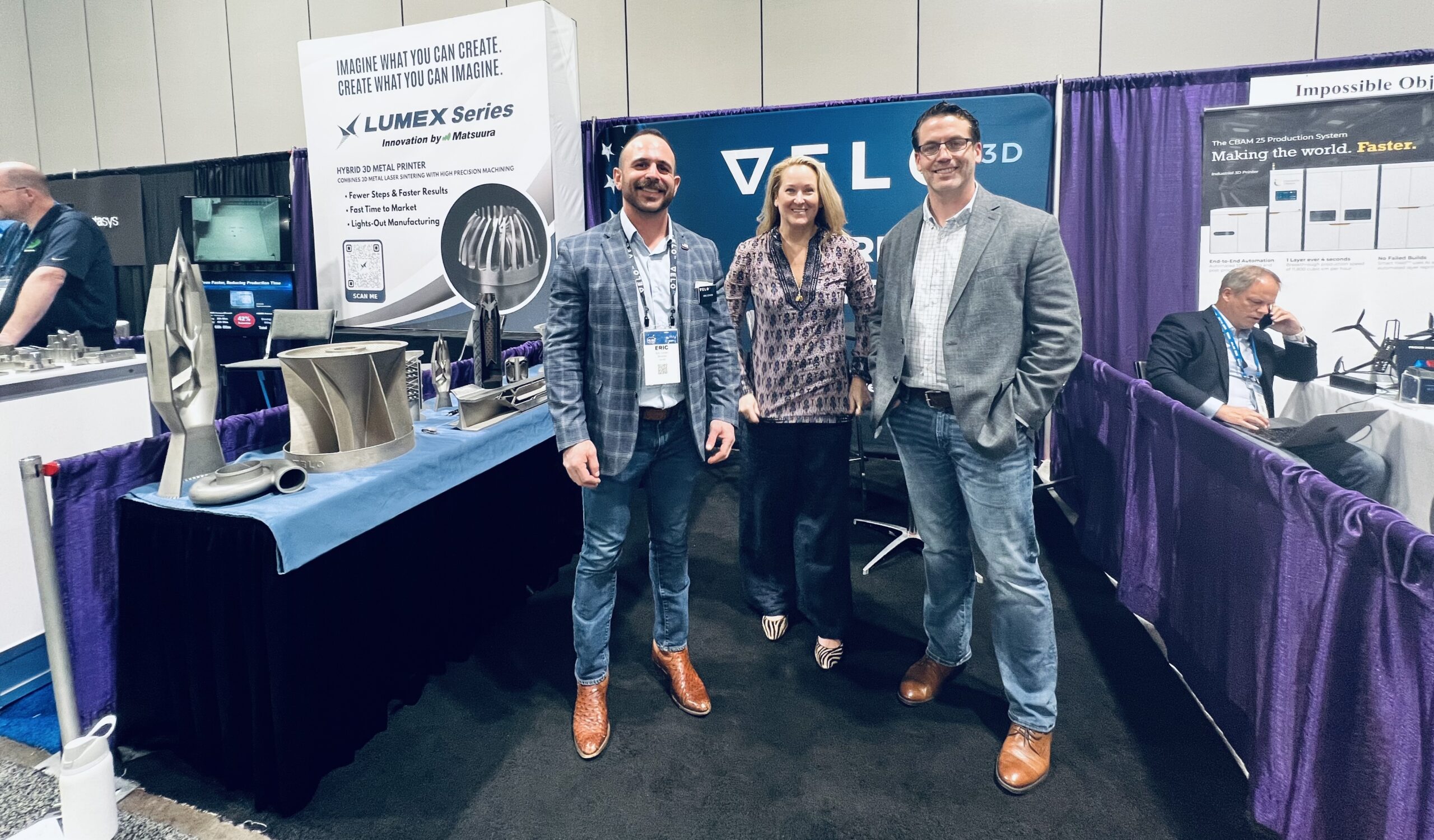
    Velo3D team at MILAM 2026: Eric Cohen (Sales Director), Michelle Sidwell (CRO), Brice Cooper (VP of Defense). Image courtesy of 3DPrint.com.

    One of the biggest changes is in how the company makes money. While machine sales still drive most revenue today, Velo3D is pushing its Rapid Production Solutions (RPS) business, which focuses on producing parts directly for customers. In 2025, RPS accounted for roughly 10% to 15% of revenue, but the company expects that share to grow quickly and eventually become the main part of the business.

    More importantly, that shift is tied to what’s happening in the market. According to Jeldi, customers, especially in defense and aerospace, are no longer just testing additive manufacturing; they are adopting it. They are starting to rely on it. Programs are moving into production, and once they scale, demand can grow fast, sometimes requiring multiple systems within months.

    This is already showing up in new contracts. In 2025, Velo3D secured a $32.6 million agreement tied to Project FORGE and an $11.5 million multi-year production contract with a defense contractor. It also became the first additive manufacturing company qualified under the U.S. Army’s Ground Vehicle Systems Center initiative, a step that could open the door to broader adoption in military programs.

    “Across defense and aerospace, we are seeing a structural shift. Customers are demanding faster, more localized, and more resilient supply chains. Programs are no longer staying in development. They’re scaling into production. They’re doing so rapidly. We believe this creates a compounding demand effect. Programs that begin with a single system are quickly expanding to multiple systems, sometimes within months. As volumes increase and new programs come online, demand just doesn’t grow; it accelerates,” Jeldi told investors.

    At the same time, the company strengthened its balance sheet. Velo3D raised $30 million through a private placement and converted $15 million of debt into equity, reducing its total debt by about 60%. Cash rose to $39 million at the end of the year, up from $1.2 million a year earlier.

    Looking ahead, Velo3D expects revenue of $60 million to $70 million in 2026 and aims to achieve positive EBITDA in the second half of the year. Management also expects margins to improve as production scales, with gross margins projected to exceed 30% later in the year.

    The longer-term plan is more ambitious. Velo3D plans to build up to 400 production systems over the next decade as demand grows. As customers move into production, they need more machines, which in turn drives further growth, the CEO explained.

    Further detailing that “The investments we are making in 2026 in manufacturing infrastructure, supply chain optimization, and workforce represent the critical first phase of that build out. We expect to provide periodic updates on capacity milestones as we execute against this plan.”

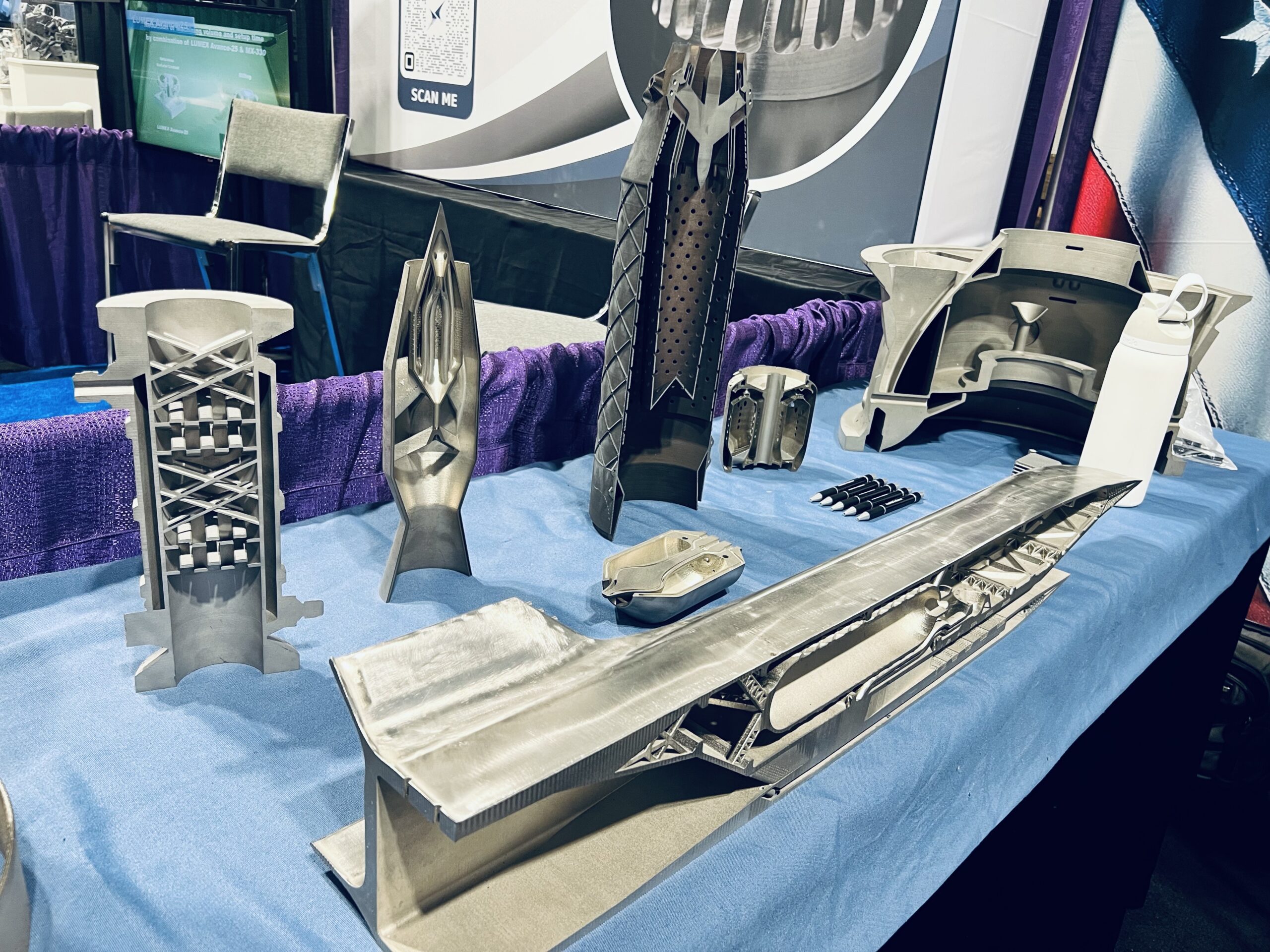
    Velo3D’s booth at MILAM 2026. Image courtesy of 3DPrint.com.

    Beyond hardware and parts, the company is also looking at data as a future business. As more systems are used, Velo3D expects to collect manufacturing data that can help improve designs, optimize production, and support new revenue over time. In fact, Jeldi told investors the company wants to build a data and analytics platform that customers rely on, similar to Amazon’s cloud-based model, Amazon Web Services (AWS).

    “We have a strong focus on the business for the next five years, where Velo will be the AWS of data and analytics company and a product-based company at a defense level, which is what you see as the base of start. What you see in the next seven years is the vision of Velo, where Velo will make sure that we are ready for the next generation manufacturing and digital platforms, which are very siloed at this point and do not have access to all the things I’m talking about,” Jeldi said, outlining the company’s long-term vision.

  • A Year in an Hour: Refresh Your 3D Printing Outlook with AM Research’s 2025 Review/2026 Preview Webinar

    One major advantage that helps us at 3DPrint.com in analyzing the additive manufacturing (AM) market is our direct access to data from industry consultancy AM Research, 3DPrint’s sister company. The intelligence provided by AM Research’s EVP, Scott Dunham, helps us stay focused on the most relevant themes and provides our commentary with the objective grounding that results in genuinely actionable information.

    While the insights that consultancies deliver aren’t free, sometimes they are! On March 24, for instance, Scott broke down his comprehensive view of the AM industry’s 2025 activity, along with a preview of what he thinks the industry can expect in 2026, and even a glimpse of the potential for 2027. If you missed the webinar, don’t worry: you can still watch it here, and I highly recommend that you do.

    There are two key elements to Scott’s perspective that I think set him apart as an analyst. For one thing, he’s simply been doing this just about as long as anyone else has, which means that his views are informed by the AM industry’s long-run trajectory, not speculation built on short-term noise. Secondly, the data drives his outlook, not the other way around. When there’s a momentous shift in the data that warrants adjusting his big-picture view of the industry, he works tirelessly to incorporate the new reality.

    That’s an angle that will play a big role in how AM Research presents its data going forward, starting with the 2025 results and the 2026 preview: for the first time, AM Research is including breakout numbers for maritime and defense in its datasets. Anyone following the industry knows how significant it is to gain transparency on this particular market segment.

    Meanwhile, Scott’s overall findings illustrate that, based on the second half of 2025, there is a broad-based foundation for the AM industry’s current growth trajectory that hasn’t been there for some time. Whether you’re mentally organizing the industry in terms of a division between services, hardware sales, or materials, or you’re more specifically interested in the comparison between metals and polymers, or whether your primary question is about which verticals are gaining the most traction, by the end of last year, AM industry growth was remarkably consistent across-the-board.

    Some of the key details include:

    • A projection of 18% YOY growth for 2026, with current projections for 2027 coming in slightly higher
    • Some of the industry’s biggest metal powder suppliers are experiencing a major backlog on their order books, signaling sustained reshoring demand
    • Increasing demand for large-format components in both metals and polymers, reinforcing the sense of a maturing AM ecosystem globally

    Notably, despite the volatility of the current pace of geopolitical change — a factor that has tended to stall AM’s continuous progress in the past more than it has catalyzed that progress — it looks like international trade dynamics and the state of AM’s capabilities may finally be in alignment. That is, in previous phases of AM’s history, a Q1 like what we’ve experienced so far would’ve rendered an outlook on the previous year virtually moot by the time it could be published. In 2026, however, the setup from the second half of 2025 seems to foreshadow that the industry will keep pushing in the same direction in the years ahead.

    Watch the webinar here and judge for yourself. It’s a rare opportunity to get a year’s worth of intel in only an hour.

  • Polymaker Goes Direct in Europe

    Rather than just going through resellers, Chinese filament giant Polymaker is also going direct in Europe. The company wants to continue to work with 3D printing shops, webshops, OEMs, and distributors, but will also sell its products directly in Europe. I can’t imagine resellers will be thrilled, but it’s a logical move given the strides that Bambu Lab and Creality have made in selling their own filament. Filament is extremely profitable for these firms and deepens their relationship with customers. With a higher proportion of users set to be “crafters” and not makers, more people will want to do less, fiddle less, and print more conveniently. Polymaker’s dependence on large OEMs is growing. At the same time, we’re seeing a real concentration of players dominate the desktop market. Bambu Lab, Creality, Snapmaker, Elegoo, and a few others are doing millions of systems.

    And when you’re doing millions of systems and selling tens of millions of dollars in filament, a few extrusion lines and a materials research department start to look like a great investment. Especially if not doing so means Bambu Lab will be more profitable than you in the long run. That’s not a strategic rodeo I’d like to clown stumble my way into. Seems like a surefire path to getting gored. With market power dynamics shifting, Polymaker as well needs to “own the customer” to remain relevant. All of this is a completely predictable but still insane consequence of High Speed PLA, which people laughed at but has changed everything.

    Now, Polymaker will have a direct-to-consumer webshop focused on the UK, France, Germany, Poland, Czechia, and Spain. The company will also offer services in local languages and all of its Polymaker, Fiberon, and Panchroma brands. The company wants to have a “seamless and reliable purchasing experience, improved delivery times, and transparent pricing…. to strengthen customer support and engagement within local markets.”

    Wildrik Van Der Weide, a VP at Polymaker, said,

    “Our mission has always been to empower creators with the highest quality materials and the best possible experience. Expanding our DTC webshop into key European markets allows us to connect more directly with our community and better serve their evolving needs.”

    The company’s engineering, consumer, and ecological materials will all be available in the shop. Another advantage is that European businesses no longer have to pay VAT while still getting wholesale prices directly from Polymaker. You can register for VAT access online, and the firm says it will get back to you within 2 business days. Only EU-based businesses can use this wholesale lineup.

    In addition to these advantages, it can further insulate the firm from tariff fluctuations. For some businesses, this has been a real hell. Uncertainty and changes have created a lot of uncertainty and work. Local storage, distribution, and warehousing in Europe should improve this a bit. Perhaps the firm will also start producing in the EU? I would, if I were them, to serve customers better and remain competitive. In Europe, players like ColorFabb are innovative and responsive, while Prusament‘s success has been relentless. Local filament lines could make them more responsive and quicker.

    I really like Polymaker filament, and the quality and pricing are always good. The company offers Polychroma everyday PLA, polycarbonate, 8% reinforced ASA, fiber-reinforced PET, PPS, PA6, and production-oriented PLA. I love that they have cosplay material as well. While looking at their site, I also noticed that Polymaker is discontinuing 2.85mm filament. It’s crazy just how quickly the 3D printing world is changing. Only a few years ago, Ultimaker reigned supreme in enterprises, and Polymaker was the big bad wolf in filament land. It used to be that European firms dominated the filament market; now it’s Chinese firms. But in industrial printing, the large materials firms have pulled back, and OEMs are generally opening up access to materials.

    On the desktop, however, it’s OEMs that are gaining more control and market power. A scramble for Europe is therefore a sensible move for Polymaker. The company will, however, have to make some more choices if it wants to thrive. Can it buy ColorFabb to cement a role as the most innovative filament firm? Or will it buy 3D4Makers to move into the industrial business? Or will the firm hack away at Hatchbox and the like, playing the volume game? While the firm used to feel as if it was comfortably sat in the middle of the market, it now looks besieged from all sides. I think we need companies that deliver on value and consistency, so I hope that it makes the right choices.

  • Japan’s Space Compass Corporation Buys a SWISSto12 Satellite

    Japanese firm Space Compass Corporation has agreed to buy a SWISSTo12 GEO optical data relay satellite. The compact Hummingsat will be used for Space Compass’ optical data relay service. Space Compass is an ambitious firm that’s a joint venture between IT giant NTT and pay-TV and satellite service firm SKY Perfect JSAT Corporation. JSAT was the first commercial company to operate a Japanese private communications satellite and operates a constellation of satellites for commercial purposes and Japanese military communications. JSAT, in turn, is owned by a veritable who’s who of the Japanese media and corporate worlds, including Itochu, Fuji Media Holdings, NTT Communications, the Sumitomo Corporation, Nippon TV, and TBS. Itochu and Sumitomo are two of Japan’s largest and most influential wholesale companies (sōgō shōsha) that are really overseas credit and investment firms, kind of a mix between a merchant bank, an investment bank, and an offline Amazon. The other firms are Japan’s largest TV companies.

    What Japan wants to do with the satellite is really quite revolutionary. I don’t know why all Japanese corporate mission statement stuff sounds like it comes from eco-conscious nice wizards lording over the future of Earth, but Compass wants to “connect all human beings and data wherever needed in the expanding sphere of human activity by adopting the newest technology to connect Earth and space. This will contribute to creating a sustainable society by eliminating information disparities, thereby solving various social issues, such as natural disasters. It is important for Space Compass that no one is left behind and all people can pursue their peaceful and fulfilling lives.” If only the world would conform more to the dreams of Japanese corporations, imagine how happy we’d all be.

    The first step to global fulfillment, apparently, is a GEO Satellite Optical Data Relay Service. This will accelerate the communication of Earth observation satellite data. This is currently not real-time; there is a delay. Information has to be periodically passed to properly placed ground stations when possible. Compass wants to make this information available instantaneously everywhere through its new satellites. This would, in effect, give militaries and companies a live Google Earth based on real-time imagery. A flood or earthquake’s effects could be seen immediately by planners, for example, or a battle could be seen as it unfolds, not in intermittent flashes. For the military, it would give them over-the-horizon control and navigation capabilities for missiles, drones, and military missions generally. One issue in Ukraine now is to, without interception and jamming, control and let navigate drones far away from bases. The Optical Data Relay Service would also solve this issue.

    SWISSto12’s CEO Emile de Rijk said,

     “We are delighted about this partnership with Space Compass and our shared vision to build multi-orbit, secure space infrastructure that supports some of the world’s most important space missions, such as earth observation. By hosting optical communications payloads for LEO-GEO data relay, HummingSat once again proves its versatility and its outsized impact in enabling purposeful innovation in space.”

    While Space Compass Co‑CEO Hiromi Komatsu stated,

     “The execution of this procurement contract represents a critical milestone toward the realization of our optical data relay service. By leveraging high speed, high-capacity optical data-relay architecture, we aim to enable faster and smarter decision making through real-time Earth observation insights. This first satellite will play a pivotal role in establishing a new space communications infrastructure.”

    The US can probably do this everywhere, but precious few other countries can (I’m going to go out on a limb here and guess France can). With the US periodically cutting off intelligence sharing and satellite access to various allies, a commercial alternative seems like it could be lucrative and definitely could be a good idea for Japan. We would expect more initiatives like this as countries diversify away from the US in light of its late onset capriciousness. Real-time data like this could aid a lot of scientists and government departments while helping investors, analysts, and large companies mitigate risks and sudden onset events as well. Optical data transmission also opens up new types of businesses and communications modalities. You could do secure communications to units, start data services for traveling people, or track lots of containers, for example. Or it could just make search-and-rescue communications more precise and meaningful. You could track lost people, ships, or assets in real time, ping them, judge their movement more accurately, and perhaps even communicate with them.

    This is indeed a great thing for SWISSTo12, which has positioned itself to build compact-capable satellites outside the US. We would expect more companies and countries to turn to SWISSTo12 to reduce their dependence on US infrastructure. This also explains our rather breathless, at times, perhaps coverage of SWISSTO12 and its progress. With a new office in Spain, expansion into satcom on hold, a 73 million investment, and expansion of its Swiss factory, the company is moving forward. There are a few companies in 3D printing that I’m more excited about. Geopolitically, SWISSTO12 GEO play is well-timed, while a general expansion of constellations, space businesses, and communications will also give it much more business. This firm has optimized 3D printed components and turned them into a business that is giving information assurance to nation-states and companies. More firms should dominate their applications and leverage that dominance to build influential, growing applications crucial to the world.

  • HP Webinar Breaks Down Where Industrial Filament 3D Printing Works Best

    As additive manufacturing continues to move into production, one question keeps coming up: not just whether a technology works, but where it actually makes sense to use it.

    HP’s upcoming webinar on March 31 takes a closer look at industrial filament 3D printing, but instead of presenting it as a major breakthrough, it focuses on a more practical idea. Even as filament systems improve, they are not meant to replace every other additive manufacturing technology.

    The discussion comes as HP offers a first look at its new high-temperature filament platform designed for production use. The webinar, titled “High-Temperature Industrial Filament 3D Printing: An Inside Look at HP AM’s New Production-Ready Solution,” will focus on an end-to-end system built to deliver consistent part quality, process repeatability, traceability, and access to certified materials, while maintaining an open materials approach. It will also cover key components, including the industrial printer, Material Management System (MMS), and modular extrusion architecture, as well as how filament-based production can be used in regulated and high-temperature applications.

    Guillermo Fabregat.

    The session will be led by Guillermo Fabregat, HP Industrial Filament Product Manager at HP Additive Manufacturing Solutions. An industrial engineer, Fabregat has experience across manufacturing, operations, R&D, and product management, with a focus on bringing complex industrial systems into scalable, production-ready use.

    For years, filament-based 3D printing has mainly been used for prototyping and lower-cost applications. It has been accessible, flexible, and relatively easy to use compared to other additive processes. But in industrial settings, it has often been harder to use for production, especially when it comes to repeatability, material performance, and consistency. Differences between prints, fewer options for high-performance materials, and slower production speeds have made it more challenging to scale.

    HP’s new system is designed to expand what filament can do in these environments, with a focus on high-temperature materials, improved reliability, and an open materials platform. High-temperature capability is important because it allows the use of engineering-grade polymers for more demanding applications, including parts exposed to heat, stress, or chemicals. At the same time, the system is designed to support more consistent results and better process control, which are key requirements for industrial use.

    But as we mentioned before, the more important question is not whether filament can reach production, but where it makes sense to use it.

    In many cases, industrial filament printing is used alongside other technologies like powder bed fusion or HP’s own Multi Jet Fusion systems. Each process has its strengths and limitations, and those differences become more important as additive manufacturing moves into production.

    Industrial production environments demand repeatability, traceability, and consistent part quality.

    Filament systems usually come with lower upfront costs, more material options, and are easier to use. They’re also easier to set up in smaller environments, whether that’s an engineering team, a small shop, or a distributed setup. In contrast, powder-based systems tend to offer higher output, better surface finish, and more consistent part quality across larger production runs.

    That difference is shaping how companies think about these technologies.

    Instead of choosing one over the other, many manufacturers are now using a mix of processes at different stages. In that setup, filament printing doesn’t need to compete directly with higher-end systems. It simply fills certain roles.

    Use cases like high-temperature polymers, functional prototypes, tooling, jigs and fixtures, or smaller batch production are good examples. In these cases, flexibility and cost often matter more than speed or perfect surface finish. Being able to quickly adjust a design or produce parts on demand can also outweigh some of the limitations.

    There’s also a growing role for filament systems in distributed manufacturing. Because they are more affordable and easier to run, they can be placed closer to where parts are needed, whether in small production sites, service bureaus, or internal teams. This fits with a broader shift in manufacturing, where speed, flexibility, and supply chain resilience are becoming just as important as scale.

    At the same time, there are limits. For high-volume production or parts that require tight tolerances and consistent performance across large quantities, other additive technologies may still be a better fit. Powder bed systems and other industrial processes still have clear advantages in these areas, especially when speed and consistency are critical.

    This is where the webinar becomes more relevant. Instead of presenting filament as a one-size-fits-all solution, it focuses on where it actually fits within a broader manufacturing toolkit.

    As additive manufacturing continues to mature, this way of thinking is becoming more important. The focus is shifting from what each technology can do on its own to how they can work together. Different processes are increasingly seen as complementary, each playing a role in a more flexible production setup.

    HP’s session reflects that shift. It’s less about a single system and more about helping manufacturers understand where filament-based production makes sense, and where it doesn’t.

    Attendees will get the first official look at the platform. To do so, register here.

    Images courtesy of HP

  • Tethon 3D Acquires Fortify IP to Target RF and Defense Applications

    Tethon 3D has acquired Fortify’s advanced materials intellectual property. Fortify wanted to bring fiber-reinforced vat-polymerized parts to market before pivoting to electronics and later to RF applications. This got them $12 million in funding from Lockheed Martin, followed by a joint investment from Raytheon and Lockheed. The firm sold a 3D printer to NASA’s Glenn Research Center, but things have been quiet around Fortify of late. It’s a shame because, whereas the firm initially made a rather diffuse and confused market entry, the RF 3D printing materials bet was prescient.

    Right now, 3D printed RF is of strategic importance to almost all countries worldwide. And making and improving a better antenna, to deny interference or keep operating, is top of mind. Drones are dominating the battlefield and the headlines. A big component of drone warfare is RF communications and jamming. This is, therefore, an excellent move by Tethon 3D. Exquisitely timed, this acquisition could really do wonders for Tethon. Tethon, of course, is a materials supplier for the vat polymerization world, offering ceramics, a bioprinter, and materials for advanced applications. The company has been working on metal DLP since at least 2018 and indeed had a partnership with Fortify since 2021. So Tethon has a good understanding of what it is acquiring here as well.

    Tethon 3D Alumina Bison on Fortify Printer.

    Fortify’s IP is in technical ceramics, specifically dielectric materials for RF applications. The company thinks that uses will be “microwave, and mmWave components for applications such as radar systems, satellite communications, and next-generation wireless infrastructure.” Which could be great, but I’d be using this stuff for radomes and antennas for things like CIWS and drones. Tens of thousands of kilometers of fiber-optic cable now litter Ukraine because jamming has made it a reliable way to pilot drones. This, of course, will not do for long-range strike drones and most interceptors. And we can also see in the Straight of Hormuz that inexpensive Shaheds can cause havoc on global energy markets and hold countries hostage. For navigation, such craft need a good antenna, ideally one that is impervious to RF jamming. So I’m pretty sure that almost every single military is in a mad scramble for better antenna capabilities now.

    And 3D printing dielectric materials into an antenna is one of the fastest ways to make an optimized antenna. I’m also near certain that these materials have been used in some US government research projects. For the US research establishment, it’s good that this portfolio went to a US company as well.

    The company says it bought “innovations in anisotropic composite structures and advanced material processing methods that enable high-performance RF, microwave, and mmWave components.” These materials enable the precision fabrication of dielectric structures for demanding applications, including radar systems, satellite communications, advanced electronics, and next-generation wireless infrastructure.¨

    Tethon 3D CEO Trent Allen indicated,

    “This acquisition is part of a broader strategy to build the leading advanced materials platform in our industry. We are focused on identifying and integrating technologies that enhance our ability to develop and scale high-performance ceramic materials for real production environments.Fortify developed compelling technologies around high-performance composite materials.Having collaborated with their team previously, we see significant opportunity to build on this work and integrate these innovations into Tethon’s advanced technical ceramics capabilities.”

    The company aims to “focus on applications where technical performance and reliability matter most. By adding these technologies, the company is further expanding its technical foundation in high-performance ceramics and advanced materials systems.” I love everything about this. I don’t know how much they paid, but this was money well spent. It’s like buying an ice berg, avoiding radar technology, the week of the Titanic sinking, or having a lot of shovels and horses before the First World War. If you didn’t bid on this, or bid on it and didn’t get it, shame on you.

    A 3D printed ceramic GRIN lens printed on the FLU CORE printer with high-purity Alumina.

    One of the reasons that US drones fare so poorly in Ukraine is that they get eliminated quickly by RF jamming. All the exquisite kit in the world, traveling over to search for a marketing campaign, ends up being pretty useless after a week. The US (and all major militaries) need a solution for this. One of the best ways seems to be to use slurry, doped vat polymerization, or Zetamix to make RF antennas and radomes. It’s quick, quick to iterate, and can be used for conformal weight-saving integrated structures. RF is one of my favorite applications in general, but now that Hormuz is closed, it’s going to be a lot of other people’s favorite application too. Super amazing work, Tethon!

    Images courtesy of Tethon 3D

  • DEEP Manufacturing to Open 50,000 Sq. Ft. WAAM Facility in Houston

    I’m a big fan of wire arc additive manufacturing (WAAM), in large part because it’s not that much of a departure from how arc welding already works. It’s a technology that’s disruptive enough to address certain challenges involved in revitalizing the welding industries in nations like the US—above all, the workforce development challenge—without being disruptive to the point that it couldn’t be incorporated into existing manufacturing supply chains.

    About a year ago, the UK-based company DEEP Manufacturing, a division of an ocean engineering firm with the same name, launched the HexBot, a six-armed WAAM system for ultra-large-format parts: up to 3.2 meters in height and 6.2 meters in diameter. At the time of launch, the system had already been used for applications including offshore wind platforms, shipbuilding, and subsurface maritime infrastructure for the energy sector.

    More recently, DEEP announced that it will open a 50,000 square foot production facility in Houston, part of a $10 million investment through the end of 2026 in the company’s US production capacity. The opening of the facility comes at an ideal time for global energy supply chains, which are only just beginning to digest the fallout from the catastrophe that the US and Israel have imposed upon the Gulf region and the world economy as a whole.

    As part of the investment, DEEP plans to triple its Houston workforce by the end of the year, from a team of 10 to a team of about 30. DEEP notes that, in February, the company guided US personnel through an accelerated training program led by the UK team, with the Houston facility focused “Inconel 625 deposition trials” happening this month. In April, DEEP is planning for official commissioning of the first US WAAM systems, and DNV Approval of Manufacture audits prior to the May opening.

    In a press release about DEEP Manufacturing’s official opening of its Houston production facility, the company’s CEO, Peter Richards, said, “Houston represents a major step in scaling [AM] in the United States. By bringing our WAAM capability closer to customers in energy, defense, and maritime sectors, we can dramatically reduce lead times for large, high-integrity components while strengthening supply-chain resilience for critical industries.”

    As I noted last week, whatever you think of the war in Iran—and I find it equal parts disgusting and, sadly, all-too-predictable—it is now a reality that must be factored into the decision making process for anyone planning a business. More so than any other area of the economy, those in the energy sector must adapt immediately, as the order of global fossil fuel flows gets rewritten in real time.

    Houston looks set to be perhaps the single most indispensable hub for this repositioning, as oil importers start to prioritize stability of long-term supply over essentially all other considerations. The same goes for US liquefied natural gas (LNG), which is already the leader in global supply, and is all the more important now that Iranian missile strikes have knocked out 17 percent of Qatar’s LNG export capacity—a close second in the international market—for 3-5 years.

    Notably, the main current barrier between US supply and global demand in this context isn’t the oil and gas itself, but the pipelines and shipping capacity required to deliver the goods. Oil tanker rates had already been surging leading up to the US’s first airstrikes on Iran, and they’ve gone parabolic in the time since. Now, there is no instant solution to this problem: the US isn’t going to simply flip a switch and start turning out oil tankers.

    However, a company like DEEP can certainly help lay the long-term groundwork for cultivating the shipbuilding capacity required to bolster oil & gas tanker MRO operations as traffic through Houston-Galveston intensifies, while simultaneously contributing to the manufacturing capabilities required to build new pipelines and keep existing ones operational. This won’t lower the near-term floor for the price of oil, but, in combination with the implementation of an overall national advanced manufacturing strategy, it could help keep the future price ceiling in check. Additionally, the more agile production capabilities that can be enabled with WAAM would allow DEEP to pivot between production for fossil fuel supply chains, as well as production for equipment needed for transition energy sources.

    Images courtesy of DEEP

  • At TCT Asia 2026, China’s AM Industry Looked Ready for Scale: Part 2

    At TCT Asia 2026, the shift did not stop at metal production. It extended into the consumer and prosumer side of the market, where the same logic of scale, integration, and application focus is now beginning to take hold.

    Hall 7.1 concentrated the metal AM value chain, covered in Part 1. Hall 8.1, by contrast, is where the crowd density felt especially intense, and where consumer-facing and prosumer-facing systems made a broader point about market maturity.

    Desktop machines in China are no longer merely hobby devices. At the top end of the category, they are evolving into serious productivity tools for makers, engineers, design teams, microfactories, and print farms, with multi-material capability, sensor-driven reliability, and workflow efficiency that blur the line between desktop and industrial. The center of gravity has moved decisively toward functional production.

    That matters because China is already the world’s dominant producer and exporter of desktop 3D printers, and that installed base creates something more valuable than shipment numbers alone: it creates usage. More usage means more service providers, more print farms, more material demand, more failed experiments, more successful iterations, more trained operators, more application discovery, and more buyers who know what they actually need. Markets get denser before they get smarter. China now has both density and growing sophistication, and TCT Asia reflected that.

    Hall 8.1: The Ecosystem Beyond Printers

    If Hall 7.1 demonstrated how metal AM is becoming production infrastructure, Hall 8.1 showed how the surrounding ecosystem is maturing to support it.

    Snapmaker‘s U1, exhibited at Booth 8D87, took a structurally different approach to the multi-material problem. Rather than optimizing a single hotend, Snapmaker reimagined the mechanics entirely with SnapSwap™, a system of four independent print heads, each pre-loaded and pre-heated with its own filament. The result: a swap time of just five seconds, with no purge tower required. That last point matters more than it sounds. Traditional multi-color systems waste enormous amounts of filament on purge blocks, material printed solely to flush the previous color from a shared nozzle. Snapmaker claims the U1 eliminates up to 80% of that waste. With a 270 × 270 × 270 mm build volume, 500 mm/s motion speed, RFID-based filament recognition, and over a dozen onboard sensors handling auto-calibration from head offset to vibration compensation, the U1 is positioned not as a hobbyist curiosity but as a serious tool for small-batch production and print farms where material cost and uptime are real constraints. For a print farm running dozens of units around the clock, eliminating purge towers not only saves filament but also shortens print times, reduces post-processing labor, and directly improves unit economics per part. That is the kind of incremental efficiency gain that separates a viable manufacturing workflow from an expensive hobby.

    Atomic Form (原子重塑), exhibiting at Booth 8F35, pushed the envelope further still. A newcomer backed by serious infrastructure (the company is part of the MOVA Group ecosystem, itself connected to Dreame and the broader Xiaomi supply chain), Atomic Form arrived at TCT Asia with its Palette 300, the world’s first 12-nozzle FDM 3D printer. The OmniElement™ turret system rotates between 12 independently addressable nozzles and, when connected to 6 RFD-6 filament management units, supports up to 36 colors and 12 materials in a single print job across a 300 × 300 × 300 mm build volume. Four AI-driven cameras and over 50 sensors monitor the process in real time, autonomously handling nozzle calibration and defect detection. Atomic Form claims a 90% reduction in material waste compared to conventional filament-switching methods, achieved by eliminating purge cycles. But the bigger story at TCT Asia was not just the Palette 300 itself. It was the broader impression that Atomic Form is trying to build more than a single standout machine: a wider desktop manufacturing ecosystem. The speed at which a company founded in 2023 has moved from its first product announcement to a multi-platform lineup, securing two funding rounds within its first six months, is itself a data point on the velocity and capital intensity of China’s consumer 3D printing market. But it also signals something structural: the Xiaomi-adjacent supply chain ecosystem, with its expertise in mass manufacturing, sensor integration, and aggressive pricing, is now flowing directly into desktop 3D printing. If that pattern holds, it could compress the timeline for hardware commoditization even further.

    And then there was Bambu Lab. Having crossed 10 billion RMB (roughly $1.4 billion USD) in annual revenue, a figure unprecedented in desktop 3D printing history, the company arrived at TCT Asia with a full lineup spanning entry-level (A1), prosumer (P2S), and industrial-grade systems (H2D, H2C, H2S). Their exhibition included not just consumer products but Formula SAE racing car components, motorcycle helmets, and shoe midsoles, end-use parts that demonstrate engineering-grade reliability.

    What makes Bambu Lab’s trajectory consequential for the broader industry is not just its revenue. It is the ecosystem density they create. Over 40 proprietary material profiles synchronized with hardware and software. AI-based error correction. Cloud-based fleet management. And the announcement of a new Shanghai subsidiary with 70+ R&D hires focused on AI algorithms, embedded systems, and the MakerWorld platform. Bambu Lab is building the infrastructure for a world where hundreds of desktop printers in a single facility constitute a viable manufacturing operation, the “print farm” model scaled to industrial relevance. But the strategic implication runs deeper still. With proprietary material profiles locked to Bambu hardware and software, cloud-based fleet management, and AI error correction, the company is constructing an ecosystem moat that makes switching costs real. For the global desktop AM market, Bambu Lab is becoming less a printer company and more a platform, one that increasingly defines how a growing share of the world’s desktop parts get designed, printed, and managed.

    Generative AI Design Tools Enter Hall 8.1

    If Hall 7.1 showed why AM economics are finally viable at scale, and Hall 8.1 showed how hardware ecosystems are maturing to meet that demand, the generative AI exhibitors pointed to what may be the last major bottleneck: design. The ability to operate CAD software has long been the gating skill between having an idea and producing a printable file. A cluster of generative AI 3D modeling companies in Hall 8.1 suggested that the bottleneck is beginning to crack, and they were not software vendors tucked into a side booth, but exhibitors with sizable stands, Tech Stage speaking slots, and live integrations with the printer manufacturers next door. Their presence at a manufacturing trade show rather than a software or gaming event said something about where these companies see their paying customers.

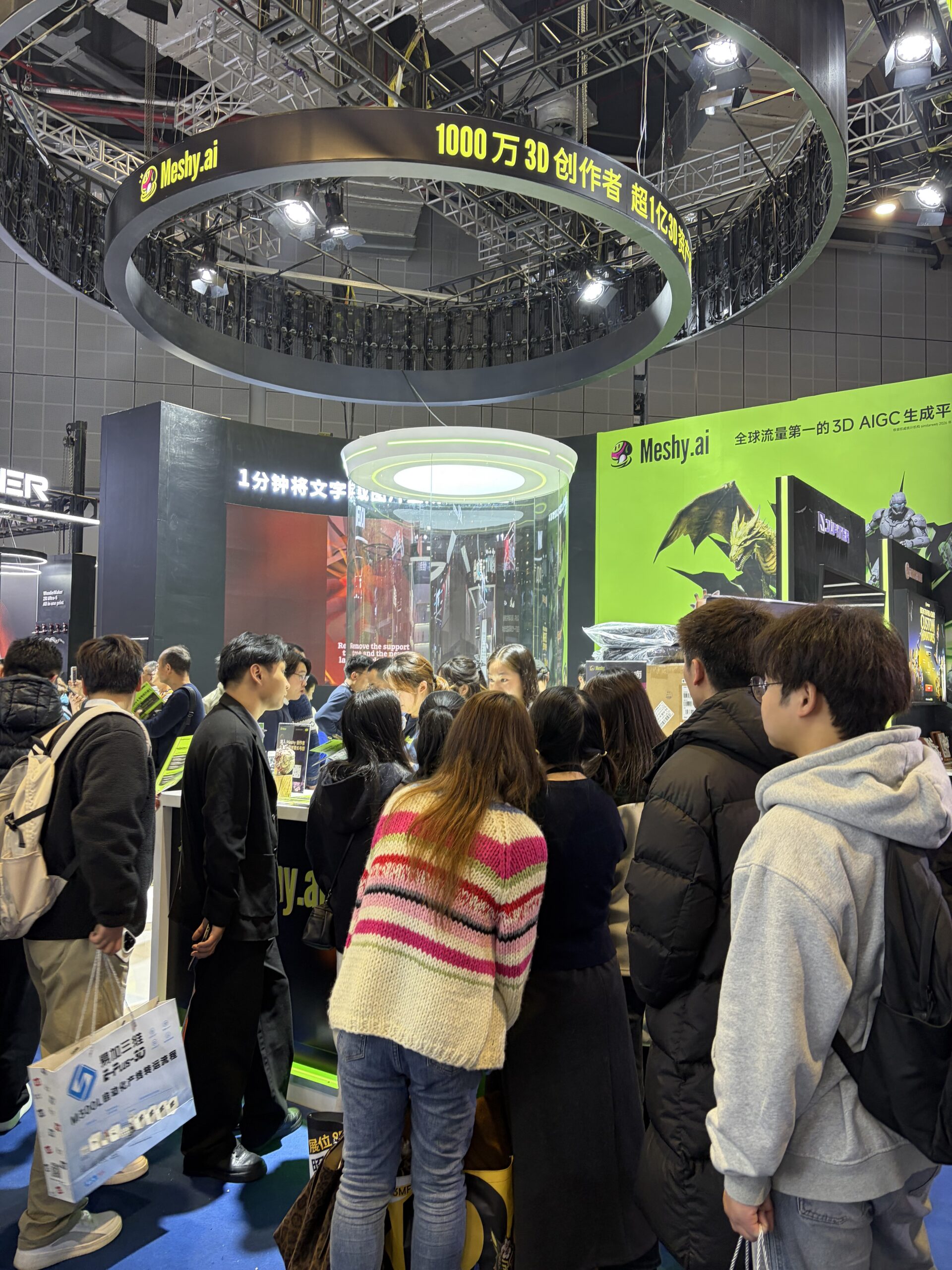
    Meshy AI (Booth 8K28) showcased Meshy 6, its latest text-and-image-to-3D model, alongside a new service, Meshy Creative Lab, that handles geometry repair, material recommendations, and print-file preparation in a single pipeline. The company says it has over five million registered creators and three million monthly active users, with more than half based in Europe and North America. The more concrete story at TCT Asia was its integration with Bambu Lab. Meshy’s modeling engine is now embedded in MakerWorld’s MakerLab: a user uploads an image, the system generates a 3D model, and the output drops into Bambu Studio as a 3MF file with color mapping already matched to the AMS filament system. Meshy reports a 97 percent slicing success rate for character models. The workflow supports up to 16-color printing and eliminates the manual color-assignment step that has been a persistent friction point in multi-material FDM. Whether or not the output quality meets professional designers’ standards, the pipeline itself (image in, printable file out, no CAD step) is a real reduction in the barrier between idea and object.

    Tripo AI (Booth 8B25), built by VAST, showcased High-Poly 3.0, built on its open-sourced TripoSF (Sparse Flex) architecture. VAST was founded in 2023 and closed a $50 million Series A in March 2026, led by Alibaba Group and Hengxu Capital. The platform reports 6.5 million creators and roughly 100 million models generated to date. High-Poly 3.0 offers two output modes: a Standard mode with topology optimization for game and product design workflows, and an Ultra mode for greater geometric detail. Like Meshy, Tripo supports 3MF color export and connects to third-party printing services for physical fulfillment. Tripo also ran a Bit to Atom Challenge with TCT Asia, where competition entries were printed and displayed on the show floor, a practical if modest demonstration of the generation-to-fabrication loop.

    Hitem3D (Booth 8C35), developed by MathMagic (数美万物), focused on the texture and manufacturability side of the problem. MathMagic was founded in 2024 by former ByteDance and Alibaba engineers, and says it has reached over one million users in 150 countries, with integrations at companies including Bambu Lab and xTool. The Hitem3D 2.0 release centers on what the company calls structure-aware texture generation at 1536³ resolution, about three times the voxel density of the 512³ standard common among competitors. The practical claim is that textures are generated jointly with geometry rather than projected onto surfaces afterward, thereby reducing common artifacts such as stretching and misalignment at seams. More relevant for manufacturing, the system incorporates thickness and tolerance constraints into the generation step, so models are closer to printable at the point of creation rather than requiring extensive post-processing. Co-founder Jia Rongfei spoke on the Tech Stage under the title “3D Generation Foundation Models: From Seeing to Making.”

    The broader pattern here is worth noting. These companies chose a 3D printing trade show as their stage because the 3D printing user base (makers, print farms, small-batch producers) is where the immediate commercial demand for fast, low-skill 3D modeling actually sits. The technology is still early. Output quality varies, and most generated models still need manual cleanup for demanding applications. But the direction is clear: generative AI is being built toward manufacturing output, not away from it.

    What TCT Asia 2026 Tells Us

    I have been covering Asia’s AM market for several years now, and TCT Asia 2026 felt qualitatively different from any show I have attended. Not because the technology was unrecognizably advanced, but because the conversation has shifted.

    The economics have crossed a threshold. The structural cost reductions documented across this article are opening demand categories from consumer electronics to personalized footwear.

    The quality infrastructure has matured in parallel. The gap between what can be printed and what can be certified is closing, not as an aspiration, but as a deployment reality across aerospace, nuclear, and automotive supply chains. It was telling that ASTM International ran a full-day Certificate Course on AM quality assurance at Hall 8.1H on March 16, the day before TCT Asia’s doors opened, covering the ISO/ASTM joint standards framework, installation, operational, and performance qualification (IQ/OQ/PQ), and the practical mechanics of building a compliant AM production site.

    The course was led by ASTM’s own additive manufacturing program team, and it was not an academic sidebar. It was a pre-show prerequisite aimed squarely at the engineers and quality managers who will decide whether the machines on display in Halls 7.1 and 8.1 ever make it into certified supply chains. Behind the scenes, ASTM’s Additive Manufacturing Certification Committee (AMCC), an OEM-led body formed in 2024 with participation from Boeing, Lockheed Martin, and others, has been building an audit-based certification program for AM service providers grounded in ISO/ASTM 52920, 52901, and 52904. That program is designed to answer a question the industry has been circling for years: how do you trust a printed part enough to fly it, implant it, or drive it? For the Chinese ecosystem in particular, where hardware capability is now clearly world-class, qualification and certification infrastructure may be the single most consequential gap remaining. Machines can be scaled. Materials can be localized. But trust, the kind embedded in globally recognized standards, third-party audits, and traceable process qualification, cannot be rushed. It has to be built. ASTM’s growing presence at a show like TCT Asia suggests that both sides of that equation understand the stakes.

    And perhaps most consequentially, China’s AM ecosystem has reached the depth where its own internal competition drives rapid iteration. The supply chain is increasingly localized, vertically integrated, and self-reinforcing. The pace at which proven concepts are absorbed, scaled, and commercialized is something the rest of the industry is only beginning to reckon with.

    For Western AM companies, from EOS and SLM Solutions to Stratasys and 3D Systems, the question is no longer whether China can compete at the technology frontier. It can. The question is how to compete in a market where your counterparts operate with structurally lower costs, faster iteration cycles, and a domestic market large enough to fund global ambition. The answer will likely involve doubling down on what the Western ecosystem still does best: regulatory navigation, quality certification ecosystems, deep application engineering partnerships, and the trust infrastructure that aerospace and medical customers still demand. But the window for complacency is closing.

    Walking out of NECC on the final afternoon, I kept thinking about the crowd in Hall 8.1. Even on the way out, the venue still felt packed. The energy there wasn’t that of a trade show. It was the energy of a market that had achieved critical mass. The makers, engineers, and entrepreneurs filling those aisles were not spectators. They were participants in a manufacturing ecosystem that is becoming too large, too fast, and too commercially grounded to ignore.

    Images courtesy of Sangmin “Simon” Lee for 3DPrint.com.

  • What the 2026 Post-Processing Survey Reveals About the Future of AM

    As additive manufacturing (AM) continues its transition from prototyping to production, industry attention is shifting toward one of the most demanding but often overlooked parts of the workflow: post-processing.

    The newly released 2026 Additive Post-Processing Survey Trends Report, conducted and published by PostProcess Technologies, offers a snapshot of how manufacturers are approaching post-printing operations today and how those strategies are evolving as additive manufacturing adoption grows. Now in its fifth edition, the survey gathers perspectives and looks at trends from additive professionals across industries, including automotive, aerospace, defense, medical, and general manufacturing.

    Post-processing encompasses a wide range of activities required to transform a printed part into a finished product. These steps may include support removal, resin cleaning, powder removal, curing, surface finishing, and other secondary operations.

    As AM technologies expand into production environments, these steps are increasingly important and can influence everything from part quality and production throughput to workflow efficiency and facility operations. Organizations are recognizing that post-processing is becoming a challenging bottleneck in their complete end-to-end process.

    Respondents to the survey report that the time and labor required to finish parts remain one of the most significant constraints in scaling their operations. At the same time, companies operating multiple printing technologies often face an even more complex post-processing landscape, as each technology introduces its own materials, processes, and finishing requirements.

    As a result, post-processing is becoming a central focus for organizations looking to improve workflow efficiency and production readiness.

    Growing Attention to Safety and Sustainability

    Alongside productivity considerations, the survey also highlights increasing awareness around the environmental and safety aspects of post-processing operations.

    Many traditional post-processing workflows rely on manual handling of parts, solvents, resins, or fine powders. As additive manufacturing adoption grows and production volumes increase, manufacturers are paying closer attention to how these processes affect operator safety, facility cleanliness, and environmental compliance.

    Issues such as chemical handling, waste management, and operator exposure to hazardous chemicals are becoming more prominent topics within companies that are looking to scale their AM production. These concerns are particularly relevant in industries with strict regulatory requirements, such as aerospace, medical, and dental, but they are increasingly part of the conversation across the broader AM ecosystem.

    For many organizations, addressing environmental, health, and safety (EH&S) considerations is not just about compliance; it is also about building scalable, sustainable manufacturing operations that can support long-term growth.

    The Next Phase of Additive Manufacturing

    Another notable trend reflected in the survey is the growing maturity of additive manufacturing users. Many respondents report several years of experience working with AM technologies, offering a knowledgeable perspective on the bottlenecks and challenges across the complete additive workflow as the industry moves into more production-oriented use cases.

    With that shift comes a broader perspective on what it takes to successfully implement additive manufacturing at scale. Printing technology itself remains essential, but companies are increasingly evaluating the entire workflow—from design to print to post-processing — to get to the final part.

    In this context, post-processing is emerging as a key factor that can determine whether additive manufacturing programs succeed in meeting their performance, cost, and production goals.

    Explore the Full Findings

    The 2026 Additive Post-Processing Survey Trends Report provides a deeper look at the challenges, priorities, and investment trends shaping post-processing in additive manufacturing today.

    For industry professionals seeking a clearer understanding of how their peers are approaching these issues and how post-processing strategies may evolve in the coming years, the full report offers valuable insights.

    Download the complete report to explore the findings and learn more about the trends shaping the next stage of additive manufacturing adoption.

  • Würth Additive Group & B9Creations Announce Strategic Partnership at AMUG 2026

    Last week, hundreds of additive manufacturing users (and a few journalists, like me!) met in Reno, Nevada to attend the 2026 Additive Manufacturing Users Group (AMUG) Conference. I’ll share more about the event itself in a later story, but first I wanted to report on an exciting partnership that was formally announced on the first day of the conference. B9Creations is partnering with Würth Additive Group (WAG) to speed up production-scale AM.

    As Mikhail Gladkikh, Head of Product & Partnerships at WAG, told me at AMUG 2026, B9Creations is the newest partner in Würth Digital Inventory Services (DIS). This inventory management platform was first launched at AMUG 2024, and was officially released as a first edition software platform at AMUG 2025.

    L-R: Shon Anderson, B9Creations, and Mikhail Gladkikh, Würth Additive Group, officially announcing the partnership at AMUG 2026. Image: B9Creations via LinkedIn.

    Gladkikh explained that the idea is to provide digital recipes to users who need 3D printed parts.

    “These recipes need to be produced consistently at any location,” he told me. “That’s why you need equipment that can be reliable, that can execute the recipe, built with the equipment consistently, with quality and traceability. And that’s why we’re choosing partners like B9Creations.”

    Through this strategic partnership, B9Creations will combine its production-grade manufacturing technology, QA/QC infrastructure, and turnkey solutions delivery business with Würth’s DIS and global logistics network. This will make it possible for manufacturers to make the move from physically stockpiling parts to global, on-demand spare parts production.

    “I think additive manufacturing in general has dreamed about the ability to implement digital inventory,” B9Creations CEO Shon Anderson told me. “It’s a concept that many people have tried to figure out how to bring to life for a long time…everything from the IP management piece of that to the transactional piece to the software capability to distribute that file, and then not have that file go out of anyone’s control. So Würth made the investment to create their DIS that brings all those capabilities, so that if you are a manufacturer, you can get a part essentially loaded into that digital inventory system that enables you to produce on a per-part cost at any facility you want in the world, whether you want to have that hardware and capability in-house, or whether you want to leverage Würth, or one of their partners, to do the actual printing.”

    Image: Sarah Saunders for 3DPrint.com

    One of the big barriers to AM adoption is users being unable to guarantee that a part printed in one location will match one printed somewhere else. B9Creations offers a production-scale quality assurance/quality control (QA/QC) toolset to solve this problem and ensure controlled processes, like validation of batch consistency. The company’s Production-Scale Enablement framework includes offerings like firmware validation and testing for pre-deployment stability; factory acceptance testing (FAT) to validate materials, hardware, and software; site acceptance testing (SAT) at customer locations; performance qualification (PQ); ongoing fleet monitoring and tracking, and more.

    “B9Creations has intellectual property around how we tune all of our printers to perform the same at the factory,” Anderson explained. “That enables you to have multiple printers in multiple places and get the same parts.”

    This validated technology from B9Creations is embedded directly into Würth’s logistics ecosystem, which will result in standardized process control, more resilient supply chains, and consistent output. Gladkikh said that while their customers “don’t care how the part’s made,” they do need certified parts to keep things running.

    “We provide that ability to lock down recipe material, certification properties, post-processing steps. And we have a paper trail in the system that connects all the steps and creates records,” he continued.

    “This is the maturity that we think additive needs, and this is what’s required to get to the level of traditional manufacturing systems. That’s why we’re excited.”

    Image: Sarah Saunders for 3DPrint.com

    B9Creations joins several other DIS partners, such as HP, Raise3D, Kurtz Ersa, and Bambu Lab. Gladkikh explained that Würth Additive’s platform is “hardware-agnostic,” and it works because of the printer API mechanism the company built for its partners to use.

    “Basically, we build an endpoint, and say, ‘Okay, you modify your firmware to speak to our system,’ that’s how we work. We provide all the documentation,” he said.

    It all sounds fairly secure. A customer will purchase one license for one part, Würth remotely controls the printer through a secure device (the red boxes below), and then deletes the file from the printer’s memory.

    Image: Sarah Saunders for 3DPrint.com

    I got to see the digital distribution solution for myself at AMUG, thanks to Jacob Ayers, Lead Technician at Würth Additive Group. Basically, once the license is created for a user, they go into the DIS interface and set up the product they need printed, which becomes a digital recipe.

    “The recipe section is like a manufacturing router,” Ayers explained. “It includes where it needs to go, how and when it needs to be done, the duration, et cetera. And it has the build file in it. So it’s everything the end user needs when the job is delivered to them so they can execute it.”

    Ayers said the solution has taken something very complicated and “boiled it down into something simple.” When you send the job, it goes to the cloud, pings the database, and then goes into one of WAG’s secure red boxes. The boxes, which have “an encrypted connection,” then send the job to the printer. Once the print is complete, the job is automatically deleted, which protects the IP owner’s information.

    Image: Sarah Saunders for 3DPrint.com

    By combining B9Creations’ validation infrastructure with Würth Additive’s secure DIS, users can access both standardized qualification protocols and integrated digital inventory, allowing them to reduce warehousing and increase spare part availability.

    Featured image courtesy of Würth Additive Group