• Aibuild Says New FETS Simulation Tool Is 10,000x Faster for AM

    Aibuild has launched FETS for Additive Manufacturing, a Finite Element Thermomechanical Simulation tool that lets you simulate stress, distortion, thermal effects, and thermomechanical effects. The solution has been optimized for DED, friction stir, and Material Extrusion. For both metals and polymers, the tool can be used to predict residual stress, warping, cracking, sagging, interlayer bonding, and adhesion. The team thinks that its solution is significantly faster than alternatives, perhaps 10,000 times faster. Aibuild went to the National Institute for Aviation Research (NIAR) at Wichita State University to test the tool.

    Aibuild CSO Guy Brown noted,

    “We kept hearing the same thing from engineers. I know simulation is the right thing to do, but I just can’t wait three days for an answer. And honestly, that’s before you even factor in the cost of getting it wrong. A failed build is often thousands of dollars in material, machine time and energy, and hours of someone’s time you can’t get back. Aibuild FETS came out of wanting to fix that. It’s not just process parameters either, it’s the whole thing. The path the tool takes, the thermal behaviour, the entire build strategy. Engineers can now just know whether a part will print successfully, in seconds, before any of that money is on the line.”

    NIAR Program Director Jeswin J. Chankaramangalam added,

    “As a research institute serving the aerospace industry, NIAR’s mission is to validate and de-risk advanced manufacturing technologies before they reach production floors. Thermal control has been one of the biggest challenges holding back metal additive at industrial scale. This foundation means we’re well positioned to benefit from upcoming AI enhancements that Aibuild is developing. For the aerospace manufacturers we work with, this represents a validated path forward: they can adopt large-format metal AM with the thermal process control they need, and the platform will keep getting faster as AI capabilities come online.”
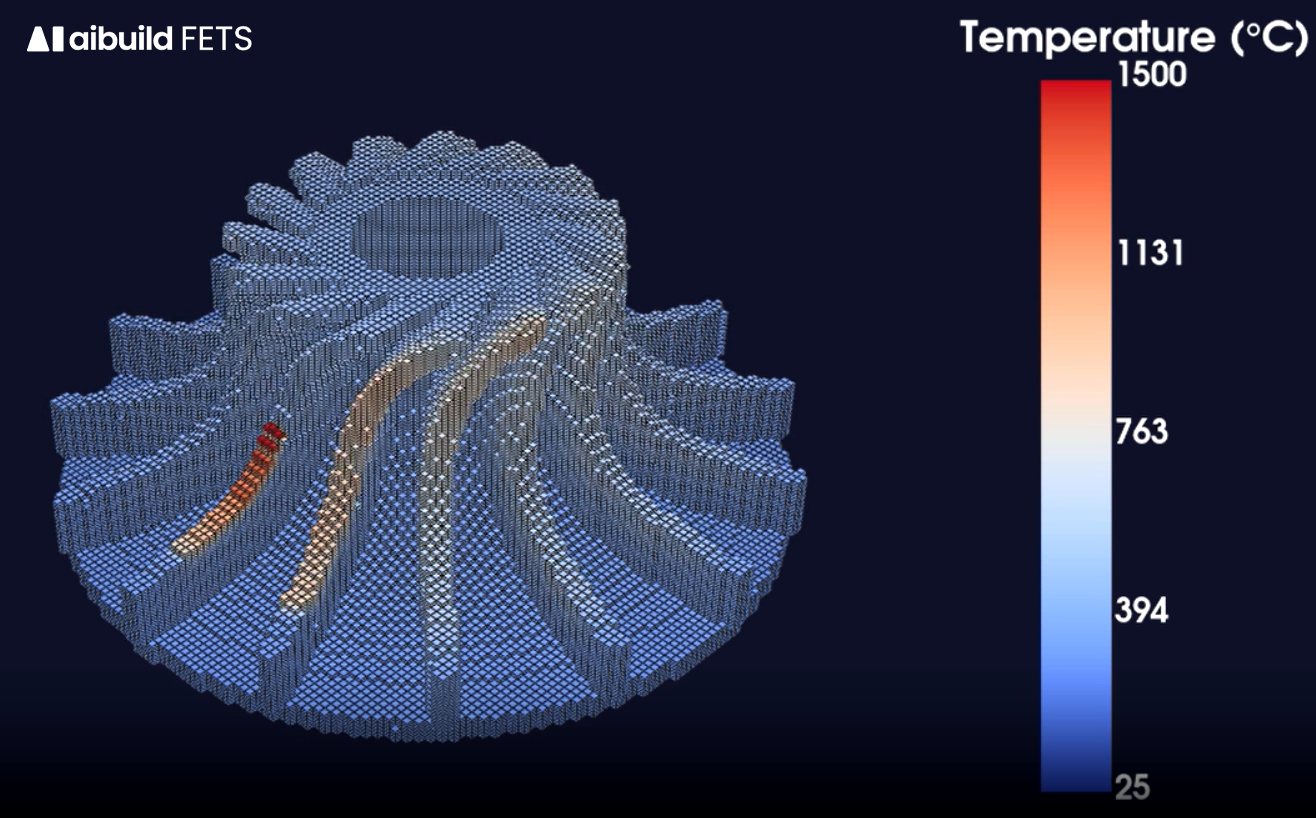
    Aibuild FETS simulation showing temperature distribution across a 3D printed structure. Image courtesy of Aibuild.

    AIbuild says that, as well as different materials and processes, the cloud-based tool can work with different CAD software while being easy to use. Warping, sagging, and intra-layer bonding are all very typical problems for people making large-format 3D printed parts. This tool will make many people’s lives easier. New parts can be made much faster with this tool, and getting a first new part right the first time will be more likely. Companies will be more efficient, while users should get parts faster. This is a great capability to have.
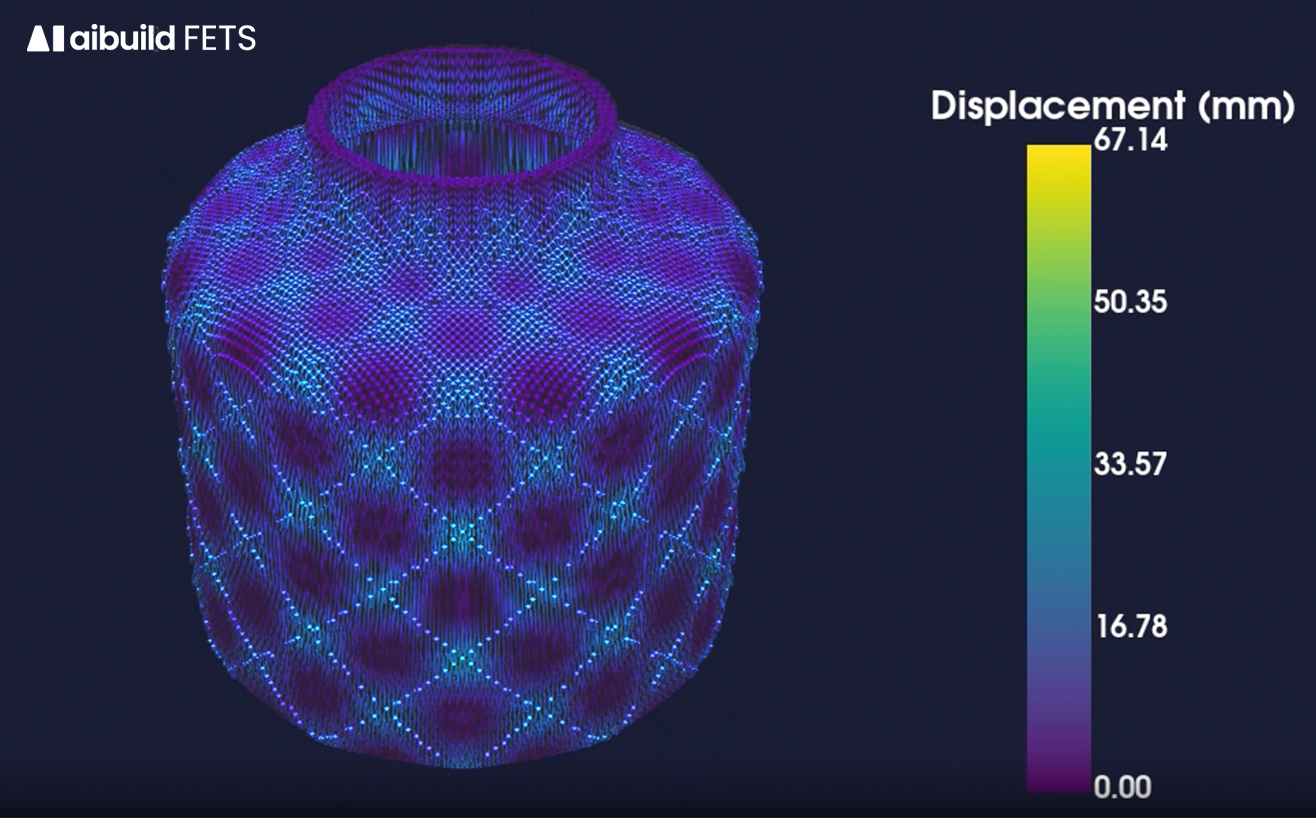
    Aibuild’s FETS simulation showing displacement distribution across a 3D printed lattice structure. Image courtesy of Aibuild.

    What’s more, a lot of people who use AIbuild are system integrators. Typically, robotics integrators make a lot of the DED, cement, and large-format polymer 3D Printing systems. A lot of these are custom, so fast simulation will help them develop these unique systems faster. Also, a robot arm integrator who has built a polymer extrusion system will be more likely to apply that expertise to building a DED system. Their customers can also get up and running without much in the way of 3D printing expertise. In large format, there are a ton of companies completely new to 3D printing. Large-format parts are very different, and printing is very different from desktop systems. So if you are experienced, then your Material Extrusion design rules and Dfam ideas will not translate exactly to large-format parts. Many people are also making unique, large-format parts. A single tool to transport a single large turbine on a truck is printed, just once. So accessible simulation for these guys is extra important and helps them with an endless stream of unique parts.

    So this is an excellent move by AIbuild to make their platform more valuable to their integrator and end user partners. At the same time, the company is expanding into Aibuild OS, which uses AI to make workflows simpler. On the whole, the firm seems to be making itself an invaluable tool that end users of large format systems will live with day to day. They’re moving from a company that powers your back end to one that will power your manufacturing business, whether you’re an integrator or a company using a 3D printer to make parts. I love what they’re doing and think that this is a great move for the company and our industry.

  • Asia AM Watch: Creality Launches $177M Hong Kong IPO as HKEX Trading Debut Nears

    Creality has formally launched its Hong Kong initial public offering (IPO), marking one of the biggest public market moves by a 3D printing company in 2026 and offering a new look at the growing global influence of Chinese additive manufacturing (AM) firms. The Shenzhen-based company plans to raise HK$1.38 billion (roughly US$177 million) through the offering, with trading on the Hong Kong Stock Exchange (HKEX) expected to begin on May 29 under the ticker symbol 3388.HK.

    According to Hong Kong IPO filings and other reports, Creality is offering more than 73 million shares at HK$18.80 (US$2.40) per share. The company reportedly opened the public subscription period on May 20, with retail subscriptions expected to close on May 26.

    Creality booth at Formnext Asia Shenzhen 2025. Image courtesy of Sangmin “Simon” Lee/3DPrint.com.

    3DPrint.com first reported on Creality’s plans to go public in 2025, when the company’s possible Hong Kong listing was still in its early stages. At the time, the potential listing raised questions about how a major Chinese consumer 3D printing company could affect the broader AM market and the broader public industry landscape. Nearly a year later, those plans are now moving onward, towards an actual market debut.

    Creality’s current HKEX offering follows earlier listing efforts in mainland China and Hong Kong. The company began preparing for a mainland China A-share listing around late 2023 or early 2024, when Chinese reports say it entered IPO counseling with the China International Capital Corporation (CICC), one of China’s largest investment banks. However, Creality ended that process in mid-2025 and shifted to Hong Kong. The company first filed for a Hong Kong IPO in August 2025. In February 2026, Creality received approval from Chinese regulators for the overseas listing. By March 2026, the company had updated its HKEX filing, and on May 11, it passed the HKEX listing hearing before launching the current offering on May 20.


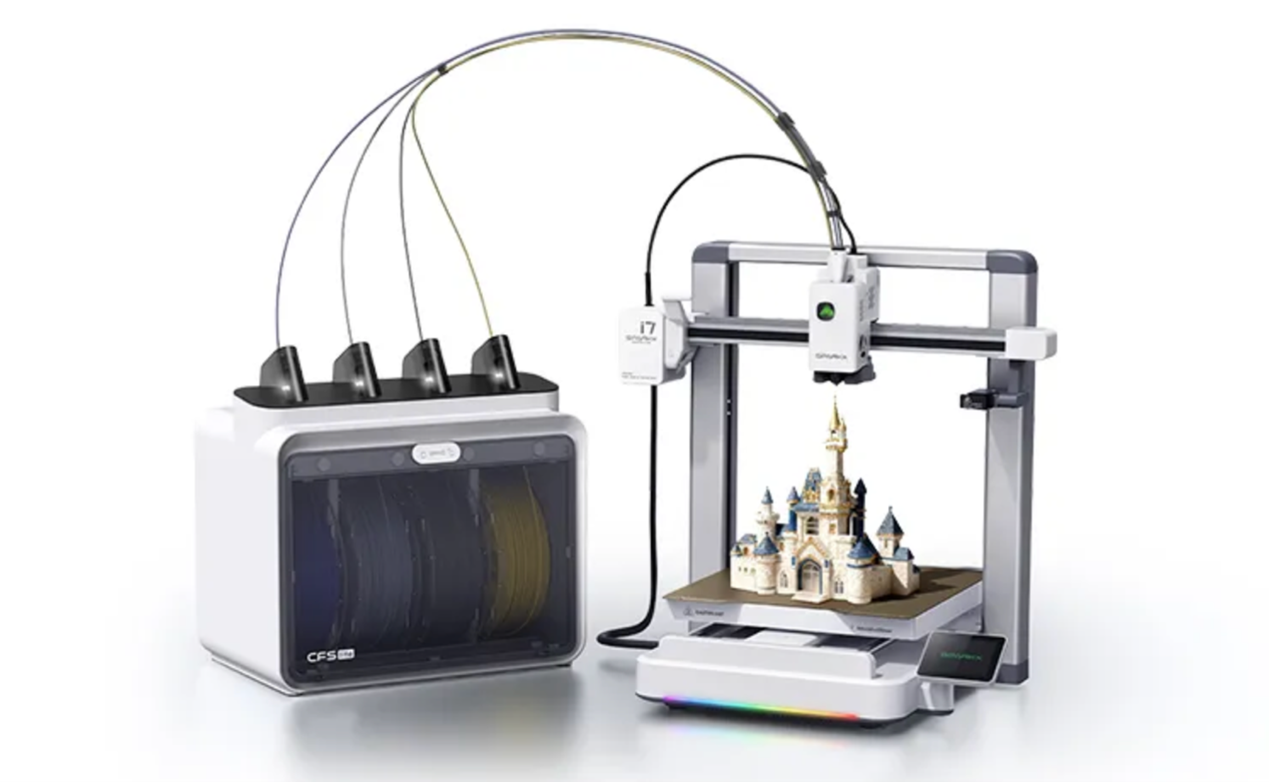
    Creality SPARK i7. Image courtesy of Creality.

    While many public 3D printing companies in North America and Europe focus on industrial manufacturing, aerospace, and metal printing, Creality built its business around lower-cost desktop 3D printers for consumers, schools, hobbyists, and small businesses. Over the last decade, the company became one of the best-known names in consumer 3D printing, especially through affordable machines like the Ender series. But the market around these systems has also evolved. Many desktop printers today are being used for small production runs, print farms, tools, fixtures, aftermarket parts, and other real manufacturing work, not just hobby projects or prototyping.

    What’s more, Chinese 3D printing companies have been expanding quickly in recent years, especially in lower-cost hardware markets. Companies like Creality, Bambu Lab, and other Chinese manufacturers have aggressively expanded into global desktop 3D printing markets by releasing faster, cheaper, and more user-friendly systems at a speed many Western companies have struggled to keep up with.

    We can see that shift happening across much of the 3D printing hardware market. Chinese companies are now major players in desktop FDM printers, resin systems, metal 3D printers, and materials, often bringing out new machines faster and at lower prices than many Western competitors.

    Creality’s scale may still surprise parts of the industrial 3D printing industry. The company is not usually mentioned alongside industrial names like Stratasys, 3D Systems, or EOS, but its printers are everywhere. Over the years, Creality has built a massive global user base through large reseller networks and strong online maker communities.

    The IPO also shines a light on a different side of the 3D printing market than the one public investors usually hear about. Most publicly traded 3D printing companies are tied to industrial manufacturing, and many have struggled in recent years with weak sales, falling stock prices, and restructuring efforts. Creality is different. The company built its business by selling large volumes of lower-cost desktop 3D printers.

    Creality is very popular with hobbyists. Image courtesy of Creality.

    The offering is being sponsored by CICC. Reports also say several major investors have already committed to the IPO ahead of the expected market debut. Those investors reportedly include Taikang Life, CITIC Industrial, and Jump Trading.

    Earlier this month, Creality moved closer to its Hong Kong listing when its post-hearing documents appeared on the HKEX website, one of the final steps before the company begins trading publicly. If the IPO proceeds as expected, Creality is expected to begin trading on the HKEX, completing one of the largest 3D printing IPOs seen in recent years.

  • Soiboi Soft: Making Soft Robotics & Microfluidics Genius Look Easy

    Many YouTubers are talking heads with a keyed-up, almost manic, enthusiasm. In 3D printing, some give useful reviews. We’re also getting people who are showcasing very good 3D printing advice. And some people are designing and making innovative things a reality with 3D printing. But still… nothing prepared me for soiboi soft. Months ago, I saw a video explaining how to use additive and other techniques to make a soft robot snake.

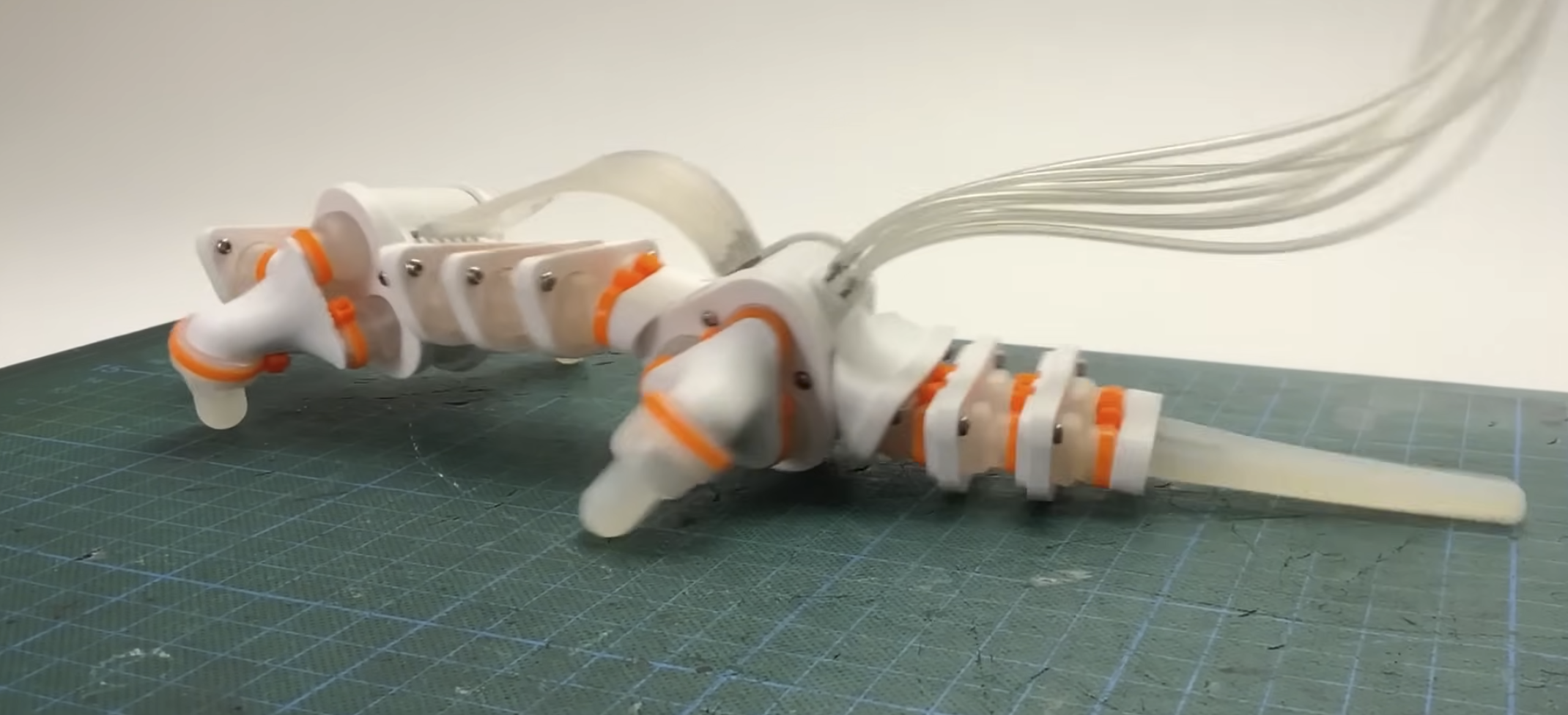
    Microfluidic Salamander Bot. Image courtesy of soiboi soft.

    Robot snakes have been around for a bit. I can remember that a Stratasys reseller did one over a decade ago. There are lots of soft robotics 3D printed robot snakes as well. They often use 3D printed molds, 3D printed elastomeric parts, and conventional techniques. But soft robotics is a perennial lab experiment looking for an application. And a YouTuber showing off a good video on how to do soft robotics creations could very well aid us. What if lots of people turned to soft robotics for solutions? It would be great if someone explained how to combine soft robotics with 3D printing to create effective devices. The videos were also realistic, well-made, and inspiring. They racked up less than 10,000 views. But who knew, this could be a fun ride.

    Later, a video explained that soiboi soft would be looking to microfluidics to make its soft robots more functional. He wanted to create a “nervous system” to allow his robots to be “unethered.” He aimed to make untethered robots with power and control. He was also interested in using microfluidics and soft robotics to make logic gates. OK, so at this point, I was hooked. I mean, I really believe in the power of microfluidics, and the combination with soft robotics was proving to be promising in research. But was I really going to be able to passively watch as a YouTuber did cutting-edge integrations of microfluidics and soft robotics online?

    Yes, and you can too. The next video made a bioinspired salamander-like microfluidics bot. And not only was the video inspirational, but it also explained the philosophy behind what he was doing. He looked into making a series of diaphragm pumps into a salamander-like robot.

    A nervous system for squishy robots. Image courtesy of soiboi soft.

    He then also explained how he wants to make air like PCBs. Microfluidic circuit boards were shown with a “brain.” Furthermore, he showcases an ant-like walking pattern.

    Next, he made “microchips,” or an air-powered nervous system for his robots. And he used the soft, muscular air-powered logic circuit as the core of this assembly. The central microfluidic unit is printed while the silicone parts are molded. Here, he uses a vacuum to “turn off and on the circuit” in a transistor. He then built an air-powered walking logic board.

    He then showed off multiplexing, in which his 3D printed logic circuits power a matrix that lets him make a display. When a solenoid changes, a vacuum is created, creating a vacuum for that pixel. With multiplexing, he shows how 8 valves can replace 16. As an aside, he shares how he gets beautiful translucent parts on a desktop machine with 100% infill, over extrusion, 105% flow, at 230°C, a 0.2mm nozzle, 15 mm/s print speed, and aligned rectilinear infill. He gets beautiful parts that he uses for his microfluidic boards. The parts are also more airtight.

    And now soiboi soft has showcased a clock with a 3D printed vacuum microfluidic display. It’s beautiful, mesmerizing, and a huge leap forward in practical research as entertainment. If you are even a teeny bit interested in microfluidics or soft robotics, watch all these videos. They are an amazing journey into some truly inspiring cutting-edge work on YouTube, of all places.

    Now with YouTube, soiboi soft can share his creations with the world. You could look at his attempts at making microfluidic “brains” and motion to see the future of numerous 3D printing applications that could become very relevant. What’s more, soiboi soft is using desktop Bambu Lab printers to make all his parts. So perhaps you could do something so remarkably cutting-edge, too. What’s more, with his 3D printed microfluidic soft robotic clock, soi boi could have a real winning product on his hands.

  • 3D Printing News Briefs, May 23, 2026: Inserts, Racing, Cultural Heritage, & More

    In this weekend’s 3D Printing News Briefs, 3D People has integrated threaded inserts into its online quoting tool, AM Solutions has introduced a more compact solution for automated cleaning and surface finishing, and the new Cadillac Formula 1 team used several 3D Systems SLA printers to speed up wind tunnel testing and parts production. We’ll finish up with an interesting historical preservation case from Artec 3D.

    3D People Integrates Threaded Insert Capability into Online Quoting Tool

    London-based 3D printing service bureau 3D People has improved upon its threaded insert capability by integrating the option into its workflow and making these available directly through the online quote tool. This may not seem like a big deal, especially because 3D People has offered these for many years, but the ability to configure them during quotation is new—this makes it easier to standardize a 3D print job’s fastening requirements over repeat orders or multi-part projects. By using threaded inserts rather than plastic threads alone, you can elevate a 3D printed part to something that will reliably work in the real world, not just as a prototype. 3D People customers can now specify and order insert installation as part of the bureau’s self-service workflow, which streamlines everything. Plus, 3D People now also offers dedicated installation equipment, with a standard option of a high-performance Tappex self-tapping metal insert. Heat-set inserts is a secondary option for 3D printed parts where the geometry restricts installation clearance around a hole.

    “Additive manufacturing is about more than just printing geometry. It’s about delivering complete, usable parts. By incorporating threaded inserts in-house, we’re removing another barrier between design intent and real-world application,” said Sasha Bruml, Co-Founder of 3D People.

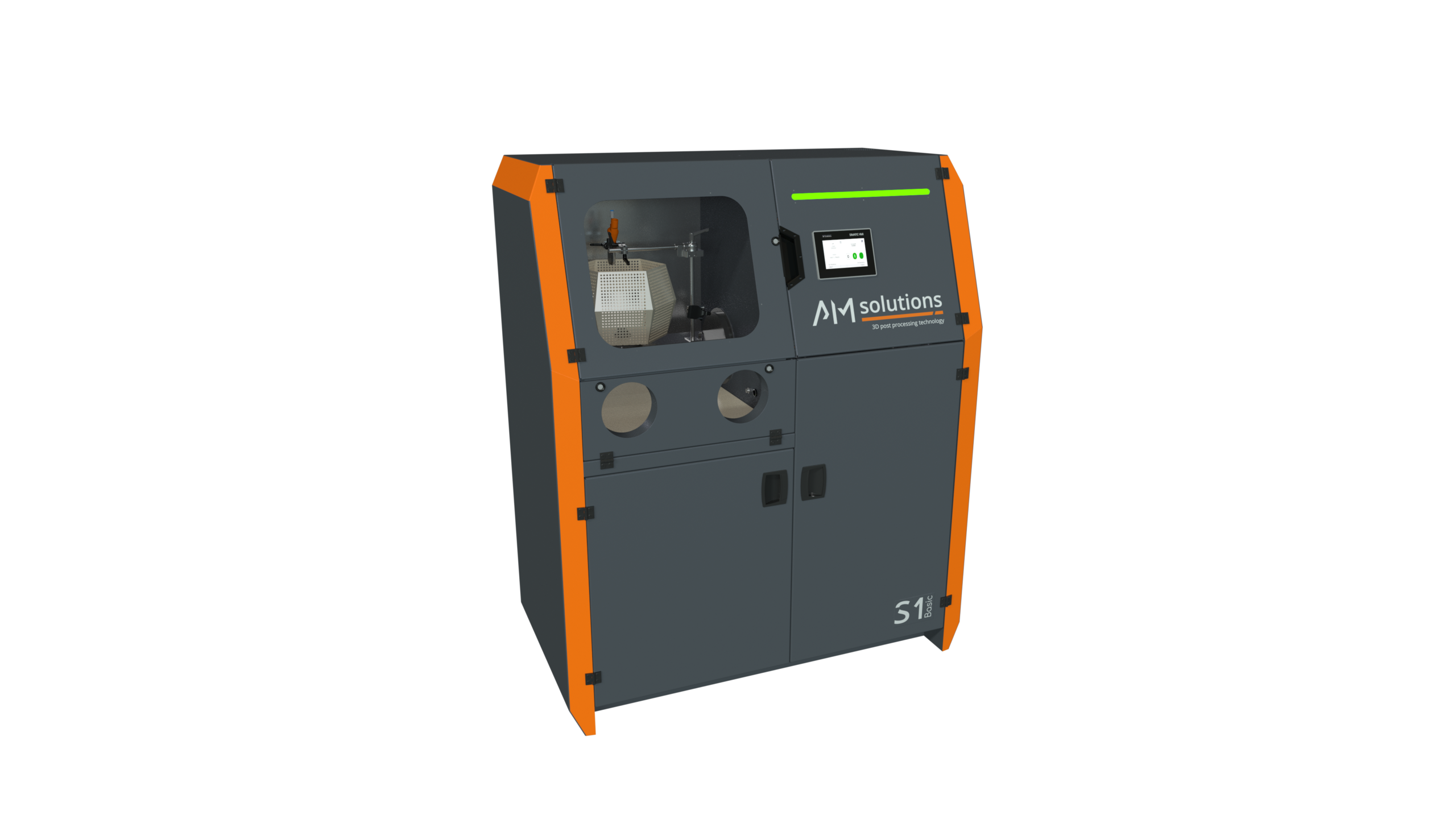
    AM Solutions Premiering Compact S1 Basic at 3D Print Lyon

    At the upcoming 3D Print Lyon show in France, AM Solutions – 3D post processing technology will premiere its latest post-processing solution. The S1 Basic is a compact, industrial, entry-level system for the automated cleaning and surface finishing of polymer 3D printed parts. In the entry-level segment of industrial AM, demand is increasing for automated post-processing solution to match more compact 3D printers for smaller batch sizes and parts. The new S1 Basic was developed to meet this demand, designed specifically for the automated cleaning and surface finishing of smaller batch sizes of polymer 3D printed parts. AM Solutions has plenty of experience in industrial post-processing technologies, shot blasting in particular, and created the S1 Basic to be stable, user-friendly, and robust. The S1 Basic will be available for purchase once it premieres live at 3D Print Lyon. As part of the official product launch at the event, the company will give a detailed technical presentation of the system.

    “We see printer manufacturers clearly intending to provide solutions for entry into additive manufacturing at an industrial level, alongside large, high-performance systems for series production. Smaller, more accessible products are lowering barriers to market entry, but expectations for part quality remain consistently high. Regardless of this development, we recognized the need for a compact, industrial post-processing solution early on and began developing a corresponding system,” said David Soldan, Head of AM Solutions – 3D post processing technology. “With the S1 Basic, we will offer a commercially available product starting in June that fills this market gap, particularly for cost-effective and reproducible post processing of small batches.”

    You can see the new S1 Basic for yourself at 3D Print Lyon, June 2-4, at the AM Solutions / Rösler France Booth C10 in Hall 7.

    3D Systems’ SLA Technology Helps New Cadillac Formula 1 Team

    The newest entrant to the FIA FORMULA ONE WORLD CHAMPIONSHIP is the Cadillac Formula 1® Team, which had its first U.S. home race in Miami earlier this month. The team has moved from pre-season design and development into in-season development, and 3D Systems was an integral part of this phase. Ahead of its debut, the Cadillac F1 team used seven of the company’s large-format SLA 3D printers to help speed up critical wind tunnel testing and parts production, along with Accura® Xtreme White 200Accura Xtreme Black, and Accura HPC materials, and 3D Systems software. These printers are meant for high-quality, efficient production, achieving sharp corners, embossed feature details, and smooth layer lines on angled faces. Additionally, the 3D Systems SLA printers enable tool-free printing, which reduces both costs and lead times. All of these qualities are why the Cadillac F1 team chose 3D Systems. Teams who race with FORMULA 1 are under extremely exacting requirements, so the Cadillac team worked with the global 3D Systems’ Application Innovation Group (AIG) to co-develop these solutions.

    “3D Systems was founded on innovation, pioneering the additive manufacturing industry and we are continuing to lead it into an era of high-precision, highly repeatable production at scale. We are pleased that our work has enabled Cadillac Formula 1® team to enter the 2026 FORMULA 1 season despite the short timelines and strict qualification conditions,” said Elvis Perez, Senior Vice President, Sales, 3D Systems.

    Using Artec 3D’s Scanners to Digitize Historic Castle in Japan

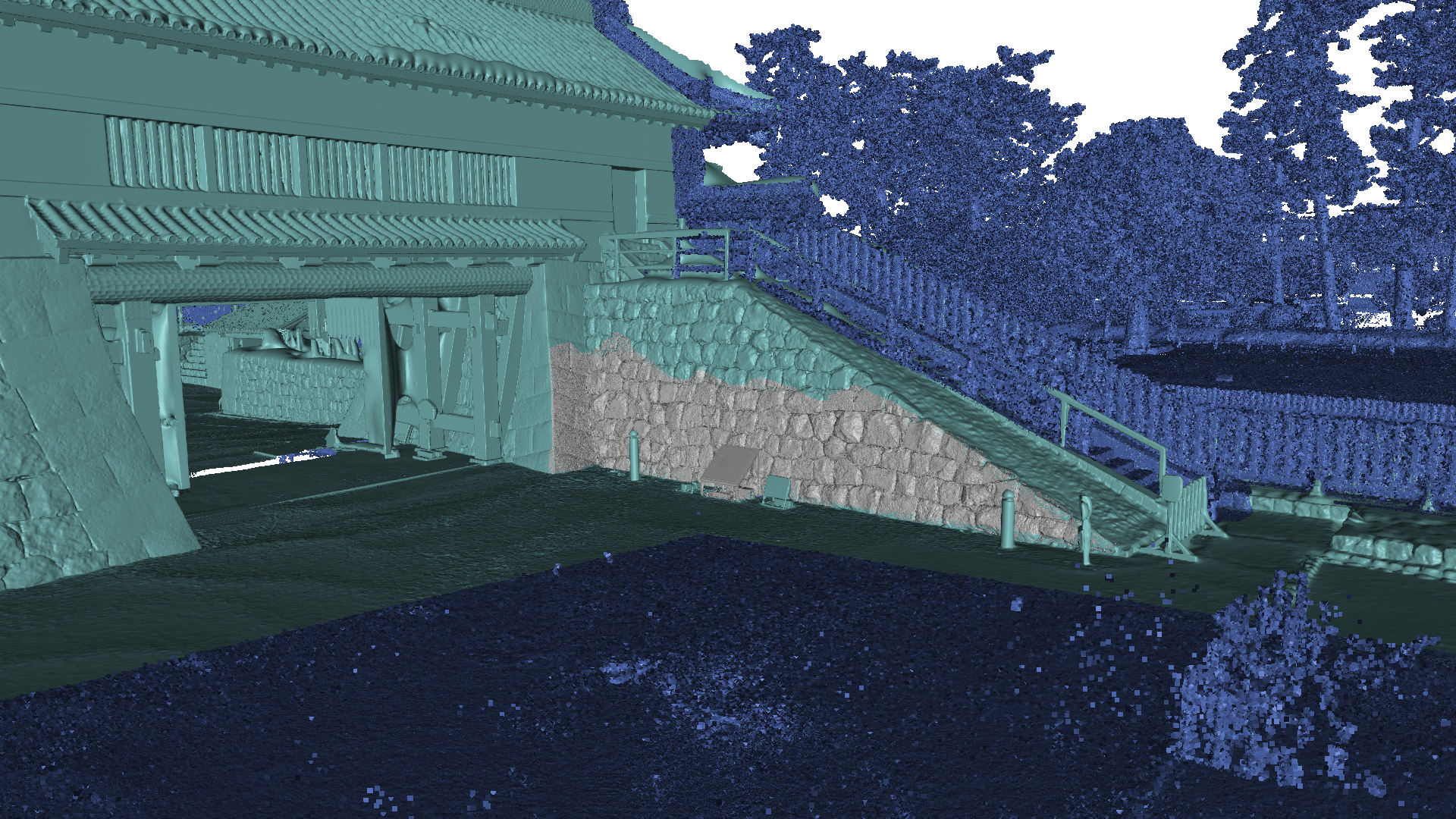
    Artec Jet (dark blue), Artec Ray II (light blue), and Artec Leo (grey) point cloud data fused together for high detail on every scale.

    Odawara Castle in Japan was built more than 500 years ago, and was fought over for generations due to its strong fortifications. But time hasn’t been too kind to the historic structure, though it was made a heritage site in 1938. So, while visiting the country on a recent trade mission, the Artec 3D team scanned and digitized the whole castle for heritage preservation and future restoration projects. In order to get every single detail, down to rivets on the gates, the team used not one, not two, but three of its scanners to accurately capture a single, high-density, interconnected point cloud. As the castle’s outer perimeter is 9 km long, and it was open to visitors, subtlety and speed were crucial in the 3D scanning process. The team used the Artec Ray II to scan the inner courtyard and gate, and the handheld Artec Leo for smaller details. But the lion’s share of the work was completed with the Artec Jet, which has a 300 m range and was attached to a backpack to scan the castle on foot; the scanner’s remote app offered real-time feedback, which helped with accuracy and speed. The data was sent via cloud sharing to Artec’s headquarters in Luxembourg to be processed in Artec Twins software, which enabled merging of data from all three scanners. The final dataset could be used for virtual tours, continuous monitoring, and even to create 3D models of the castle.

    “Artec Jet scans in a linear fashion. If it takes you two minutes to walk, it’ll take two minutes to scan – the complexity of the scene has little bearing. In the same time it took for Leo to scan 2-3 walls, Ray II scanned a building, and Jet digitized an entire castle,” explained Artec 3D scanning expert Keynan Tenenboim. “Adding in Ray II & Leo was great for areas with accessibility issues – and capturing higher detail around the walls, gate, and courtyard.”

  • The Arsenal of Democracy is Empty: Enter SOUTHCOM’s Autonomous Warfare Command SAWC

    One of the most important things to happen to the US Military in over a decade just happened: SOUTHCOM (The US’ Southern Command responsible for Central America, South America, and the Caribbean) has started an autonomous warfare command. The somewhat awkwardly named SAWC is an important step for the US to develop a scalable, relatively inexpensive autonomous robotic force on land, sea, and air.

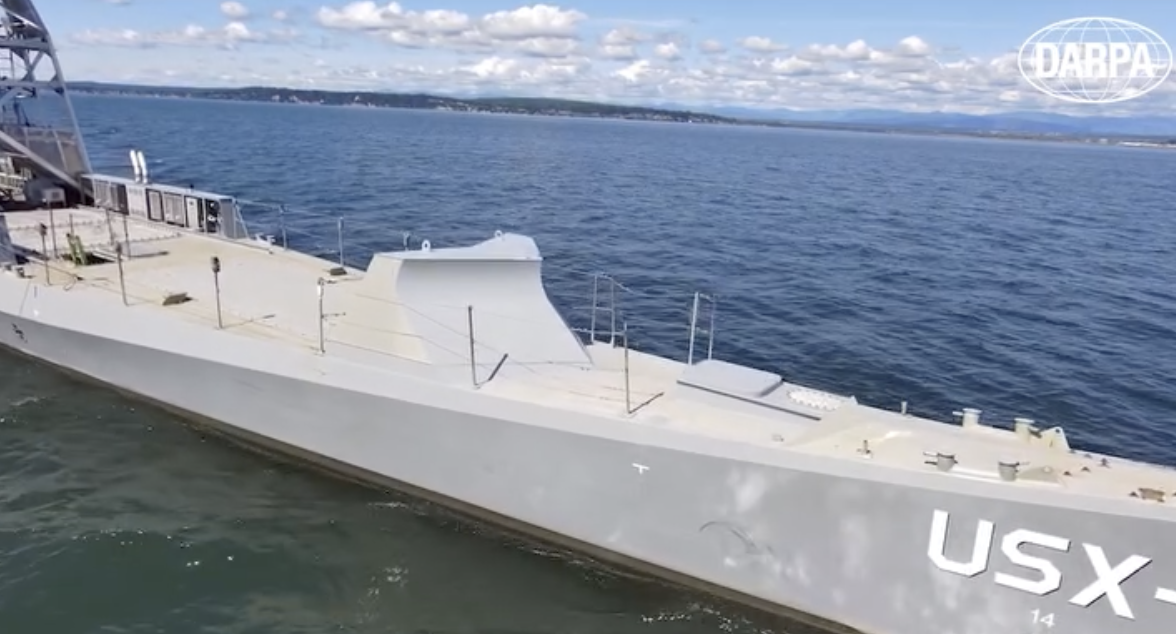
    The USX-1 Defiant is a 180-foot, 240-metric-ton Medium Unmanned Surface Vessel (MUSV) built for DARPA’s “No Manning Required Ship” (NOMARS) program. Image courtesy of DARPA.

    As we know, the US is stuck, with too little in the way of ordinance, too expensive craft, and a declining advantage. There is simply no way the US can win a protracted war with a near-peer. It is simply too expensive for the US to wage war now. A short engagement with Iran cost the US a third of its Tomahawks and depleted around half of all other precision long-range munitions. It also lost around 30 drones and planes, and spent in excess of 40 billion. According to public US estimates, the military spent 25 billion, but I believe those to be too optimistic. They’re also quite ridiculous, really, since they only include estimates for munitions and maintenance, not things like salaries, wear, development costs, the cost of satellite oversight, the cost of support personnel, the cost of in-air refueling, the cost of transport, etc. The US hit over 13,000 targets in Iran and eliminated a lot of its leadership. But Iran persists under new leaders and seems not to have been degraded, with much of its military capability still intact. And, per target, the cost to the US was over $1.9 million; I believe the actual cost is far north of $3 million. Even the lower estimate of $1.9 million per target is absurd.

    Team Cerberus at DARPA SubT Urban Circuit (Feb 2020). Image courtesy of DARPA.

    The initial Iraq invasion cost $54 billion in 2004 dollars, maybe around $94 billion in today’s dollars, and involved 250,000 US troops, 41,000 sorties, and hitting 11,000 targets from the air. A ground invasion of Iran would bankrupt the US before it got anywhere. Iran’s GDP is around $400 billion, ranking it 55th among 195 nations. Rather than a lightning strike, the US should experiment with giving nations 10% of their GDP in return for them doing what it wants; this would be cheaper. Russia launches around 6000 Shahed drones and 2400 missiles at Ukraine each month right now. Iran launched around 5400 missiles and drones at the US and its allies in a month. This led the US to deplete its arsenal. The US has now only half of its Patriots, half of its THAAD missiles, and around 10% of SM3 and SM6 inventory in response. And it did this, combating less than what Ukraine faces every month. The US, with its current inventory and capabilities, in my opinion, would not be able to sustain this barrage for more than a few months. It is, therefore, cost-prohibitive for the US to attack anyone while it is unable to defend itself.

    Coordinated Robotics, a competitor in both the Systems and Virtual Competition of the Sub T Challenge Final Event. They have participated in the Tunnel, Urban, and Cave Circuits leading up to the final event.

    Famously, Roosevelt used the term “arsenal of democracy” to describe the US’s industrial might. Its munitions and weapons-building capacity, along with its role in backing stop democratic governments worldwide with these capabilities. It was already becoming clearer, but it is certain now, the arsenal of democracy is empty. The only way the US can build new missiles and replace existing capabilities at scale is through 3D printing. The US simply has no other option than to use Additive to rebuild its arsenal, and hopefully craft a newer, more cost-effective arsenal. So this is no pie-in-the-sky Star Wars stuff or super-cool research-future things. No, the US right now needs weapons to meet a war that could continue or occur at any month or year to properly be able to defend itself across many scenarios. It’s not about developing a new missile, sometime in the future, but a real capability to launch millions of effective craft within months.

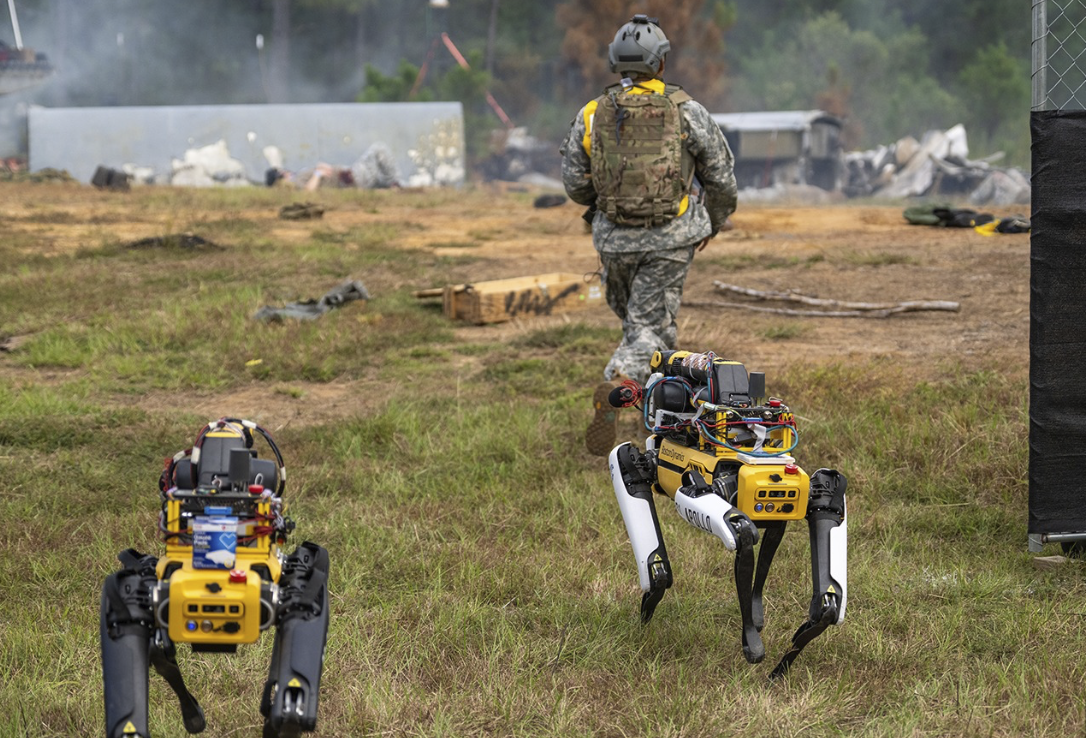
    Two of the robotics units being put to the test by soldiers.

    The tasks of doing this will come down to Marine Corps General  Francis L. Donovan and the new SOUTHCOM Autonomous Warfare Command SAWC. He’s said that,

    “From the seafloor to space and across the cyber domain, we fully intend to leverage the clear superiority of the American defense ecosystem by deploying cutting-edge innovation and working ever closer with our enduring partners in the region to outmatch those who threaten our collective peace and security.”

    Team Explorer prepares for the Sub T Challenge Systems Competition Final Event, a DARPA Subterranean Challenge.

    He will be backed up by perhaps $55 billion in funding from the Defense Autonomous Warfare Group, led by Stephen A. Feinberg, the US Deputy Secretary of Defense. One part of this development will be to field truly autonomous craft and marshaling this capability effectively. Another is to field remotely operated craft in a secure way. Another thing to do is ensure the force can win, or at least act unimpeded, in the Electronic Warfare domain. RF will be of crucial importance. One of the main reasons that most US drones have failed in Ukraine is due to limited EW resistance in an evolving battle space. The US will clearly have to be more fluid and rapid here. They will have to develop a practical command-and-control infrastructure. Hopefully, they have developed something analogous to Ukraine’s Delta situational awareness tool. Commanders and soldiers will have to deal with many more craft than they’re used to. Identifying friend or foe and generally being aware of enemy drone capability will be very important. The SAWC will also need the training and ability to onboard, learn to use, and deploy many craft effectively in concert. Delta helps, but mindset and training will be needed as well.

    EXTREME technologies are now being integrated into fieldable AFRL prototypes to enable next-generation optics capabilities for the warfighter.

    SAWC.will have to develop tactics, ROE, and overall strategies for many different situations. Where can you use a drone force in defending a small forward operating base? Where will we be of use when scouting? Are you even going to do scouting? Do you use armored vehicles? How to safely launch and recover vehicles? All of these, and many more things, will need to be figured out. The US already has LUCAS, a US copy of the Shahed. It also needs to have a Shahed interceptor. The US already has AeroVironment Switchblade and several other usable platforms, as well as FPV or similar. It will also need smaller units to be unobtrusive. It will need inexpensive scouting capabilities, long-range strike drones, long-range heavy carrier drones, medevac or other similar capability drones. One sea, it probably has the Magura capability already, which is great because this can, with AIM9 on board, take out jet fighters, work as a suicide vessel, patrol, and sink ships. Underwater loitering capability, analogous to Ukraine’s Marichka UUV. It will also need long-distance watercraft and heavy transport. On land, a 50-caliber carrier and a robot mortar platform would seem particularly helpful. I’d get a small scout capability, too, but I’m not sure what they’d use it for. Going by the DAWG name, which was the special forces combat unit’s initial name for this, but is now the Departmental vehicle, I’m going to go on a limb here and guess that a lot of their current capability will involve robot dogs? Like the Boston Dynamics dogs that DARPA loves so much? We know that there have been several leases of these that are a bit unexplained. Other than that, it will need sensing capability, ways to deploy sensor networks, and to interpret this data. 

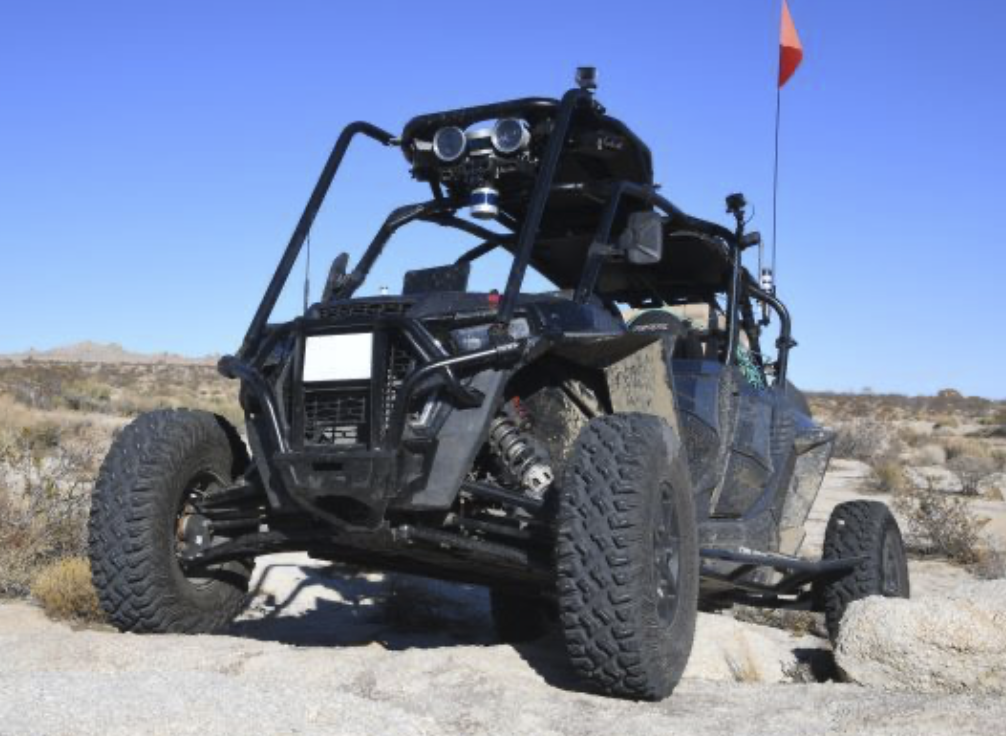
    Demo self-driving combat vehicles on off-road terrains.

    For RF components, assemblies, austere manufacturing, MRO, drone components, fuselages, propellers, and munitions, the need for 3D printing will be the greatest. SLA may be in vogue for some components, perhaps for energetics also. LPBF in metal may be used for some components, as could binder jet. LPBF polymer and Material Extrusion, including large format Material Extrusion, would be most needed, probably. Definitely a lot of the MRO and iteration will have to be done with Additive. A lot of the drones will also be made with additive manufacturing. But, crucially, will SAWC create and operate 3D printing factories? If I were them, I would. It would be the best way to keep costs down. Some remote containerized manufacturing will be used. But I’d go all in and try to make the most of everything myself. That way, I could scale and iterate as the conflict evolved. If I iterate better and field faster, I will be able to, all other things staying equal, win. So, to me, SAWC should develop high-volume 3D printing capabilities to make millions of crafts itself. In the new world, the UAS is a munition, and we will need to be able to develop, change, and field these in their millions quickly. To me, SAWC is a huge thing in 3D printing. The US is looking to deploy an autonomous force across many domains and to implement a total UAS-based system of war and defense. This could be the biggest opportunity for 3D printing ever. We are now, with AI, the key technology that could let the US build a new, cost-effective arsenal that would let it defend itself once again.

    The growing role of drones, autonomous systems, and scalable additive manufacturing in defense will also be discussed at the Additive Manufacturing Strategies UAS: The Present and Future of Drone Manufacturing event on June 30, 2026. Register at the UAS event to find out more.

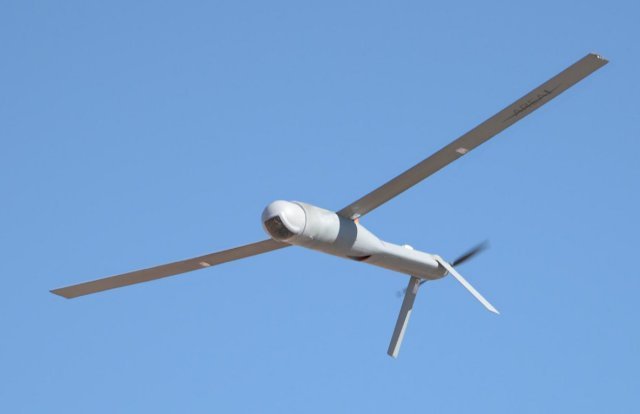
    All Images, DARPA’s Instagram. Yes, DARPA has an Instagram.

  • AM Drilldown: the Beginning of 3D Printing’s Next Phase in the Energy Sector

    For much of the last decade, many have pushed an unjustifiably optimistic view of global energy consumption, along the lines of, fossil fuels are “on their way out.” Sadly, this is still a delusion that stands very much in the way of the laudable goal of those pushing that line of thinking: addressing climate change by transitioning to clean energy.

    Meanwhile, the Iran War is just the latest international development serving to remind everyone precisely how much we all still depend on fossil fuels. Before this, it was Israel’s war in Gaza, and before that, it was Russia’s invasion of Ukraine, which, after a nearly ten-year respite, reintroduced everyone to the idea that oil prices could trade above $100 a barrel.

    Back in the early days of that last-mentioned conflict — likely to soon become the longest war on the European continent in centuries — I wrote a brief series titled “AM Drilldown”, aiming to contextualize the rise of additive manufacturing within the end of the era of cheap energy. However, because global powers, chiefly the US, responded so aggressively to what was, in retrospect, a rather brief period spent above the triple-digit threshold, the topic ultimately lost its prominence in the daily news cycle, and I put it aside.

    The main premise the series was built on was that the decline in Energy Return on Energy Invested (ERoEI) associated with dwindling cheap oil supplies will, over the long run, play a principal role in catalyzing demand for AM. There is a multifaceted rationale for this, from my perspective, but first (even though it’s more or less self-explanatory), let’s just define ERoEI: it is the ratio of the usable energy obtained from an extraction process to the energy required to fuel that process. For a system whose purpose is to create electricity, the consensus is that the ratio should be at least 3:1 to reach an overall economic break-even point for all those reliant on that system.

    One study argues that oil reached its highest ERoEI in 1931 and natural gas reached its highest point in 1945, at respective ratios of 73:1 and 200:1. An article from 2023 on “the plummeting [ERoEI] of oil liquids” puts the current numbers for oil ERoEI at somewhere between 4 and 30, depending on the source location and type of oil, and somewhere between 20 and 40 for natural gas.

    The author of that 2023 article concludes by cautioning about the imminence of an era of “energy cannibalism” for oil liquids, where we’re actually just as much energy is used to extract oil as can be gotten in return, which is, in a petroleum context, the very definition of how at least one thinker frames societal collapse. The author, warning of energy cannibalism, notes, “The concept of energy cannibalism is becoming increasingly relevant, as mounting energy use in oil production means the very resources needed for the transition to renewable energy may be constrained, particularly when viewed from a net-energy perspective and in terms of economic growth.”

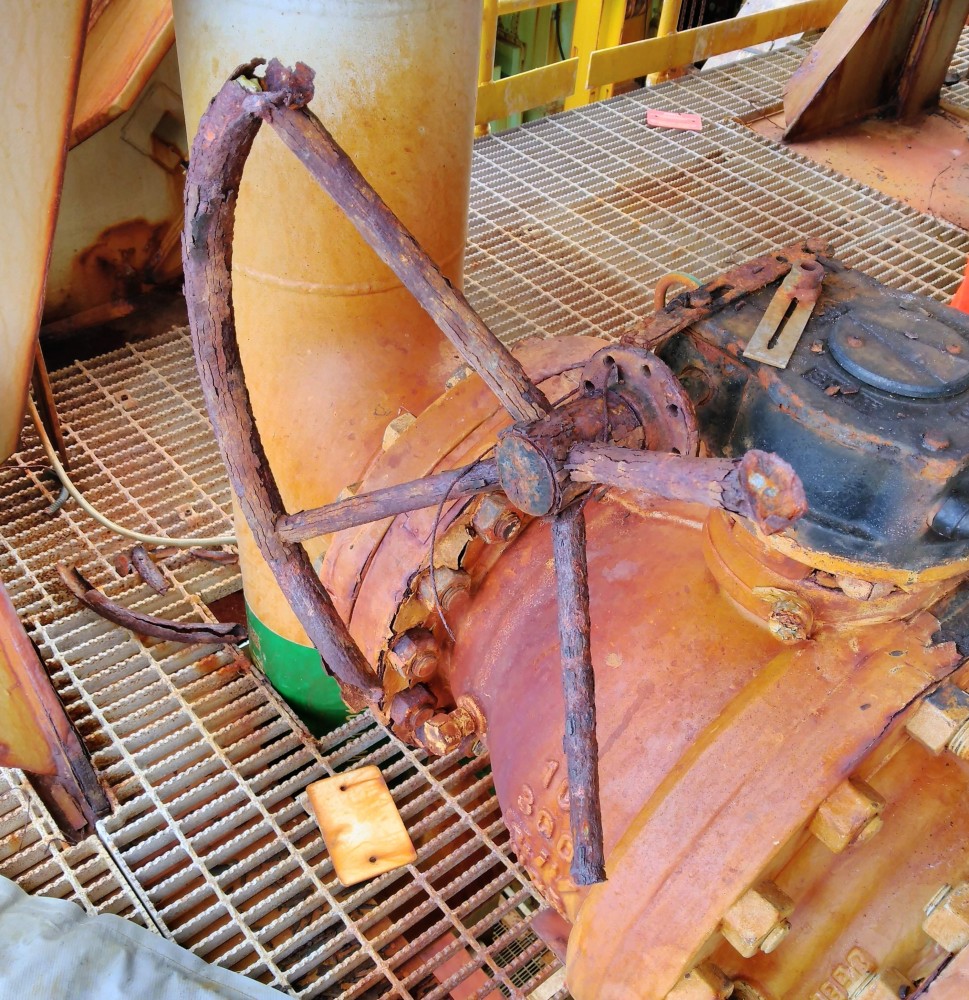
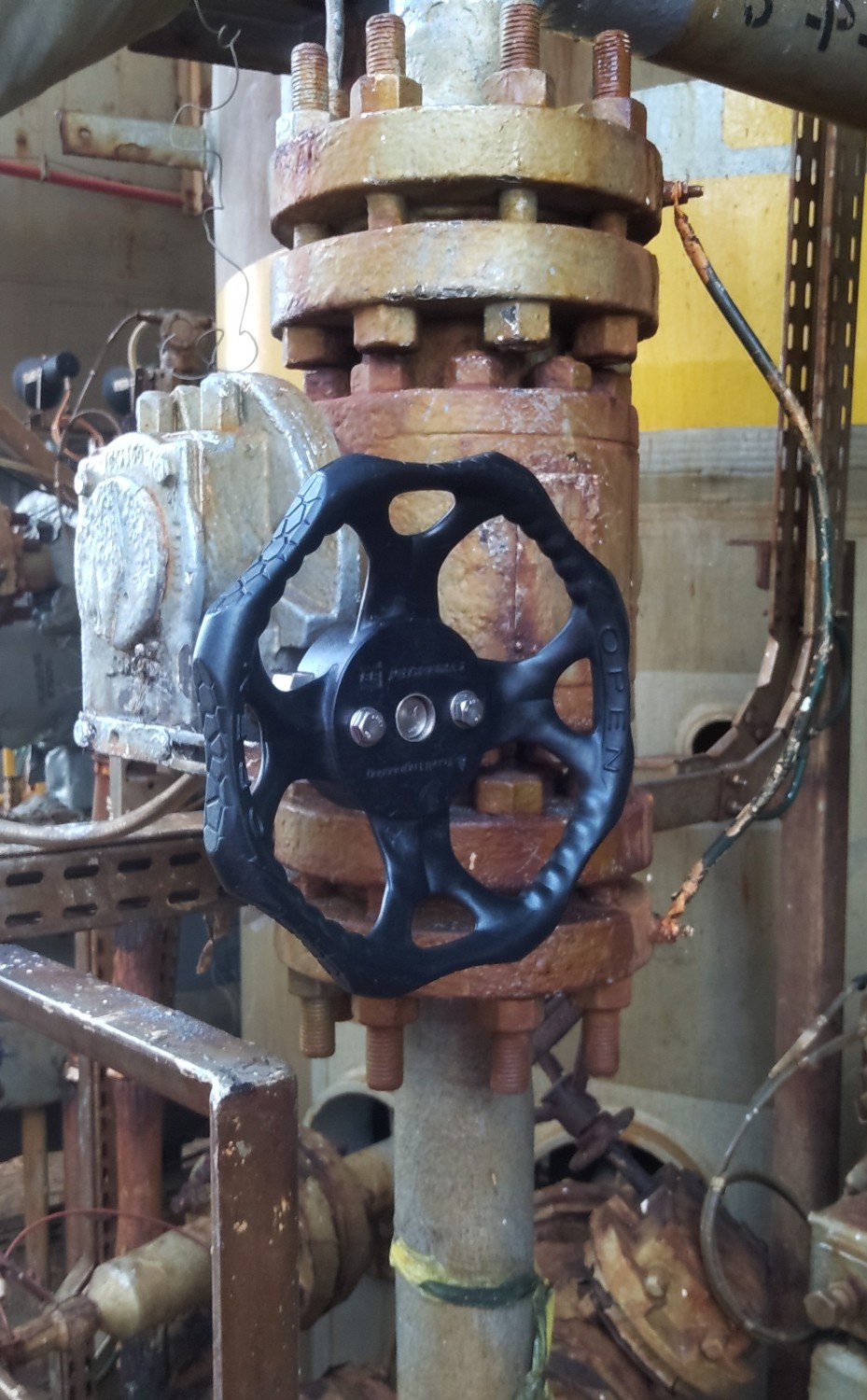
    A corroded metal handwheel that Petrobras’ polymer spare replaced.

    What that means is that, since fossil fuels are required to support the energy transition away from them, the global economy has to start being very careful — and strategic — about how it spends its fossil fuel reserves going forward.

    AM is so relevant against this backdrop, for one thing, because, going forward, material waste will be the world’s least tolerable, and one of the clearest advantages of AM over conventional manufacturing is its ability to minimize it. Currently, however, our entire economy is essentially dependent on wastefulness. This is just another way of stating the same problem inherent in the energy transition: if we could simply conjure the desired scenario into existence, with a clean energy, low-waste economy replacing the prevailing order as seamlessly as one PowerPoint slide replaces the previous one, everything would be fine.

    But a clean energy, low-waste economy can only be produced in an environment where dirty energy and maximum waste are the laws of the land. This is why those responsible for the energy sector status quo, just like those responsible for the defense sector status quo, are now in a position where they have to disrupt themselves. As is already the case with defense, AM will become an indispensable part of that process.

    Precisely this background accounts for what’s so significant about what, on the surface, is a somewhat mundane story about Brazilian oil giant Petrobras using AM to produce a polymer handwheel at an offshore drilling site in Latin America. I say “mundane” because, at this point in the AM industry’s history, a polymer handwheel isn’t such a miraculous technological achievement, especially considering the innovations that emerge from the defense sector’s AM activities on a more or less daily basis.

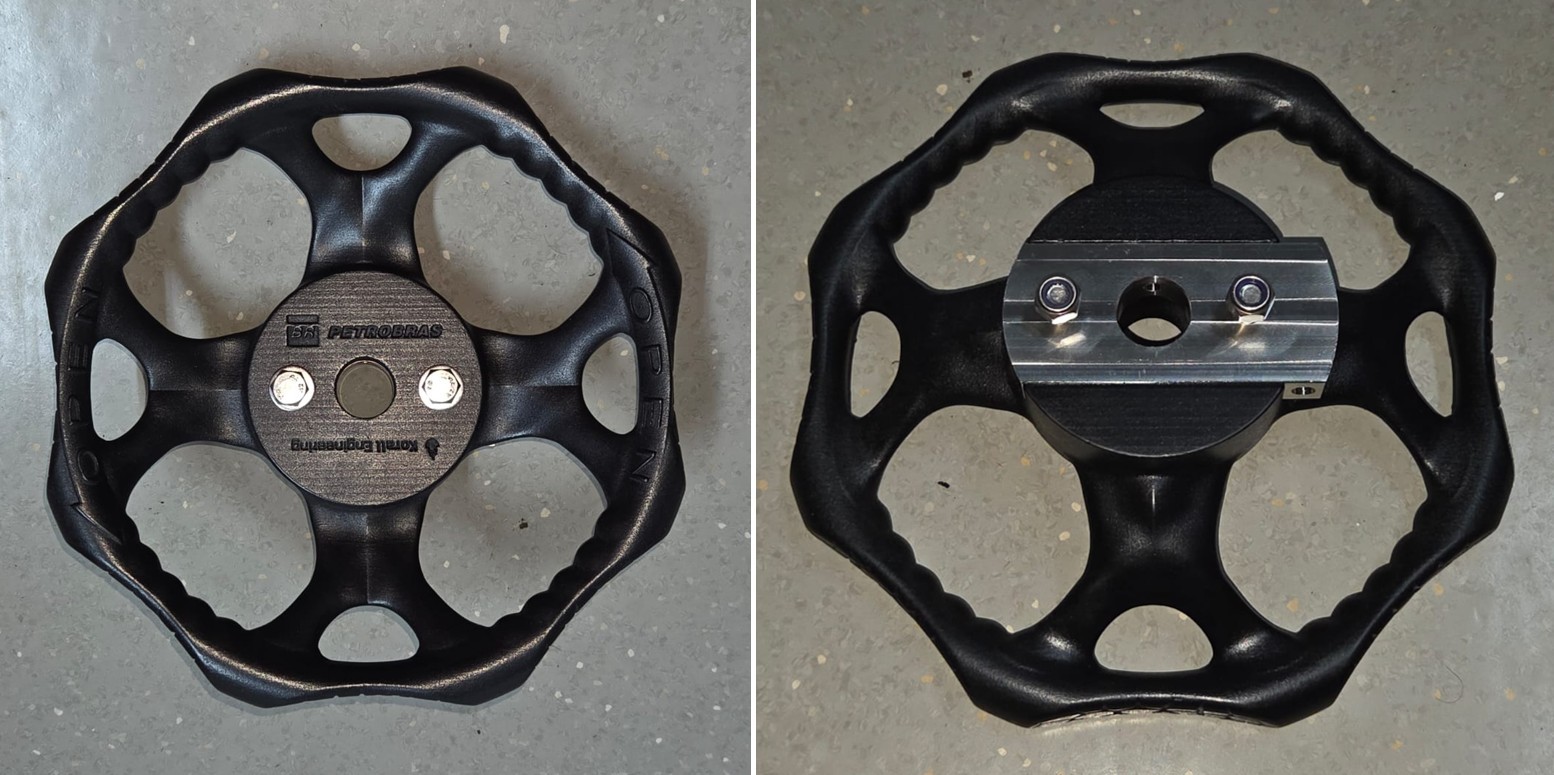
    Non-metallic handwheel, 3D printed by Senai Cimatec using “state of the art” technology from Korall Engineering AS and HP machine.

    However, this goes beyond the typical spare part, as it is the first DNV-qualified polymer component to be installed in the Latin American market. DNV, the world’s premier classification society for oil & gas and maritime, has been leading the effort to qualify spare parts for digital inventory platforms for years. Moreover, Latin America is now arguably the region that will be most significant to the oil & gas sector’s profitability for the foreseeable future.

    The high-performance 3D printed polymer solution.

    The central paradox of the energy transition is that it has the greatest likelihood of succeeding — and I would argue, can only succeed — if it’s led in large part by the oil & gas sector. With that in mind, at some point it will no longer be enough for oil & gas producers to track their ERoEI purely in terms of the energy involved in drilling and distributing fossil fuels (which, from another perspective, counts as Scope 1 emissions). Before too long, any honest accounting of the oil & gas sector’s ERoEI will have to take Scope 2 and Scope 3 emissions into consideration, as well, which means all of the supply chains indirectly involved in the oil & gas sector’s activities.

    To truly accomplish that in full is likely impossible, given that there is virtually no link in all of the supply chains that exist globally that is not tied to oil & gas. But we have to start somewhere, and the ideal place to start may be the oil & gas sector’s own spare parts. Every molecule of hydrocarbons that can be removed from the equation for spare parts like the Petrobras handwheel can improve the ERoEI of the relevant drilling operation, compared to what that would be without Petrobras’s ability to print spares on demand.

    Again, while it’s merely one spare part, it’s also far more than that because of the involvement of DNV and the growth potential in Latin America. In that sense, it is like a foot in the door for AM-enabled digital inventory in a market likely to be disproportionately impactful on the oil & gas sector’s future global sourcing strategies. The same way that Ukraine is a laboratory for 3D printed drones, Latin America could become a laboratory for 3D printed oil & gas spares.

    Won’t things just go back to how they were before the Iran War started, the same way they did after Russia invaded Ukraine? Two things about that: one, I would push back very forcefully on the idea that things did “go back to normal” after Russia invaded Ukraine, given that, in less than four years, the world saw the emergence of another major oil-related conflict, one much more consequential to global energy markets than Russia’s war in Ukraine.

    Secondly, the Iran War and the war in Ukraine aren’t just connected thematically; they’re connected materially, from a diverse range of angles. Most pertinently to the present discussion, the CEO of Saudi Aramco warned in 2022 that the world was running out of spare oil capacity. He and others argued that the real problem, when it came to the impact of Russia’s occupation on global oil markets, wasn’t so much the state of oil supply in 2022 and 2023, but the fact that the world was responding to that near-term crisis by spending all its long-term spare capacity. In a future crisis, in other words, there would be no such cushion to rely on.

    That warning now looks to have been quite prescient, so we should take heed to the CEO’s latest word of caution, that the oil market may not “normalize” until at least 2027. To me, that seems, if anything, very optimistic. While energy markets have become a nightmare to forecast, I don’t think it’s unreasonable to entertain the possibility that what the oil market looks like, currently, is the new state of “normal”.

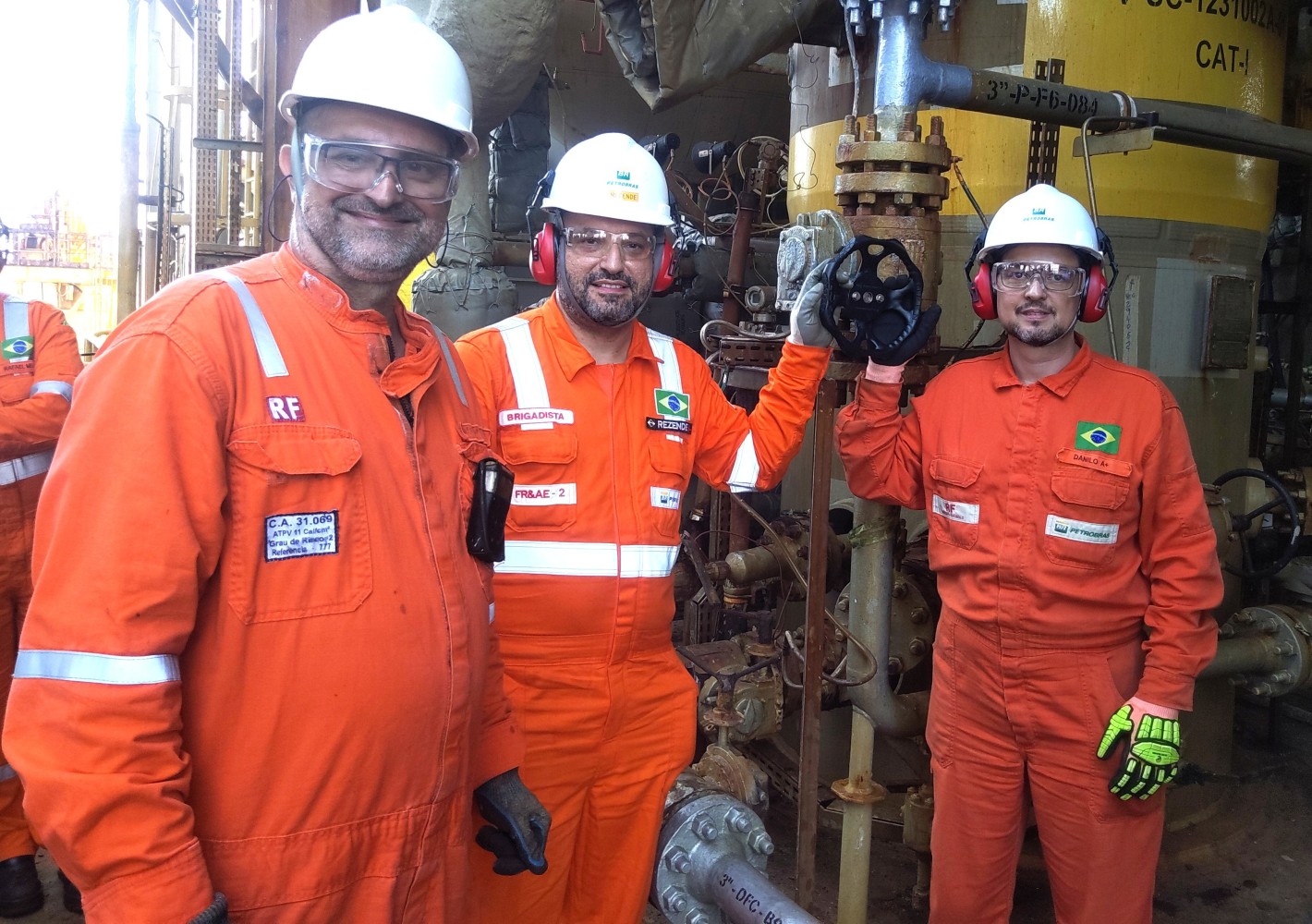
    The team (Rafael Pacheco, Fabiano Rezende and Danilo Cunha) celebrating a giant leap for the Brazilian Oil & Gas industry.

    Images courtesy of Petrobras

  • Australia’s AMCRC Lands AU$11M to Support First Five CORE Projects

    The Australian government launched the Additive Manufacturing Cooperative Research Centre (AMCRC) last year with a commitment of nearly AU$60 million (~$40 million) in public funding, with the AMCRC’s partners from academia and the private sector pledging to add AU$200 million in investments over the following seven years. The AMCRC will leverage AM to benefit the full gamut of strategically critical sectors that comprise Australia’s domestic industrial base, using a matched-funding system to channel resources to businesses capable of executing R&D projects over two-to-five years.

    Now, a year after that initial funding announcement, the AMCRC has announced the first five research projects in its CORE program (which I assume stands for ‘Cooperative Research’). With just under AU$2 million in government funding, the remaining AU$11 million will come from matching commitments by industry partners and be rounded out by AU$7 million in in-kind contributions from AMCRC’s collaborators at research institutions and commercial sites.

    The specific projects haven’t been disclosed yet, although AMCRC said this information will be revealed on a project-by-project basis as each one begins. Additionally, AMCRC did note the sectors represented: “aerospace, mobility and transport, medtech, mining and defence.” Pretty standard targets in the global context of AM acceleration hubs that the AMCRC fits into.

    Despite Australia’s government renewing its prioritization of manufacturing funding in recent years, the nation’s manufacturing sector continues to contract, which is a rather similar state-of-affairs to other nations that have been trying to relocalize their manufacturing supply chains in the 2020s, most notably the US. On the other hand, Australian companies have also managed to make inroads into allied nations’ manufacturing bases — again, the US above all — with the US subsidiary of Australian maritime giant Austal the most prominent example.

    In a press release about the funding of AMCRC’s first five CORE projects, AMCRC Managing Director Simon Marriott said, “This is a significant milestone for Australia’s manufacturing sector. These projects show industry is investing in additive manufacturing not just as an emerging technology, but as a critical pathway to stronger manufacturing capability, more resilient supply chains and globally competitive production. The level of collaboration and co-investment we’ve seen in this first funding round highlights the appetite to accelerate commercial outcomes and bring advanced manufacturing innovations to market faster.”

    AMCRC Chair Susan Jeanes said, “These partnerships are creating the know how, infrastructure and industry connections needed to strengthen Australia’s additive manufacturing ecosystem. Importantly, they are helping translate world-class Australian research into real industrial capability and economic opportunity.”

    Australia is a real wild card. The nation has so many of the necessary ingredients to support a manufacturing rebound, but its geographic isolation and, relatedly, its dependence on the US seem to be immovable obstacles standing in its way. In that sense, it’s a solid symbol for why it’s tempting to view reshoring as nothing more than a pipe dream.

    At the same time, you could also view those same weaknesses as potential strengths, under the right circumstances. The US military is prioritizing Indo-Pacific Command (INDOPACOM) more highly than ever via its advanced manufacturing objectives, which means that we may have reached a moment where the US needs Australia as much as Australia needs the US.

    No one is going to take my advice on this, but that gives me the advantage of getting to throw some outside-the-box ideas out there. If I were running the Australian government, I would become the anti-US, at least in terms of how the US is currently (mal)functioning. A perfect example is immigration. Despite claims from the typical right-wing disinformation campaigns that can be found in every Eurocentric nation across the world, Australia’s immigration inflows have completely stagnated.

    Why not go in the opposite direction that the US and European nations are moving in, and try to actually attract more immigrants — especially those from Southeast Asian populations, who have experience in the semiconductor industry? Australia recently announced it will build its first chip-packaging plant, and I think that AM-backed advanced packaging would be an absolutely genius capability for the nation to put at the center of its economic future.

    The only reason not to do that is that it would ruffle a lot of geopolitical feathers, which is the main thing preventing all bold innovative ideas from getting off the ground these days. Perhaps it would end up being more trouble than it’s worth. But Australia is actually firmly grounded in the Indo-Pacific region; the US mostly just meddles around out there. In the long run, I feel like it’s clear which party needs the other one more.

    Images courtesy of AMCRC

  • Amazon-Backed 14Trees and Tvasta Launch Construction 3D Printer for Remote Sites

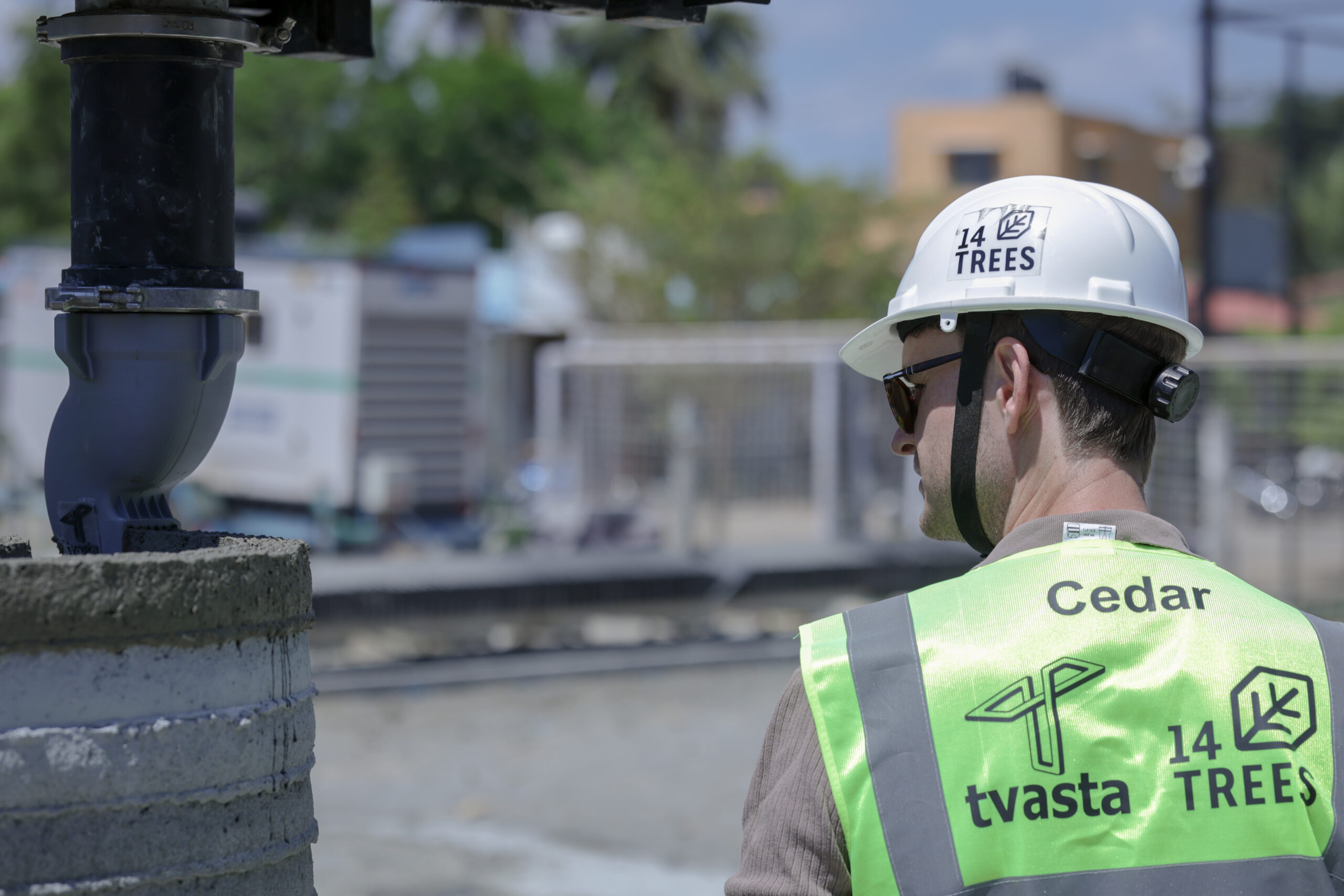
    14 Trees and Tvasta have launched a new construction 3D printer. The Cedar is a large-format gantry-style printer similar to the COBOD. Tvasta is an Indian automation firm founded in 2016 that produces 3D printers, software, and pumps in India. 14 Trees, meanwhile, is a joint venture between cement company Holcim, British International Investment, and Amazon’s Climate Pledge Fund. This is, of course, hilarious, akin to working with Philip Morris and the government to finance the manufacture of light cigarettes overseas.

    But 14 Trees has experience in difficult places and has been engineered in India, and with the experience of working in those places, it should help the printer work in remote environments. It’s one thing to make something that works perfectly in a factory, but another to get it to work well in the field amid intermittent power, dust, and poor roads. In remote, austere environments, the need for 3D construction printing is greatest. What’s more, in these environments, construction 3D printing becomes more financially viable than alternative methods that rely on easy road transport of goods.

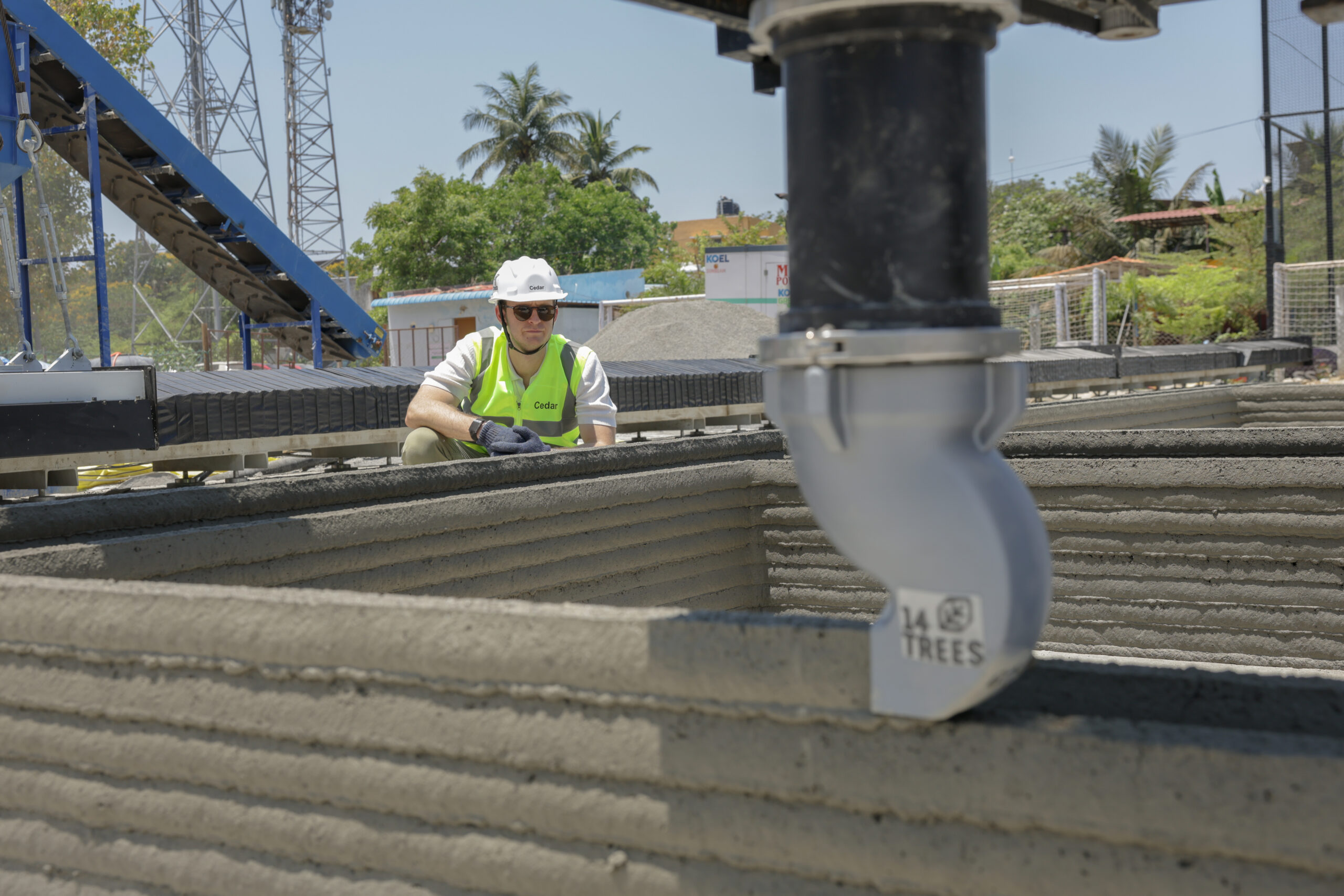
    The printer has a total area of 240 square meters. The printer has a height of 10 meters, the mixer has a capacity of 250 liters, and can mix up to 5 m3/hr. The pump can deliver up to 5 m3/h at 60 bar, up to a distance of 100 meters.

    The Cedar 3D Concrete Printing in action. Image courtesy of Tvasta.

    The printer is meant to be a reliable, scalable device. The system uses AI for material characterizations and has been optimized for regular concrete, which should make adoption easier. The AI system can take your local formulations and analyze the best possible ones for a particular application. Using regular concrete also means you can use it wherever you are printing, which is much cheaper than importing some or all of it.

    14Trees, CEO Francois Perrot said,

    “Automated construction technologies have already demonstrated strong technical viability. For these technologies to scale across the global construction industry, they must also make strong economic sense for developers and contractors. Cedar was designed to dramatically improve project economics, lower adoption barriers, and enable construction companies to deploy automation at scale.”

    Meanwhile, Tvasta CEO Adithya V S stated that,

    “By combining advanced manufacturing capabilities with cutting-edge robotics, software, and scalable engineering systems, Cedar delivers a robust and reliable platform built for deployment across highly diverse construction environments globally.”

    The Cedar 3D Concrete Printing in action. Image courtesy of Tvasta.

    The hopeful thing about this collaboration is that the two have previously worked together on building projects around the world. This means that this device is steeped in experience. That would lead to a world-ready 3D printer made to work at the construction site. On the downside, these two decided to make their own printer rather than turn to their erstwhile supplier COBOD. Will more firms want to do the same? Will people develop their own solutions globally? Will we see the emergence of many more whole solution firms? Or will there be a stable group of vendors supplying the whole solution? Or will we see people just sell one part of the solution? It’s early days yet, so we don’t know how this industry segment will develop.

    So far, in the gantry space, COBOD has led by a country mile. The Danish firm is trusted and a true global player. Maybe new firms will join it and together propel the market forward. Construction 3D printing is a burgeoning field with great potential. The most interesting area to me is austere construction. Construction of infrastructure and buildings in remote areas that are difficult to access by car. There, the technology makes the most sense to me. So this partnership is notable and may point to a future in developing nations and remote areas. At the same time, on-site printing for large construction projects in wealthier, more accessible parts of the world makes sense because it reduces labor costs. And making precast parts efficiently in a factory also makes a lot of cost-saving sense. In all of these modalities, gantry systems compete with robot-arm systems. For large projects and long-term steady printing, the gantry clearly wins. The robot arm is better at quick setups and faster prints of smaller areas. With a new entrant, we should see a sharpening of the differences between players. Companies will increasingly specialize and differentiate themselves for specific clients and applications. 3D construction printing is growing, and new competition should spur more innovation and growth in this vibrant segment of our market.

  • Why Additive Manufacturing Has Finally Earned Its Place on the Production Line

    For years, the conversation around additive manufacturing followed a predictable script. Engineers would acknowledge its usefulness for prototyping – faster iterations, cheaper design validation, no tooling to worry about – and then pivot back to injection moulding or CNC machining for anything that needed to be made at scale. That script is now out of date.

    The shift is not sudden. It has been building steadily, driven by compounding improvements in machine reliability, materials qualification, post-processing capability, and, critically, economics. But there is a point at which gradual change becomes a new reality, and for additive manufacturing in serial production, we have reached it.

    The repeatability problem has been solved

    The most persistent objection to additive in production has always been consistency. Can part 1,000 be identical to part one? Historically, the honest answer was: not reliably enough. That has changed.

    Modern powder bed fusion technologies, combined with post-processing methods such as vapour smoothing and bead blasting, now deliver standardised mechanical properties and surface finishes across entire batches. The surface quality is not quite injection moulding, but for the vast majority of end-use industrial applications, it does not need to be. Functional performance is the threshold that matters, and today’s systems clear it comfortably.

    This matters enormously for procurement teams and engineers who bear risk for parts entering real production environments. Qualification used to be the sticking point. Increasingly, it is not.

    Speed and capital efficiency have changed the calculation

    Injection moulding is optimised for high-volume, stable production runs. When you know you need 100,000 identical parts, and the design is locked, the economics are hard to beat. But that scenario describes a shrinking share of modern manufacturing requirements.

    Tooling lead times of up to 12 weeks, combined with upfront mould costs that can run to tens of thousands of pounds, create genuine commercial risk when design iteration is likely, launch windows are tight, or volumes are modest. Additive removes that exposure entirely. A design change means updating a CAD file, not commissioning a new mould. A batch of several hundred to a few thousand parts can be delivered in days, not months.

    For companies navigating product launches under time pressure or managing low-to medium-volume production across varied SKUs, this is not a niche advantage. It is a structural one.

    The complexity advantage remains underutilised

    One area where additive consistently outperforms traditional methods, and where industry adoption is still catching up with the potential, is geometric complexity.

    Features that would require expensive mould sliders or multi-part assemblies in injection moulding are simply printed. Internal channels, undercuts, lattice structures: the constraints that shape conventional design thinking largely disappear.

    The issue is that most parts being sent to additive manufacturing have not been designed for it. They have been designed for conventional manufacturing and transferred across. The economics of that approach are limited. When engineers instead design with additive in mind, using part consolidation, topology optimisation, and structures informed by how the material actually behaves, the results improve substantially. The bone’s lattice structure, for example, achieves greater strength than a solid equivalent. Applied intelligently to industrial parts, that principle unlocks performance and material efficiency that conventional methods cannot replicate.

    This is arguably the most underdeveloped opportunity in the sector right now, and it requires a shift in engineering culture as much as a shift in tooling strategy.

    Where the market is heading

    The data supports what we see in practice. Additive Manufacturing Research (AM Research) estimates that additively manufactured parts will account for about $24.5 billion in market impact in 2025. According to its “AM Applications Analysis: Parts Produced 2025–2034” report, the value of parts produced with additive manufacturing could reach $110 billion by 2034, suggesting that 3D printing is continuing to move beyond prototyping and into real manufacturing.

    The verticals leading this shift are consistent with what you would expect. According to AM Research, aerospace applications make up nearly 22% of the total value of metal parts produced with additive manufacturing around the world. As governments and private space companies continue pouring money into rockets, satellites, and drones, the defense and space sectors also play a big role. The report also says that while aerospace leads in value, healthcare dominates in the number of metal parts produced. The orthopedic and biomedical industry produced more than two million metal AM parts in 2025, while the dental sector produced over 25 million during the same period.

    Each of these sectors combines demanding performance requirements with exactly the kind of complexity, customisation, and volume profile where additive offers a genuine alternative to conventional methods. The energy sector, which invested heavily in additive manufacturing during a period of infrastructure constraint, is another example of an industry that made the transition and has not looked back.

    What procurement and engineering teams need to consider

    For organisations that have not yet integrated additive into their production strategy, the barrier is rarely technical. It is more often a combination of unfamiliarity with current capabilities, uncertainty about cost comparison, and understandable caution about introducing an unproven process into an established supply chain.

    The practical answer to that caution is to start with a contained, well-defined use case. A part with time-to-market pressure, a component with complex geometry that is expensive in conventional tooling, or a low-to-medium volume run where tooling investment does not make financial sense: these are natural entry points. The risk of testing is low. No advance commitments are required, and the cost comparison with conventional methods can be evaluated directly before any decision is made.

    The question for most organisations is no longer whether additive manufacturing is viable for production. It is whether their supply chain strategy is positioned to take advantage of it.

    Nikolaus Mroncz, Head of Sales Engineering, Xometry

    Nikolaus Mroncz has over a decade of experience in advanced manufacturing and currently leads the sales engineering department at Xometry Europe, an AI-powered on-demand manufacturing marketplace.

  • Scientists Create Stretchy 3D Printed Implants for High Blood Pressure Treatment

    Researchers at Pennsylvania State University (Penn State) say they may have found a softer, less invasive way to treat severe high blood pressure. In a new study published in the journal Device, the team explains how they created tiny 3D printed implants that wrap around arteries and deliver electrical stimulation directly to the body’s natural blood pressure control system.

    Since traditional implants are often made from rigid materials that do not naturally work well with the body’s soft tissue, researchers have been searching for more flexible alternatives, ones that don’t have problems like irritation, inflammation, and scar tissue forming around implantable bioelectronics. So these new devices, developed by a team at the university’s College of Engineering, are flexible enough to stretch and move with arteries instead of fighting against them. In fact, the Penn State team believes its new approach could help solve some of those problems.

    The work focuses on hypertension, or high blood pressure, which affects nearly half of adults in the United States and roughly 1.28 billion people globally. For many patients, medications and lifestyle changes are enough to manage the condition. But about one in ten people with hypertension have what doctors call “drug-resistant hypertension,” which means their blood pressure stays dangerously high even after taking multiple medications. And that is exactly where these new implants come in.

    To tackle that problem, the researchers created a soft bioelectronic device called “CaroFlex,” a small, stretchy implant around the size of a fingertip. It is designed to attach to the carotid sinus, an important region near the carotid artery that helps regulate blood pressure through something known as the baroreflex.

    Often described as “the body’s built-in pressure sensor,” the baroreflex constantly monitors how much the blood vessels expand as blood moves through them. So, when blood pressure rises too high, specialized nerve endings in artery walls signal the nervous system to bring it back down. Scientists have studied ways to electrically stimulate this system for years, but many earlier devices relied on rather rigid implants that could damage tissue or become less effective over time.

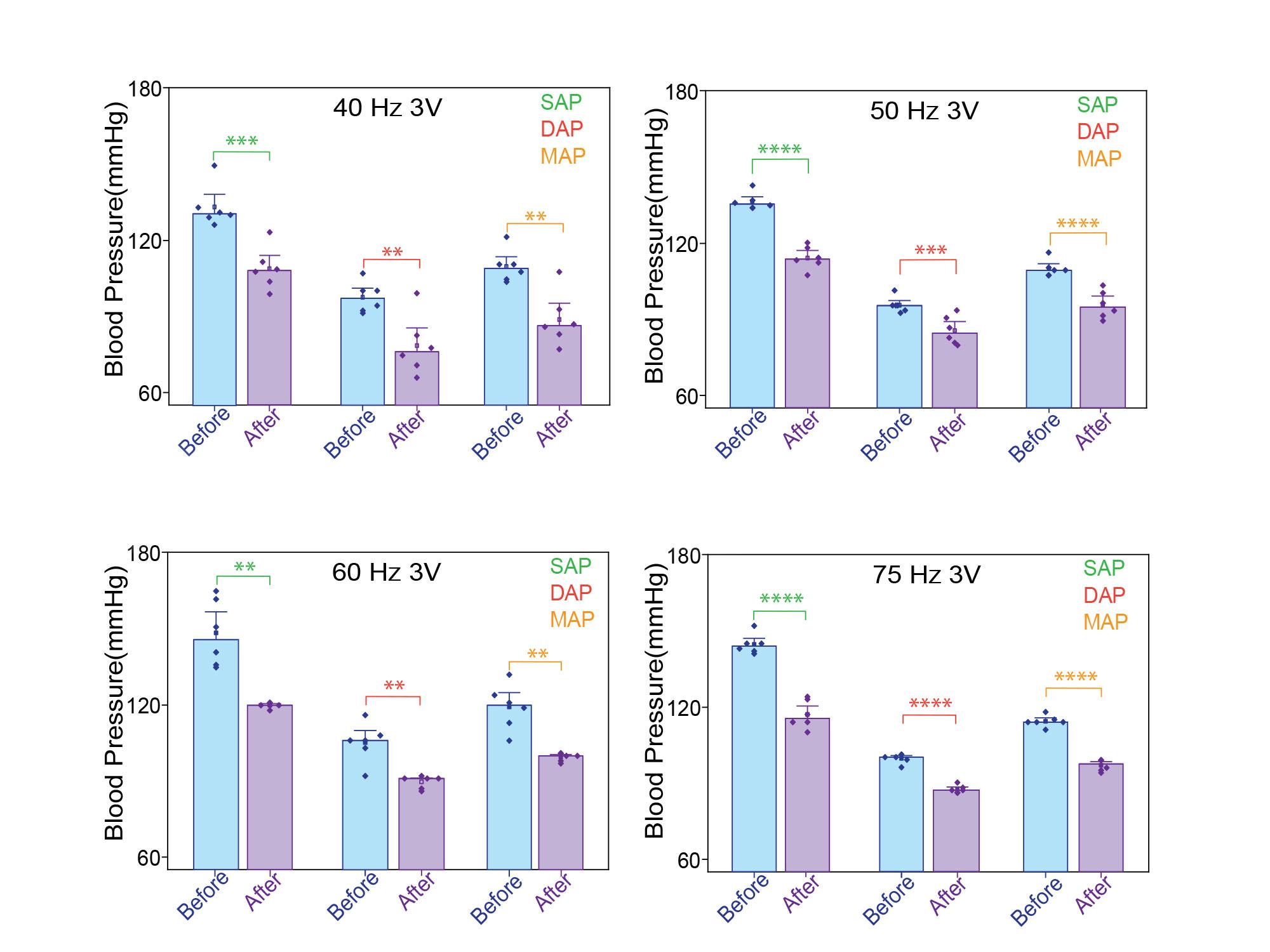
    The figure demonstrates the impact CaroFlex had on systolic arterial pressure (SAP), diastolic arterial pressure (DAP), and mean arterial pressure (MAP) in rodent models. The team compared readings taken from before and after stimulation, using four different electrical frequencies, reporting that CaroFlex reduced average levels across all domains. Image courtesy of Tao Zhou.

    A look back

    Penn State’s implant belongs to a newer area of medicine known as bioelectronic medicine, or neuromodulation, where devices use electrical signals to interact with nerves and the body’s natural reflexes. Researchers have been studying these kinds of treatments for high blood pressure since at least the early 2000s. One of the best-known examples was CVRx’s Rheos system, which used a pacemaker-like device implanted near the chest and connected to electrodes placed near the carotid artery in the neck to stimulate the body’s natural blood pressure response.

    Those earlier systems worked, but they relied on pretty rigid materials and wiring. Since arteries constantly expand and contract with every heartbeat, hard implants can be difficult for the body to handle over long periods of time.

    Penn State’s newer CaroFlex device is designed differently. The fingertip-sized implant is soft and stretchy, allowing it to bend and move more naturally with the artery itself instead of behaving like a hard object attached to soft tissue. Penn State’s approach is different because the device is soft and stretchable.

    But softness was not the only problem the team tried to solve. The researchers also wanted to avoid another issue that is quite common in implantable devices, and that is stitches. Many implants need sutures to stay attached to tissue, but arteries constantly move and stretch with every heartbeat. And over time, those stitches can irritate or damage surrounding tissue.

    To get around that problem, the Penn State team developed a “suture-free” design using a soft adhesive hydrogel layer that gently sticks directly to the artery itself. However, that does not mean the implant can be placed without surgery onto the artery, at least in its current experimental stage, but the adhesive does remove the need for stitches to hold the device in place.

    3D printing meets bioelectronics

    According to the university, the team used 3D printing to build the implant from flexible materials that can bend and move naturally alongside arteries. They also developed an adhesive layer that allows the implant to stick gently to biological tissue without causing major irritation.

    “For many patients, even taking a combination of three to five medicines doesn’t alleviate their high blood pressure,” said Tao Zhou, research team leader, author of the study, and an assistant professor of engineering science and mechanics at Penn State. “In these cases, bioelectronic devices that use electrical signals to modulate the body’s natural response systems offer a promising form of alternative treatment.”

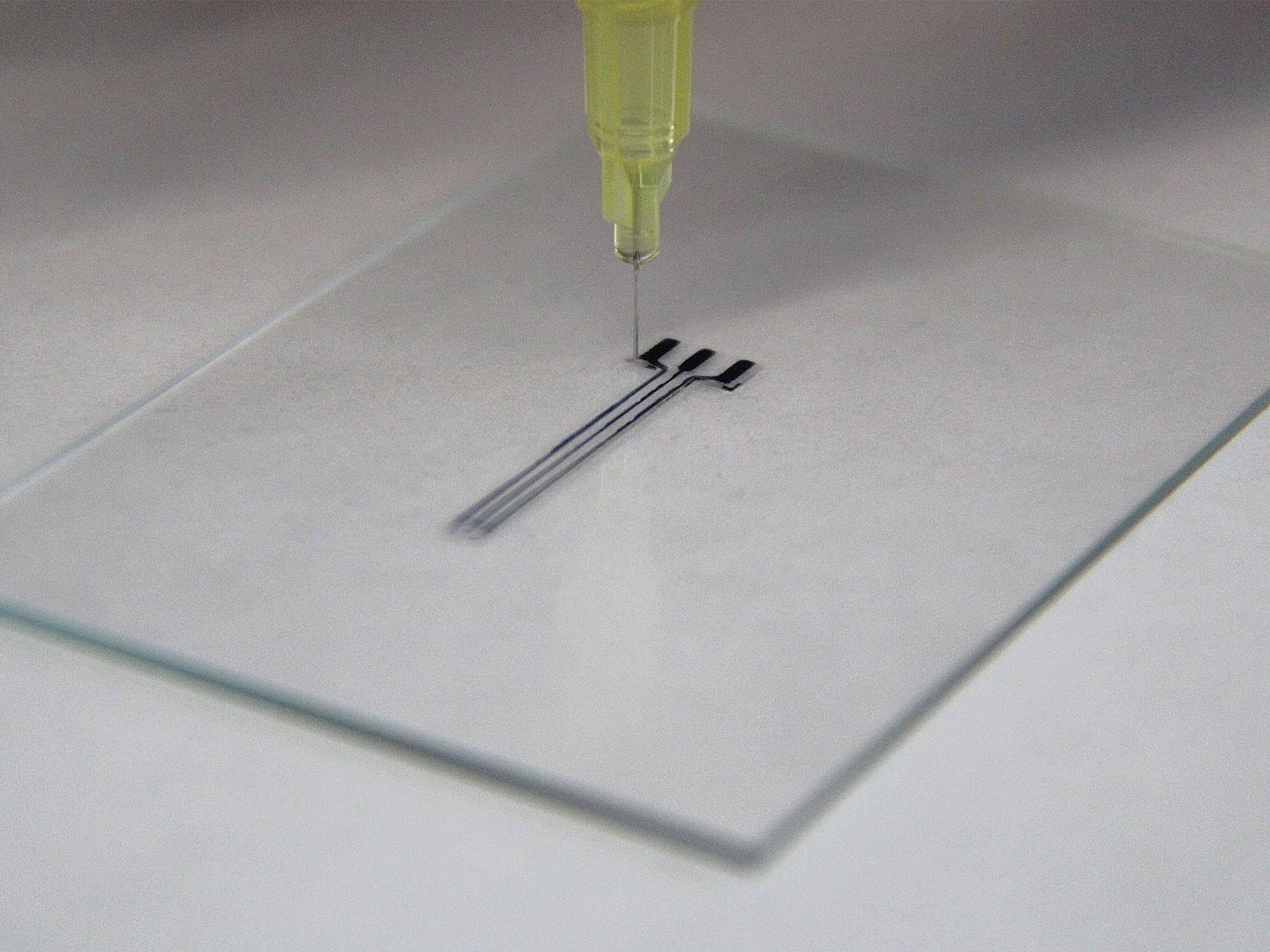
    3D printing allows the team to produce bioelectronics faster and with better biocompatibility to the body’s soft tissues than traditional fabrication methods. Image courtesy of Tao Zhou.

    For the 3D printing industry, the project also highlights the growing area of research of soft bioelectronics and implantable medical devices. Since traditional manufacturing methods often struggle to produce electronics that are both flexible and highly customized, 3D printing has allowed researchers to create small structures with unique shapes, soft materials, and designs that can better match the body’s natural movement.

    Interestingly, CaroFlex is not the first soft bioelectronics project from Tao Zhou’s lab. Earlier this year, the team unveiled experimental 3D printed brain sensors designed to sit directly on the surface of the brain and record electrical activity. The soft hydrogel-based sensors were customized to match the exact folds and curves of individual brains, which researchers hope could reduce irritation and improve performance compared to traditional rigid electrodes.

    Like CaroFlex, the project focused on creating electronics that behave more like living tissue instead of relying on hard, one-size-fits-all hardware. Zhou’s lab has also published plenty of research on direct ink printing, conductive hydrogels, and multi-material 3D printing for soft implantable electronics. In fact, images released by Penn State show the devices being printed through syringe-like extrusion systems that deposit soft conductive materials layer by layer.

    The soft bioelectrodes use a honeycomb-inspired design that allows researchers to stretch them onto the specific geometry of a patient’s brain, without sacrificing structural strength or sensitivity to electrical and physiological signals. Image courtesy of Tao Zhou.

    This is also part of a broader trend in healthcare. Over the last several years, researchers around the world have been looking at flexible electronics for everything from “smart” bandages and wearable sensors to brain implants and soft robotics. Penn State itself has been active in the field, recently showing projects involving hair-thin EEG monitors, emotion-detecting wearable sensors, and systems that can monitor wounds in real time.

    Still, turning experimental implants into approved medical products is never simple. Long-term durability, safety testing, manufacturing scale-up, and regulatory approval are all still major hurdles. So far, the technology has only been used on animals. The device was tested in rodents, where researchers said it reduced hypertension while causing far less damage to surrounding tissue compared to more traditional implants.