• Nikon AM Synergy Secures DLA Contract for On-Demand Military Parts

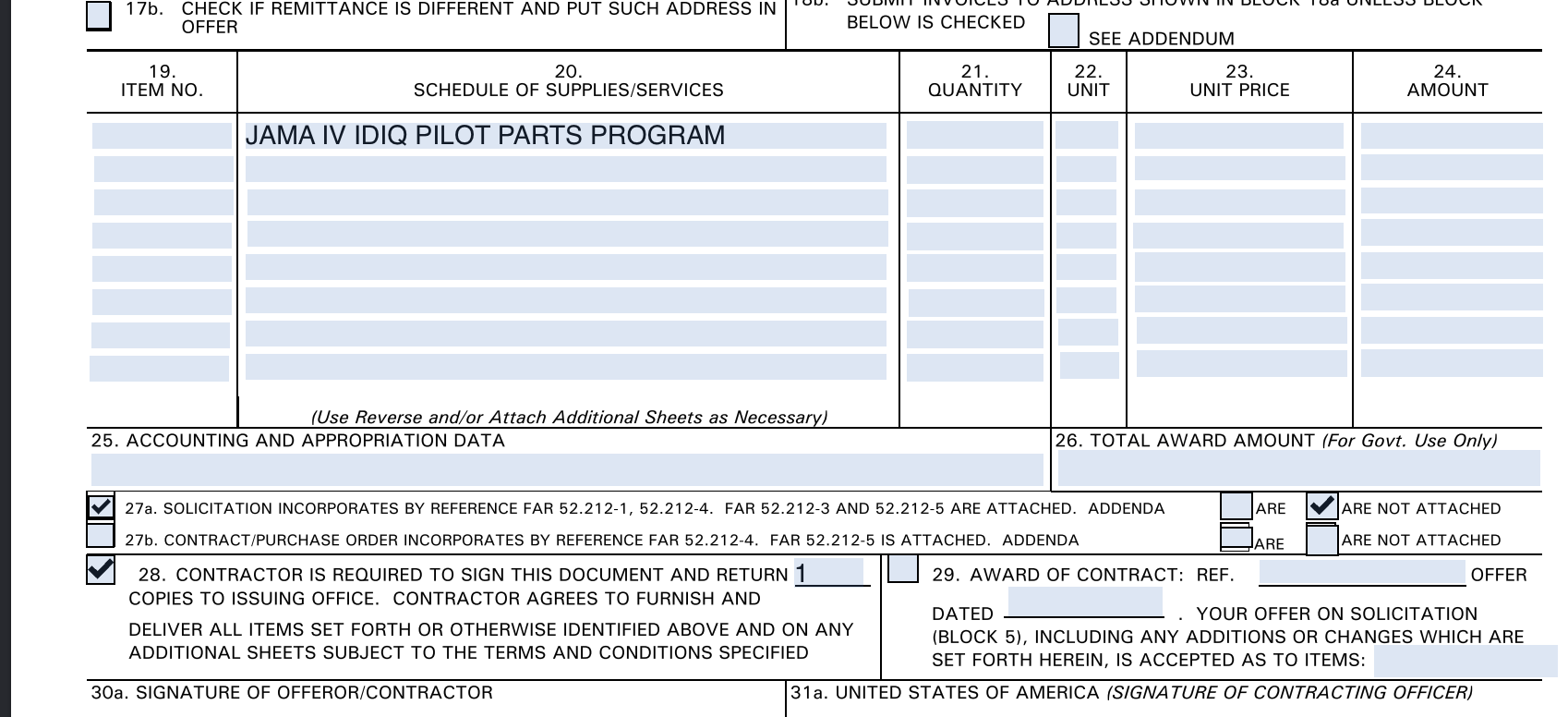
    Nikon AM Synergy has gotten a DLA contract under the JAMA IV IDIQ Pilot Parts Program. The contract with the Defense Logistics Agency (DLA) is a step forward for Nikon in helping the US government produce more parts at scale with additive manufacturing. The DLA is one of the most important parts of the US military, managing any and all logistics, warehousing, delivery, and a lot of procurement of goods needed by the military. From recycling used bullet casings to buying fuel, the 26,000-strong agency is the one sourcing the uniforms, meals, and water for all US soldiers everywhere.

    The work will be carried out at Nikon’s AM Technology Center in Long Beach, California, which focuses on naval, defense, aviation, and space applications.

    Being part of this system, therefore, is not a science project but something that requires real parts used by real people all over the place. The JAMA IV program is an Indefinite Delivery Indefinite Quantity one that,

    “Seeks to establish an additive manufacturing (AM) supplier base by awarding multiple contracts to vendors capable of producing complex parts using various AM modalities, including Laser Powder Bed Fusion, Directed Energy Deposition, Material Extrusion, cold spray, and binder jetting.”

    Across the Army, Navy, Marine Corps, and Coast Guard, the contract in total (so also portions not allocated to Nikon) will be up to a maximum of $10 million. A lot has been going on around this program lately with requests, reviews, and definitions flying about. The program literally goes from ABS to Inconel and all the processes. The important thing here is that we’re essentially getting codified with processes, definitions of materials, definitions of process steps, definitions of pricing, and quantities being codified by the DLA. That means that if HIP is deemed an essential step and put in the system, it will be easy for people to add HIP-ing to part requests, and it will be easy to get this reimbursed. If it’s not defined, then it will be hard.

    The award itself is therefore not going to be huge, with other monies going to desktop, cold spray, and other vendors. But this will really determine millions, or hundreds of millions, in follow-up business. So what gets entered into the system, literally, and what this organization understands will have lasting impacts. This is also a real achievement in the total of additive qualification, certification, and testing that’s been going on for years. This contract implies confidence and utility, which is a big achievement stemming from the efforts of many people.
    Senior Contracting Officer Deborah Lombardi said:

    “The DLA will utilize Nikon AM to conduct a part(s) production pilot, using Additive Manufacturing (AM) to establish the necessary processes and AM support base for the DLA towards our mission to drive and sustain warfighter readiness.”

    While Dr. Behrang Poorganji, the Vice President of Technology at Nikon AM, stated,

    “Nikon AM continues to build upon and accelerate our holistic approach to deliver vital advanced manufacturing and sustainment capabilities that are crucial to the United States and allied partners at speed. We are very proud to support the DLA by enabling agile, on-demand production of critical components and strengthening supply chain resilience for mission-ready operations.”

    According to a social media post by Nikon, the contract will focus on pilot production of parts, helping the DLA build out its additive manufacturing supplier base and internal capabilities. The goal is to support more agile, on-demand production of critical components, especially in situations where traditional supply chains fall short. This fits into a broader push to strengthen supply chain resilience and ensure mission-ready operations across defense systems.

    So this is a win for Nikon AM Synergy and the industry more broadly. Sometimes it may seem like we’re moving slowly. And it can often seem like we’re standing still. But this is a concrete milestone and actual progress. As JAMA continues, we will see more vendors and technologies being onboarded. In the years to come, this could end up being significant business in critical parts for many in the space.

  • trinckle’s Tool Design Software Lands in Stratasys GrabCAD Print

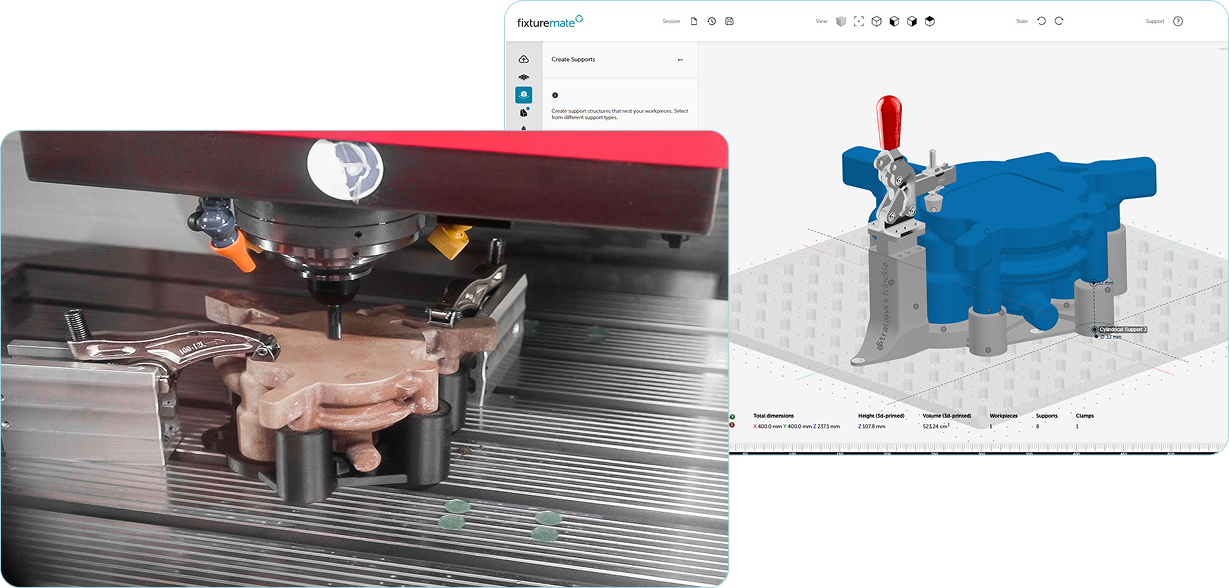
    I’m a fan of trinckle, the German startup that offers super easy-to-use tools for creating customized jigs, fixtures, and other 3D printed products. With trinckle, it’s not just designers who create, but regular people too. Years ago, there was a lot of buzz about democratizing design for everyone. What trinckle does is democratize design for people in the workflow and in the enterprise. I’ve trialed it for weeks and urge you to do the same. It’s super easy to use and fun to play with. I’ve made tool inserts and jigs myself in minutes, and I think that it can really help spread 3D printing across companies.

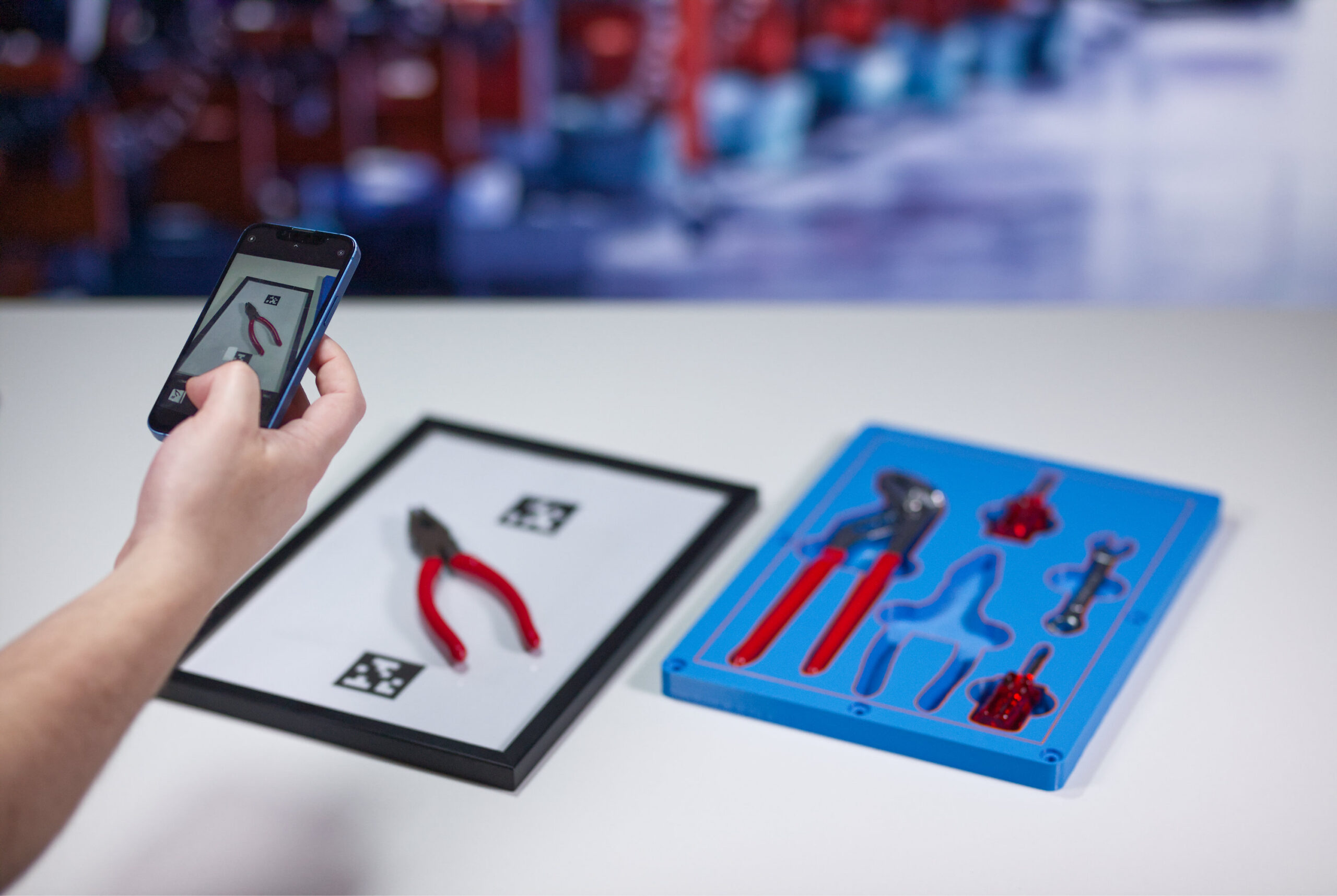
    Now trinckle is embedding its Additive App Suite inside StratasysGrabCAD Print and GrabCAD Print Pro tools. This will make it easier for existing Stratasys users to use the app. The companies are set to showcase the integration at RAPID + TCT this week, where Stratasys will feature the App Suite in its booth. The App Suite now makes it easy to create end effectors, jaws, trays, and shadow boards for robots. You can also toy a bit with the apps to make slightly different things, such as inserts for carrying cases, general desk organization, or stands. The Photo-to-Outline feature lets you take pictures and transform them into a cutout of a pair of pliers, for example, or of a specific 3D printed tool. I’ve tested it, and it works. If you were trying to set up a workstation or working in production, I’d try this out now for sure. The company hopes to expand on the current functionality, including break-off labels, masking tools, and drill guides.

    Victor Gerdes, Vice President, Software, Stratasys, said,

    “By transforming GrabCAD Print into a platform that guides engineers through automated, production-ready workflows, we’re making additive manufacturing faster and more accessible across the factory floor. The Additive App Suite allows teams to go from a production problem to a print-ready solution in minutes, not days, expanding the impact of AM beyond the lab.”

    trinckle CEO Florian Reichle mentioned that,

    “This agreement builds on our ongoing partnership with Stratasys and continues the collaboration that began with the exclusive integration of fixturemate into GrabCAD Print Pro last year. Together, we are addressing one of the practical barriers to wider adoption of additive manufacturing – the reliance on specialized CAD skills and the time-consuming nature of manual design work. By extending the Additive App Suite into the Stratasys ecosystem, we are expanding access to a wider group of users while also benefiting from feedback that helps guide the product roadmap through real-world use cases.”

    I really love this product and love what trinckle is doing. By making it easier for the other ten thousand people in the company to use additive, it can act as an accelerator for the adoption of 3D printing. By moving the user closer to the solution, the product is empowering people to solve their own issues. It’s also super cost-effective to use this quickly using the app and then print it out locally. That feedback loop is quick and would therefore solve the problem faster than alternatives. A lot of times, just the perfect solution for additive doesn’t get made because the user or person with the problem can’t do CAD. So this could get a manufacturing team to solve a problem that would otherwise never be solved, and just go on to cost a company in time or bother. More users, more solutions being made, and more money being saved mean that 3D printing will have more value. Your in-house Stratasys printer is now more useful, and its utilization will be higher, too, reducing moving costs.

    That kind of flywheel effect can lead to broader adoption of 3D printing. 3D printing is becoming much more accessible and useful. But one recurring bottleneck is in design. A simple, straightforward path to acquiring geometry and building a solution is what we need to make our market much bigger, and trickle is aiming to offer this to all.

    Images courtesy of trinckle

  • Caracol Taps CNC Robotics to Build and Support Its UK Systems

    No matter how quickly the economy seems to be changing on the surface, there is no escaping the fact that geography is the foundation of economics, and, in case anyone had forgotten about that, global events thus far in 2026 serve as a harsh reminder. For obvious reasons — as everyone is now experiencing firsthand —geography has the most direct impact on the physical economy.

    I’ve always viewed the additive manufacturing (AM) industry primarily as a story of industrial clusters, and it seems like that reality will be more relevant than ever in determining which companies succeed. So while it’s easy to look past announcements like the one that Caracol, the manufacturer of robotic arm AM systems, just made about a partnership with a UK-based robotics services firm, I think that precisely this sort of partnership will be indispensable to the health of the AM industry.

    CNC Robotics, founded in the Liverpool area in 2010, is a Platinum System Integrator for KUKA, one of the world’s largest manufacturers of robotic arm systems. Throughout its history, it has established relationships with a number of different machining and AM brands, acting as on-the-ground customer support in the UK for its partners. Through the partnership with Caracol and Caracol’s official UK reseller, AM Futures, CNC Robotics will assemble and integrate Caracol’s Heron AM (composite) and Vipra AM (metals) systems in the UK, and provide aftermarket service once the machines are operational.

    Caracol, based in Italy with a US headquarters, as well, has evolved from a small service provider into a steadily expanding, heavily-funded startup, bringing in $40 million last fall in a Series B round. The company plays in all the usual markets currently sought after by large-format AM enterprises, though it has particularly excelled at recreational maritime.

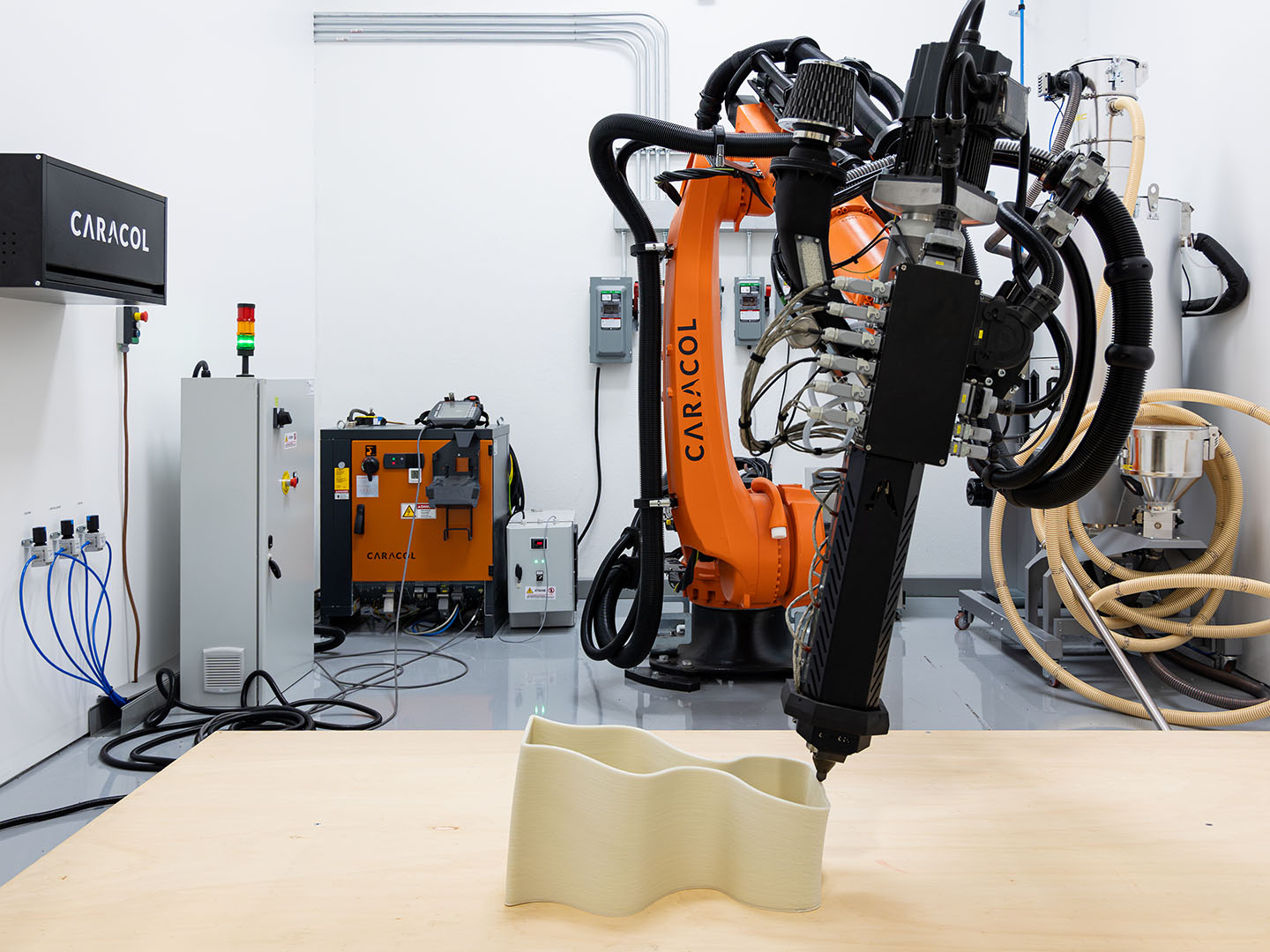
    Caracol’s thermoplastic composite 3D printing.

    In a press release about Caracol’s partnership with CNC Robotics, Francisco De Stefano, co-founder and CEO of Caracol, said, “The UK is a strategic market for Caracol, and this partnership reflects the depth of that commitment. By building a complete local ecosystem — with AM Futures and CNC Robotics — we are giving UK manufacturers access to the full power of our platforms, assembled and supported on home soil. At a time when reshoring and supply chain resilience are top priorities across British industry, we want Caracol to be the partner manufacturers can count on.”

    The founder and CTO of CNC Robotics, Jason Barker, said, “Our partnership with Caracol is a major milestone for CNC Robotics and for the UK manufacturing sector. As Caracol’s key partner in the UK, we’re not only bringing cutting-edge large-format [AM] technology to the market — we’re backing it with local technical expertise, responsive on-the-ground support, and strong commercial guidance. UK customers can rely on us for a seamless experience from initial consultation through to installation, training, and long-term service. Together with Caracol, we’re enabling manufacturers across the UK to adopt advanced AM solutions with confidence and clarity.”

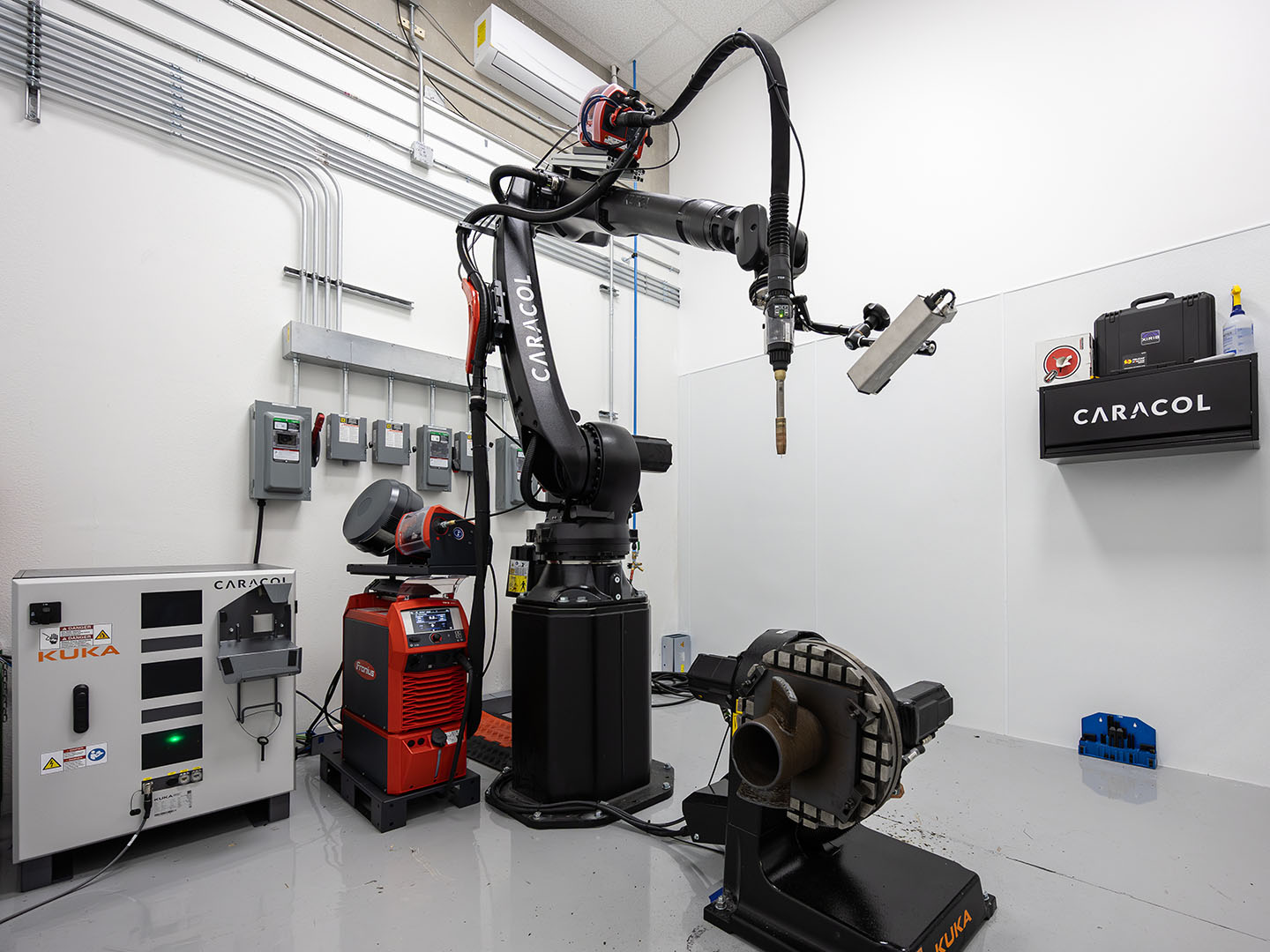
    Vipra AM is Caracol’s advanced manufacturing robotic solution leveraging WAAM technology.

    In my recent PRO article on how 3D printed advanced packaging will likely act as an enabling technology for whatever Elon Musk’s Terafab ultimately amounts to, I discussed how pivotal systems integration services will be to the future of the semiconductor industry. I also pointed out the parallel between that trajectory and the most likely trajectory for the next wave of AM industry growth, and this is why companies like CNC Robotics will be so vital to where AM goes from here.

    In the old way of doing things, the marker of a serious regional expansion was to establish one’s own corporate office in the region in question. That will continue to matter in certain instances, and for enterprises beyond a certain manpower and revenue threshold, but in most instances, I think it will be increasingly viewed as an unwarranted expense. The far more efficient move is to form connections along the lines of Caracol’s relationships with AM Futures and CNC Robotics.

    Mainly, this is because even if one were to establish a corporate office in, say, the UK, this doesn’t really accomplish anything, anyway, unless you also have a relationship with a local systems integrator. That is, unless you’re prepared to essentially build your own version from scratch, which would more or less amount to starting a whole new company, under circumstances made extra complicated by the fact you’re trying to do so on foreign ground.

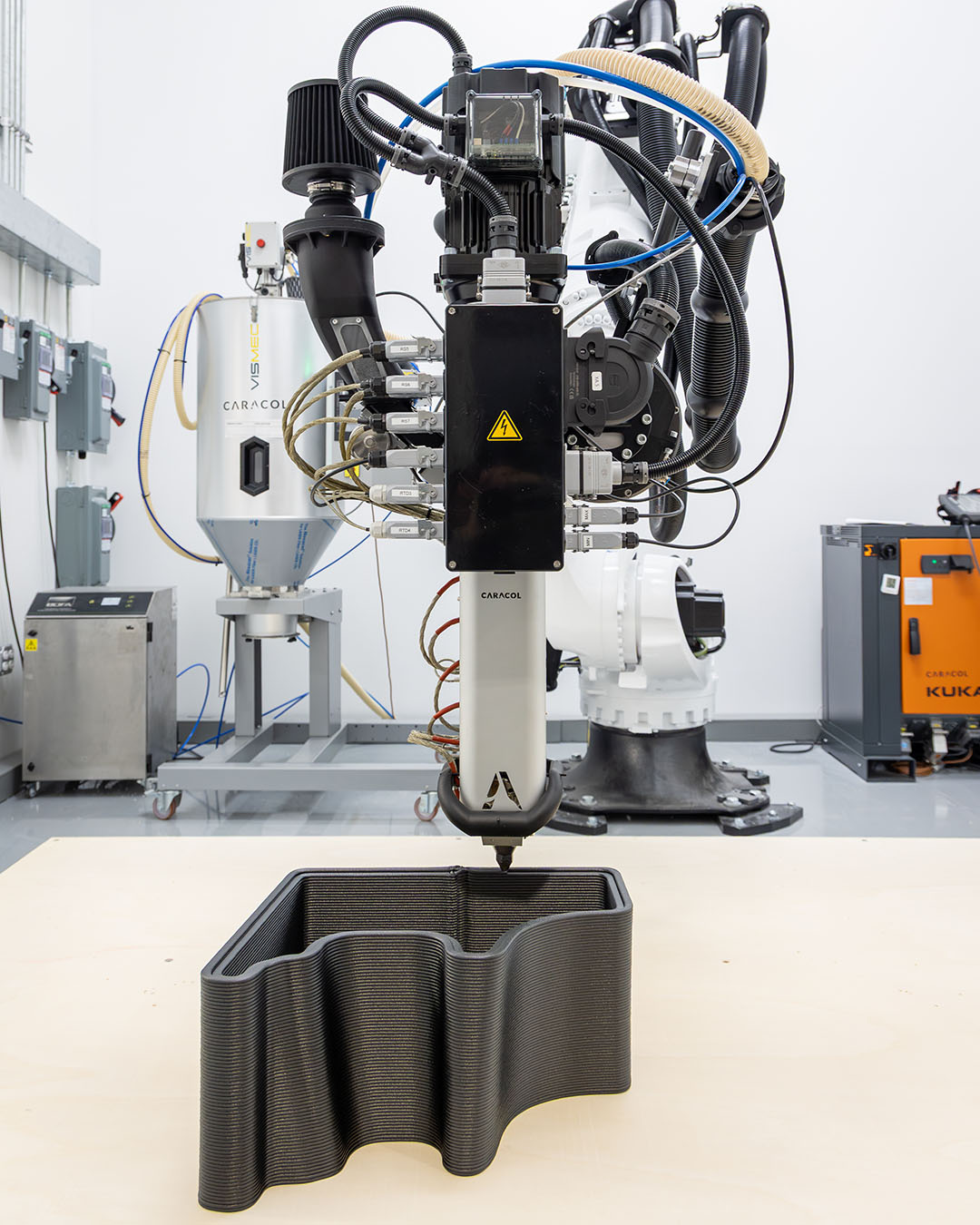
    Heron AM.

    Collaboration with a company that already exists and is already viable simply makes far too much sense, especially when it gives a company like Caracol the opportunity to reach users that previously may have only had experience with CNC machining. Pay close attention to any company that has developed a lean formula for geographic expansion.

    Images courtesy of Caracol

  • Portal Space Systems Raises $50M Series A, Hits $250M Valuation

    Portal Space Systems has raised a $50 million Series A round, valuing the company at $250 million.

    The startup is developing maneuverable spacecraft designed to operate more dynamically in orbit, targeting missions that require greater flexibility than traditional satellite systems can provide. At its core, the company is building spacecraft that can move more efficiently once in space, rather than staying locked into fixed orbits like most satellites today.

    The idea is simple: getting to space is no longer the biggest challenge, but moving once you’re there is. And Portal Space is focused on solving that, building spacecraft that can reposition, adapt, and operate across different orbits as mission needs change.

    “Our customers don’t just need access to space. They need the ability to operate across it,” said Jeff Thornburg, CEO and founder of Portal Space Systems. “The systems that succeed in this next phase of space exploration will be those that can move quickly, deliberately, and repeatedly across and between orbits, and that’s been Portal’s focus since day one.”

    Shared by Thornburg, the news points to continued investor interest in advanced space infrastructure, an industry where additive manufacturing (AM) is playing a growing role.

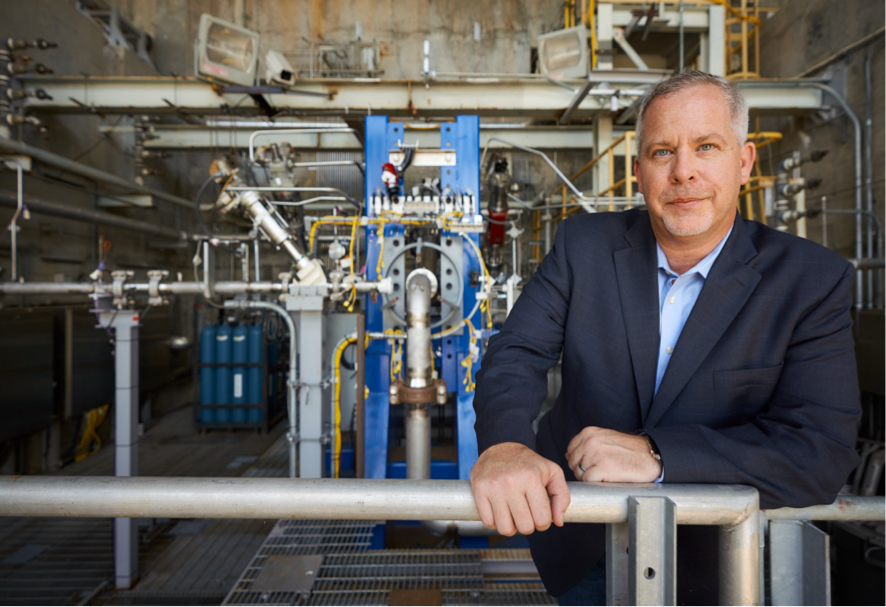
    Jeff Thornburg. Image courtesy of Portal Space Systems.

    The round was led by Geodesic Capital and Mach33 Financial Group, with participation from Booz Allen Hamilton, AlleyCorp, FUSE, Trajectory Ventures, and ARK Investment Management.

    In fact, ARK is led by Cathie Wood, one of the most visible investors in emerging technologies. Through her firm, she has backed a range of 3D printing and advanced manufacturing companies over the years, including dedicated exposure through ARK’s 3D Printing ETF. Wood is also closely tied to the industry’s recent consolidation wave, having played a role in bringing attention and capital to several public 3D printing companies during what 3DPrint.com previously described as the sector’s “mergerocalypse.”

    Her presence in this round doesn’t mean Portal Space is a 3D printing company, but it does show how investors who have followed additive manufacturing closely are now backing companies where it plays a role behind the scenes.

    The mix of investors also reflects where Portal Space is aiming to play. Some, like Booz Allen, bring strong ties to defense and national security, while others, like Mach 33, are laser-focused on space markets. That lines up with Portal’s goal of serving defense, civil, and commercial space missions.

    A Familiar Face in Additive — and on 3DPrint.com

    For 3DPrint.com readers, Portal Space is not new. The company, and Jeff Thornburg himself, have been featured multiple times, including a prior interview on 3DPrint.com and an appearance on Joris Peels’ podcast, the 3DPOD, where Thornburg discussed the company’s approach to high-performance propulsion and how AM enables new design possibilities. That work is centered on solar-thermal propulsion, a system designed to deliver high efficiency while allowing more flexible movement in orbit.

    Thornburg is well known in both aerospace and AM circles. Before launching Portal Space, he held leadership roles at companies like SpaceX and Blue Origin, where 3D printing was already being used to produce complex rocket engine components.

    At SpaceX in particular, he saw firsthand how 3D printing could replace slower, less reliable casting processes, cutting production times and allowing more integrated designs with fewer parts.

    That experience helped shape his view of AM as a way to rethink propulsion architectures, reduce part counts, improve performance, and accelerate development cycles. At Portal Space, that approach is a big part of how the company makes its technology, and is now backed by new capital. A lot of those parts are hard to make using traditional methods, which is where 3D printing comes in.

    In Portal’s case, AM is particularly useful for producing the complex internal geometries needed in its solar-thermal propulsion systems, where heat transfer and material performance are critical. Those kinds of designs are difficult to achieve with traditional manufacturing, but much easier with 3D printing.

    Over the past year, the company has moved quickly from early development to real hardware. It has already tested key systems in flight, including avionics like its flight computer and power systems, and is preparing its first spacecraft, Starburst-1, for launch on a SpaceX rideshare mission in late 2026. Over the past year, the company has moved quickly from early development to real hardware. It has already tested key systems in flight, including avionics like its flight computer and power systems, and is preparing its first spacecraft, Starburst-1, for launch on a SpaceX rideshare mission in late 2026.

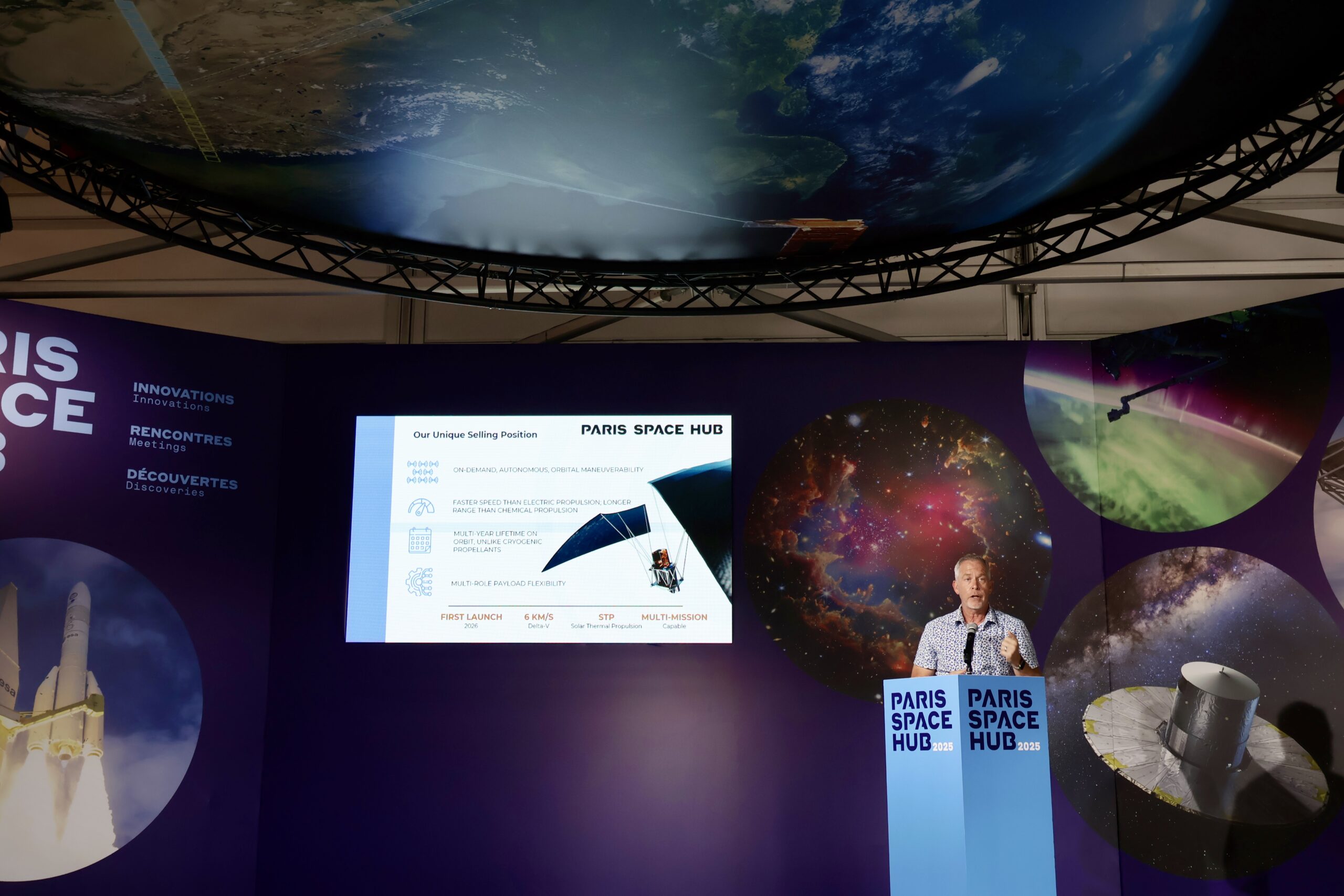
    Jeff Thornburg at the Paris Air Show 2025. Image courtesy of Portal Space Systems.

    Portal Space isn’t the only company in the additive ecosystem to raise funding after appearing on 3DPrint.com and the 3DPOD. We’ve seen several past guests go on to secure major rounds, including VulcanForms, Fabric8Labs, Carbon, Firestorm Labs, and The Exploration Company. These companies come from different parts of the AM industry, from production-scale metal systems to defense, aerospace, and new materials, which shows how much the space has expanded.

    The bigger picture

    After a slower period for the additive manufacturing industry, funding like this is still happening, especially in areas like space. The focus is on real systems and hardware, not just the technology itself. 3D printing fits into that. It’s already used across propulsion and spacecraft systems, where lighter parts and faster iteration are key. Companies like Portal Space are building around that from the start. In cases like this, AM is not the product; it’s part of what makes that product possible.

    As space becomes more crowded and more competitive, being able to move in orbit is becoming just as important as getting there in the first place. That shift is a big part of what’s driving interest in companies like Portal Space.

    That’s especially true right now. With missions like Artemis moving forward, there’s more attention on the technologies that actually make those programs work. AM is one of them, already used in propulsion and spacecraft systems where complexity, weight, and speed are all important. For companies like Portal Space, that means designing for this from the start, not adding it in later.

  • EOS Buys Metalpine, but What’s Behind the Move?

    EOS has bought Austrian powder manufacturer Metalpine. EOS doesn’t buy companies often. And with increased competition from China, SLM’s profligate spending doesn’t seem like it would be a good idea right now. So the Metalpine purchase should be a key to EOS’ future.

    The company’s CTO, Joachim Zettler, said,

    “For many years, Metalpine has been a strong and innovative partner to EOS. By integrating Metalpine into EOS, we are taking the next logical step in our collaboration, strengthening our metal materials supply and accelerating innovation, particularly in titanium, where we see significant and sustained market demand.”

    Meanwhile, Metalpine CEO Gerald Pöllmann stated,

    “During the past few years, we have built a rock-solid foundation with EOS. Becoming part of EOS is a natural progression of this partnership, enabling us to further develop our technologies and scale our capabilities while continuing to reliably serve customers worldwide.”

    And Metalpine CTO Dr. Martin Dopler added,

    “Our patented process stands for exceptional powder quality and consistency. As part of EOS, we will further advance material innovation and support the growing requirements of industrial additive manufacturing, while continuing to provide our products to a broad market.”

    Metalpine facility in Austria. Image courtesy of EOS.

    Options?

    OK, so let’s get the problematic stuff out of the way first. EOS could have bought AP&C, a metal powder business within GE Aerospace’s additive group, Colibrium Additive, or whatever is left of Carpenter’s additive manufacturing materials business. Could it have maybe done something with GKN, too? SLM and EOS work extensively with all powder manufacturers in some capacity or another. Perhaps choosing one powder company could make the others more reticent to do business with EOS? Perhaps, as well, the other powder companies would be less inclined to share their latest research with EOS. This is not a riskless purchase; there very well will be knock-on effects from this.

    If EOS wanted to double down on super special powders, then maybe Elementum3D would have been a more defense-centric play. Reportedly, that firm’s products are doing well in the US defense establishment. If you want something special with significant growth potential, it could be hilarious to buy CP1 from Constellium. Both the CP1 and Elementum materials are also used significantly in F1 and have a lot of growth potential.

    Norsk Titanium’s Direct Metal Deposition (DMD) technology. Image courtesy of Norsk Titanium.

    A World Beyond LPBF

    I think I would have rather bought Norsk Titanium and then entered into the aerospace DED business, really. That would have been really cool because then you can use your experience to let people make big parts well, and also the smaller, more detailed parts. DED has a lot of potential in repair, cladding, armor, and aerostructures. A broader adoption could see the technology gain widespread adoption in industrial and automotive settings. I think that a well-capitalized Norsk would be able to leverage a lot of growth in defense in the US and within the aerospace and new space supply chain. That company is an underappreciated gem.

    ATO

    Now, if you wanted to double down on responsible manufacturing, an atomizer company like ATO or similar would be a nice play. Imagine offering a way to turn metal scrap into powder for car firms? Imagine you build a complete chain to turn your scrap into powder using EOS equipment. That would be an interesting solution for a lot of industrials. You could try buying MetalPowderWorks or something and make your own “6K for everyone” play. That to me would have been truly interesting. And at high volume, this would make a real impact. It could be a valuable business line for EOS, allowing them to double down on their laboratory and research customers. You could also be a key environmental solution for large European firms while being a key enabler of the manufacturing resilience through-fest going on in the US. If I were in it for the money, the growth, or the environment, that’s what I would have done.

    ATO atomizers use ultrasonic vibrations to break molten metal into droplets. Image courtesy of ATO.

    Explanation?

    Therefore, I think the most logical explanation is that Metalpine was either struggling to raise cash to fund growth and turned to EOS, or that a large EOS customer implementation relied on Metalpine powder, so the company bought the firm. That could be either because it wanted to own the entire process chain (Apple, aerospace, medical) or because it had to guarantee the solution’s availability for a long time. Another alternative was that the application demanded such scale that EOS had to buy Metalpine to ensure it could grow towards it in tandem. Or perhaps the customer needed certain assurances to dominate, own, or control the entire process chain, and a sale was the only way to get it off the ground. That could very well be the reason, and it would make sense. GE, for example, found it necessary to buy the OEM and the powder company to scale its application, for example. EOS was a shareholder, so a Metalpine buy could have been opportunistic or something more active than an asset sale. Could EOS have seen that the firm could achieve better results with its machines using Metalpine and wanted to capitalize on that? Perhaps, but why do you need to do this then?

    How EOS Explains It

    The firm says that it is a part of a partnership and lets EOS,

    “Expand access to high-quality titanium powders produced through Metalpine’s patented atomization process, known for its consistency and performance in demanding industrial applications.”

    and that,

    “The acquisition strengthens EOS’ ability to deliver tightly integrated materials, parameters, and process expertise — helping manufacturers for fast and effective qualification, improve process stability, and scale additive manufacturing into serial production with greater confidence. Those industries and applications reliant on titanium (aerospace, medical, and high‑performance industrial applications) now garner greater access to high‑quality powders engineered for consistent performance in serial additive manufacturing environments.”

    Furthermore, the company says that Metalpine will be an independent business. EOS also states that it “underlines EOS’ commitment to an open ecosystem and continued collaboration with a wide range of partners across the additive manufacturing industry.”

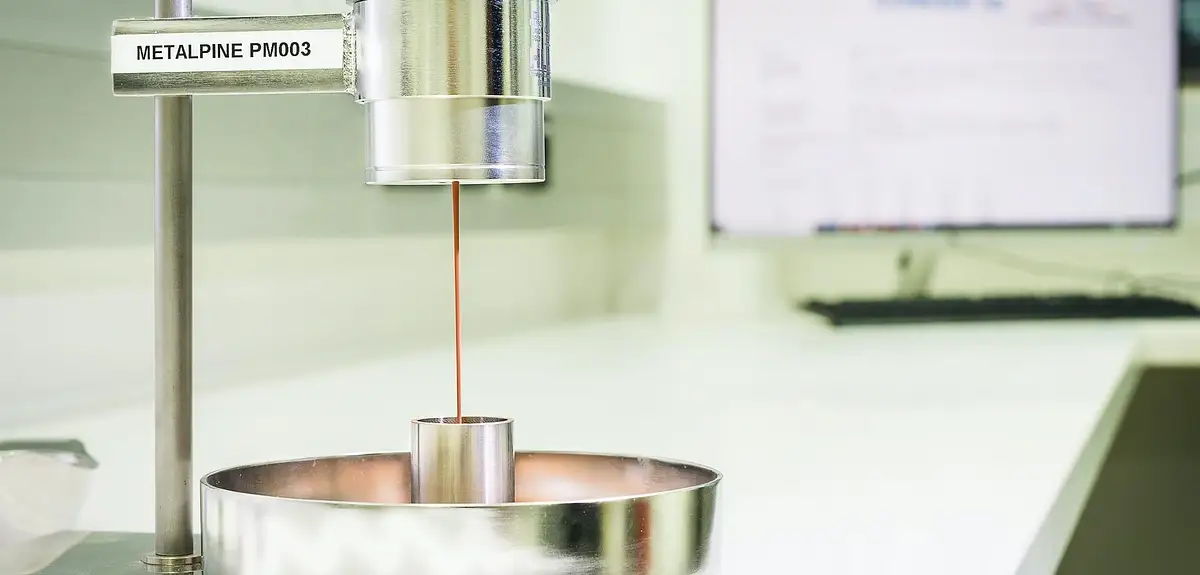
    Metalpine’s metal powder production. Image courtesy of Metalpine.

    Now, Metalpine is capable of making highly spherical, reduced final porosity powders. This very well may be advantageous. To move ot the next stage of production, owning that particular process could give EOS customers advantages over others. Better dialed-in, better powders could make a difference. Especially if people wish to deploy large-scale systems and manufacturing lines, this may matter. This could also let EOS give moe guarantees in large-scale implementations and perhaps find ways to offset supplier risks (e.g., if we go bankrupt, you get all the recipes, kind of stuff).

    And there is a logic here in what EOS said. I would have much rather bought ATO and turned it into an alloy discovery and recycling system for large customers. That, to me, is a true product extension that would dramatically lower costs and make more production possible. Now, the thing is, Joachim Zettler is much, much smarter than I am. Marie is much, much smarter than I am. So the two of them, plus a board member or two, should be super way smarter than me. So, what is going on here? The most logical thing still is that there is a huge customer implementation somewhere that is so key to EOS that they had to do this. Or EOS is doing this to appease a potential buyer. There are not many companies that could afford the ticket and provide a sufficiently glorious future for the firm.

    Could it make sense for Apple to buy EOS to gain an edge in making thinner, more hardware-packed cases from recycled materials while using less material overall? Less porosity and thinner walls really add up if you make hundreds of millions of things. Maybe in the Appleverse, a lot of things make sense that don’t for other companies. Something similar could really give Apple an edge in the consumer devices market. Whatever the answer, this is a thought-provoking move by EOS.

  • ExOne Cuts Costs for U.S. Customers as Printhead Production Moves to Detroit

    ExOne Global Holdings, created through the 2025 integration of ExOne and voxeljet, is making changes across its U.S. operations. These include starting printhead manufacturing in the Detroit area and lowering maintenance costs for customers.

    The announcement comes just months after ExOne detailed its integration with voxeljet, where the company emphasized a renewed focus on service, uptime, and rebuilding customer confidence. In a recent interview with 3DPrint.com, ExOne CEO Eric Bader and Anzu Partners co-founding managing partner Whitney Haring-Smith outlined those priorities more clearly: move faster, strengthen local support, and rebuild customer confidence.

    This move puts that strategy into action in the U.S., with more localized production, a Detroit-based parts inventory, and improved access to service and support.

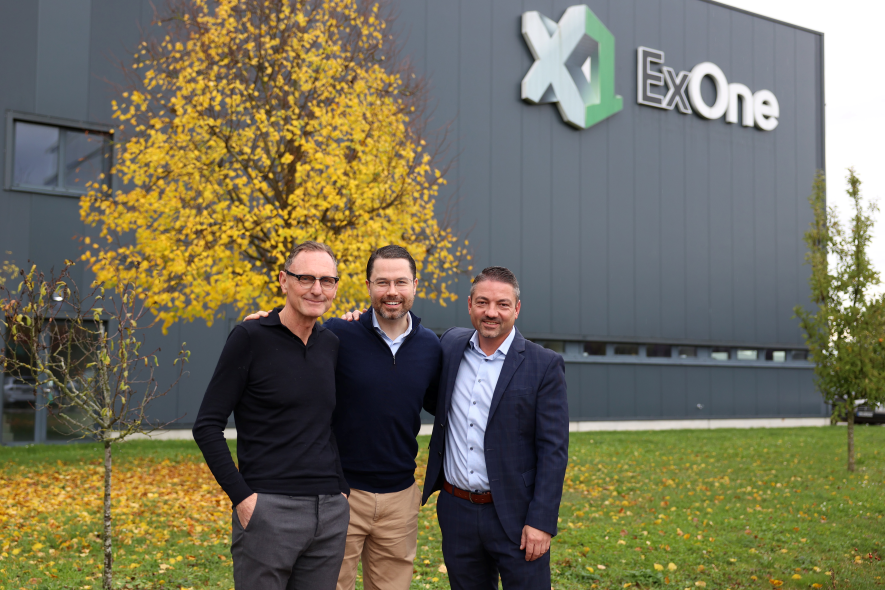
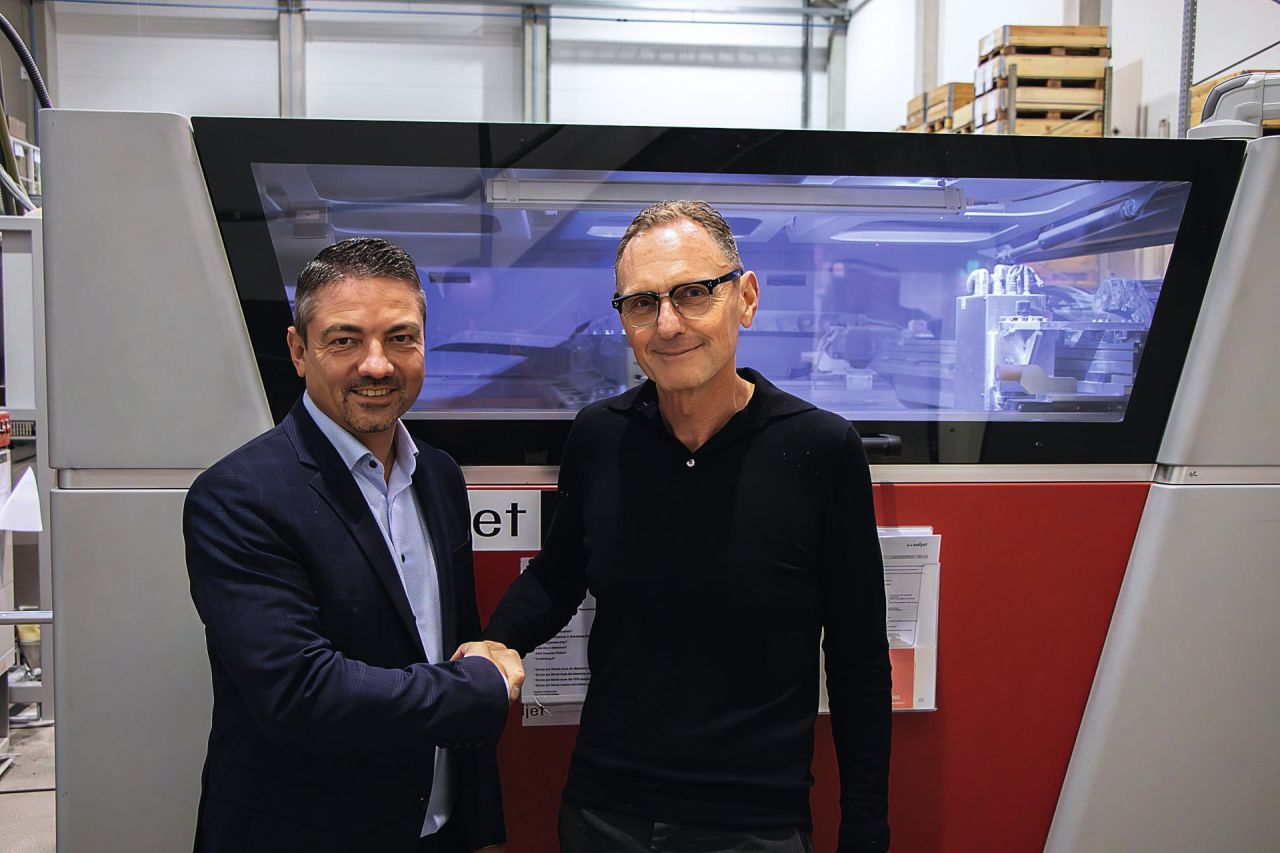
    ExOne Global Holdings Management in front of the German headquarters (left to right): Rudolf Franz, Whitney Haring-Smith (Chair of the Board), Eric Bader (CEO)

    Bringing production closer to customers

    At the center of the announcement is the start of U.S. manufacturing for ExOne’s Spectra Mono-Z printheads at a facility in Canton, Michigan. The printhead is a key component in binder jet 3D printing systems, responsible for depositing the binder that forms each part.

    This is the first step in a broader plan to localize more of the company’s hardware production. The goal is to reduce dependence on international suppliers and better serve industries such as aerospace, defense, automotive, and energy.

    For customers, that should translate into shorter lead times, faster repairs, and more predictable access to critical components.

    The Three P’s: Parts, Pricing, and Predictability

    Alongside printhead production, ExOne is rolling out several changes to improve day-to-day operations for its installed base. First off, the company is building a Detroit-based parts inventory to reduce delays in spare parts and consumables. It is also introducing a published annual price list that includes tariffs and freight, giving customers a more exact idea of the total cost of ownership.

    Maintenance is another focus. ExOne is rolling out a three-level service program, lowering costs for its mid-tier plan and offering better options for customers with multiple machines. In addition, all customers will now have access to free 24/7 live phone support, with a guaranteed human response.

    Eric Bader will take on the position of CEO of ExOne Global Holdings, and Rudolf Franz joins the supervisory board. Image courtesy of voxeljet via LinkedIn.

    In the interview, Bader and Haring-Smith said the company’s immediate priority is supporting the machines already in the field. They stressed the need to keep the company’s hundreds of installed systems running in production. At the time, they pointed to the integration with voxeljet and the creation of a unified global service network as a way to improve uptime and expand access to experienced technicians. A key concern from customers, they said, is knowing who to call, how quickly issues will be resolved, and whether spare parts will be available when needed.

    These latest updates directly target those concerns, particularly in the U.S., where customers have been more exposed to delays and service gaps in recent years. Instead of focusing on new hardware launches, ExOne is addressing the areas customers have been most concerned about, including parts availability, service, and overall cost predictability.

    “These updates are a direct response to recent customer feedback around domestic supply, expedited parts access, predictable pricing, and support they can count on,” added Mike Dougherty, Managing Director of Americas at ExOne Global Holdings.

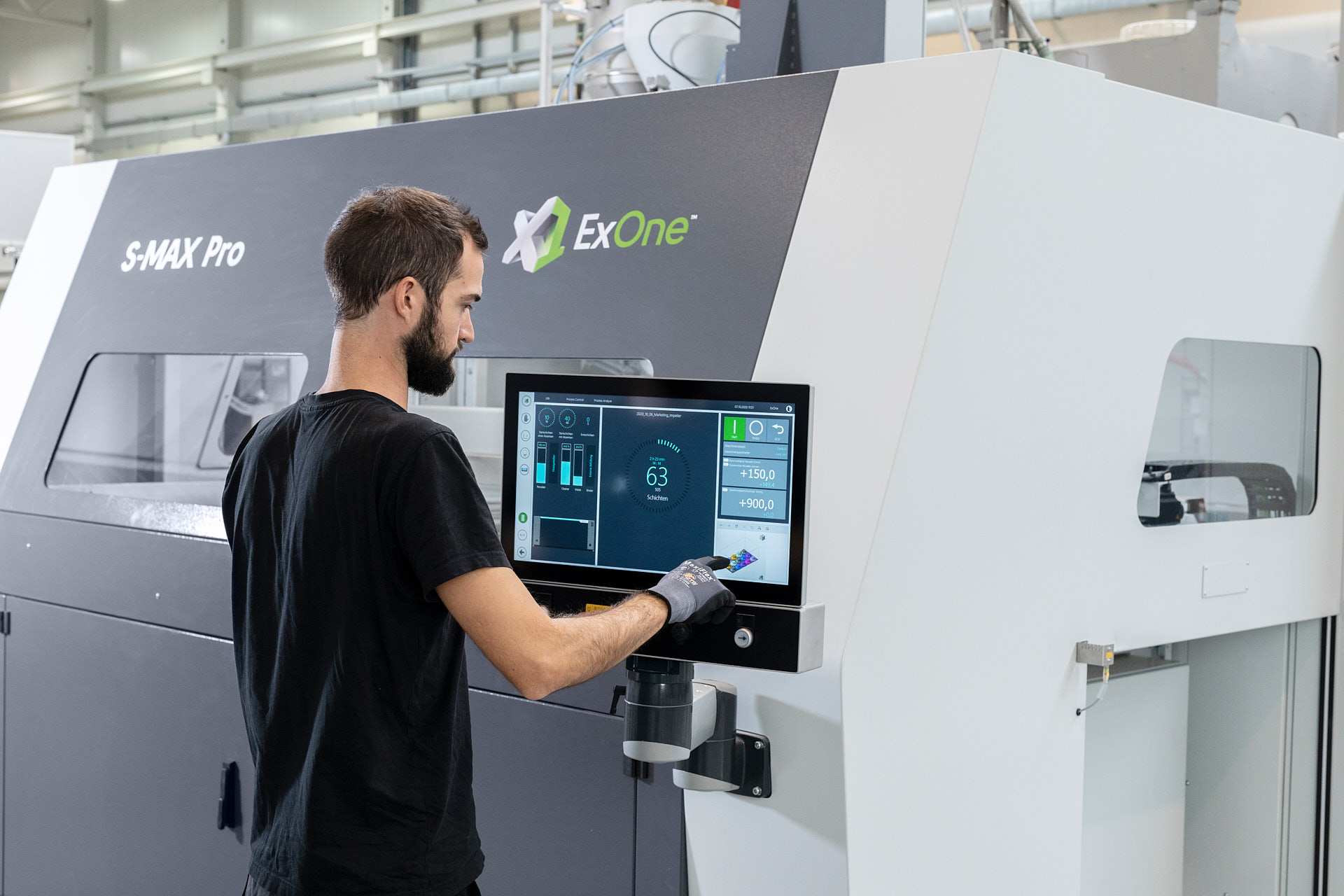
    ExOne machine. Image courtesy of ExOne.

    The Detroit expansion also reflects a broader trend of producing parts closer to customers, closer to home, and avoiding supply chain delays.

    During the interview, ExOne leadership noted that more customers are moving toward regional production models, with the same technology deployed across multiple sites rather than relying on a single global hub. This allows them to reduce risk, respond faster to demand, and maintain more control over their supply chains. So bringing key components, like printheads, closer to U.S. customers fits directly into that shift.

    ExOne described the Detroit printhead production as just the beginning of a longer-term plan to expand U.S.-based manufacturing. What’s more, further updates are expected as the company continues to integrate its operations and align its strategy following the recent ownership changes. But overall, we are clearly seeing a company laser-focused on strengthening its core operations.

  • Farsoon’s Fine Laser Spot 3D Printing Gives China a Thermal Management Edge

    Metal additive manufacturing (AM) systems generally utilize lasers with spot sizes that fall into a range of 80 micrometers (μm) to 100μm, although dynamic beam shaping may soon lead to spot sizes larger than 100µm being more and more commonplace. At the same time, meanwhile, there’s reason to think that smaller spot sizes could make a comeback, as well.

    The Chinese AM OEM Farsoon, for one, is leveraging lasers with spot sizes of 40µm to enable what the company is calling its Fine Laser Spot metal AM process, which it announced last year. Leading up to RAPID + TCT 2026 in Boston, Farsoon gave an update on the process that illustrates just how quickly it’s scaling deployment of smaller spot sizes for industrial production.

    In 2025, when the company originally announced the 40µm solution (paired with its FS200M medium-sized system), it was boasting .05 millimeter (mm) resolution: solid, but not earth-shattering. However, Farsoon is now announcing that its Fine Laser Spot method is accurate down to 0.03 mm, putting the company in a league with the most accurate industrial-scale printers on the market.

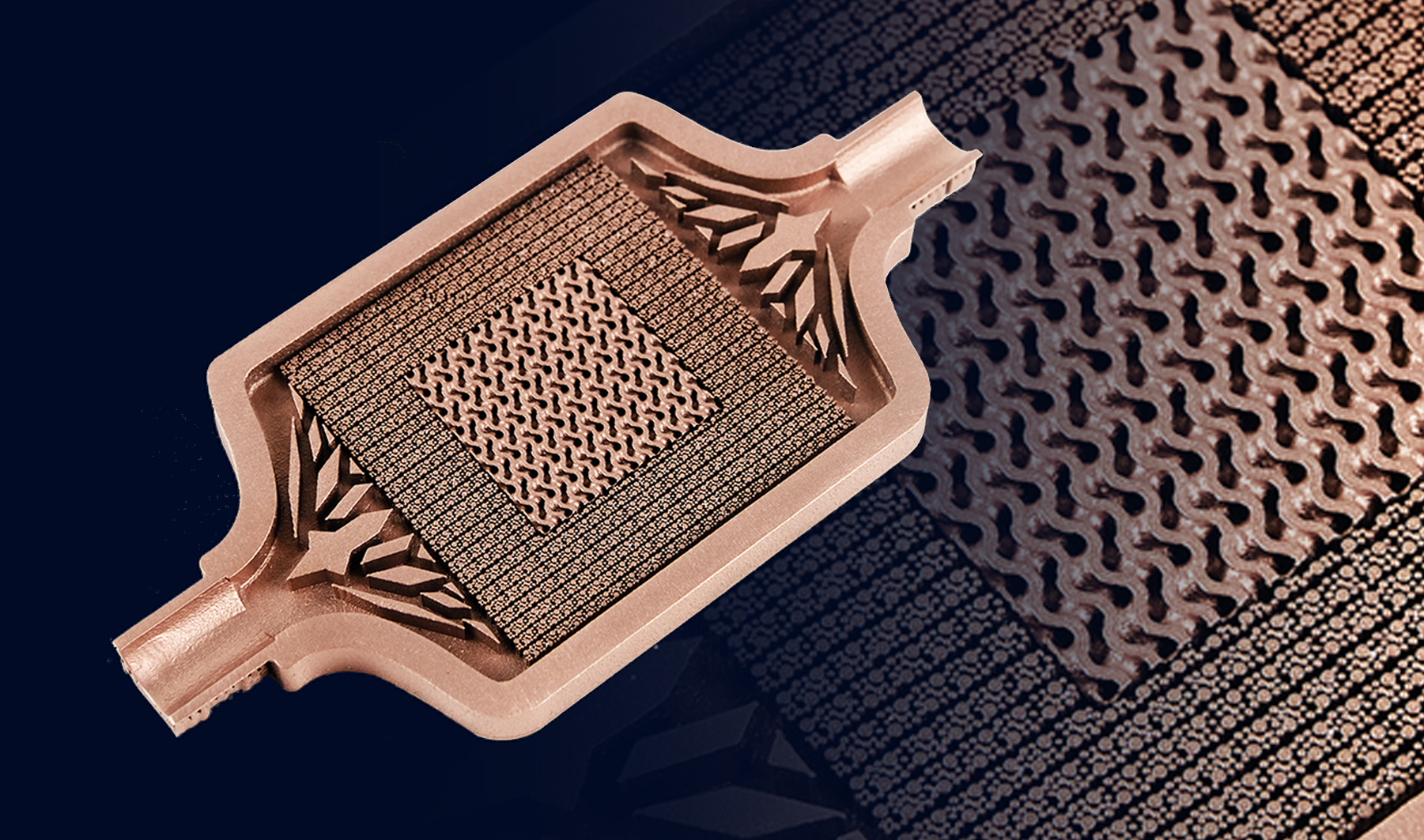
    Of course, while that achievement is impressive, it doesn’t do much on its own. The key is that Farsoon has determined the perfect use-case category for the combination of accuracy and productivity that it’s delivering: thermal management applications for electronics components. Most notably, these include copper cold plates, perhaps the best opportunity for the 3D printing industry to capture the data center hardware market.

    According to Farsoon, it’s able to consistently produce parts with layer thicknesses as low as 10µm, maximizing the company’s ability to capitalize on the power efficiency unlocked by geometrical complexity. Attendees of RAPID + TCT 2026 can learn more by visiting Farsoon’s booth, #1211.

    Farsoon’s announcement is of the same ilk as BLT’s work on the OPPO Find N6 hinge that I wrote about recently. This is perhaps an overgeneralization, but for years, the narrative surrounding the West vs. China was that the former delivered on precision and the latter delivered on price point.

    Now, printers made by Chinese OEMs are being used to produce components at scale for the industries in which the highest premium is placed on component precision: computing and consumer electronics. What’s more, even with a sample size of just two companies — Farsoon and BLT — we see two highly differentiated ways of achieving the same result. Whereas BLT combines two different forms of 3D printing, one metal and one polymer, to make the OPPO hinge, Farsoon is combining the small spot size from the earliest years of metal AM with the throughput gains that have accumulated in all the years since.

    In both cases, the result is the best of all worlds, supplying precision at mass output levels and minimal post-processing. The squaring of that circle has implications far beyond the 3D printing industry, as a race for data center supremacy amidst a world increasingly mired in geopolitical muck means that local production capabilities for thermal management solutions are more valuable than ever.

    China always had an edge over the West when it comes to scale, and the West now appears to have given up its lead in the realm of technological sophistication, as well. Situations like this can ultimately become advantageous for the laggards, as it creates the pressure that can catalyze an urgent drive to turn weaknesses into strengths. But the first step for Western companies (and governments) is to admit that they have a problem.

    Images courtesy of Farsoon

  • RAPID Roundup 2026: Simulation, IPQA, Materials, Depowdering, & More

    This year’s RAPID+TCT trade show is in full swing in Boston this week, and we already have plenty of news to share with you, from a simulation and optimization platform for metal additive manufacturing (AM) and in-process quality assurance (IPQA) to new materials, 3D printers, and more.

    PanOptimization Exhibiting PanX Metal AM Simulation & Optimization Platform

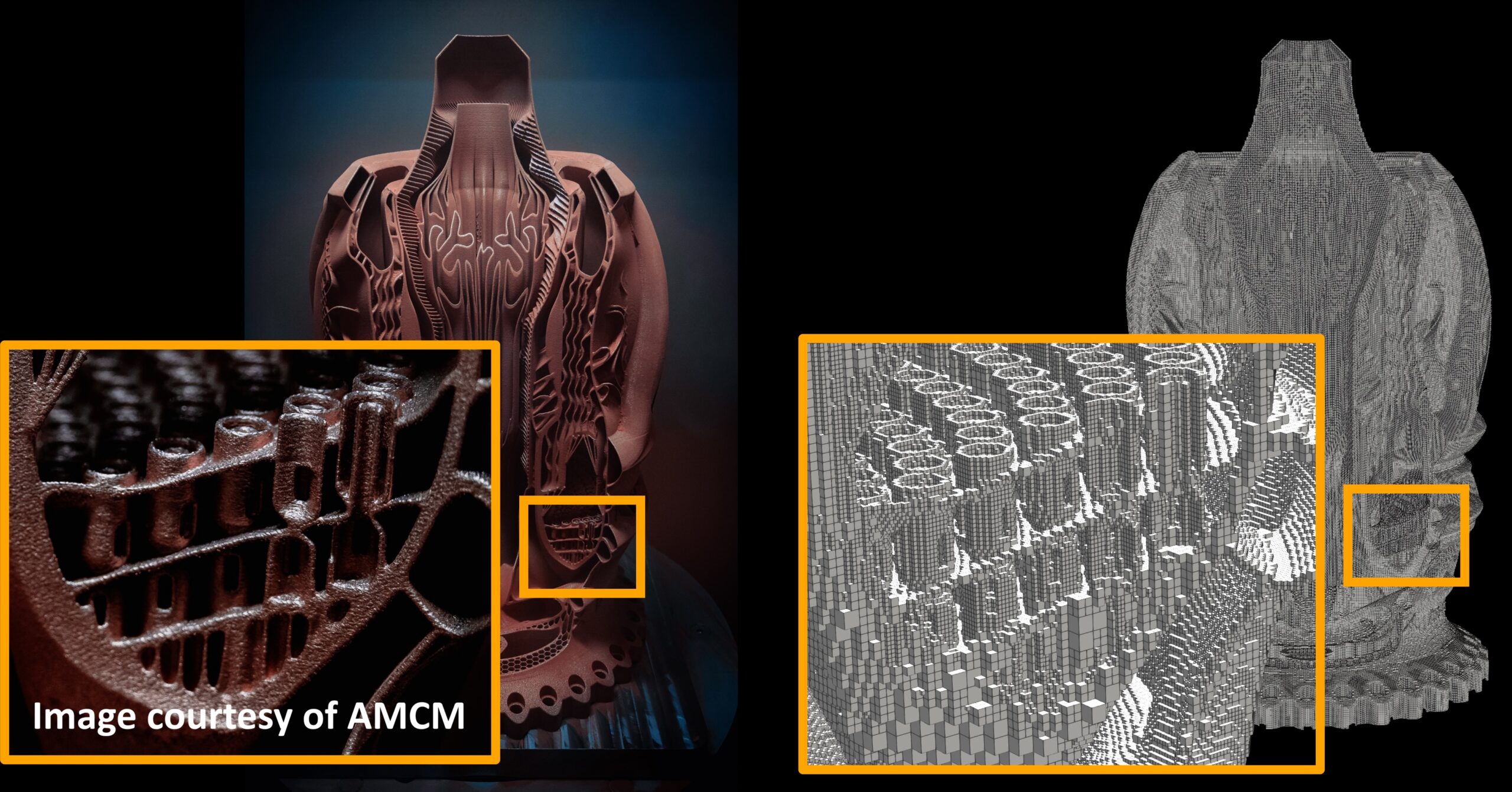
    PanX full-part LPBF aerospike simulation at high refinement: 26M elements / 57M nodes.

    First up, PanOptimization will be exhibiting its PanX simulation and optimization platform for metal AM and invites attendees to share their most challenging geometries and build problems for laser powder bed fusion (LPBF) and directed energy deposition (DED). The company says that many traditional simulation approaches for part distortion and failure mode prediction aren’t addressing the market’s needs well enough, because these tools were built mainly to predict distortion and stress trends on small- to medium-sized parts; parts with large footprints and high geometric complexity can’t be simulated at the necessary resolution. The team would like to hear from you at RAPID if “your current toolchain struggles to give timely, actionable insight.” PanX can simulate and optimize thermal and mechanical build issues with high accuracy at full scale and plugs right into existing production software toolchains to directly interface with machine OEM print software. They can even set you up with a free trial of PanX, so you can learn how to shorten development cycles and reduce risk.

    “The metal AM market continues to move in the direction of larger and more complex geometries, which has created very large demand for scalable and accurate simulation capabilities. These types of parts cost well over a hundred thousand dollars to print, so the cost of failure is unacceptable,” said Erik Denlinger, Co-Founder and Chief Engineer at PanOptimization.

    “At RAPID + TCT, PanOptimization will highlight the value of production-grade simulation and optimization. For manufacturers pushing into larger, more complex metal AM components, the ability to simulate and improve build outcomes is increasingly tied to commercial outcomes, fewer failed prints, faster progress toward qualification, better machine utilization, and reduced risk.”

    PanOptimization will be at Booth #2142 at RAPID this week.

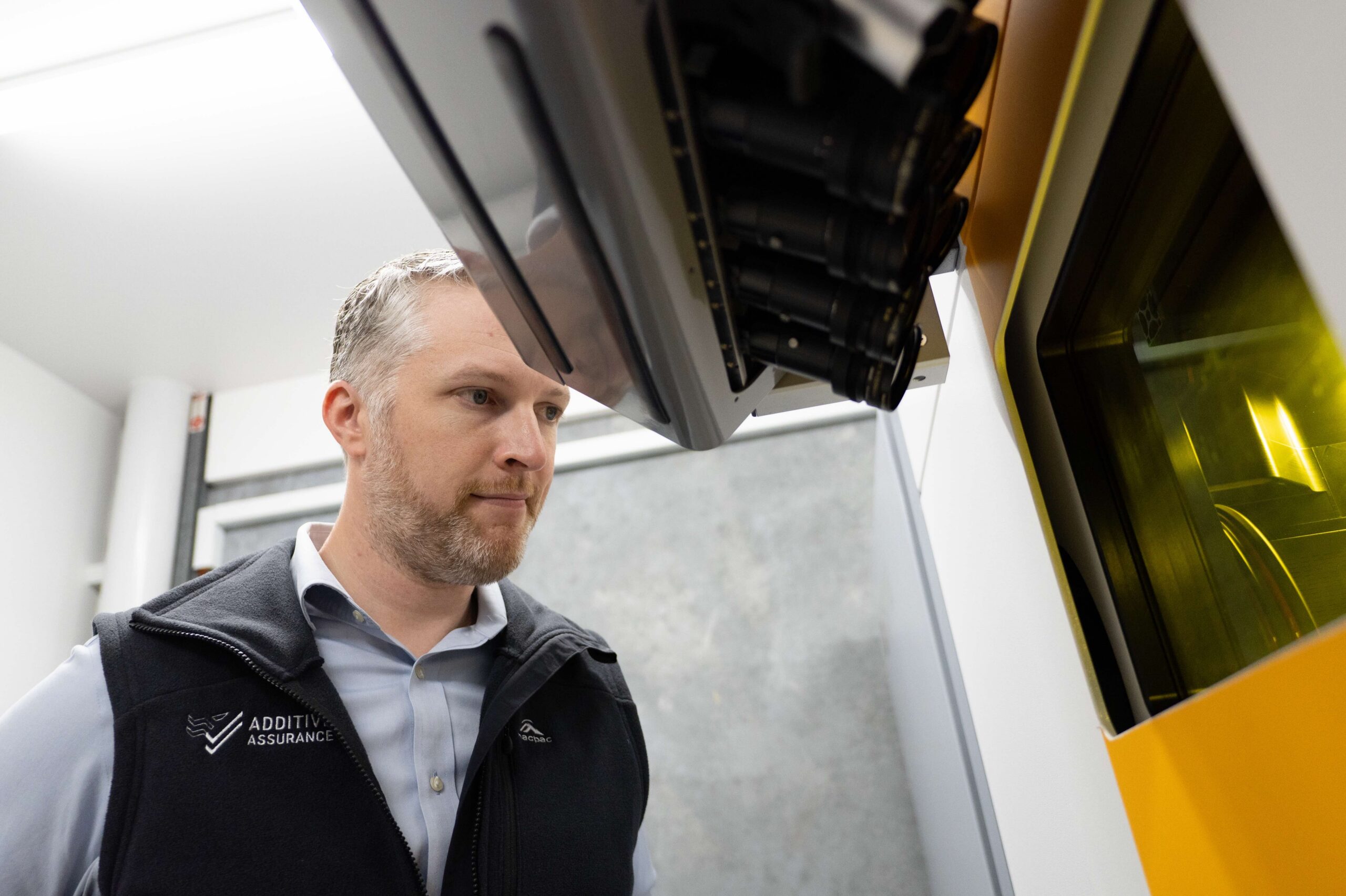
    Additive Assurance Demonstrating AMiRIS In-Process Quality Assurance

    Aussie company Additive Assurance will bring its “decision-ready” AMiRIS in-process quality assurance (IPQA) system to RAPID, so manufacturers can learn to use it to validate LPBF builds as they are being made. There are in-situ approaches out there that only offer ambiguous answers, but Additive Assurance says AMiRIS was designed to create truly usable evidence “Quality, Operations, and Certification stakeholders can act on, trace, and defend.” Moving past generic print monitoring, the company offers its “assurance” to support build decisions like what to release, what to hold, what to investigate, and what to audit, without bringing about an overhaul of current quality systems. By validating builds as they’re actively being made, manufacturers can find and fix issues early on, and AMiRIS also enables automatic evidence generation.

    “In metal AM, quality isn’t a final inspection activity — it’s a production capability. The goal is simple, give teams the confidence to scale, by putting reliability and repeatability at the heart of the build process, not at the end of it,” said Marten Jurg, Co-founder and CEO of Additive Assurance.

    RAPID attendees having a hard time with long qualification cycles, surprise print issues late in the game, and/or costly inspection bottlenecks are invited to visit Additive Assurance at Booth #2636.

    Stratasys Expands Software & Materials Platform

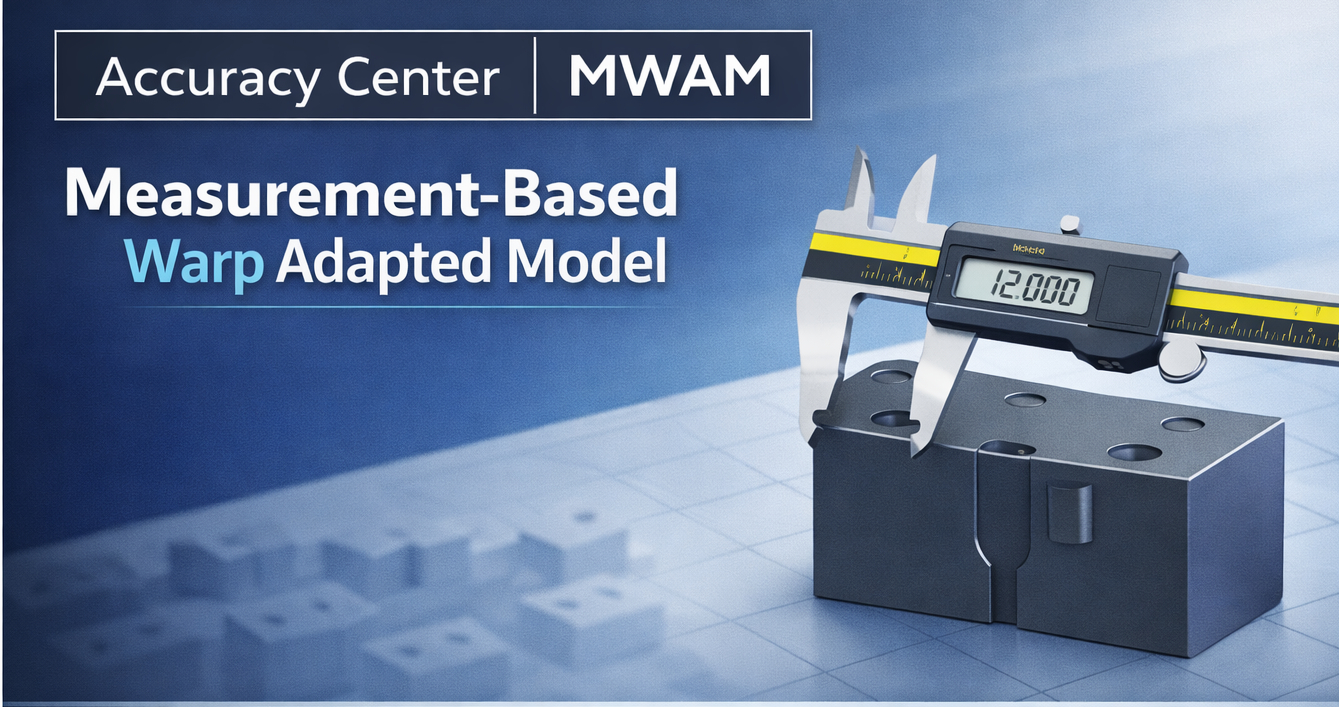
    To improve accessibility and expand applications for its existing systems, Stratasys announced additions to its AM solutions portfolio ahead of RAPID, including some new materials and a software enhancement for GrabCAD Print Pro. First, ULTEM 1010 resin is now available as a filament for the F3300 printer. This material was optimized for composite tooling and makes it possible to print high-temperature, aerospace-grade parts with great heat resistance. Stratasys also rolled out photocurable materials for real-world applications, including P3 Deflect 110 resin for printing production parts like brackets, automotive connectors, and jigs and fixtures, and Loctite 3D IND3785 Low Migration with injection molding-quality surface finish for small-batch production in food and pharmaceutical applications; both of these are for the Origin system. For the J3 and J5 systems, Stratasys introduced PolyJet ToughONE White for durable prototypes and PolyJet ToughONE Black for application testing and functional demonstration parts. The new Somos WaterShed White for SLA-driven Neo printers offers a smooth surface finish for functional test models and industrial prototypes. Finally, Stratasys integrated Measurement-Based WAM™ Warped Adaptive Modeling (MWAM) into GrabCAD Print Pro. This software addition will use measured dimensional data to automatically correct warping in complex parts, like industrial fixtures and electrical connectors, printed on the Origin DLP platform.
    “These innovations are designed to solve real challenges manufacturers face when adopting or scaling additive manufacturing. We are committed to continuous investment and development across our portfolio, working closely with customers to reduce barriers to adoption and unlock the incredible value that additive manufacturing can provide throughout the whole production workflow,” said Rich Garrity, Chief Business Unit Officer, Stratasys.

    See demonstrations of its software and hardware, and learn more about the new materials, at Stratasys’ Booth #1601 at RAPID.

    ELEGOO Showcasing Jupiter 2 Resin 3D Printer & New Ecosystem Products

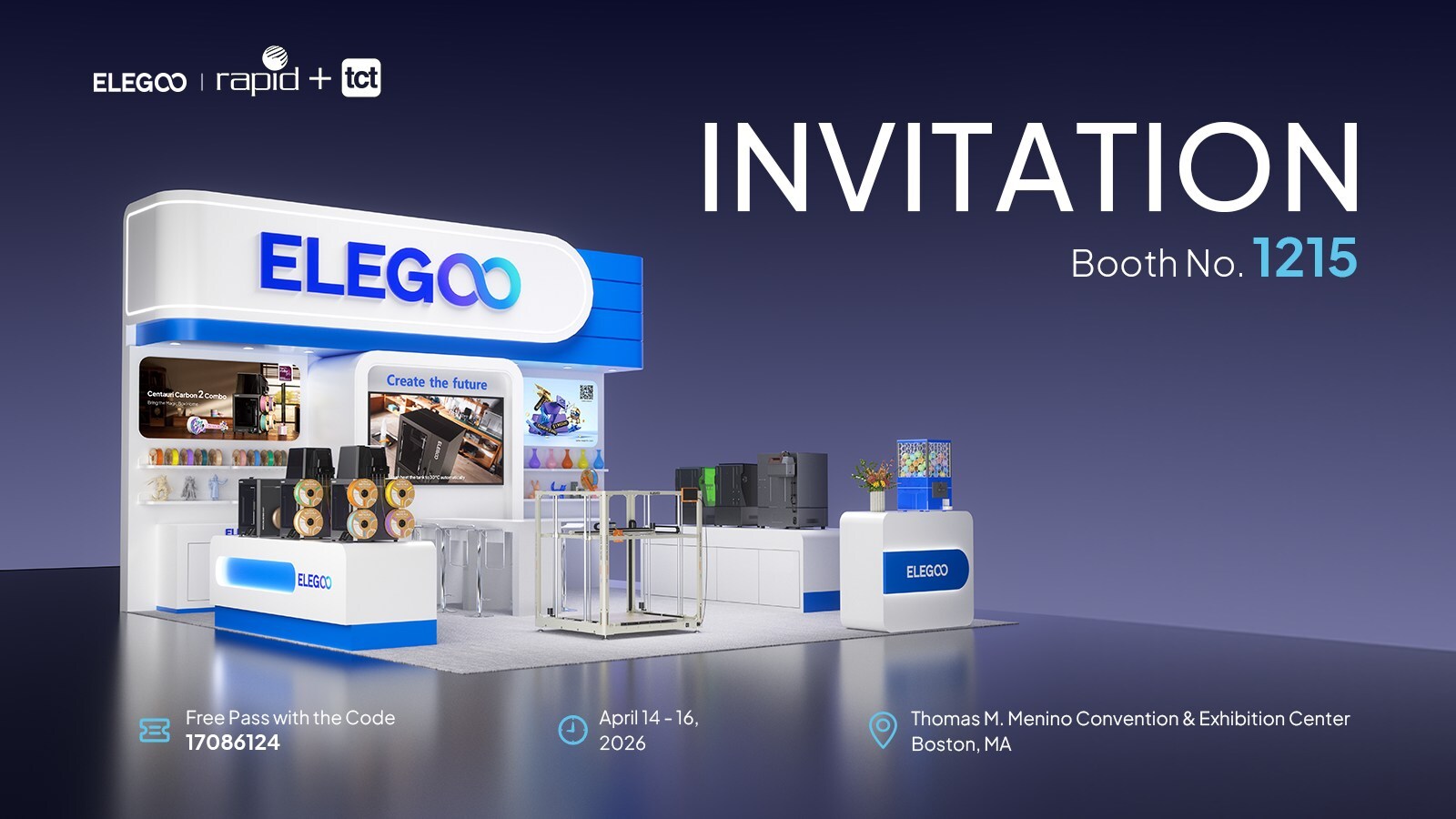
    Shenzhen-based ELEGOO will be showcasing its newest large-format resin 3D printer, the Jupiter 2, at RAPID this week, along with new ecosystem products. The company will also present several real-world applications from the consumer, creative, and professional sectors that were completed by the new Jupiter 2 and some of its other printers. With a build volume of 302.40 x 161.98 x 300 mm and a double door design, the Jupiter 2 was developed to meet the demand for larger, more precise resin 3D printing. Users can produce larger models or batch-print multiple parts in a single job by leveraging the Jupiter 2. The printer actually debuted at RAPID 2025 in Detroit, so if you missed it last year, make sure to check it out in Boston this week.

    ELEGOO will also present several hero products, including the Centauri Carbon 2 Combo, Saturn 4 Ultra 16K, and OrangeStorm Giga, along with related accessories and filaments. Also present at the booth to complete its integrated ecosystem will be the company’s remote control Matrix APP and the Nexprint 3D model platform. ELEGOO will also feature a range of application-driven displays to show how 3D printing can be used to achieve practical outcomes for real-world products. Some of the featured models include dental models, gaming figures and props, functional storage solutions, jewelry prototypes, large robotic builds, and everyday accessories, like phone stands. The company will also host a special “Print What You Scan” event from 6:30-9:30 pm on April 15th at the Westin Boston Seaport District. In addition to Q&A sessions and community activities with creators, visitors will see how 3D scanning is integrated with 3D printing to achieve even more real-world applications.

    Visit ELEGOO at Booth #1215 this week.

    Solukon Presenting SFM-AT350-E for EOS M4 ONYX Compact Parts

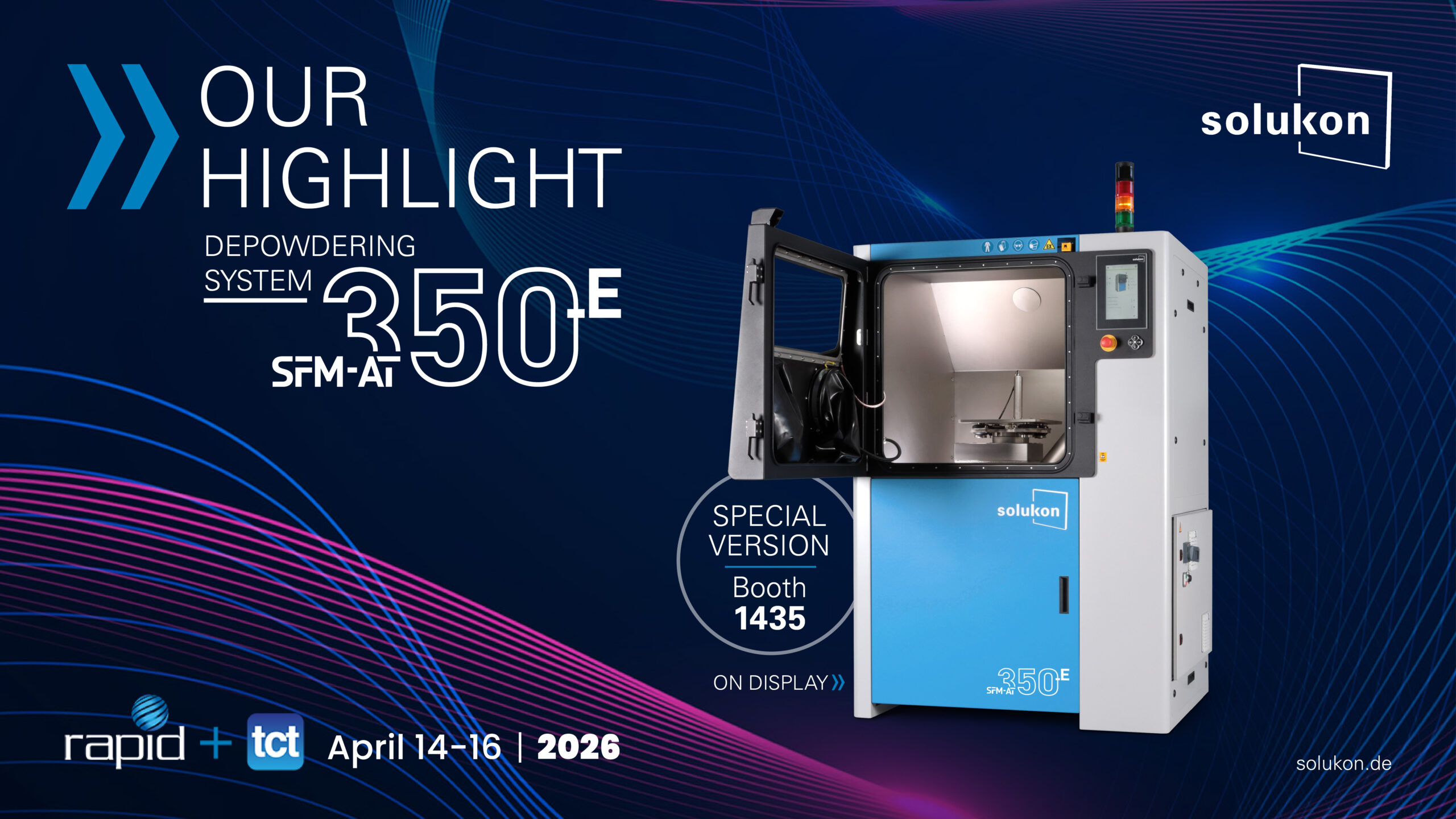
    At Formnext 2025, EOS launched the EOS M4 ONYX 3D printer, with a significantly larger build volume from the previous M400-4 system. Now, for the first time at RAPID, Solukon will be presenting its SFM-AT350-E, a special configuration compatible specifically for the M4 ONYX. This “super-compact” system is for depowdering ONYX parts with a z-height < 250 mm and weighing up to 100 kg. The company claims to offer “the best cost-footprint ratio” of any depowdering system currently on the market. But it’s important to note that this system is specifically for compact prints. If you have larger parts, even if they were printed on the EOS M4 ONYX, you should use the larger SFM-AT800-S and SFM-AT1000-S depowdering systems.

    A major advancement in post-processing for AM is ultrasonic depowdering for delicate medical components, like spinal cages and other sensitive implants. This effective but gentle cleaning process can remove residual powder from parts with complex geometries without causing any issues to the surface quality or structural integrity. Solukon can now process these kinds of medical parts through the integration of its SFM-AT350-E depowdering system. At RAPID, the company will showcase titanium 3D printed spinal implant cages being actively processed within the system.

    Meet Solukon, and see the SFM-AT350-E for yourself, at the company’s RAPID Booth #1435.

  • Eplus3D and Hankook Push Metal 3D Printing Into Tire Production

    One of the hidden gems in 3D printing is tire production. Several companies, most notably Michelin, have used 3D printing extensively for tire molds and other parts of tire production for years. With few companies in the business, it hasn’t been big news, but it has been a building success, shifting material and machines for decades.

    Eplus3D has worked with Hankook Precision Works on tire molds. Hankook is a South Korean tire giant. Hankook Precision Works is a subsidiary specializing in mold production and machining for tires and related components. The company got into additive manufacturing only a few years ago. Generally, the firm wanted to shorten time-to-market while also offering more market-specific tires. Through changing the mold design, better tire patterns can be created for specific vehicle families or uses. This could lead to better road handling or mileage, for example. It could also let the company make specific tires for electric EV delivery vans, for example, or to reduce the road noise given off by garbage trucks.

    The first EP-M300 machine. Image courtesy of Eplus3D.

    Hankook Precision Works now makes 3D printed mold components for its clients. Tires have patterned slits in their surfaces. This is literally where the rubber meets the road. Their depth, geometry, and what occurs on the surface have huge effects on the vehicle. These cuts are called sipes or kerfs. They expand on contact with the road and help the tire grip the road. Changes in the tread pattern overall or in these kerfs can affect ride, stability, braking distance, speed, cornering, and almost all the major factors that affect your car’s ride.

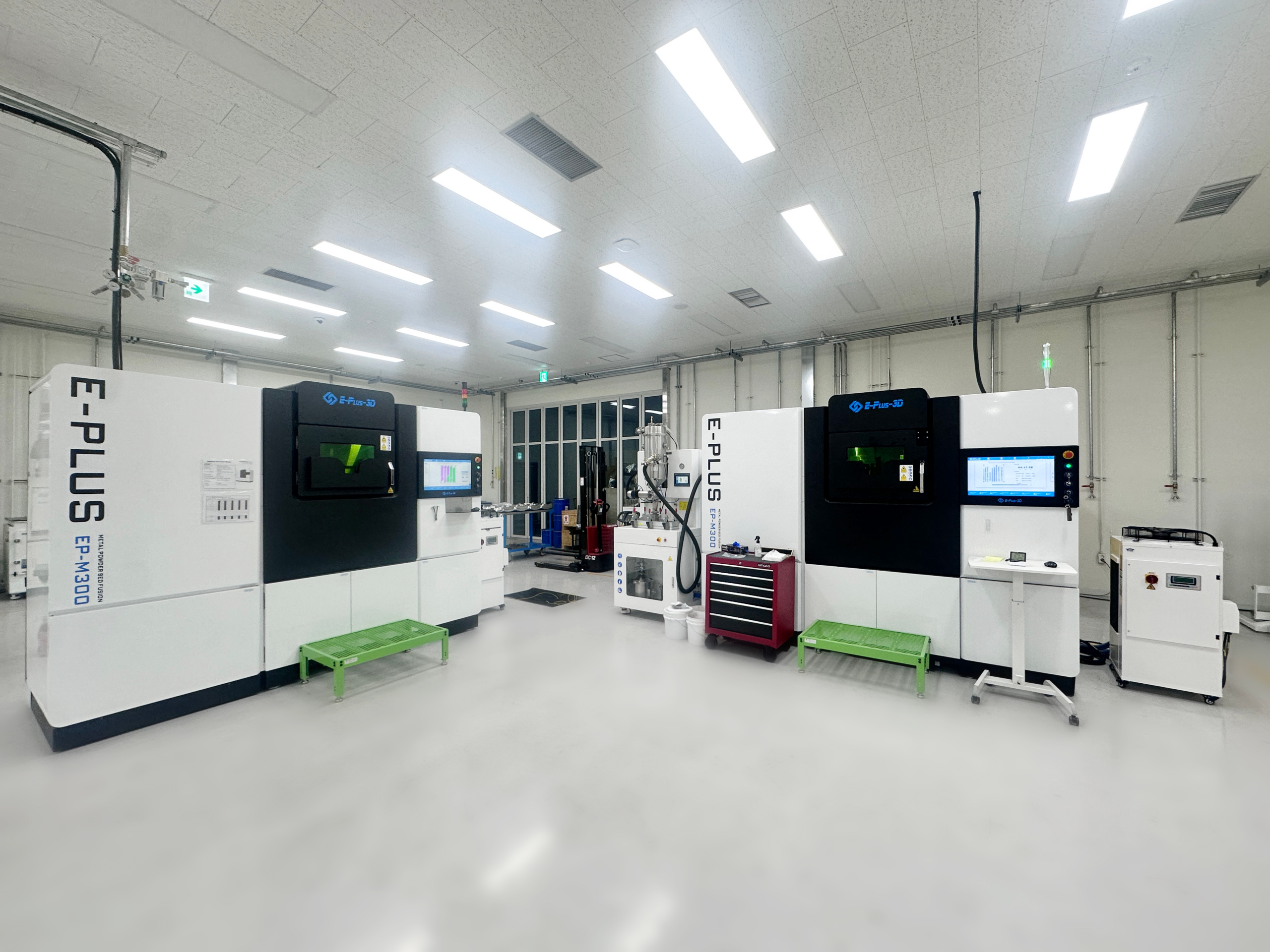
    Two EP-M300 machines in Hankook’s facility. Image courtesy of Eplus3D.

    Faster iteration and more geometric freedom enable better sipe designs. At the same time, 3D printing them is generally cheaper and can produce custom mold shapes to generate the exact sipe pattern. Hankook evaluated an E Plus EP-M300, a dual-laser 300x300x450mm build-volume system with smart production features, including reduced gas consumption, longer filter life, and monitoring software. The machine was first used in September 2025, and Eplus helped the company press the system into production. The company now states that it has been used to make 100,000 components since then. Hankook bought a second machine in February of this year.

    Eplus staff not only trained people on the system and got it up and running at Hankook’s facility, but also helped industrialize it there. Part testing, process parameter development, and implementation in production were done on the factory floor. We’ve seen a lot of success from consultancy teams helping clients come up to speed in 3D printing. EOS’s Additive Minds has been doing this kind of thing for a while. By helping companies, a consultancy can speed up implementations. It can also derisk them. And in the case of Eplus, the availability of application engineers and support on-site could have made them feel comfortable enough to work with the firm.

    As a sales accelerator and a market growth tool, the right advice and hand-holding can work wonders. You’re not selling a box. You’ve got the potential to become a department, business unit, or the company’s future. And if they get it wrong, the people you’re talking to could get fired. We also lack systems integrators. Famously, we’re supposed to be a time-compression technology, but when implementing additive takes years, we can often seem like a time-elongation technology.

    Through expanding into Europe and ramping up its customer base, the company is showing that it aims to meet the market wherever it is. With cases like these under its belt, the company can show off a track record that could convince many more to become clients.

  • HP Continues to Lower Barriers to Adoption with Compact MJF 1200 & Other RAPID + TCT Announcements

    This week at RAPID+TCT in Boston, HP Additive Manufacturing Solutions is celebrating ten years in the AM market. The company launched its Multi Jet Fusion 3D printing technology in Barcelona back in 2016, and officially unveiled the solution at RAPID that same year; it’s come a long way since then. As such, the company is sharing a veritable smorgasbord of product announcements at RAPID 2026.

    As we mark a decade of innovation in additive manufacturing, these latest advancements across our portfolio reflect HP’s focus on bringing industrial-grade capabilities closer to where ideas take place. By lowering cost per part and simplifying workflows, we are making it easier for customers to adopt additive manufacturing and scale it across new applications,” said Alex Moñino, SVP and GM, HP Additive Manufacturing Solutions, in a press release.

    Alex Moñino, Senior VP and General Manager, HP Additive Manufacturing Solutions

    I was invited to HP’s 10th anniversary celebration after the first day of RAPID, held at a cool seafood restaurant near the convention center. The drinks were freely flowing, appetizers and cake were passed, and all attendees gathered to hear remarks from HP executives, as well as a panel of leaders from some of the company’s best partners and customers.

    L-R: Dominic Stoerkle, Evonik; Bryan Dow, Cantor Fitzgerald; Brigitte de Vet-Veithen, Materialise; Joe Calmese, ADDMAN; Matteo Rigamonti, Weerg.

    HP’s New Multi Jet Fusion 1200

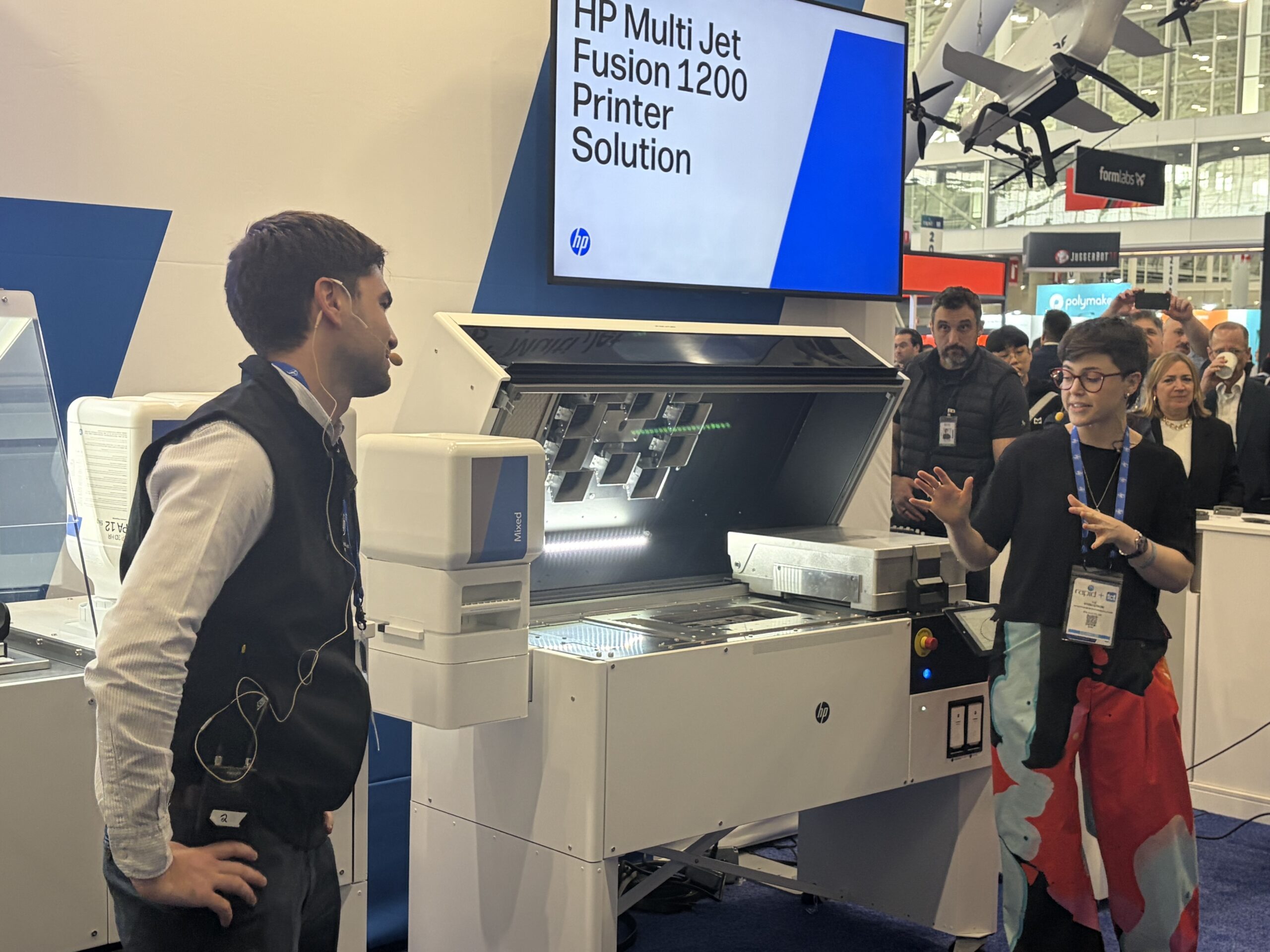
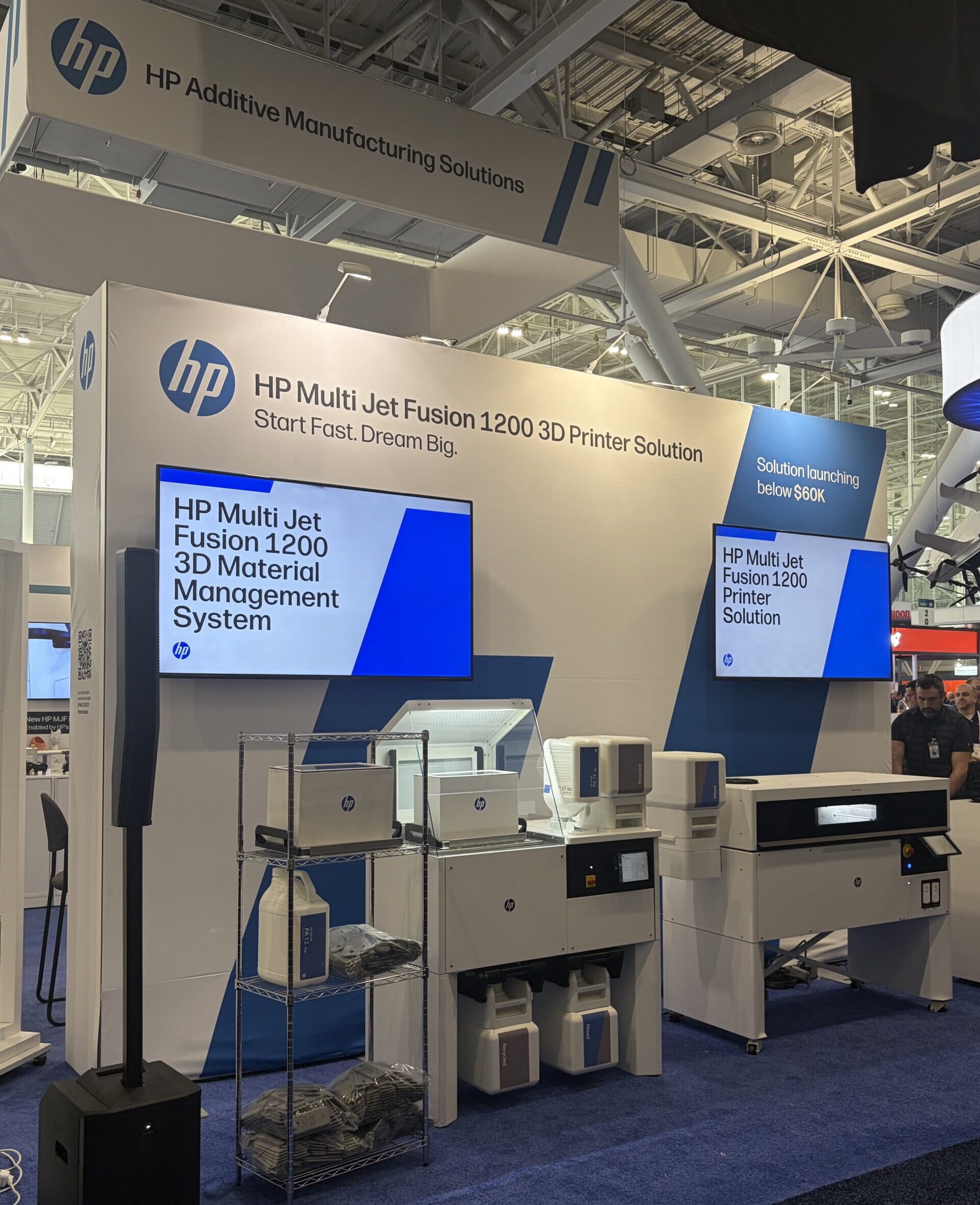
    Before the news was made public, those of us at the anniversary party also got to hear a little about HP’s latest innovation, which the company officially unveiled live at RAPID just this morning: the new Multi Jet Fusion 1200 3D printer. The idea is to expand access to industrial MJF by packaging the technology into a more compact, affordable system. Priced below $60,000, it significantly lowers the barrier to entry for industrial polymer printing.

    “As you know, MJF is the production standard for polymers, and what we’ve done is take that DNA and bring it into a form factor that will fit everywhere. So welcome to the future, to the next chapter of MJF,” said Moñino as he introduced the system.

    The MJF 1200 features a 12-liter build volume, with prints completed in under 12 hours, and a guided workflow that makes it easy to use daily. Speaking of ease of use, the printer also offers automated processes for build preparation, material mixing, and unpacking parts, with Moñino emphasizing that “we automated a number of key steps to make sure it’s as easy and clean and efficient as possible,” which reduces manual operations and enables organizations to easily integrate the system into their facilities.

    HP unveils the Fusion 1200 printer on the RAPID + TCT 2026 show floor.

    HP makes it a point to check in with users before making big ecosystem changes. Anima Design was an Alpha tester for the MJF 1200, and Manufacturing and Prototyping Manager Yoel Cruz said that it was “rewarding to see our feedback reflected in the final printer.”

    Beta tester LualdiLabs is in the medical industry, and works to “enable a new model of care where advanced manufacturing capabilities are integrated closer to the point of treatment,” explained CEO Redouane Selmoune. With HP’s new compact system, multiple sectors, including healthcare, should find it easier to access industrial AM.

    HP’s new Fusion 1200 printer at the RAPID + TCT 2026 show floor.

    The same core technology that powers all HP systems will also drive the compact MJF 1200, with Moñino noting that it is “the same technology that runs our high-end printing solutions, so you can expect the same industrial-quality parts,” giving companies a way to print strong, functional polymer parts in-house for a variety of real-world applications. Additionally, as part of the CO-AM Ecosystem, each MJF 1200 3D printer will come with dedicated Magics Print for HP build preparation software, powered by Materialise. The full solution will be available starting in early 2027.

    Live from RAPID + TCT 2026, HP’s booth.

    New Innovations for the HP Jet Fusion 5600

    The MJF 1200 isn’t the only new development HP is launching to help lower the barriers to AM adoption. The company is also introducing a High Productivity print mode for the Jet Fusion 5600 series, which it says can improve printer output by 20%. This mode supports HP 3D High Reusability PA12 Glass Beads, so users can fabricate stiff, dimensionally stable parts at a lower cost.

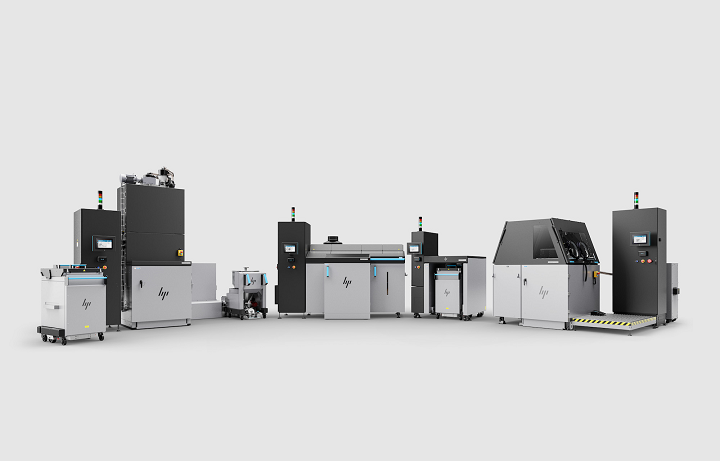
    HP Jet Fusion 5600 Series. Image courtesy of HP.

    HP is also introducing MJF Dual Tone technology to the Jet Fusion 5600 series. Thanks to HP’s “unique agent capabilities,” this enables printing in both white and grey color tones, so users can produce special part features like labels, markings, QR codes, and textures. The Jet Fusion 5600 will be the first HP system to offer Dual Tune technology as a built-in capability.

    New Materials & Powder Handling for Metal Jet

    HP is also announcing new capabilities for its Metal Jet platform, first with a new solution to make powder handling safer and simpler. The company announced a collaboration with Volkmann GmbH, a German metal powder handling specialist, to introduce the vPort as an entry-level option for the HP Metal Jet S100. This is a contained powder management system that uses Volkmann’s technology to offer semi-automated part depowdering, cleaning, powder recovery, and refilling. This system will be available from Volkmann in Europe, the U.S., and Canada.

    HP Metal Jet S100 Solution. Image courtesy of HP.

    First, by developing and qualifying new materials for high-growth sectors like tooling, energy, and aerospace. The new material offerings for HP’s Metal Jet include copper for high conductivity applications, like electrification and thermal management; tungsten carbide-cobalt (WC-Co) for tooling applications; and nickel-based superalloys, such as M247LC, for high-temperature aerospace parts.

    General Availability of HP IF 600 HT in the U.S. & Canada

    Speaking of high-temperature 3D printing, HP also announced the general availability of its Industrial Filament 3D Printer 600 High Temperature (HP IF 600HT) in the U.S. and Canada. Even better, the first one has already been sold and successfully installed at Haelvoet, a Belgian healthcare furniture brand.

    HP IF 600HT 3D printer at AMUG 2026. 

    The printer enables us to create high‑quality prototypes and small production series that elevate the finish and ergonomics of our products,” said David Vannieuwenhuyse, Head of R&D at Haelvoet. “By shortening our design–test–iterate cycles, we significantly reduce our time‑to‑market.”

    This system was first launched at Formnext 2025, and I got to witness its North American debut at last month’s AMUG 2026. While its name doesn’t quite roll right off the tongue, the HP IF 600HT offers flexibility to manufacturers—not only does it support high-temperature materials like PEEK, ASA, and glass-filled polymers, but it’s also an open materials platform. So you can use the company’s pre-loaded material profiles, or work with HP AM’s global service network to create custom profiles for third-party materials. 

    All of these announcements demonstrate HP’s commitment to enabling additive adoption.

    Images courtesy of the author unless otherwise noted.