• Canada Releases 3D Printing Library of Minis for War Games

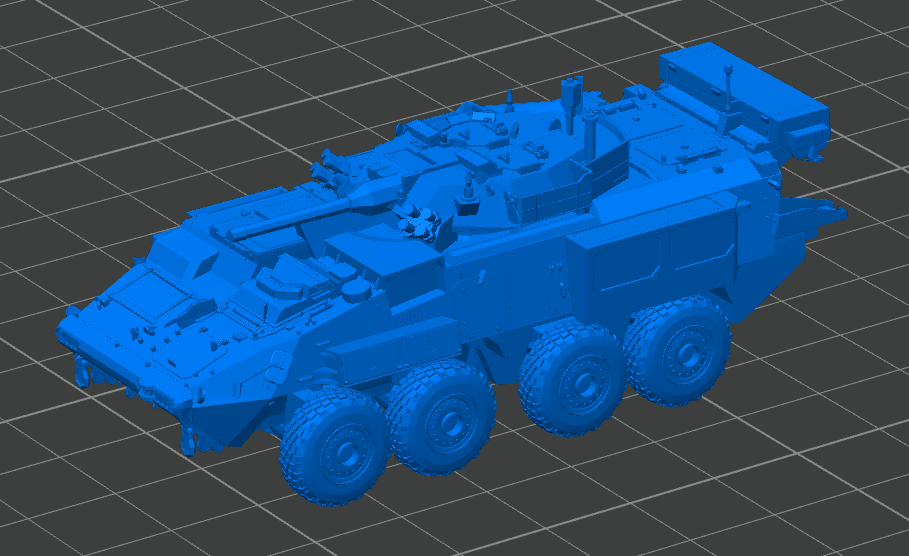
    From Reddit’s 3D printed Minis community, we learned that the government of Canada has released a 3D printing library of military vehicle Minis. Now this may seem to be a little silly, but I think it’s a great idea. The country is offering a library of vehicles for free download. These vehicles include the Leopard 2, the Tracked Light Armoured Vehicle, the Heavy Logistics Vehicle Wheeled, and more. The collection also includes enemy vehicles such as the T-90. The files are released under Crown Copyright, a commonwealth type of copyright to ensure that the government has the ability to use things it creates, while restricting some others from using it. You can not use these models commercially.

    But, if you want a highly detailed model of a tank (and frankly who wouldn’t?), this is a great source. I think a lot of these models would look great in DLP, but am sadly without any Vat Polymerization systems in my house at the moment. The models are generally very detailed and seem to come from actual vehicle scans. Some may not immediately work, or work without supports on Material Extrusion systems, but I think that they’re a valuable addition for anyone that needs similar models.
    The models were made from the ALSC – Army Learning Support Centre, the distributed group and individual training provider for the Canadian military. Their content is spread over the Defence Learning Network and beyond. The ALSC also makes things for the Combat Training Centre (CTC) such as videos, graphics, and more.

    Offering an online library of files is of course a great way to familiarize soldiers with 3D printing. In a low-effort, easy way, you get to make something non-critical first. By creating this portal now, they can learn how to spread files to soldiers, what issues arise, and how intensive usage is. This is a great way to learn before you start letting people 3D print tourniquets. It is a low-risk way to spread the usage of 3D printing through an organization.

    One of the reasons for creating an online library where people can download stuff is to let people 3D print their own games. With Commander’s Intent, they’re letting people print their own tokens for a game playable on 1:50k maps. These maps, where 1cm equals 500m, are often used in the military, giving you just enough knowledge of a particular area to make the right decisions regarding hills and the like, while also helping you better understand the terrain you will encounter. It’s maybe not the map you’d want to have when solo cresting a difficult mountain range, but for you and your 120 best buddies in trucks, it’s ideal.

    The resulting war game can be played by people in their own time, letting them explore and learn. The key concept in the game is Command Intent. Rather than you telling me where and when I need to do what, it’s you telling me what our objectives are, what we want to accomplish, and what needs to be done. So if I’m cut off, I can independently make the right determination of what to do or not to do. Famously, Helmuth von Moltke said, “no plan survives its execution.” So it’s best to give every key player the knowledge to operate independently once the plan collapses due to a sudden collision with reality.

    The full von Moltke quote reads,

    “No plan of operations extends with any certainty beyond the first encounter with the main enemy forces. Only the layman believes that in the course of a campaign he sees the consistent implementation of an original thought that has been considered in advance in every detail and retained to the end.”

    Outside the military realm, this is an important lesson in strategy, business, and beyond. Rather than try to absorb it in a lecture, the goal of this game is to let people experience it. This could work especially well for people with experiential learning styles, and perhaps the tokens themselves may help people who are more likely to learn with tactile experiences.

    What’s more, you can also 3D print physical flash cars in NATO Map tokens that depict NATO’s Mission Task Verb language. These symbols and language are key to NATO orders, and include things such as Support by Fire or Advance To Contact. Very specific, they are embodied in STANAG 2287 and other standards, allowing for a precise understanding of key things to be done. They’re also called Mission Task Verbs. Now, you can touch and learn through these tokens. The same tokens are used to manually mark maps and are still used in digital systems to indicate what is to happen. They’ve even included a Staedtler Marker Holder, should you wish to mark up some maps and keep your color coded pens happy.

  • Continuum Powders Brings in Jon Cozens to Scale Its Circular Metal Model

    Continuum Powders has named Jon Cozens as its new chief executive officer, a move that points to a shift in where the company is headed. After spending the past few years building out its technology, the focus now is on scaling it. The Houston-based materials company said Cozens will lead that next phase, with an emphasis on growing production, working more closely with customers, and expanding adoption across industrial markets.

    The appointment comes at a moment when Continuum is no longer in the early “prove it works” stage. The company says it already has an active pipeline and is starting to see real commercial traction. At this point, it’s less about developing the technology and more about executing, taking what’s already working and doing it at a larger scale.

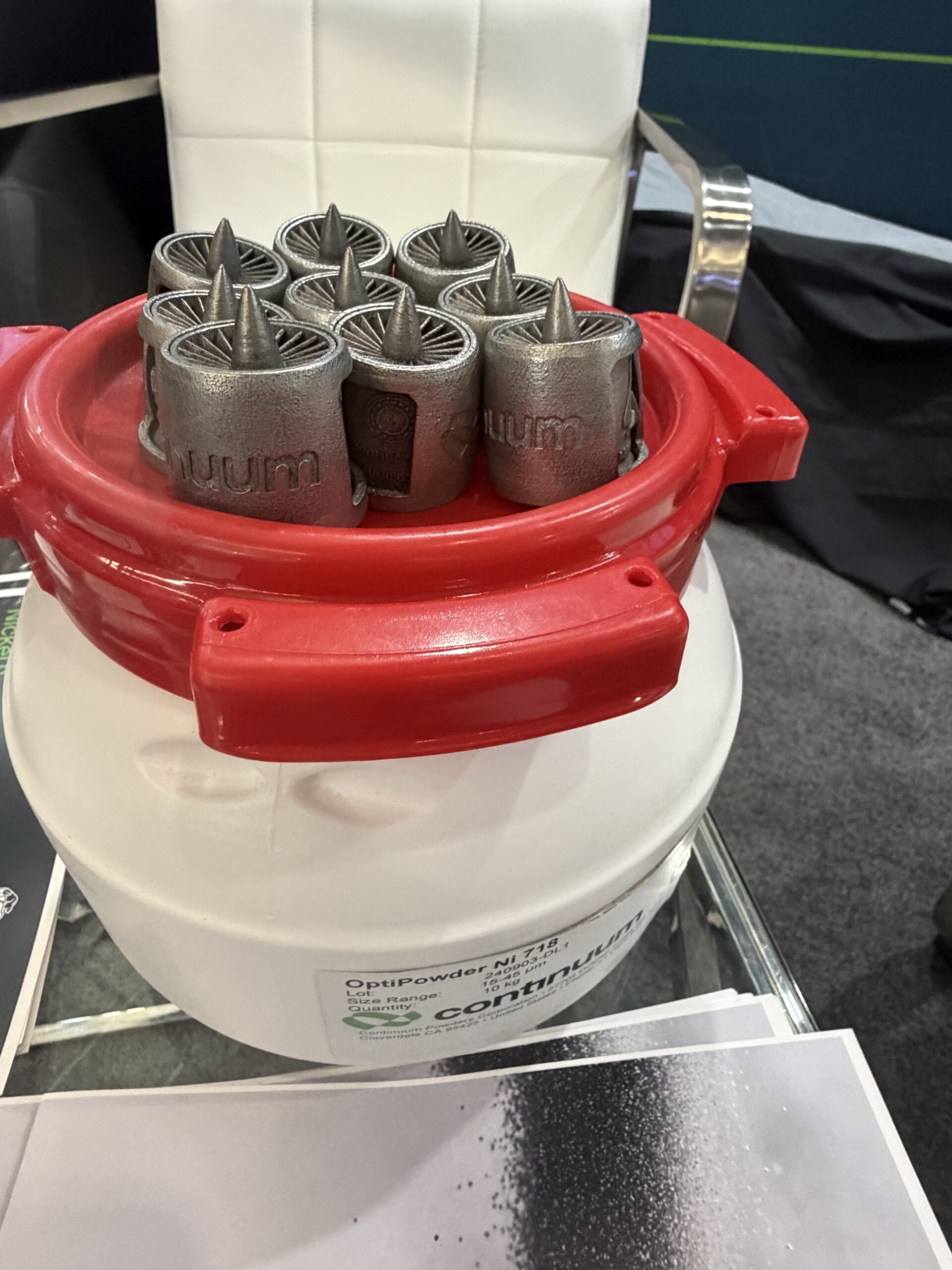
    Continuum’s stand at RAPID. Image courtesy of Sarah Saunders/3DPrint.com.

    Continuum is a key part of the additive manufacturing (AM) value chain: metal powders. These materials are used in processes such as laser powder bed fusion and binder jetting, and they play a big role in how well a part performs.

    What sets Continuum apart is how it makes them. Instead of relying on traditional mining and multi-step refining, the company uses a patented system called Greyhound Melt-to-Powder (M2P). The process converts alloyed metal waste, basically scrap, into high-performance, spherical powders in a single step. 

    At its core, Continuum takes material that would otherwise be thrown away and turns it into high-quality, usable powder. That approach reduces the need for newly mined materials, cuts emissions, and reduces waste, while still meeting the performance requirements these powders need to meet. Because of that, the company is starting to position itself not just as a materials supplier, but as part of a more circular manufacturing player. Its goal is to make metal powder production more local and less dependent on long, complex supply chains, something that is becoming super important in sectors like aerospace, energy, and defense.

    Continuum’s patented Greyhound M2P process. Image courtesy of Continuum Powders.

    Continuum is backed by Ara Partners, which led a $36 million funding round to support the company’s growth. The firm focuses on industrial and decarbonization investments, and its backing gives Continuum both capital and strategic support as it works to scale its metal powder production and expand its reach.

    A CEO Built for Scaling

    Cozens’ background matches what the company needs next. He has spent over a decade working with industrial and cleantech companies, often helping technologies move from early use to full-scale production.

    Before joining Continuum, he was CEO of Aries Clean Technologies, where he focused on waste-to-energy systems. Earlier roles at companies like Mura Technology and Fulcrum BioEnergy also centered on turning complex, sustainability-driven technologies into real-world infrastructure. Today, his experience matters because Continuum is no longer trying to invent something entirely new; it’s trying to scale a system that already works.

    “I’ve spent much of my career helping industrial technologies move from early promise into commercial scale,” Cozens wrote in a LinkedIn post announcing his new role. “What stood out to me here is that Continuum already has a strong foundation, both technically and commercially, and the team has built something that’s gaining real traction. There’s still a lot to do. Scaling is rarely a straight line. But the opportunity here is clear.”

    In the company’s announcement, Cozens also pointed out that “the technology is proven, customers are seeing the value, and the foundation is already in place. The opportunity now is to scale with discipline, expand access to high-quality material, make supply chains more resilient, and do it in a way that makes economic sense for customers. That’s what excited me about joining Continuum.”

    Why This Matters for AM

    Continuum 3D printing at RAPID. Image courtesy of Sarah Saunders/3DPrint.com.

    Metal powder is a bottleneck in AM. As more parts move into production, the need for consistent, high-quality material at scale and at a cost that works becomes more important. Continuum’s approach takes on several of these challenges at once. By recycling alloyed waste, it could reduce the dependence on volatile raw material markets while also lowering emissions compared to traditional production methods. At the same time, the company is focused on maintaining the material performance required for high-end applications. It is already targeting sectors where those factors matter most, including aerospace, energy, and industrial manufacturing.

    The company is now focused on scaling its operations and actually growing in the market. Moving from building the technology to running it at scale is a step most 3D printing companies eventually face, and it’s not always a smooth transition.

  • 3D Printing Financials: Align’s Growth Runs on Volume

    Align Technology (Nasdaq: ALGN) kicked off 2026 with steady financial results, with most of the growth coming from its core high-volume 3D printing business.

    The maker of Invisalign reported first-quarter revenue of $1.04 billion, up 6.2% year-over-year, as demand for its clear aligners continued to grow globally. The growth is stable, and it’s being driven by more aligners, more cases, and more 3D printing.

    A 3D printing business at its core

    Align’s clear aligner segment, built around 3D printing, is still where most of its revenue comes from. In Q1 2026, clear aligner revenue reached $856 million, up 7.4% year-over-year, while shipments hit a record 685,700 cases, growing 6.7% compared to last year.

    That matters because every Invisalign case involves mass customization, which means thousands of unique dental aligners are produced using additive manufacturing. So more cases mean more 3D printed parts moving through Align’s production systems.

    Growth was particularly strong outside the U.S., with double-digit expansion across Europe, Asia-Pacific, and Latin America, which helped make up for a slower North American market. This shows that Align isn’t just using 3D printing; it’s one of the biggest production uses of it in the world.

    Invisalign aligners. Image courtesy of Align Technology.

    Volumes up, margins holding

    Despite ongoing macro uncertainty, Align managed to keep profitability rather stable. The company reported net income of $112.8 million, operating margin of 13.6%, and gross margin of around 71% (adjusted). These margins suggest that even as Align continues to scale production by printing more aligners each quarter, it is maintaining efficiency in a highly automated, digital manufacturing environment.

    That’s not easy to do. High-volume 3D printing has had issues with consistency, cost, and speed. Align’s ability to grow volumes while keeping margins steady shows how far production-grade additive manufacturing has come.

    Invisalign clear aligners up close. Image courtesy of Align.

    Still, not every part of the business moved in the same direction. Align’s imaging systems and CAD/CAM segment, which includes scanners like iTero and related digital tools, generated $184 million, up just 0.9% year-over-year and down sequentially.

    This side of the business is less directly tied to 3D printing output and more to capital equipment spending by dental practices. The slower growth here reflects a broader trend seen across medtech and dental markets: clinics are being more cautious with purchases of large equipment. Clearly, the growth is being driven by aligners, not hardware.

    $200 million buyback signals confidence

    Alongside earnings, Align also announced a new $200 million stock repurchase program, set to begin in May 2026. The company already completed a $200 million buyback earlier this year. Buybacks usually mean the company thinks its stock is undervalued or expects strong cash flow. Align ended the quarter with over $1 billion in cash, giving it plenty of room to run the business and return money to shareholders

    For the broader 3D printing industry, Align’s results are worth paying attention to, not because of new technology announcements, but because of scale. This is one of the clearest examples of additive manufacturing working as a true production technology with millions of parts produced every year, highly automated digital workflows, consistent margins at scale, and a global demand driving volume growth.

    While many AM companies are still working toward industrial adoption, Align has been operating there for years. The company built its business on a highly scaled 3D printing process, where molds are printed and then used to form aligners, and that system is still the backbone of production today. At the same time, Align is working toward directly 3D printing its products, which removes the need for molds. Its 2024 acquisition of Cubicure is part of that push, bringing in technology focused on direct printing. The company has already launched its first direct-printed device, with more in development, and if this transition succeeds, it could mark another step forward not just for Align but for how 3D printing is used in high-volume healthcare.

    Align’s Q1 2026 results point to steady growth, driven by higher aligner volumes and a strong global presence. The company reaffirmed its full-year outlook, expecting 2026 revenue to grow 3% to 4% and clear aligner volumes to rise in the mid-single digits. For Q2, Align expects revenue of $1.04 billion to $1.06 billion, with volumes increasing both sequentially and year over year. Revenue is up, margins are stable, and the company continues to return capital through buybacks.

  • Phillips Federal Participates in Marine Corps Exercise

    Phillips Federal will participate in a Marine Corps exercise that will use several additive manufacturing technologies. The 1st Maintenance Battalion, 1st Marine Logistics Group, I Marine Expeditionary Force (IMEF), will conduct a field exercise at Camp Pendleton in California. The sustainment and austere-focused exercise will bring together Philips Federal’s OEM partners in a maintenance solution.

    Austere manufacturing and expeditionary manufacturing are especially important to the Marines, and within the Marine Corps, the MEU units will need it the most. The Marine Expeditionary Units include a battalion of Marines, armored vehicles, aircraft, drones, artillery, scouting units, helicopters, and maintenance units with a total strength of 2,000 to 4,000. The MEU’s job is to be a coordinated combined unit that can take and secure a beachhead. Or in a smaller theater, a MEU could undertake a complete invasion of an area without much in the way of external help beyond the Navy ships accompanying the MEU. The US has 7 MEU units, three each on either US coast and one in Japan. The MEU deploys with a floating command system and from amphibious ships. MEUs are ideal for fast deployment and action. Whereas other maintenance units stationed at a US-based or an overseas base could imagine a world in which air-based logistics would work for chicken nuggets and aircraft parts, the MEU’s maintenance personnel do not have that luxury.

    Gonzalez, tell me again how you forgot to 3D print the boat?

    They know that they will be cut off from all but the most immediate air support and supply in the key moments of a conflict. There will always be a real lag between the initial contact and reinforcements. And stuff will always break, but an extended beach vacation with 4000 of your bff’s, salt water, sand, and combat is guaranteed to make a lot of things break, many more so than if you were barreling down European highways or woodland. At Anzio in the Second World War, a lack of initiative, landing craft, coordination, and direct artillery support, coupled with highly trained German troops, pinned the US military down on a beachhead for four months. Earlier at Gallipoli, delusional planning and bad generalship saw 61,000 casualties on the Allied invaders’ side before a disastrous retreat. A MEU, therefore, knows that it will always need an exigent MRO capability of some kind and that this could end up being a multi-month, desperate effort in trying circumstances.

    Here, the aim of the exercise is to let the Marines build drones and do MRO in austere conditions. The teams will use EOS, Markforged, Phillips Additive Hybrid (Meltio, Haas), and BigRep in the field. 3YOURMIND will be used as an MES. Some of the machines used are the Markforged X7, the composites system, and the EOS M290 and P3.

    Marshaling this will be Patrick Tucker, Colonel, U.S. Marine Corps (Ret.), Strategic Business Development Manager at Phillips Federal, who said that,

    “Phillips Federal is uniquely positioned to operationalize advanced manufacturing through our ability to integrate additive and subtractive technologies into scalable, deployable solutions tailored for austere environments. We are advancing containerized manufacturing systems designed for tactical air mobility, forward operating bases, and expeditionary advanced base operations — enabling production in remote locations that were previously considered too constrained to support manufacturing. The 1st Marine Logistics Group and 1st Maintenance Battalion are the perfect partners with their emphasis on applying advanced manufacturing within the contested bubble to ensure forward sustainment and drone production at the very tip of the spear.”

    With regards to Philips Federal,

    “We are advancing containerized manufacturing systems designed for tactical air mobility, forward operating bases, and expeditionary advanced base operations — enabling production in remote locations that were previously considered too constrained to support manufacturing.”

    Patrick was previously a Regimental Commander with I MEF, so his experience and value to Philips are pretty unprecedented in this exercise. I really think that if you are an OEM or software firm trying to sell your product to the US military, you should engage Philips Federal. They just understand this whole military sales thing way, way better than anyone else. They speak the lingo, know how budgeting and contracts work, have extensive networks, and know what matters to the military folks. I really think that they’re a face multiplier for additive and helping socialize and spread additive in the US military. I know I’m not normally so completely positive about things, but working with them just seems like a no-brainer to me.

    Images courtesy of the US Marine Corps

  • 3Dnatives Announces ADDITIV Defense 2026: A Global Virtual Summit on Additive Manufacturing’s Role in Military Readiness

    3Dnatives is proud to announce the inaugural edition of ADDITIV Defense, a global virtual summit dedicated to additive manufacturing in military and defense environments. The free event takes place on May 6th, 2026, from 10:00 AM to 12:30 PM EDT / 4:00 PM to 6:30 PM CEST. Over 2.5 hours, it will bring together defense decision-makers, industry leaders, and AM experts around one central question: where does additive manufacturing fit into real operations?

    “Defense organizations are no longer asking whether additive manufacturing has a place in their operations. They are asking how to scale it, certify it, and deploy it where it matters most. ADDITIV Defense was created to provide a space for these conversations, bringing together decision-makers and experts working to move the technology into real-world use.” — Filippos Voulpiotis, Managing Director of 3Dnatives

    What to Expect at ADDITIV Defense 2026

    Panel 1: Manufacturing Under Fire: How AM is Changing Military Logistics

    When forward-deployed forces cannot wait for a part to ship, the question is not whether AM works in a lab, but whether it works in the field. This panel examines how digital inventories, on-demand production, and distributed manufacturing are being integrated into real military supply chains, and where the gaps remain. Speakers include Sherri Monroe of AMGTA, Aaron Johns of Siemens Government Technologies, Michael Pecota of Naval Sea Systems Command, and Daniel Braley of V2X Inc.

    Panel 2: Scaling Drone and Equipment Production with Additive Manufacturing

    The jump from prototype to serial production is where most AM programs stall. This session takes on the hard engineering decisions involved in producing drones and mission-critical hardware at scale, from design for AM and material selection to balancing production speed with the durability requirements of operational environments. Speakers include Alison Wyrick Mendoza of ASTM International, Mike York of Eaton Aerospace, Kelvin Fu of University of Delaware, and Howard Marotto of The Barnes Global Advisors.

    Panel 3: Certification and Trust: What Still Prevents Full Adoption of AM in Defense?

    This session tackles the harder question: why, despite years of development, AM still struggles to achieve full adoption for critical defense components, and what needs to change on qualification, standards, and risk acceptance before that shifts. Speakers include Gil Lavi of 3D Alliances, Stephen McKee of ASTM International / Wohlers Associates, Evren Yasa of the Advanced Manufacturing Research Centre (AMRC), and Moritz Kolter of the Aachen Center for Additive Manufacturing (ACAM).

    Networking Built for the Industry

    Beyond the panels, attendees gain access to targeted peer networking through the Swapcard platform, with the ability to schedule one-on-one meetings before and after sessions. The event is expected to draw over 700 registered attendees from across the global defense and AM ecosystem.

    Partners and Sponsors

    Backed by key industry partners and sponsors including Arc Impact, Protolabs, ASTM International, AMGTA, SPE, 3D Alliances, Wevolver, Metal AM Magazine, Manufacturing in Focus, IAM3DHUB, 3DPrint.com, and Aerospace and Defense Review.

    Registration

    Register NOW to secure your place at the defense sector’s dedicated additive manufacturing virtual summit.

    About 3Dnatives: 3Dnatives is the leading global media platform for additive manufacturing, delivering cutting-edge coverage of 3D printing technologies, applications, and market trends. With over 1.3 million monthly unique visitors, it serves as a critical resource for professionals across the industry. Published in English, French, Spanish, German, and Italian, 3Dnatives partners with major players in the ecosystem to provide high-value content, data-driven insights, and strategic visibility through multimedia, branded content, and virtual events.

    About ADDITIV: ADDITIV is a series of global virtual events dedicated to additive manufacturing, offering panel discussions, workshops and networking with AM experts from leading industrial companies & the most innovative firms in the field.

  • Chromatic 3D Materials To Make Rocket Propellant

    Chromatic 3D Materials makes cost-effective, tough elastomeric materials. Its process is being used to make industrial parts at scale. Now the film has turned into rocket propellant. The firm is fire testing its propellant at the Integrated Solutions for Systems (IS4S) test site. Rocket propellant, solid rocket motors, and the structures inside rockets and missiles are a major bottleneck for Western powers at the moment. The US has for some stockpiles depleted key land attack and cruise missiles by half or a third. If the US were to attempt a large war or long conflict, it would quickly run out of rockets. With precision munitions seen as a key underpinning of US operations and strategy, there is an exploding market for rocket propellant and solid rocket engines.

    Firehawk got a $60 million contract to make thermoplastic rocket propellant, while Ursa Major and others have also received major contracts. The race is on to build automated solid rocket engine production lines using additive to help shore up the US’s ability to defend itself. It’s all very money-no-object, really.

    3D printer for polyurethane parts.Image courtesy of Chromatic 3D.

    Chromatic states that it’s “propellant achieves energetic loading levels comparable to top-performing conventional propellants while delivering the structural integrity required to withstand highpressure combustion environments…1800 psi without structural failure.”

    CEO Dr. Cora Leibig described how,

    “These results demonstrate that additive manufacturing is not only viable for defense propulsion — it can drive meaningful performance gains across at least 90% of the U.S. rocket arsenal. We’re showing that it’s possible to maintain compatibility with existing systems while opening the door to rockets that fly farther, hit harder, and can be produced faster.”

    The company hopes that design improvements and multi-material printing will let them surpass what is currently available. They also say that structural components could be made from propellant, opening the way to 3D printed autophage missiles we speculated about in 2024. Autophage designs could be very advantageous because parts could be even more compact, conformal, and mass-saving, while the rocket structure would largely eat itself during flight.

    Chromatic hopes to extend range and increase thrust by using its Reactive Extrusion Additive Manufacturing process and polybutadiene propellant binder chemistries. These liquid prepolymers are already in use in the Ariane rocket, New Glenn, Vulcan, Sidewinder, ATACAMS, MLRS, and many other platforms. Through using chemistries (HTPB, CTPB, PBAN?) familiar to rocket engine and missile developers, Chromatic can tap into a considerable market.

    Chromatic 3D printing. Image courtesy of Chromatic 3D.

    Especially for missiles, 3D printed autophage rockets could be a paradigm shift in performance improvements over existing platforms. For heavy-lift rockets such as the Trident, architectures are more set in stone, so a move to those would take longer. But with Blue Origin and others in a race for the skies, some heavy-lift players could be toying with this or with the much simpler, more conformal, and compact 3D printed structures to gain an edge on competitors.

    Spanish firm Supernova has a subsidiary that produces energetic materials using Vat Polymerization. That firm got a $2 million contract from DoD IAC through the Defense Technical Information Center, part of Mantech. Perhaps Chromatic could secure similar contracts. Chromatic has a European arm, too. There should be European interest in this as well. But there isn’t really any Europe that seems content to have history wash over it while it eats sandwiches. Chromatic could have a real winner of a product if their results bear out. Low cost, familiar chemistry, and better performance are really what everyone needs right now. Chromatic can print on relatively simple machines as well, so scaling this to high-value, high-speed production at volume should be very doable. Rocket propulsion availability is a huge headache for many forces worldwide, while it is also a huge opportunity for many space companies. We should see this segment heat up in the coming months.

  • Microprinting Microcap XTPL Reports 2025 Sales Growth Despite Net Loss

    The Polish company XTPL is among a category of small startups sitting at the overlap between additive manufacturing (AM) and advanced packaging for the semiconductor industry. 3DPrint.com’s Vanesa Listek wrote a nice profile of the company’s overall business model and value proposition in the summer of 2024, and while the company has slightly modified certain aspects of its growth forecast and sales strategy, XTPL is still generally working from the playbook Vanesa laid out a couple of years ago.

    The company, which has a ~$50 million market cap and trades on the Warsaw Stock Exchange (WSE), just announced its 2025 results, and while it reported a loss of PLN 16.3 million (~$4.6 million), XTPL also saw healthy revenue growth of 14 percent, finishing 2025 with PLN 15.6 million (~$4.4 million) in revenue, an all-time high for the company. XTPL also finished 2025 with a cash position of nearly $2 million, which doesn’t include proceeds from a PLN 19.5 million (~$5.5 million) share offering in Q1 2026, or a PLN 10.1 million (~$2.8 million) grant from Poland’s National Center for Research and Development (NCBR).

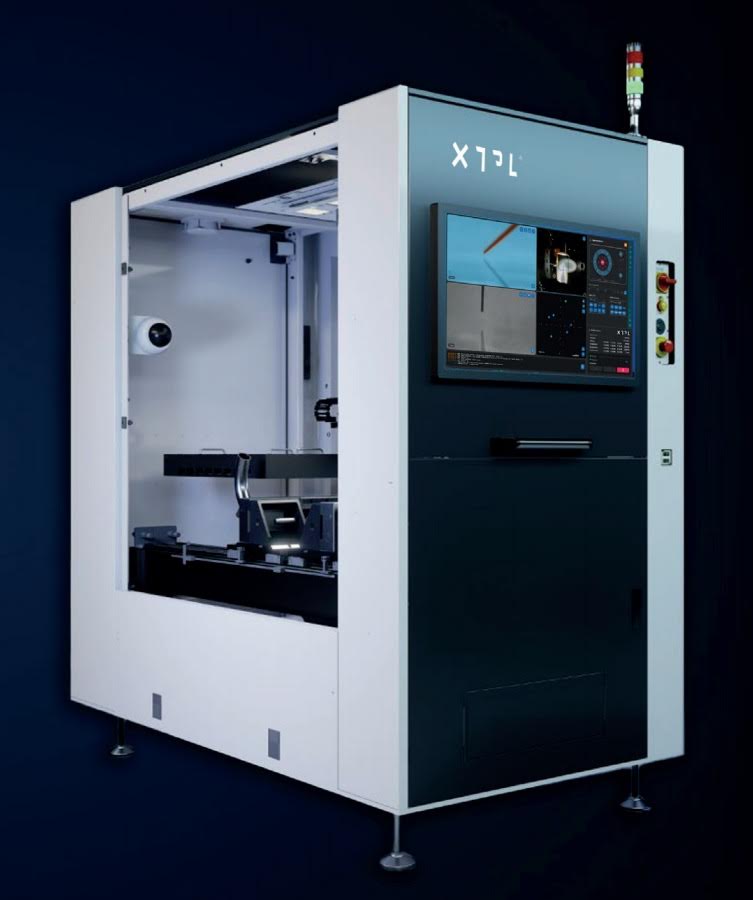
    The key addition to the company’s long-term business model is the commercialization of the ODRA system, the production-scale version of the company’s prototyping Delta Printing System (DPS), both of which draw upon XTPL’s Ultra-Precise Dispensing (UPD) printhead module. As I wrote about back in March, XTPL sold its first ODRA system to an unnamed Silicon Valley client, which is part of a Silicon Valley consortium dedicated to advanced packaging R&D.

    The ODRA industrial system

    As I always must include in discussions of companies like XTPL, the move by semiconductor manufacturers towards 2.5D/3D chip design—stacking multiple dies and packaging them with vertical interconnects—has catalyzed interest in leveraging AM for backend electronics assembly. XTPL’s addition of the ODRA system to its lineup now gives it four main business divisions, with advanced materials rounding out the trio of hardware offerings.

    In a press release about XTPL’s 2025 performance, the company’s CEO, Filip Granek, said, “In 2025, we delivered a total of 13 DPS devices and 8 UPD modules to clients across our key markets – North America, Asia and Europe – marking XTPL’s strongest performance to date. In parallel with these sales activities, we have been intensively developing the Company’s next growth driver: the new ODRA system business line. The prototype was first presented at the Productronica trade fair in Germany in November and in March this year we secured an order from a Silicon Valley-based client valued at approx. USD 0.4–0.5 million, with delivery scheduled for Q4 2026. Unlike DPS units, ODRA systems are designed not for R&D applications but for HMLV (High-Mix, Low-Volume) production. This dramatically increases their sales potential by enabling multiple deliveries to a single client. Currently, our most active negotiations are within the defense sector and we expect to generate further orders for delivery either later this year or in 2027.”

    It’s obviously difficult to predict the the growth trajectory for microcaps, but a cursory glance at some conventional wisdom surrounding this class of stocks does suggest that XTPL—and the advanced packaging original equipment manufacturers (OEMs) more broadly—plays in the sorts of markets most conducive to microcap growth. Historically, the semiconductor industry has a power to rapidly scale that’s unmatched by any other vertical, and the geopolitical wrangling between the US and China over packaging supply chains looks poised to create some unusually strong demand catalysts.

    For XTPL specifically, it’s especially reassuring to see that the company is getting public funding from the Polish government. I just wrote about how the European Defense Agency (EDA) will be supporting Ukraine with funding to scale the nation’s emerging tech developed in response to the Russian invasion. Assuming this defense tech acceleration push in Europe continues, XTPL would seem to be a perfect candidate to receive support from such an effort.

    Personally, I think the EU would do well to go all in on advanced packaging solutions. That would give the continent much-needed leverage in trade negotiations with both the US and China, while also providing the opportunity for high-growth tech that EU nations are eager to cultivate.

    Meanwhile, XTPL’s entry into the Silicon Valley market, combined with Poland’s significance to both the EU and NATO, could, down the line, also make the company an attractive target for funding opportunities from American sources. AM for advanced packaging is still in its early phases, but I think it has massive dark-horse growth potential that could start to be realized well before the end of this decade.

    Images courtesy of XTPL

  • Top DAWG & SAWC: $54 Billion Replicator Reborn

    The Defense Autonomous Warfare Group (DAWG), also called the Defense Autonomous Working Group, may be funded to the tune of $55 billion. Overseen by Deputy Defense Secretary Steve Feinberg, this may be a preeminent vehicle for obtaining a new autonomous capability for the United States. Hedge fund billionaire Feinberg owns Dyncorp. Some of his other portfolio companies, like NetCentrics Corp, North Wind, Red River Technology, and Stratolaunch, have gotten contracts recently under the Golden Dome project, which he overseas. Stratolaunch got Hypersonic Test Bed contracts as well.

    DAWG is essentially a carbon copy, or replication if you will, of Biden’s Replicator program. DAWG has gotten $225.9 million so far this year but is now looking for $54.6 billion more in the next budget request, compared to Replicator’s $500m spend. The base budget will be a hefty $1 billion. DAWG will be looking at unmanned systems in the broadest sense. Autonomous vehicles of any kind could be funded by the initiative, which will seek to place swarm-based drone solutions under and on water, in the air, and on land.

    Swarming technologies of all kinds could fall under the program, including the scaled up production of those vehicles and ancillary technology. This program augments, and in some ways supplants, many government projects already under way in the same arena. DAWG is spoken of as a pathfinder to locating new companies and solutions for the government. In effect, autonomous craft will have a completely cordoned off extra infusion of capital going into them.

    The US is behind on drone warfare. The US has too expensive and too few craft available to it. The US is running out of cruise missiles and precision munitions of all kinds. A short sojourn in Iran cost over $30 billion. The US military essentially is too expensive. In my Death Spiral article, I argued that the US is actually in a budgetary death spiral, where more expensive gear is needed to replace ineffectual things spread over fewer partners. In 2024, I argued that the US was mainly 3D printing squandered opportunities. My Surge Fulcrum article argues that the US should, and is, pivoting towards a swarm-based military. In 2023, I said that the US military is in effect being disrupted, while last year I argued that this disruption was under way.

    I wrote that,

    “I think that the current Replicator plans do not go far enough and smell a bit too much of continued pork banqueting at the expense of democracy. Time is short, the US is already on its back foot. In fact it may already find itself in a conflict in can’t win. Save for 3D printing. I’ve said this before but now find myself being a bit more frantic.”

    Now the US is clearly on the back foot, and in fact in an unwindable conflict. And it is turning to UAS systems in a major way. Clearly with the exigent timelines, 3D printing will benefit from this initiative. 3D printing is the best technology to make a lot of unmanned vehicle and aircraft parts. Mass savings, conformal, made on-demand, reduced part count, iterative, and quick to part will all benefit us clearly. Especially with smaller vehicles that have to be made fast and inexpensively, 3D printing has advantages. And if we look at austere manufacturing, on-demand 3D printing has definite advantages there as well. Many of these projects will no doubt turn to 3D printing to meet deadlines, and build and get craft out quickly.

    How much money will actually flow to us will of course depend on how much we adhere to Mr. Feinberg’s plan and needs. There seems to be very little in the process in place to see how this money is to be distributed. And of course, the ask and final amount could be very different than it is estimated to be now. But, a key strategy for 3D printing companies could be to get acquired by Cerberus Capital? Another option is to find out directly or indirectly what DAWG is specifically looking for and then build it. Lobbying seems to be the path forward here.

    Now, there is another layer to this initiative and that is the military one. Lieutenant General Francis L. Donovan heads the DAWG unit within United States Special Operations Command (SOCOM) that took over from the Replicator initiative. There are, therefore, two DAWGs: one is a military unit that was tasked with implementing autonomous technologies as part of SOCOM, while the other is a working group that funds it. Now officially stood up, the new unit taking over from the military DAWG until  will be called the SOUTHCOM Autonomous Warfare Command (SAWC).

    Replicator and DAWG aim to create a hellscape of drone swarms that would, through low US soldier cost and high autonomy, preclude a Chinese invasion. Indeed, a sufficient number of these vehicles could be a defensive ring inhibiting any kind of invasion. Ukraine now has created a dead zone that kills up to 90% of Russian soldiers destined for the frontline. This zone is comprised of manned drones of all kinds and has inhibited many of Russia’s missiles, aircraft, and any significant action, except at extreme human cost. The US seems to want to be able to implement this locally at will. This is simply the best idea ever and could save the US’s ability to fight wars.

    Donovan is the Commander, United States Southern Command. He says SAWC is tasked with:

    “…employing autonomous, semi-autonomous, and unmanned platforms and systems to counter threats and challenges across domains, linking tactical missions to long-term strategic effects. The command will also collaborate closely with Allies and partners in the region to advance shared goals, such as disrupting and degrading narcoterrorist and cartel networks, and responding to life-threatening crises caused by large-scale natural disasters.”

    The visibility and government importance of the narcoterrorist targeting, plus the applicability of these weapons to Taiwan and Iran, means that this will be the focus of much attention within the military. The US seems keen to develop a true autonomous capability. Whereas before the command was a part of USSOCOM, it is now a part of United States Southern Command. The soldiers of this unit will be important to evaluating, implementing, and scaling a true autonomous capability for the US.

    Donovan’s background is extensive. He has a lot of experience in SOCOM and was a commander of a Force Reconnaissance Platoon, as well as holding many other roles within the Marines. He has two children who are active duty Marines. There are two very different sides of America that together will create an autonomous warfare capability for the country. Let’s hope that we get the very best from both these men and those around them.

    To me, 3D printing is a key part of this. Indeed, I wouldn’t be looking at making drones, but making drone factories at this stage. A great drone now would be like having a Tiger tank in 1945. What the US needs is the ability to print most of this drone, from the engine to the radar, batteries, electronics, warheads, assemblies, body, and more. The US needs factories to quickly iterate and make drones. This to me is the only path to the US war fighting capability continuing to be meaningful.

    Want to learn more? We’re holding a live webcast called UAS Additive Strategies: The Present & Future of Drone Manufacturing, on June 30th. Register here.

  • Oxford Researchers Say 3D Printing Is Getting Better at Building Brain Tissue, But Not Fixing It Yet

    Researchers at the University of Oxford are getting closer to building brain-like tissue with 3D printing, improving how cells can be organized into structures that resemble the human brain. The update comes as the Oxford Martin Programme on 3D Printing for Brain Repair reaches the end of its five-year run, offering a clearer picture of what the team has been able to achieve so far, and what still remains out of reach.

    Launched in 2020, the program explored how additive manufacturing (AM) could one day help treat brain injuries and diseases. Now concluded, it points to a series of research advances, rather than a single clinical breakthrough or product. The team isn’t repairing brains yet, but they are learning how to build something that looks a lot more like real brain tissue than before.

    At the center of this progress is structure.

    For years, scientists have been able to grow brain cells in the lab. They’ve even used 3D printing to place those cells into soft, gel-like materials, though the results often looked more like clusters than actual tissue. But the human brain is highly organized. In the cortex, neurons are arranged in layers, with different types of cells and connections stacked in a precise way that allows the brain to process information.

    What the Oxford team has done is start to recreate that organization. Using human stem cells, the researchers generated different types of brain cells and used 3D printing techniques, combined with microfluidic systems, to place them into layered arrangements that resemble parts of the brain’s cortex. 

    Instead of relying on a commercial bioprinter, the team used a custom-built droplet-based system that ejects tiny cell-containing droplets, giving them finer control over how the tissue is assembled. So at the end of the day, instead of having random blobs, the result is something much closer to a controlled, multi-layered structure. The approach combines aspects of bioprinting with controlled fluid delivery, allowing cells to be positioned more precisely than in earlier scaffold-based or organoid-style models.

    And importantly, the cells stayed alive, held their shape, and even started to interact. Some cells extended connections while others moved between layers. It’s still early, but these are the kinds of behaviors researchers expect to see in real tissue, not just a lab model. For now, the work is happening entirely in vitro, in the lab, with no animal or human testing yet.

    That progress addresses one of the biggest challenges in bioprinting: not just printing cells, but organizing them correctly. While the program has produced multiple research outputs over its five-year span, the latest update reflects a broader body of work rather than a single newly published paper, pointing to what the team is calling “incremental gains in structure, cell behavior, and reproducibility.”

    The printed cerebral cortical tissues were cultured in vitro for functional studies and implanted into the mouse brain for studies of brain repair. Image courtesy of Zhou et al., Advanced Materials, 2020/University of Oxford.

    Right now, the most immediate use for this kind of work is research, because better brain-like tissue models could help scientists study how the brain develops, how diseases progress, and how different drugs affect human cells. That matters because the brain is one of the hardest parts of the body to study directly. So having more realistic lab-grown models could speed up research in areas like neurodegeneration, trauma, and developmental disorders. This is where much of the bioprinting field already operates today, with printed tissues increasingly used in drug discovery and testing, even as more complex organs remain out of reach.

    The work is part of a broader effort led by neuroscientists Zoltán Molnár and Francis Szele, in collaboration with Professor Hagan Bayley, a leading figure in molecular bioengineering at Oxford, and Oxford Martin Fellow Linna Zhou.

    The long-term vision for the field, of course, is more ambitious. If scientists can reliably build structured brain tissue, the next question is whether that tissue could one day be used to repair damage caused by stroke, injury, or disease. Reaching that point would require major advances, including vascularization, long-term functionality, and safe integration into the body—challenges that researchers across the field are still working to solve. So no, this is not brain repair. Not yet. But it is a sign that bioprinting is moving into a more advanced phase. The field has already shown it can print tissues for testing, and is now pushing toward more complex ones (like brain tissue) that need to be structured and functional. Work like this reflects that shift, where the focus is less on whether cells can be printed, and more on whether they can be organized into something that truly behaves like living tissue.

  • 3DPOD 299: 3D Printing in Education with Jesse Roitenberg, Stratasys

    Jesse Roitenberg is the Education Director at Stratasys. We go through his 20-year journey in additive, starting in some really pioneering days at Stratasys in sales. Jesse talks about desktop 3D printers, using 3D printing in education, using 3D printing in universities, 3D printers in schools, and more. We talk about software, CAD, and teaching 3D printing as well. From dental training solutions to machines for engineering, it all passes the review. We also go through Stratasys’s position and the journey the company has been on.

    This episode of the 3DPOD is brought to you by Alexander Daniels Global, specialists in talent solutions for the additive manufacturing and advanced engineering sectors. From the production line to the C-suite, ADG delivers confidential hiring, supports rapid scale-up phases, and secures critical leadership appointments, helping industry 4.0 businesses buld teams that need to perform, innovate, and lead.