• RAPID 2026: Democratizing Metal Laser Powder Bed Fusion 3D Printing with Mastrex

    Aside from a quick mention in an episode of our Printing Money podcast, I didn’t know much about Mastrex. But when I heard that the U.S.-based company had developed a $39,000 desktop metal laser powder bed fusion (LPBF) printer, I knew I had to learn more. So I’m very glad to have had the opportunity to speak with CEO Ilay Fridland at RAPID+TCT 2026.

    It’s not just polymer 3D printing that’s being democratized these days: metal 3D printing is as well. There are plenty of examples from the last few years, including Metal Base, Scrap Labs, Xact Metal, One Click Metal, FastForm, and more.

    “The growing number of consumer metal 3D printing applications in the market is leading to that the LPBF technology is gaining traction among end users and will increasingly be considered for producing a wide variety of products,” One Click Metal’s CEO Gerrit Brüggemann told Joris Peels when asked his predictions for industrial production in metal AM.
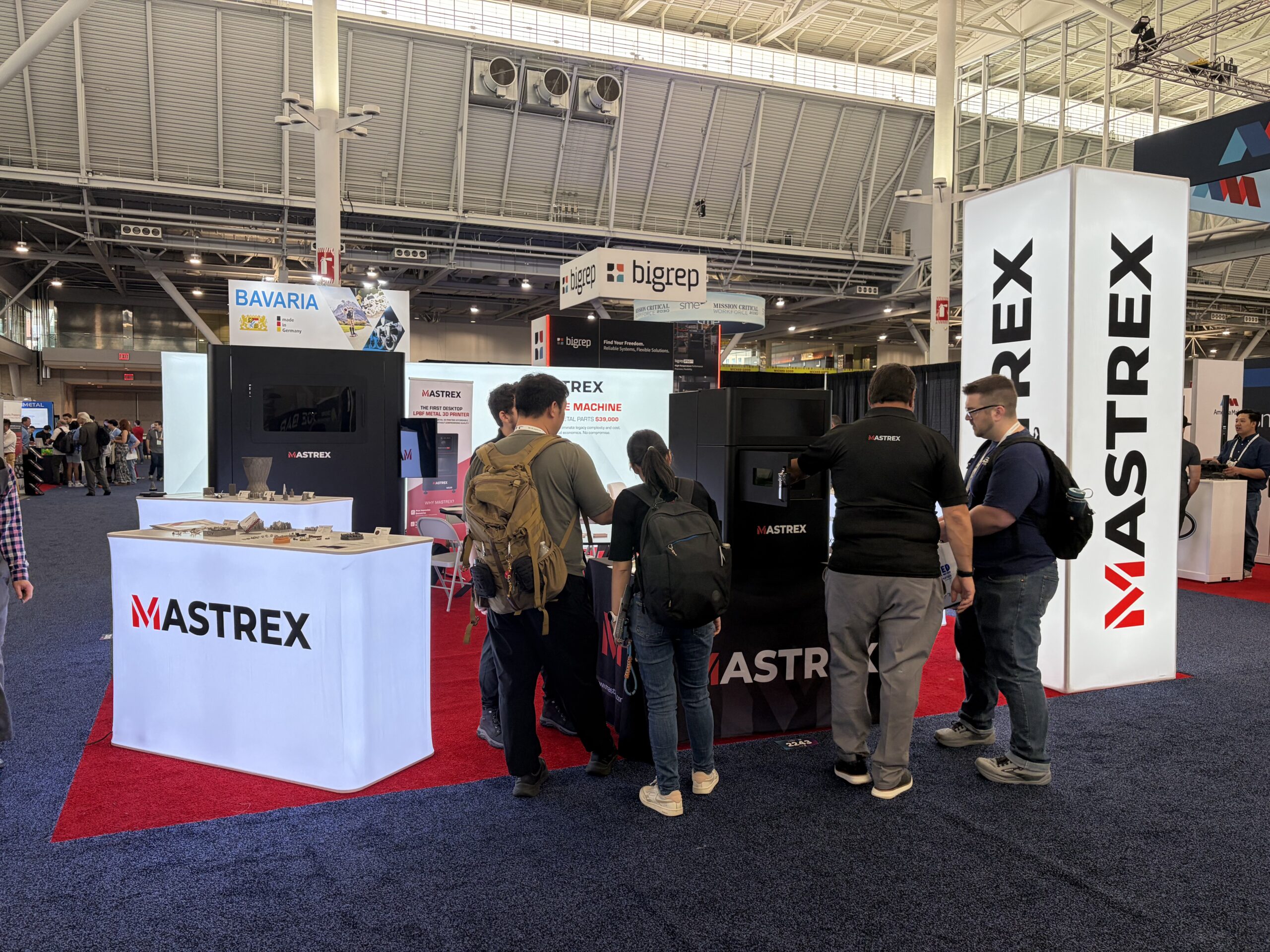
    Mastrex booth at RAPID+TCT 2026.

    At RAPID, Fridland told me that Mastrex started selling machines over a decade ago, offering polymer 3D printers, CNC milling machines, and fiber laser cutters.

    “We always had demand for metal 3D printing, but the technology wasn’t mature enough for our customers,” he explained. “It was great for some critical applications like aerospace, and parts that you can’t make any other way. But for our customers, it was too expensive, sometimes unreliable, and tolerances weren’t always great.”

    But, he said that this all changed about three years ago. The price of components went down enough, and the technology matured enough, that it was possible to get good LPBF-specific components, like software and laser optics.
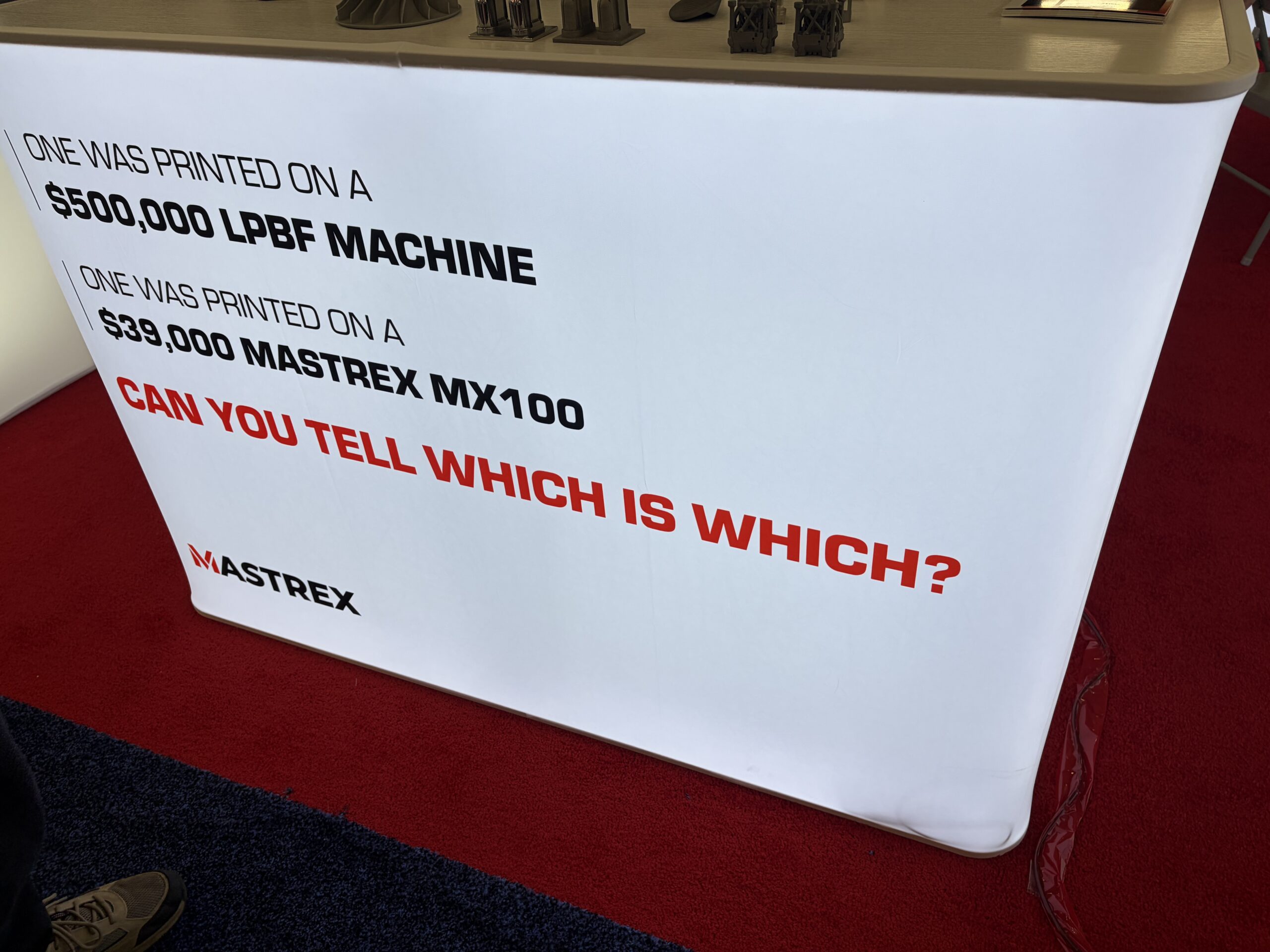
    Fridland said that with other AM technologies, such as FDM and SLA, the machines started out huge and then went down in price and form factor.

    “Now we are seeing the same happen with metal LPBF 3D printing,” Fridland said.
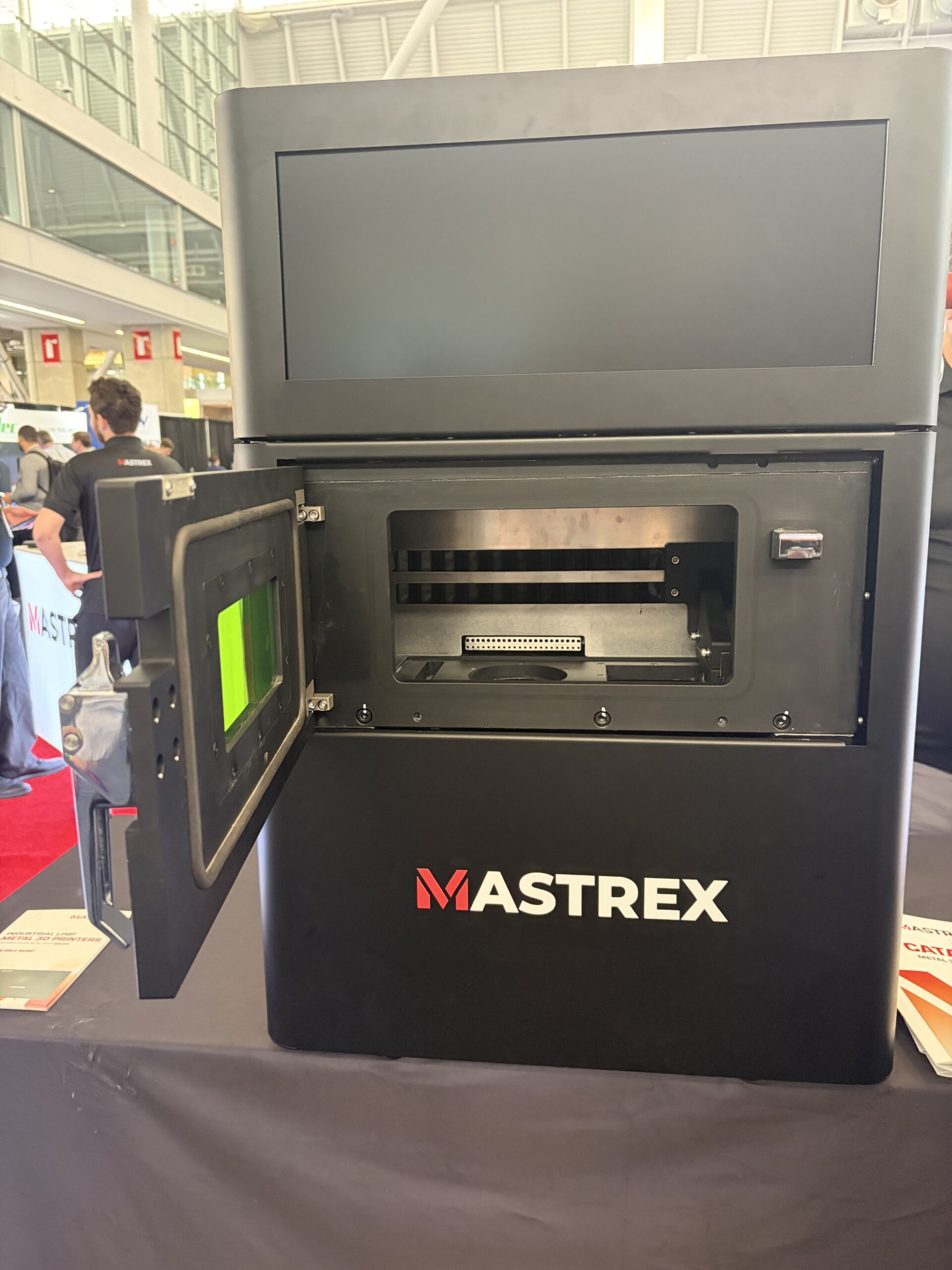
    Mastrex MX100 at RAPID+TCT 2026.

    Then he showed me the desktop MX100, the company’s entry-level metal LPBF printer, which starts at an almost unbelievable $39,000. It features a 100 x 100 x 80 mm build volume, one 300 W laser, a “fast and reliable galvo scanner,” and 20-60 µm layer height. The printer is compatible with a variety of materials, including stainless steel, copper alloy, aluminum, titanium, Inconel, cobalt-chromium, and more.

    “You get real metal parts straight from the machine, you don’t need to sinter them, so you don’t have an issue with shrinkage and deformation,” Fridland said. “Same technology, same tolerances, same powder as industrial machines that cost over a million dollars, just with a smaller print area.”

    Mastrex offers several other metal 3D printers, going up in both print volume and number of lasers.

    The desktop MX100 is good for desktop prototyping, education, and R&D purposes, while the slightly larger MX120, which starts at $49,000, offers a 120 x 120 x 100 mm build volume, and also has a 300 W laser, is more for research labs and larger prototypes. After that, the lasers in the printers go up to 500 W, making them “comparable with the real industrial machines.”

    Mastrex MX300 at RAPID+TCT 2026.

    The other printers in the MX Series are:

    • MX150, 150 x 150 x 120 mm build volume, one 500 W laser
    • MX220, 220 x 140 x 200 mm build volume, two 500 W lasers
    • MX300, 300 x 300 x 350 mm build volume, two 500 W lasers
    • MX400, 400 x 350 x 400 mm build volume, four 500 W lasers
    • MX800, 800 x 600 x 900 mm build volume, eight 1,000 W lasers

    Mastrex is only selling its printers up to the MX400, as the MX800 is still in development and won’t be released until later this year.

    “With the largest system, you can get a 400 millimeter working area and eight lasers, which is suitable for real production. In one build, and depending on the size of the part, our customers are getting dozens of parts all the way up to a thousand parts plus.”

    Fridland says that the second largest Mastrex system, the MX400, “is still very reasonable in price.”

    “You are looking at 400 millimeters, four lasers, and it’s around $360,000. Other solutions with these specs would be a million plus,” he said. “So across the board, it’s revolutionary.”
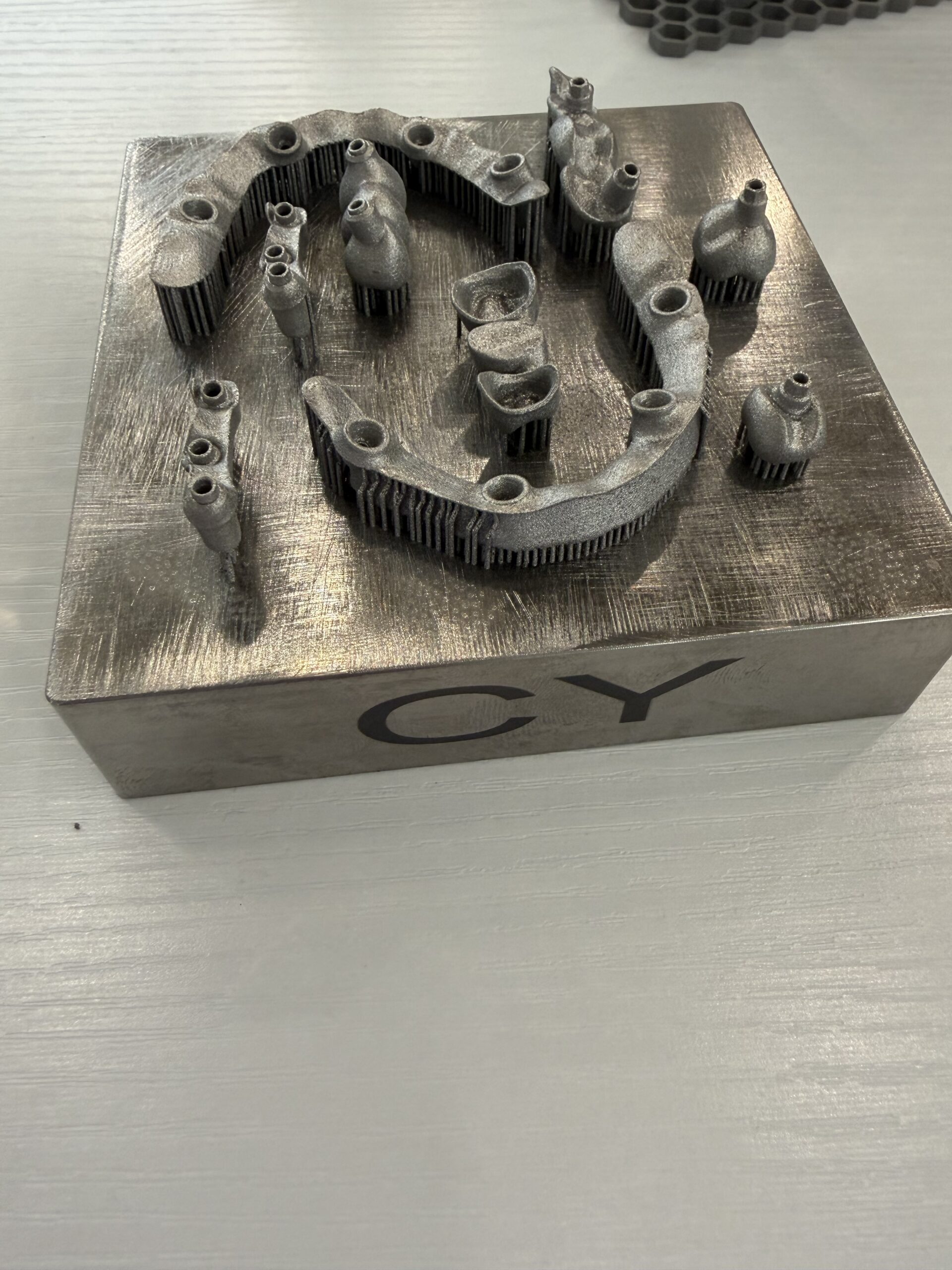
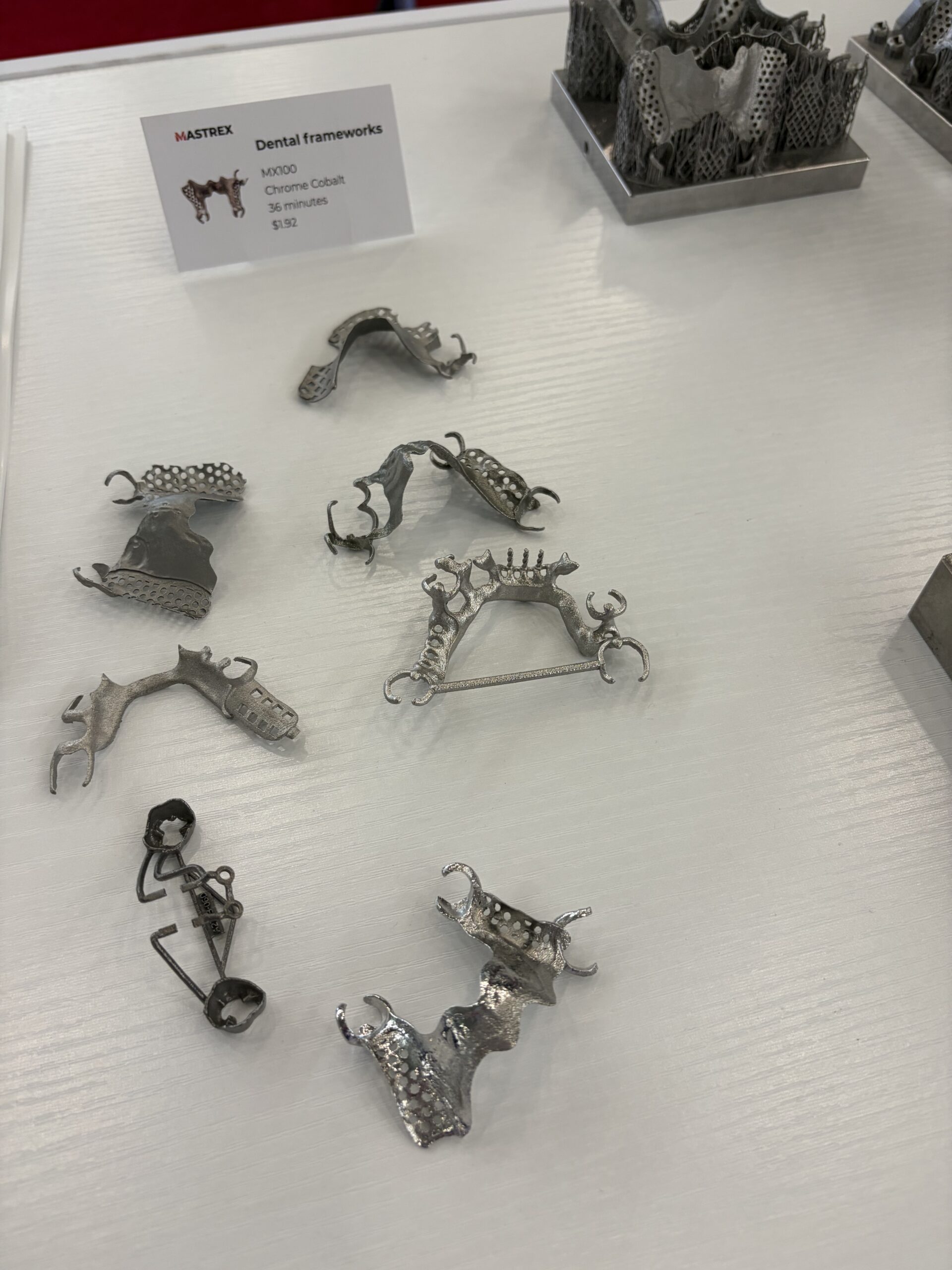
    Mastrex is mostly seeing applications in dental labs, universities, and prototyping for its smaller MX Series printers, while the medium-sized systems are being used for medical applications and in machine shops.

    The larger format MX400 has mainly been sold for aerospace applications, but Fridland says they’re getting interest from the DoD, especially because Mastrex is a U.S. company and its printers are assembled in the U.S.

    The company was founded in New Jersey, but is moving most of its operations to San Diego in just a few months, in order to be closer to its aerospace customers and suppliers in California and Mexico. Mastrex will keep some offices and a showroom in New Jersey to maintain an East Coast presence, though.
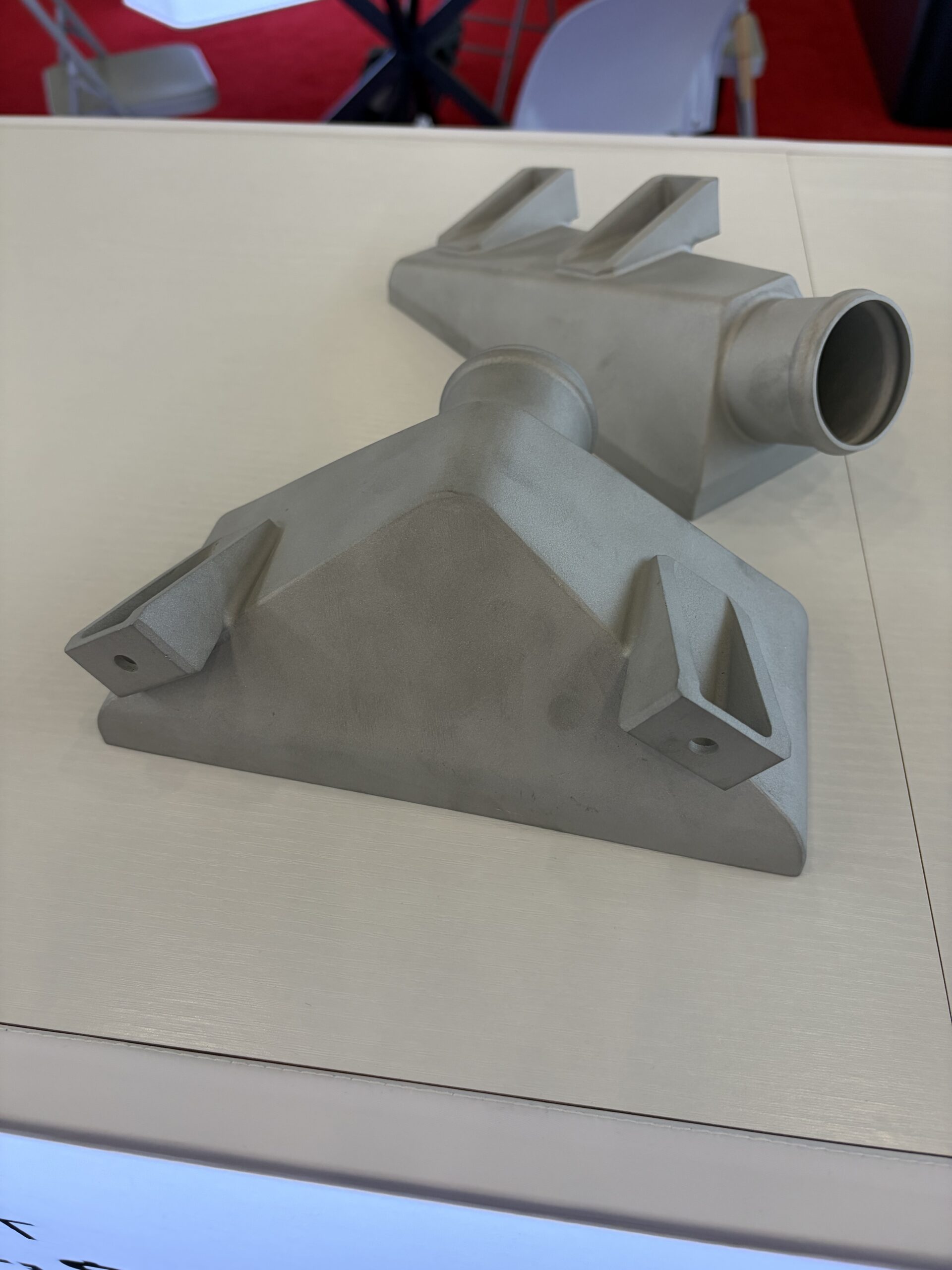
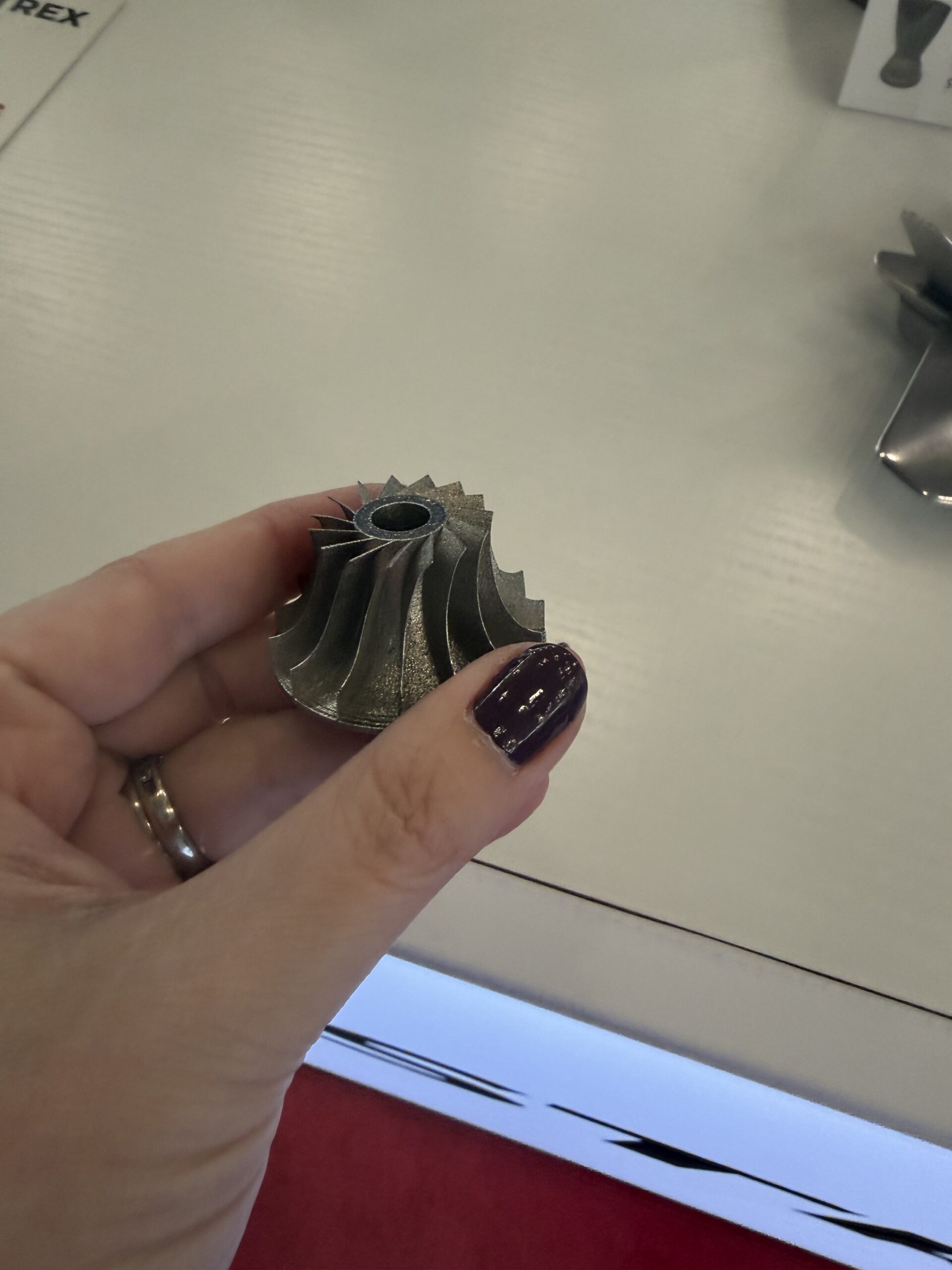
    Mastrex has been making the rounds at 2026 trade shows, starting at CES in January and also attending AMUG last month, before coming to RAPID.

    “It’s very different than what people are used to,” Fridland said about the company’s technology. “Even after the events, I’m getting many emails and messages from people about how interesting it is to see something that is truly different. And not just 10% faster, but something that is really changing the industry.”

    With the company’s background of selling CNC milling machines for aluminum and stainless steel to machine shops, Fridland said that a lot of those customers weren’t using plastic polymers, so they never adopted FDM printers or any additive technology.  So for many Mastrex customers, this is their first LPBF metal 3D printer, or even their first 3D printer altogether.

    “When they see the parts that we have, great surface finish, great tolerances, the variety of materials…this is something they recognize,” Fridland explained. “These are the parts that they actually need. This is not just prototyping.”
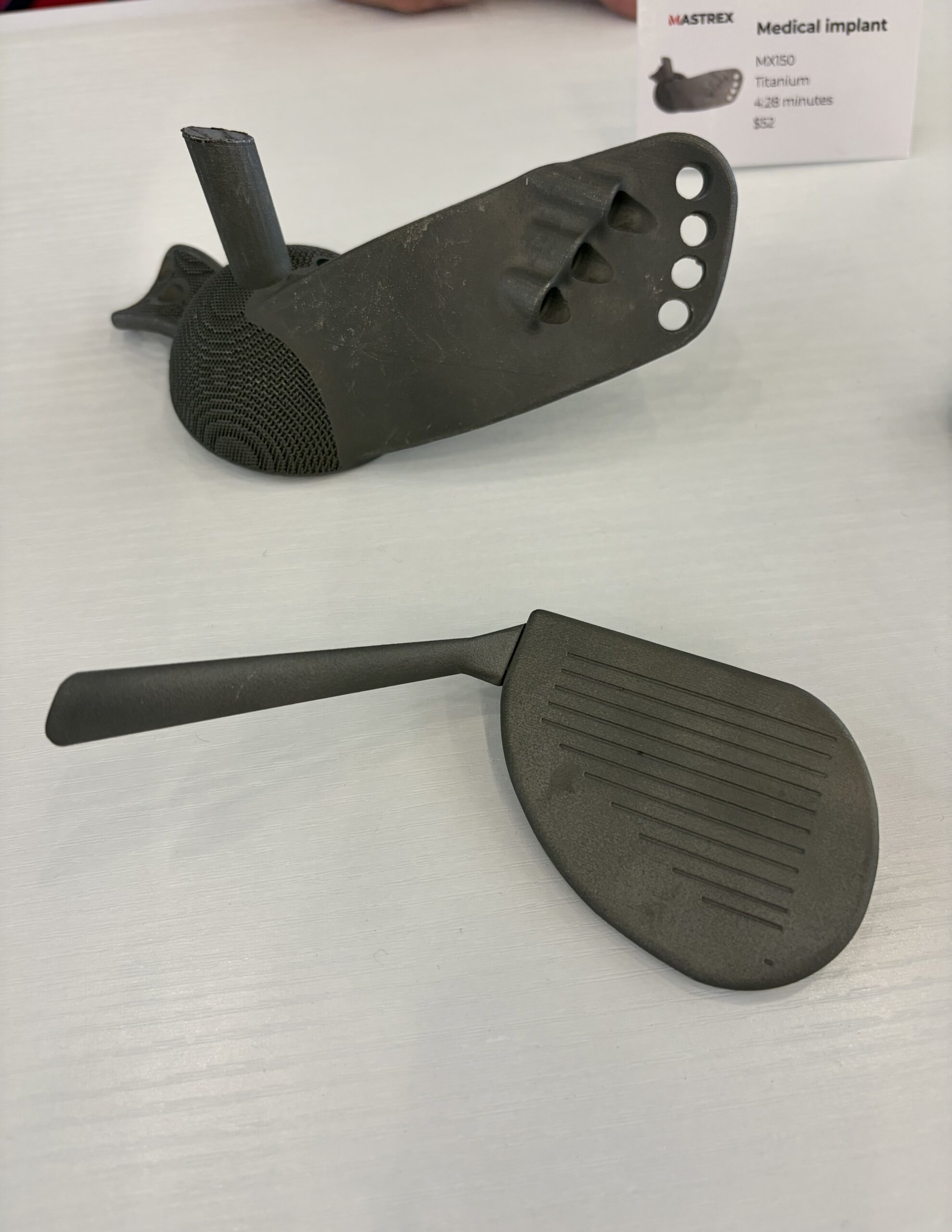
    Fridland also said the cost of Mastrex’s printers is similar to a CNC machine, depending on which system you’re talking about. So they “don’t have to spend five times more on a piece of a equipment that they never had a chance to try.”

    “Most of them, they waited, just because it’s a big risk for them. But now, instead of getting another CNC machine, they’re getting one of these and they’re getting into LPBF.”

    He also told me that some customers have purchased one of the smaller Mastrex printers, like the MX100 or MX150, and liked them so much that they came back and bought the much larger MX400. This says a lot about the quality of these low-cost metal LPBF systems.

    “The first machines we sold about a year ago, and we have some repeat customers already, because they see the benefit, and it’s different than other solutions in the market,” Fridland said.
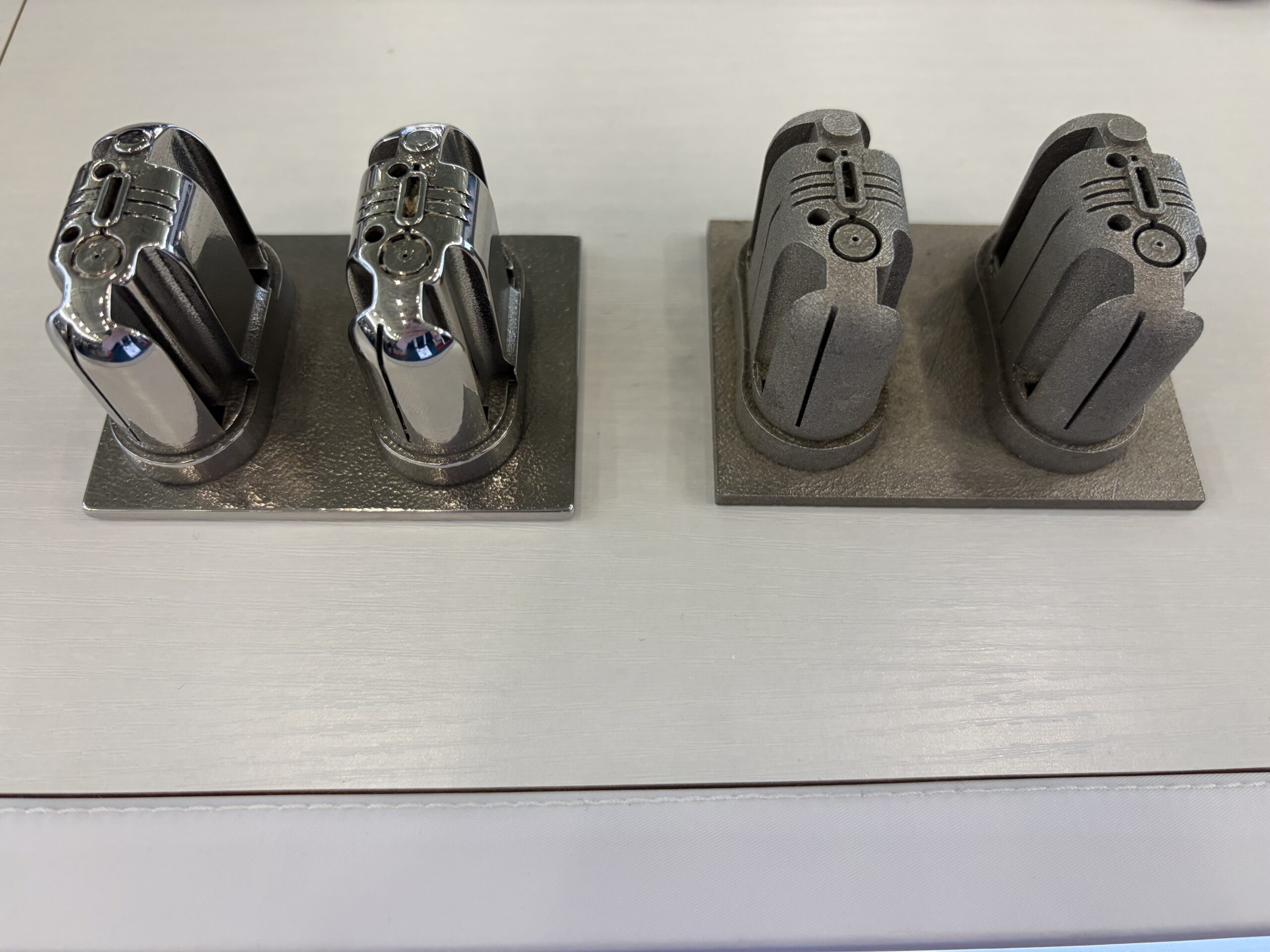
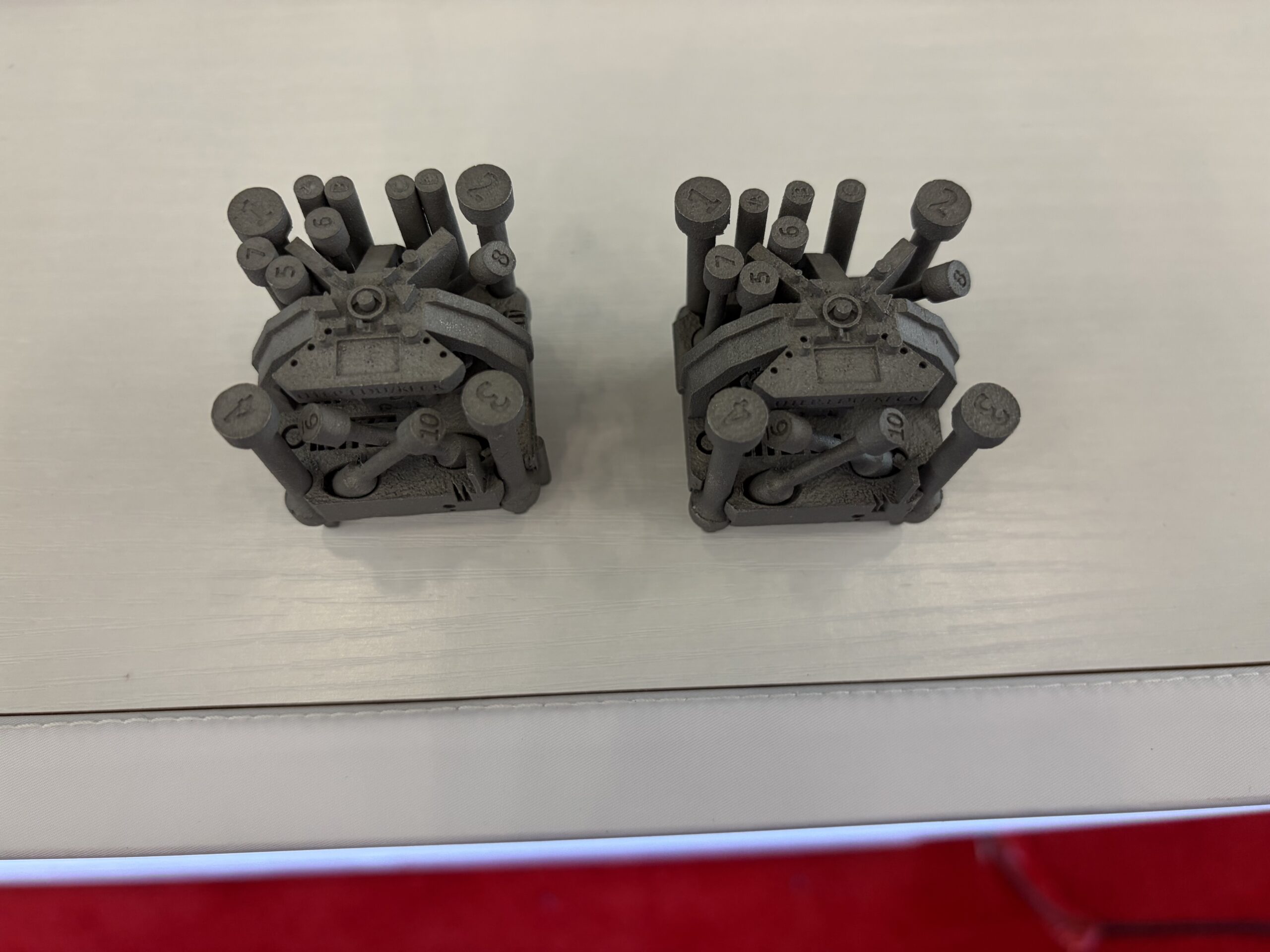
    Tool steel 3D printed mold insert, after and before polishing. Mastrex booth at RAPID+TCT.

    In his keynote presentation at AMS 2026, Stratasys CEO Yoav Zeif said that “desktop is taking over the industry.” It’s clear that this isn’t just the case for polymer 3D printing, but metals too. With its low-cost, high-quality desktop metal LPBF systems, Mastrex is definitely a company we’ll be keeping an eye on in the future.

    Images courtesy of Sarah Saunders.
  • VBN Components Used for Cemented Carbide Slurry Pumps

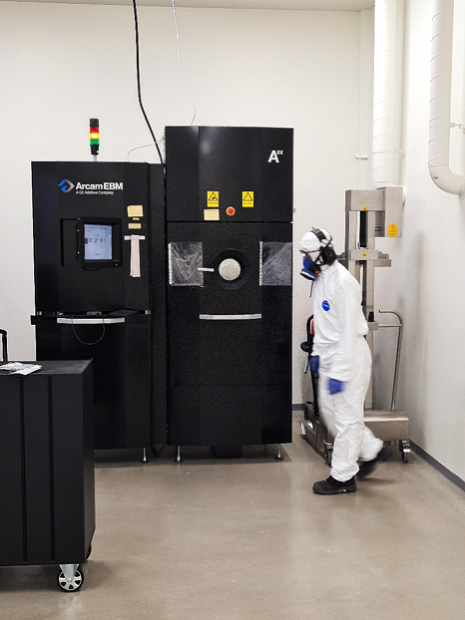
    Swedish firm VBN Components has been making high-performance, high-wear additive powders for a number of years now. Usually working with high-carbide-content materials, the company has brought the hardest 3D printing steel to market, as well as biocompatible materials. Now the company has increased the wear resistance of slurry pumps. Working with an unnamed pump company (possibly Atlas Copco, Metso, or Grindex), they’ve developed a new path to industrial components.

    Using their Vibenite materials, they’ve made possible a Vibenite Nucleation Net Zone (VNNZ), which makes for easier bonding of cast iron to Vibenite 480, the company’s 66 HRC cemented carbide material. The VNNZ makes it easier to cast these parts. What the company is now doing is to make parts out of traditional casting methods while using 3D printing for key wear areas in the casting mold. I love this very much. By using additive where it matters, the company is showing that wear is not evenly distributed across the entire functional areas of slurry pumps. Just as extra tips are sewn onto work gloves, this could point to broader applications of 3D printing in larger assemblies, where it would be too costly for the entire part or only make sense in these areas. Such approaches have often been overlooked because people want to print the entire part.

    The company said that,

    “Printing a nucleation net zone in Vibenite 480 is simple, yet it enables precise placement of the wear resistant material inside the mold at the most critical position significantly extending pump lifetime.”

    “Without the VNNZ, molten cast iron tends to melt or intermix with the printed inserts, compromising both geometry and material performance. The VNNZ eliminates this issue, ensuring structural integrity and strong metallurgical bonding during casting.”

    The company is now using this approach to print key wear areas in larger multi-meter-sized pumps. They say that the approach is cost-effective.

    VBN Components CTO, Dr. Ulrik Beste, stated,

    “This is an exciting development for our additive manufacturing technology. We are demonstrating how the superior wear resistance of Vibenite 480 can be integrated into large industrial components in a practical and scalable way—combining material performance with the design freedom of AM. It opens up significant new business opportunities.”

    3D printing can seem so magical that we often look to those cases where we print an entire thing in a new way. And we often dream of directly manufactured parts, not necessarily intermediates or molds. Here we can really see that limiting ourselves to dealing only with the tip of the spear is a cost-effective way to leverage the technology. We want to print the whole golf club, and maybe we can, but then it will probably use several different materials and processes. What if we just print the club surface, where we can create the greatest value for the player? That approach cements the value. We should often be thinking about how we can get the greatest benefit while expensing the fewest layers. Thin, small, and short in the machine parts can be used to reap great rewards. By looking at where we add value and just how cheap we can make those parts that add value, or where vision is concentrated on the worthwhile. A printer can be seen as a box. It could be a box that could make most anything. That kind of broad vision is how many people have looked at 3D printing and its potential. But you could also see that box as capable of making things at a certain dollar amount per minute. And through that focused vision, you will see not the forest but the individual fruits that make sense to grow.

    Images courtesy of VBN Components

  • LOOP 3D Reveals 3D Printer Designed for Industrial Uptime

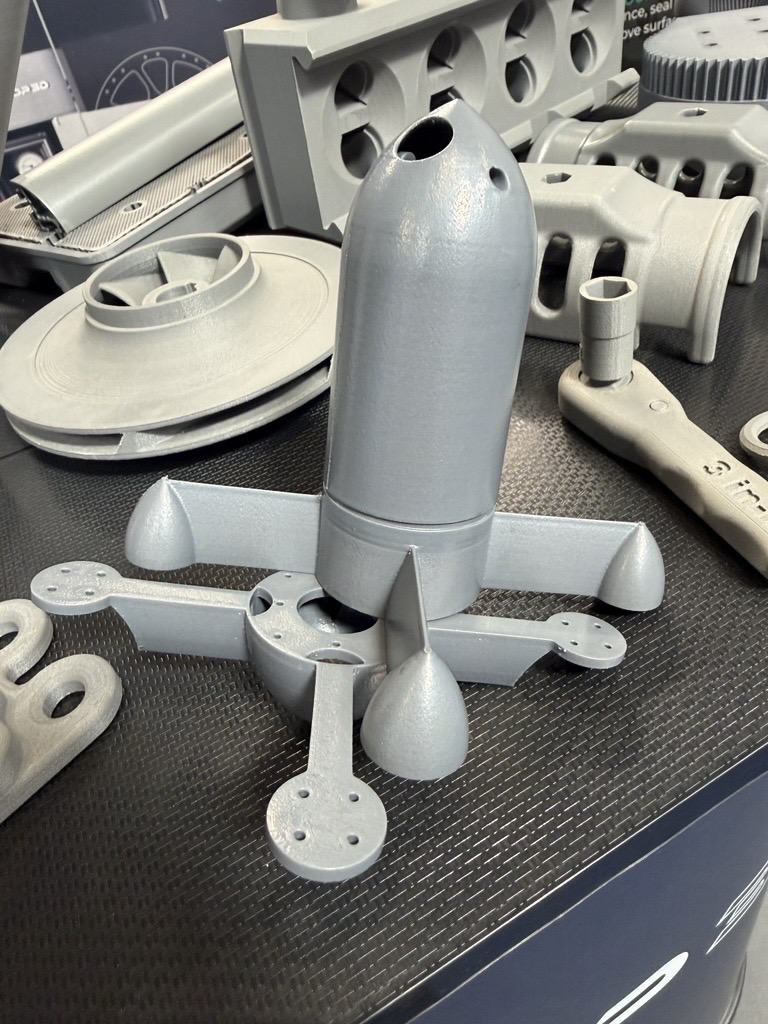
    LOOP 3D Additive Manufacturing has released the LOOP PRO X+ TURBO Gen2. This version has been improved to meet the needs of manufacturing clients. The printer is meant to be a production unit that can scale from single parts to higher volume print jobs. Upgrades have also been made specifically for CF- and GF-type materials. The printer is open but has optimized settings for the company’s own Dynamide material family. The LOOP 3D Cloud software works in the browser. The tool tracks builds and settings, you can remotely monitor prints and subdivide files and settings per project or client. The tool includes a remote access option for tech support.

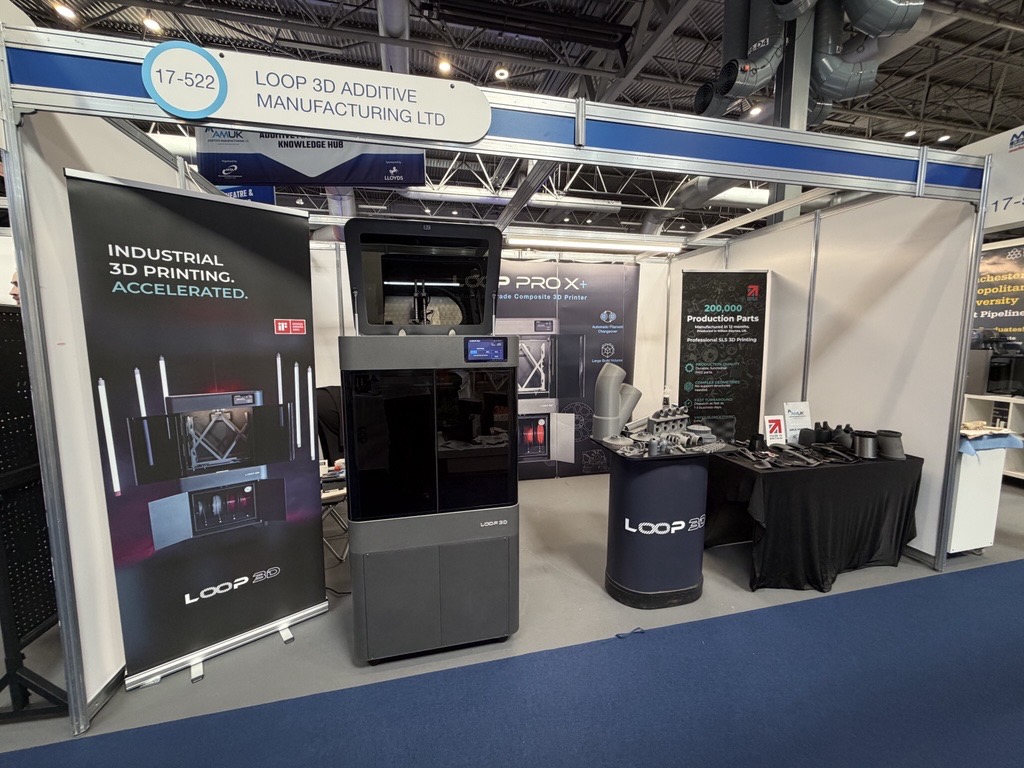
    LOOP 3D booth at the MACH 2026 trade show in Birmingham, UK. Image courtesy of LOOP 3D.

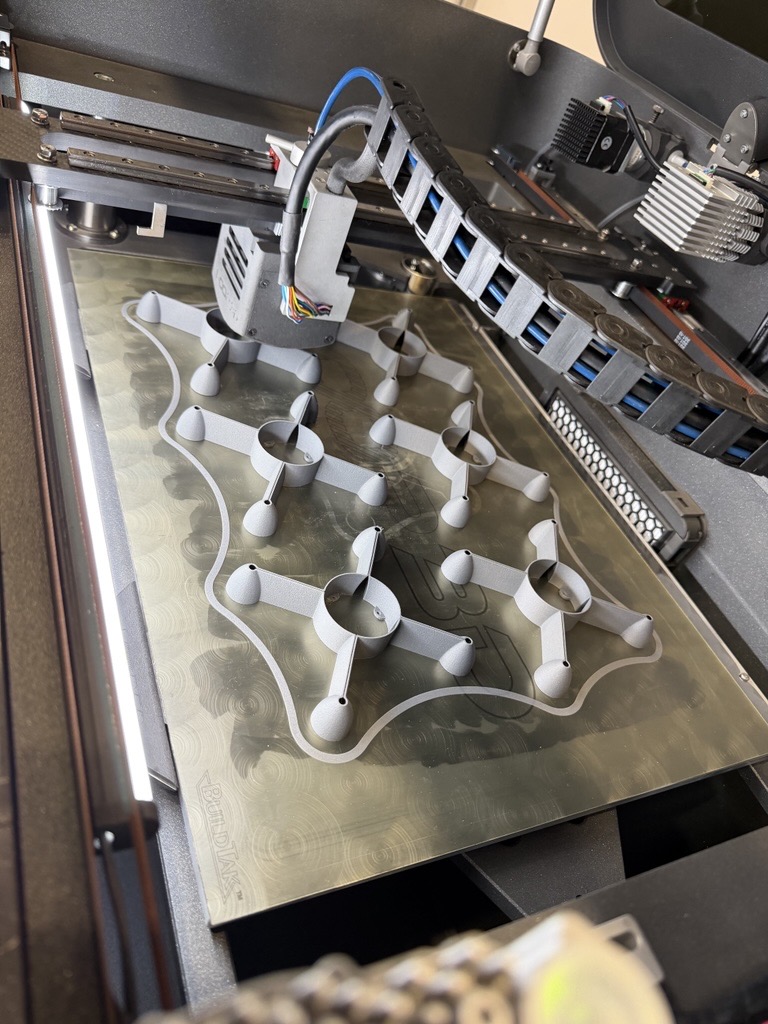
    The 500 x 350 x 500 mm printer is made from a milled aluminum chassis and comes with a flexible spring-based build platform with PEI (polyetherimide) build sheets. The printer has a modular architecture, and the idea is that it will be easier for users to replace components. One module consists of the controller board and motor drivers; another consists of all the UI (user interface) and communications. The two high-flow printheads are swappable, and it comes with HEPA (high-efficiency particulate air) and carbon filters. A unique feature is automated sliding doors, which could be very cool. There’s an automated filament changeover in case of runout as well, while a material bay can hold four filaments. Motion comes from servos and linear rails.

    The overall architecture is H-Bot, with H-Bot one belt loops around the gantry in the form of an H. This belt can move very quickly but may cause racking, making the gantry lopsided or out of spec when pulled in one direction. LOOP solves this by having a durable, massive aluminum chassis that weighs 170 kilos. That also helps mitigate vibration, leading to more stable prints. Core XY printers use multiple belts working simultaneously, pulling from both ends. Core XY printers can therefore be fast and cheaper because the chassis doesn’t have to be as durable or heavy. That’s one of the keys to Bambu Lab‘s success, making something quick that doesn’t have a ton of metal in it. With shorter belts, less jumping about with crossed belts H bot architectures can be much more stable, quick, reliable and repeatable. Racking, meanwhile, can be reduced through the linear rails and heavy chassis elements. Bambu tries to get around the errors and vagaries of Core XY through software compensation, while the LOOP has a more industrial, reliable architecture and frame. The two approaches are fundamentally different: Bambu bets it can be a better software company than anyone else, while companies like LOOP aim to engineer a well-functioning device primarily through mechanical engineering.

    The new system has improved kinematics and a renewed motion system. I really like the design and philosophy behind LOOP. These systems are solid. I like the modular architecture as well. This would really make sense in areas such as hospitals, the military, or oil platforms, where you want high uptime and easy, local paths to mitigating errors.

    CEO Erkan Ustaoglu said,

    “The Gen2 is built for one purpose: production. Every subsystem has been engineered to push speed, reliability, and consistency to the next level. This is where additive manufacturing stops prototyping—and starts delivering at scale.”

    Against the onslaught of Bambu & Co, LOOP has a real uphill struggle. But reliable, long-lasting, and easy-to-maintain systems will be in high demand across many industries. Especially in strict regulatory environments or where many people need to use common printers, the LOOPL architecture and offering make a lot of sense. Their ease of use and quick maintenance fixes are paramount. Yes, something else can be cheaper, but it needs to work on the day. If LOOP offers complete solutions for specific industries, working with partners and users to deliver the exact performance, certifications, and value proposition they need can be highly successful. Industry-specific solutions that work even when knocked about, with gloved hands, or in dusty environments remain an unmet need for many users. And for these kinds of applications, this really seems like a good option.

  • A Museum Dig, Brought to Life with 3D Printing

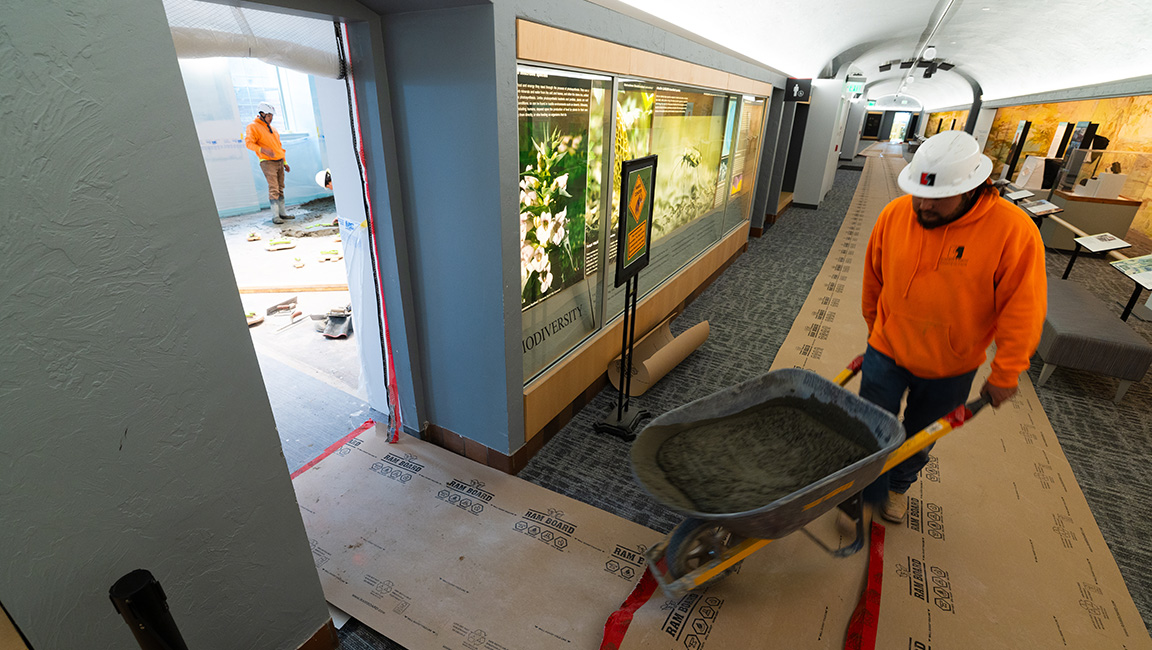
    At the University of Nebraska–Lincoln, a team inside the Frontier Tech Lab has built one of the most engaging examples of additive manufacturing (AM) in education right now. Led by lab coordinator Isaac Regier, the team created a fully hands-on fossil dig experience inside the museum. Using 3D printing, they reproduced real fossils from the museum’s own collection, along with the surrounding rock and sediment, so visitors can dig up bones just like paleontologists would. The work is part of a broader renovation of the museum’s Paul D. and Betty Marx Discovery Center, set to open in June, which is adding more hands-on activities focused on “nature’s engineers.”

    Instead of placing rare, fragile fossils in a pit where they could be damaged, the team recreated them using 3D printing, creating a space where visitors, especially kids, can dig, touch, and explore without limits. And to this team, that’s the key idea, having access to these fascinating experiences. Because nothing drives interest in things like ancient fossils quite like being able to actually handle them. It’s a change we’ve been seeing for some time in museums around the world, moving beyond the “look but don’t touch” rule toward spaces built for real, hands-on discovery, or play, even.

    Real fossils are incredibly delicate. Many are one-of-a-kind, and we’ve seen some so valuable they’ve sold for hundreds of thousands, even millions of dollars. You don’t hand them to a six-year-old with a brush and say, “Go for it,” right? But with 3D printing, you can create accurate replicas that look and feel real, or real enough, to teach the same lessons, without the risk of having the fossil break.

    The Frontier Tech Lab worked closely with museum scientists to produce lifelike fossil replicas and even entire fossil beds, turning what could have been a more traditional exhibit into something hands-on and immersive. To recreate the fossil bed, the team produced more than 100 realistic fossilized bones. Many of these are based on Menoceras, a rhino species from the Miocene era discovered at Agate Fossil Beds near Harrison, Nebraska.

    A museum built for discovery

    This “experience replication” meant the team didn’t just scan a fossil from the collection and hit “print.” In fact, they recreated the entire context: the way paleontologists find fossils in the ground, the textures, even the arrangement, so visitors can understand how these incredible, headline-making discoveries actually happen.

    And that’s because in paleontology, the story isn’t just about the fossil. It’s about where it’s found, how it’s uncovered, and what surrounds it. By printing these entire dig environments, not just objects, the lab is using 3D printing to tell a story. And it works really well.

    They’re using a mix of realistic fossil types tied to Nebraska’s paleontology, which is actually pretty rich. That includes ancient mammals (Nebraska is well known for Ice Age fossils like mammoths), smaller vertebrates, and general fossil fragments that reflect what a real dig site looks like. So rather than “digging up a full dinosaur,” visitors are uncovering partial bones and pieces, which is much closer to how real paleontology works.

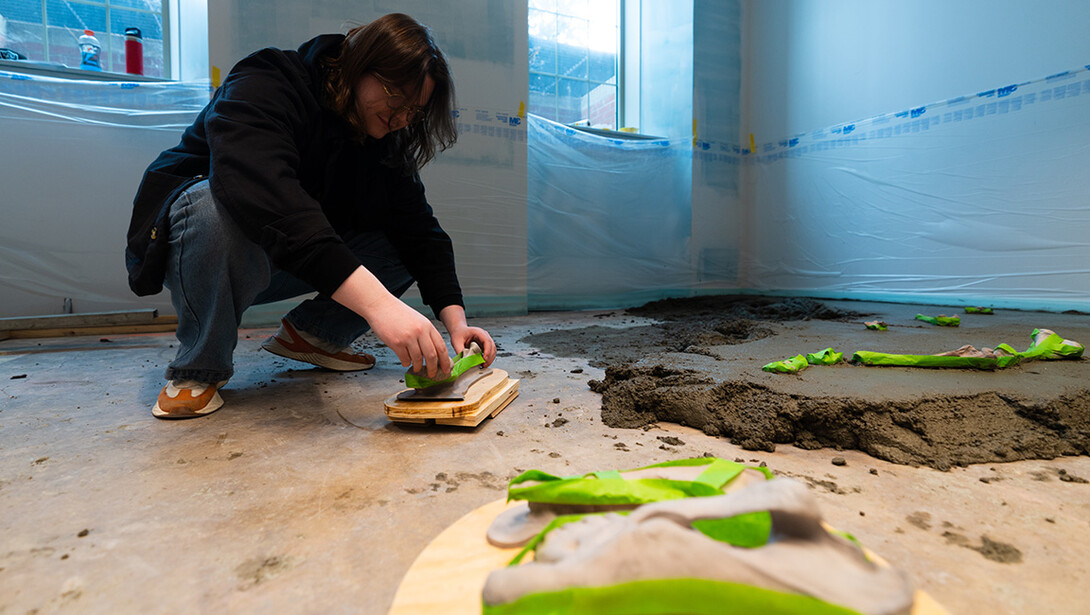
    Isaac Regier, lead and design coordinator for the Frontier Tech Lab, sets down one of the “bones” the lab 3D printed for a new fossil dig in the redesigned Marx Science Discovery Center at Morrill Hall.

    The museum, part of the University of Nebraska State Museum, has been around since 1871 and houses one of the largest vertebrate fossil collections in the United States. In fact, it’s known for its massive displays, like its mammoth skeletons in Elephant Hall, and for telling the story of life across millions of years.

    But like many museums, it faces a common challenge, and that is how to make ancient history feel real to someone walking in today. And this 3D printed fossil dig changes that whole perspective. Instead of looking at bones behind glass, visitors become part of the process. They have to kneel down, use brushes to remove the sediment, and find something. Visitors will find this hands-on fossil dig experience inside Morrill Hall, as a type of interactive station built right into the museum floor.

    3D printed fossils.

    The Frontier Tech Lab itself is part of Nebraska Innovation Studio, a collaborative space where engineers, designers, and researchers work with advanced manufacturing tools, including 3D printers. Launched in October 2025, the lab operates as a full-service prototyping, design, and fabrication center, working with campus units, municipalities, businesses, and individuals.

    The team had to take real scientific data and turn it into something people can actually use, strong enough to handle, simple enough to understand. That’s not easy. A fossil replica has to look real, but it also has to hold up after being dug up over and over again. That level of accuracy required close coordination with museum experts, including Susan Weller, who noted the complexity behind even the smallest details.

    “They worked closely with our scientists to create the bones and ensure they were placed in the correct order and orientation,” Weller said. “There are many tiny bones when you think about the vertebrae or toe bones, and they can get very confusing to those of us who don’t work with those bones. (Frontier Tech Lab staff) went above and beyond, and they delivered everything on time and on budget.”

    In this case, 3D printing is enabling something different. It’s making the inaccessible accessible. And here, that means giving someone, maybe a child visiting for the first time, the chance to uncover a fossil and feel, even for one single moment, like they’re discovering the past for themselves. It’s not just a better exhibit, it’s a better way to learn.

    Images courtesy of the University of Nebraska–Lincoln

  • 3D Printing News Briefs, April 25, 2026: Competition Winners, AI Platform, X2D Printer, & More

    In this weekend’s 3D Printing News Briefs, AMUG announced the winners of its Technical Competition, and Authentise launched AI platform Whisper at RAPID. Bambu Lab wasn’t at RAPID, but launched a new 3D printer, and AMGTA released an independent report on the role of additive manufacturing (AM) in resource-efficient manufacturing systems. Finally, we’ll give you an update on an open source 3D printer enclosure designed by university students last year.

    AMUG Announced Winners of Annual Technical Competition

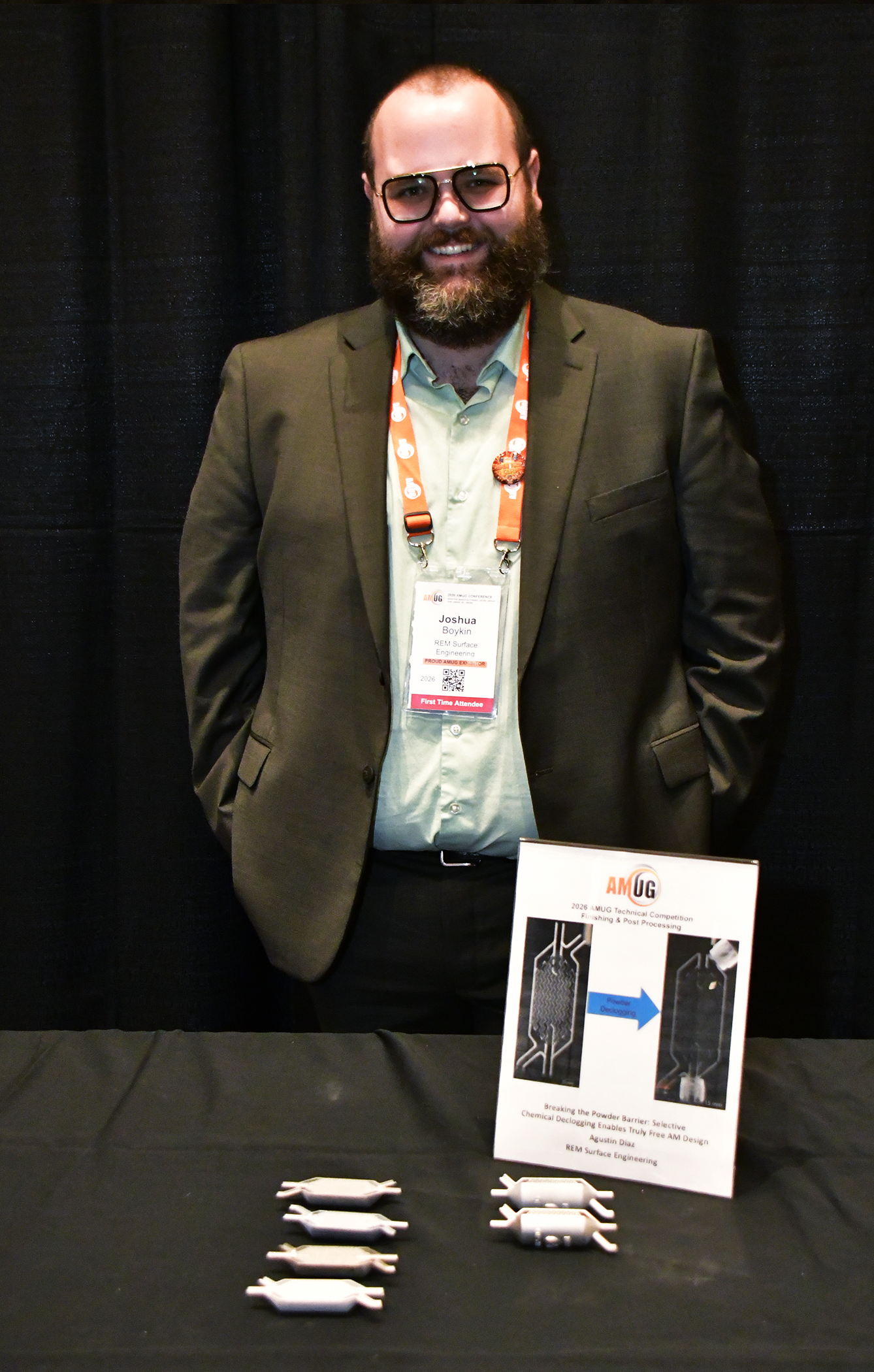
    At last month’s Additive Manufacturing Users Group (AMUG) Conference, the group held its annual Technical Competition, recognizing excellence in AM applications and finishing methods. This year, the categories were modified, and many of the entrants were first-time competitors, or even first-time attendees. A panel of 12 AMUG DINOs chose the winners. The winner for Finishing & Post Processing was Joshua Boykin, PhD, a senior research chemist with REM Surface Engineering, with his entry on “Breaking the Powder Barrier: Selective Chemical Declogging Enables Truly Free AM Design.” It was a production-ready chemical process, validated through high-resolution X-ray CT analysis, that selectively removes sintered powder from fully enclosed internal passages in metal LPBF parts without degrading thin-wall geometries. The judges were so impressed that they also gave it the Members’ Choice award. Halil Tekinalp of ORNL won second with “Multiplexing Extrusion System (MExS): Multi-material AM System for Tailored Hybrid Composites,” and Jason Jones with Hybrid Manufacturing Technologies won third for “Seeing Beneath the Surface: Accelerating AM Adoption through In-situ Volumetric Inspection.”

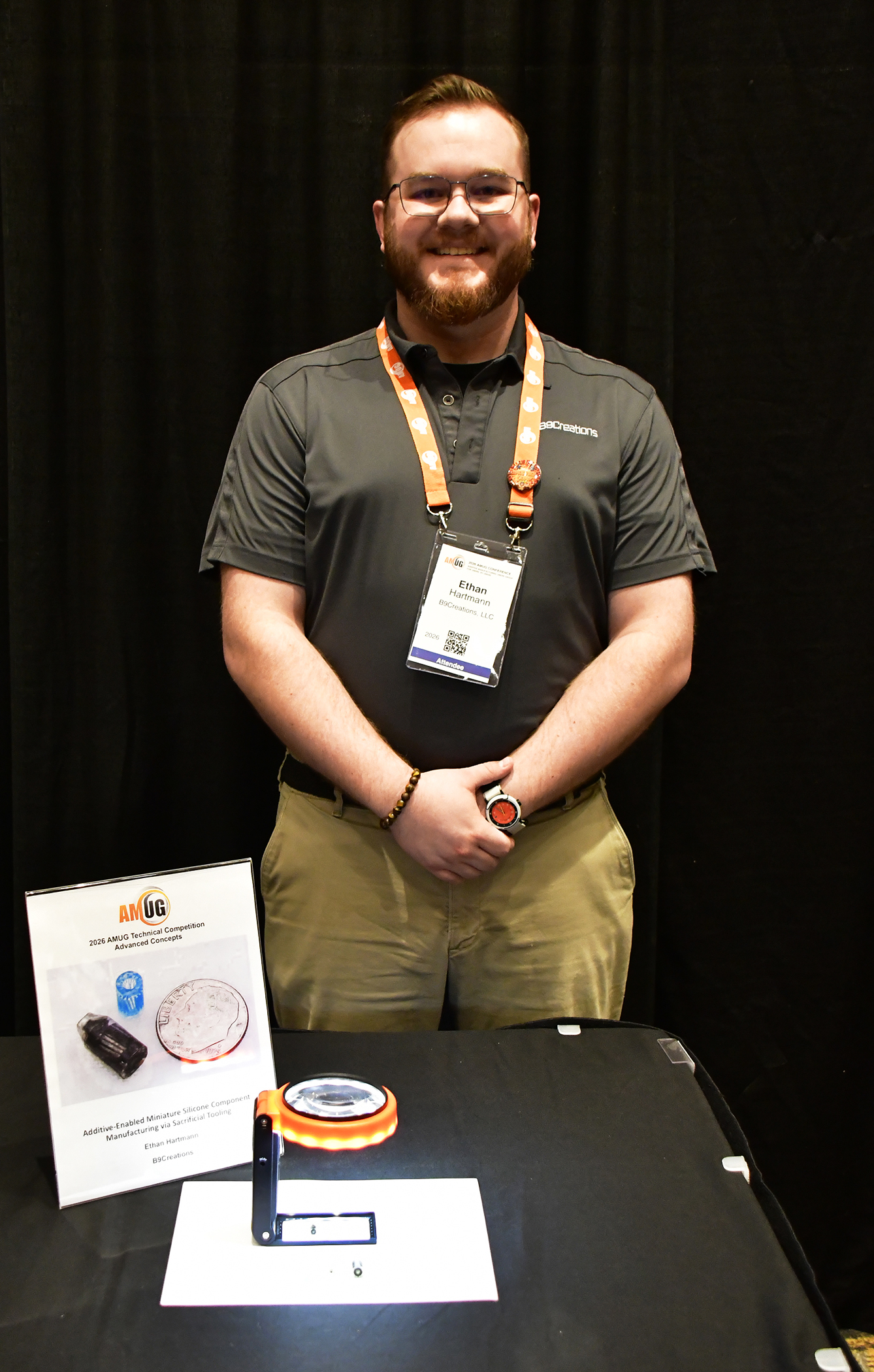
    The winning entry for the Advanced Concepts category, “Additive-Enabled Miniature Silicone Component Manufacturing via Sacrificial Tooling,” was submitted by Ethan Hartmann, solutions engineer at B9Creations. This demonstrated a novel workflow for high-resolution, microscale DLP printing and silicone-safe soluble tooling of true platinum-cure silicone components. Fine features and complex internal geometries of just a few hundred microns in size were created, thanks to careful development of print parameters, silicone processing techniques, and sacrificial mold design. There was a tie for second place in this category: Aaron Sherman of HellermannTyton for “Pip-Boy 3000 Mk V—Prop Replica from the Fallout TV Series,” a detailed, functional prop replica, and Joe Olguin of Sandia National Laboratories for “Adapting an As-printed LPBF Design for Ultra-Thin Sectioning,” which demonstrated a process-driven approach to enabling the sectioning of LPBF 3D printed 316L components.

    Authentise Announced Whisper AI Platform at RAPID+TCT

    At the recent RAPID+TCT conference in Boston, data-driven AM software company Authentise announced the launch of its new AI platform, Whisper, which was created to capture, understand, and act on engineering intent across the full lifecycle, from idea all the way to finished part. This “agentic AI backbone” captures engineering activity and intent as soon as it happens and connects everything, turning it into real-time action inside enterprise systems. Most valuable knowledge at engineering organizations comes out in meetings, emails, and informal decisions, without actually making it into the systems, and Whisper is meant to fix this problem, capturing activity from tools like emails, Slack, and enterprise systems. The platform’s configurable agents work in the background to organize the data, apply context and permissions, and act on the data within an organization’s existing workflows. Authentise says the result is real-time compliance checks, earlier risk detection, full provenance to specific parts and projects, and automated updates across ERP, PLM, and QMS systems.

    “Engineering intent is the missing layer in digital transformation. We’ve spent 14 years helping companies digitize workflows. Whisper is the next step,” explained Authentise CEO Andre Wegner. “It doesn’t ask engineers to change how they work. It listens, understands, and acts.”

    Whisper was released as source-available, so customers can extend and deploy it within their own environments. Early access programs are immediately available for select customers and partners, requiring a low upfront commitment; full costs are only incurred once value is proven.

    Bambu Lab Launched X2D Printer, Second Generation of X-Series

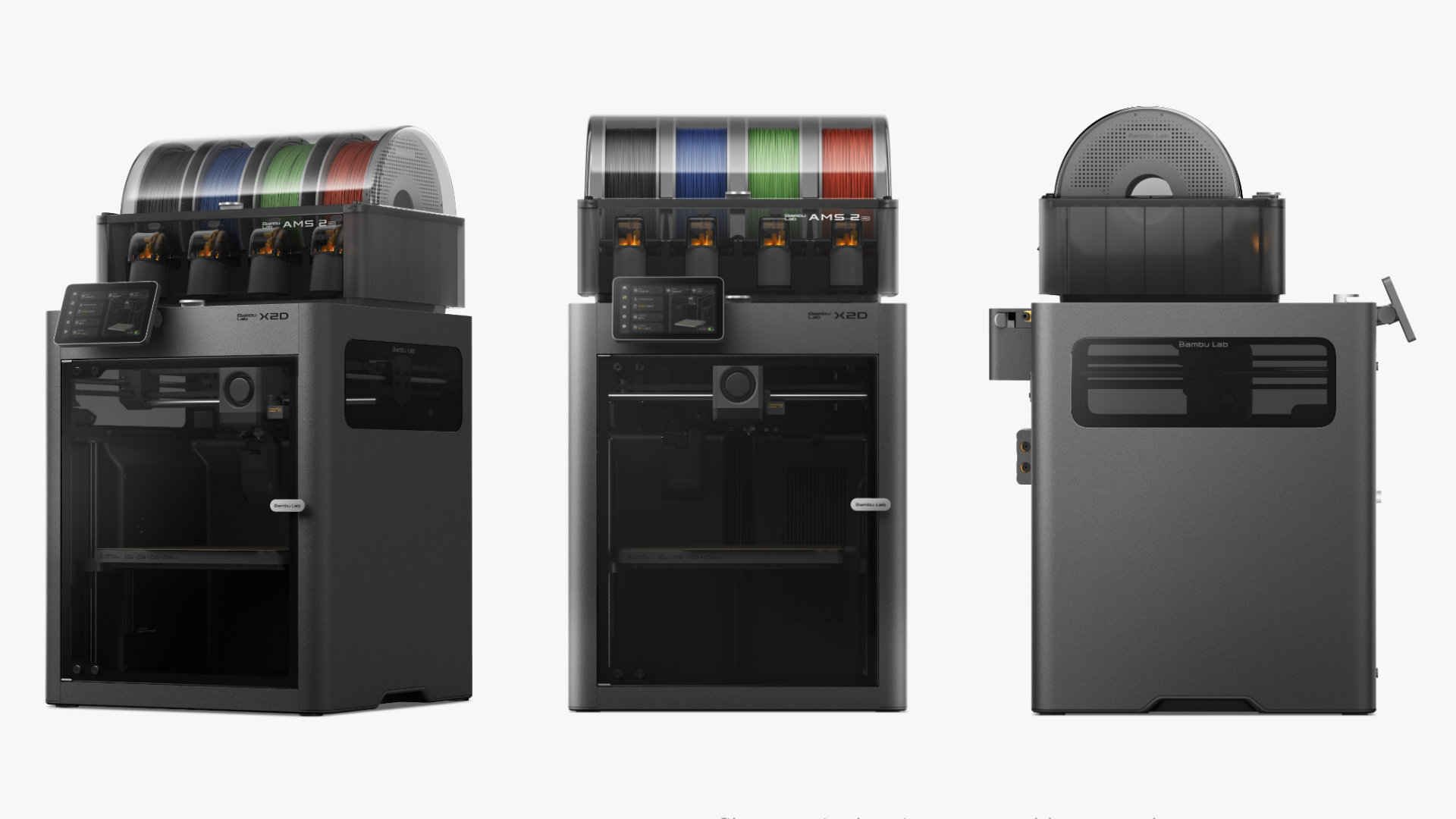
    Many of us on the show floor at RAPID were surprised to learn that Bambu Lab did not have a booth. But, its lack of attendance didn’t stop the company from launching the second generation in its flagship X-Series, the X2D printer with dual extrusion. We all know that Bambu Lab changed the desktop game when it launched the X1 in 2022, showing everyone that you didn’t need to spend hours experimenting with parameters and calibration. People without specialized knowledge could use the system right out of the box, without any trial and error. Designed for people who want to create, rather than mess with technical issues, the new X2D takes this a step further, and is said to be a system “that operates like any household device, yet prints like a professional production studio.” The X2D is what the company has been building towards all this time: a machine that’s ready to go right out of the box.

    The X2D automatically calibrates before each job, monitors the process with dozens of sensors and offers real-time compensation for any deviations, and prints with two nozzles, which should make it easy to remove supports. It features an enclosed, temperature-controlled print chamber, a triple-stage air filtration system that absorbs odors and captures particles, and a noise level that’s below 50 dB in silent mode. With a single main nozzle, the build volume is 256 × 256 × 260 mm, and it’s 235.5 × 256 × 256 mm with the dual nozzle intersection. There’s an optional Vision Encoder, which Bambu says offers accuracy down to 50 microns, a PMSM motor with 20 kHz sampling rate, and models come with validated print settings. Finally, Bambu Studio, Bambu Handy, MakerWorld, Maker’s Supply, Maker’s Lab and the designer crowdfunding program are not just add-ons, but, as the company write, “the context in which the printer operates.” The new X2D is available at $649 (before tax), and the Combo version, which includes a multimaterial feeding system, starts at $899 before tax.

    AMGTA Released Report on Role of AM in Resource-Efficient Manufacturing Systems

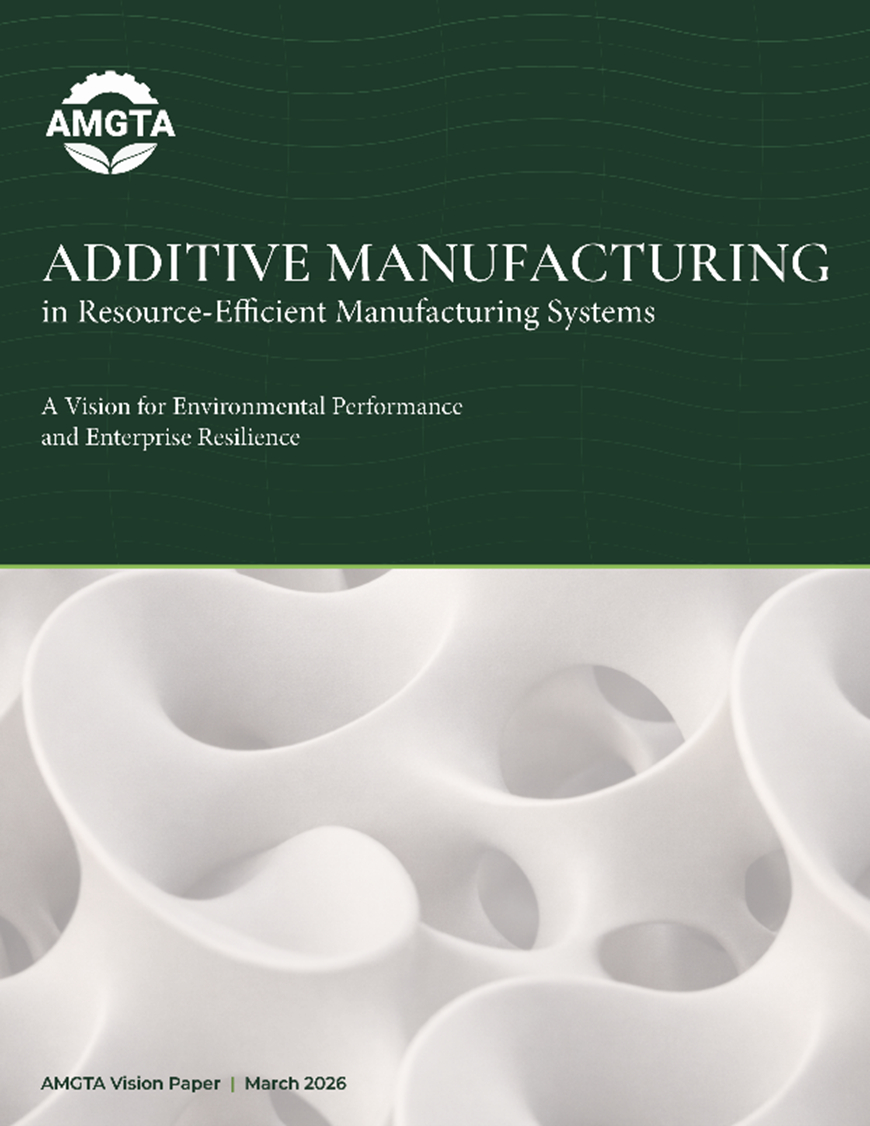
    At its recent Annual Member Summit, the Additive Manufacturing Green Trade Association (AMGTA) presented and released an independent report titled Additive Manufacturing in Resource-Efficient Manufacturing Systems. It pulls from six years of observation from both sides of the ecosystem to establish a structural argument for how AM should be evaluated, communicated, and deployed at the part, system, and enterprise levels. These are where the technology’s most significant advantages in supply chain resilience, resource efficiency, and capital allocation really materialize. When you do standard cost comparisons of AM vs. conventional manufacturing, you get the same direct production costs for both, but end up excluding costs that the latter “embeds as invisible background,” like obsolescence write-offs. This results in a structural bias that makes AM seem more expensive, and the AMGTA report calls this not a technology problem, but a framing and measurement problem. The report offers an evaluative structure that organizations can use to conduct better comparisons across all levels.

    “The technology is proven. But the current adoption curve doesn’t reflect it—and one major reason is that the industry has been evaluating AM against a standard that was never designed to capture what AM actually changes. This report is the result of six years of watching that gap play out across industries, applications, and geographies. It is the argument the industry has needed and that only an organization with no commercial interest could make,” said Sherri Monroe, Executive Director of AMGTA.

    You can get the report on the AMGTA website. Its companion Strategy 2030 document, What We Do and Why Membership Matters, is only available to AMGTA members.

    Student-Built Clura Enclosure Reports Successful Kickstarter

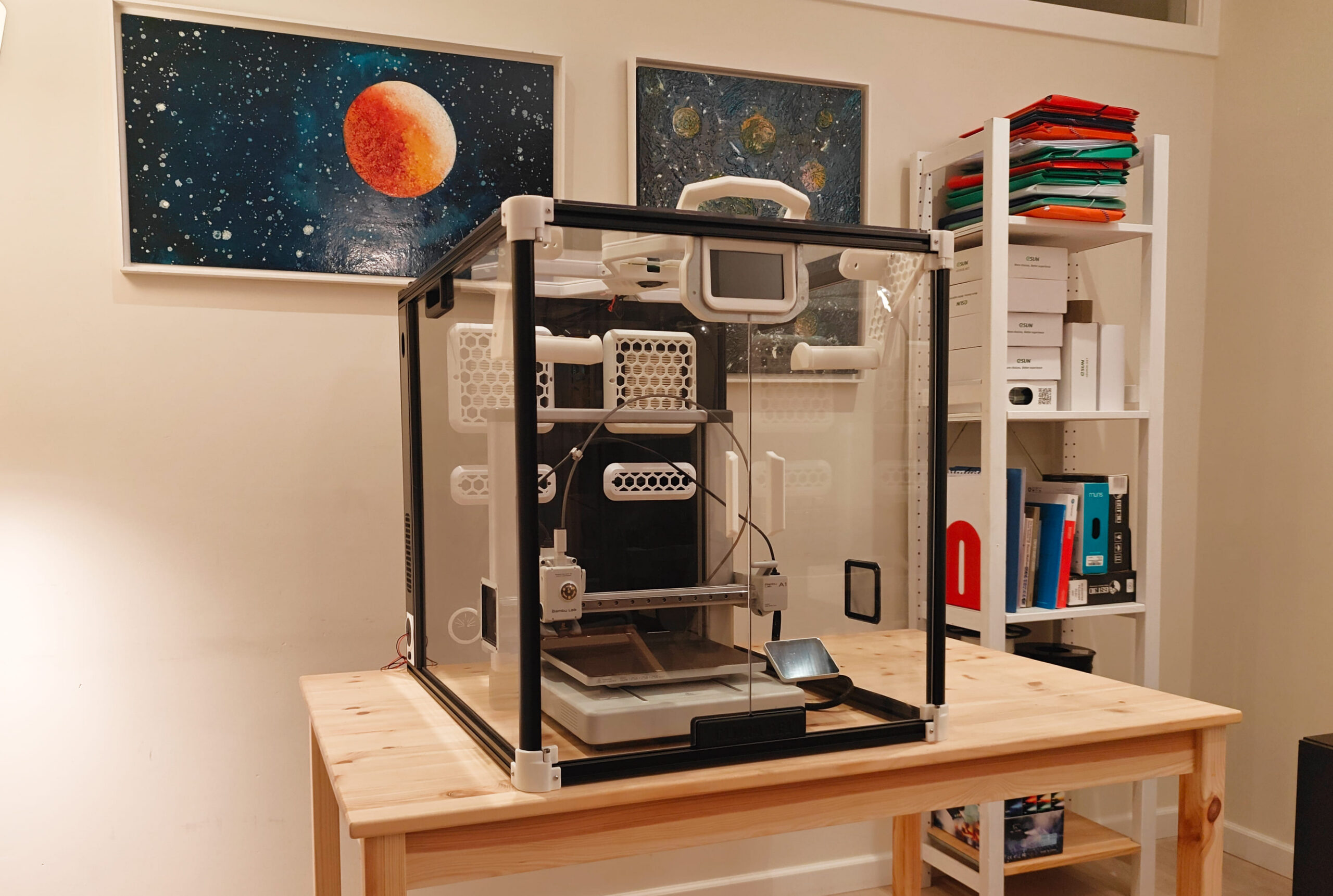
    Last summer, we reported on a modular, affordable, open source 3D printer enclosure, called Clura, that was developed by TU Delft aerospace engineering student Fabrizio Blasio and some of his fellow students. The idea was to improve air quality during desktop 3D printing, but do it in such a way that the solution was accessible (re: affordable) for everyone. They added all kinds of great features, such as a dual-layer HEPA + carbon filter system, integrated sensors that track air quality, temperature, humidity, and particulate matter, an optical smoke sensor, smart touchscreen interface, filament tracking with load cells, and a gas detection module. Blasio, Clura co-founder Goncalo Martins, and head of logistics and manufacturing Peter, made the 3D printed enclosure open source, sharing all the documentation and putting the CAD files on Github so that other makers could benefit from their design. This winter, the team launched a Kickstarter campaign, which raised $41,907—over eight times the amount they set out to raise. So clearly, other makers think this enclosure is a necessary product.

    The team says Clura supports several popular desktop 3D printers, including the Prusa MK3, Prusa Mini, Bambu A1, Bambu A1 Mini, Ender 3, and Creality HI. It filters fumes, reduces noise, detects fire, measures filament weight, illuminates your printer, and just generally improves the 3D printing experience. The Clura Pro is $259, which includes the base feature, load cells, advanced smoke sensors, and air quality sensor, whilte the Clura Lite is $189, including the full structure with aluminum extrusions and acrylic panels, the filtration system, and LEDs. The $239 Clura Base includes everything you get with the Clura Lite, plus a screen and basic environmental and smoke sensors. Finally, you can get the Electronics Kit for $119, which offers standalone electronics (screen, mainboard, sensors, load cells, LEDs, etc.) for DIY builds. By making the 3D printed enclosure open source, the Clura team is improving safety for other passionate makers who may not be able to afford a more professional solution. 

  • ARC & ORNL Form Partnership to Accelerate AI-Enabled Manufacturing for Defense

    Last year, Autonomous Resource Corporation (ARC) became the surprising owner of Desktop Metal’s (DM’s) assets following the bankruptcy of the one-time additive manufacturing (AM) unicorn, an acquisition that cost ARC just $7 million. ARC announced a grand vision behind its plans for the salvaged IP, aiming to rebuild DM’s core tech into the basis for R&D as a service and contract manufacturing work.

    The even grander vision behind that project is ARC’s development of ARCNet—what the company calls “The Operating System for Autonomous Distributed Manufacturing”—and an AI model called ADAM (Autonomous Discovery and Advanced Manufacturing), which learns from the data ARCNet generates. With such ambitious aims in mind, ARC would presumably need access to rare infrastructure in order to deliver the goods; like, say, the sort of world-class supercomputer one could only find at a US national laboratory.

    It turns out that’s precisely what ARC now has access to, thanks to a partnership with Oak Ridge National Laboratory (ORNL) that the company just announced, in a project called Exascale Foundry. Through the partnership, ARC gains access to ORNL’s Peregrine AI software, which will be integrated with ARC’s production nodes via ARCNet. ARC will also have access to tech developed at ORNL’s Manufacturing Demonstration Facility (MDF), a unique capability of the US Department of Energy (DOE) designed to accelerate qualification of materials critical to defense supply chains.

    Along those lines, the first research project for Exascale Foundry surrounds high-temperature nickel superalloys used in binder jetting of turbine components for autonomous aerospace engines.

    In a press release about ARC’s partnership with ORNL on the Exascale Foundry project, the associate laboratory director for National Security Sciences at ORNL, Moe Khaleel, said, “ORNL’s advanced manufacturing and computing capabilities are uniquely positioned to help accelerate the transition of laboratory-proven technologies into production-scale defense manufacturing. Partnering with ARC ensures we are transitioning our research into real production outcomes.”

    Bryan Wisk, CEO of ARC, said, “The United States faces an urgent need to rebuild its manufacturing capacity for critical defense components. By combining ORNL’s world-leading computational, materials science, and manufacturing capabilities with our autonomous production infrastructure, we can compress manufacturing and qualification timelines from years to months and deliver manufactured parts at the volumes the warfighter needs.”

    ORNL’s MedUSA wire-arc additive manufacturing machine.

    I’ve been writing for years about how public-private partnerships are the future of the AM industry, and in fact, such partnerships seem to be the basis for the future of the entire global economy. As this example of a public-private partnership illustrates, AI is among a handful of the most important drivers of that state-of-affairs.

    Building national AI ecosystems and, ultimately, a global AI ecosystem, is such a capital-intensive task that enterprises or governments acting individually could never hope to accomplish it. Additionally, the social implications of a world run by AI-powered operating systems have such potential for widespread disruption that the shift calls for unprecedented acts of cooperation between governments and corporations, and between various public-private alliances.

    There isn’t really a good model to turn to in order to figure out how to do all this. Interestingly, given the involvement of ORNL in the current topic of discussion, the Manhattan Project is probably the closest historical precursor, but the analogy falls apart here as well, because of the shift in relative power dynamics between the government and private industry in the post-WW2 era. (That is, the government was much more powerful vis-a-vis private industry in the 1940s; private industry is now in the driver’s seat.)

    Above all, then, the world needs corporations with actual social vision, which is in many ways a terrifying prospect, but in 2026, there are so few prospects that aren’t terrifying. If nothing else, as a starting point, a corporation in 2026 aiming to harness physical AI needs to have some sufficient understanding of the total global system within which it’s aiming to operate. There may be very little precedent for what ARC is trying to do, but they at least seem to be passing the test of treating the current moment with all its deserved complexity and seriousness. More companies in manufacturing—above all, in the US—would gain from putting similar levels of thought behind their actions.

    Images courtesy of ARC

  • Colibrium Additive Gets $31 Million NAVAIR Contract

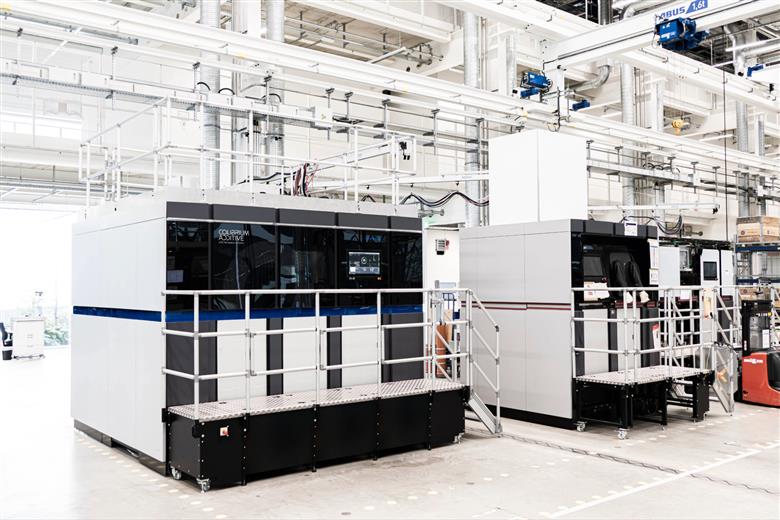
    Colibrium Additive has been awarded a $31 million contract by the Naval Air Systems Command (NAVAIR). The contract is part of the Additive Manufacturing Capability initiative, focused on qualification and certification in support of maintenance, repair, and operations (MRO) activities.

    The contract will see Colibrium develop, “six metal alloy Material Process Combinations (MPCs) which are the detailed metal alloy’s physical and mechanical property data; optimize process parameters; consolidate material and process specifications; and establish design allowables for the properties tested.”

    Overall, the materials are the existing 316L, CoCr, and Ti64. augmented with AlSi7Mg, IN718, 17-4PH and 7050-RAM2. AlSi7Mg is an aluminum casting alloy used for aerostructure components. More interesting still is the use of 7050-RAM2. This is an Elementum material. Previously, Elementum got $2.8 million of America Makes money to help qualify the material together with the likes of Battelle, Eaton, EOS Incodema, and the National Institute for Aviation Research (NIAR). This is, therefore, a big win for Elementum because it further standardizes its proprietary material within the bowels of the US defense establishment.

    Colibrium Additive M Line.

    This project will specifically look at fatigue life in thin-walled components, a huge problem over the life of a part, especially under cyclical load or stress. This will be part of the work conducted by the AddWorks team. The outcome of that will be very valuable to those working in aerospace generally, but specifically those interested in heat sinks. NAVAIR also gets three M Line and one M2 Series 5 3D printer as part of the deal. There will also be training for machine operators, designers, and more.

    Lars Bruns, executive technology leader at Colibrium Additive, said,

    “Colibrium Additive is proud to extend its support of NAVAIR with proven metal additive technology and deep application expertise. By combining certified hardware with licensed process data and hands-on training, we are helping accelerate the Navy’s ability to produce repeatable, airworthy components at scale and reduce supply chain risk for critical aviation parts.”

    With the US losing around 30 airframes in the latest Iran engagement, this is a very opportune time to be getting this contract. Carrier groups are also at sea for much longer than intended. When that happens, all sorts of unexpected things will break. This seems a lot like a gradual capability increase for NAVAIR to help support US Navy aircraft throughout their lifecycle. But in the current situation, the NAVAIR system, and indeed the Navy, are under stress not seen for many decades. The Navy is operating far outside its comfort zone. With too few new ships coming online and repairs taking too long, it faces a real capability gap.

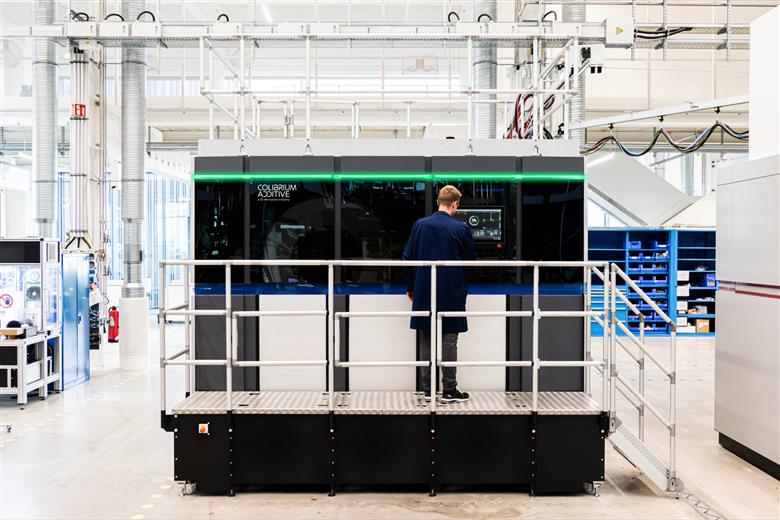
    Colibrium Additive M Line.

    The world’s largest Air Force is the US Air Force; the world’s second-largest Air Force is the US Navy. With around 2,500 aircraft in service, the force is indeed formidable. If you made a top five of Air Forces around the world, that top five may include China, but it would definitely include the US Army and the US Marine Corps. So getting standardized within NAVAIR is a big deal globally. And this is happening right now and is even more impactful.

    This is a good win for Colibrium, which seems to have retreated somewhat given its erstwhile ambitions. Its closeness to GE Aerospace makes it well-suited to carry out this project. Indeed, the company will have looked very deeply at these materials in this way previously. If the company could keep growing within the Navy, it could very well find itself with a long, deep relationship with a very big client. The amount of inventory out there and the pressing need could be financially very impactful in the long run.

    Image courtesy of Colibrium Additive

  • RAPID 2026: 6K Additive’s Domestic Metal Powders & Consolidation Plan

    6K Additive (ASX: 6KA), a U.S. supplier and manufacturer of metal powders for additive manufacturing (AM), has been very busy lately. I caught up with CEO Frank Roberts and Chief Marketing Officer Bruce Bradshaw at RAPID+TCT 2026 in Boston to hear what the company has been up to after going public on the Australian Stock Exchange (ASX) a few months ago.

    Domestic Metal Powder Supply Chain

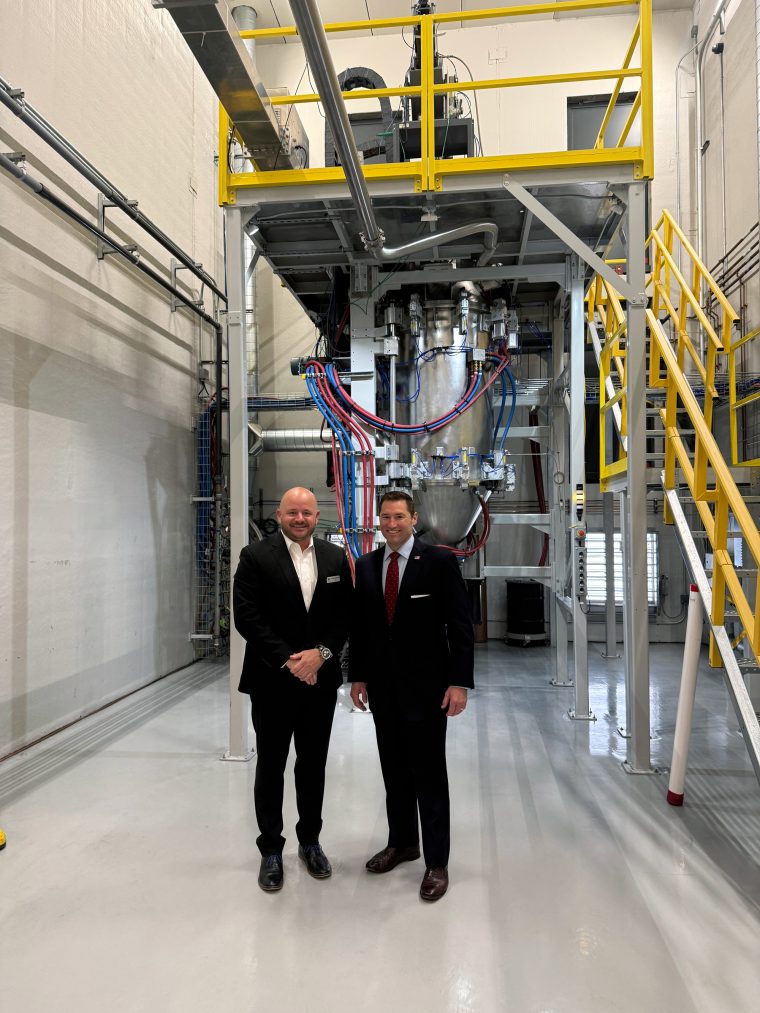
    Right before the show began, 6K Additive welcomed Congressman Guy Reschenthaler (PA-14) to its campus in Burgettstown, Pennsylvania. During his tour, Congressman Reschenthaler was able to see the company’s proprietary UniMelt microwave plasma technology up close and personal; having once stood in front of the UniMelt myself, I can tell you that it is an impressive system.

    6K Additive CEO Frank Roberts and Congressman Guy Reschenthaler (right) in front of the UniMelt. Image courtesy of 6K Additive.

    The UniMelt process converts solid scrap, turnings, and end-of-life components into premium metal refractory powders, like tungsten, tantalum, rhenium, and niobium, which are often used for applications in aerospace and defense. Not only is this approach more environmentally friendly, but it also keeps the supply chain in the U.S.

    “As a member of the House Appropriations Committee, I am proud to work alongside Pennsylvania manufacturers and suppliers in support of the Department of War. 6K Additive is leading the way in cutting-edge technology while creating family-sustaining jobs for hardworking Pennsylvanians and strengthening our local workforce. Their innovation is helping attract and retain critical talent in our region,” Congressman Reschenthaler said. “From hypersonics to nuclear energy, the materials produced in Burgettstown are keeping America competitive and secure.”

    Bradshaw told me that they’re really trying to drive home how important it is that 6K Additive’s products are domestic.

    “One of the things that we think is a message that needs to be heard is, why is that so important? I don’t think people really understand the reliance from a metal powder perspective on China right now. And being domestic has its advantages, but more importantly, there’s a real threat,” Bradshaw said.

    He explained that China controls 80% of the world’s ammonium paratungstate (APT), which is the main precursor for making tungsten. Roberts noted that China recently “locked that supply up, which has driven the price through the roof.” So while it’s been a fairly constant theme for several years, everyone is more focused on reshoring than ever now, and ensuring that we don’t rely on China for these critical materials.

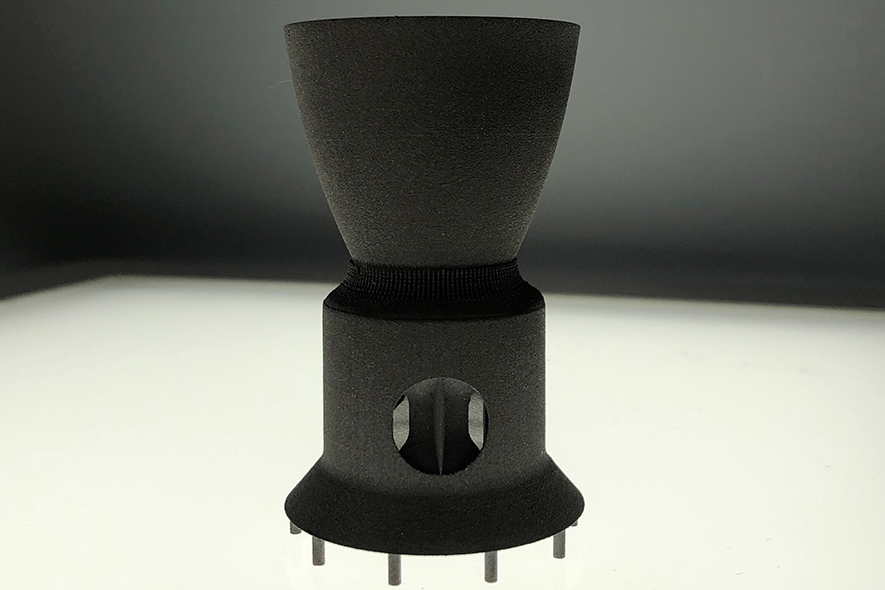
    Non-eroding throat insert for a solid rocket motor nozzle. Printed by Quadrus using 6K Additive tungsten rhenium powder. Image courtesy of 6K Additive.

    Unfortunately, just because metal powder is produced in the U.S., that doesn’t necessarily mean it’s a fully domestic product, or that we’re fixing the supply chain problems. Roberts shared something that “probably doesn’t get talked about much and probably should,” and it honestly made my blood run cold.

    “In order for a producer to constitute U.S.-produced powder, it basically just has to be melted,” he explained. “So if you look back through the supply chain, and here are the metal powder producers that are supporting North American production…that’s a constant theme, North American production. Go one step back and ask them, if you’re using plasma atomization or electrode gas atomization, ask them where that bar or wire comes from that supports their process. And it’s likely China.”

    Bradshaw brought up niobium, for which demand has been growing. He said that 43% of the world’s supply of niobium comes from Brazil, while 31% comes from China. But, 61% of the ownership in those Brazilian companies is China, so it’s basically a wash.

    6K Additive booth at RAPID+TCT 2026. Image courtesy of Sarah Saunders.
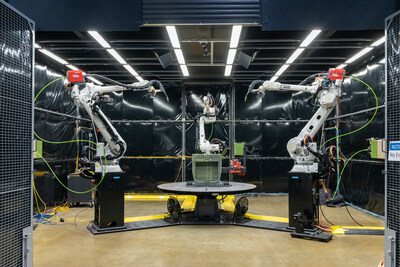
    All of the scrap that 6K receives to turn into metal powder comes from U.S. sources, Roberts told me. He brought up the company’s recent $1.95 million Phase II award from the Defense Logistics Agency (DLA) under its Recovering Strategic Value project. The program will focus on using 6K Additive’s UniMelt process to convert depot scrap into powder, and then getting that powder qualified for defense applications.

    “There’s a clear focus in Washington, DC on shoring up supply and making sure that it’s truly domestic-based,” Roberts said. “What the DLA is focused on is how do we maximize value? How do we make sure that we’re doing the front end of the sort/segregate, reclaiming that higher value material, and funneling those materials to places like 6K to turn into high-value powder that can then come back and support defense applications?”

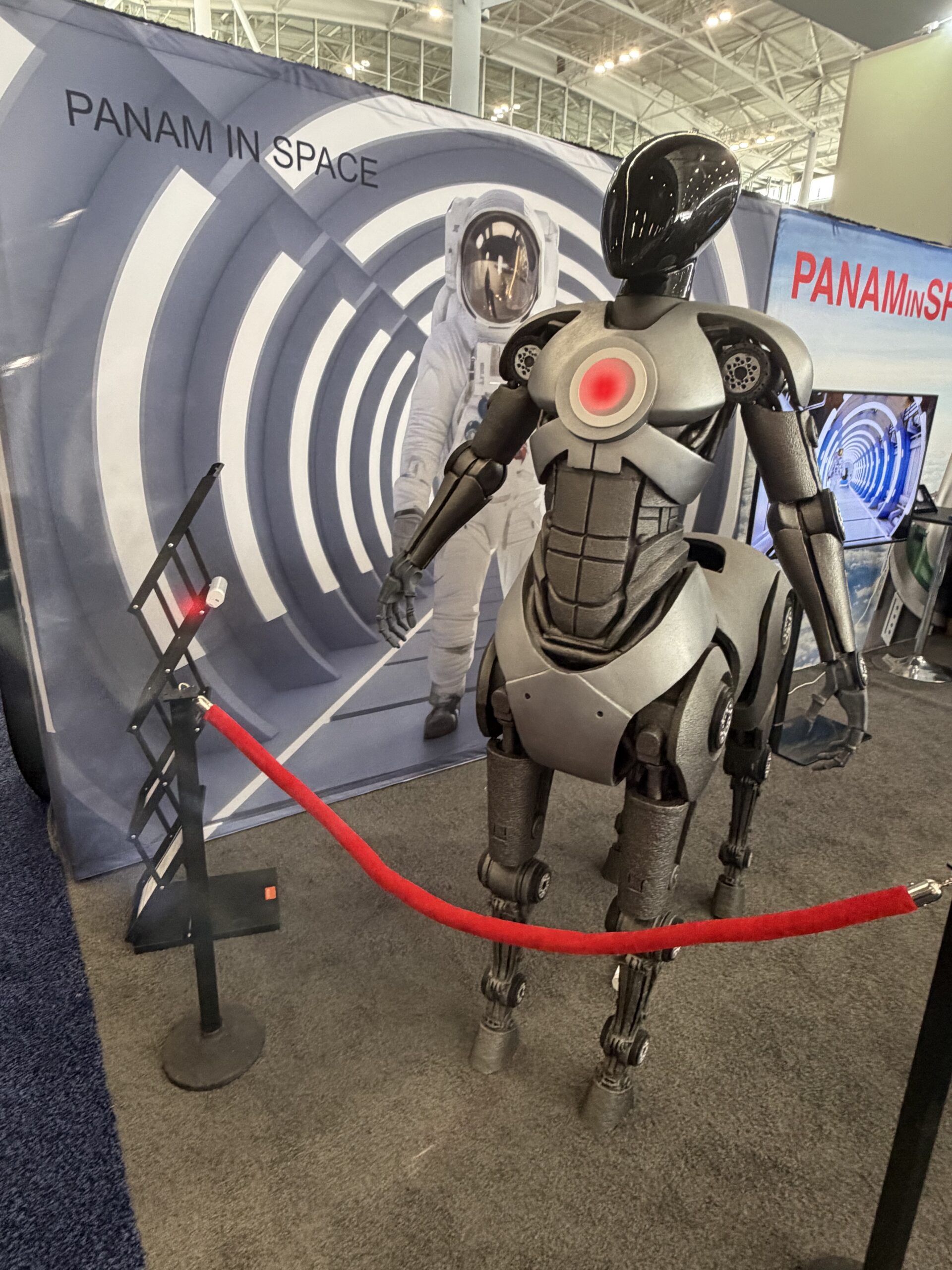
    Roberts also said that for the DLA project, 6K Additive will be partnering with a robotics company “to demonstrate a more streamlined, automated approach to sort and segregate.” In a proof of concept system, the robots will use XRF (X-ray fluorescence) guns for automated alloy detection and sort/segregate, “making sure that the scrap’s flowing into the right bucket.” I have been assured that these robots do not look like the one at the PANAM in Space booth that haunts my nightmares.

    Modular Quadruped Centaur at PANAM in Space’s RAPID+TCT booth. Image courtesy of Sarah Saunders.
    After RAPID, I was nosing around 6K’s website to make sure I hadn’t missed any recent news from the company, and came across an ASX announcement of a modification to a defense agency contract with 6K. It states that the company “has been awarded a US$1.95 million modification to its existing Phase II contract by a U.S. Defense Agency,” bringing the total value of the award up to $3.9 million. Specifically, this modification focuses on increasing how much scrap tungsten and niobium C-103 alloy will be recovered from “strategic DoD partners” for the contract.

    Now, this document doesn’t name any names, but if you connect the dots, it certainly seems like it’s regarding the award I was speaking about with Roberts and Bradshaw at RAPID. If that’s the case, then the government really is doubling down on reshoring the critical metal powder supply.

    6K Additive booth at RAPID+TCT 2026. Image courtesy of Sarah Saunders.
    Growth & Consolidation

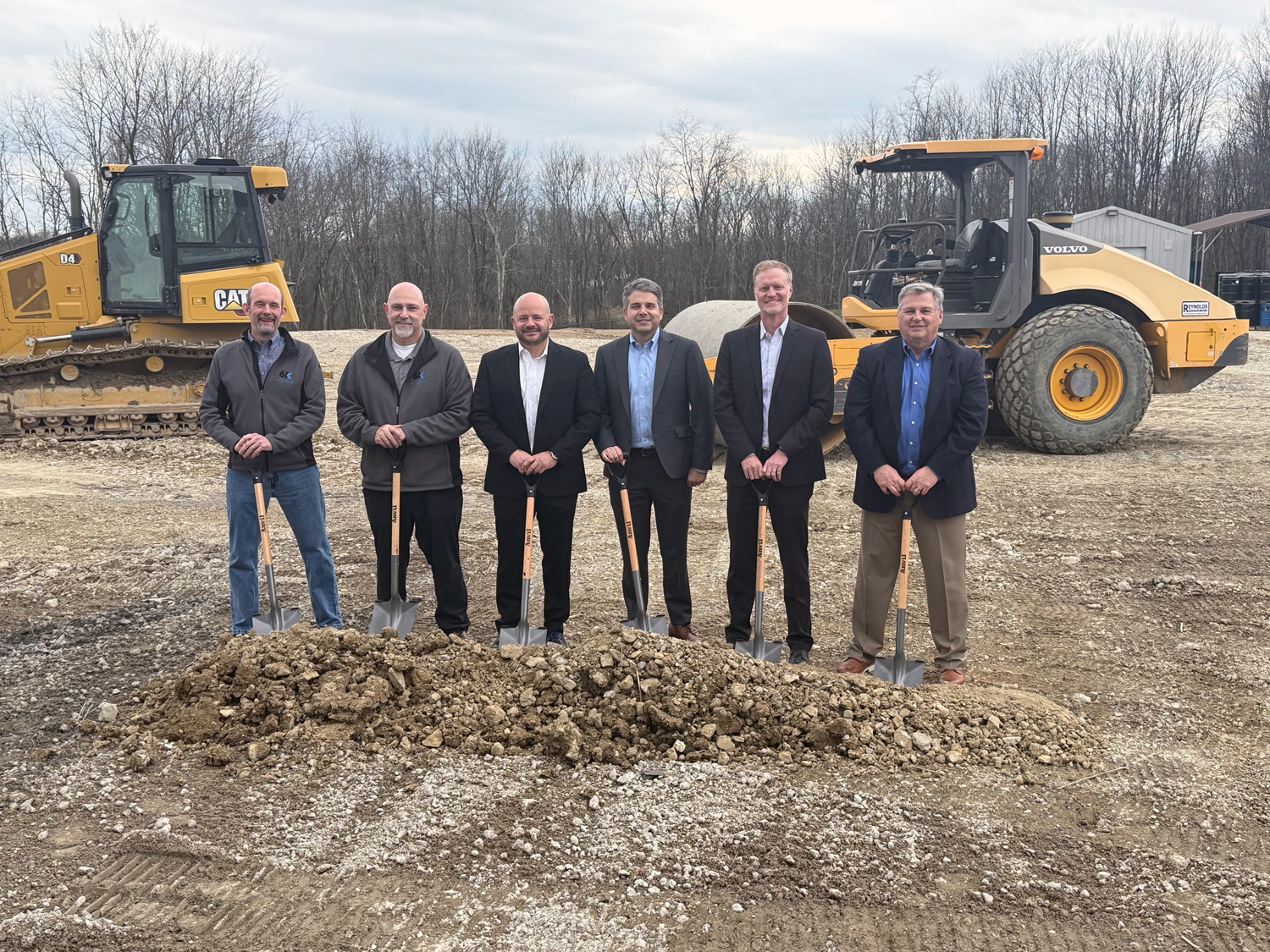
    At RAPID, Roberts and Bradshaw reminded me that the company recently had the official groundbreaking for an expansion to its global headquarters and manufacturing campus near Pittsburgh. This five-fold increase in production capacity is thanks to a $23.4 million Defense Production Act (DPA) Title III grant, the completion of its IPO, and a $27.4 million loan from the Export-Import Bank of the United States (EXIM).

    Roberts told me that the focus of the expansion is expanding powder production, so 6K will be adding more UniMelts. But the main goal is consolidation, so the company is also bringing over an atomizer from California. More specifically, it’s bringing over the atomizer it purchased from Uniformity Labs.

    “The reactive metals, like titanium and niobium, you can embrittle them in a hydrogen furnace cycle. That makes them easy for us to crush down and size to spheroidize in our UniMelt,” he explained. “Nickel alloys don’t behave the same way. You can’t really take big pieces and easily crush them down and make small pieces that we could spheroidize.”

    Atomizers can produce broad particle size distribution (PSD), and 6K’s sizing technology then shifts the large and small particles “back into the size for laser powder bed fusion.” These go through the UniMelt to be spheroidized, and 6K then sells the atomized powder, and upcycles the scrap from the atomizer as well.

    “Last year when we were on the journey to public listing, we did a pre-IPO round in July, and that allowed us to really start ramping that unit operation in California. We closed the funding and listed in December, and ever since then, it’s been a nice ramp of powder flowing through both atomization and UniMelt,” Roberts said. “Converting our pipeline is our key.”

    This move really supports the company’s growth story.

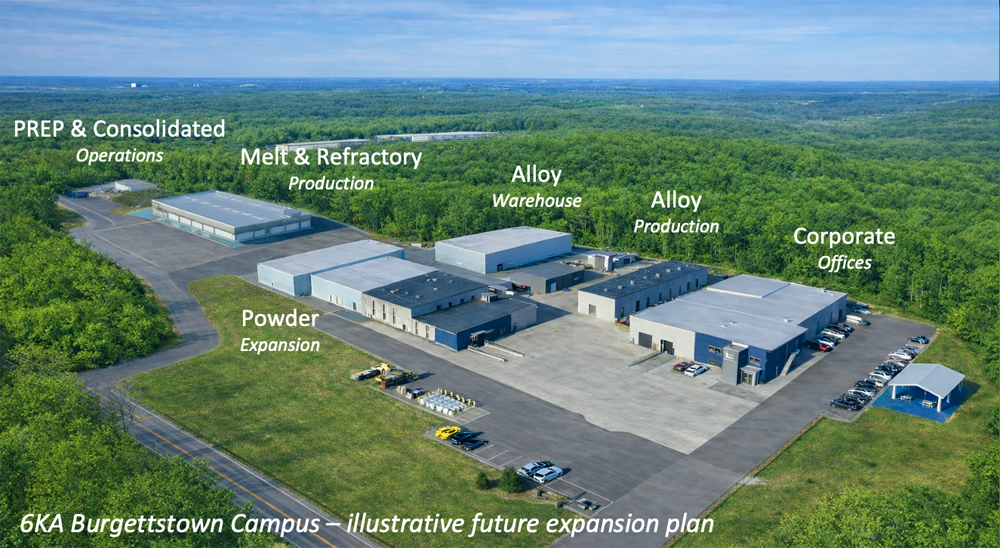
    6K Additive Burgettstown Campus – illustrative future expansion plan. Image courtesy of 6K Additive.

    Bradshaw showed me the above picture, pointing out that the white buildings—an alloy warehouse, dedicated melt building, pre- and post-processing production facility, and a refractory—are what’s being added to the campus.

    6K currently has four UniMelts operating onsite, but by the time construction is over, it will be operating six, as well as two atomizers. This will increase their volume by five times, going from 200 metric tons to 1,000 metric tons. Roberts said that 80% of the expansion will be online by the end of 2026, with the rest of it following the next year.

    6K Additive leadership team officially breaking ground for the expansion. Image courtesy of 6K Additive.

    It seems like 6K Additive is going in just one direction these days, and that’s up.

  • The Additive Chicken Coop, Part I: Million Dollar Petri Dishes

    After decades of tinkering with our individual technologies, billions were poured into speculative claims and optimism. Now the attention is gone, and sometimes it can seem like we’re surrounded by the drafts of an empty high school gym amidst archipelagoes of confetti and withering balloons. Simultaneously, we have a billion-dollar revenue company founded in 2020, a nascent desktop 3D printing revolution, and dollops of fat profits unequally distributed, while other companies are declining. Certain applications, sectors, and companies are doing exceedingly well, while others struggle to survive. Let’s look at the major forces shaping our past to see how they are affecting our future.

    The LPBF Petri Dishes Effect

    At one point, we sold 100 metal LPBF systems a year. Over half of those went to universities, and the remainder went to secret projects in the depths of corporations or large aerospace and defense firms. Machines sat idle a lot and then spent two-thirds of their time recoating. But everyone wanted to do something a tad bit different. Everyone wanted particular settings or particular parameters. What we ended up with were million-dollar petri dishes. A machine where everything can be changed, but it is not good at making anything in particular. I swear that there was a six-year period when every university tried to characterize Inconel in some way.

    With the energy efficiency from renewables, my Uber ride is now very profitable at current oil prices.

    Engineering leaders across the earth then tried to take these experimental boxes and push them into production. It’s a bit like trying to turn a Barbie into an actual doctor. Or to ride a My Little Pony. Or to take your old childhood microscope kit to the CDC lab. The switchover to more production-oriented architectures, devices, software, and materials pricing took a long time. Organizations we’re hooked into making these lab boxes, and switching the whole ecosystem over took time. At the same time, we didn’t have systems integration companies that could help you set up production and customize machines. This led to a delay in adoption. Also, many firms just gave up, and only the most (fool)hardy succeeded. You did metal additive because there was no other option, or you didn’t do metal additive at all.

    Chicken Coop

    Upside Foods’ fried chicken is made from cultivated animal cells. Image courtesy of Upside Foods.

    Success in metal additive manufacturing is therefore focused on a few applications. And by and large, these applications are secret, or information about them is closely held. The total of these effects reflects the peculiar functioning of the LPBF market. A few hardy, secretive pioneers are the way to see this market. If you want to expand it, therefore, hitting the same verticals, companies, or parts won’t work well. What is, within the current paradigm, is to find people who need it badly across all industries, or to make the technology more accessible. Instead, by doubling down on existing needs and customers, firms have further increased their supplier concentration risk and dependence. And once again, we´re seeing strategic replication. It may pay off if the few customers grow, but it also shapes you and them to succeed only in tandem. Now that may seem amazing, and it feels amazing, but it limits you both. If you keep on making the best cars for the richest people, you could be Rolls-Royce, but there is a Ford, cars for everyone, an opportunity that you eventually can not take. And eventually, the volume player could buy you or displace you. This results in the current chicken coop, which is a metal LPBF. It’s so busy, we’re so busy all the time, and oh wow, are we closely watching the other chickens peck away! It’s so busy, and we’re all cooped up; it’s hard to forget that there is a world beyond the chicken coop.

    Artesenal Aircraft Parts

    My first encounter with 3D printing in a manufacturing context was a bit of a creeping disappointment. Yes, there were lasers, but there were also guys with paint brushes. Likewise, when I saw metal printing, there were more brushes, and guys were sawing things off with a Flex. The lack of automation and integrated systems was due to a shortage of systems integrators and to the industry talking up production while making petri dishes. Many early pioneers did everything themselves, from software to finishing, creating processes and machinery laboriously. It therefore took years and significant funds for people to reap the benefits of scale and scope. This led to a compounding delay in developing a market for systems integrators and products that would let the whole industry accelerate.

    It was also never any vendor’s responsibility to automate the whole process. This delay has slowed the growth of automation solutions that could benefit the market as a whole.

    Because we’re in the chicken coop, we obsess over the behavior of the other chickens. Because we used to sell million-dollar petri dishes, previous implementations were slow, and the adoption of additive was concentrated. This exacerbated the development of systems to automate key steps, leading to our current state of running while standing still.

  • HP Stock Jumps on 3D Printing Buzz

    HP (NYSE: HPQ) had its best day in over a year this week, with shares jumping more than 7% on Tuesday. Interestingly, the move was quickly tied to 3D printing, especially after the company’s high-profile unveiling at RAPID + TCT 2026 in Boston, one of the most talked-about launches at the event.

    The week opened with a drop for HP, with shares falling about 1.5% on Monday and lagging behind Apple and Dell Technologies. Then came the sudden jump on Tuesday. By Wednesday, HP shares dropped more than 3%.

    One Day, One Strong Reaction

    The spike came after a mix of news that involved shareholders approving an expanded stock incentive plan, adding over 70 million shares for compensation. Also, HP reinforced its growth strategy with updates across its industrial and 3D printing portfolio, leading to investor sentiment flipping positive, with traders suddenly turning bullish. That combination pushed the stock up roughly 7–8% in a single day, its biggest move in over a year.

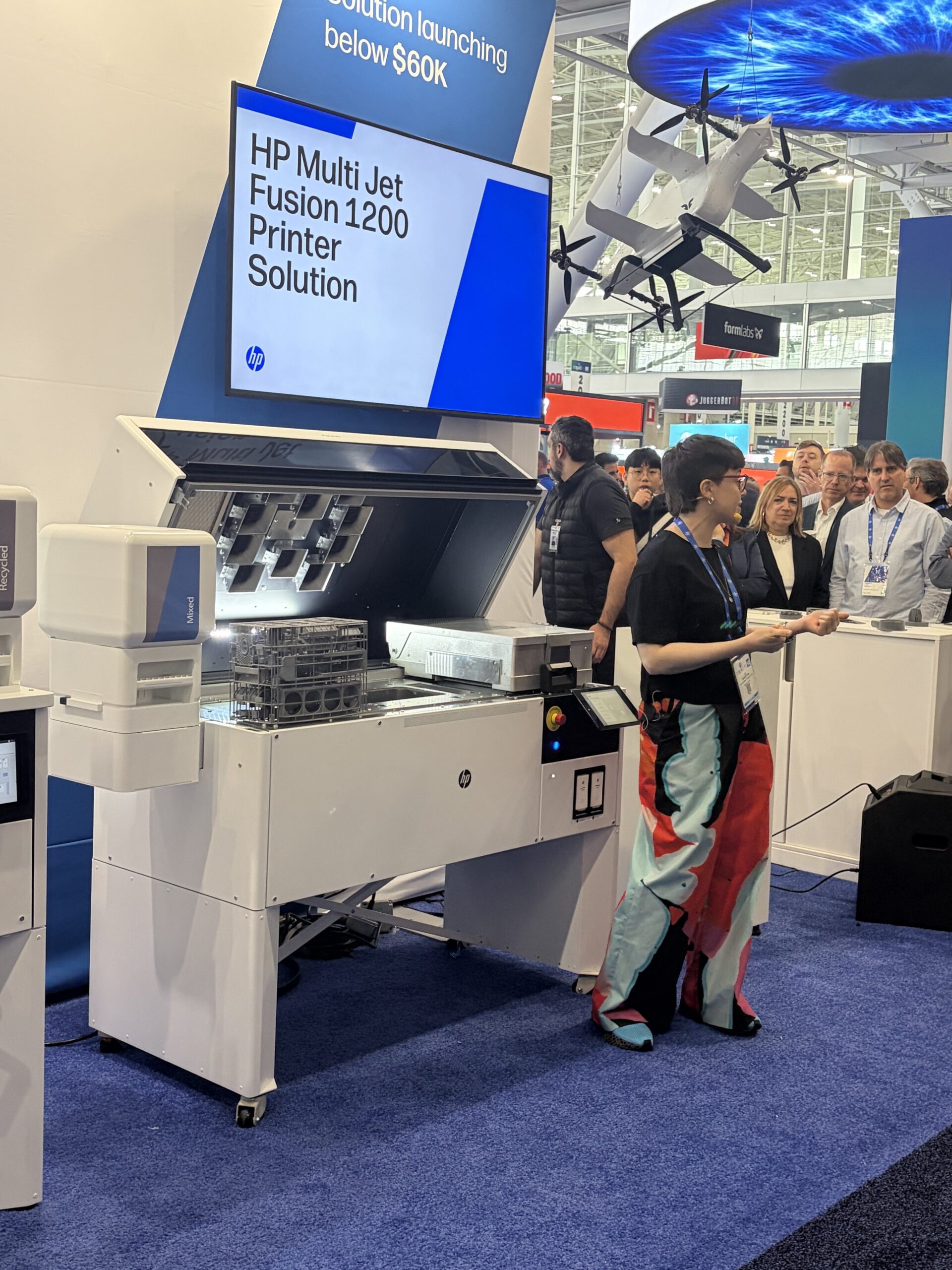
    At the same time, HP’s presence at RAPID + TCT got a lot of attention. The company introduced its new Multi Jet Fusion 1200 platform, a smaller system designed to bring its industrial 3D printing into more workplaces, with automated workflows, easier operation, and faster turnaround times. 

    On the floor at RAPID + TCT 2026: HP reveals its latest 3D printing lineup. Image courtesy of Sarah Saunders/3DPrint.com.

    3DPrint.com’s Sarah Saunders was at RAPID for the live unveiling, stressing how the system lowers the barrier to entry. Shortly after, Executive Editor Joris Peels wrote that this system could reshape the entry-level additive manufacturing market by making HP’s technology more accessible to a wider range of users.

    So it is that combination, the corporate moves plus a strong message about 3D printing, that helped push the stock higher.

    For years, HP has been building out its 3D printing business, but the real question has been adoption, especially knowing how far it can go beyond prototyping and into actual production. Now, HP is starting to answer that. The company isn’t just talking about 3D printing anymore; it’s showing how it can work in real production, right next to traditional methods.

    This fits with HP’s broader strategy. In its latest earnings, the company showed steady performance in its core business, while also pointing to areas like industrial and digital manufacturing as future growth. That’s where 3D printing comes in.

    But this push into 3D printing isn’t coming out of nowhere either. In its latest earnings, the company showed steady performance in its core business, but also continued to highlight growth areas tied to industrial and digital manufacturing. 3D printing fits directly into that. 

    In HP’s Q1 2026 earnings call in February, CFO Karen Parkhill pointed to clear momentum in the industry, stating: 

    “Strong demand in drones and robotics drove double-digit growth in 3D and industrial print revenue grew for the tenth consecutive quarter, driven by the continued transition from analog to digital.”

    Also, a few months earlier, in the company’s Q4 2025 earnings call, CEO Enrique Lores pointed to a similar trend, stating: 

    “We also saw double-digit growth in 3D driven by applications in drone and robotics manufacturing.” He added that HP intends to “strengthen our leadership in 3D printing” as part of its broader print strategy.

    Drones are quickly becoming one of the most important applications for 3D printing today. Companies like Blueflite are using HP’s Multi Jet Fusion to produce drones with dozens of printed parts, while startups like Vecros and Unusual Machines are relying on the same technology for UAV components and full systems. And if you’re interested in how this is playing out in the market, it’s something 3DPrint.com and Additive Manufacturing Strategies will explore in depth at the UAS: The Present and Future of Drone Manufacturing event on June 30, 2026.

    Live from RAPID + TCT 2026, HP’s booth. Image courtesy of Sarah Saunders/3DPrint.com.

    The stock jump this week wasn’t driven by a single 3D printing breakthrough. It came from a mix of corporate moves and investor sentiment. But the timing matters. HP used RAPID + TCT to introduce new systems, including the more accessible Multi Jet Fusion 1200, and to reinforce its push toward real production with better output and lower cost per part. All of this helps explain the market’s reaction.

    3D printing may not be the biggest part of HP’s business today, but it’s starting to move the needle, show momentum, and investors are noticing. It is definitely a market the company is continuing to build around.