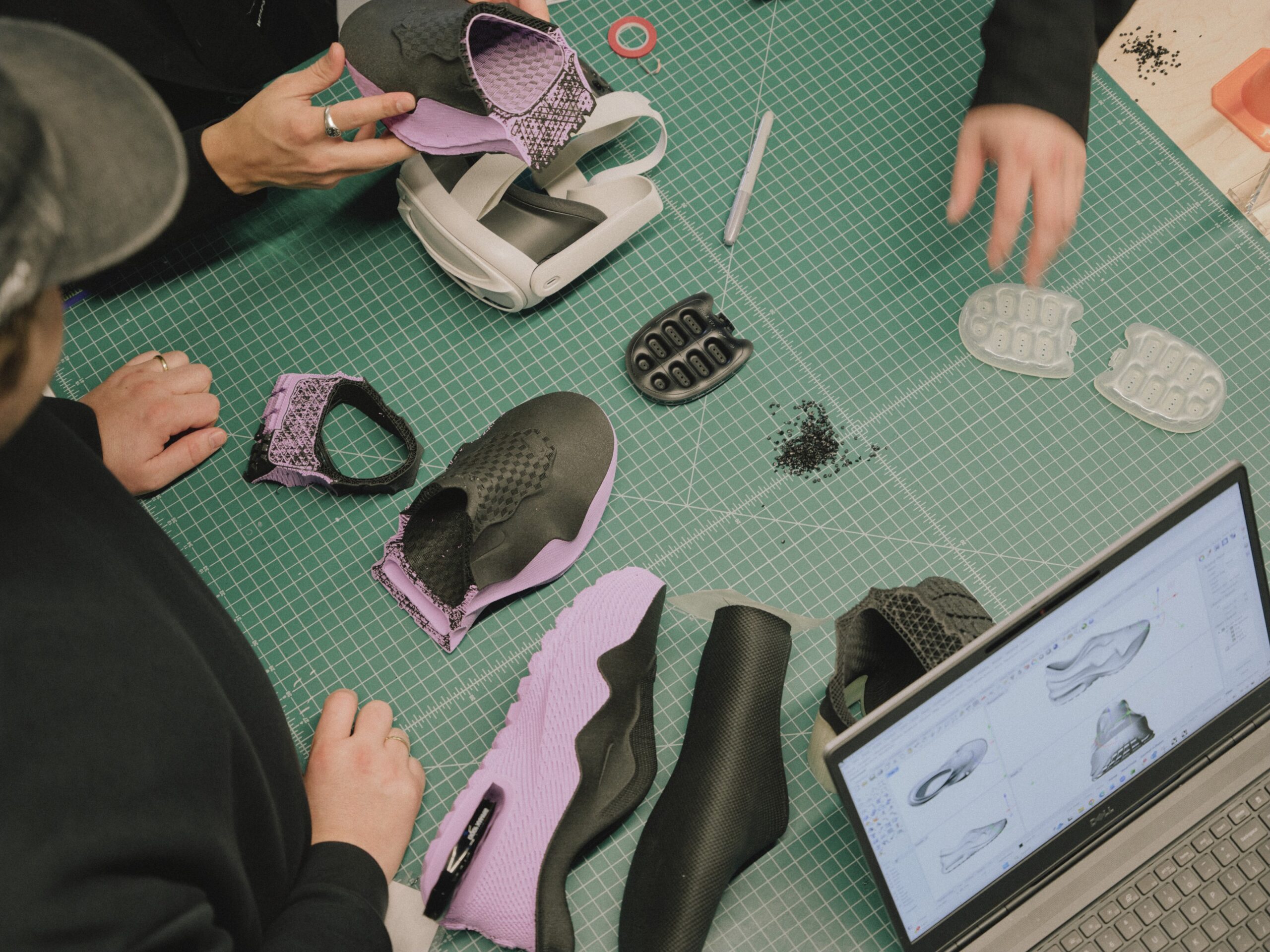
• HP Continues to Lower Barriers to Adoption with Compact MJF 1200 & Other RAPID + TCT Announcements

    This week at RAPID+TCT in Boston, HP Additive Manufacturing Solutions is celebrating ten years in the AM market. The company launched its Multi Jet Fusion 3D printing technology in Barcelona back in 2016, and officially unveiled the solution at RAPID that same year; it’s come a long way since then. As such, the company is sharing a veritable smorgasbord of product announcements at RAPID 2026.

    As we mark a decade of innovation in additive manufacturing, these latest advancements across our portfolio reflect HP’s focus on bringing industrial-grade capabilities closer to where ideas take place. By lowering cost per part and simplifying workflows, we are making it easier for customers to adopt additive manufacturing and scale it across new applications,” said Alex Moñino, SVP and GM, HP Additive Manufacturing Solutions, in a press release.

    Alex Moñino, Senior VP and General Manager, HP Additive Manufacturing Solutions

    I was invited to HP’s 10th anniversary celebration after the first day of RAPID, held at a cool seafood restaurant near the convention center. The drinks were freely flowing, appetizers and cake were passed, and all attendees gathered to hear remarks from HP executives, as well as a panel of leaders from some of the company’s best partners and customers.

    L-R: Dominic Stoerkle, Evonik; Bryan Dow, Cantor Fitzgerald; Brigitte de Vet-Veithen, Materialise; Joe Calmese, ADDMAN; Matteo Rigamonti, Weerg.

    HP’s New Multi Jet Fusion 1200

    Before the news was made public, those of us at the anniversary party also got to hear a little about HP’s latest innovation, which the company officially unveiled live at RAPID just this morning: the new Multi Jet Fusion 1200 3D printer. The idea is to expand access to industrial MJF by packaging the technology into a more compact, affordable system. Priced below $60,000, it significantly lowers the barrier to entry for industrial polymer printing.

    “As you know, MJF is the production standard for polymers, and what we’ve done is take that DNA and bring it into a form factor that will fit everywhere. So welcome to the future, to the next chapter of MJF,” said Moñino as he introduced the system.

    The MJF 1200 features a 12-liter build volume, with prints completed in under 12 hours, and a guided workflow that makes it easy to use daily. Speaking of ease of use, the printer also offers automated processes for build preparation, material mixing, and unpacking parts, with Moñino emphasizing that “we automated a number of key steps to make sure it’s as easy and clean and efficient as possible,” which reduces manual operations and enables organizations to easily integrate the system into their facilities.
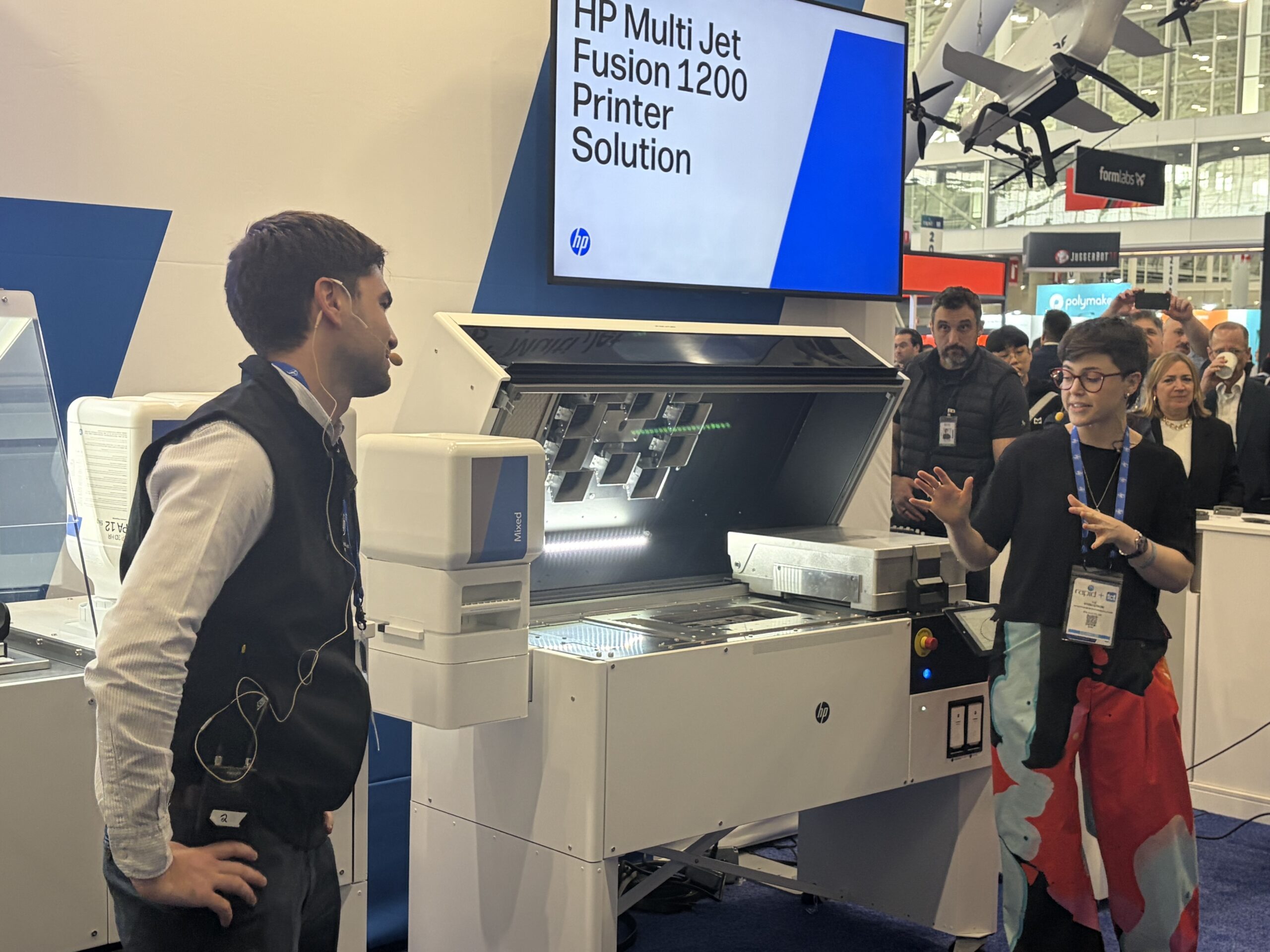
    HP unveils the Fusion 1200 printer on the RAPID + TCT 2026 show floor.

    HP makes it a point to check in with users before making big ecosystem changes. Anima Design was an Alpha tester for the MJF 1200, and Manufacturing and Prototyping Manager Yoel Cruz said that it was “rewarding to see our feedback reflected in the final printer.”

    Beta tester LualdiLabs is in the medical industry, and works to “enable a new model of care where advanced manufacturing capabilities are integrated closer to the point of treatment,” explained CEO Redouane Selmoune. With HP’s new compact system, multiple sectors, including healthcare, should find it easier to access industrial AM.
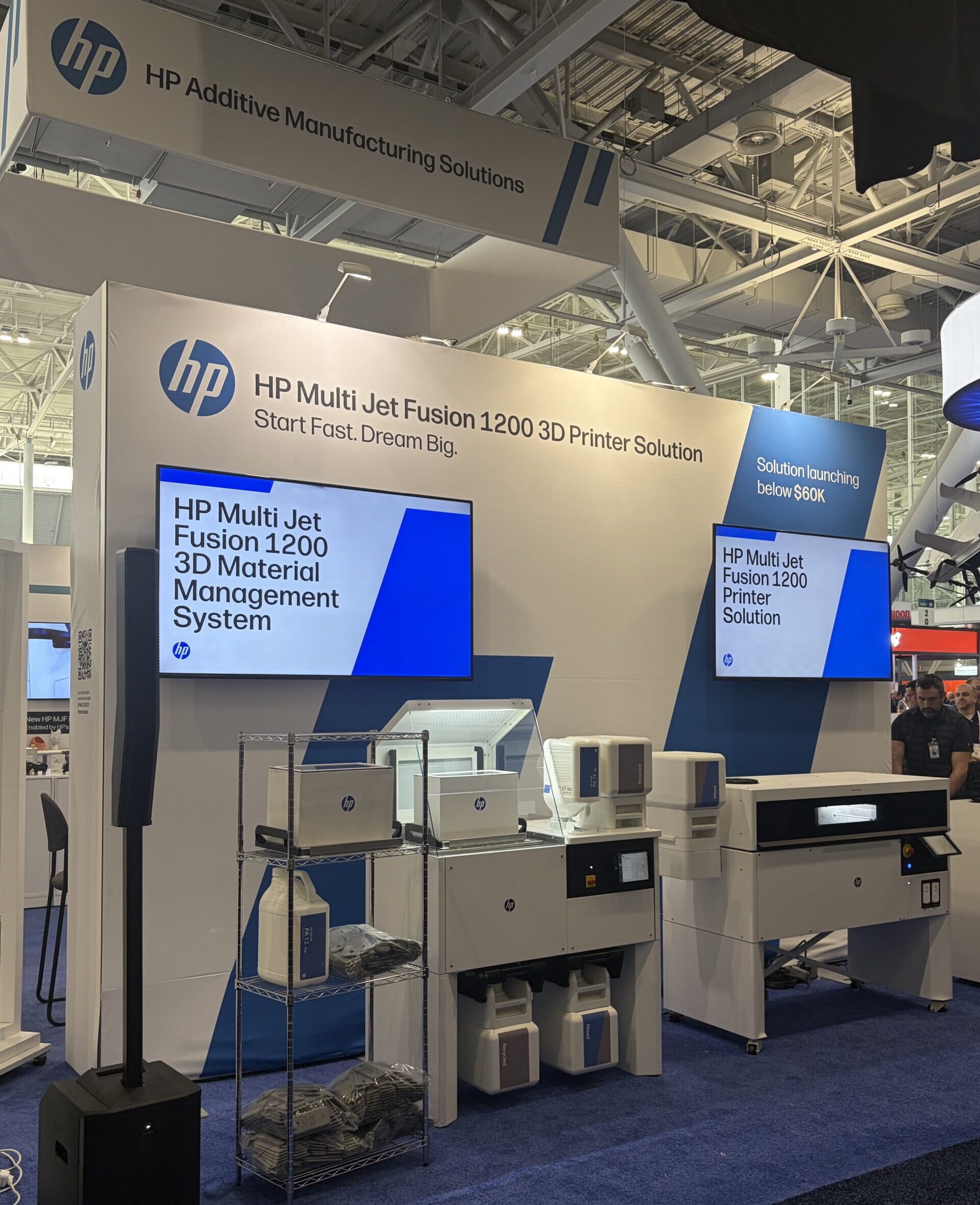
    HP’s new Fusion 1200 printer at the RAPID + TCT 2026 show floor.

    The same core technology that powers all HP systems will also drive the compact MJF 1200, with Moñino noting that it is “the same technology that runs our high-end printing solutions, so you can expect the same industrial-quality parts,” giving companies a way to print strong, functional polymer parts in-house for a variety of real-world applications. Additionally, as part of the CO-AM Ecosystem, each MJF 1200 3D printer will come with dedicated Magics Print for HP build preparation software, powered by Materialise. The full solution will be available starting in early 2027.

    Live from RAPID + TCT 2026, HP’s booth.

    New Innovations for the HP Jet Fusion 5600

    The MJF 1200 isn’t the only new development HP is launching to help lower the barriers to AM adoption. The company is also introducing a High Productivity print mode for the Jet Fusion 5600 series, which it says can improve printer output by 20%. This mode supports HP 3D High Reusability PA12 Glass Beads, so users can fabricate stiff, dimensionally stable parts at a lower cost.

    HP Jet Fusion 5600 Series. Image courtesy of HP.

    HP is also introducing MJF Dual Tone technology to the Jet Fusion 5600 series. Thanks to HP’s “unique agent capabilities,” this enables printing in both white and grey color tones, so users can produce special part features like labels, markings, QR codes, and textures. The Jet Fusion 5600 will be the first HP system to offer Dual Tune technology as a built-in capability.

    New Materials & Powder Handling for Metal Jet

    HP is also announcing new capabilities for its Metal Jet platform, first with a new solution to make powder handling safer and simpler. The company announced a collaboration with Volkmann GmbH, a German metal powder handling specialist, to introduce the vPort as an entry-level option for the HP Metal Jet S100. This is a contained powder management system that uses Volkmann’s technology to offer semi-automated part depowdering, cleaning, powder recovery, and refilling. This system will be available from Volkmann in Europe, the U.S., and Canada.
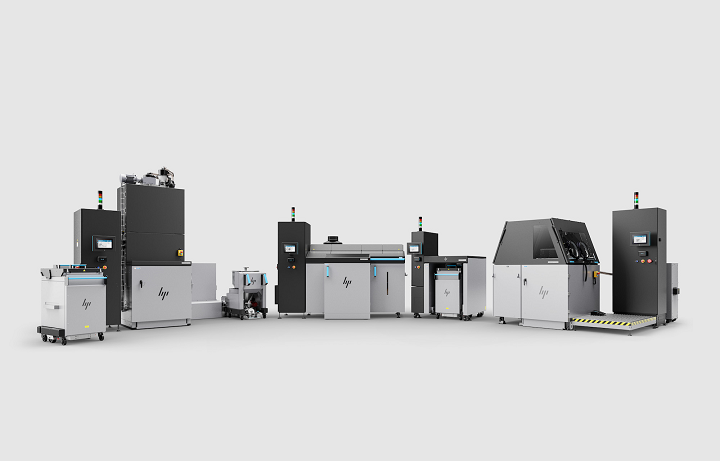
    HP Metal Jet S100 Solution. Image courtesy of HP.

    First, by developing and qualifying new materials for high-growth sectors like tooling, energy, and aerospace. The new material offerings for HP’s Metal Jet include copper for high conductivity applications, like electrification and thermal management; tungsten carbide-cobalt (WC-Co) for tooling applications; and nickel-based superalloys, such as M247LC, for high-temperature aerospace parts.

    General Availability of HP IF 600 HT in the U.S. & Canada

    Speaking of high-temperature 3D printing, HP also announced the general availability of its Industrial Filament 3D Printer 600 High Temperature (HP IF 600HT) in the U.S. and Canada. Even better, the first one has already been sold and successfully installed at Haelvoet, a Belgian healthcare furniture brand.

    HP IF 600HT 3D printer at AMUG 2026. 

    The printer enables us to create high‑quality prototypes and small production series that elevate the finish and ergonomics of our products,” said David Vannieuwenhuyse, Head of R&D at Haelvoet. “By shortening our design–test–iterate cycles, we significantly reduce our time‑to‑market.”

    This system was first launched at Formnext 2025, and I got to witness its North American debut at last month’s AMUG 2026. While its name doesn’t quite roll right off the tongue, the HP IF 600HT offers flexibility to manufacturers—not only does it support high-temperature materials like PEEK, ASA, and glass-filled polymers, but it’s also an open materials platform. So you can use the company’s pre-loaded material profiles, or work with HP AM’s global service network to create custom profiles for third-party materials. 

    All of these announcements demonstrate HP’s commitment to enabling additive adoption.

    Images courtesy of the author unless otherwise noted.
  • Euler Viewer for Metal LPBF 3D Printing Released

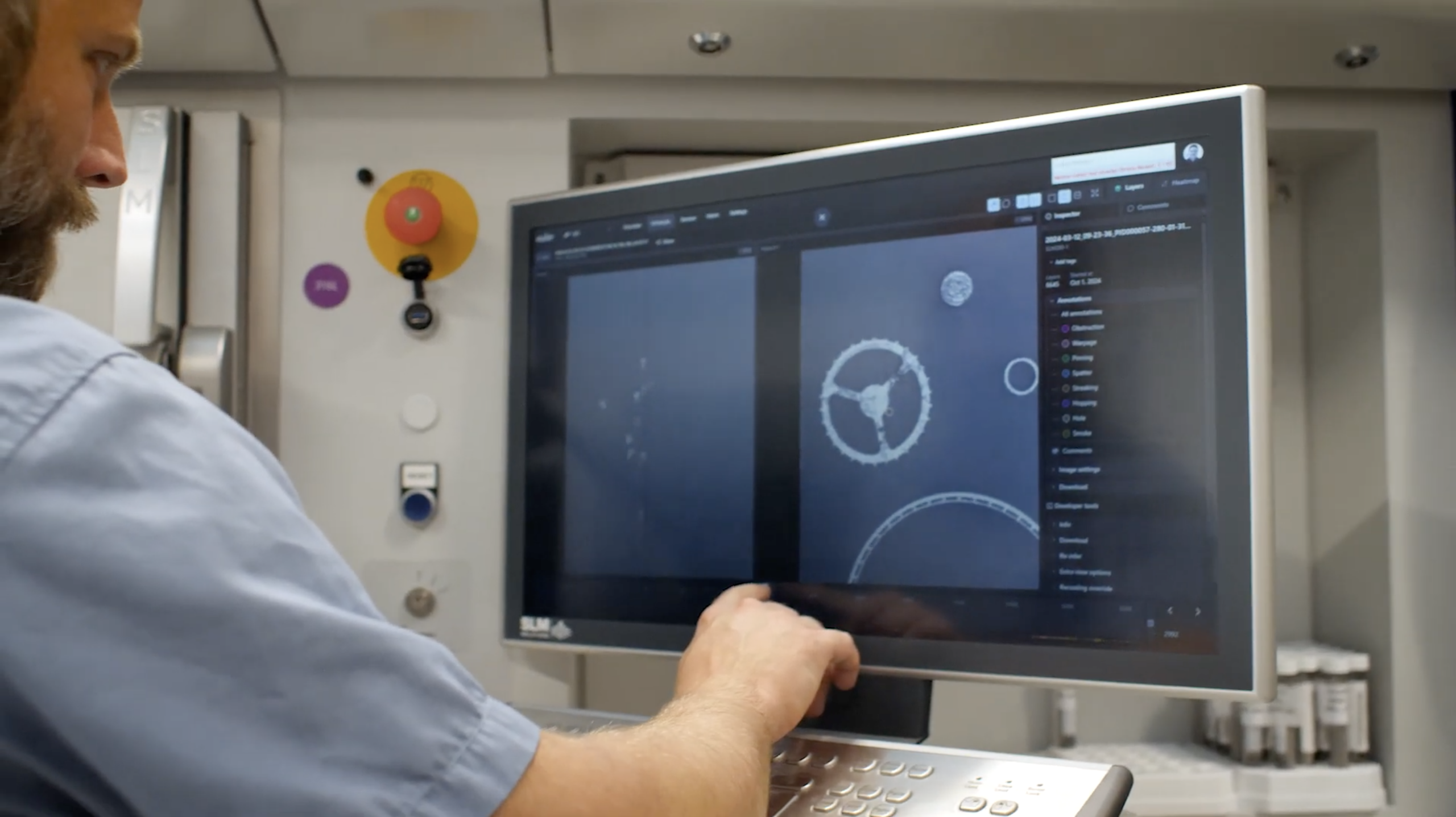
    Icelandic software startup Euler has released Euler Viewer, a real time build viewer for metal LPBF. The product does not need to be installed, and doesn’t require hardware to be attached to the machine. Instead, it takes the layer images your printer generates already and uses those. The Viewer is free of charge, and you can sign up to view your builds in real time here.

    The Viewer will eliminate a lot of window staring in the middle of the night. Now, you can analyze and view builds, flipping through them like a film. What’s more, the builds will be annotated, telling you where obstructions, warp, and spatter are to be found. The company hopes that you’ll like this free tool, and then pay them for their machine vision-powered platform that will automatically analyze builds and predict errors. It features “automated defect detection, predictive failure alerts, statistical process control, advanced visualisation tools, and automated build reports.”

    With better insight into what is going on and when it is happening, operators can spend less time watching images and more time studying patterns or focusing on those images that matter. Rather than idly thumb a book, you can flip through the pages to see movement come alive, or stop on that one page that really informs you. You can scroll through all your build images and link to specific moments, sharing the link with colleagues.

    The Viewer works inside the browser and does not need any additional software. You also don’t need to connect to the printer. You can just upload existing images. The software comes with SOC 2 Type II controls, and the company says that setup takes only a few minutes.

    Euler CEO Dr Eyþór Rúnar Eiríksson said,

     “We keep seeing the same pattern at AM facilities around the world; thousands of powder bed images captured during every build, and many are not being used. Not because operators don’t care, but because there has never been a simple, dedicated tool to access them. Euler Viewer is our response to that – we believe this is a tool the industry should have always had, and one that should be easily accessible to every operator. By making it free and purpose-built, we’re giving AM professionals a straightforward, secure way to actually view the data their machines already produce.”

    Artificial intelligence is probably one of the world’s most talked about topics at the moment. Beyond the future of cat pictures and deceptive websites however, there is a whole other field outside of just the small area of neural networks and LLMs. In machine learning, looking at patterns, finding new patterns, and identifying outliers is something that the software is especially good at. Computer vision, meanwhile, can be trained to clean up images and make them more readable, and easier to interpret and identify patterns. Whereas the OpenAI world is looking at using AI to do your work through copyright theft, the other more serious AI world is looking at designing systems that spot patterns. Rather than teaching your machine to copy, paste, and remix poems, this is teaching your machine to do something that it is good at. We need to focus more on this side of AI and less on the six-fingered cat picture side.

    In this case, that technology has led to Euler making a free tool that can be very powerful for operators. For university folks, super weird builds in super strange settings can be studied for free much more easily. For machine operators, differences in parameters, materials, and environmental factors can be more easily traced. For those responsible for operations, insight into machine problems and recurring issues can now be much more easily traced. For designers, design engineers, and product owners, issues with files and designs can be identified earlier. For everyone in the LPBF world, there will be less idle window watching and looking at a stack of images, and more scrolling through them. And there will be more time for interpretation where and when it matters. This seems like it could be a great tool for everyone to use daily.

  • Alloy Enterprises Is Being Acquired as AM Consolidation Continues

    Johnson Controls has agreed to acquire Alloy Enterprises in a deal expected to close in the third quarter of the year. The move brings Alloy’s advanced manufacturing and thermal management technology into a much larger industrial company, as additive manufacturing (AM) continues to be absorbed into established platforms.

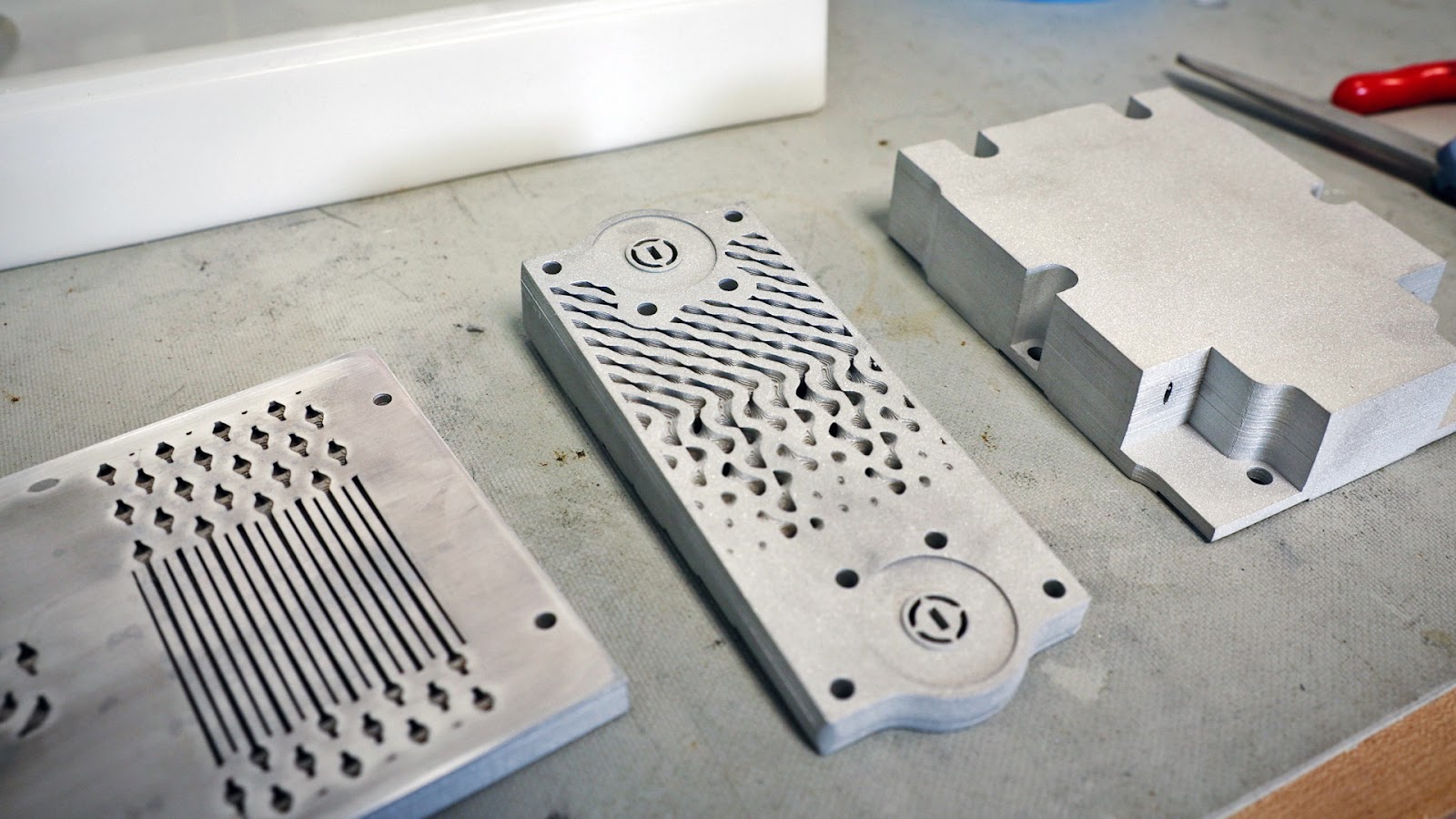
    For readers of 3DPrint.com, Alloy is not an unfamiliar name. We visited the company’s Boston-area headquarters in 2025, where the team spoke of a clear vision: use AM not just for prototyping, but to rethink how high-performance metal components, especially those tied to heat exchange and fluid flow, are designed and produced, with a particular focus on data center and high-performance computing applications. At its core, Alloy has built a process it calls Stack Forging, producing dense metal parts with complex internal channels, making it especially well suited for heat exchangers and fluid systems.

    Alloy’s Stack Forging process builds fully dense metal components with internal microfluidic features that would be impossible to machine or print with traditional methods. Image courtesy of Alloy Enterprises.

    At the time, what stood out was not just the technology itself, but the focus on applications that demanded both performance and scalability. Alloy wasn’t positioning itself as another service bureau or hardware play. Instead, it was building a vertically integrated approach to manufacturing complex metal parts, particularly in areas where traditional methods struggle, including tight internal geometries, thermal efficiency, and weight reduction, exactly the kinds of challenges found in modern data center cooling systems.

    That focus aligns with broader industry expectations. As noted in a recent Additive Manufacturing Research (AMR) report on data centers, additive manufacturing is expected to see significant growth in this segment through the next decade, with the market projected to expand at a strong pace through 2033, driven by the need for more efficient thermal management and increasingly complex system designs. That combination of design freedom and performance is what allows these parts to do more in less space, an increasingly important factor as data center cooling requirements grow.

    The company has developed its own proprietary metal AM approach, combining design, process development, and production under one roof to produce dense, high-performance components with complex internal channels. By keeping those capabilities in-house, Alloy has been able to move more quickly from concept to production, something that stood out during our visit.

    That helps explain the acquisition

    Johnson Controls, a global leader in heating, ventilation, and air conditioning (HVAC) and building technologies, is increasingly targeting data center cooling and AI infrastructure, one of the fastest-growing segments in industrial technology.

    Best of all, Alloy’s ability to produce highly optimized thermal components fits directly into that strategy. The company has focused on parts that improve heat exchange and fluid flow, exactly the kind of performance gains that matter in modern data centers. In particular, Alloy’s work on compact, high-efficiency heat exchangers and fluid systems positions it well for next-generation cooling architectures, where space, weight, and thermal performance are critical.

    Rather than developing those capabilities from the ground up, Johnson Controls is accelerating the process through acquisition. The move gives it immediate access to technology and expertise that would otherwise take years to develop internally. It also gives Johnson Controls a way into advanced manufacturing capabilities that are increasingly important as cooling systems become more complex and performance-driven.

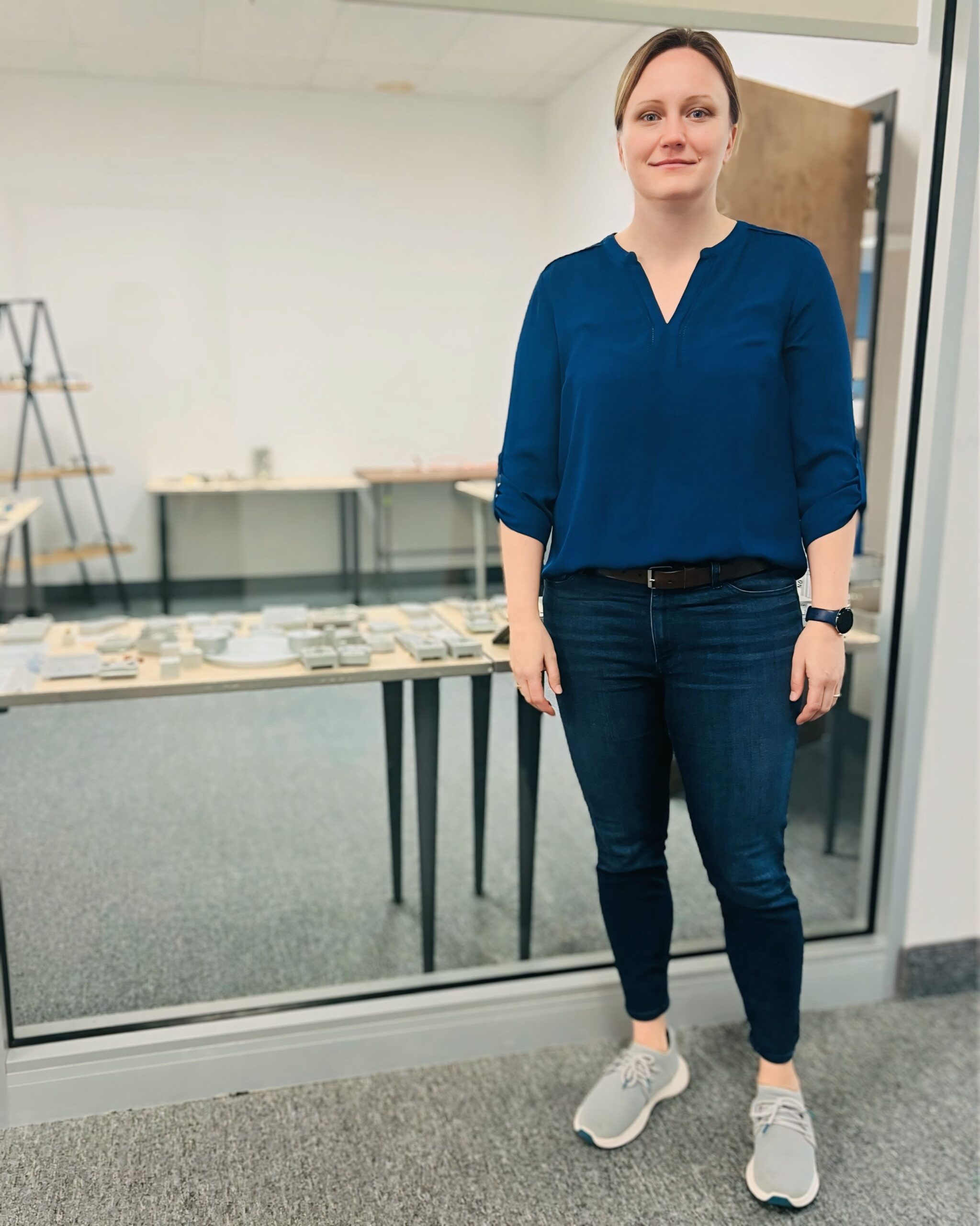
    Dave Tedder next to one of the machines at Alloy headquarers in Burlington, MA. Image courtesy of 3DPrint.com.

    This is part of a broader trend

    Across the AM industry, smaller companies are increasingly being picked up by larger players as the technology moves into real production. The focus is shifting from machines and materials to actual applications and performance. That’s where companies like Alloy, built around specific, high-value use cases, start to stand out.

    When we spoke with Alloy’s team on site, it already felt like the company was operating a bit differently from many of its peers. “We made small things very slowly to start, but with a foundation to scale,” CEO Dr. Ali Forsyth told us at the time. The focus wasn’t on showing what additive could do, but on solving real engineering problems at scale. That approach now seems to be paying off.

    Alloy Enterprises CEO Dr. Ali Forsyth. Image courtesy of 3DPrint.com.

    The deal hasn’t closed yet, and details on how that integration will take shape are still limited. However, once it happens, we’ll see Alloy moving from an independent company into a much larger industrial organization. This is part of a wider move in the additive manufacturing industry where growth is no longer just about new startups or new hardware, but about how these technologies are absorbed into larger manufacturing and infrastructure systems. In this new ecosystem, companies built around real, high-value applications that solve concrete problems are the ones being pulled in.

  • FDA Clears MedCAD’s 3D Printed Guides That Could Cut Surgery Time

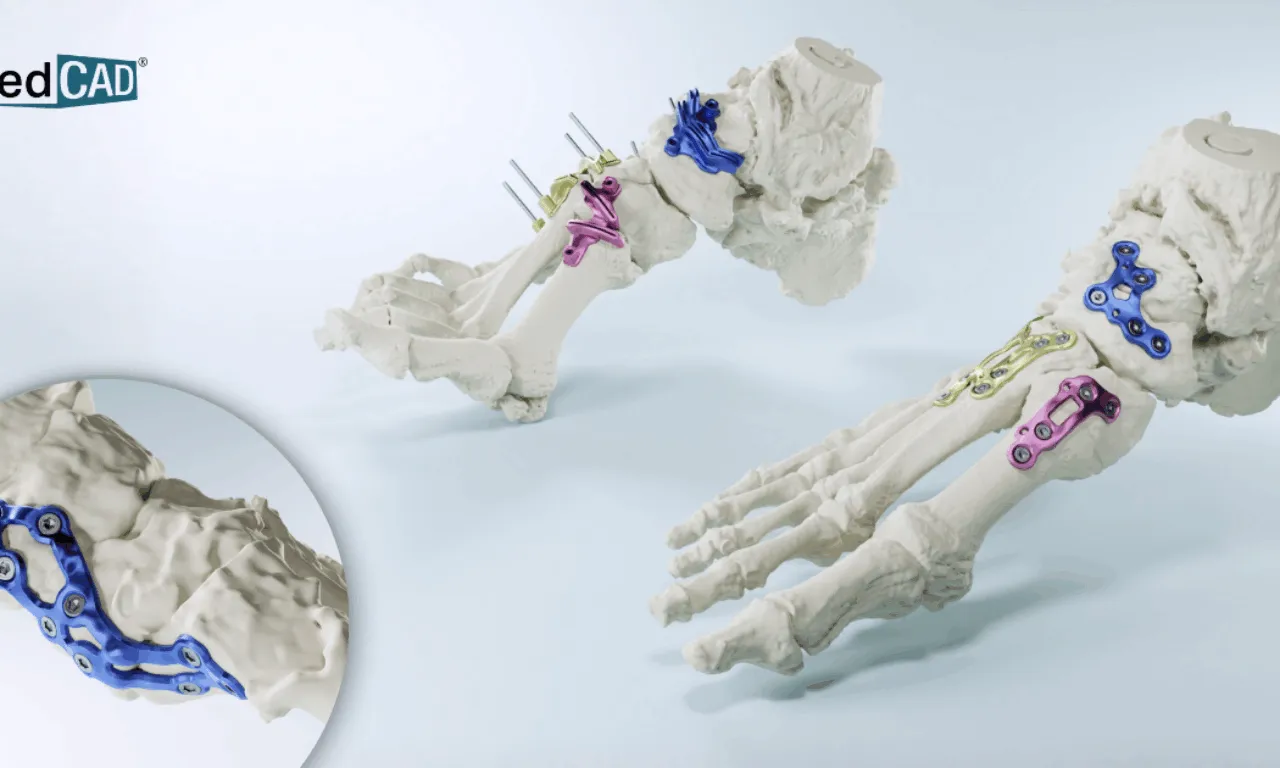
    MedCAD has gotten FDA 510(k) clearance for the AccuStride lower leg tibia and fibula system. The patient-specific surgical planning and surgical guide tool can speed up the orthopedic surgeon’s workflows. Previously, the firm had gotten clearances for its fixation plates and guides. Now the company can offer a complete solution from CT scans to 3D printed guides for feet and ankles, as well as for the tibia and fibula.

    MedCAD CEO Nancy Hairston explained,

    “MedCAD’s newly announced, patient-matched surgical guides are unlike anything else available for surgeons who routinely perform complex or revision lower leg region cases. Interest from leading orthopedic specialists eager to use our solutions for multiple pathologies is very promising, and we expect these custom 3D printed devices to reduce the frequency and duration of surgeries and deliver high-quality, durable outcomes. The goal of MedCAD’s portfolio of patient-matched product solutions is to provide surgeons with customizable options that are as anatomically unique as their patients. MedCAD has been building a strong reputation by putting cutting-edge planning technology into surgeons’ hands so they can deliver life-changing outcomes for the people they heal. With AccuStride, we recognized that when one part of a lower leg is experiencing problems, significant issues can show up in other areas as well, and with our advanced, holistic approach, the outcomes are unmatched, and the possibilities are virtually endless.”

    AccuStride. Image courtesy of MedCAD.

    The company also offers vat-polymerized anatomical models, and all their parts are made in Texas, reaching US-based customers in about 5 days. The guides themselves are LPBF titanium. Additionally, the company has solutions for CMF, trauma, and cranial implants. A complete lower extremity solution will offer the same workflow to a group of hardworking people looking to save time and simplify their working lives. If they can be helped with their precision and work faster, surgeons can gain real, tangible benefits from these kinds of products.

    We’ve seen Materialise really pioneer this market to great effect over the years. And the benefits can be enormous, not only in reducing errors but also, for example, in reducing surgeries by 3 hours. Depending on where you are, an Operating Room could cost $ 5,000 an hour. So, for the insurance system, hospitals, doctors, and patients, the payoff is immediate and real. The other things, fewer errors and more precision, are more difficult to measure, but just in saving time, this technology has a great ROI. More importantly, it offers a strong return on investment for all participants in the value chain.

    And of course, once a hospital system settles on your solution, they may continue to use it forever. Every surgeon could just use your planning tool and get your guides for every surgery that needs them. New surgeons will be trained on your system, and from their first real procedures, will be locked into your way of doing things. This kind of business could therefore not only save everyone a lot of money but also be a very sticky business for a very long time while doing so.

    What’s more, your software will be an important, repeatedly used, critical interface for surgeons. So if you had an automated segmentation tool for CT scans, you could add it to this tool and offer it for an extra fee. If you had a way to store MRI scans in the cloud and offer them to patients, you could add this to the tool as well. So it can become a focal point for the surgeon’s life, her main software tool day to day. And that is very powerful.

  • Our Industry’s Shipping Container Moment

    The additive manufacturing industry likes to think of itself as disruptive, fast-moving, and future-oriented. In many ways, that is true. The technology works. The machines are better than ever. The materials are more capable. And yet, despite all this progress, there is a persistent feeling that we are not quite where we should be. Not in scale. Not in impact.

    The question is not whether additive manufacturing can deliver value. It clearly can. The real question is why that value remains so hard to scale.

    Hardware innovation has been an important catalyst. On one end of the spectrum, we are seeing an explosion of affordable, high-quality printers that sit between hobbyist tools and full industrial systems. These machines have lowered the barrier to entry and enabled many companies to move from prototyping into small-series production. On the other end, industrial systems continue to grow in size, capability, and complexity, enabling the production of larger and more demanding parts. Access has improved, quality has improved, and production potential has expanded.

    But hardware alone will not get us where we need to go.

    Materialise CEO Brigitte de Vet-Veithen

    As the industry matures, the role of software becomes more visible — and more consequential. The additive manufacturing software landscape has grown organically, shaped by proprietary systems and vertically integrated solutions. That approach made sense in the early days, when the priority was to make individual technologies work. But as the industry matured, those same closed systems became a constraint. Data lives in silos. Workflows are stitched together manually. Engineers spend more time moving files between tools than improving processes. Scaling across machines, sites, or applications multiplies complexity instead of reducing it.

    To understand where this leads, it helps to look outside our own industry.

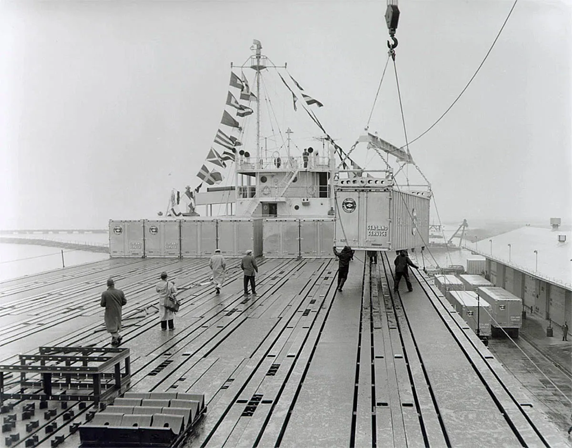
    In the middle of the 20th century, global shipping faced a similar problem. Ships, trains, trucks, and ports all worked, but they worked in isolation. Cargo had to be unpacked and repacked at every step. There was no shared system, no common language. Ports were slow, expensive bottlenecks. The breakthrough did not come from faster ships or bigger cranes, but from something deceptively simple: the standardized shipping container.

    What followed was not just standardization, but transformation. Once the industry spoke a shared “container language,” it suddenly made sense to invest in automation, tracking, route planning, and integrated logistics systems. Shipping evolved from fragmented local operations into a global, interconnected network. That change did not just optimize ports; it reshaped manufacturing, retail, and global trade itself.

    Additive manufacturing today looks a lot like shipping did back then. Powerful, but fragmented. A typical AM workflow relies on a patchwork of tools, each with its own data format and logic. The problem is not getting from design to part. The problem is making that journey repeatable, automated, and scalable across technologies and organizations. What we are missing is a way to move our “digital cargo” smoothly from one step to the next, without friction.

    This is why the industry’s next phase is not about individual tools, but about ecosystems.

    The first step is a shared language — much like the universal shipping container once provided a common language for global trade. Today, different companies often use different terms for the same concepts, slowing collaboration and integration. Initiatives like the Leading Minds consortium exist to address exactly this problem: reducing confusion, aligning terminology, and creating a common foundation on which the industry can build.

    But, as the shipping analogy shows, language alone is not enough.

    The second step is an open software ecosystem where tools, partners, and workflows can connect without forcing manufacturers to give up control over their data, processes, or intellectual property. This is the thinking behind platforms like CO-AM: not as a single solution that replaces everything else, but as a foundation for a connected manufacturing environment. By making automation accessible and allowing recurring processes to be configured without deep programming expertise, such platforms aim to remove the manual glue that currently holds AM workflows together.

    This brings us to the first call to action.

    If we truly want to scale the impact of additive manufacturing, we need to look beyond our own industry bubble. Too often, the conversation is dominated by machine builders, software developers, and service providers talking among themselves. What is missing are the industries we exist to serve. The real measure of success is not how elegant our internal ecosystems become, but how profoundly we can impact these industries. That requires active engagement, clearer storytelling, and a willingness to meet customers where they are.

    The second call to action is about the kind of ecosystem we choose to build.

    An open ecosystem is not always comfortable. Openness does not mean that every participant benefits equally at every moment, or that established business models remain untouched. In the short term, it can feel risky to give up control. But ecosystems do not scale through control; they scale through openness. Global logistics works not because one player dominates, but because many specialized players operate within a shared framework.

    Additive manufacturing now faces the same choice. We can continue to optimize locally, around individual machines, materials, or platforms. Or we can optimize globally, around the ecosystem as a whole. The first may protect short-term advantages for some. The second is what enables long-term growth for all.

    A rising tide lifts all boats. The real test is whether we are willing to build the conditions that allow that tide to rise.

    Brigitte de Vet-Veithen, CEO of Materialise, participated earlier this year at the Additive Manufacturing Strategies conference in New York City and spoke on this topic. 

  • Beehive Gets $29.7 Million Contract

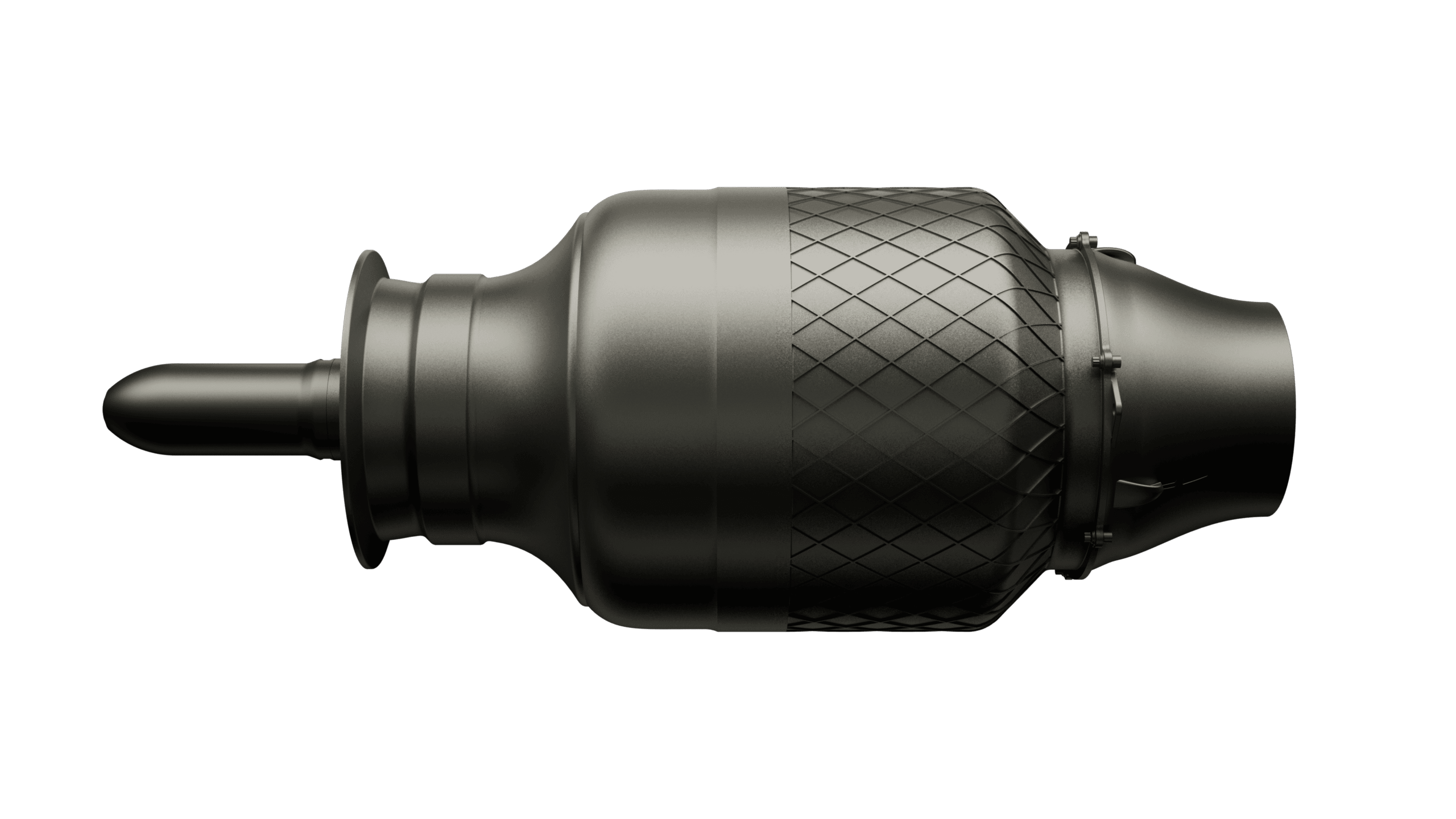
    The US military is pivoting from a world where it fields a few exquisite craft to one where it can manufacture swarms of vehicles. Additive manufacturing at scale, along with a new class of digital forges, is emerging to make this possible. Beehive has been eyeing this opportunity for a while. Now the firm has gotten a $29.7 million SOSSEC consortium contract to make lots of 200- and 125-lpf pound engines, the Frenzy 8 and Frenzy 6. A manufacturing surge is underway, turning billions into 3D printed devices.

    The company says it can make engines faster and at 60% lower cost with additive manufacturing than with conventional manufacturing. The production-ready engine family was developed across twelve months and is part of the Family of Affordable Mass Munitions (FAMM). The Pentagon’s initiative, from our family to yours, hopes to move from 100k missiles to more affordable drones and other craft. A budget priority only since 2026,  the FAMM hopes to lead to the “integration and flight demonstrations of affordable and highly manufacturable small turbine engines, seekers/sensors, networked datalinks, collaborative autonomy behaviors, and ordnance (warhead/fuse).” Essentially, this program is meant to plug the current gap in US capabilities. It is clear now that the US can not fight any war, and even brief conflicts exhaust or strain the current inventory. The FAMM and a bevy of other programs are not just idle future building, but a real need this day, this week. I could say that the future of the US’s defensive capability depends on FAMM, and it would sound melodramatic, but it would still be true.

    Frenzy Engine.

    A part of the work will advance the Frenzy 6 engine toward the development of a First Engine to Test (FETT). FETT is a milestone in advance of flight testing, going from full assembly to the Chicken Gun. This step demonstrates the engine as a working system. The Frenzy 8 is moving forward with “complete vehicle integration, flight testing, and qualification.” The key here is the Small Expendable Turbine (SET) concept, intended to power missiles, collaborative combat drones, and drones generally. Whereas FAMM targets a very immediate gap, SET more broadly addresses a broader US capability gap: a dearth of affordable microturbines. The smart use of additive manufacturing comes in when you not only make this easier to assemble and lighter, but also easier to produce at scale. At the same time, it’s easier to develop a family that can serve many platforms in one go. For too long, engine programs have been seen as decades-long, industry-landmark heirloom projects. Building the plane around the engine means building your entire Air Force around these three engines. A scalable family (and indeed a few companies making such families) of engines would let more platforms be made by more people more quickly. And these platforms wouldn’t have to be built around the engine but around the need.

    The Air Force Life Cycle Management Center (AFLCMC) and both the SET and FAMM programs are coming along at a very high speed.
    Gordie Follin, Chief Product Officer at Beehive Industries, said,

    “Beehive is honored to partner with the U.S. Air Force in redefining the speed of defense. By harnessing additive manufacturing to collapse complex supply chains into scalable, 3D-printed propulsion, we are providing the ‘affordable mass’ essential to modern deterrence. This collaboration ensures our warfighters willhave the high-volume, mission-ready capabilities they need to maintain a competitive edge in any theater.”

    Other companies associated with this and similar OTA’s are the Southwest Research Institute,  HII Mission Technologies, and Aerocorex. Decryptor has the best website ever, with just a plain text email and a logo of the site of this firm, while the only search results are SBIR awards and the like. The company is working on an automated way to protect airbases against drones. AerocoreX makes components for the B2, F-15, and the like. And this is the kind of stuff that SOSSEC can do, fast, concrete battlefield-centric problems and real capabilities. On their coattails, Beehive has really taken flight.

    Now, the company will have to scale operations and quickly manufacture working engines. If the company establishes itself as an engine provider for drones and wingman-like expendable aircraft, it could be pressed into service very quickly. A company development cycle that could take a decade is now taking months. This accelerated timeline will put a lot of pressure on the firm, but also offer it huge opportunities. There are precious few aero engine manufacturers worldwide. If Beehive could specialize in microturbines and develop a cost-effective, well-performing family of these engines, it could be sitting on a multi-billion-dollar opportunity in one of the fastest-growing segments of the defense market.

    Images courtesy of Beehive

  • How Decibel Landed the Brands Everyone Wants

    The first thing Adam Hecht will tell you is that 3D printing already has the technology. The harder part has been finding applications people actually want. That’s the gap Decibel Made is trying to fill.

    “At Decibel, we had this mindset: let’s make this mainstream. Let’s not keep it in the back lab as something untouchable. You always hear about applications in defense and aerospace, but they’re usually projects you can’t really see or talk about publicly. Instead, we wanted to bring this kind of work into design, build a community around it, and get people genuinely excited.”

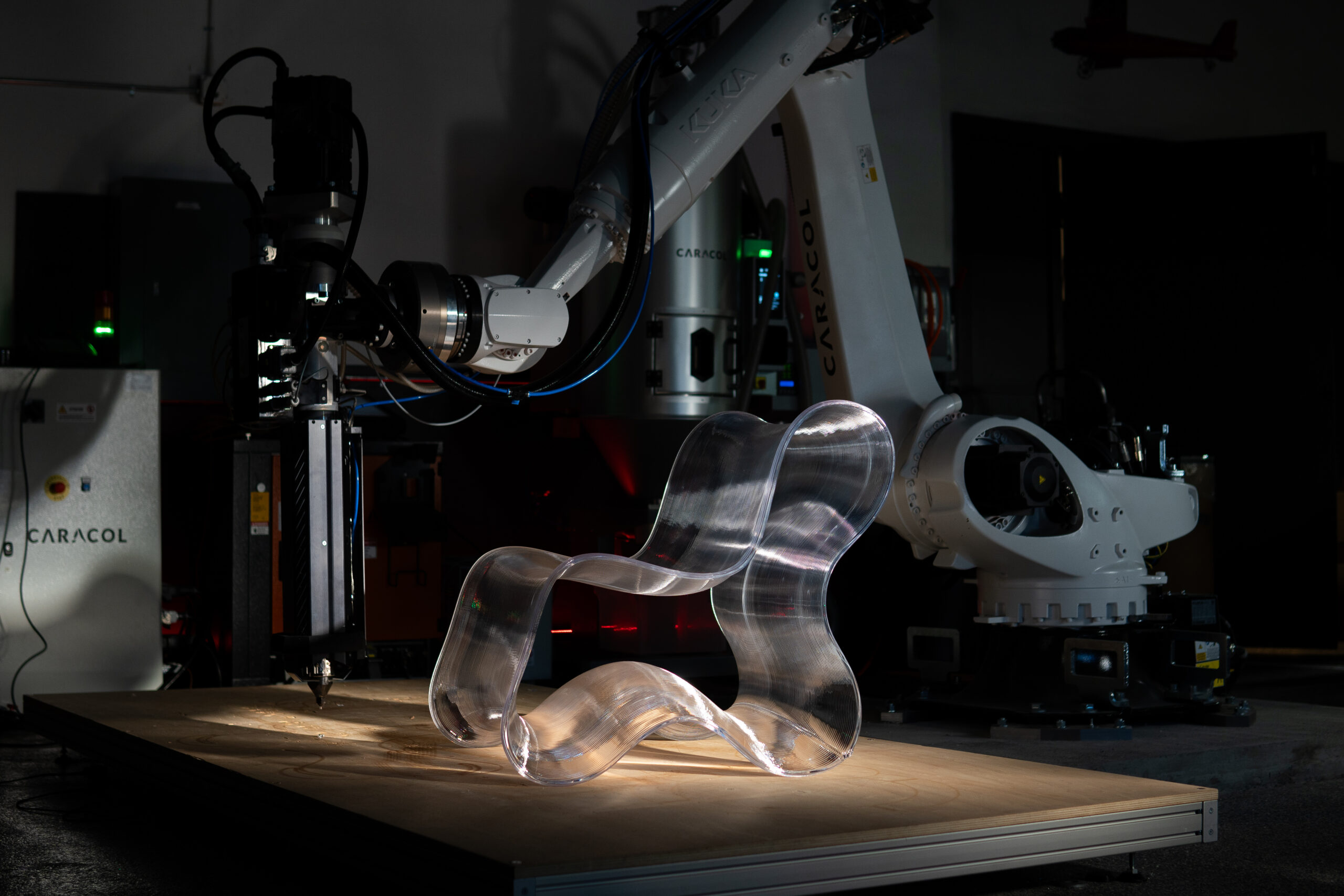
    The Cloud Chair. Image courtesy of Decibel Made.

    Decibel didn’t start as a furniture company. It traces back to DIVE, an earlier design studio working inside the 3D printing industry, helping materials companies, machine makers, and software platforms create applications they could actually show.

    “We realized all these companies had really cool technology,” Hecht said. “But a lot of people didn’t know about it, and the companies actually using it often couldn’t talk about it. It was all kind of top secret.”

    So Decibel stepped in as a “translator of sorts,” building projects that were meant to be visible.

    That approach eventually evolved into something bigger. And today, the company focuses on the “built environment,” as Hecht described, including retail installations, architectural elements, and large-scale furniture designed for public spaces.

    The Cloud Chair.

    The Early Break

    Before working with major retail brands, Decibel Made built its early visibility through a different kind of project.

    The team first gained attention through 3DPets, a brand focused on 3D printed prosthetics for animals, which showcased how the technology could be used in real, functional products. That work eventually led to a global campaign with Apple for the iPhone 14, where the project was featured at scale, helping bring broader visibility to the team’s work across its early brands.

    “That was the first big break, Hecht said. “From there, the focus shifted. Instead of working mainly with technology companies, we began applying that experience to more visible, design-driven projects.”

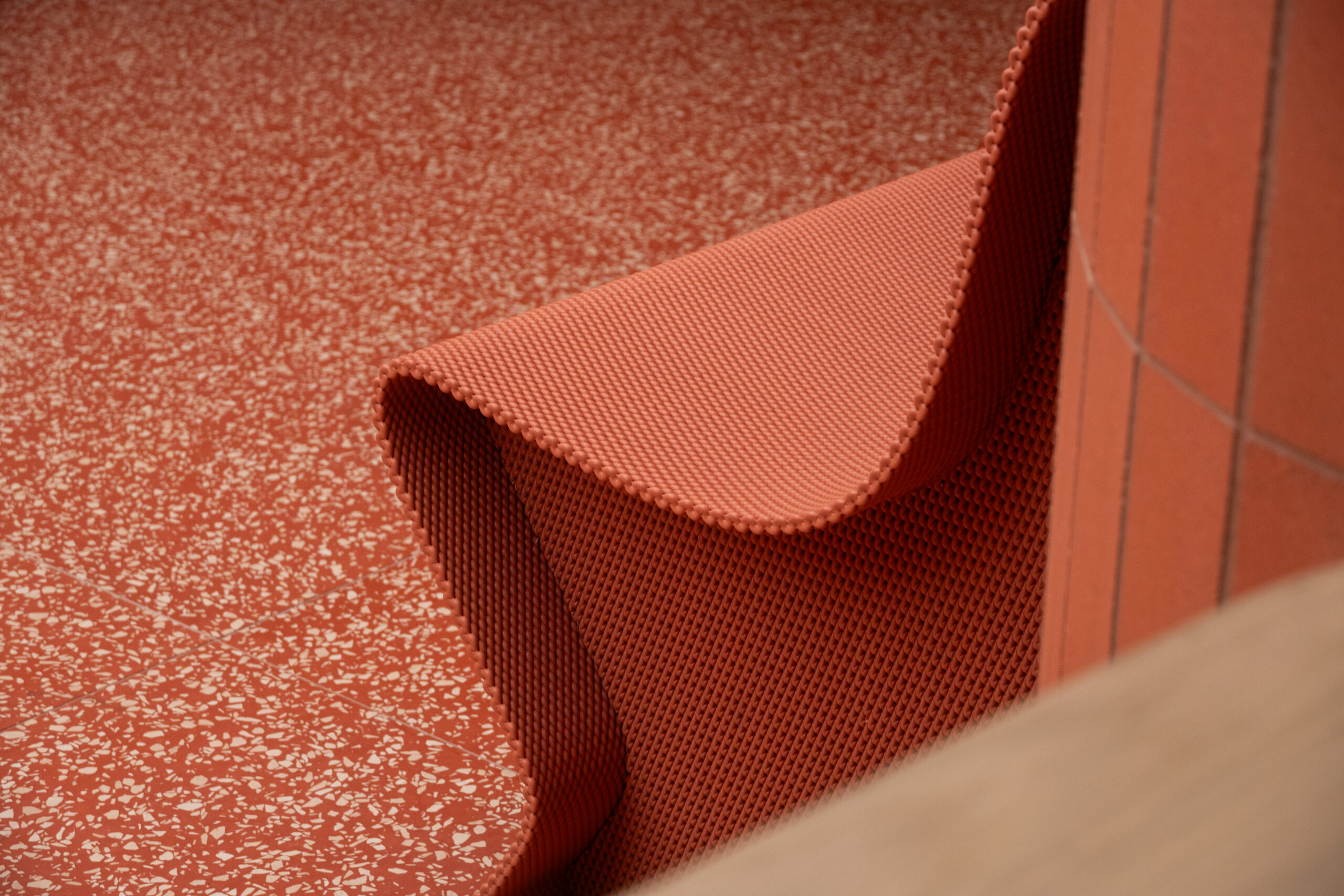
    That’s where projects like the 3D printed benches Decibel created for a Lululemon store in New York come in, not as the starting point, but as a sign that brands were starting to see how this could work for them.

    A 3D printed bench for Lululemon’s flagship store in NY, up close.

    “It showed brands this is something they could actually see in their stores,” he indicated. “Our company’s momentum had been building for some time, but this move showed brands that this could actually fit into their world. Since then, we have expanded into other retail environments, working with major fashion brands, and now moving into entertainment spaces.”

    https://www.linkedin.com/posts/3dprint-com_after-watching-caracol-am-present-at-endeavor-activity-7402491037690245121-kY6r?utm_source=share&utm_medium=member_desktop&rcm=ACoAAAJvbTMBHtNwXKodZzGdOV9PlNgk6Nzzbpg

    Is This a Real Business?

    The bigger question isn’t whether the technology works. It’s whether it holds up as a business, because for years, 3D printed furniture has often felt more like a showcase than a scalable business. The difference now, argues Hecht, is “intent.”

    “We’re not just giving brands access to the technology. We’re combining that with real design. And that combination matters. Many early examples of 3D printed furniture were driven by engineering constraints rather than usability or aesthetics. The result was often pieces that were technically impressive, but not something a brand would actually use,” he went on. “You’ve seen 3D printed chairs at every trade show, and usually they’re not comfortable. They’re not designed. Decibel’s approach flips that.”

    In fact, the company collaborates with experienced designers who are used to working on airports, large-scale interiors, and commercial spaces, and then adapts those ideas to what’s actually printable.

    And one of the biggest advantages of 3D printing isn’t just design freedom. It’s iteration.

    Traditional furniture making often requires expensive tooling before a final design is locked in. That makes it harder to refine things like comfort or structure. With 3D printing, the process is very different.

    “We’re delivering pre-production samples in the final material,” Hecht remarked. “Not foam models. Not approximations. That means each version is closer to the final product and easier to improve.”

    For large, custom projects, that iteration happens fast. Hecht told 3DPrint.com that Decibel can print a new version every day, refining and adjusting the design as it goes.

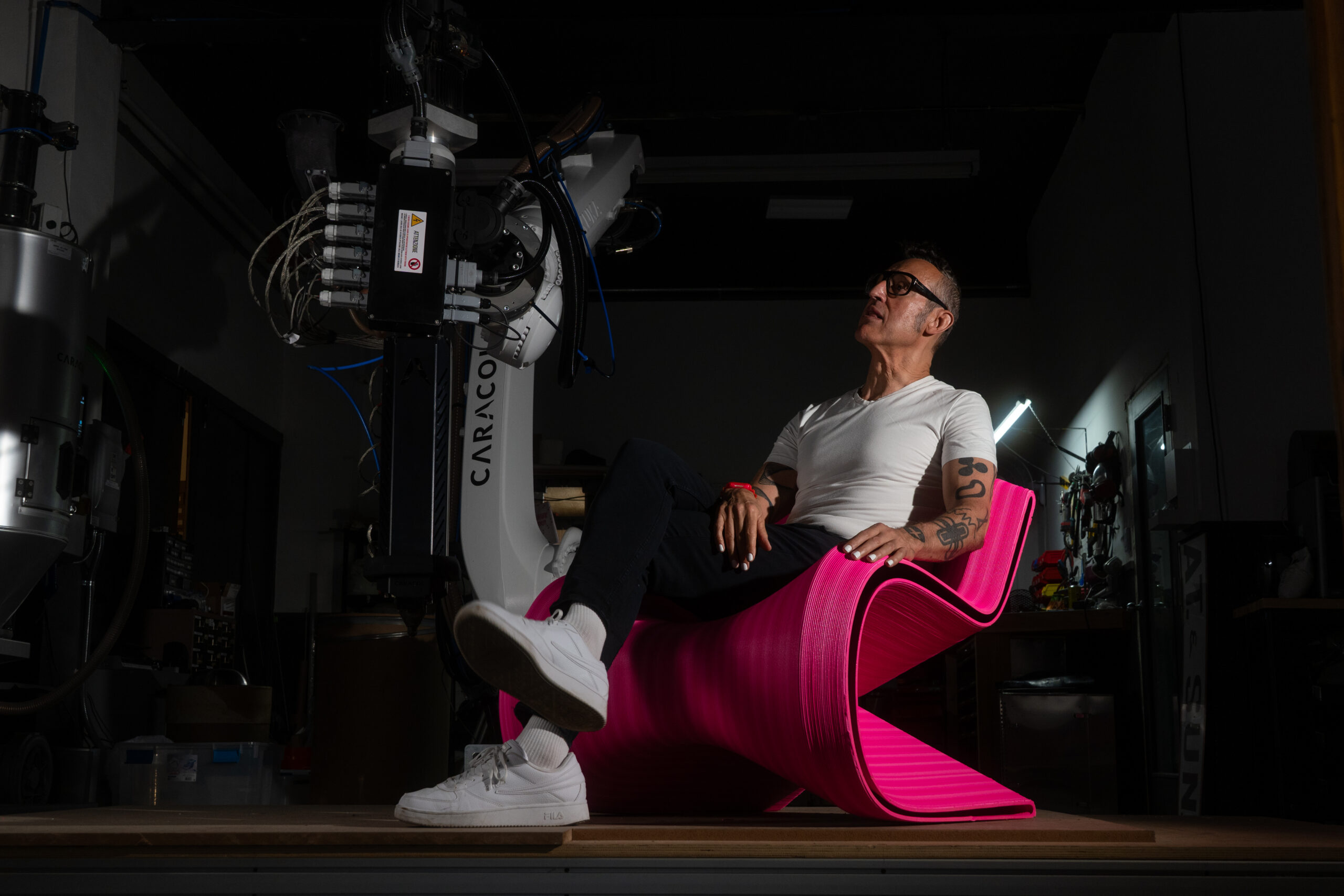
    Monark Karim Rashid at Decibel Made’s factory.

    The Real Bottleneck: Scale

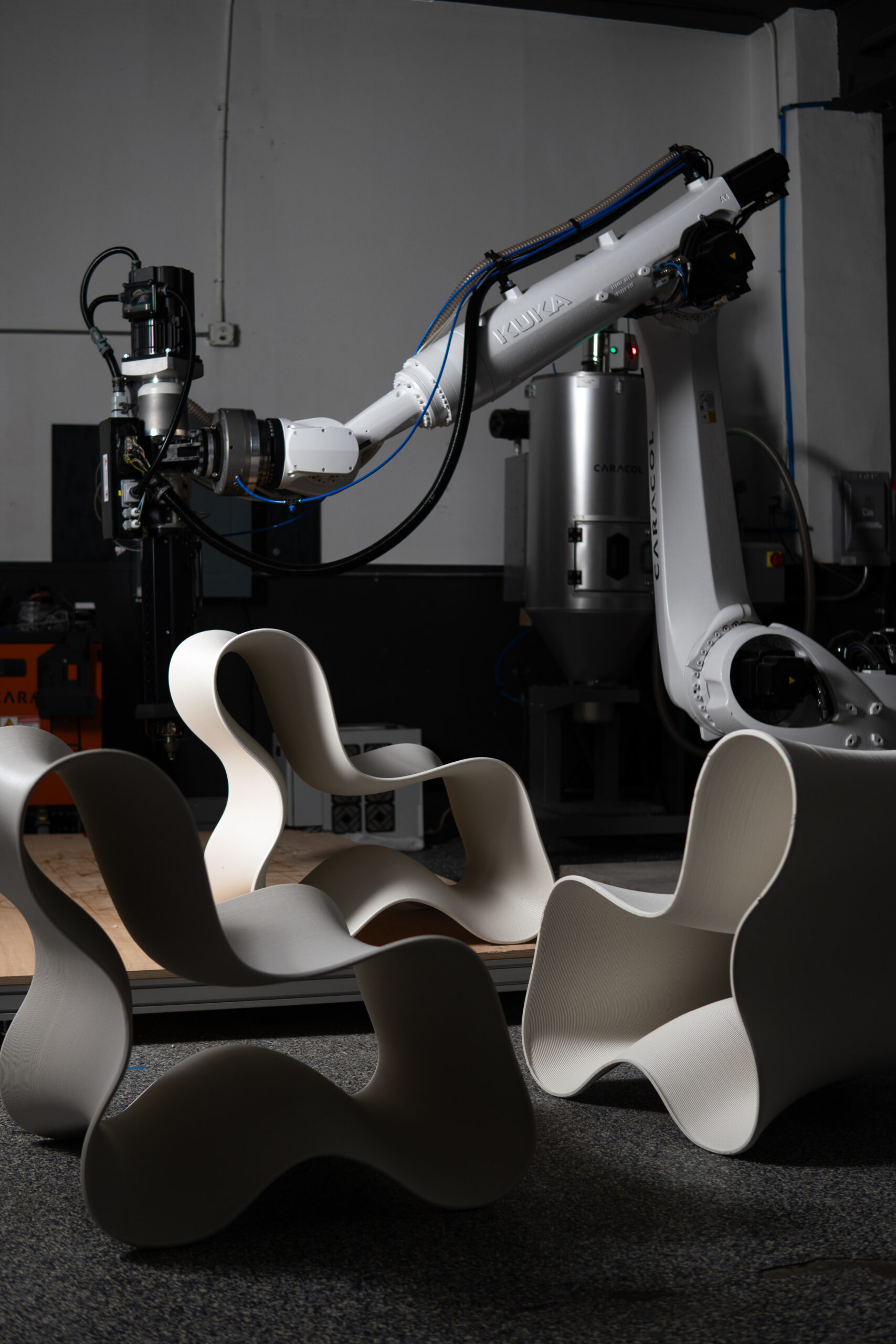
    If there’s one place where 3D printed furniture still struggles, it’s scale. Right now, Decibel is intentionally limiting itself. The company operates with a small number of systems, including a robotic large-format printer from Caracol, smaller pellet printers, and a traditional print farm. But that limitation is strategic.

    “We’d rather not have enough printers than have too many and not know what to do with them,” Hecht said. “Instead of building capacity first, we are focusing on demand, working on high-design, high-visibility projects that create interest before expanding production.”

    The Curva poolside chair.

    So is this furniture? Architecture? Manufacturing? Hecht tells me the answer is: all of the above.

    Hecht sees it this way: “It has to be a hybrid. Each project sits at the intersection of design, engineering, installation, and environment. It’s not just about making an object, it’s about how that object fits into a space, a brand, and a user experience.”

    That’s why the company sees its future not just in furniture, but also in broader categories such as retail infrastructure, interiors, and architectural elements.

    Chair collection at PORTAL Exhibit.

    What Still Needs to Change

    Even though things have improved, Hecht is clear that the space is still evolving. One of the biggest challenges is education.

    “A lot of companies come to us with designs for completely different processes. They assume 3D printing can just do anything, but it can’t. Like any manufacturing method, it has its own constraints, and designing for it requires a different mindset.”

    If Decibel’s approach works, 3D printing won’t replace traditional manufacturing. It will carve out its own category, one where speed, customization, and design flexibility matter more than mass production, and where the goal isn’t just to make something faster or cheaper, but to make something that wouldn’t exist otherwise.

    Decibel has already begun teasing one of its latest collaborations, sharing a preview on Instagram of a Coachella installation tied to Justin Bieber’s brand Skylrk.

    Images courtesy of Decibel Made

  • 3DPOD 298: Dental 3D Printing with Amir Mansouri, SprintRay

    Amir Mansouri started SprintRay to make an accurate Vat Polymerization system. Through conversations with customers, SprintRay became a $100 million revenue dental 3D printing company instead. Now, Mansouri tells us he is closer to making more products for dental than to expanding into other verticals. We delve into SprintRay’s success, talk about Nespresso cups, resins, dentures, and teeth.

    This episode of the 3DPOD is brought to you by Alexander Daniels Global, specialists in talent solutions for the additive manufacturing and advanced engineering sectors. From the production line to the C-suite, ADG delivers confidential hiring, supports rapid scale-up phases, and secures critical leadership appointments, helping industry 4.0 businesses build teams that need to perform, innovate, and lead.


  • Harvard Engineering Students 3D Print VTOL Drone to Improve Marine Biology Research

    With all the current focus on the boom in drones used for national security, it’s easy to forget that the civilian drone market is growing, too. In addition to the struggling but persistent attempt by logistics giants to scale drone delivery services, drones have also revolutionized photography and videography and have become fixtures in the workflow of infrastructure inspection operations.

    They’re also increasingly used for environmental monitoring, an application that certainly has great opportunity for growth in an era of mounting ecological crises. The same factors that have given additive manufacturing (AM) life in the defense sector are also driving its heightened relevance to the production of drones for all other applications. That explains how two Harvard students graduating this spring were able to create a Vertical Take-Off and Landing (VTOL) drone concept that has the potential to improve upon existing methods for tracking sperm whale populations.

    The two students, Kuma McCraw and Mikaya Parente, both mechanical engineering majors, explained the rationale behind the project in an interview for the Harvard John A. Paulson School of Engineering and Applied Sciences (SEAS):

    “Our project addressed the difficulty of accurately locating sperm whales tagged with VHF transmitters,” they said. “Unlike GPS-enabled systems, these tags only provide signal strength, meaning researchers must collect measurements from multiple positions to estimate a whale’s location. Current solutions rely on quadcopter drones, which are limited by short flight times, low energy efficiency, and suboptimal antenna configurations. These limitations reduce the amount of area that can be surveyed and make it difficult to maintain sufficient antenna separation for accurate signal triangulation.”

    According to McCraw and Parente, they first got the idea for the project in 2025, when they collaborated on a quadcopter for the annual MakeHarvard hardware design competition. That gave them their introductory experience in making drones with 3D printers, which they were inspired to take to the next level in their senior project.

    Quadcopters are generally cheaper and easier to use than VTOLs, but, as McCraw and Parente note, they’re meant to fly for short periods of time — about 15-30 minutes — whereas VTOLs can achieve long-range flights lasting 1-6 hours. After a month of planning out the project, over a period of around five months, they used 3D printing and other manufacturing techniques, including hot-wire foam cutting, to rapidly iterate towards a final design. Then, they engaged in live flight testing and CFD simulations for final refinement of the concept.

    Ultimately, in well under a year, the two undergrads taught themselves how to design and build a working long-range drone concept that, in a real-world setting, could outperform typical data-collecting methods.

    As I’ve repeatedly written about over the last year, there is a major investment cycle happening right now supporting the manufacturing R&D capabilities available at US universities. This story isn’t even the product of that trajectory, but it perfectly exemplifies why the US manufacturing R&D landscape is such a worthwhile recipient of investment dollars.

    McCraw and Parente haven’t even launched a business based on their idea, and they may have no intention to do so. But what they did for their senior project had all the elements of the necessary steps on the path to starting a successful business, and there are plenty of cases of 3D printing leading to successful enterprises born in university startup accelerators.

    AM, of course, isn’t the only piece of the puzzle in those success stories, but anyone would have to agree that cheaper manufacturing processes that students can teach themselves are making it easier than ever, at least in a technical sense, to start a hardware business. Like I’ve mentioned before on this topic, I think that the most logical future for US education lies in giving students as many tools as possible to nurture their entrepreneurial creativity.

    One of the few positive angles to the current state of affairs, in which all societal norms and institutions seem to be being leveled simultaneously, is that a space could be opening up to rethink how we do things like higher education. Younger generations are coming up with the kinds of ideas that their elders have been too complacent to see or allow. That should be given all the encouragement in the world.

    Images courtesy of Harvard SEAS

  • 3D Printing News Briefs, April 11, 2026: Energy Targets, DoW Contracts, Nike Air Max, & More

    We’re starting with 3D printing for energy applications in this weekend’s 3D Printing News Briefs, and then moving on to military and defense 3D printing. Finally, Nike Sportswear is focusing on the future of Air Max with the help of designers in its new Air Works Program.

    Multiple Nanoscribe Quantum X Orders for IFE Target Fabrication

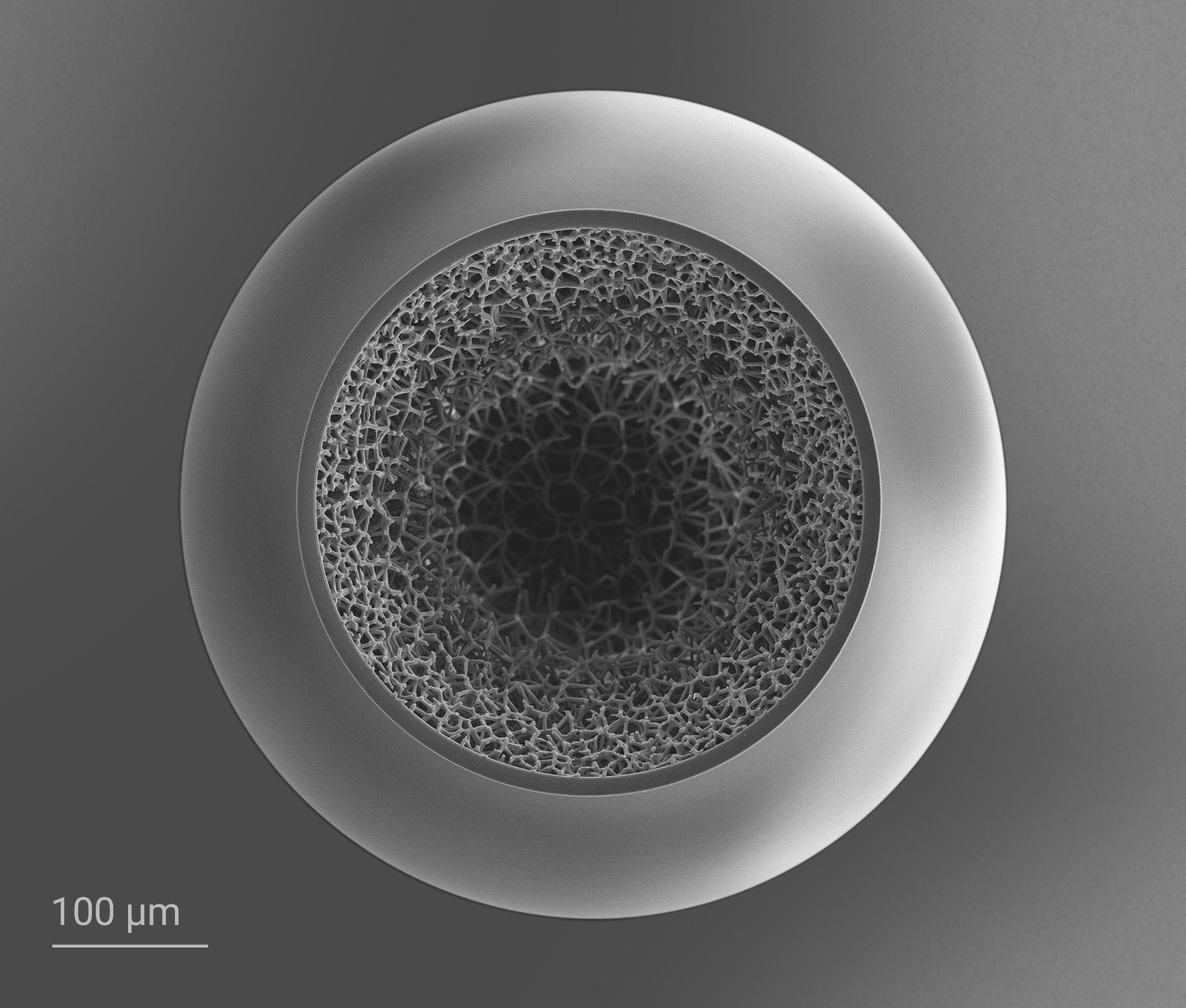
    Voronoi gradient density foam enclosed by a solid outer shell with a diameter of 550 µm. This inertial confinement fusion target was printed using Nanoscribe Quantum X shape.

    3D microfabrication company Nanoscribe announced that in Q1 2026, it had secured several orders for its Quantum X two-photon polymerization (2PP) 3D printing system. The orders are for three international organizations in North America and Asia at the forefront of Inertial Fusion Energy (IFE), and they will use the Quantum X systems to print IFE targets. IFE is regarded by many as a pathway with a lot of promise for clean energy in abundance, but a necessity of the process is fabricating complex targets with high precision, and at increasing scale, all the way from early research to operational power plant volumes. Nanoscribe’s technology, centered around its patented Two-Photon Grayscale Lithography (2GL) technique, can help achieve this by pairing scalable throughput and sub-micrometer accuracy. The company says its 2GL offers more than 4,000 gray levels, which enables ultra-smooth surfaces with nanometer-scale roughness—perfect for rapid printing of highly filigree struts in the interior of the IFE target shells.

    “The strong market demand for our Quantum X systems in the field of IFE target manufacturing underscores the rapid technological advances we have achieved. Since our founding in 2007, print rates have increased by a factor of 1.9 per year, equivalent to an improvement of five orders of magnitude,” said Martin Hermatschweiler, Nanoscribe CEO and Co-Founder. “We are committed to driving 2PP throughput along this trajectory in the years ahead. We are leading 2PP into its most transformative era, laying the groundwork for IFE-based power plants expected to go online commercially in the mid-2040s.”

    Stratasys Direct Chosen for DLA’s Multi-Million Additive Manufacturing Program


    Stratasys is a Program of Record for the U.S. Air Force and Naval Air Systems Command (NAVAIR), and has been continuing to grow its role in offering advanced manufacturing services in aerospace and defense production environments. As demand for AM in defense applications continues to rise, the company announced that Stratasys Direct, its parts-on-demand contract manufacturing division, was chosen to participate in the Defense Logistics Agency (DLA) Joint Additive Manufacturing Acceptability (JAMA) IV Pilot Parts Program. The multimillion-dollar initiative is meant to speed up qualification and deployment of 3D printed parts across military systems and platforms, something in which Stratasys Direct has plenty of experience. For example, the U.S. Air Force already uses Stratasys technology to print microvanes for its C-17 fleet, which have helped improve aerodynamic efficiency and save roughly $14 million in annual fuel costs

    “In 2025, Stratasys saw double-digit annual revenue growth from aerospace and defense, demonstrating that additive manufacturing is becoming a key capability for defense sustainment and supply chain resilience. Stratasys Direct already ships over 100,000 parts annually to the defense industry, and programs like JAMA will accelerate qualification of parts so organizations can deploy them faster across operational platforms,” said Foster Ferguson, Vice President, Industrial Business Unit, Stratasys.

    “Through Stratasys Direct, we combine Stratasys technology with production-scale additive manufacturing services and deep engineering expertise to help defense organizations validate and produce components that keep mission-critical systems operational.”

    Velo3D Also Awarded DLA Contract for Additive Manufacturing Program

    Velo3D Sapphire 3D printer. Image courtesy of Velo3D.

    Another AM company working with the DLA on its JAMA Pilot Parts Program is Velo3D, which recently received a $9.8 million, five-year Indefinite Delivery Indefinite Quantity (IDIQ) contract supporting the initiative. The contract with Velo3D sets up an acquisition pathway for DLA to acquire qualified 3D printed parts to support readiness requirements across multiple branches of the U.S. military. Per the award, Velo3D will use its Rapid Production Solution (RPS) framework and industrial-scale metal laser powder bed fusion (LPBF) technology to print components that often face diminished manufacturing sources, long lead times, and limited availability from domestic suppliers. The company’s RPS integrates application engineering expertise, distributed production capacity, and its advanced Sapphire printers, all of which are assembled in the U.S.

    “Additive manufacturing provides the Department of War with a powerful tool to improve supply chain responsiveness and reduce sustainment risk. Through this contract, Velo3D worldclass technology is supporting DLA’s efforts to expand qualified additive manufacturing capacity and transition advanced manufacturing technologies into operational sustainment environments,” said Dr. Arun Jeldi, CEO of Velo3D.

    AML3D’s ARCEMY X Commissioned and Installed at FasTech

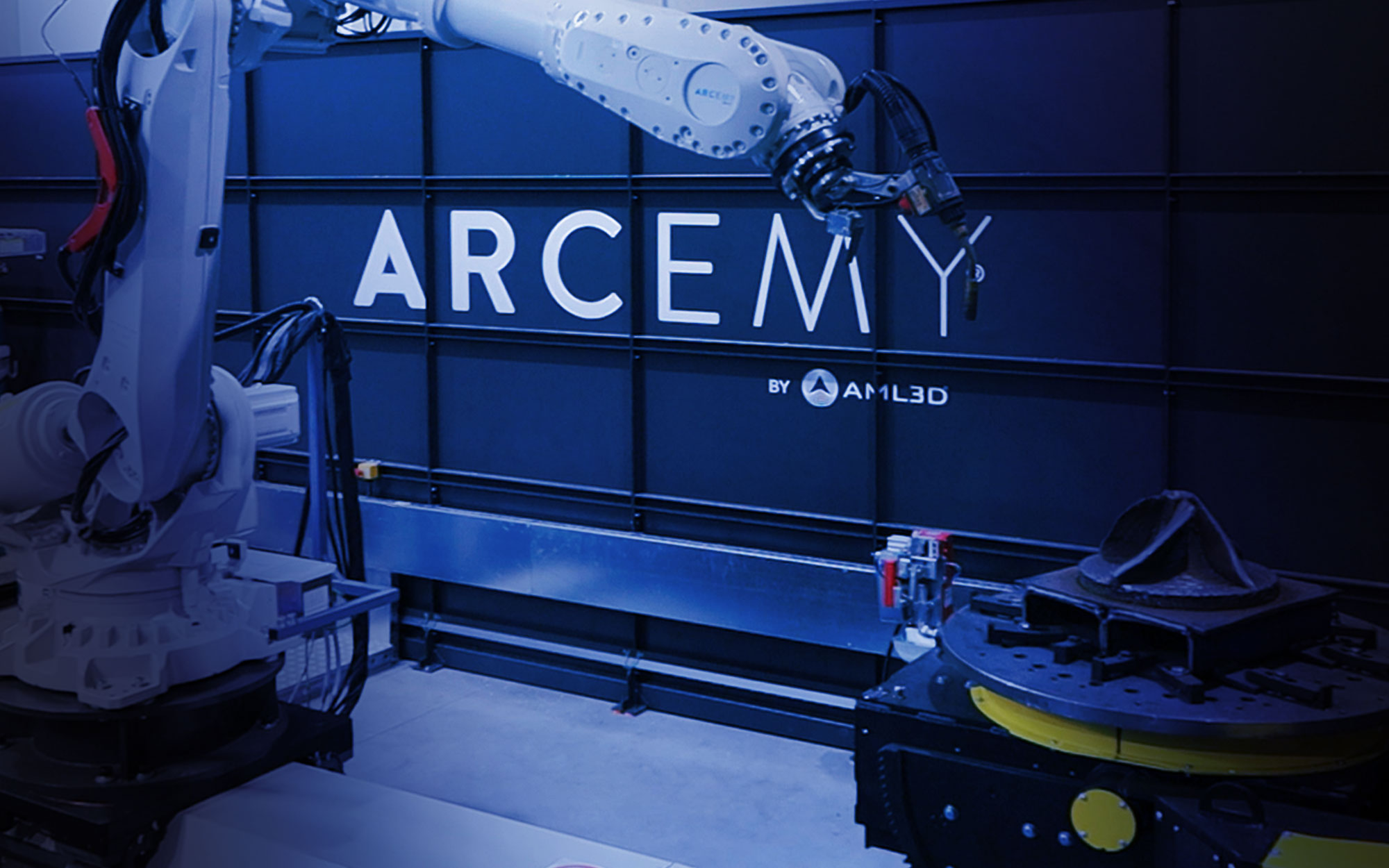
    Late last year, aerospace and defense, energy, and industry supplier FasTech LLC placed a $1.7 million order with AML3D for its large-scale ARCEMY X 6700 system. The Wire Additive Manufacturing (WAM) printer was recently installed and commissioned on time at FasTech, and is fully operational, thus completing the order. The large-scale system will help FasTech, located near the U.S. Navy’s Additive Manufacturing Center of Excellence (AMCOE) in Danville, Virginia, enhance its metal AM capabilities, and also boost AML3D’s U.S. defense profile. The ARCEMY X 6700 was supplied to FasTech from AML3D’s U.S. Technology Centre in Stow, Ohio, where the company is working to double its manufacturing capacity to meet the continued demand from the country’s defense sector, and emerging demand in industrial manufacturing.

    “AML3D is seeing US demand for ARCEMY® systems that deliver high quality parts and components with significantly shorter lead times, using less energy and creating less waste continue to grow. Delivery of the FasTech ARCEMY® X order further demonstrates application of AML3D’s industrial metal 3D printing technology to solve for manufacturing and supply chain challenges beyond Defence and into new industrial manufacturing sectors. The FasTech order follows our entry into the US energy and utilities sector with a custom ARCEMY® X coming online at the Tennessee Valley Authority, the 6th largest energy supplier and largest public utility in the US, last August,” said AML3D’s CEO Sean Ebert.

    “The completion of the FasTech order enhances AML3D’s position as an indispensable industrial manufacturing solution in the US market. To ensure we continue to meet the strong and growing Defence and industrial demand for our advanced manufacturing technology we are currently executing on our plans to invest A$12 million to double capacity at our manufacturing and technology centre in Stow, Ohio.”

    Nike Welcomes Designers to Join Air Works & Create the Future of Air Max

    Nike Sportswear is launching its inaugural Air Works R&D and design program, welcoming eight individual designers from Beijing, Los Angeles, London, New York, Mumbai, Shanghai, Paris, and Tokyo to its Beaverton, Oregon headquarters next month to make sure that the future of Air Max is designed by the people who wear it. From May 11-14, these designers will work alongside Nike engineers and designers to come up with new, distinctive 3D printed Air Max styles that reflect their communities and individuality. These shoes, created in partnership with Zellerfeld, will build upon the brand’s 40-year heritage of Air innovation, and make sure the shoe has a place in the future. During the process, the Air Works designers will work with their Nike mentors and visit places like Blue Ribbon Studio, Nike’s Air Manufacturing Innovation facility, the Department of Nike Archives, the Nike Sport Research Lab, and the Bowerman Footwear Lab. Finally, each designer will get to launch a limited-run version of their shoe style, which will be celebrated in their communities all the way to Air Max Day 2027.

    “Air Works is about celebrating the cultural impact of Air Max and inviting a core group of global creatives to imagine what its future could look like. It’s also a chance to deliver a deep dive in Air Max history, innovation and inspiration, and to unite outside perspectives with Nike-only tools, talent and capabilities to redefine what Air Max means to this generation,” said Andy Caine, VP, Creative Director, Nike Sportswear.