• AM & the Military’s Self-Infliction of Rapid Change

    I’ve noted before that the additive manufacturing (AM) market for defense has started to evolve so quickly that it’s impossible to even keep track of all the updates in real time. That was at least two wars ago; how much truer that observation is today, with the Iran War remaining wholly unfinished despite all the attempts of the US administration to pretend it’s no longer taking place.

    As irresponsible as that attitude is, it’s certainly understandable: the natural impulse when faced with things that are both this unpleasant to think about and this much of a challenge to get a handle on is to simply ignore those things and move on to more enjoyable matters. On the other hand, the defense market is too integral to the fate of too much — including the fate of the AM industry — for one to be able to afford to lose the thread of current events for very long.

    With that in mind, now may be a good time to step back and consider if there is a general picture emerging from all the seemingly disparate elements contained in months’ worth of daily news, press releases, and government funding announcements. Perhaps if we can identify some of the broadest themes, the constant onslaught of new information will become less overwhelming.

    Containerization is Real

    Containerized AM platforms are becoming a real thing, or they’re trying to, at least. The San Diego startup Firestorm Labs is solid evidence of this, as the company just closed an $82 million Series B round, and, just as importantly, the company got $30 million from the Pentagon, as part of something called the Accelerate the Procurement and Fielding of Innovation Technologies (APFIT) program. The contract could end up being worth as much as $50 million, and, among other things, involves the delivery of five of the company’s xCell manufacturing units to “an undisclosed customer in the Indo-Pacific region.”

    Is that customer one of the US bases in the Indo-Pacific Command (INDOPACOM)? Could it even be one of the US military’s allies in the region, like the Philippines military? The latter just tested manufacturing at the edge in joint exercises with Western armed forces, and the results suggest significant potential to both save money and speed up deliveries.

    Speaking of manufacturing at the edge, that’s one of the main topics of a webinar on drones, “UAS Additive Strategies”, that 3DPrint.com and AM Research are presenting on June 30, between 11:00 AM and 2:30 PM Eastern. Cheaper drones are probably the primary factor behind the increasing interest in making containerized factories a dependable reality — that’s what Firestorm Labs, for instance, is largely focused on — but they’re not the only factor.

    Both low-cost drones and containerized systems, in fact, are symptoms of the same overarching theme, which is adaptability. Recognition that the US military desperately needs greater adaptability is the principal catalyst for all the other changes involved in the overlap between AM and the defense sector.

    If you can obtain a “good enough” weapons system at a fraction of the cost of some idealized “perfect” weapons system, you can reduce the likelihood that you’ll hamstring your ability to respond to some future blindspot by overcommitting to what’s currently on the market: that’s the lesson the US military’s enemies are teaching it, presently. And one solution that could ultimately provide the ability to respond to as many different unforeseen threats as possible, down the road, is distributed manufacturing: that’s the lesson Pentagon planners are learning, which is pushing them in the direction of containerized factories that support expeditionary production capabilities.
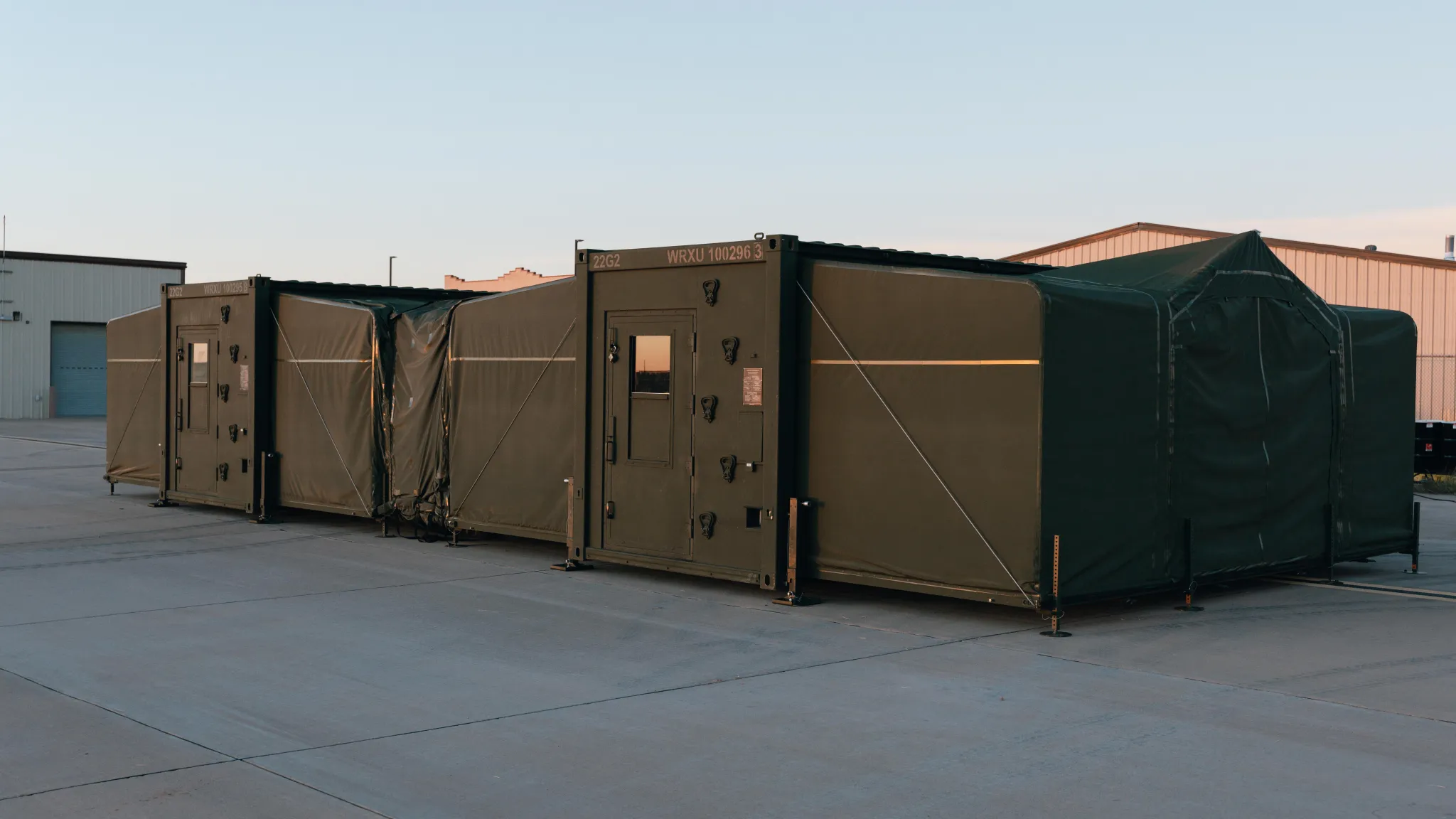
    Image courtesy of Firestorm Labs

    Tension Persists Between the US Government and the Defense Giants

    That issue of adaptability extends beyond adopting new manufacturing processes. It also involves a shifting dynamic between the suppliers that traditionally comprise the US defense sector, and the DoD, which butters those suppliers’ bread.

    Last year, the US Army Secretary, Dan Driscoll, along with multiple other DoD officials, started intensifying the rhetoric surrounding plans to let the US military supply its own replacement parts with 3D printing. In September 2025, Driscoll reportedly told “a media roundtable“,

    “[We’re] empowering our generals to take on that risk where we have the right to repair so that they can make these very small parts to get things back on and get them back into the hands of our soldiers. I think you’re going to think that these are kind of one-off instances. I don’t know the exact number, but my commitment to you is, or my best guess is, that this is a meaningful step forward.”

    A couple of months later, Driscoll would go so far as to say that, ““The defense industrial base broadly, and the primes in particular, conned the American people and the Pentagon and the Army into thinking that it needed military specific solutions, when in reality, a lot of these commercial solutions are equal to or better, and we’ve actually harmed ourselves with that mentality.”

    Driscoll framed the objective that he’s trying to work towards like this:

    “It used to be 90 percent of things we bought were purpose-built for the military or the Army, and 10 percent were off the shelf. ..what we are trying to do is flip it to 90 percent being commercially available and 10 percent being specific in the worst of cases, because when you actually start to think about what large-scale conflict looks like, you cannot scale one-off solutions as quickly and easily as you can scale commercially available things” (Emphasis added.)

    It can’t be stressed highly enough that the Pentagon is framing all of these issues in terms of what the US military will require in a large-scale conflict. What’s happening in Iran may qualify as the sort of scenario the Pentagon was thinking of. But you should also consider the subtext that the entire global elite surely has in mind, which the foreign minister of Singapore, for one, voiced when he said in late April that the Strait of Hormuz conflict is merely “a dry run” for war between the US and China.

    That is precisely how seriously Pentagon decision-makers are treating the need to accelerate the US military’s AM adoption, as illustrated by Driscoll’s recent remarks that he plans to partner “with nontraditional entities like academia” to develop the IP for replacement parts from scratch, which can then be leased or purchased by the Army. This sort of solution would address exactly the problem Driscoll has been criticizing re: the US military’s inability to repair its own parts, cheaply, in live combat conditions.

    Most pressingly, Driscoll wants to produce interceptors because that’s the challenge that Iran has brought to the surface most acutely. But obviously, once the precedent is set, the dynamic could apply to just about anything that the US military can figure out how to print. The handful of largest primes can only view this as a threat.
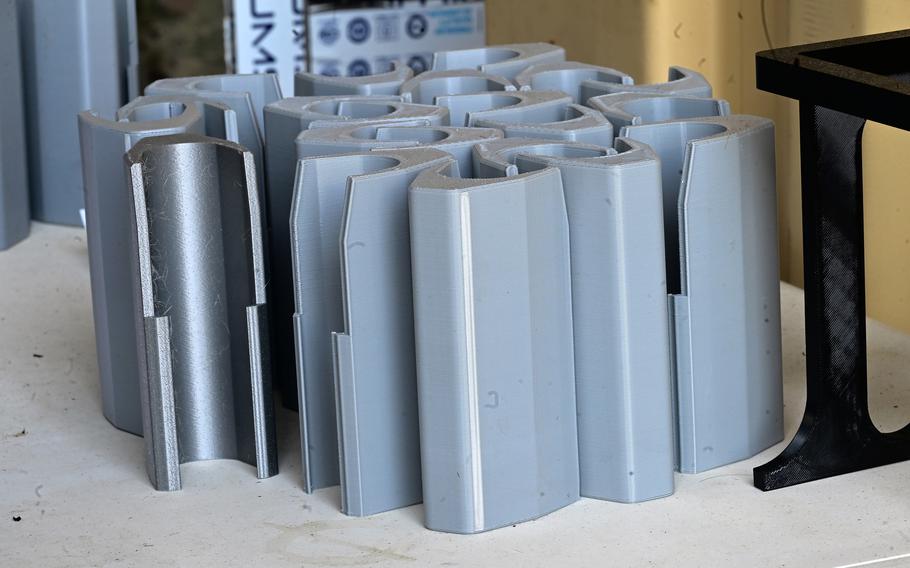
    Bipod adapters printed by the US and the Philippines militaries during recent joint exercises. Image courtesy of Stars and Stripes

    Adapting the Unadaptable

    It may indeed only be a threat meant to light a fire under the proverbial seats of the likes of Boeing, RTX, etc. Driscoll has said that the Army will provide more details on the plan “in the next four to six weeks”. In this context, one shouldn’t lose sight of just how much of the AM industry’s progress, historically, the primes have been responsible for. They may need to disrupt themselves in order to meet the challenge of the moment, but there’s no question that they have the technological capability to do so, if they can figure out some deal with the Pentagon to lease their IP in exchange for royalties on the parts produced.

    As Driscoll was issuing his latest broadsides on the defense sector, Lockheed Martin was issuing a peculiar message of its own, a press release from late April that didn’t really announce anything new, but simply drew the reader’s attention to how familiar Lockheed Martin is with metal PBF. Perhaps the most genuinely new announcement in that release was Lockheed Martin’s confirmation that the company’s Precision Strike Missiles (PrSM) heavily incorporate AM in the manufacturing process, although I already knew this because I looked it up when it was reported that some of the worst damage inflicted on Iranian civilian targets by US strikes fit the profile of what PrSMs are known to be capable of.

    So, that’s not exactly a badge of pride for the AM industry, but it does show that the defense sector status quo understands the message being conveyed to it by the Pentagon, and is attempting a response. The primes are trying to change, if not for the better, then at least for the cheaper. The takeaway from all of these developments is that two leviathans — one public (the Pentagon), the other private (the defense contracting establishment) — know that they have to do things differently, and are trying to accomplish that before the world forces the issue on them against their will.

    That is the web that the AM industry now finds itself entangled in. It would be nice if one could avoid it by choosing not to work directly with the defense sector, but the value of the AM industry is so disproportionately tied to this market segment that it’s going to impact you no matter what. If the idea of defense work turns your stomach too much, my recommendation would be to hitch your wagon to one of the other strategically critical sectors that Vanesa Listek has done a remarkable job of laying out for everyone in this 3DPrint PRO piece. They, too, are all in the process of trying to figure out how to disrupt their own status quo.

    Featured image, from Schofield Barracks in Hawaii, courtesy of Defense One/Jennifer Hlad
  • AI CAD Tools for 3D Printing: An Overview

    There is a bevy of AI-to-CAD tools coming out. Some are finding users; some are raising millions in funding. Many new ones are coming out all the time, so we waded through all of the options we could find to give you an overview. What do these tools mean for us? And what is out there?

    Generally, the tools fall into four categories:

    AI Plug-ins and Co-pilots: These tools plug into existing CAD tools or live in them. They tie Claude to Fusion or add an AI functionality to a CAD program. These tools live inside or alongside existing software and act as a handy AI assistant for you while using that particular tool.

    Workflow and automation tools: These AI tools automate an entire workflow from start to finish, so they can take your scan and turn it into a mold file. These tools can also automate a particular process or conversion, for example, taking 2D drawings into 3D models for BIM.

    Checkers: These tools don’t author; they check your CAD file, your assembly for errors, and whether you’re compliant.

    Text to STL: Also called text to CAD, these tools use existing LLMs to take a prompt and turn it into a CAD or STL file.

    Checkers

    The two I’d like to focus on for now are checkers and Text To STL. Checkers are now quite overlooked. But if we look at what LLMs are very good at—categorizing and matching things—they could become very powerful. AI, more generally, is great at spotting patterns and deviations from them. You can review their work, and they just highlight mistakes. This means they can make mistakes, but you can ignore them. And it means they take dreary work out of your hands and help you be more successful and faster, without threatening your work. There’s also a lower chance of developing faulty geometry; more importantly, faulty geometry that you won’t know is faulty until it’s too late. Checkers, therefore, could very well achieve broad adoption much more quickly than other tools, where people may be fearful of being replaced or of creating faulty CAD files. Checkers are your allies, while the other tools could be a threat. This is why we should pay close attention to these.

    Text-to-STL

    Text-to-STL tools are very crude and easy to dismiss. Engineers, in particular, can easily overlook the impact of these tools because they replace them, their craft, and their tools. But these tools can democratize the creation of files far more than the others. They could take millions of people to create what they need. This could make 3D printing, though desktop machines and services, much more meaningful and accessible to millions. This could be the Cambrian explosion moment that we’ve been waiting for in additive manufacturing. Yes, these tools suck at making good geometry. And yes, they suck at technical parts. Maybe they’ll get better, but let’s imagine that they only kind of get a little better. They’re still easy, but you couldn’t make a spoiler for your car with them. But, imagine that they were good enough for earrings, brooches, toys, and creative things for around the house. Then still, it would make 3D printing far more relevant to millions than it is today.

    It’s kind of like saying the Cray supercomputer is irrelevant to the common person because it is only used for nuclear fallout predictions. No, in fact, this does in a roundabout way make it very relevant indeed. And if we look at the extent of this development, computing, then the personal computer or the networked cloud computing concept will have a daily place in our lives. CAD is now in a silo, enshrined and worshipped by 2 million experts worldwide. The other 8 billion people depend on these people to make all the stuff in the world. Directly or indirectly, they contract these 2 million to make all the stuff. Just like the scribes in European monasteries were doing all the writing for all of Europe at one moment. But Text-to-STL could let around 6 billion people have access to 3D creation. Now, this doesn’t mean that these guys will all make their own cars or produce nuclear reactors. This will be a bad idea. I can not write a script as well as a medieval scribe. But through typing, computers and email I can communicate with millions of people far more easily than they can. So my skill in putting text down is much diminished when compared to theirs, while my ability to produce text and communicate it is vastly more advanced. My text is infinitely less beautiful but infinitely faster. Given the care per letter, I’m also much more likely to make a typo.

    Similarly, we used to rely on professional photographers for all the photos. Then you’d take special family photos with a big camera. Now we take thousands of pictures with devices we always have with us. It’s not that there are no more professional photographers in the world. It’s just that we value the skill less, hire them less, and there are more pictures in the world, with more people spending time taking them. And the fact that so many can publish pictures has led to Instagram, citizen journalism, and a bizarre cataloging of pictures of people’s dinners. The effects of instant valueless photography are, therefore, both easy to imagine and difficult to interpret. As in, I think we can all expect many more creations and many more people making things. This will lead to more 3D printers and more filament being sold. And then? We don’t really know whether everyone will make their own toys or whether tens of thousands of candle entrepreneurs will result. That all depends on the specifics.

    But, we can say that even if Text-to-STL tools don’t improve much more, they will make 3D printing much bigger. I won’t use one to get a job at Airbus, and hopefully, no one at Airbus will use one of these tools, but lots of people will use them to make lots of things. Imagine that we can never make truly technical parts, and that the system never really gets much more “intelligent.” Imagine then that you can just put a relief of a picture on a cube, or someone figures out how to make a simple tool to slap images and sketches on lots of different objects. Even with just this ability, millions could use 3D Printing to customize objects, label items, make signs, mark items they own, and make customized items to a degree. This impact alone will be one of the more significant things to occur in 3D printing. If it never gets better and I can never make my own plane with them, no matter.

    AI Plug-ins & Co-pilots

    These are likely to become much more prevalent through the actions of Siemens, Solidworks, Autodesk, PTC, and the like. We can see a strong interest among those firms in AI. They don’t want to get replaced as they’re addicted to all those yummy subscriptions. They’ll continue to deploy a lot of co-pilot-like tools inside their ecosystems. The value of these tools will depend on how many critical errors they make and overall trust in AI. The big CAD companies could make much more money by offering extra subscriptions through validated checker tools inside their CAD packages. A few dollars a month here for compliance to a standard, a few more here to check that all your tolerances or hole sizes comply with something else, some conversion tools there could really add up for them. Instead, these firms will probably ape the latest co-pilot and agentic trends, offering tools that may be cutting-edge but will be accident-prone. More general adoption will depend on values or specific news. I lived in Eindhoven, and there was this self-driving bus line years before this was common. One crash and a couple of choice pictures for the newspapers later, there were no more self-driving buses. Agentic and AI adoption within CAD tools hinges on moments like this. It would be folly to go all in on adopting these tools, and it would be silly to ignore them. But, adoption will depend on individuals’ views and trust in AI. If these tools let me move to a higher abstraction level, so that instead of designing every brick I can design one and quickly build a wall, adoption will be broad and across all tools.

    Workflow tools

    The greatest financial benefits could accrue from workflow tools. If you care about a workflow or file conversion, you can code your own tool today. But, if I, with ten people, make a tool that saves you half an hour a day and costs just ten bucks a month, then you won´t even bother. Maybe in Orthotics and Prosthetics, for example, scan-to-mold tools will get broad acceptance, while in general, scan-to-3D print people will build their own tools for their own workflows. But, in this specific O&P market, a team can develop a validated workflow that is faster and easier than a tool; there could get a lot of customers. For entrepreneurship, a well-calibrated offering in workflow that steers clear of the functionalities that will become commonplace through LLMs, will be the clearest path to long-term profits.

    Overview

    Below, we can see an overview of AI to CAD tools as generated by Google Gemini. This is an example of what an AI tool can do well.

    Category Tool Core AI Functionality Best Use Case Typical Pricing (Starting)
    Generative Creators Zoo (Text-to-CAD) Text/Code-to-3D; generates editable B-rep geometry. Mechanical prototyping & manufacturing. Free tier (20 credits); Paid from $20/mo.
    AdamCAD Text-to-Parametric 3D allows for conversational edits. Hobbyist 3D printing & quick part iteration. Free trial; Paid from $5.99–$9.99/mo.
    Kaedim 2D image-to-3D mesh conversion. Game assets & creative modeling. Subscription-based (Contact sales).
    Engineering Assistants Leo AI “Engineering Reasoning” – analyzes part history & Q&A. Enterprise mechanical engineering data retrieval. From $39/mo.
    DraftAid Automates 2D fabrication drawing from 3D models. Rapid drafting for manufacturing & construction. Annual custom quote (volume-based).
    Autodesk AI Generative design, auto-dimensioning, & path prediction. Professional product design & AEC workflows. Part of Standard subscriptions.
    Ansys SimAI Physics performance predictions (CFD/FEA). High-speed structural & fluid simulations. Enterprise license (Contact sales).
    Architectural Planners Autodesk Forma Environmental analysis (wind, noise) & site feasibility. Early-stage urban planning & site design. Approx. $315/mo.
    Veras AI rendering plugin for Revit, Rhino, & SketchUp. Photorealistic concept visualization. Subscription-based (Contact sales).
    TestFit Real-time automated site & building layout configuration. Real estate development feasibility studies. Professional subscription (Contact sales).
    Maket.ai Automated floor plan generation from text prompts. Residential design & zoning compliance. Subscription-based (Contact sales).

    But, if we look at the claims from Gemini as to which one is the best, the claims are meaningless. The LLMs just take the claims from the makers and repeat them. Also, if there are any external assertions, they are based on two to three sources. There are also a lot of tools that are not found through using LLMs.

    This is what I’ve been able to find so far:

    MEC Agent is an automation tool focusing on automating receptive tasks such as bulk exporting or converting parts.

    CADXStudio is a very ambitious project where it aims to be a complete CAD CAM tool built on AI. Text to CAM and parametric functions make this very all encompassing. It’s free for up to 25,000 tokens per month but can go up to $49 which gives you 2 million tokens.

    OpenArt is a CAD drawing tool focusing on using templates to make detailed CAD drawings. It also has community models and lets you train a model.

    Meshy.AI is focused on VR, animation and text to image, without a lot of mechanical logic or understanding, costs $20 a month.

    Tencent HY Global is a collaboration between Chinese internet giant TenCent and leading model HuggingFace.

    Tripo AI is a character and rigging tool focusing on taking 2D sketches and making them 3D for $16 per month.

    Camfer is text to AI for SolidWorks.

    CADScribe is a simple interface that works well initially, but I got stuck when trying to do complex things.

    DraftAid goes from 3D to 3D drawings, wanting to be the drawings for the manufacturing nexus between all the CAD tools.

    BuildCAD is a browser based CAD that is meant to be your first 3D file that you can then export to existing CAD tools.

    CGDream´s CAD tool is a simple, free CAD generator.

    CADGPT is a CAD-specific gateway to ChatGPT.

    NexCAD is a checker that checks for things like tolerances, review, and error mitigation. Focusing this to me seems to be a smart play.

    Sloyd costs from $7.49 to $24 and focuses on a rigging, visual model generation.

    Printpal is specific to 3D printing and is free for 10 models a month, $10 for 200 a month. This could be very good for our community.

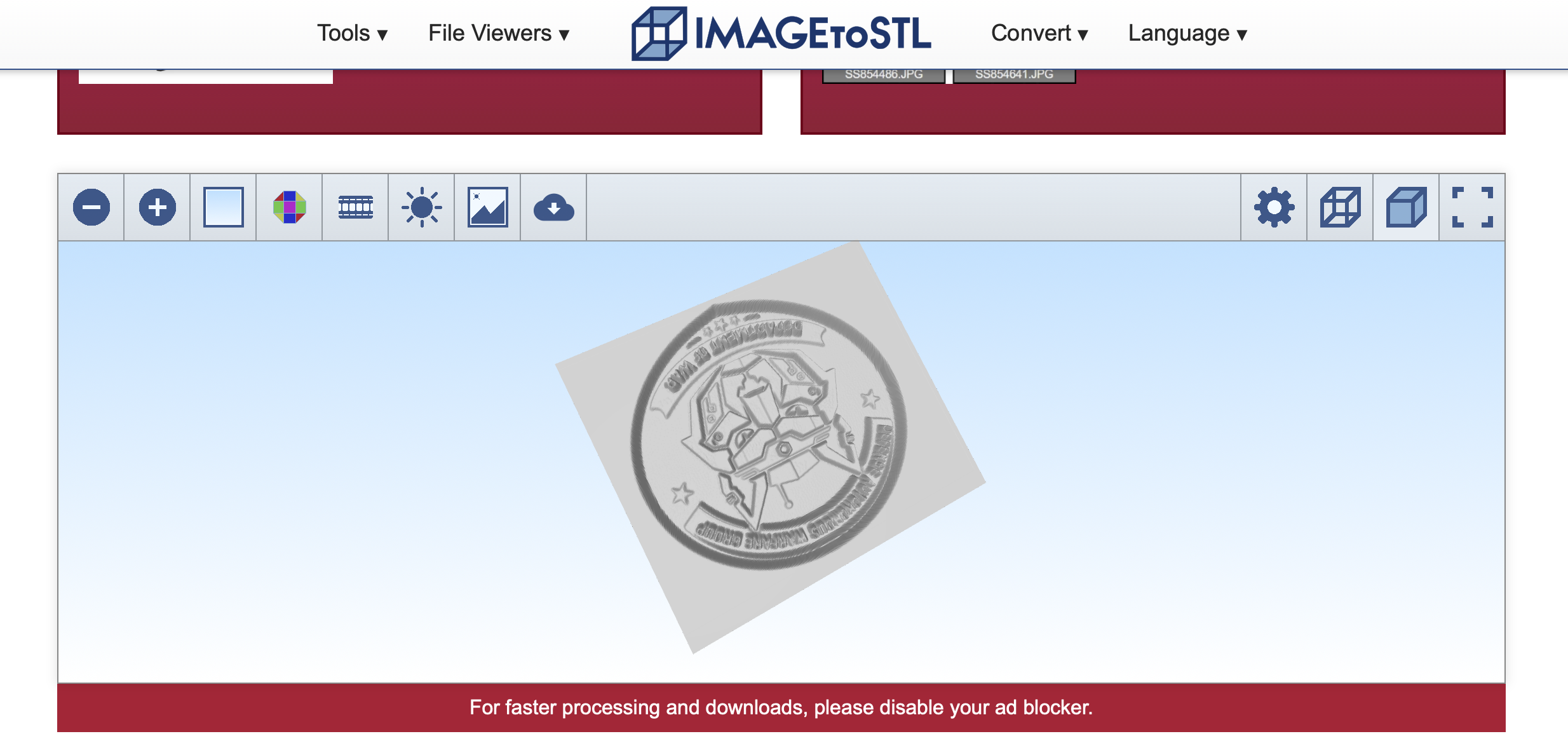
    Imagetostl.org is based on taking pictures to STLs, starting at $13 per month. It seems to work for simple pictures.

    Hitem3D is esthetically challenged and focused on images, but it says it can make printable files for $10 months a month.

    Fast3D is an image and Text-to-STL from $7 per month.

    STLBuddy claims a 98% print success rate for its $20 per month for 200 credits service.

    MasterpieceX is a scene generation tool more meant for game asset generation.

    Magic3D is $10 and includes a file type converting.

    Hyper3D’s Rodin is a more visually inclined 3D image generator.

    Text2STL is a bit different as it lets you type and make signs and in the like in 3D. Could be helpful if you need a sign fast.

    Bambu Lab´s Makerworld Maker Lab has a suite of customization tools.

    Remeshy has a better interface than most and lets you look at and remix a gallery of models.

    Imagetostl is simple to use, fast, and the quickest tool to get started with for simple files.

    Spline is a slick image generator meant for 3D images more than engineering files.

    Hugely popular tool Canva also has an STL generator, which is worrying for all the people piggybacking a bit too much on the LLMs.

    Vondy doesn’t let you download files, but does explain and give you tips on how to generate files.

    Backflip is surprisingly tweakable and fun to play with and works well.

    This seems to be the list that’s online right now  Are there any more? Let me know once they’re released or if I’ve missed some. I’ll dive deeper into them and test more over the coming months.

  • DeskArtes Releases 3Data Expert Version 16.0 AM Data Preparation Software

    Finland’s DeskArtes Oy has released 3Data Expert version 16.0, a comprehensive tool for additive manufacturing (AM) data preparation. Originating in the 1990s at Helsinki University of Technology, now Aalto University, the company has since grown to fulfill the various 3D model processing needs for the AM industry as a whole. The latest version of 3Data Expert offers advanced support structure features for denture manufacturing, improved quality control, and a more intuitive graphical interface, simplifying complex workflows and enhancing user efficiency.

    The company’s extensive history with AM has provided it with unique insights for developing valuable software tailored to the industry. Collaborations with industry leaders—beginning with Helisys, Stratasys, and EOS in the 1990s, followed by Z Corporation, 3D Systems, and Mcor Technologies in the 2010s, and continuing with current partners like Cubicure and Lithoz—have enabled DeskArtes to create software features that meet diverse AM user needs. These solutions serve sectors such as engineering, automotive, and dental.

    Cubicure CEO Robert Gmeiner states, “Cooperating with the DeskArtes team always was and continues to be a great experience. Their profound knowledge in graphics operations and data formats usable for 3D printing routines have high value for this industry.”

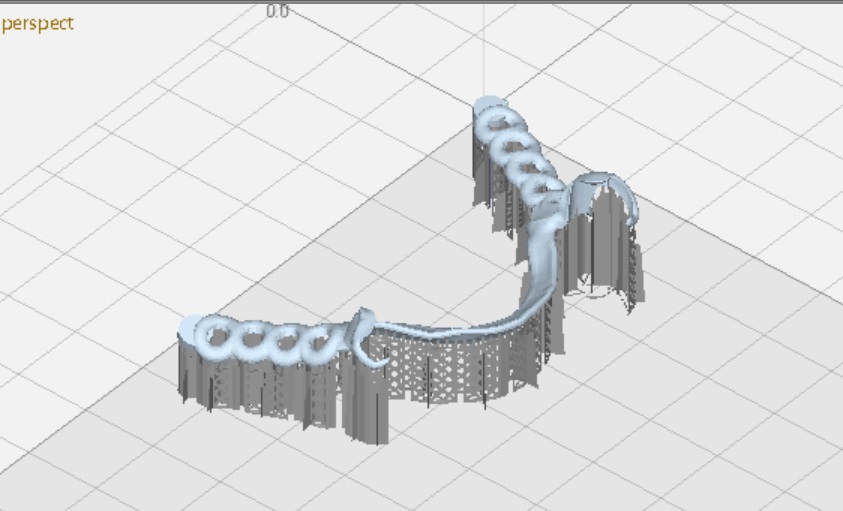
    The latest updates in 3Data Expert include enhanced support structures for denture manufacturing. New Silhouette supports enable users to create strong, yet easily removable supports for titanium denture frameworks, improving both stability and ease of removal. These structures provide essential support during printing and heat treatment, which relieves internal stresses in the framework. The Silhouette support functionality has been tested by partners utilizing EOS M290 systems for titanium-based dental frameworks.

    The DeskArtes AM Chain mass production toolset leverages proven 3Data Expert 3D model data preparation functions. It allows users to create customized, automated 3D model processing pipelines, including repair, orientation, nesting, support generation, and slicing for high-volume 3D printing. Compatible with Windows and Linux, AM Chain streamlines large-scale manufacturing workflows, enhancing efficiency and consistency in AM processes.

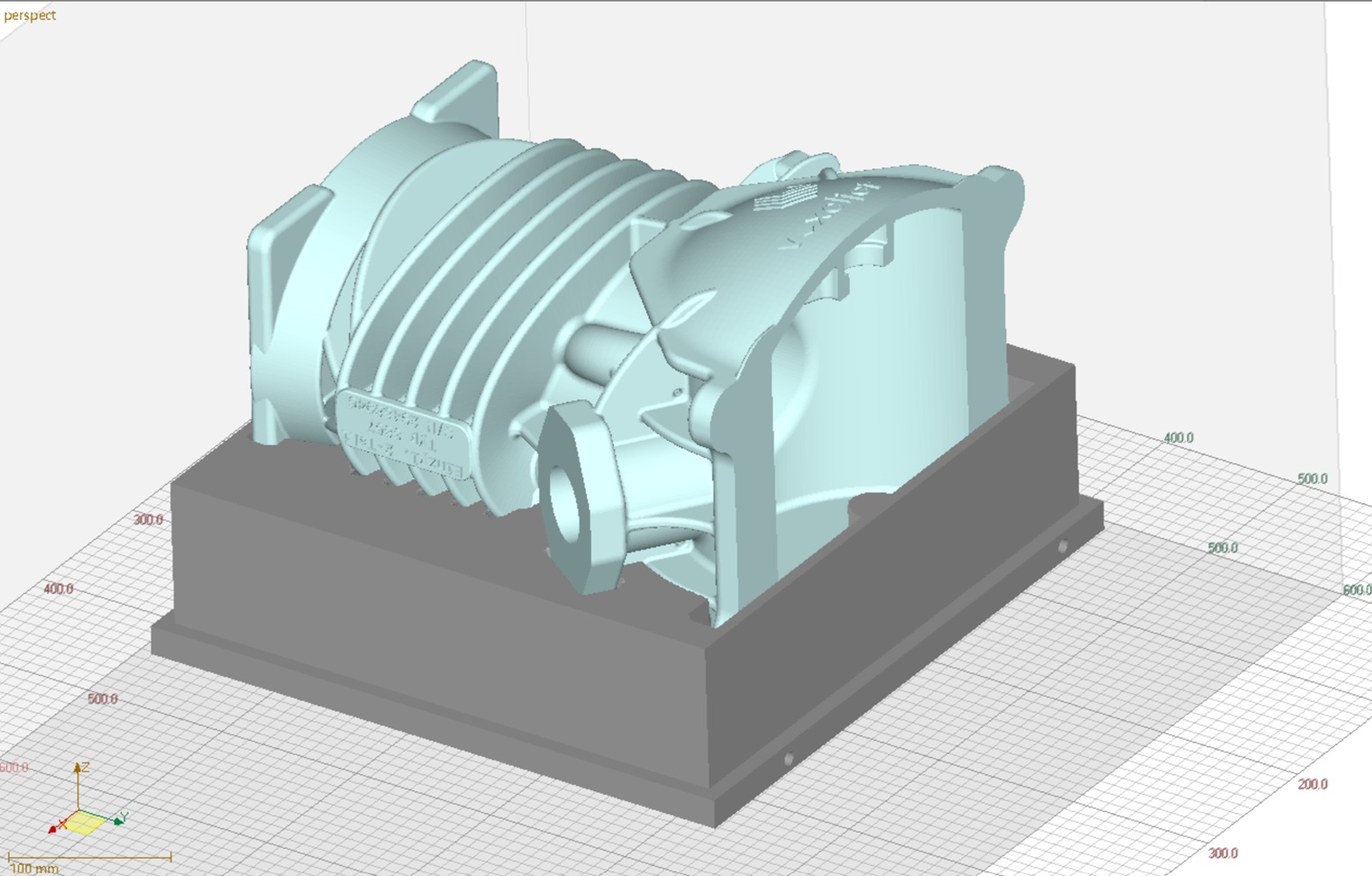
    Creating sand-based molds and cores requires specific considerations. For example, producing cores with internal passages necessitates precise control of shrinkage and thorough cleaning after fabrication. Finnish foundry Hetitec Oy uses 3Data Expert software to generate error-free STL files and apply offsetting commands, compensating for material shrinkage in sand parts produced with Voxeljet 1000 and 2000 systems. Additionally, specialized sand support features facilitate fully automatic support generation, and enable the safe removal of heavy molds from the build area without damage, enhancing efficiency and accuracy in casting.

    Ville Moilanen, CEO of Hetitec, states, “DeskArtes has consistently demonstrated its commitment to customer support and developing new  state-of-the-art functionalities, making it a highly recommended software partner.”

    DeskArtes is actively involved in various international projects, like the European Space Agency (ESA) project AnteCedent. The project focuses on developing digital twin solutions for ceramic AM. The consortium includes prominent European companies such as Jotne (Norway), RF Microtech (Italy), Lithoz (Austria), and research organizations like VTT (Finland).

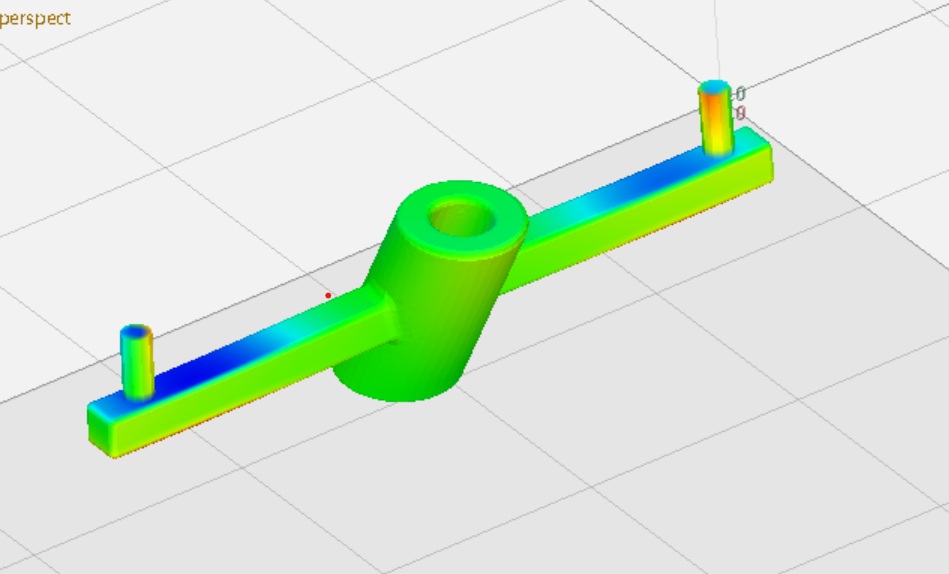
    The primary objective of AnteCedent is to create a digital twin-driven AM process for producing ceramic components used in satellite radio transmitters. This approach aims to minimize design iterations by utilizing simulations to predict deformations during de-binding and sintering. DeskArtes contributes by providing a quality control solution that ensures efficient, reliable measurements and visualization of deviations between manufactured parts and their nominal designs, based on 3D or CT scans, thereby enhancing the accuracy and consistency of the production process. These tools are now available to the entire AM community.

    Currently, DeskArtes is expanding its global presence through partnerships with AM system vendors and distributors worldwide. For example, it collaborates closely with PolyArm Global to strengthen its footprint in the APAC region. PolyArm Global operates across Asia Pacific with regional offices in Singapore and Japan, a team of seasoned industrial AM professionals, and a wide network of industry-focused partners in key markets and industry segments. The leadership team at PolyArm Global emphasizes the company’s commitment to growth, while DeskArtes Managing Director Ismo Mäkelä highlights the value of PolyArm Global’s extensive experience in APAC markets. Mäkelä expresses confidence that PolyArm Global’s expertise and reach will help identify new customers and partners in the region, supporting DeskArtes’ strategic expansion efforts and reinforcing its position in the additive manufacturing industry across Asia Pacific.

  • ROBOZE Buys Dimanex Assets to Build “Physical AI” Platform

    Dutch firm Dimanex got its start as an MRO platform for the railways. The company had a contract with the Dutch Army in 2018, and later that year signed one with the Dutch national railway, NS. The cloud-based tool aimed to streamline MRO and give companies a digital supply chain solution. The company also offered 3D printing through partners, along with tracking and part testing. The vision was spot on and is now being used to great effect by Immensa, Würth, Replique, and Pelagus. The company also got in early, helping large organizations get started on their 3D printing journey. Later, it partnered with AMC Bridge for integration into digital warehousing and enterprise IT. That too is what people increasingly want. Then the company introduced AI analytics for supply chain optimization in 2024. Timely for sure.

    But, somehow, having the right vision, story, and features that people need is not enough. Somehow, having reputable, large customers at the right time wasn’t enough either. The company that spoke for years about “future-proofing your supply chain” forgot to future-proof itself. Dimanex went bankrupt in February. What happened? We know that finding the right customers and closing deals with them is a big challenge for companies that essentially make 3D printing infrastructure. Large firms know that this is a piece of infrastructure that they are essentially tied to. What’s more, the people buying it will have their career success tied to it, and their direct colleagues will have to use this tool every day. So sales cycles are long, and these firms will always struggle to find enough customers to sustain themselves. Once they have a client, recurring payments will continue forever.

    So excellent sales and account management are key. And having a product that is simple to adopt and scrap on the side is a key way to get into accounts. Or a company can do proof-of-concept studies well. Execution on getting these accounts in is key, therefore. And it helps if you´re a big brand that everyone knows, so that you can find customers at the right time. 3Yourmind, for example, was inescapable for many years at shows and in the press. Too late, and the customer will have bodged something together themselves, which they’re attached to like a bad wart. Too early and you’ll scare them off. So branding in this application matters. And whereas for others it’s easy to know which companies may need your services, it’s hard to do this for these infrastructure companies.

    Dimanex owes creditors over $2 million and the government over $140,000. And it has been slowing down its activities for years. According to the bankruptcy filings, the firm’s growth slowed during the pandemic and didn’t recover. Money was borrowed to finance growth, but the resulting revenue was insufficient to cover the financing costs. The company subsequently was not able to find new investors. Management then left the firm, leaving it without official executives; it eventually went bankrupt. Dimanex’s bankruptcy should have been handled by management with greater care and forthrightness. Rather than tackle the issue of long sales cycles directly and make its products easier to buy and try, the firm persisted with the old way. A structural problem was therefore ignored. The financing they then turned to seems to have been ruinous for them. It seems like the bankruptcy may have nothing to do with 3D printing at all.

    The firm’s assets have now been acquired by high-temperature material extrusion OEM ROBOZE, which plans to use this acquisition to make a “fully interconnected, intelligent manufacturing ecosystem powered by Physical AI.” The Dimanex software will become a part of the Pandora and SlizeR packages that ROBOZE already offers.

    ROBOZEs CEO Alessio Lorusso said,

    “We are moving beyond standalone machines into intelligent, connected manufacturing system.This acquisition brings physical AI into production environments, where machines learn, adapt and operate as part of a global network. The result is a more resilient and efficient manufacturing system with reduced dependence on centralized hubs to deliver critical components with speed and at scale. Roboze is tackling systemic challenges in the industrial base like long lead times and physical inventory constraints. We are connecting the physical and digital worlds of manufacturing, from the identification of a part in a warehouse, to its qualification, to its production anywhere in the world, this entire process becomes intelligent, automated and interconnected.”

    The ARGO 500.

    The company hopes it will allow for the optimization of settings, sharing manufacturing data between sites, cloud-based setting changes, and generally digital warehousing. The company hopes that it will enable its clients to implement digital warehousing and create the digital supply chain solutions their customers need.

    I’m intensely skeptical of any kind of physical AI mentions and of using AI in manufacturing. Sure, for things like QA and pattern recognition-centric use, it can be amazing for making sense of a lot of data. For settings divination, it could also be an asset, but I’m wary of using it in files and end-use parts. I do think the platform can be an asset to ROBOZE customers and let people roll out services with multiple ROBOZE printers more quickly. If the software united lots of disparate printers, workflows, and files, it could be a real asset to customers as well. It could also be an argument for buying a ROBOZE. And for defense applications, if ROBOZE made it easy to add other people’s machines and files to the platform, it could speed up sales for the manufacturer. Although I’m generally rather skeptical of this whole Physical AI thing, we shall see.

    Images courtesy of ROBOZE

  • 3D Printing Financials: Nano Dimension Reports Q1 Growth Amid Restructuring and Asset Sales

    Nano Dimension (Nasdaq: NNDM) started 2026 with a much larger first quarter business than it had a year ago, mainly because Markforged is now part of the company and included in its results. But it also reported a significantly larger loss, suspended its full-year guidance, and continued a strategic review focused on lowering cash burn, selling off some business units, and deciding the company’s direction for the future.

    “The Board and management have been working with Houlihan Lokey to evaluate and refine a focused set of go-forward alternatives, which may include, but not limited to, a strategic merger, a reverse merger or other strategic transactions,” CEO David Stehlin reflected during the earnings call. “Our financial resources and public company platform create a compelling opportunity to pursue alternatives that could unlock value.”

    Nano Dimension’s DragonFly IV produces functional circuits and devices, allowing users to utilize new levels of resolution to generate complex board layouts and virtually limitless routing topologies. Image courtesy of Nano Dimension.

    For the first quarter ended March 31, 2026, Nano Dimension reported revenue of $29.7 million, up 106% from $14.4 million in the same period last year. Markforged contributed $17.1 million of that revenue. So excluding Markforged, Nano’s stand-alone revenue was $12.6 million, down about 12% year over year, which management attributed mainly to lower sales tied to tariffs and the impact of divestments. Although executives did not specifically identify which divestments affected revenue during the quarter, the decline is probably related in part to the company’s ongoing restructuring efforts, including the sale of its AME (additively manufactured electronics) and Fabrica product lines announced soon after the quarter closed.

    Meanwhile, the company’s net loss rose to $69.7 million, compared with a loss of $25.5 million a year before. The company’s larger loss was mainly related to Nano lowering the estimated value of the Markforged business on its books by $40.4 million.

    Adjusted EBITDA was a loss of $12.5 million, compared with a loss of $10.1 million in the first quarter of 2025 and a loss of $9.8 million in the fourth quarter of 2025. To this effect, CFO John Brenton said during the earnings call that the results reflected “the inclusion of Markforged and lower stand-alone revenue impacted by tariffs and divestments, partially offset by gross margin performance and continued cost discipline.” 

    Nano ended the quarter with $441.6 million in cash, cash equivalents, deposits, restricted deposits, and marketable equity securities, down from $459.6 million at the end of 2025. The company said about $8.4 million of the decline was tied to changes in the value of some of its investments.

    The quarter also showed how much Nano Dimension has changed over the past year. In April 2025, the company completed its acquisition of Desktop Metal after a long legal battle, and later that same month, finalized its acquisition of Markforged. Just a few months later, in July 2025, Desktop Metal filed for Chapter 11 bankruptcy before its key assets were acquired by Arc Impact just a few months later. Then, in September 2025, Nano replaced CEO Ofir Baharav with David Stehlin and launched a broader strategic review with Guggenheim Securities and Houlihan Lokey.

    That strategic review has now become the main focus of the company. Nano said it is trying to simplify the business, reduce spending, sell off some product lines, and explore larger deals that could reshape the company in the future. According to Stehlin, all of these efforts are happening at the same time, rather than in separate stages.

    The first major step in that plan came shortly after the quarter ended. On April 6, 2026, Nano sold its AME electronics business and Fabrica product lines to Inspira Technologies OXY. The deal included an upfront payment of $2 million, with the possibility of another $10.5 million tied to future performance. Nano said the sale “should lower the company’s yearly cash burn by about $10 million.”

    Markforged’s FX generation printers enable continuous fiber reinforcement (carbon, Kevlar, and fiberglass) to make composite parts as strong as aluminum. Image courtesy of Nano Dimension.

    Beyond its restructuring efforts, Nano said its two biggest businesses are now Markforged’s 3D printing systems and Essemtec’s electronics manufacturing equipment. During the quarter, the company expanded its work with a major U.S. automotive manufacturer and said it is continuing to see growing opportunities in defense. Nano also said Essemtec is gaining traction in electronics production, AI-related manufacturing, and the space and satellite sectors.

    Nano also stopped providing full-year guidance for 2026. The company said it is still in the middle of selling businesses and evaluating larger strategic options, so its financial results could change a lot during the rest of the year.

    After Nano released its earnings on May 7, the stock dropped from about $1.91 to a low of $1.58 the next trading day. Nano shares have also struggled for most of 2026, usually staying below $2 as the company continued with its restructuring efforts.

  • DMG Mori Joins $10M Defense 3D Printing Program

    To look at the Biden administration and the Trump administration that succeeded it and find areas of policy overlap is obviously a bit of a challenge. But such areas certainly do exist, and one of the clearest objectives shared by both administrations is an aggressive reemphasis on leveraging US federal power to shape national industrial policy.

    That’s one of the primary reasons for the growing significance of additive manufacturing (AM) in the government procurement landscape, especially relevant, of course, to defense matters. This has led companies with exposure to the AM market and global presences to prioritize investing in and expanding their domestic US operations to bolster their relationships with the Department of Defense (DoD). One company that has lately been making notable progress in this regard is Japan’s DMG Mori, through its US-based DMG Mori Federal Services (DMFS) division.

    DMFS just announced its biggest step forward to date in terms of entry into the US AM for the defense market, with its selection to participate in the Joint Additive Manufacturing Acceptability (JAMA) IV Pilot Parts Program, an Indefinite Delivery, Indefinite Quantity (IDIQ) contract administered by the Defense Logistics Agency (DLA). The five-year program, announced last year, represents total funding of $10 million, and “aims to establish a supplier base for [AM] parts” for the US military.

    The companies participating in JAMA IV will place competitive bids to sell 3D printed components to DLA, with the group of enterprises also including the likes of Nikon AM Synergy. DMFS’s own work in the program will be run by Fred Carter, the company’s Head of R&D, who is also overseeing work that the company is doing on a Department of Energy (DOE)-backed project announced earlier this year. All of the company’s work with the US federal government will be supported by the new DMG Mori Advanced Manufacturing and Innovation Center in Chicago, which is funded by $40 million from the State of Illinois.

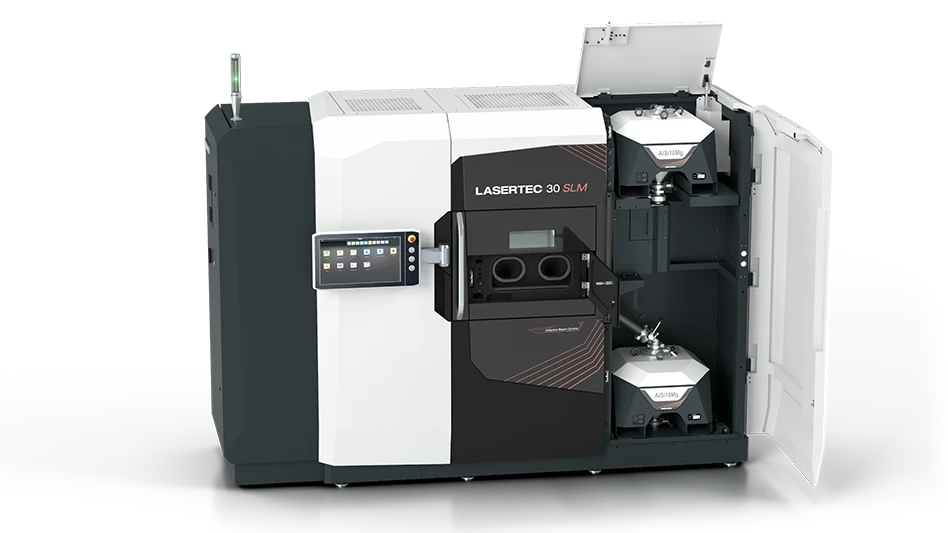
    DMG Mori Lasertec 30. Image courtesy of DMG Mori.

    In a press release about DMG Mori Federal Services’ selection to participate in JAMA IV, the company’s chairman, James V. Nudo, said “Being selected for the JAMA IV Pilot Parts Program reflects the strength of our team and our continued investment in advanced manufacturing technologies. [AM] is a critical component of the future defense industrial base, and DMFS is proud to support efforts to improve supply chain resilience and readiness.”

    When I wrote about DMFS’s grant award for the DOE’s High-Performance Computing for Manufacturing (HPC4Mfg) program, I noted that it could ultimately create a good opportunity for the US and Japan to work more closely to build their respective supply chains for data center hardware. There’s always the possibility that this kind of take is a reach, if only because of the complex nature of the industrial policy environment, particularly when more than one nation is involved.

    On the other hand, when we now take into consideration DMG Mori’s selection to the JAMA IV group, which also, as I noted, includes the US division of another Japanese multinational, Nikon AM Synergy, it does seem to raise the likelihood that there’s at least some coordination between the ground-level activities represented by individual funding grants from US agencies, and the strategic objectives of the highest policy circles aligning US and Japanese interests. For instance, Japan just announced a record defense budget, and this is central to Prime Minister Takaichi’s ongoing dialogue with President Trump.

    All of this context is the sort of background information that has become the requirement for a baseline understanding concerning the true value of advanced manufacturing in global geopolitics. It’s a value that can no longer be adequately defined in terms of traditional markers like the market caps of the industry’s largest publicly traded companies.

    There are many reasons why that’s the case, but one of the simplest reasons is that world leaders seem to be operating under the assumption that whatever the current nominal monetary value of industries, including the AM industry, is, it pales in comparison to what that value will amount to in the 2030s and beyond. To be sure, world leaders are wrong far more often than they’re right, and this case could be no exception. But at the very least, there seems to be no slowdown in the momentum behind advanced manufacturing, which has pushed it near the top of the global policy agenda.

  • MORSAN and LEHVOSS Work on 3D Printing for Food and Beverage

    For many years, LEHVOSS has made specialized 3D printing materials such as high-temperature polyamide and high-flow PEEK. Now it has teamed up with MORSAN to develop a 3D printing offering for the food and beverage industry. Specifically adapted to parts with “mechanical loads, aggressive cleaning environments, and permanently high cycle rates in filling and packaging lines,” they’ve now made a spare parts offering. Greek company MORSAN now offers a digital warehouse solution for hundreds of spare parts. The company is not only replacing parts one-on-one but also offering improved parts. It is also redesigning them for specific load cases to improve their performance.

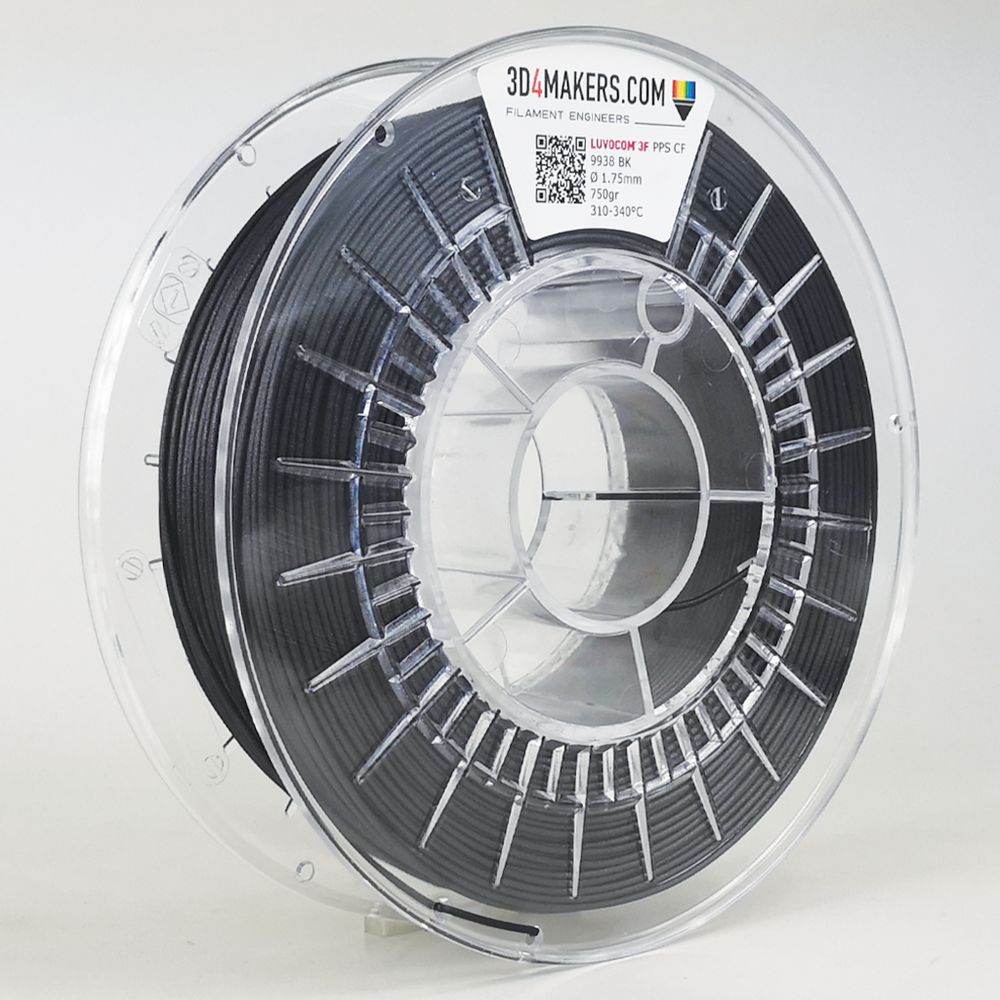
    MORSAN uses LUVOCOM extrusion materials, specifically the LUVOCOM 3F range. The company uses the PPS, PA, and PET materials for that range. The company makes conveyor belt gears, conveyor chain guides, grippers, and beverage can slides. These kinds of parts are being 3D printed all over the world by many industrial companies. They’re rarely talked about. In one illustrative case of an Australian one man beverage company we were able to show you a lot of these applications. In that case, we saw 3D printing used to make a filling machine, he makes spacers for production lines, a machine to apply six-pack rings, a depeletizer, and more. Many companies worldwide need improvised, improved, and spare components on production lines. This is a great market for MORSAN to explore.

    Christos Adam Morsy of MORSAN explains,

    “For us, 3D printing is not an experiment — it is an integral part of modern production and
    maintenance strategies. By combining digital part availability, short production lead times, and high-performance materials, we can help our customers reduce downtime. In the next step, we will enable our customers – via new software solutions — to manufacture spare parts on site, no matter where in the world.”

    Dr. Marcus Rechberger, Product Manager for LUVOSINT materials at LEHVOSS, said,

    “MORSAN’s concept shows where 3D printing is headed. In prototyping you certainly need generalists, but in industrial printing you need a clear focus on markets and processes in order to work out the advantages of 3D printing.”

    I love the idea of industry-specific digital supply chain offerings. Make sure you act according to their needs, understand their needs, understand and follow their standards, make good parts, design well, print well, and do good QA, and you can build an unmissable business. Some customers will do this themselves, but if you don’t overcharge, then you can build a nice market for yourself. CAD and Dfam capacity is limited, and making functional, certified parts is still hard. I love what MORSAN is doing here and think that more people should do the same.

    There are so many similar businesses in the additive industry. So many materials companies and now so many people want to start print farms. I think that a design-centric business that can print parts to spec and standards would be much more valuable. If they trust you and rely on you, they’ll let you have margin as long as you don’t fail them. But if you’re just one of many print farms, it may be difficult for you to stay ahead on pricing. But if you have a path to certification, FEA, or other tools for designing parts well, and you understand the market’s business drivers, and they are relatively affordable, why would they change? The biggest firms may develop an internal capacity, but for many, it will be cheaper and perhaps better to have an external party that is more specialized to do it well for them. More firms should find big markets and serve them well with spare parts services such as MORSAN.

  • Wool 3D Printing Filament from New Zealand (Of Course)

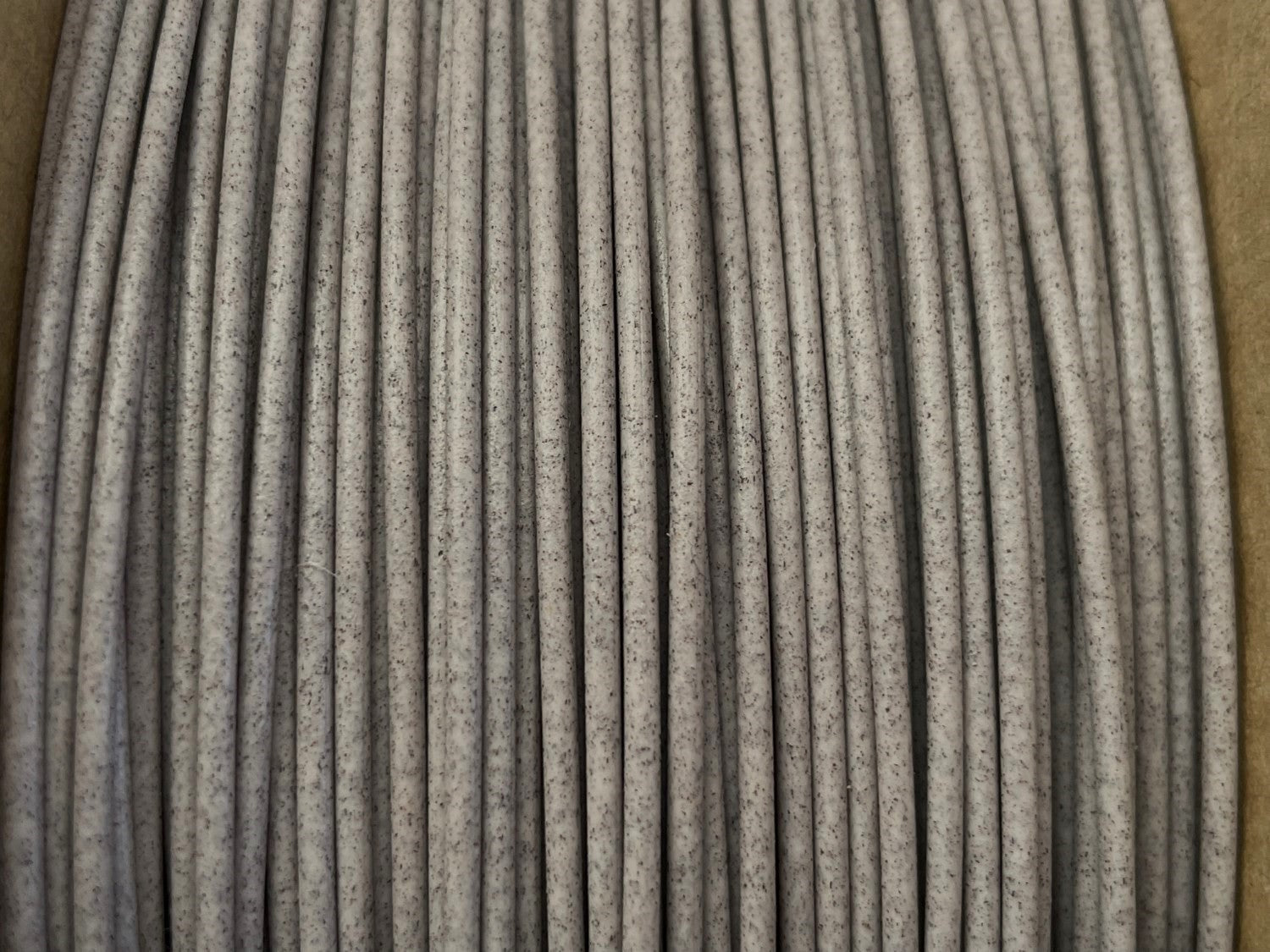
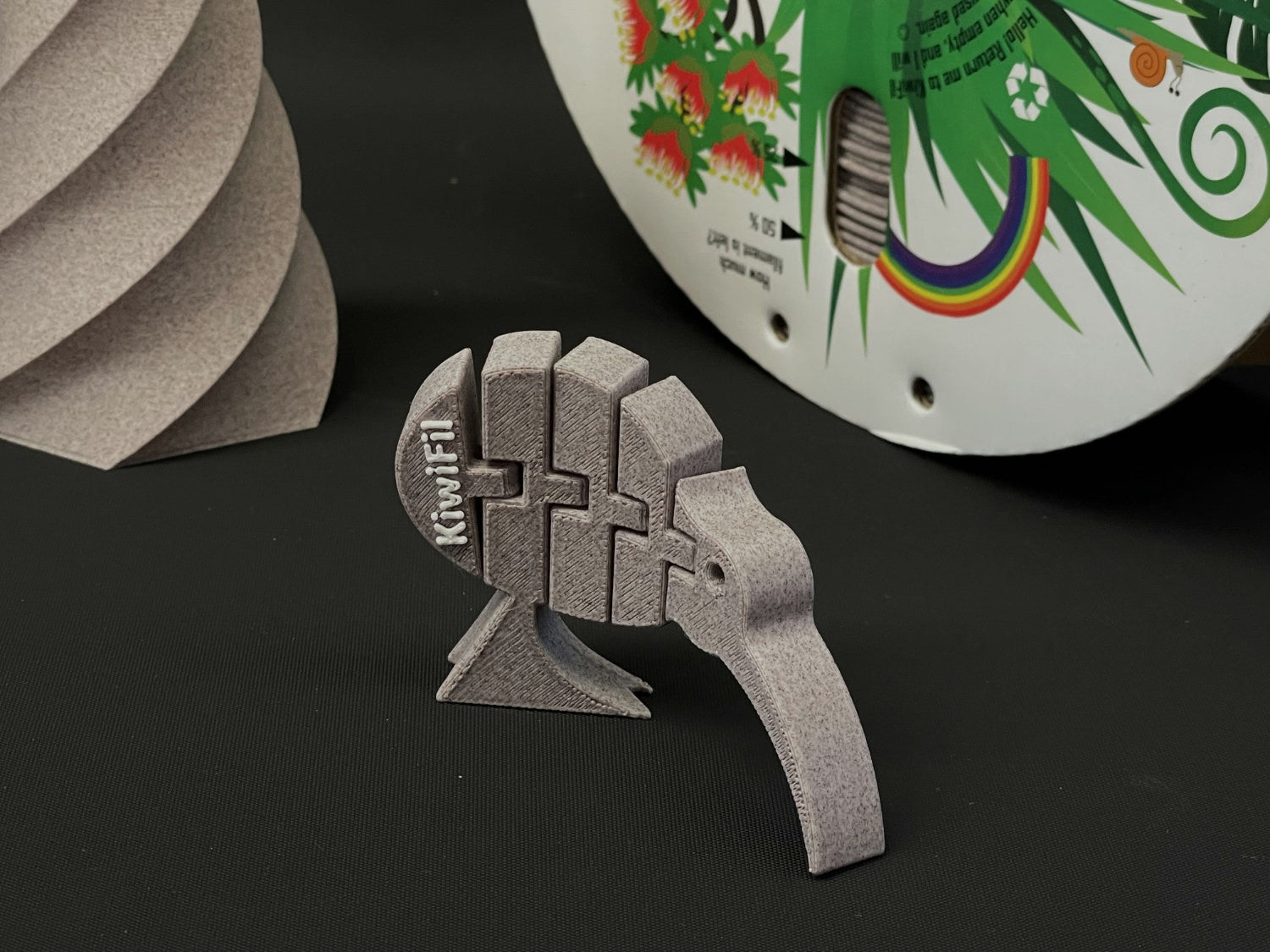
    WoolyFil uses wool-based colorants to color filament. Companies Wool Source, which makes pigments from wool, partnered with filament firm KiwiFil to develop pigments with around 92% to 98% biobased content. In this case, the sustainability angle is important because pigments are often made from inorganic (mineral-based) and organic (carbon-based) compounds, while most modern-day pigments are mostly synthetic and originate from petrochemical or coal-tar processes. These synthetic pigments can pollute millions of liters of wastewater during production and dyeing, they can also contain toxic heavy metals, and are often non-biodegradable. Some can also release Polycyclic Aromatic Hydrocarbons (PAHs), which can damage aquatic ecosystems. Coal tar dyes are also linked to carcinogenic effects. Some of these substances are banned; more should be. Others are used in products such as makeup dyes.

    Tom Hooper, chief executive of Wool Source, said,

    “Wool Source’s patented technology takes strong wool fiber and transforms it into fine, coloured particles that can be mixed into other materials for applications like 3D printing, bioplastics, and screen-printing inks. Unlike other biobased options for textural effect or colour, our four-colour base system gives filament producers maximum colours mixing flexibility. The KiwiFil team was willing to have a play with it and give us some feedback — and we’re deligted they decided to launch a new range with our pigments as the hero.”

    KiwiFil Director Eva Hakansson added,

    “We loved the idea of using New Zealand wool and a biobased pigment in our recycled PLA filament but it needed to work for everyday 3D printing customers, as that’s our market. Our customers are loving the totally unique look and feel and the colours inspired by nature.”

    You can get WoolyFil in Green Marble and Riverstone, and the company hopes to release new colors. The filament is made out of rPLA. The 150µm particle-filled material has a surface texture that could be cool, but they also have a 10µm variant without this effect. Wool Source is also working on PLA, PCL, PBS, and PHA. PHA would be amazing because that combination won’t finally give us a truly sustainable material.

    I think that this is a great development. We should have more awareness not only about VOC’s and other substances coming off of our print jobs, but also what goes into them as well. Pigments are a potentially worrying aspect in 3D printing, especially with low-quality, low-cost filament. Often, materials may be certified for industrial use but not for other uses, or it may be unclear exactly what is in these materials. Sometimes MSDS documents don’t disclose information about pigments or their effects that haven’t been sufficiently tested.

    With Creality’s new inexpensive filament maker, we are about to be inundated by all sorts of coffee, tea, trash, rock, and other experimental filaments. A lot of people will experiment with various variants. Many will probably not perform very well. But generally, putting waste materials, such as coffee grounds, into filament could be a great idea. Home and local experimentation with filaments will also lead to a lot of innovation. We will also have lots of new low-cost filament options.

    I remember my first spool of filament, ordered through a New Zealand company called Diamond Age. Diamond Age (which, in fact, still exists!) came up with PLA filament and was, I think, one of the first companies to sell filament for desktop 3D printers. It’s nice to see New Zealand innovating in filament once again and developing something more sustainable for the market. Let’s hope safer, more sustainable pigments catch on.

  • Where the Money Is Going: The New Infrastructure Landscape

    This is Part 1 of a two-part PRO series examining where infrastructure investment is flowing and how those trends are reshaping manufacturing, energy, logistics, and additive manufacturing. Part 2, by Matt Kremenetsky, will focus on data centers, AI infrastructure, and where additive manufacturing fits into that rapidly expanding ecosystem.

    Over the past few years, infrastructure spending has started moving into very different areas than before. Governments are still funding roads and bridges, of course, but some of the biggest investment activity now is happening around power infrastructure, shipyards, logistics networks, data centers, and semiconductor fabs. 

    A lot of this is being driven by AI. Data centers are expanding rapidly, especially in the U.S., and that expansion is creating pressure everywhere else. More computing power means more electricity demand. More electricity demand means more grid upgrades, power generation projects, and transmission infrastructure. Semiconductor manufacturing is also growing again, partly because companies and governments no longer want to depend so heavily on overseas chip production after the shortages we’ve seen over the last few years.

    Featured image courtesy of 3DPrint.com

  • 3D Printing & Drone Dominance: Speed, Performance, and Derisking the Supply Chain

    A shift is underway in drone manufacturing. Government programs like the U.S. Department of War’s Drone Dominance, a $1.1 billion effort to deliver low-cost, one-way attack (OWA) sUAS at scale, are driving urgent demand for drones that are inexpensive, resilient, and rapidly producible. Or the US Army’s recent “Best Drone Warfighter Competition,” which was recently hosted in Huntsville, AL, that included dozens of teams competing with various platforms and different capabilities. At the same time, advances in additive manufacturing (AM) are changing what’s possible: lighter structures, faster iteration, and local, high-rate production. The result is a new industrial logic for unmanned aerial systems (UAS) that are based on speed, availability, and performance.

    I recommend reading Drew Lawrence’s latest article with DefenseScoop to learn more about the ‘Best Drone Warfighter Competition’ published in February 2026.

    Why Additive Manufacturing (AM) Matters Now

    New operational requirements, such as payload, performance, range, and resilience, are converging with AM breakthroughs. Breakthroughs that yield parts previously impossible with traditional methods. This includes topology-optimized lattices, fiber-reinforced composites, and geometries that consolidate assemblies.

    For programs like Drone Dominance, which have already produced 30,000 units after Gauntlet I and are preparing for Gauntlet II, additive enables both rapid prototyping and scale production while supporting a localized, supply-chain-resilient industrial base.

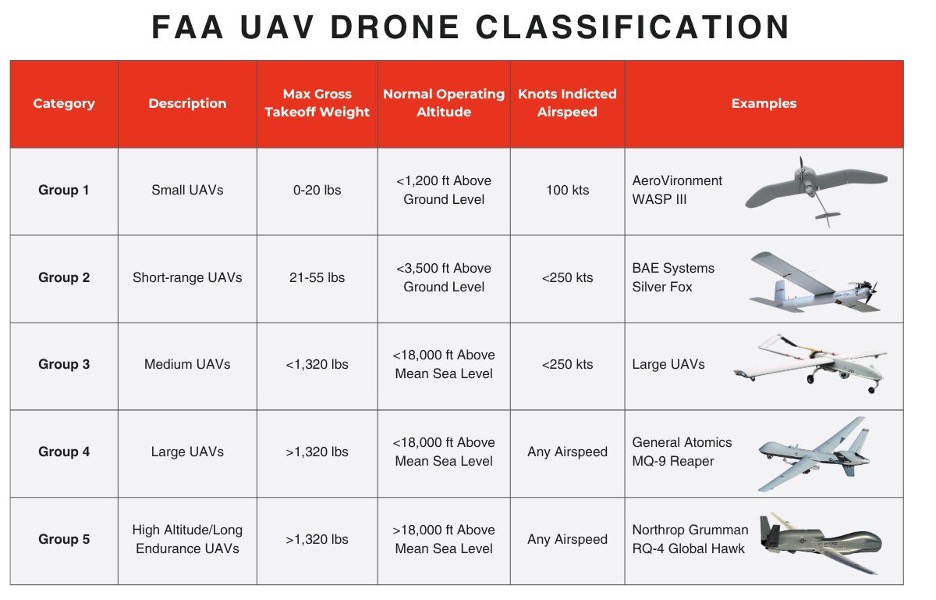
    Understanding UAV Groupings & Fit-for-purpose AM

    Not every 3D printing technology suits every drone. Categorizing UAS by mission and manufacturer helps match processes to platforms:

    • Group 1: Very small, portable systems (hand-launched, <20 lbs). Typically used for intelligence, surveillance, reconnaissance (ISR) at the squad or platoon level. High-volume, low-cost manufacturing and rapid tooling are critical here because demand and iteration cycles are fast.
    • Group 2: Small tactical UAVs (<55 lbs) with longer endurance than Group 1. Used by special units for persistent ISR or light payload delivery.
    • Group 3: Medium-altitude tactical systems (generally >55 lbs) that carry larger payloads and operate beyond visual line-of-sight (BVLOS). These platforms require stronger load-bearing structures and longer-range propulsion, which is a natural fit for higher-performance composite and hybrid additive approaches.
    • Group 4: Tactical or operational fixed-wing/multi-role systems with greater range and payload (often used for extended reconnaissance or kinetic action). Manufacturing emphasizes durability, repeatable production, and processes that are certification-ready.
    • Group 5: Large, strategic UAVs (military-class, often weaponized or long-endurance systems). These demand more robust manufacturing methods, and additive plays a role in quick tooling rather than in part production.

    Image courtesy of Endeavor3D.com

    Key OEMs and the Role They Play

    Several additive manufacturers are already embedded in the drone supply chain, each addressing different mission tiers.

    Stratasys brings a pragmatic, aerospace-rooted approach to polymer additive manufacturing. By combining proven systems, materials, and a wide service footprint to help OEMs and primes move faster from concept to flight-ready parts. Their strengths in quick-turn tooling and direct component production make them especially well-suited to high-iteration, high-volume Group 1 programs, while active partnerships with defense primes help translate field requirements into manufacturable solutions across multiple UAV classes.

    You can learn more about Stratasys and the Defense Supply Chain from a recent blog authored by Eric Quittem, Digital Marketing Manager at Stratasys.

    Impossible Objects’ CBAM platform blends the structural advantages of long, unidirectional carbon fibers with a production mindset, delivering carbon-fiber-reinforced parts at high throughput and dense packing that drive down unit cost. That combination of superior load-bearing performance, fast cycle times, and demonstrated success positions CBAM as a compelling option for Group 3 platforms where endurance and strength-to-weight are decisive.

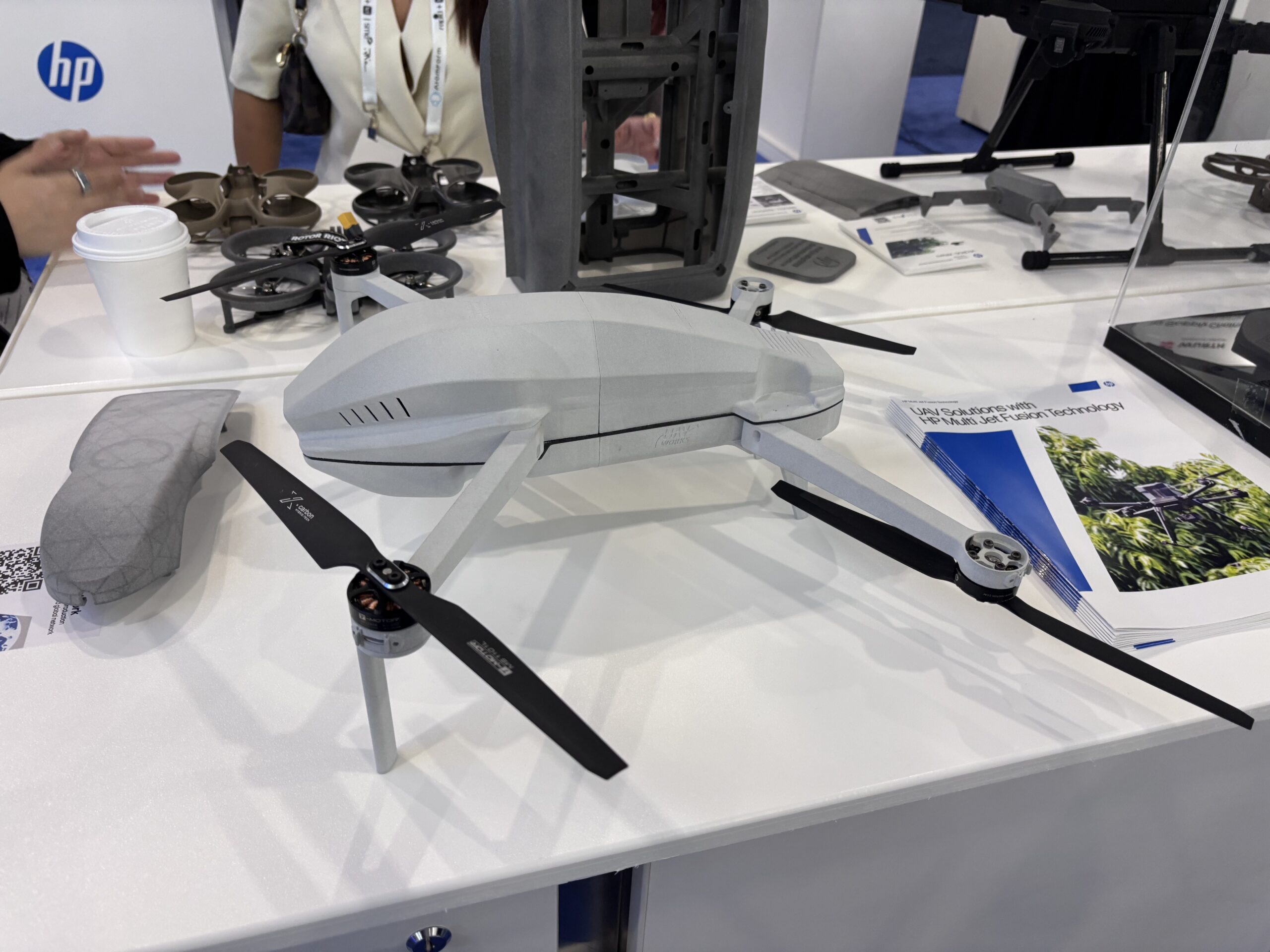
    HP 3D Printing leverages Multi Jet Fusion (MJF) to push design-for-performance into production, producing ultralight, high-resolution airframe components and optimized lattice structures that improve stiffness-to-weight ratios. By focusing on manufacturability and repeatability, HP helps programs move prototypes into consistent, production-grade parts for Groups 1–3, enabling designers to extract performance through both material and design approaches.

    EOS supplies precision metal and high-performance polymer additive platforms that answer the demands of load-critical, thermally stressed, and complex geometries found in higher-end UAVs. Their metal consolidation capabilities and high-temp polymer solutions reduce assembly time and improve maintainability, making EOS relevant across all UAV groupings where certification, durability, and mission-critical performance drive material and process choices.

    Phillips Federal, a major equipment reseller serving the federal government, has an excellent resource about producing field-ready drones that shows the significance of carbon-fiber infused materials and their impact on lightweighting and production.

    Drone components produced with HP’s Multi Jet Fusion technology on display at the event.

    Key Applications and Recent Successes

    Additive manufacturing is already transforming lead times for drone programs through rapid tooling and on-demand parts, compressing production schedules from months to weeks. The immediacy of 3D printed components enables teams to iterate on designs faster, validate aerostructures, and accelerate program cadence. This is exactly the practical outcomes Stratasys targets with its aerospace footprint, with proven, comprehensive, scalable, and disruptive technology solutions supporting drone manufacturing at all levels.

    Beyond speed, AM unlocks meaningful weight and performance gains. Topology-optimized lattices, fiber-reinforced composites, and hybrid architectures shave mass while retaining strength and stiffness. This extends endurance and payload capacity on tactical platforms. Those geometric freedoms let designers rethink load paths and thermal management, producing airframes and internal structures that would be impossible or prohibitively expensive with conventional methods.

    Be sure to check out HP’s upcoming presentation at XPONENTIAL, “Building Smarter, Flying Further: The Role of AM in Next-Generation UAVs.

    For Impossible Objects, the priority is affordable mass production and version versatility.” Impossible Objects has an impressive history with the U.S. Air Force and recently shared the real-world traction and validation with Rock Island Arsenal (RIA), which is now expected to produce 10,000 drones per month using CBAM technology and material solutions. Access to this technology creates a feedback loop from the battlefield, allowing integration immediately without the need for tooling or external resources.

    To learn more about the engagement with Rock Island Arsenal, I recommend reading the recent article published on Defense News.

    Finally, distributed production and resilience are already shifting from theory to practice. In-field manufacturing, like the Firestrom Labs expeditionary manufacturing system that uses HP MJF technology, will enable repair and mission sustainment closer to operations. This reduces dependency on long logistics chains and helps meet high-rate defense production needs while also hedging raw-material risks.

    Check out Carolyn Schwarr’s December 2025 article on Forbes.com, focused on Firestorm Labs and continued success with 3D printing.

    Impossible Objects and Titan Dynamics showcased large UAV platforms and drone systems at the event.

    What’s Next?

    The next advances aren’t just about printers. They’re about the digital thread that requires secure design files, certified material libraries, workflows, and robust technical data packages (TDPs). It’s about improved functionality through embedded electronics, or smart parts, that provide sensing data for health monitoring and maintenance. It’s about certification and standards that include qualification frameworks, material databases, and on-demand resources.

    For military and regulated commercial programs, validated digital workflows and authorized in-field manufacturing are prerequisites for moving from pilots to practiced production.

    If you build, design, manufacture, or engage in policy and procurement strategy for drone components, then it’s time for you to join the conversation at next week’s AUVSI XPONENTIAL in Detroit, MI (May 11-14).

    AUVSI XPONENTIAL is the place to see these trends in action. Industry leaders and additive OEMs, including HP and Stratasys, will present sessions on production-ready AM, secure manufacturing at scale, and the role of AM in next-gen UAVs.

    Additive manufacturing is no longer just a prototyping tool for drones; it’s an enabler of new production models. From high-volume polymer parts to carbon-fiber structural components and precision metal subsystems, AM technologies are being chosen to meet specific mission needs across UAV groupings.

    As governments and industry scale programs like Drone Dominance, the winners will be those who combine validated digital workflows, the right print technology for the mission, and production-ready supply chains. If you want to influence or adopt that future, start at the show floor in Detroit.

    If you’re interested in how additive manufacturing is reshaping drone production, supply chains, and defense readiness, these topics will also be explored at the Additive Manufacturing Strategies UAS: The Present and Future of Drone Manufacturing event on June 30, 2026.

    About the Author

    Ryan Hayford, founder of Hayford Consulting, is an additive manufacturing consultant who supports OEMs with marketing, sales, and go-to-market strategy and execution. He works with companies across the AM industry on business development, market positioning, and commercialization efforts.