• Fabric8Labs & University of Illinois Collaborate on 3D Printed Copper Cold Plates for Data Centers

    Collaboration between emerging technology enterprises and research universities is one of the most consistently winning tactics for any nation building (or rebuilding) an industrial ecosystem. It’s an especially constructive approach in a handful of nations, including the US, with the highest concentrations of both viable deep-tech startups and world-class academic institutions.

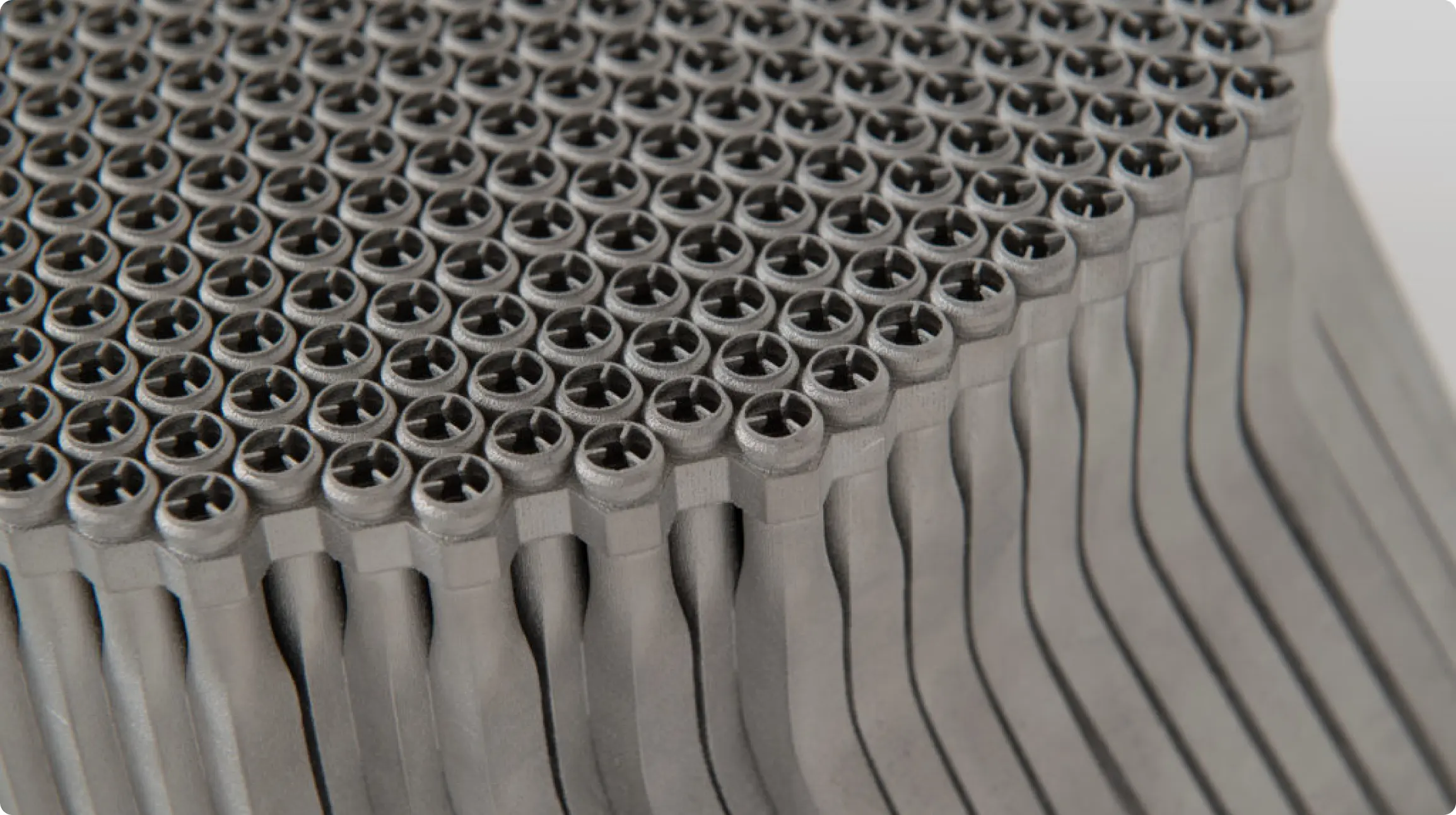
    Fabric8Labs and the University of Illinois (UI) have just announced a textbook example of this kind of work, leveraging Fabric8Labs’ electrochemical additive manufacturing (ECAM) process to produce direct-to-chip (D2C) copper cold plates for data center thermal management. As we pointed out at AM Research in our 2025 report on AM for the data center market—a report which includes coverage of Fabric8Labs—the rising power loads demanded by AI chips call for heat exchanger solutions that deploy liquid cooling methods, in addition to the air cooling methods that have been the standard for decades. AM can play a central role in the development of that new class of heat exchangers, thanks to the ability to use cooling designs, characterized by “tightly packed metal ‘fins’”, which are optimized for the surface area of chips.

    Fabric8Labs and UI have published the results of their initial work in the journal Cell Reports Physical Science. Utilizing topology optimization methods, the collaborators iterated a series of different fin design possibilities with the objective of minimizing the power required to cool the relevant chips. According to UI, most existing methods for using such finned cold plates incorporate simple shapes like rectangles and cylinders. UI, on the other hand, designed cold plates “[w]ith pointed tops and jagged edges,” shapes that Fabric8Labs’ ECAM method is uniquely well-suited to produce.

    In addition to the advantage in geometric complexity, Fabric8Labs also has advantages when it comes to material science. Since ECAM utilizes liquid metals, the technique is better for working with pure copper than are other AM methods, which tend to necessitate copper alloys, generally leading to weaker cooling performance.

    The UI researchers claim that their findings suggest the Fabric8Labs cold plates deliver improvements in data center cooling over other finned cold plates by 32 percent. As the researchers note, most of the data out there involves work aiming to improve the cost efficiency of the manufacturing process. By instead focusing on maximizing the cooling performance of the cold plates, the UI researchers may have devised a superior method for lowering long-run data center operating costs, while simultaneously pointing to a path that implies a more sustainable carbon footprint.

    In a press release about UI engineers’ data center cooling research incorporating cold plates from Fabric8Labs, first author Behnood Bazmi said, “Cooling is the bottleneck in computer-chip design. By bridging the gap between computational design and manufacturing capability, our approach provides a pathway for more energy-efficient liquid cooling of chips and other electronics. Our workflow can be applied to a wide range of cooling challenges across different length scales.”

    Senior author Nenad Milijkovic, a mechanical engineer at UI, said, “Topology optimization ends up converging on a design which is optimal in maximizing thermal performance and minimizing pumping power. …With our cold plates, data centers would only need to use 11 megawatts for cooling instead of 550 megawatts.”

    That potential is precisely why Fabric8Labs landed a $50 million investment round last November, only the latest big influx of funding for the San Diego company, and will be used largely to build up its manufacturing capacity in the US. Working with institutions like UI is an excellent way to prime that same pump, as the company’s process has now undergone validation through a project supported by funding from the US Department of Energy (DOE).

    This project encapsulates what I’ve noted in recent posts about the role of defense spending in the US economy, and how AM may both impact and be impacted by changes in that broad dynamic. Bluntly, this is what the US government should be spending money on, as opposed to doubling down on the same defense procurement formula that has done such a disservice to readying US military personnel for duty, and has been a primary contributor to the accumulation of incomprehensibly large quantities of national debt.

    The Pentagon is asking for $1.5 trillion for 2027. Can anyone seriously doubt that if even a tiny amount of effort was put into solving the problem, that the US could figure out a much better way to arm itself with a much smaller funding commitment? I say this because it absolutely mustn’t be overlooked that under the current arrangement, the Pentagon’s objective is in fact to figure out how to spend as much money as it possibly can. Shouldn’t we at least consider alternatives?

    I think the key to a starting point for strategizing how to spread the US federal budget more evenly across all its departments is to acknowledge how the current geopolitical era is demonstrating so convincingly that maintaining national security requires far more nuance than simply a plan to buy the most expensive weapons that the handful of largest defense contractors can come up with. Cybersecurity and energy security, for instance, are much more relevant to everyone’s lives than the F-35. State-of-the-art data center hardware addresses both needs. Research projects like this one need to be prioritized.

    Images courtesy of the University of Illinois
  • 3D Printing News Briefs: May 7, 2026: Metal Powder Bed Fusion, Surgical Plates, & More

    In today’s 3D Printing News Briefs, we’ll start with a strategic collaboration to advance next-generation metal additive manufacturing (AM), before moving on to funding for surgical research. We’ll end with

    Eplus3D, Rosswag, & Qualloy Sign MOU to Advance Next-Gen Metal AM

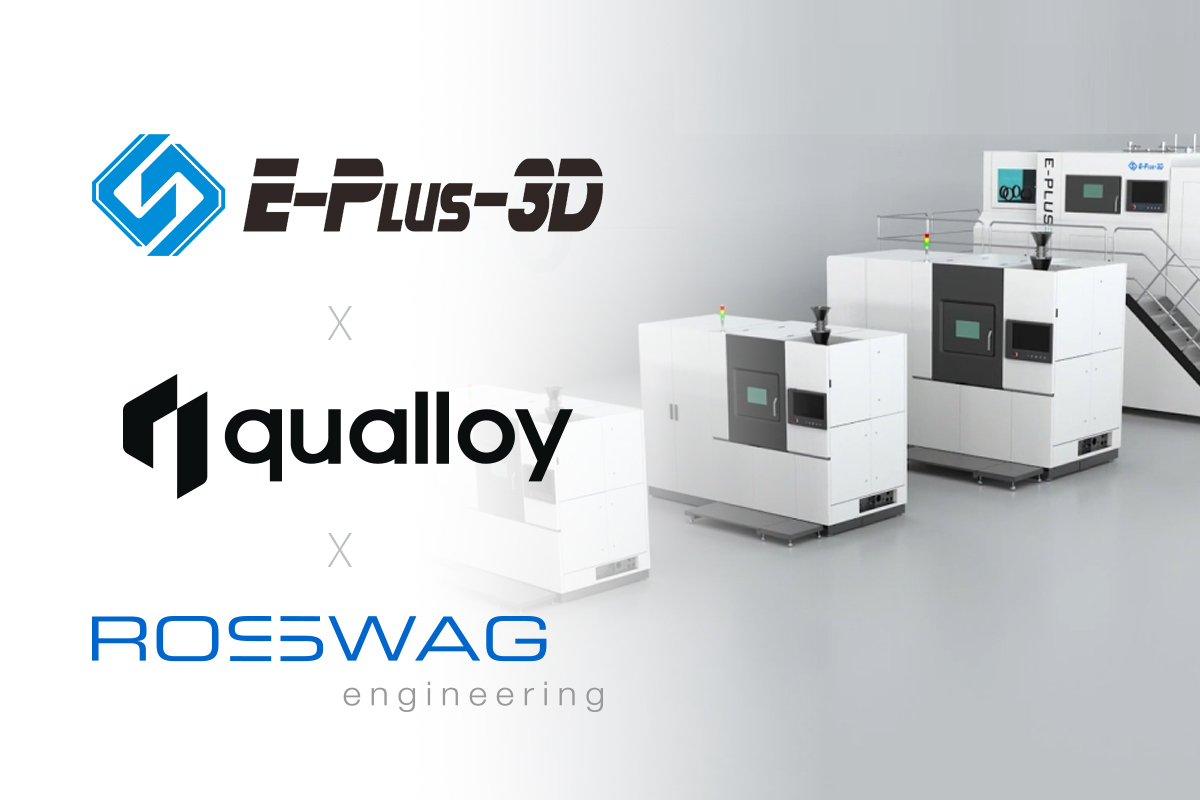
    Industrial metal AM solutions provider Eplus3D announced a strategic collaboration with qualloy, a supplier of high-quality metal AM powders, and Rosswag Engineering, a division of the family-owned company that focuses on metal AM. The three signed a Memorandum of Understanding (MOU) to work on advancing next-generation metal AM solutions and supply chains. Per the MOU, they will combine Eplus3D’s large-scale industrial metal powder bed fusion printers with qualloy’s metal powders and Rosswag’s expertise in metal processing, heat treatment, machining, and testing to create an integrated manufacturing ecosystem. Rosswag will invest in an 8-laser Eplus3D EP-M550 system, qualloy powder designed for Eplus3D printers will be qualified and made available with validated process parameters and powder specifications, and all three companies will take part in joint material qualification and parameter development. In this way, they plan to validate industrial-grade AM process performance, and develop user-ready applications.

    “By combining our large-scale, industrial LPBF systems with Rosswag’s application expertise and qualloy’s material excellence, we are creating a fully integrated ecosystem that significantly lowers the barrier for true serial additive manufacturing,” said Enis Jost, Deputy General Manager, Eplus3D Tech GmbH. “This collaboration is not just about technology, but about delivering validated, production-ready solutions with great part pricing that enable our customers to scale with confidence.”

    Durham University Researcher Gets Funding for Surgical Plate Research

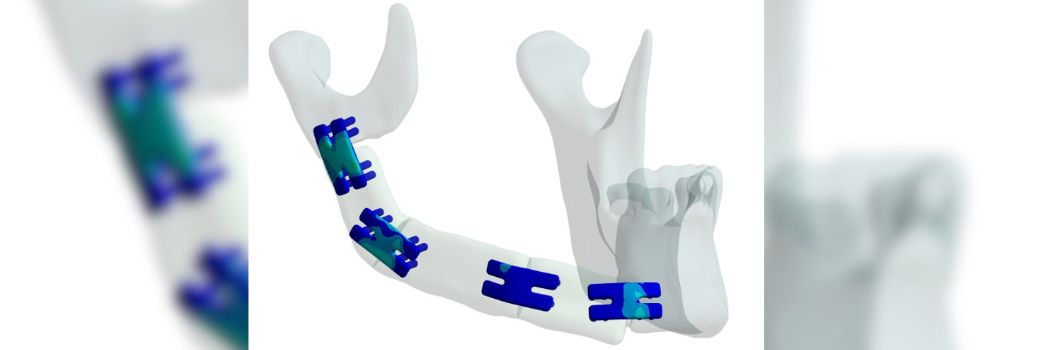
    Dr Alessandro Borghi, an early career researcher in the Durham University Department of Engineering, will receive £125,000 in funding from the Academy of Medical Sciences to support his work in optimizing the design of 3D printed custom surgical plates used in facial reconstruction surgeries. To repair the kind of jaw damage caused by oral cancer or trauma, surgeons will perform mandibular reconstruction. This typically means replacing the damaged section of jaw bones with bone taken from the patient’s lower leg and held in place with metal implants. These implants are normally bent by the surgeons during surgery to match the patient’s jaw shape, but there can be complications with this method. By using smaller mini plates, the stress is distributed more evenly across the healing bone, and surgeons can use 3D printing and virtual surgical planning to make custom plates that match the patient’s specific anatomy.

    However, bone healing can be delayed if these plates are too rigid. Dr. Alessandro, a Fellow of the university’s Wolfson Research Institute for Health and Wellbeing, is working to adjust the stiffness and shape of 3D printed surgical plates to optimize healing. He will use the funding, which is part of the Academy’s Springboard program for early career researchers, to come up with practical guidelines for 3D printing patient-specific mini plates. Dr. Alessandro will use advanced computer simulations and existing models to investigate the performance of different designs in keeping the healing bone in place, as well as how they distribute stress and support long-term healing. Then, partner hospitals will determine the effectiveness of his designs by testing them in real surgical procedures, assessing their ability to improve patient outcomes.

    IAP Uses BigRep’s 3D Printing for Atmospheric Modeling Systems in LiDAR Research

    Climate change, space missions, and weather forecasts all depend on precise atmospheric data. To get it, scientists use a remote sensing method called LiDAR (Light Detection And Ranging) to shoot laser pulses from the ground to the edge of space, then analyze the backscattered light to measure and monitor temperature, metals, wind, and other particles over time. Some of the best places to deploy LiDAR systems are in remote regions like the Arctic and high-altitude mountains, but it’s not easy to deploy them in these extreme environments. Researchers at the Leibniz Institute of Atmospheric Physics (IAP) in Germany are working to make LiDAR more deployable, but instead of building observatories in these unforgiving places, they’re developing compact, cost-effective, remote mobile systems that run autonomously. In order to compress this instrument, while integrating the necessary technologies (optical system, lasers, telescopes, detectors, etc.), the IAP team turned to large-format 3D printing from BigRep.

    The IAP team is using two BigRep ONE 3D printers, which have a build volume of 1 cubic meter, to build custom parts in-house. BigRep has an open materials system, so in addition to using its verified filaments like flexible TPU, IAP can also use compatible materials as well. An onsite BigRep DRYCON helps the institute with drying, controlled storage, and annealing of filaments. Some of the parts the team prints include the LiDAR system’s outer housing, structural components, the compressor, an optical table mounted inside the system, insulation, and custom enclosures for electrical systems. Because the LiDAR system was so experimental and iterative, 3D printing was really the best choice, and the technology will also make it easier to get replacement parts in the future. Working as part of an international network, IAP’s compact LiDAR systems with 3D printed parts will be deployed in locations like the Canary Islands and Switzerland, and there’s already one operating in northern Norway.

  • A Hilux for the Seas

    With the US turning its back on exquisite, expensive military goods in favor of volume manufacturing of less expensive items, new strategies should come to the fore. But attritable $250,000 drones will still be too expensive for long conflicts. If it is difficult to manufacture submarines and carriers are vulnerable, why not completely change what is made? For force protection of the US Navy, to protect expeditionary Marine units, for risky missions, and to protect shipping, what is the lowest-cost solution we can come up with? What if the US put a ring not on it but around its existing craft, rings of inexpensive autonomous vehicles that defended the fleet and installations? What’s better than a loyal wingman? I give you the Kamikaze Bluejacket. Sacrificial swabby? Or perhaps the disposable seamen? Drownable pawn? Interchangeable admiral? Harikiri boatswain? Scuttled skipper? Deep Six Sea Daddy? AJ Keeled Over? Suicide squid? Suicide squid it is.

    Now, let’s have an HDPE (high-density polyethylene) boat hull that’s nice and rugged, and cheap. Could you 3D print these things if you suddenly needed a lot of them? Of course. But we can order them from Tideman Boats now. Let’s pick the Valor, a triple-engined 300 HP open-sea model that can be up to 14 meters long with a payload of up to 15000 lbs. The boat is around $250,000, engines will be around $75,000, and let’s say another $150,000 for radar and coms. Let’s then make a lot of versions of this boat.

    • On one version, we put an entire CIWS (close-in weapon system) unit; the seakeeping will suck, but this will give us good anti-ship and missile defenses.
    • On the second type, we can put a 36-cell Uvision Hero 120 loitering munition unit with 150 munitions. Each munition can loiter for an hour and has a maximum range of 50 kilometers.
    • Another version carries two Rafael Spike NLOS Missile Systems, preferably the Naval unit with 8 missiles and a 50 caliber station. 
    • Another version will carry an Altius loitering munition set with a 500-kilometer range.

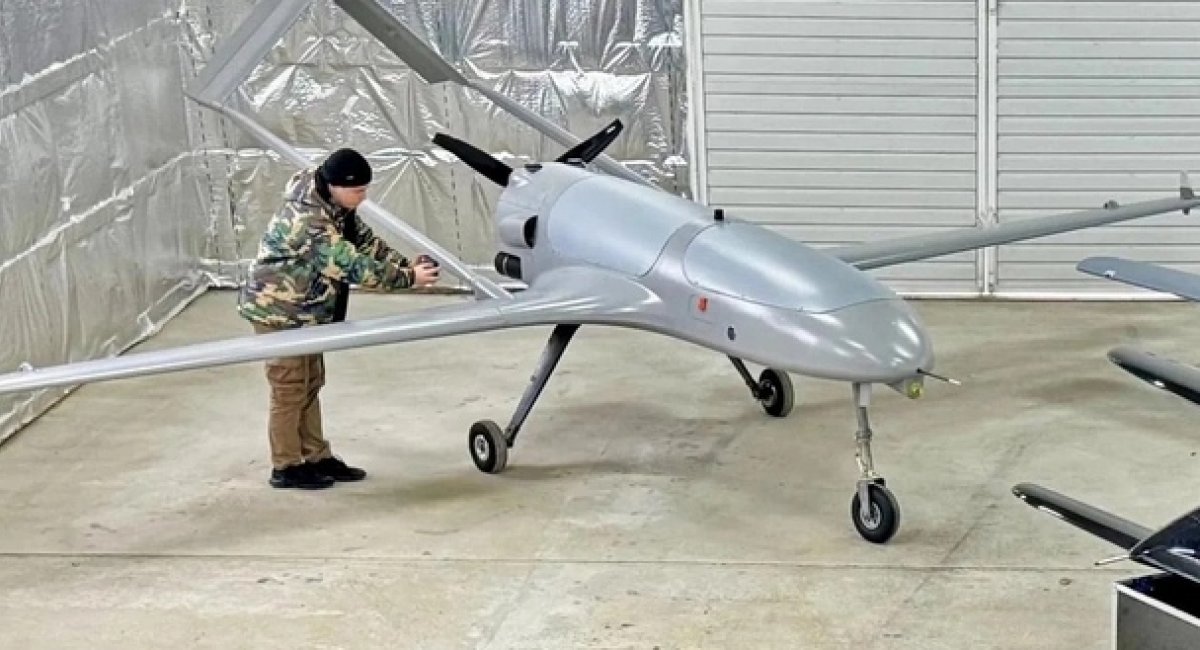
    A technician inspects a fixed-wing uncrewed aerial vehicle (UAV) inside a hangar.

    • Another one will carry Liutyi long-range strike drones with a range of up to 2000 kilometers for anti-ship strikes.
    • Another boat will carry 10 long-range Firepoint drones for ISR and relay.
    • Then one will carry a four-pack of NSM strike missiles with the launcher. This will be the most expensive boat, with one missile costing more than most of the other boats.
    • Then, ten boats will carry 3000 kilos of explosive charges and 500 FPV drones each; these will be used to confuse missiles and attacks. If an attack comes, they break off and launch all the drones at once, forming a kind of controlled chaff cloud. They can be reused and do this over and over. If a missile or vessel is close, it can be used to strike. The boat itself can function as a mine or be used to ram other vessels.

    Toloka 1000 Ukraine drone. Image courtesy of the Ukrainian-developed drone program.

    • Another five will not have the drones and be more similar to the Toloka TLK-1000 strike boats used for bridges and the like.
    • Another will be a launcher for 2 Marchica, 1,000-kilometer subsea loitering munitions that can remain on the seabed for days.
    • Another boat will carry 20 Toloka TLK-150s for subsea swarm attacks.
    • Then another boat will have a Mark 32 Triple Launcher or similar torpedo pack with spare torpedoes. 
    • Another vessel will have an NSM unit and a Mark 32.
    • Yet another will have 20 “Sichen” 1,400-kilometer range autonomous drones for long-range strikes against bunkers and the like.
    • Then one will have 100 TAV interceptors for high-speed interceptions of up to 300 kilometers per hour.

    We could then have 5 fuel boats that can refuel and resupply the other boats. We add solar panels and electrical systems to extend life at sea a bit and assemble flotillas of these vessels. Now, you’re probably wondering, why so many boats? We don’t have to make one boat to do it all. In fact, one-size-fits-all weapons systems have not done well and have been too costly. Instead, we can assemble a flotilla of 500 ships to surround fleets and scout ahead of them. If individual weapons systems don’t work, we take the boat back and put a new one on it. With more containerized solutions, racks, self-contained systems, and the like, this will become easier. We don’t need to make the perfect boat. We can just spend one million making something that may work. Test it, field it, and replace it with the new one. It will be difficult for an enemy to engage this kind of a swarm-carrying flotilla because so many types of munitions can be deployed in so many different ways. With constant upgrades, new weapons systems would be available. So it will be impossible for you to gauge their capabilities or anticipate some attacks.

    Imagine you’re seeing spotter drones of three types: one is a long-range loitering munition, and the other is an interceptor drone. Which boat are you up against? Can you counter NSM? What about a flotilla of small drones or one coming straight at your hull? What if they managed to get a lot of these different munitions to arrive at once? Wouldn’t that overwhelm your capacity to act and systems? How would you attack and sink all of these ships? And while you do it? While you’re busy engaging all of these targets and munitions, it’s that Marchica quietly waiting on the seabed that will get you, overlooked by an overstimulated sonar operator. These vessels will cost between $500,000 and $5 million to build. And one flotilla could beat most navies. You could perhaps get people at home to pilot them all remotely at a super low cost, or rely on autonomous teaming.

    This is the kind of Navy that 3D printing can build. Sure, we can help with the $5 billion submarines. But 3D printing can also help if you don’t build them in time. We could 3D print the hulls. But, even if we don’t 3D print all the housings, integration, additions, reinforcements, and other gear is the advantage here. Rather than a few ships, we could make an ephemeral, ever-shape-shifting cloud of defenses. A force that could take out a swarm of speedboats would blunt a swarm of drones and would be able to attack or defend a large array of targets, all without any loss of life. All for less than the cost of one Littoral Combat Ship. 3D printing will win here because it enables inexpensive, faster integration and adaptation of systems that will collectively outperform.

    If you’re interested in how drones and 3D printing are coming together in real-world applications like this, the topic will also be explored at the Additive Manufacturing Strategies UAS: The Present and Future of Drone Manufacturing event on June 30, 2026.

  • SWISSto12 and HPS/LSS Build Unfurling Antenna for Next-Gen Satellite

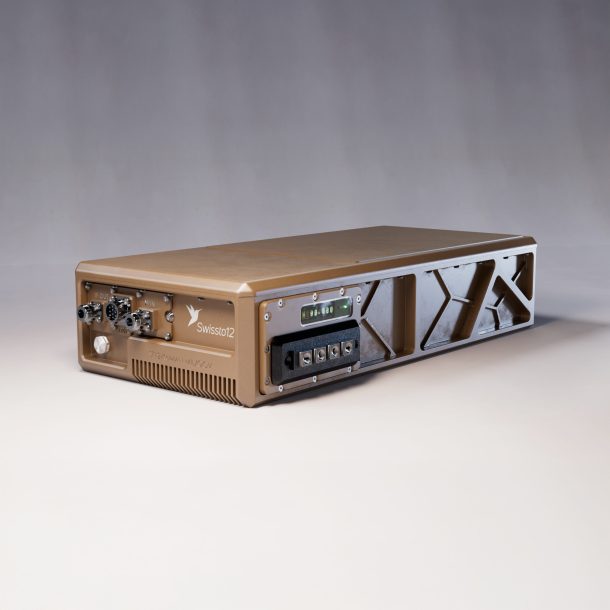
    SWISSto12 is to work with HPS/LSS. High Performance Space Structure Systems and Large Space Structures are two separate firms that work together on large antenna reflectors. The two will work on the large deployable reflector subsystem (LDRS) for the NEASTAR-1. That satellite will be a geostationary direct-to-device broadcaster based on the compact HummingSat. This kind of platform could quickly find many applications in direct-to-device communications for the military, rescue operations, company communications, remote connectivity, and even as a kind of Starlink replacement.

    Helping them on this project are ASP, AST, DLR, Tesat, Thales Germany, Jena Optronik, and Rockwell Collins Germany. SWISSto12 is continuing to leverage its 3D printing expertise to develop highly performant compact RF components, then compact satellites, and, as a European capability, now offers an alternative to US dominance in satcom.

    The HummingLink-SOTP, SWISSto12’s partially 3D-printed GEO satellite user terminal. Image courtesy of SWISSto12.

    The European Space Agency’s (ESA) Advanced Research in Telecommunications (ARTES) program came up with the antenna, while this embodiment, NEASTAR-1-LDRS, will be mainly funded by ESA and the German Aerospace Center (DLR). SWISSto12 is hoping to win more contracts in secure communications from Germany, which seems to be looking to SWISSto12 to develop sovereign secure communications. Beyond this, there could be other countries in Europe that can no longer rely on the US for communications or sensing that could be interested in more solutions from SWISSto12.

    Swissto12 CEO Emile de Rijk said that,

     “Collaboration with HPS/LSS was fast and effective from the first day. We value their culture of precision engineering, deep-tech innovation, and commitment to excellence along with a drive for fast and efficient execution. They have demonstrated a strong technical heritage and proven track record in building LDRS, notably for ESA missions, underscoring the progress of ESA and DLR’s vision to develop resilient, sovereign space capabilities.”

    While HPS CEO Ernst K. Pfeiffer mentioned that,

    “In addition to the successful signing of another major HPS/LSS contract, we are proud to contribute to European technological sovereignty through this Swiss‑German collaboration; we are delivering tangible business results just four months after German ESA‑CM25 decisions were made.”

    And Laurent Jaffart, Director of Resilience, Navigation and Connectivity at ESA, noted,

     “ESA’s long-term investment in innovation and partnerships enable cutting-edge technologies to be brought to market, crucially boosting Europe’s global competitiveness, while strengthening autonomy and resilience. By leveraging Europe’s industrial excellence within two of our key Member States, this contract is a prime example of how strong collaboration will be translated into advancing the next-generation of connectivity – particularly within the direct-to-device domain.”

    SWISSto12 uses MetalFabG2 metal 3D printers from Additive Industries to produce RF components such as this X GEO multibeam cluster. Image courtesy of SWISSto12.

    This is a very timely move by ESA and SWISSto12; traditionally, European nations have relied on American signals intelligence, satellites, and communications networks. It was always assumed that the US lead in space would mean that NATO’s data and communications infrastructure would be bolted onto US infrastructure. The US has cut off aid to Ukraine, cut off intelligence sharing to Ukraine, and cut intelligence and communications access repeatedly at crucial moments. This was done with such capriciousness that no nation worldwide can rely on the US anymore. Any nation that wants to communicate securely with its own embassies or military overseas will therefore need to develop its own capability. The French, Chinese, Russians, and Israelis are probably the only nations that have this capability. For other wealthy countries, there are few options because US firms dominate parts of the global satellite industry. SWISSto12 has a unique opportunity, therefore, to offer a relatively lower-cost solution to countries worldwide.

    I’m a huge fan of what they’re doing. SWISSto12 doesn’t sell machines, parts, or a solution. It makes RF and other components that fit into larger solutions, and runs an integration project in which many firms together build a satellite based in part on its technology. It’s no surprise that the company received 73 million in funding and is embedding itself in other constellation projects as well. Across the world, SWISSto12 is leveraging its 3D printing and RF expertise to become an indispensable player in the satellite market. At the same time, it becomes a lifeline for nations wishing to develop their own sovereign satellite capabilities. This is a far better strategy and far better business than most anyone in additive.

  • 3D Printing Financials: Protolabs Starts 2026 Strong, with Metal Printing Leading

    Protolabs (NYSE: PRLB) kicked off 2026 with a strong quarter, showing steady growth, better margins, and improving customer engagement, even though some parts of the business, especially 3D printing in Europe, are still weak. The company is gaining larger customers, but its 3D printing business is still mixed. Metal printing in the U.S. is strong, but demand is weaker in other regions.

    In the first quarter, Protolabs reported record quarterly revenue of $139.3 million, up 10.4% year over year. Most of that growth came from CNC machining, which was up 17.6%. Injection molding and sheet metal grew at slower rates of 3.5% and 2.3%, respectively.

    Profit also improved. Net income was $8.1 million, or 33 cents per share, compared with $3.6 million, or 15 cents per share, a year earlier. Meanwhile, adjusted EBITDA also rose to $22.8 million, up from $17.4 million, while adjusted earnings per share reached 54 cents, the company’s highest level in more than five years.

    Margins improved as well. Gross margin improved to 46.2%, up 1.4 percentage points from both last quarter and a year ago. That was helped by stronger factory usage and some pricing adjustments. Operating expenses rose slightly to $48.9 million, but as a share of revenue, they actually went down, showing the company is running more efficiently as it grows.

    3D Printing: Strong in Metal, Flat Overall

    Protolabs’ 3D printing revenue was $20.5 million in the first quarter, up slightly from $20.2 million a year ago. The U.S. grew, but Europe declined, leaving overall results mostly flat. Still, one area is clearly working. Metal 3D printing is growing fast, with Direct Metal Laser Sintering (DMLS) up nearly 30% year over year.

    That demand is coming mainly from aerospace, defense, and other advanced industries that need complex parts, where metal additive makes sense. These are the same sectors driving growth in the company’s machining business.

    On the earnings call, CFO Dan Schumacher told investors that capacity is already being added to support that demand.

    “We have around 30% growth in metal 3D printing, so we’re adding DMLS printers as well,” he said.

    Protolabs has also added 25 GE Additive Concept Laser Mlab and M2 machines for DMLS. Image courtesy of Protolabs.

    Network Business Still Weak

    One clear issue this quarter was the network business, which was weaker, especially in 3D printing.

    CEO Suresh Krishna admitted, “We did see some weakness in network demand in 3D printing. We are making some changes in our go-to-market areas so that we can work to accelerate network revenue growth in the future.”

    Suresh Krishna, President and CEO, Protolabs. Image courtesy of Protolabs.

    During the earnings call, the company also talked a lot about moving into production. Historically, Protolabs has been known for prototyping. That is now changing. Management made it clear that customers are asking for more production capabilities, including in 3D printing.

    “We are early in our journey to build the capabilities needed for production,” Krishna pointed out. “We see more interest in injection molding, and in 3D printing as well.”

    Meanwhile, the U.S. and Europe are still moving in different directions. In the U.S., demand remains strong, especially for metal parts used in aerospace, defense, and robotics. In Europe, however, weaker demand is holding back overall growth.

    The company is trying to fix that through what it calls a “strategic reset” in the region.

    Krishna detailed, “We have taken deliberate actions to reset the business in Europe, including targeted reductions in the first quarter to align cost structure with current revenue levels and improvements in go-to-market operations. We started some of Europe’s go-to-market work in late 2025, including alignment to core industries and simplified and increased customer engagement. I’m proud to say that these efforts are beginning to yield early results, with the region delivering 11% sequential growth in the first quarter, a sign that our teams are executing with discipline and focus. These early improvements are an important step towards stabilizing performance and positioning Europe to contribute to both growth and margin expansion going forward.”

    Bigger Customers, Bigger Opportunities

    Another clear trend is the company’s focus on bigger customers. Revenue per customer rose 20% year over year, showing those relationships are getting more serious. Most of these customers are in the aerospace, defense, and medical industries. These are the industries most likely to use advanced manufacturing, including 3D printing.

    As Krishna put it, they care about “speed, reliability, and quality,” which plays directly into Protolabs’ strengths.

    Looking ahead, the company kept its full-year 2026 guidance at 6% to 8% revenue growth, suggesting a cautious outlook despite the strong start. For the second quarter, Protolabs expects revenue of $140 million to $148 million and earnings per share of 50 to 58 cents.

  • BLT’s Partnership with Shenzhen Startup Illustrates Why a Robotics Boom Depends on 3D Printing

    The way that manufacturers produce goods is changing, concerning both the techniques involved, as well as the overarching strategies which organize those techniques into systems of output. Additive manufacturing (AM) is relevant to this broad-sweeping shift in more ways than one, providing suppliers with additional means for delivering final products to consumers, while also contributing to the health of a range of other manufacturing techniques.

    The Chinese AM original equipment manufacturer (OEM) BLT just announced a partnership with Haptron Scientific, a Shenzhen startup that makes device sensors. In this case study, BLT and Haptron collaborated to use metal AM for production at scale of force sensors for the humanoid robotics market, an area seeing major interest in China right now despite valid concerns over a potential bubble.

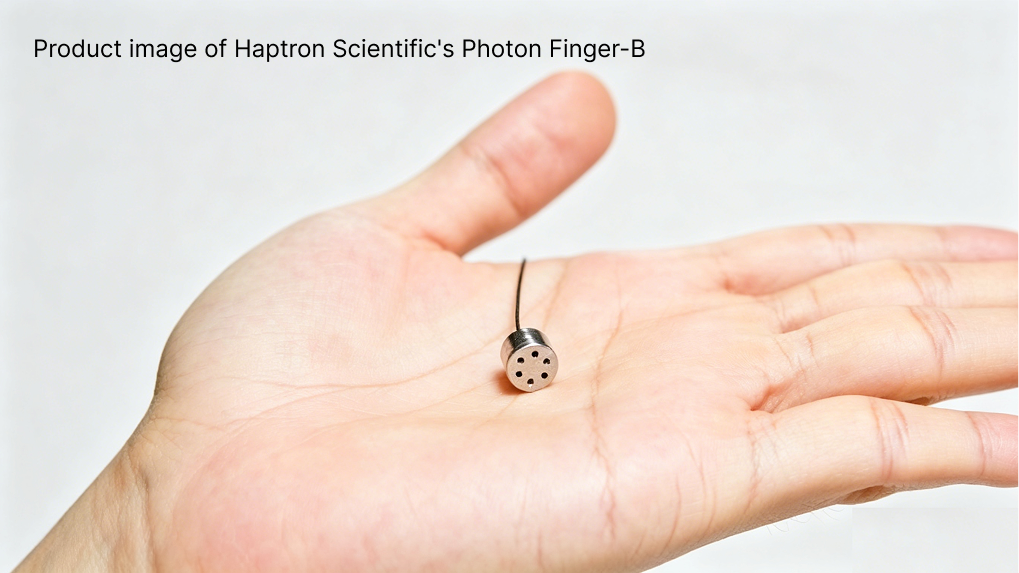
    One of the biggest obstacles standing in the way of a humanoid robotics boom is the difficulty in engineering robotic hands that can adequately mimic human performance. Haptron Scientific has reportedly developed “the world’s smallest optic-based force sensor,” a design which the company has incorporated into robotics components including the Photon Finger Max and PhotonR40 wrist sensors. Yet, because of how small the part is—its diameter is just 8.5 millimeters (mm)—Haptron has found it difficult to consistently produce with conventional methods.

    That’s the catalyst behind the company’s work with BLT, which has lately reported major improvements in throughput capabilities. Regarding one force sensor that BLT made for Haptron, the Photon Finger-B, BLT notes that not so long ago, the company was only achieving “tens of units” per build plate on its metal systems. Now, BLT is reliably producing nearly 1,000 of the units per build plate, and has delivered several thousand units to Haptron Scientific.

    Further, AM enhances the performance metrics of the final product. For the PhotonR40 wrist sensor, the ability to execute a monolithic design enabled a weight reduction of 20-30%, leading to marked improvement in the agility of the robotic systems with which it’s integrated.

    This accomplishment in engineering is revealed as all the more important when you consider that China isn’t interested in building up humanoid robotics simply as an act of pure research: the country is targeting deployment of humanoid robots on electronics assembly lines by the end of this year. Whether or not China actually meets that deadline, it’s the sort of ambitious objective that has the power to will technological progress into existence.

    And, the dynamic at play perfectly embodies the industrial versatility implied by AM-enabled engineering gains. BLT, and Chinese AM OEMs more generally, have been making a point lately of boasting the viability of their technologies for mass production of small, precise parts. Whether a metal printer turns out the hinge for a foldable smartphone, or contributes to the development of a robot that can build the hinge, the final outcome is more or less the same.

    Even more consequentially, the more that Chinese OEMs are able to progress at producing large amounts of small, precise components, the more plausible it becomes that these same techniques could ultimately be used for the Holy Grail of mass production—semiconductors—by leveraging the technology for chip packaging tools. It’s certainly possible that I’ve become so enamored with the “AM for advanced packaging” narrative that I’ve started to see it everywhere. But, given how singularly vital chips are to the global economy, and in light of the background of the Great Power competition presently coloring all the world’s industrial affairs, it’s also possible that China is engaging in a subtle demonstration of force meant to convey that the nation’s semiconductor activity can survive just fine without the West.

    In any case, a machine that can contribute both directly and indirectly to bolstering smartphone supply chains is, in itself, quite a magical device indeed. This is very different from the nebulous sort of hype that characterized AM industry bluster in moments that led up to bursting bubbles. This feels real.

    Images courtesy of BLT

  • Canada Releases 3D Printing Library of Minis for War Games

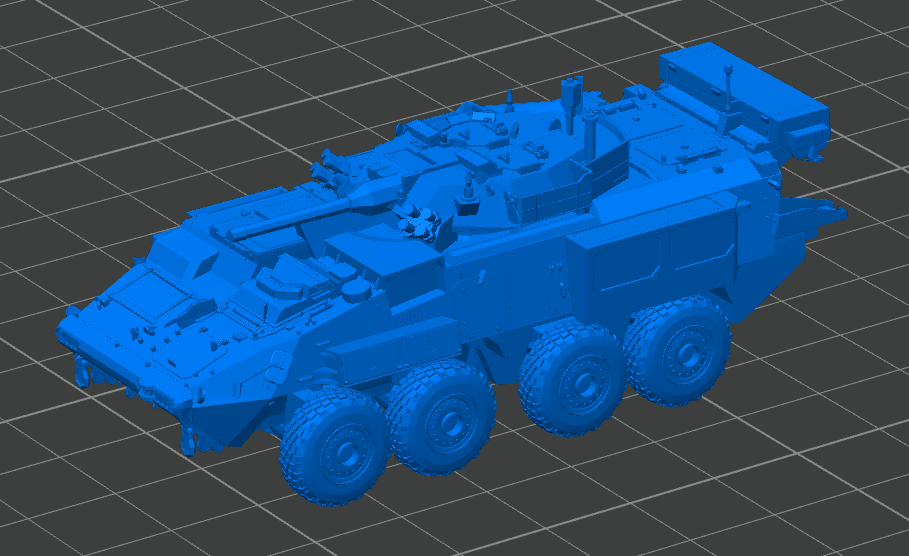
    From Reddit’s 3D printed Minis community, we learned that the government of Canada has released a 3D printing library of military vehicle Minis. Now this may seem to be a little silly, but I think it’s a great idea. The country is offering a library of vehicles for free download. These vehicles include the Leopard 2, the Tracked Light Armoured Vehicle, the Heavy Logistics Vehicle Wheeled, and more. The collection also includes enemy vehicles such as the T-90. The files are released under Crown Copyright, a commonwealth type of copyright to ensure that the government has the ability to use things it creates, while restricting some others from using it. You can not use these models commercially.

    But, if you want a highly detailed model of a tank (and frankly who wouldn’t?), this is a great source. I think a lot of these models would look great in DLP, but am sadly without any Vat Polymerization systems in my house at the moment. The models are generally very detailed and seem to come from actual vehicle scans. Some may not immediately work, or work without supports on Material Extrusion systems, but I think that they’re a valuable addition for anyone that needs similar models.

    The models were made from the ALSC – Army Learning Support Centre, the distributed group and individual training provider for the Canadian military. Their content is spread over the Defence Learning Network and beyond. The ALSC also makes things for the Combat Training Centre (CTC) such as videos, graphics, and more.

    Offering an online library of files is of course a great way to familiarize soldiers with 3D printing. In a low-effort, easy way, you get to make something non-critical first. By creating this portal now, they can learn how to spread files to soldiers, what issues arise, and how intensive usage is. This is a great way to learn before you start letting people 3D print tourniquets. It is a low-risk way to spread the usage of 3D printing through an organization.

    One of the reasons for creating an online library where people can download stuff is to let people 3D print their own games. With Commander’s Intent, they’re letting people print their own tokens for a game playable on 1:50k maps. These maps, where 1cm equals 500m, are often used in the military, giving you just enough knowledge of a particular area to make the right decisions regarding hills and the like, while also helping you better understand the terrain you will encounter. It’s maybe not the map you’d want to have when solo cresting a difficult mountain range, but for you and your 120 best buddies in trucks, it’s ideal.

    The resulting war game can be played by people in their own time, letting them explore and learn. The key concept in the game is Command Intent. Rather than you telling me where and when I need to do what, it’s you telling me what our objectives are, what we want to accomplish, and what needs to be done. So if I’m cut off, I can independently make the right determination of what to do or not to do. Famously, Helmuth von Moltke said, “no plan survives its execution.” So it’s best to give every key player the knowledge to operate independently once the plan collapses due to a sudden collision with reality.

    The full von Moltke quote reads,

    “No plan of operations extends with any certainty beyond the first encounter with the main enemy forces. Only the layman believes that in the course of a campaign he sees the consistent implementation of an original thought that has been considered in advance in every detail and retained to the end.”

    Outside the military realm, this is an important lesson in strategy, business, and beyond. Rather than try to absorb it in a lecture, the goal of this game is to let people experience it. This could work especially well for people with experiential learning styles, and perhaps the tokens themselves may help people who are more likely to learn with tactile experiences.

    What’s more, you can also 3D print physical flash cars in NATO Map tokens that depict NATO’s Mission Task Verb language. These symbols and language are key to NATO orders, and include things such as Support by Fire or Advance To Contact. Very specific, they are embodied in STANAG 2287 and other standards, allowing for a precise understanding of key things to be done. They’re also called Mission Task Verbs. Now, you can touch and learn through these tokens. The same tokens are used to manually mark maps and are still used in digital systems to indicate what is to happen. They’ve even included a Staedtler Marker Holder, should you wish to mark up some maps and keep your color coded pens happy.

  • Continuum Powders Brings in Jon Cozens to Scale Its Circular Metal Model

    Continuum Powders has named Jon Cozens as its new chief executive officer, a move that points to a shift in where the company is headed. After spending the past few years building out its technology, the focus now is on scaling it. The Houston-based materials company said Cozens will lead that next phase, with an emphasis on growing production, working more closely with customers, and expanding adoption across industrial markets.

    The appointment comes at a moment when Continuum is no longer in the early “prove it works” stage. The company says it already has an active pipeline and is starting to see real commercial traction. At this point, it’s less about developing the technology and more about executing, taking what’s already working and doing it at a larger scale.

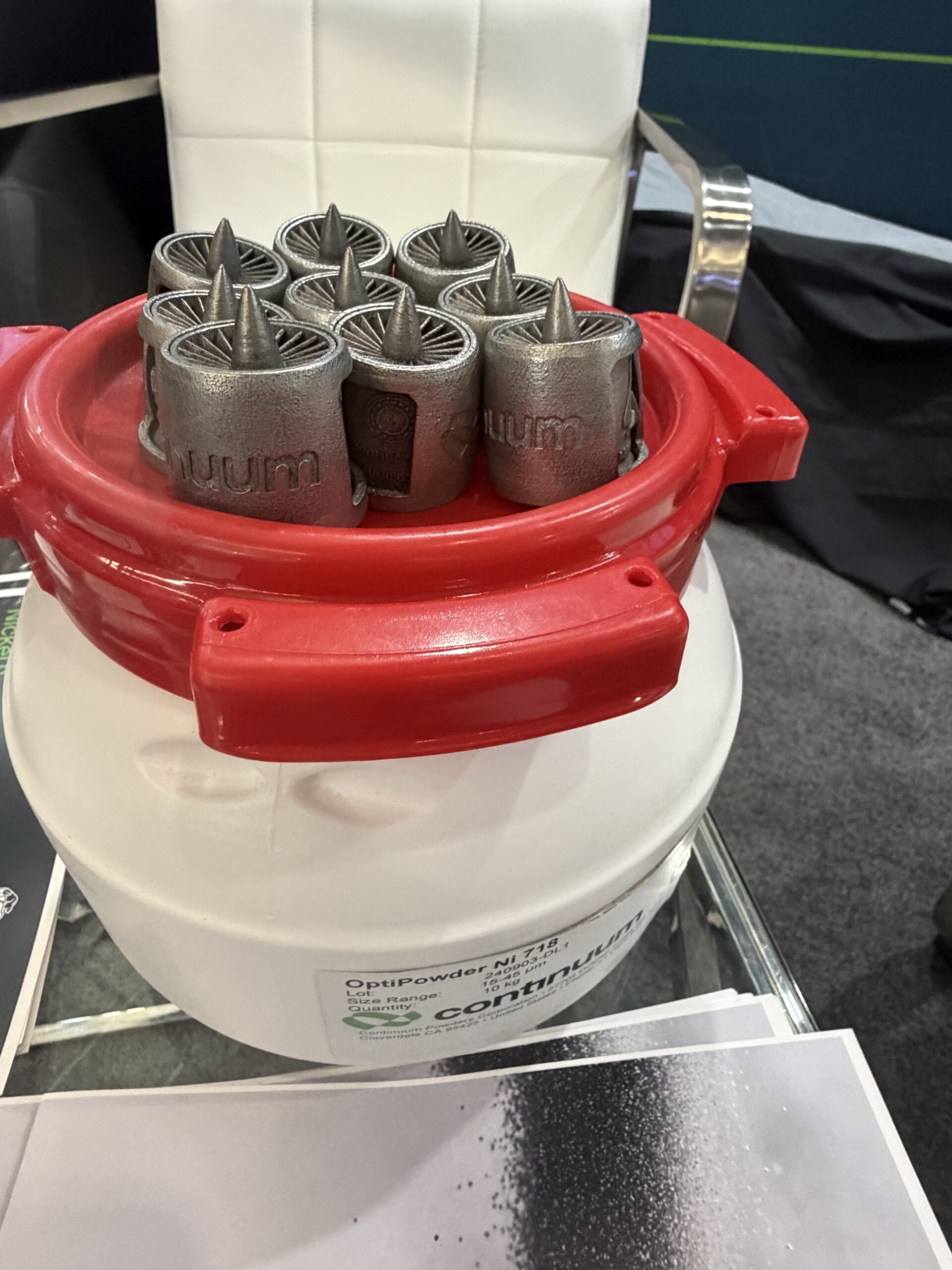
    Continuum’s stand at RAPID. Image courtesy of Sarah Saunders/3DPrint.com.

    Continuum is a key part of the additive manufacturing (AM) value chain: metal powders. These materials are used in processes such as laser powder bed fusion and binder jetting, and they play a big role in how well a part performs.

    What sets Continuum apart is how it makes them. Instead of relying on traditional mining and multi-step refining, the company uses a patented system called Greyhound Melt-to-Powder (M2P). The process converts alloyed metal waste, basically scrap, into high-performance, spherical powders in a single step. 

    At its core, Continuum takes material that would otherwise be thrown away and turns it into high-quality, usable powder. That approach reduces the need for newly mined materials, cuts emissions, and reduces waste, while still meeting the performance requirements these powders need to meet. Because of that, the company is starting to position itself not just as a materials supplier, but as part of a more circular manufacturing player. Its goal is to make metal powder production more local and less dependent on long, complex supply chains, something that is becoming super important in sectors like aerospace, energy, and defense.

    Continuum’s patented Greyhound M2P process. Image courtesy of Continuum Powders.

    Continuum is backed by Ara Partners, which led a $36 million funding round to support the company’s growth. The firm focuses on industrial and decarbonization investments, and its backing gives Continuum both capital and strategic support as it works to scale its metal powder production and expand its reach.

    A CEO Built for Scaling

    Cozens’ background matches what the company needs next. He has spent over a decade working with industrial and cleantech companies, often helping technologies move from early use to full-scale production.

    Before joining Continuum, he was CEO of Aries Clean Technologies, where he focused on waste-to-energy systems. Earlier roles at companies like Mura Technology and Fulcrum BioEnergy also centered on turning complex, sustainability-driven technologies into real-world infrastructure. Today, his experience matters because Continuum is no longer trying to invent something entirely new; it’s trying to scale a system that already works.

    “I’ve spent much of my career helping industrial technologies move from early promise into commercial scale,” Cozens wrote in a LinkedIn post announcing his new role. “What stood out to me here is that Continuum already has a strong foundation, both technically and commercially, and the team has built something that’s gaining real traction. There’s still a lot to do. Scaling is rarely a straight line. But the opportunity here is clear.”

    In the company’s announcement, Cozens also pointed out that “the technology is proven, customers are seeing the value, and the foundation is already in place. The opportunity now is to scale with discipline, expand access to high-quality material, make supply chains more resilient, and do it in a way that makes economic sense for customers. That’s what excited me about joining Continuum.”

    Why This Matters for AM

    Continuum 3D printing at RAPID. Image courtesy of Sarah Saunders/3DPrint.com.

    Metal powder is a bottleneck in AM. As more parts move into production, the need for consistent, high-quality material at scale and at a cost that works becomes more important. Continuum’s approach takes on several of these challenges at once. By recycling alloyed waste, it could reduce the dependence on volatile raw material markets while also lowering emissions compared to traditional production methods. At the same time, the company is focused on maintaining the material performance required for high-end applications. It is already targeting sectors where those factors matter most, including aerospace, energy, and industrial manufacturing.

    The company is now focused on scaling its operations and actually growing in the market. Moving from building the technology to running it at scale is a step most 3D printing companies eventually face, and it’s not always a smooth transition.

  • 3D Printing Financials: Align’s Growth Runs on Volume

    Align Technology (Nasdaq: ALGN) kicked off 2026 with steady financial results, with most of the growth coming from its core high-volume 3D printing business.

    The maker of Invisalign reported first-quarter revenue of $1.04 billion, up 6.2% year-over-year, as demand for its clear aligners continued to grow globally. The growth is stable, and it’s being driven by more aligners, more cases, and more 3D printing.

    A 3D printing business at its core

    Align’s clear aligner segment, built around 3D printing, is still where most of its revenue comes from. In Q1 2026, clear aligner revenue reached $856 million, up 7.4% year-over-year, while shipments hit a record 685,700 cases, growing 6.7% compared to last year.

    That matters because every Invisalign case involves mass customization, which means thousands of unique dental aligners are produced using additive manufacturing. So more cases mean more 3D printed parts moving through Align’s production systems.

    Growth was particularly strong outside the U.S., with double-digit expansion across Europe, Asia-Pacific, and Latin America, which helped make up for a slower North American market. This shows that Align isn’t just using 3D printing; it’s one of the biggest production uses of it in the world.

    Invisalign aligners. Image courtesy of Align Technology.

    Volumes up, margins holding

    Despite ongoing macro uncertainty, Align managed to keep profitability rather stable. The company reported net income of $112.8 million, operating margin of 13.6%, and gross margin of around 71% (adjusted). These margins suggest that even as Align continues to scale production by printing more aligners each quarter, it is maintaining efficiency in a highly automated, digital manufacturing environment.

    That’s not easy to do. High-volume 3D printing has had issues with consistency, cost, and speed. Align’s ability to grow volumes while keeping margins steady shows how far production-grade additive manufacturing has come.

    Invisalign clear aligners up close. Image courtesy of Align.

    Still, not every part of the business moved in the same direction. Align’s imaging systems and CAD/CAM segment, which includes scanners like iTero and related digital tools, generated $184 million, up just 0.9% year-over-year and down sequentially.

    This side of the business is less directly tied to 3D printing output and more to capital equipment spending by dental practices. The slower growth here reflects a broader trend seen across medtech and dental markets: clinics are being more cautious with purchases of large equipment. Clearly, the growth is being driven by aligners, not hardware.

    $200 million buyback signals confidence

    Alongside earnings, Align also announced a new $200 million stock repurchase program, set to begin in May 2026. The company already completed a $200 million buyback earlier this year. Buybacks usually mean the company thinks its stock is undervalued or expects strong cash flow. Align ended the quarter with over $1 billion in cash, giving it plenty of room to run the business and return money to shareholders

    For the broader 3D printing industry, Align’s results are worth paying attention to, not because of new technology announcements, but because of scale. This is one of the clearest examples of additive manufacturing working as a true production technology with millions of parts produced every year, highly automated digital workflows, consistent margins at scale, and a global demand driving volume growth.

    While many AM companies are still working toward industrial adoption, Align has been operating there for years. The company built its business on a highly scaled 3D printing process, where molds are printed and then used to form aligners, and that system is still the backbone of production today. At the same time, Align is working toward directly 3D printing its products, which removes the need for molds. Its 2024 acquisition of Cubicure is part of that push, bringing in technology focused on direct printing. The company has already launched its first direct-printed device, with more in development, and if this transition succeeds, it could mark another step forward not just for Align but for how 3D printing is used in high-volume healthcare.

    Align’s Q1 2026 results point to steady growth, driven by higher aligner volumes and a strong global presence. The company reaffirmed its full-year outlook, expecting 2026 revenue to grow 3% to 4% and clear aligner volumes to rise in the mid-single digits. For Q2, Align expects revenue of $1.04 billion to $1.06 billion, with volumes increasing both sequentially and year over year. Revenue is up, margins are stable, and the company continues to return capital through buybacks.

  • Phillips Federal Participates in Marine Corps Exercise

    Phillips Federal will participate in a Marine Corps exercise that will use several additive manufacturing technologies. The 1st Maintenance Battalion, 1st Marine Logistics Group, I Marine Expeditionary Force (IMEF), will conduct a field exercise at Camp Pendleton in California. The sustainment and austere-focused exercise will bring together Philips Federal’s OEM partners in a maintenance solution.

    Austere manufacturing and expeditionary manufacturing are especially important to the Marines, and within the Marine Corps, the MEU units will need it the most. The Marine Expeditionary Units include a battalion of Marines, armored vehicles, aircraft, drones, artillery, scouting units, helicopters, and maintenance units with a total strength of 2,000 to 4,000. The MEU’s job is to be a coordinated combined unit that can take and secure a beachhead. Or in a smaller theater, a MEU could undertake a complete invasion of an area without much in the way of external help beyond the Navy ships accompanying the MEU. The US has 7 MEU units, three each on either US coast and one in Japan. The MEU deploys with a floating command system and from amphibious ships. MEUs are ideal for fast deployment and action. Whereas other maintenance units stationed at a US-based or an overseas base could imagine a world in which air-based logistics would work for chicken nuggets and aircraft parts, the MEU’s maintenance personnel do not have that luxury.

    Gonzalez, tell me again how you forgot to 3D print the boat?

    They know that they will be cut off from all but the most immediate air support and supply in the key moments of a conflict. There will always be a real lag between the initial contact and reinforcements. And stuff will always break, but an extended beach vacation with 4000 of your bff’s, salt water, sand, and combat is guaranteed to make a lot of things break, many more so than if you were barreling down European highways or woodland. At Anzio in the Second World War, a lack of initiative, landing craft, coordination, and direct artillery support, coupled with highly trained German troops, pinned the US military down on a beachhead for four months. Earlier at Gallipoli, delusional planning and bad generalship saw 61,000 casualties on the Allied invaders’ side before a disastrous retreat. A MEU, therefore, knows that it will always need an exigent MRO capability of some kind and that this could end up being a multi-month, desperate effort in trying circumstances.

    Here, the aim of the exercise is to let the Marines build drones and do MRO in austere conditions. The teams will use EOS, Markforged, Phillips Additive Hybrid (Meltio, Haas), and BigRep in the field. 3YOURMIND will be used as an MES. Some of the machines used are the Markforged X7, the composites system, and the EOS M290 and P3.

    Marshaling this will be Patrick Tucker, Colonel, U.S. Marine Corps (Ret.), Strategic Business Development Manager at Phillips Federal, who said that,

    “Phillips Federal is uniquely positioned to operationalize advanced manufacturing through our ability to integrate additive and subtractive technologies into scalable, deployable solutions tailored for austere environments. We are advancing containerized manufacturing systems designed for tactical air mobility, forward operating bases, and expeditionary advanced base operations — enabling production in remote locations that were previously considered too constrained to support manufacturing. The 1st Marine Logistics Group and 1st Maintenance Battalion are the perfect partners with their emphasis on applying advanced manufacturing within the contested bubble to ensure forward sustainment and drone production at the very tip of the spear.”

    With regards to Philips Federal,

    “We are advancing containerized manufacturing systems designed for tactical air mobility, forward operating bases, and expeditionary advanced base operations — enabling production in remote locations that were previously considered too constrained to support manufacturing.”

    Patrick was previously a Regimental Commander with I MEF, so his experience and value to Philips are pretty unprecedented in this exercise. I really think that if you are an OEM or software firm trying to sell your product to the US military, you should engage Philips Federal. They just understand this whole military sales thing way, way better than anyone else. They speak the lingo, know how budgeting and contracts work, have extensive networks, and know what matters to the military folks. I really think that they’re a face multiplier for additive and helping socialize and spread additive in the US military. I know I’m not normally so completely positive about things, but working with them just seems like a no-brainer to me.

    Images courtesy of the US Marine Corps