• 3Dnatives Announces ADDITIV Defense 2026: A Global Virtual Summit on Additive Manufacturing’s Role in Military Readiness

    3Dnatives is proud to announce the inaugural edition of ADDITIV Defense, a global virtual summit dedicated to additive manufacturing in military and defense environments. The free event takes place on May 6th, 2026, from 10:00 AM to 12:30 PM EDT / 4:00 PM to 6:30 PM CEST. Over 2.5 hours, it will bring together defense decision-makers, industry leaders, and AM experts around one central question: where does additive manufacturing fit into real operations?

    “Defense organizations are no longer asking whether additive manufacturing has a place in their operations. They are asking how to scale it, certify it, and deploy it where it matters most. ADDITIV Defense was created to provide a space for these conversations, bringing together decision-makers and experts working to move the technology into real-world use.” — Filippos Voulpiotis, Managing Director of 3Dnatives

    What to Expect at ADDITIV Defense 2026

    Panel 1: Manufacturing Under Fire: How AM is Changing Military Logistics

    When forward-deployed forces cannot wait for a part to ship, the question is not whether AM works in a lab, but whether it works in the field. This panel examines how digital inventories, on-demand production, and distributed manufacturing are being integrated into real military supply chains, and where the gaps remain. Speakers include Sherri Monroe of AMGTA, Aaron Johns of Siemens Government Technologies, Michael Pecota of Naval Sea Systems Command, and Daniel Braley of V2X Inc.

    Panel 2: Scaling Drone and Equipment Production with Additive Manufacturing

    The jump from prototype to serial production is where most AM programs stall. This session takes on the hard engineering decisions involved in producing drones and mission-critical hardware at scale, from design for AM and material selection to balancing production speed with the durability requirements of operational environments. Speakers include Alison Wyrick Mendoza of ASTM International, Mike York of Eaton Aerospace, Kelvin Fu of University of Delaware, and Howard Marotto of The Barnes Global Advisors.

    Panel 3: Certification and Trust: What Still Prevents Full Adoption of AM in Defense?

    This session tackles the harder question: why, despite years of development, AM still struggles to achieve full adoption for critical defense components, and what needs to change on qualification, standards, and risk acceptance before that shifts. Speakers include Gil Lavi of 3D Alliances, Stephen McKee of ASTM International / Wohlers Associates, Evren Yasa of the Advanced Manufacturing Research Centre (AMRC), and Moritz Kolter of the Aachen Center for Additive Manufacturing (ACAM).

    Networking Built for the Industry

    Beyond the panels, attendees gain access to targeted peer networking through the Swapcard platform, with the ability to schedule one-on-one meetings before and after sessions. The event is expected to draw over 700 registered attendees from across the global defense and AM ecosystem.

    Partners and Sponsors

    Backed by key industry partners and sponsors including Arc Impact, Protolabs, ASTM International, AMGTA, SPE, 3D Alliances, Wevolver, Metal AM Magazine, Manufacturing in Focus, IAM3DHUB, 3DPrint.com, and Aerospace and Defense Review.

    Registration

    Register NOW to secure your place at the defense sector’s dedicated additive manufacturing virtual summit.

    About 3Dnatives: 3Dnatives is the leading global media platform for additive manufacturing, delivering cutting-edge coverage of 3D printing technologies, applications, and market trends. With over 1.3 million monthly unique visitors, it serves as a critical resource for professionals across the industry. Published in English, French, Spanish, German, and Italian, 3Dnatives partners with major players in the ecosystem to provide high-value content, data-driven insights, and strategic visibility through multimedia, branded content, and virtual events.

    About ADDITIV: ADDITIV is a series of global virtual events dedicated to additive manufacturing, offering panel discussions, workshops and networking with AM experts from leading industrial companies & the most innovative firms in the field.

  • Chromatic 3D Materials To Make Rocket Propellant

    Chromatic 3D Materials makes cost-effective, tough elastomeric materials. Its process is being used to make industrial parts at scale. Now the film has turned into rocket propellant. The firm is fire testing its propellant at the Integrated Solutions for Systems (IS4S) test site. Rocket propellant, solid rocket motors, and the structures inside rockets and missiles are a major bottleneck for Western powers at the moment. The US has for some stockpiles depleted key land attack and cruise missiles by half or a third. If the US were to attempt a large war or long conflict, it would quickly run out of rockets. With precision munitions seen as a key underpinning of US operations and strategy, there is an exploding market for rocket propellant and solid rocket engines.

    Firehawk got a $60 million contract to make thermoplastic rocket propellant, while Ursa Major and others have also received major contracts. The race is on to build automated solid rocket engine production lines using additive to help shore up the US’s ability to defend itself. It’s all very money-no-object, really.

    3D printer for polyurethane parts.Image courtesy of Chromatic 3D.

    Chromatic states that it’s “propellant achieves energetic loading levels comparable to top-performing conventional propellants while delivering the structural integrity required to withstand highpressure combustion environments…1800 psi without structural failure.”

    CEO Dr. Cora Leibig described how,

    “These results demonstrate that additive manufacturing is not only viable for defense propulsion — it can drive meaningful performance gains across at least 90% of the U.S. rocket arsenal. We’re showing that it’s possible to maintain compatibility with existing systems while opening the door to rockets that fly farther, hit harder, and can be produced faster.”

    The company hopes that design improvements and multi-material printing will let them surpass what is currently available. They also say that structural components could be made from propellant, opening the way to 3D printed autophage missiles we speculated about in 2024. Autophage designs could be very advantageous because parts could be even more compact, conformal, and mass-saving, while the rocket structure would largely eat itself during flight.

    Chromatic hopes to extend range and increase thrust by using its Reactive Extrusion Additive Manufacturing process and polybutadiene propellant binder chemistries. These liquid prepolymers are already in use in the Ariane rocket, New Glenn, Vulcan, Sidewinder, ATACAMS, MLRS, and many other platforms. Through using chemistries (HTPB, CTPB, PBAN?) familiar to rocket engine and missile developers, Chromatic can tap into a considerable market.

    Chromatic 3D printing. Image courtesy of Chromatic 3D.

    Especially for missiles, 3D printed autophage rockets could be a paradigm shift in performance improvements over existing platforms. For heavy-lift rockets such as the Trident, architectures are more set in stone, so a move to those would take longer. But with Blue Origin and others in a race for the skies, some heavy-lift players could be toying with this or with the much simpler, more conformal, and compact 3D printed structures to gain an edge on competitors.

    Spanish firm Supernova has a subsidiary that produces energetic materials using Vat Polymerization. That firm got a $2 million contract from DoD IAC through the Defense Technical Information Center, part of Mantech. Perhaps Chromatic could secure similar contracts. Chromatic has a European arm, too. There should be European interest in this as well. But there isn’t really any Europe that seems content to have history wash over it while it eats sandwiches. Chromatic could have a real winner of a product if their results bear out. Low cost, familiar chemistry, and better performance are really what everyone needs right now. Chromatic can print on relatively simple machines as well, so scaling this to high-value, high-speed production at volume should be very doable. Rocket propulsion availability is a huge headache for many forces worldwide, while it is also a huge opportunity for many space companies. We should see this segment heat up in the coming months.

  • Microprinting Microcap XTPL Reports 2025 Sales Growth Despite Net Loss

    The Polish company XTPL is among a category of small startups sitting at the overlap between additive manufacturing (AM) and advanced packaging for the semiconductor industry. 3DPrint.com’s Vanesa Listek wrote a nice profile of the company’s overall business model and value proposition in the summer of 2024, and while the company has slightly modified certain aspects of its growth forecast and sales strategy, XTPL is still generally working from the playbook Vanesa laid out a couple of years ago.

    The company, which has a ~$50 million market cap and trades on the Warsaw Stock Exchange (WSE), just announced its 2025 results, and while it reported a loss of PLN 16.3 million (~$4.6 million), XTPL also saw healthy revenue growth of 14 percent, finishing 2025 with PLN 15.6 million (~$4.4 million) in revenue, an all-time high for the company. XTPL also finished 2025 with a cash position of nearly $2 million, which doesn’t include proceeds from a PLN 19.5 million (~$5.5 million) share offering in Q1 2026, or a PLN 10.1 million (~$2.8 million) grant from Poland’s National Center for Research and Development (NCBR).

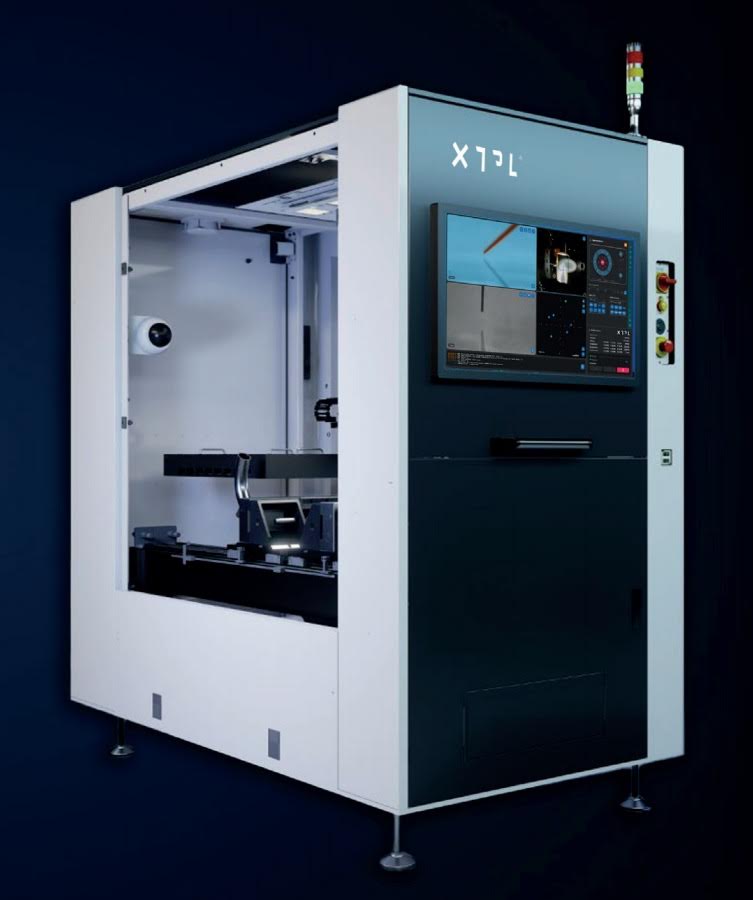
    The key addition to the company’s long-term business model is the commercialization of the ODRA system, the production-scale version of the company’s prototyping Delta Printing System (DPS), both of which draw upon XTPL’s Ultra-Precise Dispensing (UPD) printhead module. As I wrote about back in March, XTPL sold its first ODRA system to an unnamed Silicon Valley client, which is part of a Silicon Valley consortium dedicated to advanced packaging R&D.

    The ODRA industrial system

    As I always must include in discussions of companies like XTPL, the move by semiconductor manufacturers towards 2.5D/3D chip design—stacking multiple dies and packaging them with vertical interconnects—has catalyzed interest in leveraging AM for backend electronics assembly. XTPL’s addition of the ODRA system to its lineup now gives it four main business divisions, with advanced materials rounding out the trio of hardware offerings.

    In a press release about XTPL’s 2025 performance, the company’s CEO, Filip Granek, said, “In 2025, we delivered a total of 13 DPS devices and 8 UPD modules to clients across our key markets – North America, Asia and Europe – marking XTPL’s strongest performance to date. In parallel with these sales activities, we have been intensively developing the Company’s next growth driver: the new ODRA system business line. The prototype was first presented at the Productronica trade fair in Germany in November and in March this year we secured an order from a Silicon Valley-based client valued at approx. USD 0.4–0.5 million, with delivery scheduled for Q4 2026. Unlike DPS units, ODRA systems are designed not for R&D applications but for HMLV (High-Mix, Low-Volume) production. This dramatically increases their sales potential by enabling multiple deliveries to a single client. Currently, our most active negotiations are within the defense sector and we expect to generate further orders for delivery either later this year or in 2027.”

    It’s obviously difficult to predict the the growth trajectory for microcaps, but a cursory glance at some conventional wisdom surrounding this class of stocks does suggest that XTPL—and the advanced packaging original equipment manufacturers (OEMs) more broadly—plays in the sorts of markets most conducive to microcap growth. Historically, the semiconductor industry has a power to rapidly scale that’s unmatched by any other vertical, and the geopolitical wrangling between the US and China over packaging supply chains looks poised to create some unusually strong demand catalysts.

    For XTPL specifically, it’s especially reassuring to see that the company is getting public funding from the Polish government. I just wrote about how the European Defense Agency (EDA) will be supporting Ukraine with funding to scale the nation’s emerging tech developed in response to the Russian invasion. Assuming this defense tech acceleration push in Europe continues, XTPL would seem to be a perfect candidate to receive support from such an effort.

    Personally, I think the EU would do well to go all in on advanced packaging solutions. That would give the continent much-needed leverage in trade negotiations with both the US and China, while also providing the opportunity for high-growth tech that EU nations are eager to cultivate.

    Meanwhile, XTPL’s entry into the Silicon Valley market, combined with Poland’s significance to both the EU and NATO, could, down the line, also make the company an attractive target for funding opportunities from American sources. AM for advanced packaging is still in its early phases, but I think it has massive dark-horse growth potential that could start to be realized well before the end of this decade.

    Images courtesy of XTPL

  • Top DAWG & SAWC: $54 Billion Replicator Reborn

    The Defense Autonomous Warfare Group (DAWG), also called the Defense Autonomous Working Group, may be funded to the tune of $55 billion. Overseen by Deputy Defense Secretary Steve Feinberg, this may be a preeminent vehicle for obtaining a new autonomous capability for the United States. Hedge fund billionaire Feinberg owns Dyncorp. Some of his other portfolio companies, like NetCentrics Corp, North Wind, Red River Technology, and Stratolaunch, have gotten contracts recently under the Golden Dome project, which he overseas. Stratolaunch got Hypersonic Test Bed contracts as well.

    DAWG is essentially a carbon copy, or replication if you will, of Biden’s Replicator program. DAWG has gotten $225.9 million so far this year but is now looking for $54.6 billion more in the next budget request, compared to Replicator’s $500m spend. The base budget will be a hefty $1 billion. DAWG will be looking at unmanned systems in the broadest sense. Autonomous vehicles of any kind could be funded by the initiative, which will seek to place swarm-based drone solutions under and on water, in the air, and on land.

    Swarming technologies of all kinds could fall under the program, including the scaled up production of those vehicles and ancillary technology. This program augments, and in some ways supplants, many government projects already under way in the same arena. DAWG is spoken of as a pathfinder to locating new companies and solutions for the government. In effect, autonomous craft will have a completely cordoned off extra infusion of capital going into them.

    The US is behind on drone warfare. The US has too expensive and too few craft available to it. The US is running out of cruise missiles and precision munitions of all kinds. A short sojourn in Iran cost over $30 billion. The US military essentially is too expensive. In my Death Spiral article, I argued that the US is actually in a budgetary death spiral, where more expensive gear is needed to replace ineffectual things spread over fewer partners. In 2024, I argued that the US was mainly 3D printing squandered opportunities. My Surge Fulcrum article argues that the US should, and is, pivoting towards a swarm-based military. In 2023, I said that the US military is in effect being disrupted, while last year I argued that this disruption was under way.

    I wrote that,

    “I think that the current Replicator plans do not go far enough and smell a bit too much of continued pork banqueting at the expense of democracy. Time is short, the US is already on its back foot. In fact it may already find itself in a conflict in can’t win. Save for 3D printing. I’ve said this before but now find myself being a bit more frantic.”

    Now the US is clearly on the back foot, and in fact in an unwindable conflict. And it is turning to UAS systems in a major way. Clearly with the exigent timelines, 3D printing will benefit from this initiative. 3D printing is the best technology to make a lot of unmanned vehicle and aircraft parts. Mass savings, conformal, made on-demand, reduced part count, iterative, and quick to part will all benefit us clearly. Especially with smaller vehicles that have to be made fast and inexpensively, 3D printing has advantages. And if we look at austere manufacturing, on-demand 3D printing has definite advantages there as well. Many of these projects will no doubt turn to 3D printing to meet deadlines, and build and get craft out quickly.

    How much money will actually flow to us will of course depend on how much we adhere to Mr. Feinberg’s plan and needs. There seems to be very little in the process in place to see how this money is to be distributed. And of course, the ask and final amount could be very different than it is estimated to be now. But, a key strategy for 3D printing companies could be to get acquired by Cerberus Capital? Another option is to find out directly or indirectly what DAWG is specifically looking for and then build it. Lobbying seems to be the path forward here.

    Now, there is another layer to this initiative and that is the military one. Lieutenant General Francis L. Donovan heads the DAWG unit within United States Special Operations Command (SOCOM) that took over from the Replicator initiative. There are, therefore, two DAWGs: one is a military unit that was tasked with implementing autonomous technologies as part of SOCOM, while the other is a working group that funds it. Now officially stood up, the new unit taking over from the military DAWG until  will be called the SOUTHCOM Autonomous Warfare Command (SAWC).

    Replicator and DAWG aim to create a hellscape of drone swarms that would, through low US soldier cost and high autonomy, preclude a Chinese invasion. Indeed, a sufficient number of these vehicles could be a defensive ring inhibiting any kind of invasion. Ukraine now has created a dead zone that kills up to 90% of Russian soldiers destined for the frontline. This zone is comprised of manned drones of all kinds and has inhibited many of Russia’s missiles, aircraft, and any significant action, except at extreme human cost. The US seems to want to be able to implement this locally at will. This is simply the best idea ever and could save the US’s ability to fight wars.

    Donovan is the Commander, United States Southern Command. He says SAWC is tasked with:

    “…employing autonomous, semi-autonomous, and unmanned platforms and systems to counter threats and challenges across domains, linking tactical missions to long-term strategic effects. The command will also collaborate closely with Allies and partners in the region to advance shared goals, such as disrupting and degrading narcoterrorist and cartel networks, and responding to life-threatening crises caused by large-scale natural disasters.”

    The visibility and government importance of the narcoterrorist targeting, plus the applicability of these weapons to Taiwan and Iran, means that this will be the focus of much attention within the military. The US seems keen to develop a true autonomous capability. Whereas before the command was a part of USSOCOM, it is now a part of United States Southern Command. The soldiers of this unit will be important to evaluating, implementing, and scaling a true autonomous capability for the US.

    Donovan’s background is extensive. He has a lot of experience in SOCOM and was a commander of a Force Reconnaissance Platoon, as well as holding many other roles within the Marines. He has two children who are active duty Marines. There are two very different sides of America that together will create an autonomous warfare capability for the country. Let’s hope that we get the very best from both these men and those around them.

    To me, 3D printing is a key part of this. Indeed, I wouldn’t be looking at making drones, but making drone factories at this stage. A great drone now would be like having a Tiger tank in 1945. What the US needs is the ability to print most of this drone, from the engine to the radar, batteries, electronics, warheads, assemblies, body, and more. The US needs factories to quickly iterate and make drones. This to me is the only path to the US war fighting capability continuing to be meaningful.

    Want to learn more? We’re holding a live webcast called UAS Additive Strategies: The Present & Future of Drone Manufacturing, on June 30th. Register here.

  • Oxford Researchers Say 3D Printing Is Getting Better at Building Brain Tissue, But Not Fixing It Yet

    Researchers at the University of Oxford are getting closer to building brain-like tissue with 3D printing, improving how cells can be organized into structures that resemble the human brain. The update comes as the Oxford Martin Programme on 3D Printing for Brain Repair reaches the end of its five-year run, offering a clearer picture of what the team has been able to achieve so far, and what still remains out of reach.

    Launched in 2020, the program explored how additive manufacturing (AM) could one day help treat brain injuries and diseases. Now concluded, it points to a series of research advances, rather than a single clinical breakthrough or product. The team isn’t repairing brains yet, but they are learning how to build something that looks a lot more like real brain tissue than before.

    At the center of this progress is structure.

    For years, scientists have been able to grow brain cells in the lab. They’ve even used 3D printing to place those cells into soft, gel-like materials, though the results often looked more like clusters than actual tissue. But the human brain is highly organized. In the cortex, neurons are arranged in layers, with different types of cells and connections stacked in a precise way that allows the brain to process information.

    What the Oxford team has done is start to recreate that organization. Using human stem cells, the researchers generated different types of brain cells and used 3D printing techniques, combined with microfluidic systems, to place them into layered arrangements that resemble parts of the brain’s cortex. 

    Instead of relying on a commercial bioprinter, the team used a custom-built droplet-based system that ejects tiny cell-containing droplets, giving them finer control over how the tissue is assembled. So at the end of the day, instead of having random blobs, the result is something much closer to a controlled, multi-layered structure. The approach combines aspects of bioprinting with controlled fluid delivery, allowing cells to be positioned more precisely than in earlier scaffold-based or organoid-style models.

    And importantly, the cells stayed alive, held their shape, and even started to interact. Some cells extended connections while others moved between layers. It’s still early, but these are the kinds of behaviors researchers expect to see in real tissue, not just a lab model. For now, the work is happening entirely in vitro, in the lab, with no animal or human testing yet.

    That progress addresses one of the biggest challenges in bioprinting: not just printing cells, but organizing them correctly. While the program has produced multiple research outputs over its five-year span, the latest update reflects a broader body of work rather than a single newly published paper, pointing to what the team is calling “incremental gains in structure, cell behavior, and reproducibility.”

    The printed cerebral cortical tissues were cultured in vitro for functional studies and implanted into the mouse brain for studies of brain repair. Image courtesy of Zhou et al., Advanced Materials, 2020/University of Oxford.

    Right now, the most immediate use for this kind of work is research, because better brain-like tissue models could help scientists study how the brain develops, how diseases progress, and how different drugs affect human cells. That matters because the brain is one of the hardest parts of the body to study directly. So having more realistic lab-grown models could speed up research in areas like neurodegeneration, trauma, and developmental disorders. This is where much of the bioprinting field already operates today, with printed tissues increasingly used in drug discovery and testing, even as more complex organs remain out of reach.

    The work is part of a broader effort led by neuroscientists Zoltán Molnár and Francis Szele, in collaboration with Professor Hagan Bayley, a leading figure in molecular bioengineering at Oxford, and Oxford Martin Fellow Linna Zhou.

    The long-term vision for the field, of course, is more ambitious. If scientists can reliably build structured brain tissue, the next question is whether that tissue could one day be used to repair damage caused by stroke, injury, or disease. Reaching that point would require major advances, including vascularization, long-term functionality, and safe integration into the body—challenges that researchers across the field are still working to solve. So no, this is not brain repair. Not yet. But it is a sign that bioprinting is moving into a more advanced phase. The field has already shown it can print tissues for testing, and is now pushing toward more complex ones (like brain tissue) that need to be structured and functional. Work like this reflects that shift, where the focus is less on whether cells can be printed, and more on whether they can be organized into something that truly behaves like living tissue.

  • 3DPOD 299: 3D Printing in Education with Jesse Roitenberg, Stratasys

    Jesse Roitenberg is the Education Director at Stratasys. We go through his 20-year journey in additive, starting in some really pioneering days at Stratasys in sales. Jesse talks about desktop 3D printers, using 3D printing in education, using 3D printing in universities, 3D printers in schools, and more. We talk about software, CAD, and teaching 3D printing as well. From dental training solutions to machines for engineering, it all passes the review. We also go through Stratasys’s position and the journey the company has been on.

    This episode of the 3DPOD is brought to you by Alexander Daniels Global, specialists in talent solutions for the additive manufacturing and advanced engineering sectors. From the production line to the C-suite, ADG delivers confidential hiring, supports rapid scale-up phases, and secures critical leadership appointments, helping industry 4.0 businesses buld teams that need to perform, innovate, and lead.

  • The Next Generation of Engineers Is Learning by Doing, with 3D Printing

    Across several universities in the U.S., more programs are adding hands-on learning into how they teach, often using tools like 3D printing. Instead of relying only on lectures and theory, students are getting more chances to work directly with technology.

    In different settings, from outreach programs to advanced science classes to student-led clubs, 3D printing is used to turn ideas into something students can actually see and handle. Three recent examples show how this is happening in different ways.

    Petrie with the Niryo Ned 2 robots and a K12 student during an outreach event. Image courtesy of Ohio University/Ohio Today.

    At Ohio University, engineering technology and management student Brandon Petrie is helping local K-12 students get an early look at manufacturing and technology. Petrie, a senior in the Russ College of Engineering and Technology, started leading outreach sessions after giving a campus tour to a group of students. Since then, he estimates he has connected with more than 1,000 K-12 students from nearby communities.

    During those sessions, Petrie introduces students to tools they likely have not seen before, including Niryo Ned 2 robots and 3D printers. The Niryo Ned 2 is a small, desktop robotic arm, similar to the ones used in factories, but scaled down for learning. Students can program it to move, pick up objects, and sort them.

    The outreach also comes from Petrie’s own experience growing up in Southeast Ohio. Petri explains that the point is not to turn every student into an engineer right away; it is to show them that this kind of future exists, and that they can ask questions, try things, and imagine themselves in it.

    “These are things that I’ve never seen when I was younger,” he says. “So I’d like to get that out there and show it to people, give them the opportunities that I never got when I was younger.”

    Petrie stands with the Niryo Ned 2 robots during an outreach event. Image courtesy of Ohio University/Ohio Today.

    In one example, the robot is set up to sort circular and square pieces, showing how a simple manufacturing process works. It also reacts to basic signals, which engineers call inputs and outputs, so students can see how machines “communicate” and respond to instructions.

    3D printing adds another part to that process. Students can design an object on a computer and then watch the printer build it layer by layer. This helps connect what they see on a screen with how real parts are made.

    For Petrie, that part matters because it makes manufacturing easier to understand. Students can design their own creations using online tools, including Minecraft, and then see those designs turned into printed objects. Instead of just hearing about how something is made, they get to watch an idea move from the screen into the real world.

    Petrie created a 3D printed electric guitar. Image courtesy of Ohio University/Ohio Today.

    Outside of school and outreach, Petrie also works on his own 3D printing projects. One of his recent builds was a fully 3D-printed acoustic guitar, made almost entirely from plastic except for the strings and a few metal parts. He has also started working on an electric guitar, which will require wiring and soldering. Beyond bigger projects, he uses 3D printing to solve small, everyday problems. For example, he is designing a custom holder to keep bolts and tools organized while working under cars, so he does not lose them while repairing parts.

    “I work on cars, so I go underneath them a bunch and right now I’m about to design and print out a thing to hold bolts and different things on my crawler when I go underneath the car, instead of dropping it on the ground and losing it 24/7. I can now just have an easy storage place to save me time and headaches,” concluded Petrie.

    Jarrod Cecere, Dr. David Calianese, and Scott Bergenfeld at the Biosymposium. Image courtesy of Seton Hall University.

    Meanwhile, at Seton Hall University, David Calianese, an assistant professor in the Department of Biological Sciences, is using virtual reality (VR) and 3D printing to help students better understand structural biology. His students are studying molecules such as hemoglobin and proteins linked to metabolic disorders, including diabetes and heart disease.

    The work grew out of a collaboration with Seton Hall’s Teaching, Learning and Technology Center. Students in Calianese’s Biochemistry of Metabolism course visited the university’s Innovation Hub Exploration Studio, where lectures took place inside Nanome, a VR platform for exploring molecular structures. Using Meta Quest Pro headsets, students could move around molecules, examine them in 3D, and see details that are harder to understand from the traditional flat images in textbooks.

    The 3D printing part happens through Seton Hall’s Maker Studio. After studying the molecules in VR, students create 3D printed versions of those same structures. This lets them first explore the molecules in a virtual space and then hold them in their hands.

    “Regardless of whether they had the VR goggles on or off, the classroom was buzzing,” noted Calianese. Many students continued exploring molecular structures outside of class using Nanome’s desktop version. “This was a completely student-driven project, and it was incredibly rewarding to see how engaged the undergraduates became. During their first visit, students also toured the Maker Studio, where they learned how molecular models are prepared and produced using 3D printers.”

    The project also became part of their coursework. Student groups studied assigned molecules and later presented their work at Seton Hall’s Biosymposium during the Petersheim Academic Exposition, using Nanome screenshots, avatar images, posters, and 3D-printed molecular models to explain their research.

    At the University of Maine, the focus is on giving students a space to work with 3D printing outside of class. The university’s 3D Printing Club brings together members interested in designing and making parts, whether for fun, coursework, or future careers.

    The club is led by president Jack Bernado, a mechanical engineering junior, and meets weekly at the Ferland Engineering Education and Design Center, with support from fellow mechanical engineering student Tim Goodell, who helps oversee the space and equipment. Members come from diverse backgrounds, mostly in engineering and computer science, but the group is open to anyone interested in learning.

    Every Wednesday during the fall and spring semesters, the group meets to design and produce a wide range of items, including figurines based on movie characters, toy cars and boats, mechanical hands, bowls, and vases. About a dozen members create digital designs and use industrial printers to produce parts ranging from very small components to large-scale models. At the club, there is no fixed curriculum. Instead, learning happens through projects, print requests, and managing real workflows.

    “It has made me better at leading a team and being part of a team,” Bernado said. “It has helped me be more organized with all the different prints being submitted, as well as all the people to reach out to.”

    Club members are currently planning a pinewood derby race with cars made from 3D printed parts for the fall 2026 semester.

    The club is also planning activities that make the work more engaging. One example is a planned pinewood derby-style race in which students will design and build cars using 3D printed parts. The idea is to give students a project, let them design it, and then see how it performs. This gives students real experience with 3D printing. They learn how to use the machines, work in teams, and develop their ideas.

    3D printing club working in the lab in Ferland Hall. Image courtesy of the University of Maine.

    As more institutions adopt similar approaches, tools like 3D printing are likely to remain part of that mix. Not as a standalone solution, but as one of several ways to make learning more practical and easier to grasp.

  • 3D Printing News Briefs, May 2, 2026: Soft Robots, Agricultural Waste, & More

    In this weekend’s 3D Printing News Briefs, we’ll start off with a multi-laser metal powder bed fusion 3D printer and post-processing news. We’ll end with research into soft robotics and boosting the quality of 3D printing plastics with agricultural waste. Read on for all the details!

    Eplus3D Announces Launch of Ultra-Large-Format Metal 3D Printing System

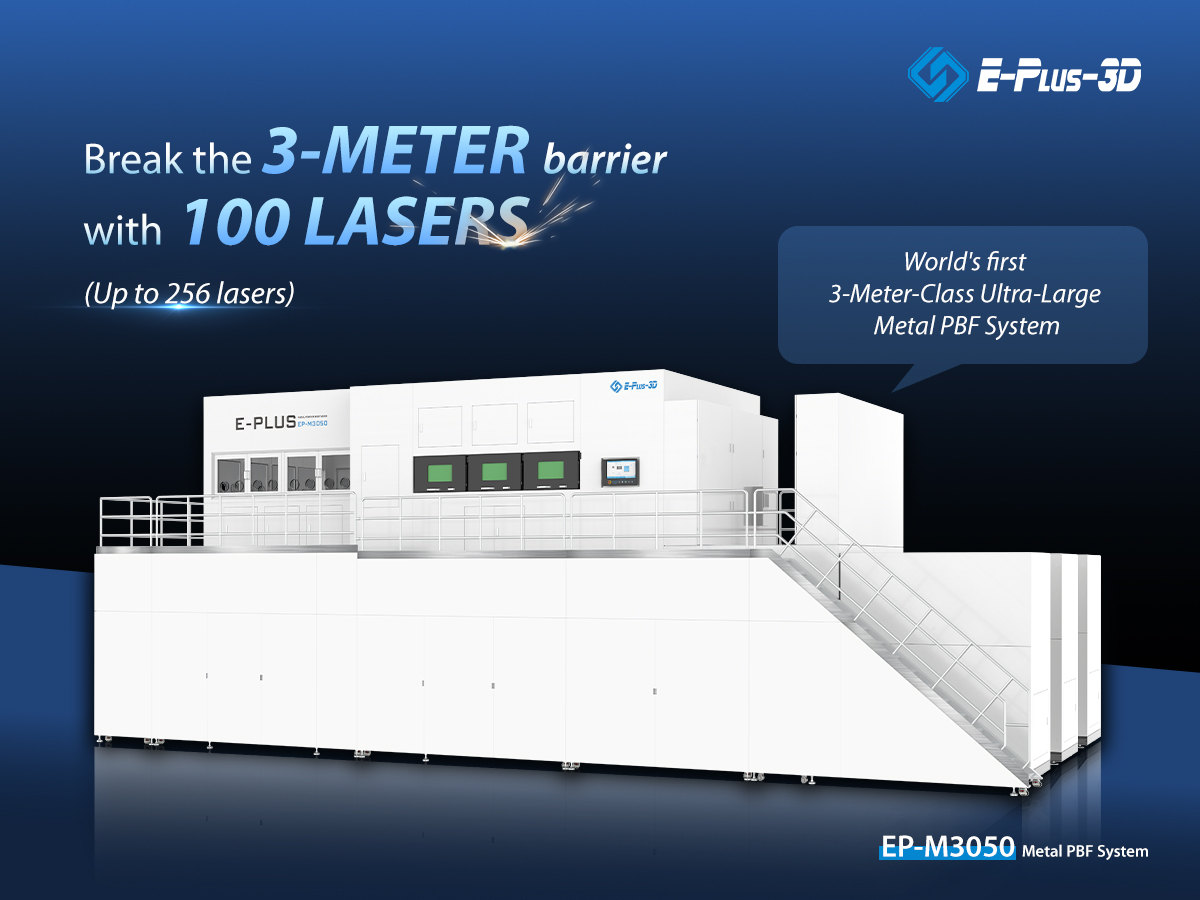
    Figure 1 – EP-M3050 Metal PBF System

    Chinese metal additive manufacturing (AM) solutions provider Eplus3D announced that it has broken the three-meter AM barrier with its new EP-M3050 ultra-large-format metal powder bed fusion (PBF) system, complete with 256 lasers. The company reports that its new system features standard X and Y dimensions of 3050 mm x 3050 mm and a Z-axis customizable up to 5000 mm, which makes it possible to achieve one-piece manufacturing of ultra-large structural components. It has square, cylindrical (Φ3050 mm), and optional ring-shaped build chambers to meet a variety of application needs, which improves “material utilization for complex geometries such as casings and ring-like structures.” Plus, the company didn’t just throw lasers at the problem: it’s built around a high-efficiency, multi-laser architecture, and includes 100 lasers, so you can scale up to 256 if you need all of them. The EP-M3050 has coordinated scan strategies, path planning, and real-time process control, to make sure that parts uniform quality across the whole build area. It works for applications that require large, high-performance, integrated components, like aviation, energy, industrial manufacturing, oil & gas, and more. One example is a 2.8-meter casing printed integrally on the printer, which is the featured image of News Briefs today.

    “Scaling metal PBF beyond three meters is not just about making the machine bigger,” reported a spokesman from Eplus3D. “It requires solving airflow stability across a giant build chamber, managing fume and spatter during multi-day prints, and maintaining optical cleanliness at an unprecedented scale. Eplus3D has achieved all of this.”

    FORMRISE Optimizes SLS Post-Processing with AM Solutions S1

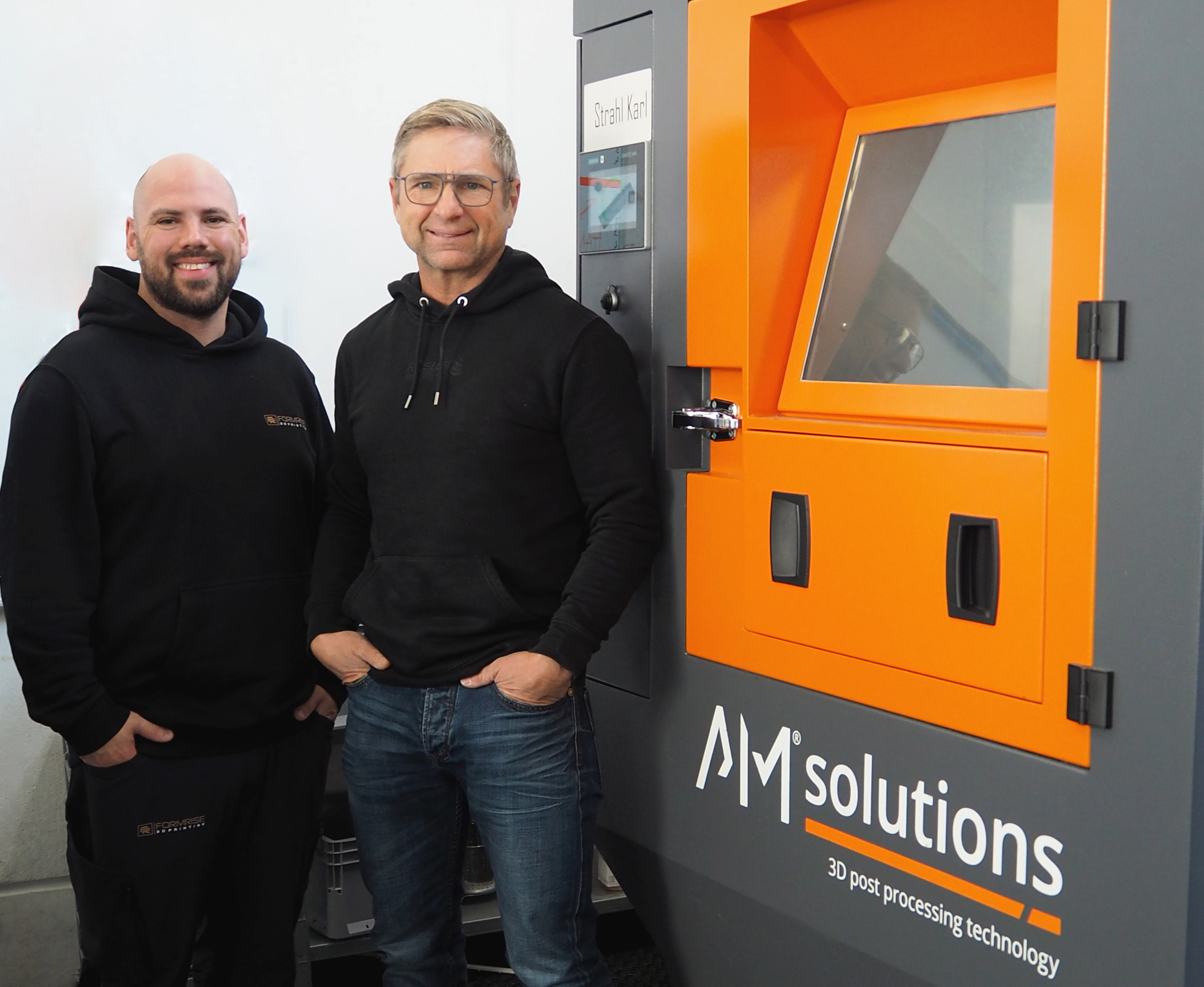
    R: Peter Spitzwieser, Managing Director of FORMRISE

    German 3D printing service provider FORMRISE has improved the efficiency of its SLS post-processing by adopting the automated S1 blasting system from AM Solutions. The company has worked with AM for over 20 years, serving companies in the aerospace, automotive, jewelry, luxury goods, and medical industries. FORMRISE previously used a multi-stage blasting process for its SLS components, but it was distributed across several systems and required manual processing as well. There were also a multitude of issues with the glass bead process, and it was nearly impossible to accommodate last-minute changes to orders. So FORMRISE started looking for a new post-processing solution that would provide a reliable, high-performance media preparation system and combine cleaning and surface finishing. The S1, with its large cyclone and integrated vibrating screen, offers an automated 2-in-1 process for cleaning and surface finishing, and FORMRISE now operates three of them, reporting an annual cost savings of about €35,000, reduced post-processing time of approximately 50%, and decreased CO₂ emissions of more than 12 metric tons annually.

    “For the post-processing of SLS parts, AM Solutions offers a solution with the S1 that is absolutely unmatched in the market and has convinced us in every respect,” said Peter Spitzwieser, Managing Director of FORMRISE. “It is clear here exactly what potential lies in the optimal alignment of the blasting process with the requirements of additive manufacturing, particularly in blasting media preparation. AM Solutions recognized and fully leveraged this potential – and in doing so, provided us with the opportunity to optimize our post-processing in ways we could not have previously imagined.”

    Researchers Develop Soft-Rigid Robots that Move with Electric Current

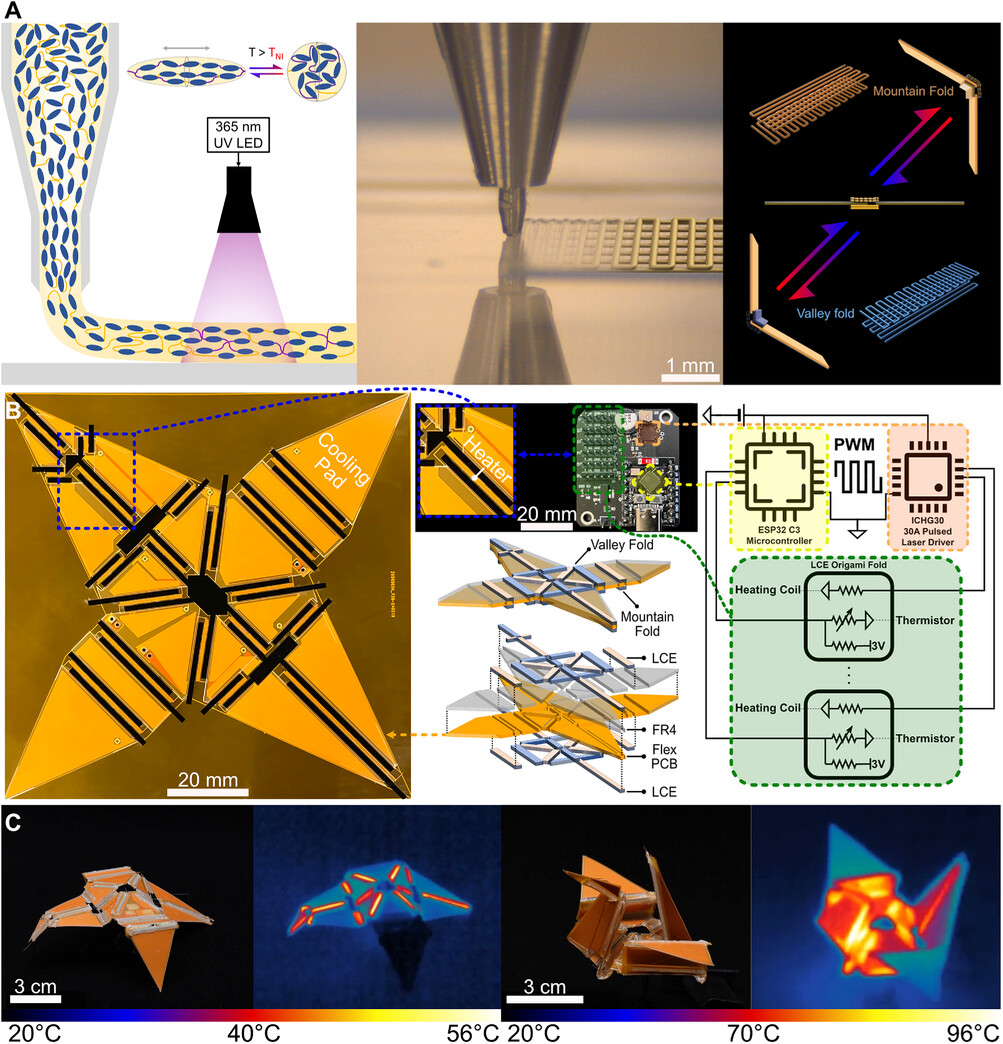
    Origami structures: Printing, Design, and Actuation. (A) Direct ink writing of liquid crystalline oligomers creates aligned liquid crystal elastomers along the print direction (left). Sequential layers with orthogonal filaments allow different crease configurations (middle). Mountain and valley folds are defined by the layer ordering (right). (B) Self-folding and programmable actuation is imparted via a flexible printed circuit board (Flex-PCB) (left). The Flex-PCB is embedded within the printed LCE as a structural layer with integrated electronics for Joule heating of individual hinges (middle). A constant current laser driver and microcontroller are used to regulate the power delivered through each hinge, enabling programmable feedback actuation control (right). (C) A self-folding crane is shown going from the unfolded (left) to the folded (right) configuration using integrated Joule heaters. Thermal imagery is pictured in the right subpanel of each figure.

    Soft robots can shape-shift and manipulate delicate objects, so they have plenty of potential in the medical field, but they’re limited by rigid mechanical parts or the external systems that help them move. A team of researchers at Princeton University combined a 3D printed liquid crystal elastomer with flexible electronics and origami-like folding techniques to build soft-rigid hybrid robots that can move without external pneumatic controls or motors…just targeted electric current. A customized printer was programmed to change the internal orientation of the polymer’s molecular structure while it prints. Then, the patterned zones in the printed material were stacked and joined in different ways in order to create hinges that bend and move the robot when the material is heated up. The heating that drives the robot’s motion is controlled through printed circuit boards (PCBs), and software uses embedded temperature sensors within the origami to compensate for any small errors as the robot continues to change shape; that’s what makes it so durable. To demonstrate their work, the team built a soft robot in the shape of crane, and it flaps its wings when powered with electricity—no motor required.

    “I think the big contribution is we showed integration of a complex system where we have local heating control. We can control activation depending on where we heat,” said David Bershadsky, who began to develop the robotic system for his undergraduate thesis project at Princeton. He is now in graduate school at the University of Texas, Austin.

    To learn more about the electric current-powered soft robot, you can read the research team’s paper here.

    International Research Team Improves Sustainability & AM Performance with Biochar

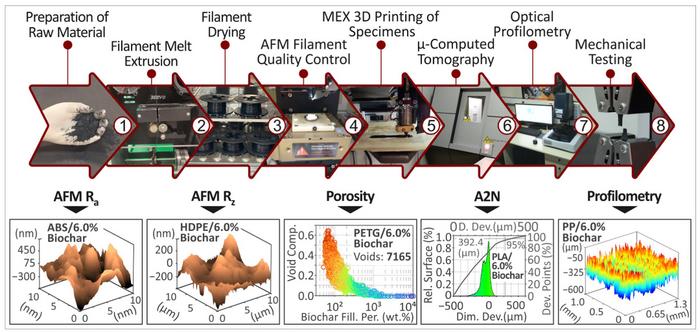
    Enhancing biocomposite critical quality indicators (CQIs): the impact of biochar content in additive manufacturing.

    Researchers from Hellenic Mediterranean University, International Hellenic University, and National Technical University of Athens in Greece, and Harbin Engineering University in China, published a study that shows you can improve sustainable manufacturing practices, as well as the performance and quality of 3D printed plastics, by adding small amounts of a carbon-rich material called biochar that’s made from agricultural waste. The team investigated how biochar, which has a porous structure and chemically active surface, can positively affect the performance of popular 3D printing polymers like ABS, PLA, PP, PETG, and HDPE. One of the most important things they discovered was the strong relationship between mechanical performance and internal structure of these 3D printed plastics. Better dimensional accuracy and lower porosity were linked time and again to higher tensile strength, which meant that biochar composites could produce more reliable and stronger parts. Additionally, biochar is a renewable and low-impact alternative to fillers derived from fossil resources, so it’s a much more sustainable option.

    “Our findings show that biochar is not only a sustainable filler but also a highly effective way to improve the quality of 3D-printed components. By optimizing the amount of biochar, we can enhance mechanical strength while reducing defects such as porosity and dimensional inaccuracies,” the study’s corresponding author said.

    “As industries move toward greener solutions, biochar-based composites offer a promising pathway. This approach allows us to transform waste into high-value materials while improving the performance of next-generation manufacturing technologies.”

  • Industrial Applications on Display at RAPID 2026: CERATIZIT & 3D Systems

    Applications are where it’s at in the additive manufacturing (AM) industry. At the recent RAPID+TCT in Boston, I met with a few companies to learn about some of their very specific industrial applications.

    CERATIZIT

    In the AeroDef Showcase section of RAPID, I spoke with Steve Kuhnle, Global Business Development Specialist / Cutting Tools, CERATIZIT USA, which is part of the award-winning, global CERATIZIT Group that specializes in hard materials.

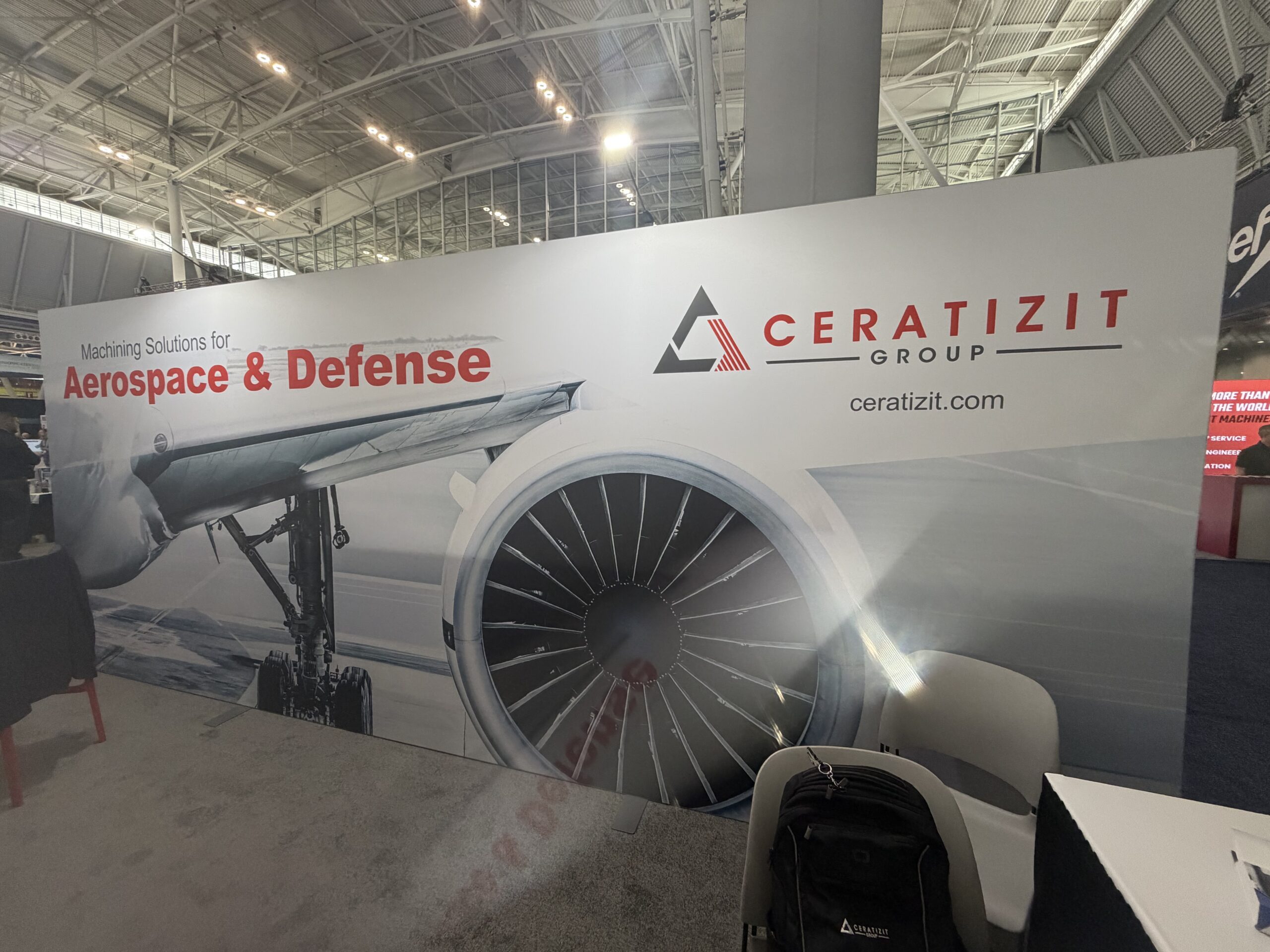
    CERATIZIT booth at RAPID+TCT 2026.

    The company has locations all over the world, including Austria, China, Bulgaria, Germany, Japan, Malaysia, and many more. CERATIZIT USA is based in Charlotte, North Carolina, and produces cutting tools and carbide, going, as Kuhnle told me, “from the mine to the finished product, which very few people do.” They’re also a powder supplier, even for their competitors sometimes.

    “We [CERATIZIT] are the largest producer of tungsten in the western world,” he said.

    At its GTP plant in Pennsylvania, the company recycles carbide, which is then made into powder.

    “We also work with the finished product,” Kuhnle said.
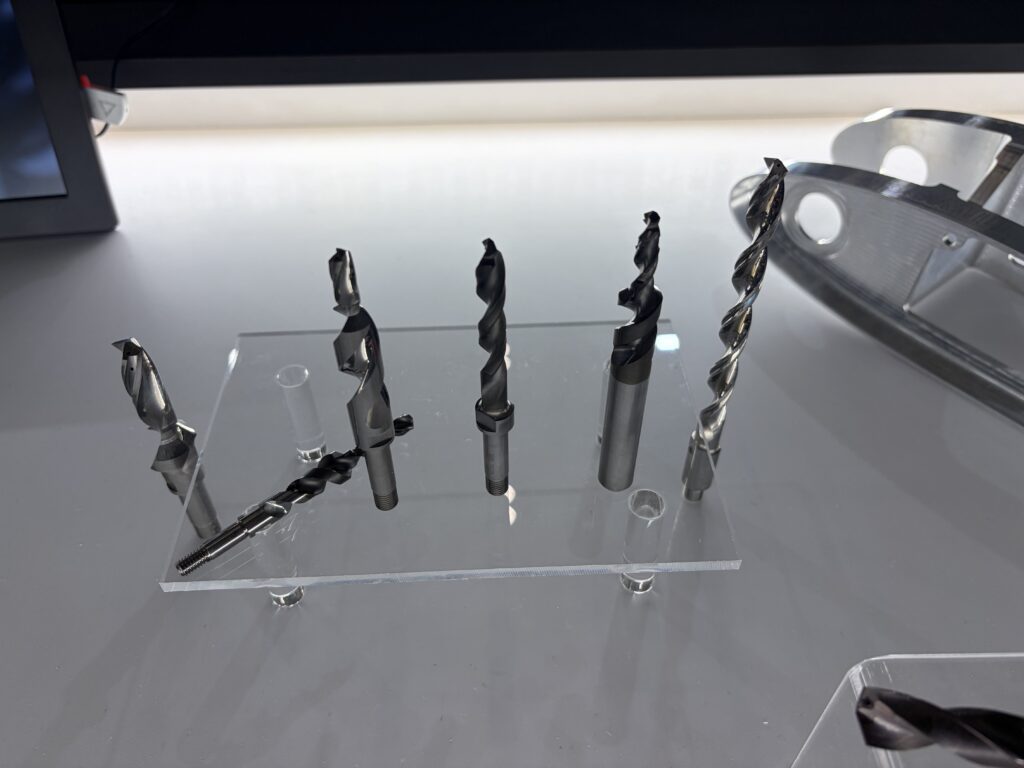
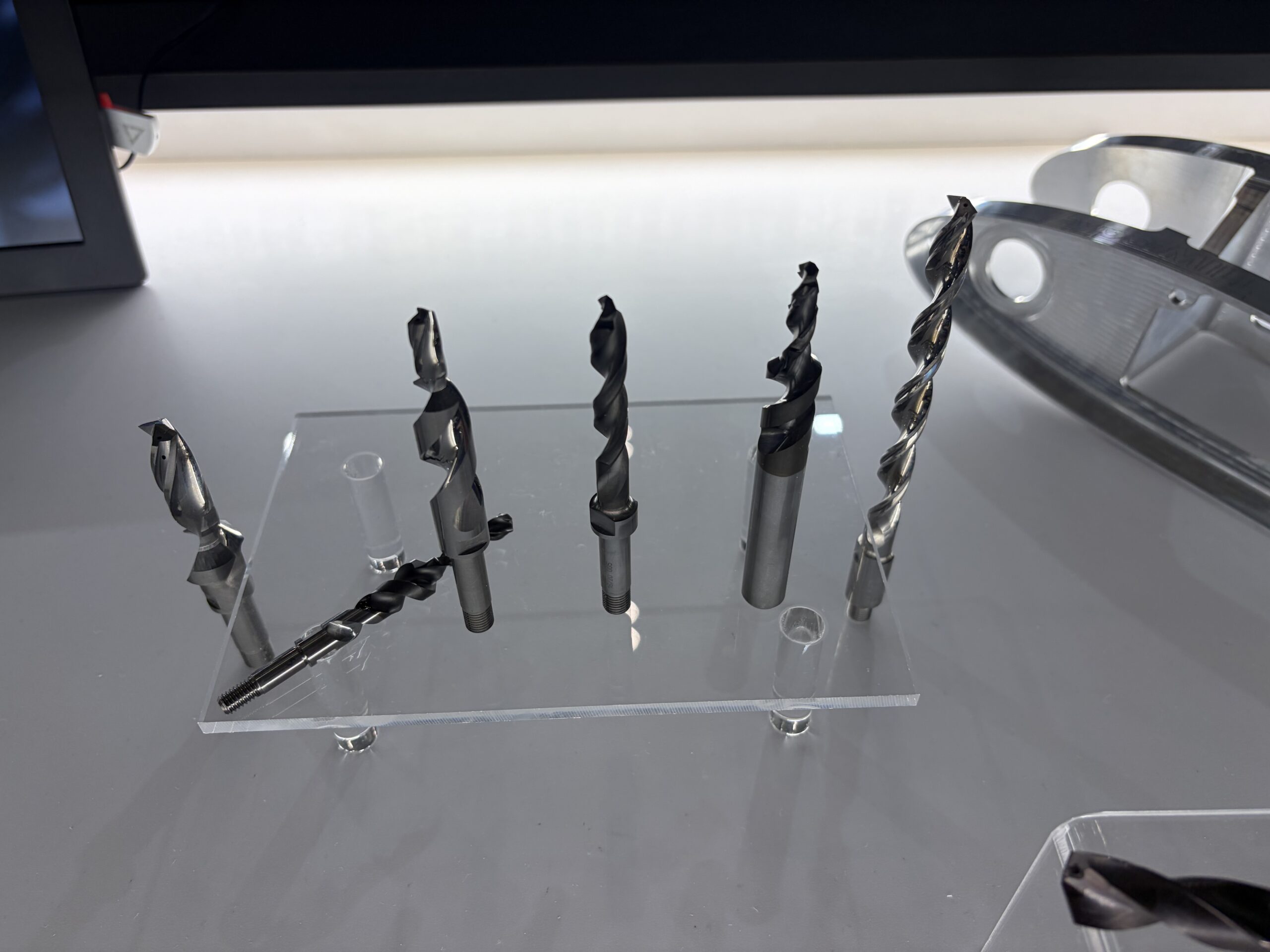
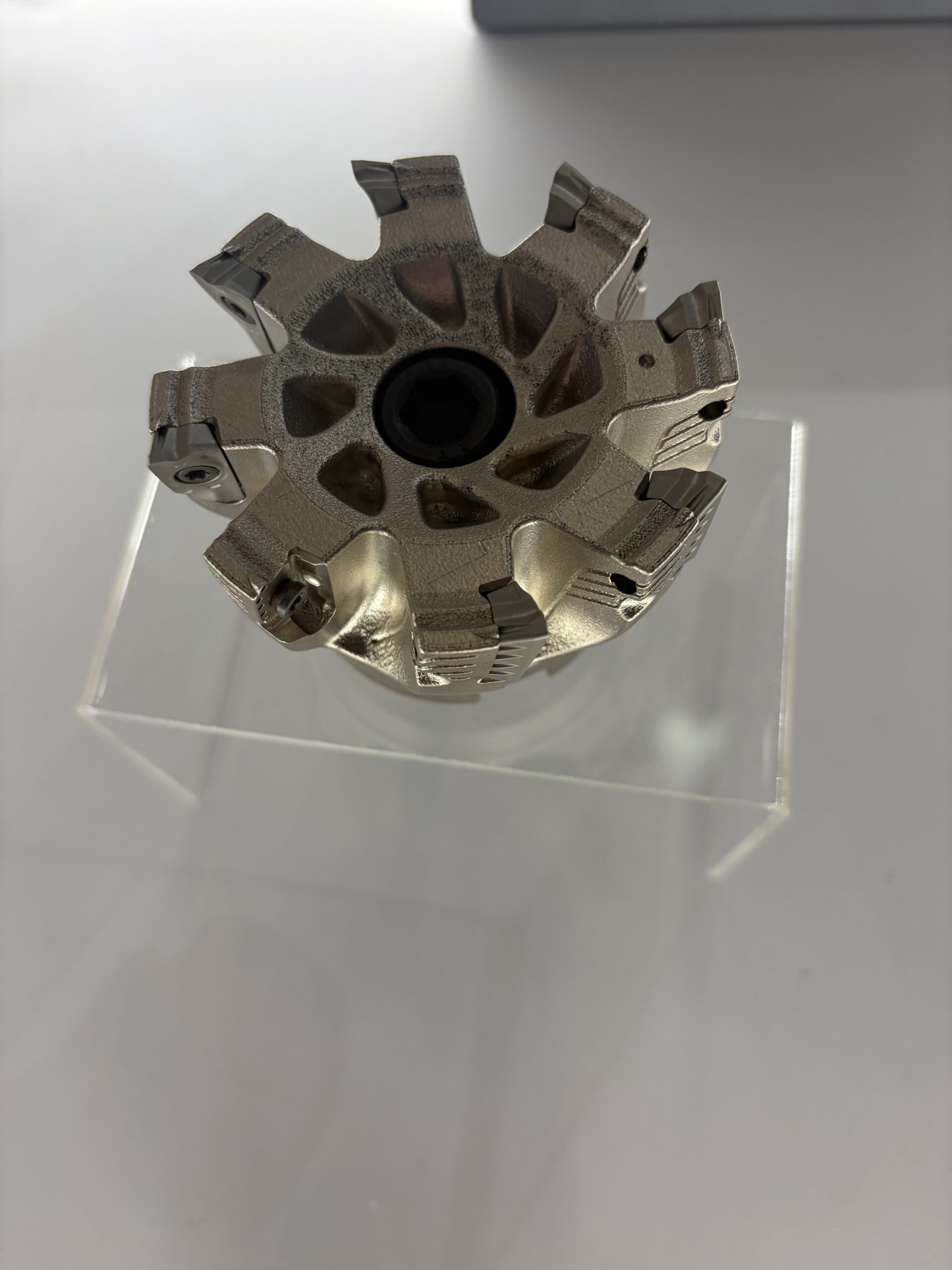
    3D printed drill bits at CERATIZIT’s RAPID+TCT 2026 booth.

    CERATIZIT works with the aerospace and defense, automotive, and medical industries, 3D printing steel tools for them. As Kuhnle explained, 3D printing the tools “allows for better coolant flow to the cutting edge.”

    “You can’t machine the coolant channels,” he said. “So we 3D print them and that allows us, especially in aerospace where you have coolant getting to the cutting edge, this way you don’t get redeposit metal, unlike your Inconels and heat resistant alloy materials.”

    CERATIZIT booth at RAPID+TCT 2026.

    Kuhnle said that CERATIZIT makes aircraft assembly tools, like the drills used to make rivet holes on aircraft, as well as grooving, tools, machining, and milling tools. The company also does a lot of “process improvements.”

    “Customers will give us parts or drawings, and ask us how to improve making it, what kind of time can we take out?” he explained. “And sometimes it’s not so much time, sometimes it’s part quality. We had a customer who had a problem with redeposit metal, and we developed 3D printed tools to actually solve that problem.”

    Even though the company produces tungsten, they also machine it; this is used a lot in the defense industry, so that’s another reason CERATIZIT was aptly located in the Aerodef Showcase at RAPID.
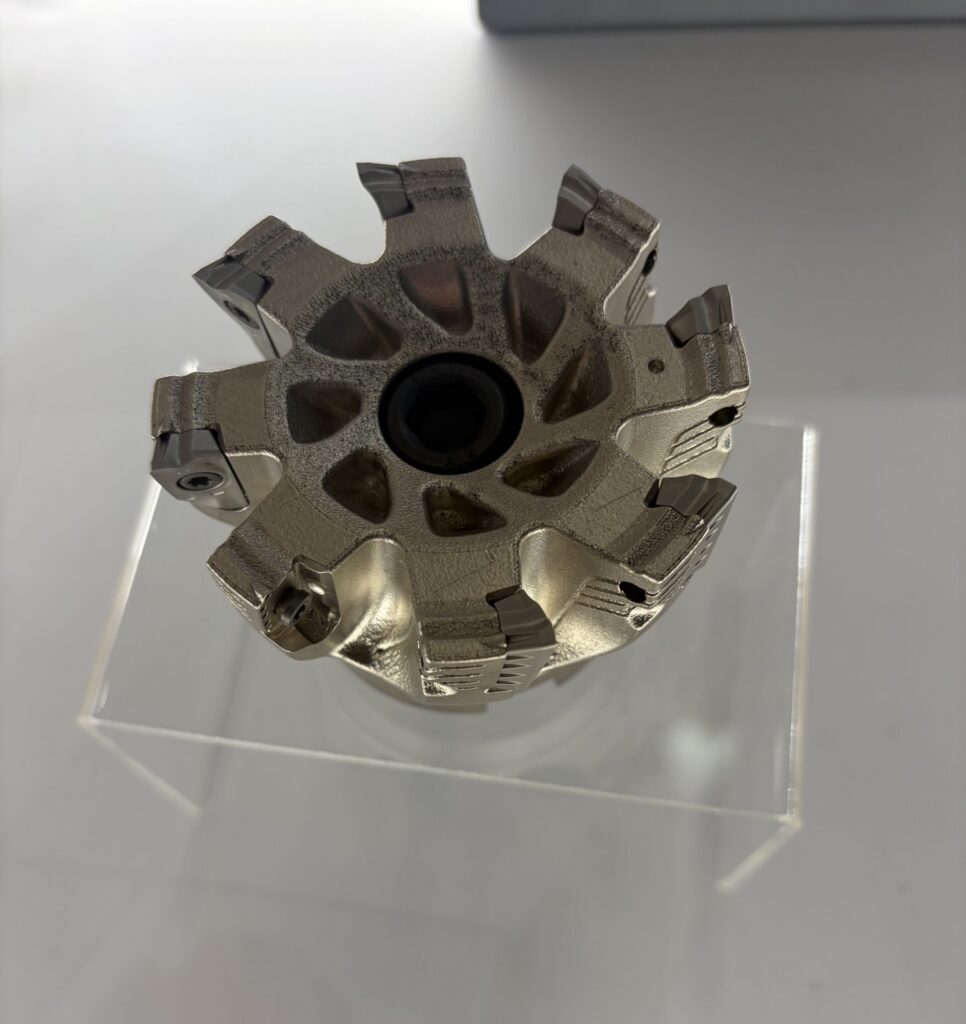
    3D printed milling tool at CERATIZIT’s RAPID+TCT 2026 booth.

    CERATIZIT has also come out with some great aerospace grades and heat-resistant alloy grades, like CTCS245 for milling heat-resistant nickel-based alloys.

    “It’s got ruthenium in it, which is used for reducing heat,” Kuhnle said. “It takes a lot of heat, so you get less insert failure.”

    As I was unfamiliar with ruthenium (Ru), I looked it up later, and it’s apparently one of the most rare metals in the world. Located in the platinum group of the periodic table, it has a high melting point, high corrosion resistance, and high durability.

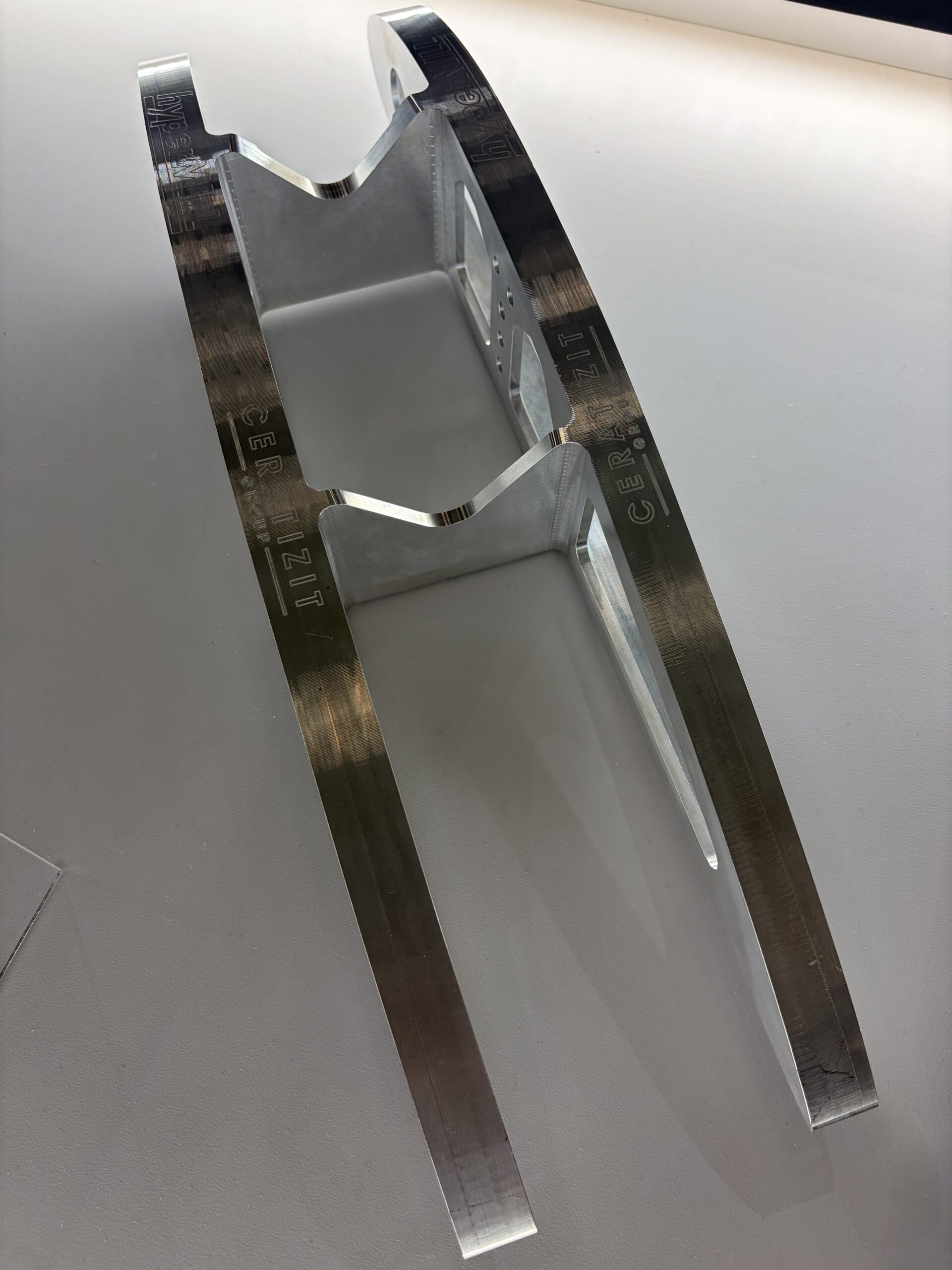
    Metal 3D printed part next to the plastic prototype at CERATIZIT’s RAPID+TCT 2026 booth.

    The company has some exciting things coming up, such as building out its tech center in Charlotte, slated to be done next spring. They’ll offer training there, as well as part processing for customers. CERATIZIT will also have some new developments to share at IMTS this fall, including new solid carbide drilling products.

    “We’re always in development of cutting tools, always pushing the boundary of state-of-the-art for machining of jet engine parts and material. We’ve made some really big strides in that area,” Kuhnle told me.

    “We’re really product technology-driven, more component-driven, and segments. That’s why we’re going after the aerospace and defense segments. We made a commitment.”

    3D Systems

    I also stopped by the 3D Systems booth to speak with Patrick Dunne, Vice President of Advanced Application Development.

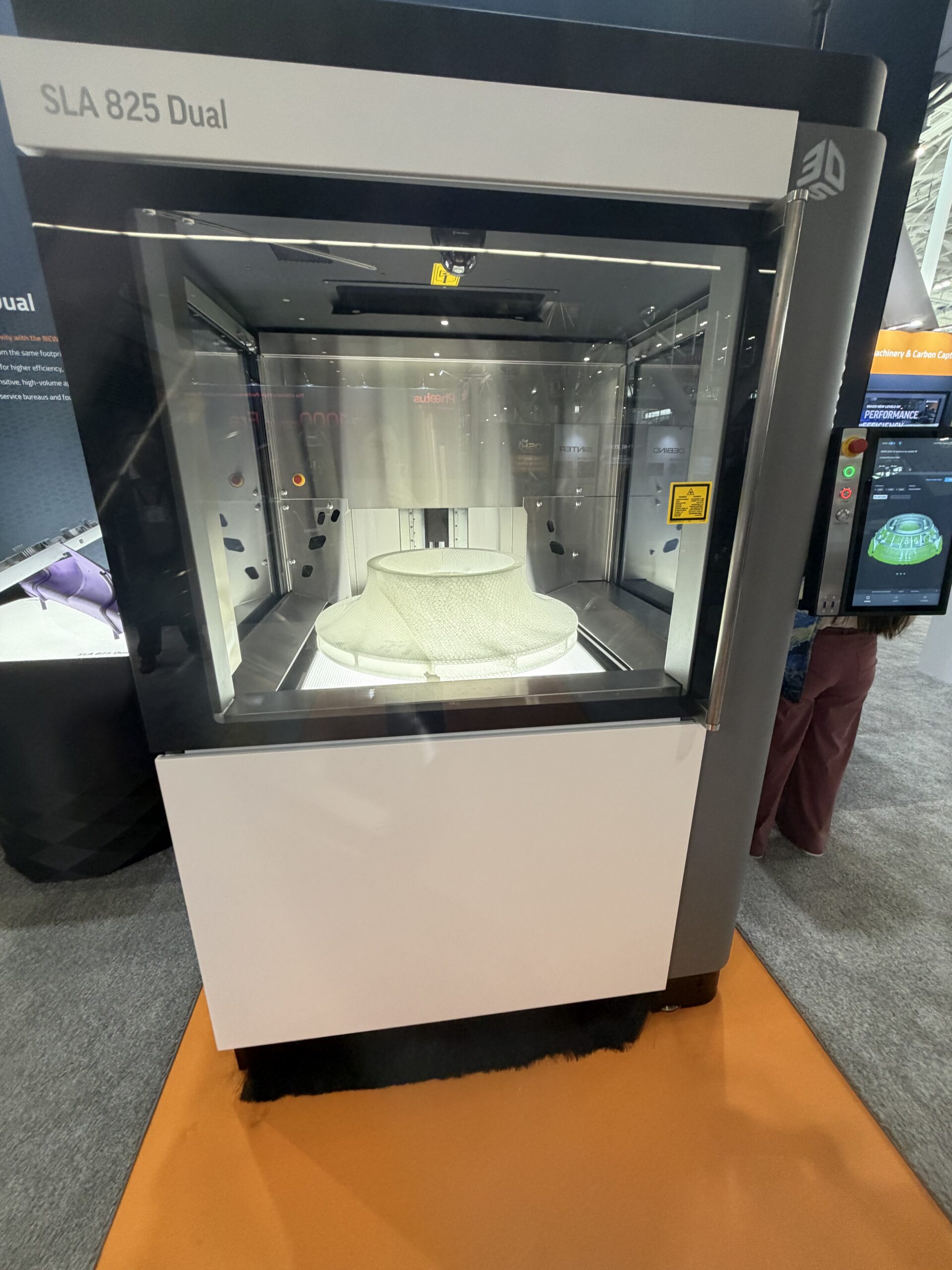
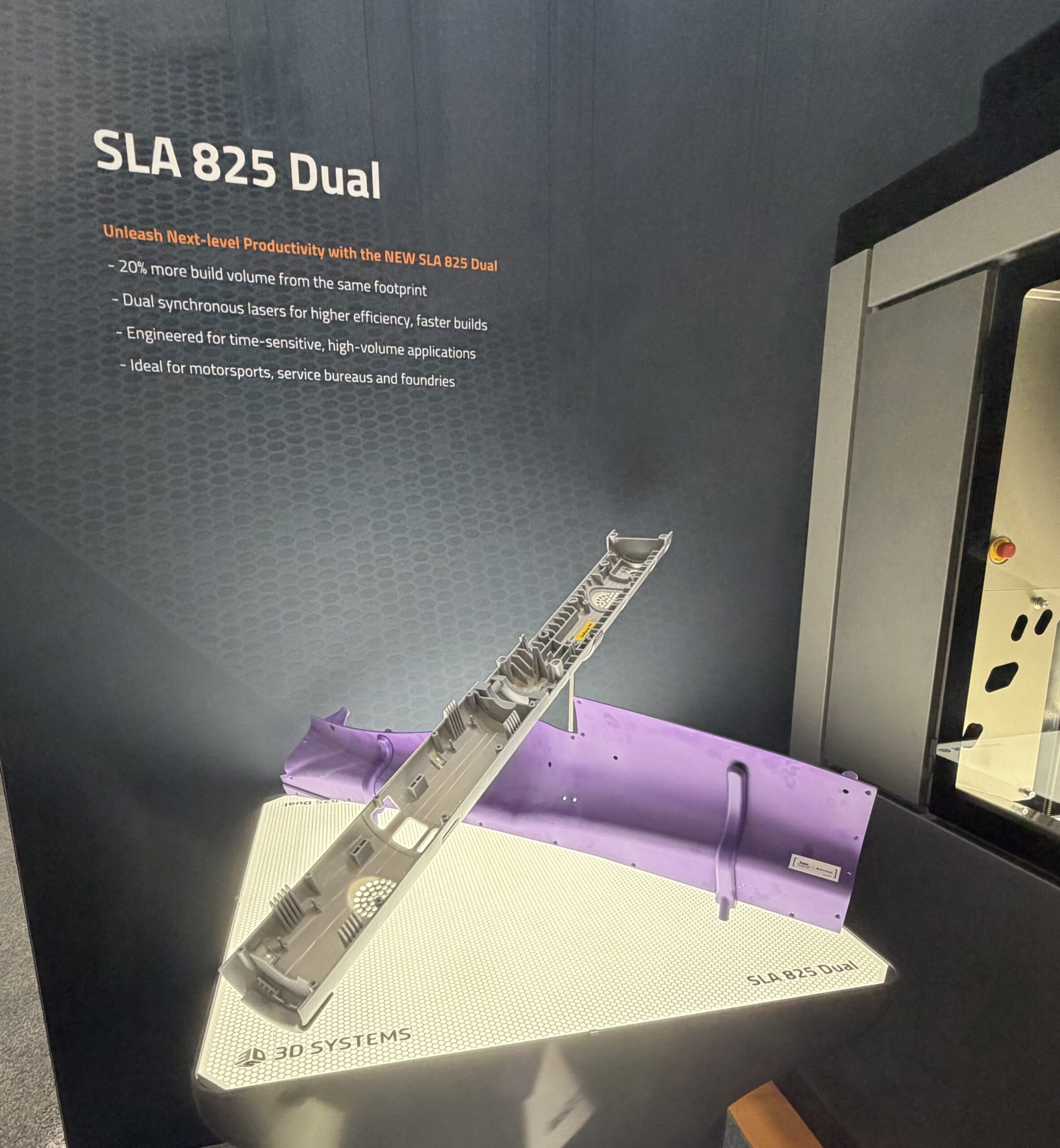
    Before we got to applications, he shared a little bit about the company’s new SLA 825 Dual 3D printer, which was launched at Formnext 2025 but introduced to the U.S. market at RAPID 2026.

    “The previous version, the SLA 750, was the state of the art. The way I’m looking at it, the best just got better,” Dunne said.

    SLA 825 Dual at 3D Systems’ RAPID+TCT 2026 booth.

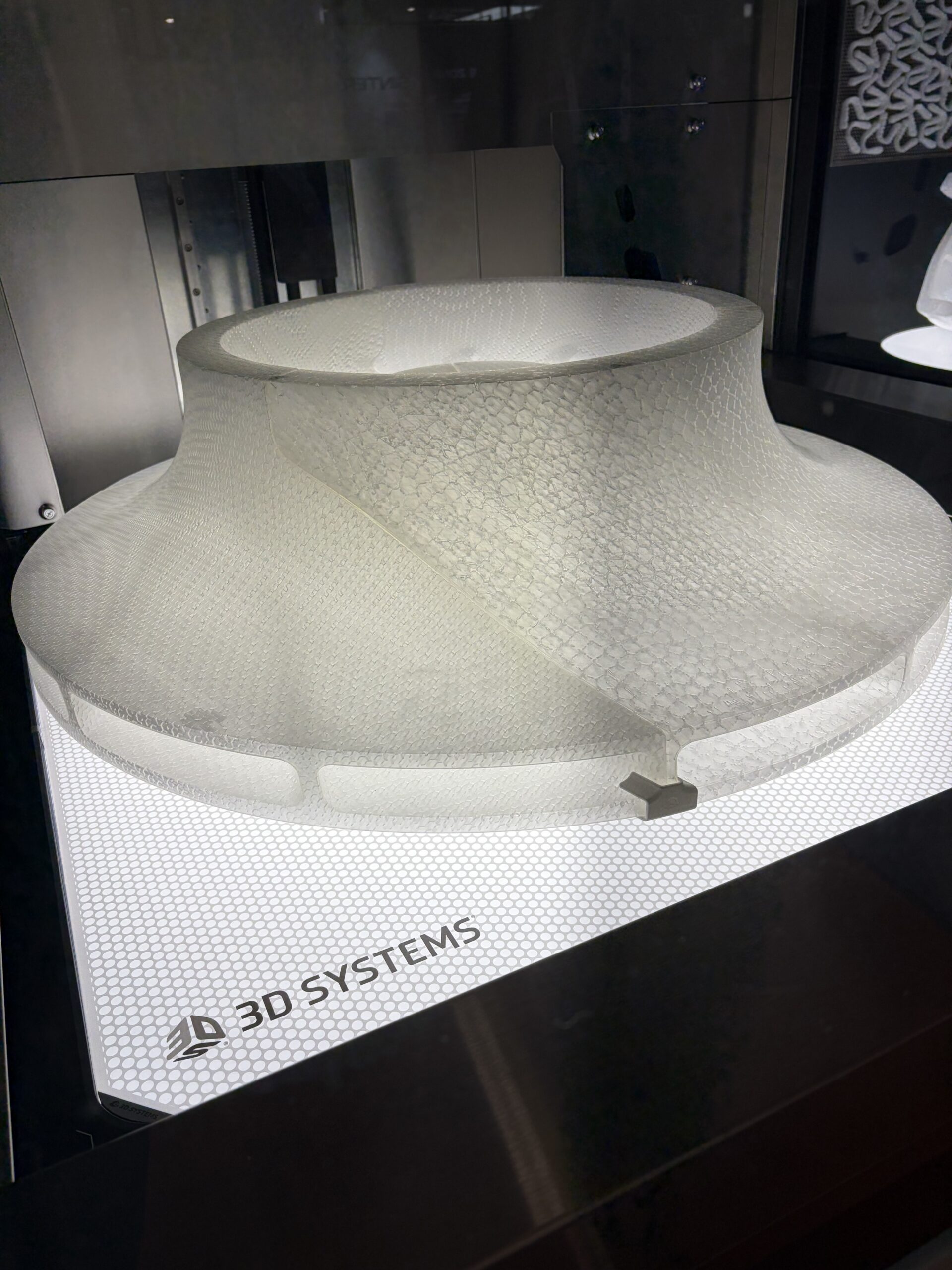
    The new SLA 825 Dual has an expanded build envelope, and two high-powered lasers with multi-spot capability. It’s great for printing much larger parts, or large batches of detailed parts, like for the dental industry or investment casting patterns.

    “We had some customers that were chomping at the bit to build parts up to 80 centimeters in diameter, specifically very large-format monolithic investment casting patterns for space propulsion,” Dunne explained. “So getting that extra two to three inches on your build makes all the difference.”
    We also discussed the company’s on-demand part production, and how it’s saving customers time and money for specific applications. One focus of our conversation was Norway-based Eureka Pumps. Part of the Techouse Group, Eureka is a provider of high-quality pumping and power solutions for the oil and gas industry.

    “What’s interesting about the oil and gas industry is that a failed part or a broken component within their hydrocarbon extraction process costs, in some cases, like an offshore oil rig, a million dollars a day,” Dunne said. “So it becomes absolutely critical to get a spare part as fast as possible.”

    If a hydrocarbon processing or oil pumping process is offline because you’re waiting for “an analog supply chain” to deliver a spare part, and that takes two weeks and millions of dollars a day, that’s a big problem.

    “3D printing as a tool can be incredibly useful at addressing that urgency by being able to supply a replacement spare part on-demand from a digital inventory,” Dunne explained. “So instead of having a physical warehouse full of tooling, you can have an entire warehouse of spare parts on a USB key, and you can on-demand print the spare component and get your production capability back up and running as fast as possible.”
    3D Systems booth at RAPID+TCT 2026.

    The bottleneck here is with the tooling requirements of the traditional manufacturing process. You need storage and inventory management for tooling, especially for legacy components. Additionally, if these components break, you may not be able to get your hands on a spare, because the company that originally manufactured the part might not even be in business anymore. And if you try to recreate the product, depending on how long ago it was developed, there may not be a digital file—just blueprints stuffed in the back of a drawer somewhere.

    “So being able to scan a component and create a replica or a clone of that particular component in an alloy like Inconel that meets the technical requirements of oil and gas extraction means that they can bring their system back online very, very rapidly.”

    These same problems plague the aerospace and maritime industries as well. Noting that some of the original tooling for the C17 aircraft was developed in the 1950s and made of wood, Dunne explained that, “even with absolute focus and attention,” it can take months to try and recreate that part from 2D blueprints.

    “When you have a very expensive platform like an aircraft sitting in a hangar waiting for a single spare part, every day that asset is basically costing you money,” he explained. “And I’ve heard crazy numbers thrown around, that at any given moment in time, there are hundreds of billions of dollars of systems and platforms, in aircraft and Navy battleships and nuclear submarines, either sitting in warehouses or sitting in harbors.”

    AM can be used to support getting planes and ships and subs operational again “very, very rapidly, and address some of those long lead time items that historically have represented the weakest link in the supply chain.”

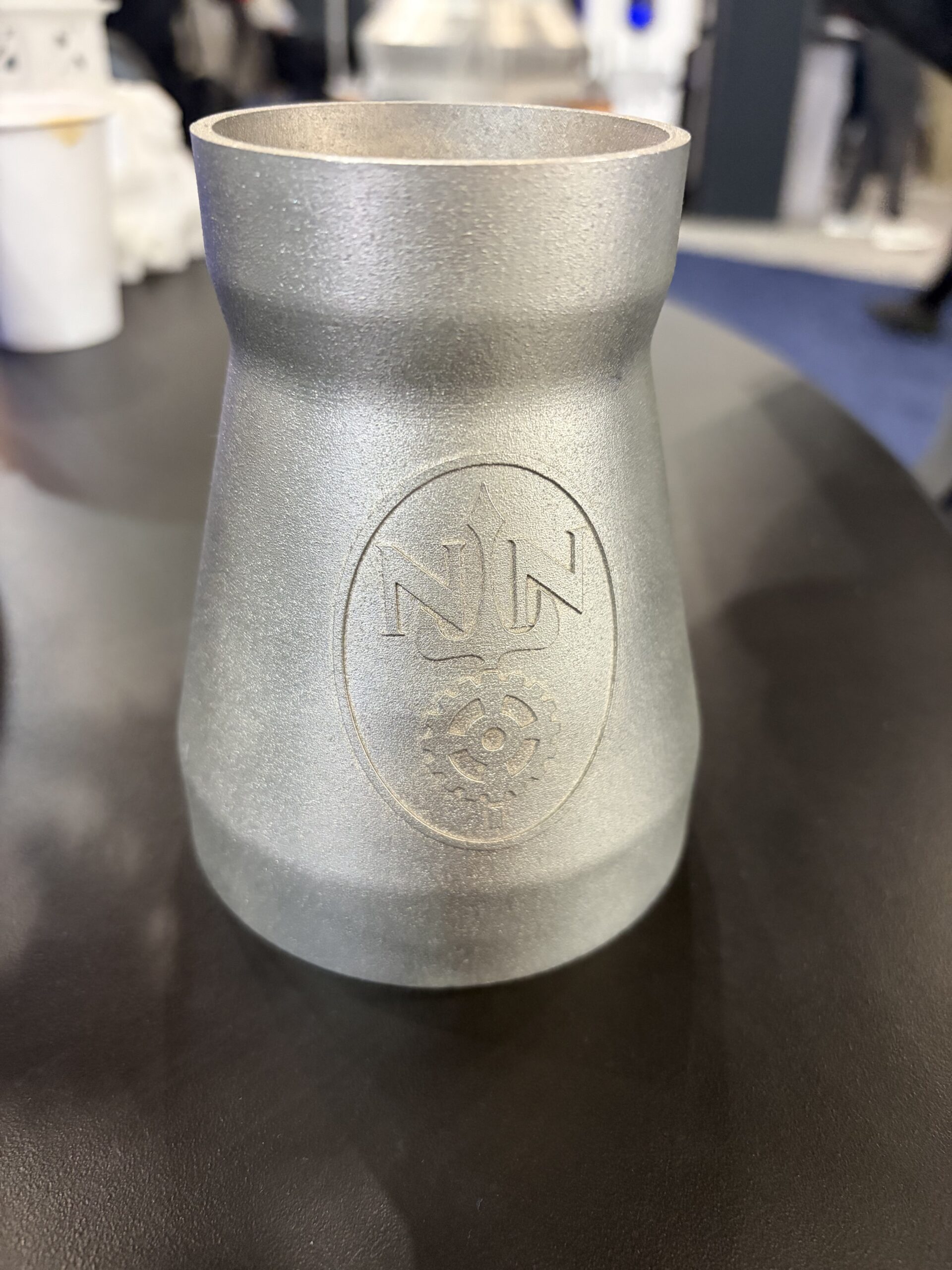
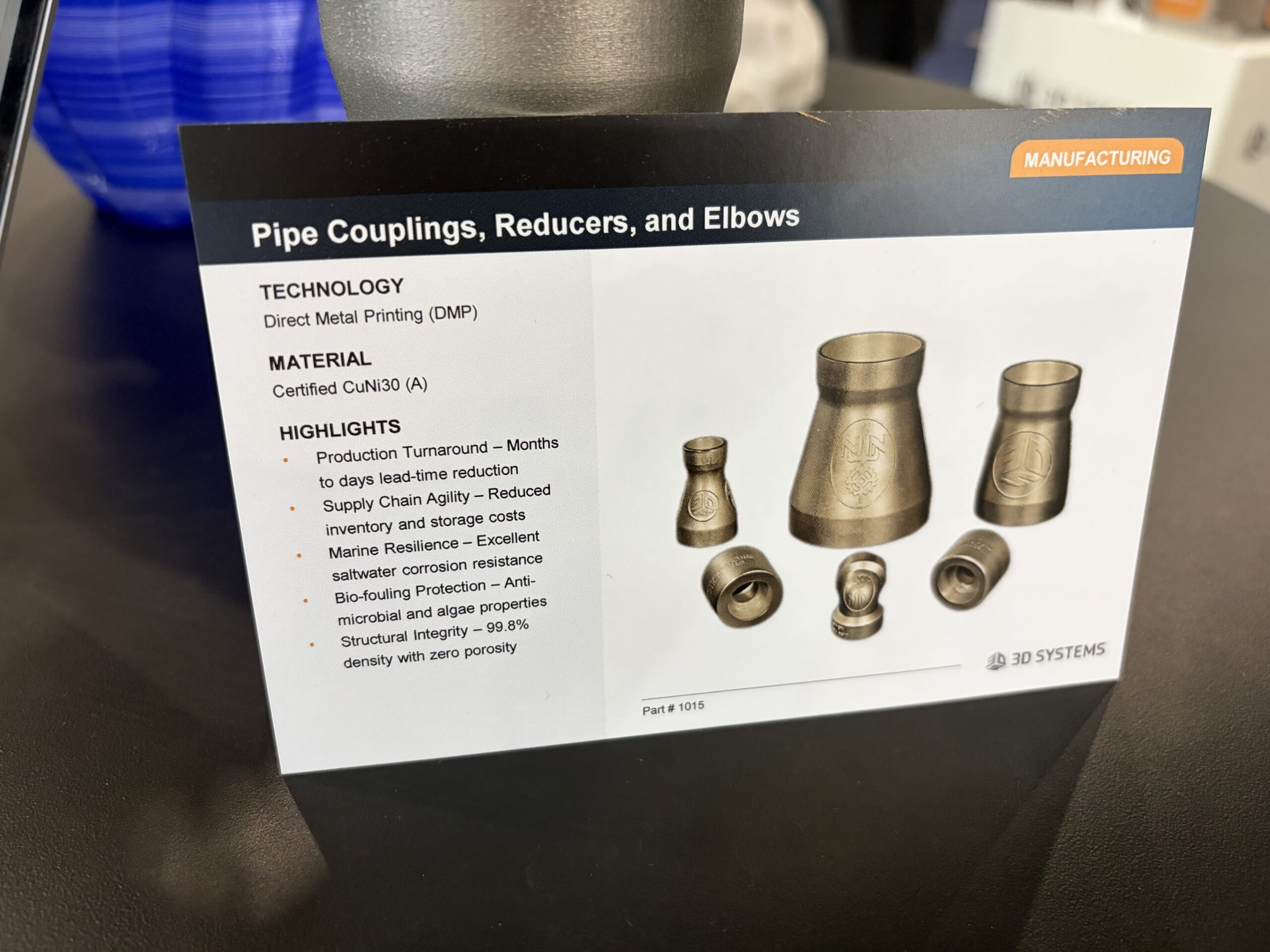
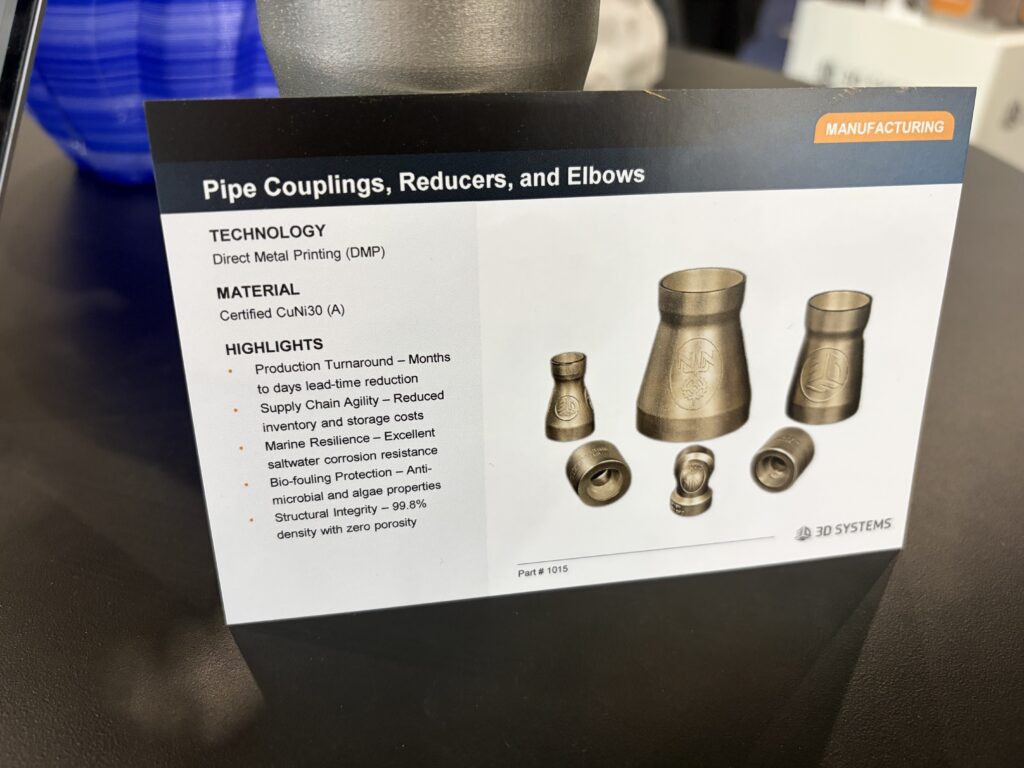
    I asked what kind of spare parts 3D Systems prints for these types of applications. For aerospace, Dunne said it’s a lot of instrumentation knobs and dials that can be printed out of flame-retardant, aerospace-grade plastic. With nuclear submarines, it’s mainly plumbing components, which are considered mission-critical; you can’t go out to sea if the toilet isn’t working, after all!

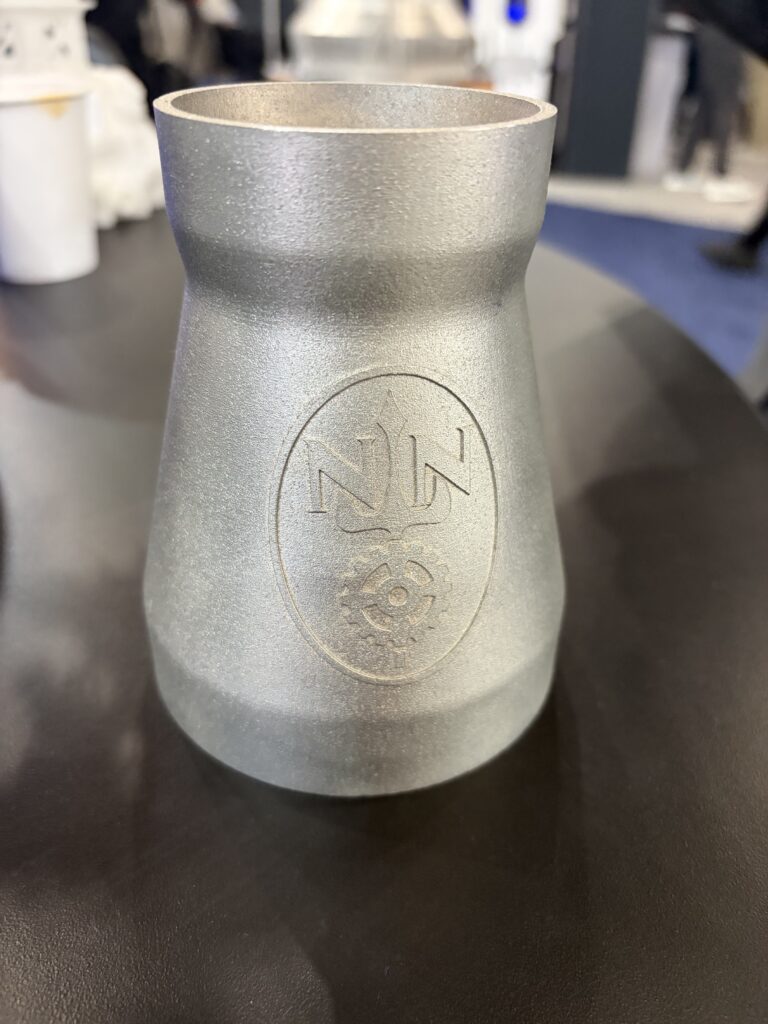
    “There’s a lot of special alloys that go into the sewage plumbing systems for nuclear submarines. They have to be resistant to salt water corrosion. They have to be resistant to high pressure,” Dunne explained. “Historically, the lead time with traditional manufacturing methods, using sand casting or investment casting, can be one to one and a half years. Using a 3D printer, if you add it all up, like the printing and the machining and the inspection, you can compress that down to less than a month.”
    3D Systems booth at RAPID+TCT 2026.

    According to the “AM Applications Analysis: Parts Produced 2025–2034” report by AM Research, the value of parts produced using AM could reach $110 billion by the year 2034. This suggests that many industries are expanding their use of the technology, and that AM continues to move beyond prototyping into real production. The report also states that aerospace applications make up nearly 22% of the total value of metal parts produced with AM globally. So both CERATIZIT and 3D Systems are definitely on the right track.

    Images courtesy of Sarah Saunders for 3DPrint.com

  • The Additive Chicken Coop, Part II: Rescoping

    When we previously looked at the Additive Chicken coop, we saw how selling devices to labs shaped a lot of our industry. Here, we explore other key factors that have led to the industry’s current state.

    Piggybacking on Lasers

    An increase in the capabilities of low-cost lasers and new diode laser forms is the real driving force behind many developments in LPBF and SLA. Vat polymerization can hardly have existed at scale without the Texas Instruments DMD mirror setup. In parallel strides forward, Scanlab, Visitech, and others have done a lot of the heavy lifting to make new print platforms possible. They’ve centralized a lot of the truly hard science into convenient, mountable packaging. Low-cost lasers are now enabling companies such as Metal Base to produce sub-$10,000 metal LPBF printers. This is a continuation of the same wave that previously enabled Sinterit, Sintratec, and Formlabs to make polymer LPBF systems accessible. Further cost decreases could prompt many more LPBF entrants. In inkjet processes, it’s the billions from inkjet-head firms that drive much of the functionality. Now, this is not anything new for anyone reading this.

    But we keep looking at the individual machines too much while not focusing enough on the broader technological developments driving our industry. We should pay more attention to developments in light engines and less to machine releases, for example. We’re counting the cup holders and ignoring electrification.

    Value Propositions and Diggers

    Yes, the parts from low-cost metal 3D printers are not as good as those from an industrial system. That’s not the point, your shovel can not dig as well as a Liebherr R9800. But your shovel is cheaper, easier to transport by air, and easier to use indoors. It’s all about the use case, the user, and the value proposition. Many people want accessible metal parts. But what we don’t know yet is if the quality and cost as is will be enough to entice them. In and of itself, this value proposition will depend on understanding that we do not yet have. So do not dismiss the parts offhand. Or make the mistake of thinking that this won’t work for you, so it won’t work for anyone.

    A LEGO-built Liebherr R9800 excavator model representing heavy construction machinery. Image courtesy of LEGO.

    But also don’t make the mistake of thinking that because industrial polymer LPBF sells, desktop systems will do 10 times as well. A desktop Liebherr R9800 also will not work unless it’s by LEGO, of course. But the LEGO R9800 shares the exact same look and functions as the larger (800 tonne) one, but it offers a very distinct value proposition. Forgetting this is a mistake many have made before.

    So, who is doing the selling matters? When matters as well. To whom you are selling matters too. Our minds are trained to recognize patterns in the noise. We tend to make up logical (often simplistic) narratives to explain a chaotic world. And we extrapolate. One of the biggest mistakes made across many innovative sectors is to compare Apples to Oranges and then infer a business model from a similar development. We often end up trapped in our analogies, prisoners of childish tales meant to explain the world, but that inhibit true understanding.

    Scope

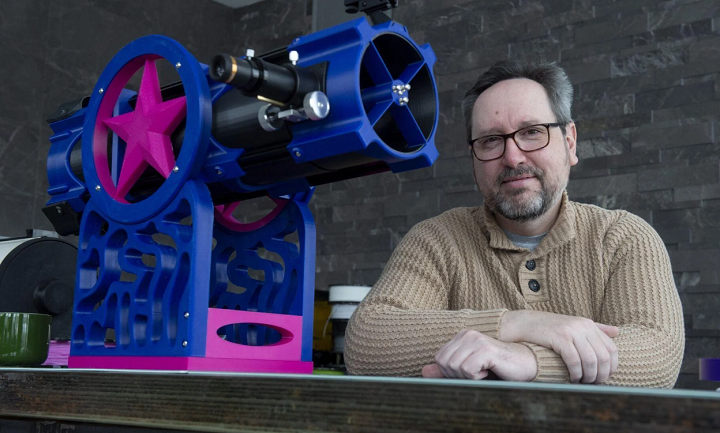
    Brian Michel with a Skyward 150 3D printed telescope in his Guelph home. His plans to build the telescope are available for free. Image courtesy of Mathew McCarthy, Waterloo Region Record.

    Scale matters, perhaps more than we thought. But scope matters too. Everyone is always talking about scaling, but “scope” is used only in the sense of “scope creep.” To truly reassess the scope and to redefine the business is rarely done. We did market research in 2015 and set off based on that. We defined our target markets and never checked back to see if that had changed. We never responded to changes in the world or technology. We don’t serve those customers. Across businesses, we see many problems with this. But, in additive, we can see that many companies need to reassess their scope according to the new world. Yes, you can pivot to the newest thing or approach a new market. But, if you change nothing else and do not reinitiate learning mode, you´ll just be a trend-driven drunken sailor staggering from one management fad to another. Rather than pivoting, businesses should rescope themselves to see whether the total of their assumptions and actions is even coherent. Maybe we have to change how we operate, which countries we target, and how we target them.

    Because we’re sufficiently cognizant of our history, we’ve probably misunderstood our current situation. By not focusing enough on the parts of the printer that actually make the shape, we do not sufficiently understand how light sources and other technological developments will shape us. We often lack empathy to see how others may perceive or need goods and services differently than we do. And we need to reassess the scope from time to time to remain focused. All of these elements are important to see what is truly going on.