• 3D Printing Should Benefit Greatly as EU Releases €6 Billion for Ukrainian Drones

    Drones have changed everything. Case in point: with the aim of preventing Iran from developing a nuclear weapon, the US and Israel initiate airstrikes on the Gulf nation. A couple of months later, Iran is using low-cost weapons systems centered around cheap drones to halt a fifth of the world’s energy flows, creating a far greater practical advantage for itself than possession of a nuclear weapon would imply.

    Another (related) example: since Russia invaded Ukraine in February 2022, Western powers have been providing Ukraine with expertise to help counter Russian aggression. Now, precisely because of the drone disadvantage the US finds itself in amidst the war in Iran, the US and NATO seek Ukraine’s advice based on its drone expertise.

    This has evolved into far more of a two-way relationship than a traditional dynamic whereby a major power arms a minor one, though Ukraine still of course needs significant Western assistance, primarily in the form of financing. At the end of last year, the EU announced a €90 billion loan package for Ukraine, and now that it has finally been approved, the first tranche of that funding will be released this quarter. A third of the money will go towards Ukraine’s general budgetary needs, and the other two-thirds towards defense. Of the defense funding, no less than €6 billion (~$7 billion) from the first tranche—around twenty percent of the defense funding—will go towards drones, which, among its many consequences, should be a major boon to Ukraine’s additive manufacturing (AM) capabilities.

    While Ukraine’s use of AM to back its drone production progress is virtually common knowledge at this point, one still can’t emphasize enough how AM has transformed both the technological and logistical bases that determine Ukraine’s ability to arm itself. In a 3DPOD episode from August 2025, 3DPrint.com’s Joris Peels interviewed Jake Volnov, the founder of DrukArmy, which draws upon volunteers from all over Europe who use desktop 3D printers to make and donate non-explosive components to Ukraine’s military. Meanwhile, through more formalized channels, Ukrainian forces have already been transferring 3D printed drone know-how to elite Western units.

    The Sting interceptor, produced by Wild Hornets. Image courtesy of Wild Hornets

    At present, what the US, and nations in the Gulf, most desperately need from Ukraine is expertise related to interceptor drones, most notably the Sting interceptor made by Ukrainian company Wild Hornets. Earlier on in the Iran conflict, Wild Hornets noted that the company wouldn’t sell Gulf countries the Sting or other products without Ukrainian government approval. Just before the EU officially approved the loan package, President Zelenskyy of Ukraine said that he would allow sales of Ukrainian weapons, including drones, to foreign nations, so long as they don’t cooperate with Russia. Given President Trump’s track record in that context, it will be interesting to see how potential cooperation surrounding drone defense unfolds between Ukraine, the US, and the Gulf nations.

    In any case, the EU (aside from nations like Hungary and Slovakia, which held up the loan vote due to their continued reliance on Russian oil) certainly appears poised to benefit from all the expertise that Ukraine can deliver, and not just thanks to the loans. It has also just been reported that the European Defence Agency (EDA) will provide €35 million to Ukraine to support the second phase of BraveTech EU, a joint EU-Ukraine defense accelerator, which reportedly “…gives the EU a more formal mechanism for converting wartime innovation into tested defence applications.”

    Along those lines, Ukraine is in the curious position of serving as a de facto open-air R&D lab for Western weapons tech, operating under live conditions and in real time. Under such circumstances, one would think that the funding should take the form of a grant rather than a loan, although perhaps the EU anticipates that the funds will be paid back in expertise.

    Above all, the takeaway from the latest developments in EU-Ukrainian relations demonstrate how contemporary military alliances are based on completely different premises than were thought to be the case even just a few months ago, and 3D printing is one of the most significant pieces of the explanation why. Direct operating experience is now obviously so much more important than theoretical advantage that the most well-funded powers are at the mercy of those who are more or less scraping to get by.

    Again, this is a logistical shift just as much as a technological one. As with all situations where technology and logistics converge, the key to success is strategy. Anyone interested in learning directly from those working firsthand at the intersection of 3D printing and drones should register for our UAS Additive Strategies webinar, which will take place on June 30 from 11 AM-2:30 PM Eastern time. Even if your firm isn’t planning on printing drone components, the dynamics shaping the world of 3D printed drones have relevance to the entire state of global manufacturing.

    Featured image courtesy of DrukArmy

  • Amnovis Expands to the US

    Belgian firm Amnovis is a scalable partner for orthopedic innovations. From design to production and regulatory, you can rely on them to take your innovation to market. Coupled with deep additive manufacturing expertise and growing interest in 3D printed implants, this has been a winning combination. Amnovis can couple your innovation with the latest in 3D printed lattices or ground your idea in LPBF production methodologies. I really like what they’re doing and think that similar firms in other verticals will really accelerate our market growth.

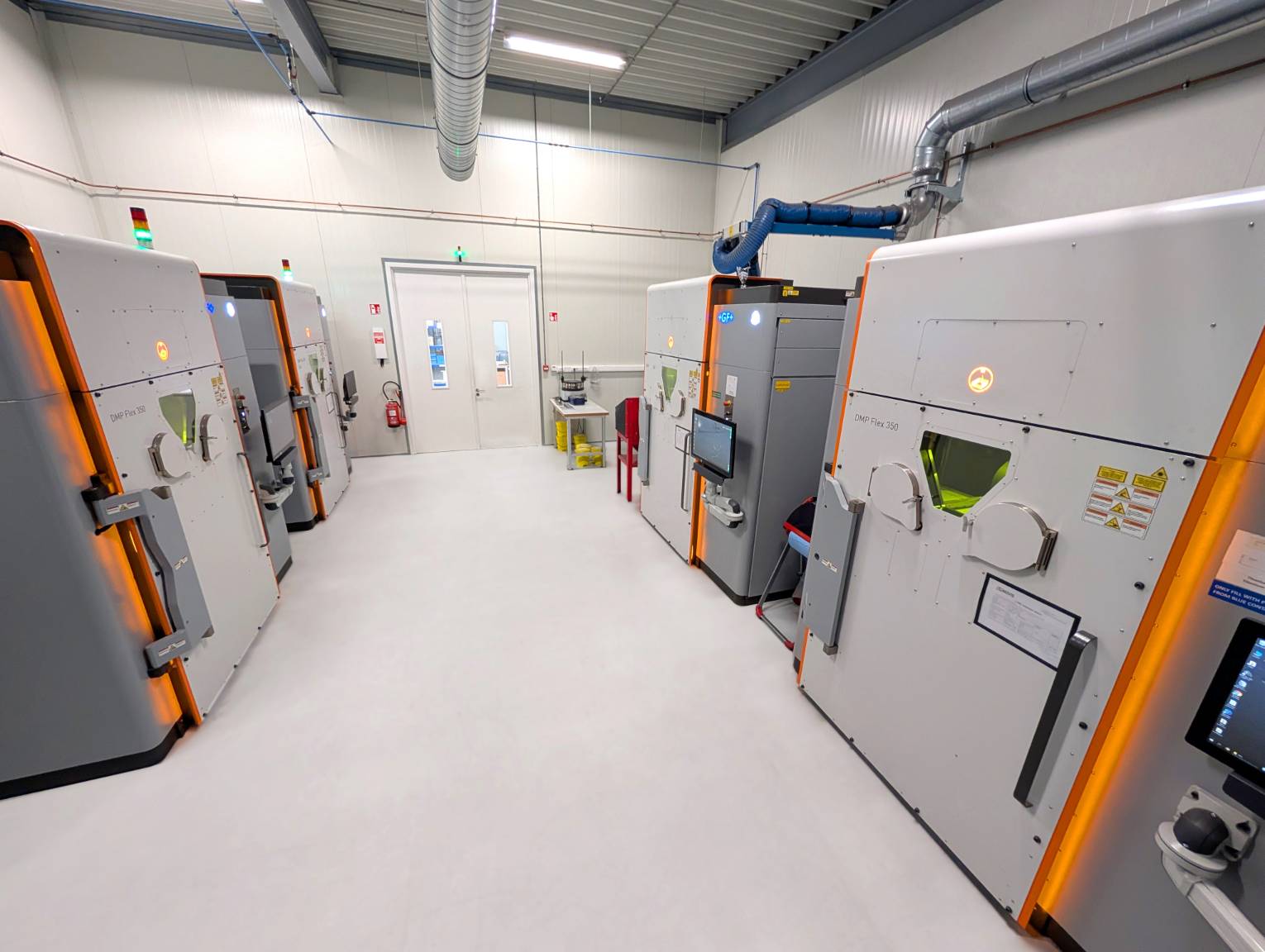
    Selected L-PBF metal 3D printers installed at Amnovis.

    Now, the firm has expanded into the US by acquiring the additive manufacturing business of Westconn Precision Technologies. Amnovis’ new unit is in North Webster, close to Warsaw, Indiana, the Silicon Valley of Orthopedics. Warsaw was where DePuy Synthes (now a Johnson & Johnson MedTech company and global leader in orthopedics) was founded, and ex-employees and partners have created a myriad of orthopedics firms in and around the city. It now houses the headquarters of Zimmer Biomet and DePuy. So it’s a nice place to be for Amnovis, and a nice place to get noticed by the big firms.

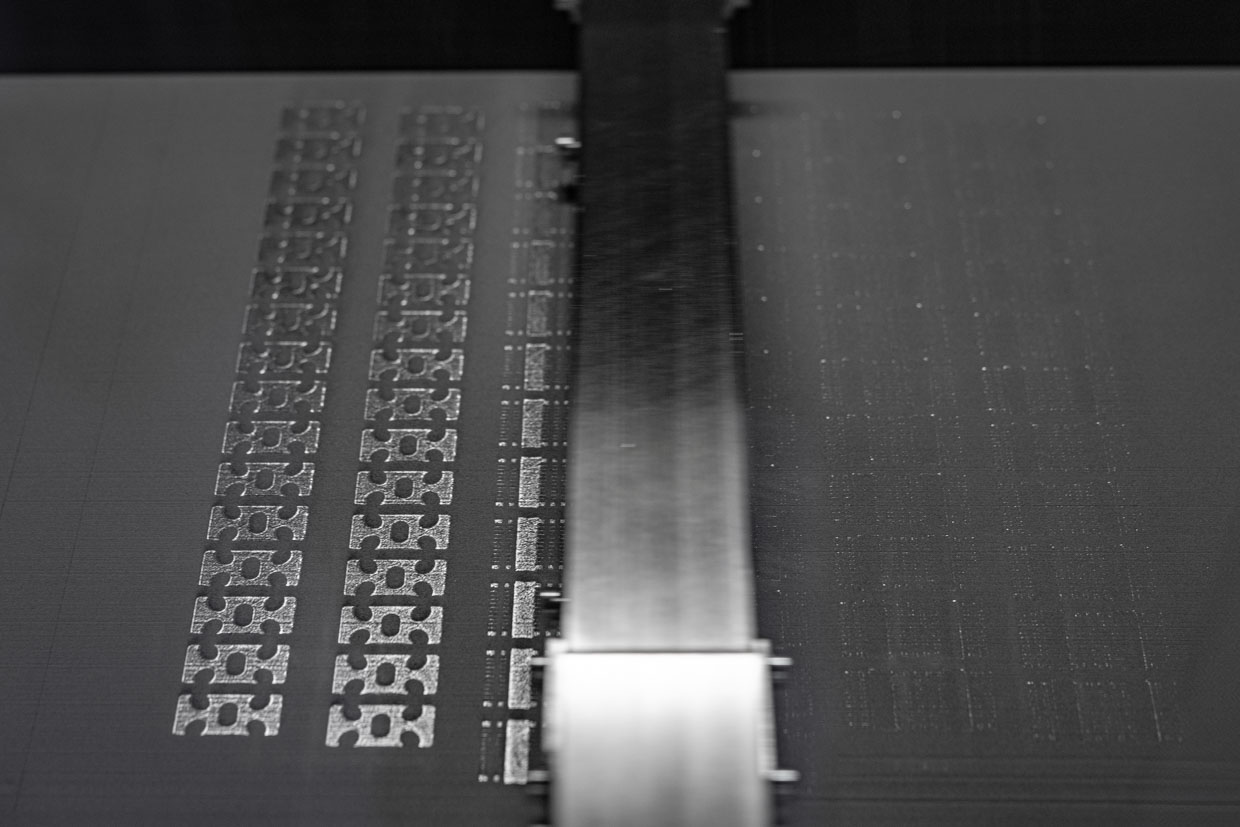
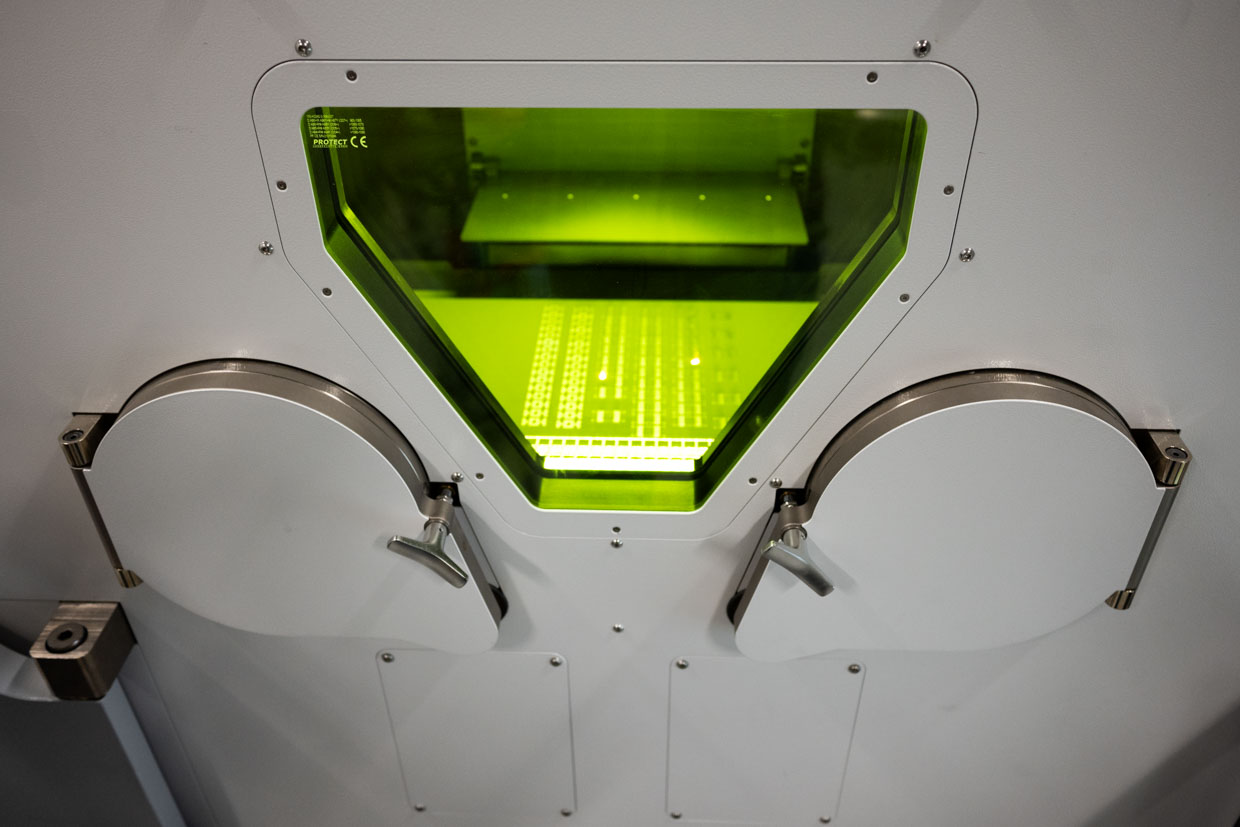
    Additive manufacturing of medical devices in action.

    Amnovis has appointed Chris Cook as General Manager of the US Operations for the Amnovis unit in Warsaw. He will be joined by Jake Marasco on account management. Westconn is a family-owned Connecticut-based CNC and EDM shop specializing in precision machining. Amnovis hopes to mirror the Belgian arm exactly in the United States, allowing for redundant manufacturing at both sites under the same quality systems.

    Additive manufacturing of medical devices in action.

    Amnovis CEO Ruben Wauthle said,

    “Expanding our operational footprint to the United States is a logical next step in the evolution of Amnovis. Being close to the largest medical device market globally, and specifically within the Warsaw, Indiana ecosystem, allows us to better support customers who require reliable, high quality additive manufacturing capacity with minimal logistical complexity.”

    The company hopes manufacturers can split production between the two sites, giving them greater flexibility and allowing them to target more markets. Approvals should be streamlined, as should scaling globally in both the EU and US markets. Amnovis will be able to print, CNC and EDM at the new site.

    Wauthle adds that,

    “The acquisition of Westconn’s additive manufacturing activities further strengthens Amnovis’ position as a global partner for industrialized additive manufacturing- By aligning equipment strategies and technical expertise across both sites, we are able to scale our operating model globally while further reinforcing our already strong capabilities in metal additive manufacturing. This combination allows us to support customers with a level of consistency, scale and technical depth that is increasingly required as more customers develop applications that truly unlock the full potential of additive manufacturing.”

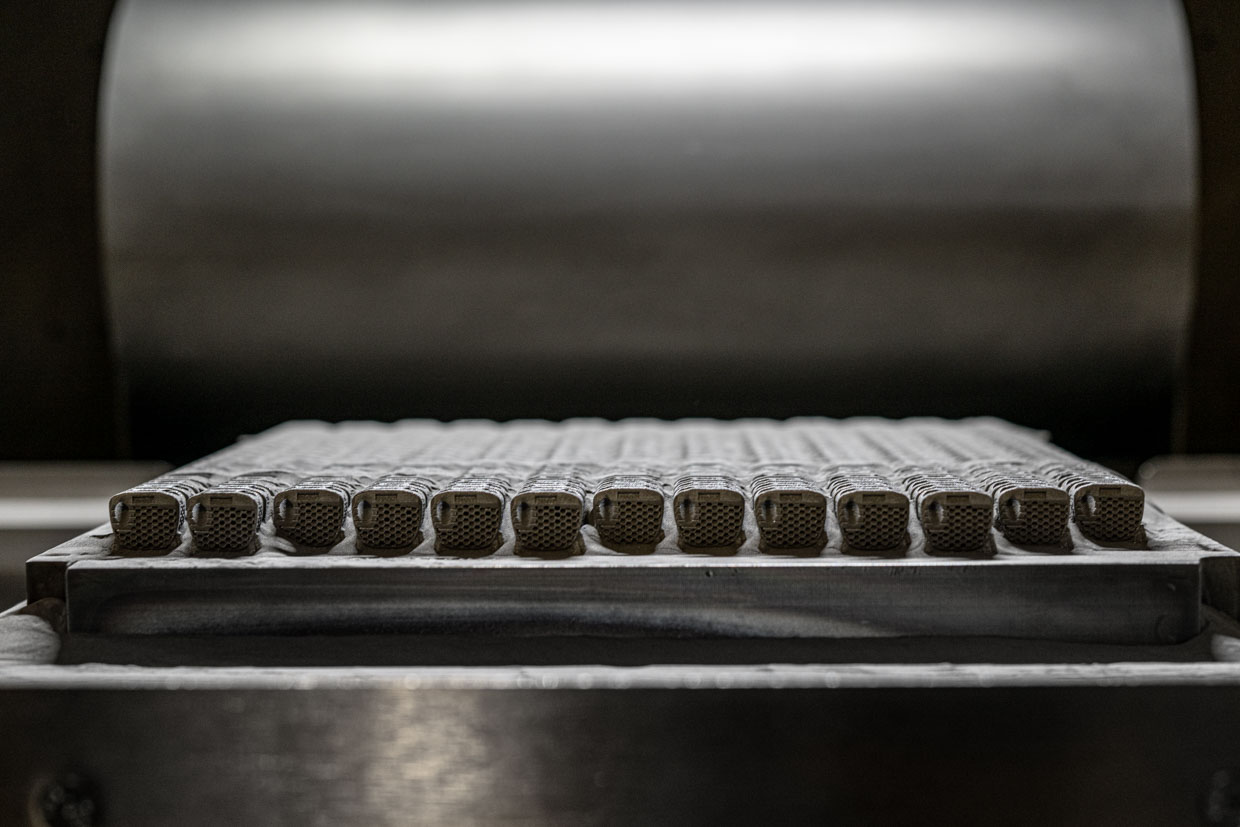
    Titanium spinal implants immediately after printing.

    The logic for the deal was “the size of the US medical device market, the growing demand for patient-specific and time-critical applications, and the need for flexible, regionally available manufacturing capacity.” The US market is huge, comprising perhaps a third or half of the global market. What’s more, FDA-approved devices are often cleared in many other countries that, in fact, outsource the approval process to the US FDA. It may be easier right now to get medical devices approved in the US than in Europe. A dual-regime setup will allow Amonovis to select the appropriate jurisdiction for the customer. If they can, then charting a relatively straightforward path to introduction in the US and Europe would really make sense for customers. Other solutions tend to be regional, so Amnovis may be the only one that can offer a straightforward path to both markets with one 3D printing partner. This could sway clients on choosing then rather than a competitor.

    Please copy Amnovis and do the same for energy, maritime, the military, and many other markets. This model is just such a force multiplier for both clients and our industry, helping scale up new entrants through additive expertise and capacity, which is just what we need in orthopedics and beyond.

    Images courtesy of Amnovis

  • 3D Printing News Briefs, April 30, 2026: Support-Free Titanium, Drug Delivery, & More

    In today’s 3D Printing News Briefs, we’ll start with Makelab’s new website, and move on to commercialization of support-free metal 3D printing in South Korea. We’ll end with drug delivery research and a metal 3D printed implant that supports healing. Read on for all the details!

    Makelab Debuts New Website for Ninth Anniversary

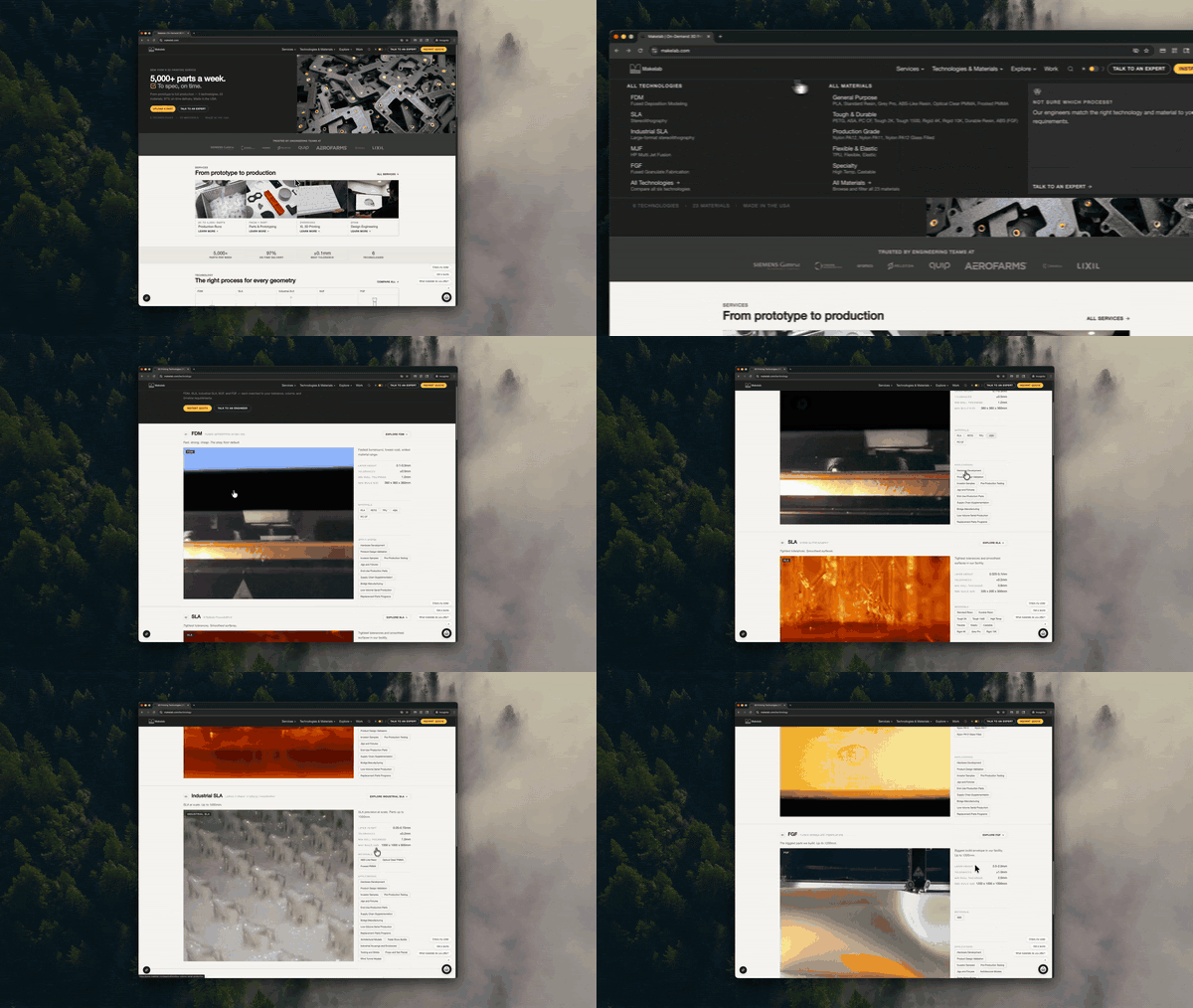
    This month, Brooklyn-based 3D printing service bureau Makelab is celebrating its ninth anniversary in business. Co-founded by industrial designers Christina Perla and Manny Mota, the company offers six AM technologies and 23 materials, and produces over 5,000 parts a week in its New York factory; two years ago, Makelab opened a second location in San Francisco. To celebrate its ninth anniversary, they rebuilt the website from the ground up, adding seven new tools they think customers will actually use. Two of the tools are for calculations, three are for exploring Makelab’s options, and two are to improve the overall experience of the website. The Lead Time Calculator helps you calculate when your parts will be ready – just input the technology, quantity, the date you’ll be placing the order, and you’ll get the lead time, no quote required. With the Shipping Calculator, you can add your ZIP code and service level to see your estimated cost of shipping from Brooklyn.

    The first of three new “Explore” tools on the Makelab website is the Materials Hub, which lists all of the 23 materials Makelab offers, “from general-purpose PLA to production-grade MJF nylon,” as the site states. It includes filters for finish, strength, temperature resistance, and use case, and you can see the properties for each material, plus the lead time for jobs completed with the materials. Tech Compare offers a side-by-side comparison of AM technologies and materials, like FDM vs SLA vs MJF. Makelab said this tool was really built for engineers who are “speccing a part.” The last “Explore” tool is Our Work, which is where you can see real projects that Makelab has completed and shipped. It’s updated every month, too! Finally, there’s a new Dark Mode for when you’re looking up part specs at 2 am; the toggle is at the top right of the screen, next to Talk to an Expert. There’s also an AI chatbot trained in Makelab’s process, FAQs, materials, and lead times; look for the robot icon on the bottom right corner of every page. Happy anniversary, Makelab!

    Korea’s INNOSPACE Commercializes Support-Free Titanium AM

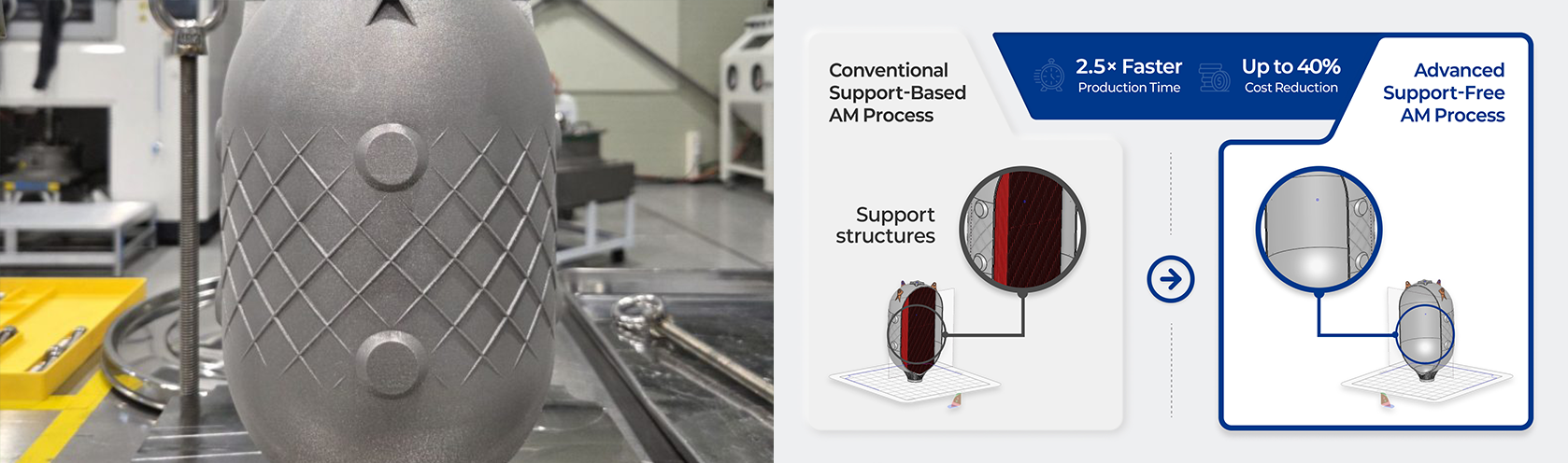
    Dome-shaped titanium high-pressure tank produced using a support-free additive manufacturing (3D printing) process. Comparison of conventional additive manufacturing processes (left) and advanced support-free additive manufacturing processes (right).

    South Korean aerospace/defense manufacturing and engineering service INNOSPACE says it’s the first in the country to commercialize an advanced metal AM process that doesn’t use support structures, and 3D printed titanium components with the technology. Internal supports are normally required to prevent deformation during conventional metal AM processes, but these cause lack of design freedom, longer production times, and more post-processing. INNOSPACE applied advanced process control technologies to achieve structural stability and product quality without having to rely on supports, which allows it to efficiently print complex curved structures, like dome-shaped and spherical components that would be used in satellite propellant tanks, for example. The company used its support-free metal AM process to make and supply high-reliability, high-precision titanium components to a domestic aerospace company, and reports that manufacturing time was reduced by 2.5 times, and costs by up to 40%, due to the fact that significantly less post-processing steps were required.

    “The advanced metal manufacturing sector is characterized by high technological entry barriers and stringent quality verification standards, making it a strategically important field where securing core technologies directly impacts scalability and profitability. Building on our additive manufacturing capabilities developed through launch vehicle programs, we will accelerate expansion into high-value markets, including aerospace, defense, and satellite structures, and strengthen our competitive position in the global market,” said Soojong Kim, the Founder and CEO of INNOSPACE.

    Ole Miss Researchers 3D Printed Elastic Nanoparticles for Cancer Treatment

    Elom Doe (left), a third-year doctoral student in pharmaceutical sciences from Accra, Ghana, and Jaidev Chakka, principal scientist in the School of Pharmacy, show off a 3D printed implant produced at the university’s Thad Cochran Research Center. Similar implants loaded with anticancer therapies may be used to deliver medication directly to tumors. Photo by Hunt Mercier/Ole Miss Digital Imaging Services

    Chemotherapy is typically given orally, or injected into the bloodstream to be carried throughout the body. Unfortunately, because these therapies target cells that reproduce quickly, like cancer, they can also affect your skin, hair, and intestinal linings, resulting in unpleasant side effects. A team of researchers from the University of Mississippi are using 3D printing to deliver these drugs directly to tumors, which could reduce these side effects. As they explain in their study, they 3D printed spanlastics (elastic nanoparticles), which are tiny, hydrogel-based carriers filled with drugs to fight cancer that could be implanted right at the site of a tumor. Each capsule was just 200-300 nm in length, which allows them to pass through cell membranes and deliver a high dosage of medication to the affected cells. During in vitro studies, the team applied the 3D printed carriers to breast cancer cells and got “really promising data,” according to Mo Maniruzzaman, chair and professor of pharmaceutics and drug delivery at Ole Miss.

    “Every drug for cancer has to act inside the cell, either on RNA or on DNA or inhibiting a cell pathway. If the drug is not able to penetrate the cell membrane or be taken up by the cell, the effect of the drug is none,” said Jaidev Chakka, principal scientist in the School of Pharmacy.

    “But when we put that drug in a nanoparticle, we are also protecting the drug from degradation, so we are actually pushing a good amount of drug molecules into the cell in one go.”

    3D Printed Orthopedic Metallic Implant Supports Healing While Degrading

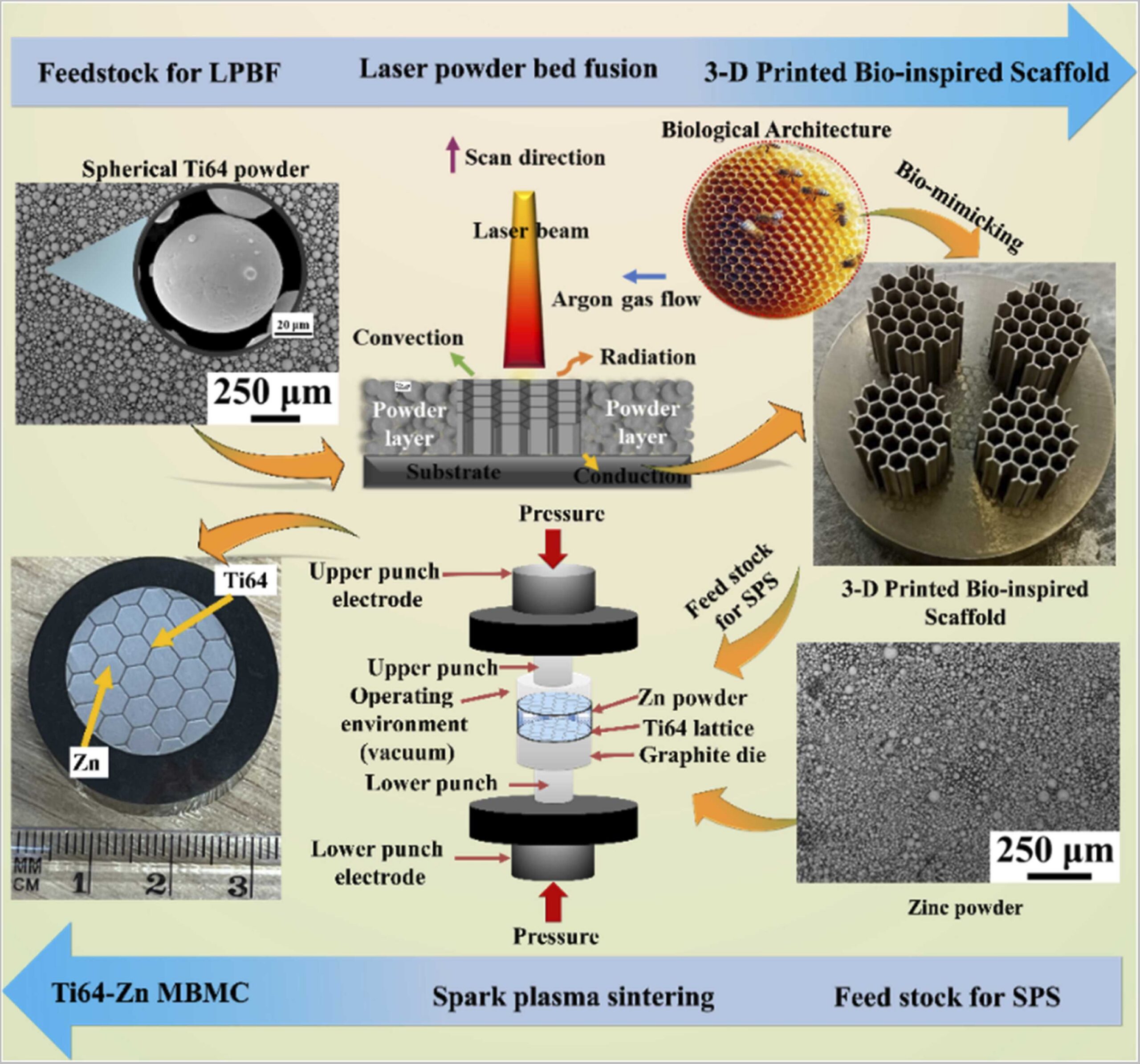
    Schematic illustration of Ti6Al4V-zinc (Ti64-Zn) metallic bi-metal composite (MBMC) manufacturing process in two different steps. Step 1 involves the development of bio-inspired Ti64-based hexagonal lattice architecture using a laser powder bed fusion process. Step 2 involves addition of Zn powder to the hexagonal lattice within a graphite die, followed by spark plasma sintering at optimized temperature and pressure resulting in the development of Ti64-Zn MBMCs.

    Finally, a team of scientists from universities around the world published a study on their work developing a hybrid metallic 3D printed orthopedic implant that supports healing while it slowly degrades within the body. Titanium alloys are often used for these implants because of how reliable and strong they are, but they’re much stiffer than human bone, so when they’re permanently implanted, the surrounding bone can weaken over time and cause complications or even implant failure. So the team paired two different metals with complementary properties to develop a hybrid metallic implant. Combining 3D printing and powder metallurgy, they created a titanium alloy lattice and filled it with zinc, which gradually dissolves in the body, under the right physiological conditions, with the help of pressure assisted sintering. The honeycomb structure of the lattice uses less material, but still offers high strength, and bone cells and body fluids are able to freely pass through the implant. The team reported that lab tests confirmed the bi-metal composite showed biocompatibility by supporting bone growth.

    “The developed composite achieved a compressive strength of about 292 MPa, which is significantly higher than that of natural bone (230 MPa). The material demonstrated a controlled degradation rate of approximately 0.157 mm per year under simulated body conditions, which is close to the ideal degradation rate reported for biodegradable implant materials,” explained K.G. Prashanth, corresponding author of the team’s study.

    “This research could help create smarter bone implants that provide strength during healing but also support natural bone regeneration. Such implants could reduce post implantations complications and extents of revision surgeries.”

    Researchers from Tallinn University of Technology, the VSB-Technical University of Ostrava, Loughborough University, the Indian Institute of Science, Nanyang Technological University, Dalarna University, Karlstad University, the Saveetha Institute of Medical and Technical Sciences, and the South China University of Technology worked on this project.

  • This New UK Factory Will 3D Print Concrete at Scale

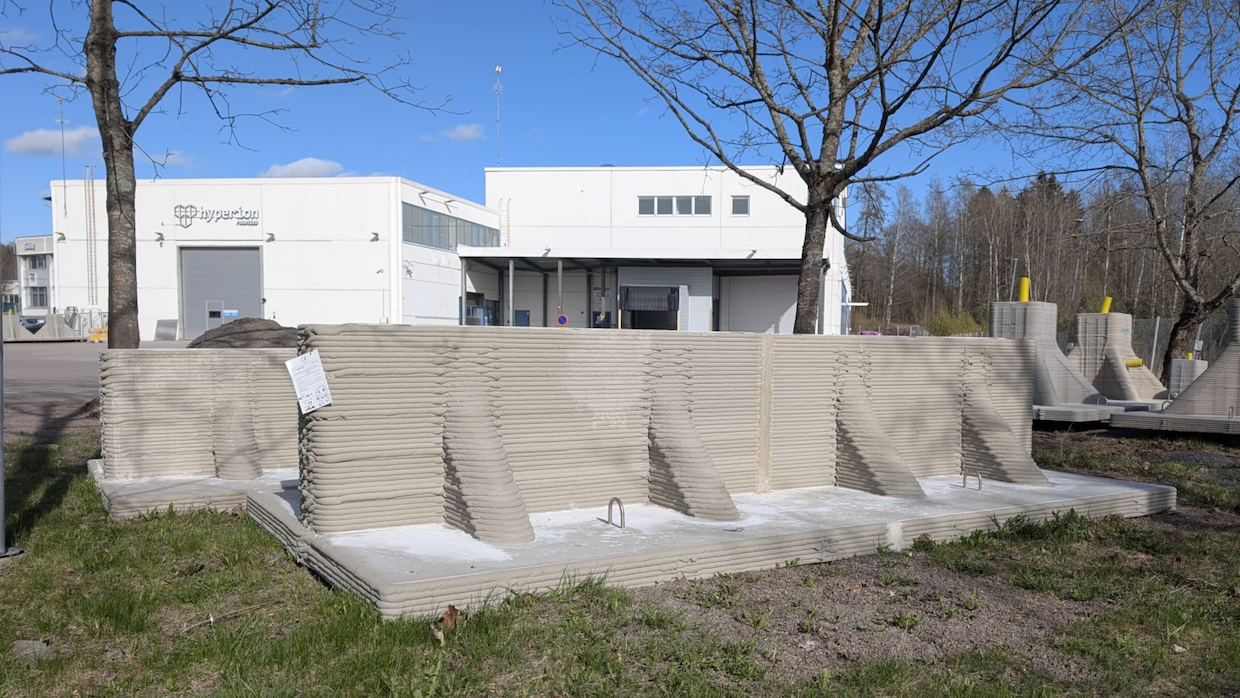
    A new factory in North Lincolnshire will use robots to 3D print concrete parts for construction when it opens next June. The facility will focus on producing components like foundations and infrastructure elements at scale, using low-carbon materials and robotic systems rather than traditional molds. The project is being developed by Hyperion Robotics in partnership with Swedish company LKAB Minerals, and is already tied to a real project with its first known client, Costain, a UK infrastructure contractor working on major energy and transport projects.

    Costain has already lined up 3D printed concrete foundations for a carbon capture project on Teesside, part of the East Coast Cluster. Costain and A E Yates will work with Hyperion to produce approximately 90 high-strength concrete pipe support bases, or sleepers, along 1.3km of onshore CO2 pipelines across Teesside using its advanced robotic manufacturing and digital technology.

    3D printed concrete sleepers for Costain’s landmark East Coast Cluster project. Image courtesy of Hyperion Robotics.

    Named Forge I, the factory is scheduled to open before summer 2026. In fact, the company is already preparing to open the site to industry partners, with an event set for June 23, where attendees will be able to tour the facility and watch a full foundation unit being printed live. 

    The site will produce pre-cast concrete foundation units using robotic and automated manufacturing systems, with LKAB supplying the mineral inputs and the physical site, while Hyperion develops and operates the facility.

    The biggest shift for the facility is how these parts are actually made. Instead of pouring concrete into molds, waiting for it to harden, and then pulling the parts out, the factory will use robots to print the pieces. That makes it easier to tweak designs, use less material, and move faster when changes are needed. And the main idea behind Forge I is to turn all of that into something repeatable. 

    The companies say the facility will use low-carbon concrete materials, aligning with broader efforts to reduce emissions in the construction sector. Concrete production is a major source of global CO₂ emissions, and there is growing pressure to find more efficient and sustainable alternatives.

    “By supplying climate-efficient mineral inputs directly into Hyperion’s computational design and robotic production platform, we are helping to establish a new automated raw-materials-to-infrastructure value chain in the UK. It demonstrates how materials innovation and industrial digitalization can work together to accelerate the transition to lower-carbon, high-performance construction,” noted Steve Handscomb, Managing Director Cementitious, LKAB Minerals UK.

    Forge I is designed to produce more than 50 concrete foundation units per week, each measuring up to 3 meters by 3 meters and 2.5 meters in height. These parts are being built for sectors like energy, water, utilities, and data centers, where foundations are a repeat, high-cost part of every project. All units will meet Eurocode standards and carry CE marking, positioning them for real infrastructure use from the start.

    The bigger shift is how these foundations are made and delivered. Instead of building them on-site, Hyperion is moving production into a controlled factory environment where parts can be printed, tested, and shipped ready for installation. That cuts down on labor, reduces heavy equipment on-site, and helps avoid delays caused by weather or site conditions. Early trials with partners like National Grid and the University of Sheffield showed promising results, including up to 70% less concrete use and lower carbon output. If scaled, the approach could also bring significant cost savings while turning foundations into a more standardized, repeatable product.

    3D printed concrete sleepers for Costain’s landmark East Coast Cluster project. Image courtesy of Hyperion Robotics.

    3D printing in construction has been around for a while, but mostly in small projects or one-off builds. But this is different. It’s less about printing a single house and more about making the same parts over and over, the kind of thing that can actually scale.

    The North Lincolnshire site is meant to work like a production hub, turning out printed concrete parts for infrastructure and other construction projects. If it works, it could help move 3D printing out of the testing phase and into more regular use on real jobs.

    For the 3D printing industry, it’s another sign that construction might be one of the areas where the technology actually sticks, not just as a demo, but as part of everyday production.

    As additive construction expert Stephan Mansour previously told 3DPrint.com, the challenge has never just been the technology itself, but how it fits into real construction workflows. Last year, he also pointed out that the industry keeps coming back to concrete because it’s familiar and already widely understood. As he told 3DPrint.com, “everyone in construction understands concrete… and there are already standards in place.” 

    That’s part of what makes projects like this more realistic. Instead of trying to reinvent construction from scratch, they’re building on materials and processes the industry already knows, just with a different way of making them.

    What makes this development stand out is not just the use of 3D printing, but the decision to center an entire factory around it. Many construction 3D printing efforts to date have focused on individual projects, like printing a single building or testing a new material. Here, the goal is to run a steady production setup that can turn out the same types of components again and again.

    Construction hasn’t changed much in decades, still relying on manual labor and old processes, which is why this shift stands out. Moving production into a factory gives companies more control, more consistency, and a way to scale when needed, while also avoiding common site issues like weather delays and uneven quality. It can also help deal with labor shortages by moving some of the work from job sites to machines. On top of that, the focus on low-carbon materials taps into growing pressure to cut emissions in a sector where concrete has a big footprint. 

  • 6K Energy Secures 7-Year Agreement to Supply CRG Defense with Battery Materials

    Last year, the US Federal Communications Commission (FCC) announced a ban on certain components sourced from foreign suppliers, including Chinese firms, used in unmanned aerial systems (UAS). Meanwhile, the FY 2026 defense budget introduced a host of new bans on DoD sourcing of critical materials and components from foreign entities of concern (FEOC) (a list that includes China), with batteries among the principal product categories banned.

    While both of those moves make sense from a strategic perspective, they obviously create near- and intermediate-term difficulties for US defense supply chains, given the extent of Chinese dominance in the production of both drones and batteries. From an inverse angle, the bans of course also create opportunities for companies like 6K Inc., as we can see from the deal that division 6K Energy just announced to supply Ohio-based contractor CRG Defense with NMC811 (Nickel-Manganese-Cobalt) cathode materials.

    Via the deal, 6K Energy will supply CRG Defense for seven years, in accordance with a Quarterly Purchase Plan that should provide both parties with a long-term baseline of stability in planning operations. Beginning in early 2028, when 6K anticipates its PlusCAM facility in Jackson, Tennessee, coming online, 6K expects to ramp up supply along a similar timeline to what CRG Defense is working towards for its own production ramp-up.

    6K Energy has been supported over the years by several US government grants from both the DoD and the Department of Energy (DOE), including a ~$2 million grant from the Defense Logistics Agency (DLA) in December 2025, and $50 million from DOE back in December 2023, towards the construction of the Jackson plant. Both 6K Energy and its counterpart division, 6K Additive, have also received significant venture backing over the years.

    6Ks UniMelt. Image courtesy of 3DPrint.com.

    In a press release about 6K Energy’s deal to supply CRG Defense with battery materials, Patrick Hood, the CEO of CRG Defense, said, “The shift to domestic sourcing for critical UAS components represents both a challenge and an opportunity for the defense industrial base. By partnering with 6K Energy, we are ensuring current and future access to the domestic materials necessary to supply our customers with secure energy solutions for critical defense applications. Our drone platforms will now be powered by technology that is truly American made from the chemistry up.”

    Meanwhile, Saurabh Ullal, President of 6K Energy, indicated that, “Rebuilding a resilient US battery supply chain requires both early commitment and long‑term partnerships. This agreement marks the beginning of a strategic relationship with CRG Defense as we invest in the infrastructure and technology required to remove reliance on foreign sources. Our PlusCAM facility is designed to deliver sustainable, battery‑cathode material at scale for the most demanding defense applications.”

    While the partners haven’t yet mentioned any direct connection to additive manufacturing (AM), CRG Defense does seem to have pretty robust AM capabilities. Additionally, since the firm works with customers on product development, it’s possible that even if AM has nothing to do with the company’s current plans for its battery manufacturing workflow, customer demand could end up pushing things in that direction.

    Along those lines, it’s notable that drone batteries are one of the primary applications that CRG Defense seems to be targeting, as conformal batteries for drones are an emerging AM use-case being worked on by companies like Florida-based startup Material Hybrid Manufacturing. The intriguing advantage there isn’t solely the potential to increase domestic production capacity, but also the ability to reduce battery weight or increase flight-time by leveraging otherwise unused space in a drone’s internal design features.

    In any case, the fact that CRG Defense is so familiar with AM implies an opportunity for synergy between 6K’s two divisions, regardless of whether or not CRG decides to 3D print batteries. The possibility of targeting customers who are exposed to both AM and batteries is certainly one of the secret weapons for 6K’s long-term business model.

    Against the backdrop of what’s widely considered the worst oil supply shock of all time, batteries can no longer be viewed simply as “green energy”, whatever one’s opinions happen to be on what that phrase represents. Sustainability is security, as the world’s most powerful decison-makers have already realized for years. Everyone else is about to realize that, too.

    Featured image courtesy of 3DPrint.com

  • Scaling 3D Printing Takes More Than You Think; HP’s Webinar Looks at Making It Work Long Term

    3D printing is no longer new. In fact, most manufacturers already know what it is, where it fits, and what it can do. But knowing the technology and actually scaling it are two very different things. That gap, between experimentation and real production, is where many companies get stuck. But it’s also where things start to get interesting.

    Because while additive manufacturing has proven its ability to create complex, high-performance parts with less material and more design freedom, turning that into a repeatable, cost-effective production process is still a challenge for many organizations. 

    And yet, that’s exactly where the industry is moving today.

    Onward

    Across sectors, from healthcare to industrial manufacturing, 3D printing is moving beyond prototyping and into real production environments. The question is no longer if companies should adopt additive manufacturing, or even how to scale it, but how to make it consistent and repeatable over time.

    That’s the focus of an upcoming webinar hosted by HP, titled “Systematizing Your Production: The Final Step in AM Maturity,” taking place on May 5, 2026, which aims to break down what it actually takes to move from early adoption to full production.

    This session is also the final part of a four-part series. Earlier webinars looked at how companies adopt 3D printing, expand into new applications, and scale it across their operations. This last installment shifts the focus to what comes next: how to make those efforts consistent, repeatable, and sustainable over time.

    Led by Dustin Kloempken, HP 3D Printing Application Engineer, and Josh Almeter, who manages 3D printing operations at HP’s Americas Product Completion Center (APCC), the session focuses on the practical side of scaling: choosing the right applications, selecting materials that perform in real-world conditions, and building a roadmap that aligns with business goals. These decisions help turn 3D printing into part of production.

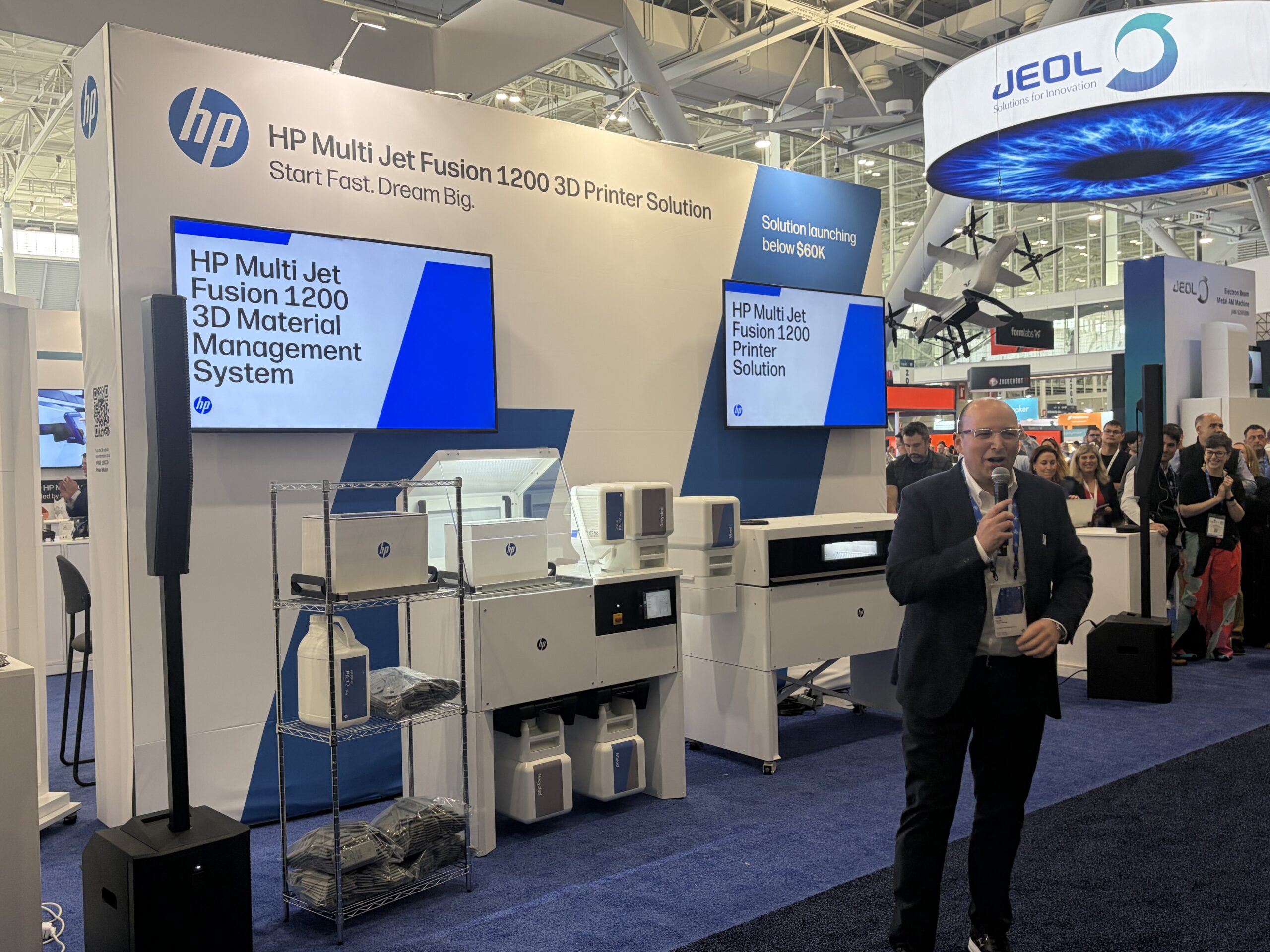
    Alex Moñino, Senior VP and General Manager, HP Additive Manufacturing Solutions as HP debuts new 3D printing products at RAPID + TCT 2026. Image courtesy of Sarah Saunders/3DPrint.com.

    Momentum

    In the last few years, 3D printing has gotten a lot more reliable. Materials are better, systems are more consistent, and it’s now possible to produce real, functional end parts. But that doesn’t mean running it consistently at scale is easy.

    The challenge isn’t just the technology. It’s knowing where 3D printing actually makes sense, how to make it work in existing workflows, and how to manage things like cost, quality, and speed. It also means thinking about 3D printing differently, not as a tool, but as part of production. That’s where sessions like this come in.

    This webinar tackles those questions directly. It looks at where 3D printing already works, how to choose the right materials, and what it takes to move into production. It also includes real examples, including how HP’s own teams scaled from a single printer in 2017 to a full production environment today, and what changed along the way.

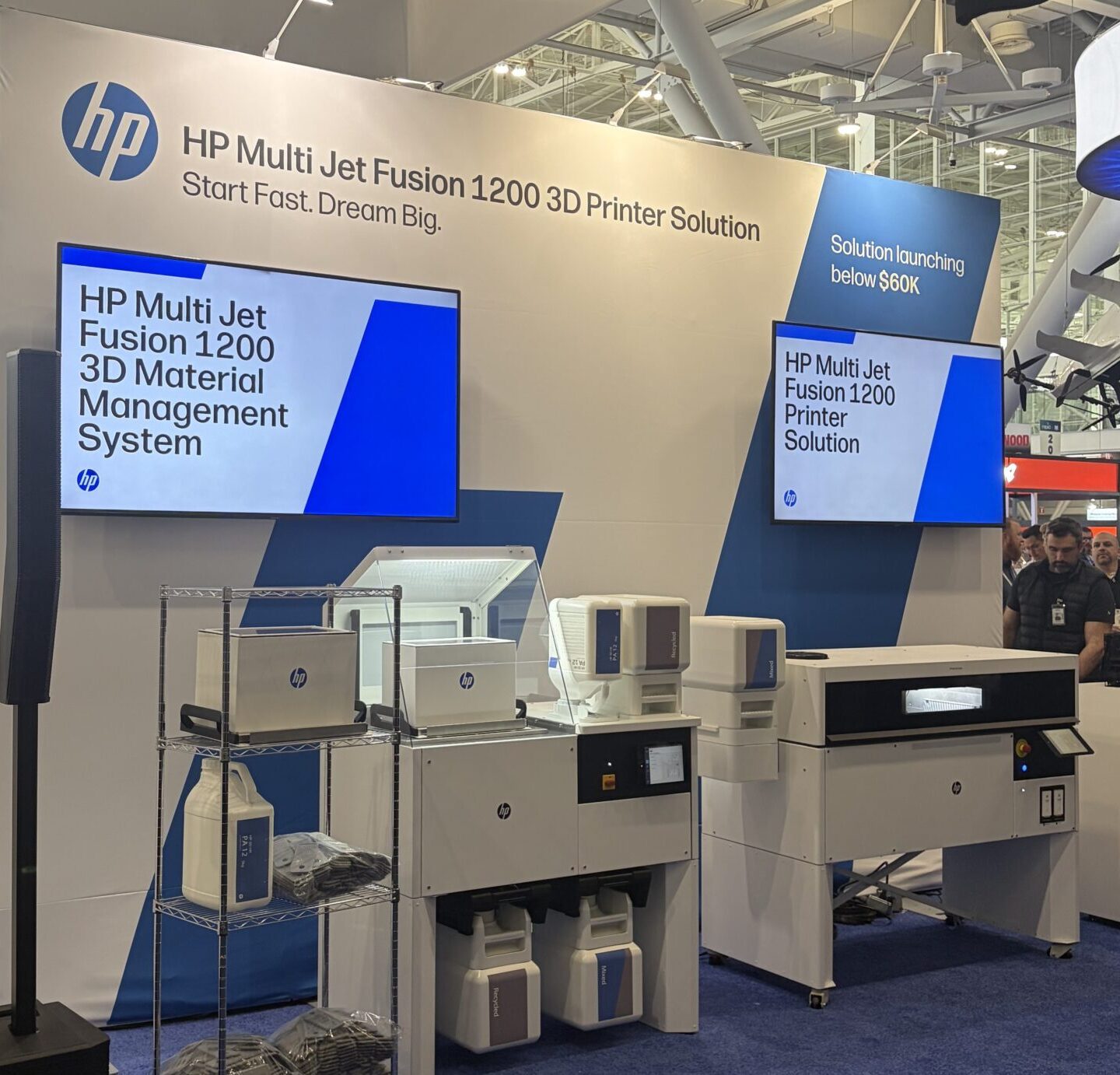
    HP unveils Fusion 1200 printer at RAPID + TCT 2026 show floor. Image courtesy of Sarah Saunders/3DPrint.com.

    It also looks at what happens once everything is in place. Companies are already seeing real savings from running production in-house, explains HP. In some cases cutting out the need for outside suppliers. The session also touches on what’s next, like automation and more connected systems, as 3D printing becomes part of everyday operations.

    For companies already using 3D printing, this webinar is the next step. For those still figuring it out, it’s a much easier way to understand what adoption actually involves.

    More importantly, the session looks at what happens after scaling, how to build systems around additive manufacturing so it can run consistently, deliver measurable results, and support long-term growth. As more companies move in this direction, that move from using 3D printing to fully integrating it into operations is becoming a key part of how the technology delivers real value.

    You can register for the webinar here and learn more about how companies are putting this into practice.

  • Skuld to Work on DARPA’s Rubble to Rockets (R2R) Program

    Skuld will work on the Defense Advanced Research Projects Agency’s (DARPA) Rubble to Rockets (R2R) Program, which turns scrap metal into missile components. Skuld will help with alloy design, characterization, and casting. Using AI, Skuld will analyze microstructure, determine properties, and perform spark testing. Spark testing is literally grinding metal to see what it is composed of. The company then hopes to make parts using its Additive Manufacturing Evaporative Casting (AMEC) process. The work will focus on wrought aluminum, such as 6061 and 7075.

    Skuld’s AMEC process combines 3D printing with lost foam casting to produce net-shape metal parts. Image courtesy of Skuld.

    Skuld’s AMEC process is already very inexpensive, able to produce parts using low-cost materials and printers. The process can also scale rather quickly, as you can add more printers and capacity in a granular way. Now the firm will be making compact portable casting setups for the project. This could be a very exciting development. Skuld’s desktop 3D printers and other inexpensive printers could easily be made to be portable, ruggedized, or containerized. Its foam printing process also seems to lack a lot of the exploding powder and high-energy laser problems that other processes have. Individual printers and casting units need not be expensive either. So if one gets mortared, it doesn’t cost the military two million dollars. This should be really doable for them to make a super cheap, super compact unit that can actually make stuff. For a lot of the other options out there, like combining a Meltio with a Hass VMC, the resulting machine still weighs over 1800 kilos, for example. One of the smallest metal solutions, therefore, may very well be Skuld. This could see these being pressed into service very remotely indeed. Rather than a large airbase overseas, e.g., Rammstein, this could go to the US’s Djibouti Camp Lemonnier, or perhaps an even more remote in-country outpost. Just getting these units there would be so much less expensive in weight and volume that it would let the military test more and try out more in more remote places. Smaller, they can be transported by more vehicle types, making them much more flexible to deploy than larger units.

    The Lightning Metal Model LM16, on-site micro foundry. Image courtesy of Skuld.

    Skuld will work with the Worcester Polytechnic Institute (WPI), Foundry Casting Systems, and MatMicronia on the project. Previously, WPI got $6.3 million for the same project to do a lot of the AI bit on software developed by Citrine. ASU, SRI International, and TRIEX (the company behind the Filabot) are also involved. DARPA indicated that a key part is adaptive design, whereby the system efficiently updates a baseline design to enable structural changes for components with newly predicted material properties that meet or exceed the minimum programmatic metrics.

    WPI researchers aim to revolutionize on-site additive manufacturing by combining materials science, artificial intelligence, and 3D printing. Image courtesy of Worcester Polytechnic Institute.

    Skuld’s CEO, Sarah Jordan, said,

    “Through the R2R effort, we are evaluating casting approaches, alloy behavior, and the use of AI tools that expand options for producing components in challenging environments.”

    Last year, we already speculated that a tie-up with the militarily connected University of Tennessee would be good for Skuld and its ability to meet the needs of the Army in particular, in its low-cost deployability. In the Army context, Skuld could be a real winner in developing an easy-to-deploy, easy-to-use solution for certain parts families. Remember, 3D printing technology doesn’t have to work for everything to be useful. If Skuld can make certain parts from certain recyclable materials, then it could meet a real need. Every kilo of material that can be successfully turned into a part saves tens of thousands of dollars in transport costs while quickly fulfilling an immediate need. Coupled with Skuld’s work on thin-walled structures, such as bridges, the company could be a real beneficiary of the Army’s increased spending on 3D printing.

  • Fleet Readiness Centers, a Six-Month Metal AM Push, and Shifting Defense Procurement

    As I wrote about earlier this month, the Trump administration has requested a record $1.5 trillion in Department of Defense (DoD) funding for FY 2027. In my post about what that signals for the additive manufacturing (AM) industry’s role in the defense sector, I discussed how defense industry experts have cautioned that a contentious fight over spending levels could most negatively impact precisely the sorts of companies — smaller, younger enterprises from outside the traditional defense fold — that the Pentagon needs to succeed in order to effect its long-term transition towards a more agile procurement process.

    Now, the newer spending programs that the emerging class of Western defense firms are most relevant to represent a much smaller portion of the defense budget than do behemoths like the F-35, aircraft carriers, etc. But, since they are newer and thereby have less proven track records than the programs managed by the handful of largest primes, the idea that such programs could be targets for lawmakers aiming to bring down the topline budget number seems like one potential likely outcome of the forthcoming defense budget fight. In the time since the post was published, for instance, I’ve seen other sources mention that lawmakers could be hesitant to give the Defense Autonomous Warfare Group (DAWG), a relatively new unit that oversees the development of unmanned weapons systems, the unprecedented budget increase it’s asking for.

    However, I would make a recommendation to anyone (especially anyone in the AM industry) whose livelihood depends on the disruptors winning the potential budget dispute that you push back aggressively on the idea that the length of a budget program’s history should be the most important consideration in determining how worthwhile it is. The work underway at the Fleet Readiness Centers, including Fleet Readiness Center East (FRCE) in North Carolina, is a perfect example of how collaboration across entire branches is succeeding at implementing new capabilities that DoD will benefit from more or less immediately. In the latest case, FRCE announced that it recently delivered its first metal AM parts to the US Navy fleet, including two different helicopter models and a transport aircraft.

    The most impressive thing about this isn’t solely the delivery of the final parts — a weapons pylon fitting, a repair fitting for landing gear, and a blanking plate — but the fact that FRCE qualified the parts in less than six months. The FRCE Advanced Technology and Innovation Team achieved that feat by working with the AM Team and Fleet Support Teams from Naval Air Systems Command (NAVAIR).

    FRCE recently delivered its first non-flight-critical metal additive manufactured aircraft parts to the fleet, boosting flight line readiness. Image courtesy of Samantha Morse/DVIDS.

    This echoes another announcement issued last summer, also by FRCE, involving work by the same FRCE group with collaborators from NAVAIR on a project to print 2,000 O-ring installation tools for the F-35 Lightning II. According to FRCE, the previous job reduced the lead time for the component by over 90 percent.

    In a press release about FRCE’s first delivery of metal 3D printed parts for the US Navy fleet, the unnamed lead for the FRCE Advanced Technology and Innovation Team said, “We were challenged to complete the qualification, production and certification processes for these parts in six months, and we not only met but exceeded that standard. This is the fastest this sort of thing has ever been done within Naval Air Systems Command, and it shows that we are competitive with industry standards. This entire process has been a team effort between FRC East, our headquarters, the site in Lakehurst, and the Fleet Support Teams, working together to ensure these parts are ready and reliable for our troops.”

    The unnamed lead for the FRCE AM Team said, “If there’s a fight and the fleet needs these parts tomorrow, they won’t have time to wait for those parts through traditional supply chains. The fleet was having a hard time getting their hands on repair fittings for the V-22 main landing gear – it’s basically a doorstop for the landing gear door when it comes up. They turned to [AM] and asked us if it was something we could make, so we took on that part, and a few others, as part of our capability demonstration. The goal is to give the fleet what they need when they need it, and we did just that.”

    The FRCE team, moreover, has been using its newly acquired metal AM capabilities to produce in-house tooling and support parts, demonstrating how adding AM capacity can, in the right hands, quickly lead to multifaceted gains. This is exactly why any decision to pull back on spending programs centered around the buildup of digital manufacturing processes would be such a mistake.

    A compromise solution would be to leave the funding for new programs untouched, but to require that they’re implemented via organizations like the FRC’s, in all situations where that makes sense. The fascinating thing about the FRC organizations is that they’re not funded via direct appropriations, but rather through the Navy Working Capital Fund (NWCF), which means that units within the Navy and Marines “fund” the FRC’s by spending portions of their allotted MRO appropriations. In that sense, the FRC’s generate revenue and operate at break-even in the long run.

    Filtering spending on new programs through the FRC’s would solve multiple problems simultaneously, including the problem of tracking the exact value of AM-enabled savings to give DoD a better idea of how much it could realistically reduce waste with 3D printed parts. The downside is that it would strain the limited manpower resources of the FRC’s, but that could also be addressed by supplementing personnel with rotating involvement from other DoD working groups, and by boosting hiring in the form of a workforce development program — another problem that such an initiative could address.

    While $1.5 trillion is, from any perspective, a lot of money, and objectively, would be an almost unprecedented year-to-year increase in funding, in terms of percentage of US GDP, it wouldn’t actually be the most the US has ever spent on its defense budget. I’d certainly prefer if federal spending were more evenly distributed over all government departments, but the topline number itself isn’t the biggest cause for concern: what Americans should be concerned with is how that money gets spent. We can’t keep pouring it into the same underachieving, behind-the-curve weapons systems that have played such a dominant role in driving the US into a budgetary crisis. The US has to spend smarter, not harder.

  • Surge Fulcrum: From Crafting the Exquisite To Forging Swarms at the Edge

    If you are due to meet a member of the US government to pitch some 3D printing scheme or other idea, you’d do well to bring a copy of Freedom Forge. The 2013 book showcases how maverick businessmen helped win World War II for America and subsequently helped establish an American Century. Currently, it’s in Vogue among the machine-oiled fingernails to power lunches, the Beltway crowd that has their hands, grubby from either or both Maine Jumbo Lobster or Mobil Vactra #2, on the purse strings of US military spending on advanced manufacturing.

    It is clear that the current crop of businessmen in the US is not helping the country win wars. Quite the opposite, in fact. The US looks weaker than it has ever been, save for when the British and Canadians burned Washington, D.C. in 1814. The US has, since the Second World War, consistently been the world’s most powerful country militarily, yet has been unable to secure victory in any major war since 1945. The US excels at conflict but can not win wars, and now everyone knows it.

    An F/A-18E Super Hornet, attached to Strike Fighter Squadron (VFA) 14, makes an arrested landing on the flight deck of Nimitz-class aircraft carrier USS Abraham Lincoln (CVN 72) in support of Operation Epic Fury, March. 4, 2026. Image courtesy of the U.S. Navy.

    A reaction against the exquisite, high-priced, perhaps amazing but maybe not effective US military gear has been underway for a few years. Yes. The US has the best gear, but it is so expensive and so little of it. In a long war, crashes and enemy fire will quickly deplete the US arsenal. At the same time, even the best craft has its limits; there are only so many places a fighter can be. And there are only so many missiles it can carry. Cheaper missiles or other craft could do just as good a job, or craft such as drones could overwhelm US vehicles or troops. The technological edge could be further blunted by broader technological progress or by someone outproducing the US with more prosaic but cost-effective kit. Now, with the war in Ukraine being won with inexpensive 3D printed drones, it’s clear that much of the US arsenal is superfluous, and much of it could be eliminated by inexpensive drones. How will the US respond, with a surge in force?

    U.S. Sailors prepare for flight operations on the flight deck of Nimitz-class aircraft carrier USS Abraham Lincoln (CVN 72) in support of Operation Epic Fury, Mar. 4, 2026. Image courtesy of the U.S. Navy.

    The US government is shifting from making a few expensive things well to making many things quickly. Many projects, research initiatives, and grants are going towards scaling up production. Lines for producing solid rocket engines, lines for producing energetics, production cells for drones, the hot thing right now is the automated production of lots of gear quickly. This kind of development is more than welcome. I’ve championed this approach since 2009 and believe that the automated, drone production at scale is the key to defense and warfare.

    One key example of the new approach away from the exquisite towards scale is Endless Forge. Whereas it may sound like a title for a romance novel or a Japanese computer role-playing game, this is, to me, one of the most important programs in the US right now. This AFRL-backed program describes itself as,

    “Endless Forge (EF) is Manufacturing as a Service (MaaS), an adaptive, surge-adaptive, resilient, and scalable manufacturing capability to enable US industrial base dominance. EF represents a new manufacturing paradigm, shifting away from vertically integrated and sequential value chains to adaptive and fast-acting regionalized production networks.”

    Beehive Industries was recently awarded $29 million contract to scale up production of modular microturbine jet engines for missiles and drones. The AFRL is also backing Ursa Major´s affordable Draper rocket engine.

    Of that development, AFRL Commander and Air Force Technology Executive Officer Brig. Gen. Jason Bartolomei said,

    “This project proves that we can transform and leverage our acquisition models to rapidly deliver critical technology advancements to deter and win in a future conflict. We are not just building a single missile; we are forging a new path toward a cost-effective, mass-producible deterrent for the nation.”
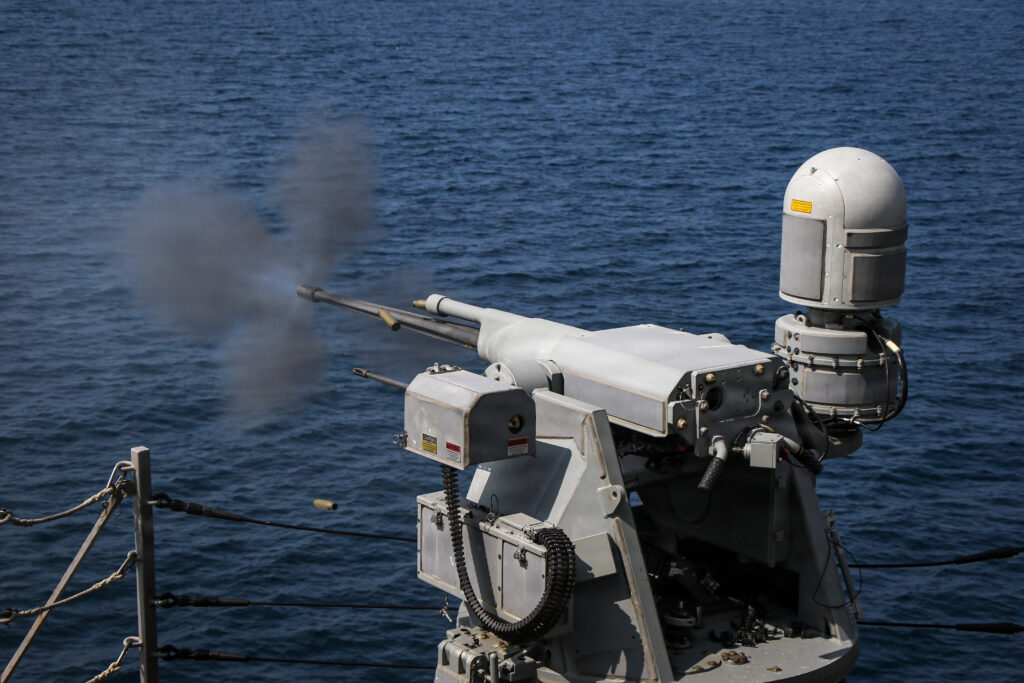
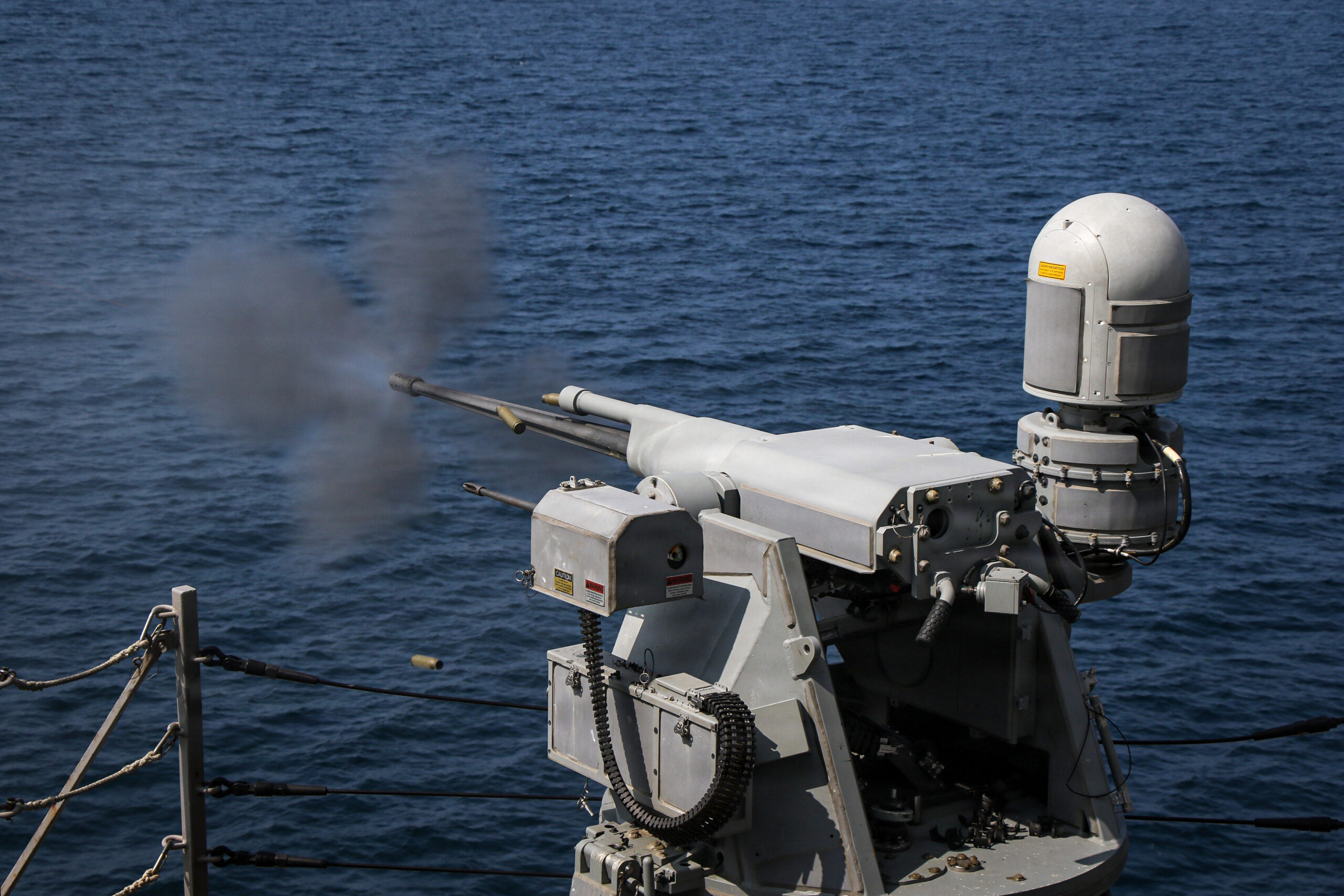
    A Mark 38 25mm machine gun fires during a live-fire exercise aboard Arleigh Burke-class guided-missile destroyer USS Frank E. Petersen Jr. (DDG 121), Feb. 10, 2026. Image courtesy of the U.S. Navy/Mass Communication Specialist 2nd Class Christian Kibler.

    The AFRL is the clear public face of this initiative, but there are other signs that it is happening more broadly, in this SBIR award from DARPA, Top Grain Technologies got $1.7 million to look beyond the current high-performance,

    “This approach is increasingly incompatible with current demands, particularly in the context of drone warfare where cost-effective manufacturing takes precedence over long-term reliability. This proposal addresses these evolving priorities by accelerating the deployment of a low-cost, additively manufactured, dispersion-strengthened nickel-based superalloy, specifically tailored for high-pressure turbine blisks in attritable gas turbines.”

    In an Air Force award, Material Hybrid Manufacturing received $1.2 million for conformal 3D printed batteries for drones.

    “Small unmanned aerial systems (sUAS), particularly Class I Group 1 drones, have become ubiquitous in modern warfare…As the Air Force moves toward distributed, autonomous drone operations, energy availability has become an existential constraint. Without significant gains in battery energy density, these systems will continue to face mission-limiting tradeoffs between flight time, payload, and maneuverability.”

    At the same time, there is broader investment in surge capacity across many industries to provide the US with enough spare capacity to increase production nationally. Often using the Defense Production Act to do this, this is in part aimed at increasing the US’s capacity to manufacture arms.

    Intertwined with this is the now-very-in-vogue Fabrication at the Tactical Edge. In an important paper, this is described as,

    “FATE is a transformative approach to modern warfare that will significantly reduce U.S. dependence on vulnerable supply chains and fixed bases. By dispersing production capabilities across the battlefield, FATE complicates adversarial targeting, making it harder for the PRC to neutralize U.S. forces. Most critically, FATE allows for rapid adaptation to evolving tactical and operational needs, enabling U.S. forces to stay ahead of threats, iterate solutions quickly, and impose asymmetric costs on opponents. This flexibility positions the United States for success in future conflicts, ensuring battlefield dominance through innovation and speed.”

    Containerized manufacturing has been underway since the beginning of the war in Afghanistan. RFab and other initiatives are underway to repair and produce on the edge. Firestorm and other firms are capitalizing on this as well.

    Typically, we can distill this new development into “distributed, containerized, 3D printing of swarms of robots at the edge while maintaining surge capacity at home.” Now, of course, not all manufacturing has to take place in containers, nor will it all be 3D printing. But, generally in missiles, munitions more broadly, and drones in all forms, the US needs this development to work. If not, it simply will have too few men, too few craft, with too few missiles at a given place to fight and win a future war.

    U.S. Air Force F-16 fighter pilots assigned to the 555th Expeditionary Fighter Squadron pose for a group photo during exercise Spears of Victory at a base in the Middle East, Feb. 5, 2026. Image courtesy of the U.S. Air Force/ Senior Airman Tyler A. P. Moody.

    Here’s where this heady elixir becomes positively intoxicating. The people saving America? Those who will build a new robotized US army? Business people, entrepreneurs. You can become a millionaire and be a patriot all at the same time. In a more isolated, ostensibly patriotic US, this is the stuff of dreams. Forge, therefore, as an idea, is the belief that businessmen can forge a new America through additive manufacturing. There are two ways of looking at this.

    Samuel Johnson has a famous quote here presented with context from biographer James Boswell, where,

    “‘Patriotism is the last refuge of a scoundrel.’ But let it be considered, that he did not mean a real and generous love of our country, but that pretended patriotism which so many, in all ages and countries, have made a cloak for self-interest.”

    One way of looking at it is that we will know have scoundrels at the 3D printer. Our additive manufacturing dream will be misused by rent-seeking, self-interested people to feed at the trough. Just like solar, inmates or guns, we will have become not an issue or an industry but a meal ticket. Our technology may be able to address an existential threat to the US’s defense, but we could also face one. Through live fire testing on the front lines, we could be damned because of some kind of OceanGate Titan disaster brought on by an arrogant narcissist of some sort who is good at selling and lobbying but not much else.

    At the same time, this is a huge opportunity for the industry. Like flight, the automobile, or space, we could become a defining technological development for the militaries of the world. At a time of uncertainty, fragmentation, and great power competition, the idea of “distributed, containerized, 3D printing of swarms of robots at the edge while maintaining surge capacity at home” is surely being done with great success already in Ukraine. It is Ukraine that can cost-effectively strike thousands of kilometers away and intercept drones locally. This kind of vision is sure to have a strong appeal in China and to definitely resonate in Saudi Arabia, the UAE, and Europe. And we could implement our technology locally in each of those countries, and many more, quite cost-effectively, given the alternatives.

    We are at a moment when many will want what we have. Rather than a side show, or a cottage industry with potential, or an apple in a VC’s eye, it is more than this now. Archimedes said, “Give me a lever long enough and a fulcrum on which to place it, and I shall move the world.” Depending on who you are, additive manufacturing can be either the lever or the fulcrum, but it is certain now that we will move the world. We’re not a technology, a part of manufacturing, but a way to move nations, a way to win wars. And whoever best harnesses 3D printing will win the future. So do pick up a copy of that book, Freedom Forge, when you go to Washington, or to a national capital of your choice.

    All images courtesy of CENTCOM

  • Cantor Fitzgerald Behind Velo3D Raise and Elmet IPO

    Cantor Fitzgerald is showing up across two advanced manufacturing deals at the same time, acting as sole book-runner on a $50 million stock raise by Velo3D and also involved in the initial public offering (IPO) of Elmet Group. The two moves point to growing activity around financing companies tied to aerospace, defense, and high-performance manufacturing, where scaling technology into real production still depends on capital and strong financial backing.

    Velo3D Raises $50M as It Pushes Toward Production

    Velo3D raised $50 million by selling new shares, pricing 3.57 million shares at $14 each, with Cantor Fitzgerald acting as the sole book-running manager for the offering. The company expects the deal to close at the end of April and plans to use the proceeds for working capital and general corporate purposes. The move brings in fresh cash, giving the company more financial flexibility, but it also reduces the value of existing shares.

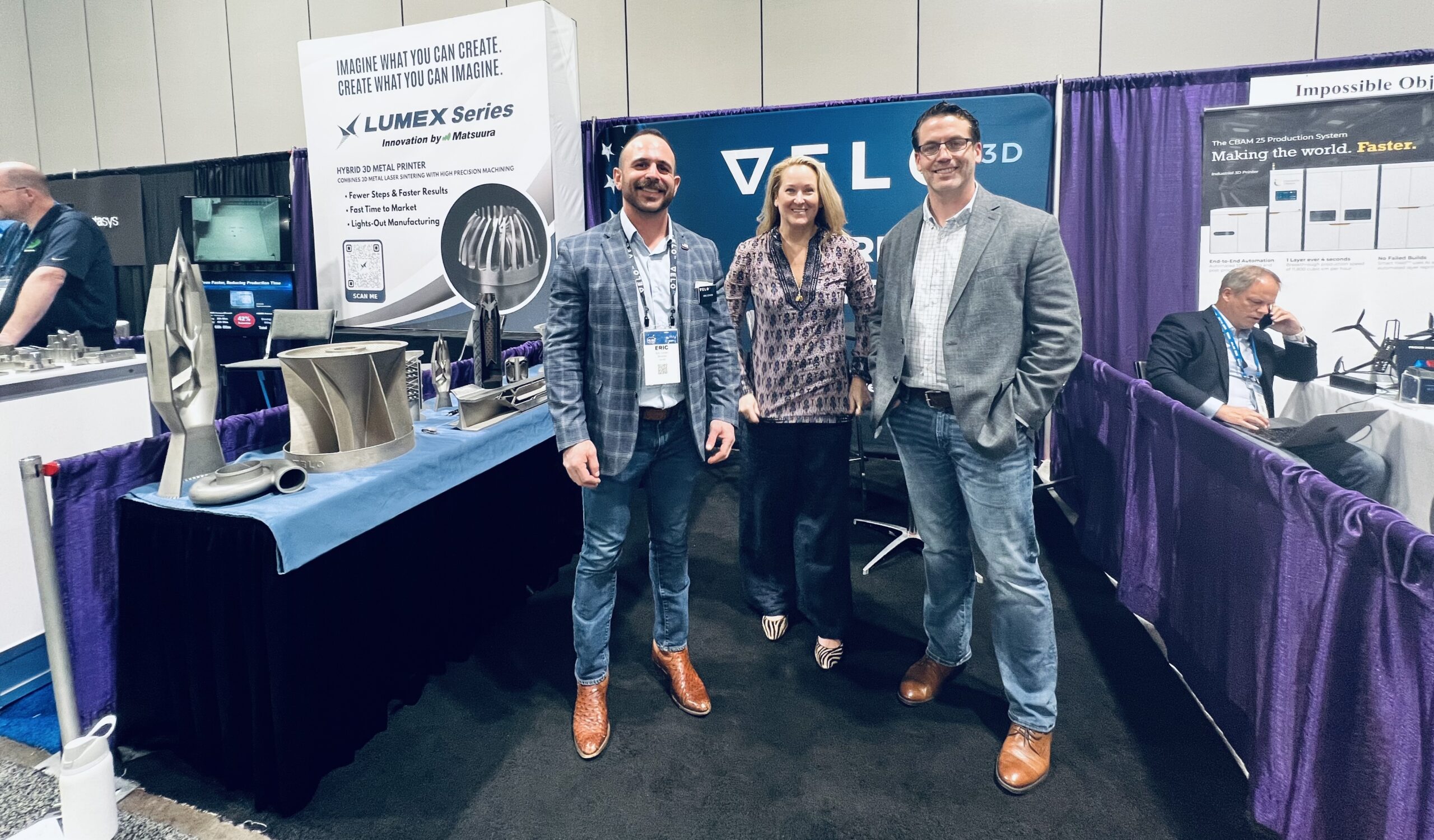
    Velo3D team at MILAM 2026: Eric Cohen (Sales Director), Michelle Sidwell (CRO), Brice Cooper (VP of Defense). Image courtesy of 3DPrint.com.

    For a company that has been dealing with losses and low margins, the raise gives Velo3D more breathing room as it works toward steady production demand. Moves like this are common in the manufacturing space, especially for companies trying to move from development into full production. Getting there takes time, money, and real customer demand.

    At the same time, the company is making a bigger move into motorsports through a new partnership with Andretti Performance tied to the 2026 IMSA season, hosting customer events, and boosting its leadership team. The goal is to show that its metal 3D printing technology can perform in demanding environments. Motorsports is often used as a proving ground, where parts need to be lightweight, strong, and produced quickly.

    Velo3D has partnered with Andretti Global as an official sponsor and Additive Manufacturing technology provider for two rounds of the 2026 IMSA Michelin Pilot Challenge. Image courtesy of Velo3D via LinkedIn.

    In fact, Velo3D is now showing customers how its technology performs in real-world applications. The company announced on social media that it is hosting an open house today at its Fremont, California, facility, featuring driver Jarett Andretti and the No. 43 car. Velo3D invited visitors to see how it designs and produces “mission-critical metal parts for aerospace, defense, and energy.” Events like this are about turning interest into real business by showing the technology in action.

    On the leadership side, Velo3D also shared that Jim Suva joined as Chief Financial Officer earlier this month. Suva brings a long track record in public markets, with experience at Goldman Sachs and KPMG, more than two decades as a Managing Director at Citi, and, most recently, serving as SVP and Treasurer at Cricut

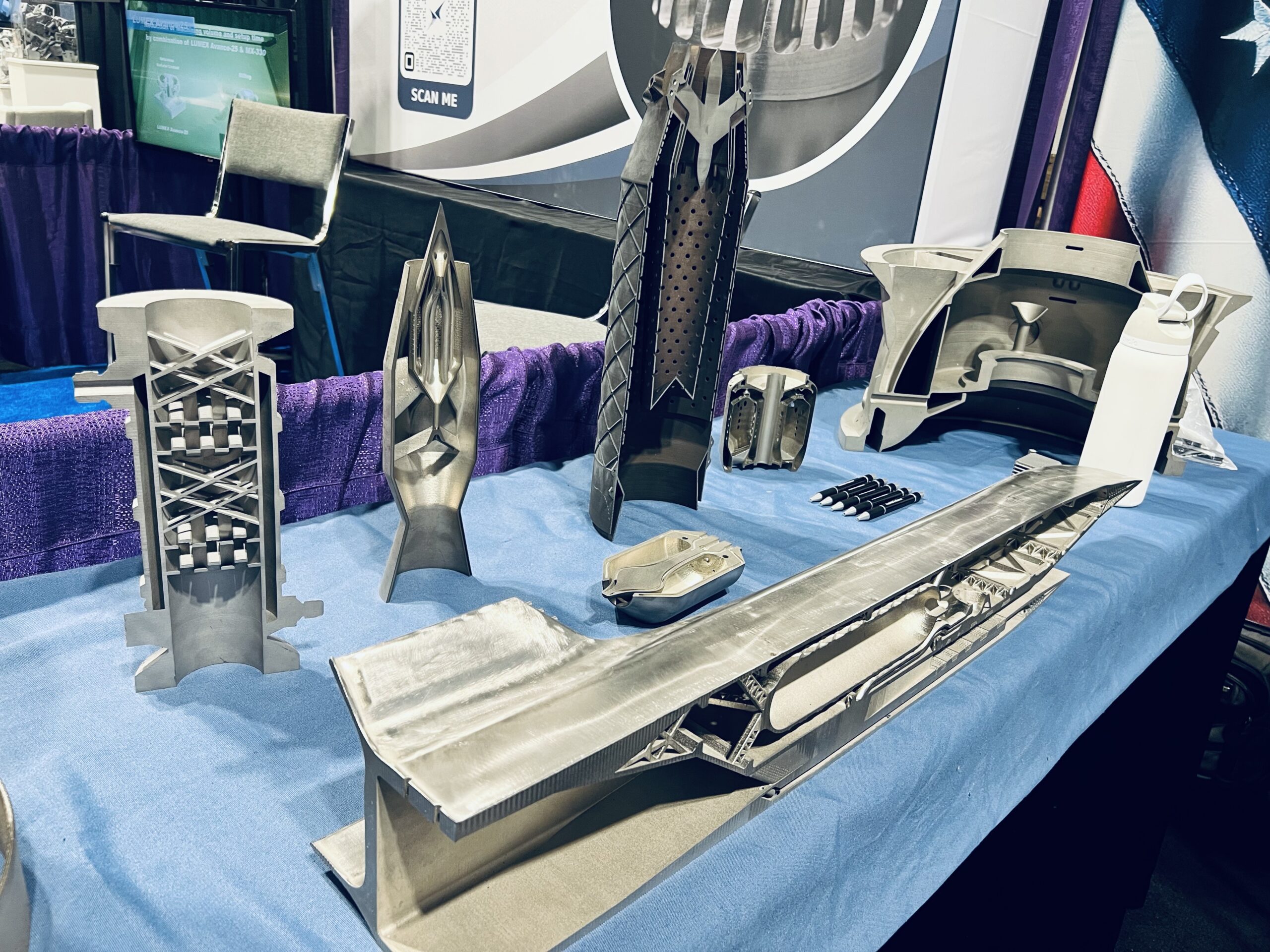
    Velo3D’s booth at MILAM 2026. Image courtesy of 3DPrint.com.

    Elmet IPO Puts the Materials Side of 3D Printing in Focus

    At the same time, Cantor Fitzgerald is also involved in the IPO of Elmet Group, a company focused on high-performance metals used in demanding applications like aerospace, defense, and high-power systems. The company raised about $125.5 million in net proceeds after pricing roughly 9.9 million shares at $14 each, including the full exercise of the underwriters’ option. The shares began trading on the Nasdaq Capital Market under the ticker “ELMT” on April 23. Elmet Group is going public, but its core business, Elmet Technologies, produces the materials behind those applications, including additive manufacturing.

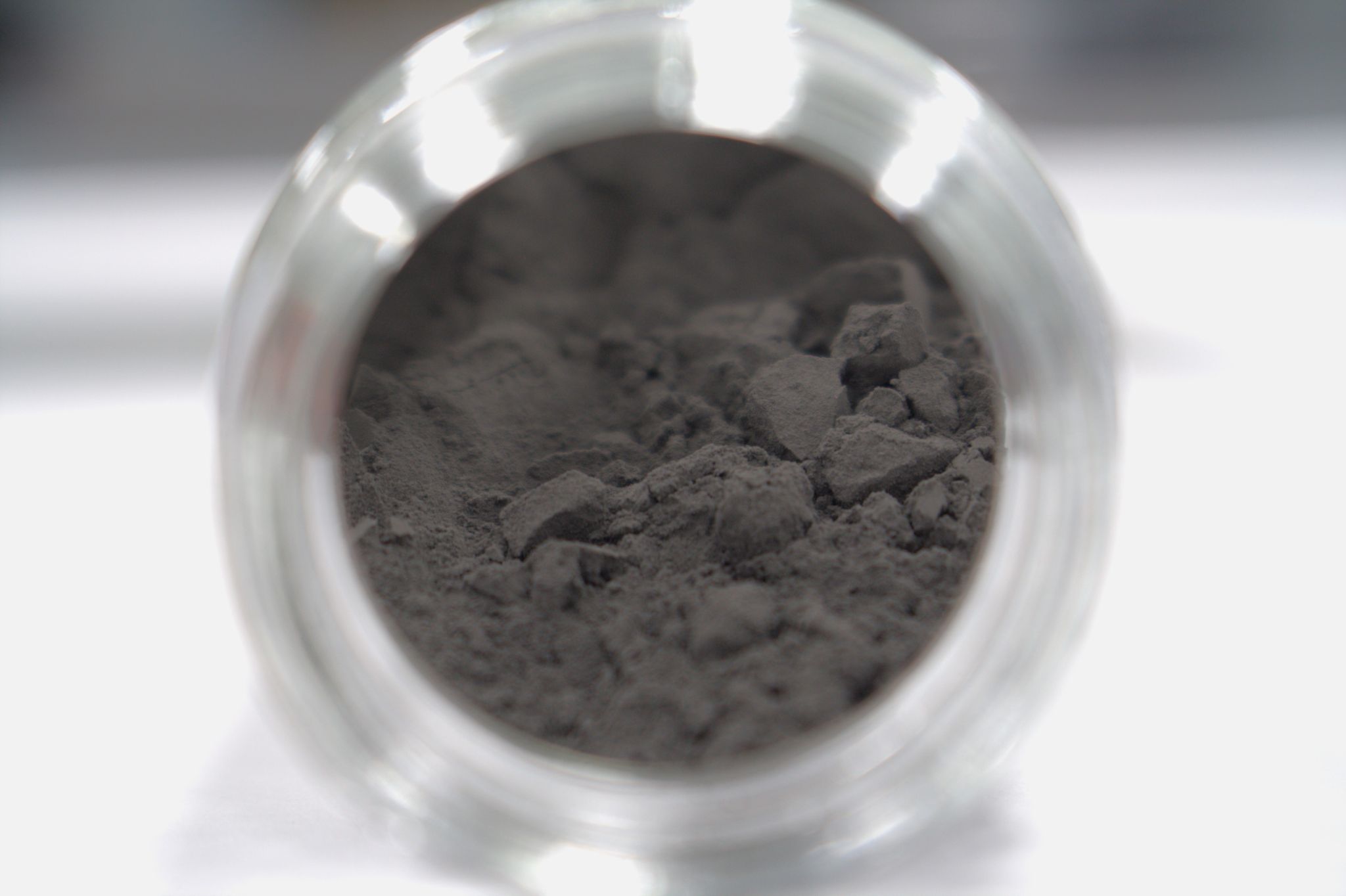
    Elmet metal powder. Image courtesy of Elmet Group.

    While not a pure play 3D printing business, Elmet plays an important role in the additive manufacturing ecosystem. Through its materials business, it produces high-performance metal powders and components, including refractory metals like tungsten, molybdenum, niobium, and tantalum. These materials are used in advanced 3D printing processes for applications where strength, heat resistance, and precision are key, like aerospace, defense, medical, and energy. Elmet Technologies is the only U.S.-owned, fully integrated tungsten and molybdenum manufacturer, and the largest U.S.-owned producer of those materials, with nearly 400 employees.

    Its materials and components are already used across high-performance industries. NASA has used Elmet materials in its Artemis missions, where components must withstand extreme space conditions. The company also supplies into aerospace and defense supply chains tied to firms like Lockheed Martin, Raytheon, and Teledyne Technologies, as well as national labs including Fermi National Accelerator Laboratory and Los Alamos National Laboratory. In medical imaging, tungsten powders are used in CT systems. The company also works with partners like TANIOBIS to develop specialized powders for AM, strengthening supply chains for critical applications.

    The IPO points to a continued demand for these types of advanced materials, particularly in sectors where performance is more important than cost. 

    Tungsten heavy alloy powders for AM. Image courtesy of Elmet Technologies.

    Cantor Fitzgerald has been increasingly active in advanced manufacturing and industrial technology deals. The firm has worked with a range of companies across sectors like aerospace, defense, and digital manufacturing, helping structure capital raises and connect them with investors. Its involvement here points to the continued need for specialized financial partners as companies in the 3D printing sector work to scale into full production.