• 3D Printing News Briefs, April 25, 2026: Competition Winners, AI Platform, X2D Printer, & More

    In this weekend’s 3D Printing News Briefs, AMUG announced the winners of its Technical Competition, and Authentise launched AI platform Whisper at RAPID. Bambu Lab wasn’t at RAPID, but launched a new 3D printer, and AMGTA released an independent report on the role of additive manufacturing (AM) in resource-efficient manufacturing systems. Finally, we’ll give you an update on an open source 3D printer enclosure designed by university students last year.

    AMUG Announced Winners of Annual Technical Competition
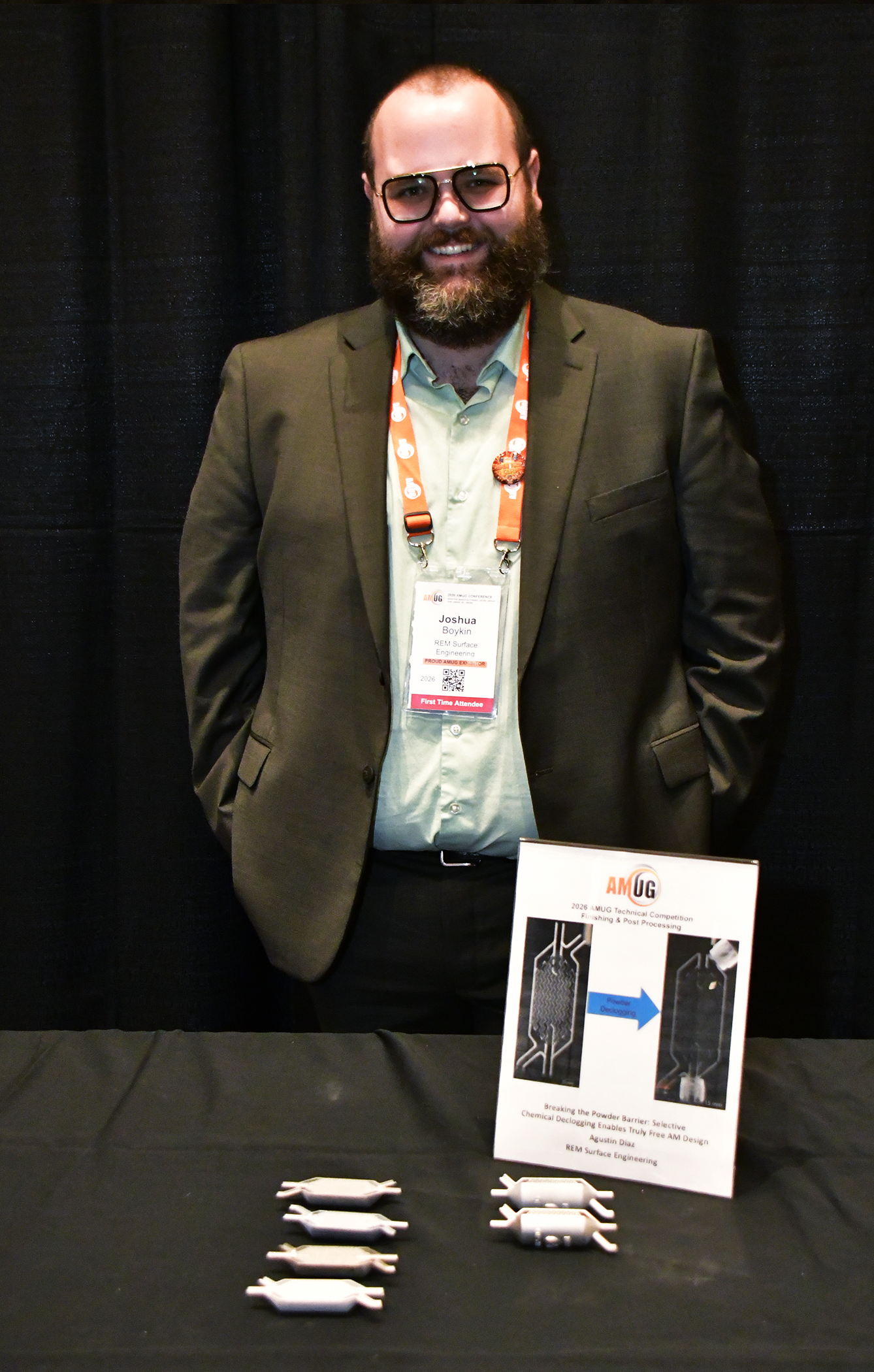
    At last month’s Additive Manufacturing Users Group (AMUG) Conference, the group held its annual Technical Competition, recognizing excellence in AM applications and finishing methods. This year, the categories were modified, and many of the entrants were first-time competitors, or even first-time attendees. A panel of 12 AMUG DINOs chose the winners. The winner for Finishing & Post Processing was Joshua Boykin, PhD, a senior research chemist with REM Surface Engineering, with his entry on “Breaking the Powder Barrier: Selective Chemical Declogging Enables Truly Free AM Design.” It was a production-ready chemical process, validated through high-resolution X-ray CT analysis, that selectively removes sintered powder from fully enclosed internal passages in metal LPBF parts without degrading thin-wall geometries. The judges were so impressed that they also gave it the Members’ Choice award. Halil Tekinalp of ORNL won second with “Multiplexing Extrusion System (MExS): Multi-material AM System for Tailored Hybrid Composites,” and Jason Jones with Hybrid Manufacturing Technologies won third for “Seeing Beneath the Surface: Accelerating AM Adoption through In-situ Volumetric Inspection.”

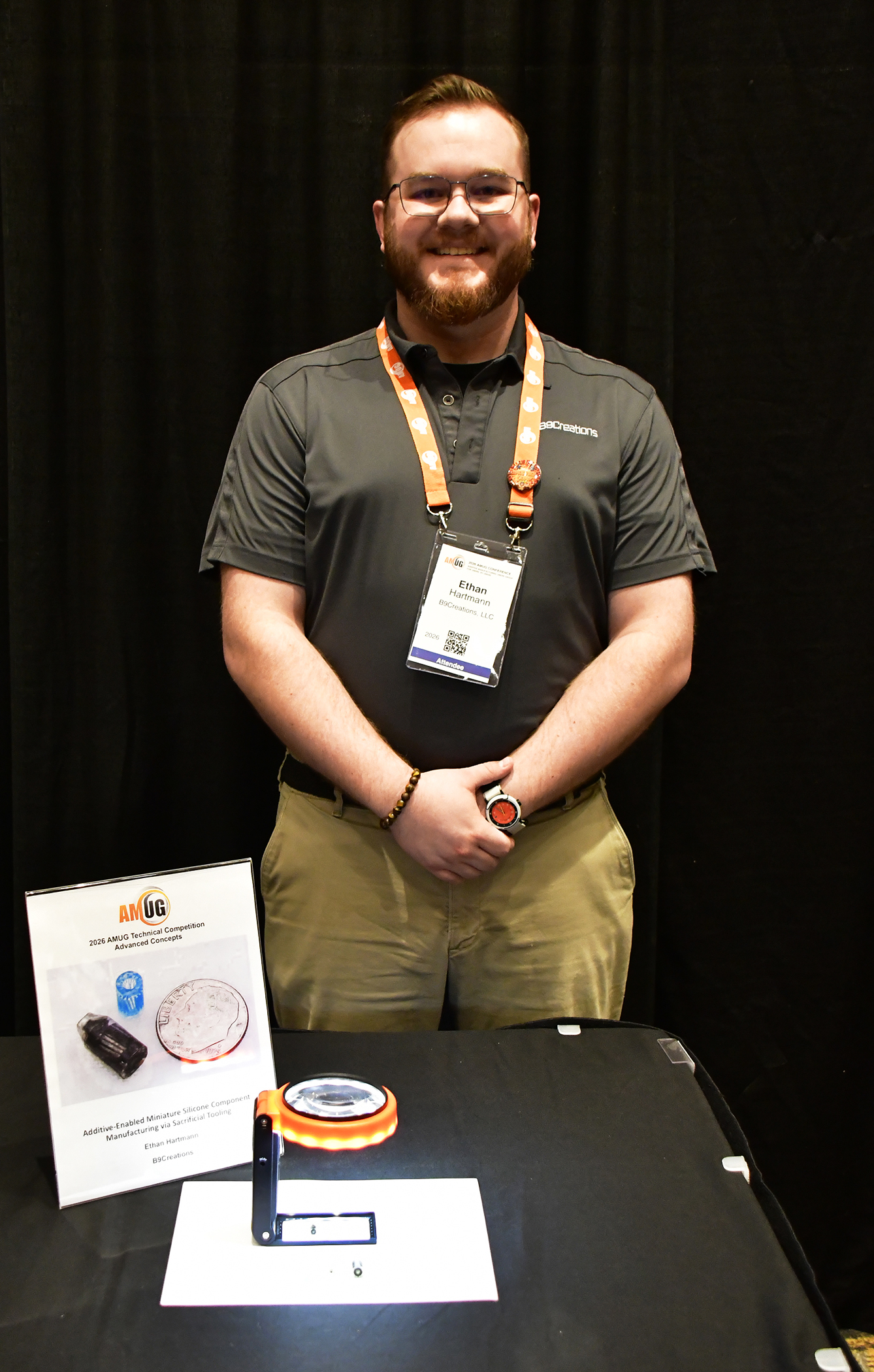
    The winning entry for the Advanced Concepts category, “Additive-Enabled Miniature Silicone Component Manufacturing via Sacrificial Tooling,” was submitted by Ethan Hartmann, solutions engineer at B9Creations. This demonstrated a novel workflow for high-resolution, microscale DLP printing and silicone-safe soluble tooling of true platinum-cure silicone components. Fine features and complex internal geometries of just a few hundred microns in size were created, thanks to careful development of print parameters, silicone processing techniques, and sacrificial mold design. There was a tie for second place in this category: Aaron Sherman of HellermannTyton for “Pip-Boy 3000 Mk V—Prop Replica from the Fallout TV Series,” a detailed, functional prop replica, and Joe Olguin of Sandia National Laboratories for “Adapting an As-printed LPBF Design for Ultra-Thin Sectioning,” which demonstrated a process-driven approach to enabling the sectioning of LPBF 3D printed 316L components.

    Authentise Announced Whisper AI Platform at RAPID+TCT

    At the recent RAPID+TCT conference in Boston, data-driven AM software company Authentise announced the launch of its new AI platform, Whisper, which was created to capture, understand, and act on engineering intent across the full lifecycle, from idea all the way to finished part. This “agentic AI backbone” captures engineering activity and intent as soon as it happens and connects everything, turning it into real-time action inside enterprise systems. Most valuable knowledge at engineering organizations comes out in meetings, emails, and informal decisions, without actually making it into the systems, and Whisper is meant to fix this problem, capturing activity from tools like emails, Slack, and enterprise systems. The platform’s configurable agents work in the background to organize the data, apply context and permissions, and act on the data within an organization’s existing workflows. Authentise says the result is real-time compliance checks, earlier risk detection, full provenance to specific parts and projects, and automated updates across ERP, PLM, and QMS systems.

    “Engineering intent is the missing layer in digital transformation. We’ve spent 14 years helping companies digitize workflows. Whisper is the next step,” explained Authentise CEO Andre Wegner. “It doesn’t ask engineers to change how they work. It listens, understands, and acts.”

    Whisper was released as source-available, so customers can extend and deploy it within their own environments. Early access programs are immediately available for select customers and partners, requiring a low upfront commitment; full costs are only incurred once value is proven.

    Bambu Lab Launched X2D Printer, Second Generation of X-Series
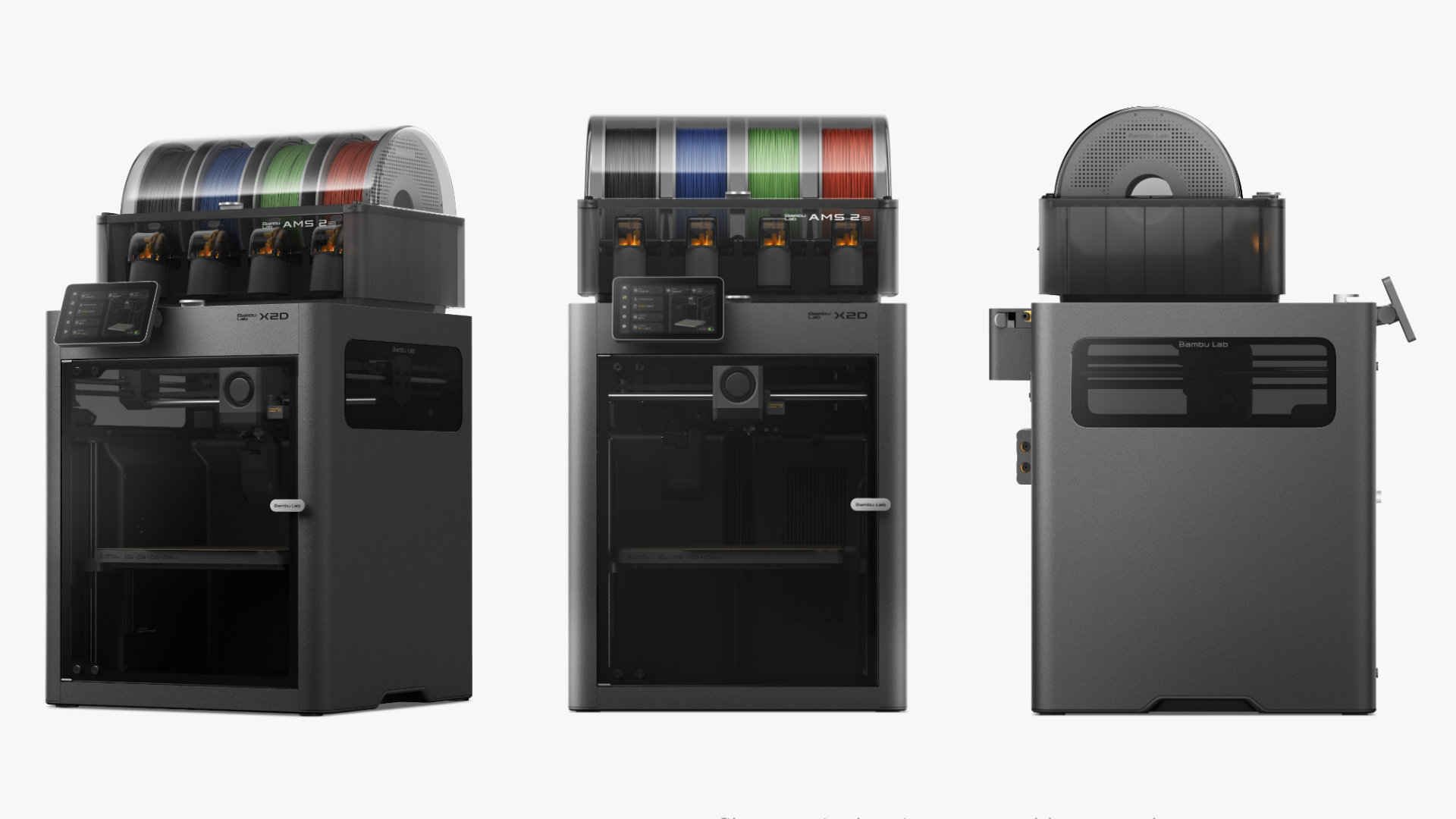
    Many of us on the show floor at RAPID were surprised to learn that Bambu Lab did not have a booth. But, its lack of attendance didn’t stop the company from launching the second generation in its flagship X-Series, the X2D printer with dual extrusion. We all know that Bambu Lab changed the desktop game when it launched the X1 in 2022, showing everyone that you didn’t need to spend hours experimenting with parameters and calibration. People without specialized knowledge could use the system right out of the box, without any trial and error. Designed for people who want to create, rather than mess with technical issues, the new X2D takes this a step further, and is said to be a system “that operates like any household device, yet prints like a professional production studio.” The X2D is what the company has been building towards all this time: a machine that’s ready to go right out of the box.

    The X2D automatically calibrates before each job, monitors the process with dozens of sensors and offers real-time compensation for any deviations, and prints with two nozzles, which should make it easy to remove supports. It features an enclosed, temperature-controlled print chamber, a triple-stage air filtration system that absorbs odors and captures particles, and a noise level that’s below 50 dB in silent mode. With a single main nozzle, the build volume is 256 × 256 × 260 mm, and it’s 235.5 × 256 × 256 mm with the dual nozzle intersection. There’s an optional Vision Encoder, which Bambu says offers accuracy down to 50 microns, a PMSM motor with 20 kHz sampling rate, and models come with validated print settings. Finally, Bambu Studio, Bambu Handy, MakerWorld, Maker’s Supply, Maker’s Lab and the designer crowdfunding program are not just add-ons, but, as the company write, “the context in which the printer operates.” The new X2D is available at $649 (before tax), and the Combo version, which includes a multimaterial feeding system, starts at $899 before tax.

    AMGTA Released Report on Role of AM in Resource-Efficient Manufacturing Systems
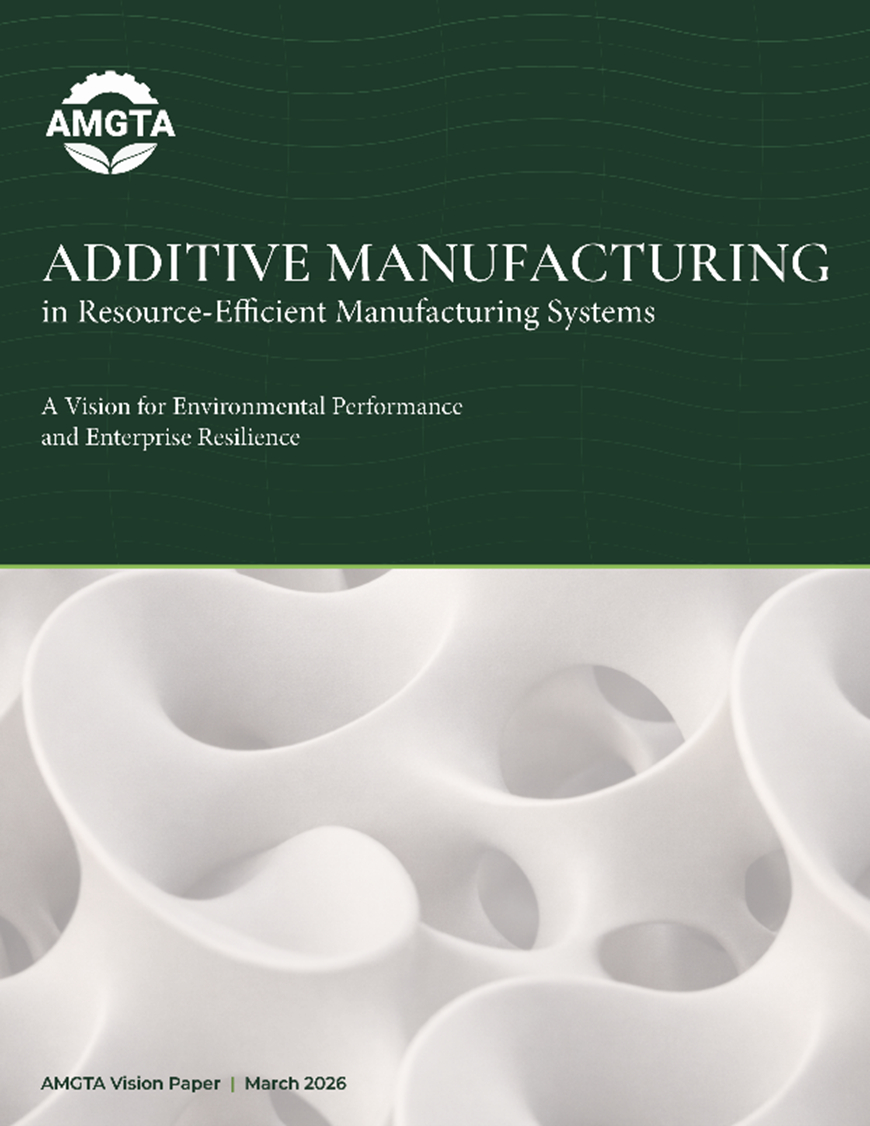
    At its recent Annual Member Summit, the Additive Manufacturing Green Trade Association (AMGTA) presented and released an independent report titled Additive Manufacturing in Resource-Efficient Manufacturing Systems. It pulls from six years of observation from both sides of the ecosystem to establish a structural argument for how AM should be evaluated, communicated, and deployed at the part, system, and enterprise levels. These are where the technology’s most significant advantages in supply chain resilience, resource efficiency, and capital allocation really materialize. When you do standard cost comparisons of AM vs. conventional manufacturing, you get the same direct production costs for both, but end up excluding costs that the latter “embeds as invisible background,” like obsolescence write-offs. This results in a structural bias that makes AM seem more expensive, and the AMGTA report calls this not a technology problem, but a framing and measurement problem. The report offers an evaluative structure that organizations can use to conduct better comparisons across all levels.

    “The technology is proven. But the current adoption curve doesn’t reflect it—and one major reason is that the industry has been evaluating AM against a standard that was never designed to capture what AM actually changes. This report is the result of six years of watching that gap play out across industries, applications, and geographies. It is the argument the industry has needed and that only an organization with no commercial interest could make,” said Sherri Monroe, Executive Director of AMGTA.

    You can get the report on the AMGTA website. Its companion Strategy 2030 document, What We Do and Why Membership Matters, is only available to AMGTA members.

    Student-Built Clura Enclosure Reports Successful Kickstarter
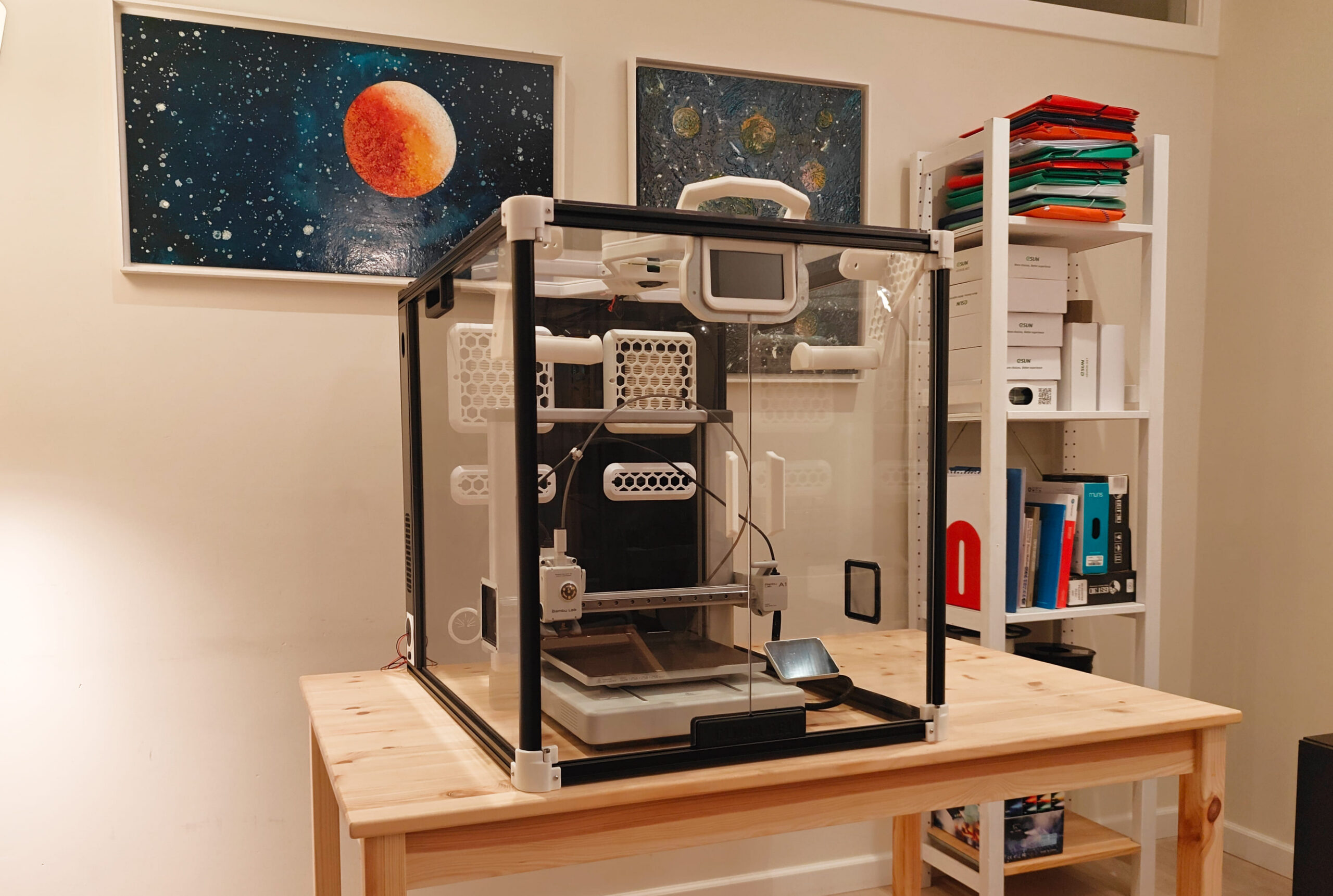
    Last summer, we reported on a modular, affordable, open source 3D printer enclosure, called Clura, that was developed by TU Delft aerospace engineering student Fabrizio Blasio and some of his fellow students. The idea was to improve air quality during desktop 3D printing, but do it in such a way that the solution was accessible (re: affordable) for everyone. They added all kinds of great features, such as a dual-layer HEPA + carbon filter system, integrated sensors that track air quality, temperature, humidity, and particulate matter, an optical smoke sensor, smart touchscreen interface, filament tracking with load cells, and a gas detection module. Blasio, Clura co-founder Goncalo Martins, and head of logistics and manufacturing Peter, made the 3D printed enclosure open source, sharing all the documentation and putting the CAD files on Github so that other makers could benefit from their design. This winter, the team launched a Kickstarter campaign, which raised $41,907—over eight times the amount they set out to raise. So clearly, other makers think this enclosure is a necessary product.

    The team says Clura supports several popular desktop 3D printers, including the Prusa MK3, Prusa Mini, Bambu A1, Bambu A1 Mini, Ender 3, and Creality HI. It filters fumes, reduces noise, detects fire, measures filament weight, illuminates your printer, and just generally improves the 3D printing experience. The Clura Pro is $259, which includes the base feature, load cells, advanced smoke sensors, and air quality sensor, whilte the Clura Lite is $189, including the full structure with aluminum extrusions and acrylic panels, the filtration system, and LEDs. The $239 Clura Base includes everything you get with the Clura Lite, plus a screen and basic environmental and smoke sensors. Finally, you can get the Electronics Kit for $119, which offers standalone electronics (screen, mainboard, sensors, load cells, LEDs, etc.) for DIY builds. By making the 3D printed enclosure open source, the Clura team is improving safety for other passionate makers who may not be able to afford a more professional solution. 
  • ARC & ORNL Form Partnership to Accelerate AI-Enabled Manufacturing for Defense

    Last year, Autonomous Resource Corporation (ARC) became the surprising owner of Desktop Metal’s (DM’s) assets following the bankruptcy of the one-time additive manufacturing (AM) unicorn, an acquisition that cost ARC just $7 million. ARC announced a grand vision behind its plans for the salvaged IP, aiming to rebuild DM’s core tech into the basis for R&D as a service and contract manufacturing work.

    The even grander vision behind that project is ARC’s development of ARCNet—what the company calls “The Operating System for Autonomous Distributed Manufacturing”—and an AI model called ADAM (Autonomous Discovery and Advanced Manufacturing), which learns from the data ARCNet generates. With such ambitious aims in mind, ARC would presumably need access to rare infrastructure in order to deliver the goods; like, say, the sort of world-class supercomputer one could only find at a US national laboratory.

    It turns out that’s precisely what ARC now has access to, thanks to a partnership with Oak Ridge National Laboratory (ORNL) that the company just announced, in a project called Exascale Foundry. Through the partnership, ARC gains access to ORNL’s Peregrine AI software, which will be integrated with ARC’s production nodes via ARCNet. ARC will also have access to tech developed at ORNL’s Manufacturing Demonstration Facility (MDF), a unique capability of the US Department of Energy (DOE) designed to accelerate qualification of materials critical to defense supply chains.

    Along those lines, the first research project for Exascale Foundry surrounds high-temperature nickel superalloys used in binder jetting of turbine components for autonomous aerospace engines.

    In a press release about ARC’s partnership with ORNL on the Exascale Foundry project, the associate laboratory director for National Security Sciences at ORNL, Moe Khaleel, said, “ORNL’s advanced manufacturing and computing capabilities are uniquely positioned to help accelerate the transition of laboratory-proven technologies into production-scale defense manufacturing. Partnering with ARC ensures we are transitioning our research into real production outcomes.”

    Bryan Wisk, CEO of ARC, said, “The United States faces an urgent need to rebuild its manufacturing capacity for critical defense components. By combining ORNL’s world-leading computational, materials science, and manufacturing capabilities with our autonomous production infrastructure, we can compress manufacturing and qualification timelines from years to months and deliver manufactured parts at the volumes the warfighter needs.”

    ORNL’s MedUSA wire-arc additive manufacturing machine.

    I’ve been writing for years about how public-private partnerships are the future of the AM industry, and in fact, such partnerships seem to be the basis for the future of the entire global economy. As this example of a public-private partnership illustrates, AI is among a handful of the most important drivers of that state-of-affairs.

    Building national AI ecosystems and, ultimately, a global AI ecosystem, is such a capital-intensive task that enterprises or governments acting individually could never hope to accomplish it. Additionally, the social implications of a world run by AI-powered operating systems have such potential for widespread disruption that the shift calls for unprecedented acts of cooperation between governments and corporations, and between various public-private alliances.

    There isn’t really a good model to turn to in order to figure out how to do all this. Interestingly, given the involvement of ORNL in the current topic of discussion, the Manhattan Project is probably the closest historical precursor, but the analogy falls apart here as well, because of the shift in relative power dynamics between the government and private industry in the post-WW2 era. (That is, the government was much more powerful vis-a-vis private industry in the 1940s; private industry is now in the driver’s seat.)

    Above all, then, the world needs corporations with actual social vision, which is in many ways a terrifying prospect, but in 2026, there are so few prospects that aren’t terrifying. If nothing else, as a starting point, a corporation in 2026 aiming to harness physical AI needs to have some sufficient understanding of the total global system within which it’s aiming to operate. There may be very little precedent for what ARC is trying to do, but they at least seem to be passing the test of treating the current moment with all its deserved complexity and seriousness. More companies in manufacturing—above all, in the US—would gain from putting similar levels of thought behind their actions.

    Images courtesy of ARC

  • Colibrium Additive Gets $31 Million NAVAIR Contract

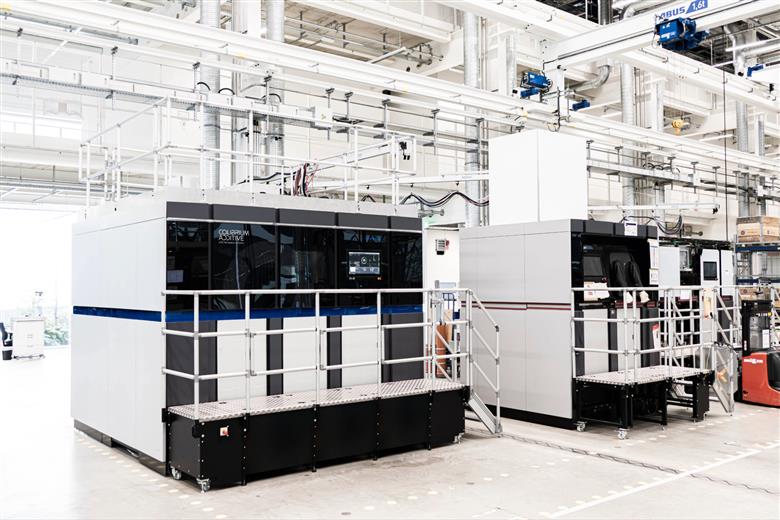
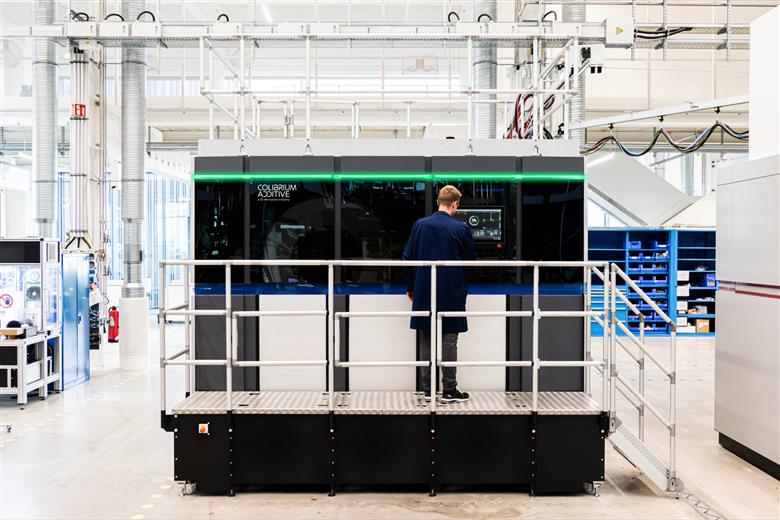
    Colibrium Additive has been awarded a $31 million contract by the Naval Air Systems Command (NAVAIR). The contract is part of the Additive Manufacturing Capability initiative, focused on qualification and certification in support of maintenance, repair, and operations (MRO) activities.

    The contract will see Colibrium develop, “six metal alloy Material Process Combinations (MPCs) which are the detailed metal alloy’s physical and mechanical property data; optimize process parameters; consolidate material and process specifications; and establish design allowables for the properties tested.”

    Overall, the materials are the existing 316L, CoCr, and Ti64. augmented with AlSi7Mg, IN718, 17-4PH and 7050-RAM2. AlSi7Mg is an aluminum casting alloy used for aerostructure components. More interesting still is the use of 7050-RAM2. This is an Elementum material. Previously, Elementum got $2.8 million of America Makes money to help qualify the material together with the likes of Battelle, Eaton, EOS Incodema, and the National Institute for Aviation Research (NIAR). This is, therefore, a big win for Elementum because it further standardizes its proprietary material within the bowels of the US defense establishment.

    Colibrium Additive M Line.

    This project will specifically look at fatigue life in thin-walled components, a huge problem over the life of a part, especially under cyclical load or stress. This will be part of the work conducted by the AddWorks team. The outcome of that will be very valuable to those working in aerospace generally, but specifically those interested in heat sinks. NAVAIR also gets three M Line and one M2 Series 5 3D printer as part of the deal. There will also be training for machine operators, designers, and more.

    Lars Bruns, executive technology leader at Colibrium Additive, said,

    “Colibrium Additive is proud to extend its support of NAVAIR with proven metal additive technology and deep application expertise. By combining certified hardware with licensed process data and hands-on training, we are helping accelerate the Navy’s ability to produce repeatable, airworthy components at scale and reduce supply chain risk for critical aviation parts.”

    With the US losing around 30 airframes in the latest Iran engagement, this is a very opportune time to be getting this contract. Carrier groups are also at sea for much longer than intended. When that happens, all sorts of unexpected things will break. This seems a lot like a gradual capability increase for NAVAIR to help support US Navy aircraft throughout their lifecycle. But in the current situation, the NAVAIR system, and indeed the Navy, are under stress not seen for many decades. The Navy is operating far outside its comfort zone. With too few new ships coming online and repairs taking too long, it faces a real capability gap.

    Colibrium Additive M Line.

    The world’s largest Air Force is the US Air Force; the world’s second-largest Air Force is the US Navy. With around 2,500 aircraft in service, the force is indeed formidable. If you made a top five of Air Forces around the world, that top five may include China, but it would definitely include the US Army and the US Marine Corps. So getting standardized within NAVAIR is a big deal globally. And this is happening right now and is even more impactful.

    This is a good win for Colibrium, which seems to have retreated somewhat given its erstwhile ambitions. Its closeness to GE Aerospace makes it well-suited to carry out this project. Indeed, the company will have looked very deeply at these materials in this way previously. If the company could keep growing within the Navy, it could very well find itself with a long, deep relationship with a very big client. The amount of inventory out there and the pressing need could be financially very impactful in the long run.

    Image courtesy of Colibrium Additive

  • RAPID 2026: 6K Additive’s Domestic Metal Powders & Consolidation Plan

    6K Additive (ASX: 6KA), a U.S. supplier and manufacturer of metal powders for additive manufacturing (AM), has been very busy lately. I caught up with CEO Frank Roberts and Chief Marketing Officer Bruce Bradshaw at RAPID+TCT 2026 in Boston to hear what the company has been up to after going public on the Australian Stock Exchange (ASX) a few months ago.

    Domestic Metal Powder Supply Chain

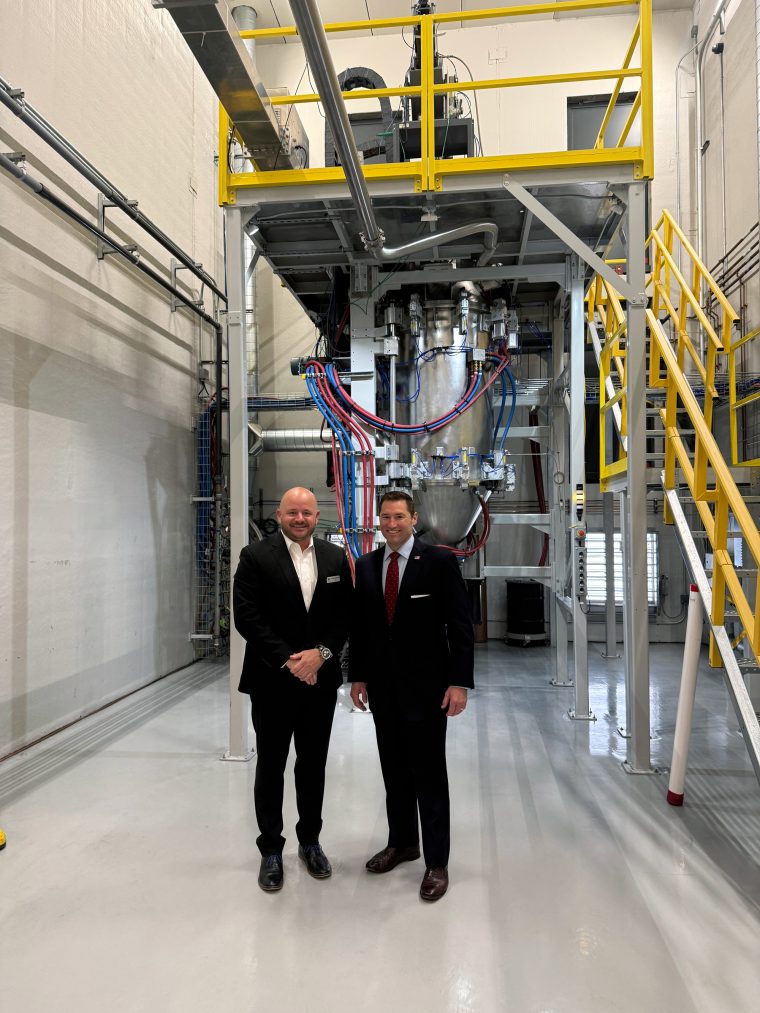
    Right before the show began, 6K Additive welcomed Congressman Guy Reschenthaler (PA-14) to its campus in Burgettstown, Pennsylvania. During his tour, Congressman Reschenthaler was able to see the company’s proprietary UniMelt microwave plasma technology up close and personal; having once stood in front of the UniMelt myself, I can tell you that it is an impressive system.

    6K Additive CEO Frank Roberts and Congressman Guy Reschenthaler (right) in front of the UniMelt. Image courtesy of 6K Additive.

    The UniMelt process converts solid scrap, turnings, and end-of-life components into premium metal refractory powders, like tungsten, tantalum, rhenium, and niobium, which are often used for applications in aerospace and defense. Not only is this approach more environmentally friendly, but it also keeps the supply chain in the U.S.

    “As a member of the House Appropriations Committee, I am proud to work alongside Pennsylvania manufacturers and suppliers in support of the Department of War. 6K Additive is leading the way in cutting-edge technology while creating family-sustaining jobs for hardworking Pennsylvanians and strengthening our local workforce. Their innovation is helping attract and retain critical talent in our region,” Congressman Reschenthaler said. “From hypersonics to nuclear energy, the materials produced in Burgettstown are keeping America competitive and secure.”

    Bradshaw told me that they’re really trying to drive home how important it is that 6K Additive’s products are domestic.

    “One of the things that we think is a message that needs to be heard is, why is that so important? I don’t think people really understand the reliance from a metal powder perspective on China right now. And being domestic has its advantages, but more importantly, there’s a real threat,” Bradshaw said.

    He explained that China controls 80% of the world’s ammonium paratungstate (APT), which is the main precursor for making tungsten. Roberts noted that China recently “locked that supply up, which has driven the price through the roof.” So while it’s been a fairly constant theme for several years, everyone is more focused on reshoring than ever now, and ensuring that we don’t rely on China for these critical materials.

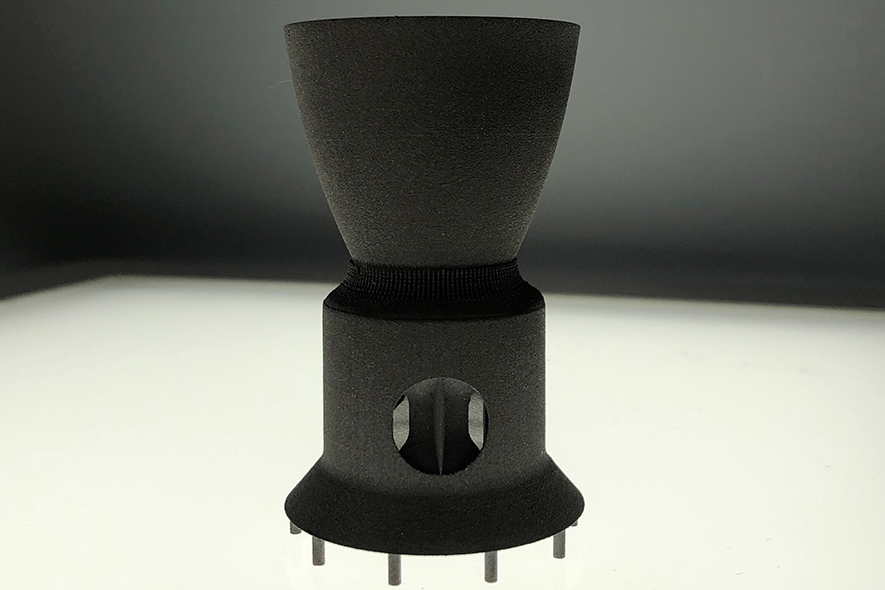
    Non-eroding throat insert for a solid rocket motor nozzle. Printed by Quadrus using 6K Additive tungsten rhenium powder. Image courtesy of 6K Additive.

    Unfortunately, just because metal powder is produced in the U.S., that doesn’t necessarily mean it’s a fully domestic product, or that we’re fixing the supply chain problems. Roberts shared something that “probably doesn’t get talked about much and probably should,” and it honestly made my blood run cold.

    “In order for a producer to constitute U.S.-produced powder, it basically just has to be melted,” he explained. “So if you look back through the supply chain, and here are the metal powder producers that are supporting North American production…that’s a constant theme, North American production. Go one step back and ask them, if you’re using plasma atomization or electrode gas atomization, ask them where that bar or wire comes from that supports their process. And it’s likely China.”

    Bradshaw brought up niobium, for which demand has been growing. He said that 43% of the world’s supply of niobium comes from Brazil, while 31% comes from China. But, 61% of the ownership in those Brazilian companies is China, so it’s basically a wash.

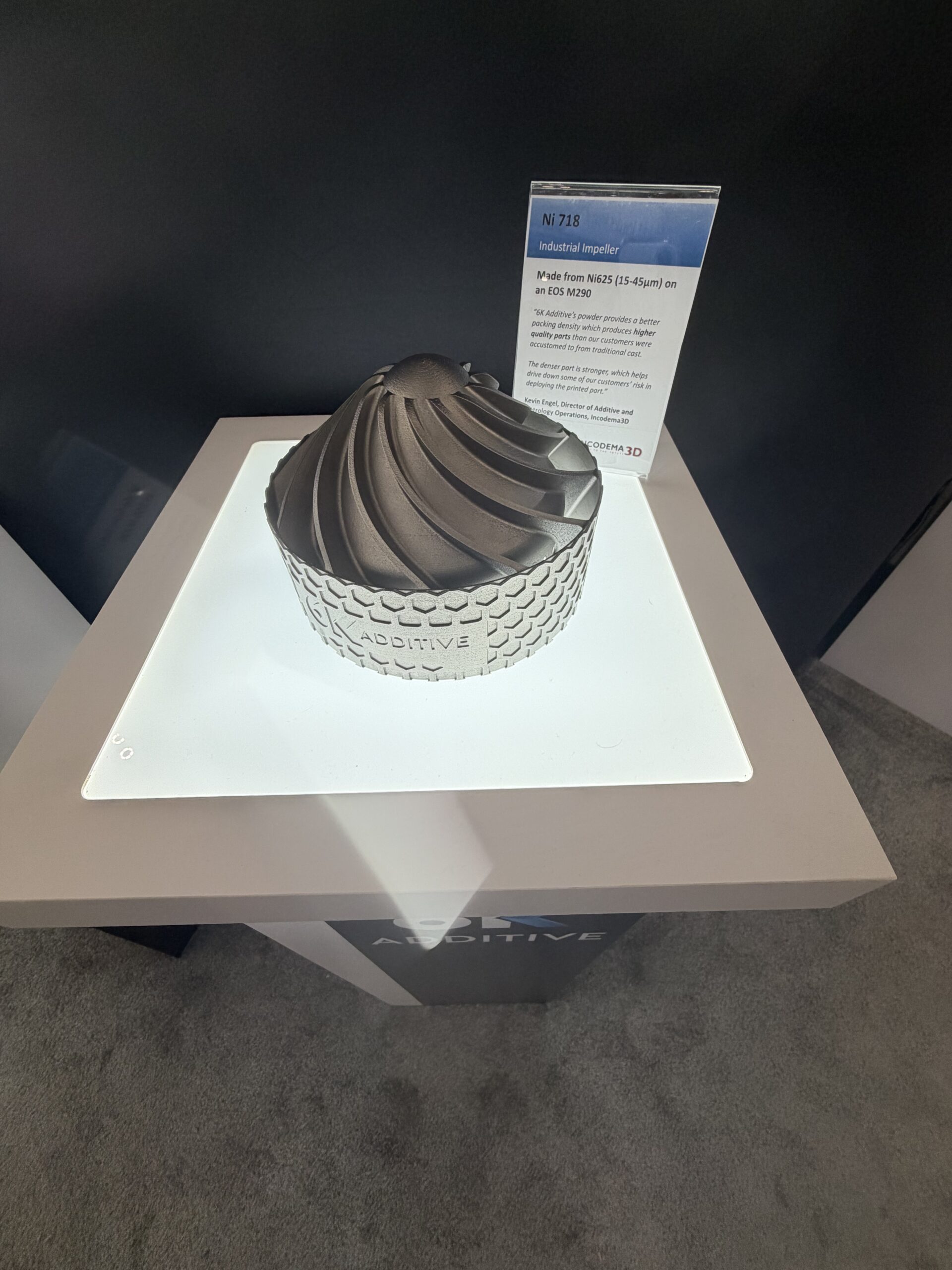
    6K Additive booth at RAPID+TCT 2026. Image courtesy of Sarah Saunders.

    All of the scrap that 6K receives to turn into metal powder comes from U.S. sources, Roberts told me. He brought up the company’s recent $1.95 million Phase II award from the Defense Logistics Agency (DLA) under its Recovering Strategic Value project. The program will focus on using 6K Additive’s UniMelt process to convert depot scrap into powder, and then getting that powder qualified for defense applications.

    “There’s a clear focus in Washington, DC on shoring up supply and making sure that it’s truly domestic-based,” Roberts said. “What the DLA is focused on is how do we maximize value? How do we make sure that we’re doing the front end of the sort/segregate, reclaiming that higher value material, and funneling those materials to places like 6K to turn into high-value powder that can then come back and support defense applications?”

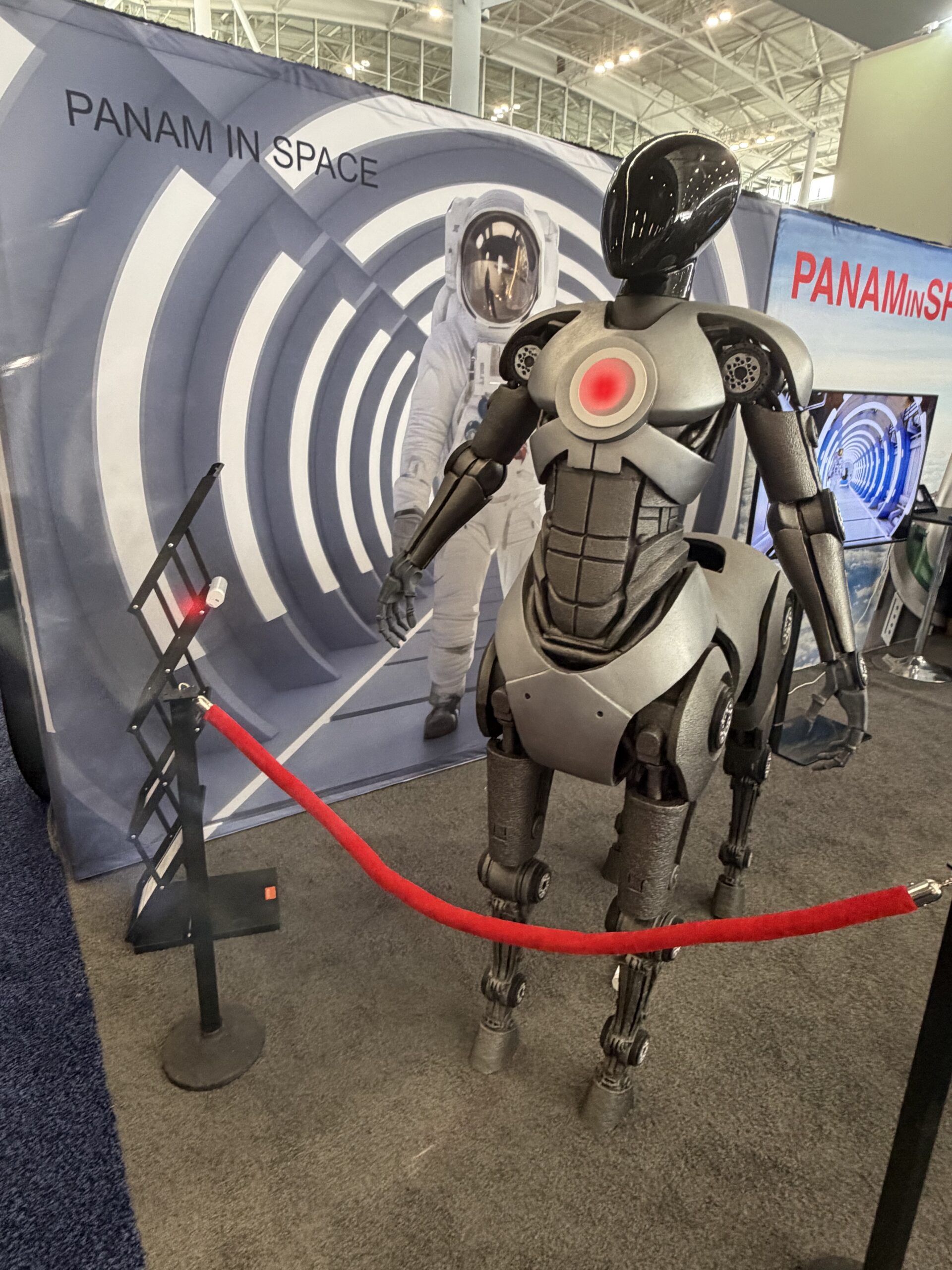
    Roberts also said that for the DLA project, 6K Additive will be partnering with a robotics company “to demonstrate a more streamlined, automated approach to sort and segregate.” In a proof of concept system, the robots will use XRF (X-ray fluorescence) guns for automated alloy detection and sort/segregate, “making sure that the scrap’s flowing into the right bucket.” I have been assured that these robots do not look like the one at the PANAM in Space booth that haunts my nightmares.

    Modular Quadruped Centaur at PANAM in Space’s RAPID+TCT booth. Image courtesy of Sarah Saunders.

    After RAPID, I was nosing around 6K’s website to make sure I hadn’t missed any recent news from the company, and came across an ASX announcement of a modification to a defense agency contract with 6K. It states that the company “has been awarded a US$1.95 million modification to its existing Phase II contract by a U.S. Defense Agency,” bringing the total value of the award up to $3.9 million. Specifically, this modification focuses on increasing how much scrap tungsten and niobium C-103 alloy will be recovered from “strategic DoD partners” for the contract.

    Now, this document doesn’t name any names, but if you connect the dots, it certainly seems like it’s regarding the award I was speaking about with Roberts and Bradshaw at RAPID. If that’s the case, then the government really is doubling down on reshoring the critical metal powder supply.

    6K Additive booth at RAPID+TCT 2026. Image courtesy of Sarah Saunders.

    Growth & Consolidation

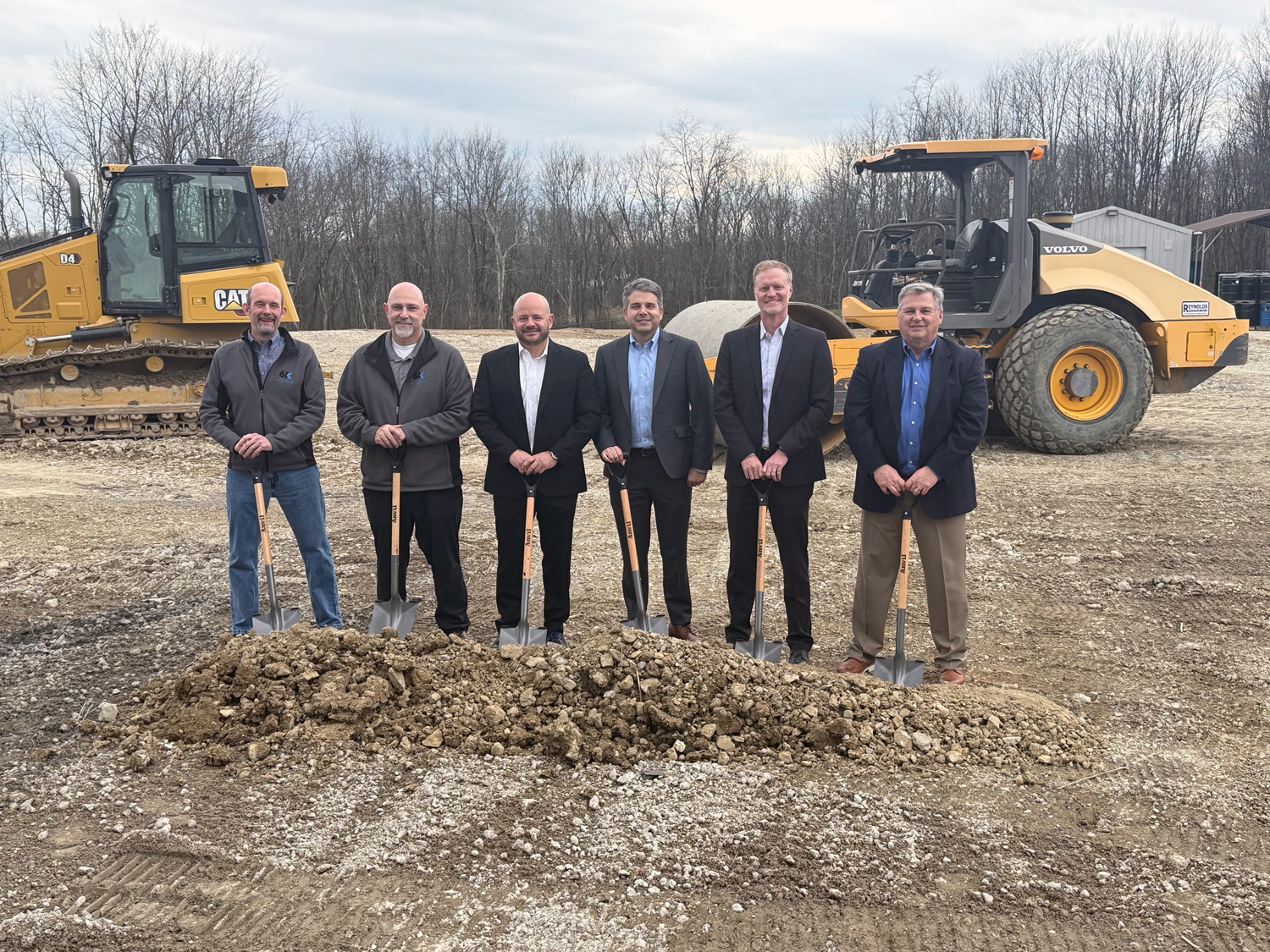
    At RAPID, Roberts and Bradshaw reminded me that the company recently had the official groundbreaking for an expansion to its global headquarters and manufacturing campus near Pittsburgh. This five-fold increase in production capacity is thanks to a $23.4 million Defense Production Act (DPA) Title III grant, the completion of its IPO, and a $27.4 million loan from the Export-Import Bank of the United States (EXIM).

    Roberts told me that the focus of the expansion is expanding powder production, so 6K will be adding more UniMelts. But the main goal is consolidation, so the company is also bringing over an atomizer from California. More specifically, it’s bringing over the atomizer it purchased from Uniformity Labs.

    “The reactive metals, like titanium and niobium, you can embrittle them in a hydrogen furnace cycle. That makes them easy for us to crush down and size to spheroidize in our UniMelt,” he explained. “Nickel alloys don’t behave the same way. You can’t really take big pieces and easily crush them down and make small pieces that we could spheroidize.”

    Atomizers can produce broad particle size distribution (PSD), and 6K’s sizing technology then shifts the large and small particles “back into the size for laser powder bed fusion.” These go through the UniMelt to be spheroidized, and 6K then sells the atomized powder, and upcycles the scrap from the atomizer as well.

    “Last year when we were on the journey to public listing, we did a pre-IPO round in July, and that allowed us to really start ramping that unit operation in California. We closed the funding and listed in December, and ever since then, it’s been a nice ramp of powder flowing through both atomization and UniMelt,” Roberts said. “Converting our pipeline is our key.”

    This move really supports the company’s growth story.

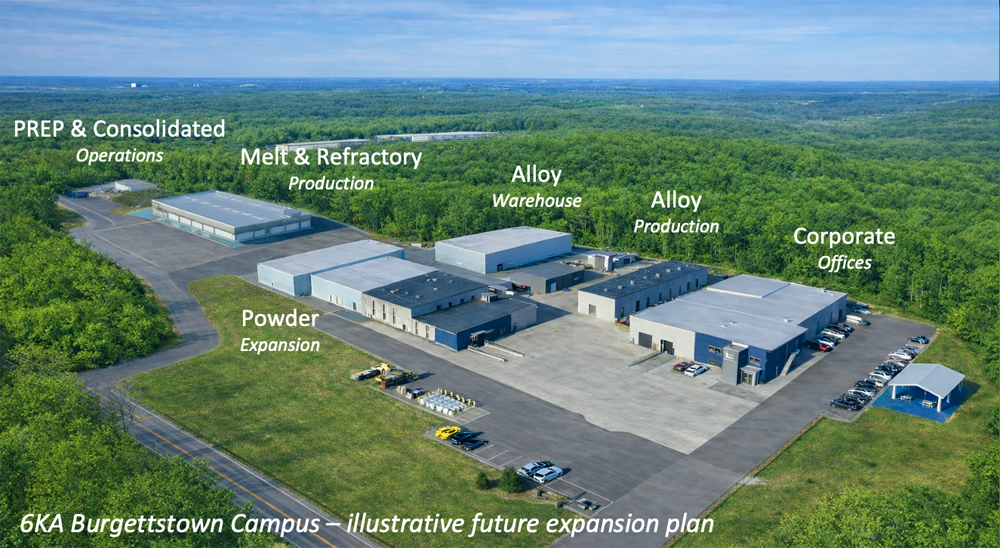
    6K Additive Burgettstown Campus – illustrative future expansion plan. Image courtesy of 6K Additive.

    Bradshaw showed me the above picture, pointing out that the white buildings—an alloy warehouse, dedicated melt building, pre- and post-processing production facility, and a refractory—are what’s being added to the campus.

    6K currently has four UniMelts operating onsite, but by the time construction is over, it will be operating six, as well as two atomizers. This will increase their volume by five times, going from 200 metric tons to 1,000 metric tons. Roberts said that 80% of the expansion will be online by the end of 2026, with the rest of it following the next year.

    6K Additive leadership team officially breaking ground for the expansion. Image courtesy of 6K Additive.

    It seems like 6K Additive is going in just one direction these days, and that’s up.

  • The Additive Chicken Coop, Part I: Million Dollar Petri Dishes

    After decades of tinkering with our individual technologies, billions were poured into speculative claims and optimism. Now the attention is gone, and sometimes it can seem like we’re surrounded by the drafts of an empty high school gym amidst archipelagoes of confetti and withering balloons. Simultaneously, we have a billion-dollar revenue company founded in 2020, a nascent desktop 3D printing revolution, and dollops of fat profits unequally distributed, while other companies are declining. Certain applications, sectors, and companies are doing exceedingly well, while others struggle to survive. Let’s look at the major forces shaping our past to see how they are affecting our future.

    The LPBF Petri Dishes Effect

    At one point, we sold 100 metal LPBF systems a year. Over half of those went to universities, and the remainder went to secret projects in the depths of corporations or large aerospace and defense firms. Machines sat idle a lot and then spent two-thirds of their time recoating. But everyone wanted to do something a tad bit different. Everyone wanted particular settings or particular parameters. What we ended up with were million-dollar petri dishes. A machine where everything can be changed, but it is not good at making anything in particular. I swear that there was a six-year period when every university tried to characterize Inconel in some way.

    With the energy efficiency from renewables, my Uber ride is now very profitable at current oil prices.

    Engineering leaders across the earth then tried to take these experimental boxes and push them into production. It’s a bit like trying to turn a Barbie into an actual doctor. Or to ride a My Little Pony. Or to take your old childhood microscope kit to the CDC lab. The switchover to more production-oriented architectures, devices, software, and materials pricing took a long time. Organizations we’re hooked into making these lab boxes, and switching the whole ecosystem over took time. At the same time, we didn’t have systems integration companies that could help you set up production and customize machines. This led to a delay in adoption. Also, many firms just gave up, and only the most (fool)hardy succeeded. You did metal additive because there was no other option, or you didn’t do metal additive at all.

    Chicken Coop

    Upside Foods’ fried chicken is made from cultivated animal cells. Image courtesy of Upside Foods.

    Success in metal additive manufacturing is therefore focused on a few applications. And by and large, these applications are secret, or information about them is closely held. The total of these effects reflects the peculiar functioning of the LPBF market. A few hardy, secretive pioneers are the way to see this market. If you want to expand it, therefore, hitting the same verticals, companies, or parts won’t work well. What is, within the current paradigm, is to find people who need it badly across all industries, or to make the technology more accessible. Instead, by doubling down on existing needs and customers, firms have further increased their supplier concentration risk and dependence. And once again, we´re seeing strategic replication. It may pay off if the few customers grow, but it also shapes you and them to succeed only in tandem. Now that may seem amazing, and it feels amazing, but it limits you both. If you keep on making the best cars for the richest people, you could be Rolls-Royce, but there is a Ford, cars for everyone, an opportunity that you eventually can not take. And eventually, the volume player could buy you or displace you. This results in the current chicken coop, which is a metal LPBF. It’s so busy, we’re so busy all the time, and oh wow, are we closely watching the other chickens peck away! It’s so busy, and we’re all cooped up; it’s hard to forget that there is a world beyond the chicken coop.

    Artesenal Aircraft Parts

    My first encounter with 3D printing in a manufacturing context was a bit of a creeping disappointment. Yes, there were lasers, but there were also guys with paint brushes. Likewise, when I saw metal printing, there were more brushes, and guys were sawing things off with a Flex. The lack of automation and integrated systems was due to a shortage of systems integrators and to the industry talking up production while making petri dishes. Many early pioneers did everything themselves, from software to finishing, creating processes and machinery laboriously. It therefore took years and significant funds for people to reap the benefits of scale and scope. This led to a compounding delay in developing a market for systems integrators and products that would let the whole industry accelerate.

    It was also never any vendor’s responsibility to automate the whole process. This delay has slowed the growth of automation solutions that could benefit the market as a whole.

    Because we’re in the chicken coop, we obsess over the behavior of the other chickens. Because we used to sell million-dollar petri dishes, previous implementations were slow, and the adoption of additive was concentrated. This exacerbated the development of systems to automate key steps, leading to our current state of running while standing still.

  • HP Stock Jumps on 3D Printing Buzz

    HP (NYSE: HPQ) had its best day in over a year this week, with shares jumping more than 7% on Tuesday. Interestingly, the move was quickly tied to 3D printing, especially after the company’s high-profile unveiling at RAPID + TCT 2026 in Boston, one of the most talked-about launches at the event.

    The week opened with a drop for HP, with shares falling about 1.5% on Monday and lagging behind Apple and Dell Technologies. Then came the sudden jump on Tuesday. By Wednesday, HP shares dropped more than 3%.

    One Day, One Strong Reaction

    The spike came after a mix of news that involved shareholders approving an expanded stock incentive plan, adding over 70 million shares for compensation. Also, HP reinforced its growth strategy with updates across its industrial and 3D printing portfolio, leading to investor sentiment flipping positive, with traders suddenly turning bullish. That combination pushed the stock up roughly 7–8% in a single day, its biggest move in over a year.

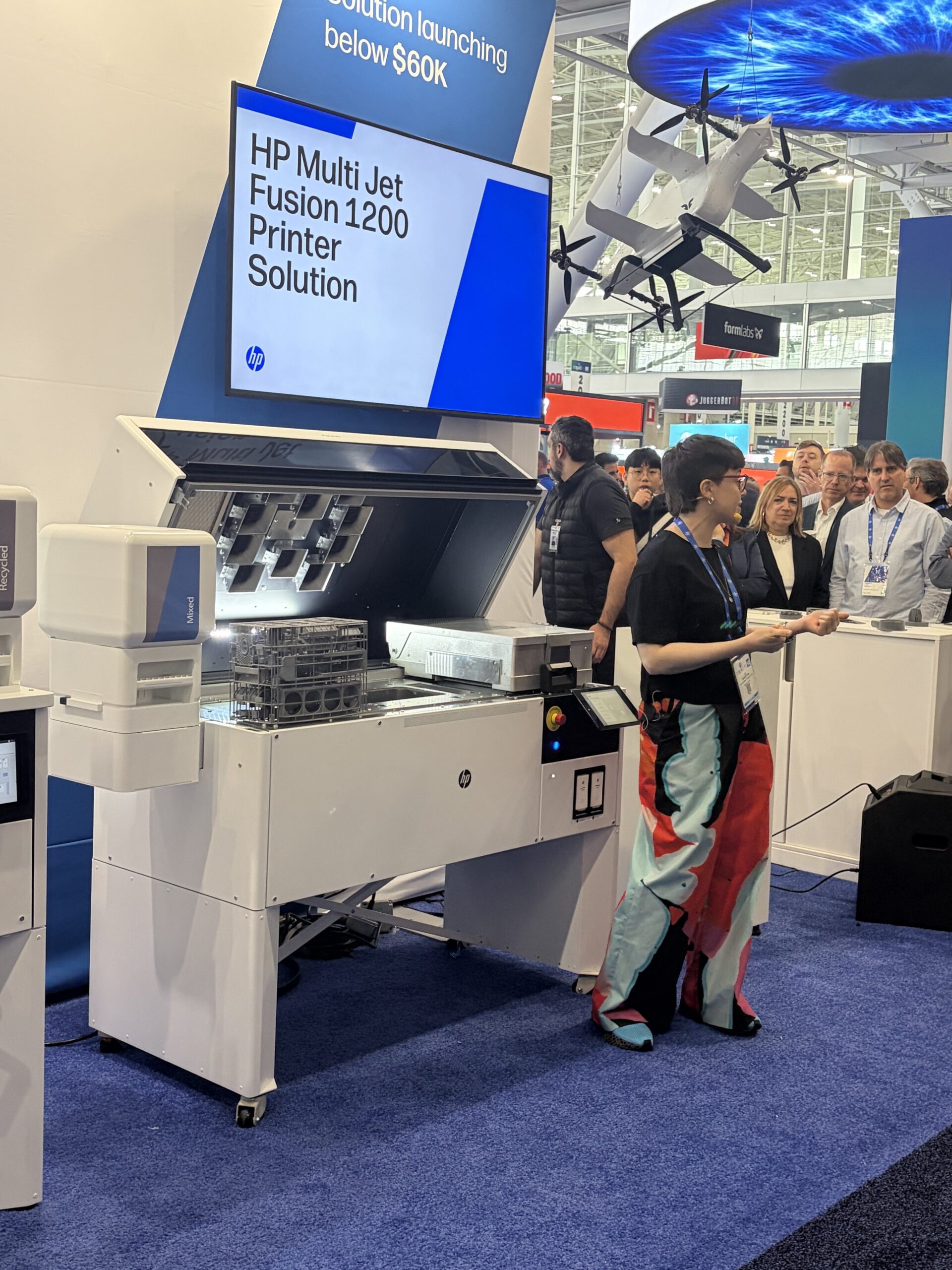
    At the same time, HP’s presence at RAPID + TCT got a lot of attention. The company introduced its new Multi Jet Fusion 1200 platform, a smaller system designed to bring its industrial 3D printing into more workplaces, with automated workflows, easier operation, and faster turnaround times. 

    On the floor at RAPID + TCT 2026: HP reveals its latest 3D printing lineup. Image courtesy of Sarah Saunders/3DPrint.com.

    3DPrint.com’s Sarah Saunders was at RAPID for the live unveiling, stressing how the system lowers the barrier to entry. Shortly after, Executive Editor Joris Peels wrote that this system could reshape the entry-level additive manufacturing market by making HP’s technology more accessible to a wider range of users.

    So it is that combination, the corporate moves plus a strong message about 3D printing, that helped push the stock higher.

    For years, HP has been building out its 3D printing business, but the real question has been adoption, especially knowing how far it can go beyond prototyping and into actual production. Now, HP is starting to answer that. The company isn’t just talking about 3D printing anymore; it’s showing how it can work in real production, right next to traditional methods.

    This fits with HP’s broader strategy. In its latest earnings, the company showed steady performance in its core business, while also pointing to areas like industrial and digital manufacturing as future growth. That’s where 3D printing comes in.

    But this push into 3D printing isn’t coming out of nowhere either. In its latest earnings, the company showed steady performance in its core business, but also continued to highlight growth areas tied to industrial and digital manufacturing. 3D printing fits directly into that. 

    In HP’s Q1 2026 earnings call in February, CFO Karen Parkhill pointed to clear momentum in the industry, stating: 

    “Strong demand in drones and robotics drove double-digit growth in 3D and industrial print revenue grew for the tenth consecutive quarter, driven by the continued transition from analog to digital.”

    Also, a few months earlier, in the company’s Q4 2025 earnings call, CEO Enrique Lores pointed to a similar trend, stating: 

    “We also saw double-digit growth in 3D driven by applications in drone and robotics manufacturing.” He added that HP intends to “strengthen our leadership in 3D printing” as part of its broader print strategy.

    Drones are quickly becoming one of the most important applications for 3D printing today. Companies like Blueflite are using HP’s Multi Jet Fusion to produce drones with dozens of printed parts, while startups like Vecros and Unusual Machines are relying on the same technology for UAV components and full systems. And if you’re interested in how this is playing out in the market, it’s something 3DPrint.com and Additive Manufacturing Strategies will explore in depth at the UAS: The Present and Future of Drone Manufacturing event on June 30, 2026.

    Live from RAPID + TCT 2026, HP’s booth. Image courtesy of Sarah Saunders/3DPrint.com.

    The stock jump this week wasn’t driven by a single 3D printing breakthrough. It came from a mix of corporate moves and investor sentiment. But the timing matters. HP used RAPID + TCT to introduce new systems, including the more accessible Multi Jet Fusion 1200, and to reinforce its push toward real production with better output and lower cost per part. All of this helps explain the market’s reaction.

    3D printing may not be the biggest part of HP’s business today, but it’s starting to move the needle, show momentum, and investors are noticing. It is definitely a market the company is continuing to build around.

  • Artemis II Returned & The Economics of Getting to Space

    When the Artemis II crew returned to Earth, the headlines focused on what the mission achieved: a successful crewed flight beyond low Earth orbit (LEO), systems validated, and a program moving forward. But it has taken more than 50 years to get back to this point, with long gaps in funding and shifting priorities along the way. For better or worse, that seems to be changing. In recent years, the push behind the space industry has felt stronger than it has in decades, and this could be where that momentum really begins to build again, with ripple effects across the broader space economy, including areas like additive manufacturing (AM), which has started to prove its value in space some time ago.

    But that’s only part of the story.

    Featured image courtesy of NASA/Bill Ingalls: The Artemis II crew (clockwise from left) Commander Reid Wiseman, Mission Specialist Christina Koch, Mission Specialist Jeremy Hansen, and Pilot Victor Glover outside the Orion spacecraft after their highly anticipated return. 


  • Semicap Insurrection Revisited: APES Demonstrates Matrix6D Live at RAPID + TCT

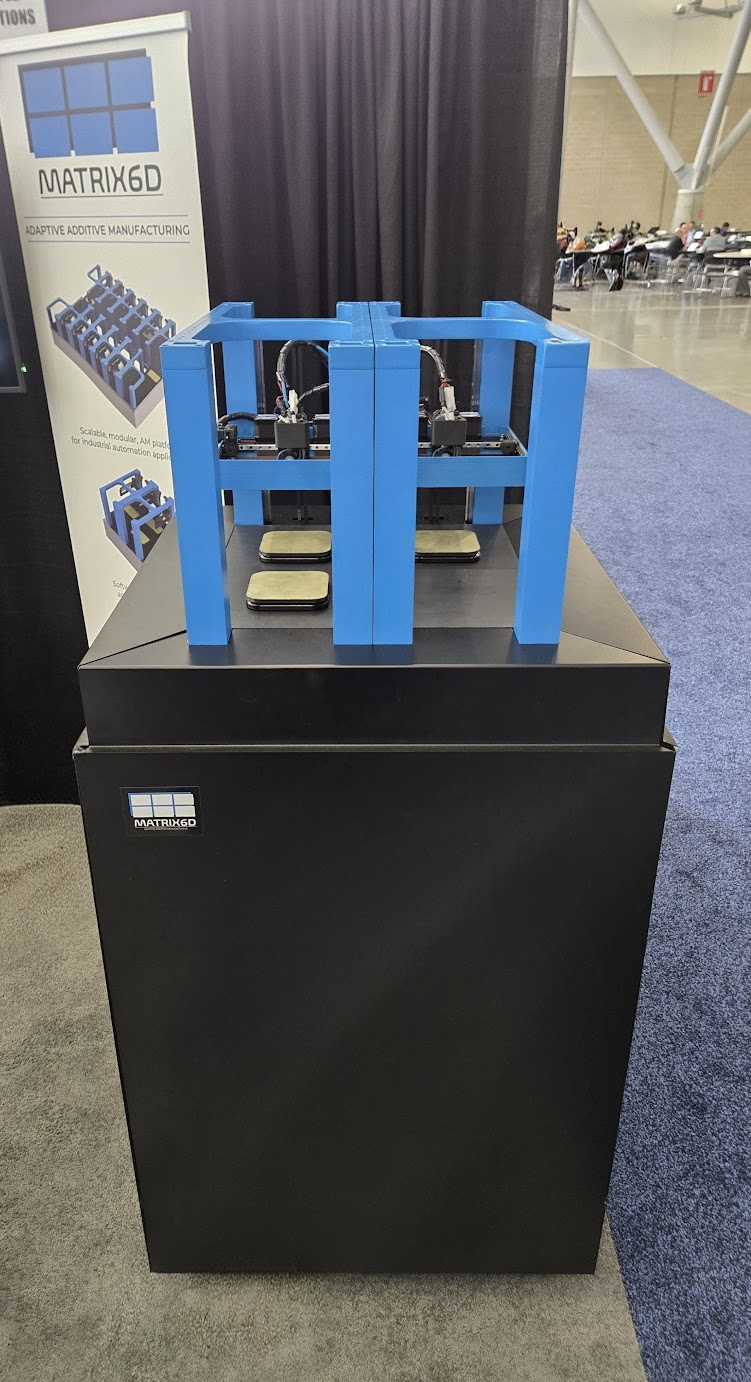
    I didn’t attend RAPID + TCT this year, so I missed getting to see the Matrix6D platform operating live on the show floor. Thankfully, the CEO and founder of Advanced Printed Electronics Solutions (APES), Dr. Rich Neill, sent a video of the demonstration to 3DPrint.com, which you can watch below:


    If you’re unfamiliar with APES and Matrix6D, Joris Peels’ 2025 article on the platform, written following its first public unveiling at last year’s RAPID + TCT,  provides a highly useful summary. You can also read the article I wrote on APES earlier this year about the partnership that the company formed with Great Lakes Semiconductor.

    Many paradigm shifts are occurring simultaneously in the global economy right now, and one involves the semiconductor sector. And, because of how singularly consequential the semiconductor sector is to the global economy, it’s very possible that all of the other shifts are being triggered (if only indirectly) by the semiconductor paradigm shift. However, we don’t need to get into that right now. The point is that electronics manufacturing is on the brink of a transformation as pivotal as the invention of semiconductor photolithography in the 1950s, and APES is the sort of company embodying that change.

    The Matrix6D platform on the show floor at RAPID + TCT 2026. Image courtesy of APES.

    The transformation involves many distinct elements, but the primary ones are probably innovations in both chip design and semiconductor capital equipment (semicap). In a recent article, part of my “AM Demand Signals” series, I called this “the Semicap Insurrection,” which I think starts to hint at the stakes involved. Here’s how I explained the chip design component in that earlier article:

    “…chip design that moved beyond 2D to 2.5, and 3D was “the silent economic revolution of the 2010s.” Shifting the design of integrated circuits (ICs) from logic that only worked in a side-by-side arrangement to a logic that fully incorporates the z-axis has enabled a complete reimagining of how semiconductor devices can be created. In addition to the System-on-a-Chip (SoP) model, semiconductor OEMs are now also starting to see how far they can go with chiplets: the System-in-a-Package (SiP) model defined by stacking a number of less sophisticated dies. Increasingly, AM is the tool that the new wave of semicap OEMs are leveraging to deliver the advanced package necessary to produce chiplets.”

    I followed up on that article with a PRO article on Elon Musk’s official announcement of Terafab, in which I argued that the world’s richest man is likely aiming to leverage the likes of TSMC into helping him build a chiplet packaging ecosystem on US soil. As it turns out, TSMC and other global chip giants have their own name for the Semicap Insurrection, which is “Foundry 2.0.” One of the core principles of this evolution in the foundry business model is a move beyond focusing solely on wafer fabrication, towards encompassing all aspects of the process — most notably, advanced packaging — and diversifying beyond exclusive reliance on fixed capital at a handful of sites to systems integration services on a customer-by-customer basis.

    Albeit on a much smaller scale, this is essentially the sort of deal that APES made with Great Lakes Semiconductor, with the latter planning to use the Matrix6D as a linchpin of its Fab-as-a-Service (FaaS) model. A key to understanding why the semiconductor sector is making this change is the economic necessity of delivering high-mix, low-volume batches produced on-demand. Anyone familiar with the most compelling selling points of AM more broadly can instantly grasp why the technology is indispensable to enabling that pivot.

    Now, beyond the reasons why the semiconductor industry is moving in the direction I’ve laid out, it’s worth considering what we might expect as the implied changes become more commonplace. The APES video from RAPID is a perfect reference point for gaming out the possibilities. The chipmaking process has always happened in isolation from the rest of society, with very little transparency into the inner workings of a fab.

    Suddenly, chipmaking is something that can be demonstrated on a trade show floor, creating the preconditions for bringing more minds than ever before into the semiconductor design process. Historically, the semiconductor industry has more or less reinvented itself once or twice a generation. There have never been more opportune circumstances for the next wave of reinvention to happen.

    Thomas Kuhn, the philosopher who originally coined the term “paradigm shift” in his book The Structure of Scientific Revolutions, wrote, “What man sees depends both upon what he looks at and also upon what his previous visual-conception experience has taught him to see.” Paradigm shifts happen when enough people look at the world as it is and recognize that things are starting to emerge that change the very definition of what’s possible.

    That’s the type of vision required to create something like the Matrix6D. Now that it exists right before the eyes of the general public, the real fun starts: who knows what possibilities it will open up?

  • 3D Printing News Briefs, April 22, 2026: DINOs, Post-Processing, AM for Aerostructures, & More

    We’ll start with event news in today’s 3D Printing News Briefs, as AMUG presented its DINO Award to six members at this year’s conference, and Axtra3D celebrated its five-year anniversary at RAPID last week. Also at RAPID, DyeMansion announced development of a new compact Powershot system, and Mimaki released an updated version of its workflow management software for 3D printing. Finally, GKN Aerospace and the Air Force Research Laboratory are collaborating on a program to advance AM for aerostructures.

    Six AMUG Members Received DINO Awards at 2026 Conference

    2026 DINO Award recipients (from left): Chris Prue, Brian Post, Annie Wang, Olga Ivanova, Daniel Landgraf, and John Thiell.

    At the recent Additive Manufacturing Users Group (AMUG) Conference in Reno, the group presented six very qualified and deserving individuals with the prestigious DINO (Distinguished INnovator Operator) Award for additive manufacturing expertise and service. Only 250 of these awards have been given over AMUG’s 38-year history, and 59 of those recipients were at the 2026 conference to watch the presentation of the new DINOs. Both the old and the new DINOs keep the AMUG guiding principle of “For Users, By Users” at the forefront of their work, and the awards are presented to recognize tenure and years of service in the AM industry, active support of AMUG and the conference, and industry contributions. The new DINOs are Olga (Dr. O) Ivanova, Mechnano; Daniel Landgraf, 3D Spark; Brian Post, Oak Ridge National Laboratory (ORNL); Chris Prue, IperionX; John Thiell, Beehive Industries; and Annie Wang, Senvol.

    “DINO Committee members are DINO recipients committed to recognizing other AMUG members who have made significant contributions to the organization and the industry. We evaluate each nominee based on their tenure in the industry, commitment to promoting additive manufacturing, and support for AMUG. Those who are ultimately selected for a DINO Award exemplify a ‘giving’ attitude that complements their knowledge of additive manufacturing,” explained Bruce LeMaster, DINO Selection Committee Chair and AMUG’s Director at Large.

    “This year’s DINO recipients come from a broad range of industries, government labs, equipment and material OEMs, and additive manufacturing service providers. Though their backgrounds are different, they each share a high regard for AMUG and the overall AM industry, and they are willing to share their knowledge with others.”

    Axtra3D Celebrated 5 Years of Production-Focused AM at RAPID 2026

    Last week at RAPID+TCT in Boston, Hi-Speed SLA 3D printing company Axtra3D celebrated an exciting milestone: five years as a production-focused AM company. Co-founded by Gianni Zitelli and Praveen Tummala, the company’s foundation is its Hybrid PhotoSynthesis (HPS) technology. Axtra3D’s vision was to enable low-volume production and build a bridge between traditional and additive manufacturing, and spent its first two and a half years developing and validating HPS through the launch of its Lumia X1 3D printer. The next two and a half years were spent on commercialization efforts, and thanks in large part to investor support, the company has been able to continue global expansion efforts, speed up its roadmap, build a strong ecosystem of customers and partners, and launch its full Axtra Workflow. In its five years of business, Axtra3D has also achieved 55%+ repeat customer rate; established a growing presence in Europe, Japan, and the U.S., with plans to open a new EU facility in June to support scaling operations; developed over 25 validated production solutions; sustained 41%+ year-over-year revenue growth since commercialization; and much more.

    CEO Zitelli said, “Our vision from the start was to build a global, production-focused additive manufacturing company.

    “We made a clear choice from the beginning to develop technologies designed for industrial production. This guides both our solutions, which are engineered for reliability, repeatability, and economic sustainability, and the way we build and manage the company.

    “We believe the true value of AM emerges in production environments. For this reason, our growth is directly tied to that of our customers. In a sector often shaped by excessive expectations, we have chosen to avoid overhype and focus on tangible, lasting results. It is a model that requires discipline, long-term vision, and a constant commitment to industrial value.

    “At Axtra, we do not measure success by how fast we grow, but by how solidly we contribute to the manufacturing transformation of our customers.”

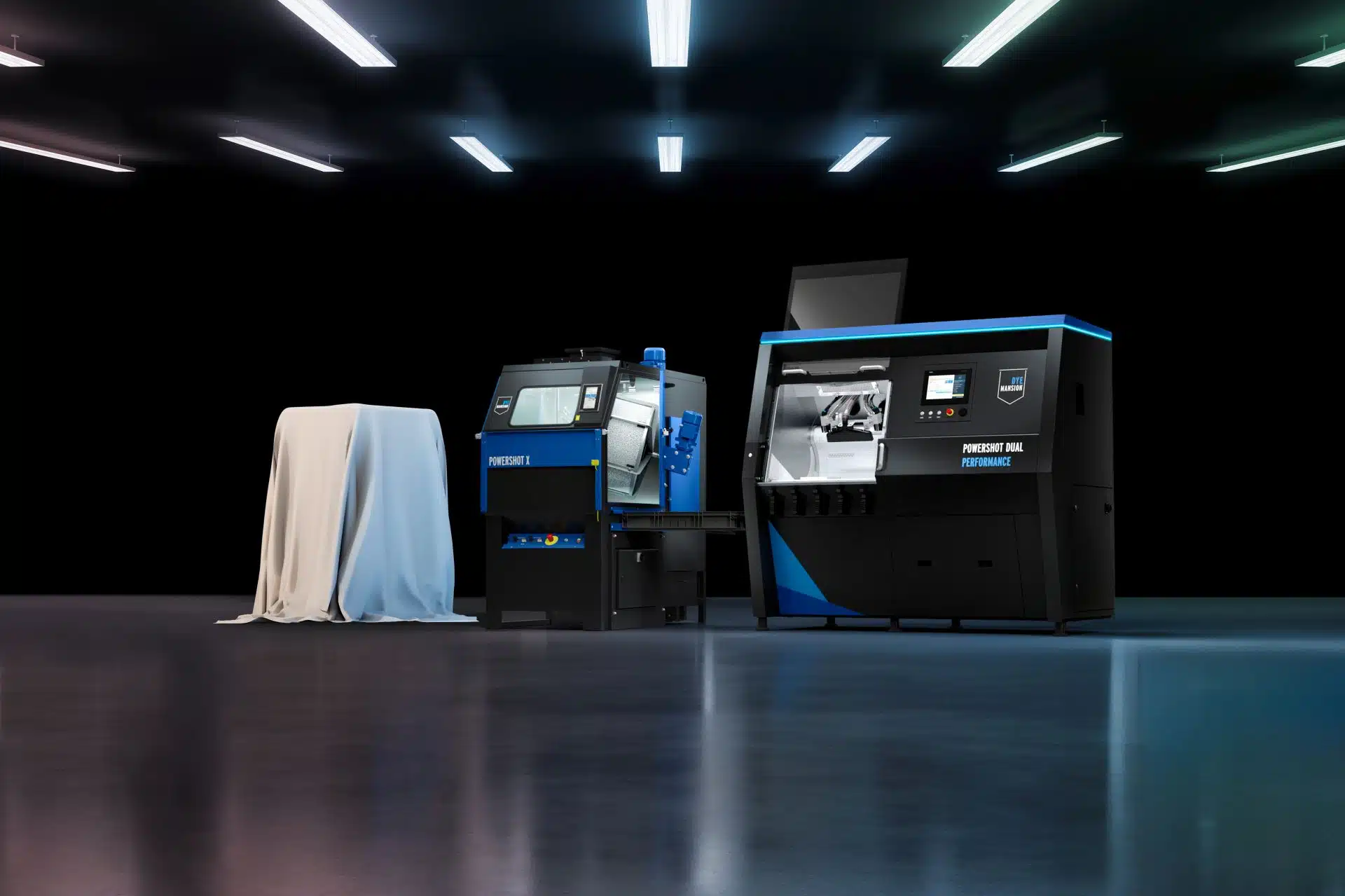
    DyeMansion Announces New Compact Powershot to Debut at Formnext 2026

    The new compact Powershot system for cleaning & surfacing targets a wide range of users

    Also at RAPID, DyeMansion showcased its full Print-to-Product workflow, including its VX1 vapor smoothing system. But the company, which provides post-processing solutions for polymer 3D printed parts, also announced that it’s developing a new compact, industrial-grade Powershot system, set to have its official debut at Formnext 2026 this November. DyeMansion has a goal of making professional post-processing more accessible, and this new system will make its PolyShot Cleaning & Surfacing technology available to a wider range of users looking for industrial-quality cleaning and surfacing. Not just for large-scale production environments, this could mean that everything from corporate innovation teams and service bureaus to OEMs that operate at smaller volumes could have access. Just like HP is doing with its new compact Multi Jet Fusion 1200 3D printing solution, DyeMansion is developing the new Powershot to align with the needs of this market segment.

    “Industrial-grade post-processing is no longer reserved for large-format, high-volume operations. With this new Powershot, we are making DyeMansion Print-to-Product workflow available to a whole new segment of the market — without compromising on the quality and reliability our customers have come to expect,” said Felix Ewald, CEO & Co-Founder of DyeMansion.

    Mimaki Adds New Capabilities to 3D Print Prep Pro for Easier Data Preparation

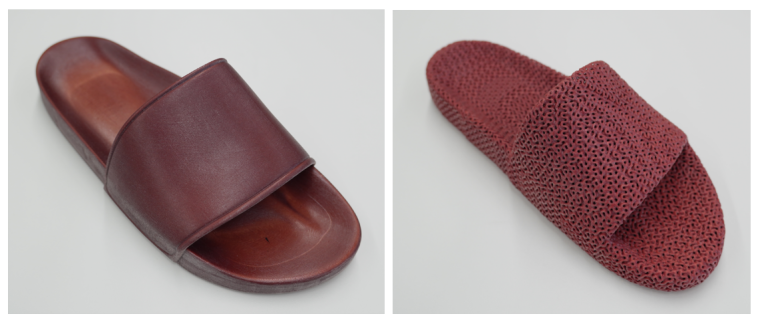
    The new lattice structure function allows users to create 3D prints with a cushioned or soft effect, ideal for realistic mock-ups of shoes and other soft items.

    Mimaki Europe recently released an updated version of its 3D Print Prep Pro workflow management software for 3D printers. Mimaki 3D Print Prep Pro v2.0 (3DP3v2) makes data preparation for 3D printing easier for users, without requiring any specialized knowledge on the part of the user. In addition to automatically optimizing the data, 3DP3v2 also lowers the amount of time users spend overseeing and processing print files, and is able to operate offline with Mimaki’s printers to improve security. New capabilities include a lattice structure conversion function, with adjustable density settings and four different patterns that users can choose from to reduce the weight of a print and create a softening or cushioning effect. 3DP3v2 also features more extensive data conversion, extending to drone-collected topographic and architectural measurements as well as CT scan data. This enables users to complete all of their data conversions within a single software, making everything much easier. Mimaki 3D Print Prep Pro v2.0 will be available this June.

    “This latest update to our 3D printing software aims to support existing 3D printers looking to streamline their process while processing more complex data, as well as new printers looking to 3D as a new revenue opportunity but are intimidated by the level of expertise needed to process 3D data. 3DPv2 makes the entire process easy from beginning to end, so businesses can confidently respond to customer demands with accurate and detailed 3D prints, without the added stress of data processing,” said Arjen Evertse, Director Sales, Mimaki Europe.

    GKN Aerospace & AFRL Launch Program to Advance AM for Aerostructures

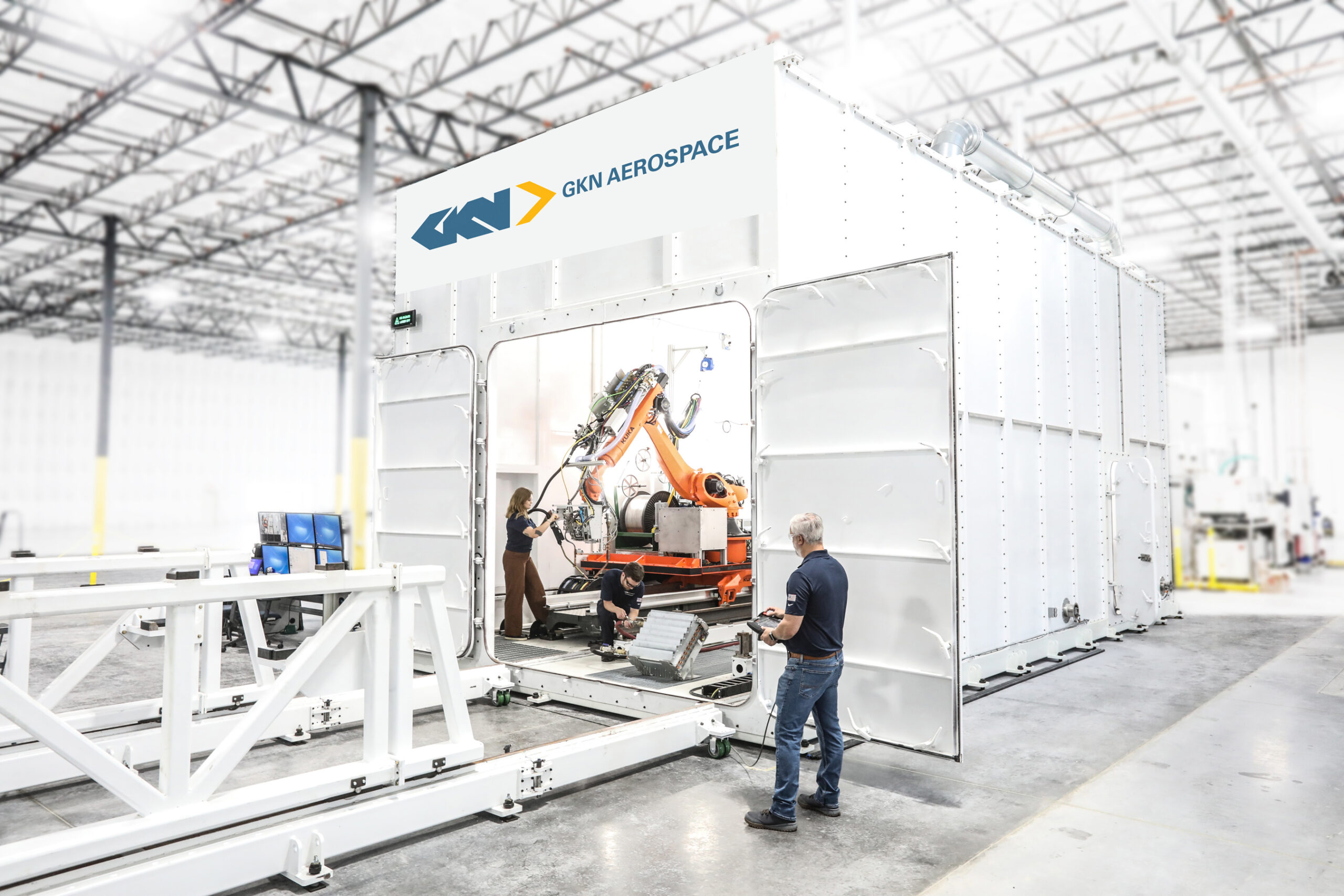
    GKN Aerospace has over 20 years of experience in AM, and is an international leader in large-scale AM for aerospace structures. The company is in serial production of major 3D printed aerostructures that are currently in service, like the fan case mount ring for the Pratt & Whitney GTF™ (Geared Turbofan) engine family. Now, it’s launched an $8.4 million program in collaboration with the U.S. Air Force Research Laboratory (AFRL). The new TITAN-AM (Titanium Industrialization and Technology Advancement for Near-net Additive Manufacturing) initiative, which will be executed from GKN Aerospace’s Global Technology Centre in Texas, will help industrialize titanium AM for large aerostructures made with Laser Metal Deposition with Wire (LMD-w) technology. TITAN-AM will address five major areas that are needed to print aerospace structural applications with LMD-w, including developing robust titanium material datasets, non-destructive inspection (NDI) techniques for AM, advanced simulation to optimize structural design, and demonstrating the technology. The program hopes to reduce material waste, increase design freedom, and decrease production lead times by using LMD-w, and the partnership with AFRL “reinforces GKN Aerospace’s commitment to advancing additive manufacturing technologies that deliver lighter, stronger and more sustainable structural solutions” for commercial and defense aerospace.

    “TITAN-AM represents a significant step forward in additive manufacturing for aerospace structures,” said David Bond, CTO, Airframes, for GKN Aerospace. “By combining our deep manufacturing expertise with AFRL’s vision, we aim to accelerate the readiness of LMD-w technology and demonstrate its value on operational titanium structural components.”

  • 3D Printed Vortek Speedboat Now Available in Dubai

    Dubai-based company Innoventive 3D has released the Vortek, a 3D printed speedboat. The same firm previously made the Cyberfin, reportedly from marine waste. The Vortex looks kind of like it would suit Batman, but it even looks more like a dog head robot from a Japanese cartoon that at any moment is likely to flip and join five other robots in a giant mechatronic Spot the Dog. Certainly futuristic, the boat is now commercially available, and you can order one today.

    The boat is made in Dubai, and the hull, deck, and superstructure were made using Material Extrusion. You can customize your boat, and they are built to order. Reportedly, the build time is in weeks, and it costs a third of a traditionally made speedboat of the same size.

    Cyberfin, Dubai’s first fully 3D printed boat. Image courtesy of Inoventive 3D.

    Innoventive makes scale models, 3D printed sculptures, 3D printed booths, and signage. By being a hub for printing, the firm showcases just how versatile the large-format world is becoming. We’re not sure what 3D printers the company has, but they have images of what looks like a Massivit, a few robot arm-based systems, and an Ingersoll Masterprint. Boats are a big potential application for 3D printing. The UAE has shown a lot of interest in the technology, with another company, Al Seer, buying a large CEAD system to print boats. Al Seer is to 3D Print the electric Abras, small public transport boats, and also an unmanned surface vessel, the Hydra.

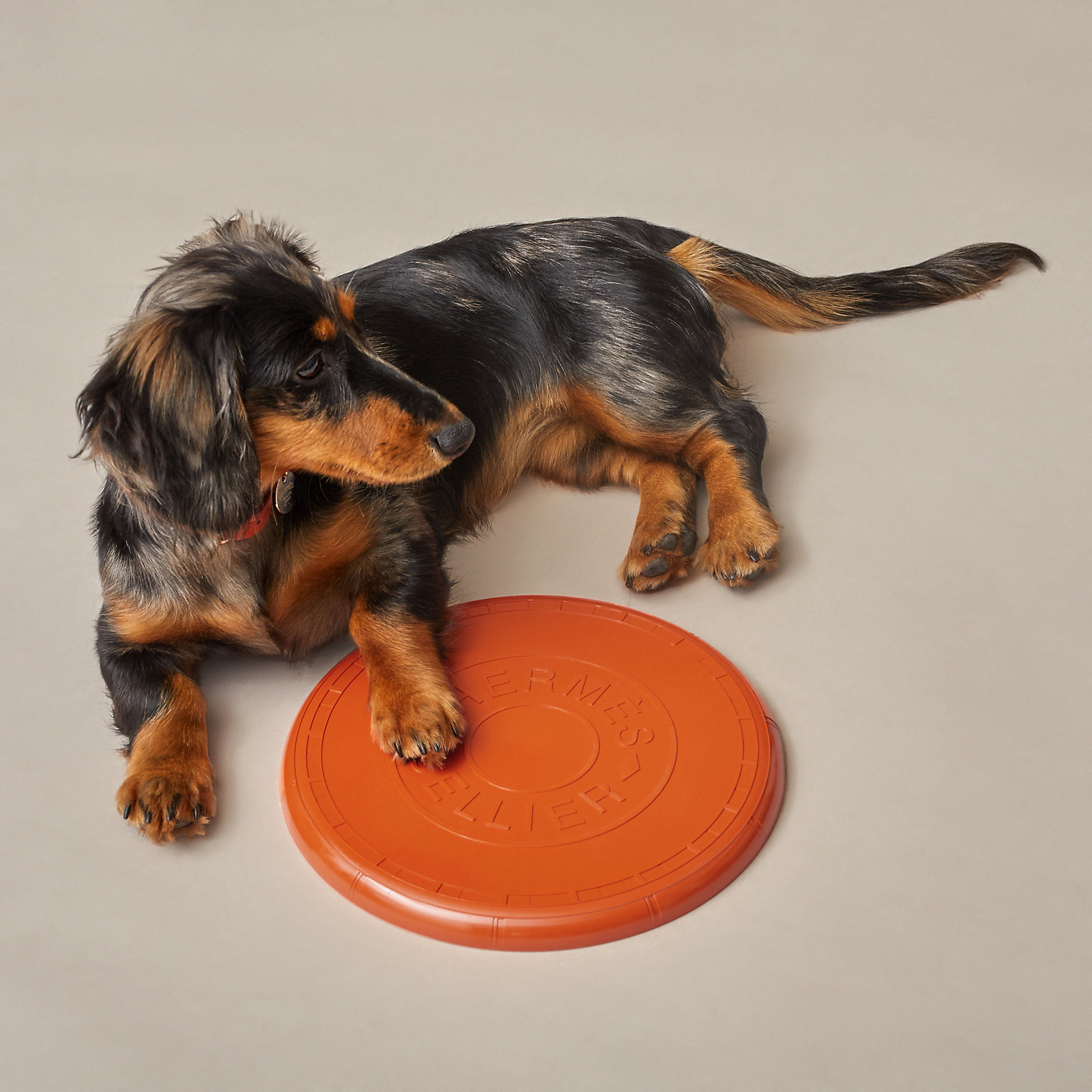
    The Hermès Wouf. Image courtesy of Hermès.

    I’m not sure how many people are speedboat shopping in Dubai at the moment, eager to take a spin out on the Gulf. But I’m sure that there could be some. There are always optimists, or we wouldn’t have convertibles, speedboats, cryptocurrency, NFT’s, bread-baking machines, and a $285 plastic Hermes frisbee, the Wouf. That frisbee is explicitly meant for dogs, by the way, just like a new dog perfume, or rather, Dolce & Gabbana Fefe Fragrance Mist for Dogs. To apply, “Spray Fefé on your hands or on a brush and proceed by rubbing or brushing your dog’s fur from the middle of the body towards the tail to give them a moment of scented pampering,” and “Fefé marks the brand’s inaugural alcohol-free fragrance mist tailored specifically for dogs. It’s an olfactory masterpiece featuring the cocooning and warm notes of Ylang, the clean and enveloping touch of Musk, and the woody, creamy undertones of Sandalwood.” Was I the only one who had to recoil and shiver a bit at the “enveloping touch of Musk?”

    Dolce & Gabbana perfume for dogs, Fefe. Image courtesy of Dolce & Gabbana.

    But, while there are always optimists and they do drive some kind of innovation, I’m going to hazard a guess and say that this is perhaps not the best time ever to launch a speedboat. But the Vortek could be made as a one-off, and the company can produce on demand. That could be a portend of the ability of 3D printing to make boats in a less capital-intensive way, with better economics.

    But, rather than more pleasure craft, it may be more expedient for the UAE to see if they can turn the Vortek into a go-fast with an M2 on it, kind of a sea-going autonomous technical, the Hilux for the seas. Now that is something that a lot of people would be very interested in right now. Again, the versatility of 3D printing could play a part here and let this be easily adapted to remote operations or for weapons stations. Maybe something to talk to the people at the Edge Group about.

    The UAE has taken a real interest in boat building to augment its shipping and port industries over the years. It is also striving to become an Additive hub. In this case, with its national defense being an immediate priority, 3D printing can make a real difference in quickly building an inexpensive craft to suit a particular purpose. It would be lovely to live in a world where speedboats were the logical choice, but unscrewed surface vessels could be a very meaningful investment for the UAE at the moment.