• Lincoln Electric’s Big Metal Bet: Using WAAM 3D Printing to Replace Castings

    When heavy industry runs into a parts problem, the bottleneck usually isn’t machining; it’s often castings and forgings. Those processes, essential for making large, heavy-duty metal components, can take months and even years to complete, especially when foundries and forge shops are backed up. That’s where Lincoln Electric’s large-format metal 3D printing makes the biggest impact.

    Most people know Lincoln Electric as one of the world’s leading welding companies. But in recent years, the Cleveland-based manufacturer has expanded its reach into additive manufacturing (AM). To support that work, Lincoln acquired Baker Industries, a Michigan-based machining and fabrication company, in 2019.

    “Baker was acquired to close the loop on Lincoln’s vertical integration as an additive provider,” Sean Schaefer, marketing manager at Baker Industries, told 3DPrint.com. “They were printing all these big parts, but needed somebody to do all the post-processing. There are very few machine shops in the U.S. that can handle parts of the size they’re printing.”

    Sean Schaefer. Image courtesy of Baker Industries/Lincoln Electric.

    Today, that loop runs between Baker in Macomb, Michigan, and Lincoln Electric’s main additive hub in Cleveland, Ohio. The workflow covers printing, machining, fabrication, and final inspection. When necessary, Lincoln Electric also outsources operations such as heat treatment and testing to trusted suppliers. It’s a complete, end-to-end metal AM pipeline.

    Printing at Casting Scale

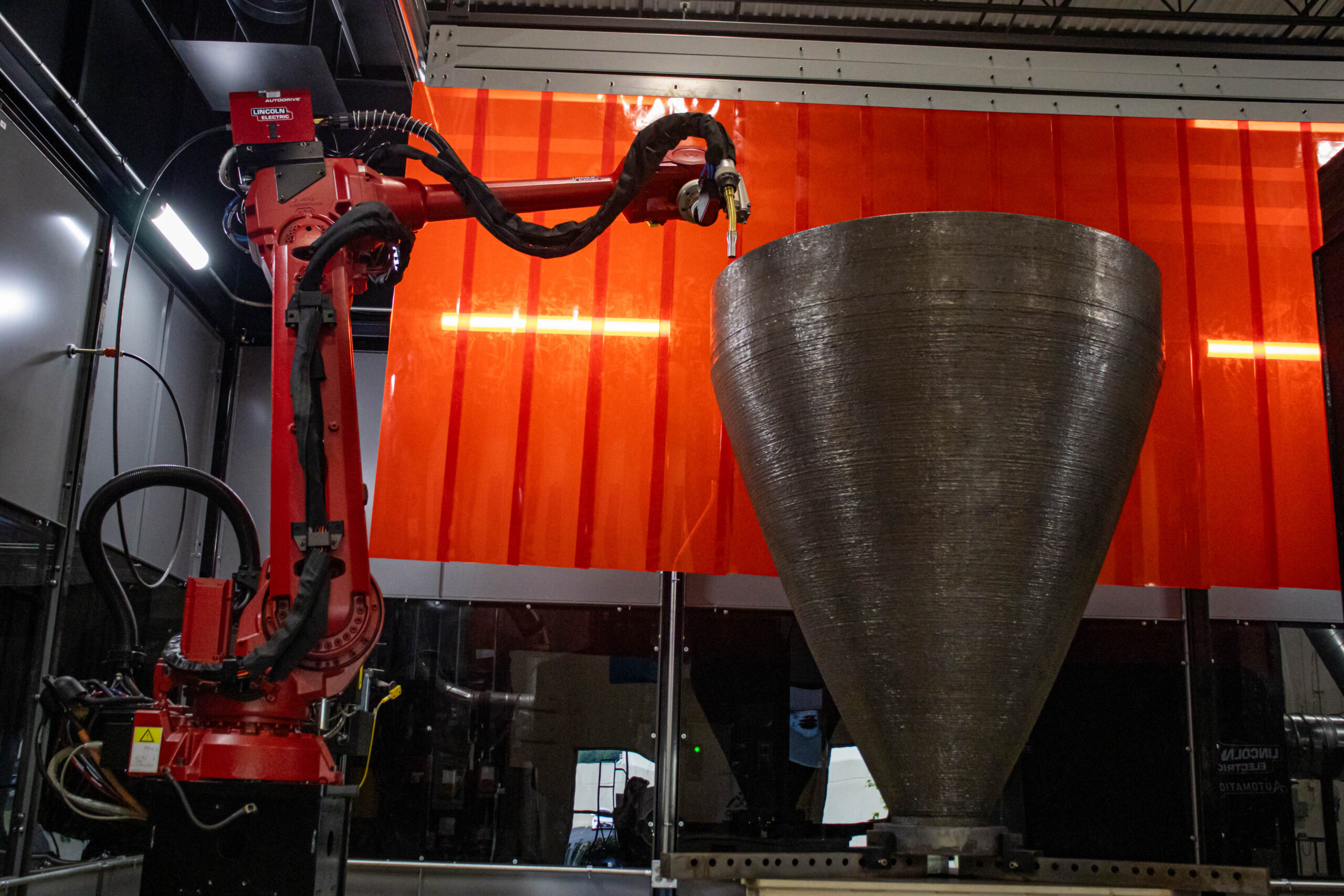
    Lincoln Electric Additive Solutions builds metal components that would traditionally be cast or forged with wire-arc AM (WAAM), on systems it designs and makes itself (everything but the robot arm).

    “We do everything in-house except for the robot arm, basically — software, wire feedstock, controls, power sources, and all our own material development,” Schaefer said.

    The company can print “roughly an eight-foot cube in a single print,” which in AM terms is huge, far beyond most powder-bed or laser systems. And it regularly goes larger by splitting parts and then joining them post-print, explains Schaefer.

    The WAAM cells are big; the latest generation Schaefer mentioned can manipulate components up 20,000lbs, and the fleet keeps growing. Lincoln Electric now runs 26 large-format robotic WAAM systems under 24/7 operations according to Schaefer.

    It’s a setup built for industrial-scale work. And with that kind of capacity, material capability becomes just as important. Lincoln’s WAAM systems can print in a wide range of structural and corrosion-resistant alloys:

    “Mild steel, high-strength low-alloy steel, 410 NiMo and 17-4 precipitation hardened stainless, two different nickel alloys (617 and 625), iron-nickel 36, and 70/30 copper-nickel,” Schaefer went on.

    Interestingly, missing from the lineup are aluminum and titanium.

    “The business case just isn’t there,” he explained. “Aluminum and Titanium may offer opportunity in the future, but are not target areas for the business right now.”

    A 3D printed mold for a hydropower impeller is printed at ORNL using Lincoln Electric machines. Image courtesy of Carlos Jones/ORNL, U.S. Dept. of Energy.

    Building Everything In-House: Wire, Software, and Quality Control

    Lincoln Electric’s long history in welding consumables is a strategic advantage.

    “Lincoln is one of the world’s largest manufacturers of welding consumables. We have full control over wire production and are known as a premier supplier of high-quality welding wire. On the digital side, the company uses its own slicing and path-planning software which incorporates Lincoln Electric’s vast welding knowledge, called Sculpt Print OS,” Schaefer said. “There’s in-process monitoring that will allow the engineers to intervene if they catch something during the process. And every part that comes off the printer is 3D laser scanned and compared with the actual CAD.”

    Lincoln Electric is fully certified for aerospace and defense work, holding ISO 9001 and AS9100 certifications, as well as all the required government contracting approvals, including ITAR and a CAGE code.

    WAAM uses a welding arc and metal wire feedstock to build parts layer by layer using robotic arms. Image courtesy of Lincoln Electric.

    While WAAM remains the workhorse process, the company is developing another metal AM process: “We’ve also got a laser wire additive that is somewhat in late stages of development that should be coming online at the end of the year,” Schaefer stated. “It uses a laser, which is a little bit more precise and less heat on the surrounding material. Early targets will look familiar, a lot of castings and forgings replacements, plus finer detailed parts where the laser’s tighter melt pool helps.”

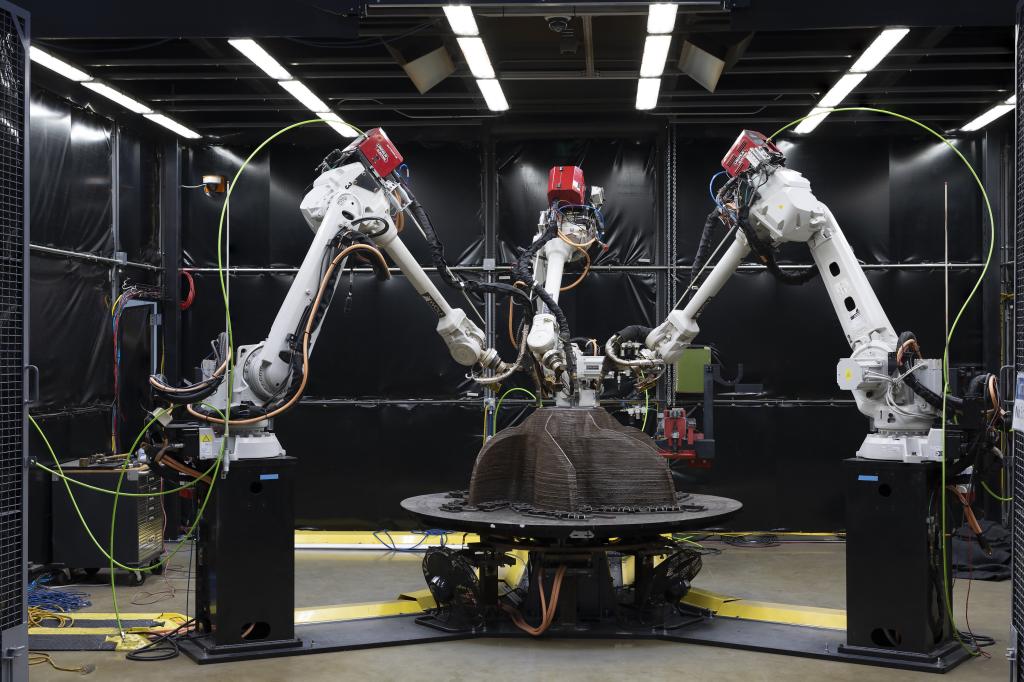
    Lincoln is also working to boost printing speed. In partnership with Oak Ridge National Laboratory, the company developed a new multi-robot system called Medusa. The setup uses three coordinated robots and Lincoln’s high-deposition welding technology to print up to 100 pounds of metal per hour. The system isn’t ready for production yet, but Schaefer said the team has reached its performance target and is now focused on turning it into a commercial product.

    A Growing Role for Large-Format Metal AM

    Large-format additive manufacturing like Lincoln Electric’s WAAM is designed for a specific type of industrial problem: large metal parts that traditionally require casting or forging. By combining materials development, software, printing systems, machining, and inspection in one workflow, the company has built a vertically integrated approach to producing these components.

    In Part II of this series, we look at where this approach matters most: industries facing long casting lead times, including a high-stakes repair at the Soo Locks in Michigan, where metal additive manufacturing helped avoid a potentially billion-dollar disruption to Great Lakes shipping.

  • Why Additive Manufacturing Adoption Looks the Way It Does — Part III

    The development of additive manufacturing has closely tracked broader trends in industrial digitalization. Additive manufacturing is digital at its point of origin. Geometry, process parameters, and machine instructions are all derived from digital data. This has made AM compatible with, and increasingly dependent on, wider digital manufacturing infrastructures.

    The force shaping this phase has been the growing use of digital tools across product development and production. Model-based definition, simulation-driven design, and software-managed quality systems have become more common. As these practices spread, expectations around data consistency, traceability, and system integration increased. Additive manufacturing did not drive this shift, but it was affected by it more directly than many conventional processes.

    The central challenge is that additive manufacturing generates large volumes of process-relevant data while remaining sensitive to digital dependencies. Machine software versions, parameter files, build preparation tools, and monitoring systems all influence the outcome. Managing this data reliably across design, production, quality assurance, and IT environments adds complexity that extends well beyond the printer itself.

    The industrial response has been an increased emphasis on process documentation, data handling, and system integration. Additive manufacturing implementations now rely on structured workflows that link design intent to manufacturing evidence, often supported by PLM, MES, and quality management systems. In parallel, concerns regarding cybersecurity and intellectual property protection have become more prominent, particularly when digital build files and process data are valuable assets.

    This has reinforced a broader pattern. As additive manufacturing approaches serial production, success depends less on standalone machine capability and more on the maturity of the surrounding digital infrastructure. Organizations with established digital manufacturing practices tend to integrate AM more effectively. Those without such foundations often encounter bottlenecks that are not directly related to the AM process itself.
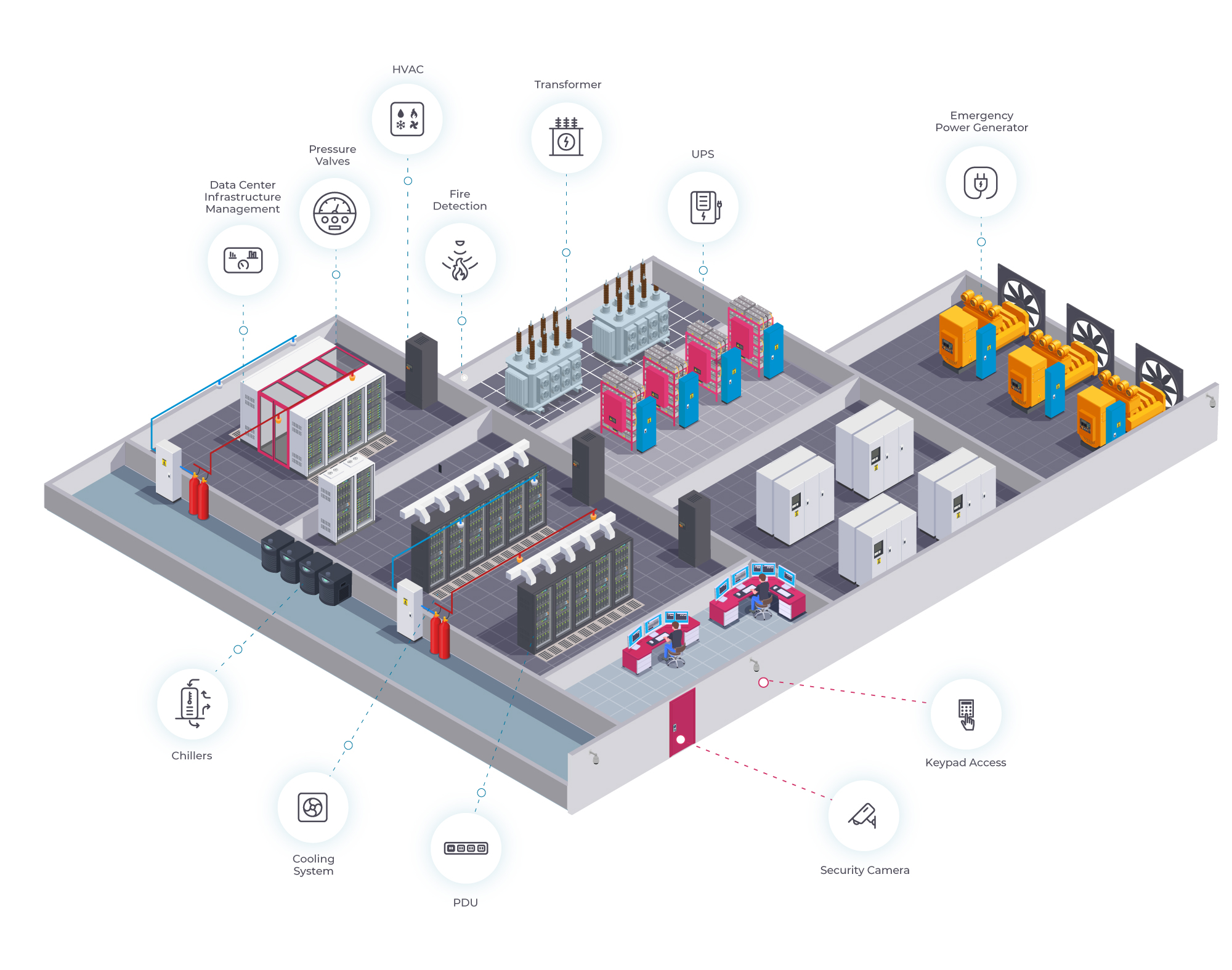
    Data center cybersecurity. Image courtesy of Nozomi Networks.

    Supply chain resilience and strategic use of AM

    In recent years, additive manufacturing has been discussed more frequently in the context of supply chain resilience, risk management, and localized production. This interest has been driven primarily by external disruptions rather than by changes in additive manufacturing capability. Geopolitical tensions, logistics constraints, and exposure to single source dependencies have prompted many organizations to reassess how and where critical parts are produced.

    The force at play has been strategic rather than operational. Additive manufacturing has been considered as a way to reduce dependence on long lead time suppliers, enable on-demand production of spare parts, or provide contingency manufacturing capacity closer to the point of use. These considerations have been particularly visible in defense, energy, transportation infrastructure, and certain industrial service contexts.

    In parallel with these considerations, geopolitical developments have increasingly influenced how additive manufacturing is evaluated and deployed. In defense, energy, and critical infrastructure environments, emphasis on sovereignty, availability, and controllability extends procurement scrutiny beyond part performance. Machine origin, software architecture, data access, and vendor dependence have become part of the decision context. At the same time, Chinese manufacturers have advanced rapidly in machine capabilities, cost, and delivery speed, increasing competitive pressure on established suppliers in Europe and the United States. For some organizations, this has expanded access to additive manufacturing technology. For others, it has introduced additional requirements related to security, compliance, and strategic risk. These factors do not determine adoption on their own, but they increasingly shape procurement criteria and constrain deployment choices in environments where trust, traceability, and jurisdictional control matter.

    The challenge is that requirements in these sectors often conflict with the conditions under which additive manufacturing is most easily deployed. Parts considered critical from a resilience perspective are frequently subject to strict qualification, documentation, and security requirements. In many cases, the effort required to qualify an additively manufactured spare part exceeds the effort required to continue sourcing it conventionally, even when supply chains are fragile.

    The Creech Air Force Base team created the new facility to print spare MQ-9 parts. Image courtesy of U.S. Air Force/Senior Airman Renee Blundon.

    The industrial response has therefore been cautious and selective. Additive manufacturing has been introduced as a supplementary capability rather than as a replacement. Deployment has often been limited to non-safety-critical components, legacy parts with diminishing supplier support, or situations where downtime costs outweigh the effort required for qualification. Where additive manufacturing has been adopted for resilience reasons, it has typically been embedded within tightly controlled frameworks, with clear boundaries on scope and responsibility.

    This pattern highlights a recurring theme in the adoption of additive manufacturing. Strategic interest alone does not translate into industrial deployment. Even when motivation is strong, implementation is governed by the same constraints that shape all other production uses. Qualification burden, process confidence, and organizational readiness remain decisive.

    Structural constraints that continue to shape adoption

    Despite continued technical development, several challenges have remained structurally significant across additive manufacturing applications and industries. These challenges are not tied to a specific technology generation or sector. They arise from how additive manufacturing systems interact with materials, data, and organizational processes.

    Process stability and repeatability remain central concerns. Additive manufacturing processes are sensitive to variation in material properties, machine condition, environmental factors, and parameter selection. Small changes can have disproportionate effects on part quality. Achieving statistically stable production, therefore, depends on disciplined control of inputs and operating conditions rather than on machine capability alone. This requirement has limited the transfer of AM from controlled pilot environments into broader production contexts.

    Qualification and change management impose further constraints, particularly in regulated or safety-critical applications. Modifications to materials, machine hardware, software, or process parameters may trigger requalification. As a result, additive manufacturing production systems tend to favor fixed configurations and conservative update cycles. While this supports reliability, it constrains continuous improvement and reduces the practical flexibility often associated with AM in earlier discussions.

    Post-processing and inspection remain integral parts of the manufacturing chain. Support removal, heat treatment, machining, surface finishing, and non-destructive evaluation are frequently required to meet functional and regulatory requirements. These steps introduce cost, lead time, and variability that must be managed as part of the overall process. In many cases, post-processing capacity rather than printing throughput becomes the limiting factor.

    Economic evaluation also remains complex. The value of additive manufacturing is often distributed across reduced tooling, design consolidation, reduced lead times, improved inventory management, and enhanced lifecycle performance. These benefits are real, but they are difficult to capture within cost models optimized for unit price comparison. This creates uncertainty in investment decisions, particularly when additive manufacturing competes with mature and well-understood manufacturing routes.

    Organizational capability is an additional and often underestimated constraint. Effective deployment spans design engineering, materials expertise, quality assurance, production planning, and IT infrastructure. Aligning responsibility and competence across these functions is challenging, especially in organizations structured around conventional manufacturing processes. Where such alignment is weak, additive manufacturing adoption tends to remain fragmented or experimental.

    Taken together, these constraints explain why progress in additive manufacturing is often incremental rather than transformational. They are not temporary obstacles awaiting technical breakthroughs, but persistent features of an industrial process that integrates tightly with material science, digital systems, and organizational practice.

    Additive manufacturing in a broader innovation cycle

    Viewed in the broader context of the innovation cycle, the development of additive manufacturing follows patterns familiar from earlier industrial process innovations. New manufacturing methods rarely replace established ones outright. Instead, they gain relevance where existing processes encounter structural limits and expand gradually as complementary capabilities mature.

    From this perspective, additive manufacturing exhibits selective rather than comprehensive displacement. In specific contexts, where complexity, customization, or performance dominate, AM has altered how parts are designed and produced. At the same time, highly optimized, high-volume manufacturing processes have remained largely unaffected. This coexistence reflects historical patterns rather than a failure of adoption.

    Additive manufacturing functions primarily as an enabling technology. Its impact increases when combined with advances in materials, digital design, simulation, automation, and quality management. On its own, it does not constitute a new industrial paradigm. Its industrial relevance depends on how effectively it is integrated into broader production systems and organizational structures.

    This framing helps explain both the sustained interest in additive manufacturing and the limits of its penetration. Progress has occurred through accumulation and adaptation within existing industrial realities rather than through broad disruption of them.

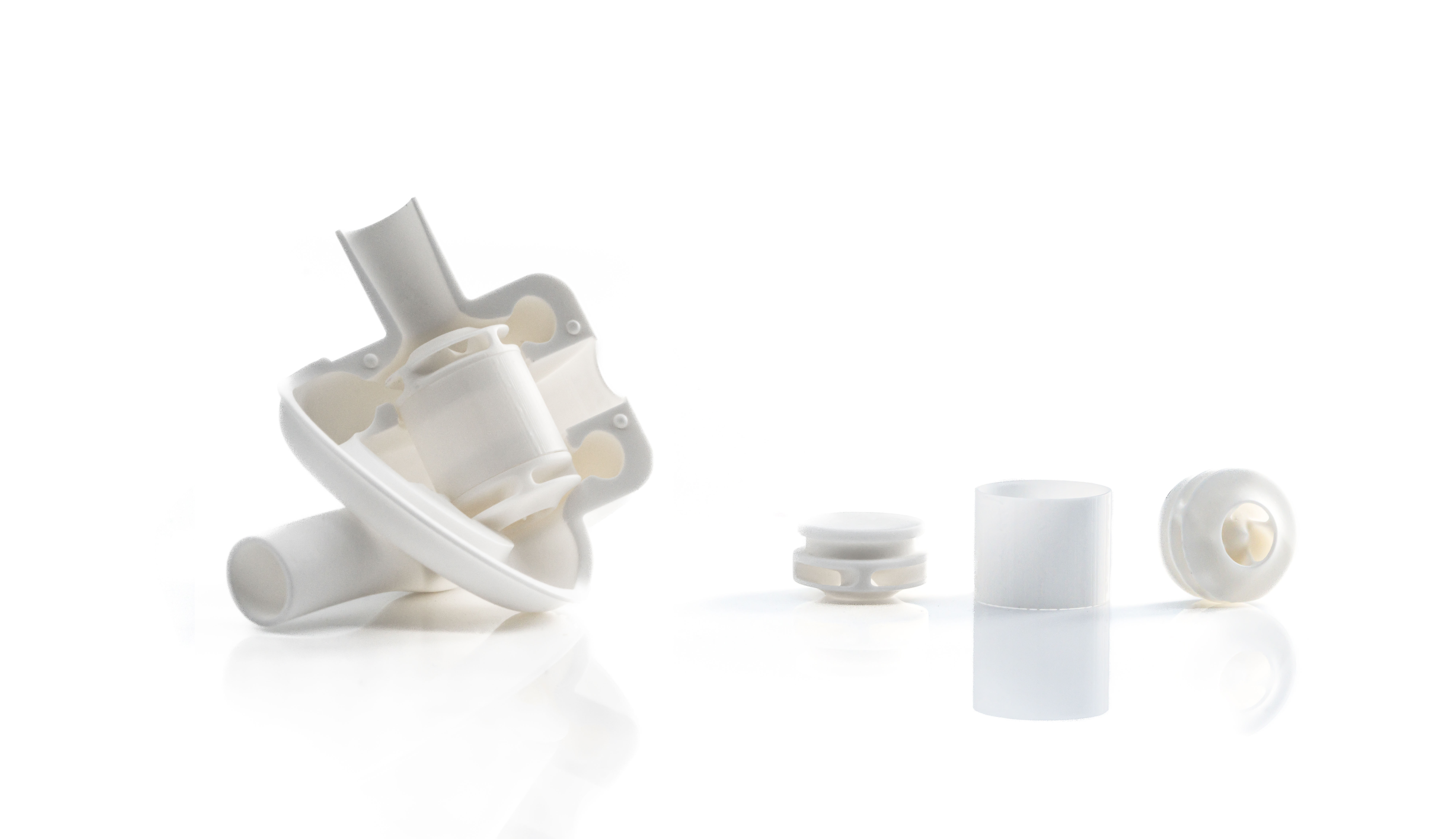
    A 3D printed transmission test tool, designed in the Toyota ADD Lab and printed on the Stratasys H350 using PA12 material. Image courtesy of Stratasys.

    The current state of additive manufacturing

    Based on observable industrial practice, several statements about the current state of additive manufacturing can be made without speculation.

    Additive manufacturing is established across a range of production niches in which it delivers clear functional or logistical value. These niches are well documented and, in many cases, supported by formal qualification frameworks.

    Adoption remains uneven across industries and applications. Additive manufacturing is deeply integrated in some supply chains while remaining peripheral in others, even within the same sector. This variation is best explained by differences in regulatory exposure,

    production volumes, economic constraints, and organizational readiness rather than by differences in awareness or technical maturity.

    Current industrial efforts focus less on expanding capability and more on stabilizing processes. Monitoring, documentation, traceability, and integration with enterprise systems are receiving increasing attention. In many organizations, the primary work associated with additive manufacturing is no longer experimental development but operational management.

    Across these contexts, system-level factors such as qualification, post-processing, data handling, and organizational alignment exert greater influence on outcomes than incremental improvements in machine performance. This reflects a shift from technology exploration toward industrial normalization.

    Implications for future development

    Looking ahead, the same forces, challenges, and industrial responses that explain the past and present of additive manufacturing also provide a grounded way to think about its future. This does not require forecasts or advocacy. It requires attention to how constraints are managed over time.

    Progress is likely to be shaped less by headline technical advances and more by how effectively organizations handle structural limitations. As additive manufacturing systems mature, innovation increasingly occurs at the level of process control, qualification strategy, software integration, and organizational learning. Improvements in machine capability will continue, but they are unlikely to eliminate the constraints associated with regulated production, economic evaluation, and system integration.

    External forces are also likely to exert greater influence on how additive manufacturing is used than on what it can technically achieve. Geopolitical shifts, supply chain restructuring, and industrial policy decisions affect risk tolerance, sourcing strategies, and investment priorities across manufacturing sectors. These forces do not inherently favor additive manufacturing, but they shape the context in which decisions are made and can increase the relevance of flexibility, localization, or redundancy under certain conditions.

    Patterns of innovation are therefore likely to remain uneven. In some cases, progress will be driven by advances in materials, processes, or software. In others, it will come from faster iteration, system scaling, and tighter integration of existing technologies. New entrants may succeed not by redefining the underlying physics of additive manufacturing, but by compressing learning cycles and industrializing known approaches more effectively. This reflects a shift in where competitive advantage is created rather than a break with earlier innovation.

    Taken together, these dynamics suggest that additive manufacturing will continue to evolve as a specialized and increasingly normalized production route. Its role will be defined by where its strengths align with real constraints, such as performance requirements, lead time pressure, qualification regimes, and organizational capability, rather than by expectations of broad replacement or disruption.

    This perspective does not point toward a single outcome. It points toward continuity, with additive manufacturing advancing through accumulation, adaptation, and selective integration, shaped by forces that are largely external to the technology itself.

    The DLR Future Lab for Additive Manufacturing & Engineering at the ARENA2036 research campus. Image courtesy of DLR (CC BY-NC-ND 3.0).

    Additive manufacturing occupies a mature and clearly defined position within modern industrial practice. It is neither a nascent technology awaiting a breakthrough nor a universal solution. Its strengths and limitations are well documented, and its development has been shaped largely by forces external to the technology itself.

    This article has focused on additive manufacturing at a structural level. It has examined how the technology has developed, which forces have shaped its adoption, and which constraints continue to define its industrial role. It has not attempted to compare specific technologies, assess individual vendors, or evaluate market size or growth projections. The intent has been to establish context that explains why additive manufacturing looks the way it does today, why adoption patterns differ across industries, and why progress often appears slower or more fragmented than early expectations suggested.

    I am now in my third decade of work in additive manufacturing and have observed much of this development firsthand. That experience does not alter the conclusions but reinforces the article’s central point. Understanding additive manufacturing requires separating capability from applicability, interest from deployment, and potential from constraint. A fact-based, framework-based view provides a more reliable basis for industrial decision-making than enthusiasm or skepticism alone.

    Ulf Lindhe. Image courtesy of The Org.

    About the Author:

    Ulf Lindhe is a veteran executive in the additive manufacturing industry with decades of experience spanning technology development, industrial strategy, and global market expansion. He has held senior leadership roles within the metal additive manufacturing sector, contributing to the commercialization and international growth of advanced AM systems. Over the course of his career, Lindhe has worked closely with aerospace, medical, and high-performance engineering companies, helping bridge the gap between technological capability and practical industrial deployment.
  • Everything is Connected: Cisco’s Samuel Pasquier Explains the Relevance of the IIoT Revolution to AM’s Growth Trajectory

    On its own, additive manufacturing (AM) may not need a new round of record-setting investment in order to move to new heights of scalability (whether or not any investors would even be willing to foot such a bill). But it is highly likely that, as part of a global transition towards anchoring the manufacturing sector in networks defined by industrial internet of things (IIoT) capabilities, the AM industry’s next phase of growth will depend on the effectiveness of investments in AI-ready factory infrastructure.

    I recently wrote about this topic in a post about the 2026 State of Industrial AI report from global networking hardware giant Cisco, which found that the ROI for AI spend in manufacturing is heavily determined by a given enterprise’s cybersecurity and networking readiness prior to incorporating AI into its workflow. To sum up: if you want to truly benefit from AI adoption, then before you even start integrating new software platforms, you need to have a structured plan in place across all your operations that takes into account the additional bandwidth and hardware requirements necessary to give AI legs in your work environment.

    While those findings are conducive to selling Cisco products, I think that they also happen to align with the economic reality of the moment, and they also align with what AM industry professionals have noted for years when combating 3D printing overhype. We’ve heard over and over again how “AM isn’t plug-and-play,” so when it’s sold like it is, customers are bound to be disappointed. Samuel Pasquier, the VP of Product Management for Cisco’s IoT Industrial Networking Portfolio, explained to me in a recent interview that AI isn’t exactly plug-and-play, either:

    “Historically, manufacturers have treated the network like electricity: you plug it in, and it just works. This has led to networks being built in a very organic, unstructured way where security is an afterthought rather than a core component,” Pasquier began.

    “But with modern use-cases, the demand for performance and bandwidth is far exceeding what these legacy architectures can handle. Simply ‘plugging in’ doesn’t work anymore; you have to design the network specifically for the performance and security the process requires.”

    Essentially, evolving from using AM and other digitally-centered manufacturing technologies as peripheral add-ons to traditional core competencies, to treating them as instrument sections within an orchestra of production, manufacturers need to build on an edge computing foundation. Connecting an entire factory of not just machines, but countless sensors permeated throughout a factory, 24/7, to the cloud, is wholly unfeasible. For the processes entailed to operate smoothly at scale, businesses need to invest in server racks that function effectively as “date-centers-in-miniature” on-site.

    One reason for this is to avoid latency:

    “We often see companies deploy technology at a small scale — connecting one or two mobile robots in a single shop, for instance — and it works fine,” Pasquier told me. “But when you try to expand that to 100 robots across an entire factory, it becomes a completely different story.

    “That is when the network becomes a bottleneck. To gain the full value of technology like AI, you have to rethink the architecture to move beyond isolated stations and look at the entire system.”

    In an AM context, this is especially important when 3D printers are integral components within a smart manufacturing ecosystem, rather than simple production tools. Traceability of parts is a key value proposition for AM due to various factors that are becoming increasingly relevant in an era defined equally by geopolitical tensions and the need to decarbonize. Comprehensive part traceability demands traceability of processes, which implies a data tsunami that could drown an unprepared enterprise.

    While all of this may make AI for manufacturing sound like it comes attached with a runaway list of constantly arising hidden expenditures, it’s more like a front-loaded investment with the potential to lower long-run costs as the adopting enterprise gradually accumulates efficiency gains. In that way, again, it’s not so different from AM. Another similarity is that both can serve as industrial insurance policies. That selling point may not carry the same flash of social networking apps built for AI agents or the novelty of giving the musically ungifted the ability to make music, but there is serious potential for risk-prevention and, in turn, long-term cost savings:

    As Pasquier put it, “When you rely on paper documentation, you invite human error. By moving to a fully connected digital world, you remove that manual portion of the process. While you may have to deal with software bugs, you eliminate the mistakes that humans naturally make. If a computer system is programmed correctly, it simply gets the job done consistently.”

    More than money, when it comes to mission critical parts, that has the potential to save lives. Once more, though, you can’t simply “layer on” the capability for this level of documentation on top of a system built on a structure of paper. You need to redesign your enterprise architecture on an edge computing footing.

    Screenshot

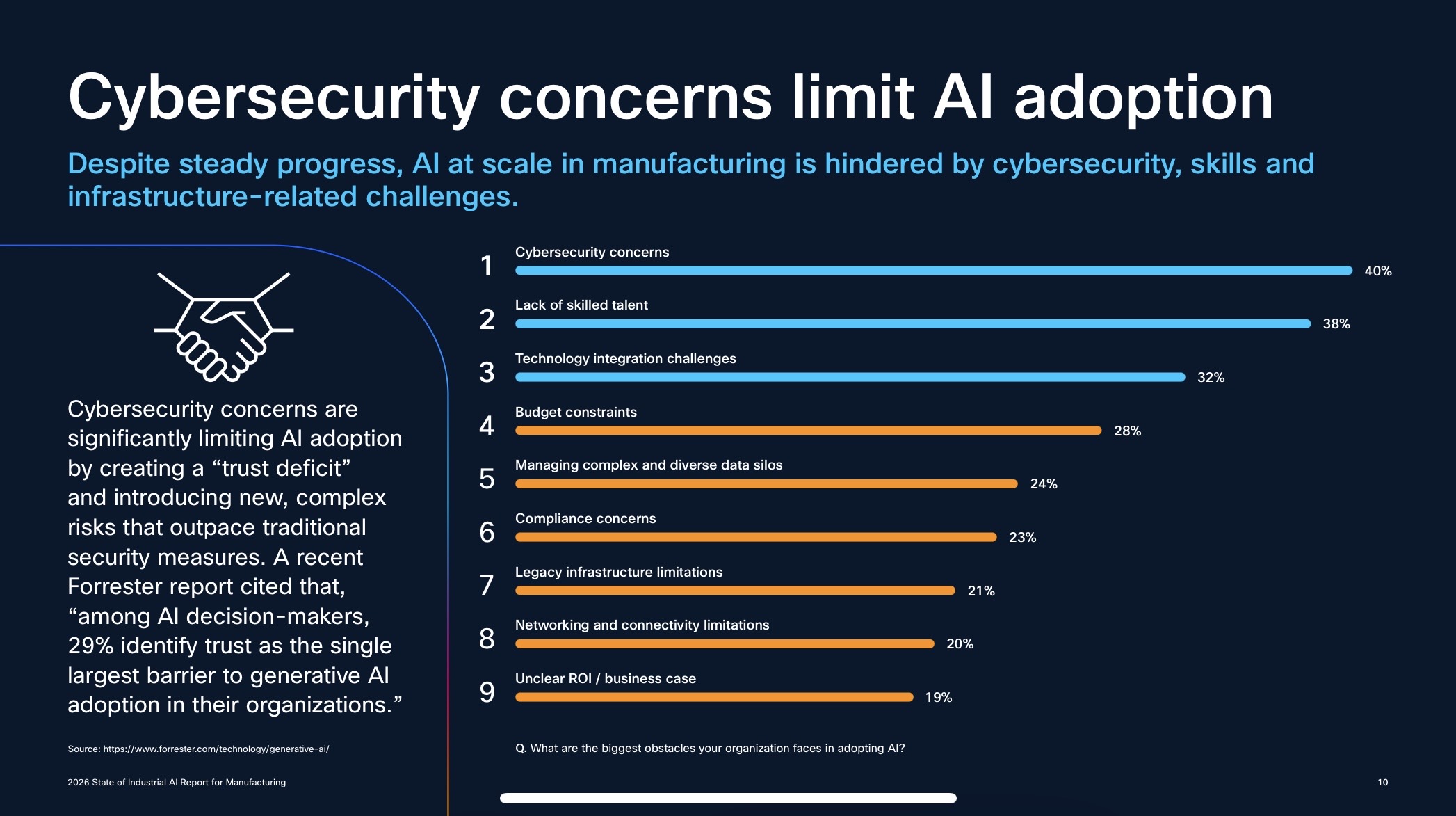
    The other major angle to edge computing is cybersecurity. To the extent that the AM industry has concerned itself with cybersecurity at all, the focus has largely been on protecting part recipes. When you’re connecting an entire factory, however, there are added, even more urgent, concerns, namely that cloud outages could lead to operational downtime, or — worst of all — that cloud vulnerabilities could result in remote hijacking of your infrastructure:

    “In the industrial world, the primary concern isn’t just losing data, or time,” Pasquier told me, “it’s losing control of the process. If a plant goes down, it is incredibly costly, but if someone takes control of the physical infrastructure, it impacts the safety of the workforce. That is the ultimate ‘red flag’ that needs to be prevented in advance. Security in this context is really about protecting the physical integrity of the overall manufacturing process.”

    The Cisco report, and my conversation with Samuel Pasquier, reaffirmed for me that for manufacturers, investing in AI has long-ceased to be a question of “if”, and is now more defined by questions of “how” and “when.” How are the most technologically-adept in the world of hardware acclimating to this new universe of software, and when will the broader manufacturing sector follow the early adopters’ lead?

    I think the networking infrastructure context does much to answer the first question. The second question will take longer to answer, because it depends upon a consistent track record in which the use-cases with the clearest path to ROI rise to the fore. But Pasquier already sees lowering the cost of product evaluation as a major driver, which is a positive sign for AM’s potential as an AI beneficiary.

    “One of the most immediate returns on investment for AI in manufacturing is in quality control. Take cement manufacturing: traditionally, they have to cure a sample cube for 30 days before they can test its strength. With AI monitoring the humidity and temperature of the ingredients in real-time, they can optimize the kiln’s energy consumption and predict the quality of the batch 30 days in advance. They no longer have to wait a month to know if the product is up-to-standard. And that same logic applies to things like weld penetration, or paint quality, say, in any high-end manufacturing environment.”

    Finally, while AI may mean more automation, manufacturing stakeholders also need to keep in mind that in any change management scenario—especially one that centers around substituting a new technology for human agency—implementation can only be as effective as the quality of the human talent responsible for managing the change:

    “AI is not going away,” Pasquier concluded. “The writing is on the wall; its presence in the factory is only going to increase. The real question now is how fast a company can move. Success depends on having the right people to deploy these use-cases and the right infrastructure to support them securely.”

    Images courtesy of Cisco

  • Nikon AM Synergy Gets Defense Innovation Unit FORGE Contract

    Nikon AM Synergy has received an Other Transition Agreement (OTA) contract from the U.S. Department of War (DoW) Defense Innovation Unit (DIU). The Foundry for Operational Readiness and Global Effects (FORGE) contract is aimed at increasing the use of metal parts on airborne systems and replacing cast parts. FORGE is aimed at high volume, high criticality, scaled-up manufacturing solutions. Nikon AM Synergy’s Long Beach headquarters will handle the contract.

    DIU Program Manager Derek McBride stated,

    “The DIU is excited to partner with Nikon AM and leverage their extensive engineering, manufacturing and qualification capabilities as we work to expand production capacity and alleviate aeronautical component bottlenecks.”

    Nikon AM Vice President of Technology Dr. Behrang Poorganji said that,

    “Nikon AM is uniquely positioned to support the DIU through Nikon AM Synergy’s comprehensive design and materials qualification capabilities combined with our industry-leading, Nikon SLM Solutions’ laser powder-bed fusion AM systems and advanced Nikon inspection capabilities, all operating together under stringent manufacturing requirements in our Long Beach facility. As we continue to execute our holistic approach to deliver vital manufacturing capabilities to the United States and allied partners, we are proud to support the DIU in accelerating adoption and scaling of AM to strengthen warfighter readiness.”

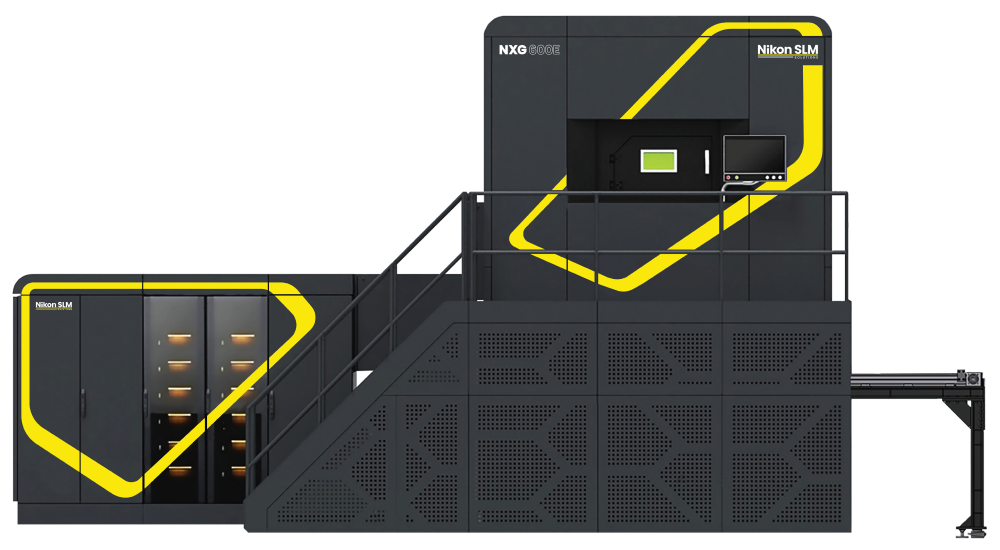
    NXG 600E. Image courtesy of Nikon SLM Solutions.

    The US government is accelerating its public deployment of funding for scaling up additive. Whereas initially defense money from the AFRL and Navy was all about qualification, materials, or technology development, now funding is moving towards production. We know that there are still qualification bottlenecks. Especially in taking a lot of 2D (and some kind of CAD but we don’t know which) parts into production, there is still a lot of work to be done. Materials may be suited and processes may be applicable, but turning a geometry into a working design still requires a lot of manual labor and knowledge. It would be wrong of us to just simply march onwards to production while forgetting this. If we look just at the military, they have millions of parts that have been made with many processes and materials across decades. Filtering these would take ages, and making them work would also be a considerable amount of work.

    Having said that, to look beyond the now and into the future, production will be a bottleneck as well. LPBF is great at making precise geometries in a machine along with a bunch of subsequent steps and optimization. To lower costs will require a rethinking of the economics of the process. Machine costs, speed, powder costs, and build volume, but also turnaround costs on machines, maintenance, and file handling matter. Any money spent on reducing these costs is well spent.

    The DIU previously gave money to Velo3D for rapid qualification for LPBF parts. This particular FORGE solicitation was first published just ten months ago, so this is light speed stuff for the government. And that is what the DIU is setting out to do here. It wants to make the government move faster on defense and the future of defense. The DIU says that it wants to “rapidly prototype and field dual-use capabilities that solve operational challenges at speed and scale.” To leverage the industrial might of the US and partner countries in delivering on defense innovation is a smart idea. Especially in scale and cost-driven solutions or new technologies, the market could deliver much faster than existing pathways. In terms of scaling up additive, we are expecting much more money to flow in the coming months. Hundreds of millions will be spent over the next year in scaling up the technology for defense in the US. This is a win for Nikon, but there will be many more for our industry in the coming year.

  • The AM Applications Game: Where Additive Manufacturing Is Actually Winning

    When Additive Manufacturing Research (AM Research) announced its upcoming webinar, “3DP/AM Market Insights: 2025 Review and 2026 Preview,” it pointed to a key issue for the industry: which sectors are truly driving additive manufacturing (AM) adoption today.

    The discussion comes at a time when the AM industry is still navigating several turbulent years, including consolidation, bankruptcies, and changes in investment trends. Even with these changes, the industry is still expected to grow. Most forecasts show the global AM market will continue to expand. In fact, AM Research estimates the global AM market reached about $15.9 billion in 2024 and could expand to roughly $57.8 billion by 2033.

    Featured image courtesy of GE Aviation: The GE90 is one of the world’s most powerful jet engines. GE plans to produce 100,000 3D-printed components for the next-generation GE9X and Leap models.

  • The Blueprint for Industrial Serial Production

    Lithoz is kicking off the 2026 trade fair season with a powerful showcase of real-world applications of ceramic AM serial production capabilities alongside new material upgrades.

    The company is stepping into the spotlight at RAPID+TCT and ceramitec 2026, showcasing a compelling vision for the future of ceramic 3D printing in serial production. Their portfolio spans a remarkable range of industries, from aerospace and semiconductors to GreenTech, MedTech, and dental applications – illustrating how advanced ceramics are reshaping multiple sectors with precision and performance.

    At the heart of Lithoz’s innovation lies Lithography-based Ceramic Manufacturing (LCM), a technology that serves as a robust backbone for high-performance ceramic additive manufacturing. Supported by a global network of expert LCM contract manufacturers, Lithoz offers a solid blueprint for how to fully tap into the potential of high-performance ceramic AM.

    RAPID+TCT will see Lithoz’s booth (1721) become a showcase of cutting-edge applications. Among the medical and dental standout exhibits are hydroxyapatite cranial and zygomatic implants, alongside ear ossicle implants, each a testament to the superior qualities of LCM ceramics. These implants are patient-specific, biocompatible, and bioresorbable, boasting thermal properties that surpass those of conventional titanium alternatives.

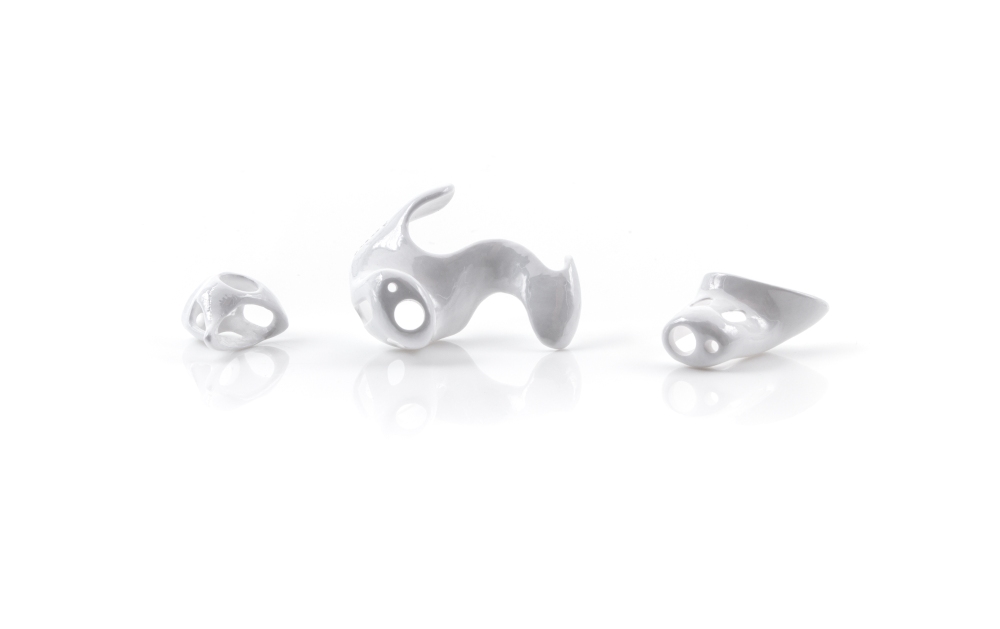
    Adding to this, Lithoz unveils its latest material breakthrough: medical-grade Alumina-toughened Zirconia (ATZ). The world’s first 3D-printed ceramic earmolds for hearing aids, produced in series by German service provider CADdent and designed by Swiss specialist OC GmbH, demonstrate how ATZ combines biocompatibility with unmatched durability, wear resistance, and acoustic neutrality – qualities that polymers or titanium cannot match. The versatility of ATZ extends further, with various surgical tools and shavers also on display.

    The dental sector is equally well represented. Visitors will find 132 zirconia dental implants printed on a single CeraFab platform, alongside crowns and orthodontic brackets crafted from lithium disilicate or translucent alumina. The medical lineup is completed by innovations such as silicon nitride spinal cages and a pediatric blood pump, underscoring Lithoz’s commitment to pushing the boundaries of ceramic applications in healthcare.

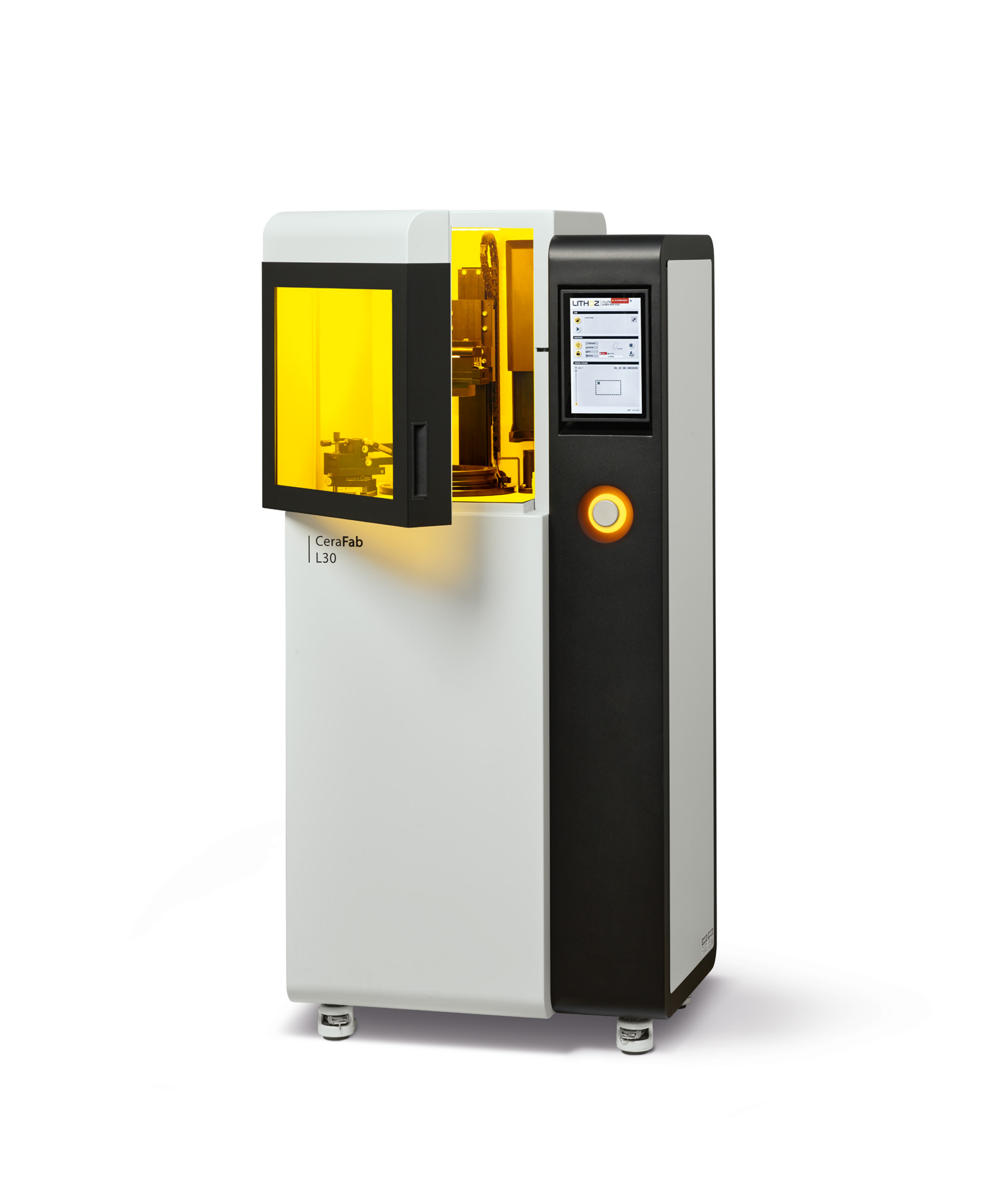
    For those curious about the technology itself, the CeraFab Lab L30 will be running a live demonstration at the booth. This compact, flexible lab printer boasts a build volume of 76 x 43 x 170 mm, ideal for prototyping and research, with a lateral resolution of 40 µm and layer thickness down to 25 µm, delivering exceptional detail and surface quality.

    Turning to industrial applications, Lithoz shines a spotlight on sintered Aluminium Nitride (AlN) cooling plates designed for the semiconductor industry. These intricate components, measuring up to 100 x 100 mm, feature finely integrated channel networks with gyroids and lattices, showcasing how ceramic materials can revolutionize thermal management in high-performance ecosystems. Another highlight is a 15-inch atomic layer deposition (ALD) ring engineered by Plasway and manufactured by Alumina Systems. This component ensures constant gas flow and pressure, tripling production output and increasing uptime from one to nine months – a game-changer for semiconductor manufacturing.

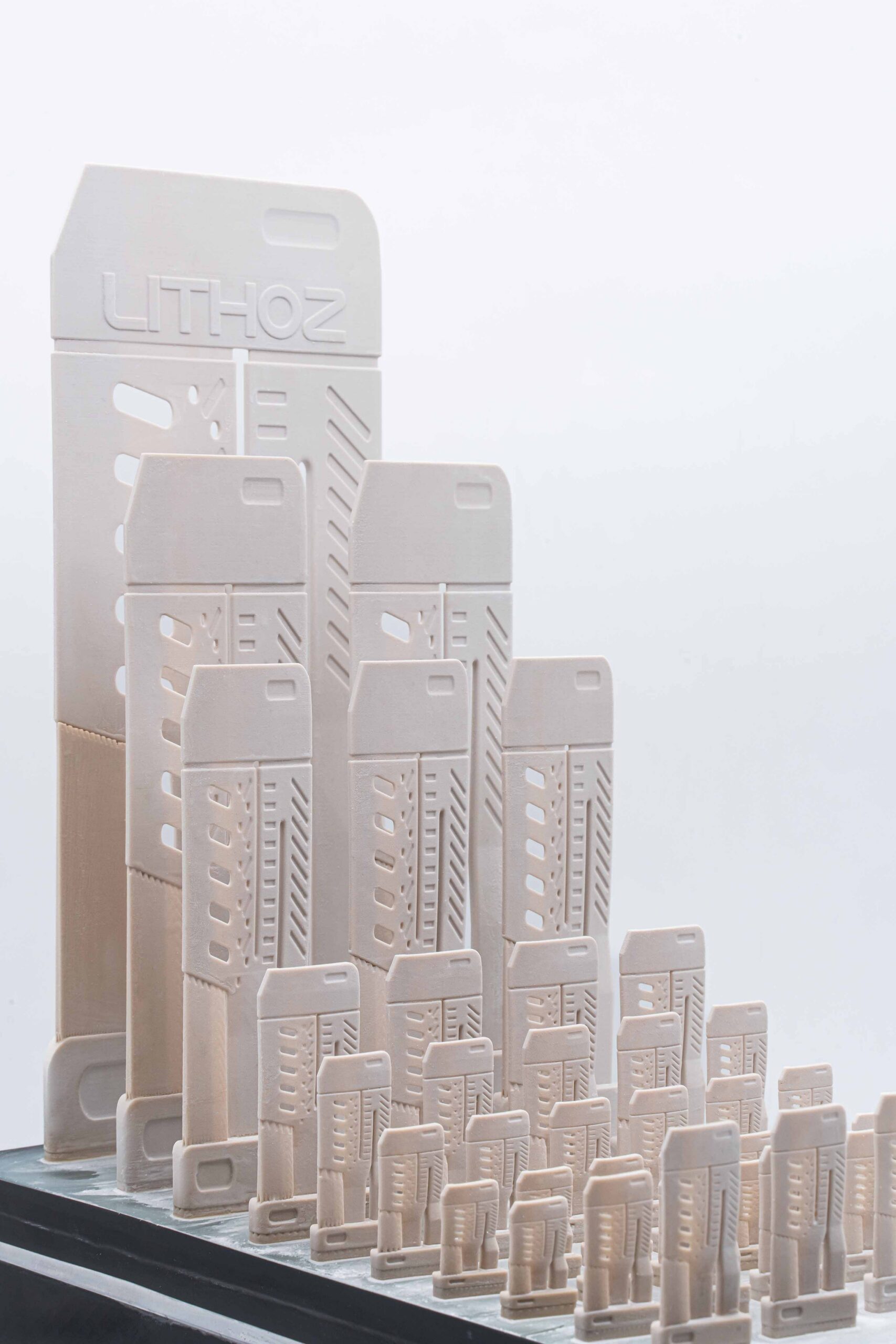
    The booth also features 46 ceramic casting cores printed on a single S320 platform. These complex cores enable the creation of single crystal turbine blades with more ultra-complex cooling channels, critical for raising the high-pressure turbine inlet temperature needed in next-generation engines. This application has already garnered attention, with Safran Aircraft Engines investing in multiple CeraFab System printers to scale serial production for this demanding sector.

    At ceramitec, Lithoz will also highlight these functional applications (hall A6, booth 233), reflecting the growing momentum of the “Ceramic 3D Factory” initiative. Visitors can explore a broad range of components produced by Lithoz’s partners and contract manufacturers worldwide, all leveraging LCM technology.

    A major highlight at ceramitec will be the launch of three new variants of Lithoz’s most popular ceramic materials, specially optimized for industrial serial production:

    • LithaLox (high-purity Alumina) now offers wall thicknesses up to 12 mm and an increased solid loading of 55 Vol%,
    • LithaCon (Zirconia) features enhanced fracture toughness, improved cleanability, and a significantly increased Weibull modulus,
    • Medical Grade LithaCon ATZ delivers perfect biocompatibility, wall thicknesses up to 17 mm, and an impressive bending strength of 993 MPa.

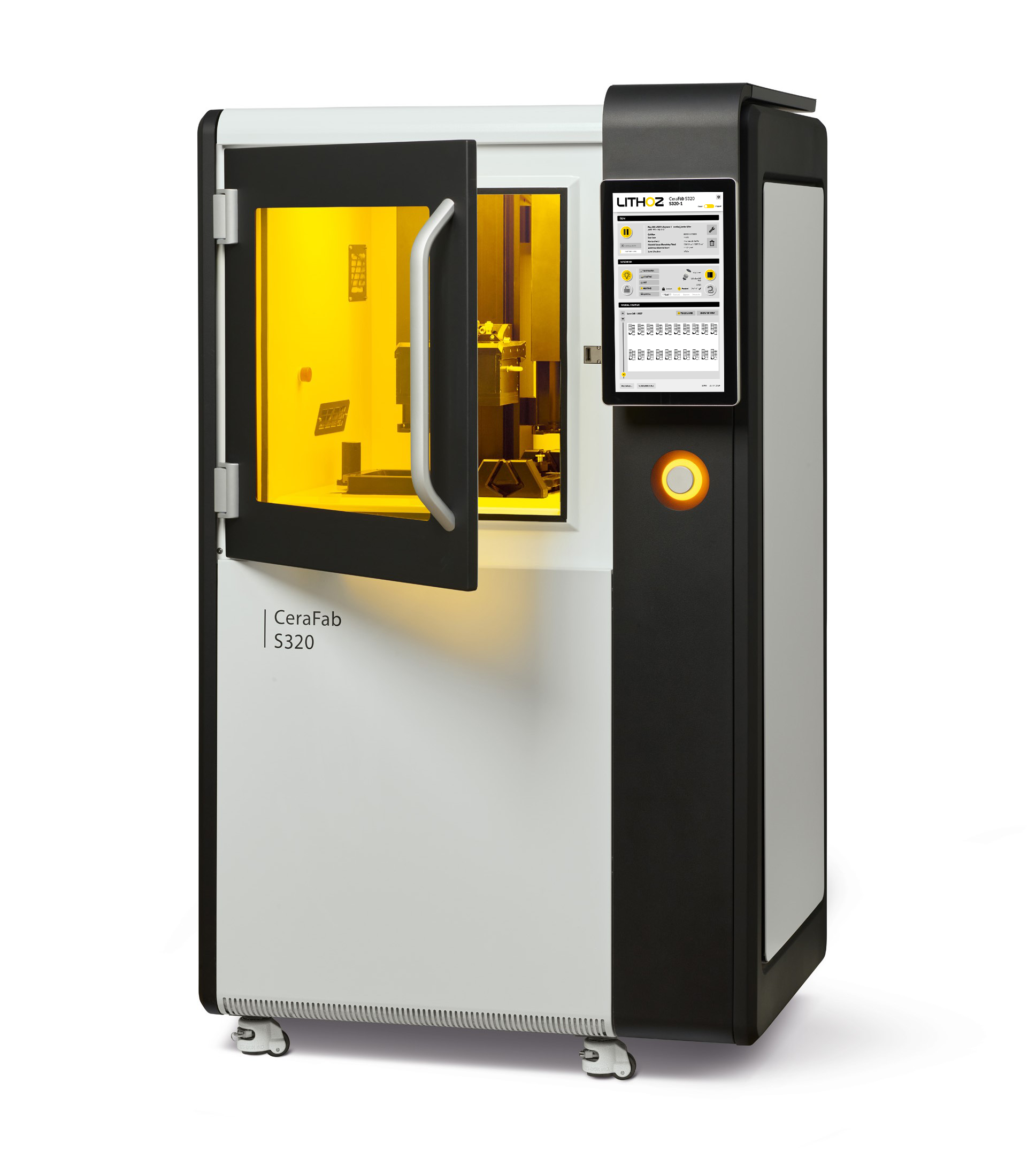
    The presentation culminates with a live demonstration of the new CeraFab S320 printer. With a build volume of 246 x 130 x 320 mm, five times larger than its predecessor, the S65, this machine boasts a premium 4K projection system and a 60 µm resolution, setting new standards for precision and scale in ceramic 3D printing.

    Together, these showcases at RAPID+TCT and ceramitec 2026 offer a vivid glimpse into the future of ceramic additive manufacturing, where innovation meets industrial readiness, and where materials science and digital production unite to unlock new possibilities across industries.

  • 3DPOD 295: From Product to Design at Carbon, with Kristi Eveland Smith

    Kristi Eveland Smith started as a competitive soccer player before moving into consulting, operations, and 3D printing. She’s now Vice President, Design to Production at Carbon 3D and has been with the firm for over 12 years. It’s been a crazy ride for Carbon over time, and Kristi takes us from the very early days through scaling, growth, and the changes in strategy and approach the company has undergone. We talk about Carbon today, what the company wants to do, and its role in sports equipment, dental, and beyond.

    This episode of the 3DPOD is brought to you by Siemens. With AI-enabled technologies, deep-domain expertise, and trusted partnerships, Siemens is converting today’s technological leaps into measurable benefits for customers, partners, and society. AI is no longer a feature; it’s a force that will reshape the next century.


  • Nonprofit “3D Printing Elves” Sees Demand Surge After Viral TikTok

    A nonprofit in California is suddenly seeing a huge spike in demand for its 3D printed toys after a teacher’s TikTok post brought attention to the group’s work.

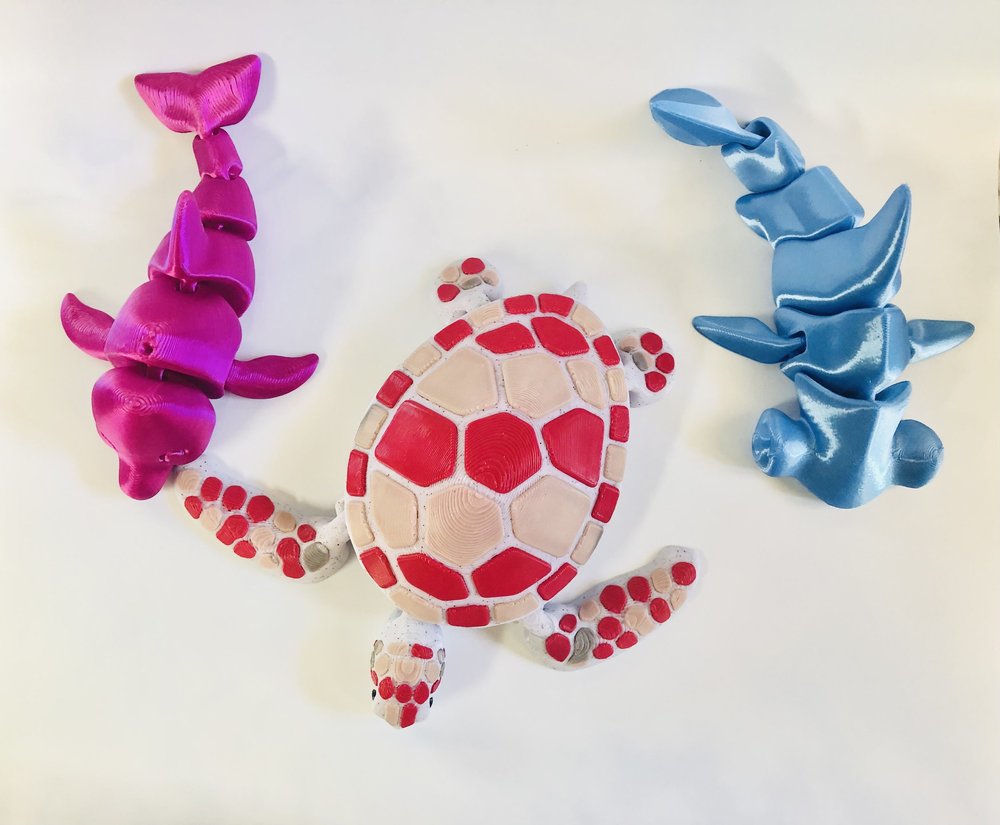
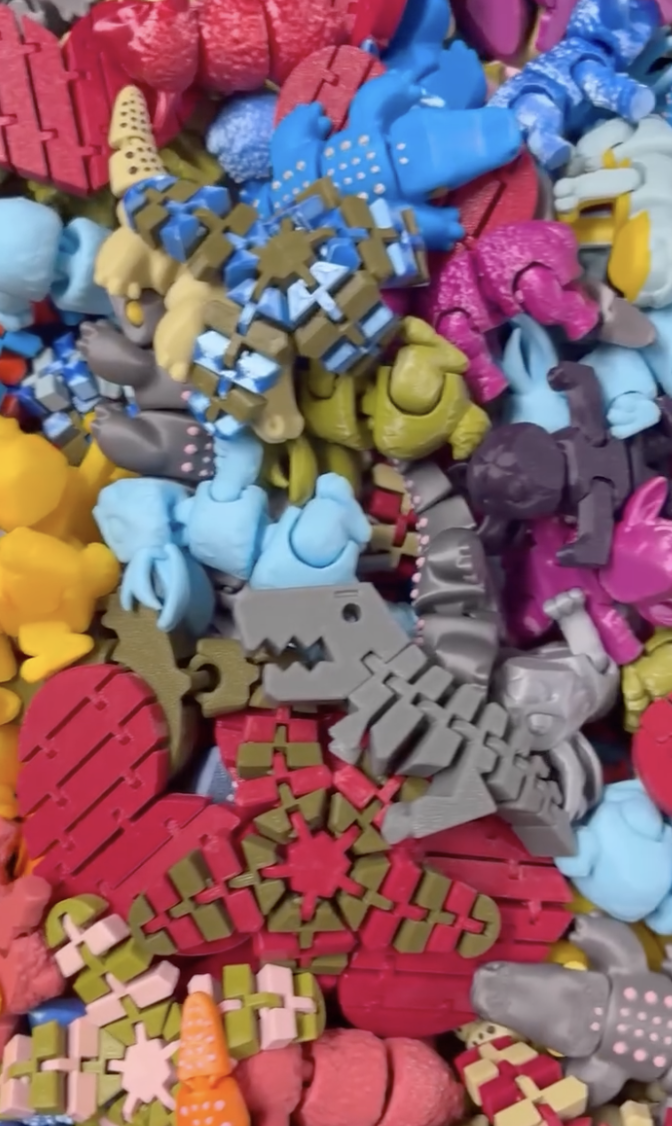
    The Fresno-based organization, called 3D Printing Elves, makes free toys for children. Using desktop 3D printers, they create colorful, articulated animals and other small toys, which are then donated to schools, shelters, and other community programs in the area and in Madera County.

    Recently, however, demand for those toys jumped dramatically.

    The surge began when Speech Language Pathologist Bailey Parks from Fresno Unified School District posted a TikTok video praising the nonprofit and telling users that 3D Printing Elves gave her more than 440 3D printed fidget toys for her school. In the video, the teacher shared how the toys could help students, especially those who benefit from sensory items in the classroom.


    @haybails0602

    This company was so amazing to work with! Thank you 3D Printing Elves! #freeresource #education #centralvalleyca

    ♬ original sound – Bailey

    The post quickly gained attention online. Within days, the nonprofit began receiving thousands of requests for toys.

    For a group that normally produces about 16,000 toys a year, the sudden surge was overwhelming. So much so that 3D Printing Elves had to post a notice at the top of its website explaining how it will prioritize requests: “Due to the high volume of toy requests, we have decided to prioritize delivery of toys.”

    The group says it will focus first on requests from Fresno and Madera counties, then on nearby counties in California’s Central Valley, before fulfilling requests from the rest of the state. The notice also highlights the scale of the challenge. The nonprofit says that as of February 23, 2026, it had already received more than 50,000 toy requests, meaning some people may face long delays before their requests are fulfilled.

    3D printed toys from 3D Printing Elves.

    Printing Toys for the Community

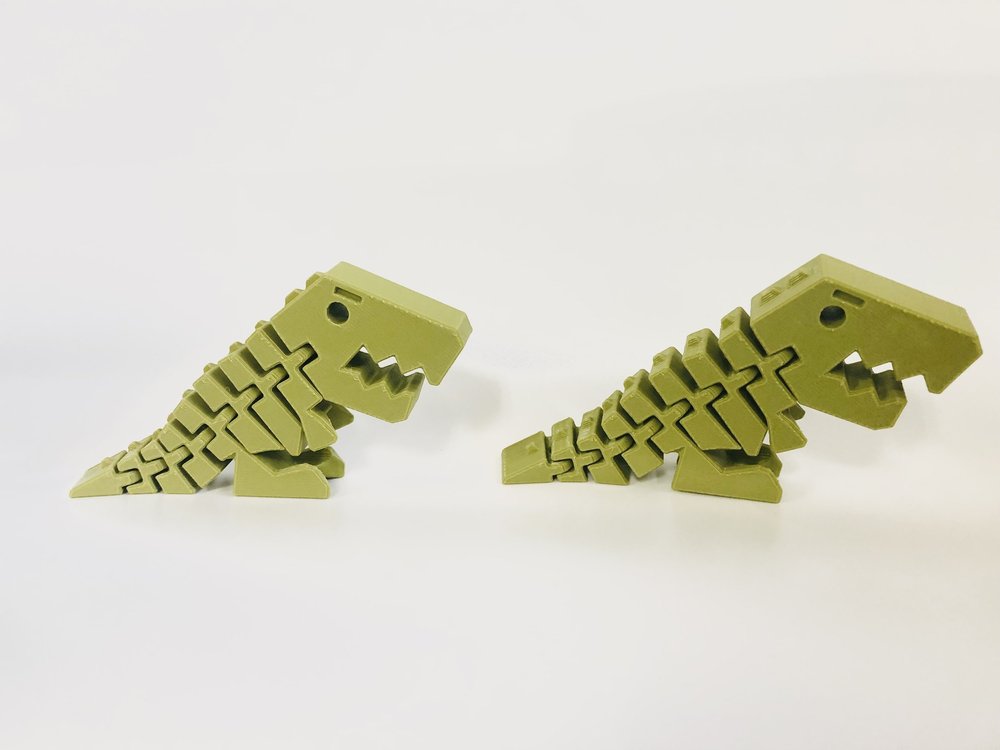
    3D Printing Elves was created during the COVID-19 pandemic by Vincent and Allyson Wall, a couple from Fresno who began using their home 3D printers to make toys for local children. Using several desktop 3D printers, volunteers produce a variety of toys, including dragons, sharks, dinosaurs, butterflies, and toy cars.

    3D printed dinosaurs from 3D Printing Elves.

    Many of the toys are articulated designs that move when handled, making them popular as sensory items. Teachers often use them in classrooms to help students focus or relieve stress. What’s more, the toys are handed out for free to children in local schools, shelters, and foster care programs. It’s all part of the group’s mission to help ensure that children in underserved communities have access to simple toys and opportunities to play.

    But producing the toys takes time. Each one can take around 90 minutes to print, depending on the design. The toys are typically made from PLA filament, so a single spool of filament can produce dozens of toys, and the nonprofit estimates that each toy costs just a few dollars in materials.

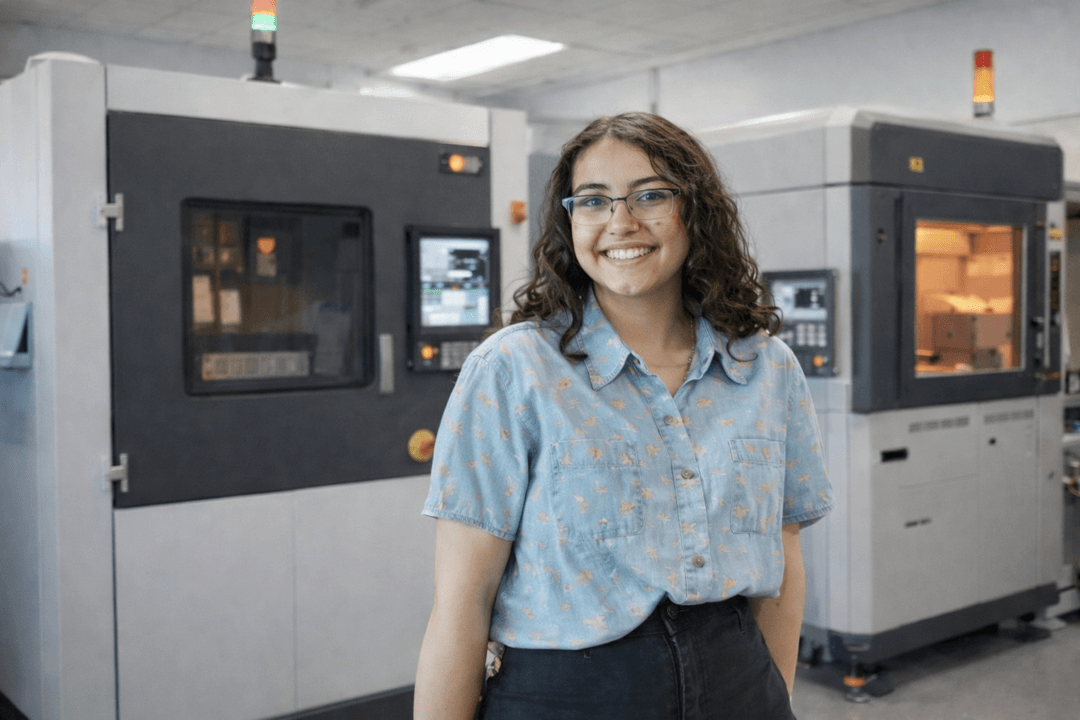
    Teachers receive 3D printed toys from 3D Printing Elves.

    Viral Attention Brings a New Challenge

    While the viral TikTok post, which already surpassed 45,900 views, helped bring attention to the nonprofit’s work, it also created a new challenge.

    3D printed toys from 3D Printing Elves.

    Requests quickly grew beyond what the group could realistically produce with its printers and volunteers. Since each toy takes more than an hour to print, fulfilling tens of thousands of requests is a big task for a small nonprofit. However, the organization has continued to print as many toys as possible while encouraging patience from teachers and parents who have placed requests.

    At the same time, the attention has helped more people learn about the nonprofit’s mission. Some community members have offered donations, while others have asked how they can volunteer or help by printing toys themselves.

    The nonprofit has also received support from several companies connected to the 3D printing industry since it began. On its donor page, the organization lists contributions from members of the broader maker and additive manufacturing community, including companies such as Bambu Lab, Prusa, LulzBot (now operated by FAME 3D), Slice Engineering, EPAX3D, and West3D. Other contributors listed include groups and businesses within the maker community, such as Vitali3D, Armor3D Printing, Leemerie3D, Cartographer 3D, Wally 3D, Additive Attic, and 3D Print Bunny. Support from companies like these can include donated equipment, materials, or other resources that help the nonprofit continue printing toys for children.

    Projects like 3D Printing Elves show another meaningful use for 3D printing. Using affordable desktop printers, volunteers can create toys locally and share them with children in their communities. What started as a simple idea is now helping bring small moments of joy to thousands of kids.

    Images courtesy of 3D Printing Elves

  • 3D Printing News Briefs, March 14, 2026: Student Grant, Automation, DfAM, & More

    In this weekend’s 3D Printing News Briefs, we’ll start with event sponsor and competition news from Dyndrite, and then move on to a new metal 3D printing system from Eplus3D. 3D People is using AMIS Runtime at its London production facility. Finally, Metamorphic AM is working to make DfAM expertise more accessible.

    Dyndrite Sponsoring ICAM 2026 at Leader Level, Launches Student Competition

    Industrial AM software provider Dyndrite recently made two big announcements regarding this year’s International Conference on Advanced Manufacturing (ICAM) by ASTM International. First, the company will sponsor ICAM 2026 at the Leader Level for the second year in a row. The event will be held in Orlando, Florida from September 28-October 2, and Dyndrite will showcase its laser powder bed fusion (LPBF) software platform there, as well as deliver technical presentations. Additionally, Dyndrite has launched a global student competition focused on LPBF research as part of ICAM 2026. University students from North America, Japan, Europe, Singapore, and Korea are challenged to leverage Dyndrite LPBF Pro software to rethink what’s possible in metal AM and explore more design freedom and novel toolpath strategies. This is an industry-sponsored competition, but designed and administered by Dyndrite, which will also select the winners and announce them at ICAM. A total of $10,000 in grant funding will be awarded to the winning teams or individuals in order to continue their LPBF research.

    “ICAM brings together the people and organizations that are truly pushing the boundaries of metal additive manufacturing, from industry leaders across multiple sectors to the researchers and young minds shaping what comes next. We support ICAM because it sits at the intersection of industrial reality and future innovation. That combination is critical to advancing metal AM from a promising technology to scalable, trusted production,” said Dyndrite Founder and CEO Harshil Goel.

    The contest submission deadline is 11:59 pm PST on April 15th.

    Eplus3D Introduces EP-M300L Printer and Production-Ready Automation Line

    EP-M300L Production-Ready Automation Line

    Chinese metal AM systems manufacturer Eplus3D has introduced its new EP-M300L metal powder bed fusion system, along with its production-ready automation line—a turnkey solution for high-volume manufacturing. At the heart of the line is the EP-M300L, developed for both batch and continuous production. Featuring a build volume of 300 x 300 x 450 mm, an intelligent optical system, and multi-laser configuration, the system offers high scanning speed and precision, which makes it good for industries like aerospace, tooling, and 3C electronics. The EP-M300L has a modular design, with removable build cylinder technology for high efficiency. No more waiting for powder handling and part removal: the printing module operates independently from the powder recovery station, which ensures practically nonstop production and improves Overall Equipment Effectiveness (OEE).

    The production-ready automation line centers around the EP-M300L and, as Eplus3D put it, moves metal AM “from a standalone process into a continuous, industrial manufacturing cell.” Automated stations and AGVs seamlessly connect all major processes, like printing, powder recovery, part handling, and logistics. Plus, the printer integrates with a closed loop powder system, enabling automatic suction, sieving, and powder circulation within a dedicated, inert atmosphere system. Not only does this improve safety and overall throughput, but it also decreases labor dependency and cost per part. The EP-M300L line is governed by a smart, data-centric platform, and integrates with a Manufacturing Execution System (MES). Finally, it offers in-process monitoring for full traceability, with each printed component getting a “digital birth certificate.”

    3D People Improving & Automating AM Production Workflow with AMIS Runtime

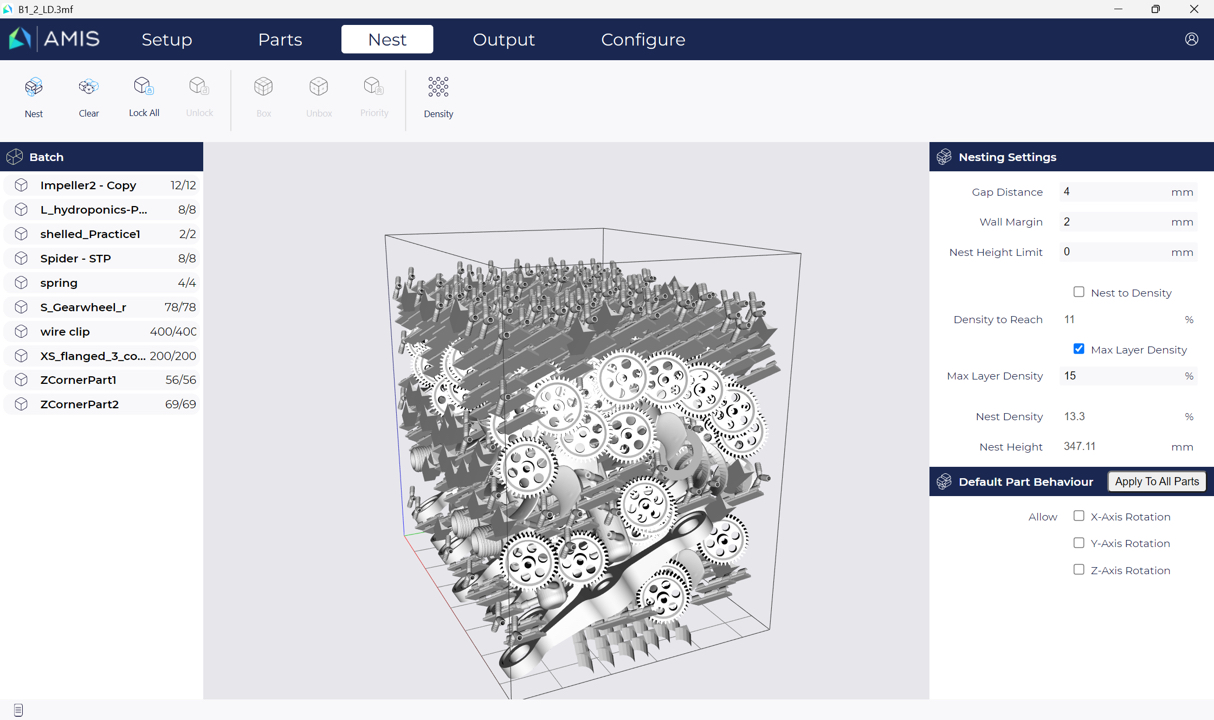
    Last year, UK additive manufacturing services provider 3D People won a grant from UK Made Smarter to work on developing and implementing an automated process for preparing, nesting, and scheduling 3D printing build jobs. Since then, it’s been collaborating with Belgian company AMIS to test the AMIS Runtime platform for autonomous build prep at its London production facility. Now, 3D People has officially deployed the platform across the facility to further automate its AM production workflow. The facility, which recently added SLS production capacity, delivers 3D printed end-use polymer parts for a variety of industries, including automotive, electronics, and marine, that require short lead times, repeatability, and on-demand scaling from prototypes to real parts. By integrating AMIS Runtime, 3D People has been able to automate build preparation, which negates some of its previous bottlenecks and helps meet these customer demands.

    “This project marked a key step in our long-term digital manufacturing strategy. It builds upon our existing MES platform, closing the loop between digital order management and physical production,” said Sasha Bruml, Co-Founder of 3D People. “The results are exciting with a more efficient, data-driven workflow that reduces human error, increases repeatability and strengthens our position as one of the UK’s leading advanced 3D printing services. The full deployment of AMIS Runtime is now reaping rewards across the whole business.”

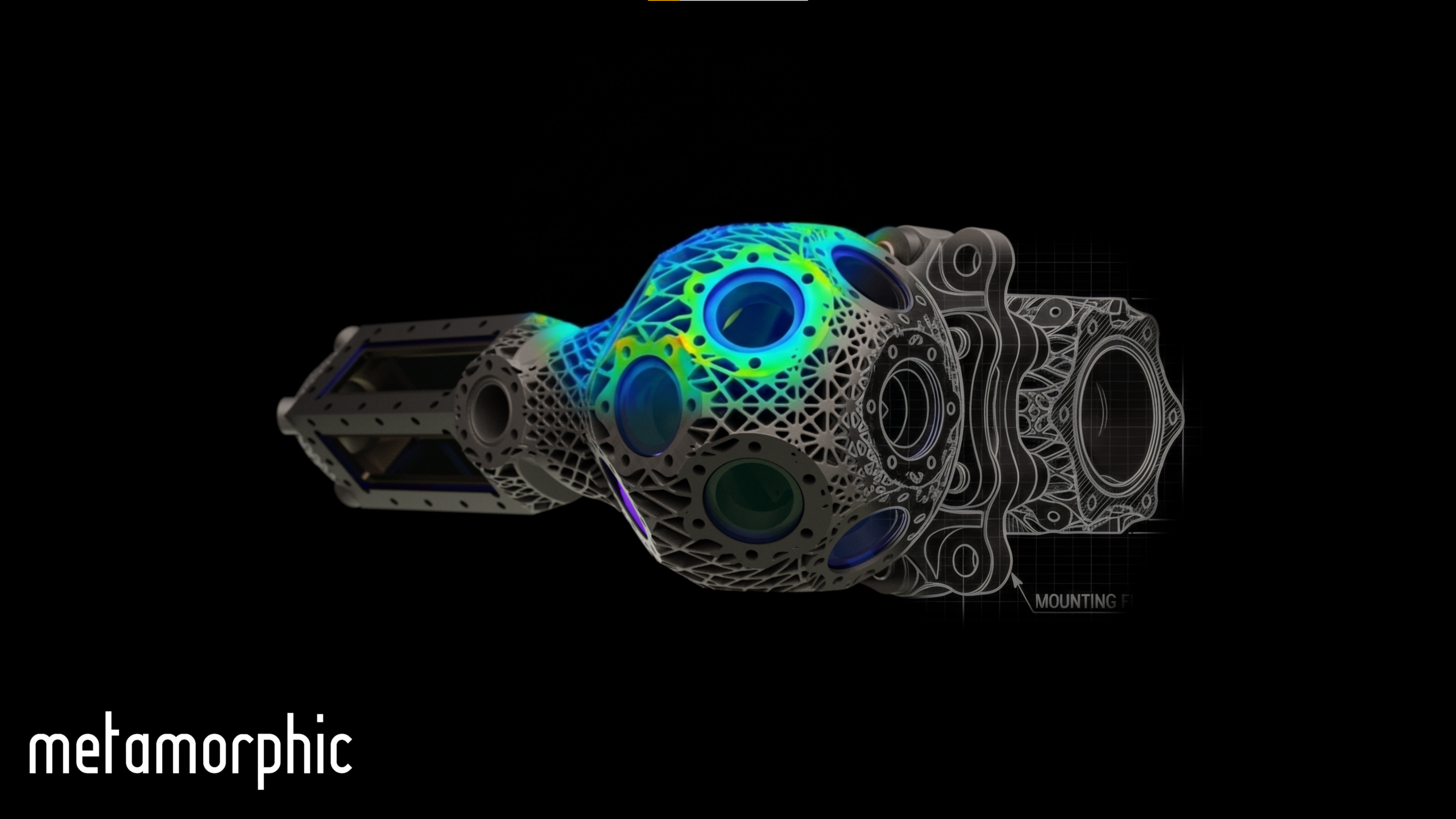
    Metamorphic AM Launches Service to Make DfAM Expertise More Accessible

    UK-based consultancy Metamorphic AM, specializing in advanced Design for Additive Manufacturing (DfAM), wants to make high-level DfAM expertise more commercially accessible. That’s why it’s launched a new service offering, called Rapid Geometry Review, to widen access to its expert offerings. Organizations can now take advantage of expert-led evaluation of their 3D designs before they commit to full production builds. The new service pairs simulation insight with applied engineering judgement to assess structural logic, printability, manufacturability, material suitability, and missed geometric opportunity of designs. This expert DfAM input will help reduce risk, speed up development, and improve return on investment (ROI), thus ushering in greater commercial viability for AM in production.

    “We’ve seen too many projects failing to add value to a product or process because design intent wasn’t fully interrogated early enough. Rapid Geometry Review brings the same engineering scrutiny we apply in major innovation programmes to a format that is faster, commercially accessible, and immediately actionable,” explained Manolis Papastavrou, Co-Founder of Metamorphic AM.

    “The difference between ‘printable’ and ‘engineered’ is where value is created. Rapid Geometry Review helps organisations close that gap.”

  • XTPL Sells First ODRA System to Silicon Valley Semiconductor Packaging Client

    One prerequisite for success in additive manufacturing (AM) is the establishment of a proven system for converting initial sales used as tech validation into future sales of higher-value hardware that’s ready for commercial scalability. This is especially true when targeting R&D-intensive verticals like semiconductors and defense, which depend on regularly transitioning new tech into routine elements of daily workflow.

    Poland’s XTPL, an original equipment manufacturer (OEM) of AM systems and materials used for advanced packaging solutions in the electronics industry, appears to have just such a formula for success. The company announced it has sold its first ODRA system, the production-level version of XTPL’s Delta Printing System (DPS), to a client in Silicon Valley that provides advanced packaging solutions for both the tech and defense sectors. Both the DPS and ODRA leverage XTPL’s Ultra-Precise Dispensing (UPD) printhead technology.

    Only a couple of weeks ago, XTPL announced it had sold a DPS system to Manz Asia, a leading global provider of advanced packaging solutions, a move that gives XTPL a foothold in the all-important Taiwanese market. Significantly, XTPL previously sold a DPS system to a Silicon Valley client in 2025, illustrating how the company is turning proof-of-concept into real potential for long-term revenue.

    As I noted in my post about XTPL’s Manz Asia sale: “The breakthroughs in advanced packaging have largely resulted from the 3D design revolution in semiconductors over the last couple of decades, which has led semiconductor device manufacturers to increasingly explore the potential advantages of stacking chips vertically instead of exclusively side-by-side. This background accounts for why it’s more and more common for additive manufacturing (AM) to be part of the conversation surrounding advanced packaging, supporting the business models of companies like Poland’s XTPL.”

    XTPL notes that the Silicon Valley client has already expressed interest in future purchases of additional ODRA systems, following installation of the first machine upon delivery in the second half of this year. The sale also serves as a reinforcement of XTPL’s evolving business model, as the company has made ODRA sales a cornerstone of its growth strategy going forward.

    XTPL CEO Filip Granek.

    In a press release about XTPL’s first sale of its ODRA system to a Silicon Valley advanced packaging supplier, Filip Granek, CEO of XTPL, said, “The first-ever order for the ODRA system is a breakthrough moment for XTPL. It provides market validation for our new business line and significantly strengthens our revenue potential both this year and over the horizon of our Strategy. With an order value of approximately USD 0.4–0.5 million per ODRA unit, the system is priced at more than twice the level of our DPS technology demonstrators.

    “Unlike DPS, which is primarily used for R&D, the ODRA system is designed for HMLV (High-Mix, Low-Volume) industrial production, attracting interest mainly from corporate clients and the defense sector. This client profile, combined with the size of the advanced packaging market, gives our new business line strong potential for multiple orders from individual buyers. Our Silicon Valley client has already indicated interest in additional ODRA systems, and we are simultaneously conducting discussions with a number of potential partners across North America, Europe, and Asia.”

    While XTPL didn’t name the Silicon Valley client, XTPL did note that the company “…is a member of a prestigious international consortium established to build an advanced semiconductor packaging R&D center in Silicon Valley…” This is likely referring to the US-JOINT Consortium launched by Japanese chemicals manufacturer Resonac in 2024, along with nine other founding members from Japan and the US.

    In any case, selling a system to a member of a consortium is an excellent move that further bears out XTPL’s ability to set itself up for future success with present sales. If the first client is happy with the ODRA, then that simultaneously serves as a vetting process for XTPL’s technology in the eyes of the other consortium members.

    This also brings up a point I made in my post about XTPL’s sale to Manz Asia: that success in Taiwan could be a fast-track to success in the US and Europe, in the context of reshoring to the West involving Taiwanese semiconductor manufacturers. The increased agility enabled by the UPD and ODRA should be a major selling point against that backdrop.

    Thus, XTPL is building a track record that displays a viable multi-pronged strategy, one where each prong catalyzes demand for the others. The two sales the company has publicly announced so far in Q1 have realistic potential to translate into the foundation of a successful long-term business model down the road.

    Images courtesy of XTPL