• INDOPACOM Advanced Manufacturing Team Saves Thousands Per Week at Joint Exercise in the Philippines

    In the summer of 2025, the US Indo-Pacific Command (INDOPACOM) opened a new advanced manufacturing facility at Schofield Barracks, the Hawaiian home of the US Army’s 25th Infantry Division. INDOPACOM gave a humble name, ‘The Forge,’ to the site, which is located in a formerly abandoned warehouse that was inhabited by feral pigs before the US military filled it with 3D printers and other advanced manufacturing equipment.

    INDOPACOM appears to now be using that same designation (‘The Forge’) to refer to the team comprised of personnel from both the Army and the Marines, which has been deployed in at least one instance to train US allied forces. At the annual Balikatan exercise, in which the US military and other Western forces participate in joint training operations with the Philippines military, the INDOPACOM unit set up a similar facility to the one at Schofield Barracks, “inside a warehouse at [a] jungle training area.”

    According to the team’s senior enlisted leader, The Forge and its partners achieved rather striking results during Balikatan: over the course of three weeks, they completed 36 different jobs, representing a savings of well over $20,000. Even more importantly, given the urgency of resupply specifically in a military context, the team cut the lead time for delivery of those parts by months.

    The original Forge facility at Schofield Barracks. Image courtesy of Defense One/Jennifer Hlad

    Regarding one use case — a batch of simple bolts for a construction vehicle, which were reverse-engineered and then 3D printed — Chief Warrant Officer 2 Kevin Ton, who commands The Forge unit, noted that ordering the parts from external sources would’ve meant a wait time of 8-10 weeks. In a live combat scenario, that wait time might as well be forever.

    In addition to more routine jobs like that one, involving a situation where the need is just to replenish an item that has run out, the advanced manufacturing specialists also demonstrated the ability to innovate on the fly. For instance, during Balikatan, the standard issue bipods that participants were using for the new Army M250 machine gun failed repeatedly. By designing a 3D printed adapter for an older, more reliable bipod model, The Forge successfully addressed the problem.

    The main limitation for The Forge was a prohibition on arms component manufacturing for foreign militaries. But even in that case, digital manufacturing solutions provide a workaround: by sharing digital files with allied militaries, allowing the latter to make the parts themselves, INDOPACOM’s advanced manufacturing specialists stay on the right side of US military regulations.
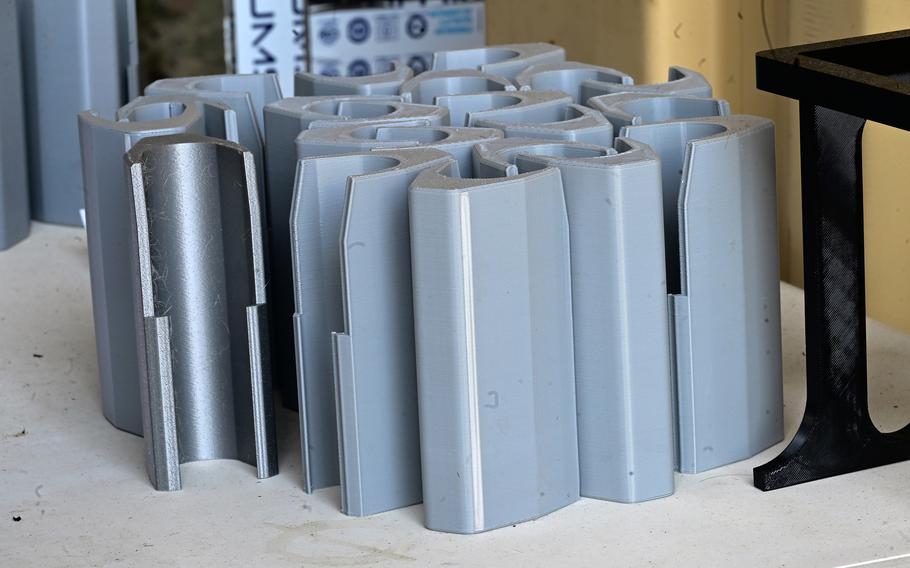
    3D printed bipod adapters. Image courtesy of Stars and Stripes 

    The Forge comes from the same Army installation housing the unit that reportedly 3D printed a lethal first-person view (FPV) drone last year for the first time, so it’s not surprising to see that it’s Schofield Barracks which is responsible for executing such a high degree of forward thinking. And it’s encouraging to see that the name ‘The Forge’ is being applied to the team, not exclusively to the facility where the team originated. This puts the emphasis where it most properly belongs: on the human know-how required to enact the strategic vision.

    Similarly, ‘Balikatan’ means ‘shoulder-to-shoulder’ in Tagalog, which, in this context, serves as another reminder that however central a role new technologies may play in the equation of expeditionary manufacturing, sufficiently trained human labor remains the key to making the whole system work. As I’ve explained in my coverage of how AM can change the semiconductor supply chain, the combination of ahead-of-the-curve human know-how and the smaller infrastructure footprint implied by advanced manufacturing equipment points to a future where technology integration services are a leading growth catalyst for the manufacturing sector.

    It would seem to not be a coincidence that the US military seems to be most interested in demonstrating this capability in the Pacific region, above all. Along those lines, the US has also been building an INDOPACOM advanced manufacturing hub in Guam. There’s no reason why what’s being done via the public sector with manufacturing for defense can’t translate to similar activity, via the private sector, in collaboration with the US’s highest-priority trading partners across China’s backyard.

    Featured image courtesy of Stars and Stripes
  • The Additive Chicken Coop, Part III: Bananas

    A friend of mine, Ed Davis, once pointed out the level of strategic replication in additive. I wasn’t aware of it before and haven’t been able to unsee it since. We can make most everything. And this is rather overwhelming. We can make implants, hearing aids, aircraft parts, toys, the mind boggles. And this vastness of possibility overwhelms us. I’ve previously called this the Van Gogh’s Blank Canvas Problem in 2013. Overcome by the sheer possibility of a blank canvas with infinite paths and outcomes, we freeze in place. This problem is not sufficiently taken into account, and I think that it is a risk to our industry. I think that the strategic replication follows from the Blank Canvas Problem. Coupled with the Additive Chicken Coop, where we all watch each other while drinking the same Kool Aid, it may be one of the most limiting factors in 3D printing. Maybe it’s not lasers, funding, revenue, or technology holding us back, but this.

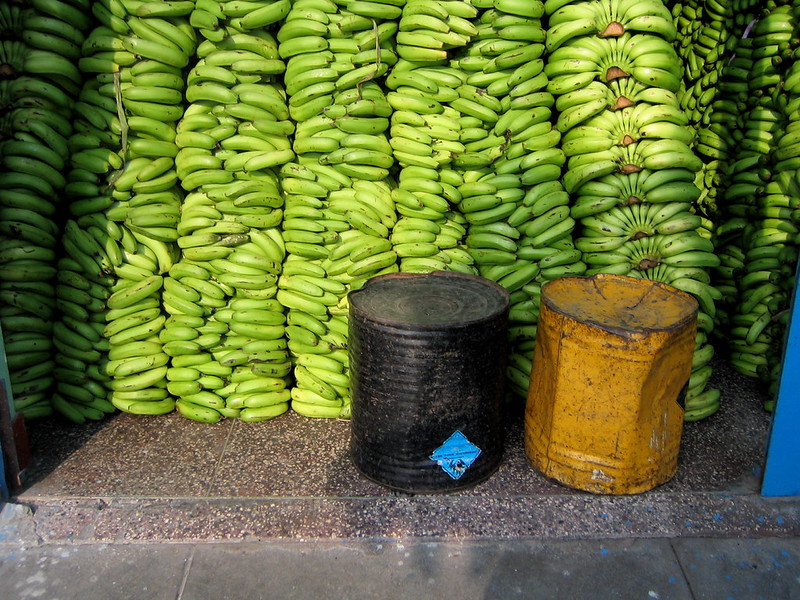
    There are perhaps over 300 and maybe a 1000 banana cultivars worldwide and over 1000 wild varieties. Bananas can be red, Blue Java bananas, reportedly taste like ice cream, while others have pink flowers. Most bananas are grown in India, followed by China, Indonesia, Brazil, and Ecuador. Tropical countries around the world grow bananas. The first domestication and first cultivars probably occurred in New Guinea. Somewhere between 8,000 and 5,000 BCE, humans began cultivating bananas.

    According to this source,

    “From New Guinea and the Philippines, bananas dispersed far and wide across the tropics, in all directions. It is probable that bananas arrived in India, Indonesia, Australia, and Malaysia, within the first two millennia after domestication. Plantains may have been grown in eastern Africa as early as 3000 BCE, and in Madagascar by 1000 BCE. The plantain had certainly reached the African continent between 500 BCE and 500 CE. Buddhist literature notes the existence of the banana in 600 BCE, and when Alexander the Great’s expeditions led him to India in 327 BCE, he stumbled across the fruit. Perhaps most surprising, the banana may have arrived in South America well ahead of Europeans, as early as 200 BCE, carried by sailors of Southeast Asian origin. By the 3rd century CE, plantains were being cultivated on plantations in China….By the 1200s, the banana had reached into North Africa and in Moorish-controlled Spain. It is also likely that Islamists carried the banana from eastern to western Africa.”

    This is a completely insane development by the way. The spread, so early and so wide, of the banana, along with humans, has made it an important companion throughout much of human history. Plantains, meanwhile, are in the same genus but have a different taste, are used in cooking rather than raw, and are spread worldwide through different paths. Since the Neanderthals and Denisovans populated the earth together with Homo sapiens, this fruit has been an important food source. Today, from a rich country’s healthy snack to an African and South American staple, it’s intertwined with our lives. Today, the banana is the single best-selling item in the supermarket in many countries. The industry has revenues of over $180 billion.

    But their importance goes deeper than that,

    “The most traded variety is the Cavendish banana, which accounts for just under half of global production and has an estimated annual production volume of 50 million tonnes. Bananas are particularly significant in some of the least-developed, low-income, food-deficit countries, where they can contribute not only to household food security as a staple but also to income generation as a cash crop.”

    Banana production will grow and is expanding across the world, but there are production shortages caused by adverse weather conditions in several other supplying countries. Losses and additional costs stemming from the spread of plant diseases, importantly, the Banana Fusarium Wilt Tropical Race 4. This disease, also known as Panama Disease, may actually wipe out most banana production worldwide.

    How exactly can one disease have so much impact? Especially considering that there are 300 cultivars, 1000 wild species, and the distribution of the banana is so widespread? The immense genetic variation of the banana and its incredible ability to morph and survive in different forms have been negated because over half of the world’s production is in one variant, the Cavendish. The Cavendish is even more important than the 50% statistic suggests because it is the Chiquita banana, the one that is traded worldwide and so provides income for poor people and developing nations. The Cavendish can not reproduce; the banana is a clone.

    This, of course, is handy if you’re a large fruit company looking to control the market, but it is now a threat to millions of livelihoods. The Cavendish is also a banana that works well with the current banana system. The Cavendish holds up well in reefers and container transport and can ripen during the journey. With planning, it can be cultivated in several countries simultaneously, supplying homes worldwide with identical bananas year-round. So this one perfect banana that works well for the market right now is under threat because its genetic diversity is limited.

    This sounds kind of stupid for a $140 to 180 billion industry to do. But it’s even more stupid than you think because this has happened before. In the 1950s, a single clone of a single cultivar, the Gros Michel, almost went extinct due to Panama disease. The Gros Michel was perfect for trading on slower ships at the time and dominated the banana industry worldwide. Across 10 years, the variety was almost wiped out by Panama disease. The banana industry almost collapsed, but big, well-capitalized firms (now in a stronger position due to the malaise affecting undercapitalized small farmers) were able to pivot towards another clone, the Cavendish. For 30 years, the Tr4 variant of Panama disease has spread worldwide to all major growing regions. The industry is doing very little to harness the globally available biodiversity or to develop any solution that may work. In my mind, large companies are waiting for the industry to collapse so they can muscle in more, raise prices against powerful supermarkets, and then introduce their own patented, genetically modified products. A banana crisis, therefore, would in one fell swoop improve the process economics of the large fruit companies forever. This is the only logical explanation for their complacency.

    Now, why did you just read a long article about bananas? Well, because we are essentially in the banana industry. We too have few customers, few markets, are locked into prices, and are stuck. We, too, could look successful before you consider the risks that strategic replication entails.

    Images courtesy of Creative Commons. Attribution: Keepon I, Jeff Warren, and Dan Zen.

  • Harvard’s Jennifer Lewis Lab Is 3D Printing Artificial Muscles That Twist and Bend on Demand

    Researchers at Harvard John A. Paulson School of Engineering and Applied Sciences (SEAS) have developed a new way to 3D print materials that can move on their own, bending, twisting, and contracting without motors or traditional mechanical systems. The work, recently published in Proceedings of the National Academy of Sciences, points to a future where motion is built directly into materials.

    The research comes from the lab of Jennifer Lewis, a pioneer in 3D printing and soft materials. Her team created what are essentially artificial muscles. 3D printed filaments and structures made from two materials that react differently to heat, causing them to change shape in predictable ways. So instead of assembling moving parts, the team prints motion into the material itself, working alongside fellow Harvard professors Joanna Aizenberg, a materials scientist, and L. Mahadevan, professor of applied mathematics.

    Printing motion into matter

    The idea is that each filament is printed using two materials, one that shrinks when heated and one that stays the same. Because they react differently, the structure bends or twists when the temperature changes. A key part of this is that the team rotates the print nozzle during fabrication, creating what are known as composite filaments with a controlled internal structure. This rotational printing step is what enables the twisting and more complex, controlled deformation seen in the final material. In other words, the motion is built into the material during printing, not added afterward. The result is a new type of “active” material that can move in complex ways without motors or external parts.

    What makes this work possible is the type of 3D printing the team uses. Instead of standard plastic extrusion, they rely on a form of direct ink writing, a technique the Lewis Lab has helped develop over the years. And because the materials are soft and responsive, they can be engineered at the filament level, which is exactly where the motion is designed.

    The key is in how the materials are arranged. By placing the “active” and “passive” materials side by side and controlling their orientation as they are printed, the team can decide ahead of time how the structure will behave. If the layers are aligned one way, the filament bends. If they are rotated, it twists. That level of control turns the printing process itself into a way of “programming movement.”

    The team showed a series of demos where the printed structures curl, twist, and even form changing lattice shapes when exposed to heat. Some behave a bit like soft robotic parts, while others feel closer to biological tissue. What stands out is the type of motion. It’s smooth, continuous, and reversible, something that’s hard to pull off with traditional rigid components.

    Active–passive lattices with homogeneous shape morphing. Image courtesy of Harvard SEAS.

    Another important detail is the material system itself. These aren’t rigid plastics, but soft polymers designed to respond to temperature changes. When heated, one side contracts slightly while the other resists, creating internal stress that drives the movement. That’s what allows the structures to move in a controlled and repeatable way.

    Materials like these could be used in soft robotics, medical devices that adapt inside the body, and flexible systems that respond to their surroundings. Because the motion is built directly into the material, there’s no need for motors, hinges, or complex assemblies, which could make them easier to make and more reliable over time.

    A familiar lab with a long history in 3D printing

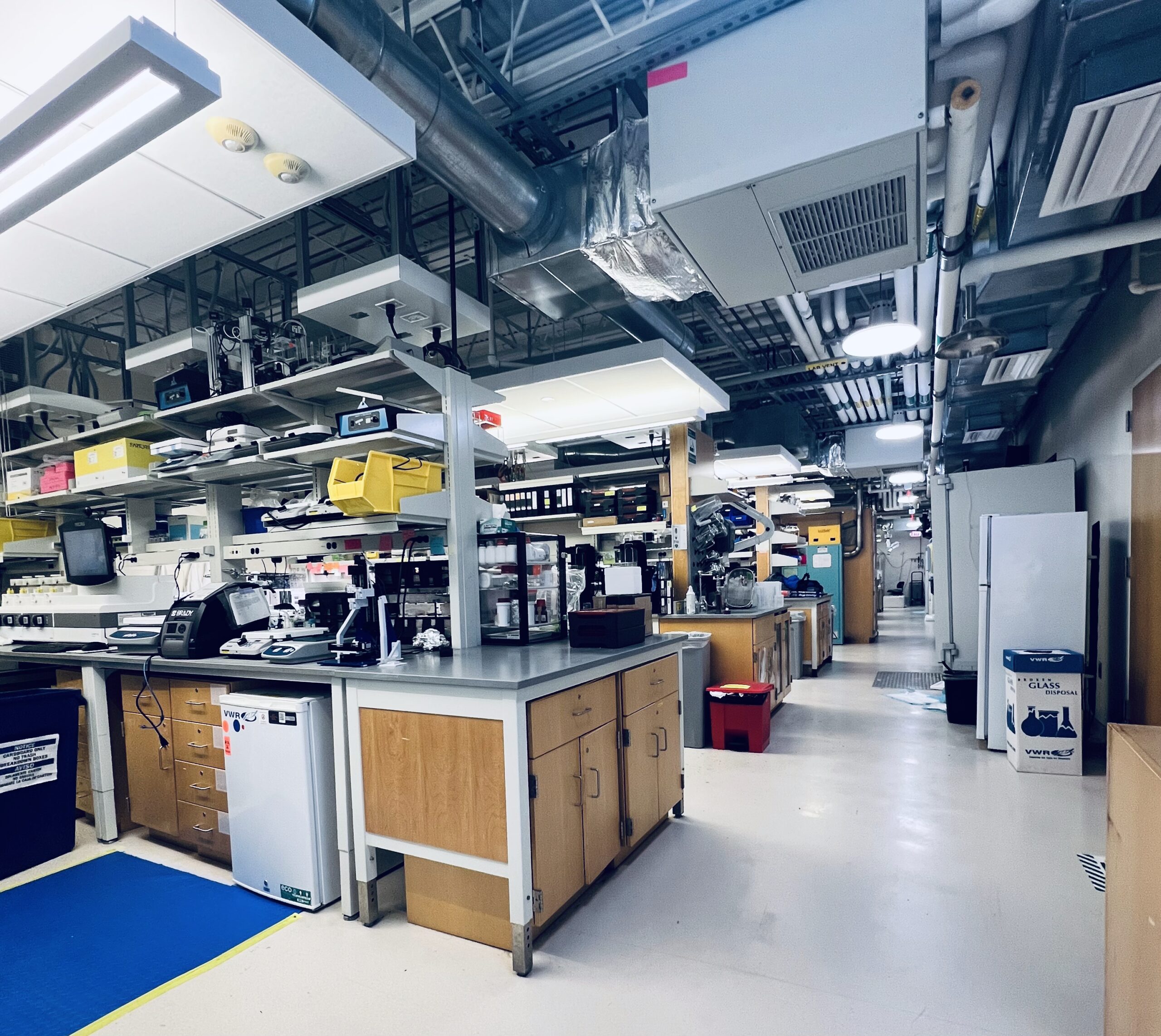
    Jennifer Lewis’ Lab at Harvard’s SEAS. Image courtesy of 3DPrint.com.

    For those who have followed additive manufacturing for years, the Lewis Lab is not new to this kind of breakthrough. It has been at the forefront of printing functional materials for a long time, including early work in bioprinting.

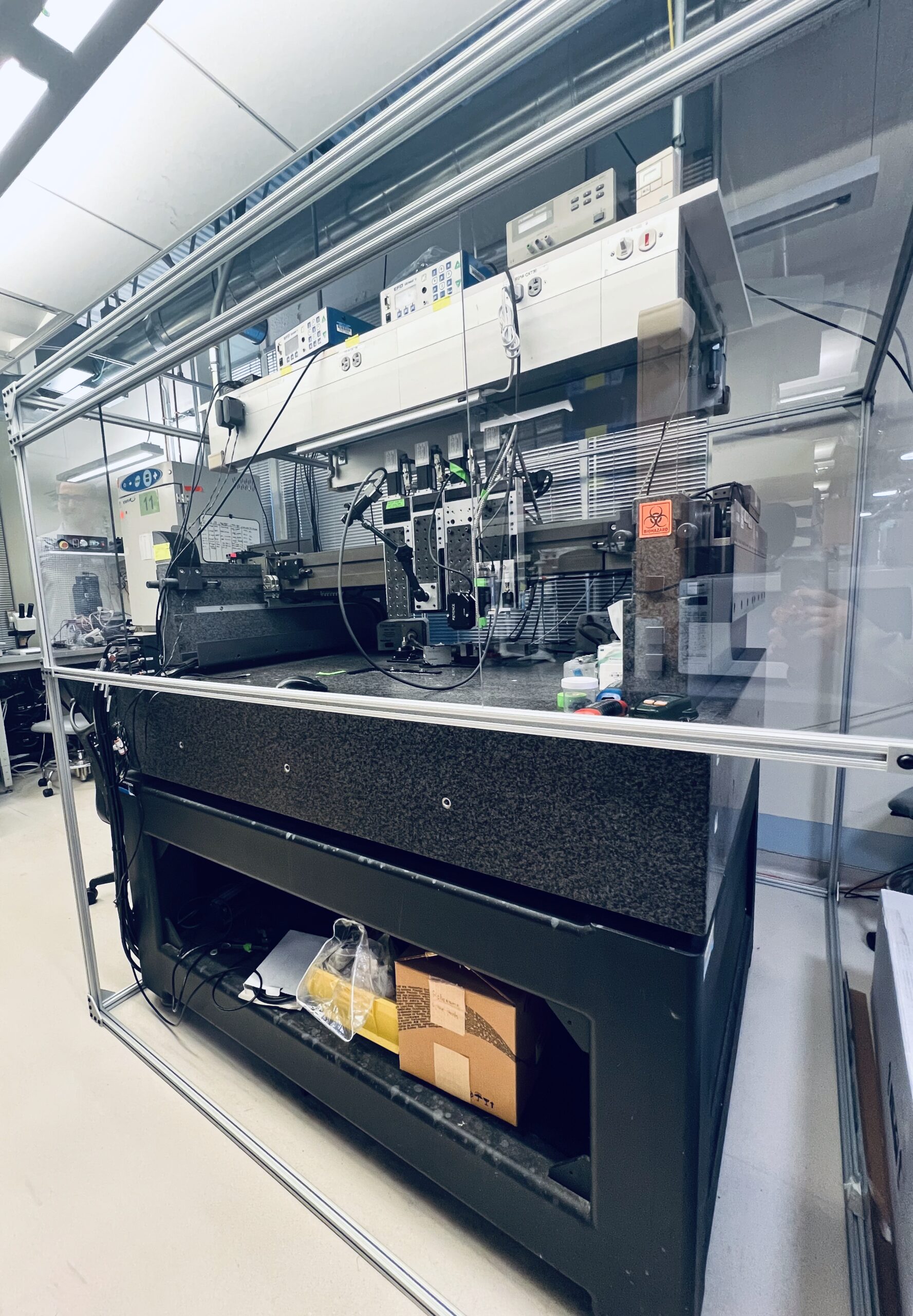
    I was lucky enough to walk through the Lewis Lab during a recent visit, and you can still see that history in the space. Among the projects and prototypes is one of the first bioprinters the team developed, an early step toward printing living systems, which I covered in more detail in my earlier visit. That same mindset, which is about bringing together materials science and fabrication, still drives the work today.

    What started with printing simple structures and later living materials is now moving into printing materials that actively respond and move. It is less about making objects and more about creating systems that behave in specific ways.

    This latest research builds on that foundation, pushing 3D printing beyond static parts and into dynamic, responsive systems.

    At the back of the lab, next to a multi-axis bioprinter, a custom machine developed in-house by the Lewis Lab, first pioneered by Jennifer Lewis and her then-postdoc Mark Skylar-Scott. Today, it anchors much of the lab’s effort to print complex, living tissues. Image courtesy of 3DPrint.com.

    There is still work to be done before these materials are used in real-world products, especially when it comes to scaling and durability. But the concept is that instead of designing machines with many moving parts, engineers may be able to design materials that move, adapt, and respond on their own. And if the Lewis Lab’s track record is any indication, this is likely just the beginning.

  • 3D Printing Financials: Materialise Improves Margins Despite Flat Revenue

    Materialise (Euronext and NASDAQ: MTLS) started 2026 with stable revenue, stronger margins, and better operating profit, helped by growth in medical and improved profitability in software. The Belgian 3D printing company also continued reshaping parts of its manufacturing business as it puts more focus on medical, software, and other steadier areas of additive manufacturing (AM).

    Shares of Materialise fell roughly 4% following the earnings release, with MTLS trading between $5.34 and $5.45 in morning trading, even after the company reported stronger margins and improved operating profit.

    Printed, molded parts are removed for further processing at the ACTec foundry. Image courtesy of Materialise.

    For the first quarter of 2026, Materialise reported revenue of €66.3 million, nearly unchanged from €66.4 million during the same period last year. While overall revenue stayed flat, Materialise said growth in its medical business was partly offset by continued weakness in manufacturing, particularly in automotive and prototyping demand.

    The company’s medical segment was the strongest performer. Medical revenue rose 6.7% to €33.2 million, compared to €31.1 million a year earlier. The segment remains Materialise’s largest business and one of its most important growth areas, helped by demand for personalized medical devices, surgical planning tools, and hospital-based 3D printing applications.

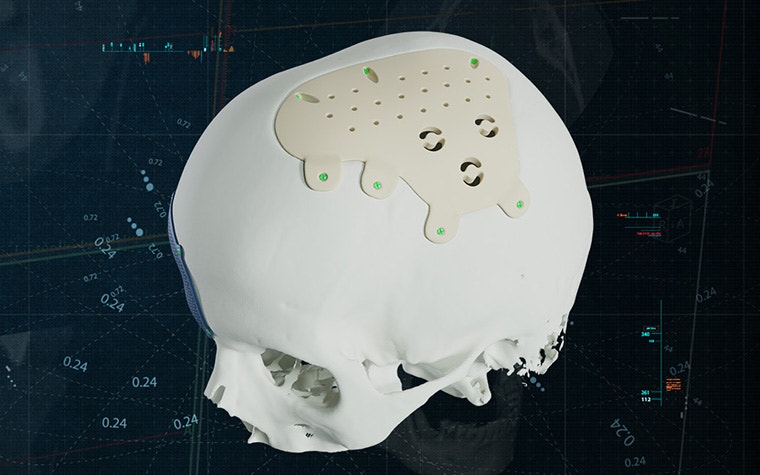
    Materialise’s new personalized PEEK CMF implant. Image courtesy of Materialise.

    Materialise’s software revenue was weaker, slipping 1.4% to €9.6 million from €9.8 million a year ago, though the company said foreign exchange pressure from the weaker U.S. dollar affected results during the quarter. On a constant-currency basis, Materialise said software revenue would have grown year over year. Profitability in the segment also improved sharply, with adjusted EBITDA rising 87.4% to €1.1 million.

    Manufacturing was the weakest segment. Revenue fell 8.1% to €23.5 million, down from €25.5 million in the first quarter of 2025. Even so, the segment’s adjusted EBITDA improved to €281,000, compared to a loss of €377,000 a year earlier.

    Manufacturing was the weakest segment. Revenue fell 8.1% to €23.5 million, down from €25.5 million in the first quarter of 2025, reflecting continued weakness in automotive and prototyping demand. Still, the business improved sequentially compared to the previous three quarters, helped by growth in aerospace, defense, and semiconductor applications. The segment’s adjusted EBITDA also improved to €281,000, compared to a loss of €377,000 a year earlier.

    In Q1, the firm reported a net profit of €1.8 million, or 3 cents per share, compared to a loss during the same period last year. The company also said stronger margins and tighter cost controls helped improve overall profitability during the quarter.

    Brigitte de Vet-Veithen from Materialise speaks at AMS 2025. Image courtesy of 3DPrint.com

    According to CEO Brigitte de Vet-Veithen, the company continues to see very different conditions across industries and regions. Europe, particularly the automotive sector, remains soft, while aerospace and defense are showing stronger momentum.

    “In our aerospace market, we see further investments in our end markets that also benefit the additive industry, including us. Defense is another industry where budgets are being freed up now and where we see positive dynamics. It’s a very diverse picture where the U.S. markets are showing a more positive trend than the European markets,” noted de Vet-Veithen during an earnings call with investors. 

    Materialise CEO Brigitte de Vet-Veithen at Additive Manufacturing Strategies 2024. Image courtesy of 3DPrint.com/Ashley Alleyne.

    Materialise also announced the spin-offs of both its RapidFit and Eyewear businesses, transferring the operations to their respective management teams as independent companies. RapidFit specializes in 3D printed jigs, fixtures, and quality control tools for the automotive industry. Over the years, the business grew into a specialized manufacturing operation serving automotive customers with custom tooling and inspection solutions. Eyewear, meanwhile, developed into a separate consumer-focused business centered on customized 3D printed eyewear products

    According to Materialise, both businesses will continue operating under their existing leadership teams, giving them more flexibility to focus on their own markets while allowing Materialise to concentrate more heavily on its core software, medical, and manufacturing operations. The company said the changes will help the businesses operate “closer to its customers and markets” as they enter “their next phase of growth.”

    Along with the operational changes, Materialise continued its share buyback program during the quarter. It ended the period with a net cash position of €72.8 million, up from €71.3 million at the end of 2025.

    Materialise HQ in Belgium. Image courtesy of Materialise.

    The results come at a time when much of the 3D printing industry is still dealing with slower industrial spending and weaker customer demand. Several publicly traded AM companies have spent the last two years cutting costs, reorganizing parts of their businesses, or focusing more on markets that have remained steadier.

    For Materialise, healthcare continues to play a major role in that strategy. Medical applications remain one of the most commercially established parts of the 3D printing industry, particularly in areas like surgical guides, personalized devices, and hospital-based manufacturing. During the quarter, the company expanded its medical portfolio with new patient-specific PEEK implants and launched OrthoView 3D Hip, a CT-based surgical planning platform for hip procedures.

    In fact, de Vet-Veithen said the company remains focused on integrating new tools into a single workflow for hospitals and surgeons: “Until now, surgeons working with Materialise had titanium as their patient-specific option. With this launch, they have an additional choice. The new offering integrates seamlessly into our existing digital workflow and completes our offering. 

    She then added that “the healthcare market at large globally remains a healthy environment. The exception would be academic markets, where we see primarily in the U.S., the impact of funding cuts that have been issued already last year, and they’re continuing this year.”

    L-R: Dominic Stoerkle, Evonik; Bryan Dow, Cantor Fitzgerald; Brigitte de Vet-Veithen, Materialise; Joe Calmese, ADDMAN; Matteo Rigamonti, Weerg. Image courtesy of 3DPrint.com.

    At the same time, the company appears increasingly focused on improving efficiency across the business. While revenue was mostly flat during the quarter, higher margins and stronger adjusted EBIT showed signs of better operational performance.

    For the full year, Materialise reaffirmed its 2026 guidance. The company expects revenue for the year between €273 million and €283 million, with adjusted EBIT expected to range between €10 million and €12 million.

  • Fabric8Labs & University of Illinois Collaborate on 3D Printed Copper Cold Plates for Data Centers

    Collaboration between emerging technology enterprises and research universities is one of the most consistently winning tactics for any nation building (or rebuilding) an industrial ecosystem. It’s an especially constructive approach in a handful of nations, including the US, with the highest concentrations of both viable deep-tech startups and world-class academic institutions.

    Fabric8Labs and the University of Illinois (UI) have just announced a textbook example of this kind of work, leveraging Fabric8Labs’ electrochemical additive manufacturing (ECAM) process to produce direct-to-chip (D2C) copper cold plates for data center thermal management. As we pointed out at AM Research in our 2025 report on AM for the data center market—a report which includes coverage of Fabric8Labs—the rising power loads demanded by AI chips call for heat exchanger solutions that deploy liquid cooling methods, in addition to the air cooling methods that have been the standard for decades. AM can play a central role in the development of that new class of heat exchangers, thanks to the ability to use cooling designs, characterized by “tightly packed metal ‘fins’”, which are optimized for the surface area of chips.

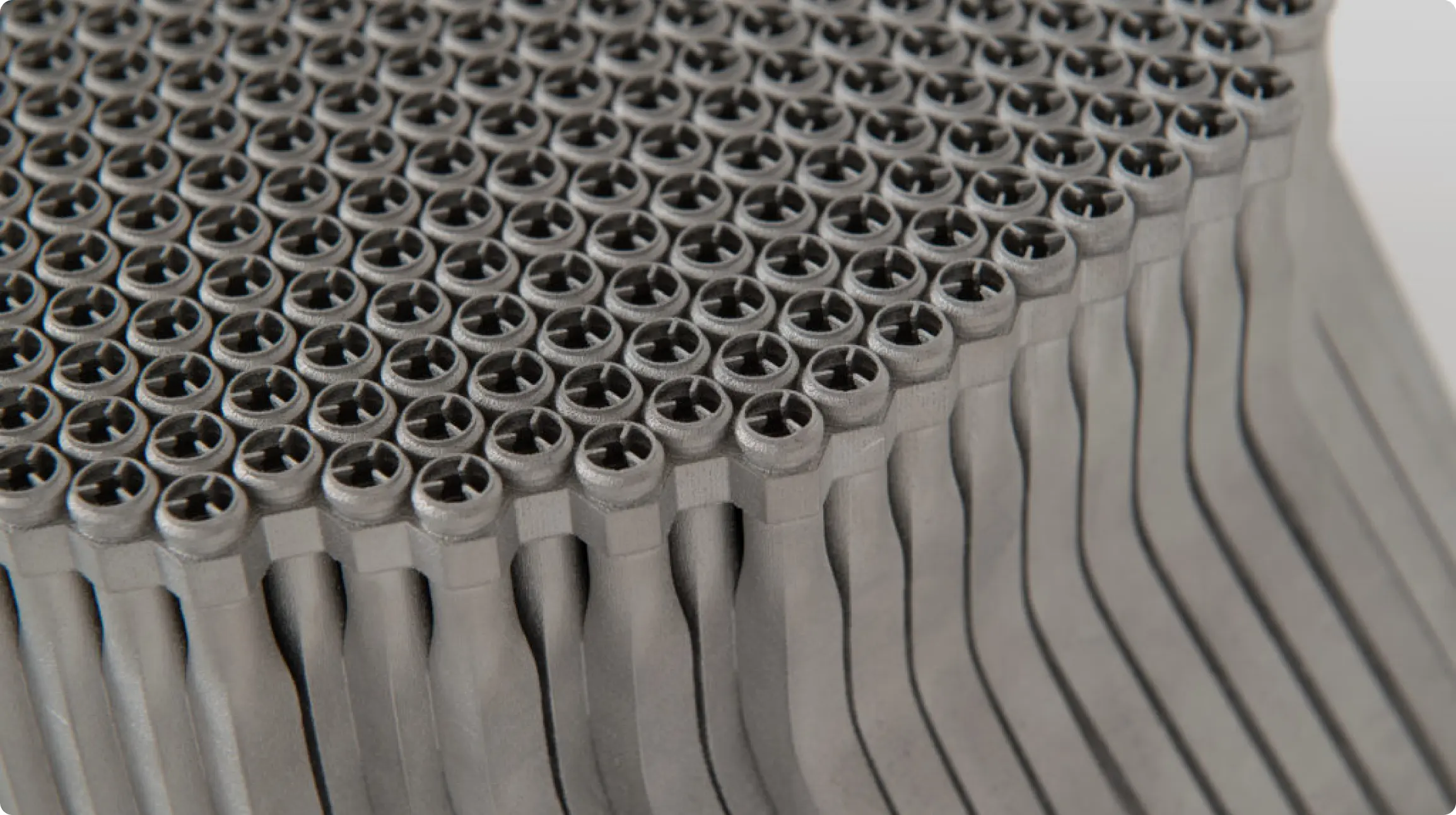
    Fabric8Labs and UI have published the results of their initial work in the journal Cell Reports Physical Science. Utilizing topology optimization methods, the collaborators iterated a series of different fin design possibilities with the objective of minimizing the power required to cool the relevant chips. According to UI, most existing methods for using such finned cold plates incorporate simple shapes like rectangles and cylinders. UI, on the other hand, designed cold plates “[w]ith pointed tops and jagged edges,” shapes that Fabric8Labs’ ECAM method is uniquely well-suited to produce.

    In addition to the advantage in geometric complexity, Fabric8Labs also has advantages when it comes to material science. Since ECAM utilizes liquid metals, the technique is better for working with pure copper than are other AM methods, which tend to necessitate copper alloys, generally leading to weaker cooling performance.

    The UI researchers claim that their findings suggest the Fabric8Labs cold plates deliver improvements in data center cooling over other finned cold plates by 32 percent. As the researchers note, most of the data out there involves work aiming to improve the cost efficiency of the manufacturing process. By instead focusing on maximizing the cooling performance of the cold plates, the UI researchers may have devised a superior method for lowering long-run data center operating costs, while simultaneously pointing to a path that implies a more sustainable carbon footprint.

    In a press release about UI engineers’ data center cooling research incorporating cold plates from Fabric8Labs, first author Behnood Bazmi said, “Cooling is the bottleneck in computer-chip design. By bridging the gap between computational design and manufacturing capability, our approach provides a pathway for more energy-efficient liquid cooling of chips and other electronics. Our workflow can be applied to a wide range of cooling challenges across different length scales.”

    Senior author Nenad Milijkovic, a mechanical engineer at UI, said, “Topology optimization ends up converging on a design which is optimal in maximizing thermal performance and minimizing pumping power. …With our cold plates, data centers would only need to use 11 megawatts for cooling instead of 550 megawatts.”

    That potential is precisely why Fabric8Labs landed a $50 million investment round last November, only the latest big influx of funding for the San Diego company, and will be used largely to build up its manufacturing capacity in the US. Working with institutions like UI is an excellent way to prime that same pump, as the company’s process has now undergone validation through a project supported by funding from the US Department of Energy (DOE).

    This project encapsulates what I’ve noted in recent posts about the role of defense spending in the US economy, and how AM may both impact and be impacted by changes in that broad dynamic. Bluntly, this is what the US government should be spending money on, as opposed to doubling down on the same defense procurement formula that has done such a disservice to readying US military personnel for duty, and has been a primary contributor to the accumulation of incomprehensibly large quantities of national debt.

    The Pentagon is asking for $1.5 trillion for 2027. Can anyone seriously doubt that if even a tiny amount of effort was put into solving the problem, that the US could figure out a much better way to arm itself with a much smaller funding commitment? I say this because it absolutely mustn’t be overlooked that under the current arrangement, the Pentagon’s objective is in fact to figure out how to spend as much money as it possibly can. Shouldn’t we at least consider alternatives?

    I think the key to a starting point for strategizing how to spread the US federal budget more evenly across all its departments is to acknowledge how the current geopolitical era is demonstrating so convincingly that maintaining national security requires far more nuance than simply a plan to buy the most expensive weapons that the handful of largest defense contractors can come up with. Cybersecurity and energy security, for instance, are much more relevant to everyone’s lives than the F-35. State-of-the-art data center hardware addresses both needs. Research projects like this one need to be prioritized.

    Images courtesy of the University of Illinois

  • 3D Printing News Briefs: May 7, 2026: Metal Powder Bed Fusion, Surgical Plates, & More

    In today’s 3D Printing News Briefs, we’ll start with a strategic collaboration to advance next-generation metal additive manufacturing (AM), before moving on to funding for surgical research. We’ll end with

    Eplus3D, Rosswag, & Qualloy Sign MOU to Advance Next-Gen Metal AM

    Industrial metal AM solutions provider Eplus3D announced a strategic collaboration with qualloy, a supplier of high-quality metal AM powders, and Rosswag Engineering, a division of the family-owned company that focuses on metal AM. The three signed a Memorandum of Understanding (MOU) to work on advancing next-generation metal AM solutions and supply chains. Per the MOU, they will combine Eplus3D’s large-scale industrial metal powder bed fusion printers with qualloy’s metal powders and Rosswag’s expertise in metal processing, heat treatment, machining, and testing to create an integrated manufacturing ecosystem. Rosswag will invest in an 8-laser Eplus3D EP-M550 system, qualloy powder designed for Eplus3D printers will be qualified and made available with validated process parameters and powder specifications, and all three companies will take part in joint material qualification and parameter development. In this way, they plan to validate industrial-grade AM process performance, and develop user-ready applications.

    “By combining our large-scale, industrial LPBF systems with Rosswag’s application expertise and qualloy’s material excellence, we are creating a fully integrated ecosystem that significantly lowers the barrier for true serial additive manufacturing,” said Enis Jost, Deputy General Manager, Eplus3D Tech GmbH. “This collaboration is not just about technology, but about delivering validated, production-ready solutions with great part pricing that enable our customers to scale with confidence.”

    Durham University Researcher Gets Funding for Surgical Plate Research

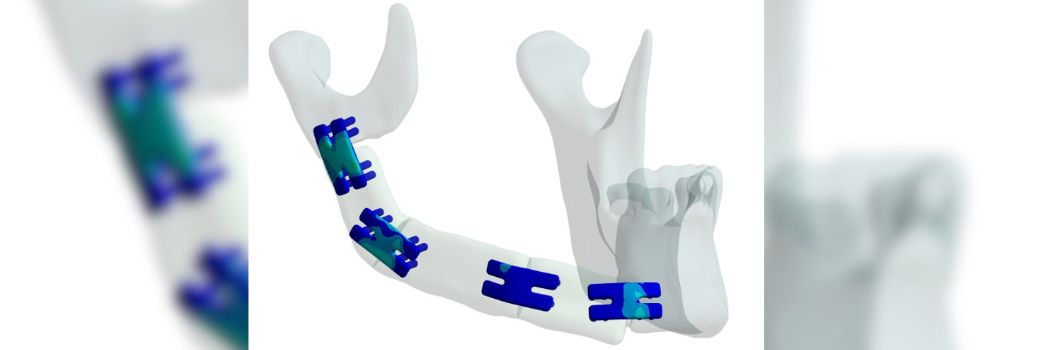
    Dr Alessandro Borghi, an early career researcher in the Durham University Department of Engineering, will receive £125,000 in funding from the Academy of Medical Sciences to support his work in optimizing the design of 3D printed custom surgical plates used in facial reconstruction surgeries. To repair the kind of jaw damage caused by oral cancer or trauma, surgeons will perform mandibular reconstruction. This typically means replacing the damaged section of jaw bones with bone taken from the patient’s lower leg and held in place with metal implants. These implants are normally bent by the surgeons during surgery to match the patient’s jaw shape, but there can be complications with this method. By using smaller mini plates, the stress is distributed more evenly across the healing bone, and surgeons can use 3D printing and virtual surgical planning to make custom plates that match the patient’s specific anatomy.

    However, bone healing can be delayed if these plates are too rigid. Dr. Alessandro, a Fellow of the university’s Wolfson Research Institute for Health and Wellbeing, is working to adjust the stiffness and shape of 3D printed surgical plates to optimize healing. He will use the funding, which is part of the Academy’s Springboard program for early career researchers, to come up with practical guidelines for 3D printing patient-specific mini plates. Dr. Alessandro will use advanced computer simulations and existing models to investigate the performance of different designs in keeping the healing bone in place, as well as how they distribute stress and support long-term healing. Then, partner hospitals will determine the effectiveness of his designs by testing them in real surgical procedures, assessing their ability to improve patient outcomes.

    IAP Uses BigRep’s 3D Printing for Atmospheric Modeling Systems in LiDAR Research

    Climate change, space missions, and weather forecasts all depend on precise atmospheric data. To get it, scientists use a remote sensing method called LiDAR (Light Detection And Ranging) to shoot laser pulses from the ground to the edge of space, then analyze the backscattered light to measure and monitor temperature, metals, wind, and other particles over time. Some of the best places to deploy LiDAR systems are in remote regions like the Arctic and high-altitude mountains, but it’s not easy to deploy them in these extreme environments. Researchers at the Leibniz Institute of Atmospheric Physics (IAP) in Germany are working to make LiDAR more deployable, but instead of building observatories in these unforgiving places, they’re developing compact, cost-effective, remote mobile systems that run autonomously. In order to compress this instrument, while integrating the necessary technologies (optical system, lasers, telescopes, detectors, etc.), the IAP team turned to large-format 3D printing from BigRep.

    The IAP team is using two BigRep ONE 3D printers, which have a build volume of 1 cubic meter, to build custom parts in-house. BigRep has an open materials system, so in addition to using its verified filaments like flexible TPU, IAP can also use compatible materials as well. An onsite BigRep DRYCON helps the institute with drying, controlled storage, and annealing of filaments. Some of the parts the team prints include the LiDAR system’s outer housing, structural components, the compressor, an optical table mounted inside the system, insulation, and custom enclosures for electrical systems. Because the LiDAR system was so experimental and iterative, 3D printing was really the best choice, and the technology will also make it easier to get replacement parts in the future. Working as part of an international network, IAP’s compact LiDAR systems with 3D printed parts will be deployed in locations like the Canary Islands and Switzerland, and there’s already one operating in northern Norway.

  • A Hilux for the Seas

    With the US turning its back on exquisite, expensive military goods in favor of volume manufacturing of less expensive items, new strategies should come to the fore. But attritable $250,000 drones will still be too expensive for long conflicts. If it is difficult to manufacture submarines and carriers are vulnerable, why not completely change what is made? For force protection of the US Navy, to protect expeditionary Marine units, for risky missions, and to protect shipping, what is the lowest-cost solution we can come up with? What if the US put a ring not on it but around its existing craft, rings of inexpensive autonomous vehicles that defended the fleet and installations? What’s better than a loyal wingman? I give you the Kamikaze Bluejacket. Sacrificial swabby? Or perhaps the disposable seamen? Drownable pawn? Interchangeable admiral? Harikiri boatswain? Scuttled skipper? Deep Six Sea Daddy? AJ Keeled Over? Suicide squid? Suicide squid it is.

    Now, let’s have an HDPE (high-density polyethylene) boat hull that’s nice and rugged, and cheap. Could you 3D print these things if you suddenly needed a lot of them? Of course. But we can order them from Tideman Boats now. Let’s pick the Valor, a triple-engined 300 HP open-sea model that can be up to 14 meters long with a payload of up to 15000 lbs. The boat is around $250,000, engines will be around $75,000, and let’s say another $150,000 for radar and coms. Let’s then make a lot of versions of this boat.

    • On one version, we put an entire CIWS (close-in weapon system) unit; the seakeeping will suck, but this will give us good anti-ship and missile defenses.
    • On the second type, we can put a 36-cell Uvision Hero 120 loitering munition unit with 150 munitions. Each munition can loiter for an hour and has a maximum range of 50 kilometers.
    • Another version carries two Rafael Spike NLOS Missile Systems, preferably the Naval unit with 8 missiles and a 50 caliber station. 
    • Another version will carry an Altius loitering munition set with a 500-kilometer range.

    A technician inspects a fixed-wing uncrewed aerial vehicle (UAV) inside a hangar.

    • Another one will carry Liutyi long-range strike drones with a range of up to 2000 kilometers for anti-ship strikes.
    • Another boat will carry 10 long-range Firepoint drones for ISR and relay.
    • Then one will carry a four-pack of NSM strike missiles with the launcher. This will be the most expensive boat, with one missile costing more than most of the other boats.
    • Then, ten boats will carry 3000 kilos of explosive charges and 500 FPV drones each; these will be used to confuse missiles and attacks. If an attack comes, they break off and launch all the drones at once, forming a kind of controlled chaff cloud. They can be reused and do this over and over. If a missile or vessel is close, it can be used to strike. The boat itself can function as a mine or be used to ram other vessels.

    Toloka 1000 Ukraine drone. Image courtesy of the Ukrainian-developed drone program.

    • Another five will not have the drones and be more similar to the Toloka TLK-1000 strike boats used for bridges and the like.
    • Another will be a launcher for 2 Marchica, 1,000-kilometer subsea loitering munitions that can remain on the seabed for days.
    • Another boat will carry 20 Toloka TLK-150s for subsea swarm attacks.
    • Then another boat will have a Mark 32 Triple Launcher or similar torpedo pack with spare torpedoes. 
    • Another vessel will have an NSM unit and a Mark 32.
    • Yet another will have 20 “Sichen” 1,400-kilometer range autonomous drones for long-range strikes against bunkers and the like.
    • Then one will have 100 TAV interceptors for high-speed interceptions of up to 300 kilometers per hour.

    We could then have 5 fuel boats that can refuel and resupply the other boats. We add solar panels and electrical systems to extend life at sea a bit and assemble flotillas of these vessels. Now, you’re probably wondering, why so many boats? We don’t have to make one boat to do it all. In fact, one-size-fits-all weapons systems have not done well and have been too costly. Instead, we can assemble a flotilla of 500 ships to surround fleets and scout ahead of them. If individual weapons systems don’t work, we take the boat back and put a new one on it. With more containerized solutions, racks, self-contained systems, and the like, this will become easier. We don’t need to make the perfect boat. We can just spend one million making something that may work. Test it, field it, and replace it with the new one. It will be difficult for an enemy to engage this kind of a swarm-carrying flotilla because so many types of munitions can be deployed in so many different ways. With constant upgrades, new weapons systems would be available. So it will be impossible for you to gauge their capabilities or anticipate some attacks.

    Imagine you’re seeing spotter drones of three types: one is a long-range loitering munition, and the other is an interceptor drone. Which boat are you up against? Can you counter NSM? What about a flotilla of small drones or one coming straight at your hull? What if they managed to get a lot of these different munitions to arrive at once? Wouldn’t that overwhelm your capacity to act and systems? How would you attack and sink all of these ships? And while you do it? While you’re busy engaging all of these targets and munitions, it’s that Marchica quietly waiting on the seabed that will get you, overlooked by an overstimulated sonar operator. These vessels will cost between $500,000 and $5 million to build. And one flotilla could beat most navies. You could perhaps get people at home to pilot them all remotely at a super low cost, or rely on autonomous teaming.

    This is the kind of Navy that 3D printing can build. Sure, we can help with the $5 billion submarines. But 3D printing can also help if you don’t build them in time. We could 3D print the hulls. But, even if we don’t 3D print all the housings, integration, additions, reinforcements, and other gear is the advantage here. Rather than a few ships, we could make an ephemeral, ever-shape-shifting cloud of defenses. A force that could take out a swarm of speedboats would blunt a swarm of drones and would be able to attack or defend a large array of targets, all without any loss of life. All for less than the cost of one Littoral Combat Ship. 3D printing will win here because it enables inexpensive, faster integration and adaptation of systems that will collectively outperform.

    If you’re interested in how drones and 3D printing are coming together in real-world applications like this, the topic will also be explored at the Additive Manufacturing Strategies UAS: The Present and Future of Drone Manufacturing event on June 30, 2026.

  • SWISSto12 and HPS/LSS Build Unfurling Antenna for Next-Gen Satellite

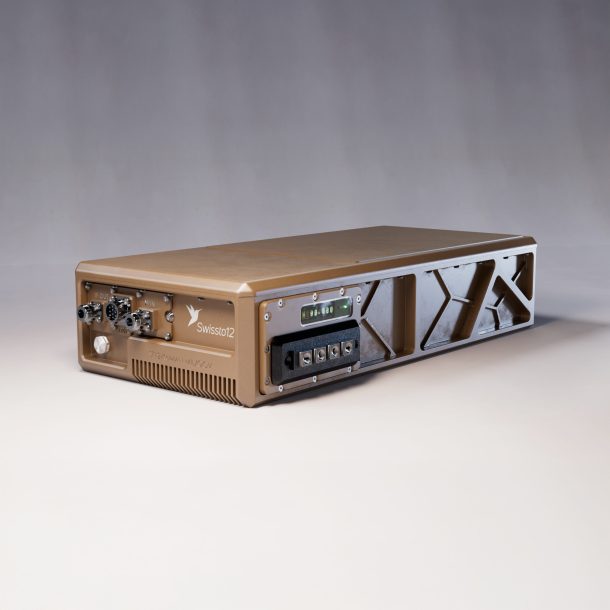
    SWISSto12 is to work with HPS/LSS. High Performance Space Structure Systems and Large Space Structures are two separate firms that work together on large antenna reflectors. The two will work on the large deployable reflector subsystem (LDRS) for the NEASTAR-1. That satellite will be a geostationary direct-to-device broadcaster based on the compact HummingSat. This kind of platform could quickly find many applications in direct-to-device communications for the military, rescue operations, company communications, remote connectivity, and even as a kind of Starlink replacement.

    Helping them on this project are ASP, AST, DLR, Tesat, Thales Germany, Jena Optronik, and Rockwell Collins Germany. SWISSto12 is continuing to leverage its 3D printing expertise to develop highly performant compact RF components, then compact satellites, and, as a European capability, now offers an alternative to US dominance in satcom.

    The HummingLink-SOTP, SWISSto12’s partially 3D-printed GEO satellite user terminal. Image courtesy of SWISSto12.

    The European Space Agency’s (ESA) Advanced Research in Telecommunications (ARTES) program came up with the antenna, while this embodiment, NEASTAR-1-LDRS, will be mainly funded by ESA and the German Aerospace Center (DLR). SWISSto12 is hoping to win more contracts in secure communications from Germany, which seems to be looking to SWISSto12 to develop sovereign secure communications. Beyond this, there could be other countries in Europe that can no longer rely on the US for communications or sensing that could be interested in more solutions from SWISSto12.

    Swissto12 CEO Emile de Rijk said that,

     “Collaboration with HPS/LSS was fast and effective from the first day. We value their culture of precision engineering, deep-tech innovation, and commitment to excellence along with a drive for fast and efficient execution. They have demonstrated a strong technical heritage and proven track record in building LDRS, notably for ESA missions, underscoring the progress of ESA and DLR’s vision to develop resilient, sovereign space capabilities.”

    While HPS CEO Ernst K. Pfeiffer mentioned that,

    “In addition to the successful signing of another major HPS/LSS contract, we are proud to contribute to European technological sovereignty through this Swiss‑German collaboration; we are delivering tangible business results just four months after German ESA‑CM25 decisions were made.”

    And Laurent Jaffart, Director of Resilience, Navigation and Connectivity at ESA, noted,

     “ESA’s long-term investment in innovation and partnerships enable cutting-edge technologies to be brought to market, crucially boosting Europe’s global competitiveness, while strengthening autonomy and resilience. By leveraging Europe’s industrial excellence within two of our key Member States, this contract is a prime example of how strong collaboration will be translated into advancing the next-generation of connectivity – particularly within the direct-to-device domain.”

    SWISSto12 uses MetalFabG2 metal 3D printers from Additive Industries to produce RF components such as this X GEO multibeam cluster. Image courtesy of SWISSto12.

    This is a very timely move by ESA and SWISSto12; traditionally, European nations have relied on American signals intelligence, satellites, and communications networks. It was always assumed that the US lead in space would mean that NATO’s data and communications infrastructure would be bolted onto US infrastructure. The US has cut off aid to Ukraine, cut off intelligence sharing to Ukraine, and cut intelligence and communications access repeatedly at crucial moments. This was done with such capriciousness that no nation worldwide can rely on the US anymore. Any nation that wants to communicate securely with its own embassies or military overseas will therefore need to develop its own capability. The French, Chinese, Russians, and Israelis are probably the only nations that have this capability. For other wealthy countries, there are few options because US firms dominate parts of the global satellite industry. SWISSto12 has a unique opportunity, therefore, to offer a relatively lower-cost solution to countries worldwide.

    I’m a huge fan of what they’re doing. SWISSto12 doesn’t sell machines, parts, or a solution. It makes RF and other components that fit into larger solutions, and runs an integration project in which many firms together build a satellite based in part on its technology. It’s no surprise that the company received 73 million in funding and is embedding itself in other constellation projects as well. Across the world, SWISSto12 is leveraging its 3D printing and RF expertise to become an indispensable player in the satellite market. At the same time, it becomes a lifeline for nations wishing to develop their own sovereign satellite capabilities. This is a far better strategy and far better business than most anyone in additive.

  • 3D Printing Financials: Protolabs Starts 2026 Strong, with Metal Printing Leading

    Protolabs (NYSE: PRLB) kicked off 2026 with a strong quarter, showing steady growth, better margins, and improving customer engagement, even though some parts of the business, especially 3D printing in Europe, are still weak. The company is gaining larger customers, but its 3D printing business is still mixed. Metal printing in the U.S. is strong, but demand is weaker in other regions.

    In the first quarter, Protolabs reported record quarterly revenue of $139.3 million, up 10.4% year over year. Most of that growth came from CNC machining, which was up 17.6%. Injection molding and sheet metal grew at slower rates of 3.5% and 2.3%, respectively.

    Profit also improved. Net income was $8.1 million, or 33 cents per share, compared with $3.6 million, or 15 cents per share, a year earlier. Meanwhile, adjusted EBITDA also rose to $22.8 million, up from $17.4 million, while adjusted earnings per share reached 54 cents, the company’s highest level in more than five years.

    Margins improved as well. Gross margin improved to 46.2%, up 1.4 percentage points from both last quarter and a year ago. That was helped by stronger factory usage and some pricing adjustments. Operating expenses rose slightly to $48.9 million, but as a share of revenue, they actually went down, showing the company is running more efficiently as it grows.

    3D Printing: Strong in Metal, Flat Overall

    Protolabs’ 3D printing revenue was $20.5 million in the first quarter, up slightly from $20.2 million a year ago. The U.S. grew, but Europe declined, leaving overall results mostly flat. Still, one area is clearly working. Metal 3D printing is growing fast, with Direct Metal Laser Sintering (DMLS) up nearly 30% year over year.

    That demand is coming mainly from aerospace, defense, and other advanced industries that need complex parts, where metal additive makes sense. These are the same sectors driving growth in the company’s machining business.

    On the earnings call, CFO Dan Schumacher told investors that capacity is already being added to support that demand.

    “We have around 30% growth in metal 3D printing, so we’re adding DMLS printers as well,” he said.

    Protolabs has also added 25 GE Additive Concept Laser Mlab and M2 machines for DMLS. Image courtesy of Protolabs.

    Network Business Still Weak

    One clear issue this quarter was the network business, which was weaker, especially in 3D printing.

    CEO Suresh Krishna admitted, “We did see some weakness in network demand in 3D printing. We are making some changes in our go-to-market areas so that we can work to accelerate network revenue growth in the future.”

    Suresh Krishna, President and CEO, Protolabs. Image courtesy of Protolabs.

    During the earnings call, the company also talked a lot about moving into production. Historically, Protolabs has been known for prototyping. That is now changing. Management made it clear that customers are asking for more production capabilities, including in 3D printing.

    “We are early in our journey to build the capabilities needed for production,” Krishna pointed out. “We see more interest in injection molding, and in 3D printing as well.”

    Meanwhile, the U.S. and Europe are still moving in different directions. In the U.S., demand remains strong, especially for metal parts used in aerospace, defense, and robotics. In Europe, however, weaker demand is holding back overall growth.

    The company is trying to fix that through what it calls a “strategic reset” in the region.

    Krishna detailed, “We have taken deliberate actions to reset the business in Europe, including targeted reductions in the first quarter to align cost structure with current revenue levels and improvements in go-to-market operations. We started some of Europe’s go-to-market work in late 2025, including alignment to core industries and simplified and increased customer engagement. I’m proud to say that these efforts are beginning to yield early results, with the region delivering 11% sequential growth in the first quarter, a sign that our teams are executing with discipline and focus. These early improvements are an important step towards stabilizing performance and positioning Europe to contribute to both growth and margin expansion going forward.”

    Bigger Customers, Bigger Opportunities

    Another clear trend is the company’s focus on bigger customers. Revenue per customer rose 20% year over year, showing those relationships are getting more serious. Most of these customers are in the aerospace, defense, and medical industries. These are the industries most likely to use advanced manufacturing, including 3D printing.

    As Krishna put it, they care about “speed, reliability, and quality,” which plays directly into Protolabs’ strengths.

    Looking ahead, the company kept its full-year 2026 guidance at 6% to 8% revenue growth, suggesting a cautious outlook despite the strong start. For the second quarter, Protolabs expects revenue of $140 million to $148 million and earnings per share of 50 to 58 cents.

  • BLT’s Partnership with Shenzhen Startup Illustrates Why a Robotics Boom Depends on 3D Printing

    The way that manufacturers produce goods is changing, concerning both the techniques involved, as well as the overarching strategies which organize those techniques into systems of output. Additive manufacturing (AM) is relevant to this broad-sweeping shift in more ways than one, providing suppliers with additional means for delivering final products to consumers, while also contributing to the health of a range of other manufacturing techniques.

    The Chinese AM original equipment manufacturer (OEM) BLT just announced a partnership with Haptron Scientific, a Shenzhen startup that makes device sensors. In this case study, BLT and Haptron collaborated to use metal AM for production at scale of force sensors for the humanoid robotics market, an area seeing major interest in China right now despite valid concerns over a potential bubble.

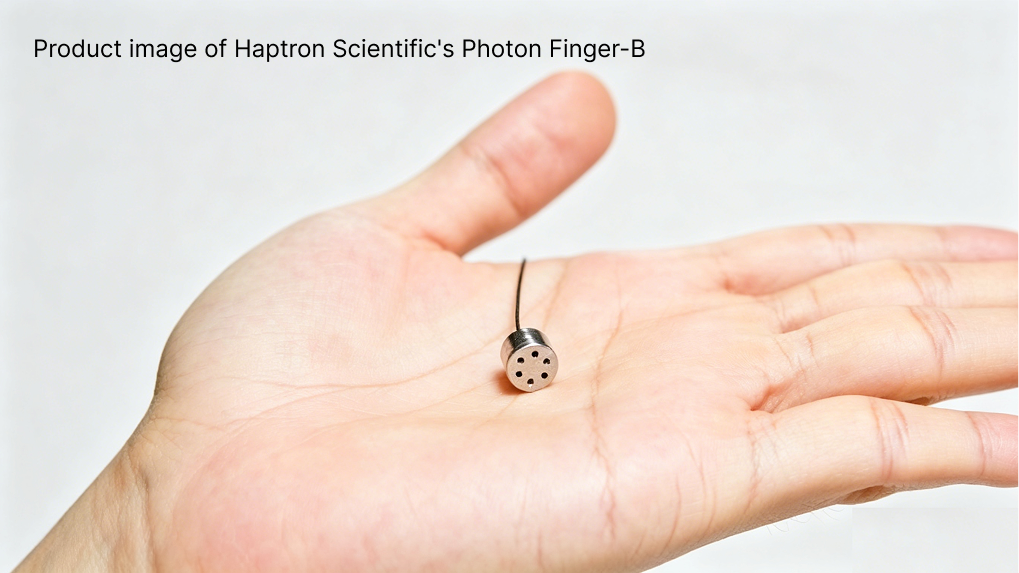
    One of the biggest obstacles standing in the way of a humanoid robotics boom is the difficulty in engineering robotic hands that can adequately mimic human performance. Haptron Scientific has reportedly developed “the world’s smallest optic-based force sensor,” a design which the company has incorporated into robotics components including the Photon Finger Max and PhotonR40 wrist sensors. Yet, because of how small the part is—its diameter is just 8.5 millimeters (mm)—Haptron has found it difficult to consistently produce with conventional methods.

    That’s the catalyst behind the company’s work with BLT, which has lately reported major improvements in throughput capabilities. Regarding one force sensor that BLT made for Haptron, the Photon Finger-B, BLT notes that not so long ago, the company was only achieving “tens of units” per build plate on its metal systems. Now, BLT is reliably producing nearly 1,000 of the units per build plate, and has delivered several thousand units to Haptron Scientific.

    Further, AM enhances the performance metrics of the final product. For the PhotonR40 wrist sensor, the ability to execute a monolithic design enabled a weight reduction of 20-30%, leading to marked improvement in the agility of the robotic systems with which it’s integrated.

    This accomplishment in engineering is revealed as all the more important when you consider that China isn’t interested in building up humanoid robotics simply as an act of pure research: the country is targeting deployment of humanoid robots on electronics assembly lines by the end of this year. Whether or not China actually meets that deadline, it’s the sort of ambitious objective that has the power to will technological progress into existence.

    And, the dynamic at play perfectly embodies the industrial versatility implied by AM-enabled engineering gains. BLT, and Chinese AM OEMs more generally, have been making a point lately of boasting the viability of their technologies for mass production of small, precise parts. Whether a metal printer turns out the hinge for a foldable smartphone, or contributes to the development of a robot that can build the hinge, the final outcome is more or less the same.

    Even more consequentially, the more that Chinese OEMs are able to progress at producing large amounts of small, precise components, the more plausible it becomes that these same techniques could ultimately be used for the Holy Grail of mass production—semiconductors—by leveraging the technology for chip packaging tools. It’s certainly possible that I’ve become so enamored with the “AM for advanced packaging” narrative that I’ve started to see it everywhere. But, given how singularly vital chips are to the global economy, and in light of the background of the Great Power competition presently coloring all the world’s industrial affairs, it’s also possible that China is engaging in a subtle demonstration of force meant to convey that the nation’s semiconductor activity can survive just fine without the West.

    In any case, a machine that can contribute both directly and indirectly to bolstering smartphone supply chains is, in itself, quite a magical device indeed. This is very different from the nebulous sort of hype that characterized AM industry bluster in moments that led up to bursting bubbles. This feels real.

    Images courtesy of BLT