• AMS 2027: The AM Industry’s Biggest Business Conversations Return to New York

    Additive Manufacturing Strategies (AMS) is heading back to New York next February for what has become one of the industry’s most important business gatherings.

    The 10th annual AMS conference (or AMS X) will return February 23-25, 2027, bringing together more than 100 executives, investors, analysts, startup founders, manufacturers, and industry stakeholders at a moment when the AM industry is trying to figure out what its next phase actually looks like.

    Organized by Additive Manufacturing Research and 3DPrint.com, AMS has evolved into an event centered on business, investment, and manufacturing economics. And that feels especially important heading into 2027.

    AMS XOver the last year, the industry has continued moving toward production-focused applications, particularly in aerospace, defense, healthcare, dental, electronics, and energy. Many companies spent 2026 focused on profitability, operational efficiency, supply chain resilience, qualification, and how to scale additive manufacturing. AMS 2026 reflected that, with discussions focused on consolidation across the sector, AI, defense, and the growing role of AM in industrial production.

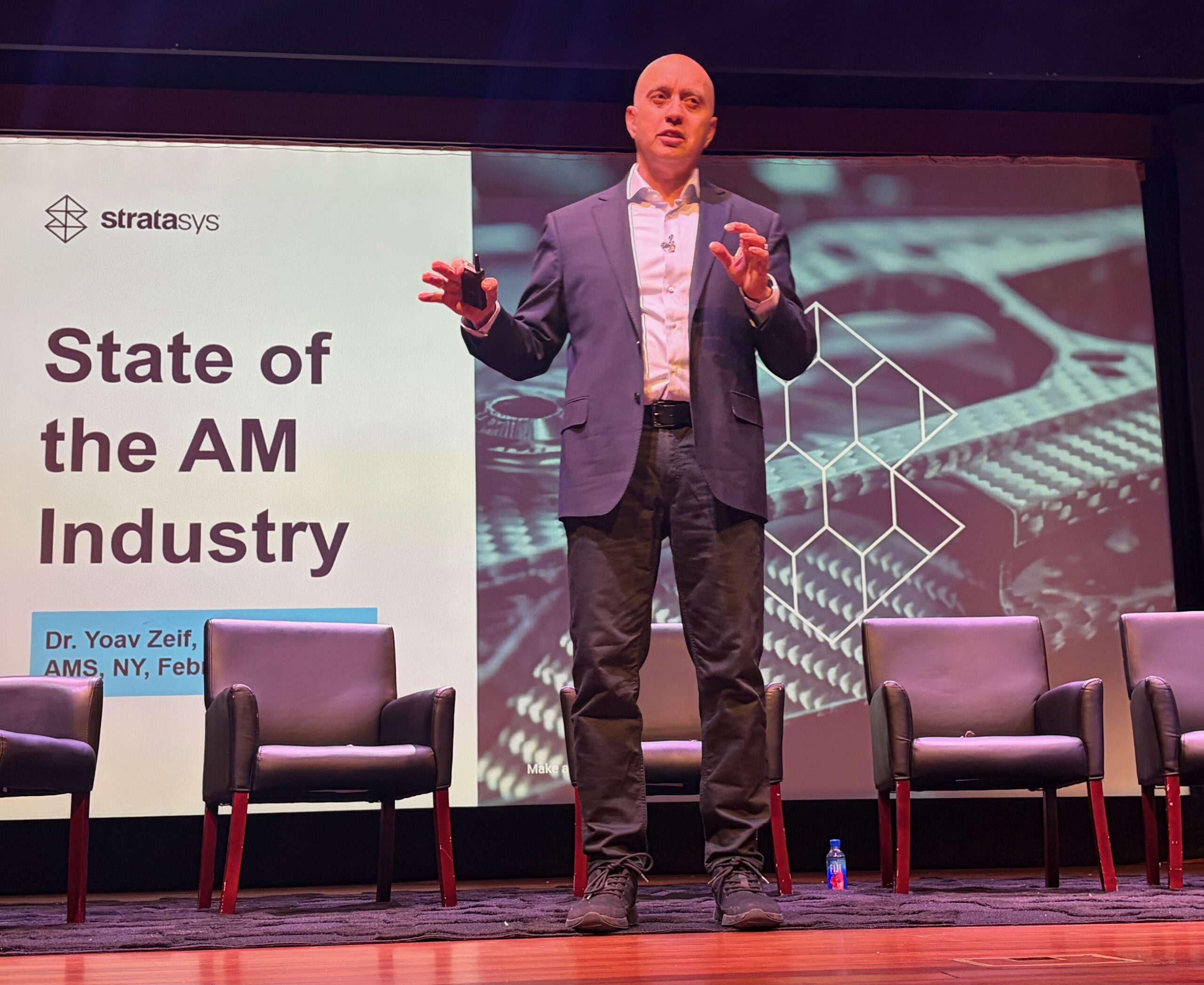
    One of the most discussed moments at AMS 2026 came from Stratays CEO Yoav Zeif, whose keynote focused on where AM is actually finding real traction. Zeif described an industry moving into “a more mature phase,” with desktop systems expanding adoption on one end and industrial applications opening new opportunities on the other. Now, Stratasys is returning as AMS X’s lead Diamond Sponsor, with Zeif once again scheduled to deliver the conference opening keynote.

    Another major returning player is EOS, which is expanding its role at the conference compared to last year, moving from a Gold Sponsor at AMS 2026 to a Sapphire Sponsor for the 2027 event. The company will also deliver a keynote presentation. Meanwhile, HP returns as a Sapphire Sponsor after holding the same sponsorship tier last year.

    Alongside Stratasys and EOS, current sponsors include Cantor Fitzgerald, The Barnes Global Advisors, AM Ventures, Lincoln Electric, MADDE, nPower Technologies, Continuum Powders, Advanced Printed Electronic Solutions, and American Elements, among others.

    Stratasys CEO at AMS 2026. Image courtesy of 3DPrint.com.

    AMS says the 2027 edition will maintain the networking environment the conference is known for while continuing to grow its executive-level speaker roster. What’s more, the early speaker list already points to a wide mix of topics, including aerospace, defense, construction, software, investment, materials, industrial production, and so much more.

    Several early speaker names have already been announced, including Marie Langer, Max Lobovsky, Bill Haddad, Filip Geerts, Chaw Sing Ho, Bryan Dow, Johannes Gartner, and Brigitte de Vet-Veithen. And the growing speaker lineup also includes names like Josef Prusa, Karsten Heuser, and Arno Held, alongside representatives from companies and organizations including Northrop Grumman, General Atomics, Collins Aerospace, Formlabs, and Ursa Major.

    The conference is also leaning heavily into the investment side of additive manufacturing. Workshops and discussions are expected to cover fundraising, mergers and acquisitions, startup growth, and how investors are looking at AM companies in a market that has become much more cautious over the past two years.

    The conference arrives at a time when parts of the additive manufacturing industry are moving in very different directions. Some companies are finding new opportunities in industrial production, defense, automation, and digital manufacturing, while others keep facing pressure from slower hardware sales and a tougher investment environment. Consolidation continued throughout 2026, and investors became more selective about where capital was flowing. At the same time, we have seen a growing interest in regional manufacturing and supply chain resilience, which has continued to create new openings for AM companies with proven industrial applications.

    The current registration window will be open through June 25, 2026, before prices increase later this year. At the moment, conference passes start at $999, while onsite registration is expected to reach $2,199, making the current pricing window one of the lowest available before the event.

    With the full program still to come, AMS X is already shaping up to be one of the additive manufacturing industry’s biggest business gatherings of 2027.

    More information about registration, sponsorship opportunities, speakers, and the upcoming conference program can be found at Additive Manufacturing Strategies.

  • Peopoly Unveils $15,000 Giga 800 FGF 3D Printer for Large Pellet Prints

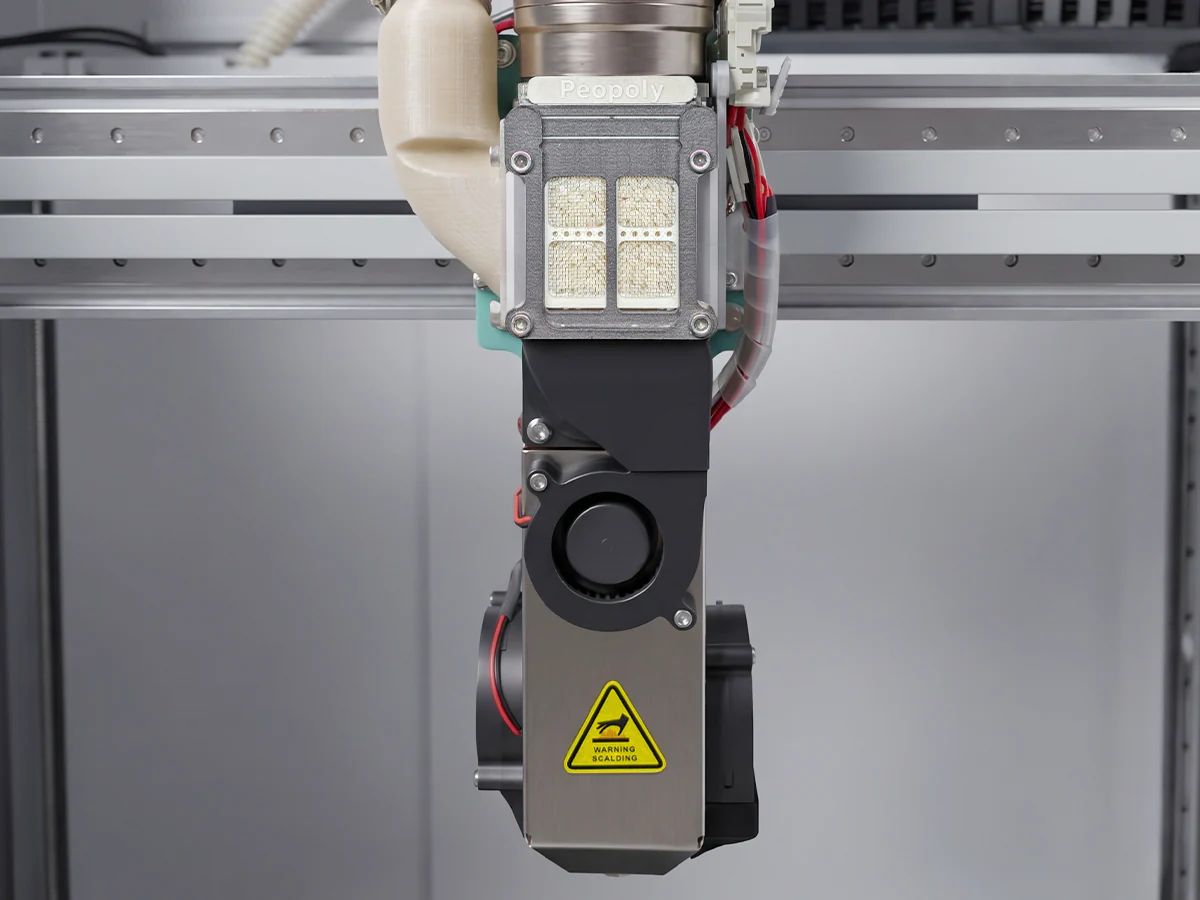
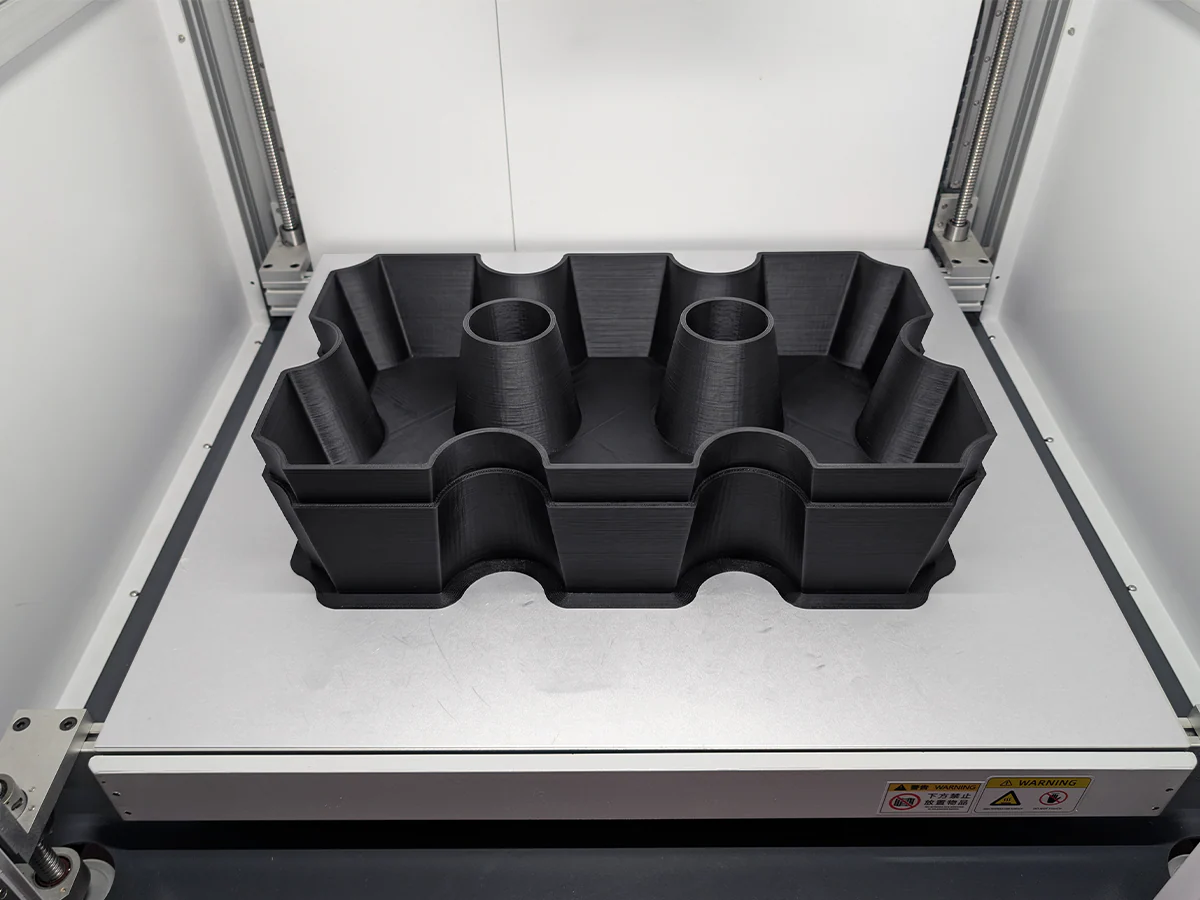
    Peopoly is known for its Magneto X, a printer that eschews belts and uses linear motors instead. The company also has a vat polymerization system, and now is moving into FGF (fused granulate fabrication) with a new system. Also called pellet 3D printing, this process should be much cheaper because you use the pellets directly, so it doesn’t have to be converted into filament first. Typically, it’s around a tenth or a third of the cost, which really adds up with larger objects. And with Peopoly’s new Giga 800, and its 800x800x800mm build volume, people are definitely going to be making larger objects.

    Other FGF printers are large industrial units costing upwards of $50,000. Previously, people have also tried to bring FGF to a wider audience, but have not done so well because of its complexity and expense. Peopoly is now trying with a $15,000 machine. Perhaps this is the perfect price point, letting them make a good machine that is accessible to more people. $15,000 is still a lot of money for home users, but for industrial firms, a well working pellet machine at this price point could be very tempting.

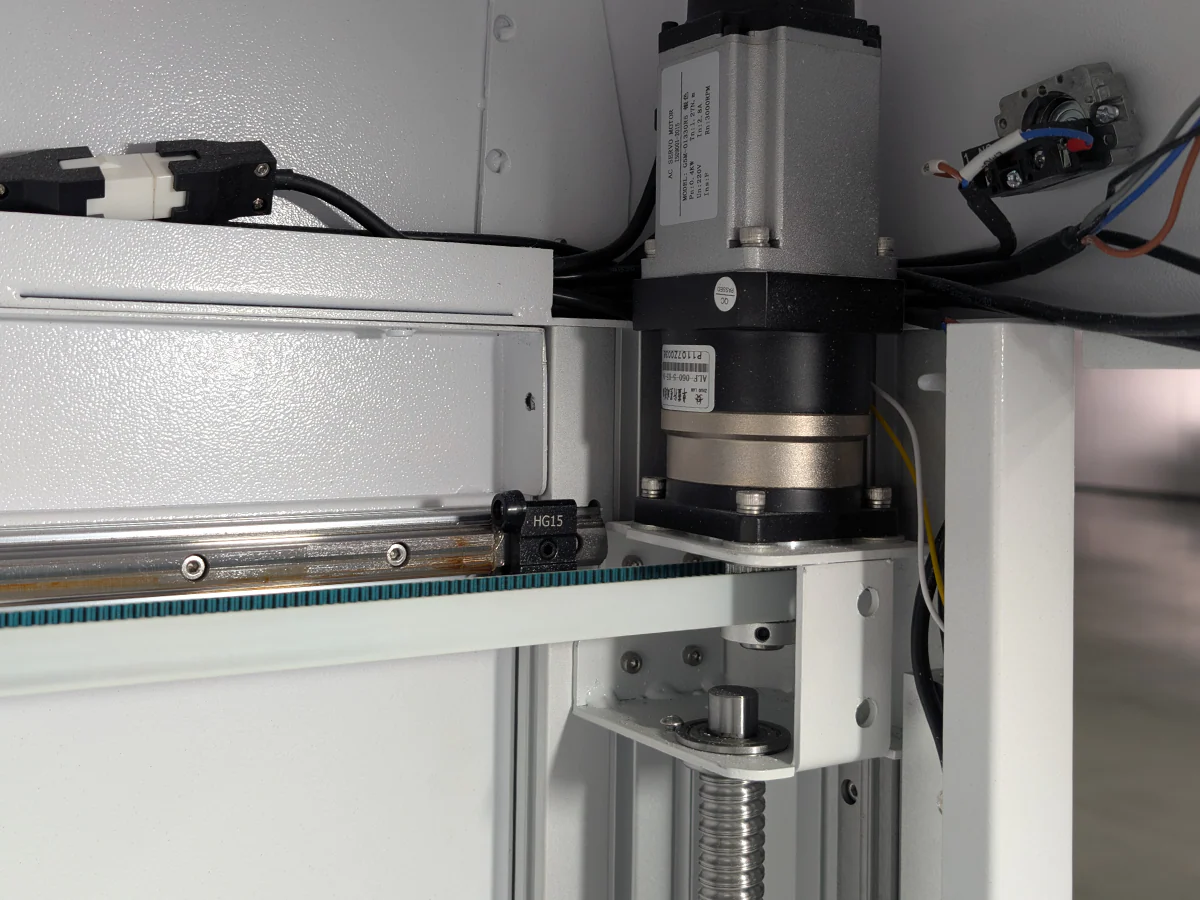
    The system has a screw extruder with two heat zones, and the company says it will be able to print 3 kilos per hour. It has a servo-driven CoreXY architecture built on Klipper and OrcaSlicer that uses linear rails and ball screws. Using Klipper´s Pressura Advance and mechanical retraction, the company says that it has reduced the poor surface quality associated with FGF. Pellets are put into a hopper, which feeds them into the extruder. The company says that the heated bed has been optimized to enable easy part release, a big issue for ABS and other materials in large parts.

    The hefty 320 kilo printer will come with 0.4mm to 5mm nozzles. It will have a 400°C nozzle temperature and a heated bed that can get to 120°C. The chamber has no active heating, but the company says that it is well insulated and so should keep to around 60°C. This is a bit of a worry for me, as it would be hard to measure and engineer chamber temperature precisely, which can be an issue when wanting to print reliably.

    Generally, the new Giga 800 could perhaps make PA GF parts or maybe polycarbonate, which would both be interesting choices for some user. But many will probably stick to PLA or PETG. The company has tested the printer with ABS, ABS-CF, ABS-GF, ASA, ASA-CF, ASA-GF, PPA-CF, PPA-GF, PA-CF, PET-CF, TPU 60A – 95A, TPU-GF, PEBA, and PET-GF so far. Especially for building volume-filling prints, the glass-filled and other reinforced materials will make a lot of sense and reduce warp. More people really need to look into ASA; I love the material for durable outdoor parts, and it prints much better than ABS. I’m curious about the TPUs and other elastomers, and how well they would do in bigger sizes on this machine.

    The new price point and big size could be tempting for people making sizable fixtures or things like outdoor advertising. Also, MRO people working in spare parts for defense, boats, and the like could really use this machine. But, I fear that this will struggle to find a market. It’s far too expensive for makers, and local shops will struggle to afford the printer. For industrial firms and users, the price tag isn’t the problem, but they may not be able to justify paying $15,000 for “a Chinese machine.” Aerospace and defense are logical customers, but they also would be wary of that. If people trust this machine and it has a group of staunch fans and users, then it could really do well. A lot of people are looking for something that can 3D print a lot of stuff cheaply and effectively. With far cheaper parts, the Giga 800 could really win over a lot of guys on the shop floor as well as in accounting. But, getting those first customers will be a challenge. Peopoly is launching what a lot of people want, but will it be able to gain their trust? If so, then it will be successful with a machine that could be a great concrete floor workhorse. But, if this trust doesn’t get built, then it will be hard for the firm.

    At $1,200, a lot of people bought an Elegoo OrangeStorm Giga for the fun of it, but $15,000 is used car money. Also, you have to arrange for your own LCL shipping and freight forwarding, which doesn’t seem like a fun thing to do and may put people off. There could also be questions on how to provide support for this as well. So, I do hope that this will work, but fear that its success may be slow in coming.

    Images courtesy of Peopoly

  • 3D Printing News Briefs, May 14, 2026: Project Calls, Reseller, Reconstructive Surgery, & More

    We’re starting off today’s 3D Printing News Briefs with two new Project Calls from America Makes. We’ll move on to some more business, with Axtra3D expanding its presence in North America through a reseller agreement with Dynamism. Then it’s on to research, first into LCD resin 3D printing, and ending with 3D printed metals in reconstructive surgery.

    America Makes & NCDMM Announce Two New Project Calls Worth Over $25 Million

    Recently, America Makes and the National Center for Defense Manufacturing and Machining (NCDMM) announced two new Project Calls, worth a combined total of $25.6 million. The first, Maturation Initiative for Additive Metals Interchangeability (MIAMI), is funded through the Office of the Under Secretary of War, Acquisition and Sustainment, Industrial Base Analysis and Sustainment (IBAS) Program. Worth $12.4 million, MIAMI plans to validate that it’s possible to replace traditional alloys with metallic AM materials in weapon system components for the DoW. Teams will choose candidate parts, define their performance requirements, and generate validated data that demonstrates the ability of the material to meet, or even exceed, critical properties of the legacy alloy. There will be three awards given, and participants should focus on reducing redundant material testing, speed up qualification, and enable broad, cross-platform use of metallic AM materials.

    The second Project Call is the $13.2 million INtegrated System for In-situ Testing & Evaluation (INSITE), with one award anticipated. Funded through the IBAS Program and the Office of the Under Secretary of War, Manufacturing Technology Office (OSW ManTech), the objective of INSITE is to set up an integrated quality assurance system for AM that combines in-situ monitoring and post-build inspection, using a nondestructive evaluation (NDE) approach. This should advance DoW priorities for reliable AM qualification, strengthen defect detection, and deliver production-ready capabilities that can help improve competitiveness, efficiency, and readiness across the U.S. supply base. The goal of the resulting combined approach is to improve inspection of some of the more challenging 3D printed parts, like dense materials, complex geometries, and large components, and unifying in-situ monitoring and post-build inspection within a certifiable framework.

    Axtra3D Announces Strategic Reseller Agreement with Dynamism

    In order to strengthen its U.S. go-to-market strategy, Axtra3D announced a new strategic reseller agreement with Dynamism to expand access for its Hybrid PhotoSynthesis (HPS) technology, Axtra.Workflow software platform, and Lumia X1 3D printer. Well-known for its selective portfolio and independent testing methods, Dynamism is focused on “rigorously validated, high-performance” AM systems. These qualities make it a great partner for Axtra3D, which emphasizes repeatability and production readiness in manufacturing. By adding Axtra3D to its portfolio, Dynamism can expand its photopolymer offerings, which will help it meet increased demand from manufacturers and service bureaus with industrial-scale workflows. In turn, Axtra3D will grow its North America channel strategy, hopefully speeding up the adoption of its high-speed technology across regional industries that need repeatable end-use parts production.

    “Dynamism has a long-standing reputation in North America for curating and validating advanced manufacturing technologies that meet real production requirements. This partnership strengthens our ability to reach customers who require both trusted guidance and high-performance solutions. Together, we are focused on accelerating the adoption of HPS-based production workflows across key North American tooling, aerospace, automotive, healthcare, and industrial manufacturing applications,” said Rajeev Kulkarni, CSO at Axtra3D.

    Ultra-Thin Optical Film Improves Quality of Light in LCD Resin 3D Printing

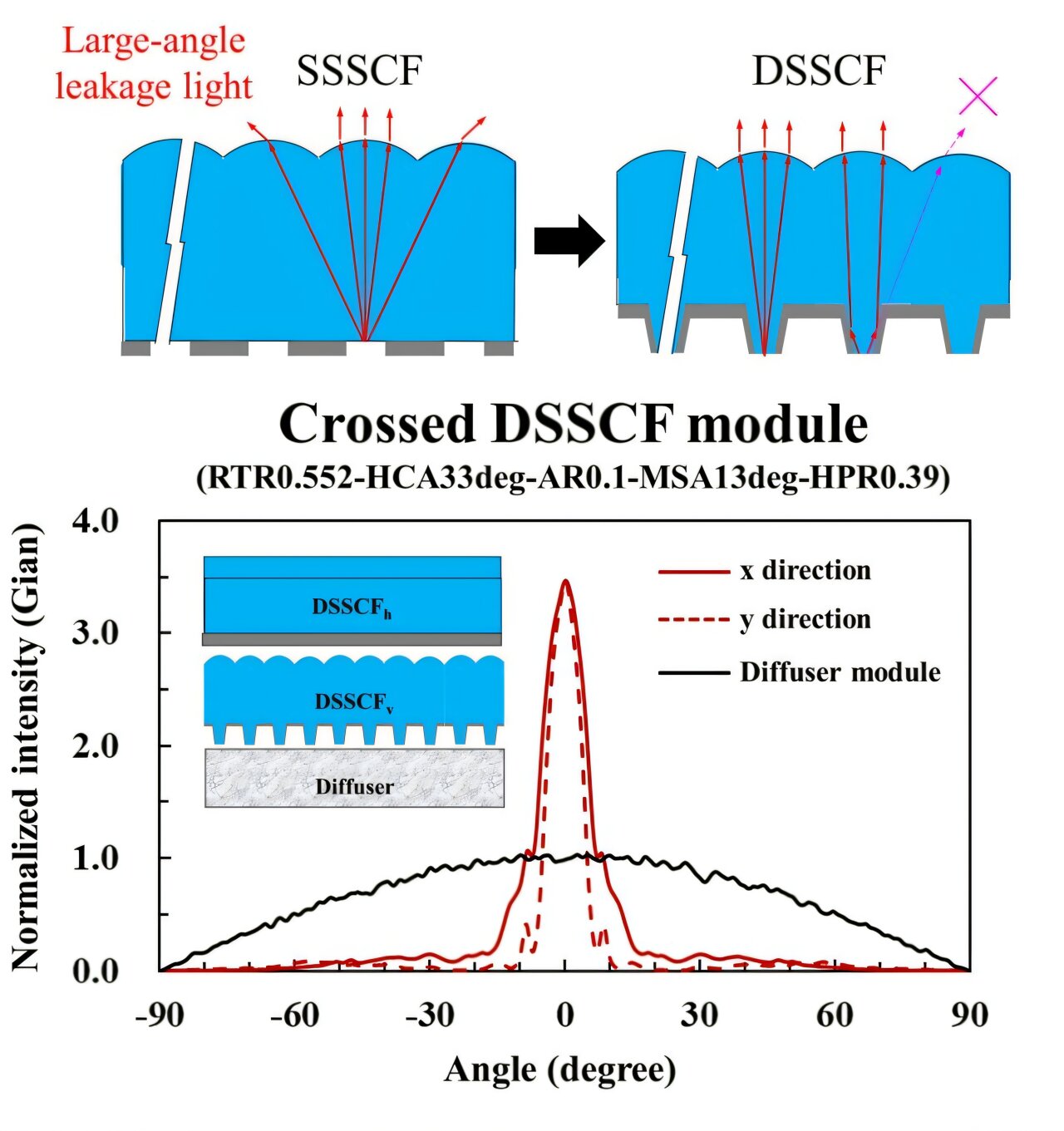
    Researchers designed and fabricated a double-sided structure collimation film (DSSCF) with better collimation characteristics thanks to additional trapezoidal microstructures that prevent the large-angle leakage light seen with single-sided structure collimation film (SSSCF). The DSSCF also improves the light intensity uniformity when combined with a diffuser module. Credit: Ding-Zheng Lin, National Taiwan University of Science and Technology.

    Industries like medical, jewelry, and engineering require high accuracy when it comes to printed parts, but that’s not cheap. Resin 3D printing, or vat photopolymerization, projects patterns onto liquid photosensitive resin with short-wavelength light to achieve smooth, detailed parts. Systems that use LCD backlights can be cheaper, but they aren’t always as accurate. A pair of researchers from the National Taiwan University of Science and Technology have figured out a way to improve the quality of light used in these less costly LCD resin 3D printers. They developed an ultra-thin optical film that helps make sure tiny details are precisely reproduced, which could allow users to print medical-grade products for less money. As they explain in their research paper, the team used their double-sided structure collimation film to develop a prototype LCD backlight system for resin 3D printing. This thin film makes the light that the prototype system emits collimated, which means the rays travel in parallel lines and improve light uniformity, so the intensity is spread out evenly.

    “LCD-based liquid 3D printing suffers from surface roughness or dimensional inaccuracies due to improper light angular distribution from the backlight systems used. Our goal was to fix these problems without increasing equipment size, thereby elevating print performance to professional grade,” explained research team leader Ding-Zheng Lin.

    “This technology could make it possible to use inexpensive 3D printing systems to create dental models, jewelry designs and engineering prototypes with precise dimensions and glossy finish.”

    PhD Candidate Improving Reconstructive Surgery with 3D Printed Metals

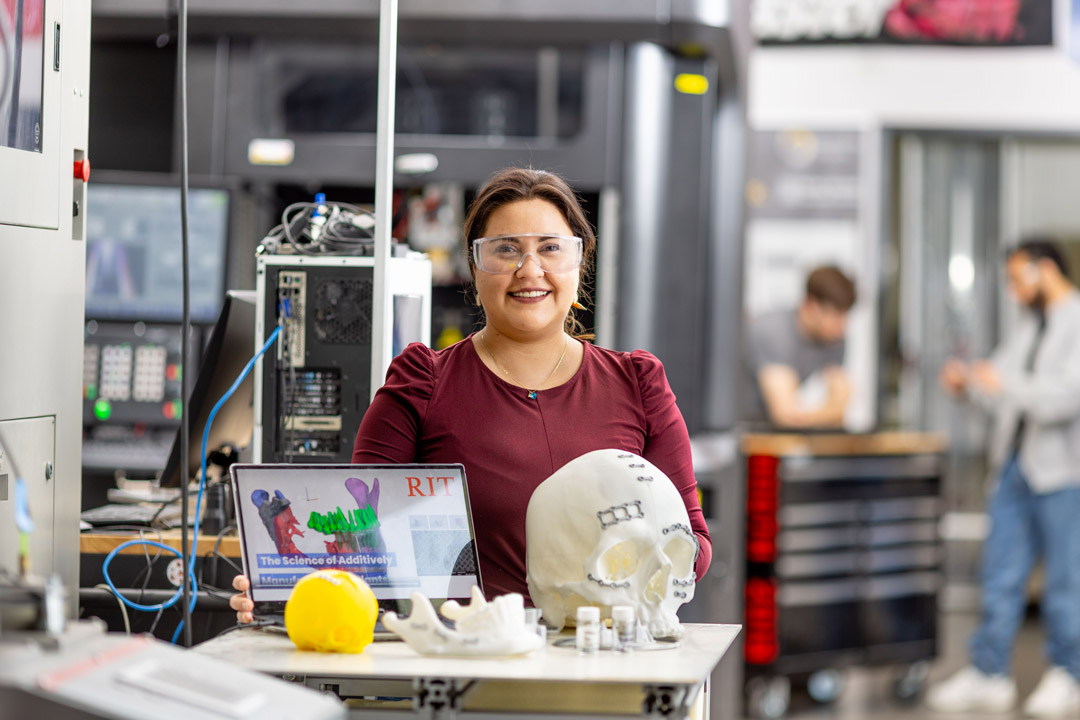
    Ph.D. candidate Valeria Marin Montealegre has been working on new options in 3D printed bio-metals for facial bone implants. Image: Scott Hamilton/RIT

    While simultaneously taking graduate classes in product development at the Universidad Autónoma de Occident and working at her implantable device company HumanBX, Valeria Marin Montealegre watched surgeons perform reconstructive surgeries with the 3D printed prosthetics she’d designed. She was interested in learning more about the technology, and enrolled in the Global Scholars Program at RIT in 2021. Marin Montealegre is now working to complete her PhD in mechanical and industrial engineering. Her research is focused on using 3D printed biocompatible, absorbable metals for craniofacial implants, which will benefit patients and positively impact her business as well. Her advisor Denis Cormier, director of the university’s AMPrint Center, is a pioneer in molten metal jetting (MMJ), and she’s specifically focused on using this technology to manufacture zinc, which can be used for bone healing regeneration. By 3D printing zinc-based implants, the devices can offer temporary mechanical support during the healing process, and will degrade over time as new tissue and bone grow.

    “There’s a trend now for bio-metals, those that can be absorbed in your body such as magnesium, iron, and zinc,” Marin Montealegre said.

    “There are few places in the world that are working with molten metal jetting, none working with bio-metals—yet. We recognized an opportunity to explore these materials using a different technology, and we are helping pioneer in this space. My lab mates are even more impressive, as they are developing the technology from its conception through manufacturing to make this possible. I think this is awesome.”

  • 3D Prod Buys Sculpteo

    French 3D printing service Sculpteo has been bought by 3D Prod. Sculpteo was a direct Shapeways competitor with dreams of dominating the direct-to-consumer 3D printing service market. Founded in 2009, the company had good software and good prices. With investment from Creadev, the company raised over $5 million. Sculpteo then moved a bit more into industrial and was acquired by BASF. Sculpteo became BASF’s industrial and consumer 3D printing offering, spearheading a deeper engagement with LPBF. Now the company is a part of 3D Prod, another French service bureau.

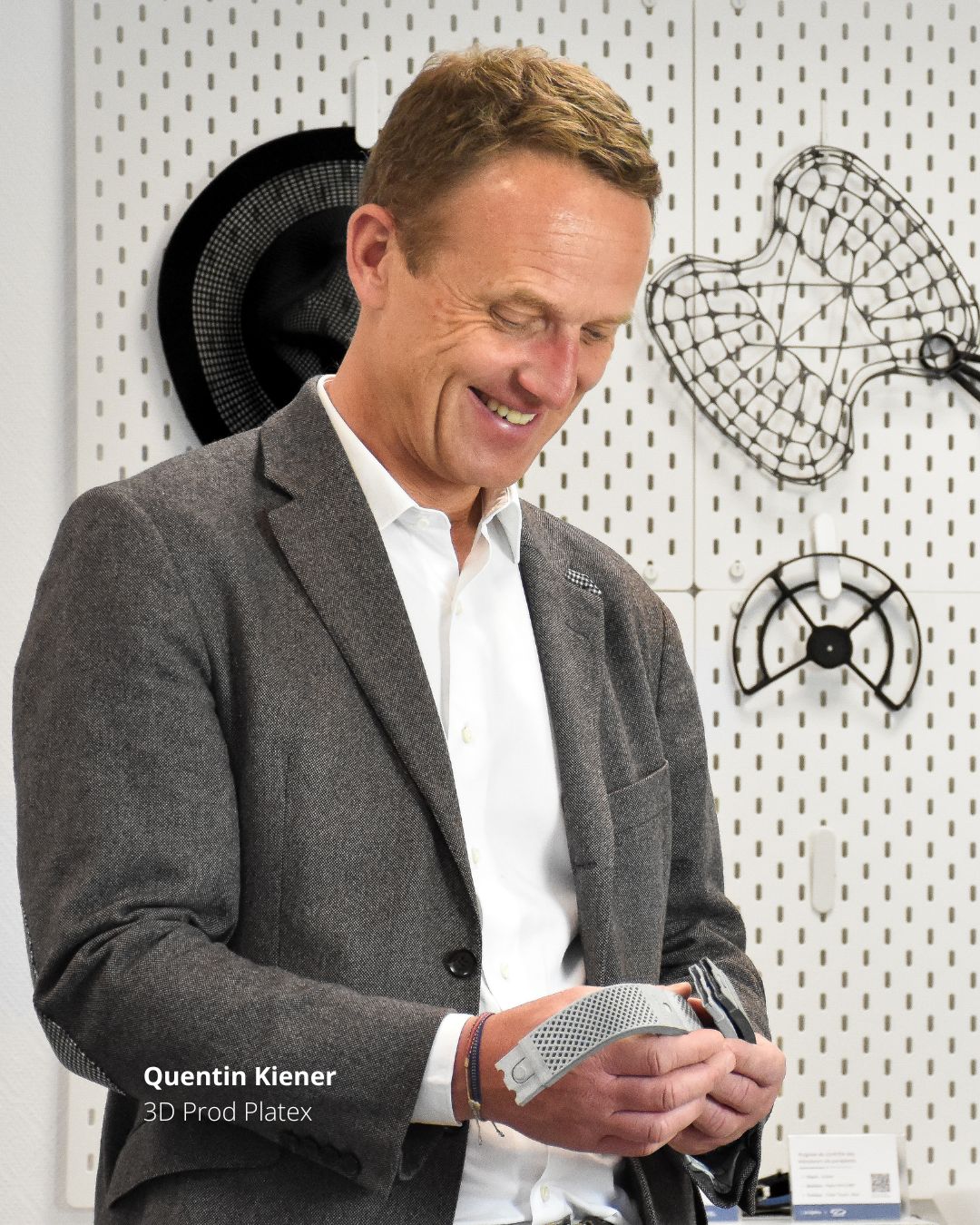
    Quentin Kiener, CEO of 3D Prod. Image courtesy of 3D Prod.

    The combined entity seems to have a very French focus, but could yet grow into a leader in 3D printing as a service beyond France. The companies together will have 75 industrial 3D printers, 75 materials, make over 1.2 million parts per year, sell into 61 countries, and have 8,000 m² of production space. The company has ISO 9001 and ISO 13485 for aerospace and medical parts, respectively. The combined entity will have around $19 million in revenue. The owner will be Platex, a large French injection molding company established in the 1950’s known for its resin breakfast trays. For Platex, this is an excellent move, letting them diversify and move into lots of new businesses such as defense and medical. It can use its competencies in manufacturing in France and, in part, its material expertise to help and open itself to new opportunities and modalities along the way. For Sculpteo staff, this will be quite a relief since it puts them on a surer footing.

    As a firm, both brands could be valuable, and the company could perhaps have one consumer and design-oriented brand and a more industrial one. There is a lot to be said for having a France-focused 3D printing service. Defense contracts and aerospace contracts could be considerable in the country, given Airbus and other large aerospace contractors based there. In a more independent and self-reliant world, French companies, and in particular the aerospace and defense sector, will look to local production. The biggest direct competitor, Erpro, is focused on luxury and doing large continuous production deals with companies such as Chanel. They have a lot of the same technologies and a proven track record. The two could merge to dominate the market completely. This would probably not be a good idea, since there should be enough growth for both of them, and France would be better off with two global players rather than one quasi-monopolist. Both could coexist with Erpro looking for long relationships and big runs, and 3D Prod going for single parts to series.

    Both companies should look beyond the cozy French experience, however. Fat and lazy firms focus on one country in 3D printing. An international focus and exports would make the firm more competitive and keep it on the edge of technological development. With many more international clients and businesses, the firms would be a true asset to France. Just like any service bureau, 3D Prod would be wise to start using print farms more extensively and making its own filament. If it thinks for a second that there is no need for large print farms in France, or that it somehow floats above the print farm movement, then the company will be doomed. Print farms are a huge opportunity to make low-cost parts quickly. In China, we can already see 3D printer megafarms of 10,000 to 15,000 units emerging. In the US, the largest that we’ve found is only 5000 printers. Europe trails behind, with the largest farms being only around 2000 printers in size. 3D Prod could therefore dominate this market in Europe and outproduce everyone else. If not, they will eventually be crushed by someone who does this.

    If the team sees this move as an opportunity for investment and global expansion through excellence, I think that we could see a lot happen in the European service bureau market. Large sources of capital, such as Core, AIP, and AFM Capital Partners, are currently squarely focused on US defense opportunities. This means that there is room for large European firms to emerge. But excellence and high-value parts must be complemented by low-cost desktop 3D printing. This is especially true if their average part cost is around $16, which should see someone else nipping at their heels quite quickly.

  • AM & the Military’s Self-Infliction of Rapid Change

    I’ve noted before that the additive manufacturing (AM) market for defense has started to evolve so quickly that it’s impossible to even keep track of all the updates in real time. That was at least two wars ago; how much truer that observation is today, with the Iran War remaining wholly unfinished despite all the attempts of the US administration to pretend it’s no longer taking place.

    As irresponsible as that attitude is, it’s certainly understandable: the natural impulse when faced with things that are both this unpleasant to think about and this much of a challenge to get a handle on is to simply ignore those things and move on to more enjoyable matters. On the other hand, the defense market is too integral to the fate of too much — including the fate of the AM industry — for one to be able to afford to lose the thread of current events for very long.

    With that in mind, now may be a good time to step back and consider if there is a general picture emerging from all the seemingly disparate elements contained in months’ worth of daily news, press releases, and government funding announcements. Perhaps if we can identify some of the broadest themes, the constant onslaught of new information will become less overwhelming.

    Containerization is Real

    Containerized AM platforms are becoming a real thing, or they’re trying to, at least. The San Diego startup Firestorm Labs is solid evidence of this, as the company just closed an $82 million Series B round, and, just as importantly, the company got $30 million from the Pentagon, as part of something called the Accelerate the Procurement and Fielding of Innovation Technologies (APFIT) program. The contract could end up being worth as much as $50 million, and, among other things, involves the delivery of five of the company’s xCell manufacturing units to “an undisclosed customer in the Indo-Pacific region.”

    Is that customer one of the US bases in the Indo-Pacific Command (INDOPACOM)? Could it even be one of the US military’s allies in the region, like the Philippines military? The latter just tested manufacturing at the edge in joint exercises with Western armed forces, and the results suggest significant potential to both save money and speed up deliveries.

    Speaking of manufacturing at the edge, that’s one of the main topics of a webinar on drones, “UAS Additive Strategies”, that 3DPrint.com and AM Research are presenting on June 30, between 11:00 AM and 2:30 PM Eastern. Cheaper drones are probably the primary factor behind the increasing interest in making containerized factories a dependable reality — that’s what Firestorm Labs, for instance, is largely focused on — but they’re not the only factor.

    Both low-cost drones and containerized systems, in fact, are symptoms of the same overarching theme, which is adaptability. Recognition that the US military desperately needs greater adaptability is the principal catalyst for all the other changes involved in the overlap between AM and the defense sector.

    If you can obtain a “good enough” weapons system at a fraction of the cost of some idealized “perfect” weapons system, you can reduce the likelihood that you’ll hamstring your ability to respond to some future blindspot by overcommitting to what’s currently on the market: that’s the lesson the US military’s enemies are teaching it, presently. And one solution that could ultimately provide the ability to respond to as many different unforeseen threats as possible, down the road, is distributed manufacturing: that’s the lesson Pentagon planners are learning, which is pushing them in the direction of containerized factories that support expeditionary production capabilities.
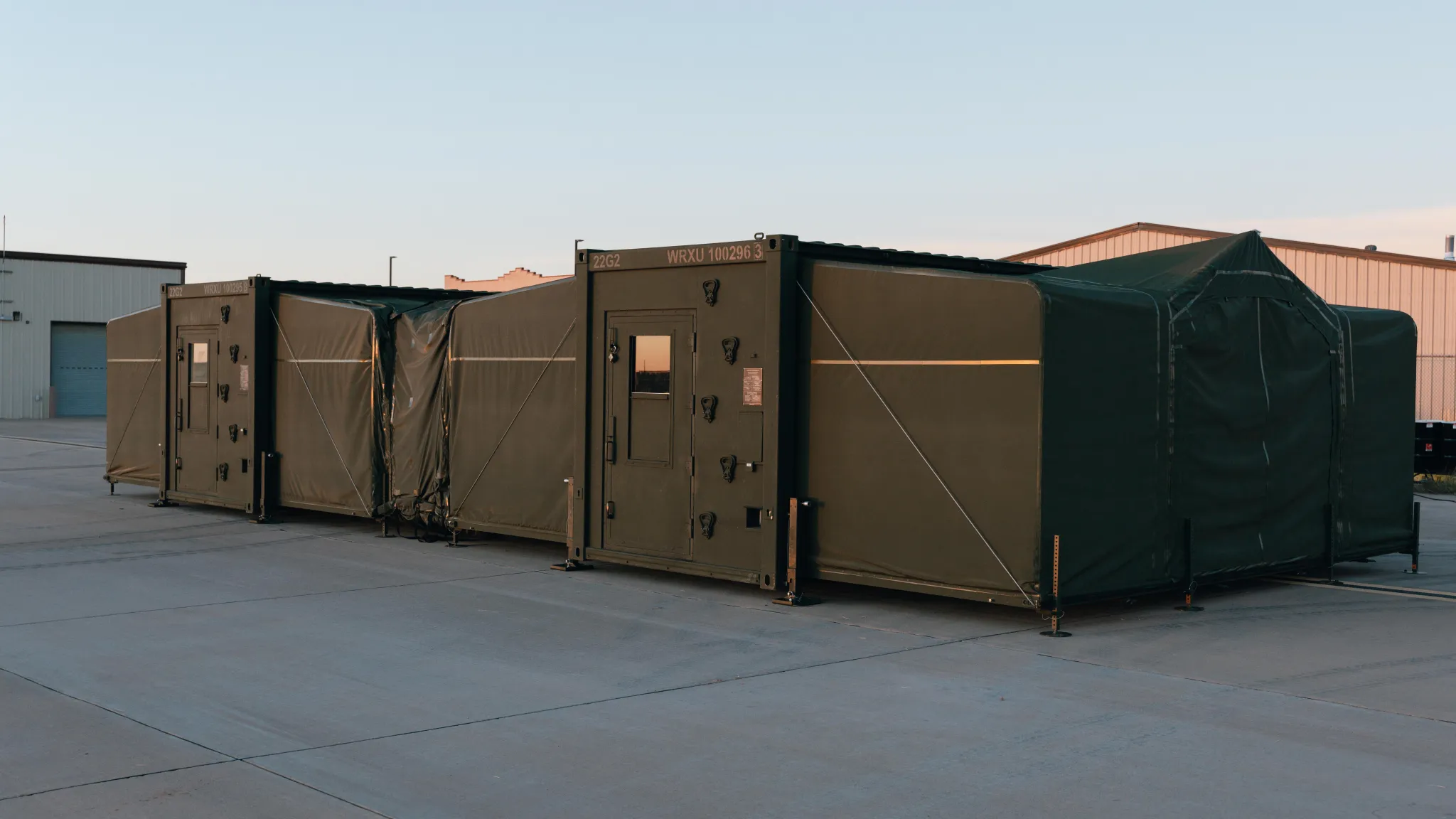
    Image courtesy of Firestorm Labs

    Tension Persists Between the US Government and the Defense Giants

    That issue of adaptability extends beyond adopting new manufacturing processes. It also involves a shifting dynamic between the suppliers that traditionally comprise the US defense sector, and the DoD, which butters those suppliers’ bread.

    Last year, the US Army Secretary, Dan Driscoll, along with multiple other DoD officials, started intensifying the rhetoric surrounding plans to let the US military supply its own replacement parts with 3D printing. In September 2025, Driscoll reportedly told “a media roundtable“,

    “[We’re] empowering our generals to take on that risk where we have the right to repair so that they can make these very small parts to get things back on and get them back into the hands of our soldiers. I think you’re going to think that these are kind of one-off instances. I don’t know the exact number, but my commitment to you is, or my best guess is, that this is a meaningful step forward.”

    A couple of months later, Driscoll would go so far as to say that, ““The defense industrial base broadly, and the primes in particular, conned the American people and the Pentagon and the Army into thinking that it needed military specific solutions, when in reality, a lot of these commercial solutions are equal to or better, and we’ve actually harmed ourselves with that mentality.”

    Driscoll framed the objective that he’s trying to work towards like this:

    “It used to be 90 percent of things we bought were purpose-built for the military or the Army, and 10 percent were off the shelf. ..what we are trying to do is flip it to 90 percent being commercially available and 10 percent being specific in the worst of cases, because when you actually start to think about what large-scale conflict looks like, you cannot scale one-off solutions as quickly and easily as you can scale commercially available things” (Emphasis added.)

    It can’t be stressed highly enough that the Pentagon is framing all of these issues in terms of what the US military will require in a large-scale conflict. What’s happening in Iran may qualify as the sort of scenario the Pentagon was thinking of. But you should also consider the subtext that the entire global elite surely has in mind, which the foreign minister of Singapore, for one, voiced when he said in late April that the Strait of Hormuz conflict is merely “a dry run” for war between the US and China.

    That is precisely how seriously Pentagon decision-makers are treating the need to accelerate the US military’s AM adoption, as illustrated by Driscoll’s recent remarks that he plans to partner “with nontraditional entities like academia” to develop the IP for replacement parts from scratch, which can then be leased or purchased by the Army. This sort of solution would address exactly the problem Driscoll has been criticizing re: the US military’s inability to repair its own parts, cheaply, in live combat conditions.

    Most pressingly, Driscoll wants to produce interceptors because that’s the challenge that Iran has brought to the surface most acutely. But obviously, once the precedent is set, the dynamic could apply to just about anything that the US military can figure out how to print. The handful of largest primes can only view this as a threat.
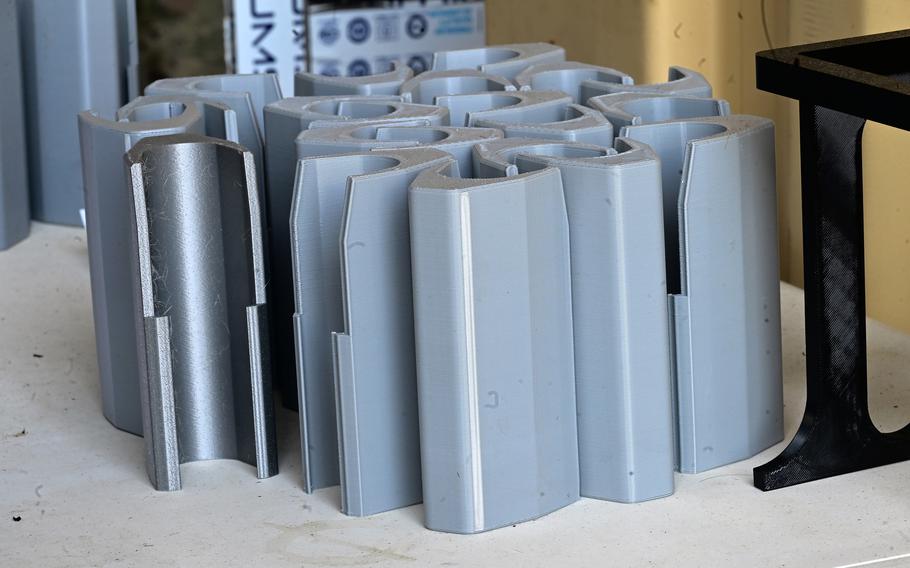
    Bipod adapters printed by the US and the Philippines militaries during recent joint exercises. Image courtesy of Stars and Stripes

    Adapting the Unadaptable

    It may indeed only be a threat meant to light a fire under the proverbial seats of the likes of Boeing, RTX, etc. Driscoll has said that the Army will provide more details on the plan “in the next four to six weeks”. In this context, one shouldn’t lose sight of just how much of the AM industry’s progress, historically, the primes have been responsible for. They may need to disrupt themselves in order to meet the challenge of the moment, but there’s no question that they have the technological capability to do so, if they can figure out some deal with the Pentagon to lease their IP in exchange for royalties on the parts produced.

    As Driscoll was issuing his latest broadsides on the defense sector, Lockheed Martin was issuing a peculiar message of its own, a press release from late April that didn’t really announce anything new, but simply drew the reader’s attention to how familiar Lockheed Martin is with metal PBF. Perhaps the most genuinely new announcement in that release was Lockheed Martin’s confirmation that the company’s Precision Strike Missiles (PrSM) heavily incorporate AM in the manufacturing process, although I already knew this because I looked it up when it was reported that some of the worst damage inflicted on Iranian civilian targets by US strikes fit the profile of what PrSMs are known to be capable of.

    So, that’s not exactly a badge of pride for the AM industry, but it does show that the defense sector status quo understands the message being conveyed to it by the Pentagon, and is attempting a response. The primes are trying to change, if not for the better, then at least for the cheaper. The takeaway from all of these developments is that two leviathans — one public (the Pentagon), the other private (the defense contracting establishment) — know that they have to do things differently, and are trying to accomplish that before the world forces the issue on them against their will.

    That is the web that the AM industry now finds itself entangled in. It would be nice if one could avoid it by choosing not to work directly with the defense sector, but the value of the AM industry is so disproportionately tied to this market segment that it’s going to impact you no matter what. If the idea of defense work turns your stomach too much, my recommendation would be to hitch your wagon to one of the other strategically critical sectors that Vanesa Listek has done a remarkable job of laying out for everyone in this 3DPrint PRO piece. They, too, are all in the process of trying to figure out how to disrupt their own status quo.

    Featured image, from Schofield Barracks in Hawaii, courtesy of Defense One/Jennifer Hlad

  • AI CAD Tools for 3D Printing: An Overview

    There is a bevy of AI-to-CAD tools coming out. Some are finding users; some are raising millions in funding. Many new ones are coming out all the time, so we waded through all of the options we could find to give you an overview. What do these tools mean for us? And what is out there?

    Generally, the tools fall into four categories:

    AI Plug-ins and Co-pilots: These tools plug into existing CAD tools or live in them. They tie Claude to Fusion or add an AI functionality to a CAD program. These tools live inside or alongside existing software and act as a handy AI assistant for you while using that particular tool.

    Workflow and automation tools: These AI tools automate an entire workflow from start to finish, so they can take your scan and turn it into a mold file. These tools can also automate a particular process or conversion, for example, taking 2D drawings into 3D models for BIM.

    Checkers: These tools don’t author; they check your CAD file, your assembly for errors, and whether you’re compliant.

    Text to STL: Also called text to CAD, these tools use existing LLMs to take a prompt and turn it into a CAD or STL file.

    Checkers

    The two I’d like to focus on for now are checkers and Text To STL. Checkers are now quite overlooked. But if we look at what LLMs are very good at—categorizing and matching things—they could become very powerful. AI, more generally, is great at spotting patterns and deviations from them. You can review their work, and they just highlight mistakes. This means they can make mistakes, but you can ignore them. And it means they take dreary work out of your hands and help you be more successful and faster, without threatening your work. There’s also a lower chance of developing faulty geometry; more importantly, faulty geometry that you won’t know is faulty until it’s too late. Checkers, therefore, could very well achieve broad adoption much more quickly than other tools, where people may be fearful of being replaced or of creating faulty CAD files. Checkers are your allies, while the other tools could be a threat. This is why we should pay close attention to these.

    Text-to-STL

    Text-to-STL tools are very crude and easy to dismiss. Engineers, in particular, can easily overlook the impact of these tools because they replace them, their craft, and their tools. But these tools can democratize the creation of files far more than the others. They could take millions of people to create what they need. This could make 3D printing, though desktop machines and services, much more meaningful and accessible to millions. This could be the Cambrian explosion moment that we’ve been waiting for in additive manufacturing. Yes, these tools suck at making good geometry. And yes, they suck at technical parts. Maybe they’ll get better, but let’s imagine that they only kind of get a little better. They’re still easy, but you couldn’t make a spoiler for your car with them. But, imagine that they were good enough for earrings, brooches, toys, and creative things for around the house. Then still, it would make 3D printing far more relevant to millions than it is today.

    It’s kind of like saying the Cray supercomputer is irrelevant to the common person because it is only used for nuclear fallout predictions. No, in fact, this does in a roundabout way make it very relevant indeed. And if we look at the extent of this development, computing, then the personal computer or the networked cloud computing concept will have a daily place in our lives. CAD is now in a silo, enshrined and worshipped by 2 million experts worldwide. The other 8 billion people depend on these people to make all the stuff in the world. Directly or indirectly, they contract these 2 million to make all the stuff. Just like the scribes in European monasteries were doing all the writing for all of Europe at one moment. But Text-to-STL could let around 6 billion people have access to 3D creation. Now, this doesn’t mean that these guys will all make their own cars or produce nuclear reactors. This will be a bad idea. I can not write a script as well as a medieval scribe. But through typing, computers and email I can communicate with millions of people far more easily than they can. So my skill in putting text down is much diminished when compared to theirs, while my ability to produce text and communicate it is vastly more advanced. My text is infinitely less beautiful but infinitely faster. Given the care per letter, I’m also much more likely to make a typo.

    Similarly, we used to rely on professional photographers for all the photos. Then you’d take special family photos with a big camera. Now we take thousands of pictures with devices we always have with us. It’s not that there are no more professional photographers in the world. It’s just that we value the skill less, hire them less, and there are more pictures in the world, with more people spending time taking them. And the fact that so many can publish pictures has led to Instagram, citizen journalism, and a bizarre cataloging of pictures of people’s dinners. The effects of instant valueless photography are, therefore, both easy to imagine and difficult to interpret. As in, I think we can all expect many more creations and many more people making things. This will lead to more 3D printers and more filament being sold. And then? We don’t really know whether everyone will make their own toys or whether tens of thousands of candle entrepreneurs will result. That all depends on the specifics.

    But, we can say that even if Text-to-STL tools don’t improve much more, they will make 3D printing much bigger. I won’t use one to get a job at Airbus, and hopefully, no one at Airbus will use one of these tools, but lots of people will use them to make lots of things. Imagine that we can never make truly technical parts, and that the system never really gets much more “intelligent.” Imagine then that you can just put a relief of a picture on a cube, or someone figures out how to make a simple tool to slap images and sketches on lots of different objects. Even with just this ability, millions could use 3D Printing to customize objects, label items, make signs, mark items they own, and make customized items to a degree. This impact alone will be one of the more significant things to occur in 3D printing. If it never gets better and I can never make my own plane with them, no matter.

    AI Plug-ins & Co-pilots

    These are likely to become much more prevalent through the actions of Siemens, Solidworks, Autodesk, PTC, and the like. We can see a strong interest among those firms in AI. They don’t want to get replaced as they’re addicted to all those yummy subscriptions. They’ll continue to deploy a lot of co-pilot-like tools inside their ecosystems. The value of these tools will depend on how many critical errors they make and overall trust in AI. The big CAD companies could make much more money by offering extra subscriptions through validated checker tools inside their CAD packages. A few dollars a month here for compliance to a standard, a few more here to check that all your tolerances or hole sizes comply with something else, some conversion tools there could really add up for them. Instead, these firms will probably ape the latest co-pilot and agentic trends, offering tools that may be cutting-edge but will be accident-prone. More general adoption will depend on values or specific news. I lived in Eindhoven, and there was this self-driving bus line years before this was common. One crash and a couple of choice pictures for the newspapers later, there were no more self-driving buses. Agentic and AI adoption within CAD tools hinges on moments like this. It would be folly to go all in on adopting these tools, and it would be silly to ignore them. But, adoption will depend on individuals’ views and trust in AI. If these tools let me move to a higher abstraction level, so that instead of designing every brick I can design one and quickly build a wall, adoption will be broad and across all tools.

    Workflow tools

    The greatest financial benefits could accrue from workflow tools. If you care about a workflow or file conversion, you can code your own tool today. But, if I, with ten people, make a tool that saves you half an hour a day and costs just ten bucks a month, then you won´t even bother. Maybe in Orthotics and Prosthetics, for example, scan-to-mold tools will get broad acceptance, while in general, scan-to-3D print people will build their own tools for their own workflows. But, in this specific O&P market, a team can develop a validated workflow that is faster and easier than a tool; there could get a lot of customers. For entrepreneurship, a well-calibrated offering in workflow that steers clear of the functionalities that will become commonplace through LLMs, will be the clearest path to long-term profits.

    Overview

    Below, we can see an overview of AI to CAD tools as generated by Google Gemini. This is an example of what an AI tool can do well.

    Category Tool Core AI Functionality Best Use Case Typical Pricing (Starting)
    Generative Creators Zoo (Text-to-CAD) Text/Code-to-3D; generates editable B-rep geometry. Mechanical prototyping & manufacturing. Free tier (20 credits); Paid from $20/mo.
    AdamCAD Text-to-Parametric 3D allows for conversational edits. Hobbyist 3D printing & quick part iteration. Free trial; Paid from $5.99–$9.99/mo.
    Kaedim 2D image-to-3D mesh conversion. Game assets & creative modeling. Subscription-based (Contact sales).
    Engineering Assistants Leo AI “Engineering Reasoning” – analyzes part history & Q&A. Enterprise mechanical engineering data retrieval. From $39/mo.
    DraftAid Automates 2D fabrication drawing from 3D models. Rapid drafting for manufacturing & construction. Annual custom quote (volume-based).
    Autodesk AI Generative design, auto-dimensioning, & path prediction. Professional product design & AEC workflows. Part of Standard subscriptions.
    Ansys SimAI Physics performance predictions (CFD/FEA). High-speed structural & fluid simulations. Enterprise license (Contact sales).
    Architectural Planners Autodesk Forma Environmental analysis (wind, noise) & site feasibility. Early-stage urban planning & site design. Approx. $315/mo.
    Veras AI rendering plugin for Revit, Rhino, & SketchUp. Photorealistic concept visualization. Subscription-based (Contact sales).
    TestFit Real-time automated site & building layout configuration. Real estate development feasibility studies. Professional subscription (Contact sales).
    Maket.ai Automated floor plan generation from text prompts. Residential design & zoning compliance. Subscription-based (Contact sales).

    But, if we look at the claims from Gemini as to which one is the best, the claims are meaningless. The LLMs just take the claims from the makers and repeat them. Also, if there are any external assertions, they are based on two to three sources. There are also a lot of tools that are not found through using LLMs.

    This is what I’ve been able to find so far:

    MEC Agent is an automation tool focusing on automating receptive tasks such as bulk exporting or converting parts.

    CADXStudio is a very ambitious project where it aims to be a complete CAD CAM tool built on AI. Text to CAM and parametric functions make this very all encompassing. It’s free for up to 25,000 tokens per month but can go up to $49 which gives you 2 million tokens.

    OpenArt is a CAD drawing tool focusing on using templates to make detailed CAD drawings. It also has community models and lets you train a model.

    Meshy.AI is focused on VR, animation and text to image, without a lot of mechanical logic or understanding, costs $20 a month.

    Tencent HY Global is a collaboration between Chinese internet giant TenCent and leading model HuggingFace.

    Tripo AI is a character and rigging tool focusing on taking 2D sketches and making them 3D for $16 per month.

    Camfer is text to AI for SolidWorks.

    CADScribe is a simple interface that works well initially, but I got stuck when trying to do complex things.

    DraftAid goes from 3D to 3D drawings, wanting to be the drawings for the manufacturing nexus between all the CAD tools.

    BuildCAD is a browser based CAD that is meant to be your first 3D file that you can then export to existing CAD tools.

    CGDream´s CAD tool is a simple, free CAD generator.

    CADGPT is a CAD-specific gateway to ChatGPT.

    NexCAD is a checker that checks for things like tolerances, review, and error mitigation. Focusing this to me seems to be a smart play.

    Sloyd costs from $7.49 to $24 and focuses on a rigging, visual model generation.

    Printpal is specific to 3D printing and is free for 10 models a month, $10 for 200 a month. This could be very good for our community.

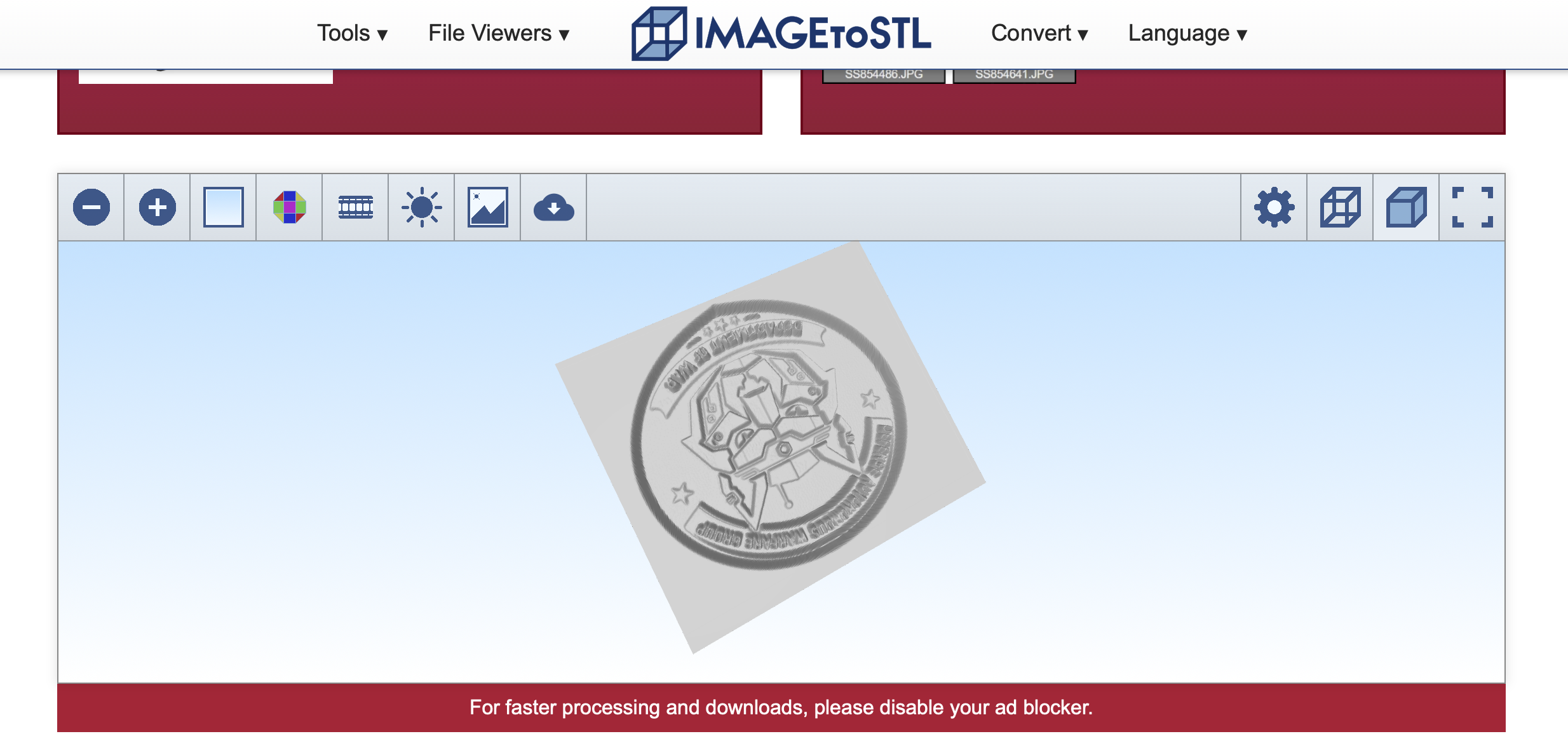
    Imagetostl.org is based on taking pictures to STLs, starting at $13 per month. It seems to work for simple pictures.

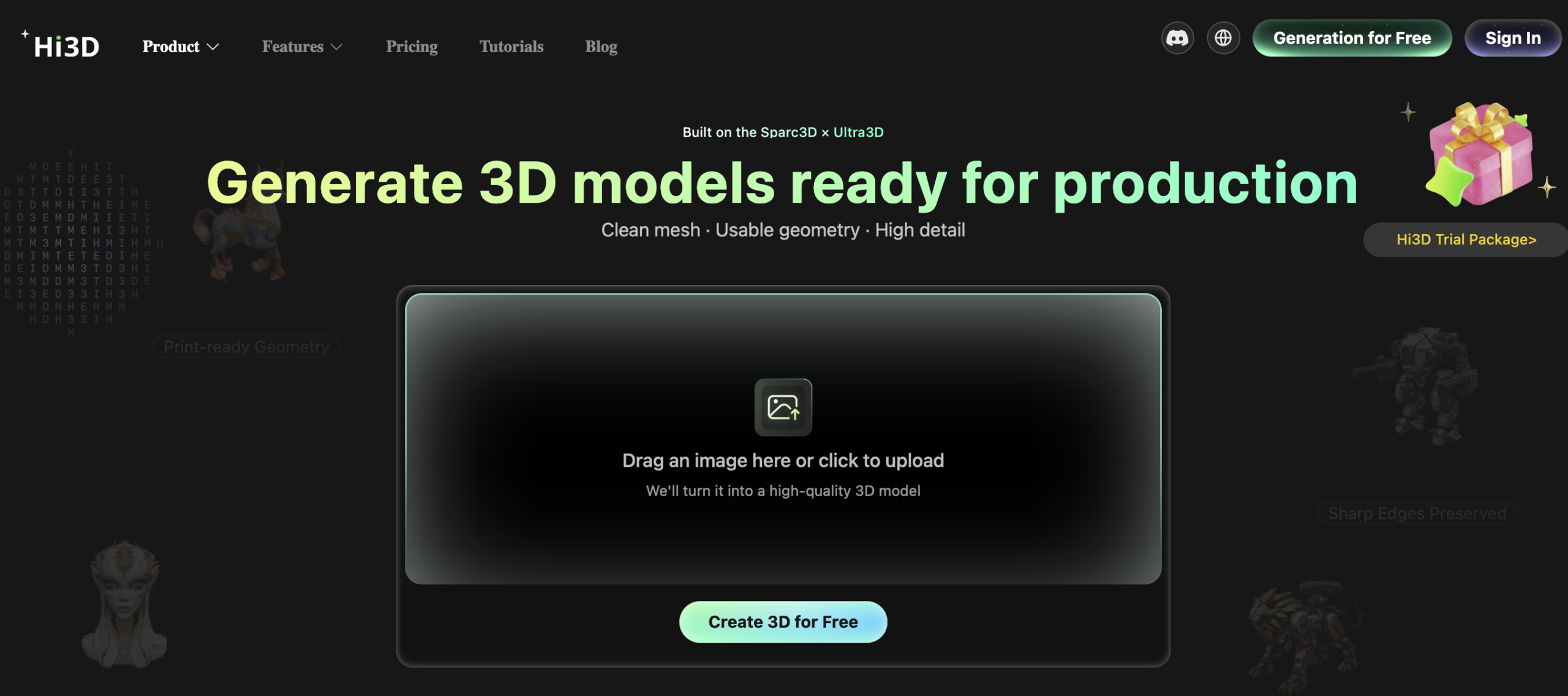
    Hitem3D is esthetically challenged and focused on images, but it says it can make printable files for $10 months a month.

    Fast3D is an image and Text-to-STL from $7 per month.

    STLBuddy claims a 98% print success rate for its $20 per month for 200 credits service.

    MasterpieceX is a scene generation tool more meant for game asset generation.

    Magic3D is $10 and includes a file type converting.

    Hyper3D’s Rodin is a more visually inclined 3D image generator.

    Text2STL is a bit different as it lets you type and make signs and in the like in 3D. Could be helpful if you need a sign fast.

    Bambu Lab´s Makerworld Maker Lab has a suite of customization tools.

    Remeshy has a better interface than most and lets you look at and remix a gallery of models.

    Imagetostl is simple to use, fast, and the quickest tool to get started with for simple files.

    Spline is a slick image generator meant for 3D images more than engineering files.

    Hugely popular tool Canva also has an STL generator, which is worrying for all the people piggybacking a bit too much on the LLMs.

    Vondy doesn’t let you download files, but does explain and give you tips on how to generate files.

    Backflip is surprisingly tweakable and fun to play with and works well.

    This seems to be the list that’s online right now  Are there any more? Let me know once they’re released or if I’ve missed some. I’ll dive deeper into them and test more over the coming months.

  • DeskArtes Releases 3Data Expert Version 16.0 AM Data Preparation Software

    Finland’s DeskArtes Oy has released 3Data Expert version 16.0, a comprehensive tool for additive manufacturing (AM) data preparation. Originating in the 1990s at Helsinki University of Technology, now Aalto University, the company has since grown to fulfill the various 3D model processing needs for the AM industry as a whole. The latest version of 3Data Expert offers advanced support structure features for denture manufacturing, improved quality control, and a more intuitive graphical interface, simplifying complex workflows and enhancing user efficiency.

    The company’s extensive history with AM has provided it with unique insights for developing valuable software tailored to the industry. Collaborations with industry leaders—beginning with Helisys, Stratasys, and EOS in the 1990s, followed by Z Corporation, 3D Systems, and Mcor Technologies in the 2010s, and continuing with current partners like Cubicure and Lithoz—have enabled DeskArtes to create software features that meet diverse AM user needs. These solutions serve sectors such as engineering, automotive, and dental.

    Cubicure CEO Robert Gmeiner states, “Cooperating with the DeskArtes team always was and continues to be a great experience. Their profound knowledge in graphics operations and data formats usable for 3D printing routines have high value for this industry.”

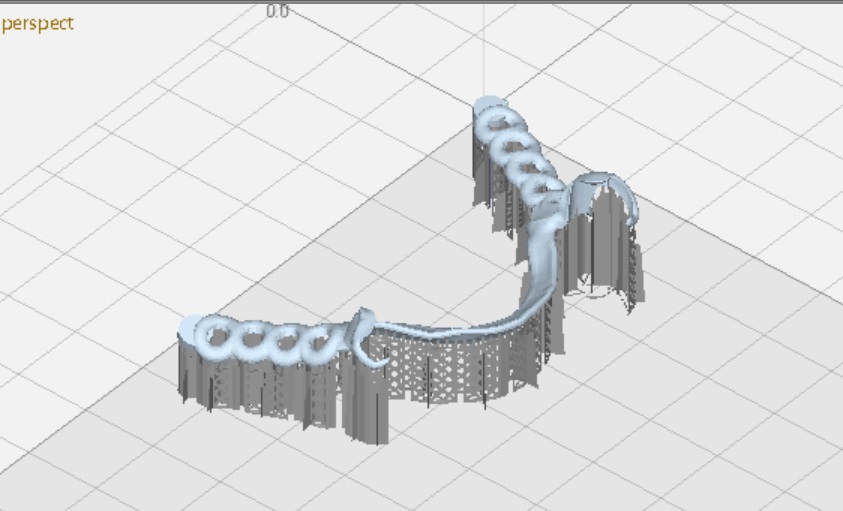
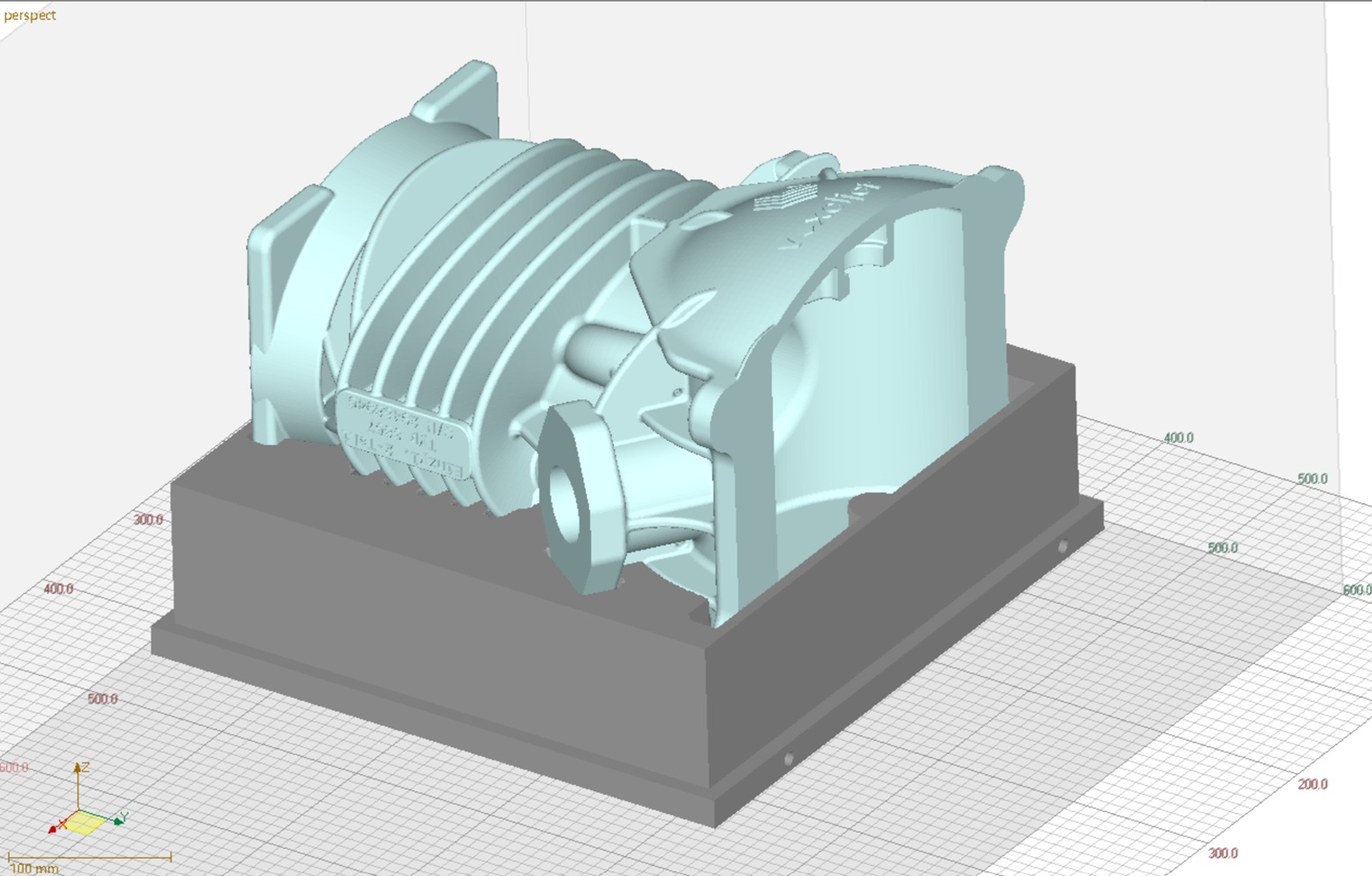
    The latest updates in 3Data Expert include enhanced support structures for denture manufacturing. New Silhouette supports enable users to create strong, yet easily removable supports for titanium denture frameworks, improving both stability and ease of removal. These structures provide essential support during printing and heat treatment, which relieves internal stresses in the framework. The Silhouette support functionality has been tested by partners utilizing EOS M290 systems for titanium-based dental frameworks.

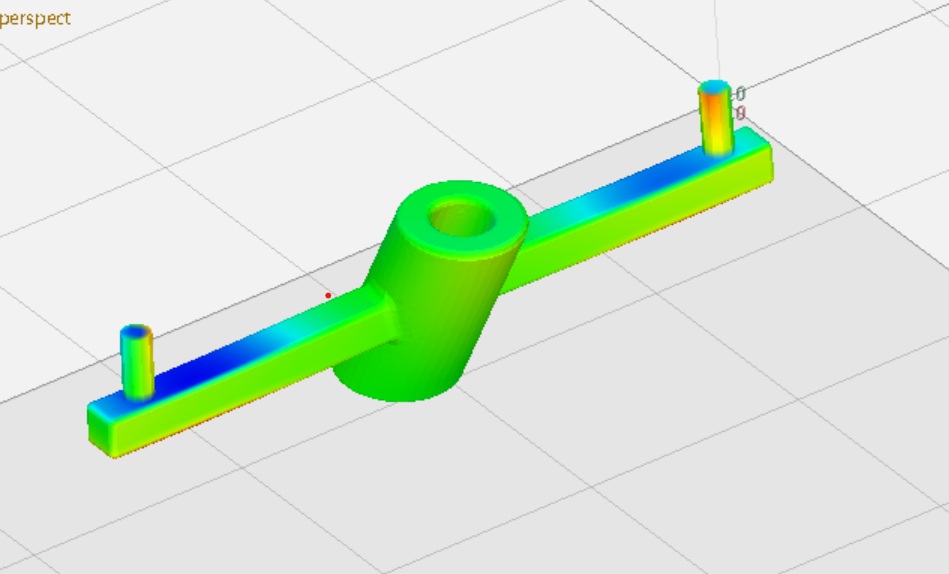
    The DeskArtes AM Chain mass production toolset leverages proven 3Data Expert 3D model data preparation functions. It allows users to create customized, automated 3D model processing pipelines, including repair, orientation, nesting, support generation, and slicing for high-volume 3D printing. Compatible with Windows and Linux, AM Chain streamlines large-scale manufacturing workflows, enhancing efficiency and consistency in AM processes.

    Creating sand-based molds and cores requires specific considerations. For example, producing cores with internal passages necessitates precise control of shrinkage and thorough cleaning after fabrication. Finnish foundry Hetitec Oy uses 3Data Expert software to generate error-free STL files and apply offsetting commands, compensating for material shrinkage in sand parts produced with Voxeljet 1000 and 2000 systems. Additionally, specialized sand support features facilitate fully automatic support generation, and enable the safe removal of heavy molds from the build area without damage, enhancing efficiency and accuracy in casting.

    Ville Moilanen, CEO of Hetitec, states, “DeskArtes has consistently demonstrated its commitment to customer support and developing new  state-of-the-art functionalities, making it a highly recommended software partner.”

    DeskArtes is actively involved in various international projects, like the European Space Agency (ESA) project AnteCedent. The project focuses on developing digital twin solutions for ceramic AM. The consortium includes prominent European companies such as Jotne (Norway), RF Microtech (Italy), Lithoz (Austria), and research organizations like VTT (Finland).

    The primary objective of AnteCedent is to create a digital twin-driven AM process for producing ceramic components used in satellite radio transmitters. This approach aims to minimize design iterations by utilizing simulations to predict deformations during de-binding and sintering. DeskArtes contributes by providing a quality control solution that ensures efficient, reliable measurements and visualization of deviations between manufactured parts and their nominal designs, based on 3D or CT scans, thereby enhancing the accuracy and consistency of the production process. These tools are now available to the entire AM community.

    Currently, DeskArtes is expanding its global presence through partnerships with AM system vendors and distributors worldwide. For example, it collaborates closely with PolyArm Global to strengthen its footprint in the APAC region. PolyArm Global operates across Asia Pacific with regional offices in Singapore and Japan, a team of seasoned industrial AM professionals, and a wide network of industry-focused partners in key markets and industry segments. The leadership team at PolyArm Global emphasizes the company’s commitment to growth, while DeskArtes Managing Director Ismo Mäkelä highlights the value of PolyArm Global’s extensive experience in APAC markets. Mäkelä expresses confidence that PolyArm Global’s expertise and reach will help identify new customers and partners in the region, supporting DeskArtes’ strategic expansion efforts and reinforcing its position in the additive manufacturing industry across Asia Pacific.

  • ROBOZE Buys Dimanex Assets to Build “Physical AI” Platform

    Dutch firm Dimanex got its start as an MRO platform for the railways. The company had a contract with the Dutch Army in 2018, and later that year signed one with the Dutch national railway, NS. The cloud-based tool aimed to streamline MRO and give companies a digital supply chain solution. The company also offered 3D printing through partners, along with tracking and part testing. The vision was spot on and is now being used to great effect by Immensa, Würth, Replique, and Pelagus. The company also got in early, helping large organizations get started on their 3D printing journey. Later, it partnered with AMC Bridge for integration into digital warehousing and enterprise IT. That too is what people increasingly want. Then the company introduced AI analytics for supply chain optimization in 2024. Timely for sure.

    But, somehow, having the right vision, story, and features that people need is not enough. Somehow, having reputable, large customers at the right time wasn’t enough either. The company that spoke for years about “future-proofing your supply chain” forgot to future-proof itself. Dimanex went bankrupt in February. What happened? We know that finding the right customers and closing deals with them is a big challenge for companies that essentially make 3D printing infrastructure. Large firms know that this is a piece of infrastructure that they are essentially tied to. What’s more, the people buying it will have their career success tied to it, and their direct colleagues will have to use this tool every day. So sales cycles are long, and these firms will always struggle to find enough customers to sustain themselves. Once they have a client, recurring payments will continue forever.

    So excellent sales and account management are key. And having a product that is simple to adopt and scrap on the side is a key way to get into accounts. Or a company can do proof-of-concept studies well. Execution on getting these accounts in is key, therefore. And it helps if you´re a big brand that everyone knows, so that you can find customers at the right time. 3Yourmind, for example, was inescapable for many years at shows and in the press. Too late, and the customer will have bodged something together themselves, which they’re attached to like a bad wart. Too early and you’ll scare them off. So branding in this application matters. And whereas for others it’s easy to know which companies may need your services, it’s hard to do this for these infrastructure companies.

    Dimanex owes creditors over $2 million and the government over $140,000. And it has been slowing down its activities for years. According to the bankruptcy filings, the firm’s growth slowed during the pandemic and didn’t recover. Money was borrowed to finance growth, but the resulting revenue was insufficient to cover the financing costs. The company subsequently was not able to find new investors. Management then left the firm, leaving it without official executives; it eventually went bankrupt. Dimanex’s bankruptcy should have been handled by management with greater care and forthrightness. Rather than tackle the issue of long sales cycles directly and make its products easier to buy and try, the firm persisted with the old way. A structural problem was therefore ignored. The financing they then turned to seems to have been ruinous for them. It seems like the bankruptcy may have nothing to do with 3D printing at all.

    The firm’s assets have now been acquired by high-temperature material extrusion OEM ROBOZE, which plans to use this acquisition to make a “fully interconnected, intelligent manufacturing ecosystem powered by Physical AI.” The Dimanex software will become a part of the Pandora and SlizeR packages that ROBOZE already offers.

    ROBOZEs CEO Alessio Lorusso said,

    “We are moving beyond standalone machines into intelligent, connected manufacturing system.This acquisition brings physical AI into production environments, where machines learn, adapt and operate as part of a global network. The result is a more resilient and efficient manufacturing system with reduced dependence on centralized hubs to deliver critical components with speed and at scale. Roboze is tackling systemic challenges in the industrial base like long lead times and physical inventory constraints. We are connecting the physical and digital worlds of manufacturing, from the identification of a part in a warehouse, to its qualification, to its production anywhere in the world, this entire process becomes intelligent, automated and interconnected.”

    The ARGO 500.

    The company hopes it will allow for the optimization of settings, sharing manufacturing data between sites, cloud-based setting changes, and generally digital warehousing. The company hopes that it will enable its clients to implement digital warehousing and create the digital supply chain solutions their customers need.

    I’m intensely skeptical of any kind of physical AI mentions and of using AI in manufacturing. Sure, for things like QA and pattern recognition-centric use, it can be amazing for making sense of a lot of data. For settings divination, it could also be an asset, but I’m wary of using it in files and end-use parts. I do think the platform can be an asset to ROBOZE customers and let people roll out services with multiple ROBOZE printers more quickly. If the software united lots of disparate printers, workflows, and files, it could be a real asset to customers as well. It could also be an argument for buying a ROBOZE. And for defense applications, if ROBOZE made it easy to add other people’s machines and files to the platform, it could speed up sales for the manufacturer. Although I’m generally rather skeptical of this whole Physical AI thing, we shall see.

    Images courtesy of ROBOZE

  • 3D Printing Financials: Nano Dimension Reports Q1 Growth Amid Restructuring and Asset Sales

    Nano Dimension (Nasdaq: NNDM) started 2026 with a much larger first quarter business than it had a year ago, mainly because Markforged is now part of the company and included in its results. But it also reported a significantly larger loss, suspended its full-year guidance, and continued a strategic review focused on lowering cash burn, selling off some business units, and deciding the company’s direction for the future.

    “The Board and management have been working with Houlihan Lokey to evaluate and refine a focused set of go-forward alternatives, which may include, but not limited to, a strategic merger, a reverse merger or other strategic transactions,” CEO David Stehlin reflected during the earnings call. “Our financial resources and public company platform create a compelling opportunity to pursue alternatives that could unlock value.”

    Nano Dimension’s DragonFly IV produces functional circuits and devices, allowing users to utilize new levels of resolution to generate complex board layouts and virtually limitless routing topologies. Image courtesy of Nano Dimension.

    For the first quarter ended March 31, 2026, Nano Dimension reported revenue of $29.7 million, up 106% from $14.4 million in the same period last year. Markforged contributed $17.1 million of that revenue. So excluding Markforged, Nano’s stand-alone revenue was $12.6 million, down about 12% year over year, which management attributed mainly to lower sales tied to tariffs and the impact of divestments. Although executives did not specifically identify which divestments affected revenue during the quarter, the decline is probably related in part to the company’s ongoing restructuring efforts, including the sale of its AME (additively manufactured electronics) and Fabrica product lines announced soon after the quarter closed.

    Meanwhile, the company’s net loss rose to $69.7 million, compared with a loss of $25.5 million a year before. The company’s larger loss was mainly related to Nano lowering the estimated value of the Markforged business on its books by $40.4 million.

    Adjusted EBITDA was a loss of $12.5 million, compared with a loss of $10.1 million in the first quarter of 2025 and a loss of $9.8 million in the fourth quarter of 2025. To this effect, CFO John Brenton said during the earnings call that the results reflected “the inclusion of Markforged and lower stand-alone revenue impacted by tariffs and divestments, partially offset by gross margin performance and continued cost discipline.” 

    Nano ended the quarter with $441.6 million in cash, cash equivalents, deposits, restricted deposits, and marketable equity securities, down from $459.6 million at the end of 2025. The company said about $8.4 million of the decline was tied to changes in the value of some of its investments.

    The quarter also showed how much Nano Dimension has changed over the past year. In April 2025, the company completed its acquisition of Desktop Metal after a long legal battle, and later that same month, finalized its acquisition of Markforged. Just a few months later, in July 2025, Desktop Metal filed for Chapter 11 bankruptcy before its key assets were acquired by Arc Impact just a few months later. Then, in September 2025, Nano replaced CEO Ofir Baharav with David Stehlin and launched a broader strategic review with Guggenheim Securities and Houlihan Lokey.

    That strategic review has now become the main focus of the company. Nano said it is trying to simplify the business, reduce spending, sell off some product lines, and explore larger deals that could reshape the company in the future. According to Stehlin, all of these efforts are happening at the same time, rather than in separate stages.

    The first major step in that plan came shortly after the quarter ended. On April 6, 2026, Nano sold its AME electronics business and Fabrica product lines to Inspira Technologies OXY. The deal included an upfront payment of $2 million, with the possibility of another $10.5 million tied to future performance. Nano said the sale “should lower the company’s yearly cash burn by about $10 million.”

    Markforged’s FX generation printers enable continuous fiber reinforcement (carbon, Kevlar, and fiberglass) to make composite parts as strong as aluminum. Image courtesy of Nano Dimension.

    Beyond its restructuring efforts, Nano said its two biggest businesses are now Markforged’s 3D printing systems and Essemtec’s electronics manufacturing equipment. During the quarter, the company expanded its work with a major U.S. automotive manufacturer and said it is continuing to see growing opportunities in defense. Nano also said Essemtec is gaining traction in electronics production, AI-related manufacturing, and the space and satellite sectors.

    Nano also stopped providing full-year guidance for 2026. The company said it is still in the middle of selling businesses and evaluating larger strategic options, so its financial results could change a lot during the rest of the year.

    After Nano released its earnings on May 7, the stock dropped from about $1.91 to a low of $1.58 the next trading day. Nano shares have also struggled for most of 2026, usually staying below $2 as the company continued with its restructuring efforts.

  • DMG Mori Joins $10M Defense 3D Printing Program

    To look at the Biden administration and the Trump administration that succeeded it and find areas of policy overlap is obviously a bit of a challenge. But such areas certainly do exist, and one of the clearest objectives shared by both administrations is an aggressive reemphasis on leveraging US federal power to shape national industrial policy.

    That’s one of the primary reasons for the growing significance of additive manufacturing (AM) in the government procurement landscape, especially relevant, of course, to defense matters. This has led companies with exposure to the AM market and global presences to prioritize investing in and expanding their domestic US operations to bolster their relationships with the Department of Defense (DoD). One company that has lately been making notable progress in this regard is Japan’s DMG Mori, through its US-based DMG Mori Federal Services (DMFS) division.

    DMFS just announced its biggest step forward to date in terms of entry into the US AM for the defense market, with its selection to participate in the Joint Additive Manufacturing Acceptability (JAMA) IV Pilot Parts Program, an Indefinite Delivery, Indefinite Quantity (IDIQ) contract administered by the Defense Logistics Agency (DLA). The five-year program, announced last year, represents total funding of $10 million, and “aims to establish a supplier base for [AM] parts” for the US military.

    The companies participating in JAMA IV will place competitive bids to sell 3D printed components to DLA, with the group of enterprises also including the likes of Nikon AM Synergy. DMFS’s own work in the program will be run by Fred Carter, the company’s Head of R&D, who is also overseeing work that the company is doing on a Department of Energy (DOE)-backed project announced earlier this year. All of the company’s work with the US federal government will be supported by the new DMG Mori Advanced Manufacturing and Innovation Center in Chicago, which is funded by $40 million from the State of Illinois.

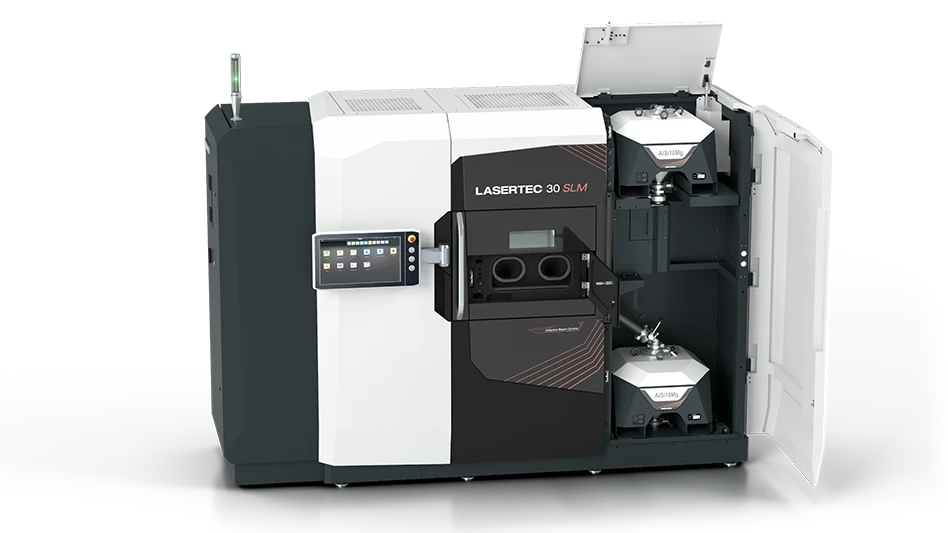
    DMG Mori Lasertec 30. Image courtesy of DMG Mori.

    In a press release about DMG Mori Federal Services’ selection to participate in JAMA IV, the company’s chairman, James V. Nudo, said “Being selected for the JAMA IV Pilot Parts Program reflects the strength of our team and our continued investment in advanced manufacturing technologies. [AM] is a critical component of the future defense industrial base, and DMFS is proud to support efforts to improve supply chain resilience and readiness.”

    When I wrote about DMFS’s grant award for the DOE’s High-Performance Computing for Manufacturing (HPC4Mfg) program, I noted that it could ultimately create a good opportunity for the US and Japan to work more closely to build their respective supply chains for data center hardware. There’s always the possibility that this kind of take is a reach, if only because of the complex nature of the industrial policy environment, particularly when more than one nation is involved.

    On the other hand, when we now take into consideration DMG Mori’s selection to the JAMA IV group, which also, as I noted, includes the US division of another Japanese multinational, Nikon AM Synergy, it does seem to raise the likelihood that there’s at least some coordination between the ground-level activities represented by individual funding grants from US agencies, and the strategic objectives of the highest policy circles aligning US and Japanese interests. For instance, Japan just announced a record defense budget, and this is central to Prime Minister Takaichi’s ongoing dialogue with President Trump.

    All of this context is the sort of background information that has become the requirement for a baseline understanding concerning the true value of advanced manufacturing in global geopolitics. It’s a value that can no longer be adequately defined in terms of traditional markers like the market caps of the industry’s largest publicly traded companies.

    There are many reasons why that’s the case, but one of the simplest reasons is that world leaders seem to be operating under the assumption that whatever the current nominal monetary value of industries, including the AM industry, is, it pales in comparison to what that value will amount to in the 2030s and beyond. To be sure, world leaders are wrong far more often than they’re right, and this case could be no exception. But at the very least, there seems to be no slowdown in the momentum behind advanced manufacturing, which has pushed it near the top of the global policy agenda.