• Conexeu Sciences Wishes to Make a Regenerative Breast Matrix Solution (and sell shares)

    Conexeu Sciences wants to commercialize a regenerative breast matrix solution. For years, Australian firm BellaSeno and Lattice Medical have been working on similar solutions. In 2018, Lattice came out with Osteoconductive lattice structures that bioabsorb. BellaSeno started clinical trials in 2022. The company is said to be doing well in those areas and can offer some products in Europe as it opens a European manufacturing facility.

    Conexeu’s 3D printed breast matrix or “B.R.E.A.S.T.” Image courtesy of Conexeu.

    Now Conexeu is developing what it calls the B.R.E.A.S.T. platform, short for Bio-Regenerative Ergonomically Architected Smart Tissue. The company says the technology uses 3D printed extracellular matrix (ECM)-based biomaterials designed to support soft tissue regeneration after breast reconstruction procedures. The broader regenerative platform is being developed under the CXU regenerative brand.

    Conexeu CEO Miles D. Harrison said,

    “For more than 50 years, breast reconstruction has been defined by substitution, replacing what was lost with a foreign body. We are fundamentally shifting the paradigm from substitution to restoration. Conexeu was founded on the belief that the promise of regenerative medicine is real, but only if it is supported early, advanced with rigor, and translated into clinical practice. The field has accepted repair and implants as the ceiling. We refuse to. If we settle for those limitations, true bio-regeneration will remain out of reach.”

    While the firm’s Chief Scientific Officer, Dr. Claudia Chavez-Munoz, stated,

    “We did not set out to design a better implant. We set out to eliminate the need for one. By combining controlled 3D architecture with a biomimetic extracellular matrix, we are developing a structure that the body can recognize, integrate, and ultimately replace with its own living tissue.”

    Conexeu director Dr. Z. Paul Lorenc added,

    “The Conexeu platform is grounded in more than ten years of preclinical evidence across eleven peer-reviewed publications and proprietary preclinical data. Nothing can be more beneficial to a patient than knowing their own body could have the ability to repair and regenerate itself. Whether for reconstructive purposes or for aesthetic autologous breast and body enhancement, Conexeu’s 3D bioprintable matrix offers the potential towards true regenerative medicine.”
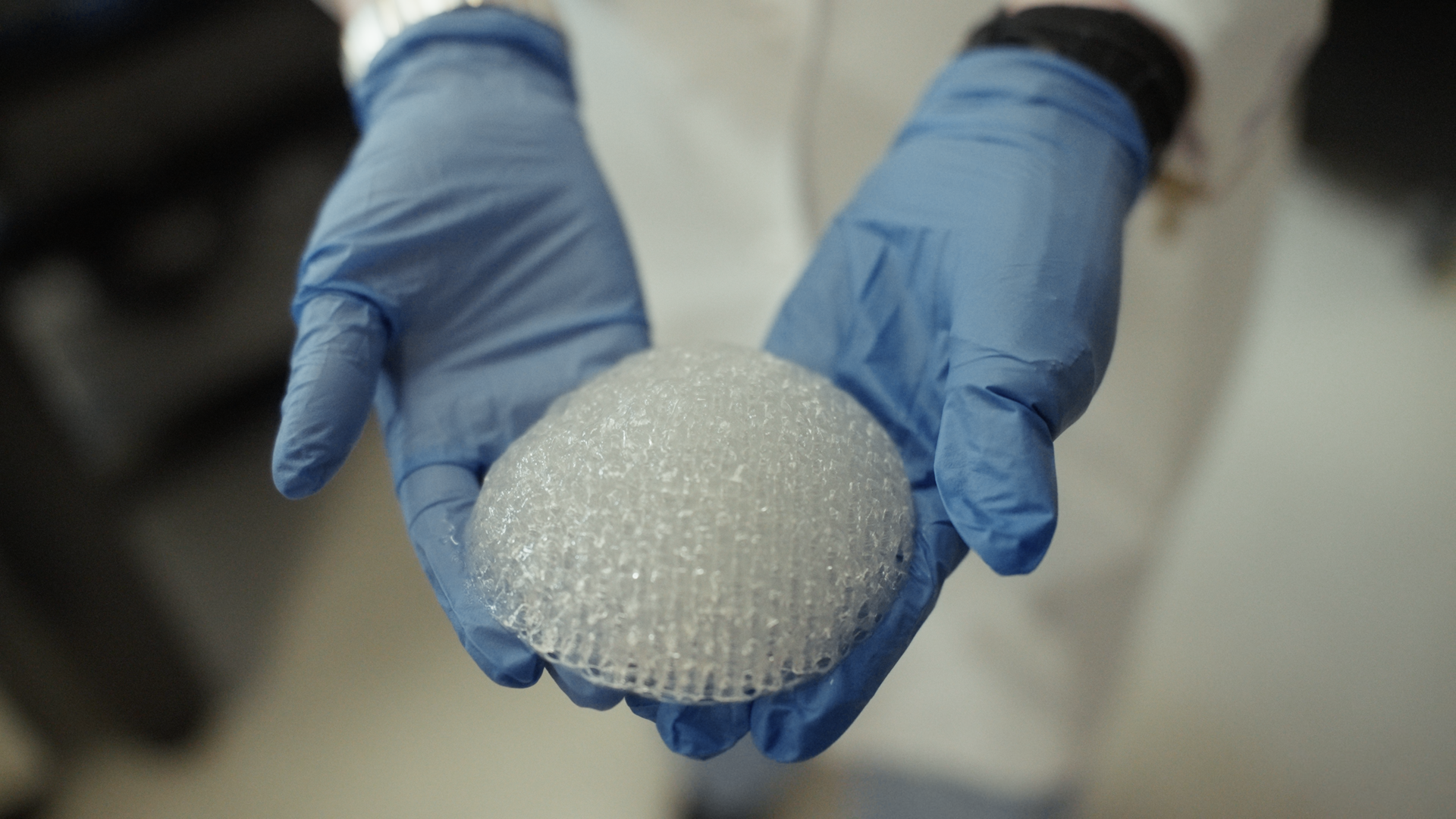
    Conexeu’s 3D printed breast matrix or “B.R.E.A.S.T.” Image courtesy of Conexeu.

    The implant will act as a temporary scaffold that guides the body to gradually replace the structure with its own tissue. The company contrasts this with traditional breast implants made of plastic that remain permanently in the body. The company is printing a regenerative, bioresorbable structure made out of extracellular matrix proteins. This seems different from the polycaprolactone-seeded with cells approach that BellaSeno uses, or the PLLA/PLA that Lattice uses. Conexeu says that its solution is “designed to provide both mechanical support and biological support intended to facilitate direct tissue remodeling rather than merely occupying space.” I’m not sure what this difference actually means, but a new approach could give them a different path to their own IP and solution. But it’s also unclear how this process is actually supposed to work.

    Generally, an extrusion-based bioprinter can make a custom structure, and the resulting material is gradually replaced with the body’s own tissue. The differences could lie in the extent of remodeling. With remodeling, the tissue can be simulated much more realistically than simple grown tissues previously have been. It’s unclear which technology or approach actually enables the firm to do this.

    Dr. Chavez 3D prints Conexeu’s breast matrix or “B.R.E.A.S.T.” Image courtesy of Conexeu.

    The company also has a Ten Minute Tissue product that lets you inject room-temperature ECM into a patient. The company has raised $5 million on an online equity raising platform called Equifund, explaining, “What if we could repair skin like we repaired drywall?” The company there disclosed that it has previously raised $2.6 million. Conexeu is commercializing a University of British Columbia collagen solution and has had an IPO. The company is pre-revenue and has spent $3.9 million in 2025 and $1.7 million in Q1. The firm now holds over $6 million in cash, which should see it through this year. The company is planning a direct listing on Nasdaq on the 21st of May. This listing of 9.4 million shares by current investors will result in their shares being sold, but not provide the firm with additional capital. This is worrying. It is unclear how the company wants to raise additional money after this offering. It is also unclear why the current listing is a sale by investors rather than a capital raise.

    Conexeu’s claims seem to be rather optimistic. I can’t really map what they want to do with the current 3D prints and how this will easily and quickly lead to a solution. The company also says it plans to pursue the FDA’s 510(k) pathway for certain indications, despite presenting the technology as a highly novel regenerative solution. I’m rather skeptical about their claims.

  • nScrypt’s Ken Church on Why Additive Electronics Is Finally Finding Its Fit

    For years, additive manufacturing (AM) has promised to reshape electronics. The idea has always been to print circuits directly where they are needed, add them into parts, and move beyond flat circuit boards. But in practice, that promise has taken much longer to materialize than many expected. According to nScrypt CEO Ken Church, that delay was not due to a lack of ambition or investment, but something more fundamental. 

    “The cool factor carries you to a point. But not a sustainable point,” Church said. “Early demonstrations were impressive, often even spectacular, but they did not always translate into real-world performance or viable manufacturing. The industry could generate excitement, but it struggled to generate adoption.” 

    That’s a big part of what has held back additive electronics, Church told me during my visit to nScrypt’s headquarters in Orlando. The executive and AM industry veteran traces the roots of this effort back to the late 1990s, when DARPA began pushing for what would later be called additive electronics. 

    “At the time, the expectations were aggressive, even by DARPA standards. Researchers were asked to print fine-feature electronics, including resistors, capacitors, inductors, and antennas, on unconventional substrates such as paper, all while maintaining low temperatures and tight tolerances,” he recalled. “They said, we want 10 micron line widths. We want you to print on paper. We want resistors, capacitors, inductors, antennas, and batteries. That was 1999… super challenging.” 

    The funding was substantial, and the technical progress was real. But once those programs ended, the industry was left to stand on its own, and that is where reality set in. 

    “Materials were not yet ready. Performance did not match what engineers were used to. And perhaps most importantly, additive systems were not competing in a vacuum; they were competing against decades of refinement in traditional electronics manufacturing,” Church went on. “We sort of stubbed our toe. Our performance was not good.” 

    The gap was especially clear when it came to materials. Traditional electronics are built around copper, which has become the industry standard not because it is perfect, but because it is consistent, cost-effective, and deeply integrated into design and manufacturing workflows. Additive systems, in contrast, often relied on silver-based materials, which behave differently and come with their own tradeoffs. 

    “Industry was used to copper. All the design specifications were around the conductivity of copper. We mostly dealt in silver; it didn’t oxidize, but it’s considerably more expensive. That’s where things start to break down. Even when additive works, it doesn’t always match what engineers expect, because those expectations come from copper. So a lot of the time it’s being judged against standards it was never meant to meet,” Church explained. “If I tell you, ‘I could make that phone for you, but all you could do is call grandma,’ you’re gonna say, ‘that is so cool… but no thanks.’” 

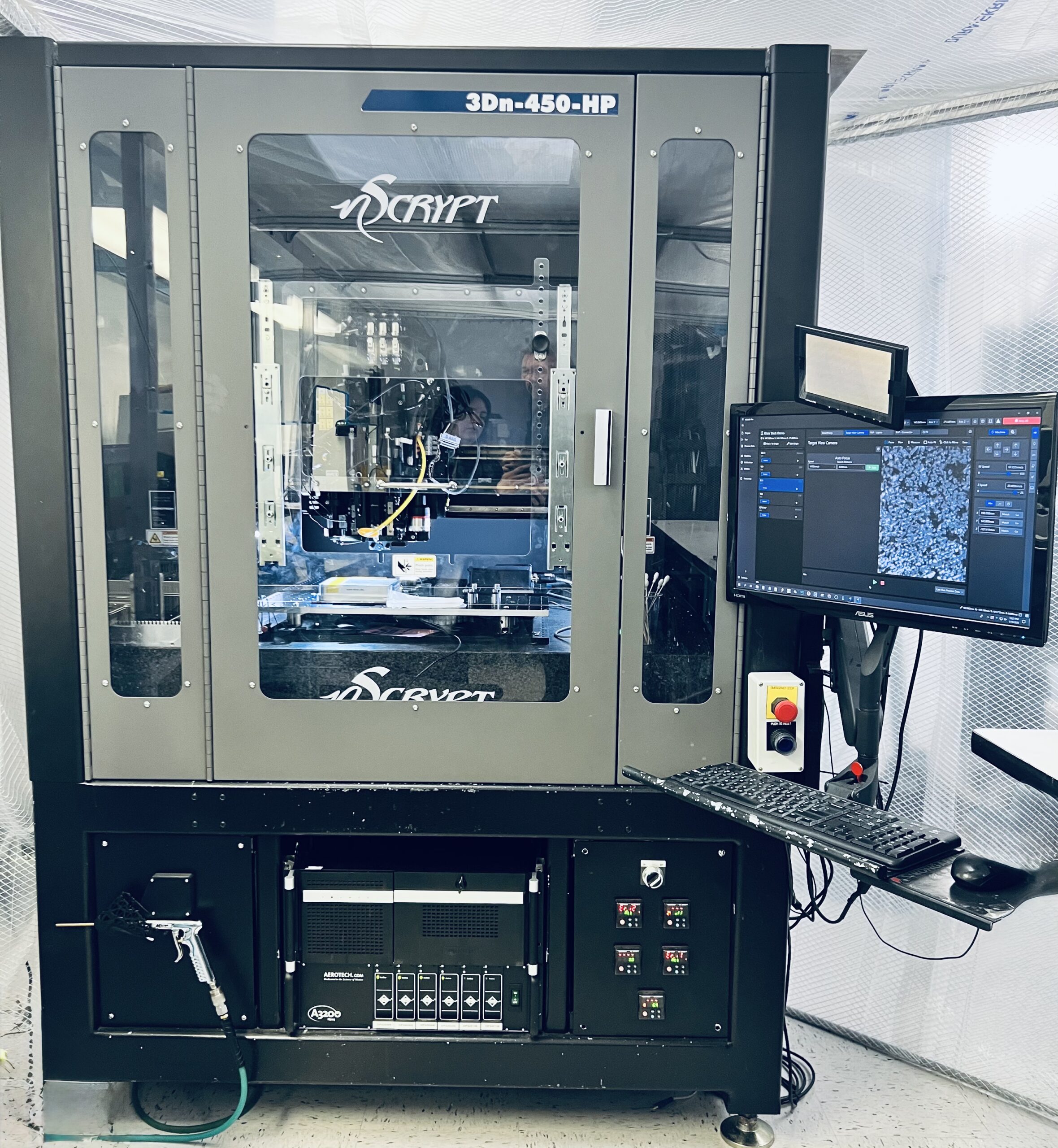
    An nScrypt 3Dn-450-HP system, a “Factory in a Tool” (FiT) 3D manufacturing system designed for multi-material, high-speed, and high-resolution production.

    Over time, that disconnect forced nScrypt to change how it approached the market. Instead of trying to replace traditional electronics completely, the company began focusing on where additive manufacturing could offer something fundamentally different. 

    “Whether we like it or not, we are competing with state-of-the-art. That realization led to a more grounded strategy for us, one that emphasized fit over ambition. Rather than attempting to replicate entire devices, we began identifying specific use cases where additive methods provide clear advantages.” Then he added, “How do you eat an elephant? One bite at a time. That’s how we look at it. Where do we fit? We fit one bite at a time.” 

    That idea has become something of a guiding principle for the company. Additive electronics won’t happen all at once; it will grow step by step, where it actually solves real problems. 

    And those “bites” show up where traditional electronics start to struggle. That includes things like printing on curved parts, flexible circuits, or building electronics into structures: things that flat boards just can’t do. 

    “The people we’re most successful with are the ones who have real pain points,” Church said. “They tell us, ‘We have a problem that a flat board can’t fix,’ and that’s when we say, ‘Okay, let’s talk.’” 

    Ken Church and Vanesa Listek at nScrypt headquarters.

    At the same time, Church is careful to define the limits of the technology. Not every application is a good fit, and not every problem should be approached with additive methods. 

    “If you need a million [dots] a second, then that’s not for us. That is not who we are. And that level of clarity is important in a field that has often been driven by broad claims.” 

    It too reflects a change in the message. Rather than positioning additive electronics as a “next generation” solution, nScrypt has begun framing it as something more immediate and practical. 

    Even with that shift, one of the biggest challenges is still the mindset. Engineers and designers are still trained within the constraints of traditional materials and processes. Their tools, their assumptions, and their expectations are all built around those systems, noted Church. 

    “All your designers learned how to design around copper. All your software was set around copper. When additive enters that environment, it is often judged against those same benchmarks, even when those benchmarks do not apply. We still make a great circuit,” he said. “But because we did not match your specifications, therefore, we were a failure.” 

    To move forward, Church argues that the industry needs to rethink how success is defined. Instead of asking whether additive matches traditional specifications, the more important question is whether it achieves the same functional outcome. 

    When those circuits work, whether they’re flat, flexible, or printed on a curve, the conversation starts to change. At that point, AM isn’t just a novelty; it becomes a real tool.

    This article is the first in a three-part series based on 3DPrint.com’s visit to nScrypt’s headquarters in Orlando and conversations with Ken Church.

    Images courtesy of 3DPrint.com

  • FlashForge Bets on Meshy AI as Desktop 3D Printing Battle Intensifies

    Competition in desktop 3D printing is brutal. Whereas before, firms competed through value engineering, Prusa clones now have an integrated hardware, sensor, and software setup that is making all the difference. The next step, of course, is letting everyone create. If all the models online were scalable or parametric, we could all make things that fit our lives more easily. If CAD were simple or if AI creation tools let people make some things, then it would expand the audience of people who can truly make what they want. We looked at AI CAD tools, before and now one of them, Meshy AI, is being integrated with FlashForge’s print software.

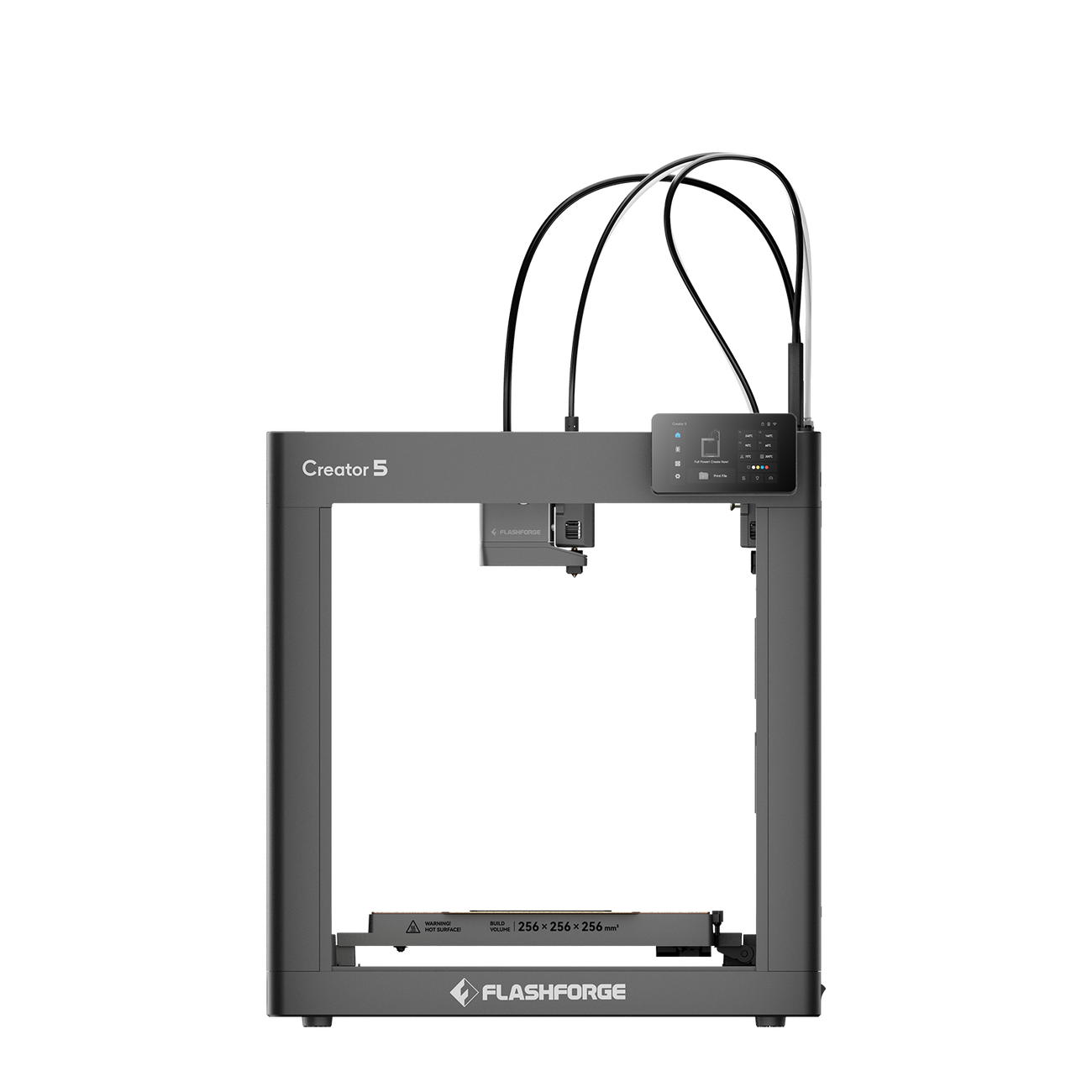
    The FlashForge Creator 5. Image courtesy of FlashForge.

    Flash Studio will now let you turn a file into a multi-color 3D print quite simply. The integration is for the Creator 5 printer. The Creator is a very important machine for FlashForge. Competitors like Bambu Lab, Snapmaker, Elegoo, and Creality have surged ahead while former mainstay FlashForge has lingered. The brand needs to make the leap to more software-centric machines that deliver on speed and reliability.

    The quad-toolhead Creator starts at around $800 and is said to reduce purge waste during multi-color printing. FlashForge has also looked at optimizing the laminar airflow across the bed and air purification. Toolheads reportedly swap in 7 seconds, and the firm says the system can print color parts up to 4 times faster than comparable Bambu Lab systems. The CoreXY printer offers a 256 × 256 × 256 mm build volume, vibration compensation, automated bed leveling, and TPU support. The machine seems sensible. But in a crowded desktop space already filled with excellent printer options, we don’t know yet if that is good enough.

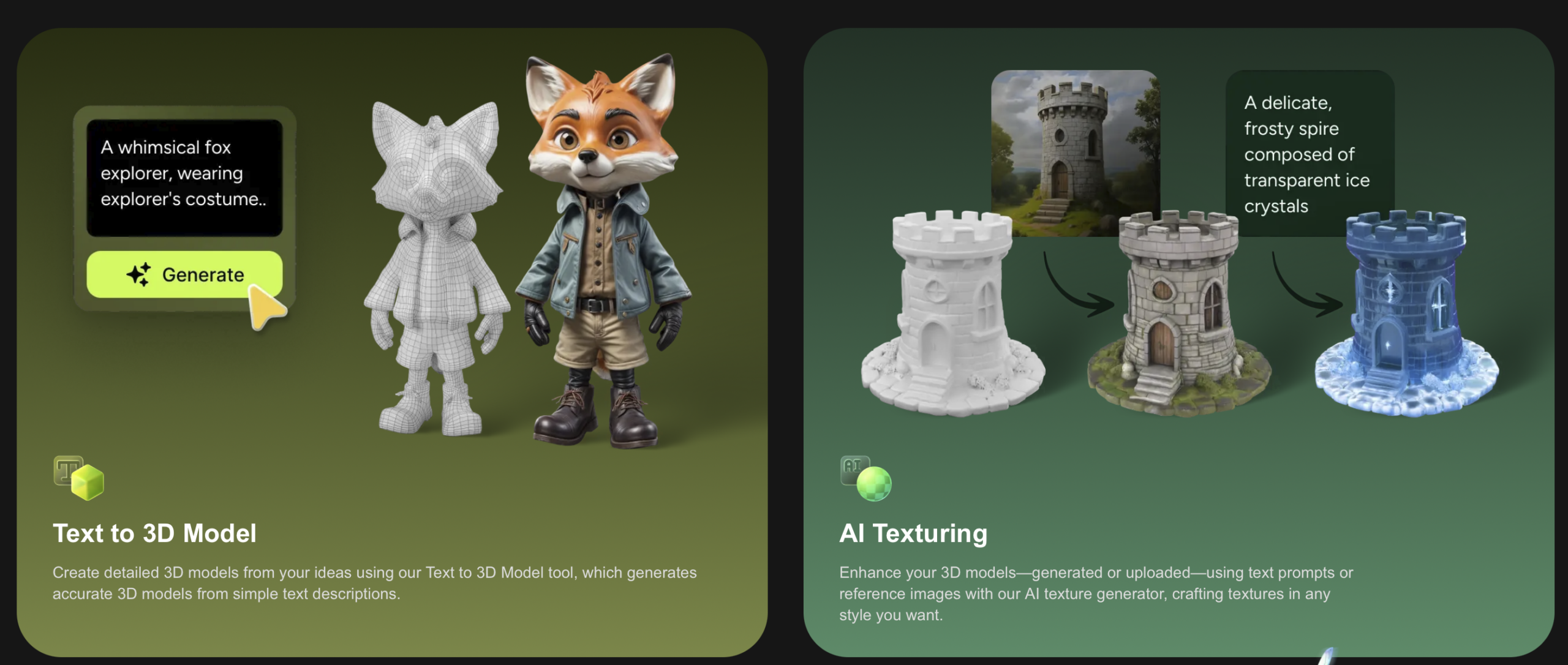
    Meshy AI’s platform can generate printable 3D models and textures directly from text prompts. Image courtesy of Meshy AI.

    The Meshy integration could give FlashForge an edge and make it easier to make things. The company promises true one-click conversions from AI files to prints. They say that they have “texture-to-filament color mapping works directly with the Creator 5’s four-head, zero-purge architecture, so what users see on screen maps to filament colors without manual assignment in the slicer.”

    Manual color assignment is no longer needed. Slicer configuration is automatic as well. Overall, this should make it easier to print with color. A user can now also, in Flash Studio, describe an object, and an STL is generated, textures are mapped to filament colors, and the user can then print. Then the quad tool head Creator will print it. The company also thinks that these tools will give their prints a harder surface and smoother curves.

    Software is moving to the fore in 3D printing. Formlabs has a closed system that makes printing easy and repeatable. This system is now being replicated by several of the largest desktop 3D printing vendors. Under threat is the open-source, open-architecture world of desktop material extrusion. Often, these firms do use tools like Klipper, Orca, and others, but the UI grafted onto them is very much a proprietary thing. Through server-based tools and operations, more is being done away from the user, centralized by the manufacturer. This is leading to difficulties as some firms are unable to compete in software. Other open-source firms are also having to work harder to keep up with slick interfaces. And specialized, smaller 3D printer builders will find it difficult to keep up with the latest technologies. Power is being concentrated in the hands of far fewer firms that sell millions of printers. FlashForge is now turning to an external party and AI to stay ahead of the curve. Will it work? We shall see as the competition on the desktop continues, now moving from machine control and tool pathing to authoring.

  • 3D Printing News Briefs, May 20, 2026: Distribution, Fracture Mechanics, & More

    We’re starting with business in today’s 3D Printing News Briefs. ATLIX announced a strategic distribution partnership with Excelencia Tech Group, and Timeplast raised $5 million in an oversubscribed campaign, powered by DealMaker. We’ll end with research about 3D printed metals.

    ATLIX Consolidates Presence in Spain with Strategic Distribution Partnership

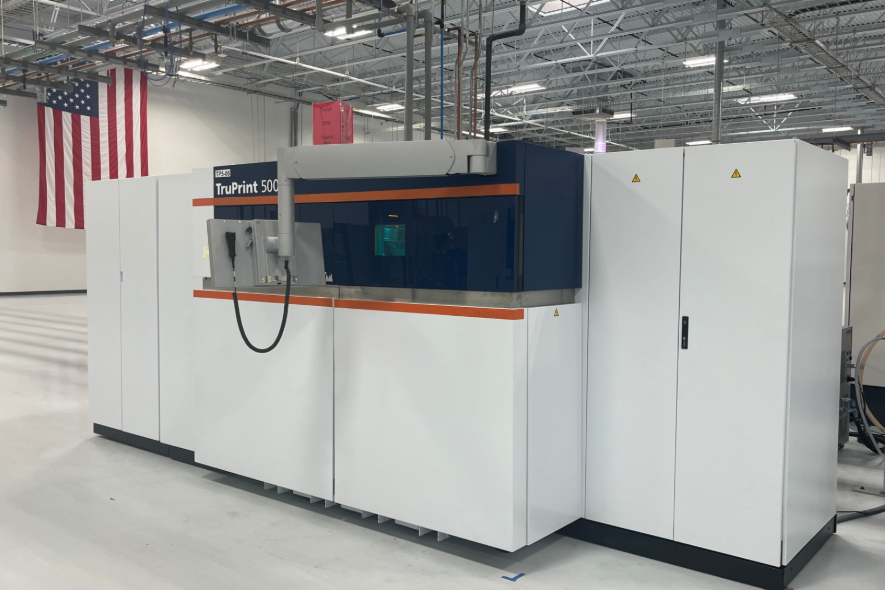
    In a recently announced strategic distribution partnership, ATLIX, which manufactures industrial-grade metal LPBF systems, has appointed Excelencia Tech Group as its official distributor for the Spanish market. Based at DFactory Barcelona, Excelencia Tech is supported by a team of AM experts and operates a national network of three offices across Spain, covering the entirety of the AM workflow, both metals and polymers. ATLIX was born from the AM division of TRUMPF, and the Spanish market is an important territory for the brand, what with its strong base in aerospace, automotive, and industrial manufacturing. Per the distribution agreement, Excelencia Tech will bring the TruPrint LPBF platform from ATLIX to Spanish industrial manufacturers, offering customers access to sales, application support, and service through a local partner, while also consolidating ATLIX’s commercial presence in Spain.

    Marino Ferrarese, Head of Sales and Marketing, ATLIX, said, “Spain is a strategically important market for ATLIX, and Excelencia Tech is exactly the kind of partner we look for: deep technical expertise, proven service infrastructure, and a shared commitment to driving real industrial adoption of metal additive manufacturing.”

    Timeplast Closes $5 Million Regulation CF Campaign, Powered by DealMaker

    Materials science company Timeplast, which pioneers sustainable materials and AI-enabled 3D printing, announced the close of its oversubscribed $5 million Regulation CF campaign, powered by the DealMaker investment technology platform. This raise added nearly 10,000 new retail investors to the company’s cap-table: the same investors who purchased thousands of its sustainable straws just six hours after they launched. Timeplast has over 80 proprietary 3D printing filaments in its portfolio, including what it calls the first 3D printable soap and a retroreflective holographic filament. The company is now developing its next big product, a sub-$1,000, AI-powered 3D printer called the Manifester that will potentially turn voice commands into finished objects. Instead of routing the buyers of this recent campaign through a marketplace, Timeplast ran the offering through DealMaker’s white-labeled platform, so it could maintain ownership of the investor data and have a direct path to the community backing its products.

    “We didn’t want to rent our investor relationships. DealMaker lets us own the data and build a direct relationship with the people backing us,” said Manuel Rendón, CEO and Founder, Timeplast. “That’s a fundamentally different outcome than showing up as one logo among many.”

    IMDEA Materials & UC3M Collaborate to Better Understand 3D Printed Metals

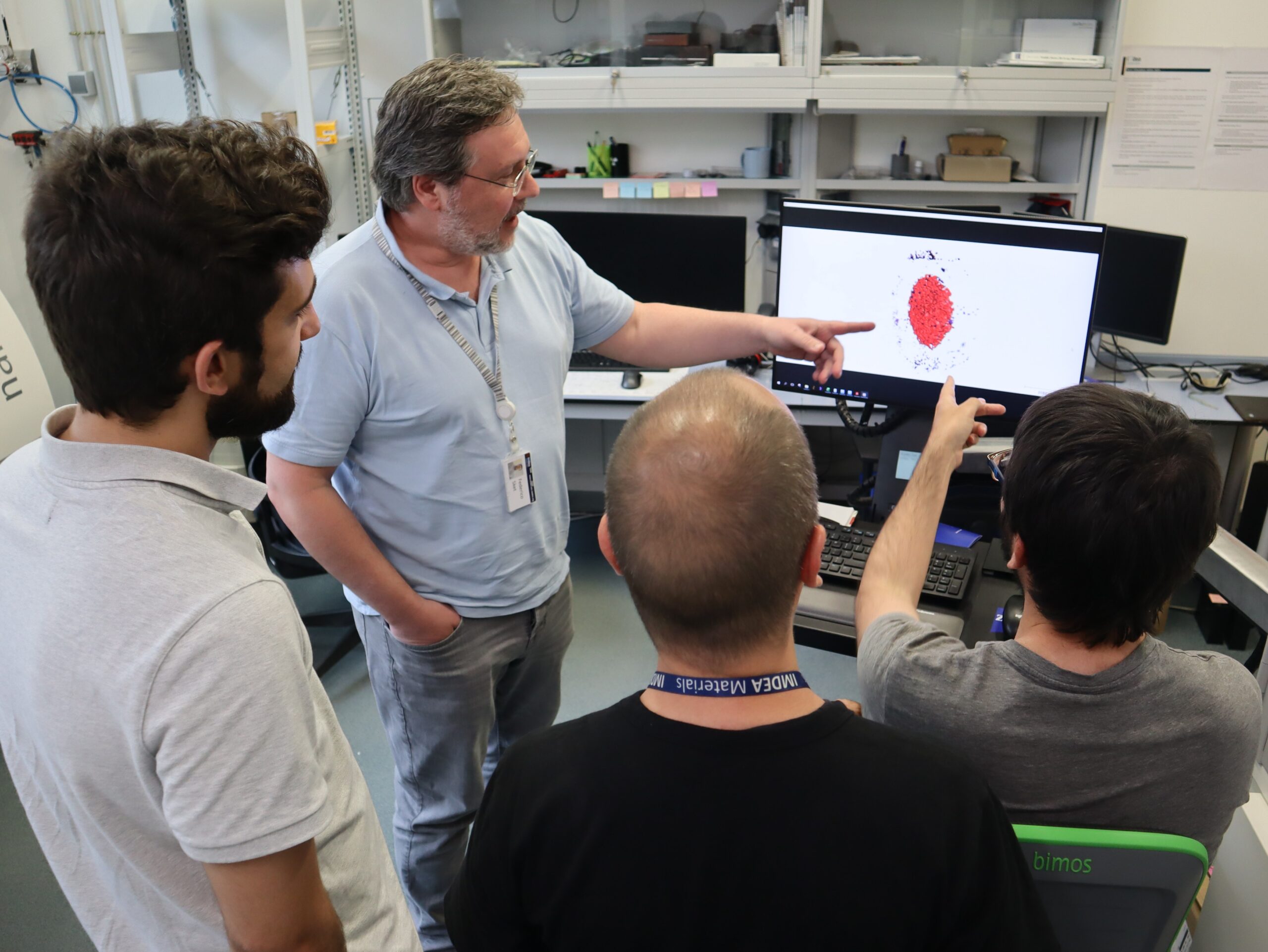
    A team of researchers from IMDEA Materials and the Carlos III University of Madrid (UC3M) worked with research institutes in Japan and France to better understand fracture mechanics of 3D printed metals. They had a major breakthrough and found how 3D printed metals can fail under extreme impact. As they explained in their paper, the researchers focused on AlSi10Mg and Ti-6Al-4V, both commonly used alloys in LPBF 3D printing. At the European Synchrotron Radiation Facility (ESRF), the team used strong X-ray beams to look inside the materials in real time while they were being struck at velocities of up to 750 meters a second. At first, the material is compressed by the shock wave, which causes pores to collapse. But, as the material starts to experience tension, the pores reopen and grow larger, eventually linking together to form an internal crack that leads to a Spall Fracture, which is harder to detect and analyze. This research could be very helpful for applications with components exposed often to intense dynamic loads, like aerospace and defense.

    “Altogether, this paper provides new insights into dynamic tensile fracture of 3D-printed metals. It does so by leveraging the latest advances in fast X-ray phase-contrast imaging and high-resolution tomography, while establishing a systematic protocol to investigate void collapse and spall failure mechanisms in porous materials subjected to shock loading,” explained Dr. Javier García Molleja, a researcher from IMDEA Materials.

  • Retired Basketball Legend Baron Davis Launches 3D Printed Shoe with Assist from Zellerfeld

    The inroads that additive manufacturing (AM) users have made into the celebrity branding market is underappreciated, perhaps because the value is difficult to quantify. But just last month, for instance, 3D printed furniture maker Decibel partnered with Justin Bieber’s Skylrk brand for the singer’s Coachella set, and, during the Masters, Bryson DeChambeau made headlines once again for his 3D printed clubs.

    Bieber and Skylrk also released a 3D printed sneaker at the end of last year with Zellerfeld, the Brooklyn-based, avant-garde design house responsible for a large chunk of the direct-to-consumer (DTC) products launched in partnership with celebrity-owned brands that have popped up in recent years. Around the same time as its Biebs collab, Zellerfeld also announced the launch of a basketball shoe prototype in partnership with Celtics’ All-Star Jaylen Brown’s 741 Performance.

    Considering the Brooklyn company’s repeated work with Nike, Zellerfeld may see deals with athletes as an attractive lane going forward, especially given how common it has become for professional athletes to pursue second careers as entrepreneurs. Baron Davis, who just launched the fashion brand OverDose on the back of his own 3D printed shoe deal with Zellerfeld, was a pioneer in the modern era of pivoting from pro sports to business ventures.

    After retiring from the NBA in 2012, Davis has branched out into just about everything: Hollywood producing, cannabis, venture capital, and even rapping (he’s good, too!). It’s indeed a bit shocking that it took this long for Davis to get into fashion.

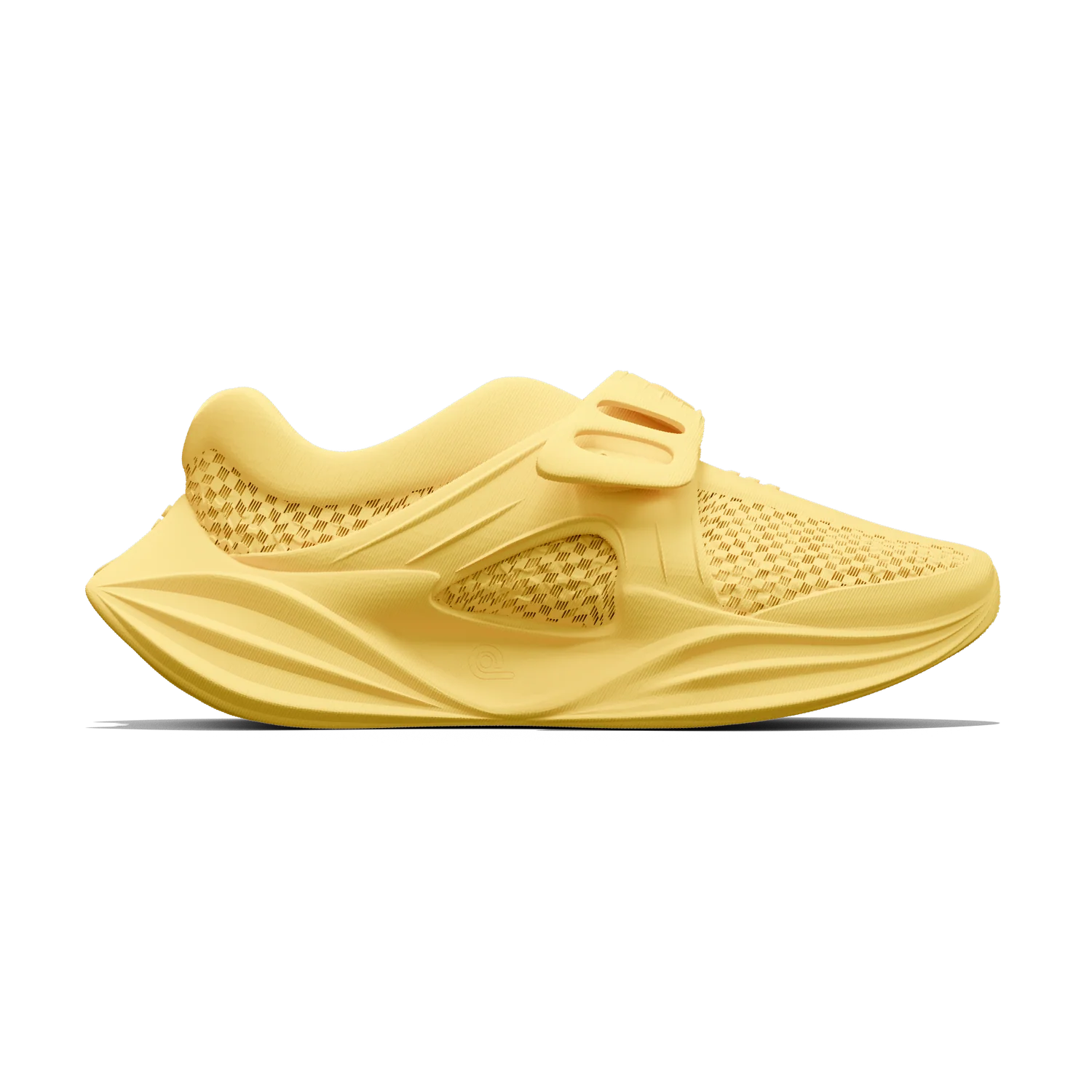
    The first sneaker launch from Davis and OverDose is the OD Easy PZ, a $199.00, limited release drop in five color ways. OverDose is categorizing the Easy PZ as a “recovery sneaker,” which is a growing area of the footwear market that targets consumers who are into fitness and are looking for extra comfort in their post-workout hours.

    According to Davis, the Eazy PZ’s were designed to embody OverDose’s ‘From Analog to AI’ ethos:

    “I came from a time where the game, the culture, and the product were all connected, but ownership wasn’t,” Davis said. “This is about changing that. ‘From Analog to AI’ is about taking everything we grew up on and building it into something new, where creators actually control what they create.”

    This aligns perfectly with what Zellerfeld has been building throughout this decade. It also ties in precisely with Davis’s venture capital brand, Business Inside the Game (BIG), which was created expressly to support ‘multi-hyphenates’ like Davis; the BIG website refers to Davis as “the athlete/creator/entrepreneur/investor/founder.”

    Indeed, that seems to hit the nail on the head in terms of the value proposition that AM offers for celebrity-backed product launches. Anyone who remembers the fiasco that ensued when the Ball Brothers’ father, LaVar Ball, launched Big Baller Brand back in the 2010s, knows that it’s virtually impossible to stand up an entire sneaker supply chain on your own and have it be competitive, when sneakers are neither your expertise nor your main focus. The same goes for essentially any manufactured good one might try to sell.

    By partnering with Zellerfeld, on the other hand, entrepreneurs like Davis can test the waters in the footwear space without having to become full-time sneaker moguls. That also helps capture what’s most lucrative about these types of launches, which is the appeal for consumers interested in limited edition items.

    Footwear may be the space where this is most prevalent, currently, but there’s no reason why it couldn’t spread to other product categories, with athletic equipment jumping to mind most immediately. In fact, it will be interesting to see if Davis himself has plans for targeting that market with his BIG platform.

    Images courtesy of Zellerfeld/OverDose

  • Asia AM Watch: Advantages to the Chinese Way of Doing Business

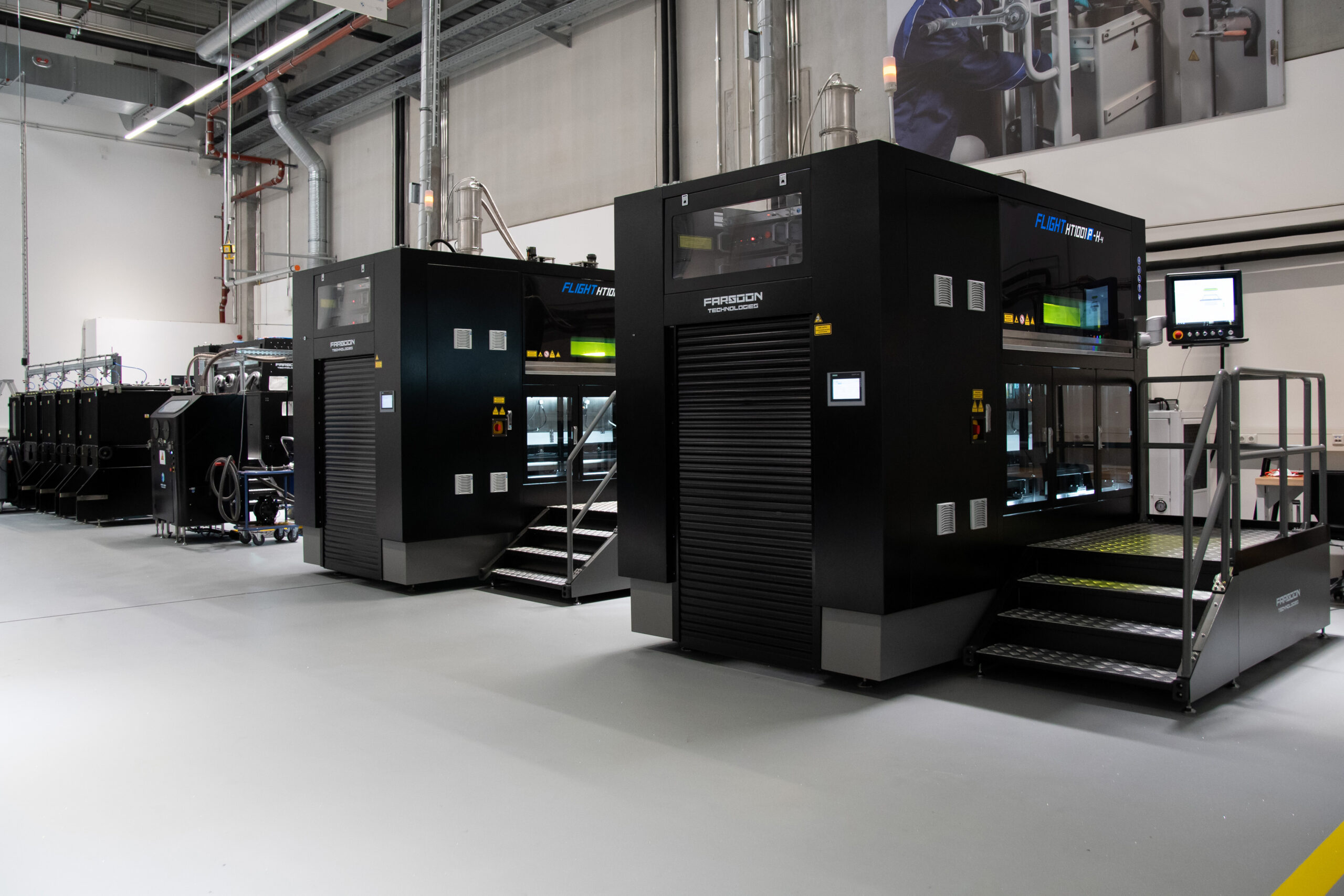
    Timo Göbel, the Head of Additive Manufacturing at the BMW Group, spoke at the AM Forum in Berlin about industrializing additive. He had wise words to share, including that we shouldn’t do our own automation but rely instead on established automation providers. He also told us that they didn’t want any balkanized software tooling, so we should play nice with their existing tools. He also said we should be open to low-cost materials and, more broadly, reduce part costs. This is all very sensible, and I’m happy he said it. He also mentioned that a large order from BWM had gone to Farsoon and not Western suppliers because Farsoon was more flexible. Daimler Trucks also had a large spare parts project go to Farsoon because, reportedly, the company was more flexible on opening up data flows from its systems to the truck company.

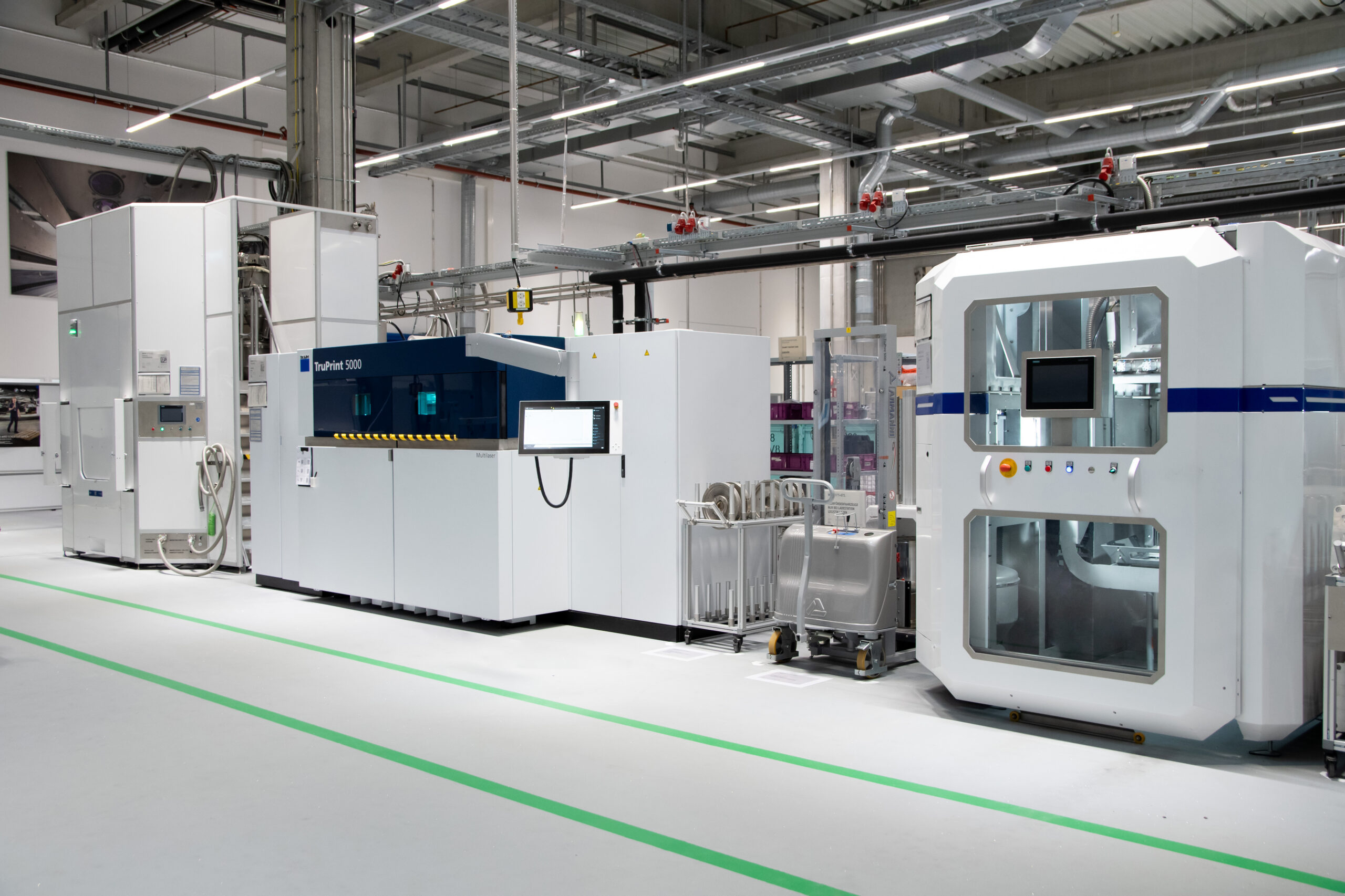
    Among BMW’s metal 3D printers is this TruPrint 5000 from Atlix. Image courtesy of BMW.

    The European narrative goes something like this: Chinese companies are subsidized by the government, engage in IP theft, engage in unfair competition, make low-quality products, and European firms should not demean themselves by engaging in a race to the bottom. Let’s sidestep this discussion for now. Whether this is true or partially true is irrelevant. What is relevant to me is that, by believing this, many entrepreneurs and companies are limiting their strategic choices. I actually do think that you should see if you can race to the bottom, because it may just be that you can win. I also think that seeing yourself as a victim removes your agency. Somehow, your failure isn’t your fault, and somehow, you can now explore fewer options for countering the competition. I also think that bemoaning the other’s advantages is irrelevant. I see a lot of inaction and fatalism in the face of Chinese competition and think that this may be very damaging to Europe as a whole. Furthermore, in my experience, there are real advantages that Chinese entrepreneurs and businesses bring to the table. There are real advantages in zeal, flexibility, vision, and speed.

    Zeal

    I’ve seen a lot of deals won by Chinese firms because they’re just hungrier for success. Chinese firms will try harder and put in more effort for the deal. In terms of application development and customer service, we’ve seen success because these departments do more for customers at no extra cost. We see a real “conquer the world” attitude by firms. Staff often see themselves at the foot of a mountain of opportunity for them and their employers. It’s not just a job but a change for immense growth. A lot of times, individual Chinese teams just seem to work harder to get the opportunity.

    BMW’s metal 3D printer lineup includes this TruPrint 5000 from Atlix. Image courtesy of BMW.

    Flexibility

    Chinese firms have also shown a lot of flexibility to secure a deal. In customizing the product, introducing new materials, making changes to roadmaps, and adapting to their customers’ circumstances, they seem to do more than that. Western firms will say, “No, we can’t do that,” a lot. That’s not our market, that’s not how we do things, that’s not our style, we’ve never done this before, etc. This then results in hesitation. Sticking to your guns and principles is good. But often companies just say no reflexively and dig in their heels. Sometimes nonsensical policies or entrenched behaviors wreck deals. I’m not saying that you always have to say yes to the customer, but that there needs to be a reason for your no. And you know what? Often, there isn’t a reason, and people say no when they mean “we haven’t done that before.”

    Vision

    A number of large Western 3D printing incumbents do not have a strategy. Many incumbent firms have no particular plan to win or plan to improve themselves. Visionary thinking by CEOs often rings hollow or is not meaningful for the firm’s performance. Western firms tend to be highly amorphous, with many different power structures in place. Often, there is no real goal for the company aside from continuing to exist. There are a lot of companies being run on autopilot. Chinese firms often do not have a strategy beyond a general idea that “there must be growth.” But, without that mindset, Western firms just sleepwalk and amble, not going in any particular direction.

    Speed

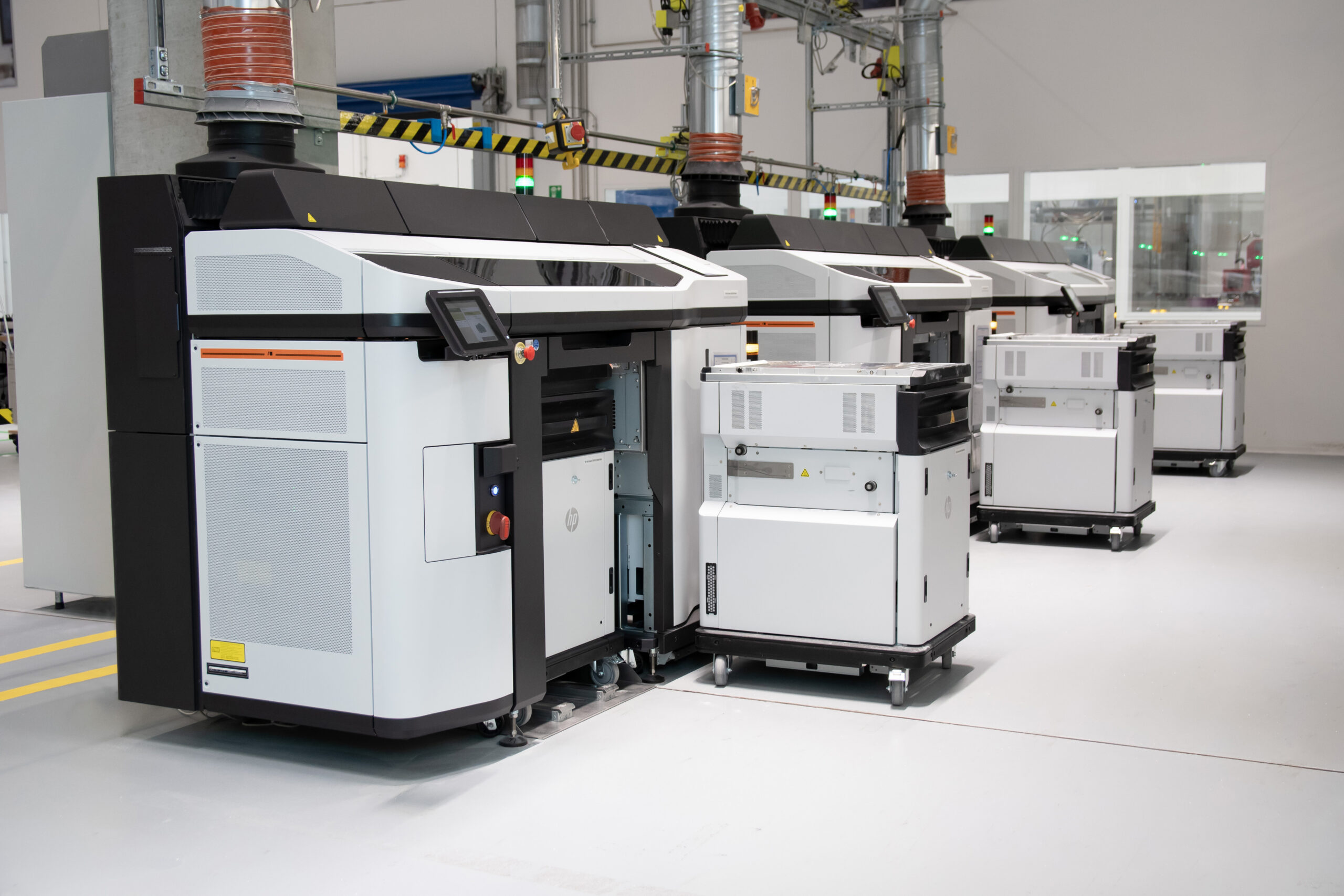
    Additive manufacturing systems from Farsoon, HP, and TRUMPF (now ATLIX) inside BMW Group’s AMC. Image courtesy of BMW.

    The biggest difference, however, is in the speed of execution. Chinese firms are often just much faster at changes and responses in general. There is a lot of hesitation and structural slowness in many Western firms. Especially in decisions affecting multiple departments, we can see a marked slowness.

    Negatives

    Now, all of this is necessarily a generalization. And Chinese firms are not better in all respects. The language barrier is difficult, which inhibits effective customer service and application development. Chinese firms are often hampered by not having enough people overseas and by disconnects between home and away teams. Chinese firms can be fickle. Sometimes run by the whims of founders, companies can turn on a dime, but this can also be chaotic. Scrambling for growth, a long-term focus, and increased capability is sometimes not enough of a concern. Sudden firings, changes of direction, and new policies can often confuse customers. Speed often causes quality to suffer, and there is a real problem with long-term performance and part quality in devices.

    But my point is that there seem to be real advantages, especially in securing new business, in the Chinese way of doing things. Rather than complain and feel like helpless victims, Western firms should strive to become more flexible, faster, and better aligned.

  • Where the Money is Going, Part Two: Why All Roads Lead to AI

    In Part One of this article, Vanesa Listek expertly described the major themes driving infrastructure investment so far this decade, illustrating how the same concerns are driving both public and private entities — and all the major sectors of the economy — to fund the same sorts of projects. Simultaneously, she analyzed the implications of that trajectory for additive manufacturing (AM).

    Here, I’ll provide a baseline argument for why all of those infrastructure themes ultimately lead back to the one that gets all of the attention.

    The AI boom isn’t about AI (yet)…

    Featured image courtesy of 3DPrint.com: Data centers.

  • Mikhail Gladkikh on Digital Inventory: “Think of It as Netflix for Manufacturing”

    As manufacturers continue looking for ways to reduce supply chain risk, additive manufacturing (AM) is increasingly being discussed as more than just a production tool. Across aerospace, energy, defense, and industrial sectors, companies are exploring how digital inventories and distributed manufacturing could help reduce dependence on traditional warehousing, long shipping routes, and excess physical inventory.

    That shift is one of the areas Dr. Mikhail Gladkikh has been focused on throughout his career. Before joining Würth Additive Group as Global Director of Technology and Technical Projects, he spent 17 years at Baker Hughes, working across research, engineering, logistics, program management, M&A, and AM in mission-critical industries.

    Mikhail Gladkikh. Image courtesy of Mikhail Gladkikh via LinkedIn.

    With a PhD in Applied Mathematics from the University of Texas at Austin, Gladkikh’s background spans oil and gas, turbomachinery, hydrodynamics, and advanced manufacturing systems operating in highly regulated industries. More recently, he has focused on digital inventory and distributed manufacturing, helping lead the launch of Würth Additive Group’s Digital Inventory Services (DIS) platform, designed to enable secure, traceable digital supply chains through AM. Outside of his professional work, Gladkikh is also a lifelong learner and science fiction author whose books include Out of Time, reflecting his longtime interest in future technologies and big ideas.

    3DPrint.com spoke with Gladkikh about digital inventory, distributed manufacturing, supply chain sovereignty, and why AM could play a major role in the future of global supply chains.

    What is Würth and what is the value proposition?

    Gladkikh: The Würth Group is a worldwide wholesaler of fasteners, screws, and accessories. Würth expanded its range and today offers a full range of business equipment for craft businesses. Würth offers dowels, chemicals, electronics, furniture, construction fasteners, hardware, automotive parts, tools, machines, installation materials, and inventory management, among other products and solutions.

    The Group, made up of more than 400 companies across over 80 countries, has been servicing the automotive, woodworking, metalworking, industrial, and construction industries.

    Würth connects millions of suppliers and customers and manages inventory across a wide variety of channels. The Group has a large operational footprint, with warehouses and last-mile delivery mechanisms in many countries, which makes it a unique supply chain partner for many companies and individuals. The company says it is a leader in managing both physical and digital supply chains.

    What is the Digital Supply Chain?

    Gladkikh: Let’s think about what a supply chain is and what it does. First and foremost, it is a mechanism to ensure uninterrupted business operations that require physical parts and materials.

    Like any business process, supply chains come with inherent risks. Those can include disruptions such as strikes, blocked shipping routes, supplier shortages, or sudden changes in market demand.

    Traditionally, companies have managed those risks through physical inventory. Manufacturers buffer against uncertainty by keeping parts on shelves, which often means tooling investments for every geometry, minimum order quantities that lead to overproduction, thousands of SKUs spread across warehouses, and complex logistics networks moving goods from factories to distribution centers and eventually to customers.

    Digital supply chains approach the problem differently. The safety net is information, specifically certified manufacturing recipes with material specifications and quality control. Instead of storing large quantities of finished parts, companies can store digital manufacturing files and raw materials such as powders, filaments, or resins that can be used to produce many different geometries on demand.

    In this model, production moves closer to the point of need, reducing inventory requirements, international shipping costs, tooling costs, and some tariff exposure associated with moving physical goods across borders.

    In the end, you still need parts, not just information. How does the Digital Supply Chain address that?

    Gladkikh: Yes, digital inventory still requires physical production. The file must become a part. The idea is to move that production as close to the point of use as possible to avoid all sorts of waste, including the waste of making and holding inventory that may never be used.

    This is where material science, machine qualification, process parameters, and post-processing all matter. The digital-to-physical gap is where AM professionals add the most value.

    The future supply chain will likely be a hybrid system combining digital and physical infrastructure. That includes the digital distribution of encrypted manufacturing recipes with intellectual property protection, quality assurance, and OEM certification, alongside a physical network of machines and materials located close to the point of use to produce parts when needed. It also requires supply chain infrastructure capable of managing both the digital and physical sides of manufacturing, as well as traditional last-mile delivery and transportation systems to move finished parts where they are needed.

    A digital supply chain is a complex system of interdependent digital and physical tools and processes. Companies without a deep understanding of both components will not be successful.

    Why Additive and how does it fit into the Digital Supply Chain?

    Gladkikh: AM is a perfect fit for the digital supply chain since it is already digital by design. The manufacturing machine instructions exist as a digital file prepared by the engineer and executed by the printer.

    What happens to the traditional roles in the value chain? From OEM to End User?

    Gladkikh: In general, the system becomes more flexible, and some roles can be combined. In a traditional approach, there is always an IP Owner, usually a product company, that creates and owns the part design. The IP Owner might subcontract an engineering firm to redesign the part for AM.

    Then there is the manufacturer, usually the same entity as the IP Owner, which follows digital instructions and makes physical objects. Then there is a distributor delivering the physical parts to the end user where actual demand exists.

    When you replace this physical flow with information, some roles can be combined or even interchanged. The end user could become the manufacturer, while the IP Owner receives royalties on its intellectual property rights without having to physically produce anything. Think about digital platforms for music or book distribution.

    What are the critical concepts? What must be in place to enable a Digital Supply Chain with distributed manufacturing?

    Gladkikh: I’d like to mention three pillars of distributed manufacturing.

    First, there is supply chain sovereignty. Companies want to be in control. This fits into the “right to repair” paradigm. To ensure operational continuity, companies want to assert ownership downstream.

    Second, it is not about simply printing a part. It is about qualifying the whole process and ensuring every step is in conformance with the manufacturing router. This includes proper raw material controls, manufacturing steps, post-processing, assembly, and proper quality control mechanisms dictated by the IP Owner. This also includes proper safety measures and machine maintenance. All of this must be recorded and accessible at any time as a paper trail for provenance and audit purposes.

    Third, because we are separating design, manufacturing, and end use, proper liability-sharing mechanisms must be in place, and IP protection must remain a top priority.

    Würth Additive Group has launched a Digital Inventory Service. What is it and how is it positioned?

    Gladkikh: DIS is a sovereign manufacturing execution layer designed as a cloud-to-edge encrypted delivery platform.

    Think about it as Netflix for manufacturing.

    The Würth Group already connects millions of customers with millions of suppliers in a traditional distribution and supply chain model. We added a digital supply chain channel that works as described above and is available through the same programs and channels our customers already use.

    It gives customers greater control and sovereignty over their supply chains, allowing them to operate more efficiently without tying up capital in inventory sitting on shelves that may never be used.

    At the same time, it frees suppliers from the need to manufacture, package, and ship physical goods, since they are instead compensated for making their manufacturing recipes available digitally. Everybody wins.

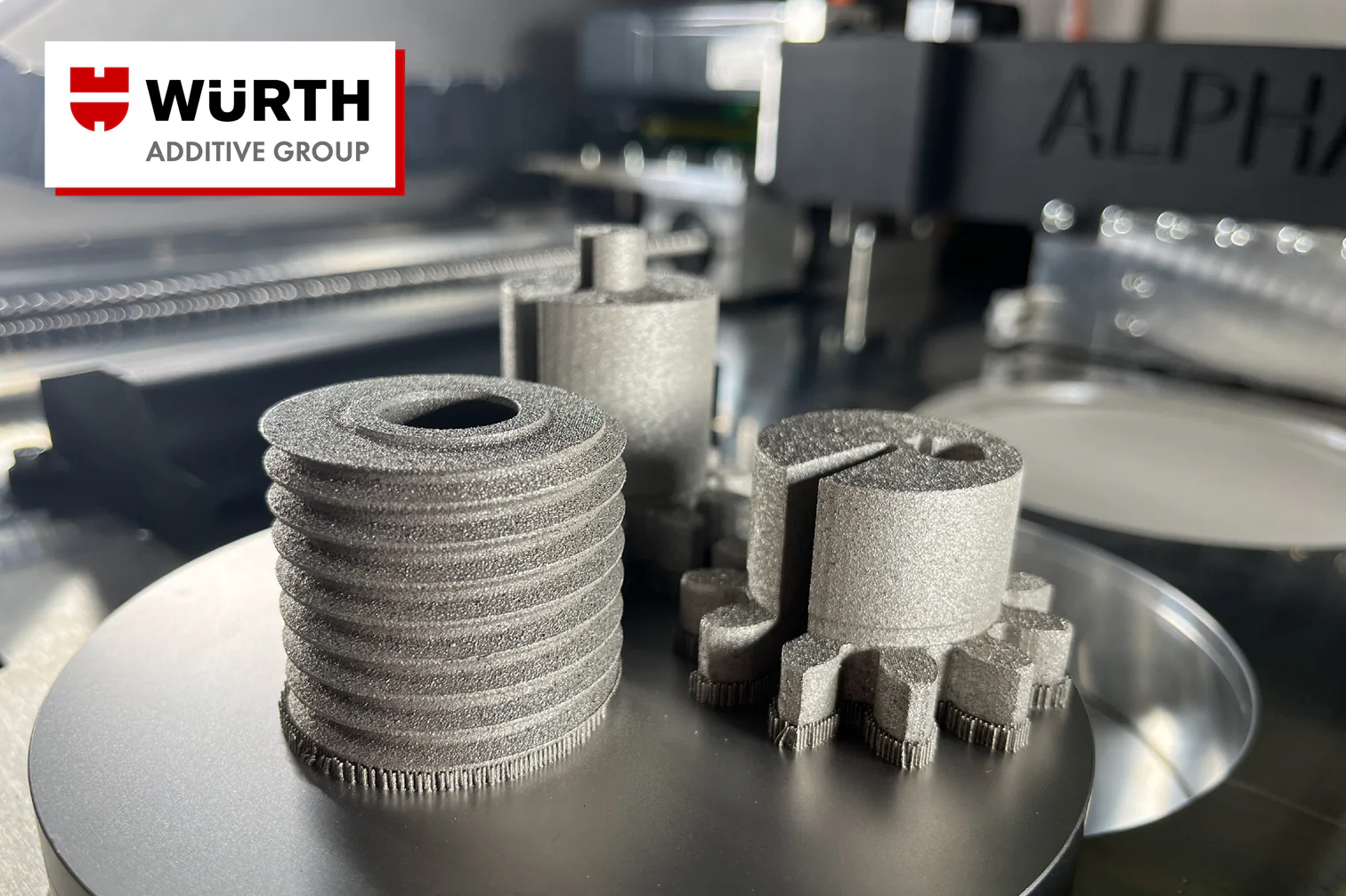
    Metal AM component produced on the Alpha 140. Image courtesy of the Würth Additive Group.

    For Gladkikh, the conversation around digital supply chains is becoming increasingly urgent as manufacturers face geopolitical instability, supply disruptions, and growing pressure to localize production. He believes companies need to approach the transition strategically, starting with a clear understanding of their business needs, operational pain points, and applications where AM can provide real value.

    At the same time, he cautions against using 3D printing simply because the technology is available.

    “Should this be printed?” Gladkikh said. That is ultimately a more important question than whether it simply could be.

  • 3DPOD 300: Celebrating 300 Episodes with a Look at the Next Year in 3D Printing

    In the 300th episode of the 3DPOD, we take a look at what we think will happen over the next 12 months; for instance, what will happen with Bambu’s dominance, what will happen to Formlabs, what will happen to the market as a whole? Then we veer off into a discussion about heroes, Midway, and how the entire future of the US´s global dominance rests on the shoulders of two very different men.

    This episode of the 3DPOD is brought to you by FacFox, where your next product starts as a file and ends as a custom-made reality. With instant quoting, rapid design feedback, and on-demand 3D printing, CNC machining, injection molding, and more, FacFox makes it easier to test out ideas, fine-tune every detail, and manufacture with confidence. Curious what your design could become? Upload it and find out.


  • 3D Printing Financials: Velo3D Revenue Up Fueled by Defense Momentum

    Velo3D (Nasdaq: VELO) reported a strong start to 2026, with revenue rising as defense and aerospace customers continued shifting from pilot programs into full-scale additive manufacturing (AM) production. The company also showed major improvement in gross margins and losses, while executives pointed to a growing demand for its Rapid Production Solution (RPS) business model.

    CEO Arun Jeldi said the company continues to see AM treated as a true production technology, especially across defense and aerospace markets, instead of an experimental tool. What’s more, during an earnings call with investors, Jeldi indicated that management is seeing accelerating momentum across the business.

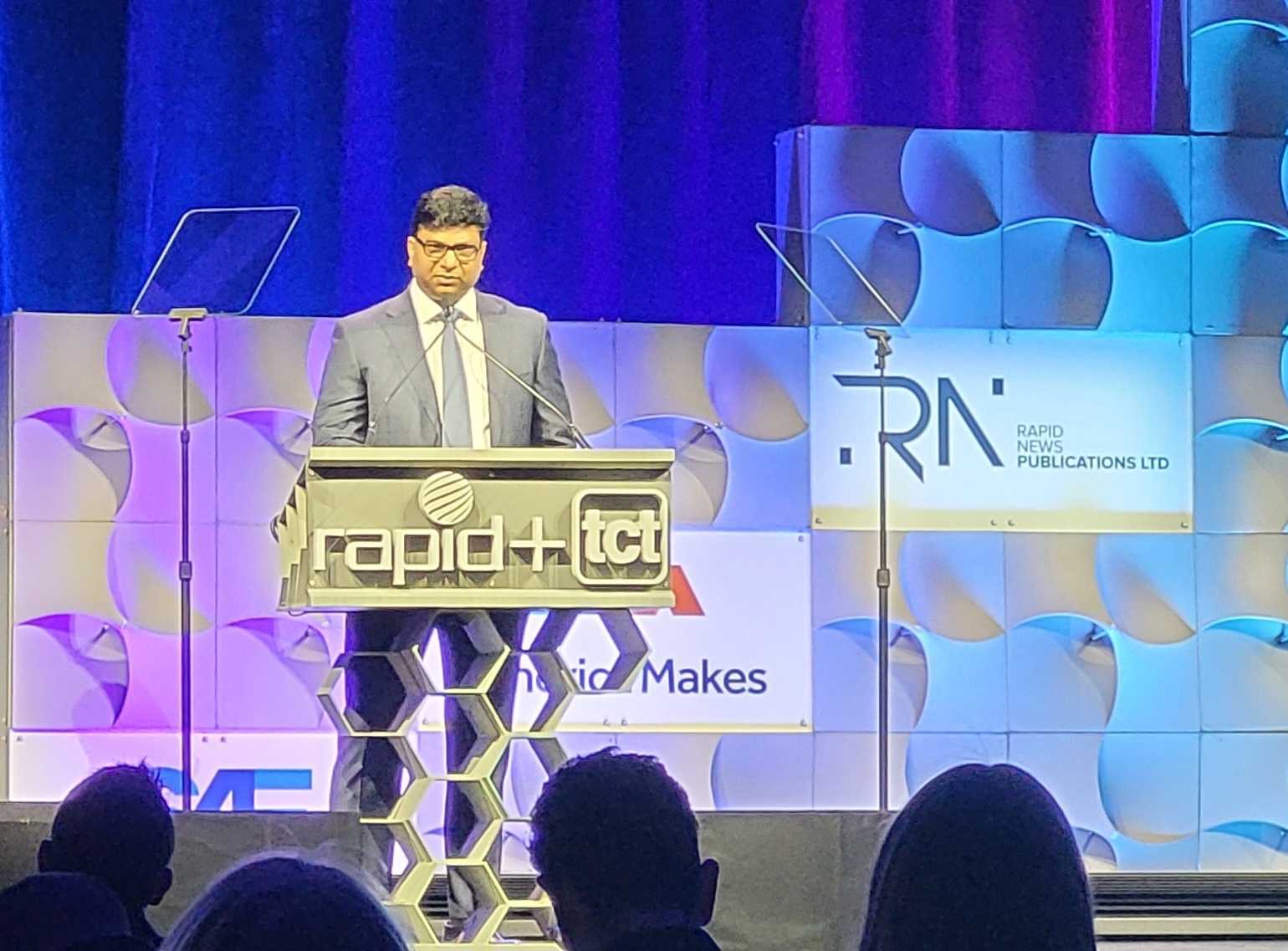
    Velo3D’s Arun Jeldi at Rapid+TCT. Image courtesy of Velo3D.

    First-quarter 2026 revenue reached $13.8 million, up 48% year-over-year and 46% from the previous quarter. The company said growth was driven by higher system sales, better pricing, and rapid expansion of its RPS business.

    Gross margin improved to 17.2%, up from 7.5% a year earlier and from negative margins in the previous quarter. According to executives, the improvement came from higher machine usage, better manufacturing efficiency, and stronger production volume.

    Velo3D’s losses continued to go down during the quarter. The company posted a $7 million net loss, a major improvement from the $25 million loss reported during the same period last year. Adjusted EBITDA also improved, moving from negative $6.9 million in the first quarter of 2025 to negative $3.6 million this quarter. Operating expenses were lower as well.

    At the end of the quarter, Velo3D had $16.6 million in cash, down from $39 million at the end of 2025. At the same time, the company reduced its debt by roughly 70% through debt-to-equity conversions. After the quarter closed, Velo3D also raised another $50 million through equity financing.

    The quarter also marked the first earnings report under new CFO James Suva, who joined the company in April after leadership roles at Goldman Sachs, Citi, KPMG, and, most recently, Cricut.

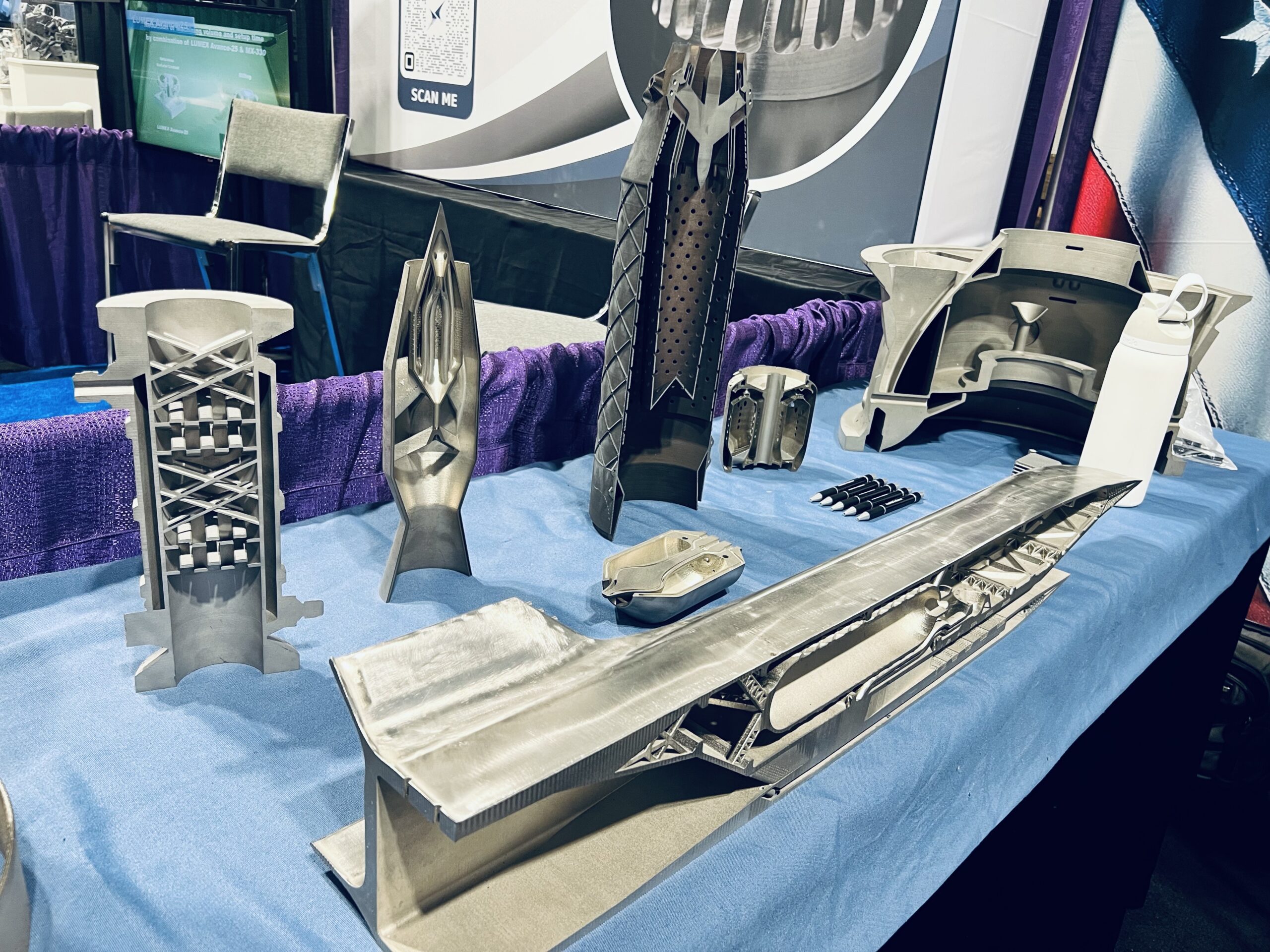
    Velo3D’s booth at MILAM 2026. Image courtesy of 3DPrint.com.

    A major focus during the call was the company’s RPS business, which centers on longer-term manufacturing agreements instead of traditional one-time printer sales. Under the model, customers use Velo3D systems as part of ongoing production programs, particularly in defense and aerospace.

    In fact, RPS represented roughly 25% of first-quarter revenue. About half of the company’s $30 million backlog is now tied to RPS-related business.

    Jeldi described the company’s RPS model as “transformational” for Velo3D, saying it creates deeper, longer-term relationships with customers instead of relying on one-time equipment sales.

    “Unlike traditional one-time system sales, RPS creates long-duration production relationships with repeat utilization across multiple programs, driving greater visibility, stronger customer integration, and what we believe will be improved long-term economics for the business,” he explained. “As adoption accelerates, we believe this mix shift positions us to pursue more durable, high-quality revenue streams and scalable profitable growth over time.”

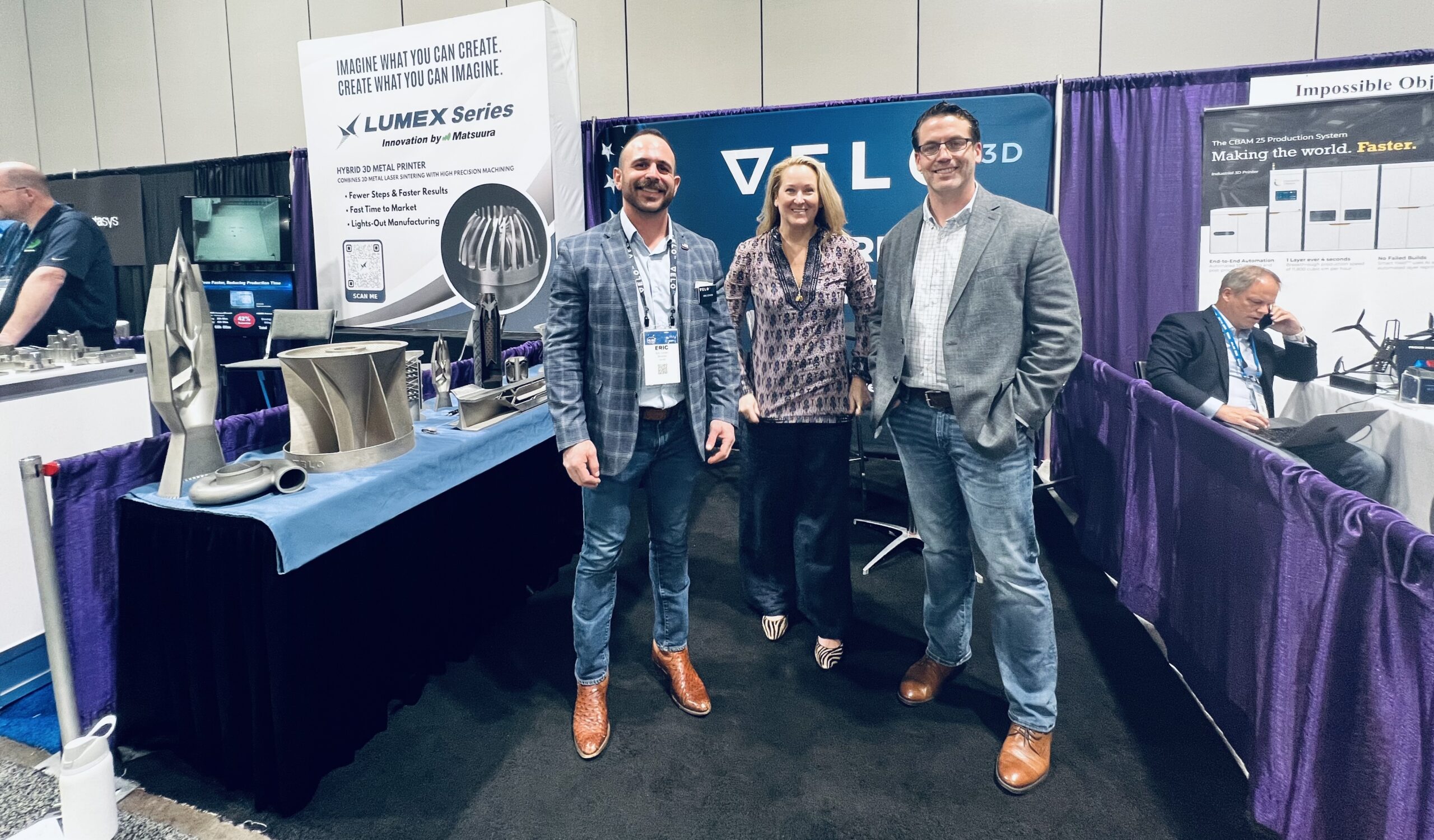
    Velo3D team at MILAM 2026: Eric Cohen (Sales Director), Michelle Sidwell (CRO), Brice Cooper (VP of Defense). Image courtesy of 3DPrint.com.

    The company spent much of the call discussing defense growth. During the quarter, Velo3D underlined several major government and defense milestones, including an $11.5 million production contract with a U.S. defense prime contractor and a $9.8 million five-year contract with the Defense Logistics Agency tied to the Department of Defense’s Joint Additive Manufacturing Acceptability program. Velo3D also said it became the first additive manufacturing vendor qualified for U.S. Army ground vehicle applications.

    Executives said defense spending, reshoring, and supply chain concerns continue to support additive manufacturing growth.

    “We are seeing a growing number of defense primes and tier-1 aerospace suppliers transition from pilot projects into multi-system production deployments. This marks an important inflection point for additive manufacturing industry and further validates our belief that the market is increasingly moving from experimentation to scale production adoption,” Jeldi said.

    Plans are also underway for a major manufacturing expansion in California that could eventually support up to 100 production systems. Management expects to have more than 40 production machines operating by the end of 2026.

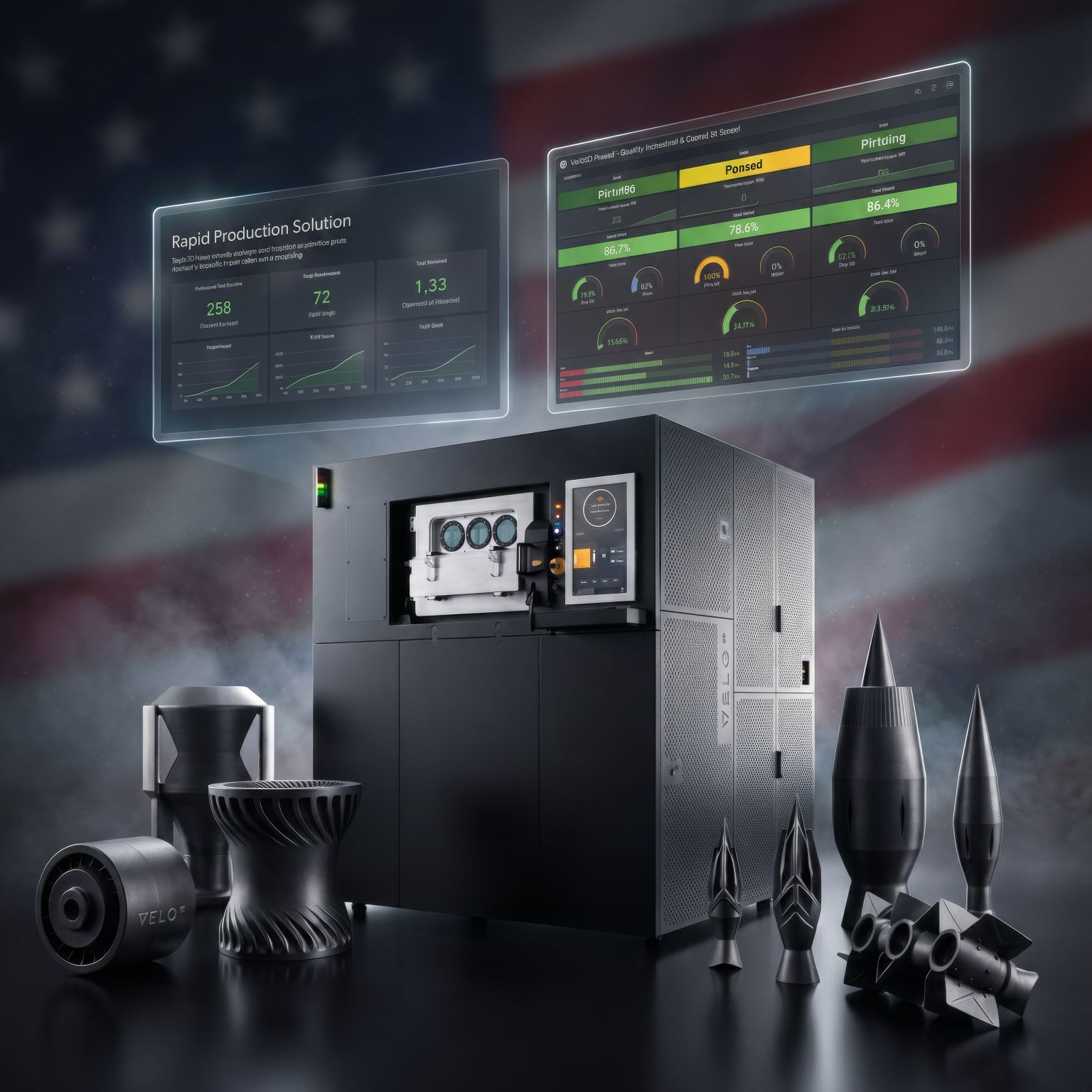
    Velo3D’s RPS. Image courtesy of Velo3D.

    For 2026, Velo3D maintained its full-year revenue guidance of $60 million to $70 million. The company also said it expects gross margins to move above 30% during the second half of the year and still aims to reach EBITDA profitability later in 2026 if it continues securing funding.

    Following the earnings release on May 12, Velo3D shares surged nearly 50%, climbing from around $1.50 before the announcement to more than $2.10 in after-hours and next-day trading as investors reacted to the company’s rapid revenue growth, improving margins, and expanding defense backlog.

    Velo3D released its earnings report after markets closed on May 12, when shares were trading around $17.50. The following day, the stock climbed more than 20% to as high as $21.36 as investors reacted to the company’s stronger revenue growth, improving margins, and expanding defense business. Since then, shares have pulled back a bit but have continued trading in a pretty high range between roughly $18 and $21 through the rest of the week.