• HADDY’s Large-Format Robotic 3D Printing to Power Red Cat’s Drone Boat Production

    In May 2025, Joris Peels, as is his custom, wrote a prescient article about Unmanned Surface Vehicles (USVs) and Unmanned Underwater Vehicles (UUVs), i.e., drone boats. Listing a multifaceted range of cost advantages that maritime drones could yield compared with conventional maritime defense systems, Joris concluded that autonomous systems presented genuine potential to disrupt the world’s existing balance of naval power.

    In 2026, of course, the US Navy is using drone boats in active conflict for the first time as part of operations in the war in Iran, and Iran’s success at maintaining an effective blockade in the Strait of Hormuz depends in no small part on kamikaze drone boats. Meanwhile, the US Navy recently announced it is setting up a marketplace for medium USVs.

    This is the context behind Red Cat Holdings, the Salt Lake City-based manufacturer of autonomous defense systems, forming a partnership between its maritime division, Blue Ops, and Florida’s HADDY, a contract manufacturer leveraging robotic-arm 3D printers to produce large-format components. Under the deal, HADDY will equip Blue Ops’ Valdosta, Georgia, production site with its robotic additive manufacturing (AM) systems enhanced with Agentic AI.

    According to Red Cat, the move will double Blue Ops’ existing manufacturing capacity, while HADDY will also give the division the option to continue to scale production through the contract manufacturer’s own network. In addition to enabling faster production timelines and the performance improvement associated with quicker iteration cycles, Blue Ops aims to provide on-demand order fulfillment for its customers.

    HADDY is one of a number of companies that have benefited over the last couple of years from the growing viability of, and resultant increasing market interest in, the combination of robotic arms and extrusion printheads. In July of last year, HADDY was one of four startups chosen to participate in the Disney Accelerator program.

    In a press release about the partnership between Red Cat’s Blue Ops maritime division and HADDY, Barry Hinckley, the president of Blue Ops, said, “This partnership advances our ability to iterate at the speed of modern conflict. This also underscores a shift in how boats are built. The industry has seen moments like this when fiberglass replaced wood, and we’re seeing a similar transition now with large-scale 3D printing. This fundamentally changes how quickly we can move from concept to deployment and gives us the ability to meet demand at scale in ways the industry hasn’t seen before.”

    Jay Rogers, HADDY’s co-founder and CEO, said, “Manufacturing is moving toward a more distributed and scalable model, and large-scale robotic 3D printing is a key part of that shift. By combining production technology with a global microfactory network, we can build complex systems more efficiently and closer to where they are needed. Blue Ops is early in applying this approach to maritime systems, and it has the potential to reshape how these platforms are produced and deployed.”

    HADDY’s St. Petersburg facility. Image courtesy of HADDY

    In the press release, Blue Ops’ president also noted that cybersecurity was a factor in the company’s decision to select HADDY as a partner. It is inevitable that IP protection and overall OpSec will play an increasingly primary role in how companies leveraging AM choose their partners.

    With that in mind, it has probably gone under-appreciated, the extent to which cybersecurity considerations may, on their own, accelerate interest in reshoring. Even as all stages of contemporary manufacturing workflow become more digitalized — on the one hand, opening up the potential for more far-flung supplier relationships than ever before — on the other hand, manufacturers are obviously going to want to establish close-knit relationships with any partner that has comprehensive access to their data.

    Thus, in the early phases of distributed manufacturing, it’s probable that we’ll see more and more partnerships like the one between HADDY and Red Cat/Blue Ops, where manufacturing relationships become both more localized and more distributed simultaneously. This is particularly likely given that the sectors most responsible for driving reshoring interest are already the most strategically critical.

    In the same vein, the next five years of demand drivers for manufactured goods in a nation like the US will go a long way towards defining the interests of the next generation of US manufacturing personnel. That is, in the same way that a nation experiencing an automotive boom in the 1950s had a broader manufacturing sector for the rest of the 20th century that was disproportionately shaped by the auto sector, the minds currently getting started in manufacturing by making drones with 3D printers could shape US manufacturing for the rest of the 21st century.

    Featured image courtesy of Red Cat

  • Metal Base & Scrap Labs Usher in A Ultra Low Cost Sub-$10,000 Metal LPBF Evolution

    Dutch firm Metal Base started a low-cost metal LPBF revolution last month. An ultra-low-cost metal laser powder bed fusion system was engineered by Tom Bakker. With a direct path to the powder bed and superior airflow, the value-engineered system debuted at under $10,000. Many were incredulous, but engineer Tom had already sold six systems to beta customers, and they had been running for months at customer sites and maybe even more surprisingly, homes. Since then, Metal Base has raised €93,870. The initial goal was €51,000, and now the firm is 42,870 over that. This means that rather than being a fanciful dream, the Metal Base LPBF system has six units up and running with customers and now has a funded Kickstarter that will see 23 more being built. Tom wanted 20 systems initially, so this is exactly the success he wanted. This will let him take the next step in refining the system.

    Now, US-based Scrap Labs wants to join the fray. Boulder-based Scrap Labs plans to debut its system at the Rocky Mountain RepRap Festival (RMRRF) in mid-April this year. That team wants to offer a pre-order for a kit at $14,990, with a fully assembled 3D printer at $17,990. The company wants to ship systems in 2027. Their Scrap 1 3D printer will go on sale in 2027.


    The system is reported to have a 100 x 100 x 100 mm a 200W laser at 915 nm and be able to make layers between 20-100 um. There’s a HEPA filter, and it’s built on top of Klipper, while the slicers are PrusaSlicer, OrcaSlicer, and their own flavor, ScrapSlicer. The company wants to offer stainless steel, tool steel, copper, nickel alloys, and cobalt-chrome (CoCr). Now I’m intensely skeptical about the copper. Also, you should know that leftover powder can trigger thermite reactions with other powders and cause metal fume fever. I’m thinking that this will be dangerous to do. Furthermore, there is an oxidation risk. Nickel is a 2B carcinogen.

    CobaltChrome LPBF Powder is a Presumed Human Carcinogen

    But the idea of 3D printing cobalt chrome (CoCr) on a home machine is one of the stupidest things I’ve ever heard. Cobalt Chrome powder is a skin irritant, leads to skin sensitization, causes allergic contact dermatitis, is a carcinogen, and causes respiratory disease. Cobalt chrome powder has been known to cause lung cancer. A study specifically on the “Dermal exposure and surface contamination associated with the use of a cobalt-chrome alloy during additive manufacturing” concluded that,

    “These metals were also detected on the skin of AM operators and on surfaces within the AM and non-AM areas of the facility. Dermal exposure occurred on all of the anatomical areas, with the highest total metal concentration detected on the index finger during the post-processing phase of AM. Surface contamination occurred on all AM and non-AM sampling areas after a full shift.”

    Cobalt chrome is a presumed human carcinogen, classified as a 1B carcinogen, and is known to be reprotoxic. In case of a fire or explosion, the oxide fumes are carcinogenic.

    Since we know that cobalt-chrome in dental restorations and implants releases ions that provoke “cytotoxic, oxidative, and inflammatory responses at both cellular and systemic levels.” So the question arises, why would you use it? If it’s not for dental, then why? And if you are using it for dental, is that a good idea? Why not use stainless steel or another material instead? Usually, this kind of thing would make me completely not write about the firm. This is irresponsible and unnecessary. But one of the founders is Matt Woods, who co-founded Xact Metal. His experience there gives him a unique insight into working with sub-$100,000 systems, a category that Xact pioneered. I really hope that Scrap Labs becomes more safety-conscious. Some of the other safer materials, coupled with a $15,000 printer, should be exciting enough. There’s no need to kill people to flesh out your pitch.

    Why is this happening?

    With Scrap Labs and Metal Base, the ultra-low cost category of LPBF metal systems now has two entrants. Rather surprisingly, none of them is Chinese. Whereas several Chinese firms are active in the $25,000 to $100K category, the entry-level category now consists of a European and US-based player. To me, this is very exciting. Hardware innovation was becoming a Chinese-only affair; it would be good to see it become more of a global competition.

    The cross-fertilization from the desktop market is also notable. Klipper, OrcaSlicer, and a motion stage derived from material extrusion seem to be driving both participants’ efforts. This could mean more people who are used to working with these tools could join the fray. It also makes it more likely that established Material Extrusion firms may consider this someday. The Material Extrusion volume is unlocking opportunities in hardware platforms. Importantly, however, we can see that open-source software packages are driving innovation. Without Klipper and Orca, these teams would need to do lots more work.

    An increase in the capabilities of low-cost lasers and new diode laser forms are the real forces behind the throne here. And I’m going on a limb here, guessing the lasers will probably be Chinese. That is the real wave that is pushing this forward, the same wave that previously made it possible for Sinterit, Sintratec, and Formlabs to make accessible polymer LPBF systems.

    What is significant here?

    These are both companies that seem engineering-driven. Small headcounts and crowdfunding are used to get the printer off the ground. This isn’t a 40X, growthacker, raise 200 million world. Times have changed, and founders have too. Both firms, for now, seem focused on the product and getting it out there. If these systems work and more people will become interested, then improved, value-engineered, more stable future systems from companies like these are likely to drive growth in metal laser powder bed fusion.

    But it’s not going to compete with the existing LPBF market; instead, it will enable a whole new market of users to join the additive space and drive up system numbers. It would be very good for existing powder bed firms to look at this. Heck, I’d love it if they developed $100,000 systems. These segments will be where the growth is, where the huge number of businesses that want metal things can be found. This will enable thousands of applications we cannot touch now: fasteners, connectors, inventions, aftermarket car parts, and more. The larger firms will not be interested, but what about the even larger ones?

    Imagine you’re Formlabs? I’d get a couple of people to try to make me a bodged-up one to see if we could do it if I were them. Formlabs’ eventual entry into this space would accelerate adoption significantly. Bambu could do this as a side project, too. These firms are much more agile and experimental than the established LPBF firms. I’m sure that we will see more startups like this. This could be a momentous development and one of the most significant things to happen in additive manufacturing.

  • Resetting the Role of AM in Defense, and the Role of Defense in the Economy

    The Trump administration recently revealed that it is requesting a $1.5 trillion defense budget for FY2027, confirming Trump’s initial announcement of that topline number at the beginning of 2026. So far, only the broad strokes are publicly available, but there’s enough there to get the gist of what the administration wants.

    One would think that the additive manufacturing (AM) industry is in a better position than ever to make the case that policymakers should continue to increase prioritization of AM, but nothing involving the defense budget is ever straightforward. Before the $1.5 trillion was ever officially announced, Matt Vallone, a defense market intelligence analyst who has experience working in the US Congress, wrote an article, “Why a $1.5 Trillion Defense Budget Request Might Slow the Pentagon’s Reform Efforts”, which highlights the maddening amount of complexity underlying the process.

    First off, it should be noted that, according to Vallone, the roughly 50 percent year-over-year increase in the defense budget that the Trump administration is requesting “would be the largest increase in defense spending since the Korean War…” All of the difficulties involved in getting the bill passed, as well as in trying to determine how the bill might affect relevant industries like AM, largely stem from this historic increase, alongside the fact that it’s being requested during a war that, so far, gets more unpopular with Americans by the day.

    Then, there are also the realities that the US is spending more on servicing the debt than ever before — since 2024, the US has indeed spent more on debt interest payments than it has on defense — and the Congress is more divided along partisan lines than ever before, which has already made passing a budget on time virtually impossible for the US government. Vallone points out that, under these sorts of conditions, it is the disruptors who are likely to suffer the most:

    “It would be reasonable to expect that the FY2027 request will put significant funding into the priority areas and would seek to make these programs as accessible as possible to non-traditional defense providers. …

    …However, submitting a request that will likely be subject to such significant cuts will play to the advantage of traditional defense suppliers. In what will almost certainly be epic lobbying battles across the FY2027 National Defense Authorization Act and the defense appropriations bill, programs that have hot production lines, employees who are actual constituents, and established Congressional relationships will be much better positioned. …New startups and novel solutions would be back-footed relative to incumbents as they lack the on-the-ground support of existing, rather than potential, workforces.”

    Essentially, Vallone is arguing that by asking for such a large increase upfront, the Trump administration will likely end up seeing a good chunk of that number cut. That’s not a problem on its own, but because it would leave members of Congress in control of deciding which parts of the budget request fall by the wayside, the companies with existing Congressional relationships — generally those who prefer the status quo — will disproportionately benefit. Vallone draws a comparison to the Obama administration’s second term:

    “…a high budget number followed by much lower appropriations can impact the capital flow into the sector. …in 2013, a sharp drop in contracting relative to expectations led to deep uncertainty and investors pulling back. Small businesses that staff up under the impression that they are in the budgetary program of record, only to see their line item slashed to sustainment levels, will face difficulties paying bills and justifying future rounds of investment.”

    Of course, this is exactly the kind of difficulty that has long plagued AM companies working with the US military. It is especially frustrating under current circumstances because it threatens to stifle one of the rare publicly available instances of good planning by the US military in the lead-up to Iran: its pivot towards incorporating lower-cost weapons systems enabled by advanced manufacturing techniques, including AM.

    Image courtesy of Frankenburg Technologies, via Chosun Daily.

    A recent article in Korea’s Chosun Daily describes how the Trump administration has built on the Biden administration’s focus on developing the capabilities to produce cheaper drones, as well as developing lower-cost missiles for countering cheap enemy drones, in large part via 3D printing:

    “Estonia-based startup Frankenburg Technologies, observing Russia sending Iran’s Shahed drones during the Ukraine war, is developing a missile capable of speeds over 600 miles per hour (approximately 965 km/h). While its range is short at up to 1 mile (approximately 1.6 km), it has the advantage of costing tens of thousands of dollars in the low range and taking only a few hours to manufacture. European missile companies MBDA, Sweden’s Saab, and Cambridge Aerospace have also joined the competition. They simplify manufacturing by using 3D printing and AI design instead of complex manual labor, reducing costs by using commercial components found in smartphones and home appliances instead of expensive missile-specific parts.”

    The article cites a 2024 Axios article that quotes Bill LaPlante, Under Secretary of Defense for Acquisition and Sustainment in the Biden Administration, testifying to a Senate subcommittee about the Houthis drone capabilities:

    “If we’re shooting down a $50,000 one-way drone with a $3 million missile, that’s not a good cost equation. The technology is changing every couple of weeks, and the tactics are changing, and it’s going to be a constant fight.”

    Obviously, LaPlante’s comment could’ve just as easily been a direct response to what’s happening on the ground in the Middle East right now.

    Testing the SPARTA drone. Screenshot from ARL/YouTube, via NextGenDefense.

    Meanwhile, beyond private enterprise, the US military’s own manufacturing strategies have also benefited from incorporating AM as a core philosophical principle rather than simply as a new production technique. All throughout last year, the US Army was steadily building up its AM capacity, but it was also simultaneously refining that capacity into the cornerstone of a holistic framework for lowering the costs of workforce training. The Army has succeeded in leveraging that framework to respond more quickly to organizational needs as they arise, to the extent that the branch can factor feedback from soldiers on the frontline into the design process. That’s the story behind the SPARTA (Soldier Portable Autonomous Reconnaissance Transitioning Aircraft) drone that was unveiled recently at Alabama’s Best Drone Warfighter Competition.

    The SPARTA weighs a little over two pounds and, with a frame that can be 3D printed overnight, it’s around $1000 per unit:

    “Our team at ARL has been working on new types of small unmanned aerial system designs for several years,” Army Research Laboratory (ARL) Mechanical Engineer Dr. John Hrynuk said in an Army press release. “When soldiers visited ARL last spring, they expressed the need for a lightweight, modular drone that could be easily assembled, repaired, and adapted in the field.”

    Whatever ends up happening with the FY2027 budget, the Army’s AM-enabled innovation boost has already been enhanced in 2026 by the opening of a new Additive Makerspace at Picatinny Arsenal in New Jersey. Similar facilities, including the II Marine Expeditionary Force (MEF) Campus at Camp Lejeune, have yielded numerous examples of real cost savings for the military, while also harnessing and encouraging innovation within Army ranks.
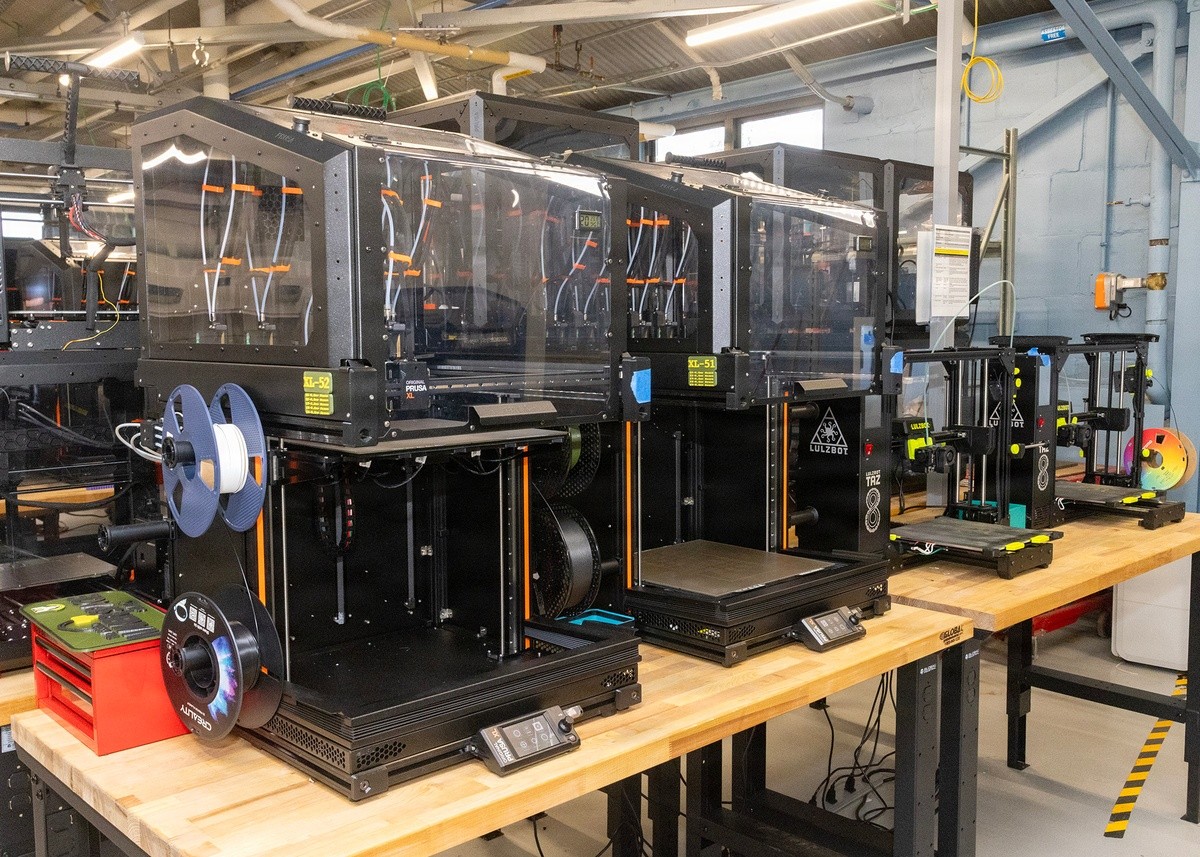
    Image courtesy of the US Army.

    The Iran conflict is already demonstrating that the US should be moving further in the direction of cost reduction that supports long-term agility, and away from locking the budget in on commitments to questionable behemoths like the F-35, which is everyone’s favorite punching bag for good reason, but is also far from the only example of the Pentagon sticking with an outdated spending strategy. It should also be pointed out that, due to successive generations of endless drift and unabashed bloat, the US defense budget has effectively become a threat to US national security, not only by spending on the wrong things when it comes to defense, but equally, because the US is having trouble affording everything else that a government should be providing for its taxpayers.

    Trump did an excellent job highlighting this himself when he made a comment that already seems likely to define his second term: “We can’t take care of day care. We’re a big country. We have 50 states. We have all these other people. We’re fighting wars. ..We have to take care of one thing. Military protection. We have to guard the country.”

    The moment Netanyahu and Trump decided to start a war with Iran, the decision about whether the war would end was no longer in their hands. Similarly, once Trump’s comments at a White House luncheon about the military budget were leaked to the press, the debate over the budget was no longer in the hands of the executive branch. This gives the disruptors, including the AM industry, a crucial opening they wouldn’t have had otherwise. As may be expected, Democrats, who are currently anticipated to take control of Congress after this year’s midterm elections, have pushed back hard on the White House’s budget request, but so have Republicans. If the AM industry can organize and campaign members of Congress with the legitimate argument that AM can and should be used as a spending reduction tool, the status quo might not steamroll its opposition as it has in the past.

    At the same time, AM companies should treat the morass of the process as an opportunity to rethink their dependence on the defense sector. A primary point to consider is that you don’t even have to forego targeting government money as a pillar of your business strategy: you can simply refocus on sectors like energy, medical, semiconductors, etc., instead. Something along the lines of, “If we can quantify all the savings AM yields in the defense budget, that money should be set aside for AM spending by other agencies, which could lead to additional savings,” has the makings of an argument that could actually win in 2026.

    Disruptors don’t get an opening at the public policy level like the one that looks to be on the horizon for the next few years. If such an opening does appear, don’t waste it.

    Featured image: Groundbreaking of the Additive Makerspace at Picatinny Arsenal, Courtesy of the US Army

  • DTU 3D Prints New Fuel Cell Design With 5x Power Boost

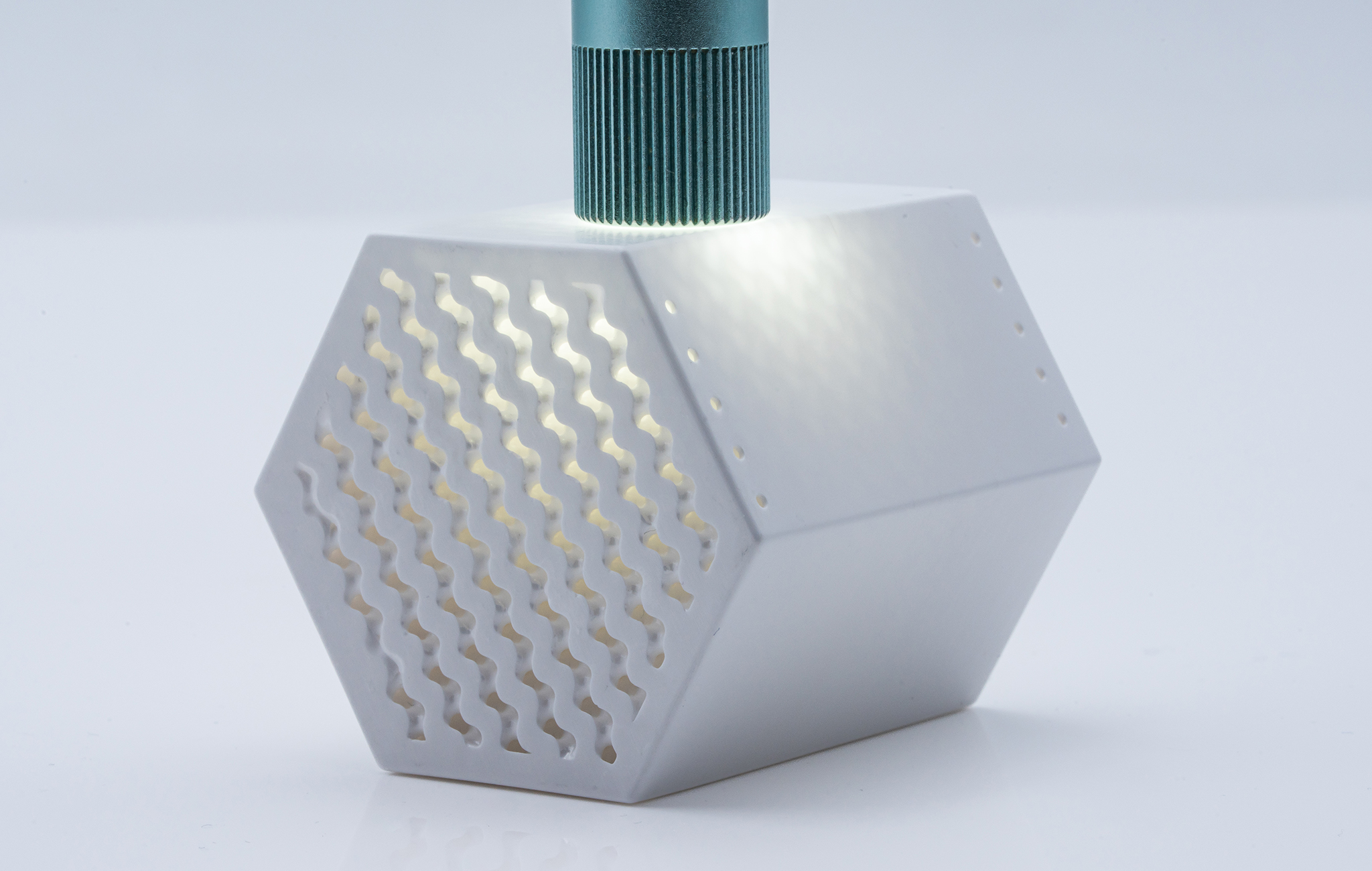
    Technical University of Denmark (DTU) researchers have used Lithoz ceramics 3D printing to make more efficient hydrogen fuel cells. With a part made from Lithoz Yttria Fully Stabilized Zirconia (8YSZ), a thin-walled component saw a 500% increase in power-to-weight ratio. The part in question is a Solid Oxide Fuel Cell. Conveniently hobbled by the wondrously easy-to-pronounce acronym SOFC (because we’re sofc’ed if we don’t do this?), turn hydrogen into electricity. SOFC typically has multiple layers, including a porous cathode and a dense electrolyte. When heated to temperatures above 500 °C, oxygen ions are created and migrate through the electrolyte. At the anode, the fuel is oxidized, giving off water and electrons. Given the immense amount of heat and stress, ceramics are the go-to materials for these devices.

    DTU SOFC.

    Porosity, geometry, and flow are critical in this application, making it ideal for additive manufacturing. In this case, the team used LCM, Lithoz’s DLP-based doped resin 3D printing technology.was used to make the units. Used in home and industrial heating, with potential applications in future transport, this could be an important milestone for Lithoz and the DTU.

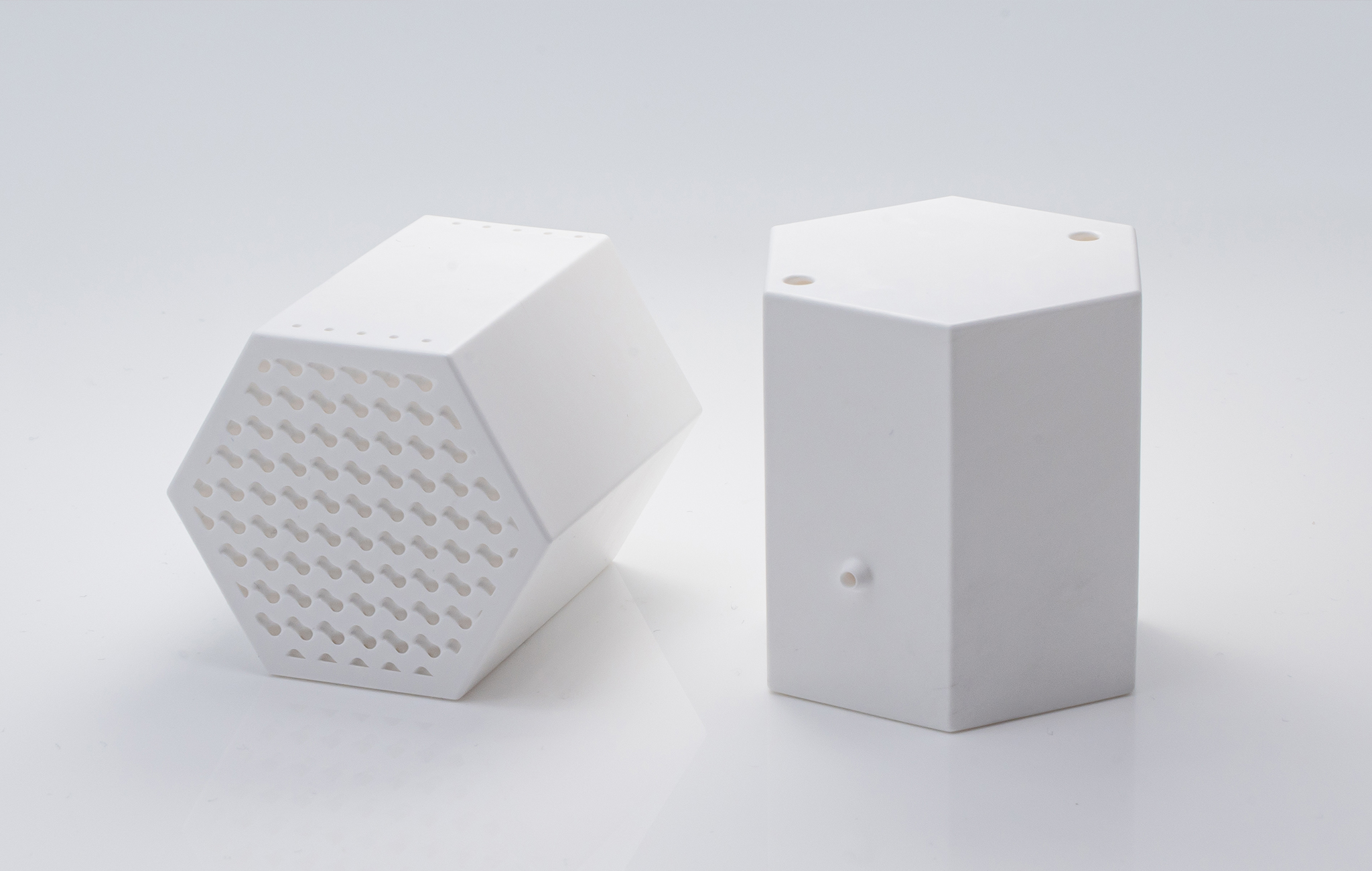
    The research project by the Department of Energy Conversion and Storage at DTU Energy, led by Professor Vincenzo Esposito, is called “Escape Flatland.” Instead of the usual stacked setup, a single monolithic fuel cell was made. The team wishes to scale up production for this gyroid-shaped cell, saying that the unit “demonstrates power-to-weight ratios approaching around 1 W g−1, compared to around 0.2 W g−1 typical of conventional planar SOFC architectures.”

    Professor Esposito says that,

    “This innovation is a real paradigm shift from planar stacking to monolithic architectures.”

    The design allows for a far more efficient shape, with the “combination of thin inner walls and elimination of interconnects and sealants resulting in a drastic loss of weight, reduced thermal mismatch and mechanical stress, all while significantly improving the utilization of the available volume.”

    This is essentially the same case as we have seen in thermal management applications such as heat exchangers. With better performance, this could be a viable application. The team thinks that this type of SOFC will most likely be used in transport applications.

    DTU SOFC.

    Esposito continues,

    “Our motto, ‘Escaping Flatland, ‘ sounds like a logical step, but it has long been impossible to achieve. The particular arrangement of materials and microstructures requires a significantly elevated level of complexity – but until recently, we simply lacked the tool to make this concept a reality. 8YSZ remains one of the most widely used and technologically mature electrolyte materials for SOFCs. With its mature precision and scalability, Lithoz LCM technology has demonstrated the highest repeatability for these bio-inspired TPMS geometries with the thinnest possible inner walls, which inherently meet the gas supply requirements. The monolithic concept could only be achieved by precisely replicating those gyroid units and adding a sealed shell frame to maintain gastight conditions.”

    While Lithoz CEO Johannes Homa states

    “By realizing 8YSZ monolithic fuel cells with intricate gyroid geometries on their Lithoz CeraFab printer, DTU was able to reduce the dependence on conventional interconnect and sealing architectures inherent to stacked flat items. These elements have traditionally been the Achilles heel in the search for better power density in commercial planar SOFC stacks and, therefore, the traditional focus of attention in the quest for a more advantageous power-to-weight ratio. With their revolutionary monolithic concept, these elements eliminate the need to gradually optimize exit points, paving the way for a complete rethinking of fuel cell design. Of course, we are extremely excited about the impact this will have on the worldwide hydrogen-based industry.”

    This seems like a great step forward, and it could become a sizable application in a possible future hydrogen economy. How prevalent hydrogen will become in the energy mix is not known for certain. Currently, geopolitical events in the Gulf make a hydrogen economy seem like a very investable thing indeed. With higher oil prices and instability, more governments will look to alternatives and ways to diversify their energy mix. Using hydrogen is kind of like using one battery technology, so this is perhaps limiting. But more broadly, there could be additional electrochemical processes that could benefit from more efficient, lightweight structures like this one.

    Images courtesy of Lithoz

  • Analysis: Nano Dimension Sells Additive Manufactured Electronics Business

    Nano Dimension has sold its Additively Manufactured Electronics business to Inspira. The sale ¨includes intellectual property, proprietary high-precision 3D electronic printing systems, patented software, engineering know-how, manufacturing equipment, inventory, customer-related assets, and fully equipped facilities, including physics and chemistry laboratories and an ink manufacturing plant. Inspira has assumed control of the acquired assets and operations effective immediately.¨

    Inspira is paying $2 million now and may pay another $10.5 million in deferred performance related fees over the next year. The AME business is the core of the Nano Dimension offering and includes the Dragon Fly 3D printer, the Conductive Ink Dielectric Ink and other ink formulations, the dielectric and other polymer build materials, including all the software and the Fabrica product line. This means that Nano Dimension currently consists of the Essemtec SMT equipment, the Global Inkjet Systems inkjet business, holdings in MarkForged and binder jet firm Digital Metal.

    Inspira is a firm that makes ECMO equipment for oxygenation, especially in bypass and other surgical procedures. The firm also makes blood sensors. That medical division will be moved to a subsidiary.

    Inspira CEO Dagi Ben-Noon stated,

    “From my in-depth knowledge of the AME technology, this acquisition gives Inspira immediate control over a highly specialized advanced-manufacturing platform with proven infrastructure, engineering depth and production capabilities already in place. These assets can now be directed toward high-value applications that align with the next stage of the Company’s strategy.”

    Nano Dimension CEO David Stehlin said,

     “Today’s announcement marks the first of a series of steps to maximize shareholder value and builds on the cost reduction actions initiated in the third quarter of 2025. The sale of the AME and Fabrica product lines will lower our operating costs and cash burn while reinforcing financial flexibility, and the deferred consideration structure allows us to participate in potential upside as the product lines perform under Inspira’s ownership.”

    Is this a good deal for Inspira?

    It’s a bit of a leap to consider this an obvious deal for the medical device firm. DragonFly and 3D Printing technology is very complementary for ECMO. For ECMO thin walled, precision hole barrier systems are the key differentiator. The company could very well use Additive Electronics to make these better than others. At the same time it could leverage the business to make more electronic sensors for in the body.

    The obvious thing for them to do here is to become a platform for other firms to develop their technology on. You could use a DragonFly into the lab and then scale it with their services and infrastructure to make electronic biological hybrid medical devices. These could be small, well integrated and conformal. Another option would be to do something similar and be a  kind of a Amnovis, Tangible Solutions, kind of business. Someone could walk in the door with an invention and you could commercialize it completely. Each of these paths look potentially viable. Having said that, the extremely low purchase price here may have just made this an irresistible deal for them. If they ever sell a dozen systems it will make sense. Even if they would be planning on themselves buying a lot of systems the discount would also make this useful for them.

    What about for Nano Dimension?

    The deal is an absolute steal. Fabrica itself was acquired for $54 million in 2021 while theoretically the development of the technology was aided by subsequent investments. The other part of the AME platform is the core Nano Dimension technology which again was worth over a $1 billion at one point. It however looks ever more likely that Fabrica was a lot of the underpinnings of the Nano Dimension technology later on. Given that and Nano´s leading position in Additively Manufactured electronics, this looks like a cheap deal for Inspira. It is to me unclear what Nano Dimension wants to do now, unless they completely want to strip the company of all assets and return cash to investors. Or perhaps they could focus only on inkjet? This seems strange and a path to returning all the cash to investors seems more likely. Even then this seems like a particularly low price for Inspira.

    With reshoring a company focusing on SMT, inkjet systems and reshoring manufacturing could make a lot of sense. But, then I would have always kept the AME business.

    What about Markforged and Digital Metal?

    The parts not sold (inkjet and SMT business) make more sense as a unit with the AME business than the rest of Nano Dimension does. So it should be clear now to all that Markforged and Digital Metal are for sale. If you took Margforged and turned it into the US based ruggedized 3D printer manufacturer for energy & defense the business could grow. Through doing Material Extrusion well, through making bound ceramics and metal components for defense and through maybe adding more direct write there could be a booming business to be had. If the firm then leveraged its software to become a workflow for the individual warfighter it could really grow to be good business.

    The P100 metal binder jet system from Markforged via its Digital Metal acquisition. Image courtesy of Markforged.

    Defense spending on Additive is set to boom and exigent, austere or point of need manufacturing is set to boom as well. You´d have the formidable Prusa Research to contend with, they now make systems in the US, but there would be a lucrative, albeit limited space, for the two of you and then some.

    As for Digital Metal, their binder jet technology centers around a high value machine. But, the results are unparalleled with high volume production being done on these systems for decades now. If they were selling this asset then heck, I´d buy it at these prices. The combination with the MarkForged business still makes sense if they leverage their defense approach together and offer parts at scale there.

    What about DeepCube & AdditiveFlow?

    It’s hard to think of products that were as prescient as DeepCube and AdditiveFlow. Deep learning for manufacturing is something that you can currently raise tens of millions for. DeepCube´s $70 million acquisition price would be more than covered if a kind of AI for manufacturing product emerged. The company came up with locally running neural networks at the edge. The company had a brain in a box, automated model training and an inference engine for the edge as well as machine sensor monitoring.

    Give the right someone PowerPoint and that now and you can walk out of the meeting with a $300m valuation and $10 million. Acquired in 2021 that company was effectively closed in 2025. No DeepCube products are on offer and we are to expect that the magic sauce of DeepCube has permeated everything marinating the firm in AI. Additionally, the FLIGHT design suite along with simulation and optimization in and of itself was very viable indeed but this seems to be squarely in Inspira´s hands now.

    What does this mean for the industry?

    For additive in general this is another lesson in having the right management at the right time. It’s easy to get hopping to the rhythm of musical chairs and much more difficult to sit down at the right time. This is yet another reckoning. Another Alka Seltzer after the heady bacchanal that was a time of more than free money. It should not affect our course much but may retard growth in Additive Electronics specifically. investors may be more hesitant to back AME firms in light of this deal.

    But, AME´s potential is still huge while revues are slowly building. With the right technology & attitude very solid businesses in medical devices, research, defense and beyond can by built in AME right now. What’s more ancillary 3D printing capabilities in micro printing, complex devices and nano level developments could be unlocked as well. In a more sensor driven world where your phone is ever more crammed with technology AME applications are set to grow as well. For the patient this is a good opportunity. For Additive as a whole, I don´t think that this will impact everyone much. It’s also counter to the building investment we see in AME capabilities by governments worldwide.

    Conclusion

    Initially Nano Dimension was inflated by too much imagination. The dream told could probably never be fulfilled, and Cathy Wood fueled a bonfire. The sheer amount of money evaporated by the Nano Dimension sleigh ride is astounding. Now however I think that the firm does not have enough imagination.

    If it wants to stay in Additive then a split into a leader in Additive Electronics powered by AI and a Global inkjet, SMT & Markforged business should have netted them much more money than this. Just for an AI powered electronics 3D printing platform at a time of near limitless investment from semiconductor companies you could have gotten more. Also, in a time of increased sensors and huge anxiety around supply chains a spin out of a Global Inkjet, SMT & AME business should have been able to net you much more as well. A defense focused electronics, metal and polymer 3D printing business should also be able to find a home.

    But, even beyond this a supply chain focused electronics 3D printing, inkjet and polymer 3D printing business could win itself significant contracts right now. With some kind of magic the stars have aligned and fanciful investments in AI, electronics 3D printing and other technologies have lead to a perfectly plausible firm, in today’s age. With Hormuz closed, 3D printed drones dominating the battlefield, the US military might humbled and everyone scrambling for manufacturing sovereignty the formerly unwieldy Nano Dimension kind of looks like the right play.

    But, currently through not marketing well enough its capabilities and vision the company is doing itself a disservice. In a fractious world AI powered manufacturing assets providing independence should be able to find more capital and revenue. If Nano wants to sell everything and return cash, it can do so with more aplomb.

  • BLT & Tianqiong Partners Flex on West with Consortium-Enabled, 3D Printed Upgrade for OPPO Find N6 Hinge

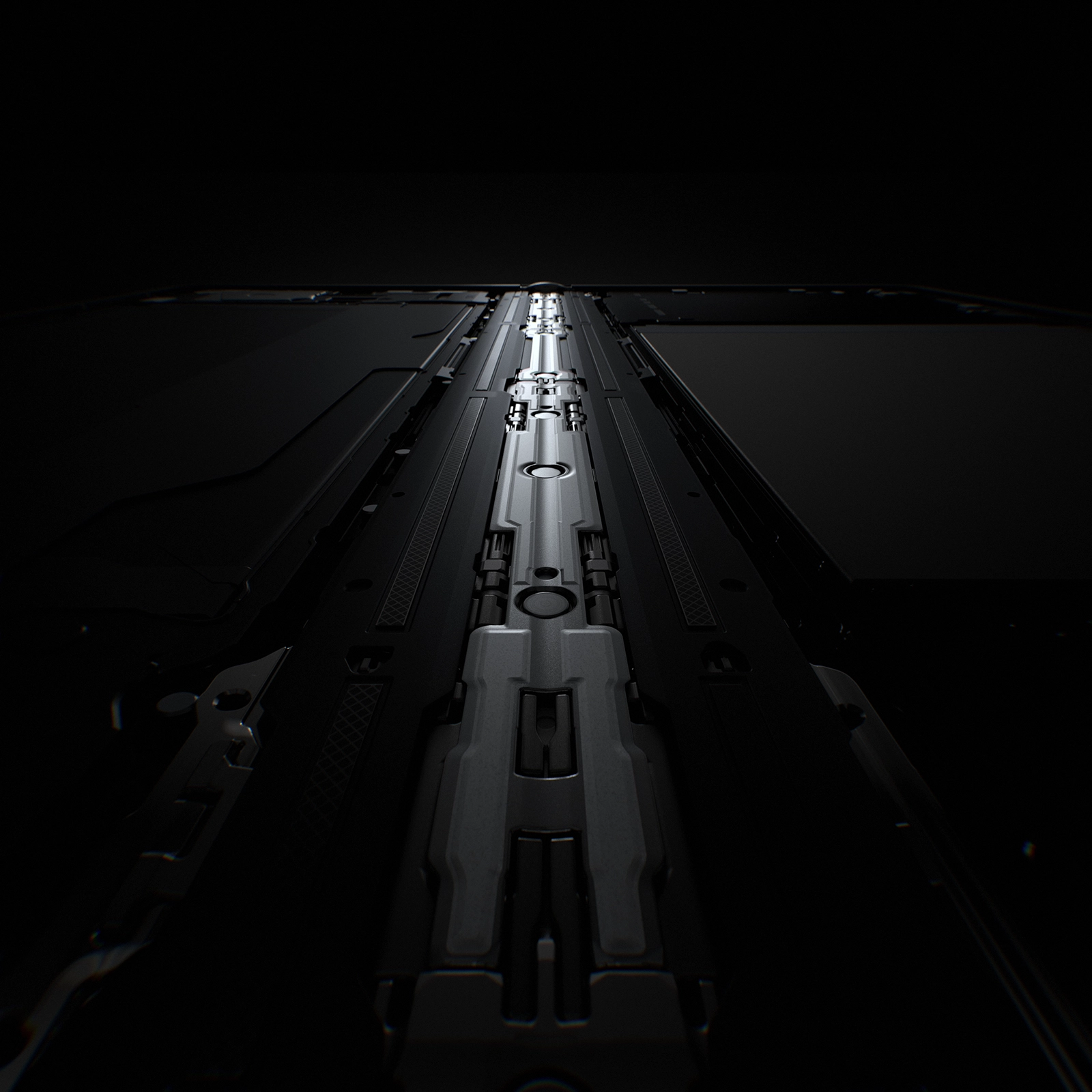
    Due to a combination of historical, ideological, and economic reasons, companies originating in East and Southeast Asian nations have proven far more adept than their Western counterparts at leveraging organization via consortiums to achieve competitive advantages. Metal additive manufacturing (AM) original equipment manufacturer (OEM) Xi’an Bright Laser Technologies (BLT) has just demonstrated the power of consortiums with the announcement of its work on the hinge for the foldable Find N6 from Chinese smartphone manufacturer OPPO.

    According to BLT, the upgrade over the hinge that the company delivered last year for the Find N5 was the result of its collaboration with “the Tianqiong Partners industrial alliance,” which helped BLT develop what the company is calling “industry-first 3D Liquid Printing,” a solution to optimize minimization of the crease in foldable electronics. OPPO describes the process as high-resolution UV printing that uses 20+ cycles of finishing with “custom photopolymer droplets” to nearly eliminate height variance in the 3D printed titanium hinge, yielding what OPPO is referring to as the ‘Zero-Feel Crease’.

    BLT and OPPO have four partners in the Tianqiong Partners consortium, including Shanghai Jiao Tong University and Samsung Display, which market intelligence site UBIResearchNet notes were responsible for advanced materials/structural engineering research and flexible display technology, respectively. The consortium is rounded out by electronics manufacturer Amphenol Phoenix, which provided design and manufacturing of the hinge, and LEAD Intelligent, which provided automation equipment.

    BLT’s and Tianqiong Partners’ participation in the hinge design and manufacturing for the OPPO Find N6 was announced in the middle of March, around two weeks before rumors came out that Apple is planning to use 3D printing for the foldable iPhone that the tech giant may release by the end of 2026. Apple is reportedly a BLT customer, using titanium parts printed on BLT machines for the Apple Watch.

    In a press release about BLT’s work with the Tianqiong Partners on the 3D Liquid Printing process for the OPPO Find N6 hinge, Vincent Yang, GM at BLT, said, “The supporting surface flatness of the OPPO Find N6 wing plate has improved by 50% compared to last year. Achieving this level of precision once seemed extremely difficult — even unattainable — but through continuous iteration and rigorous testing, our team was able to meet and even exceed expectations.”

    Liu Chang, OPPO’s President of Hardware Engineering, said, “Achieving a crease-free and durable foldable display depends not only on advanced technologies such as the next generation Tianqiong hinge and Tianqiong memory glass, but also on the collective efforts of the engineers within the Tianqiong Partners ecosystem. The Find N6 represents a significant step forward in foldable display technology, as well as a meaningful improvement in user experience.”

    OPPO’s announcement of an improvement upon its first generation 3D printed hinge long before Apple has even released its first foldable phone illustrates just how far ahead of the West China is in capturing the future of consumer electronics. The gap shouldn’t come as a surprise. In the decades prior to AM’s emergence as a routine part of industrial workflow, nations across East and Southeast Asia built up their globally-leading electronics manufacturing capabilities by mastering a balance between competition and collaboration through cultivation of consortium-based ecosystems, as detailed in the book Tiger Technology.

    At the same time as this highlights the distance between the manufacturing landscape in the West and in Asia, it also illustrates that this distance isn’t the product of some intangible, magical quality that’s only achievable in one region. Western nations, including the US, have done the same thing many times in the past, and there are plenty of examples of emerging technology companies—including many companies in the AM industry—currently leveraging the consortium model.

    The main problem with translating those initial steps into accumulated momentum is simply that the manufacturing sector in the US domestic economy lacks the vibrancy that exists in China, South Korea, Taiwan, and even a comparably mature industrial power like Japan. The US still needs a macro-level whole-of-society push that centers the health of the manufacturing sector as a primary cultural objective, in order for the ground to be fertile enough for consortium-driven progress to truly take root.

    There are certainly enough signals out there that increasing the number of manufacturing workers in the US isn’t just a selfish motive for the manufacturing sector, but would serve a real social need for younger generations that will otherwise find difficulty entering a turbulently shifting employment environment. The hard part is figuring out how to come up with a winning message backed by genuine paths to solid careers, but Americans have demonstrated the ability to solve much more difficult social problems in the past.

    Images courtesy of OPPO

  • Most 3D Printing Metals Are Adapted. This One Was Designed with AI

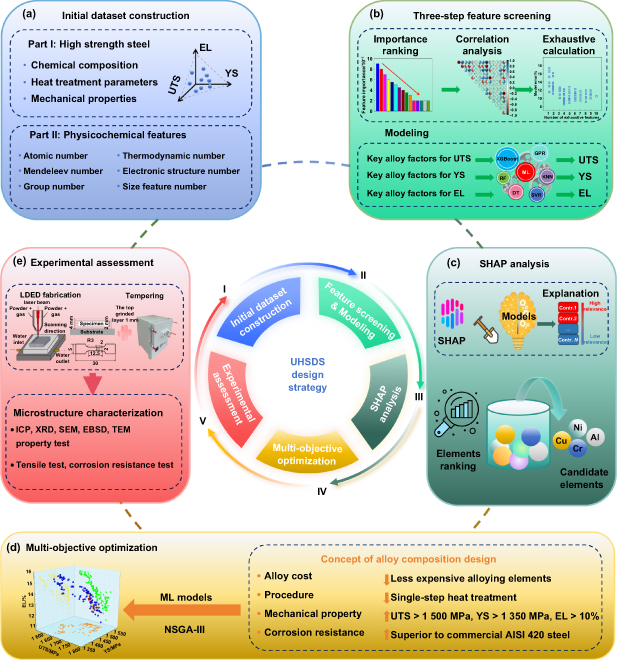
    A research team from the University of South China and Purdue University developed a new type of steel designed specifically for 3D printing, using machine learning to guide the process. The result is a strong, corrosion-resistant material that is also easier to produce.

    This is important because materials are still one of the limits in 3D printing. A lot of the metals used in 3D printing today weren’t made for it. They were developed for things like casting or forging, and then adapted later. That can lead to issues like uneven strength, internal defects, or parts that don’t come out the same every time. More recently, though, companies and researchers have started to create materials specifically for 3D printing. This work follows that approach by designing a material from the ground up for 3D printing.

    A New Approach to Designing Materials

    In this case, the team used machine learning to analyze how different elements and processing conditions affect steel performance. Instead of relying on trial and error, they trained a model using dozens of physical and chemical parameters. This allowed them to predict which combination of elements would deliver the best results.

    In total, the system evaluated more than 80 variables, including how different elements behave and how they affect the metal during printing. It used this data to predict a composition that balances strength, ductility, corrosion resistance, and cost. The researchers then 3D printed the alloy and tested it to confirm the results. The material was not just simulated. It was actually printed using laser powder bed fusion (LPBF) and then tested through mechanical and corrosion evaluations to confirm the results.

    This is a key part of their research, which is detailed in the paper “Interpretable machine learning integrated with physicochemical feature for developing additively manufactured ultra-high strength and ductility steel,” published in the International Journal of Extreme Manufacturing. The work was led by Yating Luo, Cunliang Pan, Xu Ben, Xudong An, and Hongmei Zhu at the University of South China, with Xiaoming Wang contributing from Purdue University, and supported by the National Natural Science Foundation of China.

    The team also produced the material using laser powder bed fusion (LPBF) and tested it, showing that the approach works in practice.

    Designed for 3D Printing with Strong, Durable Performance

    Most metals used in AM today were originally developed for traditional processes like casting or forging and later adapted for 3D printing, which involves very different conditions. For example, widely used alloys such as stainless steel 316L, titanium Ti-6Al-4V, and nickel-based Inconel 718 were all created decades ago for conventional manufacturing. While these materials can be used in 3D printing, the rapid heating and cooling during processes like LPBF can affect their internal structure, leading to defects or reduced strength.

    The new steel was designed with these conditions in mind. The machine learning model accounted for how the material behaves during the printing process, not just its final properties, making it better suited to additive manufacturing from the start.

    According to the researchers, the new steel stands out for its performance. The material is both very strong and able to bend without breaking, which is a difficult balance to achieve. This means it can handle heavy loads without failing suddenly. It also resists corrosion so that it can perform better over time in harsh environments. This is especially important for industries like aerospace, energy, and marine, where parts are exposed to stress, heat, and moisture.”

    How the team used machine learning to design and test the new steel. Image courtesy of Yating Luo, Tao Zhu, Cunliang Pan, Xu Ben, Xudong An, Xiaoming Wang, and Hongmei Zhu.

    Another big advantage is cost. Many high-performance steels used in 3D printing use expensive elements like cobalt or high amounts of nickel. They also go through complex heat treatment steps after printing. This new alloy uses fewer of those costly elements and only needs one heat treatment step, which takes about 6 hours. That makes the process much simpler. Overall, this could make the material easier and more affordable to use at a larger scale.

    Why This Matters for 3D Printing

    More researchers and companies are starting to design materials specifically for the process. This could help expand where 3D printing can be used.

    Industries like aerospace and defense need materials that can handle stress, heat, and long-term use. If new alloys can meet those needs while also lowering cost and simplifying production, adoption could grow. Machine learning also plays a key role here. Instead of testing many options over time, it helps narrow down the right material much faster.

    The new steel is still at the research stage. It has only been tested on printed samples, and more work is needed before it can be used in real parts.

    At the same time, this is part of a growing effort to design materials specifically for 3D printing, instead of adapting existing ones. That approach could make metal 3D printing more practical over time.

  • 6K Wins $1.95M DLA Award to Recycle Defense Metals

    6K will receive $1.95 million from the Defense Logistics Agency under the Recovering Strategic Value project. The Phase II award aims to reduce the US’ dependence on Nickel, Titanium, Tungsten, and Niobium powders from overseas. This is a significant win for 6K because it puts them on a path to being a key supplier in these high-value 3D printing powders for years to come. We expect demand for niobium to see an especially precipitous rise over the coming years, while there will be much more interest in tungsten and sustained growth in nickel alloys and titanium. Tungsten is a key material for missile components and munitions, and the market is dominated by Chinese producers. Likewise, niobium is entirely imported currently and will be a key material going forward in hypersonics and also as an alloying material for many of the cutting-edge materials being created at the moment for additive manufacturing. Rather famously, the US surreptitiously bought titanium from the Soviet Union for use on the SR-71 Blackbird spy plane. This rather colorful example showcases how important such self-reliance can be.

    Most titanium comes from Ukraine, Russia, China, Mozambique, Canada, and Australia. Notably, neighboring Canada is a leading nickel producer while also supplying titanium and niobium. Australia is inconveniently far away, but it also supplies nickel and titanium, while niobium supplies could be realized from there in a few years. This policy, therefore, goes beyond moving away from reliance on difficult or unstable countries and extends to moving away from supplies from America’s erstwhile closest allies.

    6K Additive CEO Frank Roberts stated,

    “The U.S. Government has made it clear that to advance our defense readiness we cannot rely on geopolitically sensitive regions for the materials essential to our most advanced weapon systems. By upcycling domestic scrap from DoD stockpiles and maintenance centers, we are creating a circular, secure, and sustainable supply chain for the US defense sector. This Award enables us and the DoD to further identify end-of-life parts and scrap to convert back into high-value powder ultimately leading to strategic components for the military.”

    The company said the scope of work will include identifying and collecting material from DLA depots, to use DoD scrap as a source for domestic critical metals; developing a proof of concept for a robotic system to automate scrap identification and sorting; converting end-of-life parts made from nickel, titanium, tungsten, and C103 (a niobium alloy) into high-value powder; and conducting cold spray trials to investigate the mechanical properties of upcycled nickel and titanium for use in repair applications.

    6Ks UniMelt. Image courtesy of 3DPrint.com.

    There’s a lot to unpack there, but some significant things seem like they could point to breakthroughs. I’ve been telling people for years to buy aircraft boneyards, please do this now, this could be an amazing source of revenue in the future, especially if energy costs rise. Then scrap could, for a time, be a cheaper way to obtain some materials in powder form. Given the DLA Depot’s focus, this seems like a sound idea. There are many of these worldwide; two dozen or so are immense and significant centers for US military logistics. These depots are located worldwide and handle millions of parts and millions of tonnes of goods. One depot, the Defense Distribution Depot Tracy, is 448 acres in size, employs 1,500 people, and handles the logistics for the Western US. One large site ships 350 seavans and nearly 150 air pallets to 4,000 sites per month. Seavan is another term for a shipping container. Napoleon famously said that an Army marches on its stomach, so the DLA and its depots are integral to the US military.

    The idea of using scrap that the US already has in its possession is convenient, cost-effective, and easier to trace. We would expect less contamination if the material comes from known sources. Also, the US military is big on labels, serial numbers, and things. Many items may have a unique item identifier (UII), a national stock number, or a contract number. This will make tracing what’s in these items and making sure that there are no nasty surprises much easier.

    6K says that 60,000 pounds of scrap come from certain aviation depots. So this could be very sustainable as well, but I’m thinking that not many niobium-containing turbine parts are being thrown away every week. Some artillery barrels contain titanium, so this could be useful, while tungsten could perhaps be collected from firing ranges, as it is used in some munitions. It’s unclear whether the DLA will reverse scrap from many other sites or actively collect firing range materials.

    By using a robotic scrap sorting and ID system, 6K can gain a real advantage over rivals here. If it could do this well, then the company could really build a significant business just off the back of this. The mention of cold spray for Nickel and Titanium is sure to make the folks at Titomic and Spee3D happy. Cold spray is cheap, fast, and could be used for repair. DED machines already repair thousands of turbine blisks. So an alternative, perhaps locally deployable cold spray, could be a very welcome addition.

    The project will last 18 months, and the company hopes to produce a tested, certified powder at the end. Given the US’s isolationism and its growing rift with its allies, this seems like an especially timely move. If the US is to rely on additive manufacturing for missile defense, hypersonics, and key aerospace components, then establishing its own supply chain is a very good idea indeed.

  • 3D Printing Market Hits $16B in 2025 as Growth Picks Up Again

    The global 3D printing market reached $16 billion in 2025, growing just over 10% year over year, according to new data from Additive Manufacturing Research (AM Research). After a slower period in recent years, the second half of 2025 showed signs of recovery, with growth returning across key parts of the industry. The firm now expects the market to reach $57 billion by 2034, pointing to steady long-term expansion.

    The data comes from AM Research’s latest quarterly update and its 3DP/AM Market Insights: Q4 2025 report, which breaks down the market across metals, polymers, services, and applications.

    A Market That Is Starting to Move Again

    According to AM Research, 2025 was split into two very different periods. The first half looked similar to the slower growth seen in 2023 and 2024. But in the second half of the year, activity picked up.

    AM Research EVP Scott Dunham stated, “2025 was a story of two markets, with the first half of the year largely in line with the tougher times of the last two years, but in the second half of 2025, we saw what we believe is the start of a significant turnaround for AM. The industry is still carrying too much weight competitively, and a number of companies exited in 2025 — this won’t stop in 2026. But it’s become clear we’re at a point where growth is flowing back into the market.”

    That change shows up in the numbers. The total market grew from $4 billion in Q3 to $4.26 billion in Q4, pointing to stronger momentum toward the end of the year. At the same time, the industry is still going through a period of consolidation. As Dunham said, several companies exited the market in 2025, and AM Research expects that trend to continue into 2026.

    Where the Market Stands Today

    According to the report, metal AM reached $6.27 billion in 2025, polymer AM reached $9.79 billion, and AM services reached $8.53 billion. Together, these segments make up a market that is still growing, but also changing in structure.

    One of the most important takeaways is the role of services. AM Research expects services to become the largest segment over time, as more companies rely on external providers rather than building everything in-house.

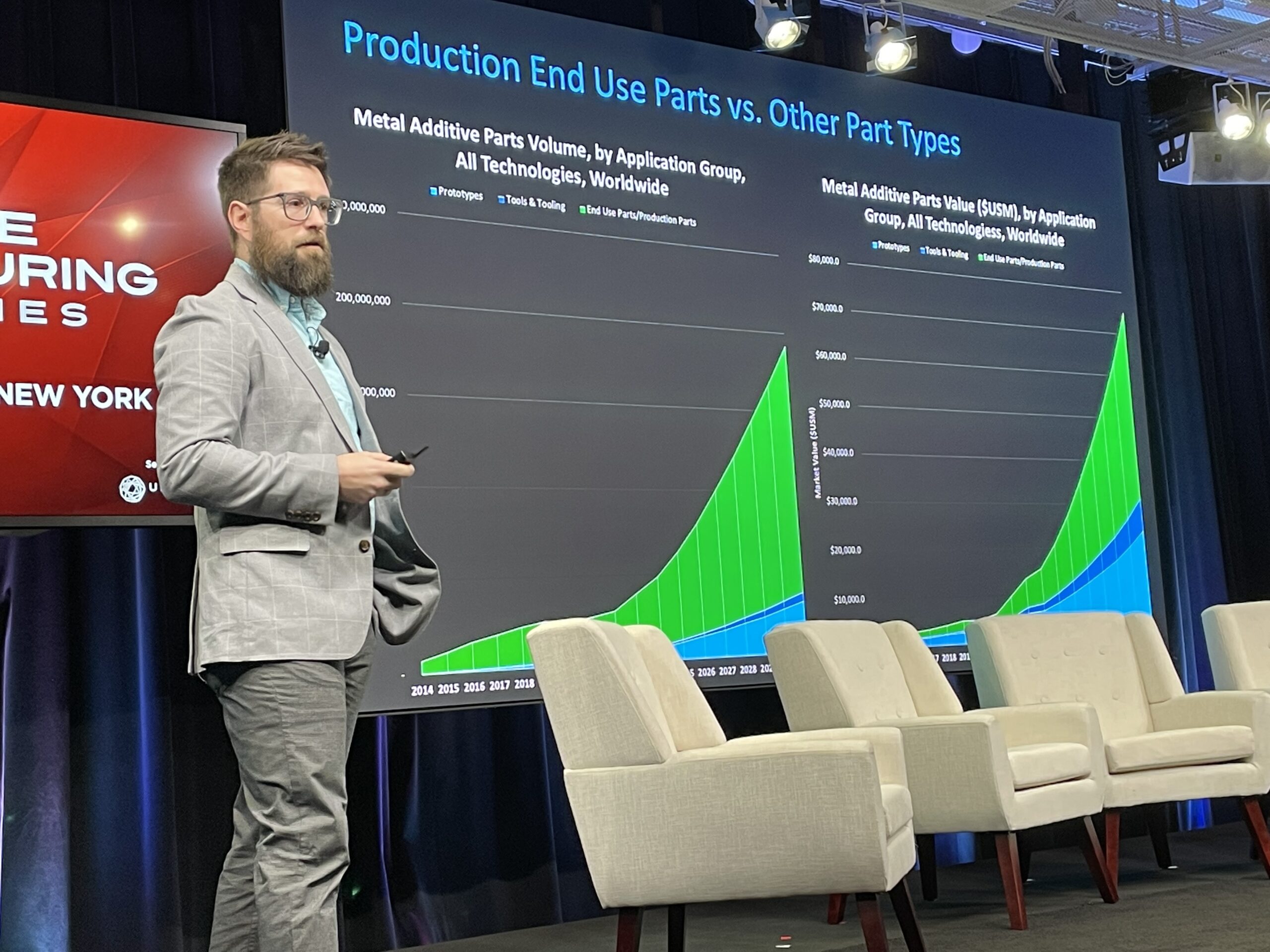
    Scott Dunham during the AMS 2026 Market Data Outlook presentation. Image courtesy of 3DPrint.com.

    Not all parts of the market are growing at the same pace. In metal 3D printing, three sectors stand out: medical, space, and defense and maritime. Among these, space applications (especially rocket engines) are expected to become one of the biggest drivers of value over the next decade. This matches what we’re seeing across the industry, where aerospace and defense are leading adoption.

    At the same time, AM Research’s latest report shows that growth is starting to pick up again after a slower period. But the market is still figuring itself out. There are still a lot of companies in the space, and not all of them are keeping up. So it’s likely we’ll continue to see consolidation. Also, there are plenty of signs that demand is there, but the real question now is whether companies can turn that into steady production and real revenue

    How This Compares to Other Market Data

    AM Research is not the only firm tracking the 3D printing market. Recent reports from Wohlers Associates, AMPOWER, and CONTEXT point in a similar direction, but use different methods and cover different parts of the market.

    In February 2026, Wohlers reported that the global AM industry reached $24.2 billion in 2025, higher than AM Research’s $16 billion estimate. This is partly because Wohlers uses a broader definition of the market, including hardware, materials, services, and software, and takes a more top-down approach, focusing more on the total market and how it changes over time.

    AM Research also tracks the global market, but uses a more detailed and structured approach. It relies on bottom-up data, focuses on core AM revenue, and tracks the market quarter by quarter, breaking it down by vendor, technology, geography, and application.

    On the other hand, AMPOWER’s latest market report estimates the industrial metal and polymer AM market at about €11.3 billion in 2025, with a 5.7% growth. Its approach is based on more than 300 interviews and over 50,000 data points from companies across the supply chain, and it explicitly covers equipment, materials, parts, and manufacturing suppliers.

    Meanwhile, CONTEXT looks mainly at hardware sales and shipments. Its latest data shows modest growth, including about 5% growth in Q3 2025. The data also shows a split market, with strong demand for entry-level systems and improving demand for metal platforms, while higher-end industrial systems continue to face slower investment.

    AM Research takes a different approach by tracking the market quarter by quarter and breaking it down by vendor, technology, geography, and application. It also includes printers, materials, and services, which helps explain why its total market number differs from other firms.

    Across all four firms, the data shows the market is growing again, but not evenly, and some segments are still under pressure.

    Scott Dunham, AM Research’s EVP, at AMS 2023. Image courtesy of 3DPrint.com.

    Overall, AM Research shows that the industry is moving forward again, but it’s still in transition. Activity shows there is real demand, especially in areas like aerospace, defense, and medical. At the same time, the market is shifting, with services playing a bigger role and some companies falling behind. So, this new report shows that growth is back, but the focus now is on turning that into stable production and long-term business.

    Learn More with AM Research’s Webinar

    AM Research breaks this down in more detail in its webinar, 3DP/AM Market Insights: 2025 Review and 2026 Preview, led by Dunham.

    The session walks through what happened in 2025, why the second half of the year started to turn around, and what to expect going into 2026. It also looks at where growth is coming from, how different parts of the market are performing, and what companies need to focus on next.

    The webinar is still available to watch on demand at this link.

  • 3DPOD 297: 3D Printed Static Mixer Nozzles with Eric Ronning, Re Mixers

    Eric Ronning started ReMixers when he and his team discovered a new way to more efficiently mix fluids, pastes, and other materials. Multiple materials could be more thoroughly mixed with new geometry. The ReMixers team then found that they could reduce waste in static mixer use. This led them to industrialize the production of millions of mixers using their own print farm. The team now uses several 3D printing technologies to produce 2K and other mixers at scale.

    This episode of the 3DPOD is brought to you by Siemens. With AI-enabled technologies, deep-domain expertise, and trusted partnerships, Siemens is converting today’s technological leaps into measurable benefits for customers, partners, and society. AI is no longer a feature; it’s a force that will reshape the next century.