• Artemis II Launches With 3D Printing Onboard, and a Much Bigger Role Ahead

    A new chapter in human spaceflight began today as NASA launched Artemis II from Kennedy Space Center, sending astronauts on a journey around the Moon for the first time in more than five decades.

    The mission is a major milestone. It marks the first crewed flight of NASA’s Artemis program and a critical step toward returning humans to the lunar surface. But beyond the main story, Artemis II highlights how 3D printing is already part of how these missions are built. And in the years ahead, it may become essential to know how they are sustained.

    Understanding Artemis II and 3D Printing’s Role in It

    Artemis II is not a landing mission. Instead, it is a full systems test with astronauts on board. Much like Apollo 8, the crew will travel around the Moon and return to Earth, validating the spacecraft, life support systems, and overall mission architecture. The mission is expected to last about 10 days, with the crew returning to Earth and splashing down in the Pacific Ocean.

    If Artemis II works as planned, it clears the path for future missions that seek to land astronauts on the Moon and begin building a long-term presence there. In fact, that long-term goal is what makes this mission different from Apollo. This is not just about going back. It is about staying.
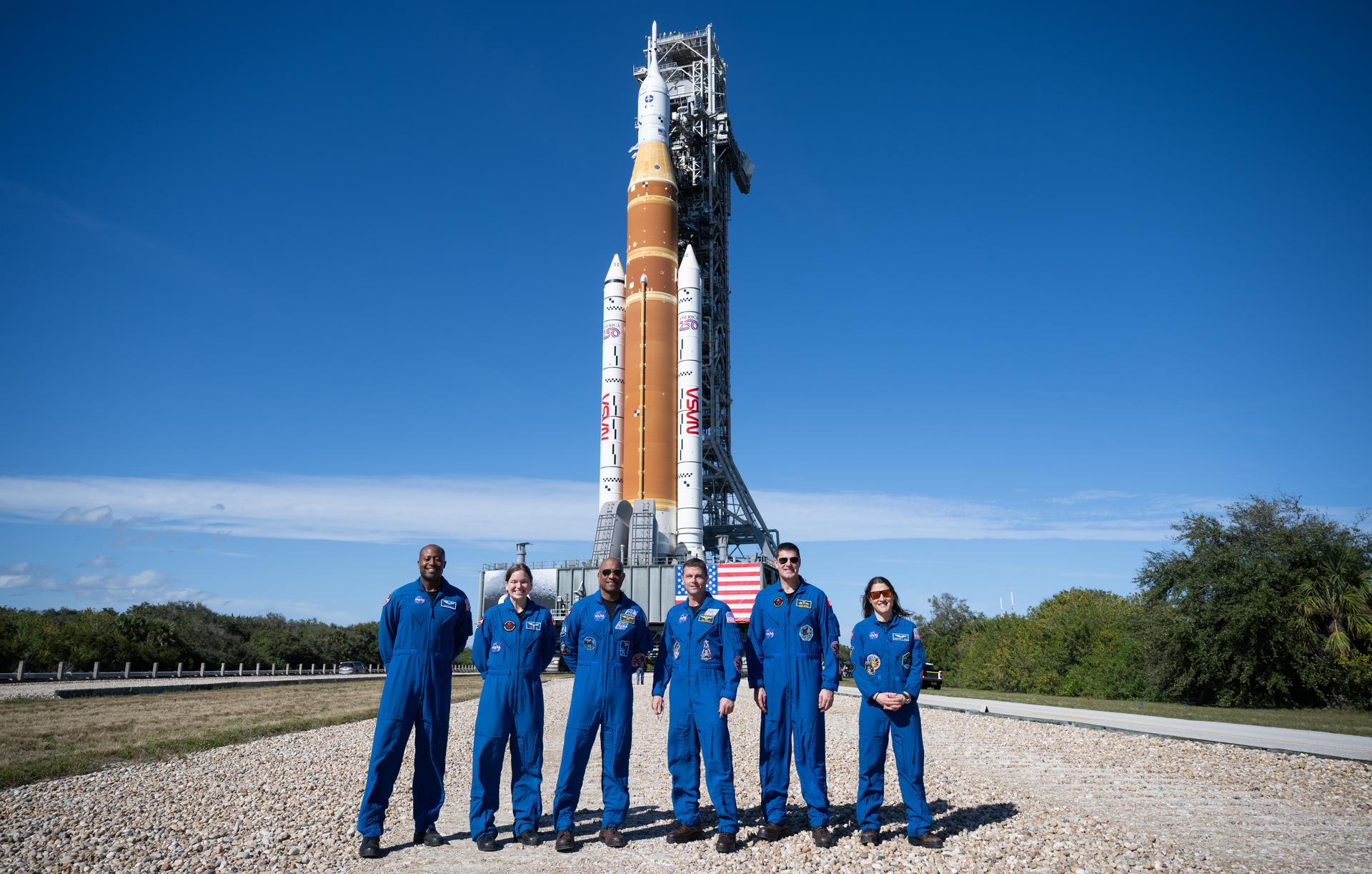
    Artemis II backup crewmembers NASA astronaut Andre Douglas and CSA (Canadian Space Agency) astronaut Jenni Gibbons, and prime crewmembers NASA astronauts Victor Glover, Reid Wiseman, CSA (Canadian Space Agency) astronaut Jeremy Hansen, and NASA astronaut Christina Koch, pose for a picture with NASA’s Space Launch System (SLS) rocket and Orion spacecraft. Image courtesy of NASA.

    Despite the scale of the Artemis program, additive manufacturing is not being used everywhere, and that’s expected. In aerospace, where certification, reliability, and long-term validation are critical, new technologies are adopted carefully. As a result, 3D printing is used in targeted ways, delivering clear advantages. Across NASA and its contractors, it has been applied in three main areas:

    1. Spacecraft Hardware (Orion)

    The Orion spacecraft, which carries the crew, also includes 3D printed components. Lockheed Martin, Orion’s prime contractor, has used additive manufacturing to produce parts such as brackets, cable guides, environmental control system components, and housings throughout the spacecraft. Many of these parts have been produced using laser-based metal 3D printing processes, allowing them to be made as single pieces rather than assemblies.

    These parts are important because they help reduce weight, simplify manufacturing, and improve reliability in areas where performance is critical.
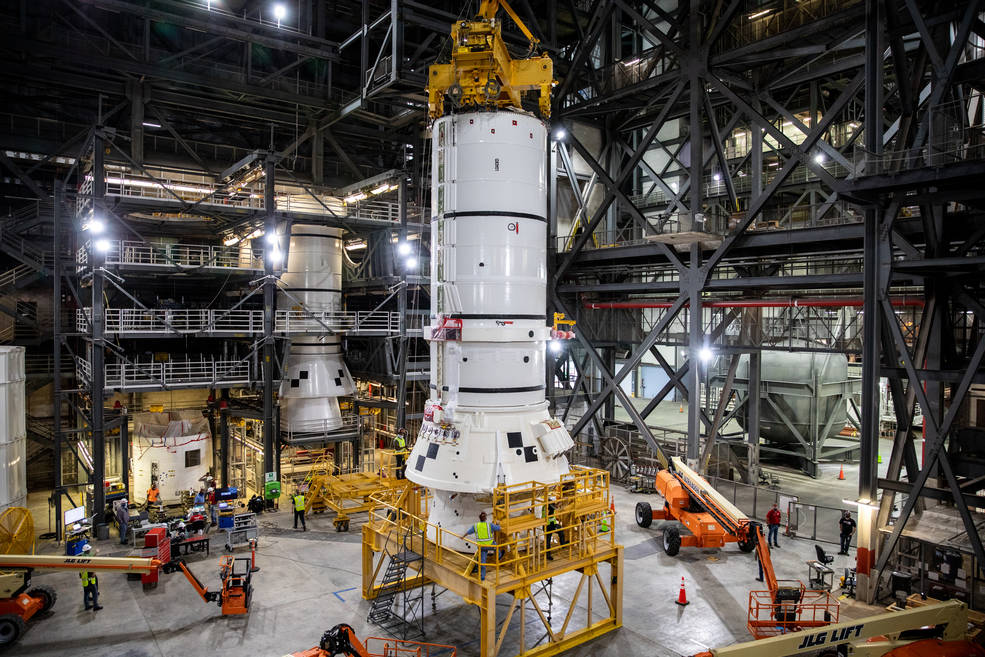
    The solid rocket boosters are the first components of the SLS rocket to be stacked and will help support the remaining rocket pieces and the Orion spacecraft. Image courtesy of NASA/Kim Shiflett.

    1. Tooling, Testing, and Ground Systems

    A significant portion of additive manufacturing use in the Artemis program happens behind the scenes. NASA centers, such as the Marshall Space Flight Center and Kennedy Space Center, and contractors rely on 3D printing for tooling, testing, and ground operations. This includes custom test fixtures and jigs used to validate engine and spacecraft components, as well as rapid prototypes, assembly aids, and other manufacturing tools that support production and integration. Many of these parts are produced using polymer-based processes such as fused deposition modeling (FDM), allowing teams to design, print, and test components quickly. While these parts do not fly, they play a critical role in the program, helping engineers iterate faster, reduce costs, and solve problems early in development.

    1. Rocket Engine Components (SLS)

    Some of the most important applications of 3D printing in space are in rocket engines, even if they are not the most visible in this mission. The Space Launch System (SLS), NASA’s heavy-lift rocket, uses RS-25 engines originally developed for the Space Shuttle. The RS-25 engines, originally built for the Space Shuttle by Aerojet Rocketdyne (now part of L3Harris Technologies), were refurbished and upgraded by the company for Artemis missions.

    Because these are heritage engines, most of the hardware flying on this mission was designed years ago. At the same time, NASA and its partners have been introducing 3D printed components into the RS-25 over the last few years, including parts of the pogo accumulator system, which helps reduce vibration, as well as certain valves and internal components. A larger share of additive manufacturing is expected in new versions of the engine planned for future Artemis missions.

    This is where 3D printing could have one of its biggest impacts. Rocket engines are among the most complex systems in aerospace, operating under extreme conditions. Even small improvements matter. Additive manufacturing makes it possible to simplify designs, reduce the number of parts, and create internal channels that would be difficult or impossible to produce using traditional methods.

    Aerojet Rocketdyne completes the initial RS-25 certification campaign of 12 hot-fire tests at NASA Stennis. Image courtesy of Aerojet Rocketdyne via Twitter.

    What 3D Printing Is Not Doing (Yet)

    Artemis II also shows where additive manufacturing fits today. It is not being used to print entire rockets or large-scale structures for flight. The core systems are still built using conventional methods that have been tested over decades.

    Instead, 3D printing is used selectively. It is applied where it adds value, like in complex parts, lightweight structures, and rapid iteration, not as a full replacement for traditional manufacturing. This aligns with recent analysis from Additive Manufacturing Research (AMR), including work by Scott Dunham, which shows that industry growth is increasingly driven by specific applications rather than broad adoption across entire systems. That difference matters, especially since people often assume it’s used more broadly than it is.

    From Launch to Long-Term Missions

    The real impact of 3D printing in the Artemis program is not just about this launch. It’s about what comes next. Future missions aim to establish a sustained human presence on the Moon, and that changes the problem completely.

    On Earth, manufacturing depends on supply chains, with materials and parts moving across global networks. On the Moon, that model does not work. Transport takes too long, payload capacity is limited, and every kilogram is expensive. In that environment, manufacturing has to move closer to where it’s needed.
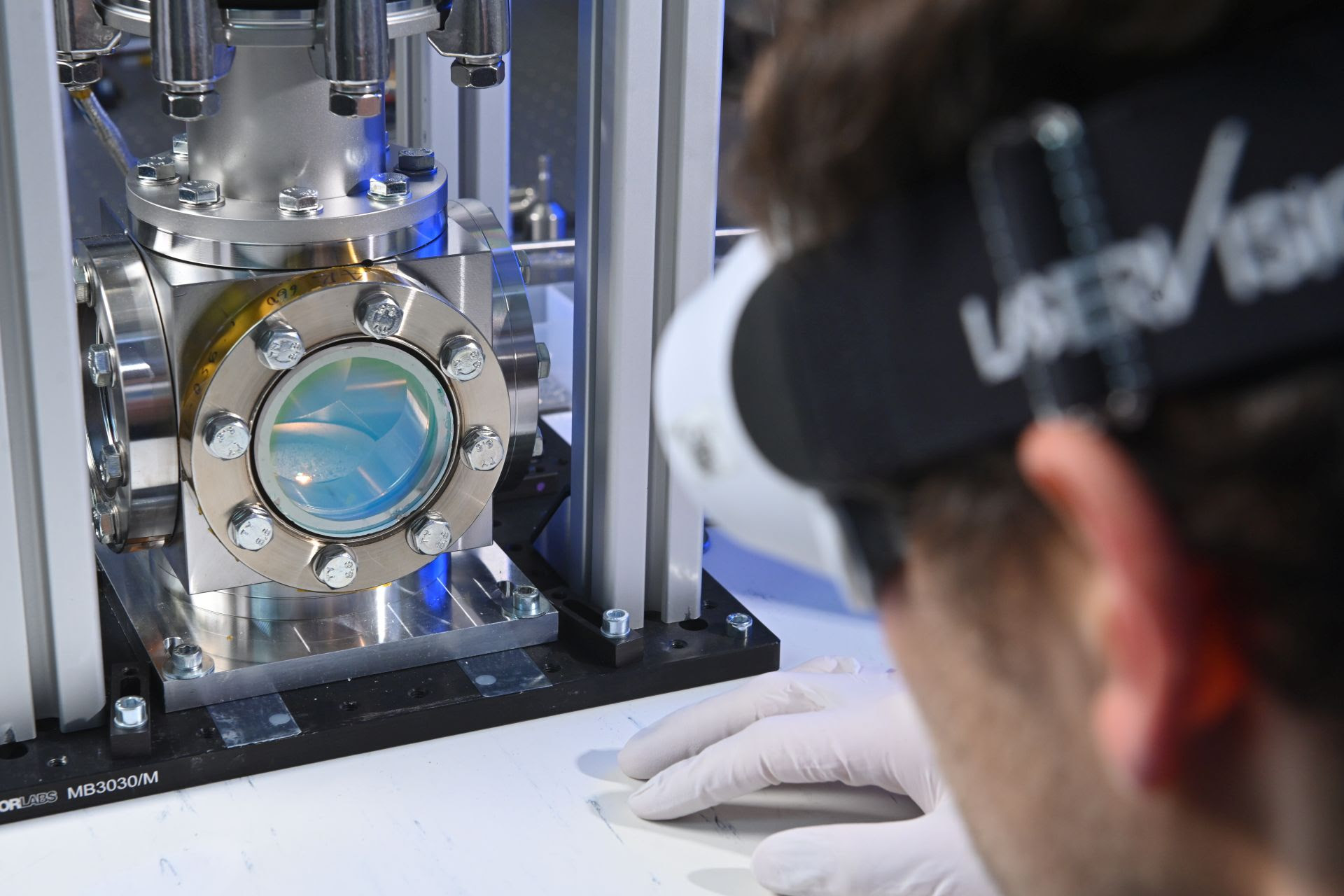
    In the MOONRISE project, scientists are researching how to use lasers to 3D print structures from lunar regolith on the Moon. Image courtesy of LZH.

    Basically, if you cannot move parts easily, you have to make them where you are. That is where 3D printing really starts to matter. Instead of shipping physical components, missions can carry digital files and produce parts on demand, whether it’s a tool, a replacement part, or something even more complex, like a medical application.

    Looking ahead, this goes beyond small parts. NASA and research teams are exploring how to use lunar regolith, or Moon dust, as a 3D printing material. The goal is to use what is already there to build what crews will need. That could include landing pads, protective structures, habitats, and other infrastructure for long-term missions, reducing the need to transport materials from Earth.

    If Artemis II is about proving the system, future missions are all about building with it. That means maintaining equipment, producing parts on site, and supporting human activity over time. 3D printing will play a key role, not everywhere, but where it makes sense, and that role will grow as missions move from short visits to staying on the Moon.
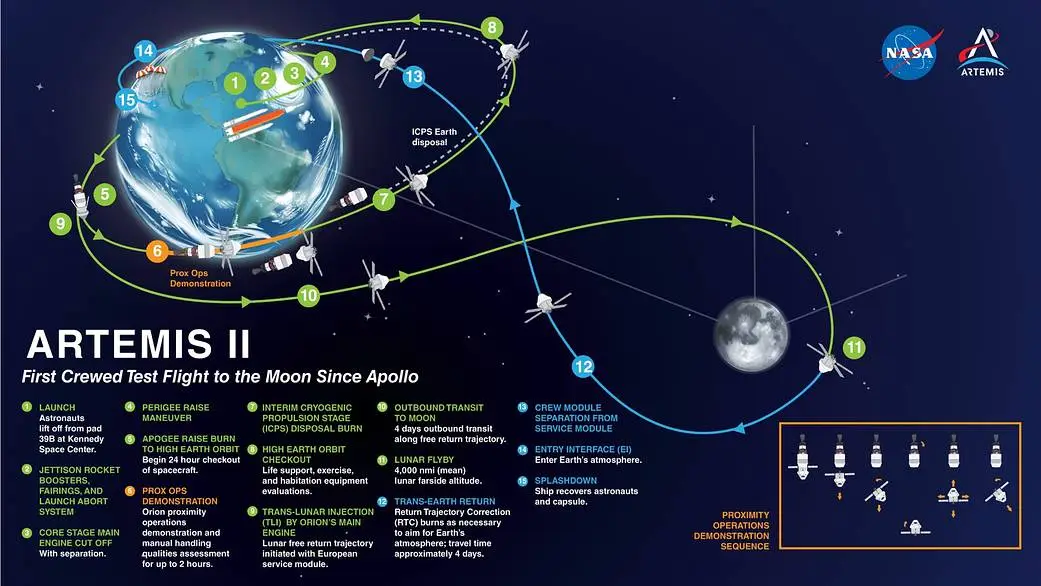
    Trajectory for Artemis II, NASA’s first flight with crew aboard SLS, Orion to pave the way for long-term return to the Moon, missions to Mars. Image courtesy of NASA.

    With Artemis II now underway, NASA has taken a major step toward returning humans to the Moon. The launch and mission coverage can be followed live through NASA’s official channels, including NASA TV and online streaming platforms.
  • EOS to Spotlight AI, Robotics, and Industrial Tooling at Hannover Messe

    The US-Israel war on Iran is already catalyzing the sorts of major shifts to global supply chains that will effectively amount to permanent economic changes. In this context, the nations that were already on a course towards localizing production in response to the disruptive developments of the first half of the 2020s can be expected to accelerate that trajectory.

    That acceleration effect should lead to market conditions that push the additive manufacturing (AM) industry’s overall agenda in a direction primarily set not by the industry itself, but by which verticals find themselves in most urgent need of an agility boost. Long before the world’s latest war started, we were already seeing this happen with the defense sector: this helps explain why Hannover Messe 2026 (April 20-24), “the world’s largest industrial trade fair”, will feature a ‘Defence Production Area’ for the first time in the show’s history.

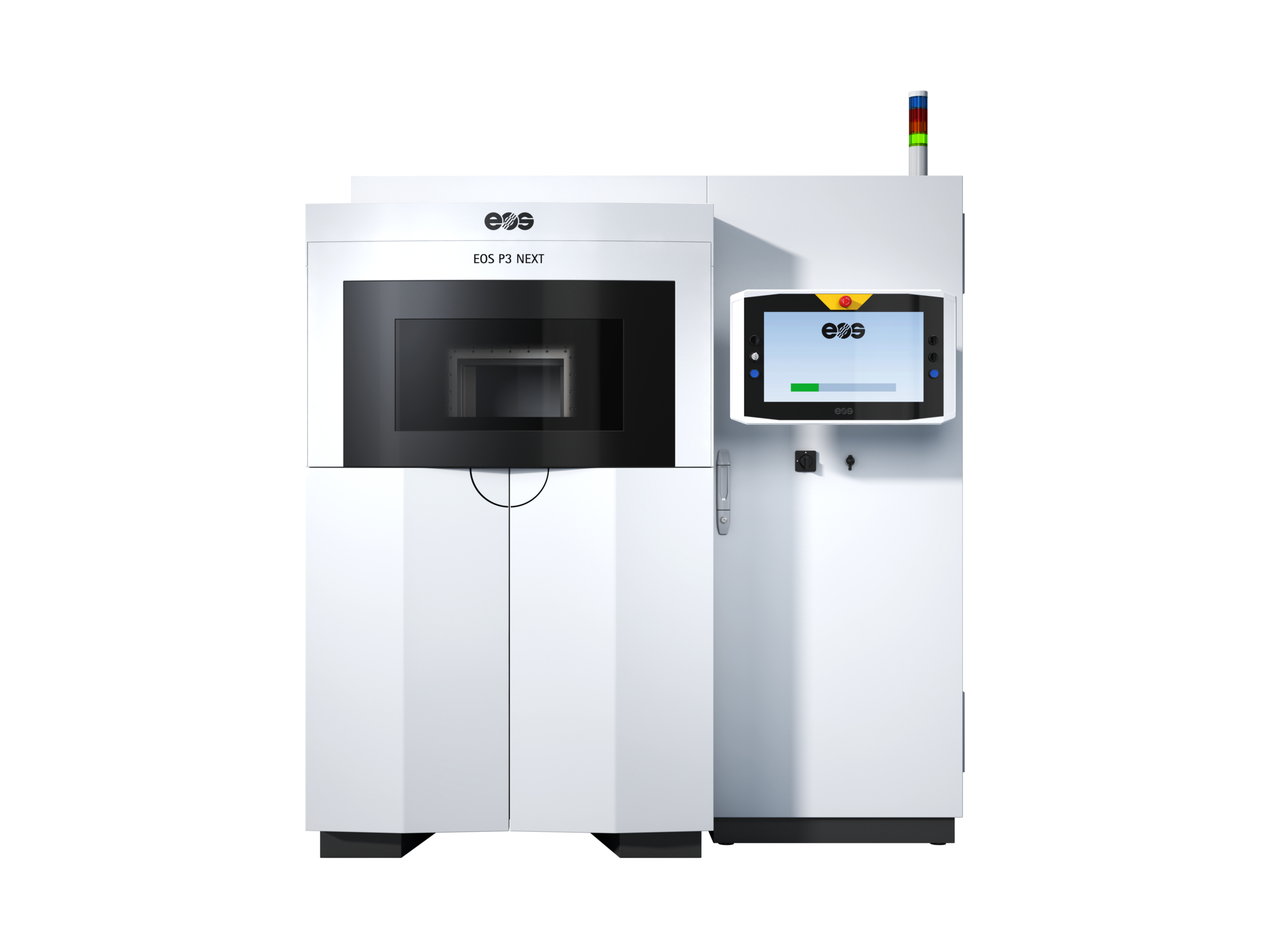
    The German-US company EOS will be one of the participants in that exhibit, but there are multiple other elements to the company’s overall presentation that align with the most relevant themes at the intersection between AM and international industrial transformation. One of the themes involves the Siemens Innovation Hub, where EOS and the multinational giant will emphasize how combining AI with the P3 NEXT polymer printer supports strategies for adaptive manufacturing, the defining concept of last year’s America Makes’ MMX event.

    Specifically, in terms of reshoring, arguably the most immediately practical solutions on display from EOS are also those with the most tried-and-true record of aiding industrial resilience: tooling. Hannover Messe attendees can visit the EOS booth, G44 in Hall 26, to find out more about applications, including robot grippers, tooling for fiber packaging molds, and vibratory bowl feeders, which are used to move small parts in uniform directions on assembly lines.

    In a press release about EOS’s participation in Hannover Messe 2026, Nikolai Zaepernick, CSO at EOS, said, “EOS has been a pioneer in industrial 3D printing for metals and polymers for more than 30 years. We integrate systems, materials, and digital processes into exactly the solution customers need for futureproof manufacturing — and we’ll be showcasing this in full force at the Hannover Messe.”

    Meanwhile, Davide Iacovelli, Regional Director, EMEA, for EOS, noted, “In the mid-volume range, the EOS P3 NEXT enables individualized series production. At the Siemens booth, visitors will see the concrete customer value this provides. Specifically, this means shorter development and manufacturing cycles, greater flexibility in product design, and significantly higher process reliability across the entire production chain.”

    The EOS P3 NEXT.

    Perhaps reality will play out differently, but as of right now, EOS is better positioned than virtually any other original equipment manufacturer (OEM) in the AM space to capitalize on the epochal changes currently imminent in the global economic order. A large part of this is indeed about defense, but only because of the precise dual-use framework that EOS has cultivated for its ecosystem.

    We’re entering a period in which new, unexpected shortfalls will arise on a regular basis, and contract manufacturers will need to pivot as painlessly as possible from one product category to another, and from one sector to another. The decision-making process about which country is optimal or even permissible to obtain one’s supplies from is going to preside over supply chain choices more acutely than ever before. A company with equal footing in the US and EU, which has just signed a major trade deal with the other, has an opening for outsized growth compared to its peers.

    Above all, it is those boring parts, like robotic grippers, that might give an OEM the edge, because they provide a baseline level of industrial versatility across the most diverse range of industries. You don’t even have to be able to provide the solutions that can directly create the most end-use parts; you might just have to provide the solutions that can indirectly ensure that the least number of orders arrive late or incomplete.

    Most AM companies that are currently succeeding are doing so by finding a single niche and perfecting it. That will continue to be a viable strategy, but I think we’re on the cusp of a moment when a select number of AM companies can also find success by maximizing versatility, and that is an opportunity where EOS has a real chance to thrive.

    Images courtesy of EOS

  • Creality Launches Filament Maker M1 & Shredder R1, Letting Makers Reuse Waste, Cut Costs, and Create Their Own Filament

    From Printing Objects to Shaping Materials

    Desktop 3D printing has made on-demand creation more accessible than ever. Yet one critical part of the process remains fixed: the material itself.

    Most users still rely on pre-made filament while facing failed prints, material waste, rising costs, and limited flexibility.

    With M1 and R1, Creality introduces a new approach—bringing material creation into the desktop workflow and enabling users to reuse, modify, and produce their own filament.

    A Compact Workflow with Greater Control

    At the core of the system are two components:

    • Shredder R1 — processes properly prepared 3D printing waste into reusable material
    • Filament Maker M1 — mixes, extrudes, and spools filament

    Together, they form a compact, desktop-scale workflow that integrates key steps of filament production.

    Designed for hands-on users, the system works best with properly prepared materials and supports ongoing experimentation and refinement.

    With this workflow, users can:

    • Reduce material costs by reusing prepared waste
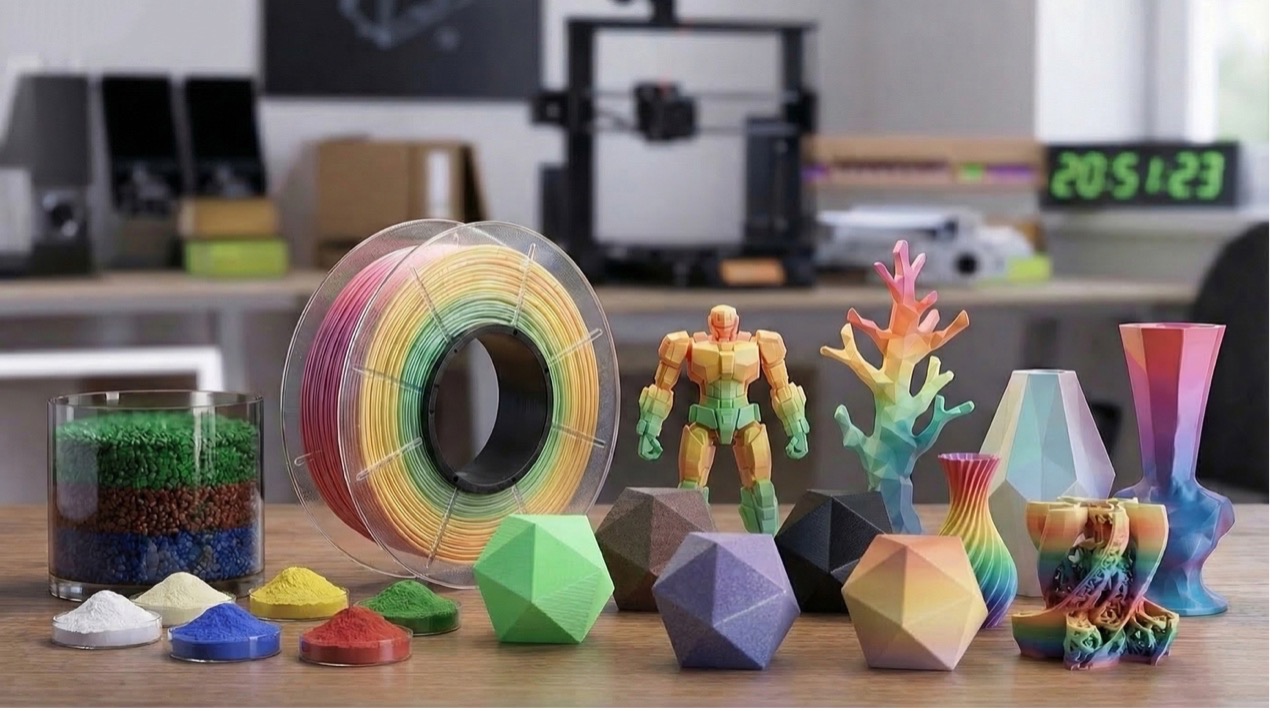
    • Create custom filament with different blends, colors, and additives
    • Gain greater control over print outcomes
    • Explore small-batch and experimental production

    Rather than a fully automated solution, M1 and R1 are positioned as tools that empower creators to actively shape their materials.

    Market Response and Ecosystem Expansion

    Early testing and discussions within the maker community have shown strong interest in recycling workflows, customization, and cost efficiency.

    With M1 and R1, Creality expands its ecosystem beyond hardware — bringing material creation into the desktop workflow and redefining how users engage with 3D printing.

    Now Live on Indiegogo

    The Filament Maker M1 and Shredder R1 are now available on Indiegogo, with limited early access pricing for first backers.


    As creators move from simply using materials to actively shaping them, they unlock greater flexibility — opening new possibilities for how 3D printing can be applied and explored.

    Images courtesy of Creality

  • The Convergence of Vision and Experience: AMS and AMUG

    During the last few weeks, I spent time on the ground at both the Additive Manufacturing Strategies Forum (AMS) and the Additive Manufacturing Users Group (AMUG) meeting.

    What stands out is not just how different these gatherings are, but how clearly they reflect two necessary halves of the same industry. The contrast is not superficial. It is structural, revealing where additive manufacturing is aligning and where it is still working through friction.

    In New York, the energy at AMS is deliberate and tightly framed. Conversations tend to begin with markets and end with outcomes. Capital efficiency, application focus, and pathways to profitability are recurring threads, but what felt different this year was the level of discipline in those conversations. For example, a panel of OEM executives and investors quickly moved past technology differentiation and instead debated utilization rates of installed systems. The question was not whether a platform could achieve a certain resolution or throughput in isolation, but whether it could sustain repeatable production volumes without creating downstream inefficiencies. There is noticeably less appetite for broad claims about disruption and far more scrutiny on how additive fits into existing manufacturing systems in a way that is economically defensible.

    For example, in a session focused on defense and aerospace, the conversation centered on qualification timelines being a system-level constraint. What was notable was how openly this was discussed, not as a barrier to adoption, but as a factor that must be built into any realistic growth model.

    You could sense that the audience, largely composed of executives, investors, and strategic operators, is calibrating expectations. The questions are sharper. Where does this technology win today? What is the repeatable application? How does it scale without eroding margins? The tone is not skeptical but measured, and that shift alone says a great deal about where the industry is in its maturity cycle.

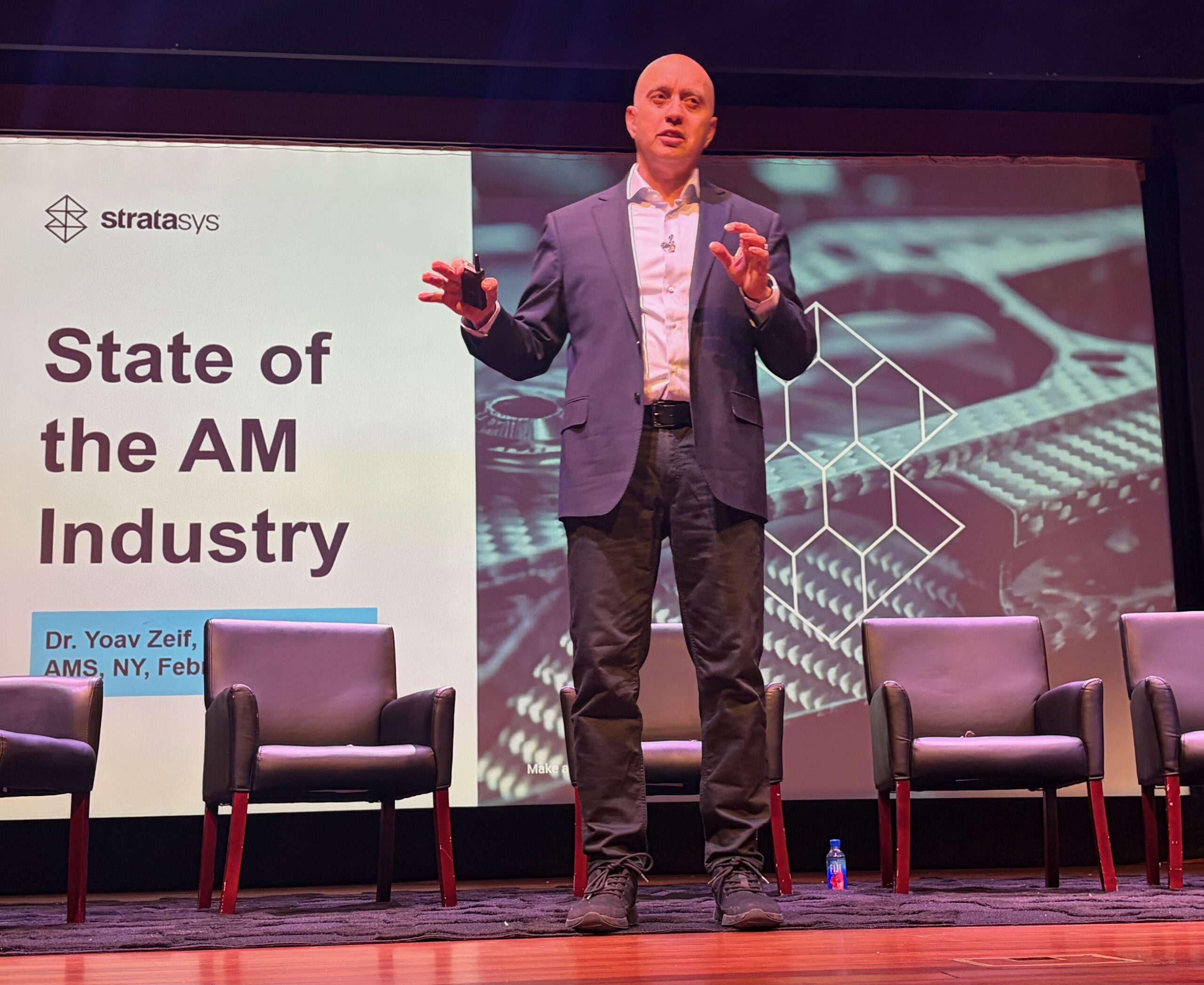
    Stratasys CEO at AMS 2026. Image courtesy of 3DPrint.com.

    A couple of weeks later at AMUG, those same themes reappear, but in a very different form.

    The conversations are less structured but, in many ways, more revealing. They happen in hallways, around machines, and during informal technical exchanges where users compare notes on what worked and what did not. There is a level of openness that is difficult to replicate in more formal settings. Engineers are willing to share failures in detail, and those failures are not framed as setbacks but as data points. You hear specifics. Material behavior under certain conditions. Post-processing bottlenecks that were not anticipated. Design decisions that looked optimal on paper but created issues in production. It becomes immediately clear that this is where the industry is being stress-tested in real time.

    In a session focused on polymer applications, multiple users compared notes on post-processing bottlenecks. One user had successfully reduced print time by optimizing build orientation, only to find that support removal became the new constraint, offsetting much of the gain. Another shared a workaround involving minor design modifications that eliminated the need for support altogether. These are not headline innovations, but they are exactly the kinds of incremental improvements that determine whether an application is viable at scale.

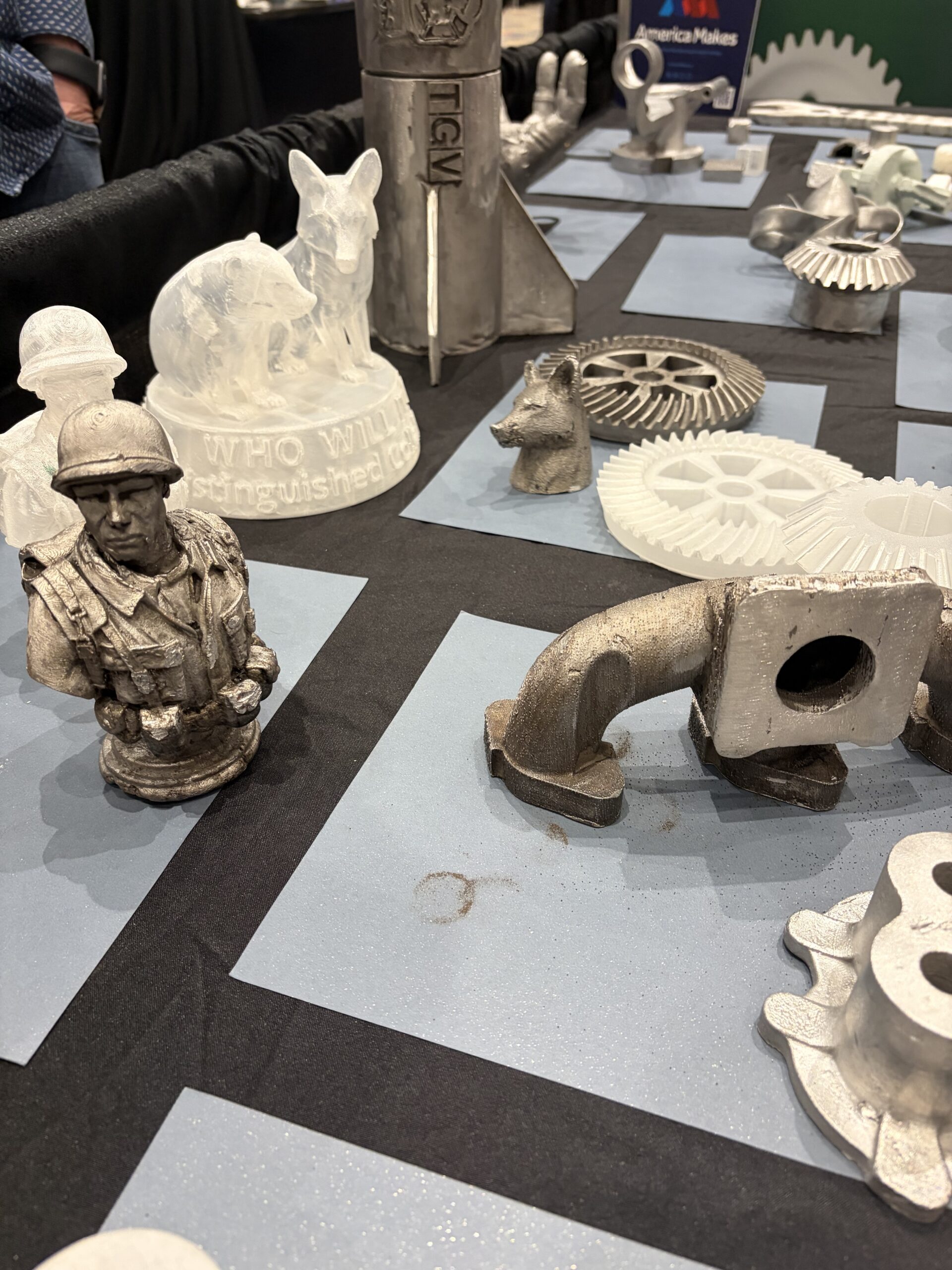
    Skuld booth at AMUG. Image courtesy of 3DPrint.com.

    What becomes particularly interesting when you step back and connect these two environments is how closely they are beginning to inform each other.

    At AMS, there is a growing emphasis on application-driven growth. Still, the definition of a “real application” is increasingly shaped by what users on forums like AMUG are proving in practice. The distance between narrative and execution is shrinking as it is no longer sufficient to position technology around theoretical advantages. The expectation is that those advantages have already been validated somewhere, by someone, under real constraints.

    One of the more subtle observations across both events is how the center of gravity is shifting away from hardware as the primary story.

    At AMS, this shows up in discussions around integrated solutions, software layers, and workflows. At AMUG, it shows up in a different way. Users are less focused on the machine itself and more on making the entire process stable and repeatable.

    In both cases, the implication is the same. The value is moving up and down the stack, and companies that remain anchored solely in hardware risk becoming less differentiated over time. There is a recurring theme around expectations versus reality.

    Another pattern that becomes evident is the increasing importance of constraint.

    At AMS, constraints are discussed in terms of economics and scalability. At AMUG, they are discussed in terms of physics, materials, and process limitations. They are different expressions of the same reality. Additive manufacturing is no longer being evaluated in isolation. It is being measured against highly optimized, established manufacturing methods. That comparison forces clarity. It pushes the industry to identify where additive is not just viable, but meaningfully better.

    For those looking to translate these observations into action, a few implications stand out.

    First, application specificity is no longer optional. The market is rewarding clarity over breadth. Second, validation cycles are becoming more critical. What is said in strategic forums must be backed by what is proven in operational environments. Third, differentiation is increasingly tied to ecosystems rather than standalone products. Whether it is materials, software, or process integration, the winners will be those who can control more of the value chain in a meaningful way.

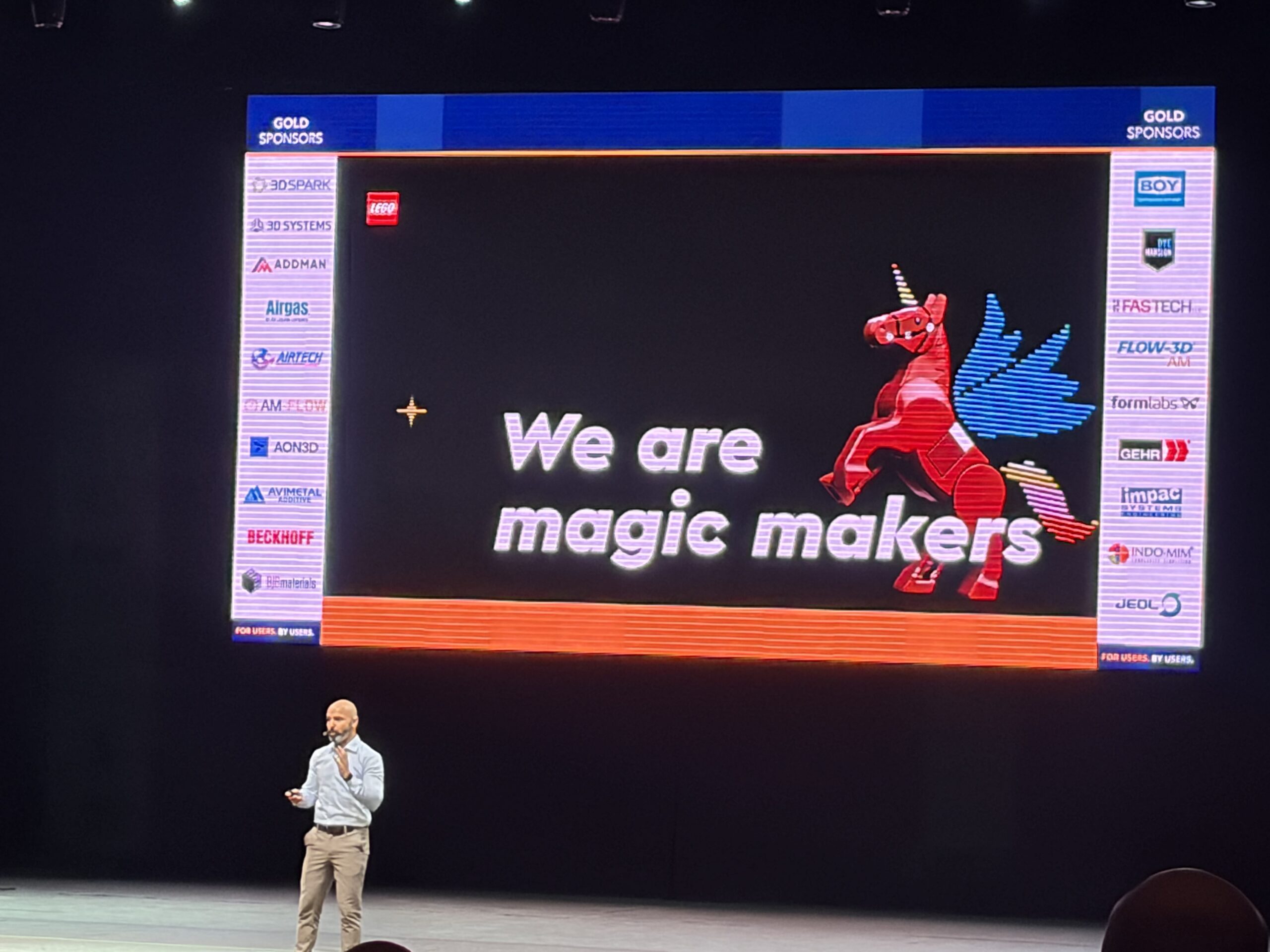
    Ronen Hadar, Senior Director and Head of Additive Design and Manufacturing at LEGO, onstage at AMUG 2026. Image courtesy of 3DPrint.com.

    Perhaps the most important takeaway, however, is that both these environments are very complementary.

    AMS offers a view of where the industry intends to go, shaped by capital and strategy. AMUG offers a view of where the industry stands, shaped by experience and execution.

    The gap is narrow, and the convergence is not accidental. It is driven by a collective need for alignment between promise and performance. Spending time in both settings reinforces a simple but important point.

    The future of additive manufacturing will not be defined solely by better technology or stronger narratives. It will be defined by the ability to connect those narratives to repeatable, economically viable outcomes in the real world. The signals are there, but they are distributed. Some are found in structured discussions about market direction and investment. Others are embedded in detailed conversations about actual prints.

    The ability to observe both and connect them is becoming increasingly important. That is where actionable insight will emerge.

  • MuskCo Semiconductor: The Terafab and 3D Printing

    Elon Musk essentially functions as a human loophole in the antitrust regulatory system. Whether or not it’s the deliberate purpose of why he runs his businesses this way, I don’t think it’s unreasonable to argue that if a single corporation controlled most of the world’s satellites, and most of the US’s fast-charging stations for EVs, and one of the most politically influential social media platforms, etc., questions of antitrust violations might be raised.

    Instead, hilariously enough, Elon Musk is the one suing on the basis of antitrust violations, and while he may not have won his case against advertisers who chose to boycott X, the lawsuit does serve nicely as an implicit threat against anyone who tries to disrupt his disruptiveness. This isn’t an article about all of that, though: rather, it’s about the interconnections between all of Musk’s various business operations, and what those interconnections may imply for the future of manufacturing.

    Reportedly in the process of taking SpaceX public, less than two months after executing “the largest merger of all time” in a deal that combined xAI with the launch giant, Musk also recently confirmed that he would be getting into the semiconductor game, after first….

    Featured image courtesy of Tesla, via Manufacturing Dive

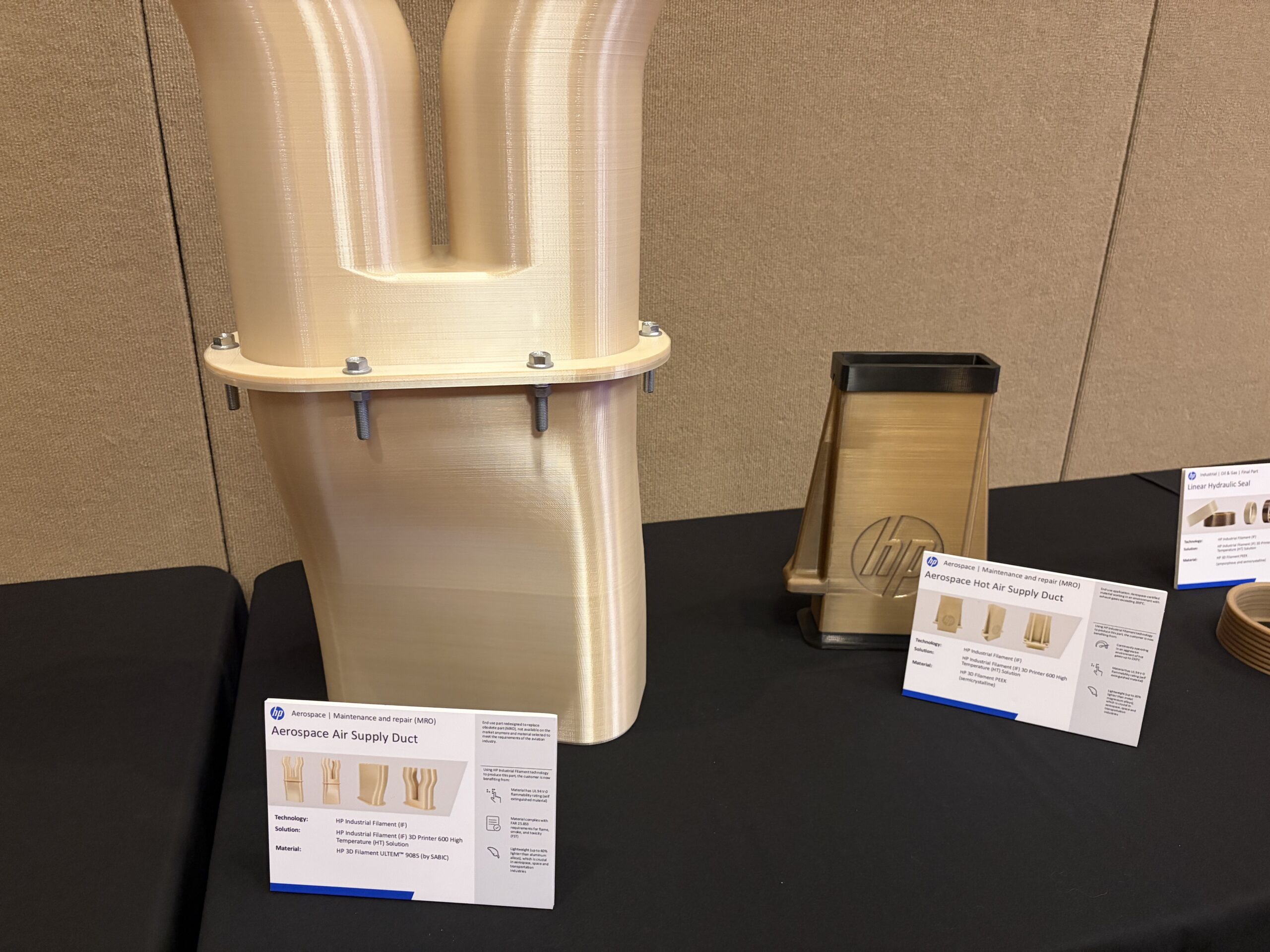
  • HP’s Open Industrial Filament System Made North American Debut at AMUG 2026

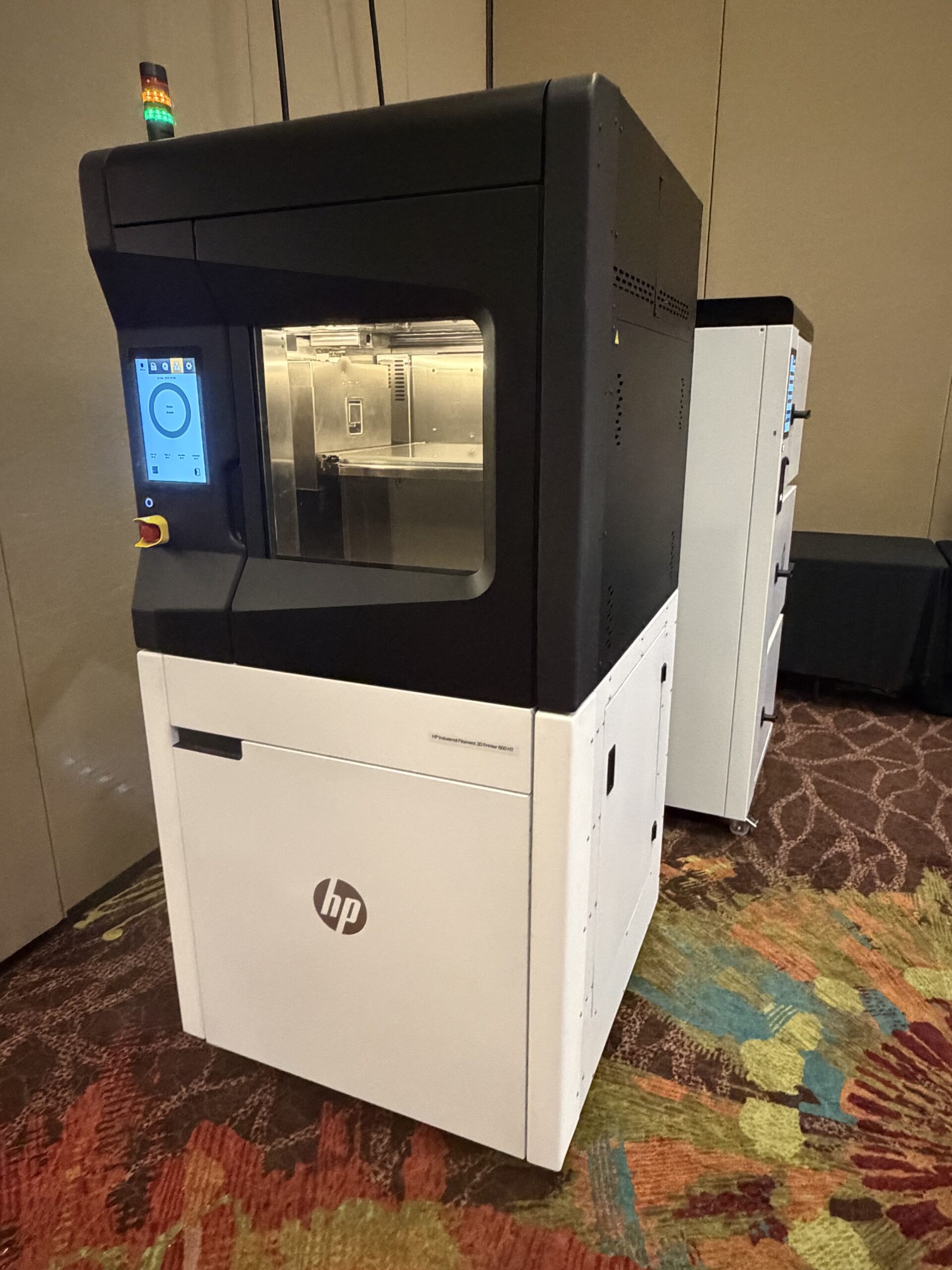
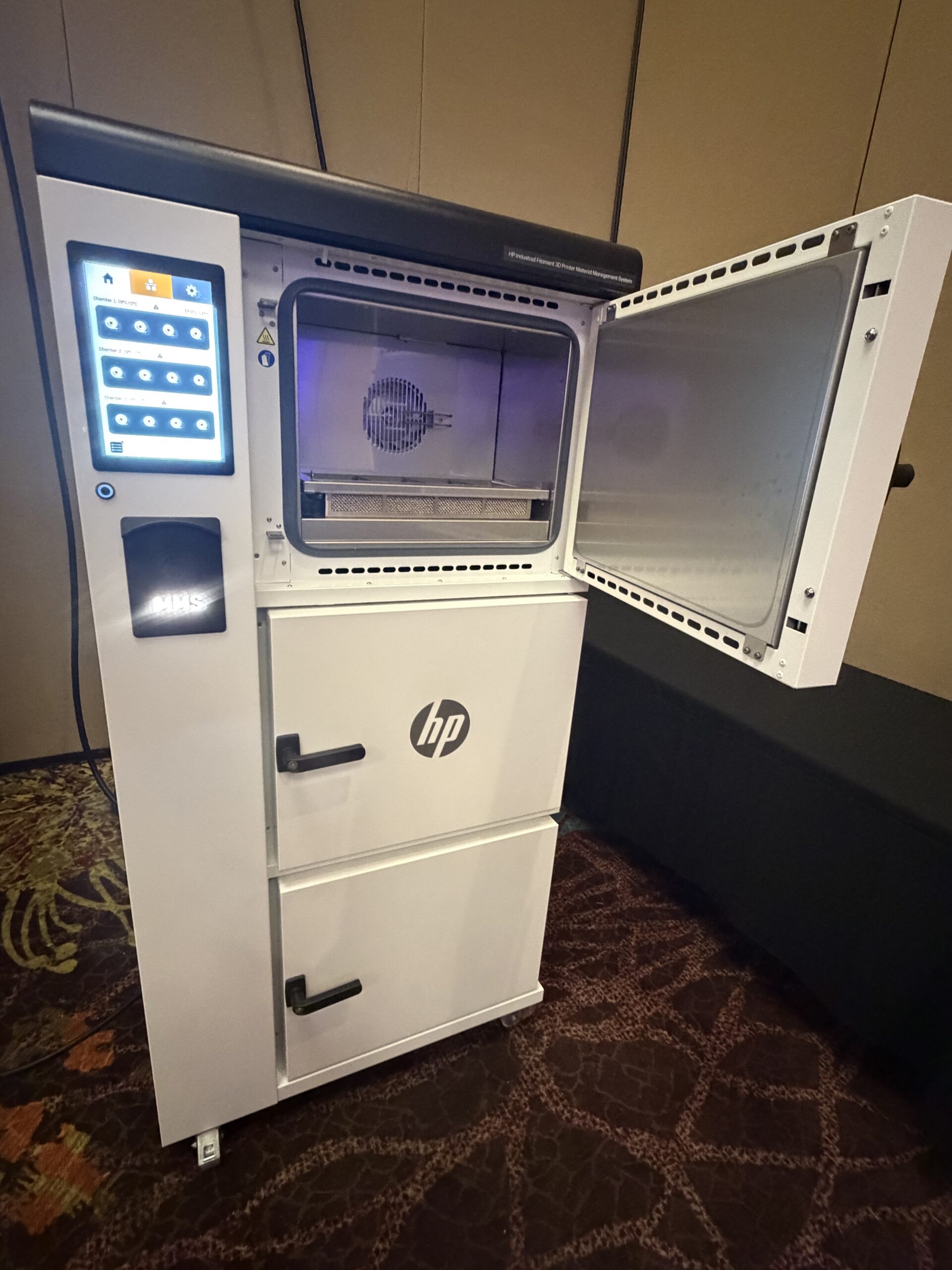
    At Formnext 2025, HP Additive Manufacturing revealed a major step in its broader portfolio expansion strategy with the announcement of a new 3D printer, the HP Industrial Filament 600 High Temperature (HP IF 600HT). The industrial AM system recently made its North American debut at AMUG 2026 in Reno, Nevada. The HP IF 600HT is modular, built on an open materials platform, and engineered for high-temperature and advanced engineering-grade materials. This offers manufacturers more flexibility with the polymers they can use, while still enabling them to maintain the necessary industrial reliability.

    I spoke to Eric DuPaul, HP Additive Manufacturing Category Manager, at AMUG to learn more about the system. DuPaul’s job is managing the product within the region, so he’s helping to launch the HP IF 600HT, and the 12-filament Material Management System (MMS) that goes with it, in the Americas.

    “So we take that product from inception to maturity, making sure that it’s getting out into the market, making sure that everybody’s trained, getting end user customer feedback, so that as we’re preparing for a future product, we take all of that into consideration,” he explained.

    HP IF 600HT 3D printer

    The printer’s build volume is 380 x 380 x 420 mm. The system is modular, and its first module can reach 280°C, while the second can get up to 360°C, and the third 500° C. At these temperatures, it can easily handle the highest-performance polymers, all the way from ABS and ASA to PEEK and 10%-30% carbon fiber reinforced and glass-filled polymers.

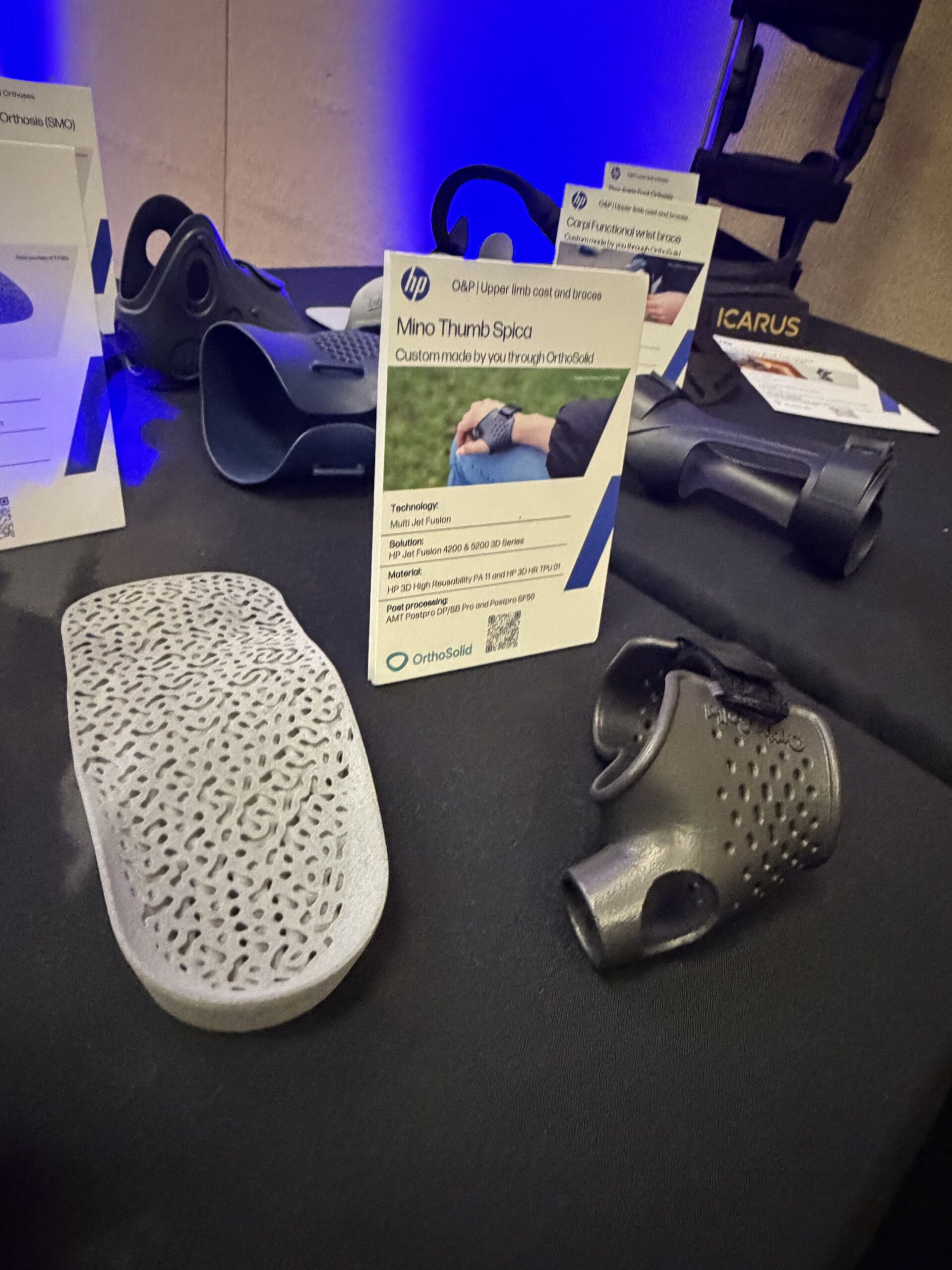
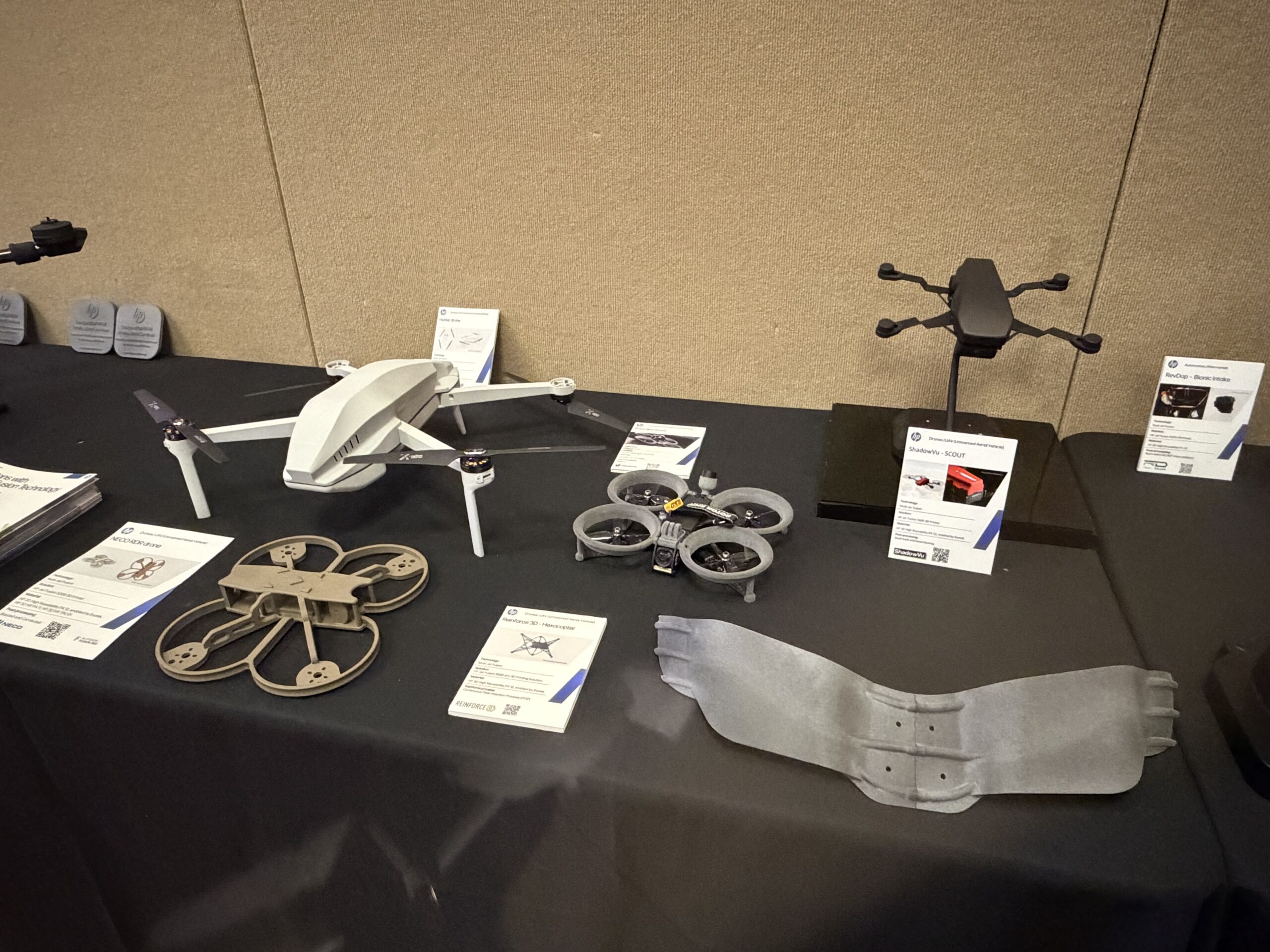
    Obviously, with such high-temperature material choices, one of HP’s target applications for the solution is aerospace; railway is another. Additionally, DuPaul and Krzysztof Roguski, an HP expert for the product who shared the printer specs with me, are working with several medical companies that are interested in using the technology for spinal implants and ankle wedges.

    “It’s just fascinating the applications that the medical community is using this technology for,” DuPaul said. “And I think they’re just scratching the surface of it. I’m hopeful for the future on the medical applications.”

    He shared a story with me about the first company he worked with when he switched from the 2D side to the 3D side at HP. Quorum Prosthetics in Colorado primarily works with athletes who have had below the knee amputations. Using HP’s Jet Fusion technology, they developed an adjustable sleeve for amputees that “literally changed people’s lives.”

    While Multi Jet Fusion has been groundbreaking in its own right, it is limited when it comes to materials. Now, with the industrial filament solution, DuPaul said “there’s other things within the prosthetics world that we’re probably going to start seeing open up for us because of the material options that we have.”

    DuPaul explained that because Jet Fusion is so limited when it comes to materials, HP really wanted to expand that capability, and “industrial filament, or fused filament, is kind of the best way to do that.” The HP IF 600HT is powered by a 3DGence engine, “but we put the HP magic into it.”

    “And it’s not just the logo. There’s up to a hundred different things that have been altered and changed.”

    The first is UL certification, which provides cybersecurity for cloud-connected customers, though the printer can also be non-cloud connected if the user wants. But DuPaul says what really sets it apart from the other products in its market is that the acquisition price is less, the filament price is less, and it’s an open system.

    “The profiles for the HP materials are already loaded into the machine, and those have been tested and certified,” he explained. “But if a customer wants to buy a third party material and run it through, they can use the existing slicer to build out a profile for that, using the existing profile for something similar.”

    Customers can also work with HP Professional Services to create a custom profile for a third party material. In this case, HP will take the data from the material manufacturer and independently test it first, before handing the profile off to the customer.

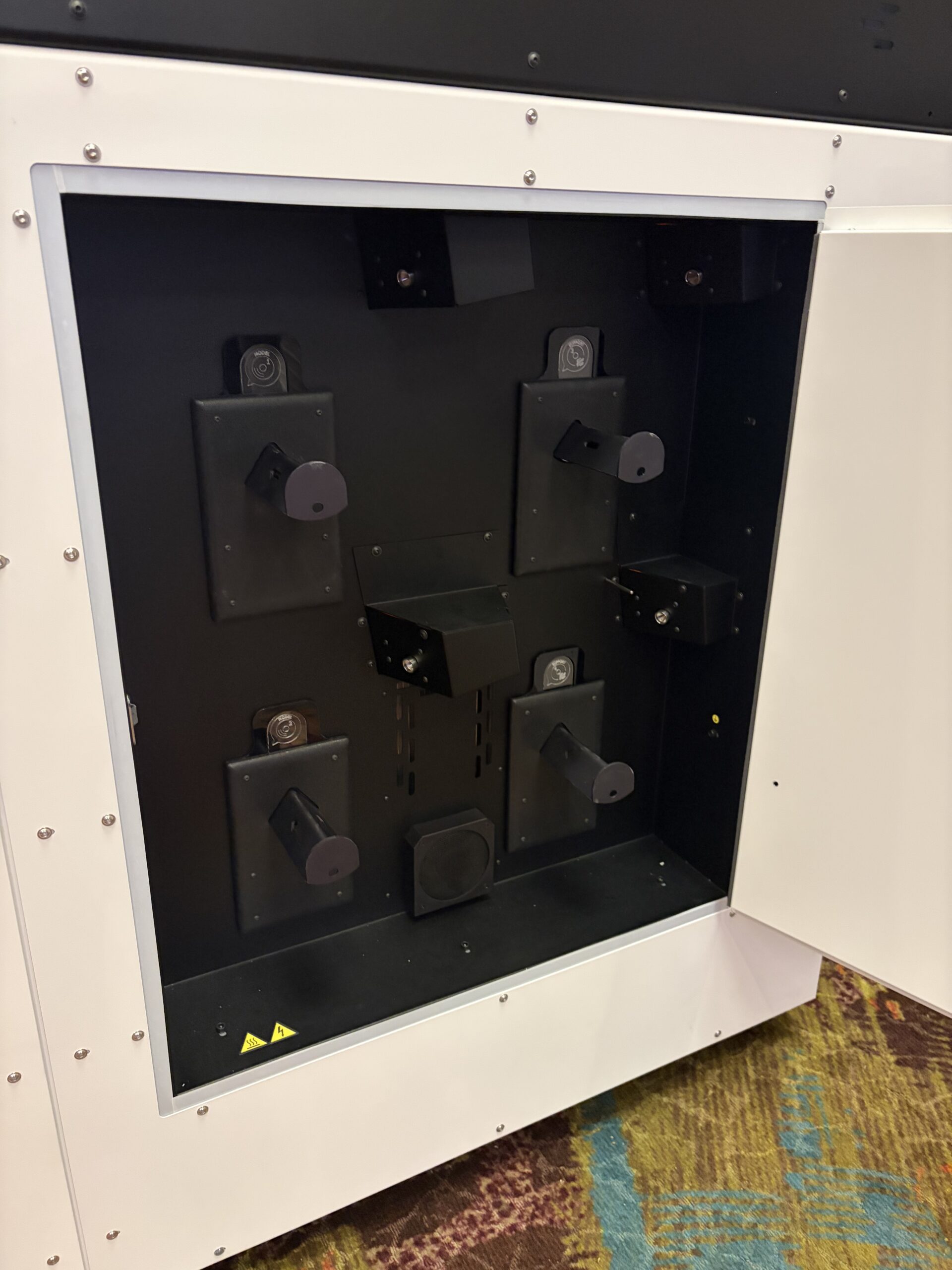
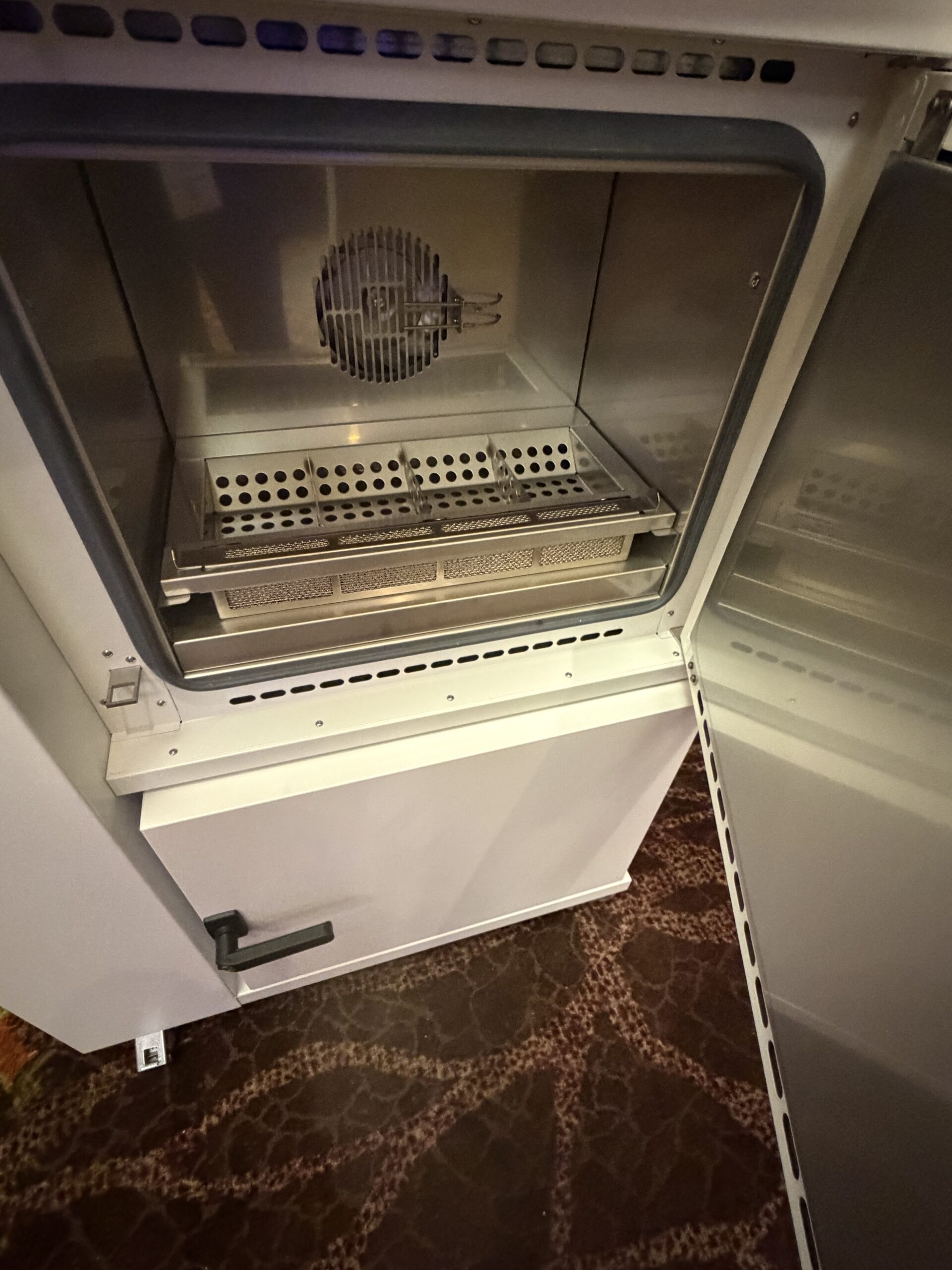
    HP Material Management System (MMS)

    DuPaul also said that things like the print speed and dimensional accuracy of the system are “on par with the industry leader.” But in terms of price, the acquisition and filament costs of HP’s newest offering are “much less than the main competitors in that market.” Plus, because it’s an open system, you can potentially save even more by using third party materials.

    I asked if they anticipated more people wanting to use third party materials, rather than sticking with HP’s tried and true options. DuPaul said his best guess is that about 80% of users will use the existing HP materials, while 20% will use third party. But, he did note that he’s basing those numbers off of existing customers.

    “With Jet Fusion, we don’t have a lot of universities,” he explained. “So I foresee universities and technical schools looking at this technology so they can then develop their own filament, or use a third party filament as part of a grant.”

    The machines will be heading to Boston for RAPID+TCT in a few weeks. Then in May, partners will be able to perform their demos and benchmark tests on the printer.

    “They’re showing their trust in us by making the physical investment in the product itself. So each of the partners will have their own machine so they can do all the customer testing benchmarks. We’ve done that with the Jet Fusion as well,” DuPaul said. “If you think about it, it’s a substantial investment, and a trust that they have in HP, to say, ‘We’re behind the product.’”

    Orders can be placed now for the combined solution of the HP IF 600HT and the MMS, and they will be available in the U.S. and Canada this June, sold through authorized resellers M5D, TPM, NCS, MatterHackers, Impact Systems, and GoEngineer in Canada.

    “Personally, I’m just super excited to see what this technology does in the next few years for us. It’s going to open up customers for us,” DuPaul said. “I’ve been in front of those customers. They would love to work with us. But we just didn’t have what they needed, and now we do.”

    If you’d like to know more about HP’s new industrial filament offering, tune in to their webinar, “An Inside Look at HP AM’s New Production-Ready Solution,” at 11 am EST today.

    Featured image courtesy of HP / all other images courtesy of 3DPrint.com

  • Ceramitec 2026 3D Printing Wrap Up

    I was surprised by just how many 3D printing companies and 3D printing projects there were at Ceramitec this year. I came away from the show convinced that the ceramics industry needs to pay even more attention to 3D printing, and that the 3D printing industry needs to pay more attention to ceramics. Ceramics work when all other materials stop. But due to a lack of familiarity, engineers and companies often underutilize them. Additive manufacturing is a relatively new path from file to part that opens new avenues for high-performance ceramics. This can help grow our industry and the ceramics industry. High-value, specific geometries in semiconductor, electronics, defense, medical, and industrial applications can really make a difference in millions of parts. Unlocking these new applications will not be easy, but that’s not stopping firms from paving the way.

    I really like the work of the Friedrich-Alexander-Universität Erlangen-Nürnberg (FAU Erlangen-Nürnberg): their glass and ceramics department, by way of Professor Kyle Webber, showed off some nice research. Their Glass and Ceramics Institute is looking at several different methods used to 3D print ceramics. From robocasting to material extrusion, they seemed to be doing interesting research. Work on tailored microstructures seemed promising, but I was most intrigued by their work on ceramic-doped resins for use on low-cost 3D printers. That could really make ceramics much more accessible.

    Durst subsidiary D3 showcased progress on micro particle jetting. The company has sold its first LAB II 400 x 480 x 160 mm MPJ machine, and touts dense ceramic components. In contrast to many light-driven processes, the firm hopes that they will make working with dark ceramics easier. The machine currently works with aluminum oxide (Al₂O₃) and sintered silicon carbide (SSiC), which could really be of interest to many firms.

    Another firm working in material jetting, Amarea, makes the MMJ ProX Series. This is a hybrid 3D printer that combines jetting and a laser to get the best of additive and subtractive manufacturing. There’s a pulsed fiber laser that can also use up to six jetting heads. The maximum build volume is 530 x 300 x 200 mm. The inline laser processing remelts, smooths build layers, and lets you selectively ablate sections. Surface roughness in Ra can be less than 0.5 microns, and this process can also produce functionally graded parts. I’d never heard of this firm, and it blew me away.

    Chinese firm Ten Dimensions showcased its line of top-down and bottom-up vat polymerization systems. The company has small desktop research machines, as well as 600 x 600 x 350 mm DLP machines. Ten Dimensions can make you a custom line for your production application.

    Lithoz showed off a semiconductor gas injector component with 62 small holes and a 0.2 mm wall thickness. The company showcased many emerging applications across semiconductors, medical devices, electronics, and industry. Lithoz seems to be moving further into large-scale production. The company also showed off some multimaterial parts, as well as ever finer parts. It was nice to see Lithoz partners such as Steinbach, Kyocera, and Sinto expanding their operations in serial production through increased production volumes and larger series. Sinto showcased quick-connect fittings, gears, and medical parts on its stand.

    Sinto’s 3D Ceram unit, meanwhile, showed off some impressive space parts, as well as medical parts, made with HAP (Hydroxyapatite), TCP (Tricalcium Phosphate), and Alumina Toughened Zirconia (ATZ) for CMF and orthopedics. The company seems to be moving forward in this hard-to-penetrate field of implantable medical devices.

    I am quietly falling in love with Schaeffler Special Machinery‘s OmniForm 3D. OmnifFusion is, of course, their multiple recoater multiple material LPBF solution. With OmniForm, three recoaters mix materials in a die. That die is then pressed manually or fused through HIP or other processes. The machines are so accessible, and this is potentially such a low-cost technology that I cannot stop thinking about them.

    Exentis groups showed their stacking screen print additive technology. The firm reported headway in selling more machines and expanding into new use cases.

    French firm Prodways was at the show with a renewed focus on ceramics 3D printing. The firm is now focused on DLP and with it, dental and ceramics. The Ceram PRO works with TETHON 3D SILICA SICAST 1200 and ALUMINA A100 resins and was built from the ground up for production. With dual-head light units, these highly productive systems are available for R&D and production.

    Korean industrial 3D printing firm MADDE showed us some beautiful parts, including a wafer carrier (which they had with them at AMS), mirrors with mirror finish, and liquid-handling components made with its binder jetting technology.

    Dutch firm Concre3de also showed off its Armadillo open binder jetting machine. That company was focusing, on the one hand, on making it easier for new market participants to use binder jet and develop new binder jet materials, while letting others move into manufacturing. The company has several SiSiC materials on offer and, with infrared heating and higher-speed printing, is now offering more production systems to clients.

    French firm 3D Minerals showed off its large-scale gantry and robot-arm ceramic 3D printers. Using its Slurry Deposition Modeling technique, the firm adds a binder to the slurry as it is deposited. The company says this allows it to print large parts continuously. Rather than focusing on technical ceramics, this firm was pursuing architectural applications and ornamental work.

    Nanoe brought Zetamix filaments to the show. Their stand demonstrated how a Bambu machine could 3D print complex ceramic components. The company showcased a ton of research parts across many industries. It was really staggering to see just how many researchers were using their process to make cutting-edge work, from RF antennas to satellite components. Meanwhile, they, too, are moving into ever-larger production volumes.

    On the whole, we can see that there is real progress being made in 3D printed ceramics. Multiple players are moving from the lab into factories in multiple industries. The volumes are mostly modest to date, but the ramp-up is impressive, and we expect many millions of parts to be 3D printed in the future.

  • Portsmouth Naval Shipyard Installs 3D Printed Part on In-Service Submarine in Key Milestone for US Defense Sector

    I’ve been tracking the US Navy’s additive manufacturing (AM) buildup as it relates to submarines for a while now, and even amidst the AM efforts that all the branches have embarked upon throughout this decade, the metal AM program for subs remains one of the most ambitious objectives on the US military’s industrial agenda. With the announcement from Maine’s Portsmouth Naval Shipyard (PNSY) that it successfully installed a metal 3D printed component on an in-service submarine on March 18, the Navy’s 3D printing capabilities look like they’re finally ready for broader implementation.

    After inspecting and testing the component, a copper-nickel flange, maintenance fleet personnel at PNSY installed it on the Virginia-class USS Washington, following years of similar activity in private sector environments. The mission critical status of flanges, which are used to securely connect other components, like valves and pumps, to one another, demonstrates that the US Navy is becoming increasingly comfortable with the level of technical maturity it sees in its metal AM program.

    Additionally, now that the precedent has been set, it should provide further stimulus to the branch’s willingness to target even more ambitious goals, such as leveraging AM to expand its use of distributed manufacturing. Last year, the Navy 3D printed a metal component on an aircraft carrier and then installed it on the USS Vermont. The success at PNSY will likely make that approach more commonplace.

    The installed component is a copper-nickel flange, a critical element typically used in critical piping systems and structural interfaces within submarines, where it must withstand high pressure, corrosion, and continuous operational stress. (Picture source: U.S. Navy)

    With the war in Iran looking like it’s still in its earliest phases, US defense experts have started to sound the alarm concerning the rate at which the US military is depleting its hardware, most notably including high-cost missile systems. Against that background, there would seem to be a high likelihood that all the branches will try to find ways to accelerate the certification timelines for 3D printed parts.

    In a press release about PNSY’s first installation of a metal 3D printed component on an in-service submarine, the shipyard commander, Cpt. Jesse Nice, said, “The unique nature of this momentous achievement is a testament to the strong teaming and innovation that PNSY is known for. For the first time, we forged a submarine component that met the fleet’s most rigorous technical specifications. This was the result of one team, with a single mission —getting the job done correctly and safely.”

    Capt. Jason Deichler, commodore Submarine Squadron TWO, said, “Portsmouth Naval Shipyard is leading the organic industrial base in the production and installation of additively manufactured submarine components. This is truly a war fighting enabler and a key component to enhanced undersea readiness.”

    I’ve long felt that the purpose of the Navy’s metal AM buildup for submarines wasn’t so much the submarines themselves, but rather the cultivation of the technical support abilities embodied by the buildup. While submarines aren’t quite obsolete yet, the very fact that it’s a realistic possibility, thanks to the rapid advancement of tracking capabilities, arguably makes the submarine program as it has traditionally existed an unjustifiable expense.

    I don’t think that means that the US will stop using submarines, but I do think it raises legitimate questions about whether it makes any sense at all to try to keep making more advanced submarine classes. The Columbia program, for instance, was originally supposed to deliver its first sub by 2027, and that deadline has recently been pushed back to 2028 or even 2029. If the US is learning anything in Iran, aside from the fact that starting a war with Iran was probably a poor idea, it’s that it’s bad policy to commit to production timelines that have started to move a generation slower than the technologies that respond to our weapons systems.

    Along those lines, the timeline for the class of submarines after the Columbia-class has already moved to the early 2040s, which to me, at least, strongly suggests it will never be built at all. Instead, I think the Pentagon will use all the data and know-how it has amassed thus far from the submarines program, and all the other manufacturing accelerators, to pivot to low-cost autonomous weapons systems.

    In that case, the existing submarine fleet could still be used as motherships for subsurface drones, an idea that’s been floated for some time. AM would be all the more crucial in that context, as the supply chains for conventional subs would, over time, become comprised almost entirely of parts that are otherwise more or less out-of-production.

    Images courtesy of US Navy

  • Printing Money Episode 37: Q4 2025 Public 3D Printing Earnings Review with Troy Jensen, Cantor Fitzgerald

    Welcome to Printing Money Episode 37. Troy Jensen (Managing Director, Cantor Fitzgerald) returns for his quarterly analysis of the public company earnings reports, specifically Q4 2025. Nowadays, in terms of significant publicly traded 3DP/AM pure plays, that’s not so many, so Troy fine-tunes his approach in including public-related coverage of the privates.

    Episode 37 starts off with a summary look at 2025 and an enthusiastic nod to the beginning of 2026, as seen through the lens of AMS last month in NYC. Sadly, both Danny and Troy were unable to attend AMS due to the blizzard (remember that?), but they both got to watch the livestream from main keynote Yoav Zeif (CEO, Stratasys), and they both heard plenty from those who did attend.

    Next, Danny and Troy consider a number of bullish indicators across the 3DP/AM industry. They start with metal AM, highlighting positive acquisition outcomes, excellent performance outlooks from industrial leaders and lower cost upstarts alike, and also including some VC and strategic financings. There’s also reason for optimism in polymers, with a potentially promising IPO pipeline from the likes of Formlabs and Carbon.

    Then, Troy and Danny dive into the 3DP/AM public company earnings reports for Q4 2025. SSYS, DDD, MTLS, and VELO all offer unique upside and also face their own challenges. Printing Money synthesizes it all.

    Could the likes of EOS, VELO, and SSYS be on the acquisition trail?  Please enjoy Episode 37 and check out our previous episodes too.

    This episode was recorded March 27, 2026.

    Timestamps:

    00:12 – Welcome to Episode 37, and welcome back to Troy Jensen, Cantor Fitzgerald

    00:44 – 2025 in review

    01:20 – Return of large financing deals to the AM industry

    02:02 – AMS 2026 in review

    03:13 – AFM Capital acquires Incodema3D

    04:32 – AFM Capital also acquired Owens Industries

    05:39 – Metal AM markets and deal pipeline look strong

    06:47 – EOS Q4 2025 review and analysis

    08:59 – Nikon SLM Solutions (7731.JP) Q4 2025 review and analysis

    09:49 – Nikon writes down cost of SLM acquisition

    10:27 – Nikon invests in Vast Space

    12:36 – Velo (VELO) Q4 2025 earnings and analysis

    16:27 – XACT Metal announces 30% growth in 2025

    17:54 – FreeForm raises $67M Series B from Nvidia and more

    19:54 – Formlabs reveals $250M+ revenue in 2025 (at AMS 2026)

    23:05 – Carbon 2025 business review and analysis (raises $60M)

    24:36 – 3D Systems (DDD) Q4 2025 earnings and analysis

    28:08 – Stratasys (SSYS) Q4 2025 earnings and analysis

    33:08 – Materialise (MTLS) Q4 2025 earnings and analysis

    37:42 – See you at RAPID in a couple weeks

    38:04 – Disclaimer and thank you for listening!


    Disclaimer:

    This content is for informational purposes only, you should not construe any such information or other material as legal, tax, investment, financial, or other advice. Nothing stated on this podcast constitutes a solicitation, recommendation, endorsement, or offer by the hosts, the organizer or any third-party service provider to buy or sell any securities or other financial instruments in this or in any other jurisdiction in which such solicitation or offer would be unlawful under the securities laws of such jurisdiction.  The information on this podcast is of a general nature that does not address the circumstances and risk profile of any individual or entity and should not constitute professional and/or financial advice. Referenced transactions are sourced from publicly available information.

    Danny Piper is a registered representative of Finalis Securities LLC, member FINRA/SIPC. This material has been prepared for information and educational purposes only, and it is not intended to provide, nor should it be relied on for tax, legal, or investment advice. Investors should consult with their own tax, legal, and financial professionals before investing. Real estate investments are generally highly risky. They can be volatile, unpredictable, illiquid, and are subject to ebbs and flows and market shifts. Investors also risk the loss of all principal investments.

  • U.S. Army Begins Construction of 10 3D Printed Barracks at Fort Bliss

    The U.S. Army has begun construction of 10 3D printed barracks at Fort Bliss in El Paso, Texas, in what is being described as the Department of Defense’s largest 3D printed construction project so far. Ground was broken in late March 2026, and the buildings are expected to house more than 500 soldiers once completed. The project uses large-scale robotic printers to build the structures faster and more efficiently than traditional methods.

    At the groundbreaking, Army leaders, soldiers, and community partners gathered to mark the start of the project. In a statement shared by Fort Bliss on social media, officials said the effort reflects the Army’s “commitment to innovation and quality of life for Soldiers,” adding that the barracks will be built faster and more efficiently while delivering more modern and resilient living spaces. Officials also described it as “a major step forward” in how the Army approaches construction and infrastructure. What’s more, the buildings are part of what the Army refers to as “Life Support Areas,” designed to house soldiers while improving construction speed and efficiency on the base.

    The 1st Armored Division holds the Fort Bliss 3D printed Life Support Area Ceremonial bead laying on Fort Bliss, Texas, March 26, 2026. Image courtesy of U.S. Army/Sgt. Jacob Suess.

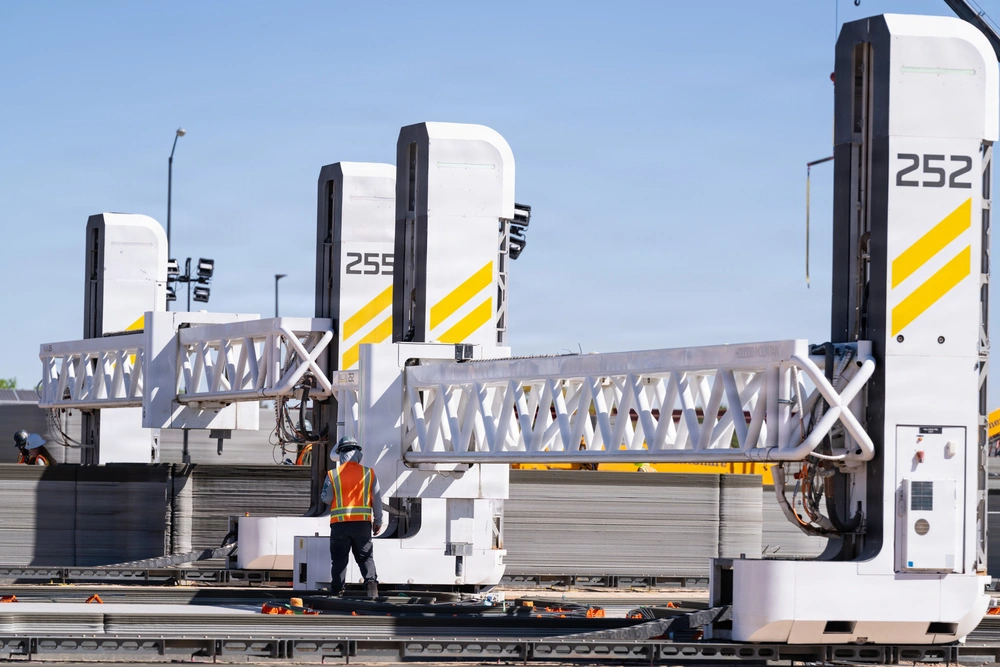
    The barracks are being built using 3D printed concrete, deposited layer by layer by robotic systems. The work is being done with Austin-based construction company ICON, which is using its large “Vulcan” printers to construct the buildings. The Army has awarded ICON a contract worth about $62.8 million for the project. Officials say 3D printing can speed up construction and reduce labor requirements compared to traditional building methods, though exact cost comparisons vary by project.

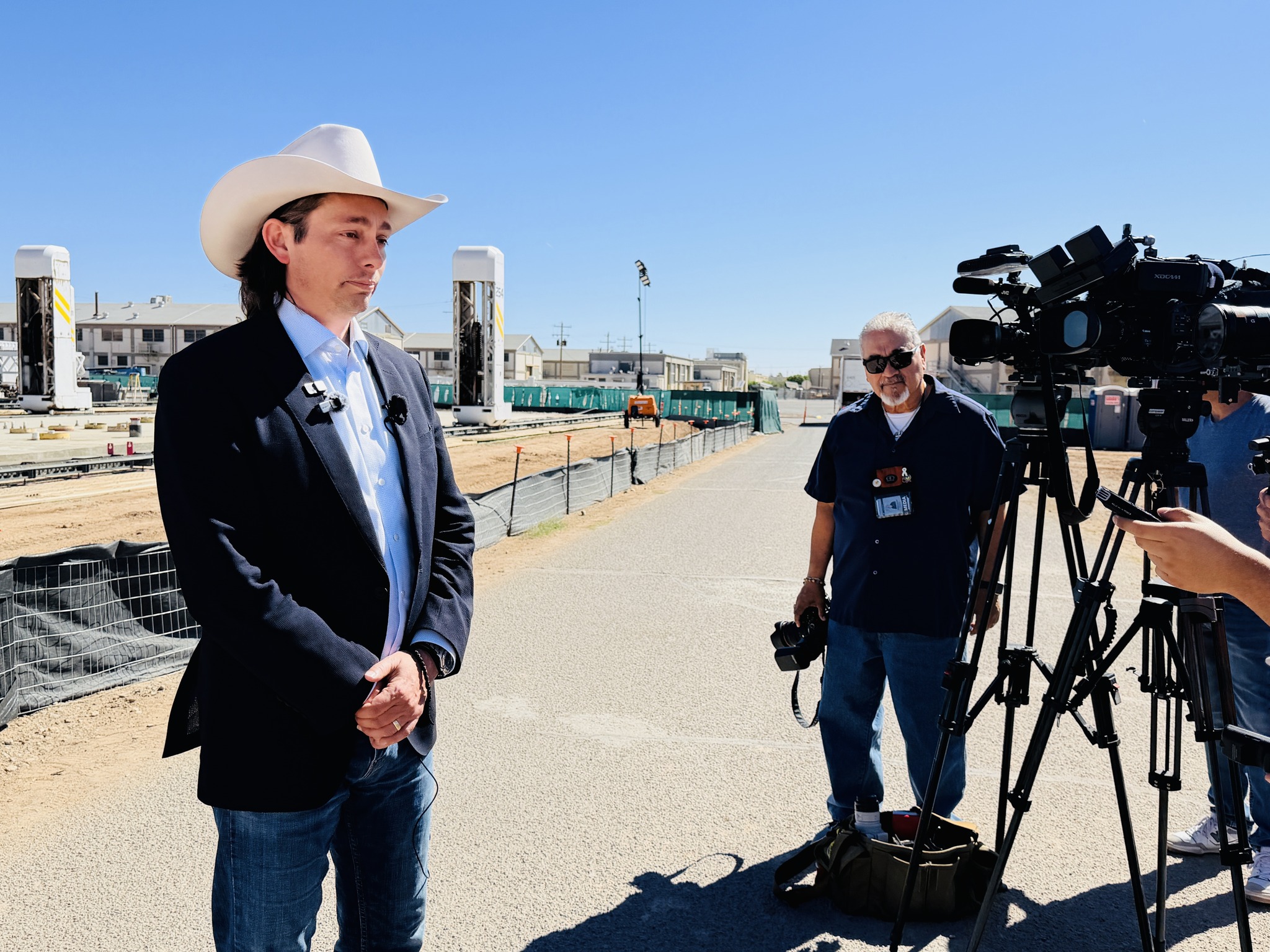
    Jason Ballard, Icon Chief Executive Officer, gives his speech during the Fort Bliss 3D printed Life Support Area bead laying ceremony on Fort Bliss. Image courtesy of U.S. Army/Crista Mack/Fort Bliss Garrison Public Affairs.

    This is not the Army’s first 3D printed barracks project at Fort Bliss. In 2025, it opened its first 3D printed barracks on the base as part of a smaller pilot program. That earlier effort included three buildings, each measuring roughly 8,000 square feet, and was used to validate the technology. The new project expands on that work, “moving from testing to a larger, more practical deployment.”

    The Army has also used 3D printing for construction in other projects in recent years. Smaller barracks and training structures have already been built at Fort Bliss and elsewhere, and ICON has also worked with the U.S. Marine Corps on earlier projects. However, this new effort stands out for its scale, with 10 buildings being constructed at once, making it one of the largest deployments of 3D printed construction in the U.S. military so far.

    The goal is to build faster, reduce costs, and improve housing quality. Army officials say traditional barracks projects often take too long and cost too much, while not always meeting the needs of soldiers. With 3D printing, the military can speed up construction timelines and use less material by placing it only where needed.

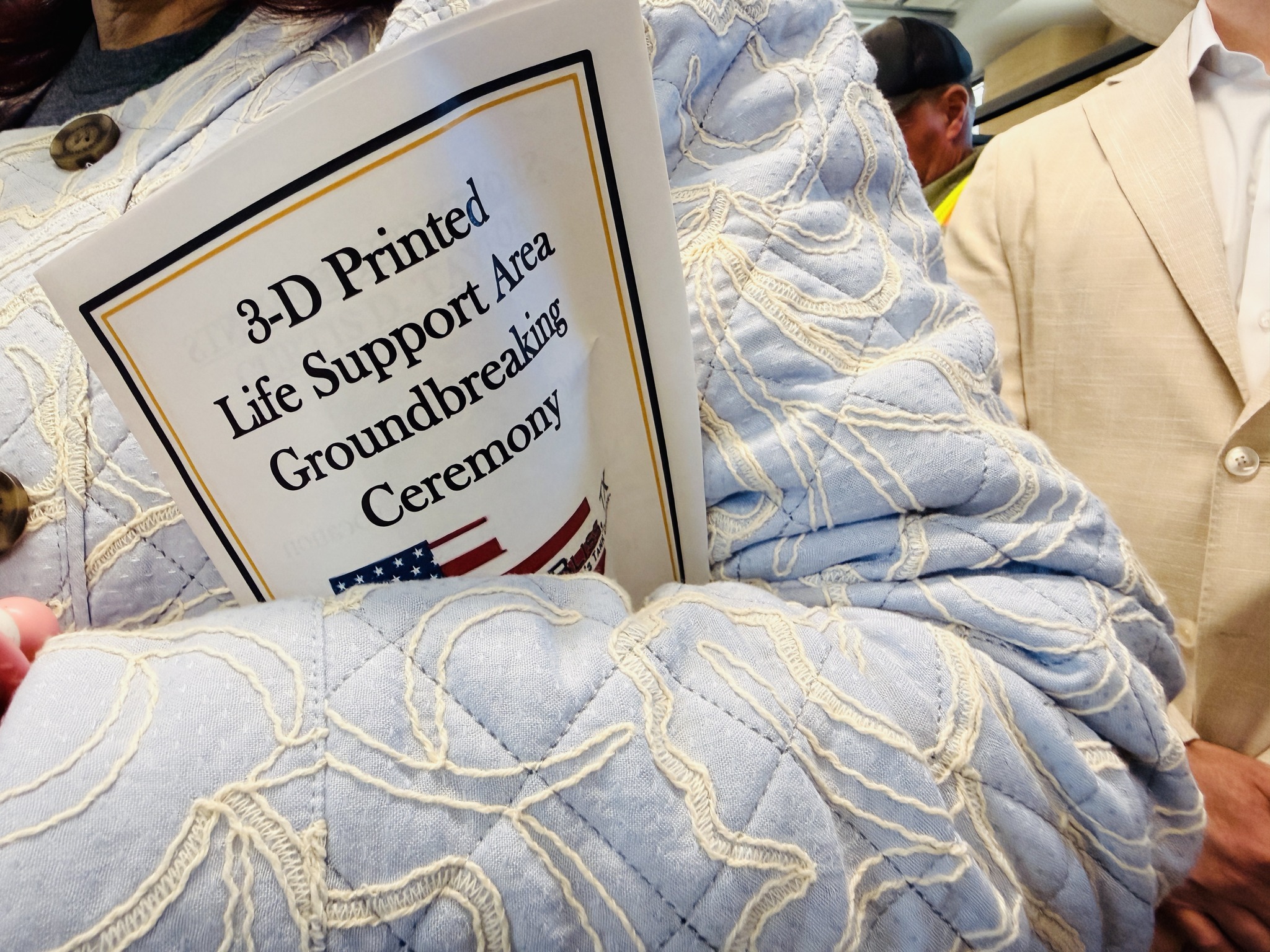
    3D printed life support area groundbreaking ceremony memorabilia. Image courtesy of U.S. Army/Crista Mack/Fort Bliss Garrison Public Affairs.

    At a recent ceremony, Army leaders and local partners described the project as part of a broader push to improve the quality of life for soldiers. Both ICON and officials said the new barracks are designed to provide more modern, resilient living spaces while demonstrating how new construction technologies can support readiness.

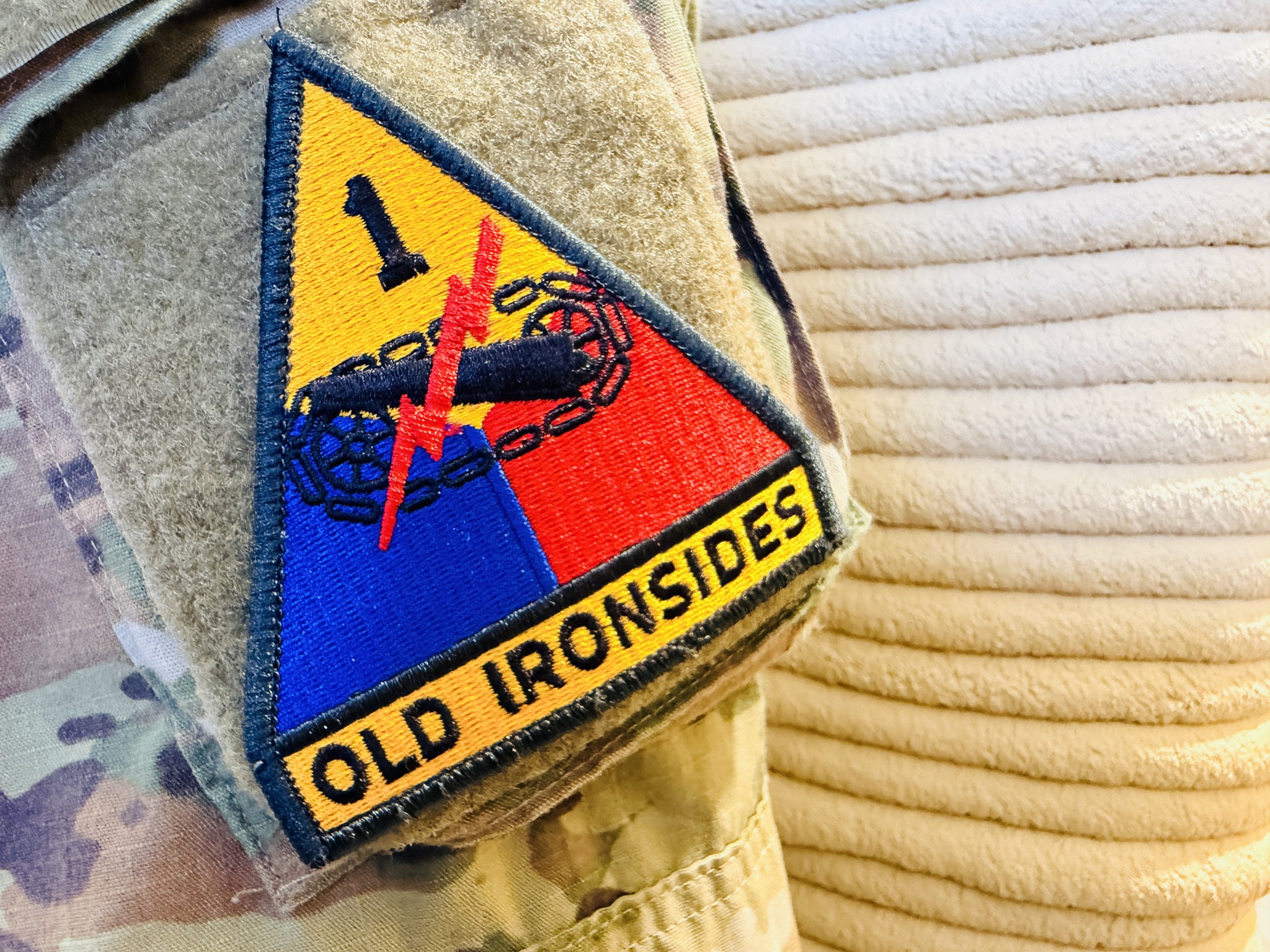
    For the Department of Defense, this is part of a push to build faster and more flexibly. The military has been looking for ways to respond more quickly to changing needs, including troop surges. At Fort Bliss, the demand for housing has increased as operations expanded in recent years. This project, in particular, is being led by the 1st Armored Division, known as “Old Ironsides,” which is based at Fort Bliss, and has been using 3D printing to modernize how facilities are built on the installation.

    The 1st Armored Division, known as “Old Ironsides,” is based at Fort Bliss. Image courtesy of U.S. Army/Crista Mack/Fort Bliss Garrison Public Affairs.

    More broadly, this is another step in the military’s growing use of 3D printing, extending beyond parts into full-scale construction. While the technology is still developing, projects like this show that it is moving from testing to real deployment. If successful, similar systems could be used to build not only barracks but also other military facilities in the future.

    Of course, this is not the first 3D printed barracks project we’ve covered, but it is one of the largest and most practical so far. And for the U.S. military, that matters. It shows that 3D printing is moving beyond pilot projects and into real deployment, where speed, cost, and how fast things get done all matter. If successful, projects like this could change how the Army builds not just barracks, but a wider range of infrastructure in the future.