• With ARPA-E Backing, HRL Laboratories Advances 3D Printed Cooling for More Efficient Data Centers

    In the reportAM for Data Centers: a 3D Printing Market Opportunity” that I wrote last year for Additive Manufacturing Research (AMR), I referenced Theodore Maiman, the man credited with inventing the first working laser, while he was employed by Hughes Aircraft Company. Maiman famously said that lasers were “a solution in search of a problem,” and I used that as an analogy for how the complex geometries enabled by AM are a solution in search of a problem that is thermal management.

    I didn’t realize that some version of Hughes Aircraft Company (as in Howard Hughes) is still around: it is now HRL Laboratories, a Malibu-based R&D venture that is, fascinatingly, jointly owned by Boeing and General Motors. I bring up this anecdote not solely to plug the data center report, but, more importantly, because HRL Laboratories has just announced a 3D printed, direct liquid cooling (DLC) solution that the company developed in part thanks to funding from the US Department of Energy’s (DOE’s) ARPA-E program.

    In 2022, ARPA-E launched COOLERCHIPS, a project call with the aim of drastically lowering cooling costs for data centers, which costs currently account for 40 percent — sometimes more — of a data center’s energy expenditure. According to HRL Laboratories, the Low-Chill solution uses a 3D printed manifold “to distribute coolant through hundreds of short flow paths”, without a need for vaporizing and recondensing the coolant: this makes it a ‘single-phase’ cooling system, in contrast to more expensive two-phase cooling systems.
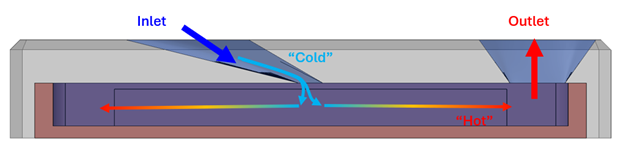
    Current cooling technology relies on long intra-channel flow paths along hot fins.

    HRL Laboratories claims that the Low-Chill cooling technology increases cooling capacity by 40 percent under equivalent pumping power compared to existing solutions, and notes that the design is scalable to achieve the same performance for multi-chip modules. The company also states that Low-Chill is built to handle the more intense cooling requirements of the next generation of chips from NVIDIA.

    In a press release about HRL Laboratories’ launch of the Low-Chill cooling solution for data centers, Christopher Roper, HRL’s principal investigator and the technical lead for the company’s COOLERCHIPS project, said, “We designed this technology with real data center constraints in mind. By rethinking how coolant is delivered at the block level, we can cool far more powerful processors using single-phase liquid cooling that fits within today’s data center architectures and operational risk profiles.”
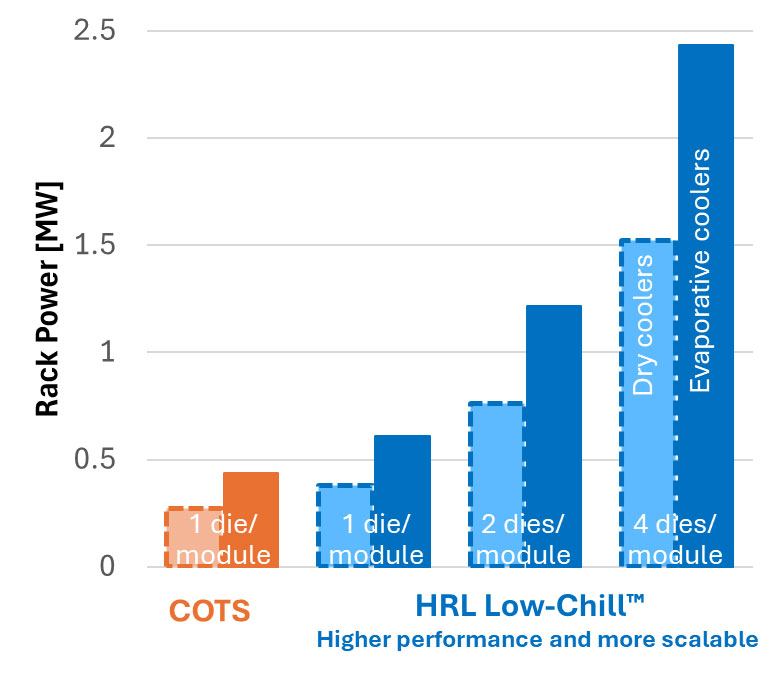
    Low-Chill direct liquid cooling.

    Nothing like a major military conflict snarling global energy supply chains to remind everyone that all critical infrastructure is, ultimately, national security infrastructure. It looks like I will continue linking to this post from the end of January and this one from the end of 2022, over and over again, for the foreseeable future.

    In a world where physical security operations follow the lead of cybersecurity operations as opposed to the other way around, data centers are thus arguably the quintessential national security chokepoints of our day. Couple this with the fact that data centers and military tensions are now in a race to see which can drive up energy bills more quickly, and it becomes clear why making data centers more energy efficient is kind of where all the global economy’s most daunting challenges converge.

    So, while defense tech startup CEOs may triumphantly boast to everyone that they told them so about how the US will disintegrate without more hypersonics, the US may actually disintegrate without more clean energy solutions. The exchange of missiles won’t last forever, but the effects on fossil fuel prices will endure much longer.

    In no way is this meant to suggest that higher prices compare on any level to the loss of human life. Rather, the point is that if global powers can become less dependent on energy sources imported from overseas, then, in the long run, we may see fewer pointless conflicts driven by myopic competition over resources.
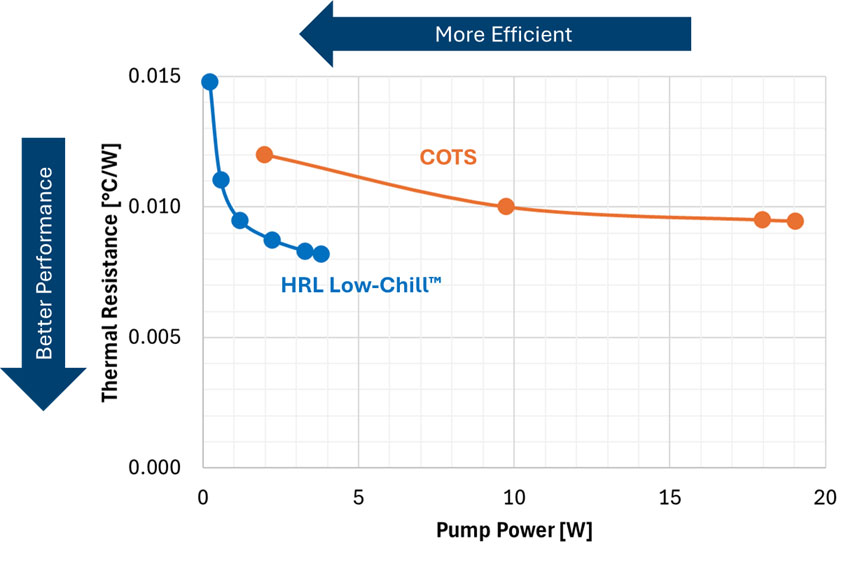
    Performance data: Low-Chill pump power.

    Images courtesy of HRL Laboratories

  • Is Industrial Filament 3D Printing Finally Production-Ready? HP’s New Webinar Says Yes

    HP Additive Manufacturing Solutions is getting ready to introduce something big for the additive manufacturing world. On March 31, 2026, the company will host a webinar offering a first look at its brand-new high-temperature industrial filament 3D printing platform, designed specifically for production and not just prototyping.

    In manufacturing, there is a big difference between printing a sample part and producing certified parts consistently at scale. HP says this new system is designed to close that gap.

    Guillermo Fabregat. Image courtesy of HP.

    HP’s Industrial Filament Product Manager, Guillermo Fabregat, will lead the session. An industrial engineer with experience in manufacturing, operations, R&D, strategy, and product management, Fabregat specializes in turning complex industrial systems into scalable, production-ready solutions.

    Moving Beyond Prototyping

    For years, filament-based 3D printing has been popular because it’s flexible, accessible, and relatively easy to use. But flexibility alone might not be enough in industrial settings. After all, industry roadmaps from organizations like America Makes, or the National Institute of Standards and Technology (NIST), have often identified repeatability, qualification, and traceability as key requirements for scaling additive manufacturing into full industrial production. HP’s new platform is focused on those needs.

    Instead of offering just a printer, HP is introducing what it calls an “end-to-end Industrial Filament 3D Printer Solution.” That means hardware, material handling, process control, and material access are all part of the same package. The goal is to make filament 3D printing ready for serious industrial applications.

    Industrial production environments demand repeatability, traceability, and consistent part quality. Image courtesy of HP.

    Built for High-Temperature and Regulated Industries

    One of the most important parts of this new system is its ability to handle high-temperature and chemical-resistant materials. HP says the platform is designed for demanding industrial environments, including aerospace, mobility and transportation, industrial manufacturing, oil and gas, and tooling applications.

    These really are not industries that accept “almost good enough.” Many of them demand regulatory approvals or industry certifications. That means consistent performance, documented processes, and materials that meet those famously strict standards. The best part is that HP says its platform is designed with those production needs in mind.

    During the webinar, attendees will get a closer look at the platform and its three main components.

    First is the industrial printer, designed to process high-temperature filament materials for production environments.

    Second is the Material Management System (MMS). Material handling is often overlooked, but in production, it is critical. Consistent drying, feeding, and tracking of materials can mean the difference between repeatable parts and costly failures.

    Finally, Fabregat will discuss the platform’s modular extrusion architecture. This design allows users to work with different materials while maintaining process control. Together, these components are built to support consistent part quality and scalable production.

    Open Materials, Certified Performance

    Beyond hardware, another key part of HP’s webinar will focus on its open materials ecosystem.

    Choosing the right material matters in industrial production. Manufacturers want access to certified, high-performance options from different suppliers. But they also need to make sure those materials meet standards and deliver consistent results. Now HP says it is aiming to balance both priorities, maintaining an open materials platform while ensuring those materials meet industrial and regulatory standards.

    That could be especially important for companies looking to replace metal components with high-performance polymers, which is a growing trend in aerospace, automotive, and energy sectors. High-performance polymers are increasingly being used to replace metal parts in industrial applications thanks to properties such as strength, corrosion resistance, and lighter weight.

    High-quality prototypes and final polymer 3D parts. Image courtesy of HP.

    Industrial filament printing has evolved rapidly in recent years. High-performance thermoplastics such as PEEK, PEKK, and other advanced polymers have moved into applications that were once fully dominated by metal. But strong materials alone are not enough. Research has shown that even as materials and technologies improve, moving into real production brings challenges. Academic studies have identified challenges such as repeatability, traceability, quality control, standards, and certification as ongoing barriers to industrial adoption, while industry reports highlight that traceability and certification are key priorities for advancing AM from prototype to reliable production.
    HP’s announcement suggests that filament 3D printing may be moving into a more production-focused stage, rather than being seen mainly as a prototyping tool.

    Of course, filament printing is sometimes seen as the more basic option compared to powder systems. But in practice, it can make a lot of sense. It can be more cost-effective, offer more material flexibility, and give engineers plenty of design freedom, as long as the production process is solid.

    With this new platform, HP seems to be positioning filament 3D printing as a serious option for demanding industrial environments.

    HP accelerates product development with functional automotive and 3D printed car parts. Image courtesy of HP.

    The upcoming webinar is ideal for manufacturing engineers, materials and process engineers, additive manufacturing leaders, and operations teams exploring filament-based production; however, the broader additive community can also find the discussion quite valuable.

    If your team is exploring metal replacement, high-temperature components, or certified production with polymers, this session is for you.

    HP is already a big name in polymer additive manufacturing, so this move into industrial filament production feels like a natural next step. Filament printing itself isn’t new, but what HP is talking about here is different: high-temperature materials, certified production, and systems built for real industrial use at scale. If it works the way HP describes, it could start changing how people think about filament 3D printing, shifting it from something seen as more of a workshop or prototyping tool to a serious production option.

    Attendees will get the first official look at the platform. To do so, register here.

  • Spielautomaten: High Performance Materials on Desktop Machines

    A new generation of more sophisticated desktop 3D printers is revolutionizing the 3D printing market. Bambu, Creality, and Prusa Research have leaped ahead over the past few years. More firms, such as Snapmaker and Elegoo, could join them if they iron out some kinks. These firms have, in effect, digitized extrusion on fast printers with high yield and great surface quality.

    Competition in this segment is ruthless and fast-paced, with millions of these systems being sold. Some of the biggest firms in 3D printing are now desktop 3D printing firms. Bambu is probably the highest-grossing 3D printing firm out there. Its P2S printer is available for €519 or with its excellent AMS unit for €749. The printer is rock solid, fast, and reliable. It moves around a bit and can be noisy, but as a printer, I can’t fault it. The Prusa Research Core L at €1,699 is an excellent 300×300×330mm build volume system. I’m stunned by the reliability and surface quality I get from it. I’m surprised now when a print doesn’t work. Yields I’m getting are over 95%.

    Expansion

    Many print farms now run on desktop printers. These businesses are expanding the market by making it cheaper to get 3D printed parts. New people are now buying 3D printers because they’re easier to use. Printers are now being bought en masse by the cosplay crowd. Parents are buying them in great numbers for their children as well. 3D printing was initially a hobby for the hardy, techy, and perseverant. Now it’s becoming a tool to make things for another hobby.

    But many in the industrial market still seem prone to self-delusion. Yes, these things are powering millions of people’s hobbies, but they are not hobby machines. Yes, they are used ot print many trinkets, toys, and dragons, but this is not all they can print. We’re seeing electronics housings, military components, drone components, industrial machine parts, factory automation components, and more being produced at scale on desktop machines. Many of these systems are also being bought by companies to prototype and build within the enterprise. Here they are displacing more expensive industrial systems. People are turning off older systems and buying desktop machines instead. A broader selection of lower-cost materials, coupled with reliability and speed, is a reason for these purchases. The uptake of 3D printing at large enterprises is accelerating thanks to desktop machines. Yes, this will make the overall consumer market bigger. Yes, this will grow the 3D printing market. And yes, this is competing with existing 3D printing players. Many firms will be pushed aside and bankrupted by the spread of more accurate desktop systems. This is being accelerated because not only are printed parts cheaper when made on these machines, but they can be had in a wide range of materials. PLA is far from the only game in town.

    New Materials

    Blended Polycarbonate

    One new 3D printing material that I’ve been using extensively is Polycarbonate. This high-impact, resistant material prints very well on the Core One. I can make large housings, cases, protective gear, and long lasting parts with it. I’ve printed around 3 kilos of stuff with it and haven’t had a failed print. Things made with it are very tough, have great heat resistance (above 110 °C), and strength. At €45, it perhaps could be cheaper, but it’s a steal for the functional area it unlocks in heat-resistant, strong industrial parts at this price.

    Victrex Low Temperature PEEK

    Victrex’s LMPAEK is a PAEK family polymer that has successfully been 3D printed on the Bambu H2D. The low-melt polyaryletherketone VICTREX AM 200 variant was first printed by Xioneer in August last year. Newer PEKK variants can also be 3D printed on desktop machines. Part size is limited, and these materials are very expensive. But we are seeing high-strength materials being made specifically for desktop machines.

    Tullomer

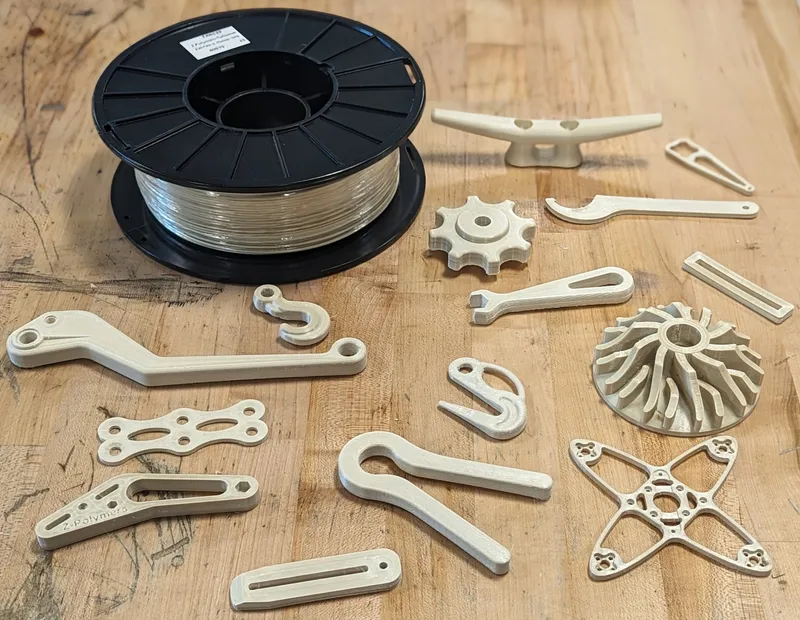
    Z Polymer’s Tullomer has been designed as a filament for desktop machines, to be used in place of PEI and PAEK materials. The crystalline polymer has a temperature resistance of over 200 °C, is PFAS-free, has a V-0 flame rating, and offers excellent chemical resistance to a wide range of chemicals. It’s a clear PVDF replacement for those trying to eliminate PFAS from their factories or companies. It prints at around 325 °C and has been used on a wide array of desktop machines. Years ago, this kind of material would have been introduced together with an industrial firm, but now the path to revenue seems surer on desktop machines. At $275 for a 500-gram spool, it’s very expensive indeed and a quarter the price of many of the systems now printing it.

    Tectonic 3D

    The company Tectonic 3D has a lineup of filaments, all made for high-performance applications. The firm’s KRATIR PP-CF is being used to manufacture drone bodies that are one single line of filament thick. The firm also has EN45545-2 & FAR-approved PPO for rail use and a PA6 for under-the-hood automotive use. A foaming PA11 has been developed for low-density use in drones. By custom-developing materials for particular uses, Tectonic is enabling more manufacturing cases for military and industrial firms.

    Colorfabb

    Colorfabb has been the most innovative company in the 3D printing materials space for many years now. Its AllPHA filaments are the first truly sustainable 3D printing filaments. With a bio-based and biodegradable material that has a heat deflection temperature of around 120°C, PHA really should be our standard go-to material. The company will also make its filaments in any color you want.

    But it also has LW-PLA-HT, a higher-temperature foaming PLA variant for lightweight applications. But, its most amazing material may be Varioshore TPU — an elastomer where you can alter the shore hardness locally by altering your nozzle temperature. Hard and soft regions of parts can be printed in a single print run using a single nozzle, enabling the production of low-cost yet high-performance insoles, mildoles, and shoe components. This functionality is only available with a desktop printer.

    Zetamix

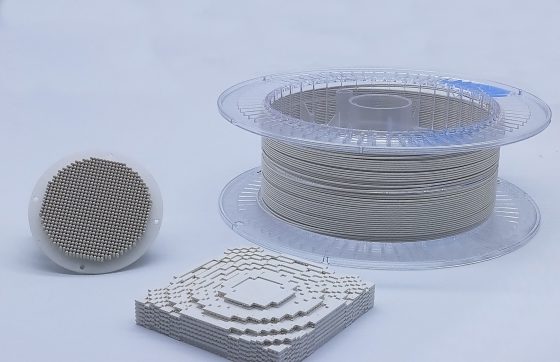
    Nanoe’s Zetamix line lets you use bound filament and an oven to make metal and ceramic parts. White & black zirconia, alumninia, silicon carbide, 316L stainless steel,  H13 steel, 17-4PH & Porcelain are all possible. Silicon carbide and H13 will already enable many 3D printing applications. Of course, the parts are cruder-looking than alternatives made with SLA or binder jet. But the low cost and low startup cost are real enablers. Its Ɛ filament does not need to be sintered or debound and can be printed on desktop machines. That low-loss, high-permeability material has been developed specifically for RF applications and is used to make antennas and radar components. Satellite antenna and RF devices are being made with these filaments worldwide. Cheaper and faster to make, these devices are also more compact than conventionally made alternatives.

    Final Thoughts

    Desktop 3D printers are being sold in their millions. Their capabilities are advancing rapidly. Reliable, quick, and low-cost, these machines are being used to make industrial parts and serve tens of thousands of businesses. With new materials available across many systems, materials companies can see real returns and growth as desktop 3D printing becomes more attractive to more businesses. Materials are lower cost in the desktop market, and there is less vendor lock-in. This is attracting more materials firms making high-performance materials suited to desktop 3D printers. We’re now seeing parts made from foaming TPU and RF materials that you couldn’t make on industrial machines. Further innovation could make desktop machines even more attractive. With millions more desktop machines being sold each year, these will soon become a mortal threat to the rest of the industry.

  • Cisco Report Finds Cybersecurity and Networks Determine AI Growth in Manufacturing

    Additive manufacturing (AM) is a market in-itself. Still, more broadly, it can be viewed as one component of a shift in the productive economy towards interconnection by the Industrial Internet of Things (IIoT). This is the framework within which one should view the incorporation of AI into manufacturing processes, and the latest State of Industrial AI report from network equipment giant Cisco, released today, synthesizes data from over 1,000 respondents on the topic, including over 350 manufacturing sector stakeholders.

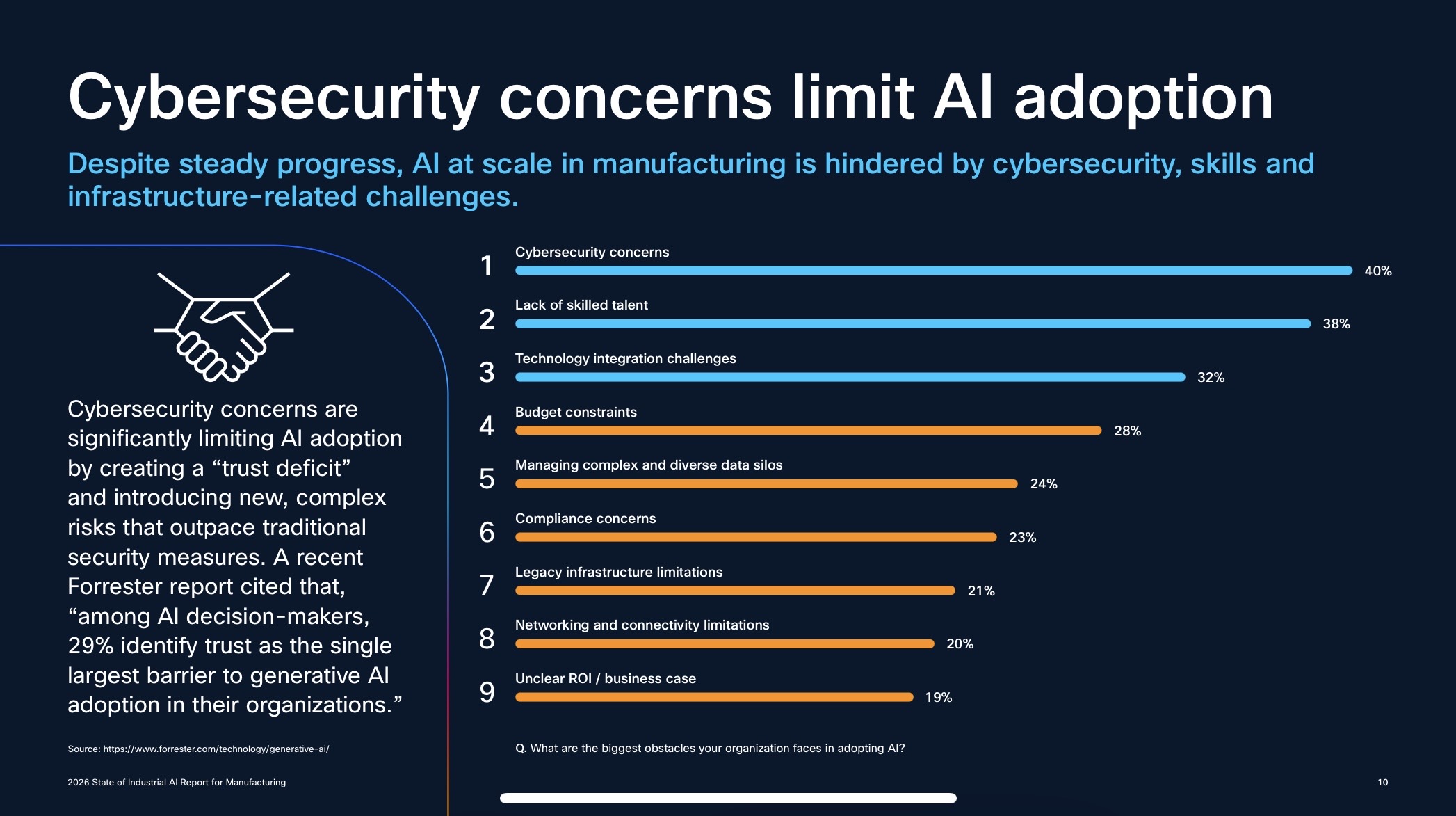
    One of the most noteworthy takeaways from the report is that cybersecurity has jumped to the top of the list of limiting factors for AI adoption. When the last report was released in 2024, cybersecurity was ranked #3. Compared to the broader industry, which saw 40 percent of respondents list cybersecurity as their number one concern, an even higher percentage of respondents from the manufacturing sector — 46 percent — said cybersecurity was their top concern in 2026.

    At the same time, interestingly enough, 81 percent of manufacturers also said that they ultimately expect AI to improve their cybersecurity capabilities, once it’s implemented at scale. Other important findings relate to network readiness: nearly 50 percent of manufacturers said that, to produce results, investments in AI also require greater investments in network connectivity and edge computing.

    Overall, AI adoption in manufacturing may have finally hit critical mass, with just under 60 percent of the manufacturers surveyed saying they’re already “actively deploying AI at scale”, and 83 percent expect to continue to increase their AI spend. Reinforcing that acceptance of and optimism surrounding the new technological landscape, 85 percent of manufacturers said they expect to see ROI within two years.

    In a press release about Cisco’s latest State of Industrial AI report, Vikas Butaney, SVP/GM of Secure Routing and Industrial IoT at Cisco, said, “Industrial AI is moving from experimentation into production, where AI systems sense, reason, and act in the real world. At this stage, success is no longer determined by models alone, but by whether networks, security, and teams are ready to support AI at the edge, in motion, and at scale. The research shows that organizations confident in scaling AI are those treating infrastructure, cybersecurity, and IT/OT collaboration as foundational, not optional.”

    That concept of treating AI as foundational reminds me of an interview I did last year with Michael Corr, co-founder and CEO of PLM software firm Duro, which was later acquired by the electronics design software provider Altium. Corr explained to me how the company relaunched its entire platform with AI embedded at the core, rather than simply trying to “layer it” on top of the product that already existed:

    “What’s unique about the relaunch,” Corr told me, “is the fact that AI isn’t just a bolt-on. I think we’re in an enviable position compared to our competitors because we’re still small enough to where we can do such a major refactoring compared to legacy providers. They’re too far down the road already to be able to do that.”

    This suggests a significant edge that new firms could have over legacy manufacturers in the initial mass scale-up phase of the IIoT build-out, as organizational agility has turned into an operational mandate, not a “nice-to-have”. That same logic supports the idea that, in order for an enterprise to effectively contribute to objectives like supply chain resilience, AM capacity has to be a core component of an enterprise’s business model, not simply a “bonus” that has been grafted onto the company’s periphery.

    Along those lines, we won’t see every manufacturing company that adopts AM and every manufacturing company that adopts AI succeed at doing so. But I would bet that the handful of manufacturing companies that have successfully built AM and AI into the foundation of their business models will be disproportionately influential to the trajectory of the rest of the productive economy.

    So a company like DEFEND3D, for instance, which provides software solutions that enable print jobs via streaming as opposed to file-based transfers, stands to gain in this environment. Hadrian Additive, the new division of the massively-funded ‘Factories-as-a-Service’ startup, stands to gain in this environment, as do OEMs like Velo3D, which has made cybersecurity compliance a centerpiece of its business strategy for years, etc. It is no longer adequate (if it ever was) to consider the product you’re selling as a standalone thing: to gain traction, you have to primarily consider the total operational environment that everyone’s tech lives or dies in.

    Images courtesy of Cisco

  • AMR Webinar to Reveal 2025 3D Printing Market Data and What 2026 Will Really Look Like

    On March 24, 2026, Additive Manufacturing Research (AM Research) will host a free webinar that many in the industry won’t want to miss. Titled 3DP/AM Market Insights: 2025 Review and 2026 Preview,” the session promises a deep dive into the newly finalized 2025 market data, along with a forward-looking assessment of where additive manufacturing (AM) is headed next.

    With the industry recalibrating around profitability and real production, accurate data matters more than ever. And AM Research has the numbers.

    A Decade of Market Tracking

    The webinar will be led by Scott Dunham, Executive Vice President of Research at AM Research. Dunham has written dozens of detailed market research reports covering pretty much every major segment of the 3D printing industry. Over more than a decade, AM Research has tracked hardware, materials, and service revenues across metals, polymers, binder jetting, powder bed fusion (PBF), directed energy deposition (DED), material extrusion (ME), and beyond.

    Basically, if you want to know what’s actually happening in additive manufacturing (not just what companies say is happening), AM Research is one of the most complete sources available.

    Unlike many market analysts who publish annual snapshots, AM Research provides quarterly tracking across multiple verticals. And, by reporting quarterly, the firm can closely track changes in printer sales, materials growth, industry adoption, and economic conditions as they happen.

    Why 2025 Data Matters

    The full-year 2025 data comes at a key moment. Over the past year, the additive manufacturing industry has faced a mix of headwinds and opportunities. Publicly traded AM companies have kept up with a lot of restructuring efforts. Defense applications have gained momentum. Industrial polymer systems are competing on cost-per-part. And metal AM is pushing further into serial production.

    So what actually grew in 2025? Which segments contracted? Did metals outperform polymers? Is binder jetting gaining share? Where is material extrusion positioned in industrial contexts?

    These are exactly the kinds of questions the upcoming webinar will address.

    AM Research’s outlook for 2026 will also be key. Many companies seem to be starting the year with more focused plans, looking to grow in specific applications instead of expanding in every direction. At the same time, ideas about distributed manufacturing networks and connected production systems are moving into real-world use that can now be measured.

    Dunham is expected to break down not just topline revenue projections, but also the underlying methodology behind the forecasts, something that doesn’t always get much attention.

    From AMS to March: Continuing the Conversation

    For readers who attended Additive Manufacturing Strategies (AMS 2026) in February, Dunham’s webinar builds on topics already discussed earlier this year. At AMS 2026, he presented detailed market data sessions, including a dental AM forecast, broader 20/30 Vision market projections, and application-level data, before joining a panel discussion on the overall 3DP/AM market outlook.

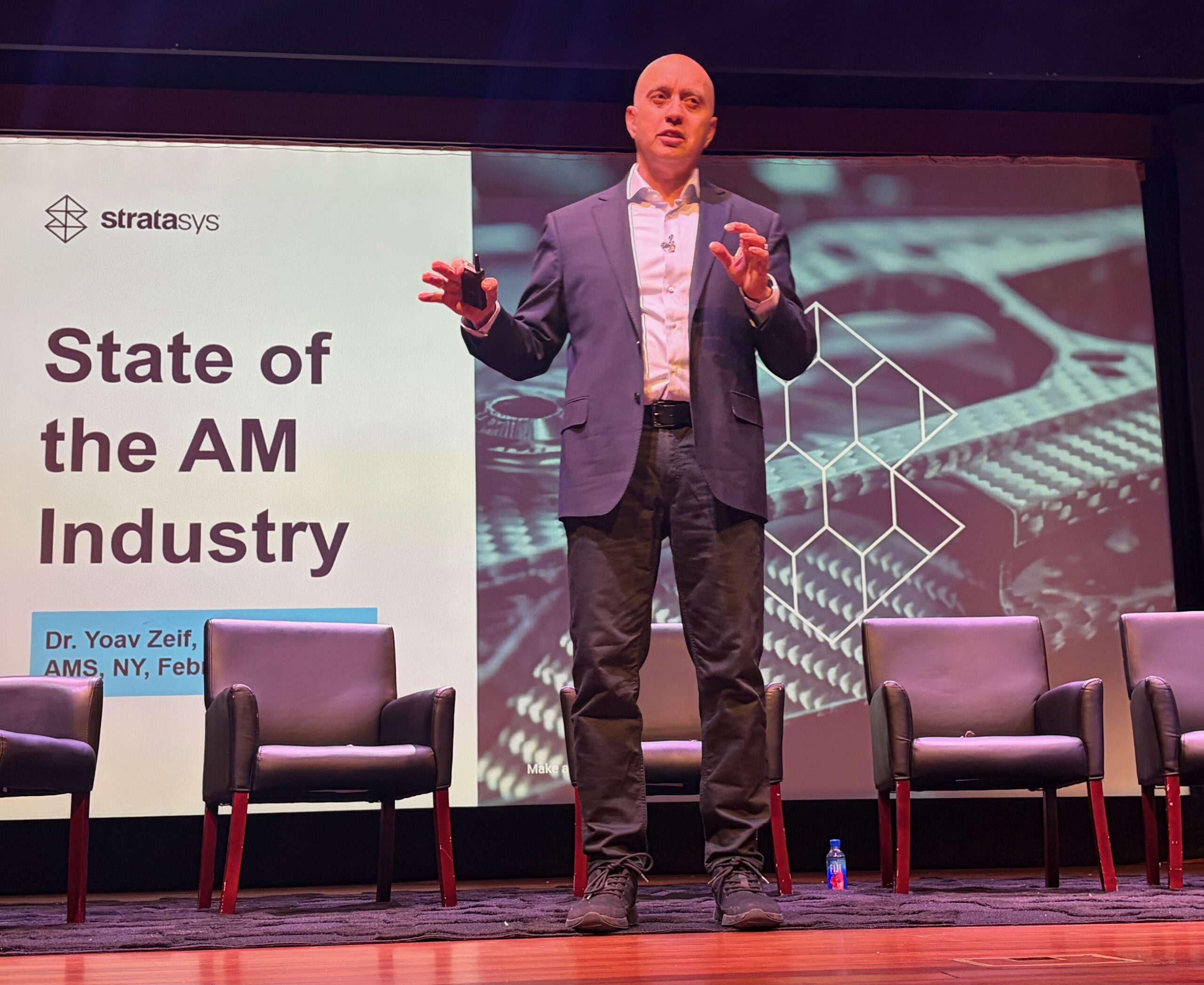
    Stratasys CEO Yoav Zeif at AMS 2026. Image courtesy of 3DPrint.com.

    The upcoming webinar builds on that foundation with finalized data and refined forecasts.

    For professionals who couldn’t attend AMS in person, or those looking for more detailed data, this webinar provides direct access to AM Research’s latest findings.

    In fact, one of the most anticipated parts of the webinar will likely be the discussion of which applications and industries offer the most upside.

    Across aerospace, medical, dental, automotive, defense, and energy, additive manufacturing is at different stages of maturity. So, for Dunham, the question is no longer just “Is AM growing?” but rather, “Where is it growing fastest and why?” Basically, which industries are leading, which ones are slowing down, and where is real production growth actually happening.

    Access to AM Research Reports

    For those wanting to go beyond the webinar, the full set of AM Research reports is available online. These reports look at the market by technology, materials, region, and industry, providing a clear view of how additive manufacturing is performing.

    From quarterly updates to long-term forecasts, these reports are widely used across the industry and often help guide business strategy, investment decisions, and planning. After years of big projections and some pretty ambitious forecasts, reliable data has become super important. Especially with additive manufacturing entering, what many are describing as a consolidation phase. In fact, we could say that consolidation has reshaped the competitive landscape. Customers are demanding clearer returns on investment (ROI). And we have seen that capital markets are less forgiving. Meanwhile, governments are supporting faster use of the technology in strategic industries.

    That is why understanding the numbers behind these changes is no longer an option; it’s a need. AM Research’s webinar is a great chance to hear directly from one of the industry’s most experienced analysts as he reviews 2025’s final performance and previews what 2026 may hold.

    Registration for the free webinar is open here.

  • DOE Backs DMG Mori AI Tool to Speed Qualification of 3D Printed Parts

    Since 2015, the U.S. Department of Energy (DOE) has awarded projects that leverage the high-performance computing (HPC) capabilities of the U.S. national laboratories to optimize manufacturing processes. The High-Performance Computing for Manufacturing (HPC4Mfg), funded through the Office of Critical Minerals and Energy Innovation (CMEI), just announced its latest round of winning proposals, and among them is an effort by DMG Mori to develop a method for automating the optimization of powder bed fusion (PBF) processes with tools including AI.

    Specifically, the award went to DMG Mori Federal Services, the division of the global machine tool giant that works directly with the U.S. government, as well as the government’s prime contractors. DMG Mori will collaborate on the HPC4Mfg grant with Oak Ridge National Laboratory (ORNL), which hosts some of the world’s most powerful supercomputing systems, and has long helped facilitate early-stage additive manufacturing (AM) materials science R&D.

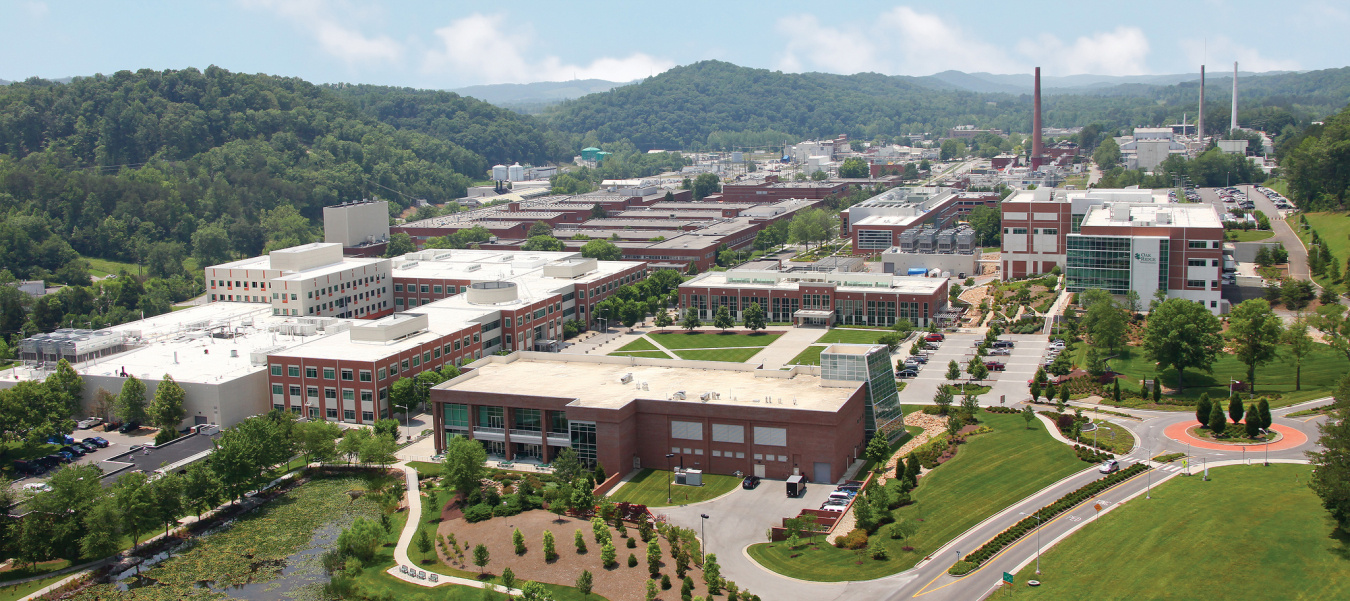
    Oak Ridge National Lab. Image courtesy of ORNL.

    It’s not clear if the tool that DMG Mori will be working on involves a hardware component or is simply a software program. Still, the broad-sweeping goal of the R&D program is to accelerate the qualification of energy-critical components. DMG Mori’s LASERTEC 30 SLM machines are made in the USA, which should give the company an edge in pursuing further federal contracts, at a time when the U.S. administration is making a renewed push to reassert “American energy dominance.”

    Additionally, DMG Mori’s status as one of the largest, if not the largest, machine tool manufacturers in the world means the company has experience at a scale virtually unheard of in the rest of the AM industry. If its early-stage work with ORNL is successful, all that could result in an easier path to commercial viability than would typically be the case.

    In a press release about DMG Mori’s HPC4Mfg grant, Fred Carter, the Head of R&D for DMG Mori Federal Services, said, “This collaboration allows us to pair DMG Mori’s advanced laser powder bed fusion platforms with ORNL’s world-class high-performance computing and materials science expertise. Together, we will develop data-driven tools that enhance process control, improve repeatability, and strengthen the competitiveness of U.S. manufacturing.”

    I’d love to know if there are any energy-critical components that DMG Mori has in mind, in particular, and if they’re data center components. As I recently wrote, heat exchangers for data centers are an ideal example of how metal AM can be leveraged for sustainability-as-security principles.

    In that earlier article, I noted that collaboration on data center hardware could be a driving factor in promoting unity over division between the U.S. and its European trading partners, and the same holds true for the U.S. and Japan, where DMG Mori is, of course, headquartered. Since Japan announced a half-trillion-dollar investment in U.S. infrastructure last year, with data centers as the centerpiece, equipment that can make data centers more energy-efficient would indeed be an all-the-more fitting theme for AM collaboration between the U.S. and Japan.

    Meanwhile, DMG Mori also recently received $40 million in funding from the state of Illinois, where the machine tool OEM has its U.S. headquarters. DMG Mori will establish a new R&D facility in the Chicago area, collaborate with the City Colleges of Chicago on workforce development initiatives, and create 74 new full-time jobs. Illinois is a major hub for data centers nationally, so again, speeding up the qualification of 3D printed data center hardware would make a lot of sense as a direction for the ORNL collaboration.

    Whatever the precise topic of the R&D project is, we should expect to see even more funding pour into leveraging AI for digital manufacturing process optimization, from both the private and public sectors. A wholly unsurprising development is becoming clear: the most boring-sounding AI use cases are the ones that seem to have the greatest potential for near-term ROI. That might make it harder for chip companies to sell their story to investors, but it has positive implications for the manufacturing sector.

  • AML3D Reports Record A$16.5M in Orders as U.S. Defense Work Expands

    Australian metal additive manufacturing firm AML3D (ASX: AL3) has reported approximately A$16.5 million ($11.7 million) in orders in hand in its half-year results for the period ending December 31, 2025, positioning the company for what it says could be a record second half of its fiscal year 2026.

    While only A$3.25 million ($2.3 million) of those orders were recognized as revenue during the period, the company said the decline (roughly 30% compared to the prior corresponding period) was due to delays in raw materials and extensions in project timelines. AML3D said those delays pushed part of the expected revenue into the second half of FY26, rather than canceling it. So, what they are saying is that the orders are there, but the revenue is just coming later.

    AML3D Arcemy 3D printing. Image courtesy of AML3D.

    Most of AML3D’s business comes from the United States, with about 87% of first-half revenue generated from U.S. customers. This reflects AML3D’s growing work in defense and shipbuilding, including projects with the U.S. Navy and large U.S. shipbuilders.

    The company has already announced contracts tied to submarine and naval components, where large-scale metal 3D printing helps reduce part counts, improve repair times, and support more reliable supply chains.

    With defense spending rising and naval upgrades underway in key markets, AML3D says it’s aiming to supply large metal components for essential defense projects.

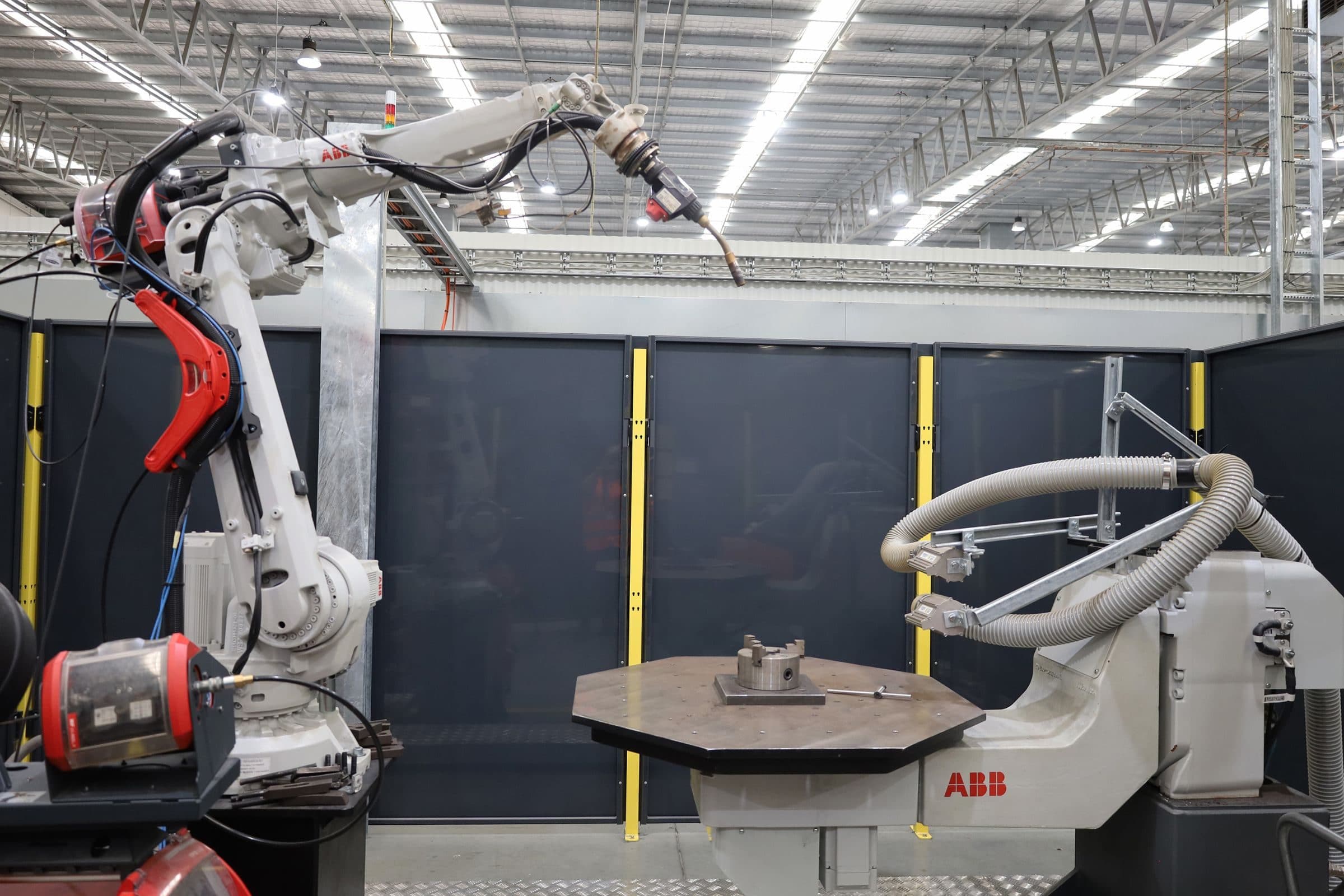
    AML3D WAM technology.

    AML3D WAM technology. Image courtesy of AML3D.

    At the center of AML3D is its proprietary Wire Arc Additive Manufacturing (WAAM) technology, branded as WAM®.

    Unlike powder-based metal processes such as powder bed fusion, WAAM uses welding wire as feedstock, building large metal structures layer by layer using an electric arc. The approach is particularly well-suited for producing large-format structural components, often in stainless steel, nickel alloys, and other high-performance materials.

    For applications such as naval shipbuilding, utilities infrastructure, and defense components, the ability to produce large, near-net-shape metal parts with reduced material waste can be a significant advantage.

    WAAM also avoids some of the powder handling complexities and cost structures associated with traditional metal AM systems, making it attractive for industrial environments where scale and durability matter more than fine-detail resolution.

    AML3D has been improving its machines and digital controls, with a focus on consistency and meeting strict standards, both essential when working with defense customers.

    AML3D creates parts for Boeing using its Arcemy WAM printer. Image courtesy of AML3D.

    Although AML3D’s revenue was down 30%, we now know that the orders were not canceled, and that the revenue is just coming later. Material delays and schedule changes moved some revenue into the second half of FY26, but the A$16.5 million order book remains unchanged. With those orders secured, AML3D enters the second half of the year in a strong position.

    The company stated it has entered its next phase of growth, supported by new contracts in the U.S. utilities sector and the UK defense market, alongside its established U.S. Navy work. This shows the company is expanding beyond the U.S. while still focusing on defense and infrastructure.

    Nickel Aluminum Bronze part 3D printed using AML3D’s wire additive manufacturing process for BAE Systems. Image courtesy of AML3D

    AML3D is increasingly focused on international growth. Along with the U.S. expansion, the company is also looking to grow in Europe, especially in defense markets.

    Many governments now want to make more critical parts at home instead of depending on long overseas supply chains. Large-scale metal 3D printing systems like AML3D’s WAM technology can help make that possible. The company’s technology fits well with this move toward more local production.

    AML3D is entering the second half of 2026 in a strong position. With solid orders in place and revenue expected later this year, the company is moving into larger-scale industrial production. The wider metal 3D printing market remains competitive, especially in aerospace and other high-precision areas where powder-based systems dominate. AML3D is focused on something different: large structural parts, where its wire-based process can be more cost-effective and better suited for bigger components.

  • AMS 2026 in Photos: Snow, Songs, and Serious Conversations

    AMS 2026 may have been altered by flight delays and snow-covered streets, but once you made it, the energy felt anything but frozen. This year’s Additive Manufacturing Strategies, which wrapped up last week in New York City, mixed big ideas, financial updates, and plenty of conversations about where additive manufacturing is headed. Between panels, presentations, and networking chats, it felt like the industry is at a turning point, even if no one is quite sure what comes next.

    The view from the venue

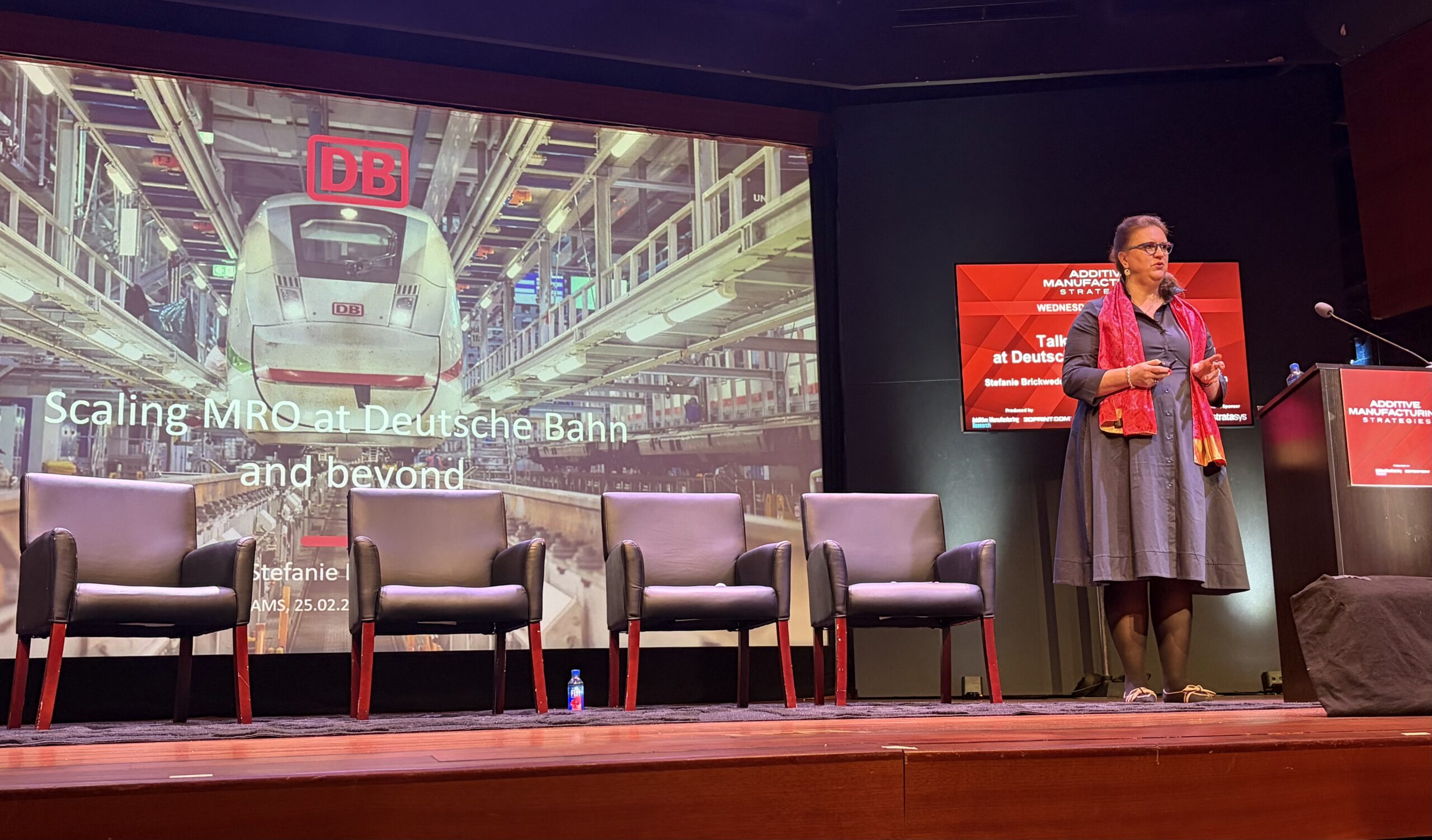
    A massive blizzard hit the city in the days leading up to the conference, which obviously changed travel plans for a lot of attendees. I personally had five separate flights canceled before finally managing to fly to Washington, D.C. to hop an Amtrak train to NYC. We heard from many others who also rode trains into the city; this probably made Stefanie Brickwede, head of AM at Deutsche Bahn, very happy indeed.

    Stefanie Brickwede, Mobility goes Additive

    Unfortunately, many people were unable to make it to the event, so we’re sharing some of the highlights with you!

    A Tale of Two Keynotes

    Thanks to the blizzard, the word of the week was flexibility, and the schedule was fairly fluid. Yoav Zeif, the CEO of AMS Diamond Sponsor Stratasys, had long been scheduled to open the conference, just as he has the past few AMS events. Unfortunately, his arrival was delayed, so our own Executive Editor Joris Peels, Chairperson for AMS 2026, took the stage that first morning and delivered his own opening presentation, “3D Printing in a Fractious World.”

    AMS Chairperson Joris Peels, 3DPrint.com

    Peels described companies acting “like a dog with five or six tennis balls,” bouncing from one initiative to another without follow-through, and said that in the uncertain geopolitical climate, what matters most is earning trust, knowing your customers, and building real relationships. He called this “very old school” focus more essential than ever.

    He also said the biggest disruption in our industry may be taking place in plain sight: the very real possibility of a desktop 3D printing revolution.

    Stratasys CEO Yoav Zeif

    Luckily, Zeif was still able to deliver his official opening keynote on the “State of the AM Industry.” He just did so in the afternoon on the second day of AMS. Zeif said he aspires for the AM industry to be mainstream, like CNC.

    “It’s a journey. When you look at CNC, it took them 40 years to become the mainstream of producing parts…What happened in those 40 years? They removed those barriers, one by one,” he told the audience.

    “We need to remove the barriers…There is no reason in the world, none, that we will not remove the barriers as well. We just need to do it with our customers.”

    Zeif also echoed what Peels said, noting that desktop is taking over the additive sector, and that this is a good thing, because it helps expand the industry.

    Snowy Song Lyrics

    A memorable moment came when John Barnes, Founder of The Barnes Global Advisors (TBGA) and CEO of Metal Powder Works, began his presentation. True to recent tradition, he opened with pun-filled song lyrics he’d written himself.

    John Barnes, TBGA and Metal Powder Works

    This year, they were all about the snowy weather that made travel difficult for most attendees.

    “I thought about perhaps ‘Do You Wanna Build a Snowman,’ but that might be in bad taste, so maybe I should just ‘Let It Go,’” Barnes quipped amidst raucous laughter, dropping the names of two popular songs from the movie “Frozen.”

    He mentioned the “flurry of ideas” he had while planning and thinking about his “20(/)30 Vision: Adoption” presentation, noting that his head was “a blizzard of thoughts that I had to claw my way through.” It was a great way to make everyone smile, even in a year filled with uncertainty.

    3D Printing for Helmets

    On the final day of AMS, the conversation turned to a very specific AM application. With football helmet in hand, Carbon CEO Phil DeSimone took the stage with Riddell representatives Thad Ide, Chief Product Officer, and Erin Griffin, Senior Vice President of Marketing and Communications. The two companies launched a 3D printed helmet liner in 2019, and have been collaborating to innovate sports gear ever since.

    L-R: Erin Griffin and Thad Ide, Riddell; Phil DeSimone, Carbon

    Ide called Carbon’s DLS technology “the perfect fit” for Riddell’s helmets. Additionally, Ide and Griffin let the audience in on some breaking news: Riddell is actively working to include more additive across all levels, including its varsity line.

    Formlabs Financials

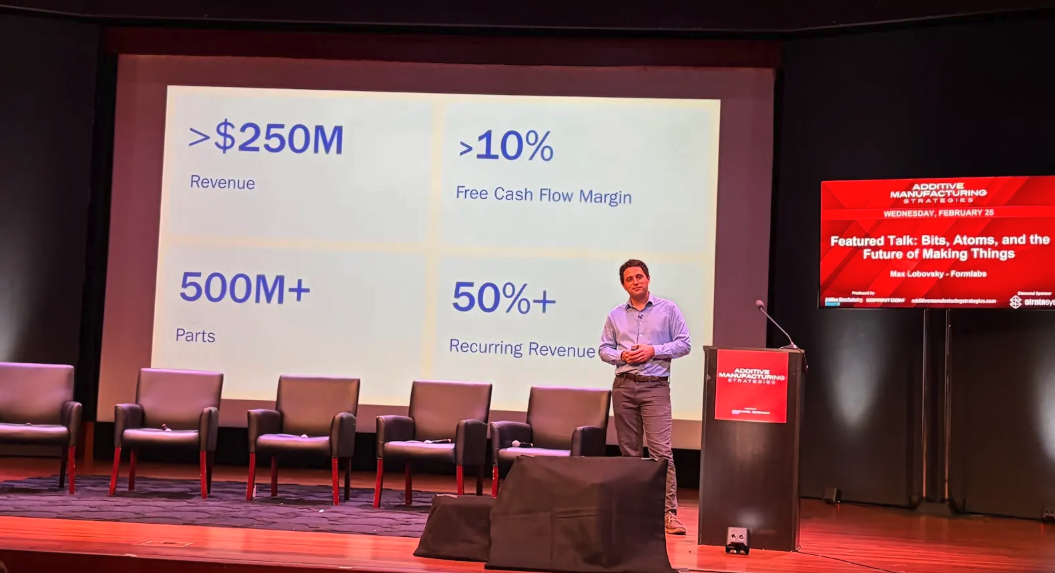
    Speaking of breaking news, Formlabs CEO Max Lobovsky’s featured talk included numbers that many attendees described as a “huge deal,” and got people talking afterward about how companies can grow in today’s AM market.

    Max Lobovsky, Formlabs

    The privately owned company has achieved a $2 billion dollar valuation, which makes it a unicorn. But because it’s not public, the financials are not typically shared…until Lobovsky put them up on the big screen at AMS.

    “Yeah, I see everyone getting out their phones to take pictures,” he said wryly, as I and nearly everyone around me did just that.

    CEO Roundtable

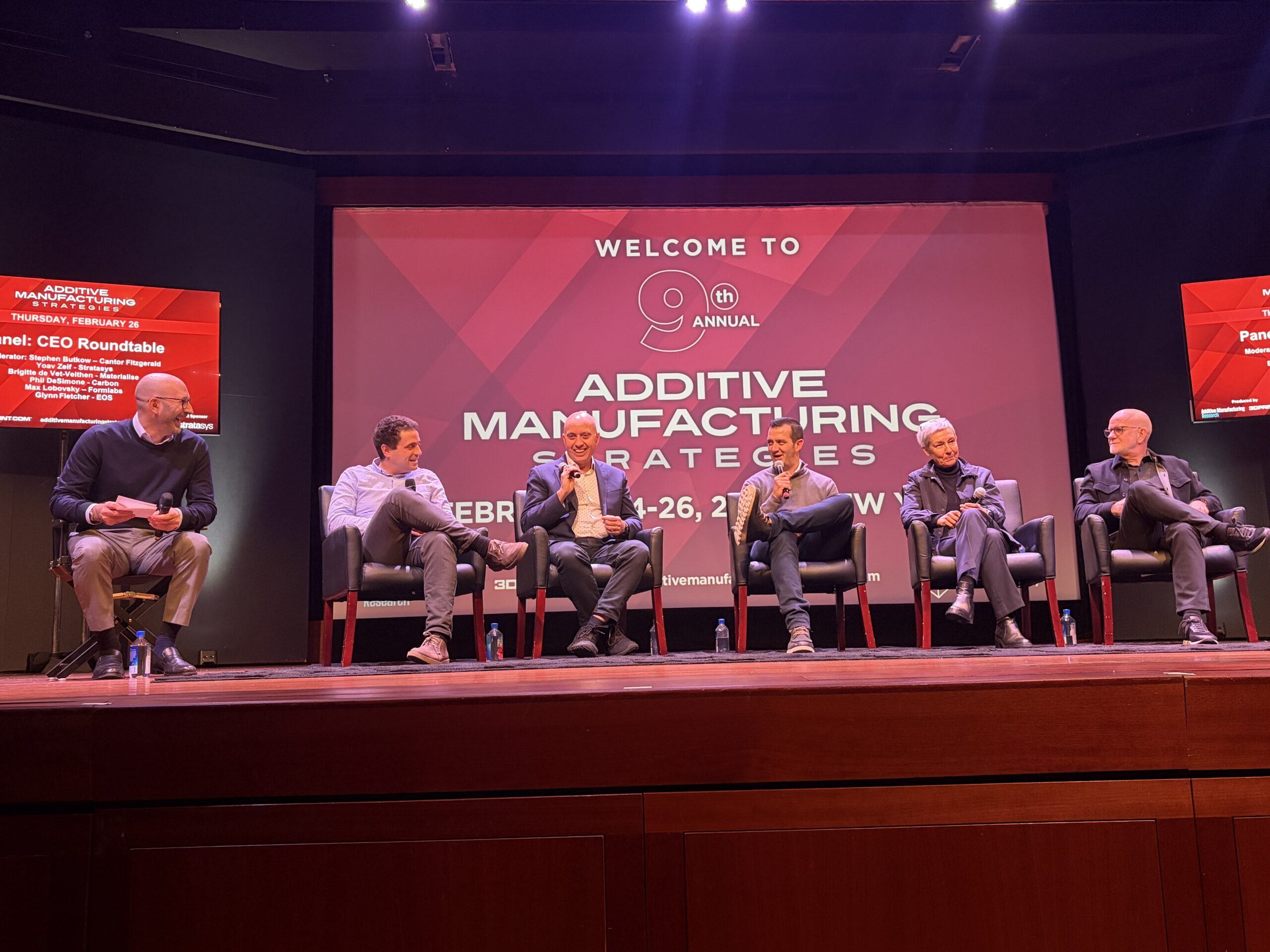
    The popular CEO roundtable always feels to me less like polished keynotes and more like honest conversations about where companies really stand today. The CEOs on the panel talked openly about challenges, opportunities, and the reality of operating in a market that’s still evolving. They focused on real issues instead of big promises.

    L-R: Stephen Butkow, Cantor Fitzgerald; Max Lobovsky, Formlabs; Yoav Zeif, Stratasys; Phil DeSimone, Carbon; Brigitte de Vet-Veithen, Materialise; Glynn Fletcher, EOS

    One of the last questions Cantor Fitzgerald‘s Managing Director Stephen Butkow asked the CEOs was what they are most excited for in 2026. DeSimone is most excited about “the sheer quantity of resin that we will be shipping for individual applications.” Brigitte de Vet-Veithen, Materialise CEO, said she’s excited for the company’s software part of the business this year, while Lobovsky was excited about all the products Formlabs is currently developing.

    Yoav noted that the world is “unfortunately not really stable,” which equates to major demand in aerospace and defense applications, so that’s what he’s most excited about. Finally, Glynn Fletcher, the CEO of EOS, said what he’s excited about is “under a strict NDA,” so he can’t discuss it openly. But, he also said the company is embedded in many programs where AM is the default, not the exception, which he also finds exciting.

    Networking Opportunities

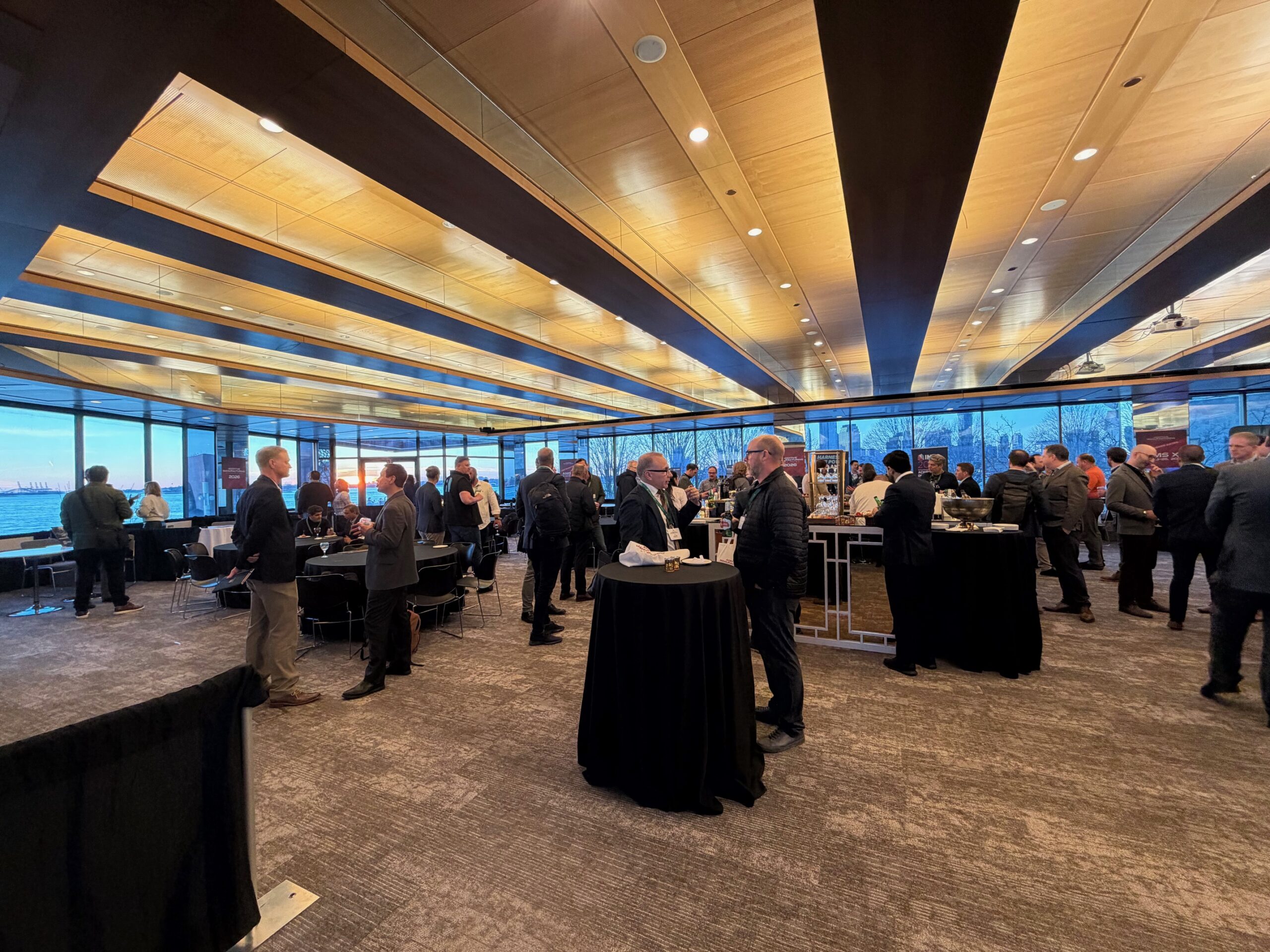
    Then there were the networking moments, and there were plenty of those. As always, some of the most important conversations happened there, in small groups, over drinks, between people who have known each other for years or were just meeting for the first time.

    The presentations start the conversation, but the real work often happens afterward. Once again, AMS showed that what happens between sessions can matter just as much as what happens during them.

    Despite the snow and travel delays, AMS did what it always does: brought people together, made sure it was the center of real conversations, and reminded everyone why this 3D printing community matters.

    Images courtesy of Sarah Saunders for 3DPrint.com

  • The Tribal Knowledge Crisis in AM Cannot be Solved Without an AI Intervention

    Additive manufacturing (AM) has long relied on a deep well of expertise that is notoriously hard to document.

    That expertise can be found in the nuances involved in setting up machines. The calibration of specific parameters. The unspoken understanding of how a material behaves under different environmental conditions. And it’s in the insights about why a part that appears flawless in CAD might fail halfway through a build.

    Much of what enables 3D printing to succeed in real-world applications isn’t written in manuals but is held within the minds of experienced operators, engineers, and technicians.

    That reliance on tribal knowledge has become a liability for the industry, especially as the manufacturing sector faces an imminent workforce crisis.

    By 2033, manufacturing is expected to report 3.8 million new job openings, but only about half of those positions are projected to be filled. Even more concerning, roughly three-quarters of that talent gap is expected to come from retirements, taking decades of hands-on machine and process knowledge with them.

    Additive manufacturing, still grappling with a shortage of experienced operators, will feel this more acutely than most. However, there is a tool at the industry’s disposal that can soften the impact. If implemented strategically, AI has the potential to retain the decades of AM expertise that will soon be walking out the door.

    Why Additive Manufacturing Is Especially Exposed

    Additive processes are evolving at a rapid pace. While certain standards exist, we know that best practices can vary significantly by machine model, material batch, software version, and even operator intuition. Two 3D printers with identical specs can behave drastically differently depending on the individual operating them.

    As a result, AM organizations frequently rely on a small number of “go-to” experts who know how to diagnose failures, tweak parameters, or qualify parts. These individuals become the glue that holds production together. When they retire or move on, operations can come to a grinding halt. New hires may take months or even years to reach the necessary level of productivity, which impedes a company’s ability to scale. So, this is not just a hiring problem – it’s about enabling knowledge continuity.

    Documentation Alone Isn’t Enough

    For years, the common solution has been better documentation, such as more SOPs, checklists, binders and PDFs. While this approach has its place, it clearly falls short in additive manufacturing.

    Anyone can document a process, but documenting the ‘why’ behind a process is far more complex. It requires an understanding of why it works, when it fails, and how to adapt it in edge cases – the type which can cause serious equipment malfunction or failure. Much of that insight is experiential, learned over time, and deeply contextual, making it nearly impossible to transfer through traditional documentation.

    That’s where a new approach, predicated on AI, is emerging and offers substantial returns for those willing to adopt it.

    AI as a Knowledge Multiplier, Not a Replacement

    Perhaps the most promising use of AI in additive manufacturing isn’t autonomous printing or generative design, but knowledge capture and accessibility.

    Traditionally, expertise is viewed as something that must be passed on from one individual to another over years of mentorship. We see this particularly in manufacturing, where human oversight has been relied on since inception and still to this day. Now the industry must ask itself how it can prevent the inevitable haemorrhaging of intelligence as key people leave. Leveraging AI systems to organize, contextualize, and surface institutional knowledge would unlock the ability to preserve this expertise on an unprecedented scale.

    Let’s look at how it works.

    AI can make use of historical build data, tying specific machines, materials, and outcomes together to create a comprehensive record that operators and engineers can easily reference. It can also connect process decisions and parameter adjustments directly to the success or failure of a print, offering insights into what works and what doesn’t.

    Expert annotations that explain the rationale behind key decisions can also be easily incorporated, helping to capture the context behind each choice.

    AI can also identify patterns across various jobs. This brings to light hidden connections and insights that would otherwise go unnoticed – something that no single person could track on their own.

    When all of this information is made structured and searchable, it transforms scattered, disjointed knowledge, which was once confined to the minds of a select few individuals, into a constantly evolving and accessible reservoir that everyone can draw from.

    The impact on the workforce would be far-reaching. New engineers would be able to learn faster, and operators would make better decisions with guidance rooted in years of experience. Experts would also spend less time answering recurring questions and more time solving genuinely novel problems.

    Crucially, this doesn’t deskill the workforce. It raises the baseline while allowing room for deepening expertise.

    A More Resilient Additive Workforce

    As additive manufacturing evolves from experimentation to mainstream production, the need for resilience becomes paramount. A big part of that is minimizing dependence on any single individual and ensuring that knowledge is preserved, even as roles change or workers retire.

    AI-driven knowledge systems won’t single-handedly solve the labor shortage in additive manufacturing, but they can profoundly enhance how effectively the industry absorbs new talent while preserving intelligence accrued over decades.

    In a field where success and failure often hinge on insights gained from years of hands-on experience with specific machines, the ability to share that knowledge could become one of the most significant competitive advantages.

    Le’ora Lichtenstein. Image courtesy of Corbel.

    The tribal knowledge crisis is already here. The question now is whether the industry continues to restrict expertise to individuals or if it will embrace the AI-powered systems that democratize this knowledge, ensuring it is accessible to the next generation of talent.

    About the Author

    Leora Lichtenstein is the cofounder and CEO of Corbel, an AI-powered CPQ (Configure, Price, Quote) platform that modernizes industrial equipment sales by turning complex product data into intelligent, data-driven quoting and financing workflows. Under her leadership, Corbel has raised seed funding to expand deployments with equipment manufacturers across sectors, including metalworking, woodworking, and additive manufacturing machinery. Lichtenstein has a background in structured credit and early-stage investing, holds a BSc in Finance, and is a CFA charterholder.

  • SPEE3D Continues to Dominate in Metal AM Innovation with Tennessee Army National Guard

    The US Army’s additive manufacturing (AM) capabilities have taken some time to catch up to those of the Air Force and Navy, but the catch-up phase now seems to be in full acceleration mode. We saw that at the beginning of February when Velo3D announced it was the first qualified AM vendor for the Army’s Ground Vehicles Systems Center (GVSC). Further evidence of the Army’s progress just surfaced in the form of a new SPEE3D case study that was executed with the Tennessee Army National Guard, the University of Tennessee (UT), and the Army Research Laboratory (ARL).

    As with the Velo3D deal, the SPEE3D case study involves Army ground vehicles: specifically, mine-resistant ambush protected (MRAP) vehicles, which are designed to withstand munitions including improvised explosive devices (IEDs). SPEE3D and its partners on the project benefitted from getting to work at UT’s Defense Development and Applied Research Center (DARC), where the cold-spray AM (CSAM) OEM’s Expeditionary Manufacturing Unit (EMU) was tested in a live mission scenario on a DARC training range.

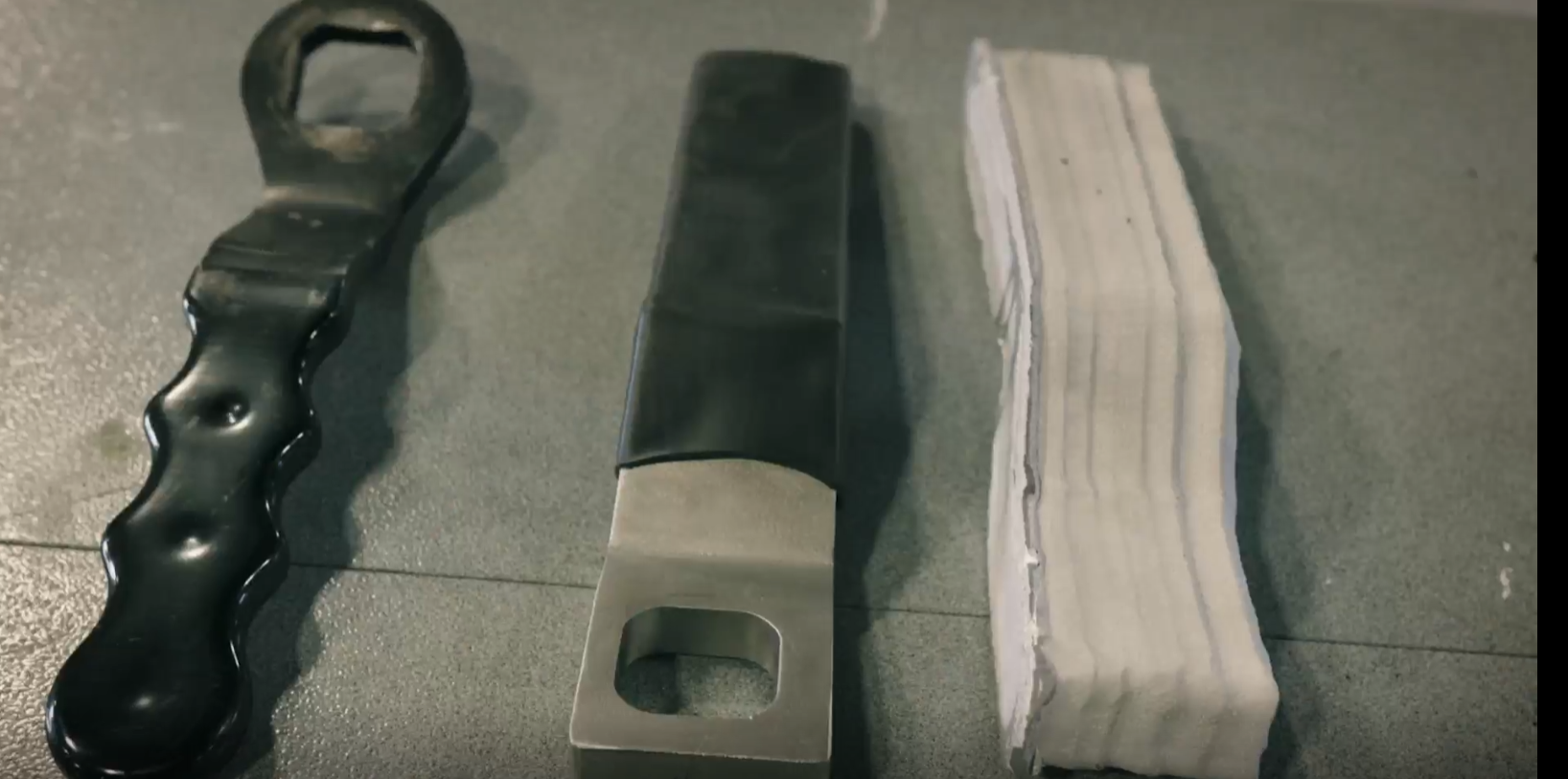
    In the training exercise, Army National Guard soldiers and UT engineers used the EMU to design, print, heat treat, and machine a Battle Lock Handle for an MRAP vehicle in under ten hours, demonstrating how frontlines manufacturing could drastically reduce the time it takes to return vital hardware to the battlefield, optimizing preparedness and thereby potentially reducing casualties. Just as intriguing as the production of the part itself was the delivery mechanism: instead of transporting the Battle Lock Handle through contested, unnavigable territory, the soldiers delivered it via drone.

    For their efforts, the Army National Guard, DARC, and the ARL won the Expeditionary & Tactical 3D Printing Excellence Award at the MILAM 2026 conference. After purchasing an EMU system at some point in the last couple of years, UT also recently purchased SPEE3D’s large-format TitanSPEE3D printer.

    In a press release about SPEE3D’s Tennessee training exercise with the US Army, Army Lt. Col. Colby Tippens, Executive Officer, 278th ACR, who “helped embed the EMU at the Knoxville Armory”, said, “We wanted to maximize the value-added of this unprecedented initiative with ARL, UT, and SPEE3D to grow our expertise in this field and then serve as a force multiplier to other Army units and organizations who are not as fortunate to have this capability in their own backyard.

    “This allows our soldiers and maintenance leaders to help shape the Army’s future of maintaining our critical combat systems when we are deployed and in harm’s way. If we can give our soldiers the ability to build critical repair parts in a timely manner, that will help improve combat power, enhance readiness, and reduce risk and our logistics footprint that could ultimately help save soldiers’ lives.”

    Even as SPEE3D focuses so diligently on fine-tuning all the ins and outs of its core processes over and over again in response to user feedback, the company simultaneously manages to approach every new use-case opportunity more like a Hollywood director than like a traditional deep tech enterprise. And what’s most striking is how SPEE3D intertwines its creative vision with its technological perfectionism in ways that maximize both.

    On the surface, delivering a part via drone that’s been printed in a contested logistics environment sounds like a concept that’s just trying to cram as many buzzwords as possible into one press release. But when you consider all the elements in the context of the entire range of operational capabilities that the US military has been cultivating for over a decade, it becomes clear that the scenarios SPEE3D is gaming out are simply the logical conclusion of a generational advanced manufacturing buildup.

    If it hasn’t already happened and simply hasn’t been reported upon, at some point in the not-so-distant future, drones with components printed on a battlefield somewhere will deliver mission-critical parts printed in that same combat zone to the soldiers fighting on the frontlines. I’ve been focused on the idea of manufacturing on the frontlines, but the change is an even bigger milestone than that: miniature contingency supply chains are moving to the frontlines.

    Finally, less poetically, this case study also reinforces just how integral of an advanced manufacturing hub Knoxville has become in an age of heightened geopolitical sensitivity. While that has been the case at least since the Manhattan Project era, the diversity of the work currently happening in the eastern Tennessee city amounts to a microcosm of the future of US hardware.

    Images courtesy of SPEE3D