• Generative AI Is Moving From Design to Factory Floors: TCT Asia 2026 Shows the Full Workflow

    Generative AI is rapidly moving beyond digital experimentation and into real manufacturing environments — but the key challenge remains: can AI-generated 3D models move seamlessly from creation to production?

    At TCT Asia 2026, technology developers across the AI-driven 3D ecosystem will present integrated solutions that demonstrate how generative design, engineering optimization, printable model preparation, and editable 3D assets are converging into a complete production-ready workflow.

    Unlike early-stage demonstrations focused on isolated capabilities, exhibitors at TCT Asia 2026 will highlight end-to-end digital-to-physical pipelines, including AI-based 3D model generation, engineering-grade geometry optimization, printable model preparation, high-resolution texture generation, and editable AI-generated 3D content. Together, these developments signal a shift from AI as a creative tool toward AI as an operational manufacturing technology.

    From AI Creation to Production-Ready Assets

    Platforms such as Tripo Studio will present next-generation AI-driven 3D creation systems capable of generating high-precision models directly from text, images, or sketches. Its latest release, Tripo High-Poly 3.0, introduces dual-output workflows designed to balance production efficiency with ultra-high geometric fidelity, supporting applications ranging from product design and gaming assets to additive manufacturing.

    Bridging Generative AI and Printable Manufacturing

    Meanwhile, MeshyAI Creative Lab focuses on closing the gap between generative design and manufacturing execution. The platform automatically repairs geometry, validates manufacturability, and recommends materials, surface finishing methods, and printing parameters. Through integrated manufacturing partner networks, users can obtain real-time quotations and production options, enabling a direct pathway from AI-generated design to physical parts — even without advanced CAD expertise.

    Foundation Models Reshaping the 3D Pipeline

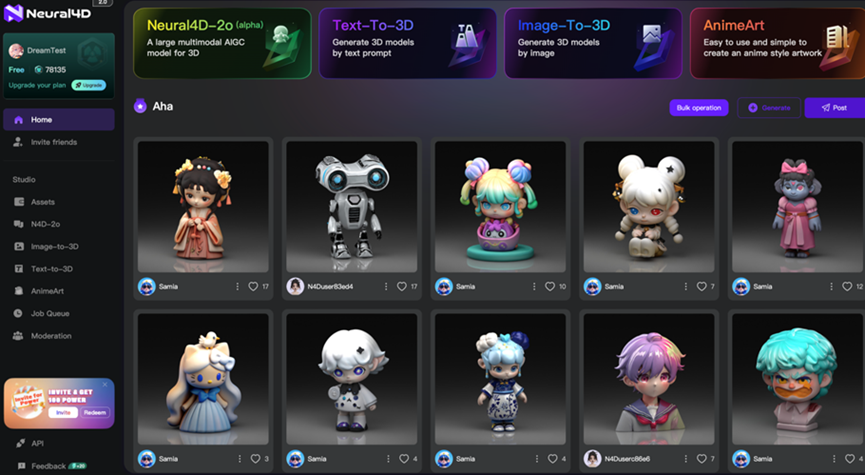
    Advances in native 3D foundation models are also accelerating industrial adoption. DreamTech (Booth 8N118) will showcase its Neural4D series, demonstrating how large-scale 3D/4D generative models can support digital content creation, engineering design, and physical manufacturing applications while significantly reducing training costs through sparse 3D learning architectures. These developments highlight how AI infrastructure is rapidly maturing to support production-level deployment across industries.
    Structurally Aware Texturing for Real Manufacturing

    Beyond geometry generation, high-resolution texture systems are becoming increasingly important for downstream manufacturing and visualization. Hitem3D (Booth 8C35) will introduce Hitem3D 2.0, featuring structurally aware PBR texture generation that integrates material and geometric logic directly into the generation process, producing more realistic results while improving consistency for additive manufacturing workflows.

    Entering the Era of Editable AI-Generated 3D

    Another emerging frontier is the ability to edit and iteratively refine AI-generated 3D assets. Hyper3D.AI, developed by Yingmou Technology, will present its approach to enabling localized editing, versioned iteration, and controlled evolution of AI-created 3D models. The company will debut this framework during the TCT Introducing product launch sessions, highlighting how editable AI-generated 3D content could fundamentally reshape long-term digital design and manufacturing workflows.

    A Convergence Point for AI-Driven Manufacturing

    Together, these innovations reflect a broader industry transition: generative AI is moving beyond visual experimentation to become an integrated component of real production pipelines. TCT Asia 2026 will serve as one of the first major international stages where the full AI-to-manufacturing workflow — from generative modeling to physical output — is demonstrated at scale.

    TCT Asia 2026 will take place 17–19 March 2026 at the National Exhibition and Convention Center (Shanghai). For manufacturers, designers, and technology leaders evaluating the readiness of AI-generated 3D models for real-world production, the event offers a comprehensive view of how rapidly these technologies are advancing from concept to industrial reality.

    Don’t miss the chance to witness the full AI-to-manufacturing workflow in action. Reserve your visit to TCT Asia 2026 today.
  • XTPL’s 3D Printed Advanced Packaging Solution Lands the Company a Strategic Partnership with Leading Semicap OEM

    Chip packaging refers to all parts of a semiconductor device aside from the die (the “chip”) itself. As this IBM explainer nicely puts it, “In a nutshell, chip packaging provides the mechanical environment where a computer chip operates.” Advanced packaging refers to solutions where the components that house a chip aren’t only providing a protective environment, but are also part of the chip’s functionality.

    The breakthroughs in advanced packaging have largely resulted from the 3D design revolution in semiconductors over the last couple of decades, which has led semiconductor device manufacturers to increasingly explore the potential advantages of stacking chips vertically instead of exclusively side-by-side. This background accounts for why it’s more and more common for additive manufacturing (AM) to be part of the conversation surrounding advanced packaging, supporting the business models of companies like Poland’s XTPL.

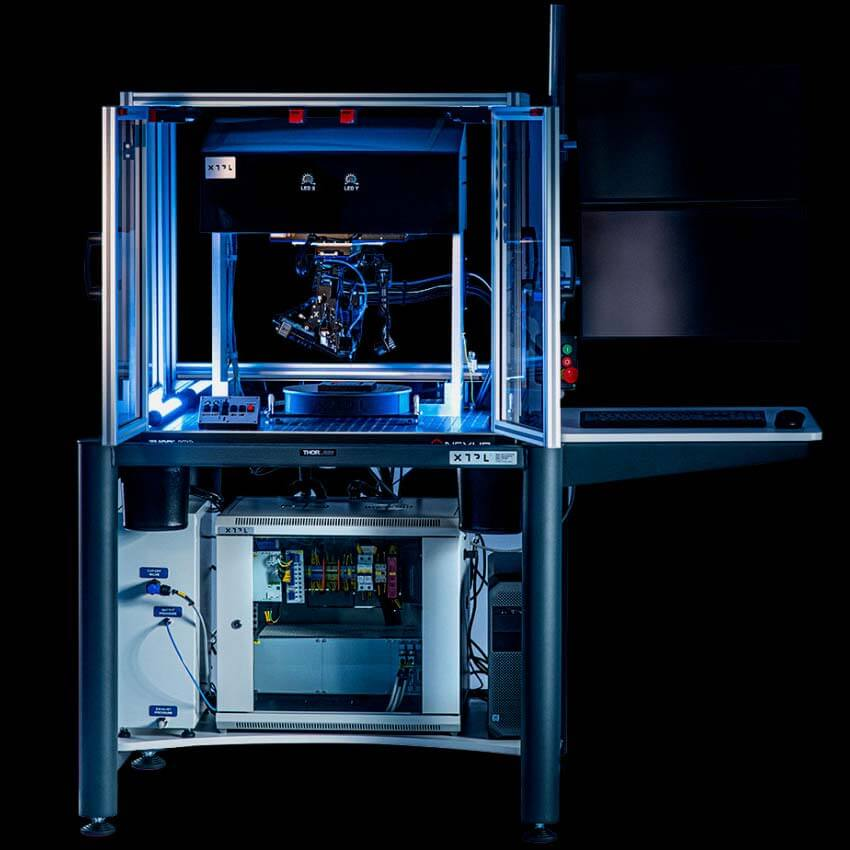
    XTPL just announced a strategic partnership with semiconductor capital equipment (semicap) manufacturer Manz Asia, which specializes in advanced packaging technologies that maximize chip performance. The starting point for the partnership is Manz Asia’s acquisition of one of XTPL’s Delta Printing System (DPS) units, which leverages the company’s Ultra-Precise Dispensing (UPD) technology.

    That acquisition will be installed sometime in the first half of this year at the Manz Semiconductor Innovation R&D Center in Taiwan, enabling XTPL to reach a whole new audience as Manz Asia gains a  new process capability. Since the printhead is the key to the UPD technique, XTPL notes that the strategic partnership provides a potential pathway for ultimately integrating XTPL’s printhead into Manz Asia’s machines.

    By partnering with Manz Asia, XTPL has accomplished its goal of expanding physical sales footholds in key markets without having to commit the capital necessary to expand that presence on its own, turning a machine sale into a technology demonstrator in the world’s most important semiconductor market.

    In a press release about XTPL’s strategic partnership with Manz Asia on UPD technology, Filip Granek, CEO of XTPL S.A., said, ““I am delighted to start the partnership with Manz Asia – a company with a strong position and deep expertise in the semiconductor industry in Taiwan and Asia. It is only natural for us to work side by side with a partner who knows this ecosystem from the inside. The synergy between XTPL’s unique ultra-precise dispensing technology and Manz Asia’s competencies in advanced semiconductor packaging is a natural fit. That is precisely why I am confident this collaboration will translate into tangible business opportunities for both sides.”

    The CEO of Manz Asia, Robert Lin, said, “This strategic partnership with XTPL expands our printing capabilities into ultra-precise material deposition, enabling a wide range of advanced semiconductor applications. The technology supports both conductive and non-conductive materials across 2D, 2.5D and 3D substrates in diverse manufacturing scenarios. By combining XTPL’s dispensing technology with Manz’s automation and process integration expertise, we broaden our portfolio and provide more flexible manufacturing solutions, helping customers accelerate innovation and move efficiently from prototype to volume production.”

    In a recent story about a similar partnership between APES and Great Lakes Semiconductor, I noted that advanced packaging could easily end up being the biggest growth opportunity for 3D printed electronics. As I explained, the key to understanding that is understanding how critical chiplets have become in the global semiconductor arms race.

    Basically, while the West has leaned into System on a Chip (SoC) designs that incorporate all the compute functions into a single die, China has been forced via equipment import restrictions to take the System in a Package (SiP)/chiplet strategy — combining a variety of different smaller dies into the same device with advanced packaging — to its extreme. What started out as a disadvantage for China has rapidly evolved into a strength, as China has developed the ability to do more with less through innovation.

    Now, the West is in a position where the logic of the competition over semiconductor technology has flipped, and Western device manufacturers are trying to catch up with China’s chiplet dominance. This could be a monumental event for the AM market, and, in turn, for reshoring electronics supply chains.

    For XTPL specifically, an expansion into Taiwan could be precisely the thing that gives the company a long-term edge in the U.S. and Europe. If the company can bear out its technology in the world semiconductor sector, there’s a good chance that Taiwanese semiconductor manufacturers will turn to UPD technology as they solidify their generational investments in production capacity on the North American and European continents.

    Images courtesy of XTPL

  • Bambu Lab A1 Used to Directly 3D Print Copper Electroplated Parts

    Maker Dzingof was doing tonnes of electroplating of desktop and other 3D prints years ago with his Metalizzr project. I’ve been playing, a lot less successfully, with electroplated 3D prints since before that. Electroplating is a new path to metalized parts. Electroplated polymer parts have a metal coating that can withstand some environmental pressures. But, in terms of strength and performance, it can’t really be considered a metal part. The parts also always feel weird because they’re much lighter than they look. Electroplating can also be complex, and depending on the process used, it leaves behind materials that you don´t want to spend much time with. It’s also way too finicky and difficult for most people. But it can provide conductive traces and some of the properties of metal parts.

    Now, research by Gianluca Percoco, Nicola Larovere, Antonio Zagaria, Antonio Pavone, Rosanna Rifino, and Gianni Stano of the Department of Mechanical, Mathematical, and Management (DMMM) at Polytechnic University of Bari aims to make it easier for people to produce electroplated parts using desktop machines. Published in Advanced Materials Technologies, the paper is called “In Situ Copper Electroplating Turns Material Extrusion 3D Printers Into Metal–Polymer Hybrid Fabricators.” 

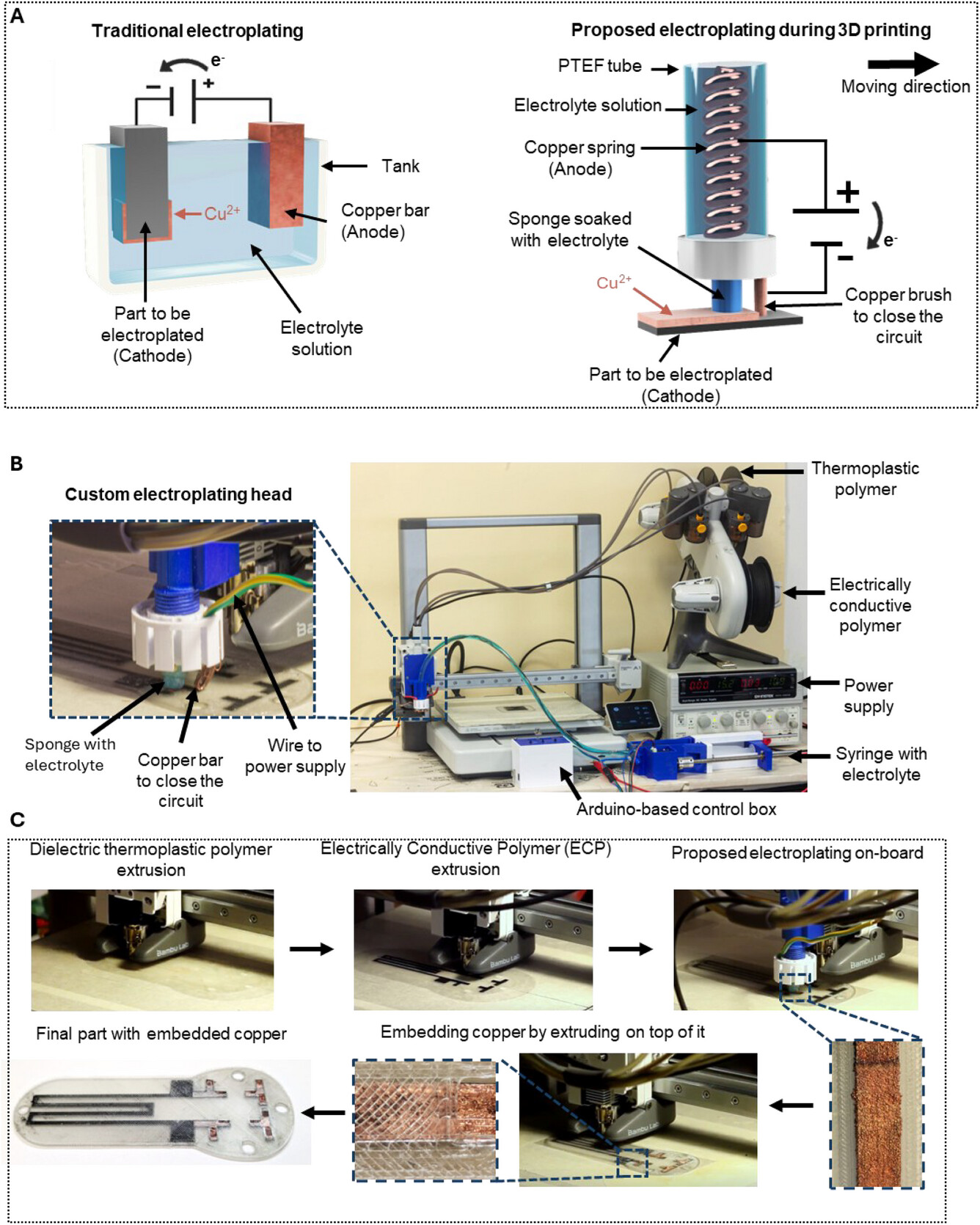
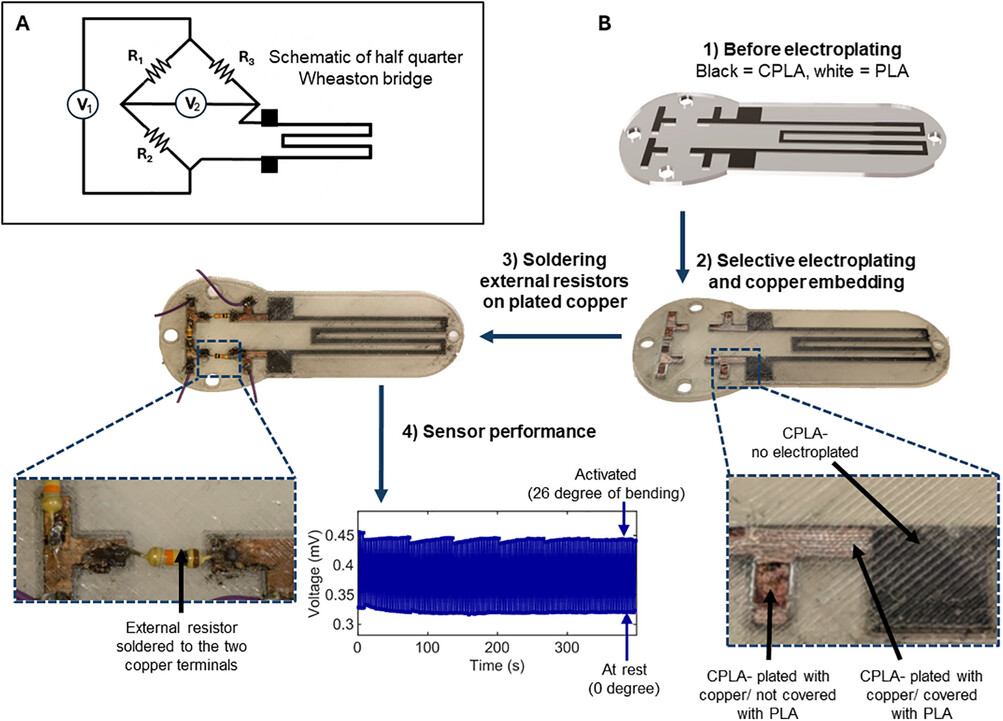
    In the paper, the team shows how they’ve developed a small electroplating head, developed G-code to let you plate while you print, and, in certain areas, a printing method to go with it. The team then tests making a strain gauge and a circuit, and hopes that their research will enable desktop machines to be used to make electronics. Over 10 years ago, Italian boutique machine builder RobotFactory developed a desktop electroplating device that you can use along with 3D printers. Others have always worked with a separate electroplating device and step. But now we may be able to do this on one device. What’s more, with this technique, you’re really creating a hybrid polymer-copper structure that may have interesting capabilities. In this case, the team focuses on making electrically conductive polymers with a view to making circuits, actuators, traces, and other electronics.

    The printer used was a super inexpensive Bambu Lab A1, and the filament was good old PLA, as well as CPLA from Protopasta. A power supply was connected to a syringe piston that, on demand, pumped electrolyte solution through the PTFE tube past a copper coil through a sponge on the electroplating head. Enclosed through a luer lock, the sponge can be in contact with a brush. Meanwhile, the normal head, with the AMS, prints the PLA and later on the conductive material. The Arduino-controlled pump feeds electrolyte material to the sponge and brush head, closing the circuit and locally plating an area. The plating head just moves in X and Y, but after it is done, additional polymer can cover the copper area.

    To make this work, the team used a Machine learning algorithm to determine where and when electroplating can take place, and therefore when printing has to stop. It also looks at where conductive material has been placed previously. The tool can translate the right target electroplating area into G-code that tells the printer when to stop, go, and switch heads. The BOM costs of the electroplating head were less than €95. So, for around $300, you could develop a kit that could make this commercially viable. This could potentially mean that for $700, you could perhaps be 3D printing circuits at home.

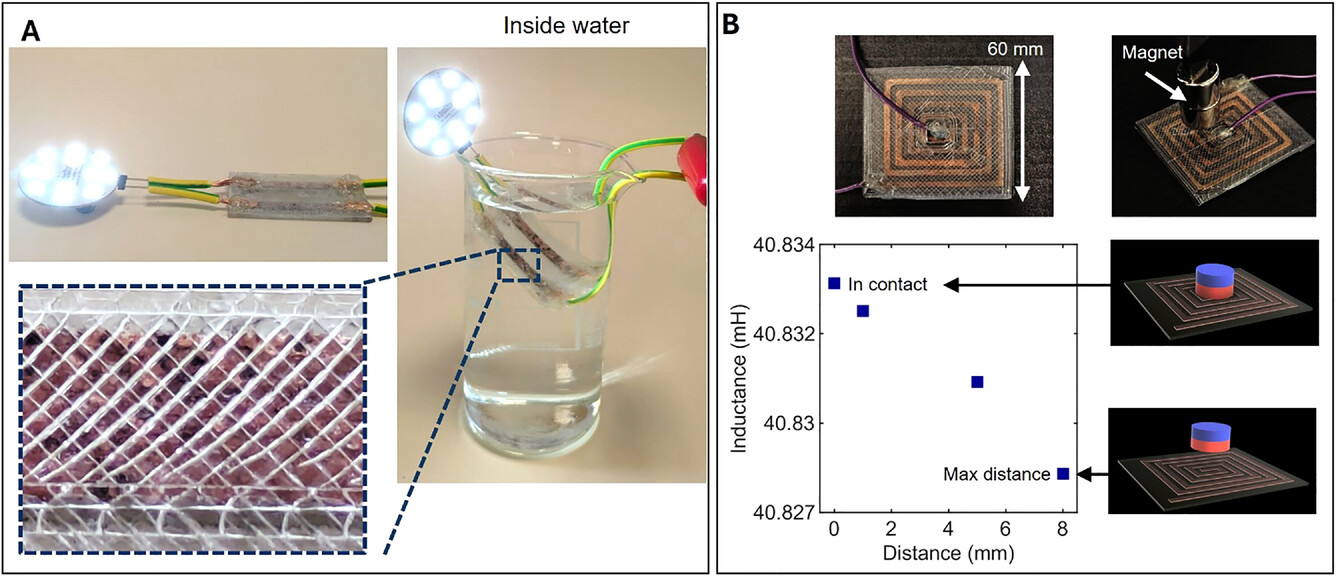
    To test their work, the team made a piezoresistive sensor, traces, a voltage divider circuit, and other circuits. They achieved a resistance of 0.15 Ω, 400% higher than that of Conductive PLA, with one pass of the nozzle. One interesting thing that they propose is that the copper parts can be heated while encapsulated by the polymer, triggering shape memory events, for example. A 3D printed circuit that could work while submerged in water was also a nifty demonstrator, as was a “smart dice” that could power three things at the same time. This approach seems like it could actually work well.

    Of course, to make it work in Bari and then to have it work every time in your house is going to be quite a bit of work. But turning inexpensive desktop 3D printers into circuit 3D printers is an amazing piece of work. Allowing for low-cost tinkering with electronics by many labs, students, and makers could lead to completely new devices and methods. At the same time, this is a powerful way of showing just how powerful desktop 3D printers have become. The tens of millions of units sold and their accuracy mean you can build real tools on top of them that millions of people can implement.

  • 3D Printing Financials: Xometry Reports Record 2025 Results and CEO Transition

    Xometry (Nasdaq: XMTR) just delivered a milestone quarter and also announced a major leadership change. The company posted record results and made it clear it feels confident about the future. It also announced a CEO transition that keeps founder Randy Altschuler closely involved. For 3D printing users and suppliers, the bigger story is that Xometry is leaning hard into its AI-driven marketplace model and expanding its additive manufacturing offerings, especially for higher-value production work.

    Looking at the numbers, in 2025, Xometry reported record fourth-quarter revenue of about $192 million, up 30% from a year ago, driven mainly by marketplace revenue of about $178 million (up 33%). The company ended the quarter with a record 81,821 active buyers. It also pointed to improving economics in the marketplace, with the marketplace gross margin at 35.3% in Q4.

    Record quarter plus a CEO transition

    Xometry described its Q4 and full-year 2025 earnings as “record” results, and something that is really important for the marketplace model is the buyer base. The company finished Q4 with 81,821 active buyers, a new high, pointing to what it described as a “widening network effect between buyers and its global supplier base.” So basically, when more buyers use the platform, more orders come in. When more suppliers join, Xometry has more options to choose from, which helps it match jobs faster and more accurately. Over time, all of that activity gives Xometry more data, which helps its software improve pricing and job routing.

    This matters for 3D printing because it’s not a separate business inside Xometry. It runs on the same marketplace system as the other service offerings, including CNC machining, injection molding, sheet metal, and casting. So when Xometry adds more enterprise buyers and more certified suppliers, it increases the odds that AM orders (especially higher-performance polymer work) get placed faster and repeated.

    Xometry’s Gaithersburg, Maryland site. Image courtesy of Xometry.

    Along with the record quarter announcement, Xometry revealed a planned leadership transition. Company founder Randy Altschuler will become Executive Chair effective July 1, 2026, and President Sanjeev Singh Sahni will become CEO.

    Altschuler told investors during an earnings call that “This transition is a result of a deliberate, long-term succession process with our board, and we are aligned in our conviction that Sanjiv is the right leader for our next chapter. Together with Laurence Zuriff, I co-founded Xometry in 2013 with a mission to make the world’s manufacturing capacity accessible to all by digitizing the vast, highly fragmented custom manufacturing market. We stayed true to that vision from the start, and that consistency is now delivering scale and accelerating growth and profitability.”

    Xometry CEO and co-founder Randy Altschuler.

    What this means for 3D printing on Xometry’s platform

    Xometry is a broad on-demand manufacturing marketplace, but the earnings call offered a few specific signals for additive manufacturing. Firstly, Xometry says it expanded its additive materials portfolio.

    Management said that in Q4, it added a portfolio of high-performance materials for additive manufacturing technologies in the U.S. marketplace, positioning them as important for advanced applications in aerospace, defense, and medical devices. In fact, adding more materials makes the platform more useful for real production jobs, where customers need strict specifications, documentation, and repeat manufacturing, not just quick prototypes.

    The real focus is production-style adoption

    Xometry executives pointed to growth in larger enterprise accounts and multi-year programs. In the earnings call, Altschuler said the company is becoming “more embedded in customer workflows.” In some cases, that means Xometry is included in a customer’s bill of materials (BOM),  the official list of parts used in production. In other words, customers are not just using Xometry for prototypes, but for repeat production parts.

    “Xometry is becoming more embedded within the enterprise customer workflows, which in turn drives larger and more predictable spend. In 2025, we ended with four accounts with at least $10 million spent, driven by strong execution from sales and the efficacy of our technology solutions. We expect more accounts to join the $10 million plus threshold in 2026, driven in part by many multi-year production programs across key end markets. In 2026, we are focusing on driving further structural enterprise adoption through deeply embedded sales and marketing motions, and increasing use of technology solutions, including Teamspace and ERP procurement integration,” explained Altschuler.

    AI tools help strengthen the platform

    As for Sahni, he said the company is continuing to invest in AI tools, including Design for Manufacturing (DFM)  features and software that can interpret technical drawings. These tools help spot problems early and reduce delays.

    The easier it is to go from a CAD file to a confirmed order, the more likely customers are to come back. And repeat, additive manufacturing business is necessary to build stable, long-term production revenue.

    Nexa3D LSPc® Resin 3D Printing Service by Xometry. Image courtesy of Xometry.

    Xometry’s Q4 results showed growth and improved profitability at the same time. Revenue was roughly $192 million for the fourth quarter, up 30% year over year. Meanwhile, marketplace revenue was about $178 million, up 33%, and marketplace gross margin was 35.3%.

    Mewwhile, for the full year 2025, Xometry reported revenue growth of 26% and delivered positive adjusted EBITDA of $18.5 million, compared to a loss the previous year. The company said revenue growth accelerated throughout the year, alongside improving margins, marking what executives described as a “transformative” year for the business.

    Xometry expects growth to continue in 2026 and said the first quarter has started strong, even as broader economic conditions remain uncertain. Xometry combined record growth, especially in its buyer base, with a planned CEO transition meant to keep the company on track while continuing to expand its product offerings.

    For 3D printing, what’s important is that the company is adding stronger materials and embedding itself more deeply into enterprise purchasing systems. That’s what can turn additive from a one-off solution into repeat production business.

  • Filamentive’s Recycled MJF Filament Tests the Economics of Circular AM

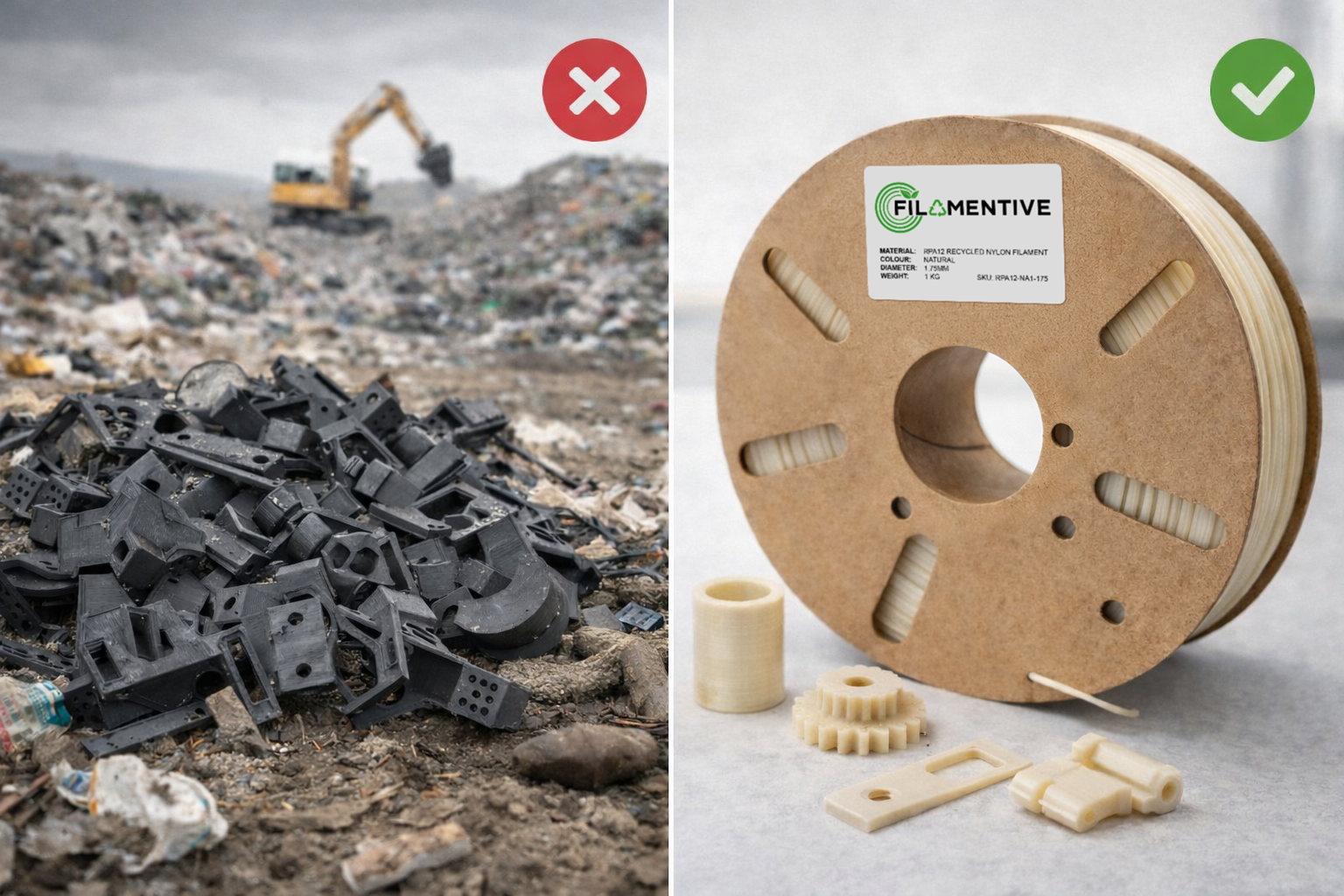
    I’m super glad that Filamentive is making filament from recycled PA 12. We all know that in all polymer powder bed fusion processes, there is waste. Some can be recycled with the percentage and number of times, depending on the material. Depending on your setup and powder, as much as half of it could be thrown away in the end. I’ve been advocating for years for companies to use the LPBF powder as filament. 3Devo demonstrated in 2024 and 2025 how to turn MJF Powder into filament. Since last year, Filamentive has been looking at offering this as a commercial product.

    Usually, when you’re making recycled filament, you have to use around 30% virgin material in the filament to maintain processability and properties. In this case, the filament is entirely made up of waste MJF powder.

    MJF waste versus recycling in 3D printing. Image courtesy of Filamentive.

    Ravi Toor, Managing Director of Filamentive, explained,

    “rPA12 is what we believe to be the world’s first commercially available filament made entirely from recycled MJF powder waste, We’re proud to be working alongside 3devo to deliver circular economy solutions that reduce the environmental impact of 3D printing— not just in principle, but in practice.”

    The resulting material extrusion material should be tough, resilient, strong, and still be quite allergic to moisture. You should dry the filament before using it and not leave it too long on your printer. The material can be had in one-kilo spools in 1.75 mm. The company hopes that it will be a “viable recycled nylon filament for sustainable engineering applications, helping reduce reliance on virgin polymer” and become a “practical case study for high-volume MJF operators exploring closed-loop production models that can improve both operational efficiency and financial sustainability through better material utilisation.”

    The material is currently priced at $67, €57, or £50 per kilo, which, as a pricing strategy, is rather hilarious. New polymer LPBF powder costs like 25 to 90 kilos, depending on the additives, volume, order, and country. Base LPBF powder is cheaper depending on morphology. Usually, it costs money to dispose of waste PA 12 powder after you can’t reuse it on the machine. But. selling it over the asking price that many are paying for the virgin polymer is kind of audacious, really.

    It will be a green planet, but my house on it will still be nice. Despite this swimming pool tax, I still love this as an initiative. All firms using polymer LPBF machines should recycle powder internally. You could use this with Stratasys SAF machines, or you could just get a 3Devo set up and make filament for your desktop 3D printers. Universities and corporates should also internally make their own material. This is a no brainer cost wise and plays well with your corporate overlords.

    This is a super easy way to go green or burnish your green credentials. But, even if you do not give a darn about the environment, this could still be a very cost-effective thing to do. You’ll earn it back within a few months and thereafter will save considerably on material. I’ve tested recycled PA 12 turned into filament, and the properties and processability are very good. Now, of course, moisture will always suck, but aside from that, this is a super printable, high-performance material that is as cheap as chips. I really think we should have done this decades ago, but please look into this because this can be a very profitable, very green thing to do. We’ve long pretended to have green credentials without actually checking if we do. We’ve long assumed that we’ve been the environmentally friendly choice because we manufacture on demand. Now this sounds nice, but it’s like saying, “You kill chickens en masse, and we kill cows when we need them.” Now, on some level, this sounds quite good, but it does not mean that this is magically sustainable. Turning something you usually throw away into high-performance filament will be a profitable step towards ethical business.

  • Australian Researchers Develop Accelerator-Free Underwater 3D Concrete Printing System

    Infrastructure projects are just as important as housing to the additive construction (AC) market segment, and structures used for underwater applications like coastal resilience have steadily become one of the most popular use-cases amongst the growing number of AC-for-infrastructure projects emerging in the last few years. The most recently announced examples in this sub-surface construction category signal that, soon enough, AC users will no longer be content to build off-site: they’ll print their projects directly under the water.

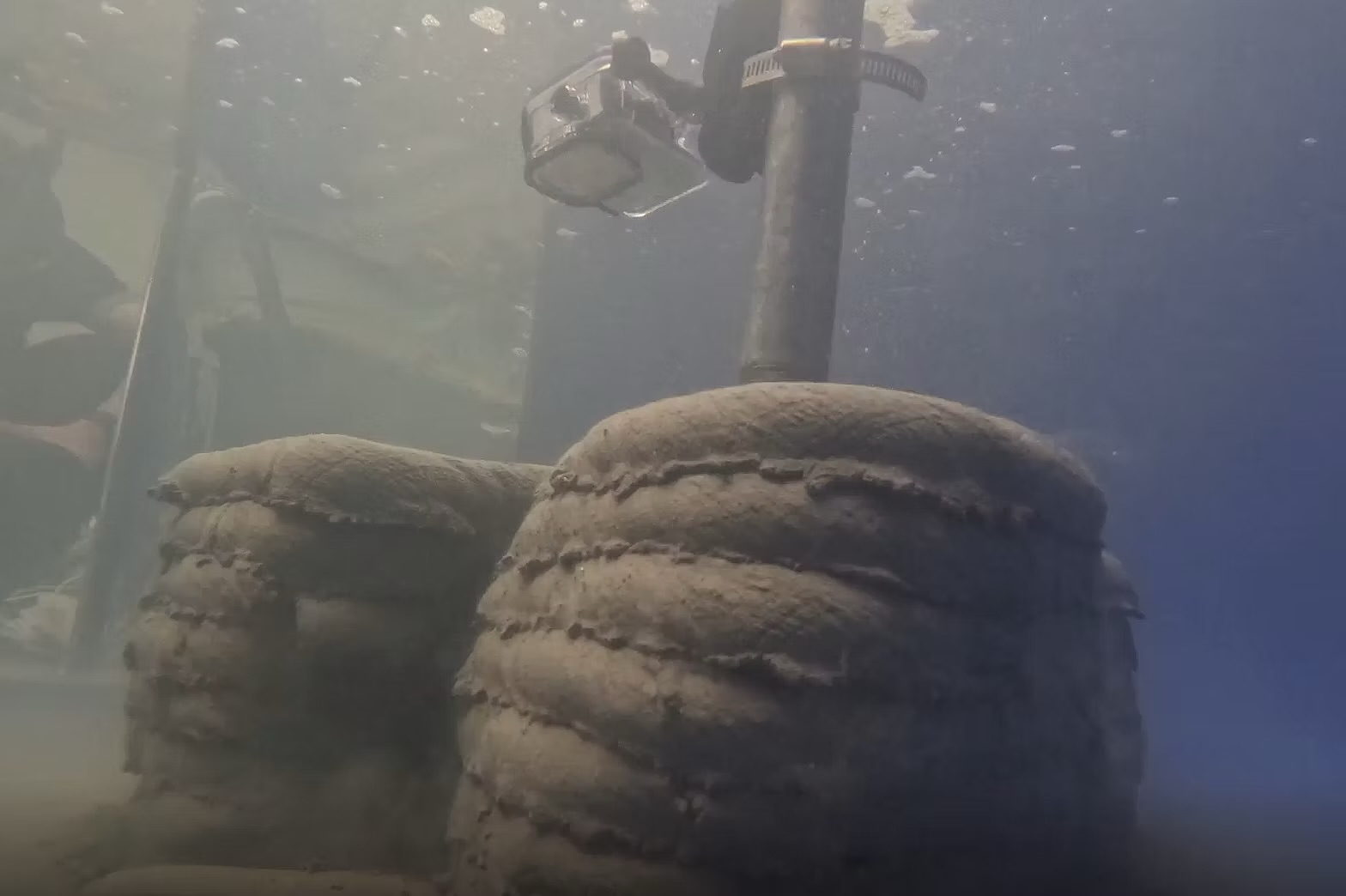
    Last week, Sarah Saunders wrote about a DARPA-backed project at Cornell University involving the development of an underwater building material “made [primarily] of seafloor sediment.” Additionally, the Australian AC enterprise LUYTEN 3D has announced that, in collaboration with the University of Wollongong (UOW), the company has created the first accelerator-free concrete mix specifically designed for underwater prints.

    Concrete accelerator is typically used in conventional construction processes to speed up the hardening process during winter, as well as in underwater builds, to prevent concrete from washing away. The LUYTEN 3D/UOW formula, by removing the need for accelerant, both simplifies the printing process and, according to LUYTEN 3D, enhances its overall sustainability.

    As with the Cornell University project, LUYTEN 3D has tested the process so far in a lab setting, using saltwater and seabed sand to closely mimic real-world conditions. According to LUYTEN 3D, in addition to coastal resilience and ecological restoration, the company views offshore wind energy and even defense as target markets for the submerged printing technique.

    In a press release about LUYTEN 3D’s collaboration with the University of Wollongong on an accelerator-free concrete mix engineered for submerged AC projects, Senior Professor Gursel Alici, Executive Dean of the Faculty of Engineering and Information Sciences at UOW, said, “The successful demonstration is a testament to the high calibre of our engineering talent and world-class laboratories. Our team has solved a complex material science problem, eliminating chemical accelerators without sacrificing stability, showing the depth of expertise within the School of Engineering.”

    Ahmed Mahil, CEO and Global President of LUYTEN 3D, added, “Printing underwater fundamentally changes how we think about building, repairing and strengthening critical infrastructure in marine environments. This is a completely new chapter for construction and manufacturing.”

    Underwater 3D concrete printing without accelerators.

    While there’s no telling how quickly these products from Cornell and LUYTEN 3D/UOW will actually scale up into commercial realities, I don’t think anyone should ignore the demand signals at play here. The fact that these R&D projects are underway, if nothing else, indicates how strong a driver underwater infrastructure is for increased AC adoption.

    Further, if the material science gains reflected in this pair of projects can indeed make submerged construction 3D printing a simpler process, then that should, simultaneously, go a long way towards accelerating the commercialization prospects for the new material approaches. Submerged AC and the new material formulations could combine to yield a flywheel effect.

    While the processes obviously have nothing to do with one another, it’s interesting that the ideas present in LUYTEN 3D’s work reflect similar themes to what Perseus Materials is doing with its composite AM tech. In both cases, simplified additive techniques deployable on-site are gaining traction for applications at the intersection of energy and security.

    This is, in my view, the most appropriate role for AM and AC alike as they become more routine fixtures within global supply chains. If the 3D printing industry can demonstrate that it’s equipped to step up to the plate in delivering power utility resilience, the industry could be structurally re-rated by the market from a niche fabrication technology to critical public infrastructure.

    Images courtesy of LUYTEN 3D/UOW

  • Waiting Has a Cost: the True Value of Additive Manufacturing

    One of my favorite expressions is “Hurry up and wait,” because it perfectly captures one of my least favorite scenarios to have to live through. You rush to get ready for some seemingly hard deadline, only to find out, once you’re actually ready, that a change in circumstances has pushed the deadline back to some indeterminate point in the near future.

    Featured image courtesy of Major Wayne Clyne, Oregon National Guard Public Affairs Office: Staff Sgt. First Class Gregory Mannen operates an RQ-28A Sky Ranger drone during training at Rees Training Center, Oregon.


  • New Shades for 3D Systems NextDent Denture Jetting

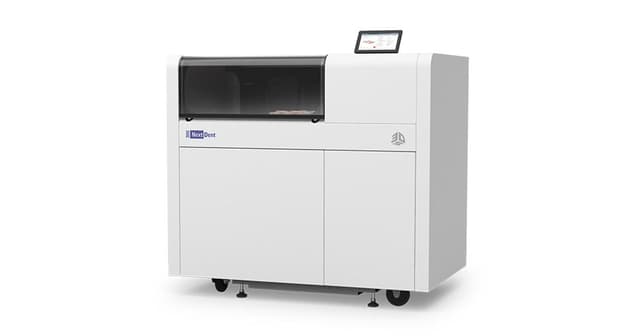
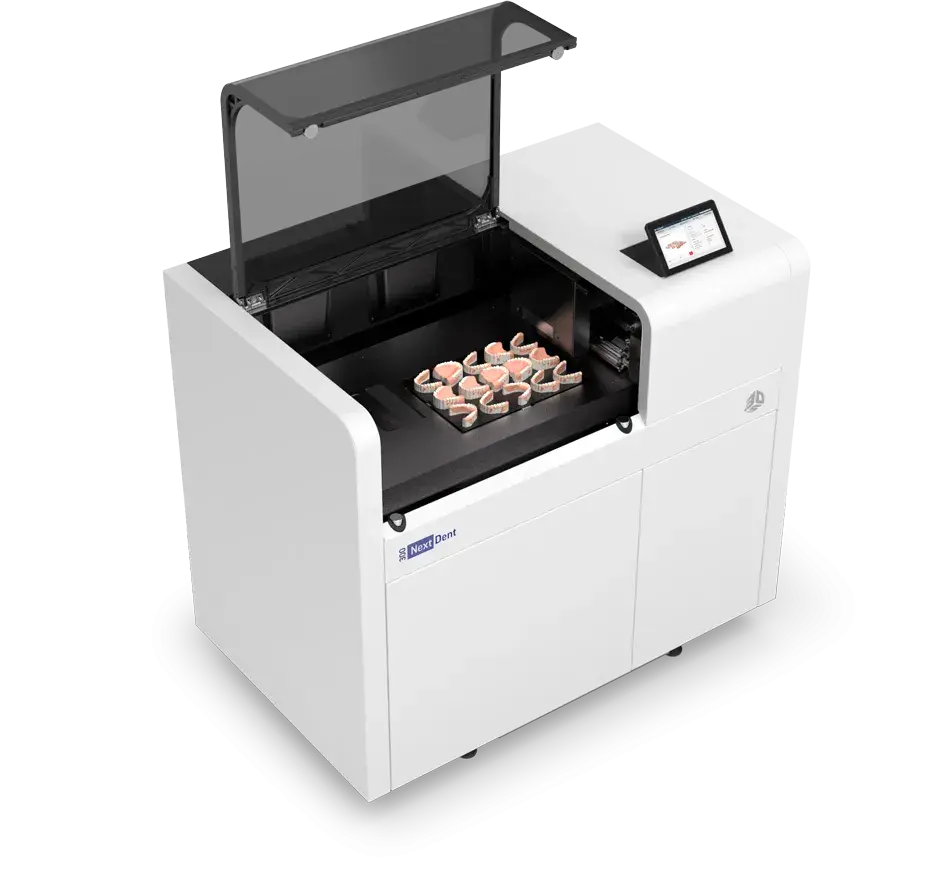
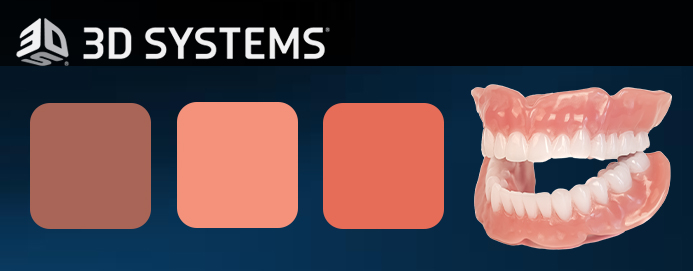
    3D Systems NextDent is expanding its denture jetting portfolio. The company is adding three new shades of gum tones. That will let the solution look more natural on more patients. Now it will have Dark Pink (DP), Light Pink (LP), and Red Pink (RP) in addition to the original NextDent Jet Base LT (Light Tone).

    Better, more natural-looking dentures can make people feel more comfortable wearing them. Blending with a person’s natural colors is one of the main reasons to use jetting in the first place. These kinds of multi-material dentures are growing rapidly because they´re easy to finish, require less labor, and come in many colors, while maintaining a high level of accuracy and detail. The color mixing enabled by the NextDent 300 printer and the White and Yellow shades means that many people will be more pleased with the result, while the dentist will be pleased with their bottom line. In the US alone, 40 million people have dentures, which generally cost over $1500. Around 15% of the patient population is thought to replace them annually. Printing costs are reportedly under $100, depending on the technology used, so this is a potentially very lucrative market.

    The company says that the manual labor is half of what it would entail in traditional dentures, with turnaround happening in one day instead of the usual five. A digital process or mostly digital process also saves time for the dentists and their assistants, so they can see more patients. The parts also come out of the machine fully cured, minimizing staff handling and contact with photoinitiators and the like.

    3D Systems NextDent 300 Printer. Image courtesy of 3D Systems.

    Stijn Hanssen, Director of Dental Solutions for 3D Systems, said,

    “These new base shades give labs the tools they need to meet real patient diversity with high-quality, predictable results. Coupled with our one-piece jetted workflow, dental professionals can now deliver dentures that provide an outstanding patient experience through superior beauty, comfort, durability, and efficiency.”

    NextDent Jetted Denture Solution. Image courtesy of 3D Systems.

    Meanwhile, Josh Jakson, President of Evolve Dentistry, added,

    “The material performance stands out. We’re running faster, with less labor and greater confidence in shade consistency and durability.”

    3D Systems’ dental solution received clearance in September 2024, with the product being commercially available in August 2025. So far, other solutions on the market would require multiple 3D prints to be cleaned and assembled into one. Even then, the result looks less like the existing gum and teeth. Quantica also wants to make ink jetted dentures, as does Stratasys. For now, 3D Systems is the only solution on the market, and the company is clearly keen to expand into this arena.

    “It is important that we have a consistent output, every time. The Nextdent 300 is delivering a 3D printing process that we can truly scale with,” Jakson continued.

    Dental is a remarkably mature area for 3D printing. Competition is fierce, with some solutions being printed by local dentists, local labs, and national labs, all with their own competitive dynamics. Low-cost systems, Pro systems, and large industrial systems are being used. But, and this is unique to dentistry, we can see chairside and other specific 3D printers being designed for very specific customer groups and users within those groups. Software is usually quick, easy to operate, and integrated into straightforward workflows. Giant dental companies, big materials firms, and dental distributors vie for a piece of the pie as well. If the rest of the 3D printing industry were as mature and solution-driven as dentistry, our industry would be much bigger. In dentistry, affordable, high-throughput, and fit-for-purpose solutions predominate. Coupled with the regulatory burden, this means that this is very much a measure three times cut once market for many, while somewhat surprisingly, there are also a lot of versatile, entrepreneurial companies as well. This combination makes dental a kind of window into the future for our industry. At the same time, for the likes of 3D Systems, it’s big business. The company must therefore make the most of its time as the sole jetted dentures supplier to get ahead of those who will inevitably come next.

  • The Real World Impact of Simulated Parts: Why Novineer and Stratasys Partnered on Performance Simulation for FDM

    If one of the primary advantages of additive manufacturing (AM) is that it’s “digitally-native,” then the hardware will ultimately only be as good as the software guiding the process. That has arguably become the principal driving force shaping investment cycles and strategic partnerships in the AM industry, and it should be a main determining factor in separating winners from losers going forward.

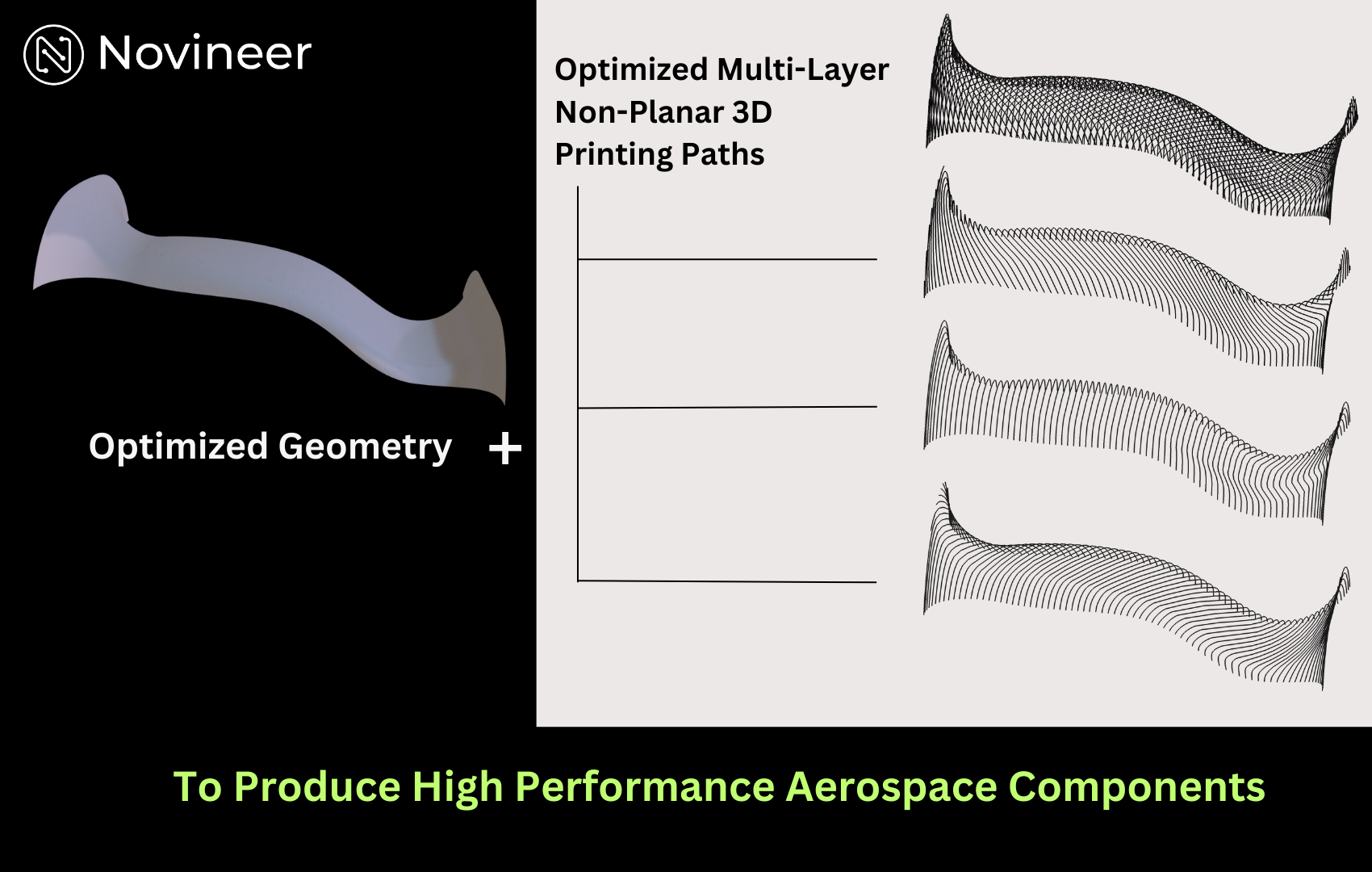
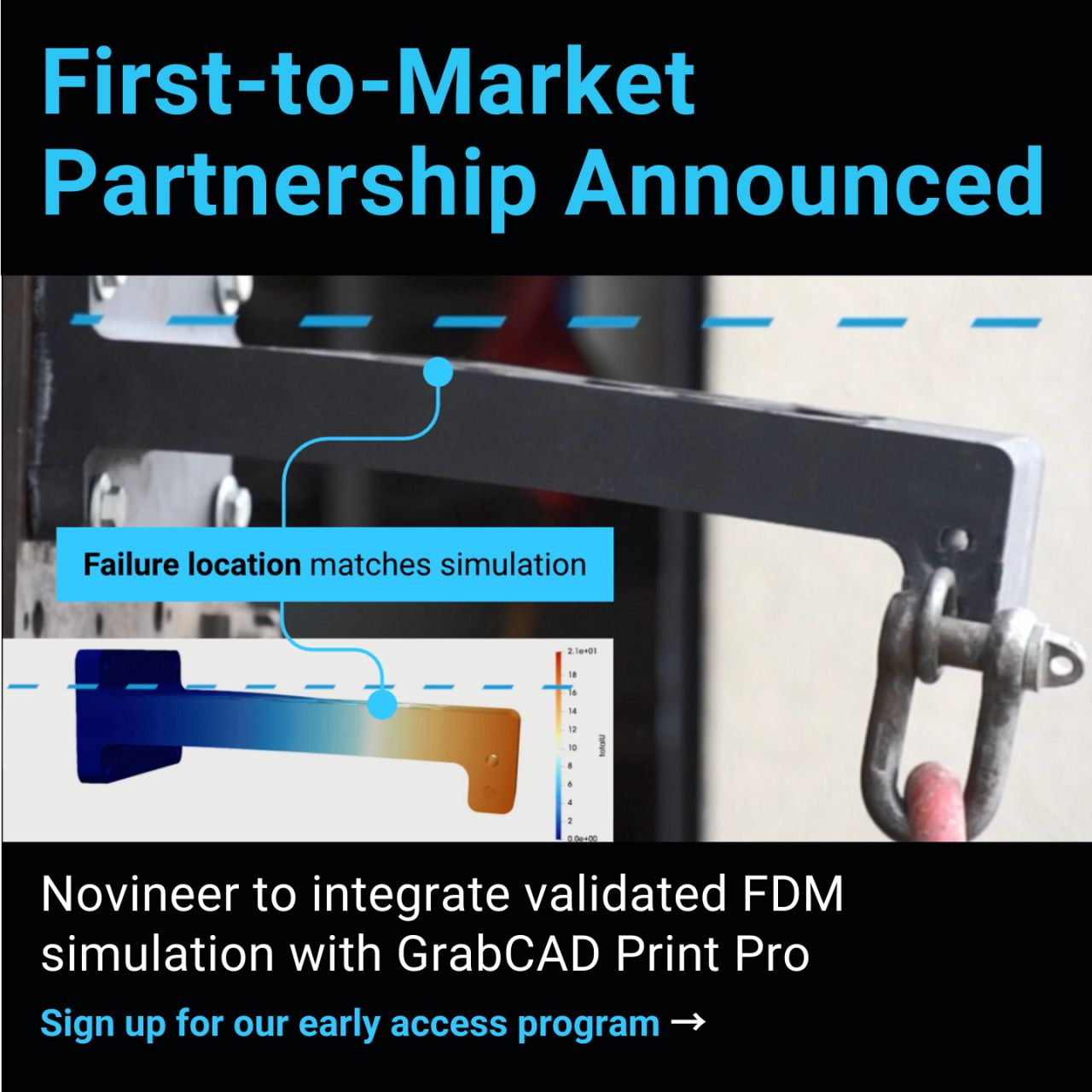
    Stratasys has always excelled at picking the right strategic partners, and its collaboration with software provider Novineer, announced at the end of 2025, is one of the latest examples. Stratasys integrated Novineer’s NoviPath polymer performance software simulation capability into GrabCAD Print Pro, which, as Vanesa Listek explained in her article on the partnership published earlier this year, allows users to “launch simulations using actual print toolpaths, define application-specific loads and safety factors, identify likely failure locations, and iterate designs virtually until performance targets are met.”

    As Vanesa also explained, “Traditional simulation tools don’t always work well for FDM parts. They treat a printed part as one solid piece, forgetting how it’s actually built layer by layer.” During a conversation in December 2025, the CEO and co-founder of Novineer, Ali Tamijani, and Victor Gerdes, the VP of Software at Stratasys, explained to me why the gap in the market, and the solution that the two companies are providing — beginning with a pilot program that will be available starting in Q2 — represent such a milestone business opportunity for the partners and their users.

    While Stratasys and Novineer have worked together before, including on Air Force-funded SBIR project aiming to improve non-planar tool-path optimization for AM, the integration of NoviPath into GrabCAD Pro took the partnership up a notch. Like I said, Stratasys doesn’t select its partners haphazardly, and Gerdes confirmed that the AM pioneer chose Novineer for a reason:

    “We call it getting the voice of the customer — the due diligence of working with our customers in order to establish the confidence that we’re addressing their needs with precisely the right solution. When we started this process, I was kind of shocked at how few good options there were for simulation in the FDM space. What that meant is that our customers would have to physically print parts and do substantial mechanical testing for every phase of the iteration loop, which costs time and money,” Gerdes said.

    “We talked to a number of software providers, and while there were some other offerings out there, nothing else was as accessible as Novineer.”

    In addition to user experience, Novineer’s other key advantage is that its prior work with Stratasys gives it familiarity with the real-world tool-path data being integrated into GrabCAD Pro. As Tamijani noted, this is a major differentiator from the general purpose simulation software solutions that dominate the options from which FDM users are currently choosing.

    “The competition is very powerful in the general purpose world they exist in,” Tamijani began, “but the essence of FDM is layer by layer, and general purpose software treats simulated parts as blocks of plastic. This is why you have to have the tool-path data built into the process.

    “If you change the tool-path, the properties, the performance, the strength and stiffness and parts are all going to change, which can lead to part failure. General purpose simulation software ignores all of that, so industrial FDM users are currently stuck in an expensive and time-consuming product development cycle where they can only find out that their parts are failing after real-world testing, and even then, it takes further trial and error to find out exactly why the parts are failing. With NoviPath and GrabCAD Pro, you just have to enter the loads that the part being designed will need to be able to withstand, and press simulation.”

    NoviPath adds a new capability to Stratasys’s existing software repertoire, but it also reinforces the strengths that Stratasys is already known for, namely reliability. While the partners haven’t named the early users yet, Gerdes and Amijani agreed that those users would likely come from the industries with the most demanding requirements, like aerospace and automotive.

    Those customers already choose Stratasys because they can’t afford to sacrifice quality, and Gerdes observed how the new simulation capabilities should enable such customers to achieve that objective even more easily, and affordably, than before:

    “When it comes to production-level parts, manufacturers have to certify the process. For part number one, and part number 770, and part number 10,000, the process has to be identical,” Gerdes told me. “That’s one of the main reasons why customers choose our printers. You can go to some of our facilities and see, say, an F900, and you might see an aerospace company’s name written on the printer, and it’ll also say that the printer is certified for that aerospace manufacturer.

    “Now, for those kinds of customers, it used to be that you needed something of an advocate for AM inside the organization in order for them to choose to print the parts over machining or some other method. As the technology has become more commonplace, that’s not as much of a prerequisite  these days, but the simulation capability helps us move beyond that sort of scenario altogether.

    “It helps us move beyond the need to have our potential customers take someone’s word for it in order to get them to adopt AM: they can just trust the data. So this isn’t only an engineering win. Our sales team is very excited about this, as well.”

    Tamijani similarly framed the logic of the partnership in terms of how it accentuates what Stratasys already brings to the table.

    “I’ve talked to Stratasys customers who have told me that the reason they keep buying the company’s printers is because of reliability,” the CEO said. “Having the ability to simulate parts grows the number of potential new customers, and it also helps existing users accelerate the number of use-cases they’re developing. We’re helping Stratasys customers achieve the same reliability when it comes to simulation that they’ve gotten used to when it comes to printing parts. We’re ensuring that part performance matches the design intent.”

    Stratasys announced another partnership earlier this month, in which the company will qualify nylon parts made with its Selective Absorption Fusion (SAF) process in collaboration with a group of defense primes and service bureaus. While that’s an entirely different production process from FDM, it’ll be interesting to see if the NoviPath/GrabCAD Pro pilot program involves similar customers, or indeed some of the same customers.

    In any case, both partnerships illustrate how Stratasys has systematized the process of developing an application, then validating it with input from ‘power-users’. While the pilot program for NoviPath’s integration into GrabCAD Pro hasn’t officially launched yet, Stratasys’ track record with this sort of work suggests it’s an effort the industry should keep tabs on.

    Images courtesy of Stratasys and Novineer

  • The Great AM Reset: Why Applications Will Decide Who Survives

    For decades, the AM industry has been powered by an exciting narrative of endless growth and disruptive potential. We celebrated every new technology, every injection of capital, and every bold promise about a transformed future. But as we head into 2026, the “growth at all costs” mantra is being replaced by a more sober and critical question: where is profitability? The truth is: our industry is overcrowded, unfocused, and, for many, deeply unprofitable. This is the Great AM Reset, a necessary shift from a technology push to an application pull mindset.

    The Unprofitable Playground

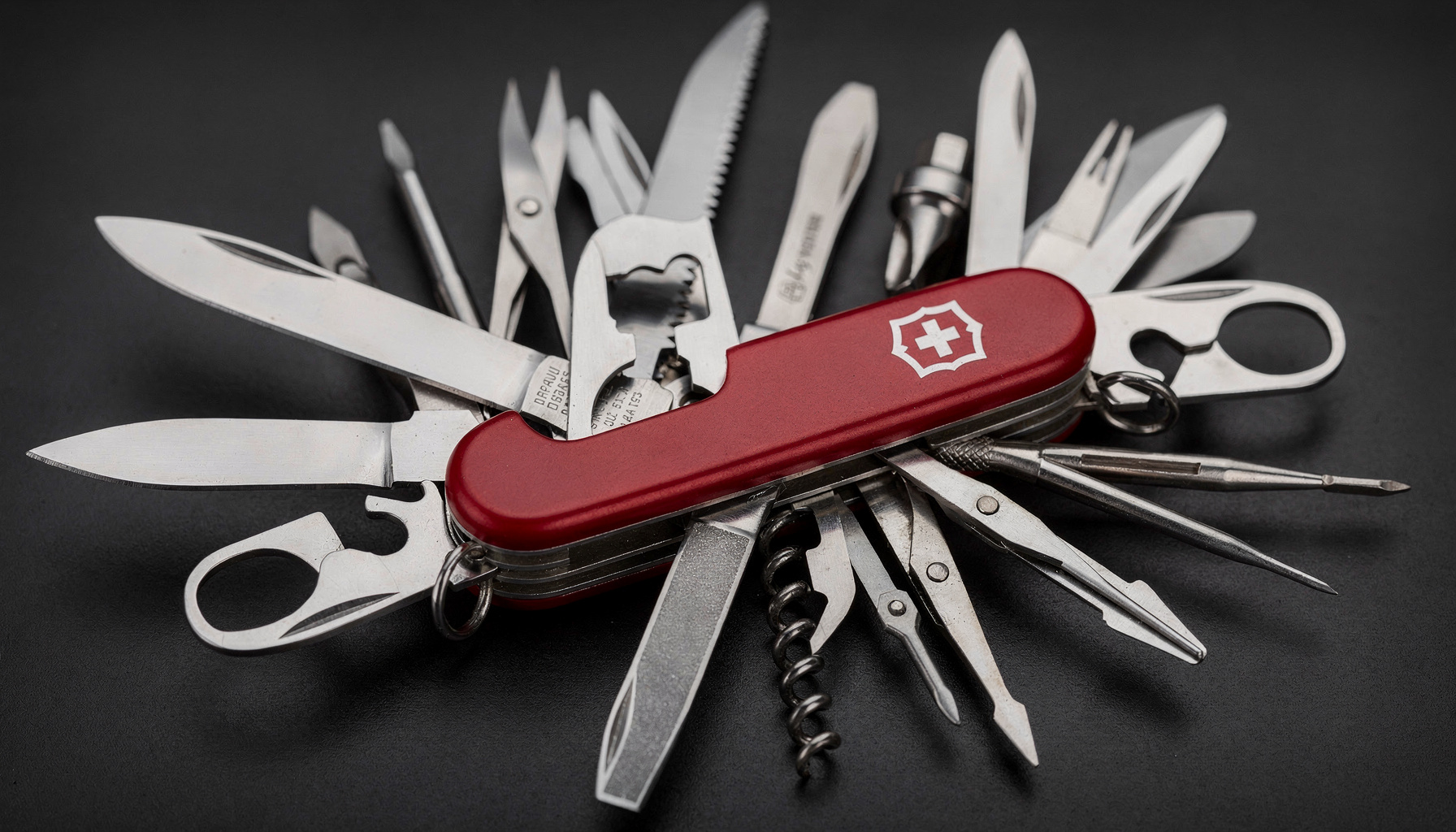
    The problem is not a lack of effort, but the very nature of the tools we have created. For years, the industry has collectively built the equivalent of a giant Swiss Army Knife, a universal super-tool designed with the potential to solve every imaginable problem. This was essential to get the technology off the ground and prove its broad applicability. However, once you have a specific application that never requires the corkscrew, that feature becomes a liability. Its complexity and cost weigh down the business case, making it harder to compete with established, specialized manufacturing methods.

    Source: A Swiss Army Knife with a lot of tools, AI-generated with FLUX.2 [pro]

    This is the industry’s 80/20 problem. Getting a machine to perform a novel trick once represents the first 80% of the desired effect, but it only takes about 20% of the total engineering effort. We are now facing the truly hard part: the final 20% of the effect, making that machine operate reliably at scale, requires the remaining 80% of the work. The era of the generalist “do-everything” machine is ending. Just as the best injection molding suppliers dominate medical technology and specific milling companies own the defense sector, AM will specialize.

    Companies like AMCM are already leading this transition. By deeply customizing their systems for specific customer applications, e.g. for space components or in defense applications, they are effectively moving away from the from the Swiss-Army-Knife-principle and develop superior single-application-tools instead. They have proven that specialization is how this technology truly begins to function and deliver value.

    This history of building universal tools is precisely why the classic startup disruption playbook has failed so spectacularly in AM. The model is simple: a startup with a lean minimum viable product (MVP) attacks an established player’s profitable product from below and steals their customers. But in AM, this model collapses. The market is a fragmented landscape of companies with minor technological tweaks, all battling for a piece of a market that is not yet mature enough to support them. There are no profitable, billion-dollar incumbents to disrupt. This raises a critical question: why are we trying to disrupt an industry where you cannot make money? This flawed premise has led to a painful cycle where an estimated USD 2bn of VC money has evaporated without a clear path to sustainable profitability, turning the industry into a playground of possibilities, not a marketplace of proven solutions.

    Two Paths to Survival: Become a Giant or Pivot

    In this this reset, only two viable paths remain.

    The first path is a tough race for the base technology suppliers, who must now solve the fundamental challenge of achieving profitability through scale. The future for these players will be a consolidation mirroring the one we witnessed in other manufacturing technologies. Like in the conventional machining industry, the early market was also a fragmented “Wild West” of proprietary systems. It only broke into the mainstream when champions like Fanuc and Siemens created a standardized ecosystem, turning a collection of disparate tools into a predictable, scalable industrial platform. The winners in AM will not be those with just a novel technology, but those who can deliver on the unsexy but critical triad of reliability, scalability, and a low cost per part.

    For every other company not competing in that race, the only strategy is the second path: a deliberate pivot away from technology and towards the application. For years, the fatal mistake has been to approach customers, present a novel printer, and essentially say, “You are the experts; figure out how to use this.”

    This is the classic “technology push” fantasy. The company naively assumes their presentation will set off a creative chain reaction, that engineers will instantly dream up a hundred new applications, that management will immediately divert resources, and that the entire organization will eagerly re-engineer its processes around this new possibility. This is definitively not what happens. The customer’s reality is a world of high pressure and strict rules where risk is not an option. They don’t want a science project; they want a solved problem.

    Source: One hand holding a finished castle and other hand holding a box of bricks, AI-generated with FLUX1.1 [pro] Ultra

    Do not sell Lego bricks and hope the customer builds a castle. Walk in with the finished castle and prove it is better than the one they live in now. You are not asking them to take a bet on your technology; you are delivering them a superior solution. Your job is to drive the disruption yourself.

    The Application First Mandate

    Embracing this pivot requires a radical change in identity. Companies must stop calling themselves “AM companies” and start acting as “solution owners.” This is not theoretical. Look at the companies quietly winning today: Additive Drives is building superior electric motors for the e-mobility sector; Conflux is engineering the most cutting-edge heat exchangers; Domin is conquering the world of hydraulic motion control. Evove is creating next-generation filtration membranes; Vectoflow is redefining flow measurement with its robust probes; and Lightforce is transforming orthodontics.

    They all share a common pattern: they possess deep application knowledge. They are not AM experts dabbling in a market; they are market experts who leverage AM as a tool to solve a high-value problem.

    They are building the castle. They are delivering the lighter component, the more efficient part, the qualified product that solves a real, expensive problem for their customers. Successful startups scale by entering an existing, profitable industry and doing something fundamentally better. The goal is to create an “application monopoly”, a niche where your solution is not just an improvement, but indispensable. In this model, technology is merely the enabler; the true value lies in the final product and in owning the customer’s problem.

    Alexander Schmoeckel, Associate, joined the investment team at AM Ventures in 2018 and plays a central role in overseeing portfolio companies such as Elementum 3D, Fortius Metals, Headmade Materials, Incus, Lithoz, MetShape and Vectoflow. In addition to managing these investments, he leads scouting activities across the United States and builds the firm’s network in the region.

    Alexander holds a Bachelor and a Master degree in Management and Technology from the Technical University of Munich with a focus on finance, accounting, and mechanical engineering. He spent a semester in Paris and was part of the TUMfast scholarship program. He recently earned the Certified Private Equity Analyst qualification from TUM and BVK.

    With a background that combines technical insight and financial experience, he is committed to supporting founders and advancing innovation in advanced manufacturing.

    AM Ventures is the Networking Sponsor for Additive Manufacturing Strategies (AMS) 2026, a three-day industry event taking place February 24–26 in New York City. On February 25 at 4:55 pm, Alexander will participate in a panel on “Leveraging VC for an Industrial AM Future.” AMS brings together industry leaders, policymakers, and innovators from across the global additive manufacturing ecosystem.