• Asia AM Watch: China’s SHINING 3D Restarts IPO Review Process

    SHINING 3D is moving forward again with its plans to go public in China, after restarting its Beijing Stock Exchange (BSE) initial public offering (IPO) review process and filing updated financial materials with regulators.

    The Hangzhou-based company, best known for its industrial and dental 3D scanners, had temporarily paused its IPO review earlier this year after its financial reports expired during the approval process. But in late April, the BSE officially resumed the review after SHINING 3D submitted refreshed documents, updated accounting materials, and responses to regulator questions.

    The company has not gone public yet. However, the new filings show that SHINING 3D is still moving ahead with its IPO plans.

    The brand originally disclosed plans to raise about 550 million yuan (roughly $80 million) through a BSE offering. According to filing information reported earlier this month, the company plans to issue up to 23 million shares.

    The fundraising would mainly support research and development projects in dental technology, industrial measurement systems, and high-precision 3D vision algorithms. One of the largest investments would go toward digital implant technology for dentistry, an area where SHINING 3D has been expanding aggressively.
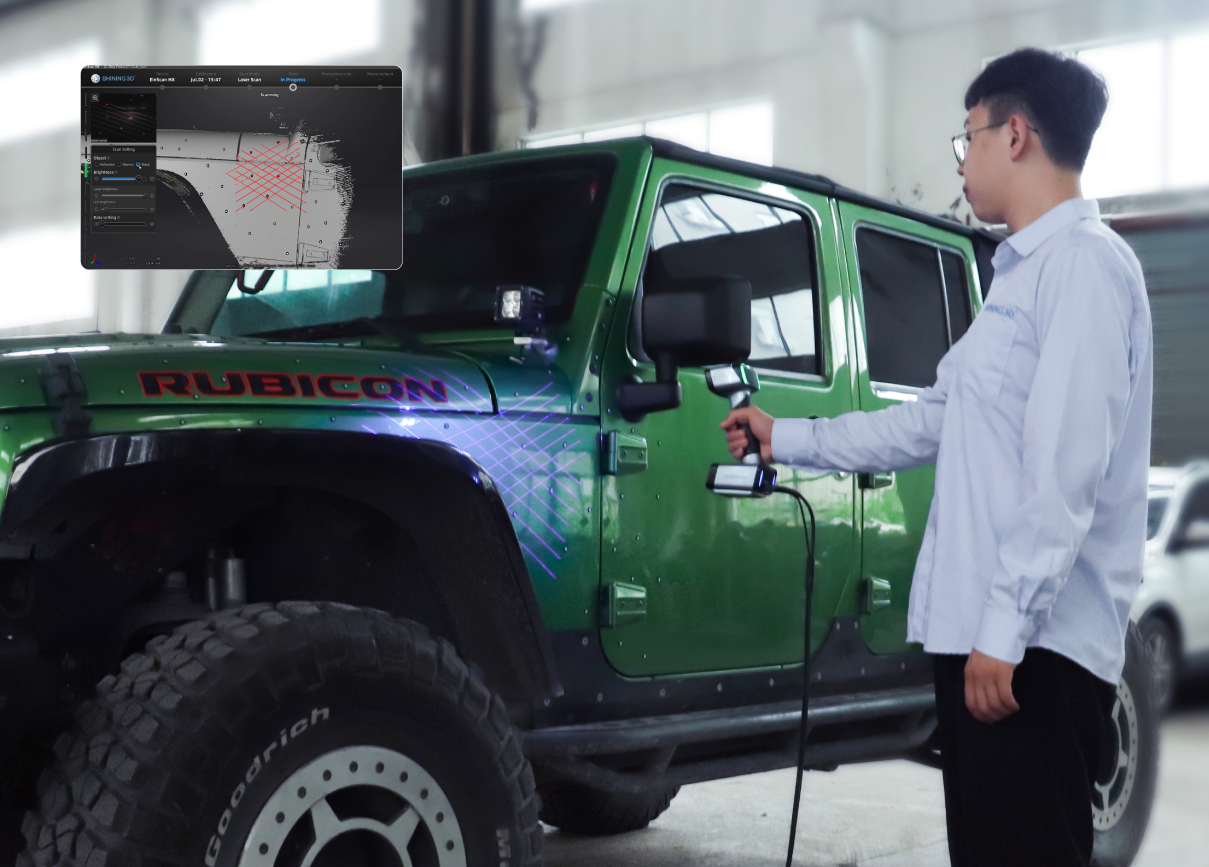
    Portable, easy operation scanner. Image courtesy of Shining 3D.

    The IPO process had briefly slowed in March 2026 when the company requested a suspension of the review because the financial statements used in the application were approaching the end of their validity period. The BSE approved the “procedural suspension” on March 31.

    That type of pause is pretty common in Chinese IPO processes. If reviews take too long, companies often need to update financial reports and refile documents before regulators continue the process. But the latest filings suggest SHINING 3D has now completed that step.

    The new publicly disclosed filings include updated audit and financial documents, legal materials, and responses to questions from regulators reviewing the IPO.

    If there are no further delays, SHINING 3D could move closer to completing its BSE listing later this year. The company still needs additional approvals before its shares can begin trading publicly.

    The move is another sign that China’s additive manufacturing (AM) and digital manufacturing ecosystem continues to mature financially, even as many Western AM companies struggle with slow growth, restructuring, or consolidation.

    While SHINING 3D is not a pure-play 3D printing company, many of its products are used alongside AM systems. Its scanners and measurement tools are commonly used in inspection, reverse engineering, digital dentistry, industrial design, and 3D printing applications.

    The company has become well known internationally thanks to products like its EinScan and FreeScan 3D scanners, which are used to digitally capture and measure objects for design, inspection, reverse engineering, and 3D printing workflows.
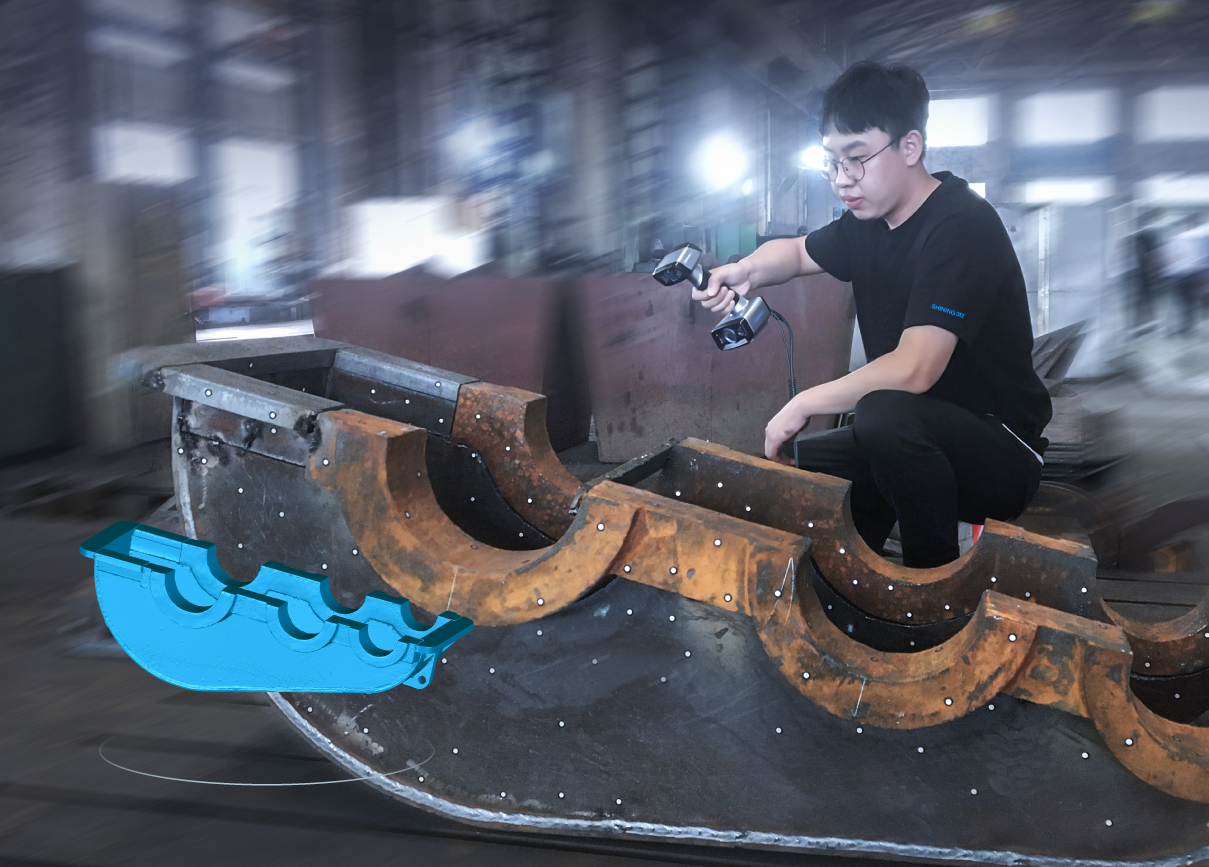
    The EinScan HX achieves a processing speed of up to 1,200,000 points per second in Rapid Scan Mode. Image courtesy of Shining 3D.

    SHINING 3D has also been growing quickly. According to earlier reporting tied to the IPO filing, the company generated roughly 1.5 billion yuan ($221 million) in revenue in 2025, representing about 31% year-over-year growth. International revenue reportedly rose 46% during the same period. The IPO documents also show the company continuing to pour money into research and development, particularly around industrial scanning, digital dentistry, and measurement systems.

    That focus points to a larger trend in China’s manufacturing sector, where companies are combining 3D scanning, AI inspection, digital dentistry, robotics, metrology, and 3D printing technologies.

    Meanwhile, the BSE itself has also been trying to attract more high-tech manufacturing firms. Created in 2021, the BSE focuses largely on innovative small and medium-sized enterprises inside China. Earlier this year, the exchange introduced changes to attract higher-quality IPO candidates and improve market-driven pricing mechanisms. SHINING 3D seems to fit really well into that strategy.

    The company had previously pursued a listing on Shanghai’s STAR Market before later shifting its IPO plans to the BSE.

    For the AM industry, the story stands out because public market activity has slowed over the past two years. Many publicly traded AM companies in the U.S. and Europe have dealt with falling stock prices, restructuring, or pressure to sell parts of their businesses. Meanwhile, China’s AM sector continues to see public market activity. Creality is expected to begin trading in Hong Kong on May 29, while companies like Farsoon and BLT are already publicly listed in China. SHINING 3D could become another addition to that growing group if its IPO process continues moving forward.
  • Stratasys Acquires Markforged, Analysis of AM’s Latest Consolidation Move

    A very long time ago, in 2023, the additive manufacturing (AM) industry was enraptured over the attempts by a large chunk of its publicly traded original equipment manufacturers (OEMs) to acquire one another. Ultimately, none of those initially floated deals went through, although one of the players in the fracas, Nano Dimension, did eventually take over another of the players, Desktop Metal, and followed up on that deal the next year with the acquisition of Markforged, a company that hadn’t even been on the table in 2023.

    Much of that strange time in the industry’s history was driven by Nano Dimension’s repeated efforts to execute a hostile takeover of Stratasys, which provides some particularly interesting context for the latest AM industry deal: Stratasys will purchase Markforged from Nano Dimension in an all-cash deal valued at $42.5 million. Stratasys gets everything other than Markforged’s metal binder jetting (MBJ) business,  built via the company’s own 2022 acquisition of Sweden’s Digital Metal for $40 million in cash and stocks.

    So, Nano Dimension is now an MBJ company. Sure, why not! The company already sold its original business line, which revolved around 3D printed electronics, in April, following Desktop Metal’s declaration of bankruptcy last year, resulting in parts of the latter company’s portfolio being acquired by Anzu Partners and the flagship Desktop Metal MBJ brand being rescued by ARC Impact. As far as I can tell, essentially nothing of what remains of Nano Dimension has anything to do with what the company’s business model was as recently as 3 years ago, and perhaps that’s for the best. Maybe it will try to copy the pivot that ARC is making with the Desktop Metal rump state.

    In any case, Stratasys is the real protagonist here, and I think this acquisition makes far more sense than any of the possibilities that were up in the air in 2023, except for maybe the 3D Systems offer to merge with Stratasys. This deal, however, is much less of a risk and fits much the same profile, albeit on a smaller scale, as the upsides in the hypothetical 3D Systems merger: minimizing redundancy by maximizing synergy. For instance, Stratasys and Markforged both excel at tooling applications, especially in automotive, and they both also have ample experience with aircraft interior applications.

    Aside from the difference in brand longevity — Stratasys is, of course, one of the industry’s pioneers, while Markforged emerged in the 2010s — the biggest differentiator between the two brands probably lies in Markforged’s metal extrusion capabilities, which I think the company has leveraged very nicely in recent years via a print engine adaptor for its FX 10 system. Earlier this year, Stratasys acquired Tritone Technologies, the OEM of a unique spin on MBJ, so Stratasys didn’t need the Digital Metal division.

    All in all, Stratasys got the best bits from a company that did $70 million in revenue last year, and that Nano Dimension itself acquired for around $120 million in 2024, for just over $40 million, which seems like a great value no matter how you slice it.

    In a press release about Stratasys’s acquisition of Markforged, Yoav Zeif, the CEO of Stratasys, said, “This acquisition further advances our capabilities to meet customers’ growing needs in critical areas such as defense and aerospace at a time when additive manufacturing continues to displace traditional manufacturing for high requirement applications in production. We believe that our teams can immediately reinvigorate revenue growth by adding MarkForged, Inc.’s products and software systems as we leverage our leading partner networks. We are confident this transaction will strengthen Stratasys’ position in many of the largest and most structurally critical industries where performance, supply chain resilience, reliability, and scalability are essential.”

    Zeif is correct that defense is indeed one area where Markforged has a lot to offer Stratasys, now that they’ve joined forces. Stratasys is no stranger to the defense industry, but Markforged gives its new parent corporation immediate, additional capacity that aligns perfectly with what the latter is already doing.

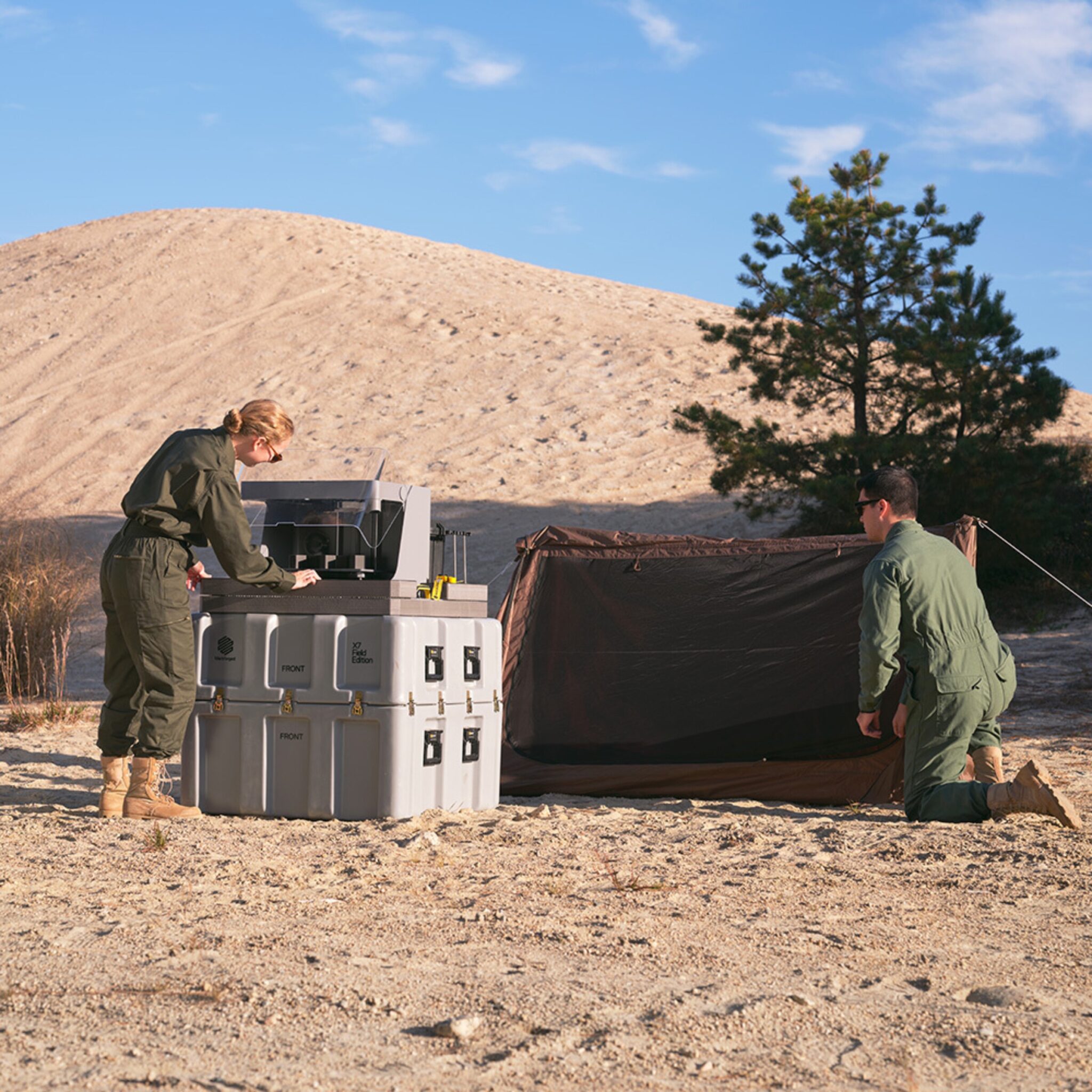
    Markforged X7 Field Edition. Image courtesy of Markforged

    Specifically, both brands have existing relationships with the US Navy surrounding deployable 3D printers, including at least one Markforged X7 installed on a submarine. Stratasys could also certainly benefit from incorporating the Markforged Digital Forge inventory platform into its ecosystem, given the Navy’s ramp-up of its digital inventory capacity.

    When you get down into the weeds of the company that will result from this acquisition, one of the most interesting possibilities is how Stratasys could benefit from leveraging the aforementioned metal kit for the FX10 to some of its own product lines. Perhaps no potential exists there, but if Stratasys can learn from its new subsidiary to apply the same principles to certain Stratasys machines, that’s a very cheap path towards effectively doubling the addressable market of every polymer machine that can be viably combined with a metal adaptor.

    The main takeaway for me is that the best acquisitions tend to go to the companies that can afford to be patient. Stratasys could’ve done what Nano Dimension did in 2024 and, unwilling to just sit on its hands and wait, paid over $100 million for Markforged. Instead, Stratasys bided its time and less than a couple of years later, snapped up the very same company (less the Digital Metal division) for a bargain. With its Tritone acquisition, Stratasys now has two different metal 3D printing technologies, and Markforged has access to Stratasys’s global footprint. Given all the chaos of 2023, the outcome in 2026 is arguably the best-case scenario for one of the longest-standing companies in the AM industry.

    Featured image courtesy of Stratasys

  • Low Cost Medical Devices (or Saving the World Through YouTube)

    It’s Triggy is a YouTube channel showcasing engineering builds and how-tos. From testing whether wood glue is stronger than wood, to how to make polynomial curves, and how to make a rocket from office supplies, it errs on the side of nerdy. Triggy took umbrage at a commercially available multi-channel pipette system, which cost $18,000. Pipetting robots come in all sizes, prices, and quality levels, of course. Now Triggy has used 3D printing to make one for $250 in parts. The resulting CAD, explanation, and firmware are now available on GitHub.

    The 96-well plate pipetting robot can be used to mix and handle pipettes for medical tests. These kinds of machines are workhorses in R&D labs and hospitals. They can be used to move around samples, dilute samples, place cell cultures, and add reagents. These kinds of robots can be simple, including affordable manual units. There is also an OT2 open source version that costs around $16,000. Automated desktop systems cost between $10,000 and $40,000. Beyond that, there are very large systems. These can be modular, and you can add robot arms to further automate storage and handling after operations. There are simple, compact, advanced, and cheap options to cover everything from high school labs to large government DNA labs. All those DNA tests used by law enforcement and by people curious about their heritage are handled, in part, on these systems.

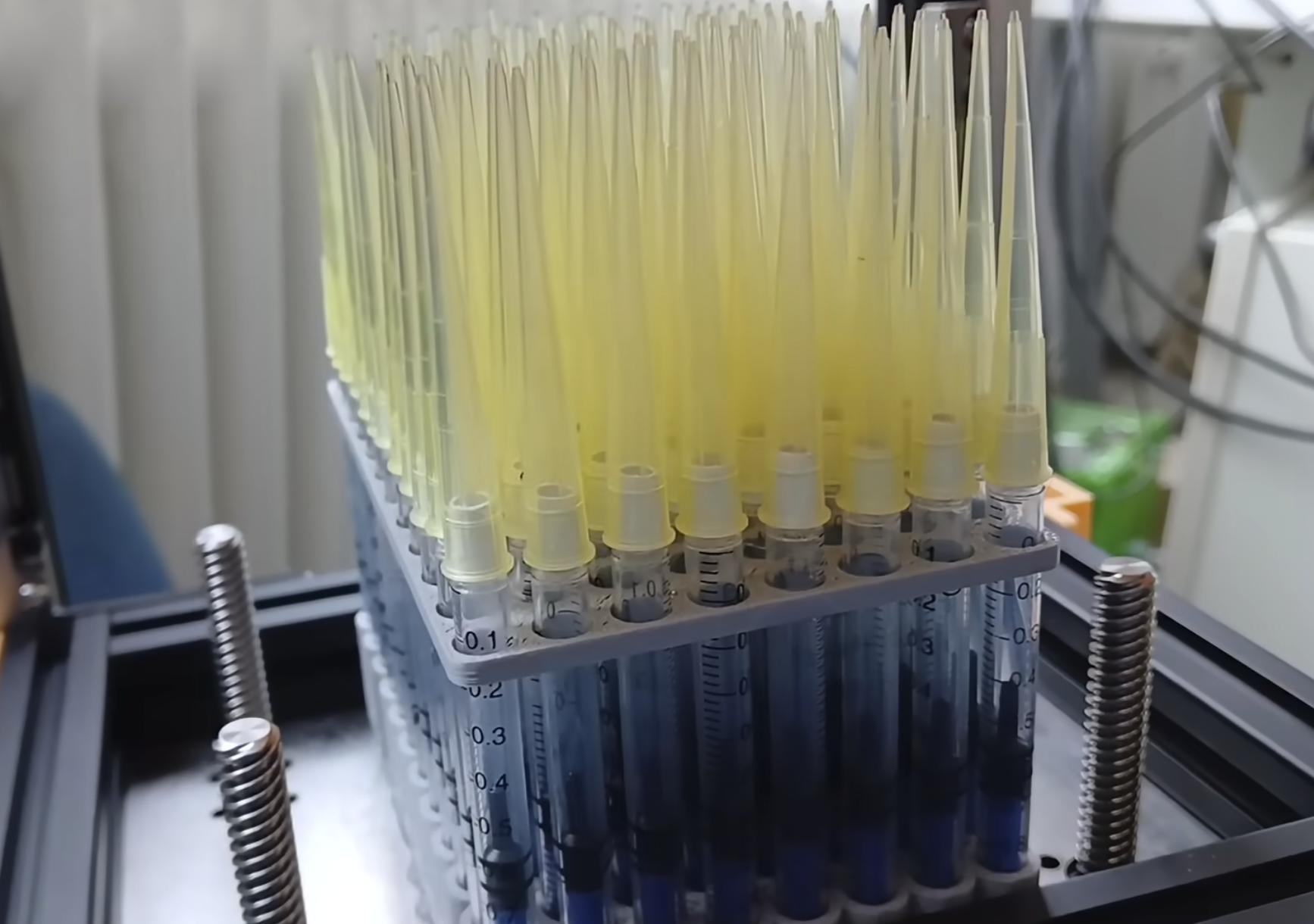
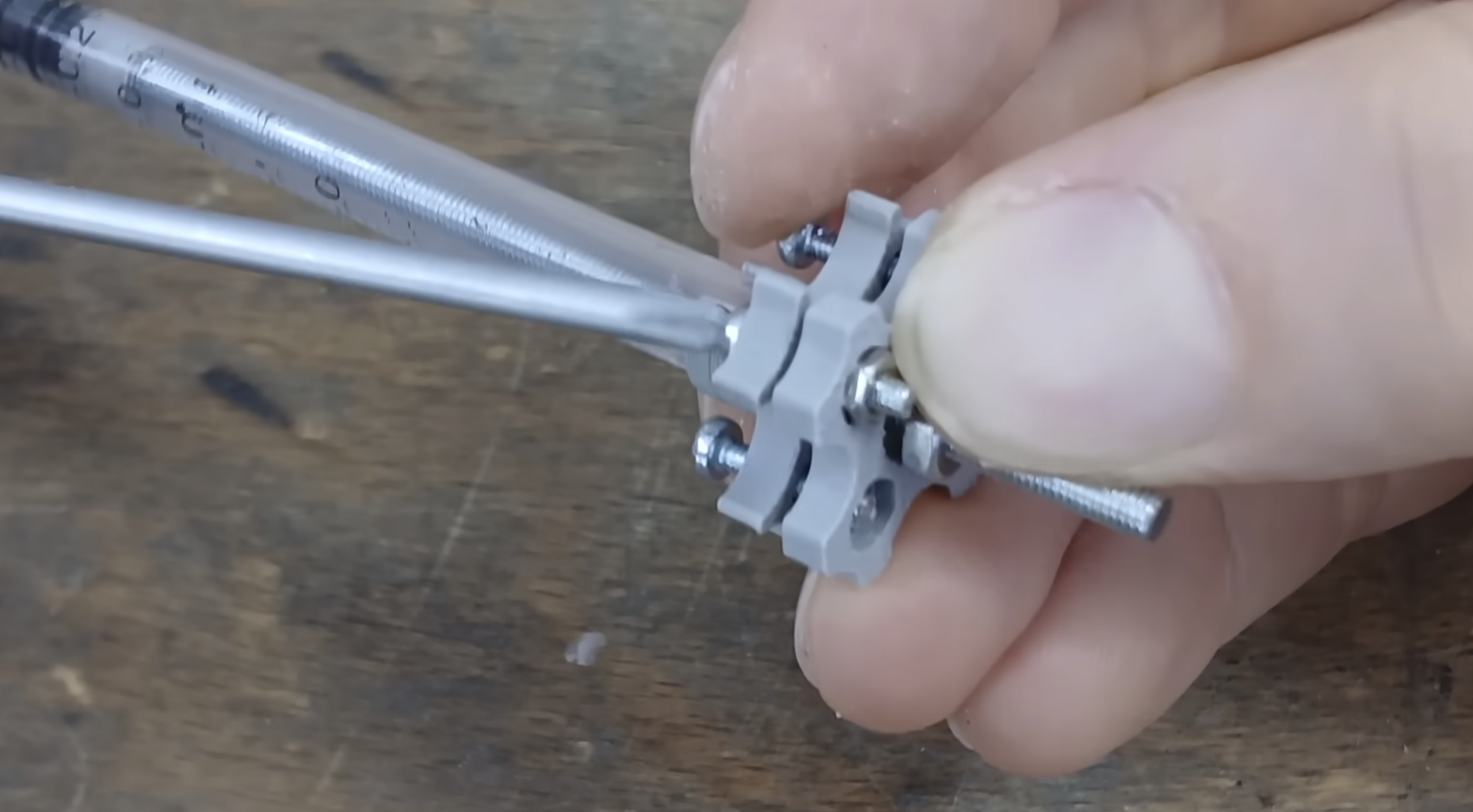
    Close-up of the 3D-printed pipette holder and clamping mechanism, part of Triggy’s low-cost automation system. Image courtesy of Triggy (YouTube).

    Using an ingenious geared ratchet lowering system and extruded rails, Triggy builds up the base. Housings and other key components are printed too. 3D printed guides and a platform for the pipettes are also made. Getting the amount of give and the platform’s tolerance was, of course, very important. He uses 4 stepper motors mounted to 4 lead screws to move the platform up and down. He makes the firmware and ends up with a working device. Tests then show how he can dispense and mix different liquids in pipettes. He then tests mixing different reagents and mixing programs.

    Triggy says, “This isn’t going to replace high-end lab equipment, and that’s not the point; the point is to reduce barriers to entry for these tools.”

    That, I think, is something that we can all applaud. We’ve seen real development in open-source lab equipment over the years. Open Labware is a collection of open-source lab equipment that often uses 3D printing, meant for developing countries and austere environments. We wrote about projects like LabEmbryoCam, developed by the University of Plymouth‘s EmbryoPhenomics lab. In 2018, we looked at the Custom Lab Institute’s 3D printed lab gear and a paper on the efficacy of 3D printed laboratory equipment. We also looked at an interferometer that used 3D printing and a smartphone. There have been good papers on this development, and it is ongoing.

    The assembled 96-channel pipetting setup is designed to handle liquid transfer and mixing for lab workflows at a fraction of the usual cost. Image courtesy of Triggy (YouTube).

    The promise of this could be incredibly impactful, extending medical testing, lab work, and life-saving development closer to the people who need them most. Rugged lab gear designed for austere environments would greatly improve medical research in remote areas. If, from the design stage, power interruptions, dust, and rougher handling were taken into account, this equipment would look and work very differently from what we have now. At radically lower pricing and broader availability, this kind of stuff would let many charities, universities, NGO’s, and governments save money. Lives could be saved with this, and existing budgets could be extended.

    That idealism and hope have not really brought this movement much money or visibility, however. It’s still more visual to paint a school or give some more tangible and understood things like books, computers, or water pumps. Somehow, this just doesn’t get a lot of donor love and attention. But, imagine this. Imagine if Triggy changed tack and, rather than willy-nilly exploring sciency/engineeringy topics at random, stuck to just making open labware. Triggy has 60,000 subscribers, and the medical device video has 870,493 views. A YouTube calculation tool estimates that the yearly earnings would be around $50,0000. But imagine the channel quadrupled to $200K a year, and Triggy could have a salary and budget that allowed continuous creation of open-source 3D printed medical devices. A channel ten times bigger than that could let a whole team of great engineers tackle substantive global problems full-time. Now I’m not saying we should stop filling swimming pools with Jello or having people on motorcycles jump over ever bigger things, because somehow that, too, is humanity excelling. But imagine if a new generation of YouTubers used the platform to solve some of the world’s problems. 

  • DTI & Partners Developing 3D Printed Electronic Space Robot Skin

    Robotics is among the most intriguing long-term prospects for the additive manufacturing (AM) industry, something I recently wrote about in the context of BLT and China’s buildup of industrial robotics for use in supply chains such as electronics and power grid repair. That piece highlighted how 3D printing can be leveraged as something of a “swing production method,” capable of alternating between producing end-use components for consumer goods, as well as parts for other industrial equipment.

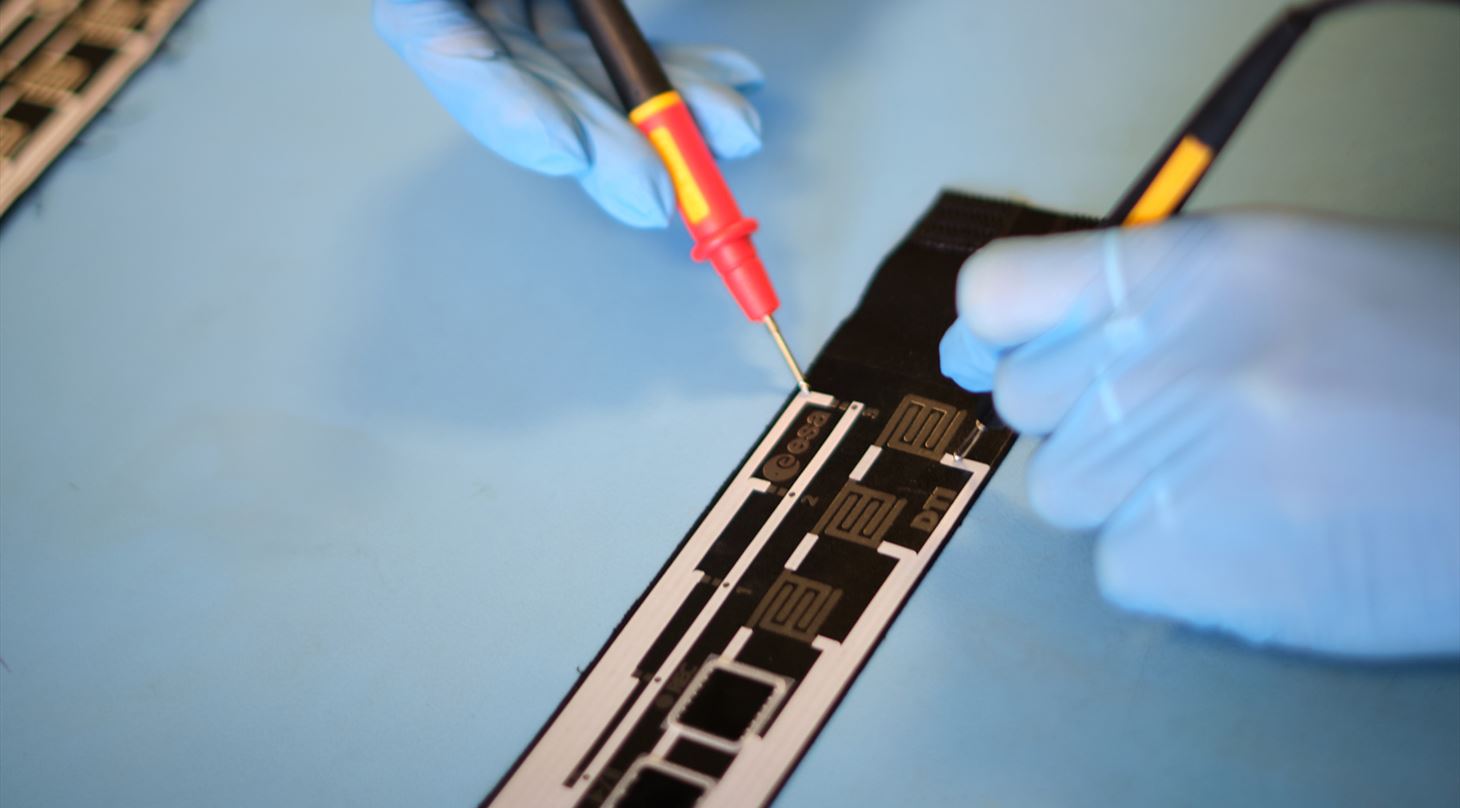
    There are a number of additional factors which make AM a good fit for the robotics market, as a new use case from the Danish Technological Institute (DTI) highlights. In a project funded by the European Space Agency (ESA), and building on earlier work completed in 2024, DTI and its private sector partners are exploring how to make 3D printed ‘smart skin’ for robots deployed on space missions.

    The researchers designed the skin to solve several different challenges faced by robotic systems during space exploration, including thermal management, protection from dust, and the optimization of human-robot interface (HRI) scenarios. DTI worked with three companies on the project: PIAP Space of Poland, Redwire Space, based in Luxembourg, and Hungary’s Admatis, which specializes in the sort of advanced materials enabling the entire project.

    In addition to the performance objectives already mentioned, using wearable electronics also made it easier for the researchers to engineer other aspects of the robot’s structure: for instance, AM’s bespoke design capabilities allowed the team to create the ideal shell to route the robot’s data and power lines. The 3D printed skin also enhances the durability of the robot’s design, as it gave the partners the opportunity to incorporate sensors improving the robot’s motion control system.

    In a post on LinkedIn, AM design specialist Andreas Weje Larsen, one of the individuals who worked on the project, said, “Central to this is computational design of the space grade scaffold structure, using compliant mechanism synthesis — essentially applying conventional use of topology optimization ‘in reverse’ to design flexibility instead of stiffness. This is a key innovation for AM in space and beyond.”

    That last point in the quote above about “in space and beyond” is what I love most about DTI’s approach to the project. Along with the rationale behind the primary, space-oriented angle for the case study, DTI put just as much thought into the ‘dual use’ angle, i.e., the potential to use the same innovation for applications based on Earth.

    In particular, DTI’s summary of the terrestrial possibilities for the smart skin project focuses on the sorts of jobs in harsh environments which would seem to be the best candidates for future deployment of robotic workers. Some of the examples the researchers have in mind include “wet agricultural fields,” electronics recycling sites, and, generally, extreme environments that are remote from population/infrastructure hubs.

    This specific line-of-thinking is ingenious in itself, but even more importantly, I’m impressed that the DTI researchers gave that much consideration to the precise dual use possibilities for the R&D work, and incorporated that thinking into the foundation of the design. Too often, when we see the phrase ‘dual use’ in a project like this, the researchers seem to just be taking for granted that someone will come along at some point and leverage the relevant (typically, defense) application for commercial purposes. I think that leveraging 3D printing as a dual use technology would be a far more feasible undertaking if researchers were given more freedom to explicitly structure their work in a dual use direction from the outset.

    Finally, returning specifically to the viability of AM for the robotics market, the product-market fit between the quantity of parts that AM is currently best suited for, and the quantity of parts needed by robotics manufacturers, is perhaps the most compelling reason why we should expect to see these technologies more and more closely linked as they both continue to evolve. In terms of the present case study, it’s easy to envision the emergence of a market for on-demand skins that fulfill various functions requested by the customer. That’s exactly the sort of output level requirement which allows AM to thrive.

    Images courtesy of DTI

  • DoW Accelerates Drone Readiness with AMTrain Phase 2 Launch at Camp Lejeune

    Equipping today’s warfighter with the most advanced technology is paramount, driving increased prioritization and investment in drone development and advanced manufacturing training within the Department of War (DoW).

    In this evolving landscape, America Makes, the National Additive Manufacturing Innovation Institute, is playing a central role through its AMTrain platform. Positioned at the intersection of workforce development and technological advancement, AMTrain offers a potential pathway to strengthening U.S. drone dominance while reducing reliance on non-domestic component sources. Through its Education and Workforce Development (EWD) portfolio, the Institute is delivering targeted training that demonstrates the practical application of additive manufacturing (AM) to enhance military drone capabilities.

    At its core, AMTrain is a training-alignment platform that connects a curated “card catalog” of best-practice AM courses to defined job roles and competencies. This structure enables the DoW and its industry partners to map, track, and ultimately close workforce skills gaps across the additive manufacturing enterprise.

    To support this mission, the Institute deployed AMTrain in 2022 as a centralized resource for state-of-the-art, vendor-agnostic training assets. These resources promote best-practice sharing and improve overall force readiness, supporting applications such as mission-specific payload customization, on-demand spare parts production in contested logistics environments, and repair in expeditionary settings.

    Building on this foundation, America Makes launched Phase 2 development of AMTrain in March 2025, with Camp Lejeune selected as one of the initial pilot sites. During two recent visits, the Institute’s EWD team engaged directly with Marines and active-duty service members, gathering real-world feedback to refine training pathways, enhance platform usability, and ensure alignment with mission-critical needs.

    “Our work on AMTrain provides a robust platform to upskill active-duty service members in AM,” said Ed Herderick, EWD Director at America Makes. “By integrating user feedback and continuously improving the system, we ensure service members have the latest skills to leverage AM and advanced manufacturing, boosting readiness and strengthening the defense industrial base, including the adoption of drones and other innovative technologies.”

    Potential impact of AM

    The U.S. military’s drive to rapidly advance and apply technology in pursuit of global drone dominance creates a natural gateway for adopting AM. Digital by nature, AM offers significant potential for producing drone bodies, chassis, and components. It allows for the creation of unique geometries and the integration of different materials with varying energy densities. This enables rapid production, cost efficiency, customization, and lead time reduction.

    AM is creating new opportunities across the DoW by strengthening cross-training, improving collaboration, and enhancing interoperability. As capabilities grow and initiatives like AMTrain support consistent, shared learning, teams can more easily exchange knowledge, align practices, and work toward unified solutions. This coordinated approach reduces redundancy, accelerates innovation, and boosts readiness, ensuring the department fully benefits from AM’s expanding potential.

    AMTrain is designed to close critical workforce gaps by standardizing AM training across roles and services, guiding learners to the right training at the right time, and continuously evolving through user-informed updates. In doing so, it directly supports broader readiness and modernization goals across the DoW.

    Building on this foundation, Phase 2 of AMTrain advanced the platform as a unified, mission-driven solution. While Phase 1 established the core competency mapping and system architecture, such as linking AM skills to role-specific training, Phase 2 focuses on validation and expansion through direct field input. This iterative approach enhances usability while ensuring the platform remains relevant, scalable, and aligned with real-world operational demands.

    Advanced drone training capabilities

    During the visit to Camp Lejeune, the America Makes team documented a drone assembly exercise using additively manufactured structural parts conducted by military personnel. The resulting footage will serve as a training and demonstration resource, preserving practical techniques and best practices observed on the ground. By capturing real-world assembly workflows, the Institute is shaping a process that allows the U.S. military to systematically refine procedures, strengthen readiness, and amplify the effectiveness of AM training.

    Over time, this knowledge base will help standardize methods, accelerate adoption of AM-enabled capabilities, and deliver sustained benefits across the U.S. military.

    Looking Ahead

    AMTrain’s long-term vision is to deliver personalized, competency-based AM training that unifies and accelerates learning, standardizes certifications, and strengthens mission-critical capabilities across military and industry. This approach reduces inter-service barriers, speeds access to critical AM parts, and shifts the culture from service-specific solutions to joint, coordinated impact.

    By aligning education, training, and certifications, America Makes and its partners aim to ensure that what begins at Camp Lejeune and other AMTrain pilot sites becomes a national model for military readiness, enhancing collaboration, efficiency, and effectiveness across the defense enterprise.

    Learn more about AMTrain and other EWD digital assets at https://www.americamakes.us/amnation/tools/.

     About the Author:

    Eartha Hopkins is the Content Coordinator for America Makes at the National Center for Defense Manufacturing and Machining (NCDMM), a role she began in 2024. Before joining America Makes, Hopkins served as communications specialist for The Red Zone, where she led internal and external rebranding and marketing efforts, and also worked as a communications consultant supporting organizations such as The Raymond John Wean Foundation and the Youngstown Neighborhood Development Corporation. She holds a bachelor’s degree in Communications from The Ohio State University.

    Acknowledgment: This material is based on research sponsored by Air Force Research Laboratory under Agreement Number FA8650-20-2-5700. The U.S. Government is authorized to reproduce and distribute reprints for Governmental purposes, notwithstanding any copyright notation thereon.

    Disclaimer: The views and conclusions contained herein are those of the authors and should not be interpreted as necessarily representing the official policies or endorsements, either expressed or implied, of Air Force Research Laboratory or the U.S. Government.

    Interested in how drones and 3D printing are coming together in real-world military and industrial applications? These topics will also be explored at the Additive Manufacturing Strategies UAS: The Present and Future of Drone Manufacturing event on June 30, 2026.

  • ETH Students 3D Print Experimental Rocket Engine

    Students at the Swiss University ETH have built a Rotating Detonation Rocket Engine (RDRE). An RDRE burns propellant in a ring-shaped combustion chamber where a continuous supersonic wave detonation is propagated. With fewer parts, these engines could be highly optimized, smaller, lighter, and more efficient. JAXA, NASA, and the AFRL have been working on trying to get RDRE engines right, while RTX and Astrobotic have also worked on them. So this is truly cutting-edge work by this group of students. RDRE engines often use 3D printed components to reduce weight, optimize performance, and improve work. And true integration of 3D printing into RDRE engines could provide for a new generation of space propulsion that could outperform.

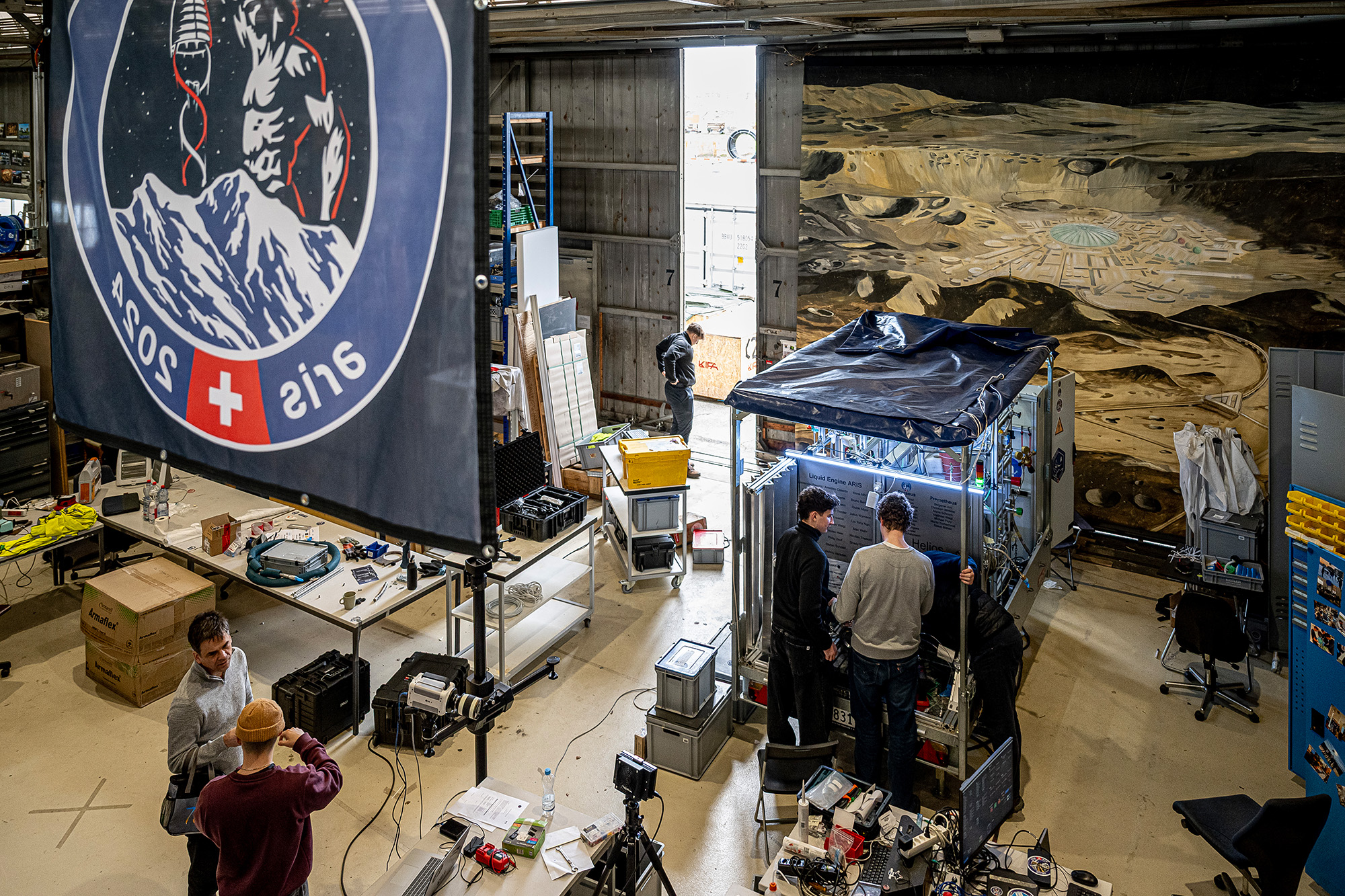
    The engine and the test stand on the trailer were built here in the ETH hangar. Image courtesy of Daniel Winkler/ETH Zurich.

    The students were part of the 19-member Pegasus team, which took part in ETH’s Aris space and rocket program with the goal of making a bi-liquid RDRE with 10% more power than alternatives. The team, tested at Dübendorf airfield, consisted of students in their second and third years of college, which is remarkable. The difficulty was in creating the right injector, oxidizer, and structure to ignite the reaction correctly, without being torn apart by the reaction’s pressure and temperature, which produce an explosive wave 20,000 times per second.

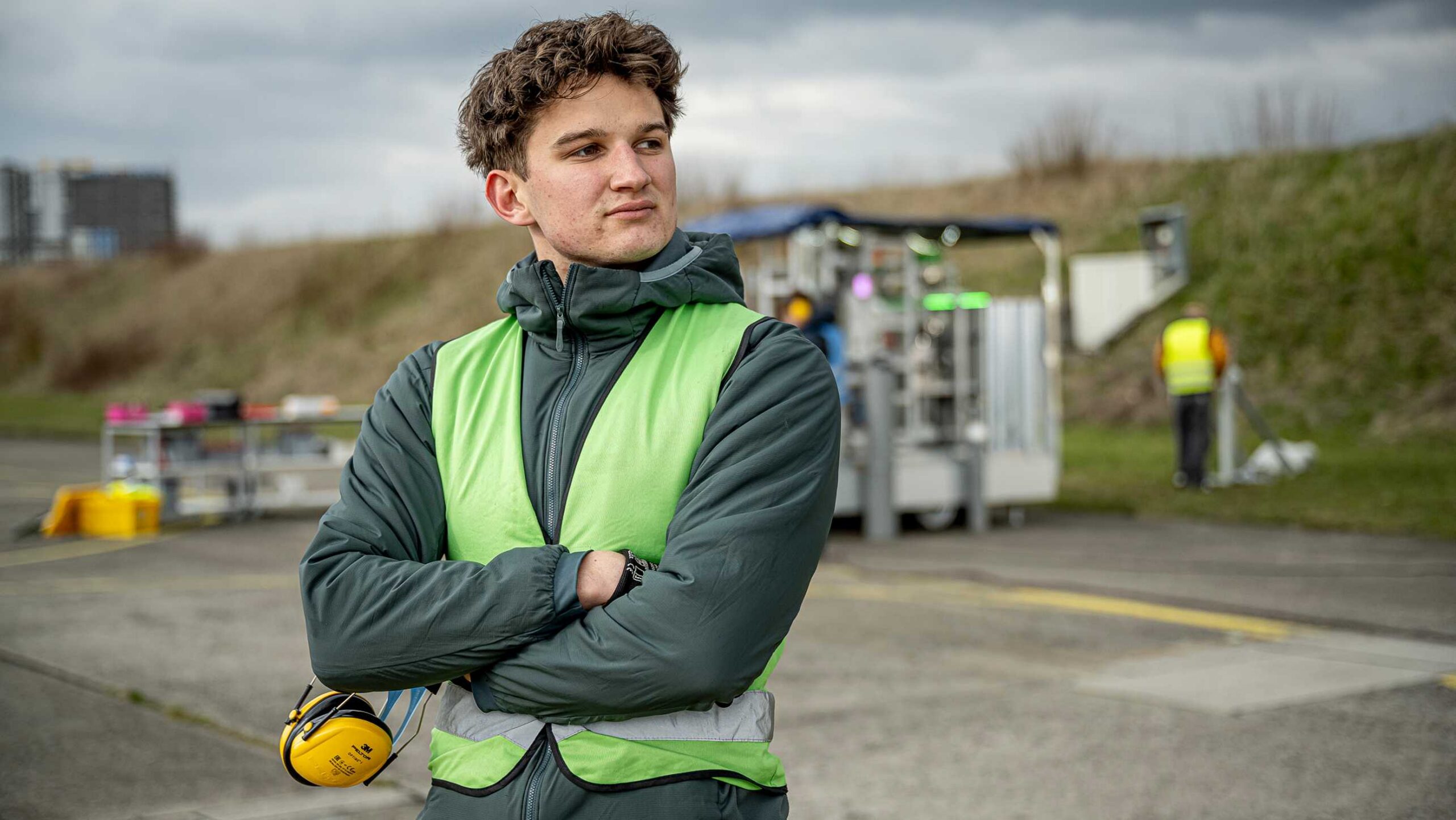
    One of the students, Mattia Röösli, developed the injector. He said that “rockets fascinate me because they fly simply by accelerating fuel backward,” adding that “it’s a mistake to think you can fully understand the topic before you start.” He also said that “you don’t need to be exceptionally talented to develop a rocket engine after two years of study. You go step by step and help each other,” which is encouraging news for anyone who might want to try something similar someday.

    Mattia Röösli developed the injector, the centerpiece of the rocket engine. Image courtesy of Daniel Winkler/ETH Zurich.

    Together with the team, they made LPBF prototypes of the injector. They were helped by previous students who acted as mentors. They worked on safety concepts, other parts of the design, and testing for months. After test-firing, they achieved three sustained detonation waves. I love that this young team gets to work on completely new, cutting-edge stuff.

    This kind of work is expensive. A lot of 3D printing, prototypes, build time, and design work add up. Not many universities could fund something like this. But there are many wealthy large universities that could, and they don’t do anything remotely as exciting as this. I love the practicality of this. Imagine all the practical FEA, DfAM, and 3D printing experience gained on your own. Imagine just trying to get the printed parts to work, and the understanding that comes from how the machines operate. This kind of thing is invaluable when going on to work with actual rockets. This kind of project could really give you a practical understanding of what it would take to get your own rocket company off the ground. And imagine just how prepared these students will be when they hit the job market.

    We know that additive engineering is a team sport. It’s not a bunch of people working on their own thing serially. Instead, people work together as a team, continuously evaluating and passing information back and forth. Systems, simulation, propulsion, and manufacturing teams are in effect integrated and working cohesively. The ability to work in a team, to value others’ work, to understand different fields, and to fight for your ideas without fighting with others is crucial in the complex world of space and rocketry. This is a skill, something that you learn from experience. Perhaps more universities could get into more practical work with the lowering costs of Additive and electronics? Perhaps they should do so to enable their students to do more practical work as a team, learning to build together.

  • Electroninks Launches Desktop Machine for Printing Circuit Boards

    Electroninks makes high-performance conductive inks that are used widely in electronics and in semiconductors. The firm has now launched the CircuitJet IV. This is a new version of its desktop printed circuit board (PCB) printer. Unattended, the system is “consolidating PCB fabrication, plating, solder mask deposition, assembly, and reflow into a single integrated benchtop system.” This will be a very handy tool for prototyping and low-volume production, letting one engineer develop a wide range of PCBs and other electronics from her desk. The printer is optimized for the firm’s own inks. Their own inks can be used for dielectric materials, as well as for silver, platinum, gold, nickel, and copper.

    Through confining all the relevant steps into one machine, this could be a convenient and safer alternative to more manual setups. Laser etching, through-hole plating, masking, pick-and-place, reflow, and inspection are all done in the nifty unit.

    Senior Director of Manufacturing Systems and Platforms at Electroninks, Dr. Michael Bell, said that,

    “The hard problem in rapid PCB prototyping has never been speed, it’s been trust. Many desktop systems can produce a board quickly, but the materials, substrates, and processes often deviate significantly from industry-standard manufacturing. Our goal with CircuitJet IV was to build a platform that delivers production-grade boards using semiconductor-grade plating, standard substrates, and workflows electrical engineers can rely on.”

    The company will also let you submit a circuit before getting a machine, with Bell stating,

    “We want customers to evaluate real boards produced from their own files before making any commitment. The earlier we engage with a customer, the better we can optimize the platform around their workflow — from ink chemistries and fixturing to software and process tuning. That collaborative approach is essential for scaling distributed electronics manufacturing successfully.”

    Years ago, we had Brett Walker, the CEO, on our podcast, and we knew that the company was doing fundamentally interesting work. The company had gotten an SBIR award in 2014 to develop the CircuitJet. There was a further NSF grant to use its inks for electromagnetic interference (EMI) shielding, with other grants from the Air Force and others following.

    The company’s kit can be used to make things quickly and produce novel sensors. But, also for repairing aging inventory and in producing low-volume missing parts for missiles and the like, the CircuitJet can be invaluable. In the production of aging, broken electronic circuits and PCBs, the company can really make a difference for the defense sector. Beyond this, the device can really help researchers make novel electronic devices or help companies prototype new electronics.

    With resilience and time-to-market always on people’s minds, this should now drive new interest in this product. With Nanodimension selling its 3D printing electronics unit, the flag-bearer for 3D printed electronics is gone. But, quietly behind the scenes, firms like Advanced Printed Electronic Solutions, nScrypt, and others are driving capabilities and the market forward. Beyond the hype, there is real business in 3D printing electronics. Making low-volume electronics a real capability has unlocked it for cutting-edge researchers and companies. And repairing electronics for the military is a business worth billions. And then there are all manner of new devices, sensors, and other things that can be made through 3D printing. Even without the “we can 3D print our iPhone” hype, this is still a valuable business. And this business can expand significantly over the next few years. With smaller electronics, new form factors, and more competition, cutting-edge designs will need to be explored, and 3D printing them could be the fastest and cheapest way to do so. And beyond that, completely new devices could only make sense with 3D printing. We really believe in 3D printed electronics, and we see real growth, real applications increase, and real applications there.

  • How Additive Manufacturing Is Reducing Downtime in Irrigation Systems

    In modern agriculture, uptime matters. Irrigation systems need to keep running during key growing periods, and even short interruptions can affect crops and reduce yields. Over the past few years, 3D printing has started to play a practical role in minimizing downtime by enabling faster, localized production of essential pump and irrigation components.

    The Downtime Challenge in Irrigation Systems

    Traditional supply chains for pump parts — such as impellers, housings, and diaphragms — can be slow, especially during peak seasons. Lead times for replacement components often extend from several days to weeks, particularly when parts are specialized or sourced internationally. For farms and agricultural operations that rely on continuous water flow, this delay creates a significant operational risk.

    Because of that, more operators are starting to look at 3D printing as a practical backup option.

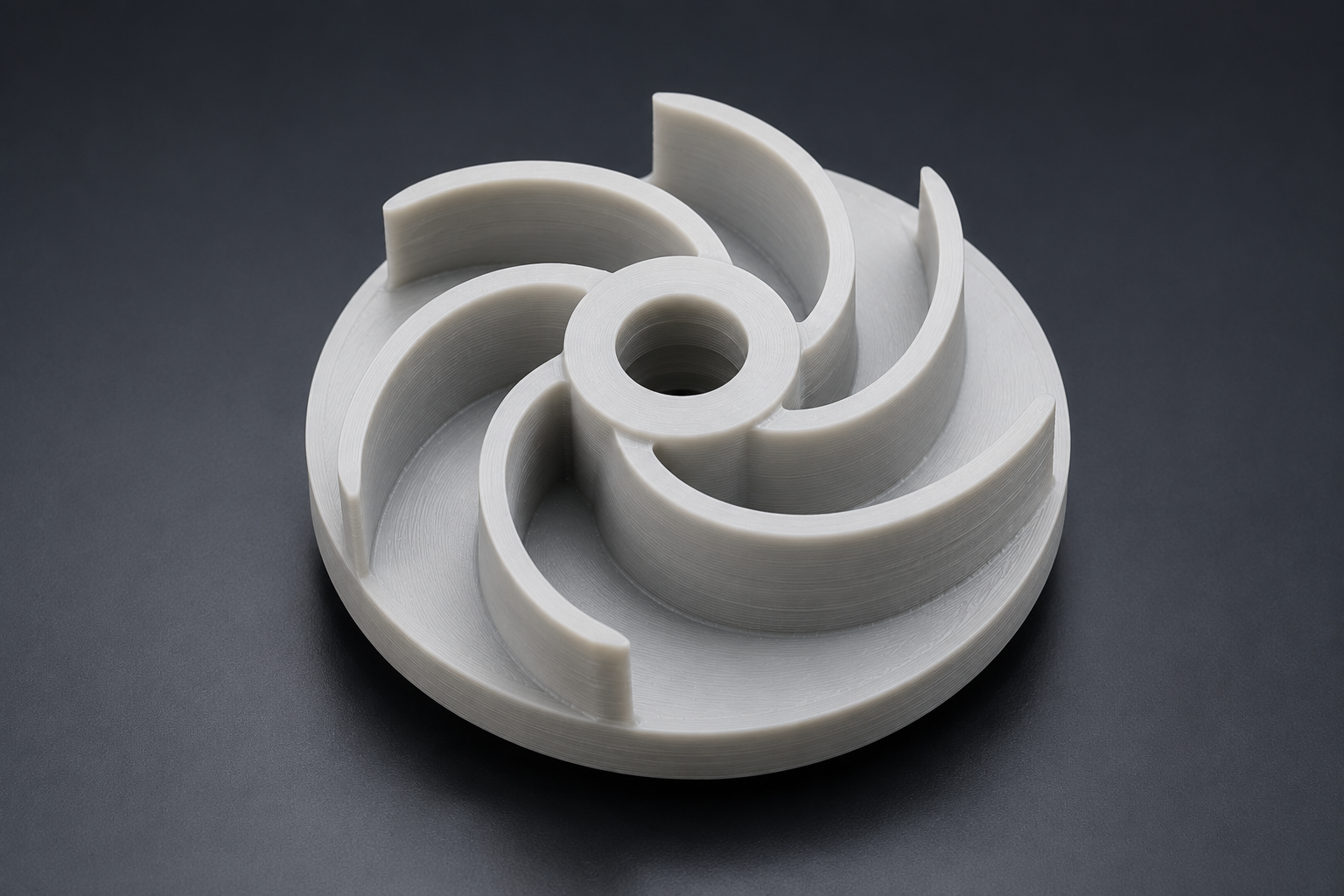
    AI-generated rendering of 3D printed irrigation pump component. Rendering courtesy of 3DPrint.com.

    One of the clearest uses for additive manufacturing (AM) in irrigation is producing replacement parts on demand. Instead of waiting for shipments, operators or service providers can fabricate components locally using digital designs.

    For example, custom impellers used in irrigation pumps can now be reproduced from durable polymers or composites. While these 3D printed parts may not always replace high-volume industrial manufacturing, they serve as effective interim solutions that keep systems operational until permanent replacements arrive.

    This can be especially useful in rural or remote areas, where shipping delays are common

    Reducing Repair Timelines from Weeks to Days

    In many real-world scenarios, AM has significantly reduced repair timelines. What once took 2–3 weeks for sourcing and delivery can now be addressed within a matter of days.

    Some agricultural service providers are already adding 3D printing to their maintenance workflows. Keeping digital files of commonly used parts also makes it easier to respond quickly when equipment fails.

    Companies that work extensively in water pump distribution and irrigation systems are observing this shift firsthand. The ability to quickly source or reproduce parts is becoming a competitive advantage in supporting agricultural clients during critical periods.

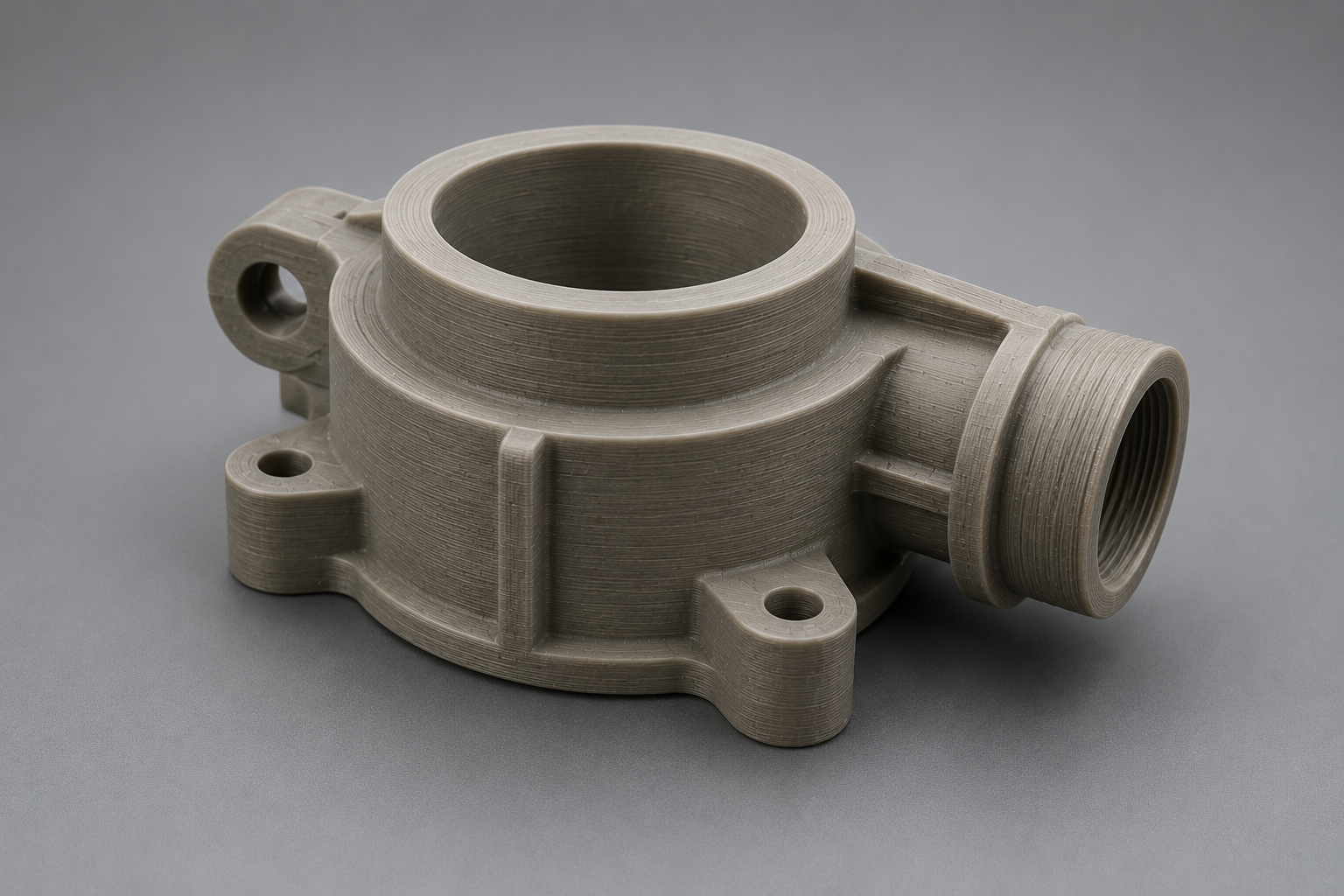
    AI-generated rendering of a 3D printed pump housing created for rapid replacement and localized production in irrigation systems. Rendering courtesy of 3DPrint.com.

    Diaphragm pumps, commonly used in agricultural irrigation and fluid transfer, are another area where AM is proving useful. Components such as housings, covers, and non-critical internal parts can be produced using 3D printing when standard replacements are unavailable.

    Additionally, older or legacy systems — where original parts may no longer be manufactured—benefit greatly from this approach. In some cases, older components can be reverse-engineered and reproduced, helping extend the life of equipment that might otherwise be difficult to repair.

    Supporting Hybrid Irrigation Systems

    With the rise of hybrid irrigation systems integrating solar-powered pumps and smart controls, the need for adaptable, quickly replaceable components has increased. AM supports this evolution by enabling custom modifications and rapid prototyping for system upgrades.

    For instance, brackets, connectors, and custom fittings can be designed and produced to fit specific configurations, improving system efficiency without long procurement cycles.

    While AM is often associated with prototyping, its role in irrigation is now clearly operational. Farmers and service providers are not just testing concepts—they are using 3D printed components in the field to maintain continuity and reduce risk.

    The biggest advantage is flexibility. Instead of being dependent solely on traditional supply chains, agricultural operations now have an additional tool that enhances resilience and responsiveness.

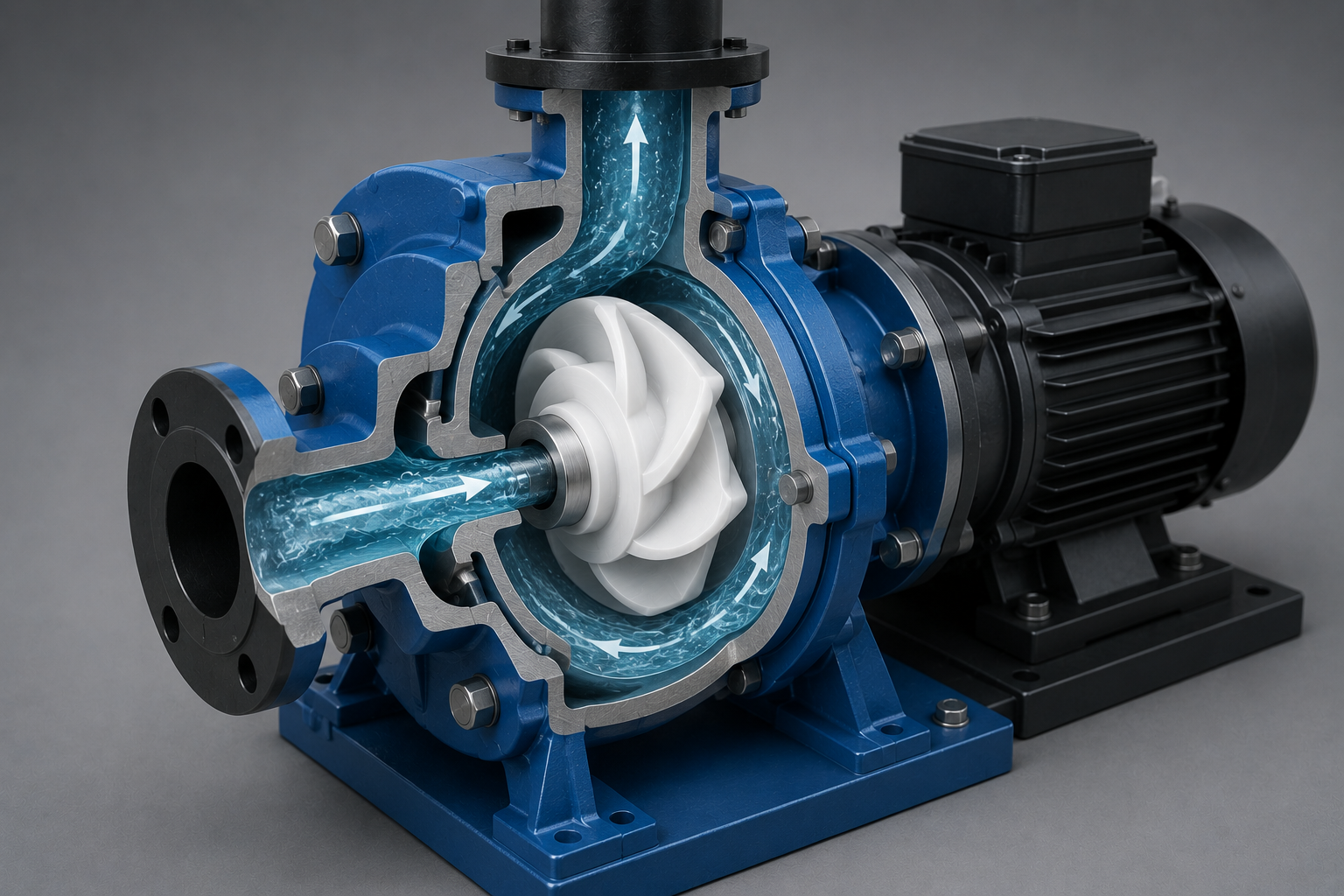
    Cutaway rendering of a water pump showing a 3D printed impeller and internal flow path for agricultural irrigation applications. Rendering courtesy of 3DPrint.com.

    As material quality continues to improve and access to AM becomes more widespread, its adoption in irrigation systems is expected to grow. While it may not replace conventional manufacturing for all components, it will increasingly serve as a reliable backup and support system.

    In farming, even a small reduction in downtime can make a real difference. AM is proving to be a practical solution that helps keep water flowing, exactly when it matters most.

    About the Author:

    David Starr has been involved in the Ken’s Distribution Company for more than 10 years. He deals with residential and commercial water pumps. He is well-versed in Clean water, Lawn and Irrigation, Sump, Effluent/Sewage, Multi-purpose, Frame mount, Engine drive, Centrifugal Pumps, and CH&E Diaphragm Pumps. He specializes in water pumps and repair parts for Monarch, Franklin Electric, Red Lion Products, Generac, and CH&E (Magnum Diaphragm Pumps).

  • UltiMaker Targets Defense Manufacturing With New Factor 4 Plus

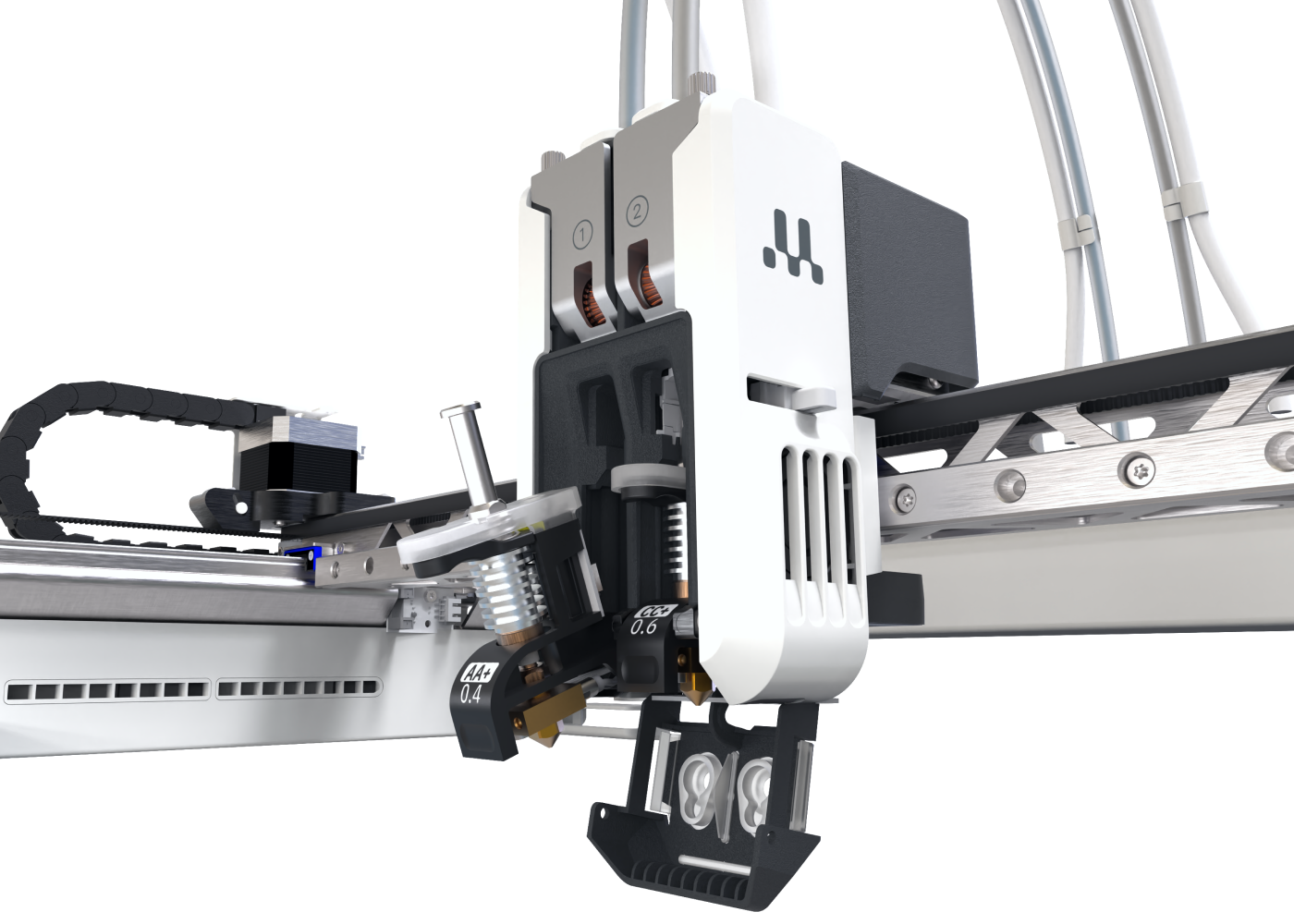
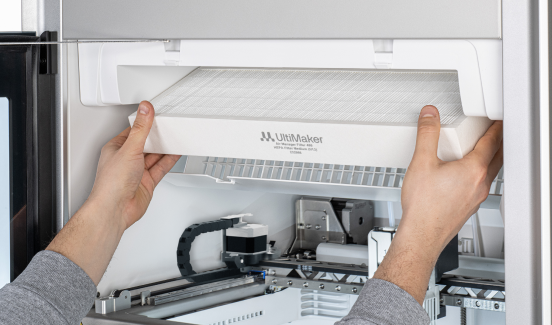
    UltiMaker has announced the new Factor 4 Plus. The printer, which sits above the S series, has a 330 x 240 x 300 mm build volume and a 120-kilo dual-nozzle material extrusion system. The printer has UltiMaker’s standout feature: swappable print cores that significantly reduce downtime and operator time.

    The machine will sell upwards of $15,000 and is aimed at manufacturing applications. The company now has new traceability features in place and says the system is twice as fast as the previous one. The TRACE (Technical Reporting and Certification Engine) is an automated feature that tracks every print and is said to improve QA. The system generates a CAD validation report for every print. The system is meant to be robust and rugged.

    Improved lifetime-tested Gantry for the UltiMaker Factor 4 Plus. Image courtesy of UltiMaker.

    UltiMaker CTO Arjen Dirks explained,

    “When I talk directly with our customers, one message comes through consistently: speed is great, but proving the quality of the part is the real challenge. TRACE was built directly in response to that feedback and I’ve seen firsthand what an incredible improvement it makes. Pulling validation data straight from the hardware gives customers the confidence and traceability they need to scale
    additive manufacturing into true production environments.”

    And UltiMaker’s SVP EMEA Andy Middleton added,

    “The Factor 4 Plus reflects UltiMaker’s focus on solving the real production challenges facing manufacturers and defense teams today. This is not about adding another machine to the portfolio. It is about listening closely to the market and delivering the speed, traceability, resilience, and affordability customers need to scale additive manufacturing in demanding, real-world environments.”

    The company hopes that it will be used in the field, particularly in defense. The company even thinks that it can be used forward-deployed. The company also made a Cheetah motion planner that is said to reduce vibration and better account for stepper motor acceleration and head torque than other motion planners. The company says that it has a “commitment to delivering practical, scalable additive manufacturing solutions for both industry and defense while remaining significantly more cost-efficient than other industrial 3D printing platforms.”

    HEPA filters for the Factor 4 Plus. Image courtesy of UltiMaker.

    UltiMaker’s current line-up is still very confusing, and it’s unclear which system is for whom. The company is known for a good UI, a good overall user experience, and making long-lasting printers. The focus on defense, therefore, is logical. Indeed, there are many fewer European 3D printing companies now. Previously, Europe dominated the desktop market for Pro and mid-tier systems. UltiMaker could therefore build a reliable, long-lasting, well-running system for industrial firms, large enterprises, and the military.

    Defense 3D printing and forward-deployed 3D printing are becoming more important and will give them steady clients and revenue. For many, however, lower-priced Bambu and other systems will continue to be the most obvious choices. If UltiMaker can demonstrate that it can run for extended periods in rugged conditions, it could find a very profitable niche for itself. If it could perform on oil installations, for example, at construction sites, and with the military, it could develop a cult following once again. Longevity, reliability, and being designed with the user in mind have traditionally made UltiMakers good systems. Generally, they’ve been the longest-lasting systems for most people. Claiming that heritage, living up to it, and somehow demonstrating it to buyers will be key for the company’s future.

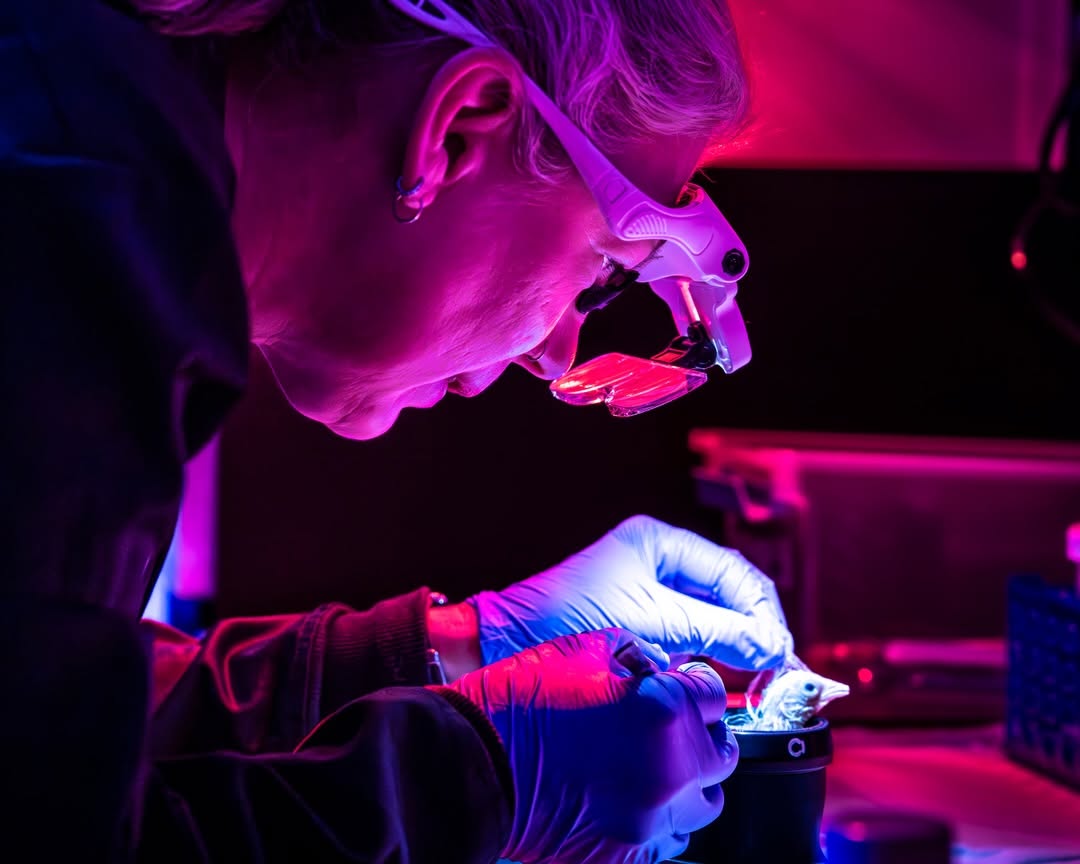
  • The Company Trying to Bring Back the Mammoth Just Hatched Chicks Using 3D Printed Eggs

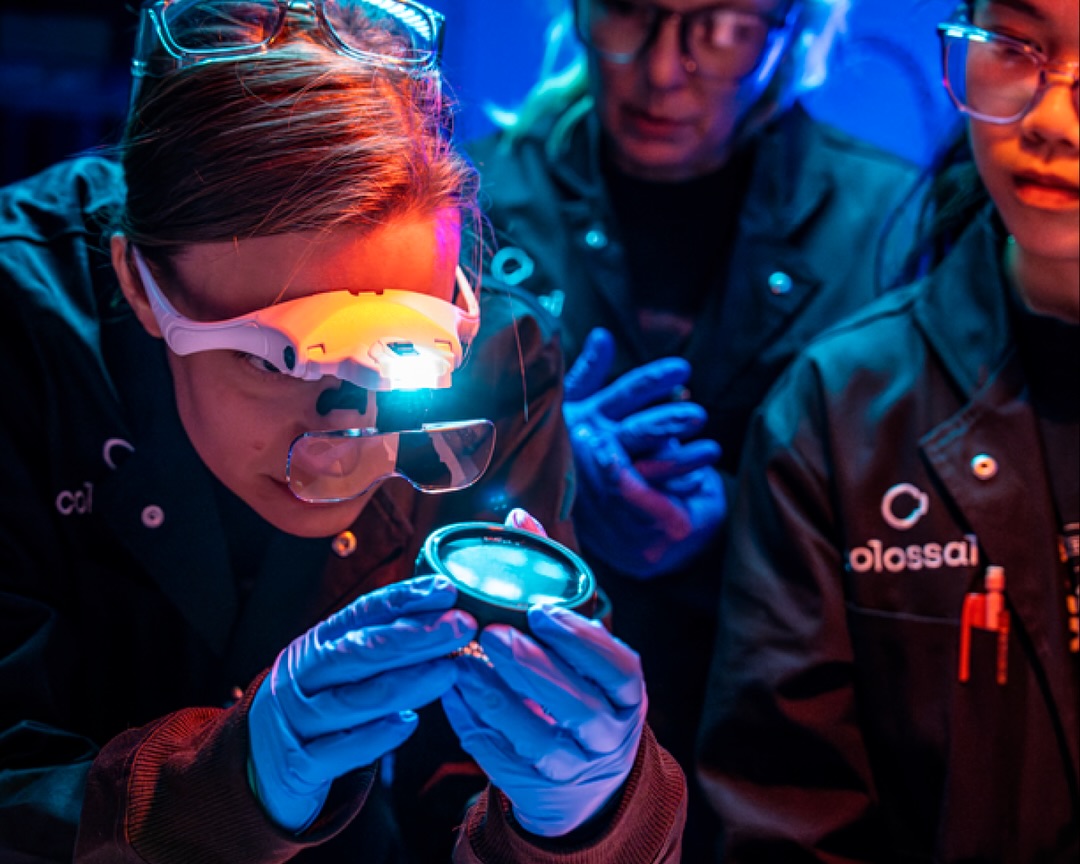
    Woolly mammoths. Dire wolves. Dodos. The list of extinct animals tied to Colossal Biosciences is already impressive. Now the company is adding another unusual project to that growing lineup. Researchers at Colossal say they have successfully hatched 26 live chicks using an artificial egg system that combines silicone membranes with a 3D printed shell designed to recreate some of the conditions inside a natural egg.

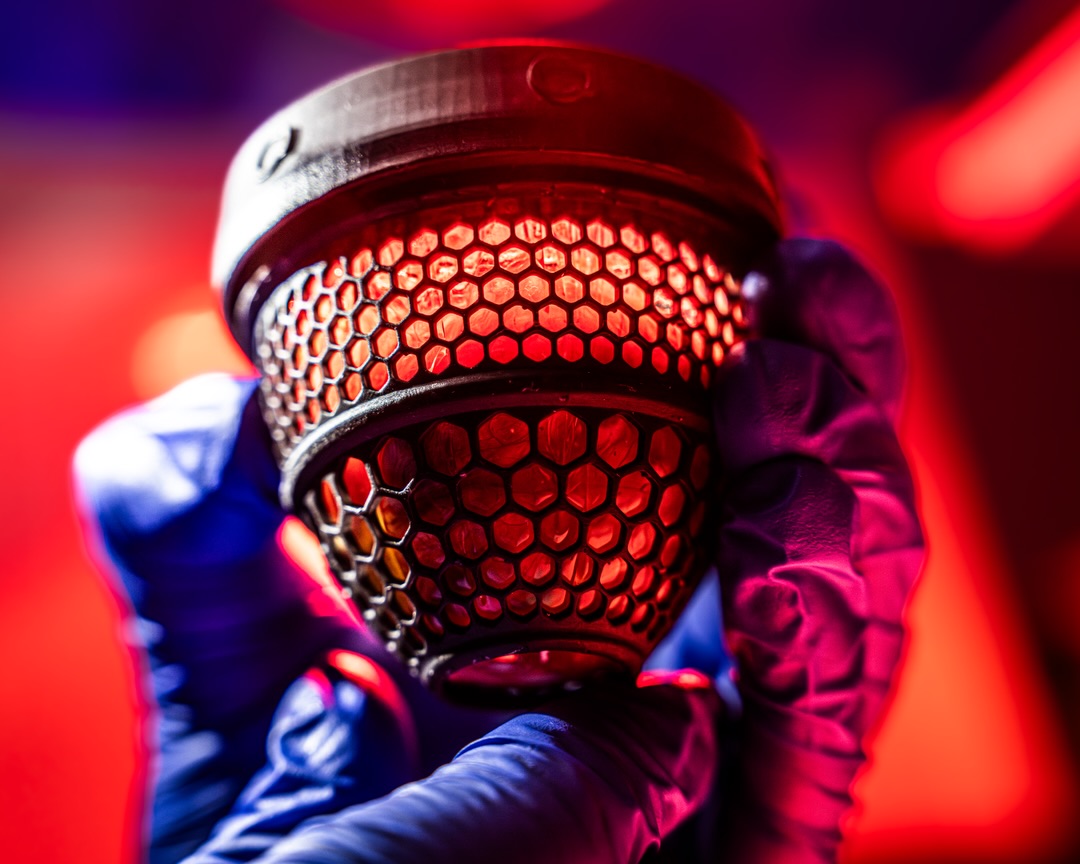
    According to information shared with 3DPrint.com by the company, some prototype versions of the shell were produced using a Formlabs Form 4 printer and BioMed Black Resin before later iterations were developed in titanium. The Dallas-based company believes the technology could eventually help conserve endangered bird species and support future de-extinction efforts involving birds that resemble extinct animals like the dodo or the giant moa. For species such as the giant moa, artificial incubation systems may be essential because no living bird is large enough to naturally incubate eggs of that size.

    An egg from the extinct South Island giant moa held around 80x the volume of an average chicken egg. Image courtesy of Colossal Biosciences.

    As with all of its previous announcements, this one sparked plenty of attention far beyond the biotech world. After all, baby birds emerging from synthetic eggs designed in a lab sounds like something pulled from a Michael Crichton novel. But beneath the science-fiction-like headlines is a story about incubation, oxygen exchange, materials engineering, and the growing role of advanced manufacturing in biotechnology.

    The project recently drew attention online after Microsoft executive Mohak Shroff visited Colossal’s Exogenous Development Lab and described seeing a “3D printed shell and a gas-permeable membrane” designed to reinvent the egg through technology. According to Shroff, Colossal scientists explained how the system was engineered to recreate the environment embryos need to survive and develop outside a natural shell.

    The artificial incubation system developed by Colossal is not just a plastic egg but an engineered structure that mimics key functions of a natural eggshell during embryonic development.

    In a normal bird egg, the shell does much more than provide protection. It controls oxygen flow, moisture, gas exchange, and calcium transfer during development. In fact, researchers have spent decades trying to recreate the conditions inside a natural bird egg, but replicating oxygen exchange, humidity, mineral transfer, and embryo protection artificially has proven exceedingly difficult.

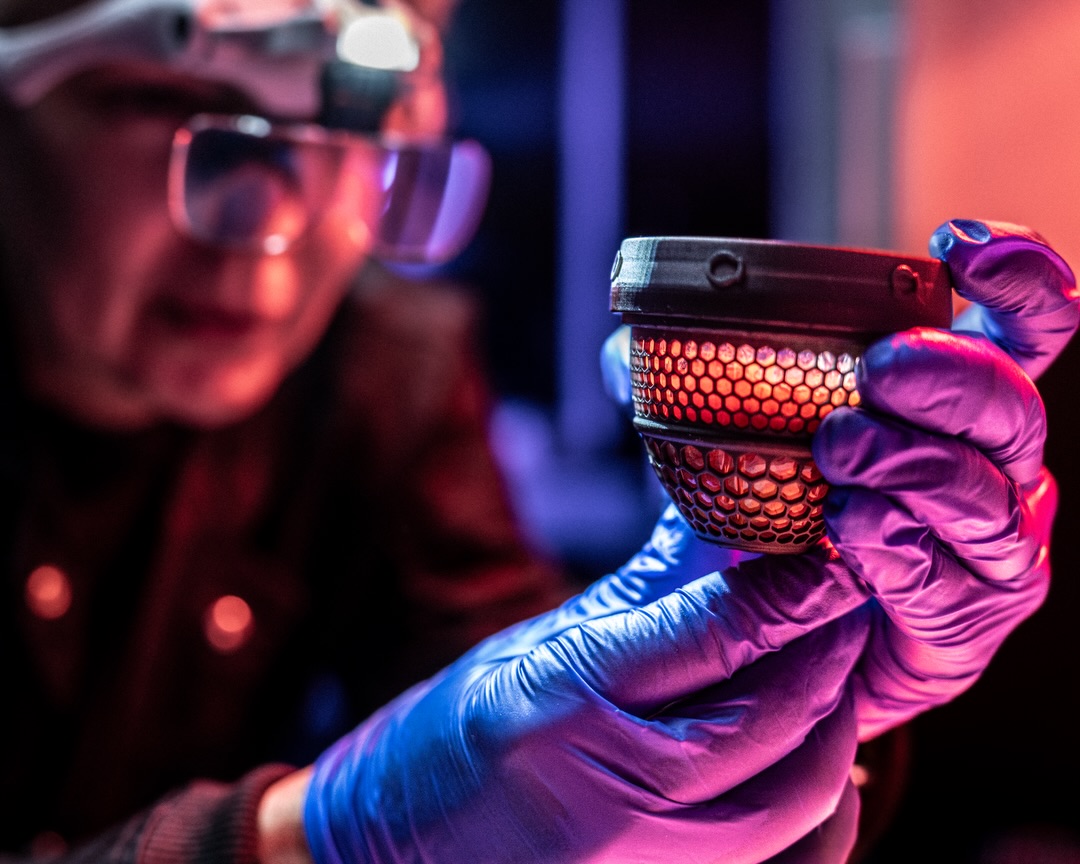
    Colossal’s system uses a soft silicone membrane and a rigid 3D printed shell designed to imitate some of the key functions of a real eggshell. The goal was to create an environment where the embryos could still breathe, grow, and develop normally, even without a natural shell. In the end, 26 chicks successfully hatched.

    The Colossal artificial egg. Image courtesy of Colossal Biosciences.

    Colossal says the technology could one day help bring back extinct species. But the system could also help with something much more immediate, protecting endangered birds. Artificial egg systems like this could help conservation groups hatch eggs that are damaged, abandoned, too fragile, or difficult to incubate naturally. And that alone would be huge.

    Around the world, many conservation programs already use incubators to help save endangered species. Birds like the California condor, for example, have depended heavily on artificial incubation and captive breeding programs to survive. But bird embryos are extremely delicate. Small changes in oxygen, humidity, or airflow inside the egg can mean the difference between life and death for a developing chick.

    And this is often where 3D printing finds its place. When the problem becomes too specialized, too delicate, or too difficult for traditional manufacturing, additive manufacturing tends to step in.

    Traditional manufacturing is not very good at handling constant changes and customization. Different bird species can have different egg shapes, shell thicknesses, and incubation needs. 3D printing makes it much easier for researchers to quickly adjust and test new designs without having to build entirely new molds or manufacturing tools every time.

    The system is not simply a fully 3D printed egg replacing a natural shell. Instead, the printed structures appear to work alongside silicone membranes to help recreate the environment a developing chick needs to survive.

    The project also shows how 3D printing is increasingly being used in biotechnology. Researchers are already using the technology to create things like tissue structures, organ models, surgical tools, and customized medical devices. Artificial incubation systems may now become part of that growing list. The work also shows how biology and manufacturing are starting to overlap more and more. And in this case, one of the biggest breakthroughs for 3D printing may be learning how to create an artificial environment delicate enough to help sustain life.