• Loughborough University Using Freemelt’s EBM Technology to Drive AM Research

    To help drive additive manufacturing (AM) research, Loughborough University in England is using Electron Beam Melting (EBM) technology from Swedish metal AM company Freemelt. This work is being led by Moataz Attallah, Professor of Advanced Materials Processing (Metallics) and the Dean of the School of Aeronautical, Automotive, Chemical, and Materials Engineering. Loughborough is only the latest in an ever-growing list of research institutions and companies around the world, from the U.S. and Italy to Sweden, Hungary, and the U.K., to adopt Freemelt’s solutions.

    Professor Attallah has been working with laser-based AM for over 15 years, and knows well the strengths, as well as the restrictions, of laser technologies, especially when it comes to printing challenging metals like copper, molybdenum, niobium, tungsten, and tantalum. One of the main reasons Professor Attallah and Loughborough chose Freemelt is due to its open architecture design.

    “Electron beam technology succeeds where other additive techniques have struggled. The Freemelt system stands out by being open, flexible, and accessible for researchers. It allows us to experiment with parameters, explore new alloys, and develop processes that are impossible on closed commercial platforms,” Professor Attallah explained.
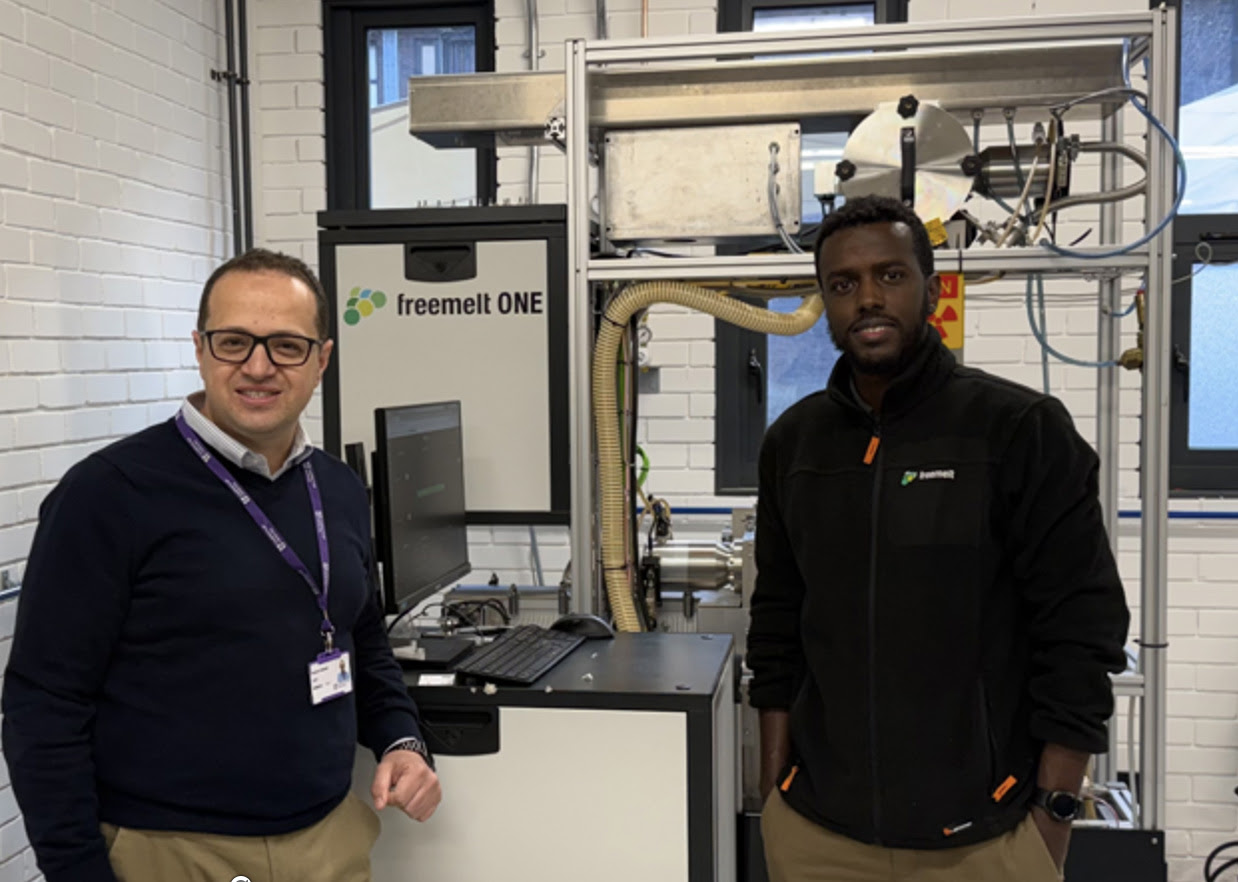
    L-R: Professor Moataz Attallah, Loughborough University, and Mohamed Said, Service Technician at Freemelt. Image: Loughborough University.

    Open systems offer users more control over printing process parameters, and make it possible to experiment with proprietary and commercial alloys. All of these factors are very useful in a research setting. With open architecture designs like Freemelt’s, researchers can enjoy much more flexibility, but without the typical barriers that come with industrial machines and jam up the process.

    “The uniqueness of Freemelt lies in its open-source approach, affordability, and capability to push boundaries in materials science. It empowers universities and research labs to do the real science that drives the field forward,” Professor Attallah continued.

    Freemelt has been steadily making a name for itself in the industry. The company prides itself on being a “productivity partner,” as its website states, offering customers strong technical support right from the start, all the way to full-scale production. The company also currently offers free sample parts, so potential customers can carry out initial testing and determine technical feasibility before acquiring a Freemelt system.
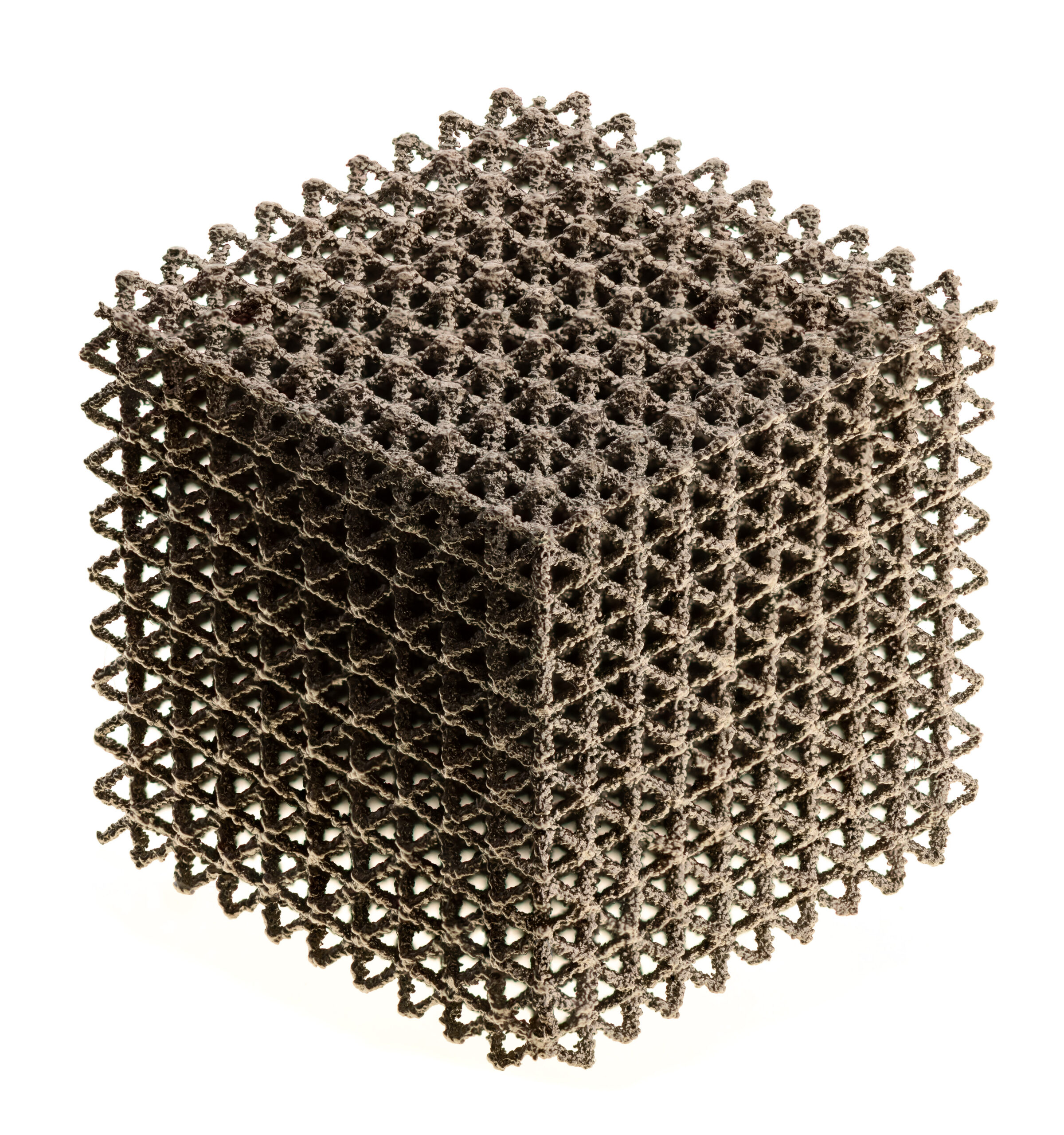
    Cube lattice in Ti64. Image courtesy of Freemelt.

    The Freemelt ONE, developed specifically for materials research, has already been fully integrated into the materials lab at Loughborough University. As opposed to other laser-based systems, EBM technology operates in a vacuum environment, which makes it a good choice for highly reflective and oxygen-sensitive materials for aerospace, defense, and energy applications. It features a 6 kW electron gun for fast processing, >1200 °C powder bed temperatures, and a small, 70L vacuum chamber. It also has exchangeable panels for easy cleaning access, which makes it a particularly good fit for a research setting.

    The university says its Freemelt ONE is already being used for several high-impact research projects, including the exploration of niobium-based alloys for spacecraft propulsion systems, investigating 3D printing of refractory alloys and the role of oxygen uptake in a collaborative project led by the University of Birmingham, and developing advanced tungsten structures with Tokamak Energy and Metamorphic.

    “If we want to build nuclear fusion reactors or next-generation spacecraft, we need sustainable manufacturing methods for critical materials,” Professor Attallah said. “EBM not only enables this but also offers the scalability and efficiency to make it viable.”

    By combining Freemelt’s open architecture with process optimization driven by artificial intelligence/machine learning and alloy development, the Loughborough University researchers can speed up print parameter discovery, make builds more robust, and grow their qualified materials window.

    Featured image courtesy of Freemelt
  • Leading Chemical Manufacturer Kureha Makes Strategic Investment in Z-Polymers’ Advanced 3D Printing Materials

    Aside from rising gasoline prices, the US still hasn’t seen much direct economic impact from disruption to Strait of Hormuz maritime traffic. However, it’s only a matter of time before that situation changes, and other countries—especially in Asia—have already begun enacting emergency measures to help alleviate the pain of price shocks for businesses and consumers.

    This isn’t a vague, hard-to-pin-down prospect. There’s one material that’s in virtually everything, for instance, which should be expected to lead to sustained inflation for some time, as the effects of the conflict in Iran filter into the broader economy: plastics. About 15 percent of the planet’s polyethylene (PE), for instance, which is the most common plastic on the market, comes from the Middle East.

    From one perspective, this is just as negative for the additive manufacturing (AM) industry as it is for all other businesses, but there’s also reason to believe that it will catalyze greater interest in AM, if only as a way to reduce material waste. With that in mind, we should expect to see more deals like the one just announced by leading global chemical supplier Kureha Corporation, based in Japan, and Massachusetts-based manufacturer of advanced 3D printing materials, Z-Polymers.

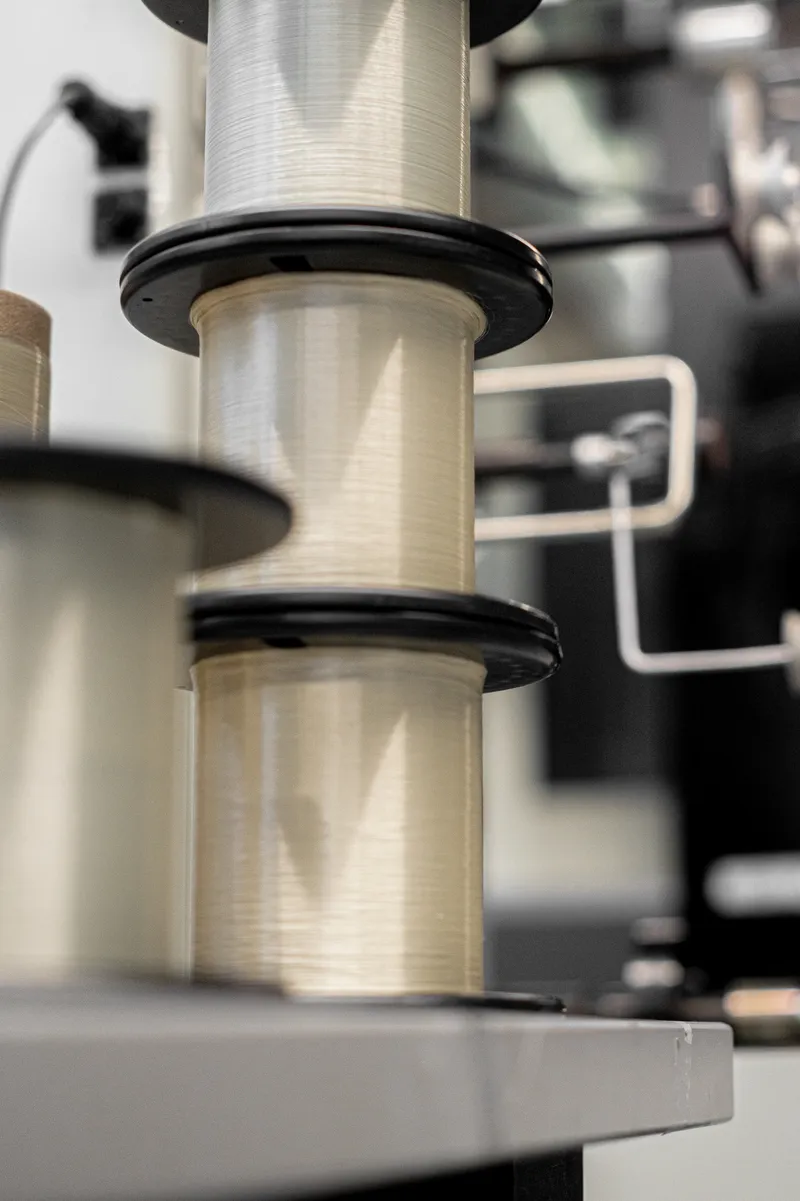
    The deal is twofold: in addition to Kureha making a seed investment in Z-Polymers for an undisclosed amount, the two companies have also formed a joint development agreement (JDA) that aims to accelerate the commercialization of Z-Polymers’ proprietary Tullomer material. Tullomer is a liquid crystal polymer (LCP), optimal for applications that require high strength, corrosion-resistance, and low dielectric loss.

    Founded in 2021, Z-Polymers’ origins as a spin-out from the University of Massachusetts Lowell Innovation Hub make the company a good fit for working with Kureha, which excels at specialty materials and prioritizes staying ahead of the curve with a robust R&D program. The compatibility of Tullomer with low-cost FDM printers gives the company an inherent edge in an R&D setting.

    In a press release about Kureha’s investment in and partnership with Z-Polymers, Naomitsu Nishihata, SVP of Kureha Corporation, said, “We believe Z-Polymers’ technology platform represents an exciting advancement in high-performance polymer materials. Through collaboration with innovative companies like Z-Polymers, we aim to expand advanced materials solutions for global markets.”

    Dr. Michael Zimmerman, founder and CEO of Z-Polymers, said, “Kureha’s investment represents strong validation of the technical foundation and commercial potential of the Tullomer platform. By combining a new class of liquid crystal polymer materials with scalable manufacturing methods, we believe this platform can enable high-performance polymer fibers with capabilities beyond many existing melt-processable materials.”

    Z-Polymers’ trajectory from a university spin-out to a partner of a leading chemicals supplier reminds me of a topic I wrote about multiple times last year, and which I think will only continue to gain in relevance: the importance of ensuring that manufacturing innovation has the opportunity to thrive at research universities. Any nation that wants to help itself revitalize its manufacturing landscape needs to include secondary education as a key component in the overall industrial strategy.

    With that in mind, the relationship between Kureha and Z-Polymers suggests the opportunity to accelerate efforts to do the same on an international level. Japan and South Korea are among the countries that have already cut polymer production output in response to Hormuz-related supply chain disruptions.

    At the same time, nations like Japan and South Korea possess national innovation ecosystems that the US and other Western nations could greatly benefit from emulating. Trading US fossil fuel feedstock for emerging technology collaboration would seem to be an ideal solution.

    That may run contrary to the US’s current stance of alienating all its traditional allies, but such an approach is proving to be unsustainable from just about every angle. The US may have succeeded at taking hostage of the world’s energy supplies in the near term, but eventually, America’s partners will want something in return, or they’ll find their own way. Combining forces in order to give the next generation options to be hopeful about would be a step back in the right direction.

    Images courtesy of Z-Polymers

  • 3D Printed Bone Grafts From Georgetown Researchers Could Replace Traditional Implants

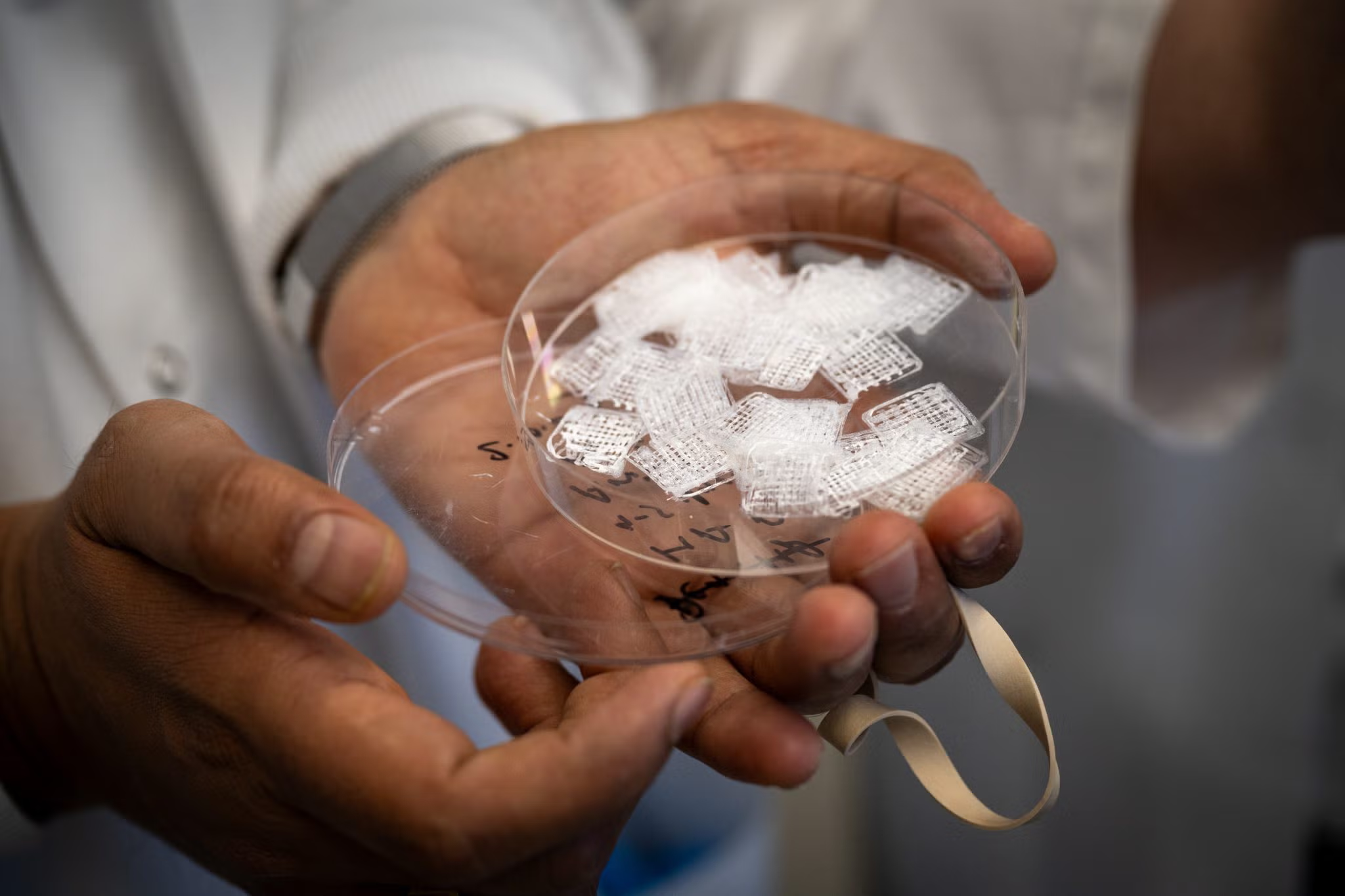
    Researchers at Georgetown University are developing a new type of 3D printed bone graft designed to work more like real human bone. Instead of relying on metal implants or donor bone, the team is using natural materials to create structures that support healing and help the body regenerate bone.

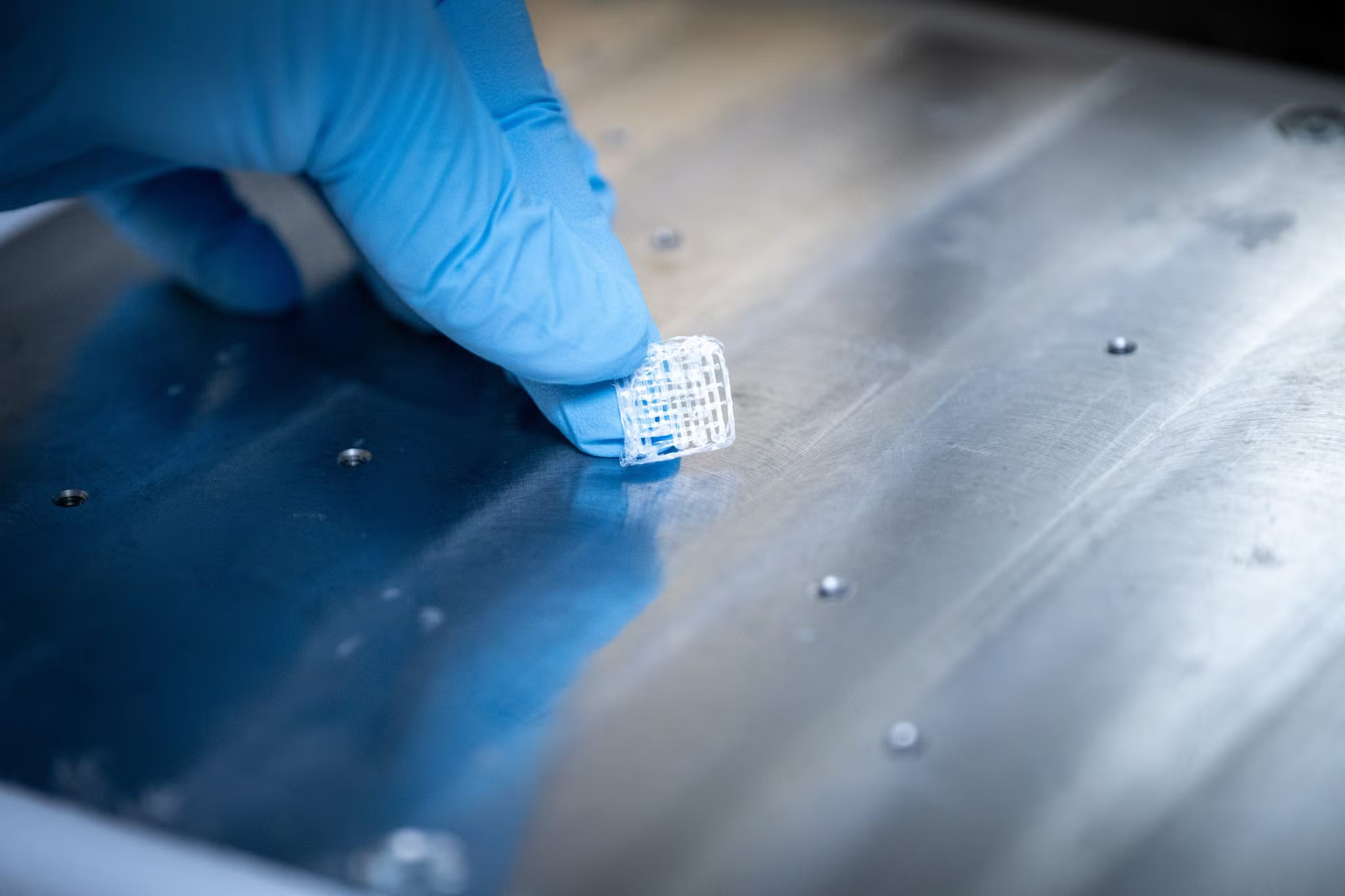
    Alimperti’s pectin-based bone grafts.

    Bone grafts are commonly used in surgeries to repair or replace damaged bone. This can include procedures related to trauma, cancer, or dental implants. Today, doctors generally rely on three main options: taking bone from the patient’s own body, using donor bone, or implanting synthetic materials such as metal. Each approach has its limitations. For example, removing bone from a patient can cause more pain and complications, while donor bone carries risks of rejection or disease transmission, and metal implants do not behave like natural bone. They are often harder than natural bone, so they do not flex the same way under pressure. This can change how stress moves through the area, slowing healing. They also do not support new bone growth in the same way as living tissue.

    The Georgetown team is trying to solve these problems by creating grafts that are closer to real bone. Their approach uses pectin, a natural substance found in fruits, combined with minerals similar to those in bone. Using 3D printing, they shape this material into structures with small pores that look like the inside of real bone.

    In this design, the pectin is placed between two layers of a bone-like material called hydroxyapatite, which is naturally found in human bone and is made mostly of calcium and phosphorus. This outer material adds strength and density, helping the graft behave more like natural bone. The team also includes living cells in the structure to support healing and allow nutrients to move through the structure. The work is mainly focused on facial bones and long bones, such as those in the arms and legs, which need both strength and the ability to heal properly.

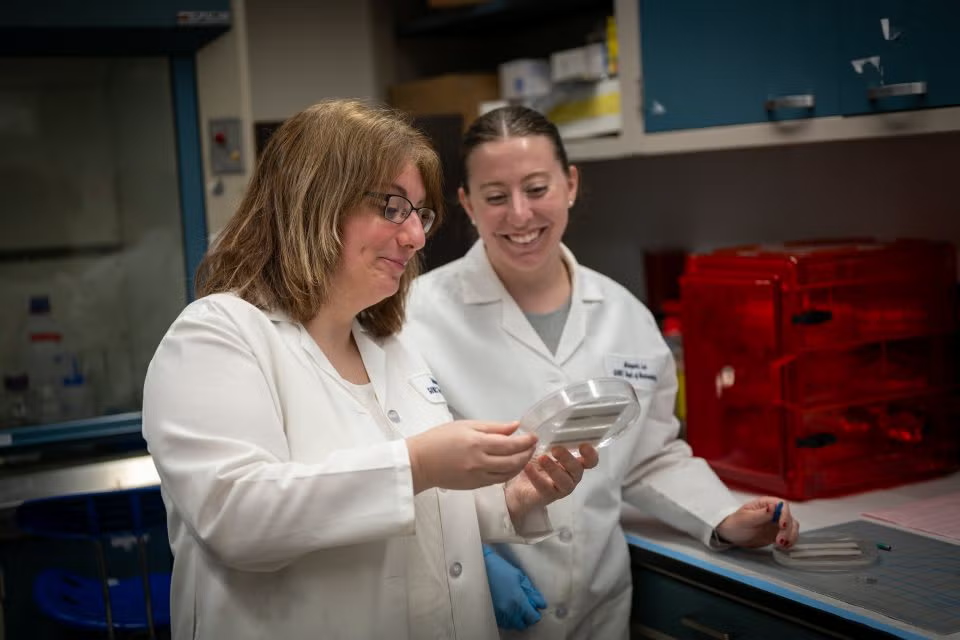
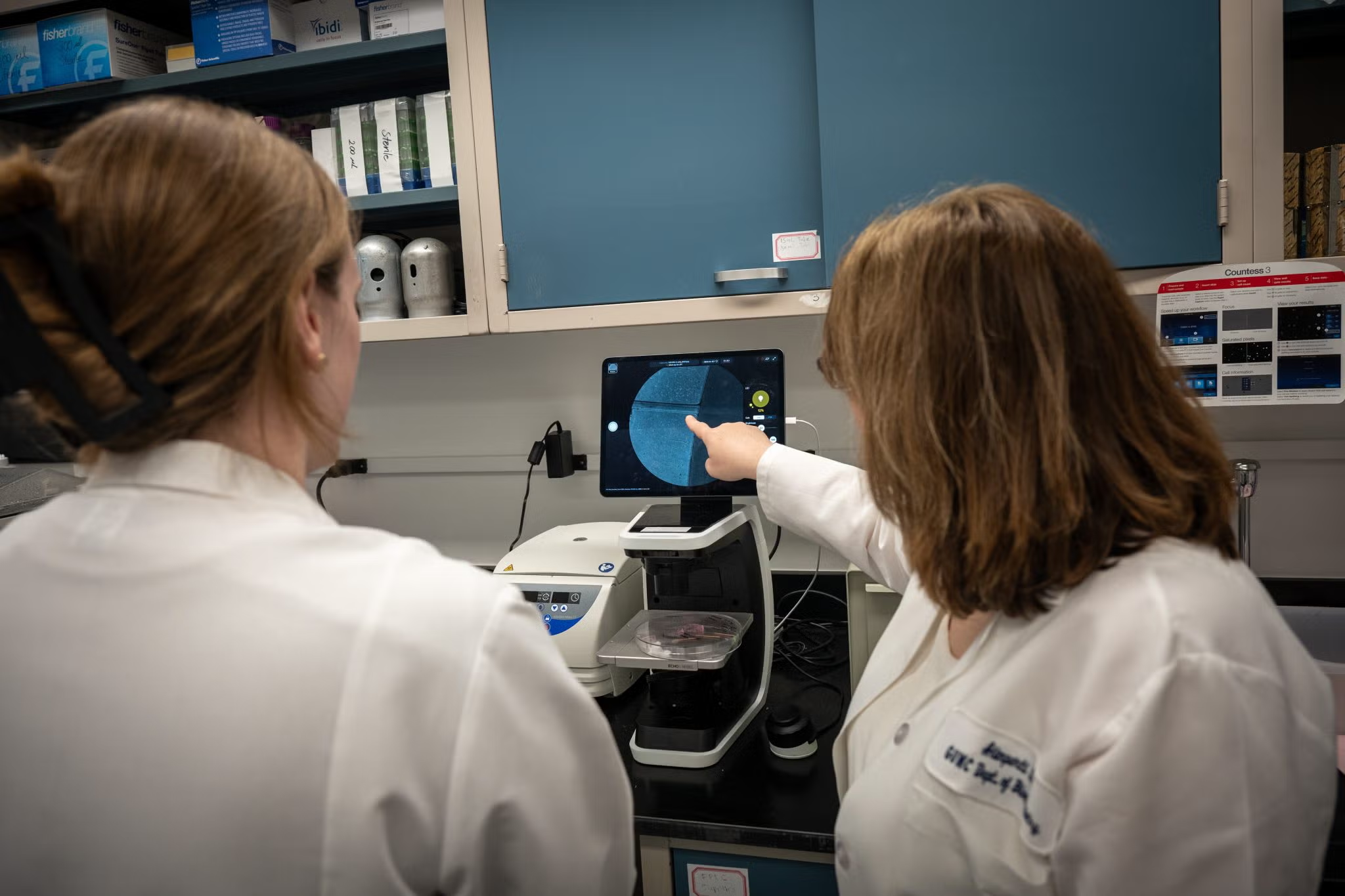
    Styliani Alimperti, in her lab, is working with a team to create a bone graft using more natural materials that can make procedures safer and more successful.

    “The process of making the body regenerate its own tissue is very challenging because of aging, injury, and other factors,” explained Stella Alimperti, an associate professor of biochemistry and molecular and cellular biology in the School of Medicine, where she leads a research lab focused on tissue engineering. “Engineering tissue parts or whole organs that are closer to the native ones with the proper structures and cells will help the regeneration and restoration of the tissue.”

    With our technology, we want to make new grafts. We don’t want to take anything from the patient. We can create new bone tissue without having all these complicated surgeries and using metal and other parts.”

    Alimperti is working with Georgetown’s Office of Technology Commercialization and has a patent pending, with the goal of eventually making the technology available to patients.

    Right now, her team is focused on improving the durability and longevity of the pectin-based grafts so they can last longer in the body. Future work will also look at how to better tailor the grafts to different patients, including variations in age and sex that affect bone density and strength.

    Alimperti’s pectin-based bone grafts.

    This structure is important because real bone is not solid. It contains small pores and channels that allow blood flow and help cells grow. Traditional implants, especially metal ones, do not match this structure. With 3D printing, researchers can design these features more precisely, creating spaces where cells can attach, grow, and form new tissue.

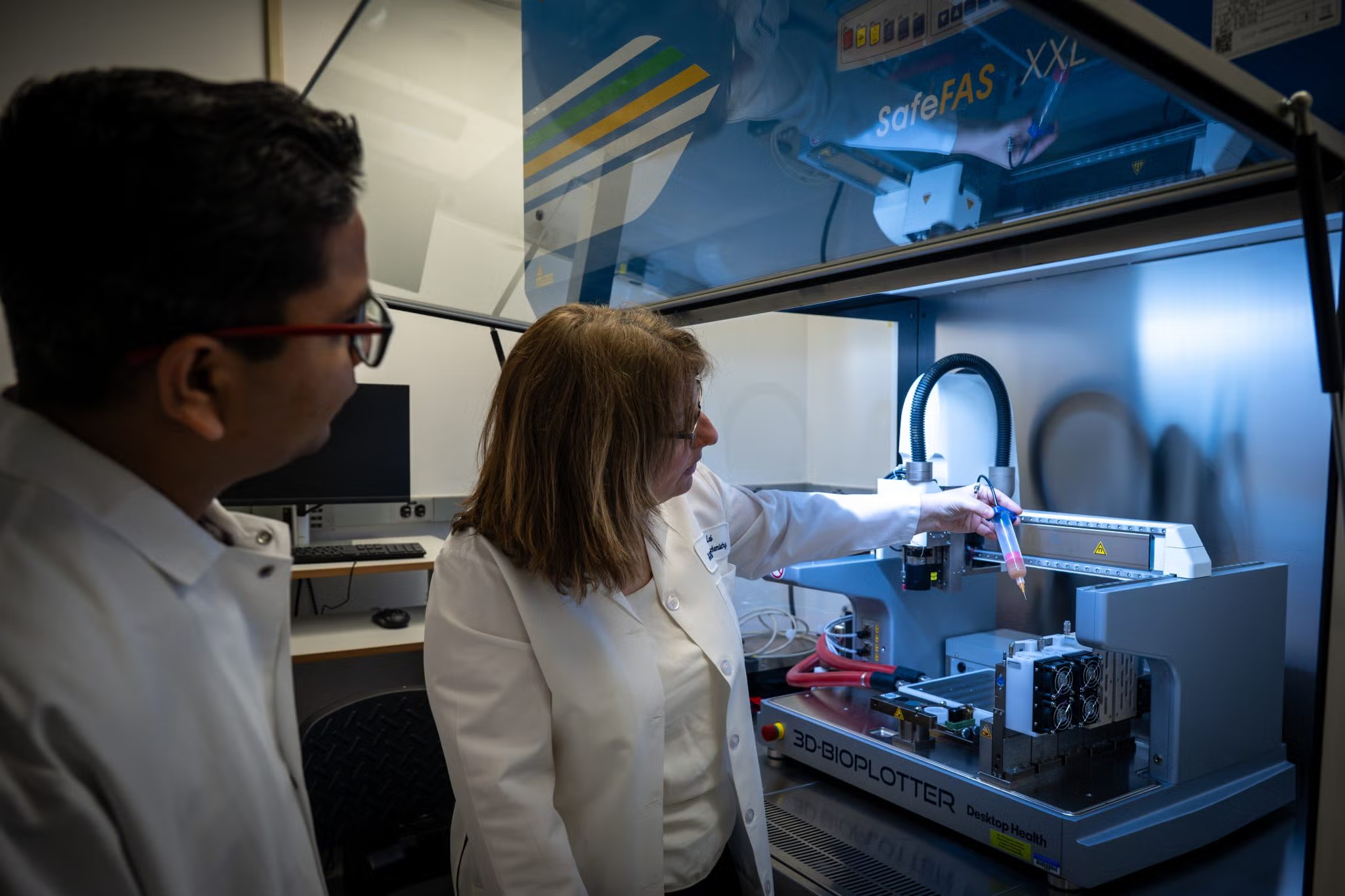
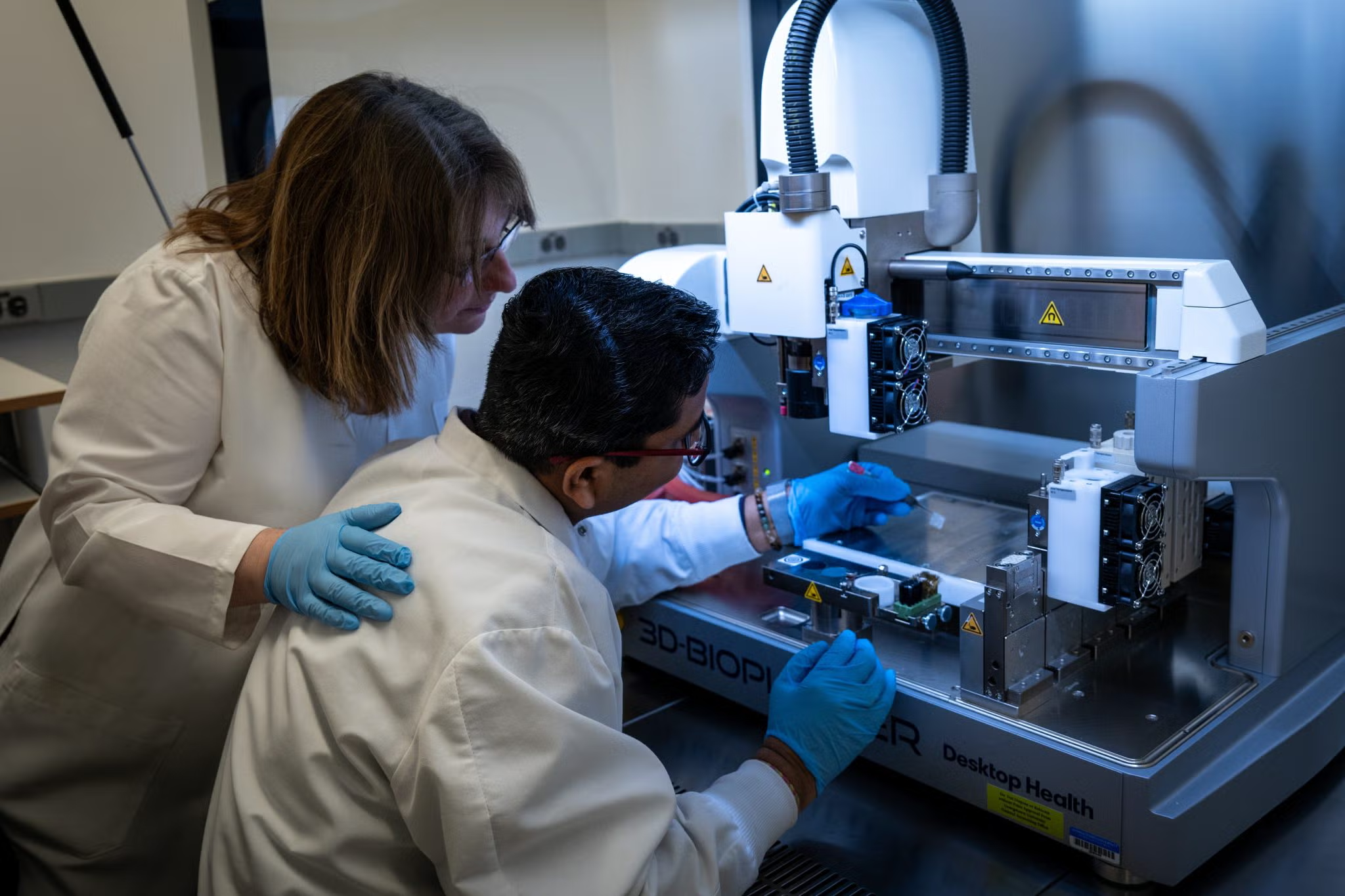
    To do this, the team uses a 3D-Bioplotter, a well-known bioprinting system designed to print soft materials, gels, and cell-based structures. The technology was originally developed in Germany by EnvisionTEC and later acquired by Desktop Metal in 2021, where it has been commercialized under the Desktop Health brand until Desktop Metal’s bankruptcy in 2025. The system uses extrusion-based printing to deposit biomaterials layer by layer, making it widely used in tissue engineering and bone regeneration research.

    Alimperti uses a 3D-Bioplotter to create her pectin-based bone grafts.

    Another part of the work focuses on how the material behaves in the body. Because it is made from natural components, it is less likely to cause a negative reaction. In some cases, the grafts can also include living cells, which can help with healing. Instead of just filling a gap, the idea is to support the body as it rebuilds bone over time.

    This kind of work reflects how 3D printing is being used in healthcare today. Instead of only making fixed implants, researchers are creating structures that work with the body. In this case, the graft acts more like a scaffold, helping guide new bone growth rather than replacing it with a permanent artificial part.

    Alimperti pointing out a cell sample in her lab. Live cells are inserted into bone grafts to promote healing and nutrient flow.

    This work is still at the research stage and has not yet been used in patients. Before it can be used in patients, the team still needs to do more lab testing, followed by studies to check safety and performance. If those go well, the next step would be clinical trials in people and regulatory review. This process can take several years. However, early results suggest that it could offer a safer and more effective alternative to existing options.

    Some 3D printed implants are already used in patients today, especially to replace parts of the skull, jaw, or other bones damaged by injury, cancer, or surgery. But these implants are usually made from materials like titanium and are shaped to match each patient. However, newer approaches that use natural materials and aim to help the body regrow bone are still mostly in early testing.

    Alimperti uses a 3D-Bioplotter to create her pectin-based bone grafts.

    If successful, this type of 3D printed graft could reduce the need for invasive procedures, lower the risk of complications, and improve recovery outcomes for patients. Regenerative approaches are not new, but 3D printing and bioprinting have given researchers more control over how these structures are designed and how they support healing. While the technology is still under development, it focuses on designing structures that support bone growth rather than simply replacing it.

    Images courtesy of Georgetown University

  • From Machines to Mindsets: Why Additive Manufacturing Education Must Start With Teaching, Not Tools

    Additive manufacturing (AM) has reached a turning point in education. The question is no longer whether students should be exposed to 3D printing, but whether that exposure actually prepares students for the realities of modern engineering and manufacturing.

    AM programs are often built around equipment rather than outcomes. Schools invest in advanced printers, dedicate space in labs or makerspaces, and assume that access alone will translate into innovation. And while today’s manufacturers need problem solvers who understand design intent, material behavior, process tradeoffs, and how additive fits within a broader production ecosystem, they often find trainees who approach AM as standalone tool rather than an integrated discipline.

    Without a structured instructional framework, students learn how to operate a machine but not how to apply AM as an engineering solution. Closing that gap creates as many opportunities as it solves problems.

    This shift has been building for years. As AM matured from experimental technology to production-ready capability, expectations changed across industry. Employers began asking for credentials. Students started seeking proof that their skills were transferable beyond the classroom. Educators, meanwhile, were being asked to teach increasingly complex manufacturing concepts, often without the training or resources to do so confidently. That was the inflection point where AM education stopped being about exposure and started being about literacy.

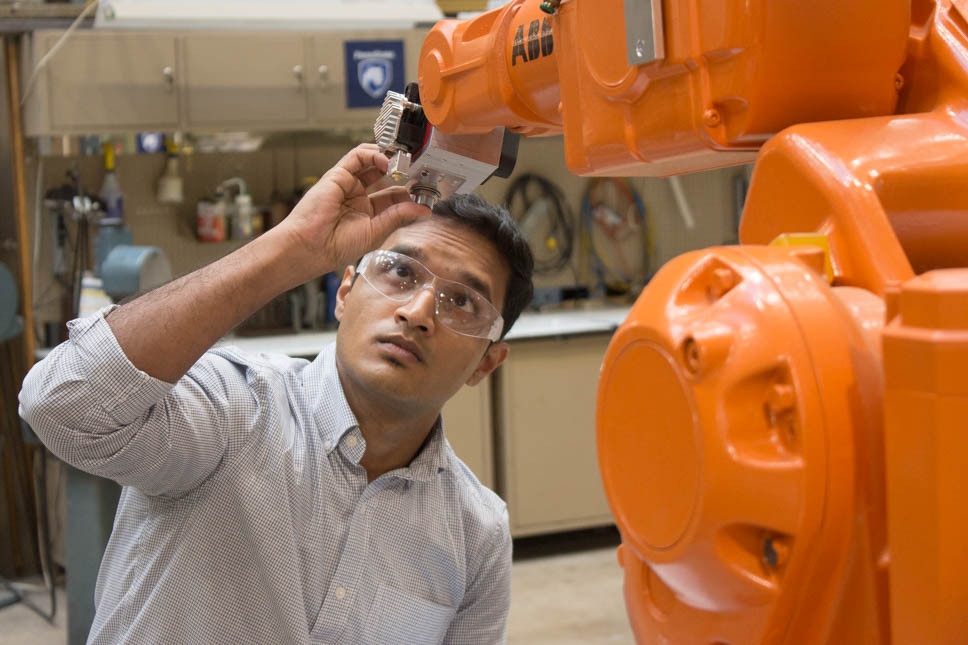
    Rakshith Badarinath works in the Factory for Advanced Manufacturing Education (FAME) Lab, at Penn State. Image courtesy of Erin Cassidy Hendrick/Penn State.

    The critical realization was this: meaningful AM education starts with educators.

    Without guidance, instructors may limit its use to a single course, a single application, or a single material — despite the fact that AM touches design, healthcare, chemistry, aerospace, tooling, and advanced manufacturing workflows. To unlock that range, educators need context, confidence, and curriculum to go along with the hardware.

    That understanding has shaped how education and workforce development are being approached across the additive manufacturing industry. Instead of focusing exclusively on student-facing training, there is increasing emphasis on educator enablement. Certification programs are designed to help instructors make informed decisions: when AM adds value, when traditional methods are better suited, which materials align with specific performance requirements, and how different technologies support different outcomes. When educators gain that fluency, AM stops being an isolated activity and becomes a deliberate part of instruction.

    The impact is measurable. Programs built around structured training and certification tend to use their equipment more effectively, integrate additive across multiple disciplines, and graduate students with a clearer understanding of real-world applications. Perhaps just as importantly, those programs reduce friction as educators become more confident, students become more engaged, and the technology is used with purpose rather than experimentation.

    This education-driven approach has begun to influence industry itself. Manufacturers across automotive, aerospace, and industrial sectors are increasingly adapting academic AM content for internal workforce development. In some cases, companies are less interested in formal credentials than in ensuring their teams understand where AM fits within product development and production. The overlap underscores a core tenet of today’s AM education approach: teaching judgment, not just technique.

    That distinction becomes clear when students encounter industrial-grade materials and workflows. Exposure limited to entry-level polymers can create the impression that all 3D printing behaves the same way. Once students work with advanced materials, tolerances, and qualification requirements, their perspective changes. They begin to understand why material selection matters, how process parameters affect performance, and where AM delivers its greatest value. Those lessons follow them into industry, and shape how they approach engineering problems long after graduation.

    The same principle applies beyond traditional manufacturing programs. In healthcare and life sciences, AM is enabling new approaches to education by making complex anatomy and pathology tangible. In technical and community colleges, students are gaining hands-on experience producing functional components for industry partners. These programs succeed not because they have printers, but because they align AM with real-world objectives.

    At the same time, persistent misconceptions about manufacturing continue to limit participation. Manufacturing is still too often portrayed as low-skill or outdated, despite being one of the most technology-driven fields today. Modern manufacturing demands creativity, automation, software fluency, and systems thinking. Programs that integrate design, AM, and programming better prepare students for the roles they will fill.

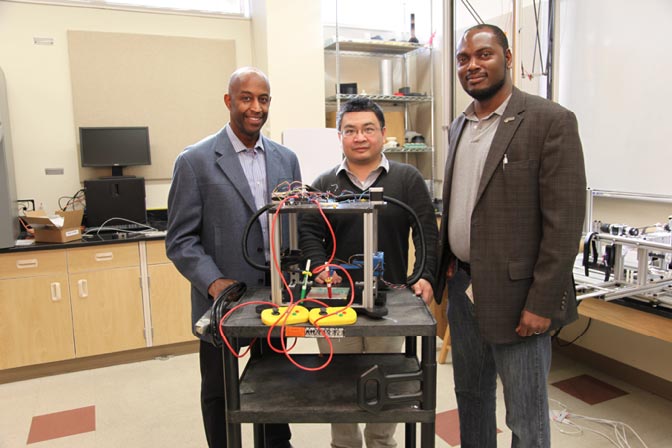
    Professors Carl Moore, Hui Wang and Tarik Dickens are introducing new ideas and strategies to alter the way we manufacture composites via additive manufacturing. Image courtesy of FAMU-FSU College of Engineering.

    Education cannot afford to lag industry. New materials, new processes, and new applications emerge every year. As AM evolves, curricula must be refreshed, instructors supported, and partnerships strengthened to ensure students are learning what employers truly need.

    For schools that still treat AM as optional or extracurricular, the risk is clear. Students are increasingly selective about where they invest their time and tuition. They want skills that translate into opportunity. Programs that fail to embed AM into core learning will struggle to keep pace.

    Ultimately, AM education is as much about mindset as it is machines. When students are taught how to evaluate problems, choose the right tools, and apply AM with intention, they gain confidence, adaptability, and the ability to turn ideas into impact. That is how we prepare the next generation of engineers — and why education must come first.

    Jesse Roitenberg. Image courtesy of Stratasys.

    About the Author:

    Jesse Roitenberg is a former math and science teacher with more than 17 years of experience in the additive manufacturing industry. He holds a BA from the University of Minnesota and has worked across marketing, channel sales, and education, with a focus on workforce development and aligning additive manufacturing training with real-world industry needs. He is currently Director of Americas Education at Stratasys, where he has led education programs for more than a decade and works on the development of new materials, products, and training initiatives.

  • 3D Printing News Briefs, April 2, 2026: Reseller, Submarine Parts, & More

    We’re starting off today’s 3D Printing News Briefs with business from Materialise and RapidFit, and Axtra3D and MULTISTATION. Then we’ll move on to a contract for submarine components, and end with Meshy’s Multi-Color Printing and integration into MakerWorld. Read on for all the details!

    Materialise Transferring RapidFit Business to Management Team

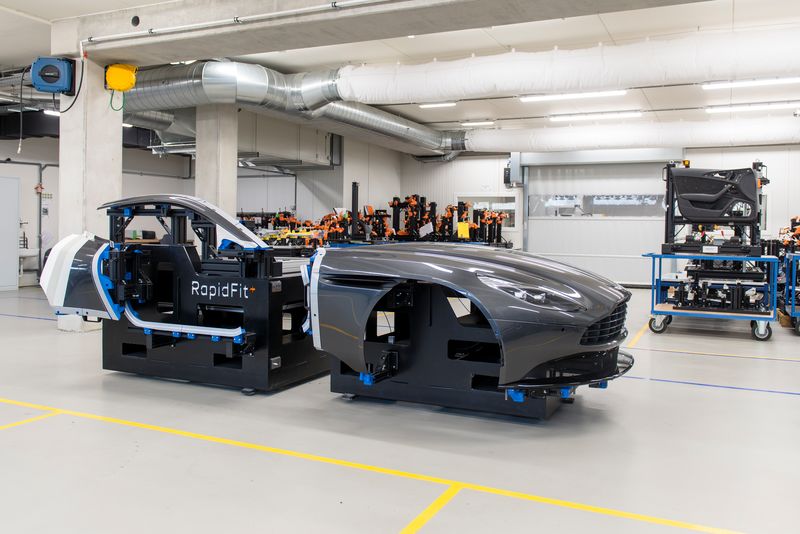
    3D printed parts and a fully modular approach empower automotive brands to accelerate engineering and development processes. Image courtesy of RapidFit.

    Additive manufacturing pioneer Materialise announced that it will be transferring its RapidFit business to its management team. RapidFit is a specialized subsidiary of Materialise, and delivers tooling solutions, mainly 3D printed jigs, fixtures, and quality control solutions for automotive and manufacturing applications. Its custom components help companies in these sectors reduce lead times, improve production efficiency, and support strong quality assurance processes. Materialise’s decision to transfer the business falls right in line with the company’s growth strategy of refocusing investments and resources on its business lines with the strongest potential. The transaction is expected to close on April 30, 2026, and is not expected to impact any existing customer orders or projects. RapidFit will continue to operate as an independent company under its same leadership, and this setup will in turn support its next phase of growth.

    “For RapidFit, operating as an independent company provides greater focus and flexibility,” said Jurgen Laudus, the Vice President of Materialise Manufacturing. “A standalone setup allows the business to make decisions closer to its customers and markets, build on its core strengths, and pursue partnerships and investments that best support global growth.”

    Newest Axtra3D Reseller Multistation to Expand Lumia.X1 to French Market

    Today, Axtra3D announced that French resale provider MULTISTATION has joined its network as a professional reseller, helping to expand the reach of the company’s Hybrid PhotoSynthesis (HPS) technology and Lumia.X1 3D printer into the French market. MULTISTATION has years of experience in both AM and industrial machining, offering machines sales and consulting services in sectors including aerospace, automotive, energy, jewelry, R&D, medical, and dentistry. In fact, MULTISTATION’s CEO Yannick Loisance says the company plans to use Axtra3D’s Lumia.X1 to expand its dental applications. This new reseller partnership will bring Axtra3D’s high-performance AM solutions to French businesses for the first time, and is a testament to its commitment to build a strong reseller network around the world for its Hi-Speed SLA technology.

    “We are more than pleased to welcome Multistation to the Axtra3D reseller family. As our technology proves itself in real world use cases in both industrial and dental markets, we’re excited to be expanding our reseller network further to meet increasing interest,” said Rajeev Kulkarni, Chief Strategy Officer at Axtra3D. “Partnering with Multistation to reach the French market is another step towards the goal of increasing Axtra3D’s footprint in the global AM space.”

    AML3D Gets AU$2.6 Million US Navy Order for Submarine Parts

    AML3D has received a 10-month, AU$2.6 million (US$1.84 million) contract to produce five large-scale 3D printed US Navy submarine parts. After the US Navy successfully completed hydrostatic testing of AML3D’s metal 3D printed parts, the order was signed with US nonprofit BlueForge Alliance, a neutral integrator that supports the sustainment of the US Navy’s Submarine Industrial Base. AML3D will use its proprietary WAM-driven ARCEMY system to print these high-demand, non-safety critical replacement components for in-service trials on US Navy submarines, as the parts are no longer made by the original manufacturer. The contract is set to commence in the fourth quarter of 2026, and the components will be printed using a US Navy-qualified Nickel-Aluminum-Bronze (NAB) alloy. This is just the latest in AML3D’s US scale-up strategy, which has already delivered over AU$30million in US defense-related contracts.

    “Signing this order is a significant milestone for AML3D. It shows our advanced manufacturing technology is key to solving a wide range of critical supply chain challenges for the US Navy’s submarine program. This latest contract pertains to complex components that are no longer supported by the original manufacturer and could not be sourced in a time and cost- effective manner from the Navy’s traditional supplier base,” said AML3D’s CEO Sean Ebert.

    “AML3D’s advanced industrial 3D metal printing technology is increasingly being embedded in the US Navy’s Maritime Industrial Base. This contract allows us to continue to build and deepen our long-term, strategic partnership with the US Navy and supports our investment to double capacity at our US Technology Center in Ohio. Our US Scale-up strategy continues to deliver significant growth and value to AML3D and its shareholders. While the latter strategy is being successfully delivered, we at the same time continue to progress our plans to enter into the UK market and other globally significant markets across Europe.”

    Meshy & Its Multi-Color 3D Printing Live on MakerWorld

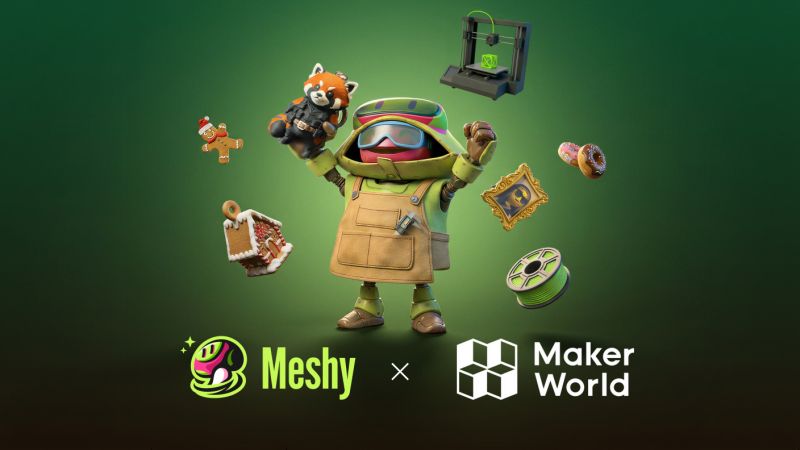
    Generative AI company Meshy specializes in 3D model creation, and recently announced that it’s been fully integrated into MakerWorld’s MakerLab, the Bambu Lab ecosystem’s AI tool hub. That means users can access Meshy’s Image-to-3D tool, powered by the advanced Meshy-6 generation engine, directly in MakerLab, and quickly generate high-quality, 3D printable models from a single image. This is great news for 3D printer owners who don’t have the necessary skills to design and create their own models. But that’s not all: Meshy has also updated its Multi-Color Printing feature, which removes the need for manual coloring in slicing software. You can now export a .3MF file from Meshy and drag it into Bambu Studio, where complex textures will be automatically mapped into precise color zones that work with Bambu’s AMS. Together, these changes deliver a very seamless AI-to-print workflow for makers.

    The Meshy-MakerWorld integration and Multi-Color Printing are separate but complementary capabilities. For “Image to print” in MakerWorld, you don’t need any software downloads; just open MakerLab’s Image-to-3D at makerworld.com. Then, upload an image or photo, and Meshy-6 will generate a print-ready 3D mesh within seconds. Finally, export it as either a .3MF or .STL, and send it to Bambu Studio for slicing and printing. For “Image to multi-color print” on the Meshy site, use Image-to-3D or Text-to-3D to generate a model. Then, enable Multi-Color Printing to automatically map textures to filament color zones, and export as a .3MF. You won’t need to do any manual painting in Bambu Studio, as all color-to-filament assignments are pre-configured. Finally, drag the .3MF into Bambu Studio and print; the AMS will take care of everything else.

  • Asia AM Watch: China’s 5 Million-Printer Export Year Signals Desktop AM at Scale

    For years, a lot of the discussion around China and additive manufacturing has focused on industrial competition. Can Chinese companies move into higher-end markets? Can they challenge Western machine makers in the metals industry? Can they become bigger players in high-end manufacturing?

    While those questions might still be relevant, right now, China’s biggest impact in 3D printing is at the desktop level.

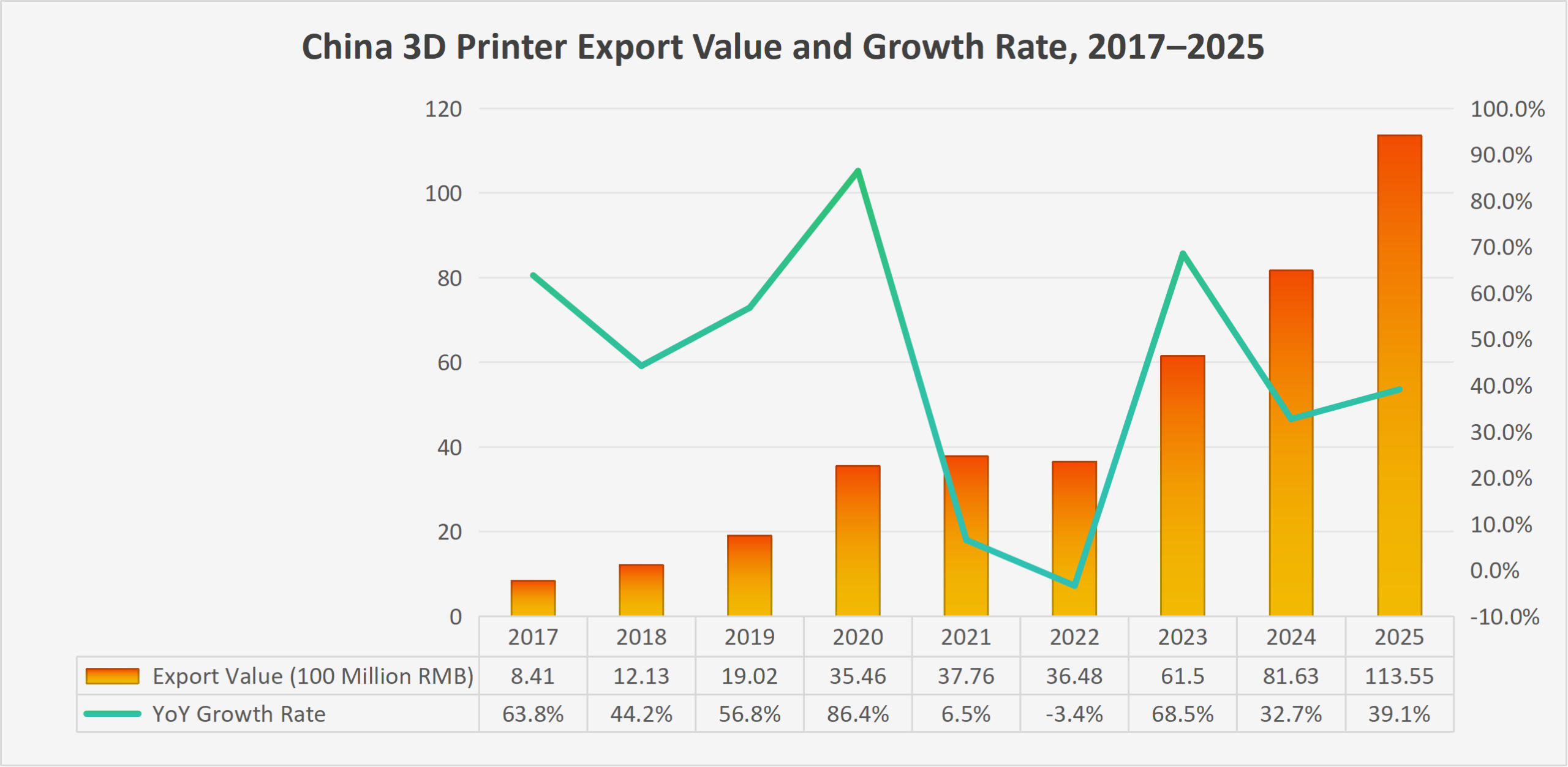
    According to data shared by CBD Technology, China exported more than 5 million 3D printers in 2025. The total reached 5.03 million units, up 33% year over year, while export value rose to 11.36 billion RMB ($1.6 billion), up 39.1%. These figures are based on official data from the General Administration of Customs of China, with analysis from Nanjixiong (南极熊), one of the country’s leading 3D printing media outlets.

    China’s 3D printer export volume. Image courtesy of CBD Technology/General Administration of Customs of China/Nanjixiong.

    The broader dataset behind these numbers shows this is not a one-year jump, but part of a much longer climb. Based on the customs data, China’s 3D printer exports have grown from roughly 535,000 units in 2017 to about 5 million in 2025. Exports surged in 2020 and 2021, fell back in 2022, then rebounded sharply in 2023 and kept rising through 2025. Of course, the market has had ups and downs, but the broader direction over the last eight years is clearly upward.

    CBD Technology said the vast majority of these exports are desktop and consumer 3D printers, especially plastic-based systems, with industrial machines accounting for only a small share of total volume.

    What this really shows is that China is not just making machines; it is increasingly building the global installed base of desktop 3D printers.

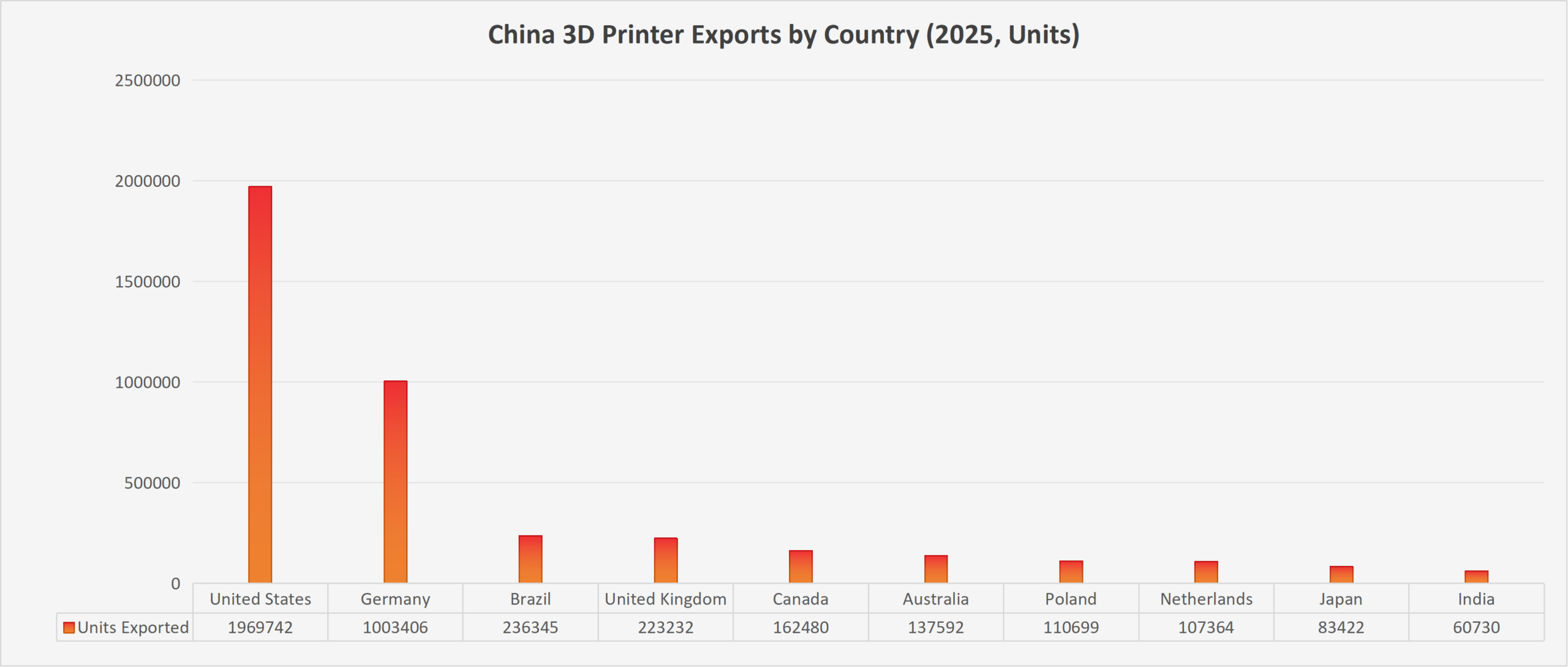
    What’s more, the export data shows how large that footprint has become. The United States was the top destination in 2025, taking close to 2 million units. Germany followed at roughly 1 million. Brazil, the United Kingdom, Canada, Australia, Poland, the Netherlands, Japan, and India also ranked among the leading markets, as shown in the graph below.

    China 3D printer exports by country 2025 (Units). Image courtesy of CBD Technology/General Administration of Customs of China/Nanjixiong.

    What CBD Technology told 3DPrint.com is that the growth is driven by a mix of rising global demand, improving technology, and cost advantages. According to the company, demand is growing across home use, education, and maker communities, particularly in the U.S., Germany, and Brazil. In 2025, the United States remained the largest destination by a wide margin at about 1.95 million units, followed by Germany at just under 1 million. After that came a much wider mix of markets, including the United Kingdom, Brazil, Canada, Australia, the Netherlands, Poland, Japan, and India. This is quite important because it suggests China’s desktop 3D printer boom is not tied to just one region or one type of buyer. It is spreading across multiple mature and emerging markets at the same time.

    The exporter-location data also shows how concentrated this trade is inside China. Guangdong accounts for the vast majority of exports, at roughly 85% of 2025 volume, with Zhejiang far behind at around 9%. In total, Guangdong exported about 4.08 million units in 2025, compared to roughly 416,000 from Zhejiang. Other provinces contribute much smaller volumes, including Jiangsu (about 70,000 units), Shandong (about 60,000), Hubei (about 57,000), and Shanghai (about 39,000).

    Visualization courtesy of 3DPrint.com.

    This data, in particular, is quite interesting because it’s not random; it truly reflects where much of the industry is based. Guangdong, particularly Shenzhen, is home to many of China’s leading desktop 3D printer manufacturers, including companies like Creality and Bambu Lab, along with a massive network of suppliers, assembly, and electronics production. It’s a true hardware manufacturing cluster. The region also benefits from a highly integrated hardware ecosystem that supports design, manufacturing, and export at scale.

    Zhejiang plays a smaller but still important role. Companies like Flashforge operate production facilities there, producing roughly 140,000 printers per year, and contributing to a secondary manufacturing base focused on export-oriented hardware and mid-scale production.

    This kind of manufacturing base also helps explain how quickly the products themselves are improving. Desktop printers are getting faster, more reliable, and easier to use, driving wider adoption.

    Consumer and prosumer 3D printers today are easier to use, more stable, and work right out of the box in a way they didn’t before. Features like multi-color printing and simpler software have made them more accessible to a much wider group of users.

    And we’re starting to see that show up in real use. Just this week, we reported how Bambu Lab printers were used on the set of Superman (2025) to produce parts that went straight onto the screen. What started as a test quickly became part of the core workflow, with some printed parts used as final components, not just prototypes.

    This is not just happening in film. H+R Drone Racing, for example, used Creality desktop 3D printers to design and produce parts for a fully functional drone, creating components that didn’t exist before and bringing them into real use.

    This is all a big part of what’s driving this growth. China’s export rise is not just about low-cost printers. It’s about better printers now used to make real parts, not just to test them.

    China’s 3D printer export value and growth rate. Image courtesy of CBD Technology/General Administration of Customs of China/Nanjixiong.

    CBD Technology also pointed to what it sees as the next major trends in consumer 3D printing: multi-color printing, AI tools, and desktop SLS. According to the company, multi-color printing is becoming more common, AI tools are making design easier for new users, and desktop SLS could bring more advanced capabilities into the desktop segment.

    The company said these features are helping make printers easier to use and expand what they can do, particularly for new users and small-scale production. They are also shaping what the next generation of desktop 3D printing looks like.

    CBD Technology also said companies like Creality, Anycubic, and Bambu Lab account for the majority of China’s 3D printer exports. These are clearly the largest and most representative exporters.

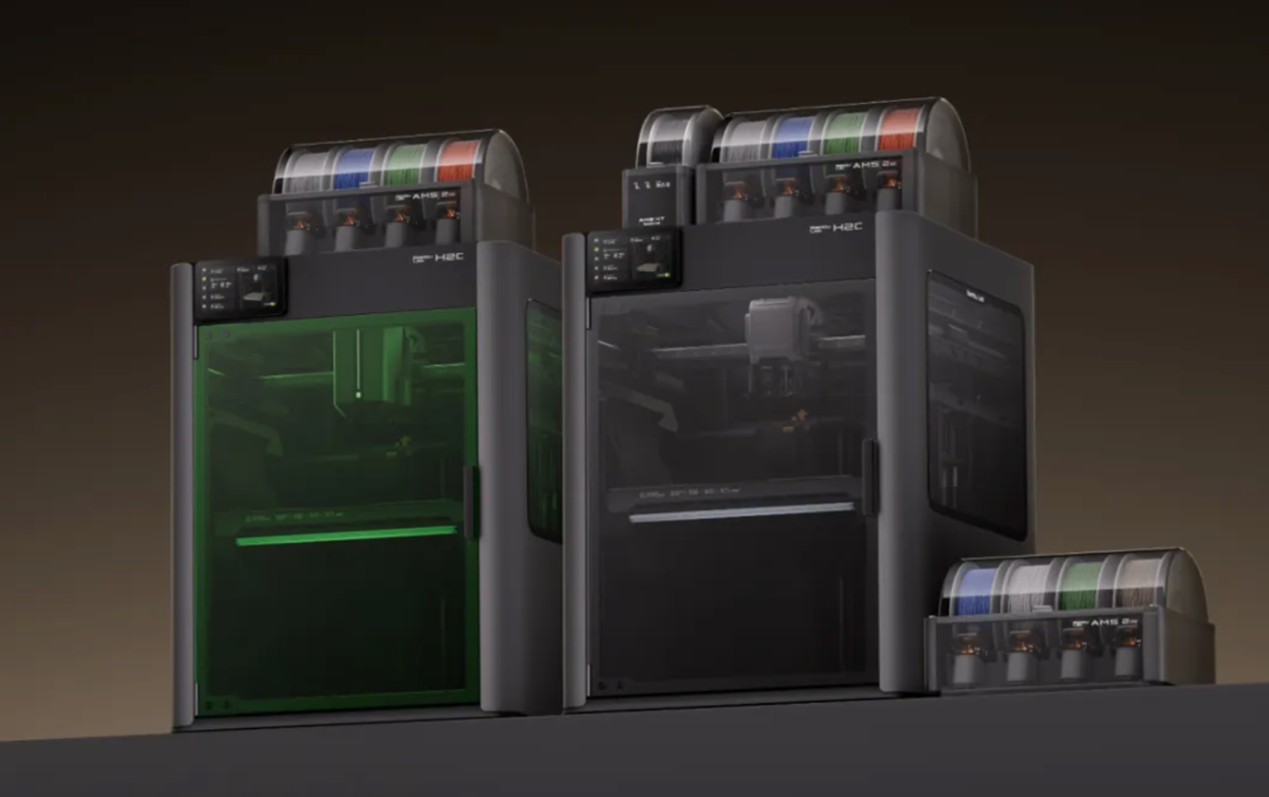
    Bambu Lab H2C. Image courtesy of Bambu Lab.

    This kind of scale changes the market as well. Millions of desktop 3D printers entering homes, schools, workshops, and small businesses expand the user base, increase demand for materials and software, and make the technology more familiar and accessible.

    It also shifts where growth is happening. Instead of being driven only by large industrial systems, adoption is increasingly happening at the desktop level, across a much broader group of users. That may be the most important takeaway from the data. China is not just exporting more 3D printers. It is putting them into use at scale.

  • Artemis II Launches With 3D Printing Onboard, and a Much Bigger Role Ahead

    A new chapter in human spaceflight began today as NASA launched Artemis II from Kennedy Space Center, sending astronauts on a journey around the Moon for the first time in more than five decades.

    The mission is a major milestone. It marks the first crewed flight of NASA’s Artemis program and a critical step toward returning humans to the lunar surface. But beyond the main story, Artemis II highlights how 3D printing is already part of how these missions are built. And in the years ahead, it may become essential to know how they are sustained.

    Understanding Artemis II and 3D Printing’s Role in It

    Artemis II is not a landing mission. Instead, it is a full systems test with astronauts on board. Much like Apollo 8, the crew will travel around the Moon and return to Earth, validating the spacecraft, life support systems, and overall mission architecture. The mission is expected to last about 10 days, with the crew returning to Earth and splashing down in the Pacific Ocean.

    If Artemis II works as planned, it clears the path for future missions that seek to land astronauts on the Moon and begin building a long-term presence there. In fact, that long-term goal is what makes this mission different from Apollo. This is not just about going back. It is about staying.

    Artemis II backup crewmembers NASA astronaut Andre Douglas and CSA (Canadian Space Agency) astronaut Jenni Gibbons, and prime crewmembers NASA astronauts Victor Glover, Reid Wiseman, CSA (Canadian Space Agency) astronaut Jeremy Hansen, and NASA astronaut Christina Koch, pose for a picture with NASA’s Space Launch System (SLS) rocket and Orion spacecraft. Image courtesy of NASA.

    Despite the scale of the Artemis program, additive manufacturing is not being used everywhere, and that’s expected. In aerospace, where certification, reliability, and long-term validation are critical, new technologies are adopted carefully. As a result, 3D printing is used in targeted ways, delivering clear advantages. Across NASA and its contractors, it has been applied in three main areas:

    1. Spacecraft Hardware (Orion)

    The Orion spacecraft, which carries the crew, also includes 3D printed components. Lockheed Martin, Orion’s prime contractor, has used additive manufacturing to produce parts such as brackets, cable guides, environmental control system components, and housings throughout the spacecraft. Many of these parts have been produced using laser-based metal 3D printing processes, allowing them to be made as single pieces rather than assemblies.

    These parts are important because they help reduce weight, simplify manufacturing, and improve reliability in areas where performance is critical.

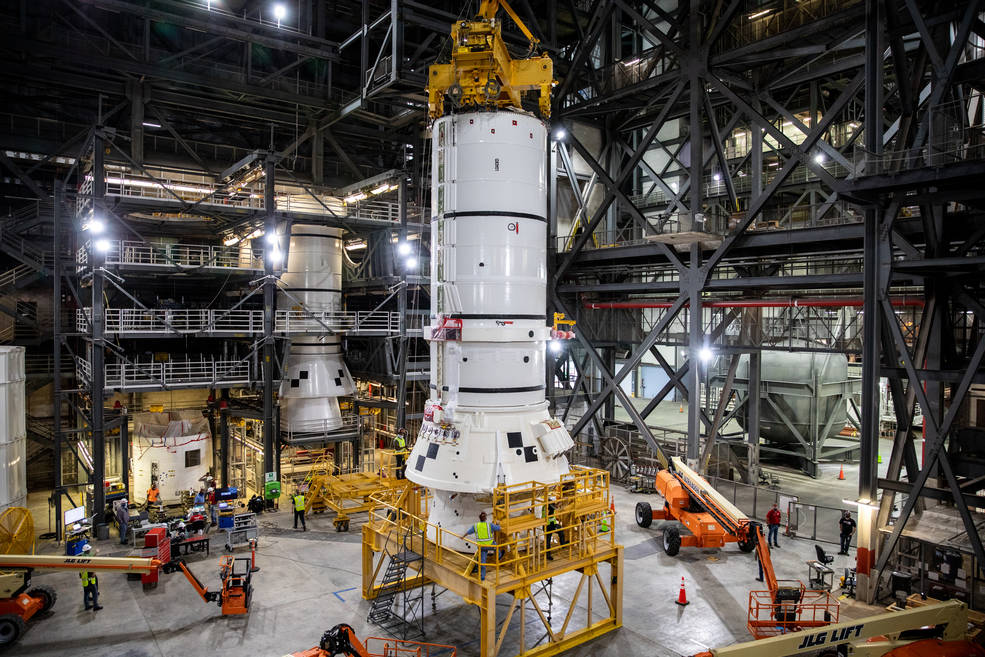
    The solid rocket boosters are the first components of the SLS rocket to be stacked and will help support the remaining rocket pieces and the Orion spacecraft. Image courtesy of NASA/Kim Shiflett.

    1. Tooling, Testing, and Ground Systems

    A significant portion of additive manufacturing use in the Artemis program happens behind the scenes. NASA centers, such as the Marshall Space Flight Center and Kennedy Space Center, and contractors rely on 3D printing for tooling, testing, and ground operations. This includes custom test fixtures and jigs used to validate engine and spacecraft components, as well as rapid prototypes, assembly aids, and other manufacturing tools that support production and integration. Many of these parts are produced using polymer-based processes such as fused deposition modeling (FDM), allowing teams to design, print, and test components quickly. While these parts do not fly, they play a critical role in the program, helping engineers iterate faster, reduce costs, and solve problems early in development.

    1. Rocket Engine Components (SLS)

    Some of the most important applications of 3D printing in space are in rocket engines, even if they are not the most visible in this mission. The Space Launch System (SLS), NASA’s heavy-lift rocket, uses RS-25 engines originally developed for the Space Shuttle. The RS-25 engines, originally built for the Space Shuttle by Aerojet Rocketdyne (now part of L3Harris Technologies), were refurbished and upgraded by the company for Artemis missions.

    Because these are heritage engines, most of the hardware flying on this mission was designed years ago. At the same time, NASA and its partners have been introducing 3D printed components into the RS-25 over the last few years, including parts of the pogo accumulator system, which helps reduce vibration, as well as certain valves and internal components. A larger share of additive manufacturing is expected in new versions of the engine planned for future Artemis missions.

    This is where 3D printing could have one of its biggest impacts. Rocket engines are among the most complex systems in aerospace, operating under extreme conditions. Even small improvements matter. Additive manufacturing makes it possible to simplify designs, reduce the number of parts, and create internal channels that would be difficult or impossible to produce using traditional methods.

    Aerojet Rocketdyne completes the initial RS-25 certification campaign of 12 hot-fire tests at NASA Stennis. Image courtesy of Aerojet Rocketdyne via Twitter.

    What 3D Printing Is Not Doing (Yet)

    Artemis II also shows where additive manufacturing fits today. It is not being used to print entire rockets or large-scale structures for flight. The core systems are still built using conventional methods that have been tested over decades.

    Instead, 3D printing is used selectively. It is applied where it adds value, like in complex parts, lightweight structures, and rapid iteration, not as a full replacement for traditional manufacturing. This aligns with recent analysis from Additive Manufacturing Research (AMR), including work by Scott Dunham, which shows that industry growth is increasingly driven by specific applications rather than broad adoption across entire systems. That difference matters, especially since people often assume it’s used more broadly than it is.

    From Launch to Long-Term Missions

    The real impact of 3D printing in the Artemis program is not just about this launch. It’s about what comes next. Future missions aim to establish a sustained human presence on the Moon, and that changes the problem completely.

    On Earth, manufacturing depends on supply chains, with materials and parts moving across global networks. On the Moon, that model does not work. Transport takes too long, payload capacity is limited, and every kilogram is expensive. In that environment, manufacturing has to move closer to where it’s needed.

    In the MOONRISE project, scientists are researching how to use lasers to 3D print structures from lunar regolith on the Moon. Image courtesy of LZH.

    Basically, if you cannot move parts easily, you have to make them where you are. That is where 3D printing really starts to matter. Instead of shipping physical components, missions can carry digital files and produce parts on demand, whether it’s a tool, a replacement part, or something even more complex, like a medical application.

    Looking ahead, this goes beyond small parts. NASA and research teams are exploring how to use lunar regolith, or Moon dust, as a 3D printing material. The goal is to use what is already there to build what crews will need. That could include landing pads, protective structures, habitats, and other infrastructure for long-term missions, reducing the need to transport materials from Earth.

    If Artemis II is about proving the system, future missions are all about building with it. That means maintaining equipment, producing parts on site, and supporting human activity over time. 3D printing will play a key role, not everywhere, but where it makes sense, and that role will grow as missions move from short visits to staying on the Moon.

    Trajectory for Artemis II, NASA’s first flight with crew aboard SLS, Orion to pave the way for long-term return to the Moon, missions to Mars. Image courtesy of NASA.

    With Artemis II now underway, NASA has taken a major step toward returning humans to the Moon. The launch and mission coverage can be followed live through NASA’s official channels, including NASA TV and online streaming platforms.

  • EOS to Spotlight AI, Robotics, and Industrial Tooling at Hannover Messe

    The US-Israel war on Iran is already catalyzing the sorts of major shifts to global supply chains that will effectively amount to permanent economic changes. In this context, the nations that were already on a course towards localizing production in response to the disruptive developments of the first half of the 2020s can be expected to accelerate that trajectory.

    That acceleration effect should lead to market conditions that push the additive manufacturing (AM) industry’s overall agenda in a direction primarily set not by the industry itself, but by which verticals find themselves in most urgent need of an agility boost. Long before the world’s latest war started, we were already seeing this happen with the defense sector: this helps explain why Hannover Messe 2026 (April 20-24), “the world’s largest industrial trade fair”, will feature a ‘Defence Production Area’ for the first time in the show’s history.

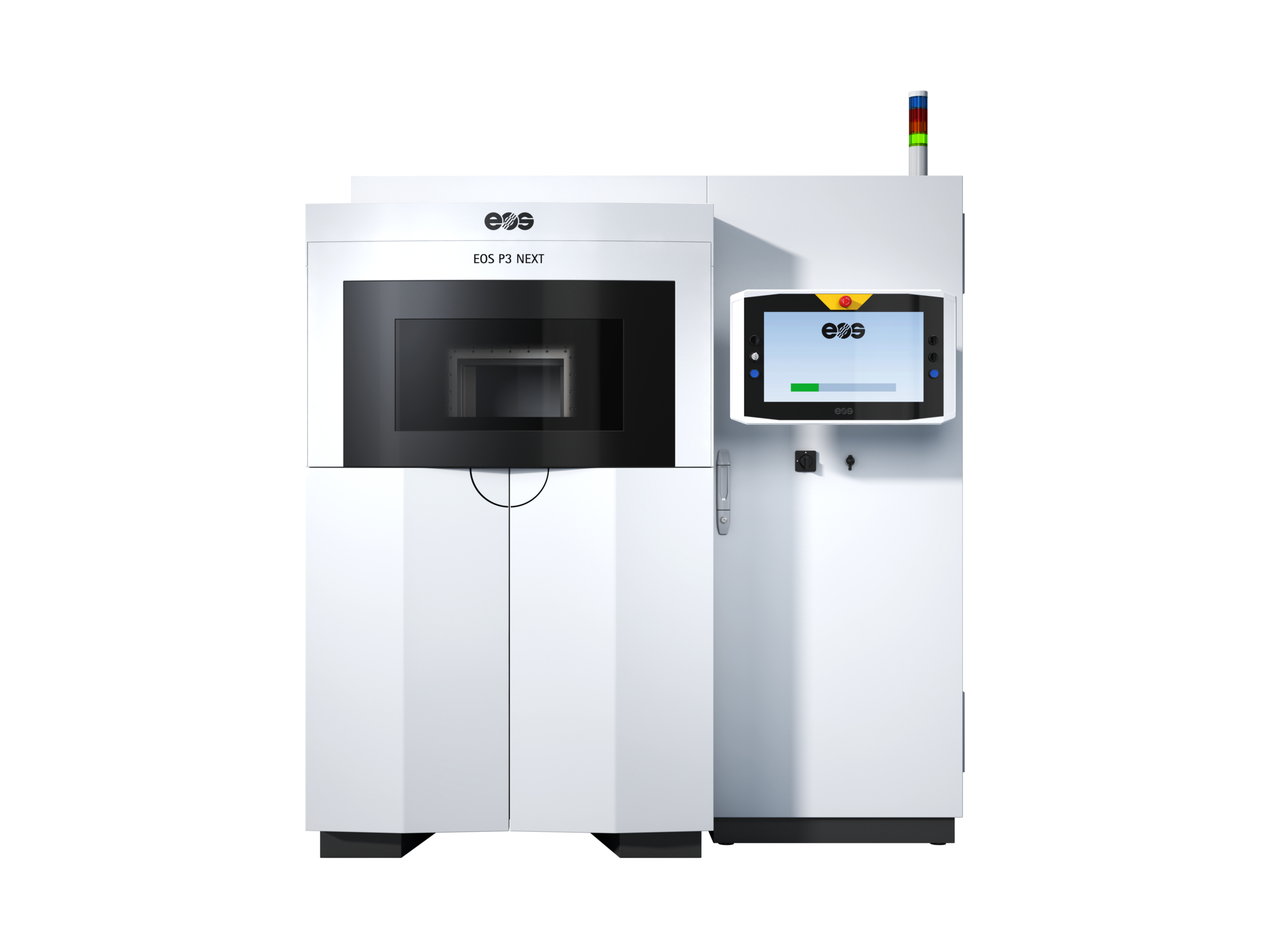
    The German-US company EOS will be one of the participants in that exhibit, but there are multiple other elements to the company’s overall presentation that align with the most relevant themes at the intersection between AM and international industrial transformation. One of the themes involves the Siemens Innovation Hub, where EOS and the multinational giant will emphasize how combining AI with the P3 NEXT polymer printer supports strategies for adaptive manufacturing, the defining concept of last year’s America Makes’ MMX event.

    Specifically, in terms of reshoring, arguably the most immediately practical solutions on display from EOS are also those with the most tried-and-true record of aiding industrial resilience: tooling. Hannover Messe attendees can visit the EOS booth, G44 in Hall 26, to find out more about applications, including robot grippers, tooling for fiber packaging molds, and vibratory bowl feeders, which are used to move small parts in uniform directions on assembly lines.

    In a press release about EOS’s participation in Hannover Messe 2026, Nikolai Zaepernick, CSO at EOS, said, “EOS has been a pioneer in industrial 3D printing for metals and polymers for more than 30 years. We integrate systems, materials, and digital processes into exactly the solution customers need for futureproof manufacturing — and we’ll be showcasing this in full force at the Hannover Messe.”

    Meanwhile, Davide Iacovelli, Regional Director, EMEA, for EOS, noted, “In the mid-volume range, the EOS P3 NEXT enables individualized series production. At the Siemens booth, visitors will see the concrete customer value this provides. Specifically, this means shorter development and manufacturing cycles, greater flexibility in product design, and significantly higher process reliability across the entire production chain.”

    The EOS P3 NEXT.

    Perhaps reality will play out differently, but as of right now, EOS is better positioned than virtually any other original equipment manufacturer (OEM) in the AM space to capitalize on the epochal changes currently imminent in the global economic order. A large part of this is indeed about defense, but only because of the precise dual-use framework that EOS has cultivated for its ecosystem.

    We’re entering a period in which new, unexpected shortfalls will arise on a regular basis, and contract manufacturers will need to pivot as painlessly as possible from one product category to another, and from one sector to another. The decision-making process about which country is optimal or even permissible to obtain one’s supplies from is going to preside over supply chain choices more acutely than ever before. A company with equal footing in the US and EU, which has just signed a major trade deal with the other, has an opening for outsized growth compared to its peers.

    Above all, it is those boring parts, like robotic grippers, that might give an OEM the edge, because they provide a baseline level of industrial versatility across the most diverse range of industries. You don’t even have to be able to provide the solutions that can directly create the most end-use parts; you might just have to provide the solutions that can indirectly ensure that the least number of orders arrive late or incomplete.

    Most AM companies that are currently succeeding are doing so by finding a single niche and perfecting it. That will continue to be a viable strategy, but I think we’re on the cusp of a moment when a select number of AM companies can also find success by maximizing versatility, and that is an opportunity where EOS has a real chance to thrive.

    Images courtesy of EOS

  • Creality Launches Filament Maker M1 & Shredder R1, Letting Makers Reuse Waste, Cut Costs, and Create Their Own Filament

    From Printing Objects to Shaping Materials

    Desktop 3D printing has made on-demand creation more accessible than ever. Yet one critical part of the process remains fixed: the material itself.

    Most users still rely on pre-made filament while facing failed prints, material waste, rising costs, and limited flexibility.

    With M1 and R1, Creality introduces a new approach—bringing material creation into the desktop workflow and enabling users to reuse, modify, and produce their own filament.

    A Compact Workflow with Greater Control

    At the core of the system are two components:

    • Shredder R1 — processes properly prepared 3D printing waste into reusable material
    • Filament Maker M1 — mixes, extrudes, and spools filament

    Together, they form a compact, desktop-scale workflow that integrates key steps of filament production.

    Designed for hands-on users, the system works best with properly prepared materials and supports ongoing experimentation and refinement.

    With this workflow, users can:

    • Reduce material costs by reusing prepared waste
    • Create custom filament with different blends, colors, and additives
    • Gain greater control over print outcomes
    • Explore small-batch and experimental production

    Rather than a fully automated solution, M1 and R1 are positioned as tools that empower creators to actively shape their materials.

    Market Response and Ecosystem Expansion

    Early testing and discussions within the maker community have shown strong interest in recycling workflows, customization, and cost efficiency.

    With M1 and R1, Creality expands its ecosystem beyond hardware — bringing material creation into the desktop workflow and redefining how users engage with 3D printing.

    Now Live on Indiegogo

    The Filament Maker M1 and Shredder R1 are now available on Indiegogo, with limited early access pricing for first backers.


    As creators move from simply using materials to actively shaping them, they unlock greater flexibility — opening new possibilities for how 3D printing can be applied and explored.

    Images courtesy of Creality

  • The Convergence of Vision and Experience: AMS and AMUG

    During the last few weeks, I spent time on the ground at both the Additive Manufacturing Strategies Forum (AMS) and the Additive Manufacturing Users Group (AMUG) meeting.

    What stands out is not just how different these gatherings are, but how clearly they reflect two necessary halves of the same industry. The contrast is not superficial. It is structural, revealing where additive manufacturing is aligning and where it is still working through friction.

    In New York, the energy at AMS is deliberate and tightly framed. Conversations tend to begin with markets and end with outcomes. Capital efficiency, application focus, and pathways to profitability are recurring threads, but what felt different this year was the level of discipline in those conversations. For example, a panel of OEM executives and investors quickly moved past technology differentiation and instead debated utilization rates of installed systems. The question was not whether a platform could achieve a certain resolution or throughput in isolation, but whether it could sustain repeatable production volumes without creating downstream inefficiencies. There is noticeably less appetite for broad claims about disruption and far more scrutiny on how additive fits into existing manufacturing systems in a way that is economically defensible.

    For example, in a session focused on defense and aerospace, the conversation centered on qualification timelines being a system-level constraint. What was notable was how openly this was discussed, not as a barrier to adoption, but as a factor that must be built into any realistic growth model.

    You could sense that the audience, largely composed of executives, investors, and strategic operators, is calibrating expectations. The questions are sharper. Where does this technology win today? What is the repeatable application? How does it scale without eroding margins? The tone is not skeptical but measured, and that shift alone says a great deal about where the industry is in its maturity cycle.

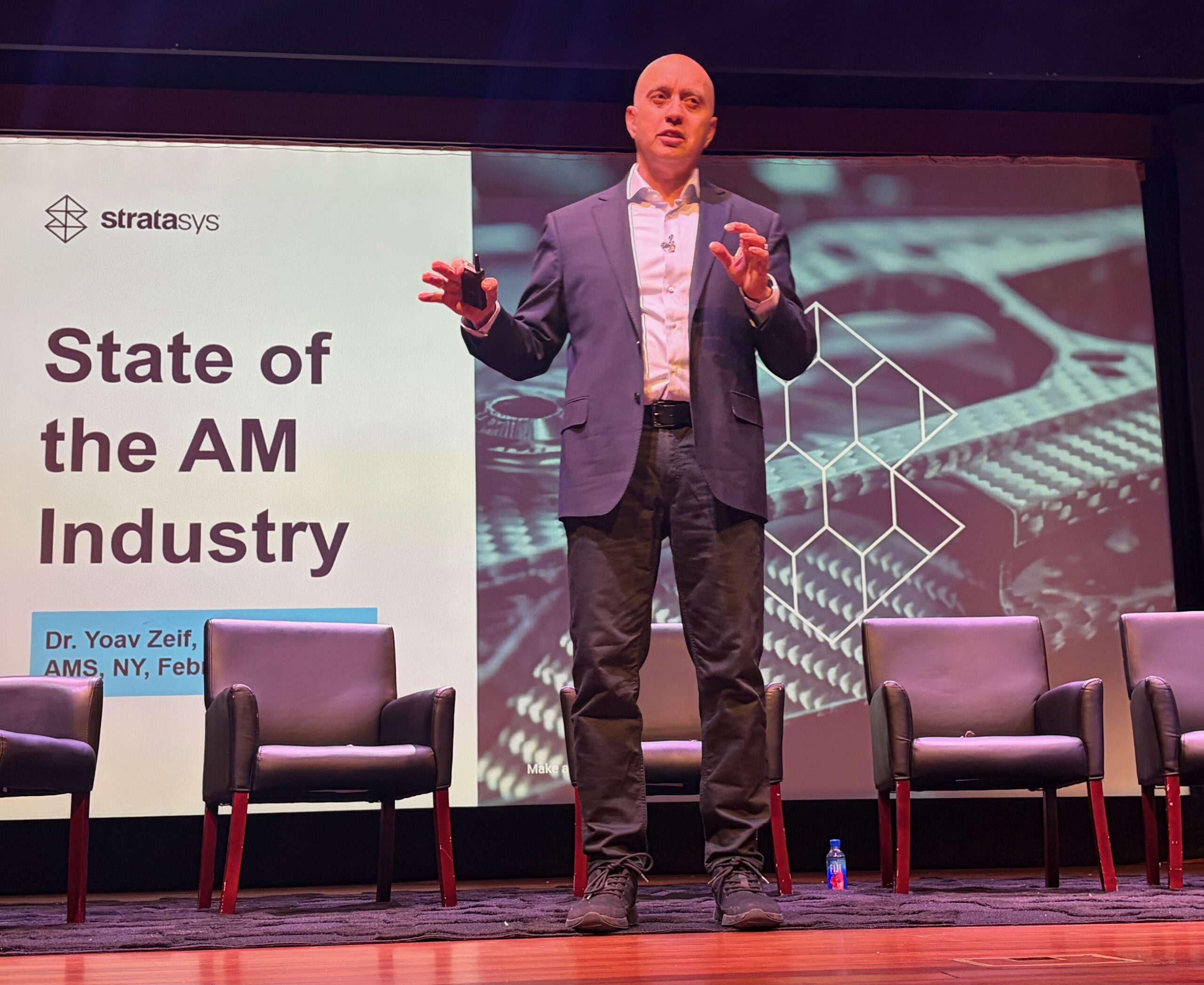
    Stratasys CEO at AMS 2026. Image courtesy of 3DPrint.com.

    A couple of weeks later at AMUG, those same themes reappear, but in a very different form.

    The conversations are less structured but, in many ways, more revealing. They happen in hallways, around machines, and during informal technical exchanges where users compare notes on what worked and what did not. There is a level of openness that is difficult to replicate in more formal settings. Engineers are willing to share failures in detail, and those failures are not framed as setbacks but as data points. You hear specifics. Material behavior under certain conditions. Post-processing bottlenecks that were not anticipated. Design decisions that looked optimal on paper but created issues in production. It becomes immediately clear that this is where the industry is being stress-tested in real time.

    In a session focused on polymer applications, multiple users compared notes on post-processing bottlenecks. One user had successfully reduced print time by optimizing build orientation, only to find that support removal became the new constraint, offsetting much of the gain. Another shared a workaround involving minor design modifications that eliminated the need for support altogether. These are not headline innovations, but they are exactly the kinds of incremental improvements that determine whether an application is viable at scale.

    Skuld booth at AMUG. Image courtesy of 3DPrint.com.

    What becomes particularly interesting when you step back and connect these two environments is how closely they are beginning to inform each other.

    At AMS, there is a growing emphasis on application-driven growth. Still, the definition of a “real application” is increasingly shaped by what users on forums like AMUG are proving in practice. The distance between narrative and execution is shrinking as it is no longer sufficient to position technology around theoretical advantages. The expectation is that those advantages have already been validated somewhere, by someone, under real constraints.

    One of the more subtle observations across both events is how the center of gravity is shifting away from hardware as the primary story.

    At AMS, this shows up in discussions around integrated solutions, software layers, and workflows. At AMUG, it shows up in a different way. Users are less focused on the machine itself and more on making the entire process stable and repeatable.

    In both cases, the implication is the same. The value is moving up and down the stack, and companies that remain anchored solely in hardware risk becoming less differentiated over time. There is a recurring theme around expectations versus reality.

    Another pattern that becomes evident is the increasing importance of constraint.

    At AMS, constraints are discussed in terms of economics and scalability. At AMUG, they are discussed in terms of physics, materials, and process limitations. They are different expressions of the same reality. Additive manufacturing is no longer being evaluated in isolation. It is being measured against highly optimized, established manufacturing methods. That comparison forces clarity. It pushes the industry to identify where additive is not just viable, but meaningfully better.

    For those looking to translate these observations into action, a few implications stand out.

    First, application specificity is no longer optional. The market is rewarding clarity over breadth. Second, validation cycles are becoming more critical. What is said in strategic forums must be backed by what is proven in operational environments. Third, differentiation is increasingly tied to ecosystems rather than standalone products. Whether it is materials, software, or process integration, the winners will be those who can control more of the value chain in a meaningful way.

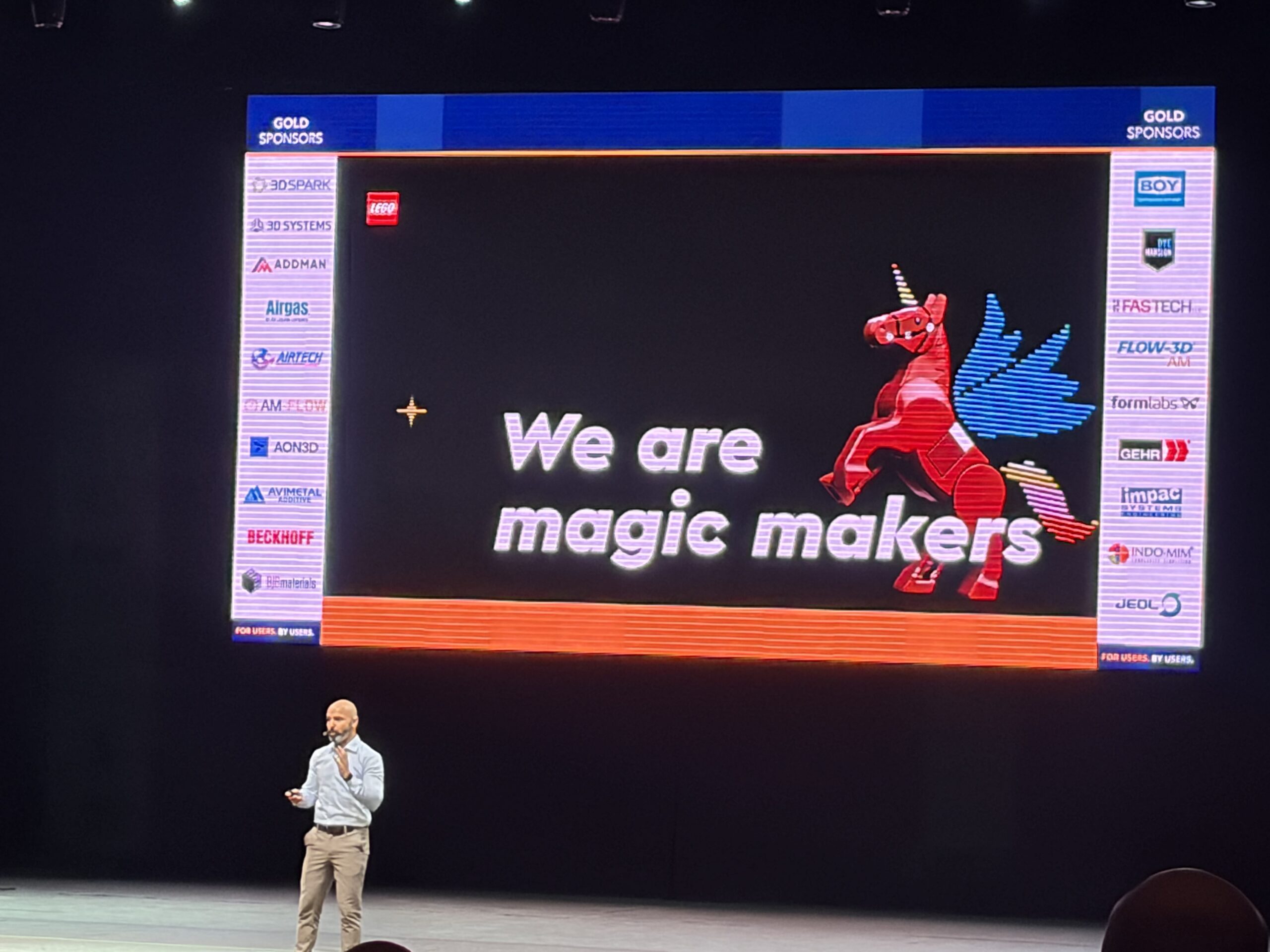
    Ronen Hadar, Senior Director and Head of Additive Design and Manufacturing at LEGO, onstage at AMUG 2026. Image courtesy of 3DPrint.com.

    Perhaps the most important takeaway, however, is that both these environments are very complementary.

    AMS offers a view of where the industry intends to go, shaped by capital and strategy. AMUG offers a view of where the industry stands, shaped by experience and execution.

    The gap is narrow, and the convergence is not accidental. It is driven by a collective need for alignment between promise and performance. Spending time in both settings reinforces a simple but important point.

    The future of additive manufacturing will not be defined solely by better technology or stronger narratives. It will be defined by the ability to connect those narratives to repeatable, economically viable outcomes in the real world. The signals are there, but they are distributed. Some are found in structured discussions about market direction and investment. Others are embedded in detailed conversations about actual prints.

    The ability to observe both and connect them is becoming increasingly important. That is where actionable insight will emerge.