• MuskCo Semiconductor: The Terafab and 3D Printing

    Elon Musk essentially functions as a human loophole in the antitrust regulatory system. Whether or not it’s the deliberate purpose of why he runs his businesses this way, I don’t think it’s unreasonable to argue that if a single corporation controlled most of the world’s satellites, and most of the US’s fast-charging stations for EVs, and one of the most politically influential social media platforms, etc., questions of antitrust violations might be raised.

    Instead, hilariously enough, Elon Musk is the one suing on the basis of antitrust violations, and while he may not have won his case against advertisers who chose to boycott X, the lawsuit does serve nicely as an implicit threat against anyone who tries to disrupt his disruptiveness. This isn’t an article about all of that, though: rather, it’s about the interconnections between all of Musk’s various business operations, and what those interconnections may imply for the future of manufacturing.

    Reportedly in the process of taking SpaceX public, less than two months after executing “the largest merger of all time” in a deal that combined xAI with the launch giant, Musk also recently confirmed that he would be getting into the semiconductor game, after first….

    Featured image courtesy of Tesla, via Manufacturing Dive

  • HP’s Open Industrial Filament System Made North American Debut at AMUG 2026

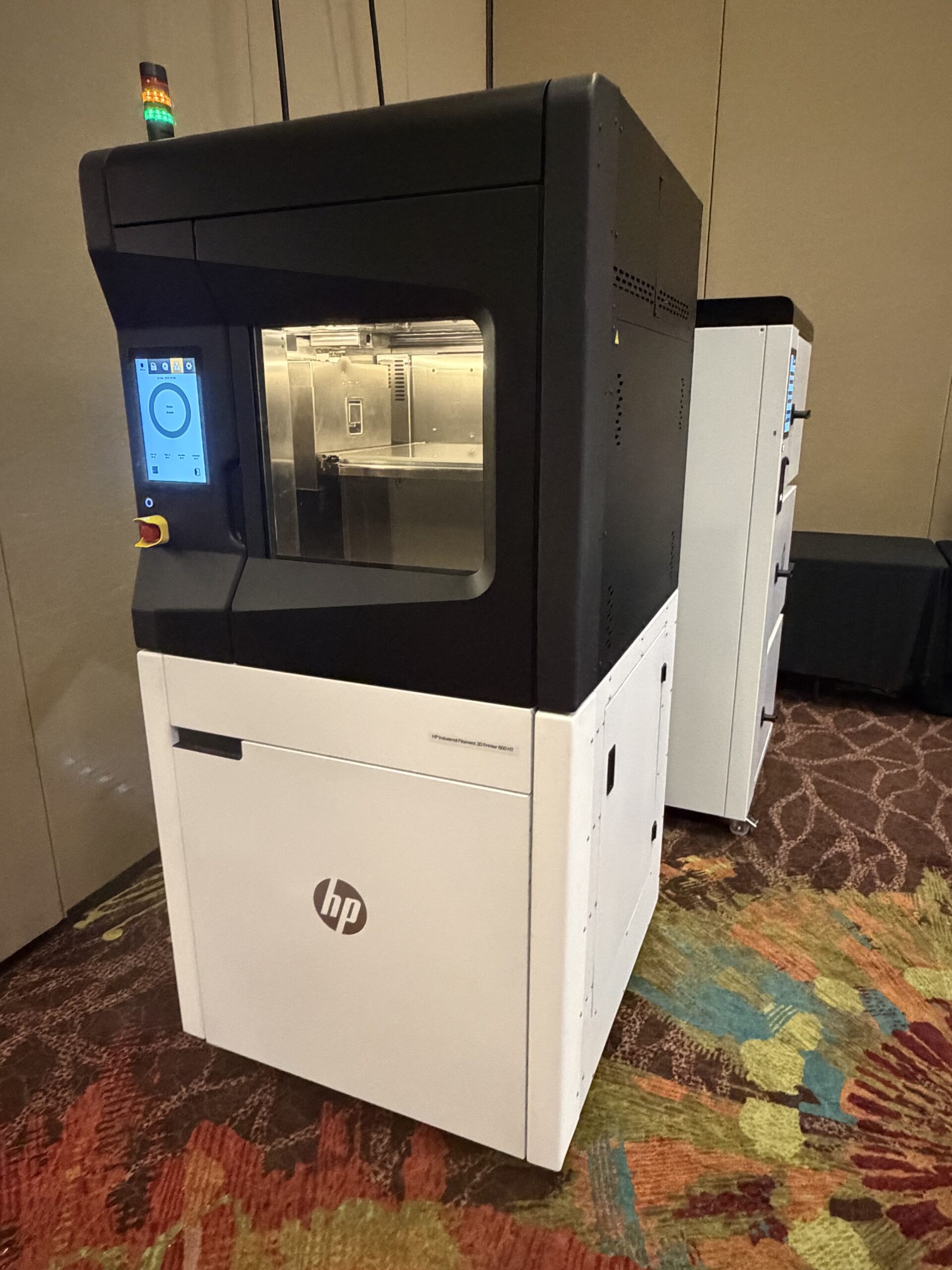
    At Formnext 2025, HP Additive Manufacturing revealed a major step in its broader portfolio expansion strategy with the announcement of a new 3D printer, the HP Industrial Filament 600 High Temperature (HP IF 600HT). The industrial AM system recently made its North American debut at AMUG 2026 in Reno, Nevada. The HP IF 600HT is modular, built on an open materials platform, and engineered for high-temperature and advanced engineering-grade materials. This offers manufacturers more flexibility with the polymers they can use, while still enabling them to maintain the necessary industrial reliability.

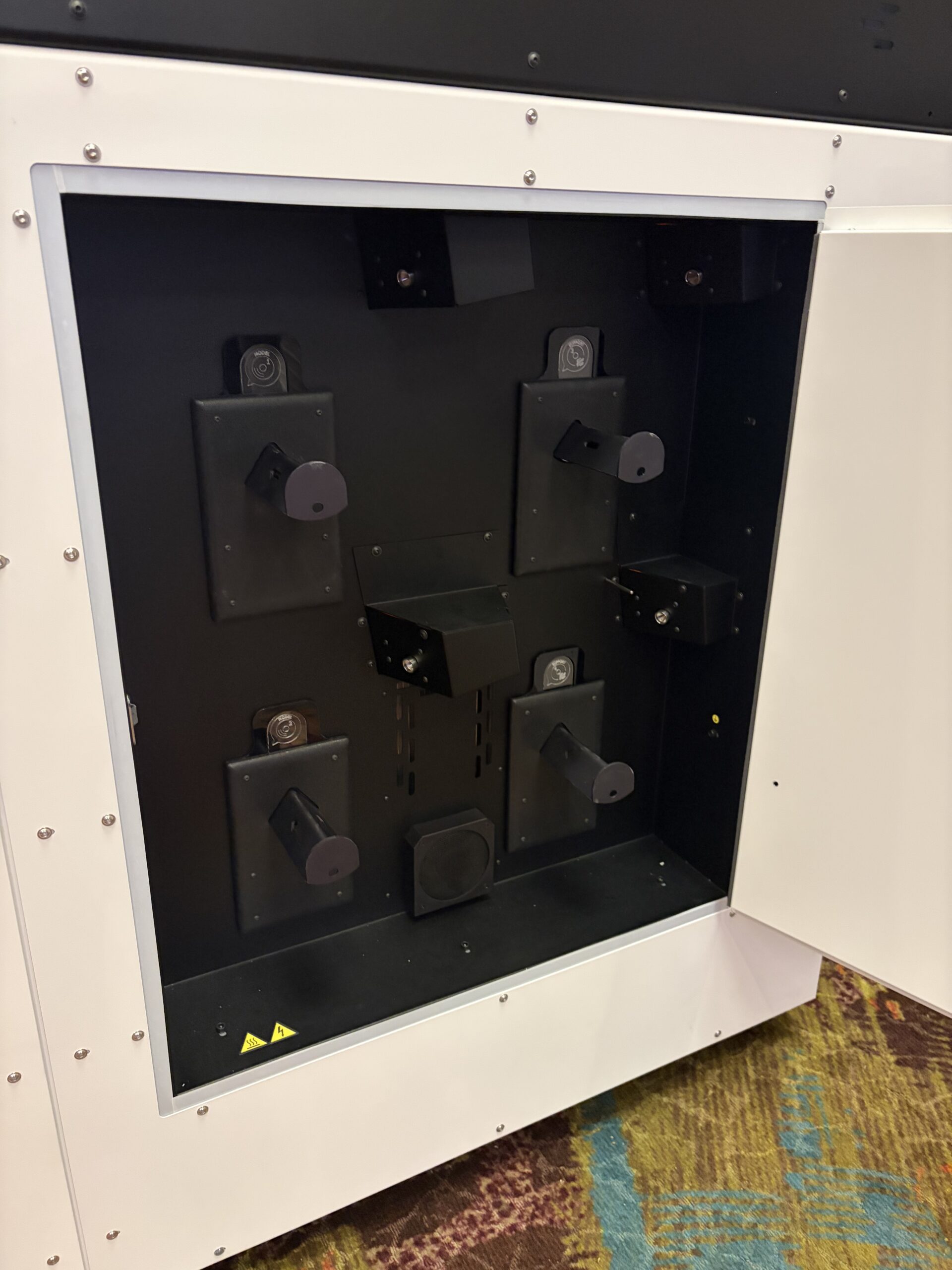
    I spoke to Eric DuPaul, HP Additive Manufacturing Category Manager, at AMUG to learn more about the system. DuPaul’s job is managing the product within the region, so he’s helping to launch the HP IF 600HT, and the 12-filament Material Management System (MMS) that goes with it, in the Americas.

    “So we take that product from inception to maturity, making sure that it’s getting out into the market, making sure that everybody’s trained, getting end user customer feedback, so that as we’re preparing for a future product, we take all of that into consideration,” he explained.

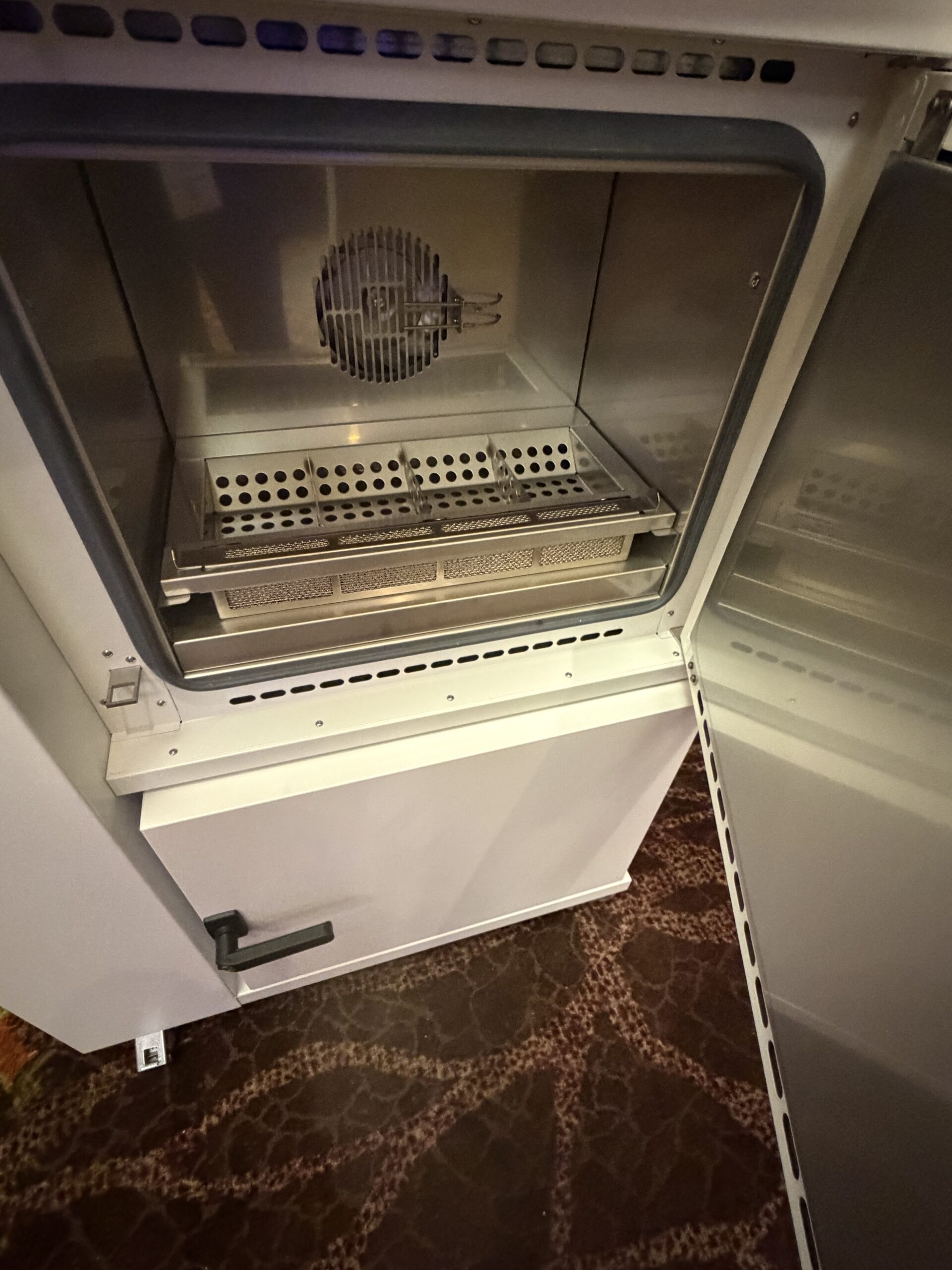
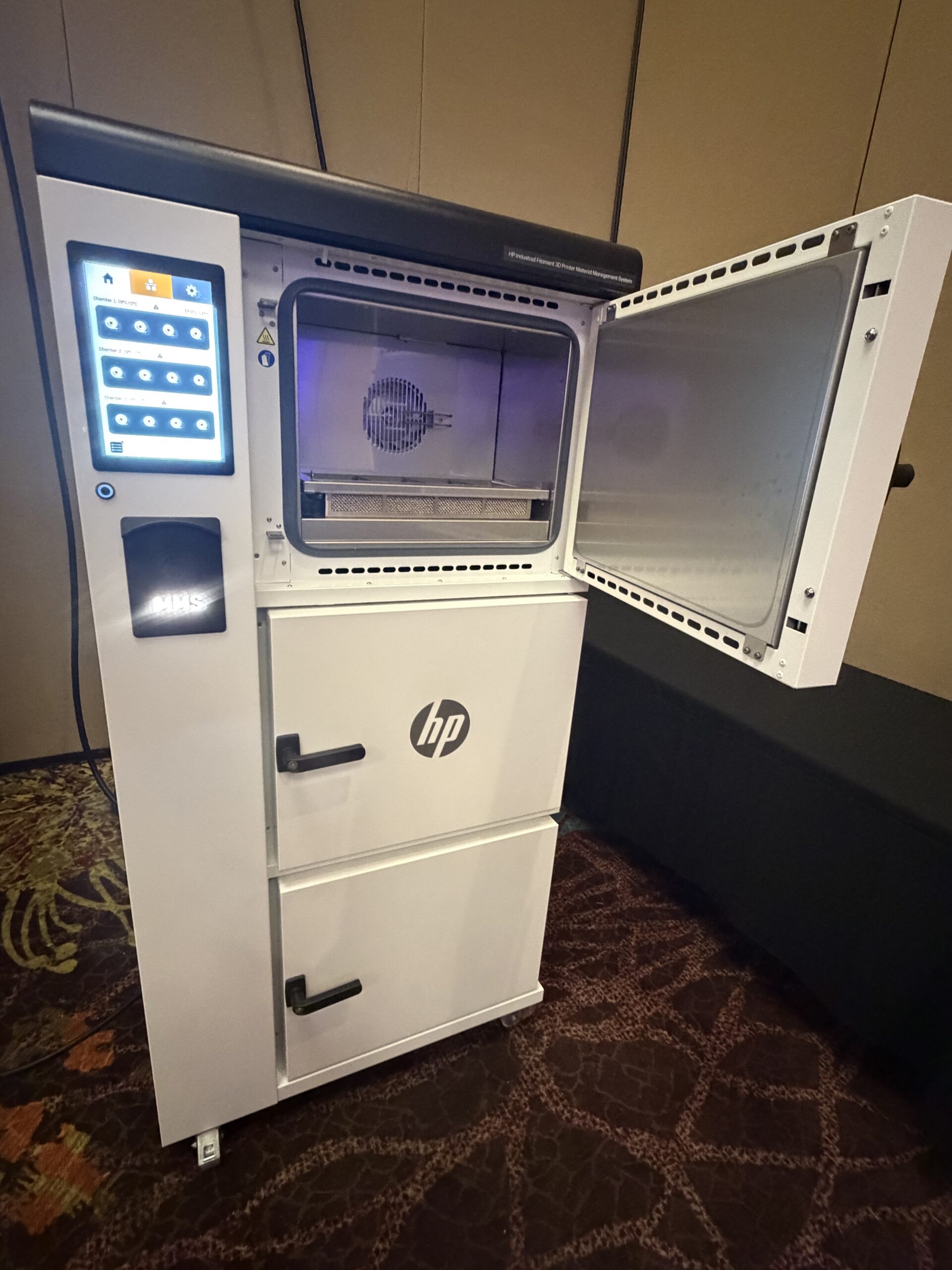
    HP IF 600HT 3D printer

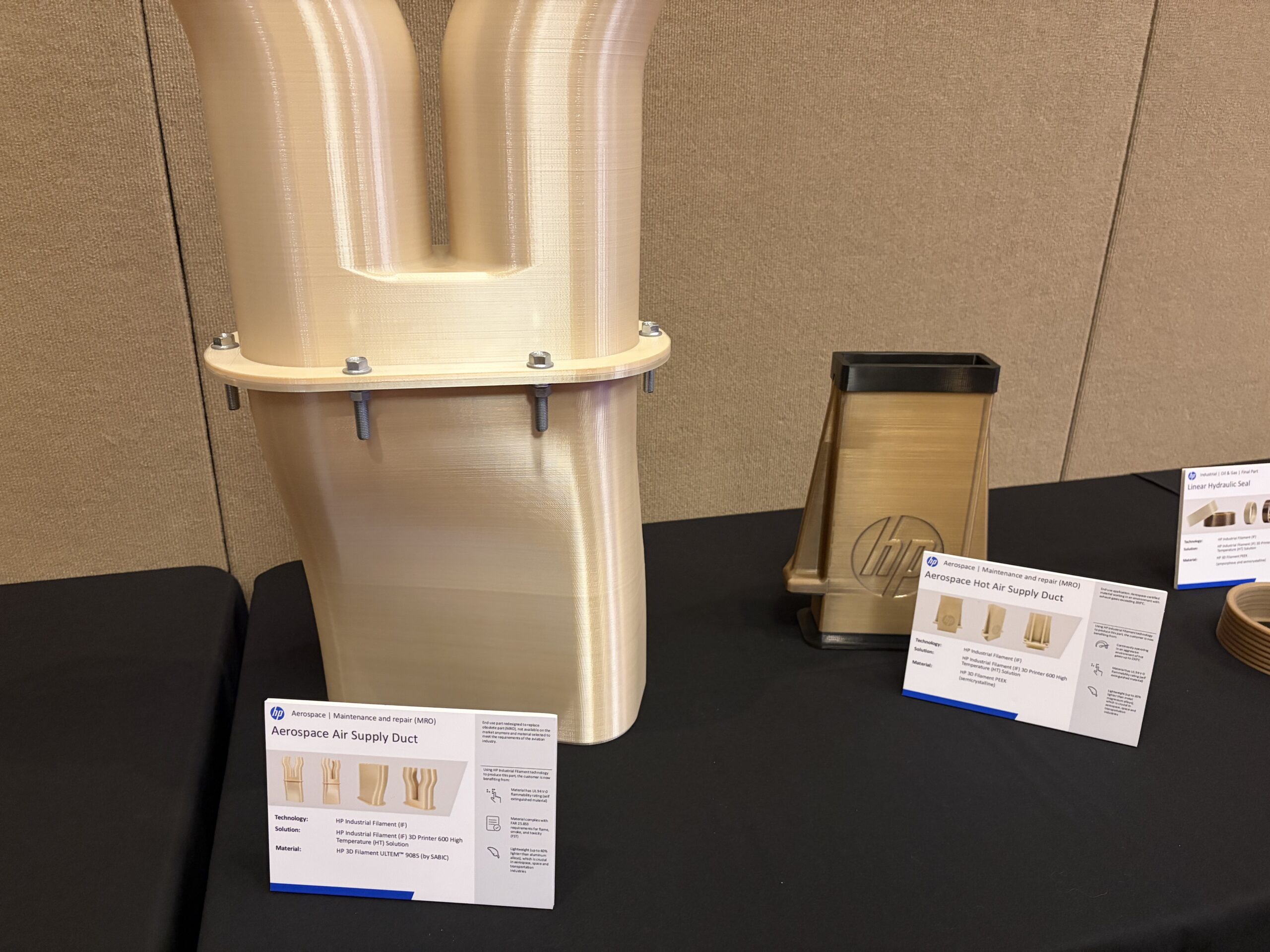
    The printer’s build volume is 380 x 380 x 420 mm. The system is modular, and its first module can reach 280°C, while the second can get up to 360°C, and the third 500° C. At these temperatures, it can easily handle the highest-performance polymers, all the way from ABS and ASA to PEEK and 10%-30% carbon fiber reinforced and glass-filled polymers.

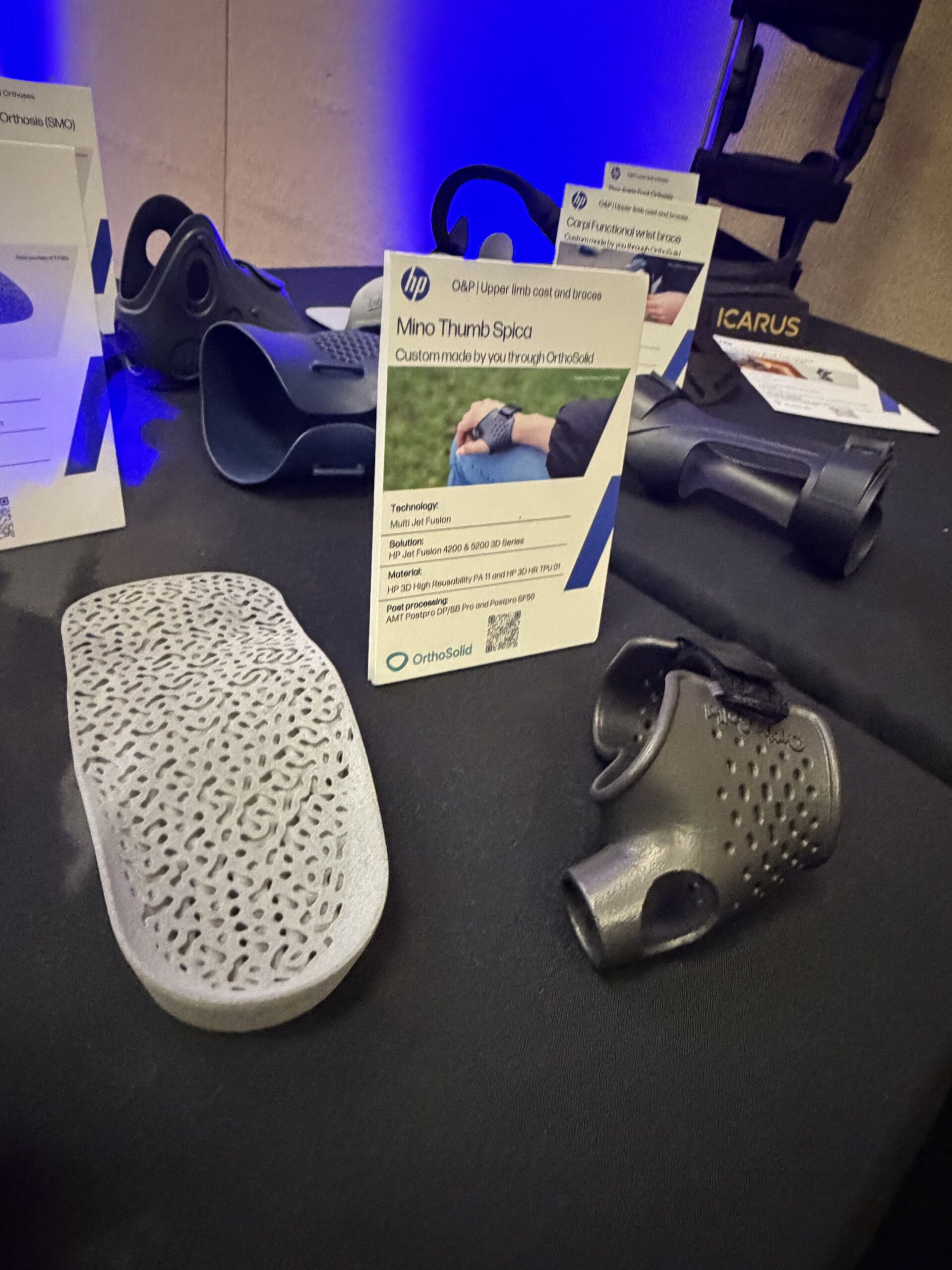
    Obviously, with such high-temperature material choices, one of HP’s target applications for the solution is aerospace; railway is another. Additionally, DuPaul and Krzysztof Roguski, an HP expert for the product who shared the printer specs with me, are working with several medical companies that are interested in using the technology for spinal implants and ankle wedges.

    “It’s just fascinating the applications that the medical community is using this technology for,” DuPaul said. “And I think they’re just scratching the surface of it. I’m hopeful for the future on the medical applications.”

    He shared a story with me about the first company he worked with when he switched from the 2D side to the 3D side at HP. Quorum Prosthetics in Colorado primarily works with athletes who have had below the knee amputations. Using HP’s Jet Fusion technology, they developed an adjustable sleeve for amputees that “literally changed people’s lives.”

    While Multi Jet Fusion has been groundbreaking in its own right, it is limited when it comes to materials. Now, with the industrial filament solution, DuPaul said “there’s other things within the prosthetics world that we’re probably going to start seeing open up for us because of the material options that we have.”

    DuPaul explained that because Jet Fusion is so limited when it comes to materials, HP really wanted to expand that capability, and “industrial filament, or fused filament, is kind of the best way to do that.” The HP IF 600HT is powered by a 3DGence engine, “but we put the HP magic into it.”

    “And it’s not just the logo. There’s up to a hundred different things that have been altered and changed.”

    The first is UL certification, which provides cybersecurity for cloud-connected customers, though the printer can also be non-cloud connected if the user wants. But DuPaul says what really sets it apart from the other products in its market is that the acquisition price is less, the filament price is less, and it’s an open system.

    “The profiles for the HP materials are already loaded into the machine, and those have been tested and certified,” he explained. “But if a customer wants to buy a third party material and run it through, they can use the existing slicer to build out a profile for that, using the existing profile for something similar.”

    Customers can also work with HP Professional Services to create a custom profile for a third party material. In this case, HP will take the data from the material manufacturer and independently test it first, before handing the profile off to the customer.

    HP Material Management System (MMS)

    DuPaul also said that things like the print speed and dimensional accuracy of the system are “on par with the industry leader.” But in terms of price, the acquisition and filament costs of HP’s newest offering are “much less than the main competitors in that market.” Plus, because it’s an open system, you can potentially save even more by using third party materials.

    I asked if they anticipated more people wanting to use third party materials, rather than sticking with HP’s tried and true options. DuPaul said his best guess is that about 80% of users will use the existing HP materials, while 20% will use third party. But, he did note that he’s basing those numbers off of existing customers.

    “With Jet Fusion, we don’t have a lot of universities,” he explained. “So I foresee universities and technical schools looking at this technology so they can then develop their own filament, or use a third party filament as part of a grant.”

    The machines will be heading to Boston for RAPID+TCT in a few weeks. Then in May, partners will be able to perform their demos and benchmark tests on the printer.

    “They’re showing their trust in us by making the physical investment in the product itself. So each of the partners will have their own machine so they can do all the customer testing benchmarks. We’ve done that with the Jet Fusion as well,” DuPaul said. “If you think about it, it’s a substantial investment, and a trust that they have in HP, to say, ‘We’re behind the product.’”

    Orders can be placed now for the combined solution of the HP IF 600HT and the MMS, and they will be available in the U.S. and Canada this June, sold through authorized resellers M5D, TPM, NCS, MatterHackers, Impact Systems, and GoEngineer in Canada.

    “Personally, I’m just super excited to see what this technology does in the next few years for us. It’s going to open up customers for us,” DuPaul said. “I’ve been in front of those customers. They would love to work with us. But we just didn’t have what they needed, and now we do.”

    If you’d like to know more about HP’s new industrial filament offering, tune in to their webinar, “An Inside Look at HP AM’s New Production-Ready Solution,” at 11 am EST today.

    Featured image courtesy of HP / all other images courtesy of 3DPrint.com

  • Ceramitec 2026 3D Printing Wrap Up

    I was surprised by just how many 3D printing companies and 3D printing projects there were at Ceramitec this year. I came away from the show convinced that the ceramics industry needs to pay even more attention to 3D printing, and that the 3D printing industry needs to pay more attention to ceramics. Ceramics work when all other materials stop. But due to a lack of familiarity, engineers and companies often underutilize them. Additive manufacturing is a relatively new path from file to part that opens new avenues for high-performance ceramics. This can help grow our industry and the ceramics industry. High-value, specific geometries in semiconductor, electronics, defense, medical, and industrial applications can really make a difference in millions of parts. Unlocking these new applications will not be easy, but that’s not stopping firms from paving the way.

    I really like the work of the Friedrich-Alexander-Universität Erlangen-Nürnberg (FAU Erlangen-Nürnberg): their glass and ceramics department, by way of Professor Kyle Webber, showed off some nice research. Their Glass and Ceramics Institute is looking at several different methods used to 3D print ceramics. From robocasting to material extrusion, they seemed to be doing interesting research. Work on tailored microstructures seemed promising, but I was most intrigued by their work on ceramic-doped resins for use on low-cost 3D printers. That could really make ceramics much more accessible.

    Durst subsidiary D3 showcased progress on micro particle jetting. The company has sold its first LAB II 400 x 480 x 160 mm MPJ machine, and touts dense ceramic components. In contrast to many light-driven processes, the firm hopes that they will make working with dark ceramics easier. The machine currently works with aluminum oxide (Al₂O₃) and sintered silicon carbide (SSiC), which could really be of interest to many firms.

    Another firm working in material jetting, Amarea, makes the MMJ ProX Series. This is a hybrid 3D printer that combines jetting and a laser to get the best of additive and subtractive manufacturing. There’s a pulsed fiber laser that can also use up to six jetting heads. The maximum build volume is 530 x 300 x 200 mm. The inline laser processing remelts, smooths build layers, and lets you selectively ablate sections. Surface roughness in Ra can be less than 0.5 microns, and this process can also produce functionally graded parts. I’d never heard of this firm, and it blew me away.

    Chinese firm Ten Dimensions showcased its line of top-down and bottom-up vat polymerization systems. The company has small desktop research machines, as well as 600 x 600 x 350 mm DLP machines. Ten Dimensions can make you a custom line for your production application.

    Lithoz showed off a semiconductor gas injector component with 62 small holes and a 0.2 mm wall thickness. The company showcased many emerging applications across semiconductors, medical devices, electronics, and industry. Lithoz seems to be moving further into large-scale production. The company also showed off some multimaterial parts, as well as ever finer parts. It was nice to see Lithoz partners such as Steinbach, Kyocera, and Sinto expanding their operations in serial production through increased production volumes and larger series. Sinto showcased quick-connect fittings, gears, and medical parts on its stand.

    Sinto’s 3D Ceram unit, meanwhile, showed off some impressive space parts, as well as medical parts, made with HAP (Hydroxyapatite), TCP (Tricalcium Phosphate), and Alumina Toughened Zirconia (ATZ) for CMF and orthopedics. The company seems to be moving forward in this hard-to-penetrate field of implantable medical devices.

    I am quietly falling in love with Schaeffler Special Machinery‘s OmniForm 3D. OmnifFusion is, of course, their multiple recoater multiple material LPBF solution. With OmniForm, three recoaters mix materials in a die. That die is then pressed manually or fused through HIP or other processes. The machines are so accessible, and this is potentially such a low-cost technology that I cannot stop thinking about them.

    Exentis groups showed their stacking screen print additive technology. The firm reported headway in selling more machines and expanding into new use cases.

    French firm Prodways was at the show with a renewed focus on ceramics 3D printing. The firm is now focused on DLP and with it, dental and ceramics. The Ceram PRO works with TETHON 3D SILICA SICAST 1200 and ALUMINA A100 resins and was built from the ground up for production. With dual-head light units, these highly productive systems are available for R&D and production.

    Korean industrial 3D printing firm MADDE showed us some beautiful parts, including a wafer carrier (which they had with them at AMS), mirrors with mirror finish, and liquid-handling components made with its binder jetting technology.

    Dutch firm Concre3de also showed off its Armadillo open binder jetting machine. That company was focusing, on the one hand, on making it easier for new market participants to use binder jet and develop new binder jet materials, while letting others move into manufacturing. The company has several SiSiC materials on offer and, with infrared heating and higher-speed printing, is now offering more production systems to clients.

    French firm 3D Minerals showed off its large-scale gantry and robot-arm ceramic 3D printers. Using its Slurry Deposition Modeling technique, the firm adds a binder to the slurry as it is deposited. The company says this allows it to print large parts continuously. Rather than focusing on technical ceramics, this firm was pursuing architectural applications and ornamental work.

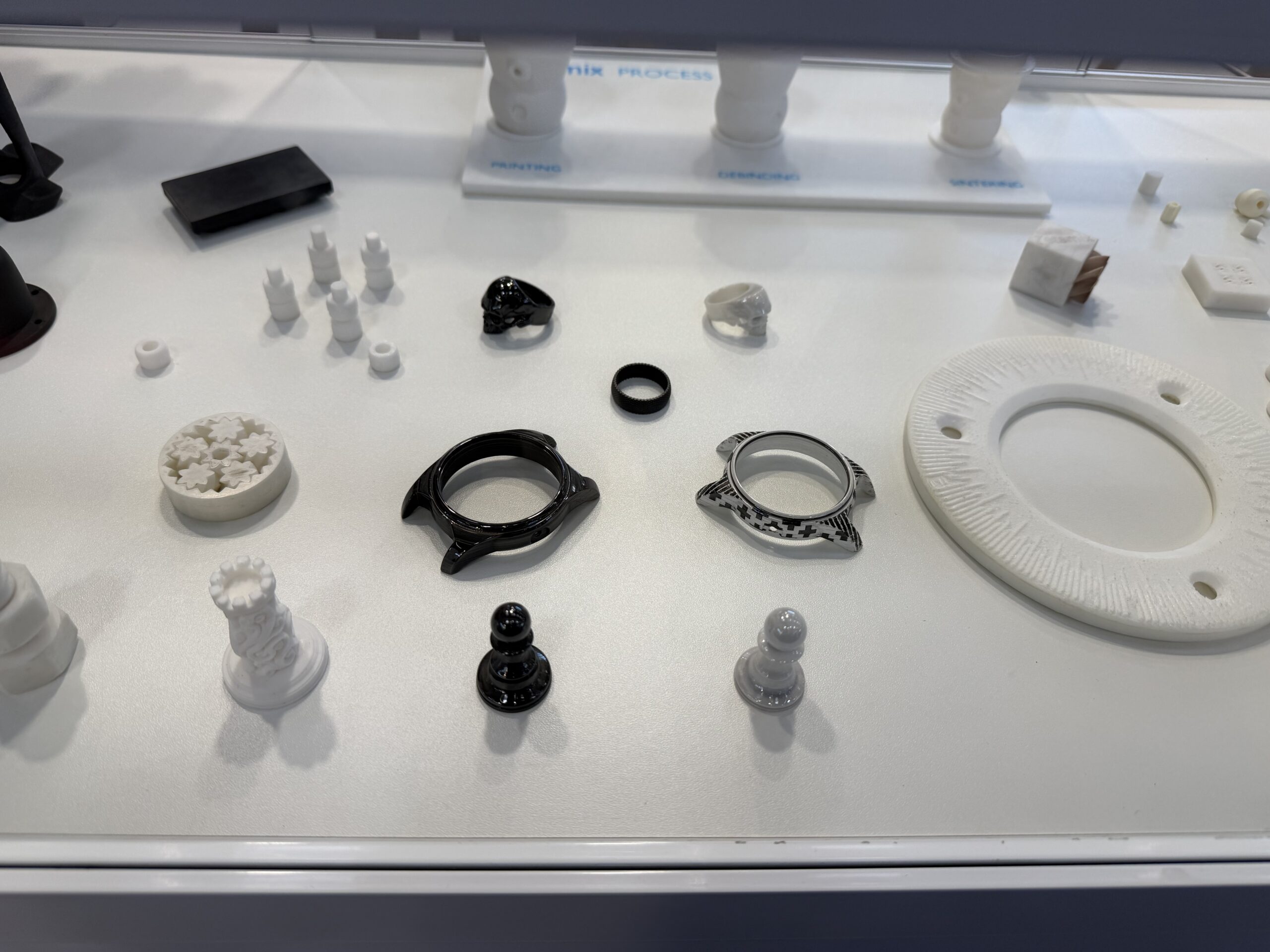
    Nanoe brought Zetamix filaments to the show. Their stand demonstrated how a Bambu machine could 3D print complex ceramic components. The company showcased a ton of research parts across many industries. It was really staggering to see just how many researchers were using their process to make cutting-edge work, from RF antennas to satellite components. Meanwhile, they, too, are moving into ever-larger production volumes.

    On the whole, we can see that there is real progress being made in 3D printed ceramics. Multiple players are moving from the lab into factories in multiple industries. The volumes are mostly modest to date, but the ramp-up is impressive, and we expect many millions of parts to be 3D printed in the future.

  • Portsmouth Naval Shipyard Installs 3D Printed Part on In-Service Submarine in Key Milestone for US Defense Sector

    I’ve been tracking the US Navy’s additive manufacturing (AM) buildup as it relates to submarines for a while now, and even amidst the AM efforts that all the branches have embarked upon throughout this decade, the metal AM program for subs remains one of the most ambitious objectives on the US military’s industrial agenda. With the announcement from Maine’s Portsmouth Naval Shipyard (PNSY) that it successfully installed a metal 3D printed component on an in-service submarine on March 18, the Navy’s 3D printing capabilities look like they’re finally ready for broader implementation.

    After inspecting and testing the component, a copper-nickel flange, maintenance fleet personnel at PNSY installed it on the Virginia-class USS Washington, following years of similar activity in private sector environments. The mission critical status of flanges, which are used to securely connect other components, like valves and pumps, to one another, demonstrates that the US Navy is becoming increasingly comfortable with the level of technical maturity it sees in its metal AM program.

    Additionally, now that the precedent has been set, it should provide further stimulus to the branch’s willingness to target even more ambitious goals, such as leveraging AM to expand its use of distributed manufacturing. Last year, the Navy 3D printed a metal component on an aircraft carrier and then installed it on the USS Vermont. The success at PNSY will likely make that approach more commonplace.

    The installed component is a copper-nickel flange, a critical element typically used in critical piping systems and structural interfaces within submarines, where it must withstand high pressure, corrosion, and continuous operational stress. (Picture source: U.S. Navy)

    With the war in Iran looking like it’s still in its earliest phases, US defense experts have started to sound the alarm concerning the rate at which the US military is depleting its hardware, most notably including high-cost missile systems. Against that background, there would seem to be a high likelihood that all the branches will try to find ways to accelerate the certification timelines for 3D printed parts.

    In a press release about PNSY’s first installation of a metal 3D printed component on an in-service submarine, the shipyard commander, Cpt. Jesse Nice, said, “The unique nature of this momentous achievement is a testament to the strong teaming and innovation that PNSY is known for. For the first time, we forged a submarine component that met the fleet’s most rigorous technical specifications. This was the result of one team, with a single mission —getting the job done correctly and safely.”

    Capt. Jason Deichler, commodore Submarine Squadron TWO, said, “Portsmouth Naval Shipyard is leading the organic industrial base in the production and installation of additively manufactured submarine components. This is truly a war fighting enabler and a key component to enhanced undersea readiness.”

    I’ve long felt that the purpose of the Navy’s metal AM buildup for submarines wasn’t so much the submarines themselves, but rather the cultivation of the technical support abilities embodied by the buildup. While submarines aren’t quite obsolete yet, the very fact that it’s a realistic possibility, thanks to the rapid advancement of tracking capabilities, arguably makes the submarine program as it has traditionally existed an unjustifiable expense.

    I don’t think that means that the US will stop using submarines, but I do think it raises legitimate questions about whether it makes any sense at all to try to keep making more advanced submarine classes. The Columbia program, for instance, was originally supposed to deliver its first sub by 2027, and that deadline has recently been pushed back to 2028 or even 2029. If the US is learning anything in Iran, aside from the fact that starting a war with Iran was probably a poor idea, it’s that it’s bad policy to commit to production timelines that have started to move a generation slower than the technologies that respond to our weapons systems.

    Along those lines, the timeline for the class of submarines after the Columbia-class has already moved to the early 2040s, which to me, at least, strongly suggests it will never be built at all. Instead, I think the Pentagon will use all the data and know-how it has amassed thus far from the submarines program, and all the other manufacturing accelerators, to pivot to low-cost autonomous weapons systems.

    In that case, the existing submarine fleet could still be used as motherships for subsurface drones, an idea that’s been floated for some time. AM would be all the more crucial in that context, as the supply chains for conventional subs would, over time, become comprised almost entirely of parts that are otherwise more or less out-of-production.

    Images courtesy of US Navy

  • Printing Money Episode 37: Q4 2025 Public 3D Printing Earnings Review with Troy Jensen, Cantor Fitzgerald

    Welcome to Printing Money Episode 37. Troy Jensen (Managing Director, Cantor Fitzgerald) returns for his quarterly analysis of the public company earnings reports, specifically Q4 2025. Nowadays, in terms of significant publicly traded 3DP/AM pure plays, that’s not so many, so Troy fine-tunes his approach in including public-related coverage of the privates.

    Episode 37 starts off with a summary look at 2025 and an enthusiastic nod to the beginning of 2026, as seen through the lens of AMS last month in NYC. Sadly, both Danny and Troy were unable to attend AMS due to the blizzard (remember that?), but they both got to watch the livestream from main keynote Yoav Zeif (CEO, Stratasys), and they both heard plenty from those who did attend.

    Next, Danny and Troy consider a number of bullish indicators across the 3DP/AM industry. They start with metal AM, highlighting positive acquisition outcomes, excellent performance outlooks from industrial leaders and lower cost upstarts alike, and also including some VC and strategic financings. There’s also reason for optimism in polymers, with a potentially promising IPO pipeline from the likes of Formlabs and Carbon.

    Then, Troy and Danny dive into the 3DP/AM public company earnings reports for Q4 2025. SSYS, DDD, MTLS, and VELO all offer unique upside and also face their own challenges. Printing Money synthesizes it all.

    Could the likes of EOS, VELO, and SSYS be on the acquisition trail?  Please enjoy Episode 37 and check out our previous episodes too.

    This episode was recorded March 27, 2026.

    Timestamps:

    00:12 – Welcome to Episode 37, and welcome back to Troy Jensen, Cantor Fitzgerald

    00:44 – 2025 in review

    01:20 – Return of large financing deals to the AM industry

    02:02 – AMS 2026 in review

    03:13 – AFM Capital acquires Incodema3D

    04:32 – AFM Capital also acquired Owens Industries

    05:39 – Metal AM markets and deal pipeline look strong

    06:47 – EOS Q4 2025 review and analysis

    08:59 – Nikon SLM Solutions (7731.JP) Q4 2025 review and analysis

    09:49 – Nikon writes down cost of SLM acquisition

    10:27 – Nikon invests in Vast Space

    12:36 – Velo (VELO) Q4 2025 earnings and analysis

    16:27 – XACT Metal announces 30% growth in 2025

    17:54 – FreeForm raises $67M Series B from Nvidia and more

    19:54 – Formlabs reveals $250M+ revenue in 2025 (at AMS 2026)

    23:05 – Carbon 2025 business review and analysis (raises $60M)

    24:36 – 3D Systems (DDD) Q4 2025 earnings and analysis

    28:08 – Stratasys (SSYS) Q4 2025 earnings and analysis

    33:08 – Materialise (MTLS) Q4 2025 earnings and analysis

    37:42 – See you at RAPID in a couple weeks

    38:04 – Disclaimer and thank you for listening!


    Disclaimer:

    This content is for informational purposes only, you should not construe any such information or other material as legal, tax, investment, financial, or other advice. Nothing stated on this podcast constitutes a solicitation, recommendation, endorsement, or offer by the hosts, the organizer or any third-party service provider to buy or sell any securities or other financial instruments in this or in any other jurisdiction in which such solicitation or offer would be unlawful under the securities laws of such jurisdiction.  The information on this podcast is of a general nature that does not address the circumstances and risk profile of any individual or entity and should not constitute professional and/or financial advice. Referenced transactions are sourced from publicly available information.

    Danny Piper is a registered representative of Finalis Securities LLC, member FINRA/SIPC. This material has been prepared for information and educational purposes only, and it is not intended to provide, nor should it be relied on for tax, legal, or investment advice. Investors should consult with their own tax, legal, and financial professionals before investing. Real estate investments are generally highly risky. They can be volatile, unpredictable, illiquid, and are subject to ebbs and flows and market shifts. Investors also risk the loss of all principal investments.

  • U.S. Army Begins Construction of 10 3D Printed Barracks at Fort Bliss

    The U.S. Army has begun construction of 10 3D printed barracks at Fort Bliss in El Paso, Texas, in what is being described as the Department of Defense’s largest 3D printed construction project so far. Ground was broken in late March 2026, and the buildings are expected to house more than 500 soldiers once completed. The project uses large-scale robotic printers to build the structures faster and more efficiently than traditional methods.

    At the groundbreaking, Army leaders, soldiers, and community partners gathered to mark the start of the project. In a statement shared by Fort Bliss on social media, officials said the effort reflects the Army’s “commitment to innovation and quality of life for Soldiers,” adding that the barracks will be built faster and more efficiently while delivering more modern and resilient living spaces. Officials also described it as “a major step forward” in how the Army approaches construction and infrastructure. What’s more, the buildings are part of what the Army refers to as “Life Support Areas,” designed to house soldiers while improving construction speed and efficiency on the base.

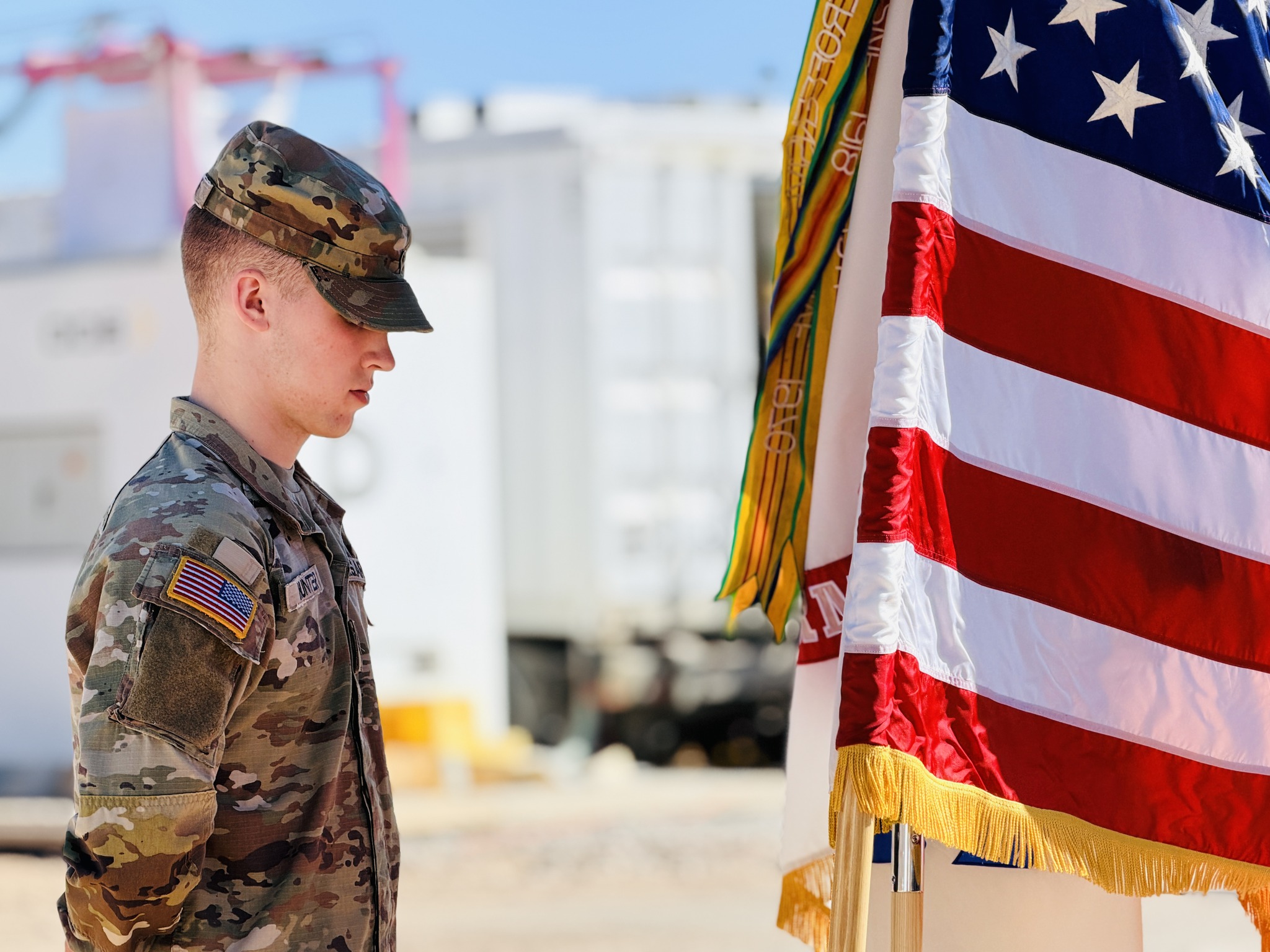
    The 1st Armored Division holds the Fort Bliss 3D printed Life Support Area Ceremonial bead laying on Fort Bliss, Texas, March 26, 2026. Image courtesy of U.S. Army/Sgt. Jacob Suess.

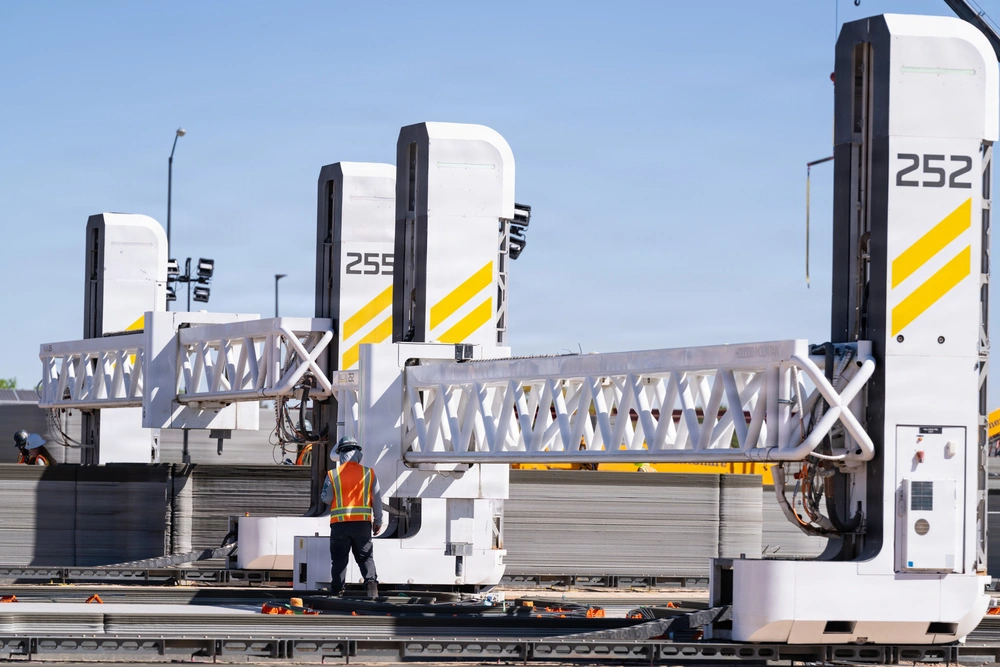
    The barracks are being built using 3D printed concrete, deposited layer by layer by robotic systems. The work is being done with Austin-based construction company ICON, which is using its large “Vulcan” printers to construct the buildings. The Army has awarded ICON a contract worth about $62.8 million for the project. Officials say 3D printing can speed up construction and reduce labor requirements compared to traditional building methods, though exact cost comparisons vary by project.

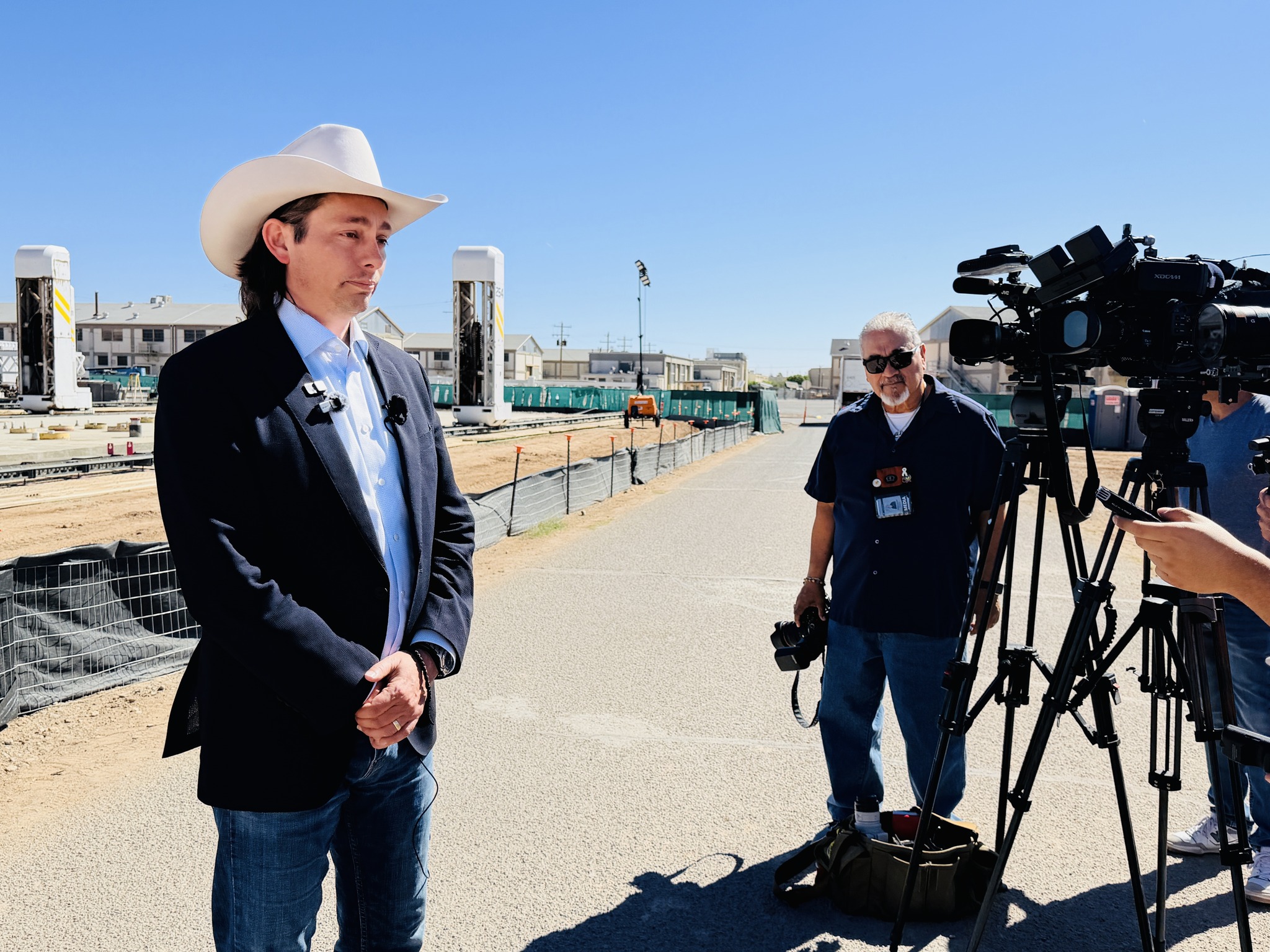
    Jason Ballard, Icon Chief Executive Officer, gives his speech during the Fort Bliss 3D printed Life Support Area bead laying ceremony on Fort Bliss. Image courtesy of U.S. Army/Crista Mack/Fort Bliss Garrison Public Affairs.

    This is not the Army’s first 3D printed barracks project at Fort Bliss. In 2025, it opened its first 3D printed barracks on the base as part of a smaller pilot program. That earlier effort included three buildings, each measuring roughly 8,000 square feet, and was used to validate the technology. The new project expands on that work, “moving from testing to a larger, more practical deployment.”

    The Army has also used 3D printing for construction in other projects in recent years. Smaller barracks and training structures have already been built at Fort Bliss and elsewhere, and ICON has also worked with the U.S. Marine Corps on earlier projects. However, this new effort stands out for its scale, with 10 buildings being constructed at once, making it one of the largest deployments of 3D printed construction in the U.S. military so far.

    The goal is to build faster, reduce costs, and improve housing quality. Army officials say traditional barracks projects often take too long and cost too much, while not always meeting the needs of soldiers. With 3D printing, the military can speed up construction timelines and use less material by placing it only where needed.

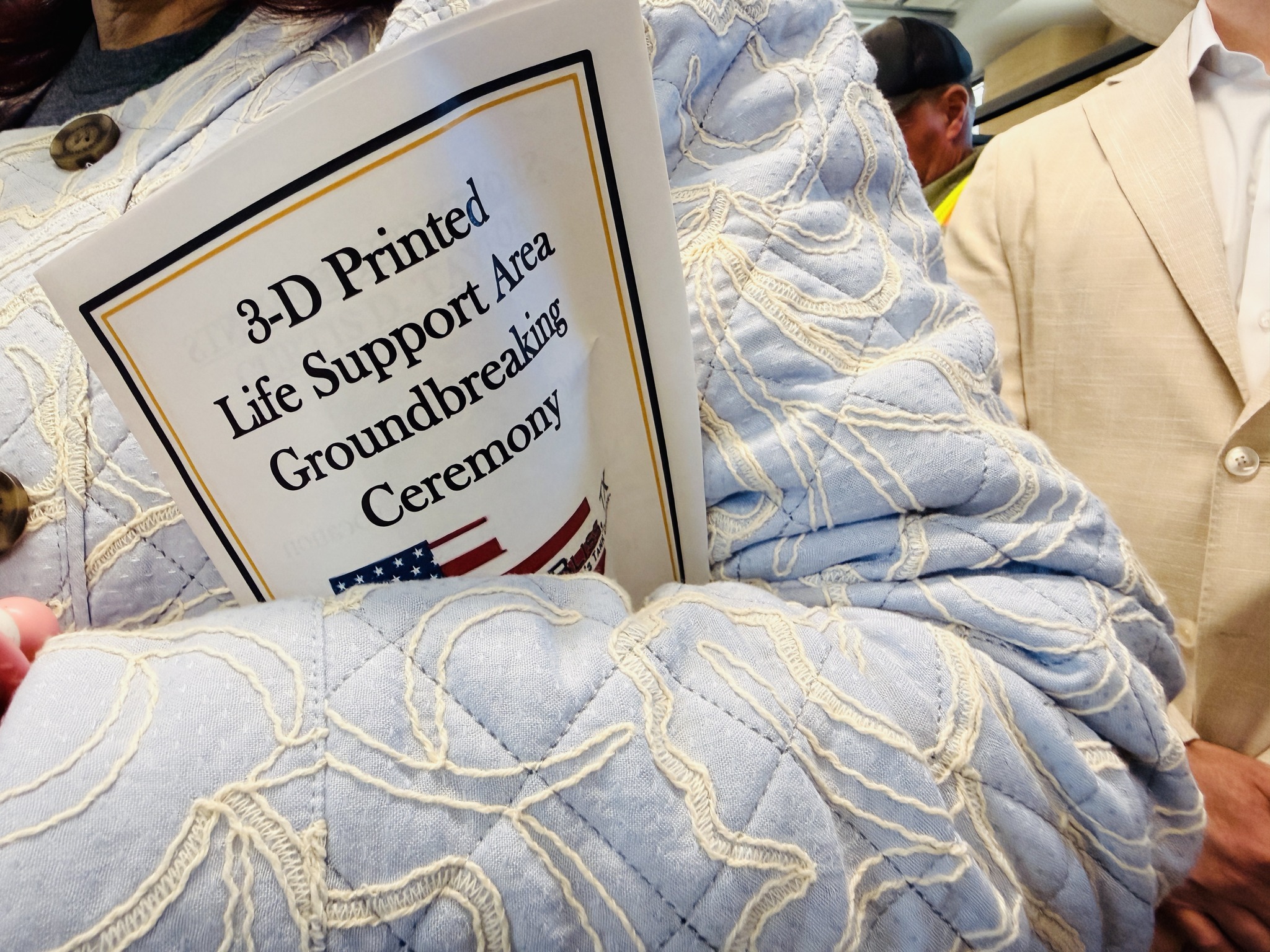
    3D printed life support area groundbreaking ceremony memorabilia. Image courtesy of U.S. Army/Crista Mack/Fort Bliss Garrison Public Affairs.

    At a recent ceremony, Army leaders and local partners described the project as part of a broader push to improve the quality of life for soldiers. Both ICON and officials said the new barracks are designed to provide more modern, resilient living spaces while demonstrating how new construction technologies can support readiness.

    For the Department of Defense, this is part of a push to build faster and more flexibly. The military has been looking for ways to respond more quickly to changing needs, including troop surges. At Fort Bliss, the demand for housing has increased as operations expanded in recent years. This project, in particular, is being led by the 1st Armored Division, known as “Old Ironsides,” which is based at Fort Bliss, and has been using 3D printing to modernize how facilities are built on the installation.

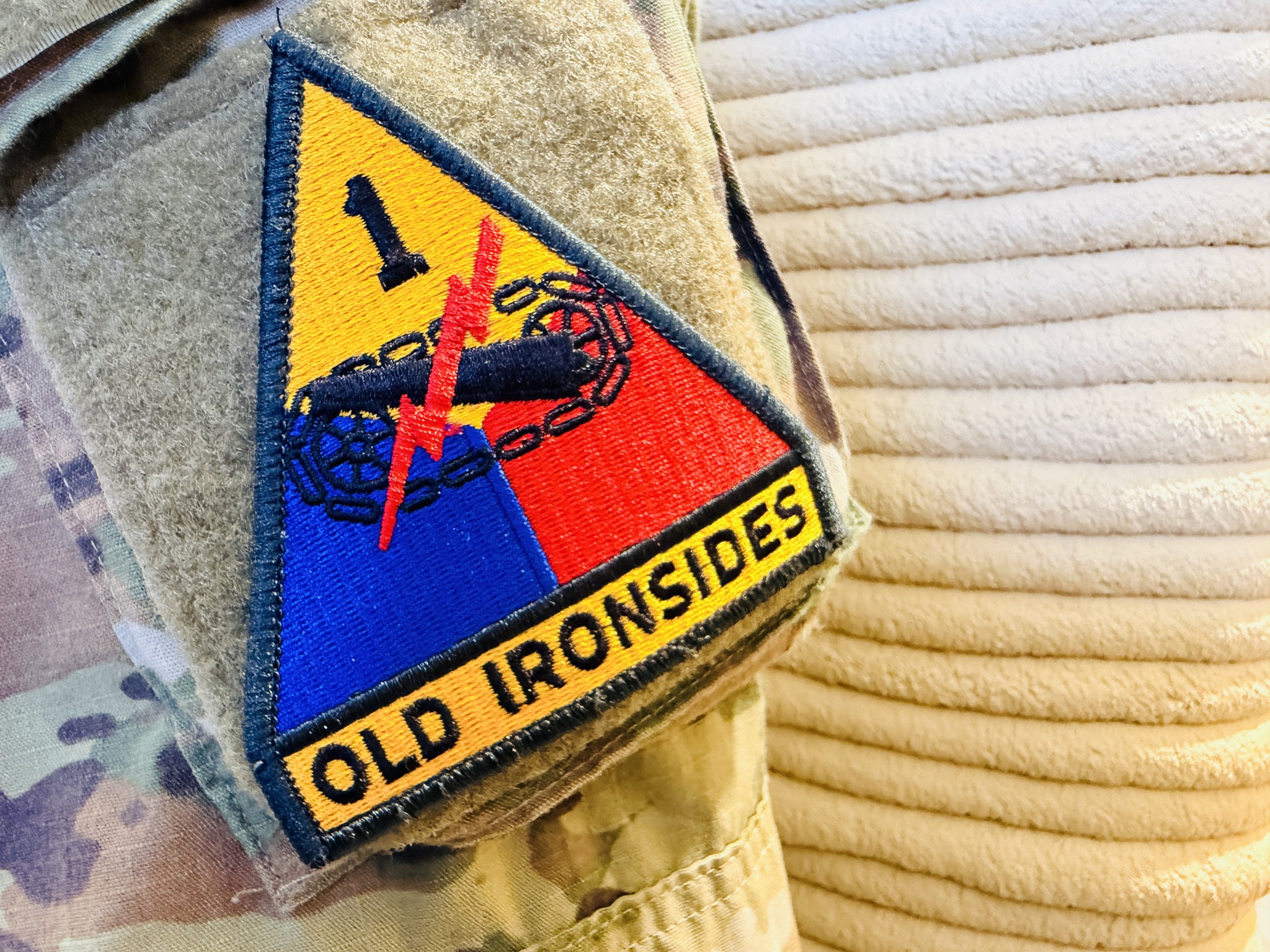
    The 1st Armored Division, known as “Old Ironsides,” is based at Fort Bliss. Image courtesy of U.S. Army/Crista Mack/Fort Bliss Garrison Public Affairs.

    More broadly, this is another step in the military’s growing use of 3D printing, extending beyond parts into full-scale construction. While the technology is still developing, projects like this show that it is moving from testing to real deployment. If successful, similar systems could be used to build not only barracks but also other military facilities in the future.

    Of course, this is not the first 3D printed barracks project we’ve covered, but it is one of the largest and most practical so far. And for the U.S. military, that matters. It shows that 3D printing is moving beyond pilot projects and into real deployment, where speed, cost, and how fast things get done all matter. If successful, projects like this could change how the Army builds not just barracks, but a wider range of infrastructure in the future.

  • RusselSmith Brings Additive to Ghana’s Maritime Sector

    Nigerian firm RusselSmith is in talks with Ghana’s Maritime Authority (GMA)  to bring 3D printing to Ghana’s maritime sector. The Commonwealth Enterprise and Investment Council (CWEIC) helped make the discussion possible. This is an encouraging sign of increased capacity and expertise in additive manufacturing in Africa. And rather than an outside company parachuting in, this showcases manufacturing capabilities developed in Nigeria being deployed across the region.

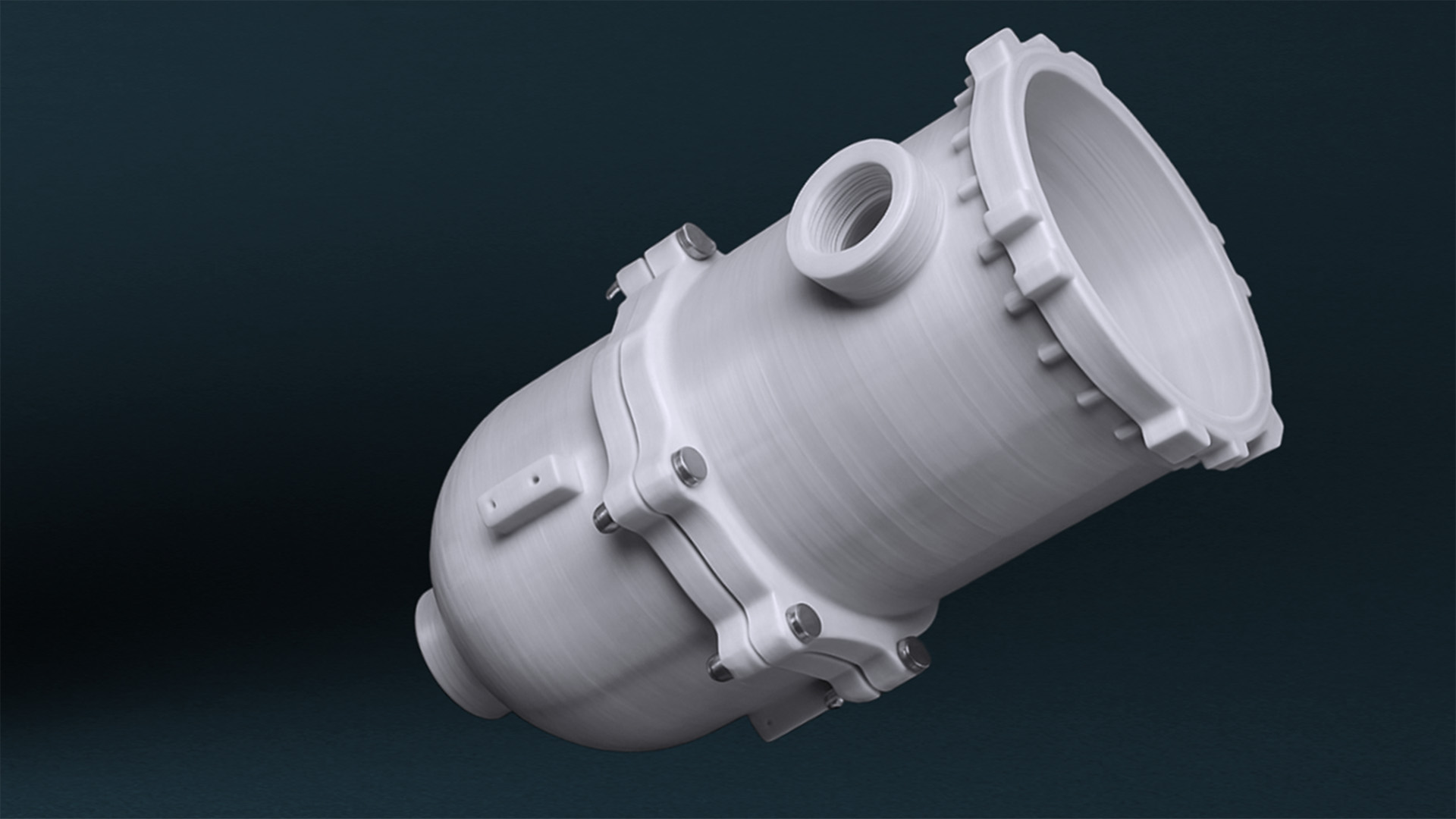
    3D printed bag filter housing used in an industrial application. Image courtesy of RusselSmith.

    RusselSmith has been active in advanced manufacturing for over two decades and has been working in additive for over seven years. RusselSmith CEO Kayode Adeleke said that Africa is estimated to have only 2% of the 3D printing market and,

    “What we are building in Nigeria is advanced manufacturing infrastructure and exportable expertise. The interest from Ghana and other countries in the region validates our approach. When African countries can access advanced manufacturing capabilities locally, we reduce dependence on international supply chains, create high-value jobs, and retain economic value within the continent. What we are building in Nigeria is advanced manufacturing infrastructure and exportable expertise. The interest from Ghana and other countries in the region validates our approach. When African countries can access advanced manufacturing capabilities locally, we reduce dependence on international supply chains, create high-value jobs, and retain economic value within the continent.”

    RusselSmith is working on the Omnifactory in Lagos. That is meant to grow into a Mega Omnifactory, an expanded production hub for Nigeria and beyond. Targeted industries include energy, maritime, and defense. As well as localizing, manufacturing lead time reduction and spare part lead time reduction are key goals.

    3D printed compressor coupling used in an industrial application. Image courtesy of RusselSmith.

    RusselSmith is working on 3D printing boats up to 12 meters long in polymer. Additionally, the company offers 3D scanning services for reverse engineering parts. The company can also deploy digital warehouses, do DfAM, and print parts as a service. The company uses cold spray and LPBF 3D printing in stainless steel (316L, 17-4PH), tool steel, Ti, aluminum, and superalloys. It also offers polymer 3D printing for CF-reinforced materials, ULTEM 9085, PEEK, and elastomers. The firm has Roboze polymer machines and SPEE3D WarpSPEE3D cold spray. It has made a compressor coupling with Submerged-Arc Additive Manufacturing (SAAM) and EM12K wire, along with other industrial components across sectors such as maritime, oil and gas, and defense.

    Previously, the Nigerian Upstream Petroleum Regulatory Commission (NUPRC) granted the firm permission to use PEEK 3D printed for oil field services MRO. The company has also partnered with 3Yourmind and has shown that it can deliver on getting parts made. I really love what RusselSmith is doing. We lack systems integrators, companies that support the design-to-part workflow, and companies that are pushing additive into new regions. By doing everything at once, RusselSmith is showing us how to build a regional hub for additive manufacturing. In oil-rich Africa, spare parts are especially problematic because countries and distant fields are even harder to reach than other places. This makes Additive MRO very cost-effective indeed. With local knowledge and deep energy market expertise, RusselSmith is developing an integrated MRO solution coupled with digital warehousing. In effect, the firm is operating like an Immensa. Likewise, in solving the challenges of making parts to spec from scratch, the company enables oil and gas firms. Traditionally, African countries have been energy-rich, but almost all of the inputs and much of the money have been taken out of the economy with little flowing back in. There has been little local capacity building as well. In mastering additive, RusselSmith could perhaps leapfrog international firms in deriving the right parts locally, profitably. We know that for many parts, this will not work. But given the region’s huge offshore and onshore assets, the firm only needs a few parts for this endeavor to make a lot of sense. And if it scales up in volume, then this can grow considerably.

  • Aerospace Giant IHI Bets on Freemelt E-Beam 3D Printing for Next-Gen Turbine Alloys

    IHI Europe has purchased a Freemelt electron-beam powder-bed fusion (E-PBF) system. Previously, parent IHI bought two Freemelt systems, bringing the total to three. IHI is a Japanese engineering conglomerate. The company is a major jet engine manufacturer, space component contractor, and industrial machinery builder. The company makes turbochargers for cars, small tractors, oil storage tanks, bridges, and tunnel boring machines. It also makes parts for the GE GEnx engine, Rolls-Royce Trent turbofan aircraft engines, and rocket engines. IHI employs over 28,000 people and has revenues of 1626.8 billion yen, around $10 billion.

    IHI Europe’s Dr. Rachel Jennings, Head of Advanced Technology Development, stated,

    “Freemelt’s open platform enables us to push the boundaries of what is possible in high-temperature materials. It gives us the flexibility to experiment with small batches of novel alloys cost-effectively and at speed—something rarely achievable with conventional additive systems. Freemelt’s philosophy has always been to co-develop with their customers. Their openness and responsiveness have allowed us to adapt the technology to our needs while benefiting from a strong user community. E-PBF enables the fabrication of novel high-temperature, high-performance materials that allow us to push the boundaries of applications.”

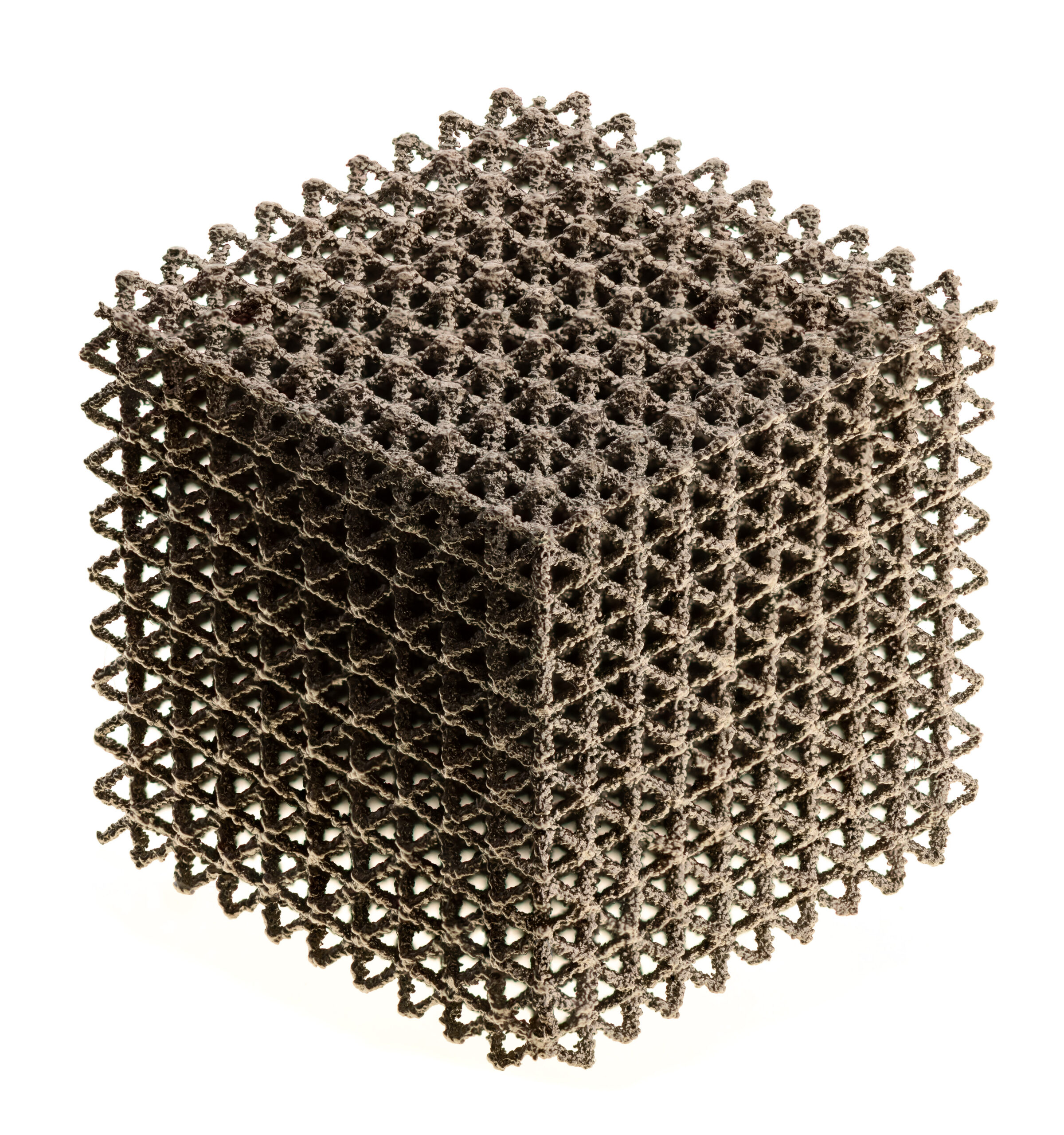
    Cube lattice in Ti64. Image courtesy of Freemelt.

    The company wants to research new Nickel superalloys. The company also wants to go deeper into gamma titanium aluminides, which are lightweight replacements for superalloys on turbo machinery. These low-density, high-creep-resistance materials work well up to 750 °C. These materials are brittle, which makes E-Beam, in particular, and additive manufacturing generally promising technologies. By fine-tuning parameters, grain structure, and build strategies, these materials can be made to work well with E-Beam and may cut the weight of your part by up to half compared to Inconel and the like. There’s a lot to be excited about here.

    In particular, the firm is interested in IHI TiAl 823, an alloy designed from the ground up for turbo machinery, specifically for low-pressure turbine blades. The firm is probably looking to speed up production relative to casting or forging. Additionally, it could construct materials in wholly new ways. Different hatching strategies or the development of laser strategies to mix dissimilar materials could create wholly new alloys on the machine itself. That would indeed be a very exciting thing for IHI to do. More new alloys could give the company an edge in space exploration or aero engines. Specifically created alloys, such as TiAl 823, can be produced more cheaply and quickly using additive manufacturing. This could lead to very specific materials designed to win and outperform in very valuable niches that were previously too small to develop alloys for.

    IHI will be working with Tohoku University and CEIT. “Work on powder modification and atomization techniques has shown promising results in improving conductivity and process stability, paving the way for broader applications across multiple AM processes.” I really like how IHI lauds Freemelt’s open philosophy. By being open and working with clients, the firm helps them master the technology. With Freemelt, the choices, options, and buttons to push can be daunting, but you are not a captive of predefined settings or parameters. Truly innovative applications can therefore be made. The advantages of speed and cost per build will also make a lot of sense, especially for companies using expensive new alloys.

    This seems like a sensible investment for IHI. Electron beam technologies have long been a NASA darling, but are being underutilized given their capabilities. Especially in turbine blades, the process is perhaps the most advantageous and has been proven out now across many years. At the same time, in-house alloying can really push the needle for IHI. RCCAs and other new alloys can become alloy systems that can govern the future of space and aviation. If IHI could make a new Inconel or an Inconel for just certain turbine blade components, then the investment would be well worth their while. Many companies were characterizing Inconel or trying to get copper to work without seeing the bigger picture. By designing a well-working alloy for a specific application, companies can leapfrog the competition and own the future. A small improvement in density or ductility could mean many billions in lost or won engine contracts at the end of the day.

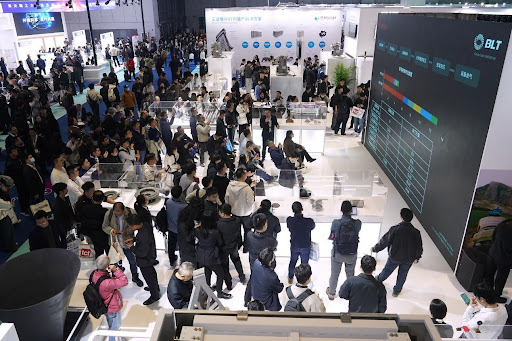
  • BLT Touts 100,000 Copper Parts Made

    With the significant volume of copper used in electronics, semiconductors, aerospace, defense, and beyond, copper additive has had immense promise from the early days of copper 3D printing at Beamit and the first industrialization at GH Induction and Aidimme (both with E-beam!). Years later, green laser LPBF and rejigged LPBF processes brought dedicated copper machines on the market from AMCM, EOS, ATLIX, and others. A lot of the production cases were super secret and very specific, keeping news on copper printing subdued. And if you didn’t know any better, you’d think that copper printing was kind of a shadow of its glimmering glow of promise.

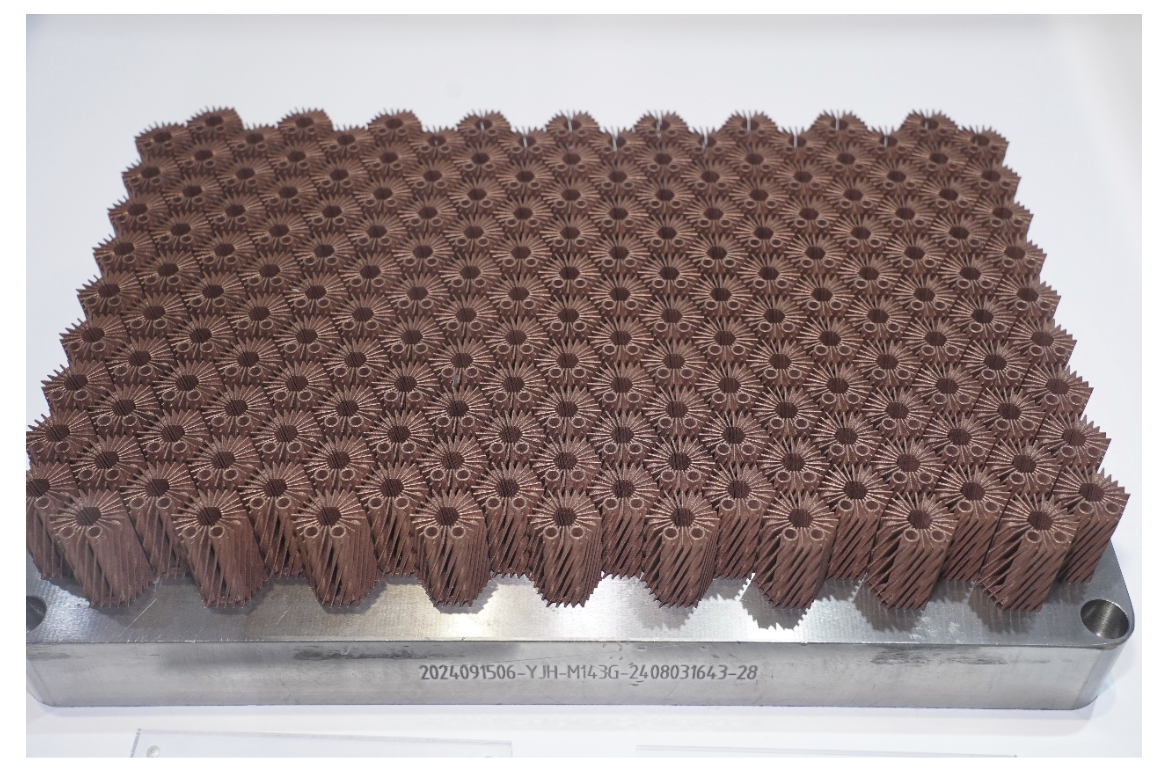
    Copper alloy parts 3D printed by BLT.

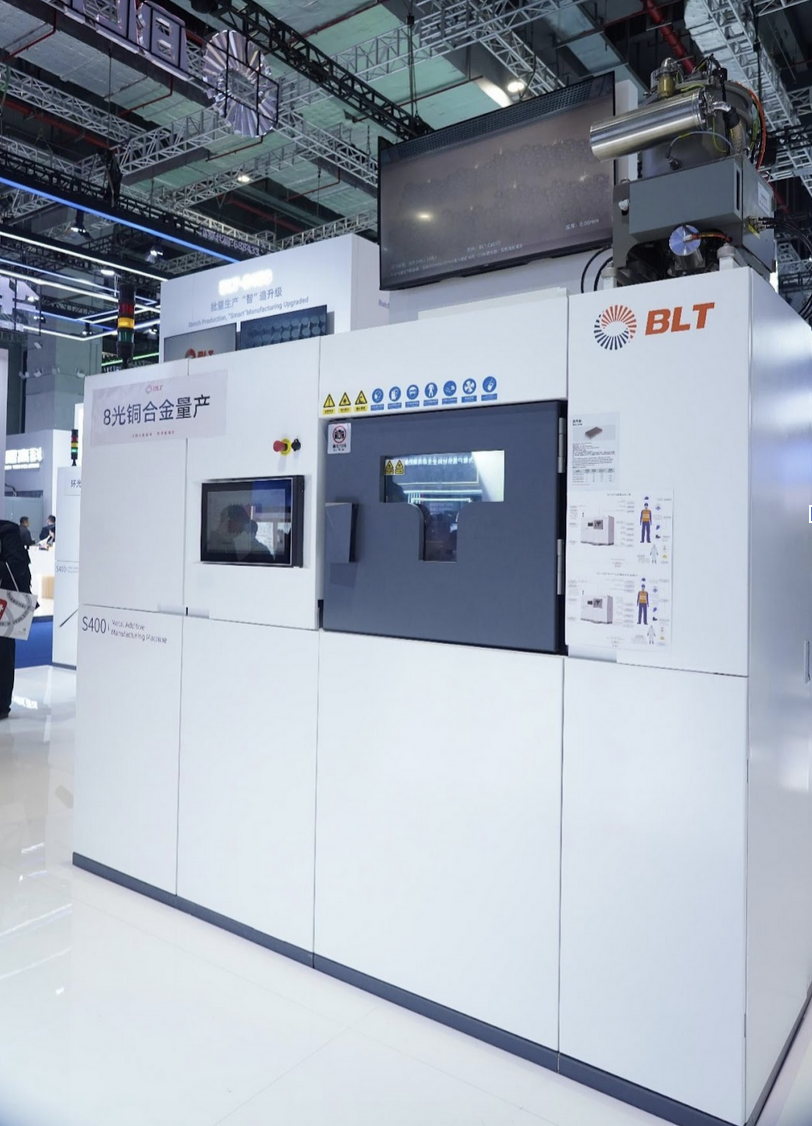
    But copper is an unsung success story in Additive, a victim of what I’ve called the Tip of the Iceberg problem. With no one able to share cases, success seems limited, and the activity becomes self-limiting. Enter BLT to ameliorate that, because even though they are far from the first to do significant production in copper, they are the first to talk about it. BLT has stated that over 100,000 parts have been made on a BLT-S400 8-laser machine.

    The company says that “BLT has implemented a fully validated, end-to-end workflow that covers powder development, parameter tuning, and post-processing.” This was achieved in part through red and green lasers, along with “Extending the build length of the BLT- S400 to 450 millimeters increases part density per build, improving efficiency for small, high-volume components like heat sinks and optical modules.” The company also says that “predictive fault management, continuous operation capability, and robust thermal control work together to ensure consistent output during prolonged, high-load production runs.”

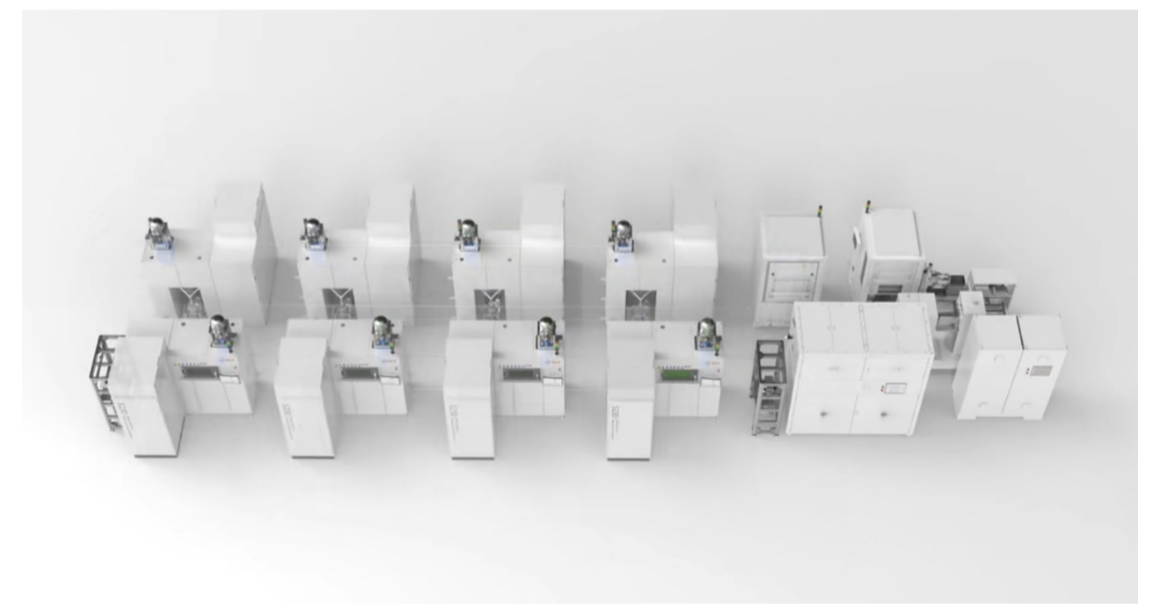
    BLT Automated Production Line.

    Their current solution is offered in an automated production line configuration optimized for individual clients. BLT aims to take customers on a journey towards actual production. It’s notable here that the whole setup is optimized for small parts. Much of the EOS et al efforts in copper have been focused on large New Space parts, such as rocket engine components in GRCop-42. But this setup is focused on small components. The automation and requirements for small, high-volume setups differ considerably from those for crane and Solukon setups used for large defense applications. Simultaneously, BLT is working with Chinese space firms, so we know they’re active there as well. But, there is comparatively little effort in the complete automation of small copper setups across many other firms. This is a strategic risk for competitors and a potential advantage to BLT. If the firm continues to do its own high-volume production and can play in production and machine building for both small and large copper parts, it will eventually win through scope and scale.

    BLT-S400 8-laser PBF-LB/M machine.

    The company believes that “AI, 6G, and next-generation electronics” will drive new use cases, while “cost-effective…accelerated production cycles, material efficiency, and design freedom” are key drivers making this possible. High-value production is where it’s at right now. We’re seeing an acceleration of large-scale production runs. Many niches are simultaneously increasing volume. And several companies could have put out a rather vague, frankly, claim about making over 100,000 parts in copper. But it was BLT who did this first. If you’re losing a fight, it’s easy to blame others and look to factors like Chinese subsidies. But, having more gumption and drive, one can push ahead while others whisper backstage. What’s notable here is that gumption is coupled with automated lines and small parts. Automated lines make sense in specific cases, and more work will be needed to right-size them for the right cases and make them easier to adopt. Other firms should look to BLT’s ability to industrialize both large-part and high-volume small-part production in copper. Copper is set to become a bigger production case in the future. Are you ready?

    BLT launching the latest technology at TCT Asia 2026.

    Images courtesy of BLT

  • Superman, One Year Later, and the 3D Printing You Didn’t Notice

    Last year’s Superman film had a lot going for it. A new director, James Gunn, who came over from Marvel after the success of his Guardians of the Galaxy trilogy, brought a new direction to DC Studios. It was a fresh tone for the superhero powerhouse that is DC. New characters, new ideas, and yes, even a superdog.

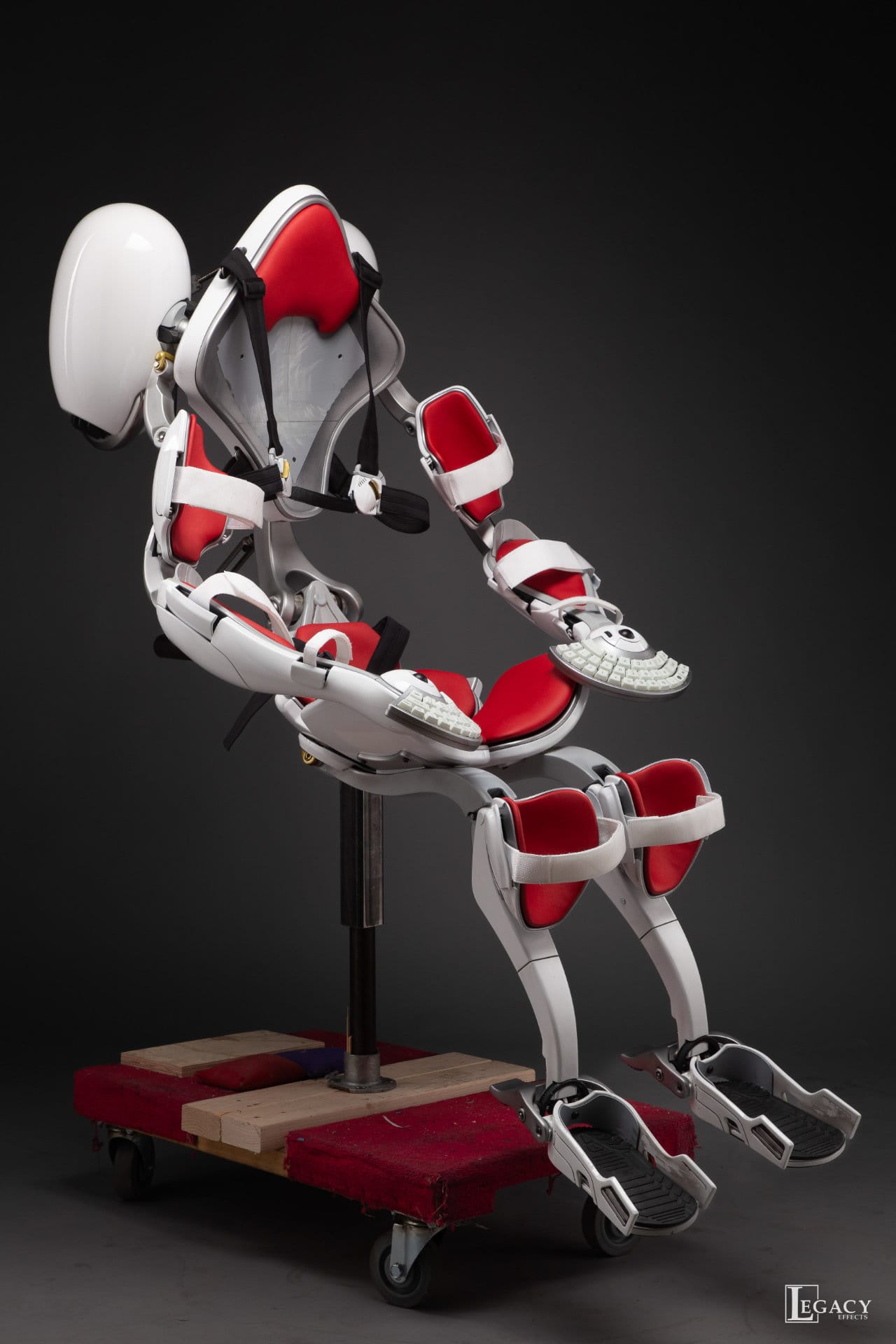
    Director James Gunn on the set of Superman 2025; Mr. Terrific’s flying seat is fully 3D printed.

    Truly, there was plenty to talk about. It also worked at the box office, opening to around $220 million globally and giving DC a much-needed win. But one of the more interesting parts of the film’s story happened behind the scenes. And although it didn’t make the headlines, 3D printing played a key role in how the film came together.

    Most people watching the movie aren’t thinking about who built the suit, the robots, or the creatures, but that’s where a lot of the real work happens. The team behind those physical elements is Legacy Effects, a studio that has spent years building props, suits, and animatronics for major films, like Iron Man, Jurassic World, and Avatar.
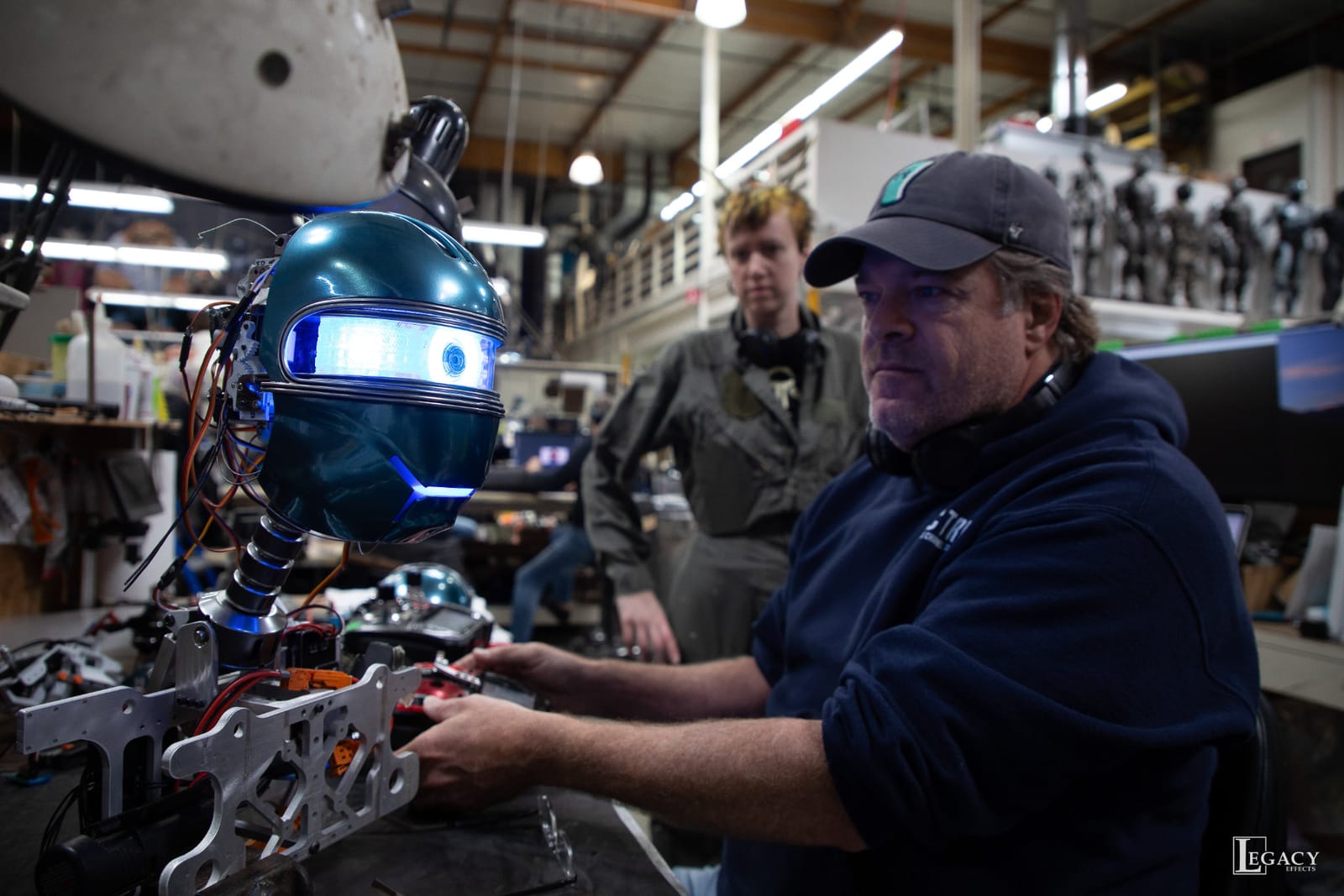
    The engineer is installing the internal structure of the Animatronic Robot.

    During the production of Superman in 2025, the team made a shift in how they worked, bringing in a group of printers from Bambu Lab, at first just to test and maybe speed up a few steps. But that didn’t last long, and what started as a small experiment quickly spread across the full workshop, as more parts were printed, more teams began using them, and the printers moved from being just another tool to something much more central to how the film was made.

    Mr. Terrific’s T-shaped mask in the movie was printed by Bambu Lab’s 3D printer with TPU.

    From prototypes to real parts

    For years, 3D printing in film meant choosing between speed and quality. Fast prints were good for testing, but anything meant for the camera usually had to be made again using slower processes. In many cases, that meant switching to technologies like SLA or MJF just to get the surface finish right. That often meant printing the same part twice, once to test and once to get the finish right.

    What changed here is that this gap started to close. With Bambu Lab’s X1C platform, parts could be printed quickly while still achieving a surface quality that was good enough for many on-set uses. Parts were not only quick to make, but also clean enough to use, and in some cases could go straight to the set without any extra work.

    So, building a superhero’s world, piece by piece, became faster, easier, and much more flexible.
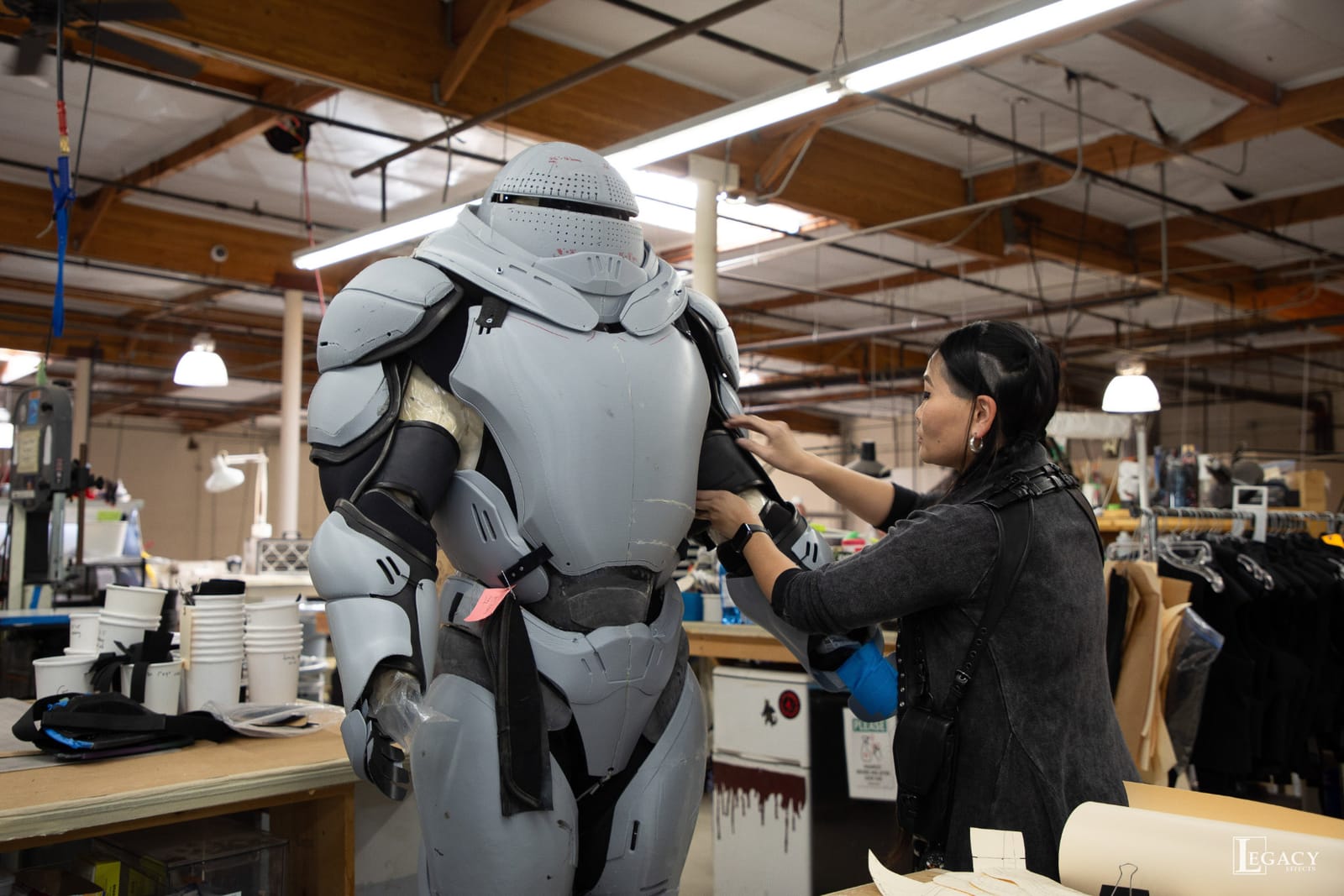
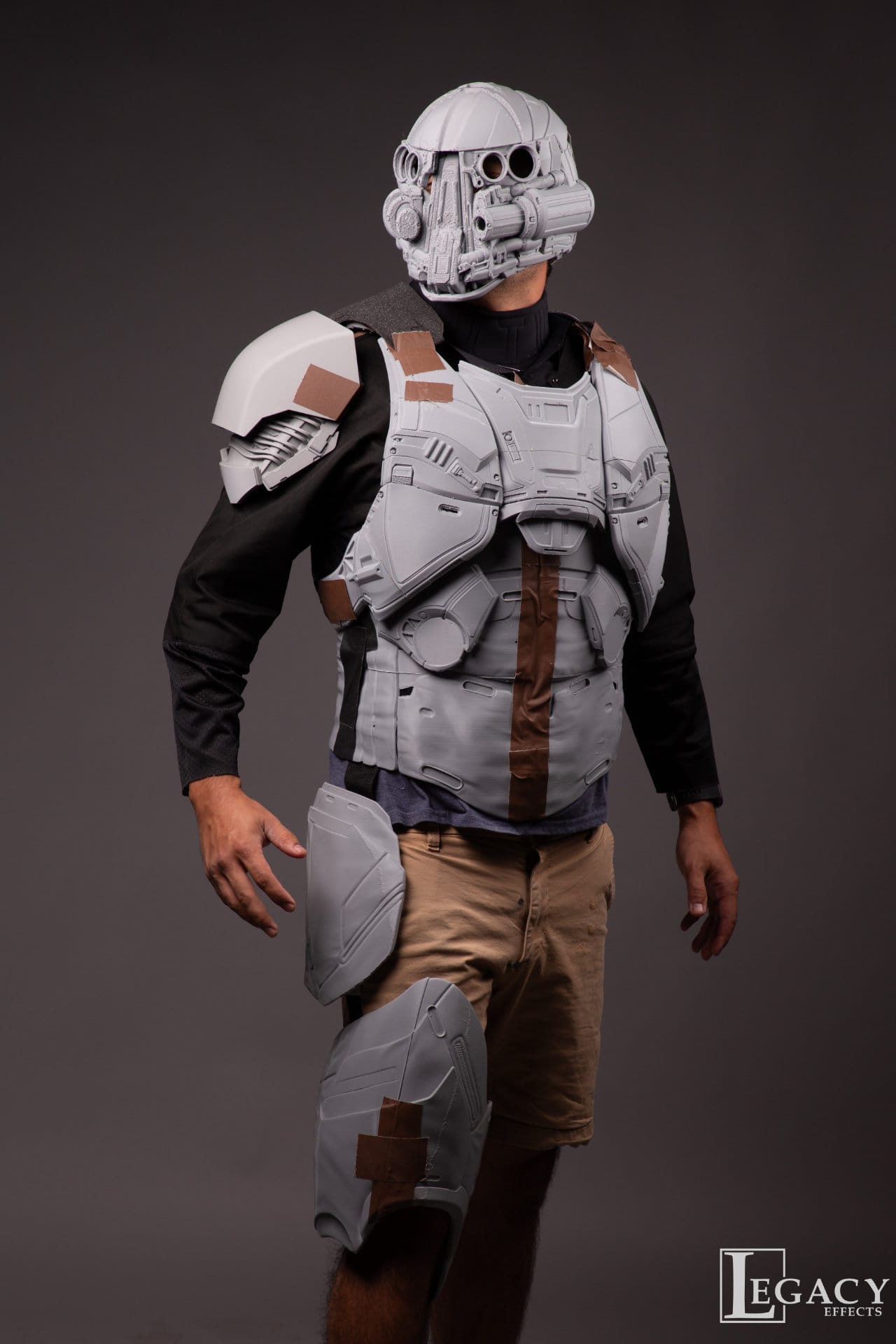
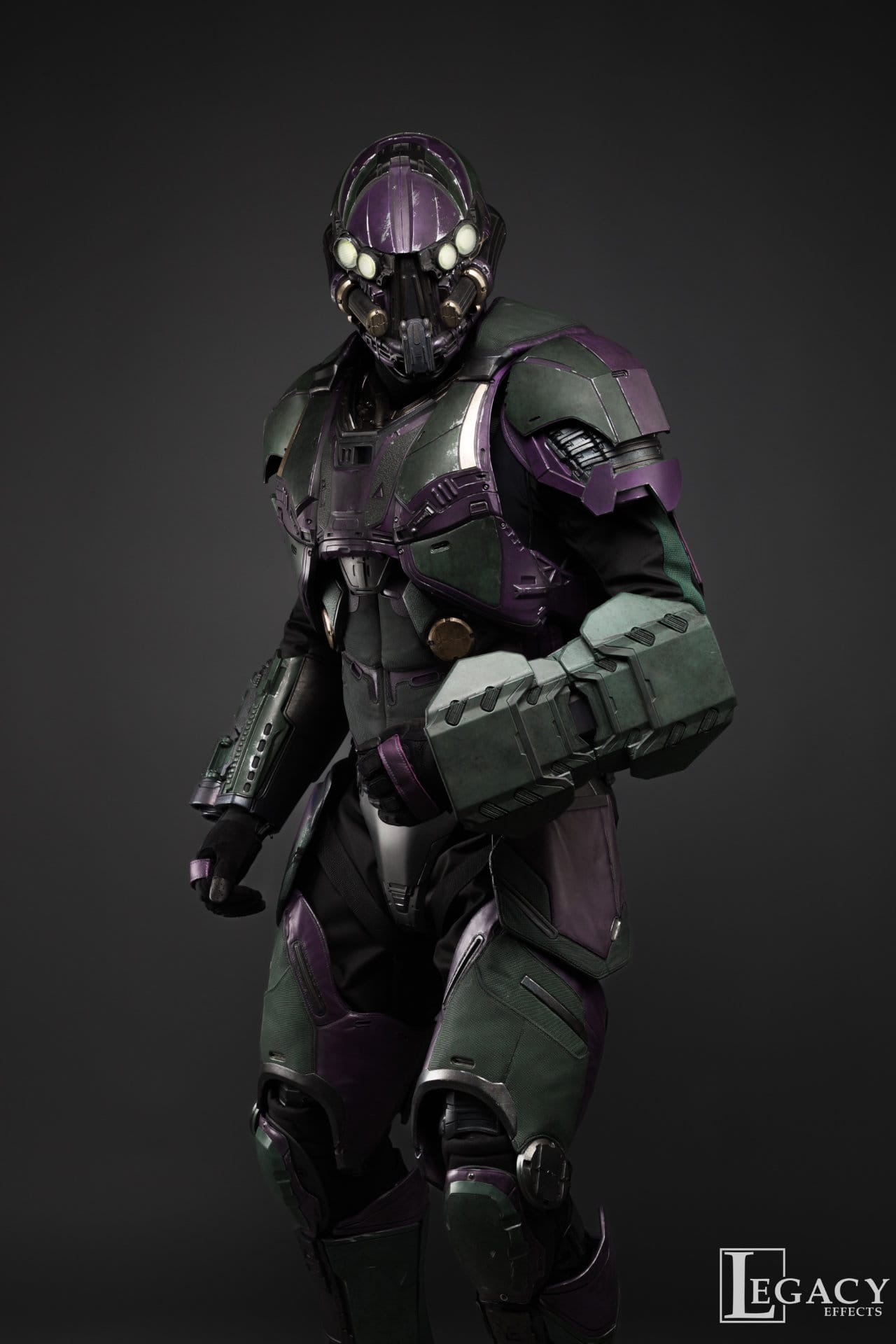
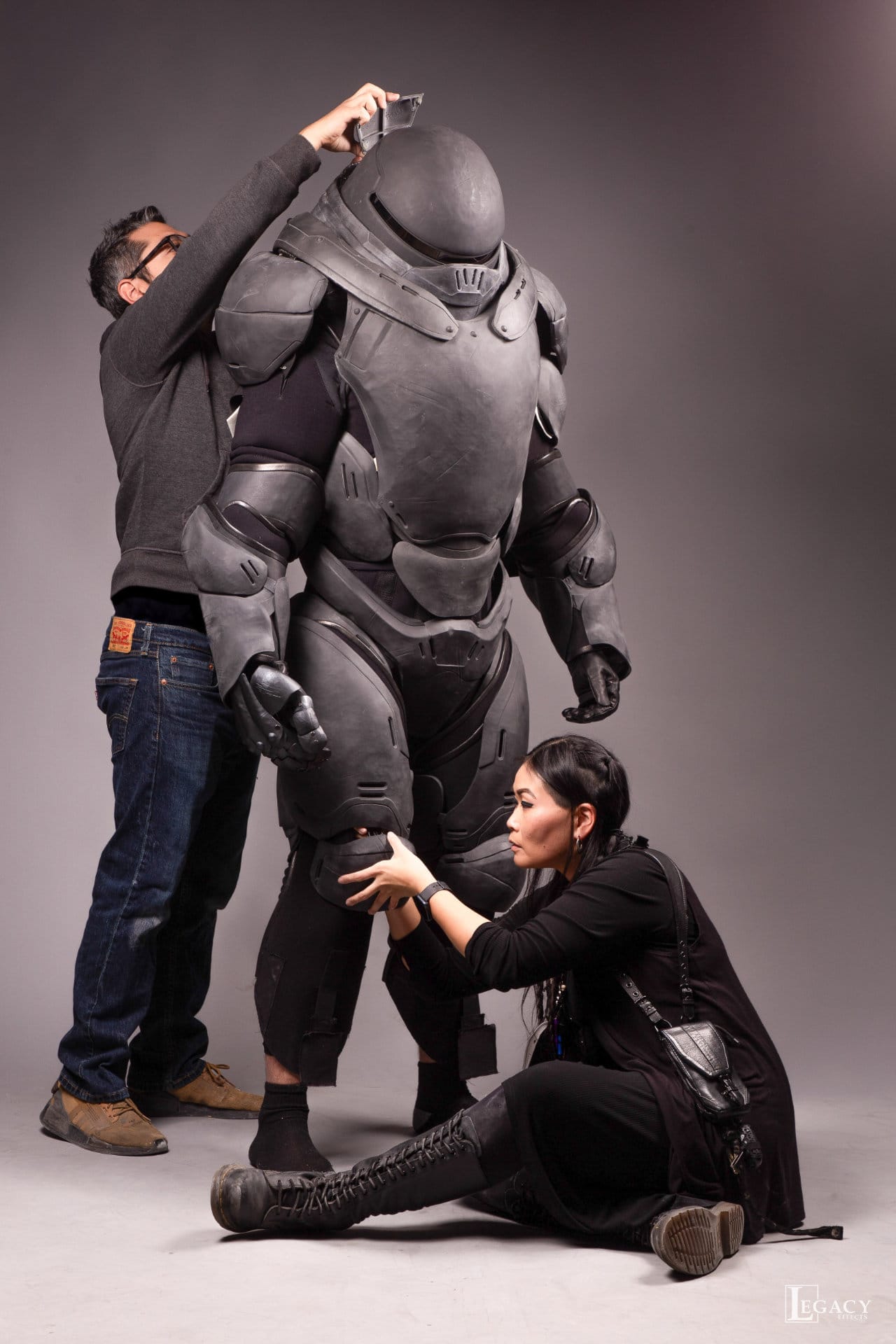
    Hammer of Boravia armor, 3D printed but not yet surface finished.

    This move showed up everywhere. Entire suits, like the Hammer of Boravia and the LexCorp Raptors, were printed, fitted to stunt performers, adjusted, and printed again, sometimes all in the same day. Instead of waiting days for a new version, teams could test ideas almost right away. What used to take days of iteration could now happen in hours.
    The same approach carried over to more complex builds, like Mr. Terrific’s flying chair. It had moving parts and needed to work on set, but much of it was made from printed components, combined with other materials. Many of these parts were produced using FFF, then combined with MJF components and metal hardware to create a functional structure. Once finished, it looked polished and solid, ready for the camera, Bambu Lab explained.

    It also changed how animatronics were built. Robots, internal mechanisms, and brackets were printed, tested, and refined quickly, first in PLA and later in stronger materials like PA-CF. This allowed teams to validate fit and movement early, before committing to more durable versions. And when needed, printed parts were used to make molds, allowing the team to create multiple lightweight versions for stunt work from a single print.

    Faster decisions, better results

    The biggest change wasn’t just the parts, it was the pace. Teams could redesign, print, test, and repeat within a single day, sometimes several times, which changed how they worked. Instead of trying to get everything right the first time, they could try more ideas, fix problems earlier, and move faster across teams, with art, engineering, and fabrication starting to come together in a much more direct way. In some cases, teams ran several versions of the same part in a single day, adjusting designs between prints.
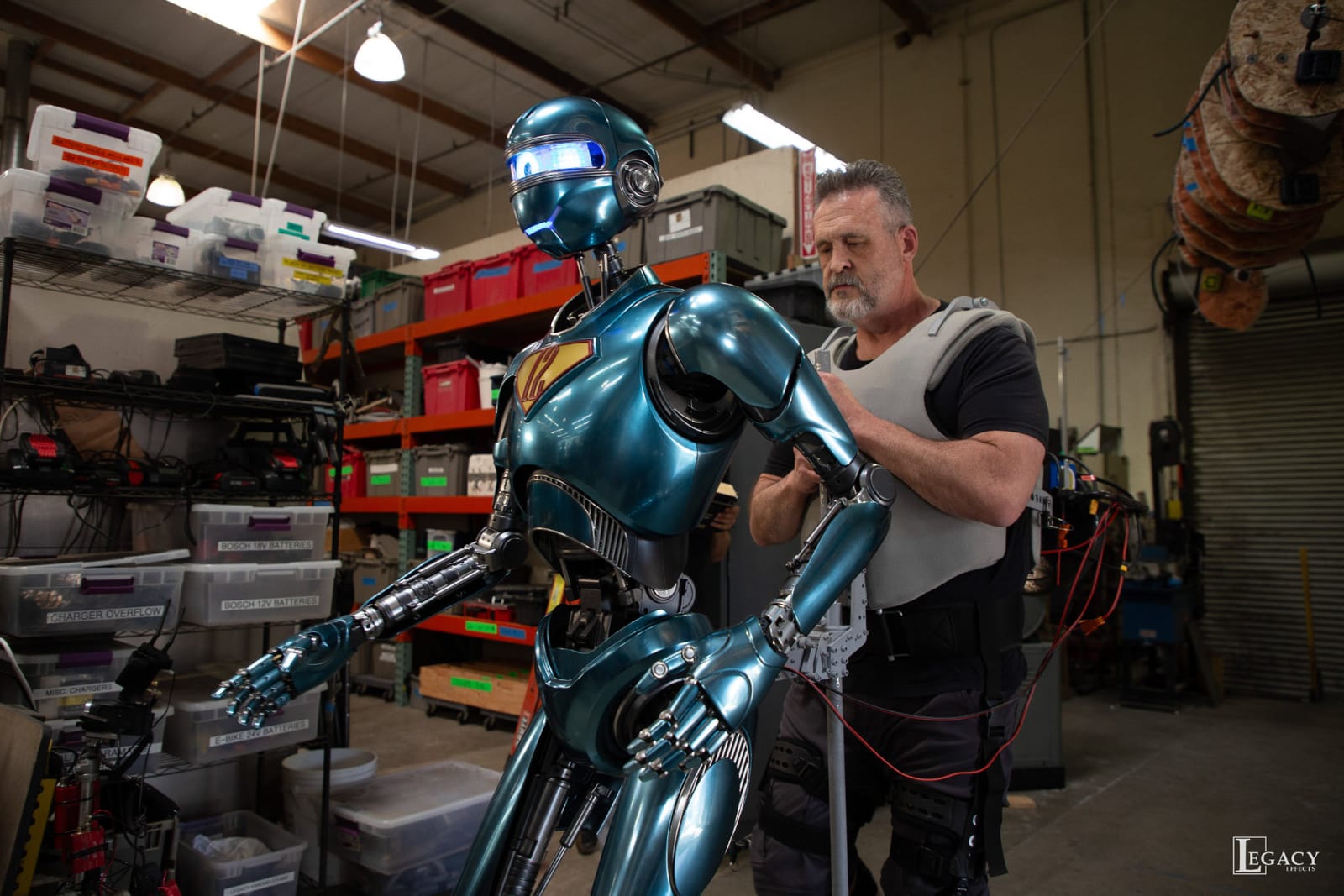
    Final debugging of the Animatronic Robot that Superman uses in the movie.

    3D printing has been part of film production for more than a decade, but mostly in the background, used for prototypes or support rather than final pieces. There have been some exceptions, with printed parts occasionally making it on screen, but those cases have been limited. What’s changing now is how widely the technology is used and how often those parts make it into the final product. In this case, it wasn’t just helping the process; it was replacing steps, simplifying the workflow, and allowing teams to move more directly from design to finished part. It also made it easier to move from digital models, whether sculpted or scanned, straight into production, without reworking them on the shop floor.

    In the film, the Hammer of Boravia is fighting Superman.

    Most people watching Superman 2025 won’t notice any of this. They will see the suits, the creatures, the machines, and assume it all came together the usual way. But something did change. 3D printing is no longer just a background tool for testing; it’s becoming part of how things are actually made. And that shift is likely to shape how these movies are made in the years to come.

    Images courtesy of Bambu Lab/Legacy Effects