• 3DPOD 296: 3D Printed Rocket Engines From Industrial to Hobbyist with An Duong, Morethan3D

    An Duong, a former Rolls-Royce innovation manager working on 3D printed aeroengines, made an unexpected shift from aerospace to entrepreneurship. The work was challenging and engaging, and he very much enjoyed his time at the company. But a side project creating desktop material extrusion models for display has now become his full-time job. We talk to An about his journey so far, how he makes his models, how he distributes them, and whether he can make a living from his company, Morethan3D.

    This episode of the 3DPOD is brought to you by Siemens. With AI-enabled technologies, deep-domain expertise, and trusted partnerships, Siemens is converting today’s technological leaps into measurable benefits for customers, partners, and society. AI is no longer a feature; it’s a force that will reshape the next century.


  • TV’s Scarpetta Suggests We Can 3D Print Full Human Organs. Reality Is… Not Yet

    Having spent a good part of my journalistic career covering crime stories, it’s hard for me to stay away from any crime or medical forensic drama. So when Scarpetta premiered on Amazon Prime Video on March 11, I was immediately drawn in. Partly for the forensic angle, partly because the series is based on Patricia Cornwell’s bestselling novels.

    Starring Nicole Kidman as forensic pathologist Kay Scarpetta, the show follows complex investigations that blend medical expertise with criminal cases. But as the story unfolds, it moves beyond traditional forensic themes and into something more unexpected: 3D bioprinted human organs.

    How the Amazon Prime show Scarpetta shows 3D bioprinted organs will look like. Image courtesy of Amazon Prime.

    A central part of the plot revolves around a fictional biotech company, Thor Labs, which is portrayed as already capable of 3D bioprinting human organs in microgravity, an environment scientists believe could make it easier to build complex biological structures.

    In reality, the closest real-world equivalent to the show’s Thor Labs is Redwire, which conducts bioprinting experiments aboard the International Space Station. And while it has already demonstrated early tissue printing in microgravity, it remains far from producing fully transplantable human organs, in pre-clinical trials or beyond.

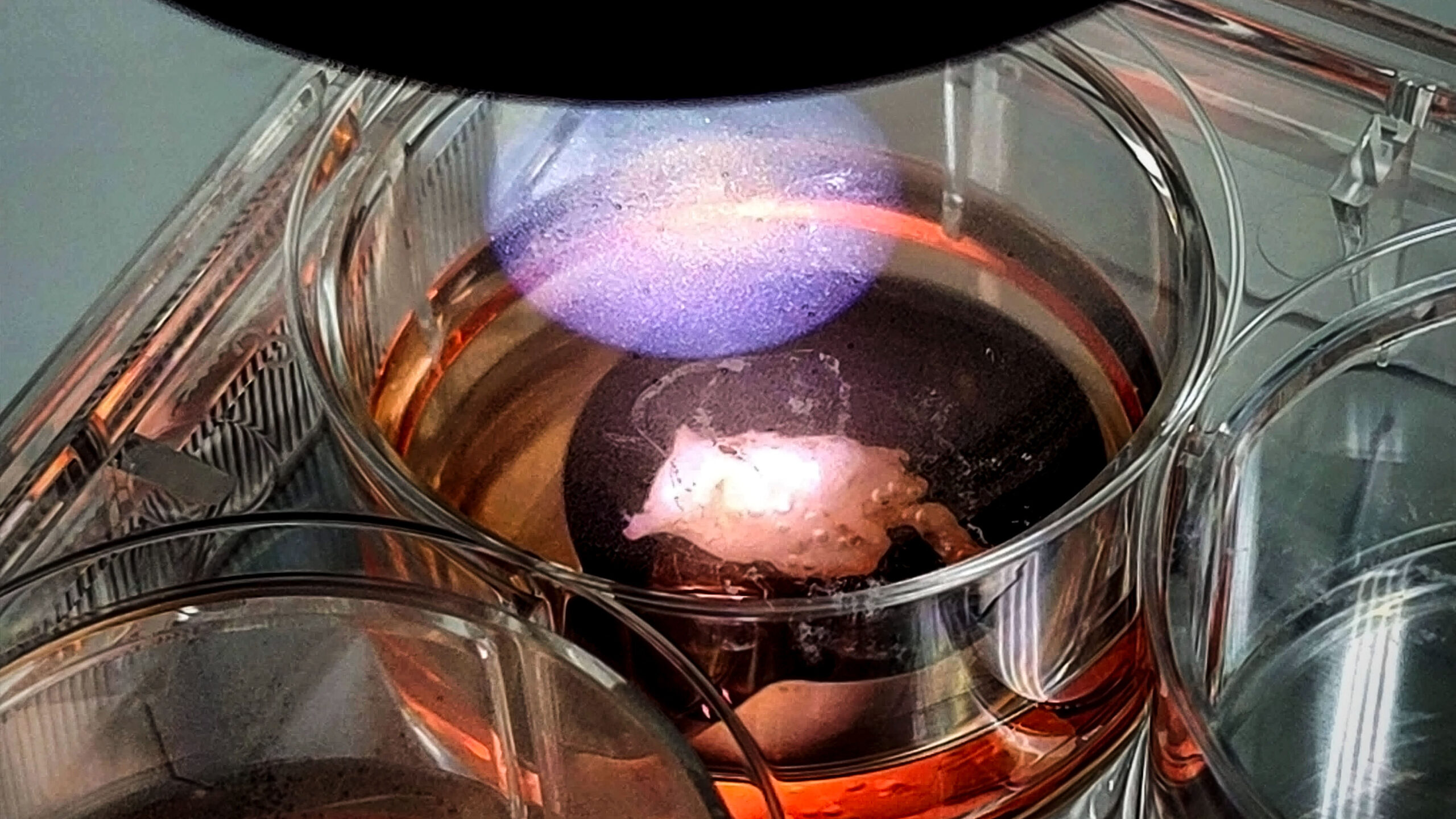
    Live human heart tissue bioprinted with Redwire’s BioFabrication Facility aboard the ISS. The tissue was successfully returned to Earth in April 2024. Image courtesy of Redwire.

    The show has taken a real concept, space-based bioprinting, and pushes it a decade or more ahead of where the science stands today. That’s where the line between fiction and reality starts to blur. The question is: how close are we, really?

    Nobody is printing a fully transplantable human heart, kidney, or liver yet. But a few groups are clearly closer than the rest, and they fall into three groups: organ-scale scaffolds and bridge tissues, vascularization, and implantable tissues. The most aggressive efforts include United Therapeutics/3D Systems, ARPA-H-backed work at Carnegie Mellon, and research at Stanford, while more clinically focused work is happening at Wake Forest, Poietis, KIT, and in Sydney’s 3D printed skin trials. At the same time, on-orbit bioprinting research continues in places like Tsinghua University in China. Here’s a closer look at some of the groups leading this work:

    United Therapeutics + 3D Systems (U.S.)

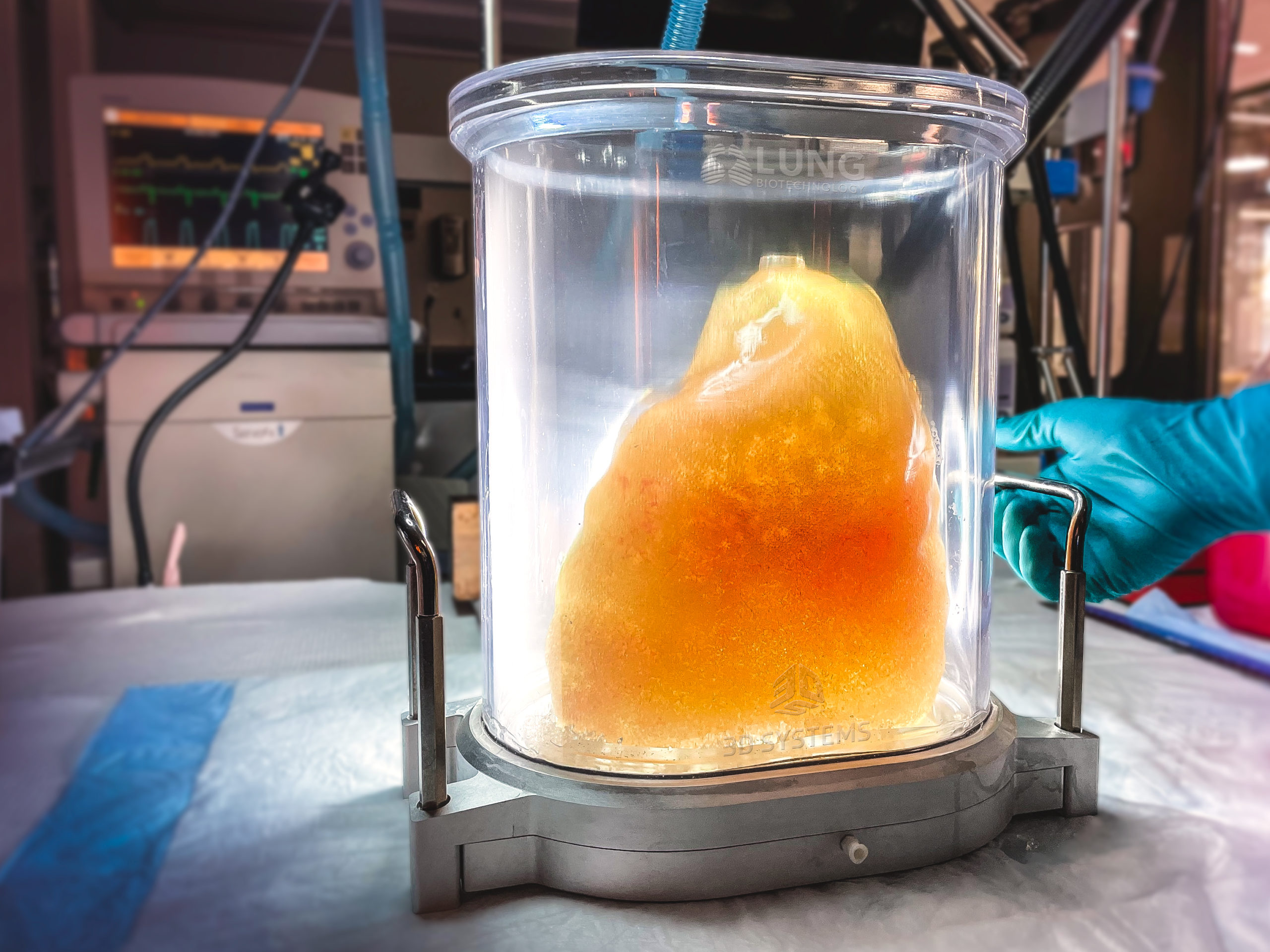
    This is probably one of the most ambitious efforts in the field. United Therapeutics (UT) is developing a 3D printed lung scaffold as part of its ULung program, designed to be populated with human cells. ULung is one of UT’s four pre-clinical and clinical organ and organ alternative platforms designed to address the ongoing shortage of transplantable organs for patients with end-stage organ disease. The company says these structures have already demonstrated gas exchange in animal models and is also working toward printed kidneys and livers. While this is still far from a transplant-ready organ, it remains one of the clearest examples of how far organ-scale bioprinting is being pushed today.

    3D bioprinted lung lobe. Image courtesy of United Therapeutics.

    ARPA-H PRINT program + Carnegie Mellon and Adam Feinberg (U.S.)

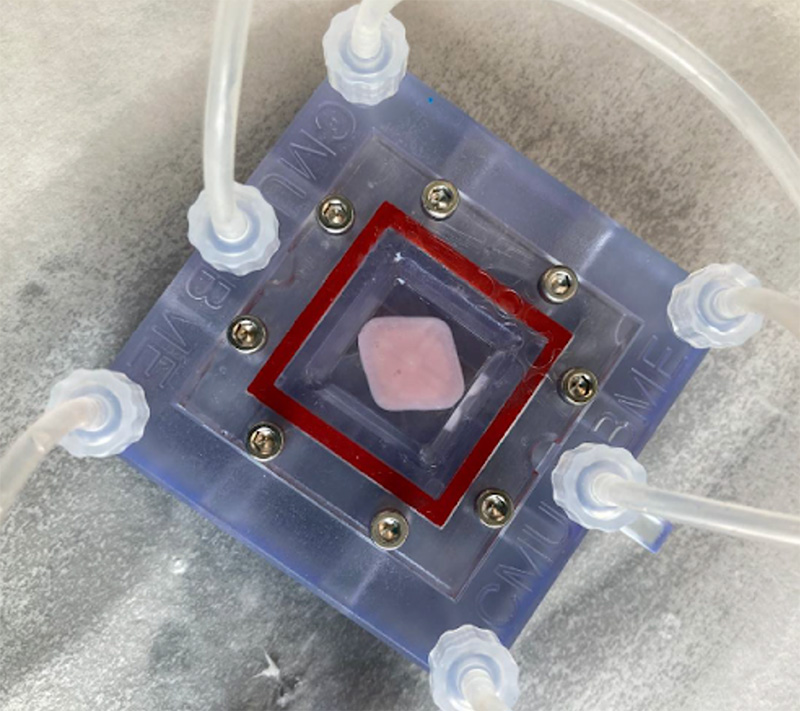
    This is the most important U.S. government push. ARPA-H launched its PRINT program to pursue personalized, on-demand organs that would not require immunosuppressive drugs. Among the researchers involved is Adam Feinberg of Carnegie Mellon University, one of the leading experts in 3D bioprinting, who secured support for a 3D bioprinted liver tissue project designed as a temporary alternative for acute liver failure. The goal is to support patients for two to four weeks while their own liver recovers. This is not a permanent replacement, but one of the most realistic short-term solutions to support patients rather than replace the organ entirely.

    FRESH 3D bioprinted perfusable liver tissue inside a bioreactor. Image courtesy of Carnegie Mellon.

    Stanford’s Mark Skylar-Scott (U.S.)

    One of the biggest challenges in bioprinting is vascularization, the ability to create blood vessel networks inside an organ. In 2025, researchers at Stanford University, including bioengineer Mark Skylar-Scott, developed new tools to design and print these vascular structures. This matters because without a working blood supply, larger tissues cannot survive. While this is still not ready for printing a transplant-ready organ, it is working on one of the key problems the field needs to solve for any future printed organ to work.

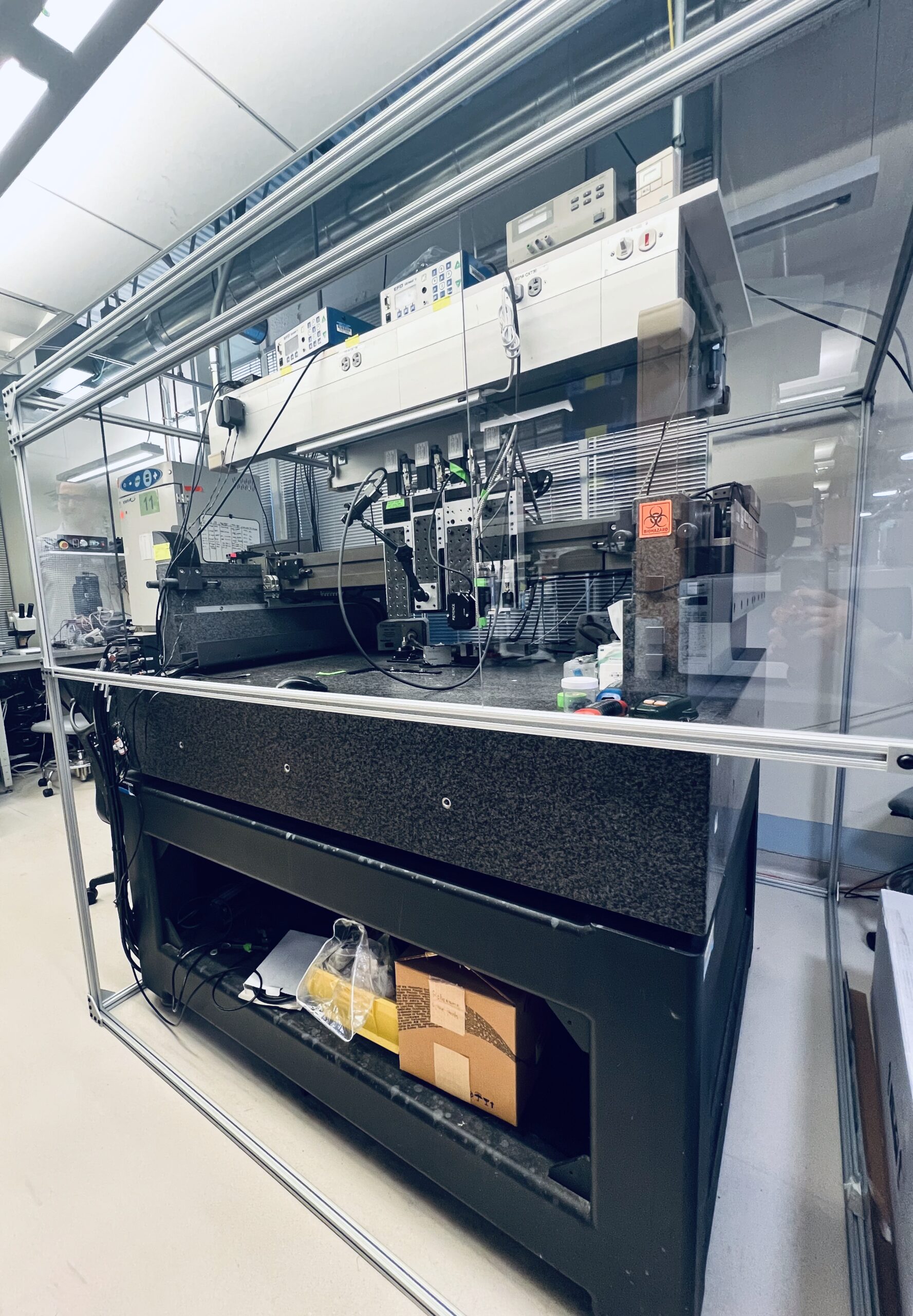
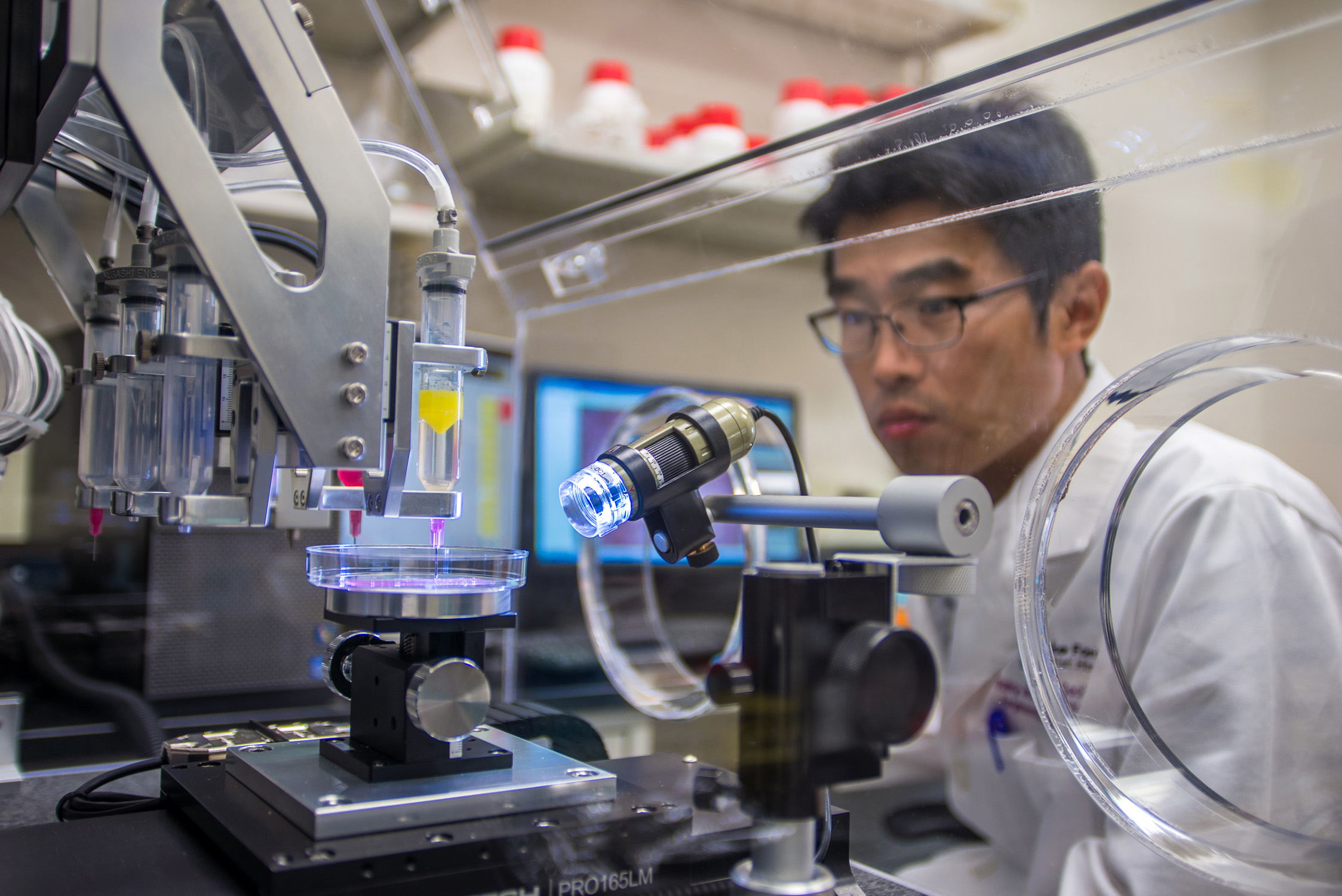
    At the back of the lab, next to a multi-axis bioprinter — a custom machine developed in-house by the Lewis Lab, first pioneered by Jennifer Lewis and her then-postdoc Mark Skylar-Scott. Today, it anchors much of the lab’s effort to print complex, living tissues. Image courtesy of 3DPrint.com.

    Wake Forest Institute for Regenerative Medicine and Anthony Atala (U.S.)

    Wake Forest stands out for bringing research into real-world use. The institute says it was the first to engineer lab-grown organs that were successfully implanted in humans, and it continues to work across a wide range of tissue and organ research. Not all of this work involves 3D bioprinting; some of its best-known results come from broader tissue engineering, but when it comes to real progress in organ replacement, Wake Forest remains one of the most credible groups in the field, led by regenerative medicine pioneer Anthony Atala.

    Young-Joon Seol at the Wake Forest Institute for Regenerative Medicine (WFIRM) demonstrates Bioprinting muscle tissue. Image courtesy of WFIRM.

    Poietis (France)

    In Europe, Poietis stands out not for claiming full organs, but for working toward implantable tissues. The company says its laser-based bioprinting platform is designed to meet the consistency and quality needed for clinical use, with a clear focus on moving from design to implantation. This means it is developing ways to reliably produce living tissues for real medical use. It makes Poietis a strong example in Europe.

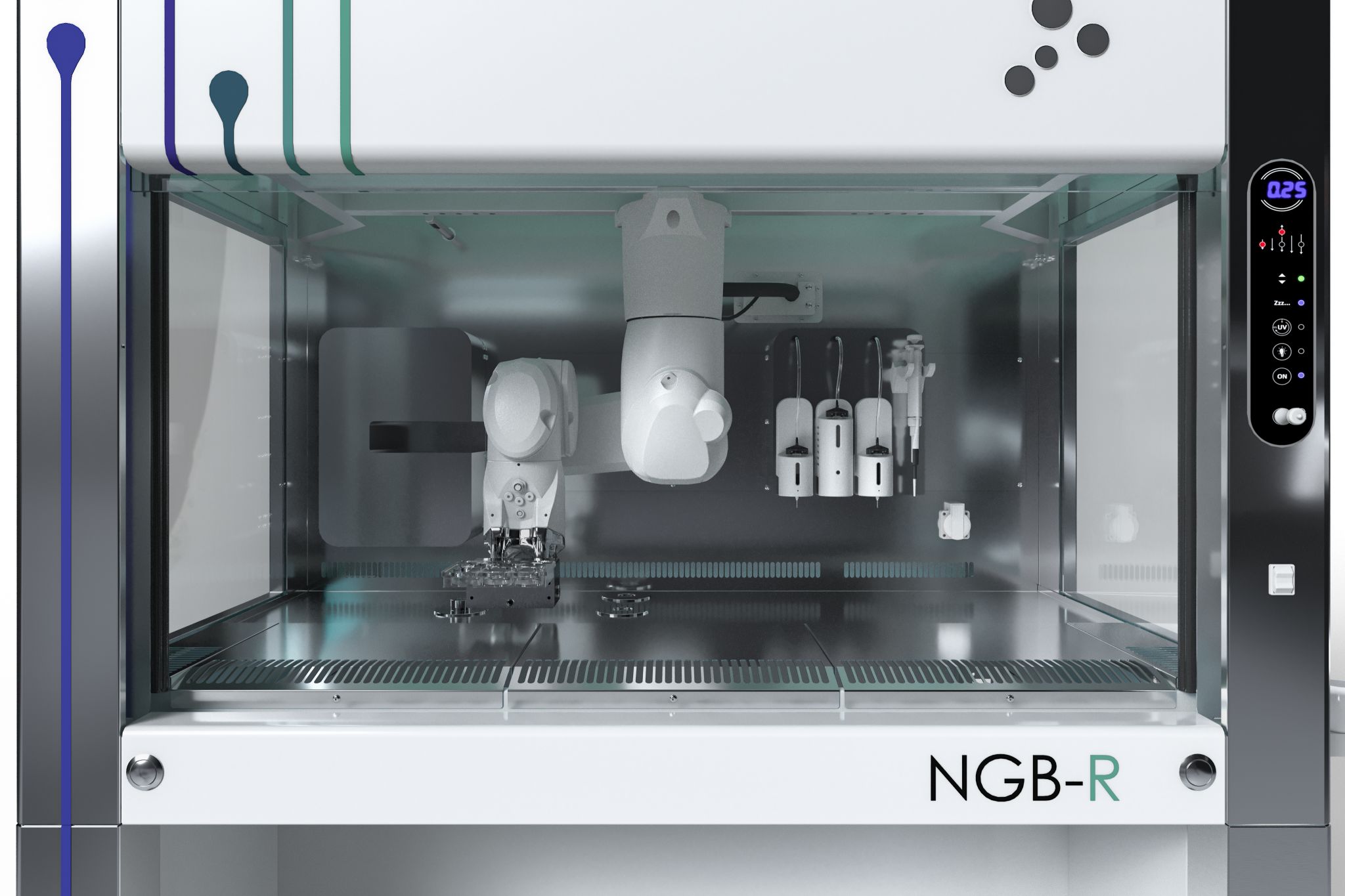
    Poietis' NGB-R bioprinting platform.

    Poietis’ NGB-R bioprinting platform. Image courtesy of Poietis.

    KIT + Ute Schepers (Germany)

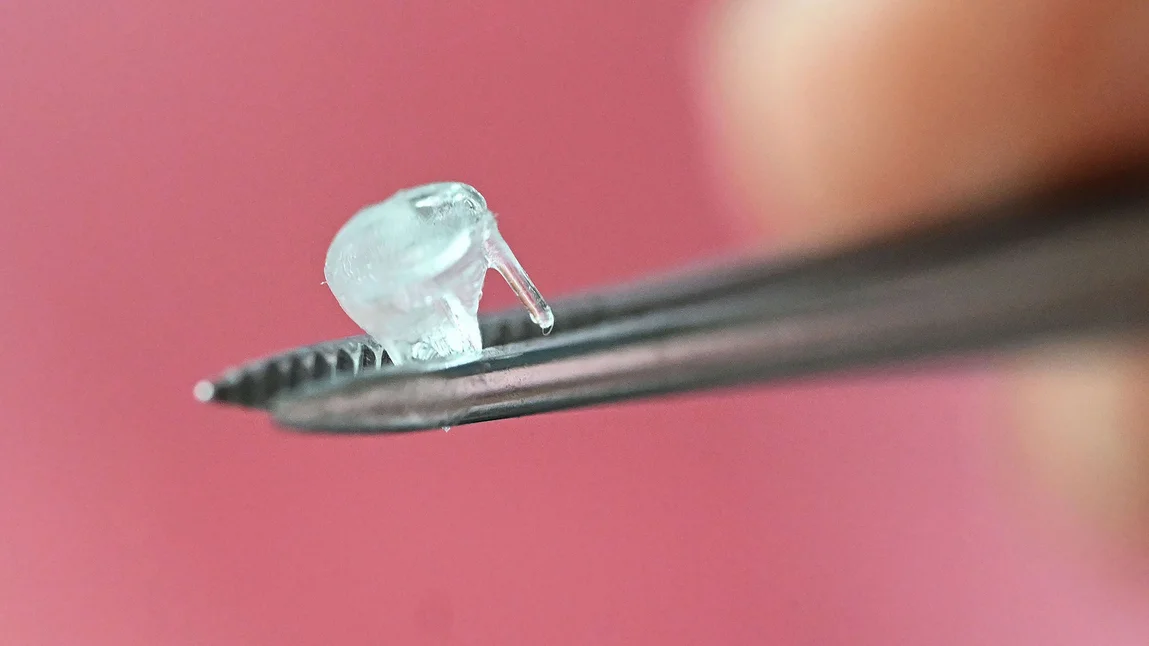
    Work at the Karlsruhe Institute of Technology on a tiny 3D printed baby heart valve shows how the field may reach the clinic sooner through parts of organs rather than whole ones. In this case, researchers used 3D printing to create a biodegradable heart valve scaffold designed to be seeded with the patient’s own cells and grow inside the body. A valve is not a full heart, but it is a more realistic near-term target and still medically important. It’s a good example of how progress in this space is likely to happen, not through fully printed organs overnight, but through smaller, implantable structures.

    3D printed baby heart valve. Image courtesy of Uli Deck/dpa/Karlsruhe Institute of Technology.

    Tsinghua-led work in China

    China is also active in this space, with institutions like Tsinghua University leading research efforts. Public profiles from Tsinghua show active research in cardiac regeneration, on-orbit bioprinting, vascular networks, AI-driven bioprinting, and even papers about on-demand organ manufacturing. This does not mean China has secretly solved printed organs. It shows the country is making progress in several key areas at once, including space-based bioprinting, blood vessel growth, and organoid research.

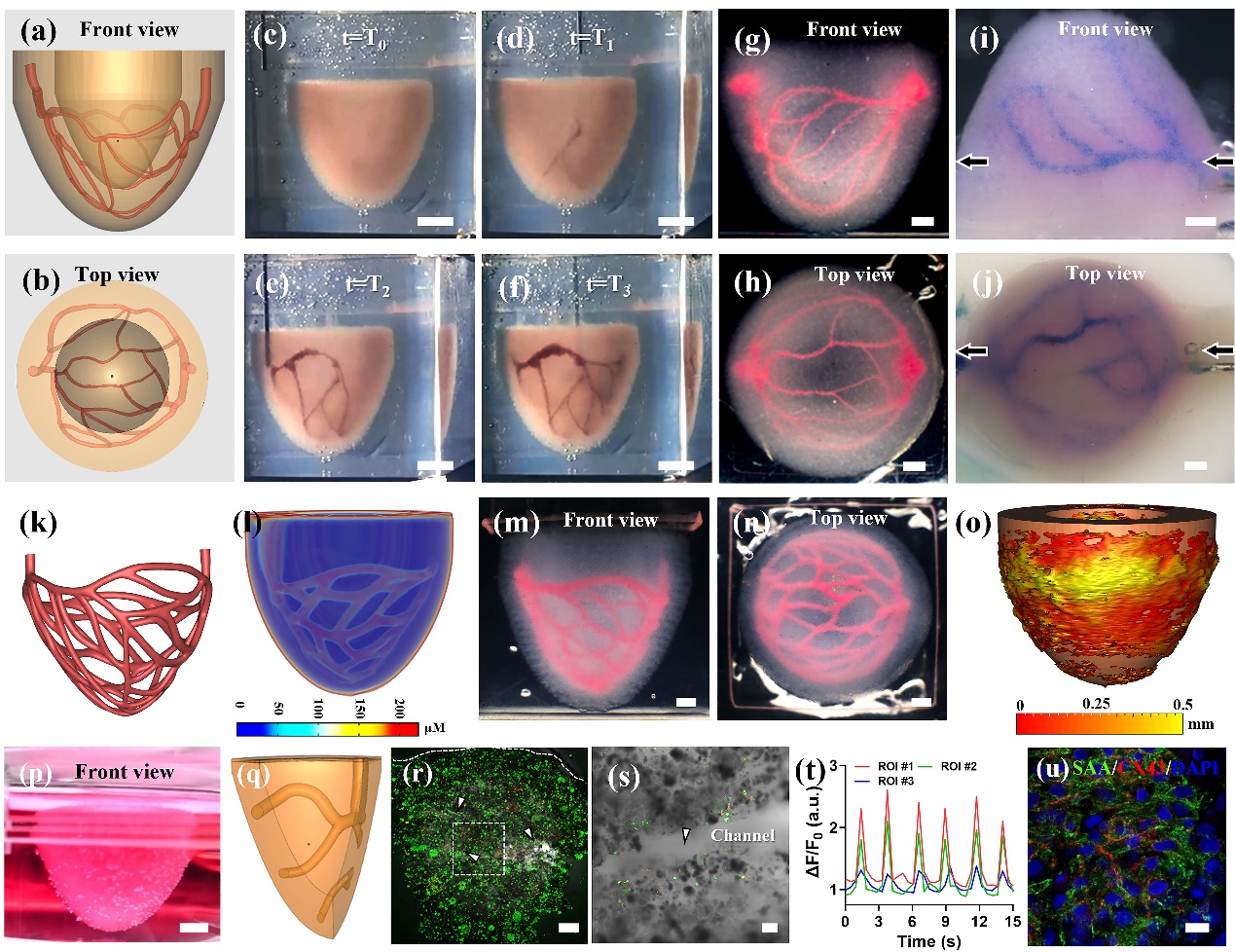
    Perfusable ventricle constructs fabricated by SPIRIT. Image courtesy of Tsinghua University.

    ANU and the Sydney skin trial

    At the Australian National University, bioprinting is being explored as a path toward future organs, with current work focused on printing living cells, tissue-like structures, and organoids for disease modeling. A clearer example is Sydney’s world-first 3D printed skin trial using a patient’s own cells. Skin is not a kidney, but it is still a living, printed tissue used in a real medical setting, showing where the field is starting to have a real impact.

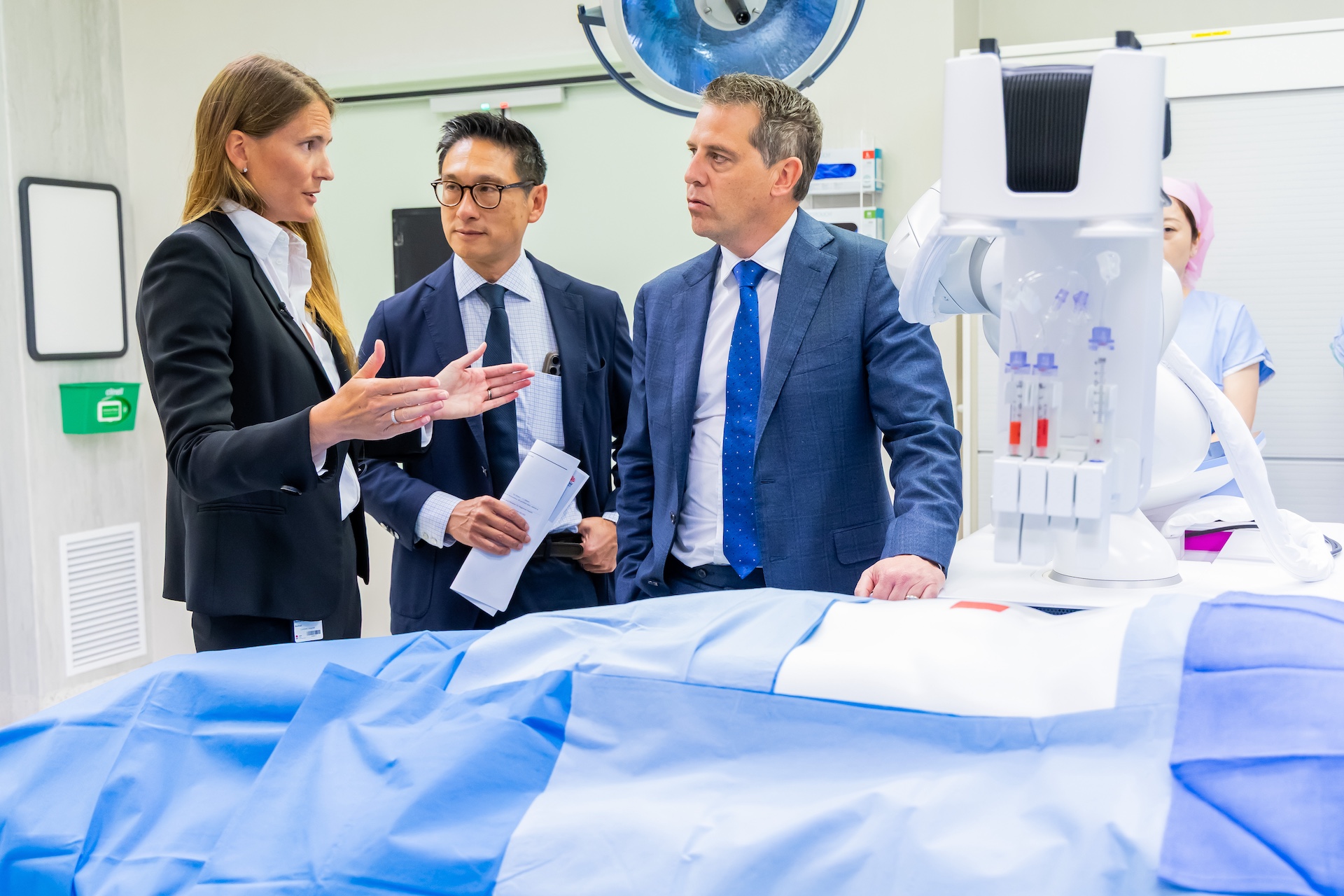
    Dr Jo Maitz with NSW Health Minister Ryan Park and Strathfield MP Jason Yat-Sen Li during a visit to Concord Burns Unit. Image courtesy of Concord Burns Unit.

    It will likely be some time before we see the kind of lab-grown, microgravity-grown organs ready for clinical use, as seen in Scarpetta. But the idea is not entirely out of reach. If anything, it’s a reminder of where the technology is heading, and a good way to put the spotlight on a field that is moving forward.

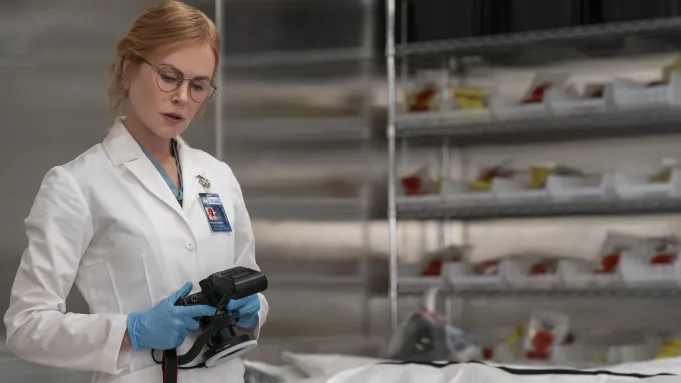
    Nicole Kidman as forensic pathologist Kay Scarpetta in Scarpetta. Image courtesy of Amazon Prime.

  • 3D Printing News Briefs, March 21, 2026: Resin Safety, 3D Printed Bandages, & More

    We’re kicking off this weekend’s 3D Printing News Briefs with some America Makes project call news, and then moving on to resin safety myths. We’ll end with a 3D printed heart model and a 3D printed bandage for chronic wound healing. Read on for all the details!

    America Makes Announces CATACS Winners, PADAM 2.0 Extension

    The winners of the Corrosion of Additive – Tested At Component Scale (CATACS) Project Call have officially been announced. This $1.3 million America Makes project call is awarded through the Office of the Under Secretary of Defense, Manufacturing Technology Office (OSD ManTech). AM is increasingly important to the Department of War (DoW) due to its ability to deliver rapid, customizable production. But certification and qualification for metal 3D printed parts is still a barrier because there aren’t a lot of widely accepted testing and processing methods. The CATACS program will establish, demonstrate, and validate a framework for evaluating 3D printed metal part corrosion testing needs, focusing mainly on representative testing of components in high-temperature environments and thermal management systems. The goal is to speed up adoption of AM parts in high-performance defense systems by offering a reliable corrosion testing framework.

    The winner of Topic 1, the Corrosion of AM Components at Elevated Temperatures, is RTX Technology Research Center (RTRC). For Topic 2, Corrosion of AM Components for Thermal Management, Colorado School of Mines is the team lead, while the project team consists of Conflux TechnologyElementum 3DNaval Surface Warfare Center Carderock Division (Corrosion and Coatings Engineering Branch), the National Institute of Standards Technology (NIST), Oak Ridge National Laboratory (ORNL), The Ohio State University (OSU), Ohio University (OU), and Quintus Technologies. Congratulations to all!

    Additionally, America Makes and the National Center for Defense Manufacturing and Machining (NCDMM) extended the proposal submission deadline for the Powder Alloy Development for Additive Manufacturing (PADAM) 2.0 project call to 5 pm ET, April 8th. This $6 million project call is funded by the Air Force Research Laboratory’s Materials and Manufacturing Directorate (AFRL RXN). Learn more in the RFP.

    AmeraLabs Publishes Resin 3D Printing Safety Myths Guide

    AmeraLabs, a Lithuanian manufacturer of photopolymer and elastomer resins for 3D printing, recently published a free resin 3D printing safety guide. Sourced from peer-reviewed research, EPA and ECHA regulatory filings, and the company’s own experience formulating resins, the guide addresses what AmeraLabs says are “23 widespread misconceptions” about resin 3D printing. Rather than just covering what to avoid, the guide covers what to do, and covers topics like ventilation requirements, PPE selection and limits, pregnancy risks, food-safe resin claims, post-processing, and more. It also targets the specific risk of permanent acrylate sensitization, which many resin users underestimate. This allergy, once it’s triggered, does not resolve if you stop using 3D printing, as the chemical is also used in certain dental materials, gel nail products, and UV-cured adhesives. Safety Data Sheets do identify this hazard for resins, but AmeraLabs says they don’t explain the various consequences, such as sensitized people losing access to dental procedures or reacting to products they’ve long used with no issues.

    Andrius Darulis, AmeraLabs Co-Founder, said, “We formulate and manufacture 3D printing resin at AmeraLabs. We know what goes into photopolymer resin formulations, and we know Safety Data Sheets do not go deep enough to cover everything.”

    WSU Researchers Develop 3D Printed Heart Model that Beats

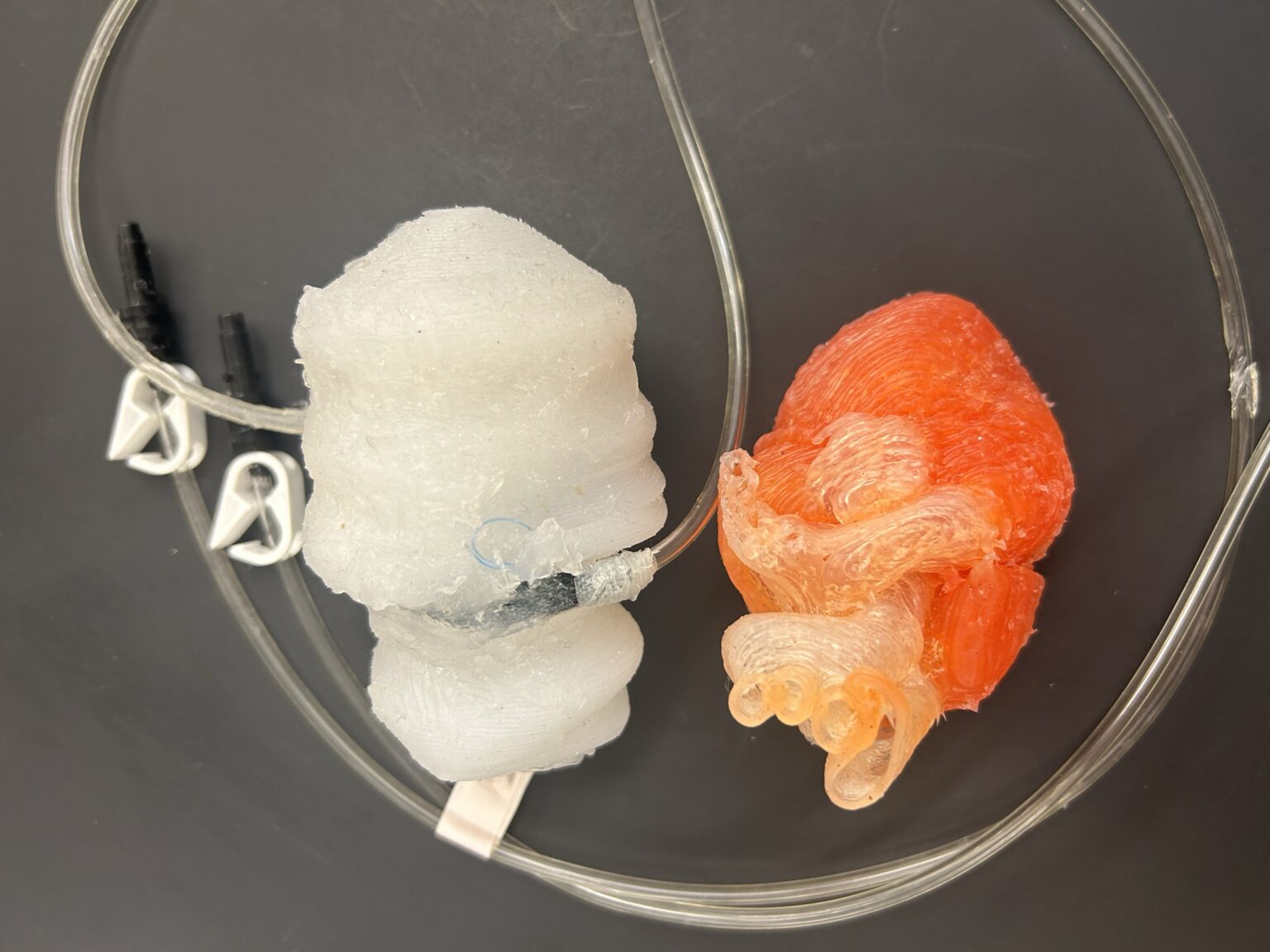
    Two 3D printed heart models. The white one replicates the left two heart chambers with a pneumatic actuator that makes it “beat” (photo courtesy of WSU).

    Heart disease is the top cause of death in the U.S., and doctors perform major heart surgeries often, as well as less invasive procedures like valve fixes. For training purposes, surgeons often work with animals, cadavers, on a computer, and even synthetic models, like mold-casted or 3D printed ones. But, these synthetic models can’t achieve some of the heart’s complex curvature. A team of researchers from Washington State University developed a 3D printed model of the left side of the heart, and it actually contracts and beats like the real thing. To create the model, the team used a scan of a human heart to print a replica of the organ’s left side, which is the part that experiences the highest pressures. The 3D printed model has a soft, lifelike texture; includes the atrium, ventricle, and mitral valve; and incorporates many tiny pneumatic actuators that pump the model. As imitation blood is pumped through, sensors monitor the simulated blood pressure. To test out their model, the team 3D printed a model with a defective mitral valve and repaired it. They filed a provisional patent with the Office of Innovation and Entrepreneurship for their 3D printed beating heart model, and are now developing one with all four chambers and valves.

    “It’s very useful for doctors and surgeons to practice when the heart is still beating, especially for minimally invasive surgery. In our case, this model is the first fully synthetic model that, without any assistance of animal models, mimics the complete left side of the heart. We were able to incorporate both the anatomic features and the dynamic functions,” explained Kaiyan Qiu, Berry Family Assistant Professor, School of Mechanical and Materials Engineering, and corresponding author on the paper.

    3D Printed Wound Scaffold for Chronic Wound Healing

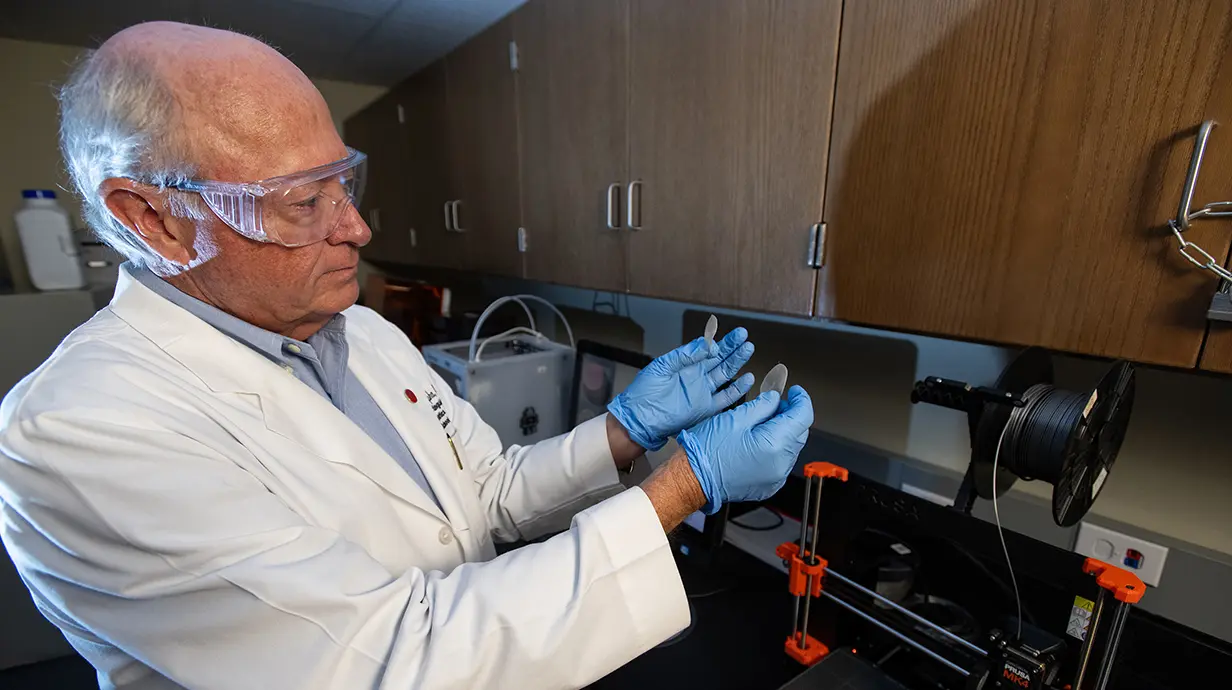
    Michael Repka, distinguished professor of pharmaceutics and drug delivery, works with a 3D-printed medical device in his lab in Shoemaker Hall. Repka’s latest research shows that 3D-printed wound scaffolding could aid in healing chronic wounds. Photo by Thomas Graning/Ole Miss Digital Imaging Services

    Chronic wounds, like pressure sores or diabetic ulcers, can linger for a long time. A team of researchers from the University of Mississippi’s School of Pharmacy created a customizable bandage, made with 3D printing, that will encourage healing of chronic wounds by delivering biodegradable antibacterials over time to reduce the chance of infection. The 3D printed, medicated patch, which can be placed over the wound, is made with chitosan, which is a natural material found in fungi, insects, and crustaceans, in addition to plant-derived antimicrobials. The structure acts like a scaffold, protecting the wound while at the same time encouraging growth. By 3D printing the scaffold, the team can tailor the patch to fit any wound, and because it’s biodegradable, if the material is applied to wounds inside a patient’s body, a second incision is not needed to remove it. The team hopes to translate this from research to real patients, but before the 3D printed scaffold can be used clinically, it needs to be tested further and reviewed by the FDA.

    “A lot of bandages are made with organic solvents, which actually hurt the wound-healing process, especially when applied intimately on the wound. With the materials and technique we’re using, you don’t have organic solvents,” explained researcher Michael Repka, distinguished professor of pharmaceutics and drug delivery.

    “We’re also not using traditional antibiotics over a long period of time, because that can often cause the bacteria to become resistant. That’s the advantage of using natural products.”

  • Additive Manufacturing Is Rewriting the Rules of Reshoring

    Reshoring sounds straightforward: bring production back home. In practice, it’s far more complex.

    According to recent research by Hexagon in 2025, about 36% of U.S. manufacturing leaders are actively looking to reshore production domestically in response to shifting trade policy. At the same time, 28% believe workforce shortages could slow or significantly delay those efforts. The appetite for localized production is growing, but so are the structural challenges.

    Manufacturers today are navigating fragile supply chains, extended tooling timelines, geopolitical instability, and growing concerns around intellectual property exposure. Simply recreating yesterday’s production model on domestic soil doesn’t address those vulnerabilities.

    What many organizations are recognizing instead is that localized production requires a different kind of infrastructure, one that is more agile, more digital, and less dependent on traditional tooling. Increasingly, additive manufacturing is playing a central role in that evolution.

    Reshoring Without Rebuilding the Past

    For decades, manufacturing efficiency depended on scale. Tooling investments (molds, dies, casting systems, and fixtures) made economic sense when producing high volumes of identical parts. That model still works in automotive and other mass-production environments.

    But many reshoring initiatives today are not driven by automotive-style volumes. They’re driven by low-to-medium production volumes, shorter lead-time expectations, aging parts catalogs, and the need to keep sensitive designs closer to home. In aerospace and defense, for example, production volumes are often relatively small across broad portfolios of components. In medical manufacturing, customization is increasingly the norm. In industrial equipment, replacement components may be needed years after the original supplier has exited the market.

    In that environment, flexibility matters more than scale.

    When volumes are limited and demand is unpredictable, the tooling process itself becomes the bottleneck. The time and cost required to design, validate, and stand up molds or fixtures can erode the economic viability of producing parts domestically — especially if that tooling may only be used a handful of times.

    Additive manufacturing removes that constraint. By moving directly from a validated digital model to production, manufacturers can bypass lengthy tooling cycles and produce complex geometries without standing up dedicated infrastructure. That shift fundamentally changes the calculus for reshoring lower-volume or high-mix parts.

    Instead of asking, “Can we afford to tool this domestically?” the question becomes, “Can we produce this efficiently without tooling at all?”

    From Global Fragility to Local Agility

    COVID-19 exposed how dependent many supply chains had become on long, geographically dispersed networks. Components once considered routine suddenly carried lead times measured in months.

    Even as logistics stabilized, new pressures emerged. Tariffs, shifting trade relationships, and national security considerations have pushed manufacturers to reassess how and where sensitive components are produced.

    Proximity alone is not the objective. Strategic control is.

    Keeping digital part definitions within secure domestic environments reduces exposure to external risk. Rather than transferring tooling or proprietary designs across multiple international suppliers, companies can centralize or selectively distribute encrypted digital files within trusted networks.

    We are also seeing distributed production models take shape. Additive systems are increasingly deployed alongside production lines to manufacture custom jigs, fixtures, and tooling elements on demand. In some field environments, from energy sites to remote operations, localized printers reduce downtime by eliminating dependence on global logistics chains.

    In high-stakes industries such as aerospace, defense, and energy, where downtime can cost millions per day, waiting weeks for a replacement component is often not an option. Localized additive production dramatically shortens that gap.

    The common thread is resilience. Shorter supply loops and greater digital control reduce exposure to disruptions that manufacturers cannot predict but must be prepared for.
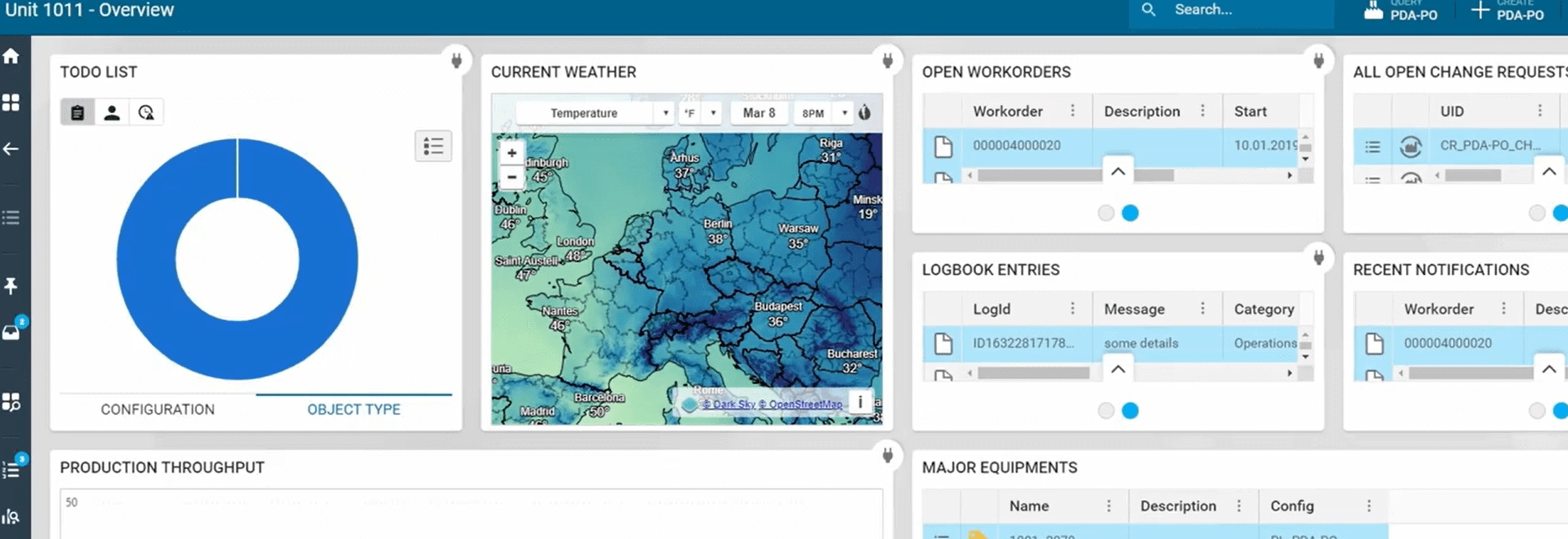
    Digital workflows enable on-demand production and distributed manufacturing. Image courtesy of Hexagon.

    Reinventing Spare Parts Through Digital Inventory

    One of the clearest reshoring wins for additive manufacturing is spare parts, particularly when the original tooling is gone, the supplier has consolidated or disappeared, or the required volume is too small to justify restarting a conventional process.

    Manufacturers frequently support products for years or even decades after primary production ends. Tooling may have been scrapped. Supply contracts may have expired. Restarting conventional production for a limited batch is often inefficient, slow, and disproportionately expensive.

    That’s where additive changes the equation.

    Instead of rebuilding tooling for a small run, manufacturers can maintain validated digital part definitions and produce components on demand. A replacement bracket, custom fixture, or structural mounting component can be printed locally, without waiting weeks or months for global supply chains to respond.

    In some cases, additive systems are even deployed alongside production equipment to manufacture replacement tooling or end-of-arm components in real time, minimizing downtime and keeping operations moving.

    This digital inventory model reduces warehousing costs, shortens lead times, and mitigates supplier obsolescence risk. In aerospace and energy, it can prevent costly operational downtime. In defense-related environments, it reduces reliance on offshore suppliers for mission-critical components.

    In this context, reshoring is about restructuring the supply chain itself: shifting from tooling-heavy, inventory-dependent systems to digitally enabled, on-demand production networks.

    What Reshoring with Additive Demands

    Additive manufacturing is powerful, but it is not universal. Reshoring with additive only works when manufacturers approach it with discipline.

    Cost is more nuanced than eliminating tooling. Equipment acquisition, material inputs, energy consumption, maintenance, and scrap all factor into the equation. Without simulation and build optimization, inefficiencies can quickly erode return on investment.

    Throughput must also be evaluated realistically. For very high-volume production runs, traditional manufacturing processes often remain more efficient. Additive’s strengths lie in complex, lower-volume applications where design freedom delivers measurable performance or economic advantage.

    Inspection capability must evolve alongside production capability. Additive parts frequently contain internal channels, lattice structures, or hollow geometries that cannot be fully evaluated using traditional optical methods. In safety-critical applications, advanced inspection technologies, such as computed tomography (CT), are often required to verify internal integrity and detect hidden defects.

    Printing capability and inspection capability must mature together. Without that alignment, resilience gains can be undermined by quality uncertainty.
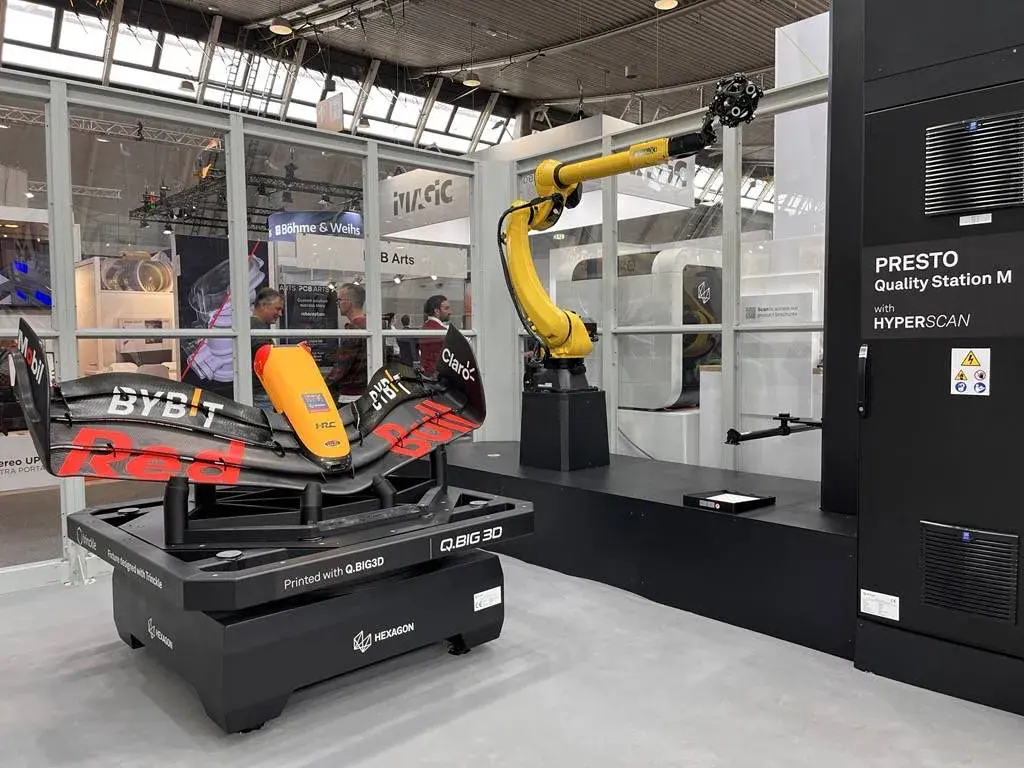
    Hexagon technologies used to support digital manufacturing and localized production environments. Image courtesy of Hexagon.

    Building Capability for the Long Term

    As reshoring strategies expand, so does the need for skilled talent.

    Additive manufacturing requires digital design fluency, process control expertise, and advanced metrology knowledge. Universities and technical institutes are investing heavily in additive and digital manufacturing programs to build the next generation of engineers and technicians.

    Technology alone does not create resilience. It is the combination of digital tools, inspection rigor, and trained professionals that enables manufacturers to deploy additive strategically rather than experimentally.

    Printing Resilience into the Supply Chain

    Reshoring in 2026 is not about recreating yesterday’s factory footprint. It is about building adaptable, digitally connected production ecosystems that can respond to uncertainty.

    Roger Wende. Image courtesy of Hexagon.

    Additive manufacturing will not replace conventional processes. But in the right applications — low-to-medium volumes, complex geometries, IP-sensitive components, and spare parts — it provides manufacturers with a powerful lever to strengthen domestic capability.

    Resilience today is measured not only by geography but also by flexibility, control, and responsiveness.

    In many cases, those qualities are being printed.

    About the Author:

    Roger Wende is Senior Business Development Manager at Hexagon Manufacturing Intelligence, supporting the Volume Graphics division. He brings more than 25 years of experience in the Non-Destructive Testing (NDT) market, with expertise spanning Ultrasonic (UT), Eddy Current (ET), Visual (VT), and X-ray technologies, including digital radiography and industrial computed tomography (CT). Roger has played a key role in expanding industrial CT software adoption across North America, combining deep technical knowledge with hands-on industry experience to help manufacturers strengthen reverse engineering, inspection, and quality workflows.

  • At RAPID + TCT 2026, Executive Keynotes Break Down What’s Next for AM

    While AI is expected to be a major focus at RAPID + TCT 2026, the event is also putting the spotlight on something just as important: leadership.

    This year’s Executive Perspectives Keynote Series brings together top voices from across additive manufacturing (AM) to talk about where the industry is heading next. The sessions span aerospace and defense, healthcare, and the broader future of manufacturing, giving attendees a look at how companies are thinking about scaling, adoption, and real-world use.

    A Focus on Scaling in Aerospace and Defense

    The first keynote session centers on one of the most active areas in AM today: aerospace and defense.

    With speakers from Stratasys, Velo3D, Siemens, and the U.S. Army, the discussion is expected to focus on a key challenge: how to move from promising technology to reliable, repeatable production.

    AM already works well in this area, but scaling is still hard. Certification, supply chains, and consistency are still major challenges.

    With both industry and military voices involved, the focus is likely to shift from what AM can do to how it’s being qualified, integrated, and scaled in real programs.

    Healthcare Moves Closer to the Point of Care

    The second keynote shifts to healthcare, where additive manufacturing is increasingly being used closer to patients.

    With leaders from HP, Materialise, 3D Systems, and Carbon, the session will explore how 3D printing is enabling point-of-care applications, from personalized devices to hospital-based manufacturing.

    This is one of the areas where AM has seen steady progress. But like in aerospace, the question is not just what is possible, but how to make it scalable and reliable in clinical settings.

    The focus on “life-saving” applications shows a broader shift as AM moves beyond prototyping into areas where performance and consistency matter more.

    From MIT to Mainstream

    The final keynote takes a broader view of where manufacturing is heading. Featuring Dr. Neil Gershenfeld from MIT’s Center for Bits and Atoms and Formlabs co-founder Maxim Lobovsky, the session looks at how digital manufacturing is evolving and what comes next.

    This is less about one industry and more about the bigger picture. The focus is on how technologies like 3D printing move out of labs and research centers and into everyday production.

    That shift is already starting, but it is not fully solved. Companies are still working out how to scale these technologies, integrate them into existing workflows, and make them reliable enough for daily use. So this session is likely to explore what it will take to make that transition happen at scale.

    RAPID + TCT main stage.

    Taken together, these sessions show where additive manufacturing really stands today. There is a lot of progress. The technology works, and new applications keep coming. But that is no longer the main question. A lot of experts are focusing now on how to actually use it. How to scale it, fit it into existing processes, and make it part of everyday manufacturing.

    That is the common thread across all three sessions and is likely one of the key themes at RAPID + TCT 2026, which takes place April 13–16 at the Thomas M. Menino Convention and Exhibition Center in Boston. The Executive Perspectives Keynotes will be held each morning from 8:30 to 10:00 AM on the SME Main Stage.

    Images courtesy of RAPID + TCT

  • PALFINGER and ICON Partner to Push 3D Printed Construction Into Heavy Industry

    Construction 3D printing pioneer ICON is teaming up with Austrian crane specialist PALFINGER in a move that could help bring large-scale 3D printing closer to mainstream construction use.

    The two companies announced a strategic partnership to combine ICON’s 3D printing technology with PALFINGER’s expertise in heavy machinery, lifting systems, and industrial engineering. The goal is to make large-scale 3D printed construction faster, more scalable, and easier to deploy.

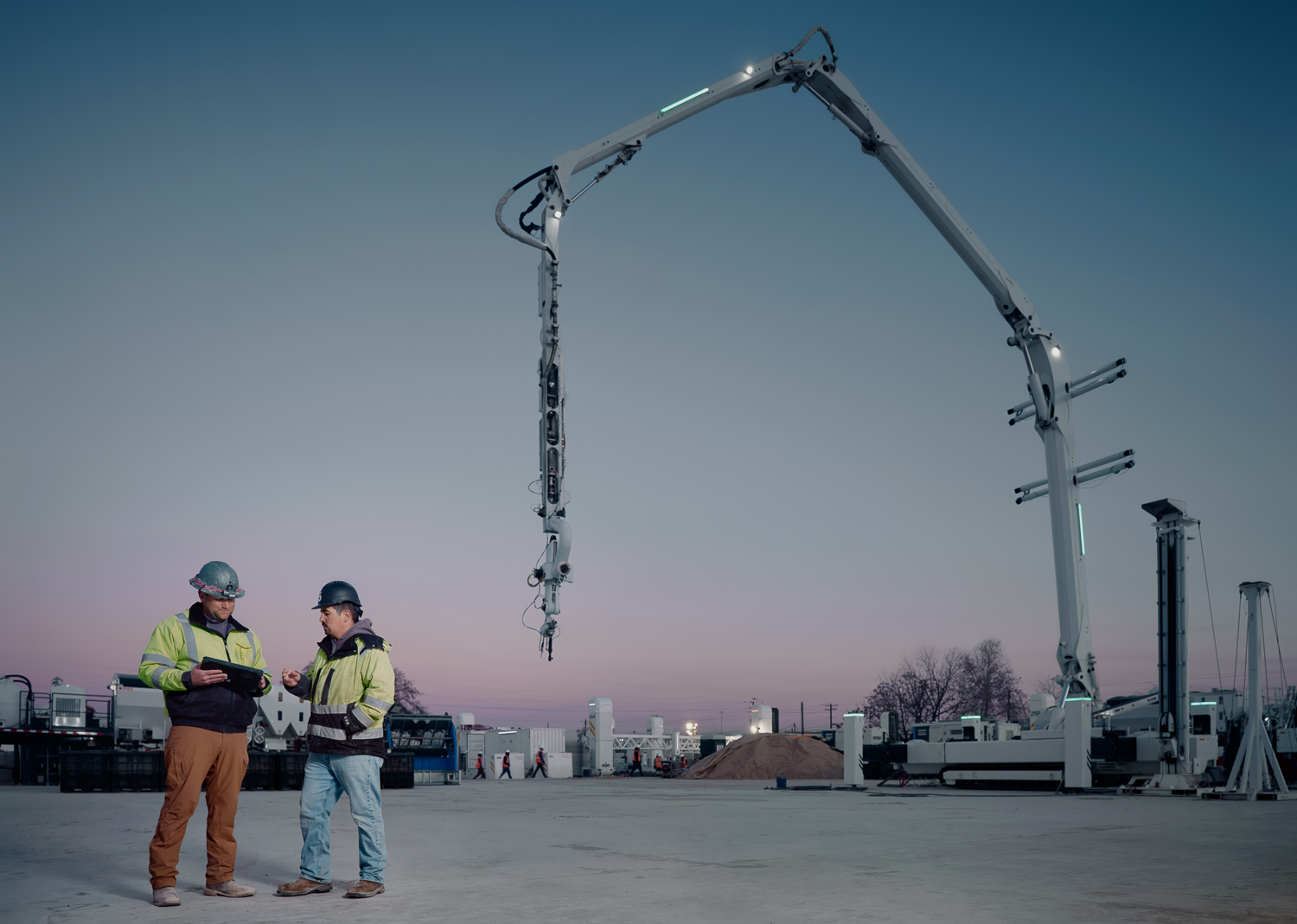
    At the center of the collaboration is ICON’s Titan system, a large robotic platform designed to print multi-level structures up to 27 feet tall. PALFINGER is contributing its lifting and stabilization technology to help position and support these systems in the field.

    This partnership also comes as ICON begins to push Titan into the market. The company recently opened sales of Titan, marking a shift from running projects itself to letting builders use the technology directly. The company says the system can print wall systems for around $20 per square foot, potentially cutting costs by up to 40% compared to traditional methods. This means more machines that can run continuously, handle larger builds, and move beyond pilot projects into everyday construction use.

    Operating Titan.

    Why This Matters

    ICON has been one of the most active players in construction 3D printing over the past few years. The company has printed homes in the U.S. and Mexico, worked on affordable housing projects, and even partnered with NASA on concepts for 3D printed structures on the Moon and Mars.

    But like much of the construction 3D printing sector, ICON has been operating in a space that is still early. Many projects have been small-scale, experimental, or heavily supported by partnerships and funding.

    Meanwhile, this new collaboration points to something different. By working with a company like PALFINGER (an established industrial player with decades of experience, global infrastructure, and real deployment capabilities), ICON is taking a step toward industrialization.

    Instead of just printing buildings, the focus moves to building systems that can be deployed reliably, repeatedly, and at scale.

    Where Construction 3D Printing Stands Today

    Most of the attention in construction 3D printing has gone to housing, especially affordable housing, and for good reason, there is a very clear global need for faster, lower-cost housing solutions. And while that remains an important use case for this technology, progress has been slower than early hype suggested.

    The biggest challenges are not just technical. They include scaling machines, fitting into existing construction workflows, meeting regulations, and making the economics work in real projects.

    As additive construction expert Stephan Mansour has pointed out, the issue is not just about better technology. Mansour told 3DPrint.com last year that the industry still lacks the right business models and practical ways to integrate 3D printing into how construction actually works today.

    He has also emphasized that materials and processes need to be rethought for real-world use, not just optimized for printing. Without that, many projects remain demonstrations rather than scalable solutions.

    That’s where partnerships like this come in. Rather than trying to solve everything alone, companies are starting to combine expertise across robotics, heavy machinery, materials, and construction know-how. In this case, ICON brings the printing system, while PALFINGER brings the industrial backbone needed to make it work in the field. It’s a “best-of-both-worlds ” approach that could help scale the technology.

    Multi-story home development designed by BIG.

    Where 3D Printing Meets the Job Site

    The Titan system is designed for continuous, 24/7 operation and uses modular components, stabilizers, and crawler systems to adapt to different environments. Early prototypes have already been tested, pointing to a technology that is moving beyond the concept stage.

    If it works, this setup could help solve some of the industry’s biggest problems, like labor shortages and the need for faster, safer construction. Also important is the fact that it points to a shift in how construction 3D printing is evolving. That means it is much less about one-off projects and more about systems that can be used again and again.

    3D printed Church by Overland Partners. 

    The biggest opportunity for 3D printed construction may not be replacing traditional building, but working alongside it in areas where speed, access, and risk matter most.

    Partnerships like this suggest the technology is starting to move in that direction, and finding its footing in standard construction environments, and showing where additive construction actually delivers value.

    Images courtesy of ICON

  • 3D Printed Airport Building Shows Where Construction AM Really Makes Sense

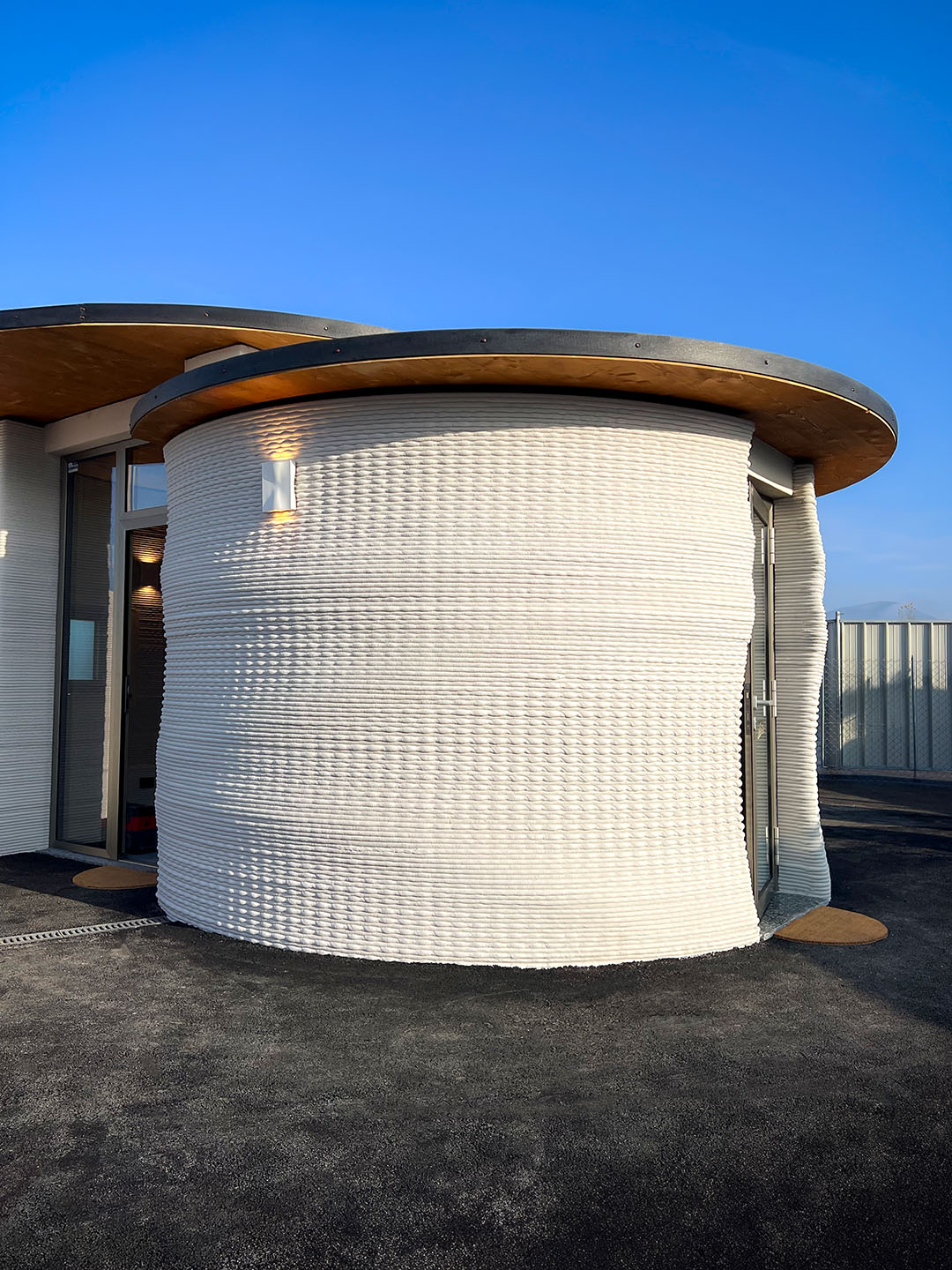
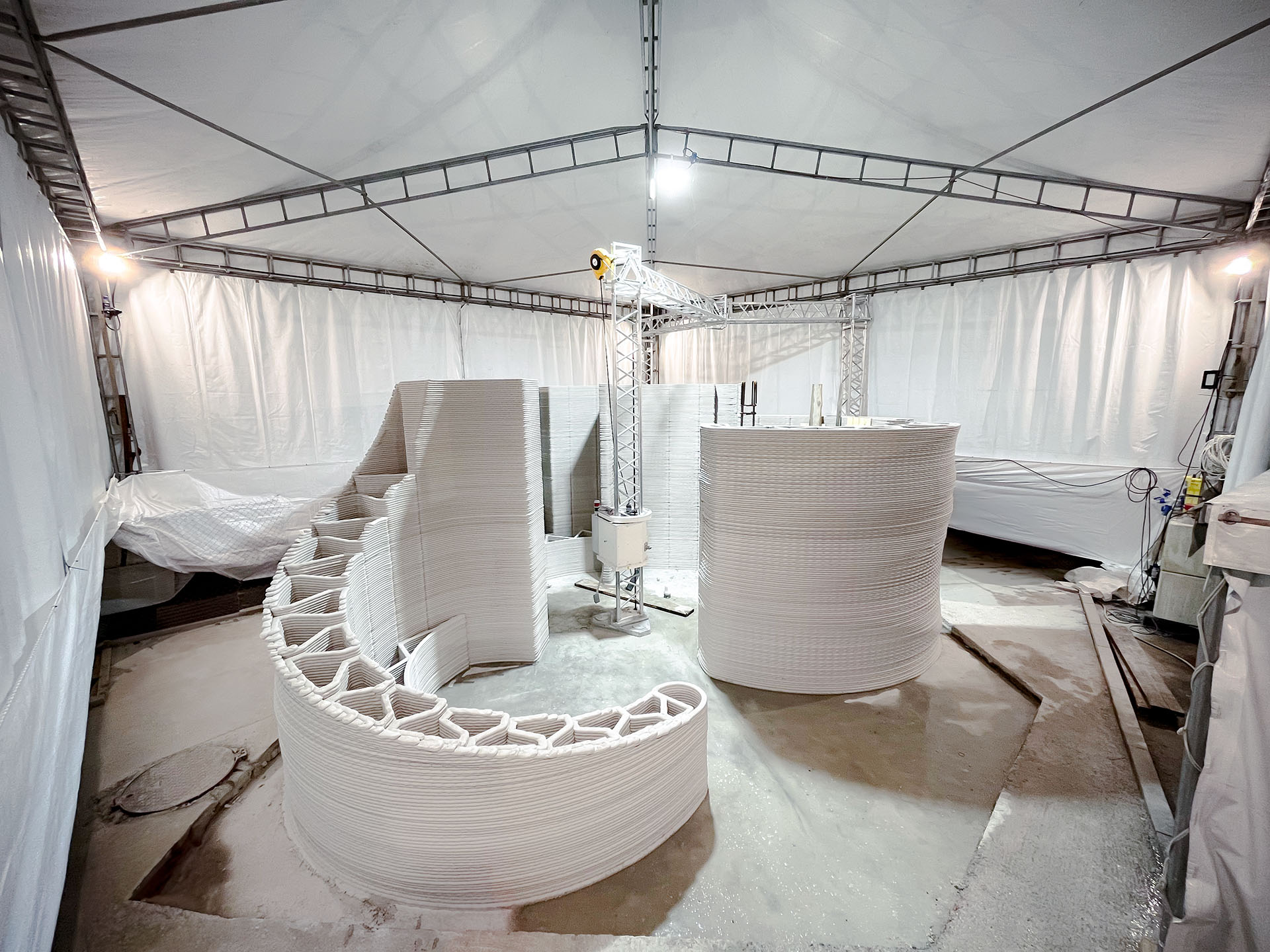
    At Milan Bergamo Airport, WASP has helped 3D print a new airport services structure. The small building, named Ol Casél, serves as a rest and relaxation area for customs staff. With toilets and a seating area, it is designed to give them a place to chill. Developed for airport operator SACBO by construction firm EDILCO in collaboration with WASP, the building was completed in 19 days. Doors, windows, and the roof were added after printing. The 3D printed walls incorporated oclusions and areas to easily integrate wiring and other components. 

    The Crane WASP at Bergamo Airport.

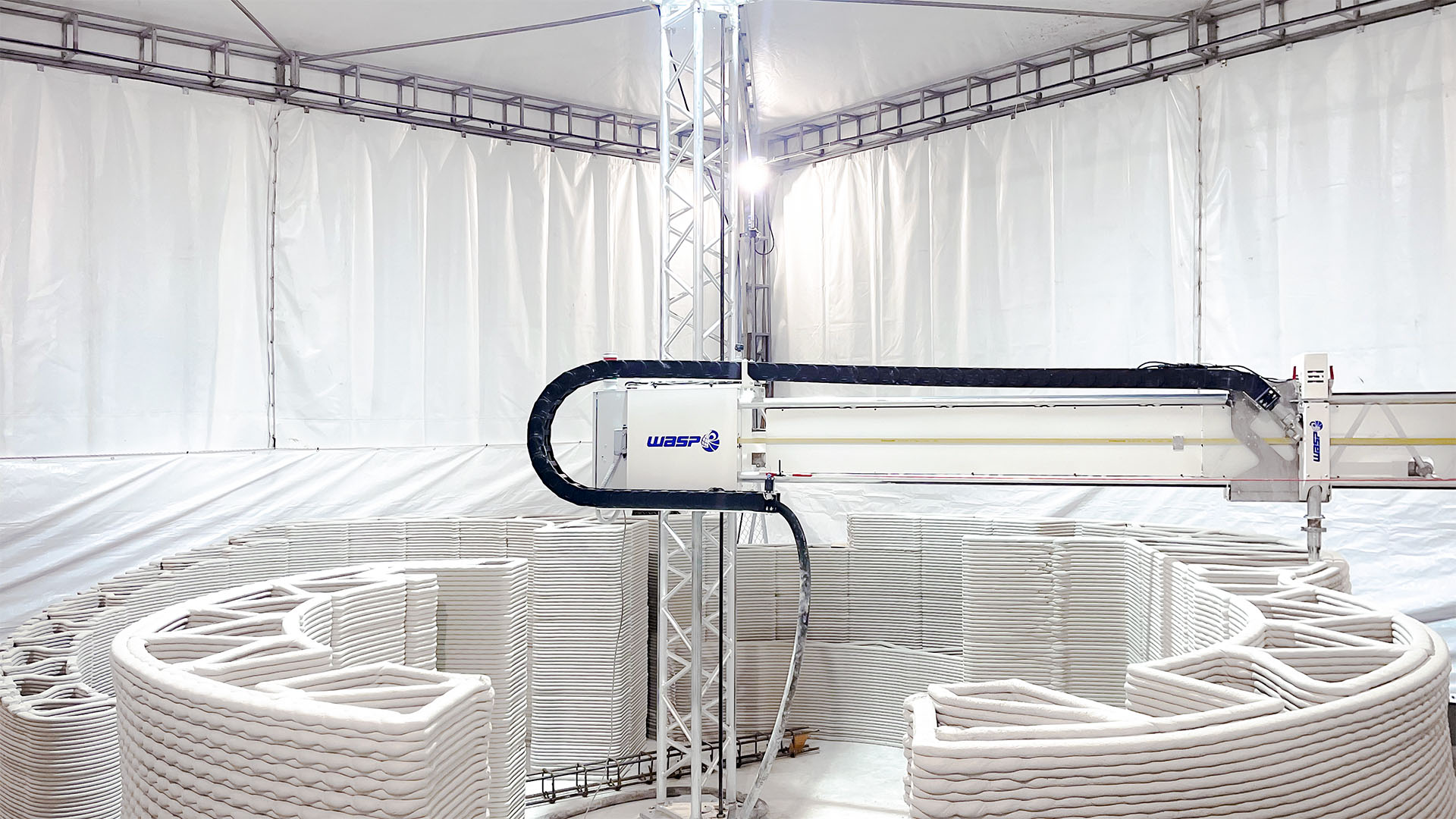
    Seven days of the 19 were taken up by the 3D printing process. As previous WASP projects have, this one used the Crane WASP. The Crane has a build volume of 8,200 mm by 3,200 mm and could print up to 200 mm/s. Weighing in at over 700 kilos and over five meters in height, this massive machine comes with a pumping system and a twin screw extruder. 

    3D printed service building at Bergamo Airport.

    Introduced in 2018, the WASP Crane has been used to print buildings in Japan using soil, an earth-based sustainable home in Italy, and a Dubai Dior concept store. WASP is unique because it really wants to save the world and use 3D printing to do so. On top of this strong, idealistic basis, the company makes machines that print many more materials than just concrete.

    3D printed certified service building at Bergamo Airport.

    The lime-based mortar was used in place of regular cement to save on emissions. Whereas a lot of the attention on 3D printing for construction is on houses, I’m more enthused by this kind of thing. In infrastructure, remote infrastructure, or difficult-to-access infrastructure, 3D printing makes a lot of sense. Whereas a quicker 3D printed house is nice and may be more affordable, not closing down a part of an airport for a few days adds additional savings. Not having to close down a runway, not having to use lots of security people to guard an area of the airport where people need to come and go, not having to make changes to roads/gates and access procedures for longer than necessary, not having to spend time monitoring cameras of a certain area under construction, the general risk of lots of new people milling around your site, extra searches and acess control all adds up. In such a place, a shorter construction time saves much more than just the construction cost of the structure itself. At airports and in some military or energy facilities, the exit, entry, and monitoring costs for temporary site visitors alone can eclipse the cost of the structure. The risk to the facility of anyone who should not gain access to this site also brings a financial cost that could eclipse any built-in costs of itself.

    If we’re dealing with a large site like a nuclear plant, an integrated petrochemical facility, or an airport, any downtime of the main activity is also super costly. The difference between having cement trucks traversing your site three days instead of five could be considerable. And with every trip, the risk of an accident increases. If a runway had to be closed off for even an hour for some kind of construction activity, the costs could be enormous. Imagine also the unquantifiable stuff. Imagine managing Heathrow or something, and someone telling you that you need a crane at your site. I know nothing about managing airports, but I’d be rather allergic to that and would try to minimize time on site for this. In the case of large plants, processes can make thousands of tonnes of material an hour. So there is a per-minute cost if this is interrupted. But there could also be significant energy or other costs in ending and starting up processes. Speed could also end up saving on interruptions in uptime to ancillary processes, also. At remote sites such as Arctic bases, personnel are limited, so having someone feed, supervise, and help visiting construction crews is something that has to be minimized.

    Yes, 3D printed houses are cool. But I love this project because it is an example of something potentially much more profitable and effective. 3D printed construction in denied, high-value, high-criticality, and secure environments is the one area that I’m the most excited about in 3D printed construction. Let’s hope that we see more examples of this in the wild.

    WASP’s Crane construction 3D printer at Bergamo Airport.

    Images courtesy of WASP

  • 3D Printing News Briefs, March 19, 2026: 3D Printing Waste, Technical Ceramics, & More

    In today’s 3D Printing News Briefs, Meltio announced an official sales partner for Ireland and Northern Ireland, Roboze received an investment from a U.S. venture capital firm, and Future Form added 3D printing services. Ter Hoek adopted XJet’s Carmel 1400C to expand into technical ceramics 3D printing. Finally, CEAD is shredding its 3D printing waste, and investigating how to recycle it to create new materials.

    Meltio Announces Official Sales Partner for Ireland & Northern Ireland

    L-R: Johannes Werner and James Wall, 3D Technology Ltd.

    Meltio, which specializes in wire laser metal deposition, announced that 3D Technology Ltd. is its newest official sales and services partner, and will help boost metal AM market growth for Ireland and Northern Ireland. A leading Irish provider of AM hardware, materials, and technical support, 3D Technology Ltd. has offices in Belfast, Galway, and Meath, so can certainly spread the word about Meltio’s process, which is centered around safe, affordable, and clean welding wire. The company will help build a strong and supportive ecosystem in the Irish territory for Meltio’s technology, and provide customers with local support, such as consultation, solution design, installation, maintenance, training, and application development. This partnership between Meltio and 3D Technology Ltd. will allow Irish manufacturers to achieve supply chain independence by adopting cost-effective, reliable metal AM solutions for repair, production, tooling, and hybrid manufacturing.

    “We are incredibly excited to partner with Meltio and bring their world-class metal additive manufacturing technology to Ireland and Northern Ireland,” said James Wall, Managing Director at 3D Technology Ltd. “Meltio’s wire-LMD systems are transforming how companies think about metal production, repair, and hybrid manufacturing. This partnership aligns perfectly with our mission to deliver innovative, reliable, and accessible advanced manufacturing solutions to our customers. We look forward to supporting Irish industry as it embraces the next generation of metal AM.”

    Roboze Gets Venture Capital Investment to Speed up Distributed Manufacturing

    Roboze has been on the move as of late, holding an open house at its Houston location earlier this week and celebrating the grand opening of its Aerospace and Defence HQ in California tomorrow. The company also announced an investment from U.S. venture capital firm Rule 1 Ventures, which focuses on defense and national security technologies designed to strengthen operational readiness. The investment will support the global expansion of Roboze’s AI-driven distributed manufacturing platform, combining materials science, AM systems, software-driven process intelligence, and embedded Physical AI. The platform is focused on reliable, localized, on-demand production of complex, mission-critical parts for strategic sectors like aerospace, defense, and energy. Roboze’s funding round also included participation from some existing shareholders, like microprocessor inventor Federico Faggin, and investors experienced in the government affairs, defense, and global industrial markets, like Privcorp Ventures and Gary Ang, former Temasek operating partner and Singaporean Air Force official.

    “We are proud to welcome Rule 1 Ventures and this exceptional group of investors to Roboze. Modern industrial resilience requires more than machines — it requires a complete manufacturing platform that combines hardware, materials science and intelligent software. Our mission is to build the infrastructure that allows critical industries to produce advanced components wherever they are needed,” said Roboze Founder and CEO Alessio Lorusso.

    Future Form Adds 3D Printing Services for Prototyping & Low-to-Mid Volume Production

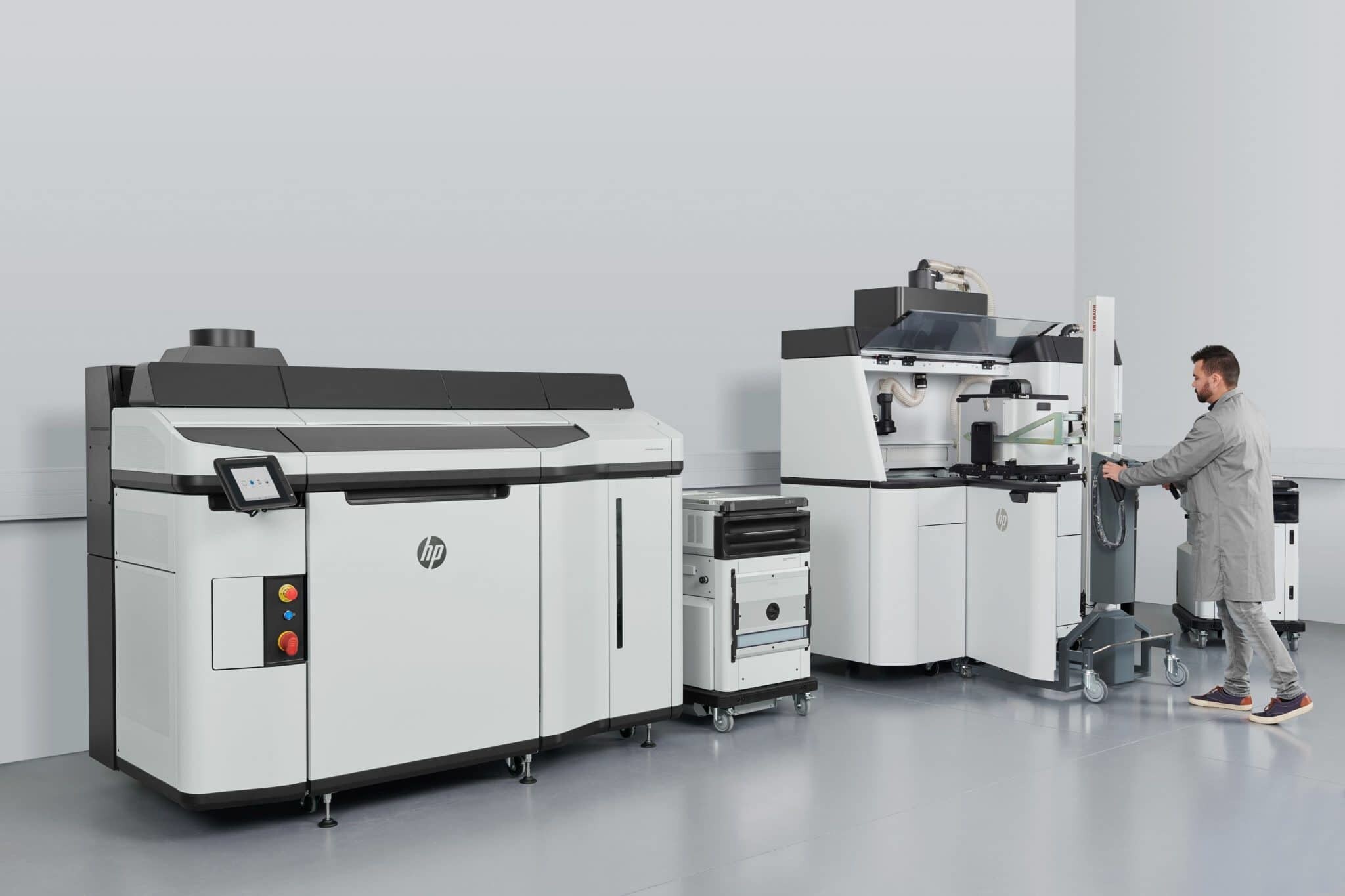
    Future Form is now using this HP Multi-Jet Fusion (MJF) 3D printing system, a cutting-edge scalable platform that supports functional prototyping to final part production.

    High-volume manufacturing solutions provider Future Form recently added 3D printing services to its portfolio. The company specializes in plastic AM, and its new service will use HP Multi Jet Fusion (MJF) technology to enable prototyping and low-to-mid volume part production for the aerospace, medical, and data center industries. 3D printing growth has been especially pronounced in these sectors, like for making flight-certified parts and constructing data centers. Reasons for its increased popularity include everything from supply chain resilience and the ability to deliver complex geometries to improved sustainability. With its new services, Future Form will use MJF to print functional, high-quality parts for these sectors with great surface finish and cost efficiency, and improved turnaround times. This addition to its portfolio shows that the company really has a forward-looking approach to manufacturing.

    “For low- to mid-volume production and/or prototyping, plastic 3D printing is quickly becoming a smarter alternative to traditional manufacturing methods,” said Ben Thomas, CEO of Future Form.

    “By adding these services, we’re ensuring we can deliver high-quality parts to our customers when they need them without costly transportation fees or exorbitant mark-ups.”

    Ter Hoek Expands into Technical Ceramics with XJet’s NPJ Technology

    XJet 1400C Alumina system installed at Ter Hoek facility in Rijssen, The Netherlands

    Dutch precision manufacturing specialist Ter Hoek recently adopted the XJet Carmel 1400C ceramic 3D printing system, expanding its expertise from precision metal manufacturing to technical ceramics. This decision will diversify the company’s existing material portfolio, and also upgrade its production process into a digital, automated workflow. Additionally, the collaboration will bring XJet’s proprietary NanoParticle Jetting (NPJ) technology to the Netherlands—one of the most demanding precision manufacturing environments in Europe—and increase both companies’ ability to offer ceramic solutions to high-tech industries, such as semiconductor, medical, aerospace, and aviation. The Carmel 1400C system was designed to handle prototyping as well as production-scale manufacturing, which meshes well with Ter Hoek’s service model. At next week’s Ceramitec 2026 in Munich, XJet and Ter Hoek will demonstrate NPJ technology together at Booth 206, Hall A6.

    “In the future of manufacturing, sustained success will hinge on continuous differentiation and innovation in an increasingly competitive landscape. With our solid expertise in precision manufacturing, we have constantly sought the next opportunity to better serve our customers. By entering the world of technical ceramics with XJet’s digital production platform, we’re not just adding a new material – we’re embracing a fundamentally new way of manufacturing that offers unprecedented design freedom, faster iteration cycles, and the ability to produce parts that were simply impossible before. This positions us at the forefront of the next generation of precision manufacturing,” said Gerrit Ter Hoek, Founder and Technical Director at Ter Hoek.

    CEAD Uses WEIMA Shredding Technology to Recycle 3D Printing Waste

    Large-format additive manufacturing cells at CEAD – © Weima

    In another story out of the Netherlands, CEAD is combining its large-format additive manufacturing with the circular economy. The Delft-based company develops LFAM systems for the composite, construction, and marine industries. Its pellet extrusion process uses fiber-reinforced thermoplastic composites (FRP) to print full-scale components, like complex molds, prototypes, and even boats. Unfortunately, the discarded parts and prototype structures made of glass- or carbon-fiber reinforced polymers can add up fast. Plus, CEAD’s leftover prints can weigh up to several hundred kilograms, so it’s not sustainable or efficient to dispose of them. CEAD is now using a material recycling solution from German mechanical engineering company WEIMA. CEAD installed a WEIMA WLK 4 single-shaft shredder, which is able to easily convert reinforced thermoplastic waste components into uniform flakes about 10 mm in size. These flakes are a great intermediate material for reprocessing and upcycling, and CEAD is now working with several Dutch R&D companies to investigate how the shredded waste material can be re-pelletized to create new 3D printing material.

    “WEIMA for me is reliable, easy to operate, and a trustworthy partner. We’ve been using the shredder frequently without any breakdowns, and it performs perfectly in an industrial environment,” said Mark Muilwijk, Material and Process Specialist at CEAD.

  • BMF Turns Up the Speed with microArch S150 Series

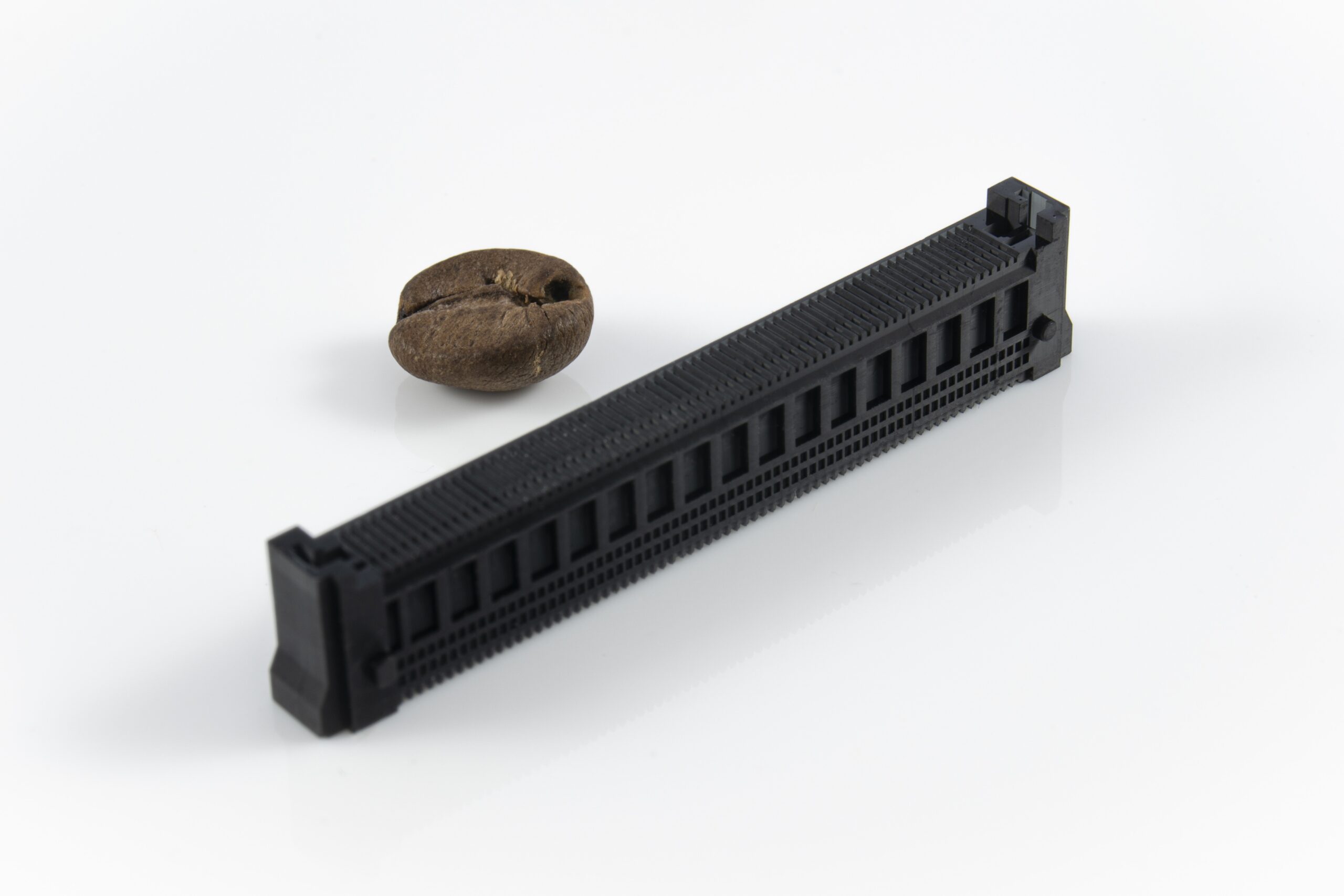
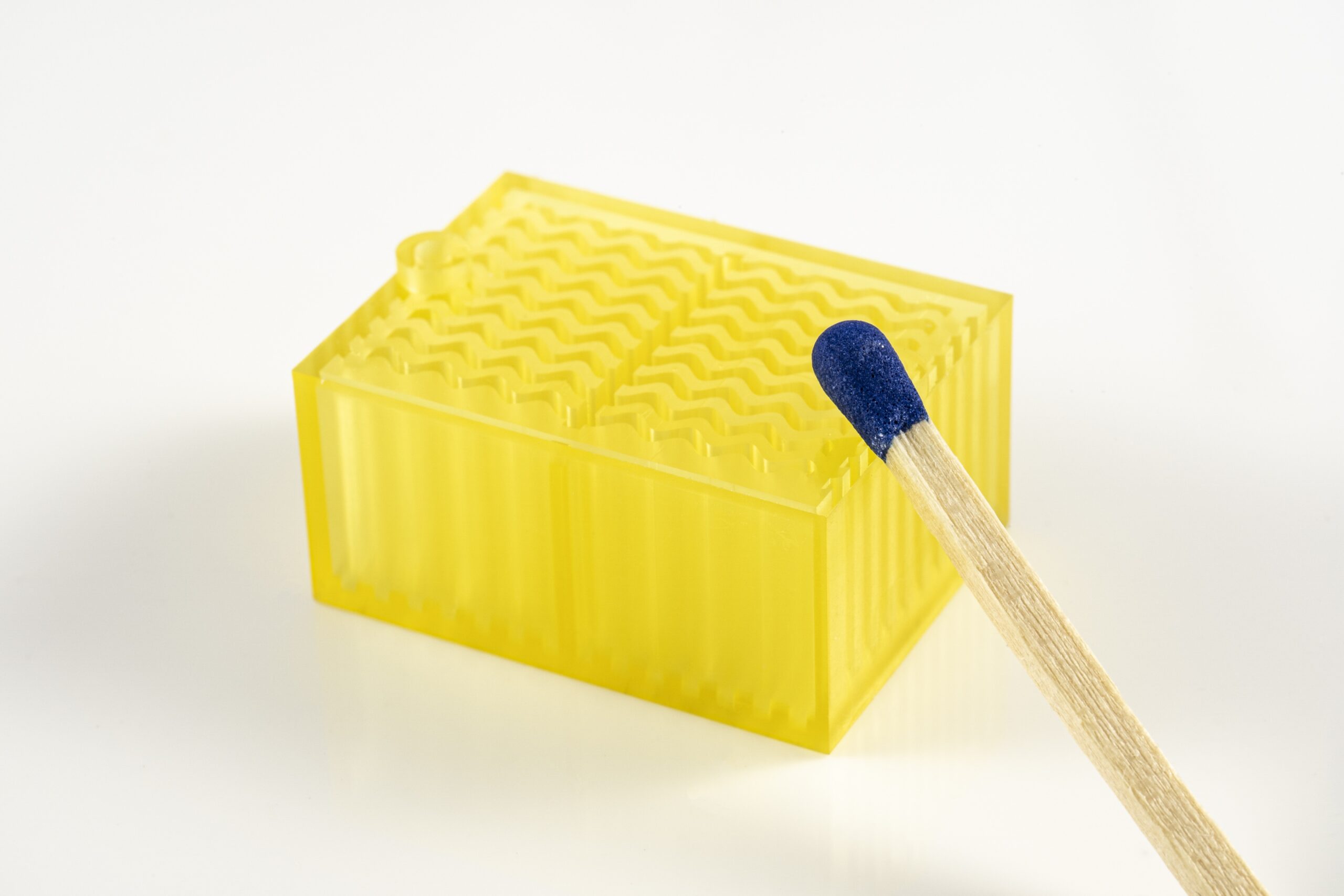
    Boston Micro Fabrication (BMF) is releasing the microArch S150 Series. This series comprises two compact desktop systems. There’s a speedy microArch S150 Ultra and a more lab- or experiment-oriented microArch S150. The company thinks that the PµSL printers will be used for “microfluidics, fiber optics, biomedical devices, electronics, and advanced research.”

    The Ultra is nine times faster than the regular S150, and could be used for “rapid prototyping, iterative design, and low-volume production of finely detailed parts such as microneedles, channels, nozzles, and chips.” The systems have 25 µm optical resolution, 10–100 µm layer heights, and a ±3 µm positional accuracy. Each layer takes between 4 and 12 seconds to print. There’s a HEPA13 filter, while a UV-C (253.7nm) sterilization system sanitized the build chamber after print runs. For some materials, the open printer has presets, and resin tanks can be heated to 60℃. The printer prints at 405nm, and the build volume is 80mm x 48mm x 50mm.

    Both systems have been made to be easy to use and deploy. Automatic calibration, automated leveling, automated setup, touchscreens, and better material handling are some of the optimized features of these systems.

    Housing with 130 Em features, 3D printed on S150 Ultra in 39 minutes.

    BMF CEO John Kawola said,

    “Our mission is to make micro-precision 3D printing a more accessible technology for innovators across multiple industries and the microArch® S150 Series is a true game-changer in enabling us to achieve that. Designed to directly support customers seeking to accelerate their research and development without sacrificing quality, these systems remove long-standing barriers and make true micro-precision 3D printing genuinely accessible. By introducing this series, we are empowering users to easily and successfully create high-resolution parts with the speed and efficiency required for today’s fast-paced development cycles.”

    Heat Exchanger for Blood Cooling, 3D printed on the S150 in 1 hour, 18 min.

    BMF will be at Rapid TCT showing off the systems, and they should be for sale at the beginning of Q2. BMF got a Series D round in 2023. The company has released more systems, such as a dual resolution system, and new resins, such as an SR (Sacrificial Resin) and a High Temperature material. Aside from these expected advances, the company is also moving ahead with deeper dives into applications. In both veneers and organ-on-a-chip, the company is pioneering its own solutions. Rather than just come up with a thin veneer material and offer it to customers, BMF is providing the whole solution and selling veneers.

    The company, of course, has to balance these efforts. If its own applications are seen as competitive or a threat, it may scare off customers. But, if it strikes the right balance between offering open machines to anyone and developing its own products, it may have found a golden opportunity. The machines can be used for any and all research, anywhere. This could ensure it penetrates new markets and becomes the product used as new industries are invented. If it then has the pipeline of devices needed to industrialize this research process, it can benefit from people doing research and those rare examples that make it into production.

    Meanwhile, in other areas, it can capture the full value of an application by developing, manufacturing, and selling it in-house. Traditionally, machine businesses, service businesses, and product companies are very different organizations. Companies trying to do several things at once often struggle to do anything right. A lack of focus or too much activity in poorly understood areas could also lead to disasters. Worse, these issues could arise from a lack of understanding of what needs to be understood. So it’s not the palm-sweaty, hip-swaying of a tightrope walker, but the blundering off a cliff, unseen, kind of mistake that becomes more likely to happen. Often, product people struggle to align with more process-oriented device people, and neither understands service folks. Culturally, therefore, the company will have to take care as well. But if it gets these things right, then the company could have two very different revenue streams. A shotgun-like device revenue stream dominated by growth in research funding around PµSL and its applications in one stream, while direct cash from applications in another. That could be a financially very attractive place for the firm to find itself.

    Images courtesy of BMF

  • Sintavia Taps NVIDIA Blackwell for AI-Driven Additive Manufacturing Pipeline

    Investors have become increasingly anxious about the sustainability of NVIDIA‘s growth trajectory, which is a rather natural outcome when a stock goes up infinity percent or so over the course of a decade. Meanwhile, this healthy skepticism has left the company’s share price at levels that recently led Bloomberg to say it now “looks like a value stock,” and CEO Jensen Huang just declared that the chipmaker anticipates at least $1 trillion in revenue through the end of next year.

    Of course, in order to remain optimistic about the AI boom’s longevity, it’s not enough to factor in NVIDIA’s own projections: what’s perhaps even more critical at this point is the revenue that NVIDIA’s customers are bringing in thanks to adoption of the company’s tech. Moreover, those customers can’t just be hyperscalers; NVIDIA has to prove that its chips are stimulating growth across the economy as a whole, for small businesses in addition to giants. Thus, Sintavia, the Florida-based, additive manufacturing (AM)-enabled contract manufacturer, is signaling quite a milestone with its announcement that it has used NVIDIA’s RTX Pro 6000 Blackwell Workstation Edition GPU to drastically reduce the design and validation timeline for an aerospace heat exchanger.

    After designing the part at an accelerated pace, Sintavia ran “over 300 iterations” of a heat transfer simulation in just seven minutes with the Blackwell, a phase of the process which the company notes would’ve taken 11x longer with advanced CPUs. Sintavia used Siemens’ Simcenter STAR-CCM+ CFD software and nTop implicit modeling to design the part, which resulted in a combined 30 percent weight reduction and 20 percent increase in thermal efficiency.

    All in all, Sintavia shortened a process that would typically take months into a production schedule of about two weeks.

    Scooped version of the representative heat exchanger.

    Notably, beyond the performance achievement, Sintavia also scored a big PR win by landing a spot on NVIDIA’s website as a customer success story. This is warranted hype: Sintavia managed to weave together a number of relevant economic themes that are poised to continue gaining in relevance in the current geopolitical environment.

    In an interview I did with Cisco’s VP of Product Management for IoT Industrial Networking, published earlier this week, I discussed why I think that infrastructure investments, including expanded edge computing capacity, are a necessary precursor to the AM’s next scaling phase. And in another post from this week, I wrote about how the US-Israel war in Iran is likely to lead to the disruption of supply chains far beyond oil & gas.

    As evidenced by the company’s GPU competencies, Sintavia is clearly positioned to utilize edge computing to handle the greater networking capacity required for operational growth. As for the supply chain disruptions, while the company didn’t say what the heat exchanger was made from, there are plenty of metal supply chains dependent on the Strait of Hormuz, including aluminum, one of the most common metals used for heat exchangers. The Bahrainian aluminum giant Alba, which operates the world’s single largest aluminum smelting facility, has already cut production by 19 percent in response to the shutdown of shipping through Hormuz.

    This obviously has a negative impact on suppliers of aluminum parts as a whole by raising prices, but the persistence of the disruptions could ultimately catalyze greater demand from manufacturers using AM, especially from the addressable market closest to the point of supply. You may pay more for the printed part, but if delivery within a reasonable timeframe is guaranteed, the higher cost might be justified. And lower shipping costs compared to parts from overseas could start to make a dent in the premium.

    Finally, although Sintavia’s use-case is an aerospace heat exchanger, NVIDIA’s involvement naturally made me think of heat exchangers for data centers. Digital manufacturing is already an indispensable proof-of-concept for NVIDIA’s long-term business model, for the reasons mentioned at the beginning of this post. If NVIDIA starts eating its own dog food by using a combination of AI and AM to help build up the domestic data center hardware ecosystem, AM will become strategically critical infrastructure for the linchpin of the global market.

    Images courtesy of Sintavia