• SWISSto12 Extends Swiss Factory

    Swiss Omega Speedmaster watches went to space and the moon with the Apollo program. While the watches were Swiss, virtually all of the other equipment was made in the US, except, of course, the Swiss Mettler scales, sieves by Aigle AG, DJEVA synthetic rubies, Mikron AG-made gears for the lander, and a Swiss experiment carried by the crew. The Swiss may be looking to maximize their role in space even more this time through Swissto12.
    The company has opened a 1,000-square-meter cleanroom in Renens to make HummingSat. This augments an existing 5,500m² space.
    SWISSto12 CEO Emile de Rijk stated,
    “Bringing this integration capability for our advanced satellite payloads and HummingSat in-house is central to our strategy to reduce the time and cost of building our products. This agility brings value to our customers who need cutting edge products and innovation delivered at speed.”
    The space is needed for the HummingSat. The HummingSat is a GEO satellite optimized for compactness and broadband connectivity. The HummingSat is also a relatively affordable option for sovereign communications, intelligence, and secure communications. For wealthy countries, a sovereign communications capability is more important in a more fractious world. Previously, doing a proprietary program was cost-prohibitive and available only to China, the US, Russia, and France. Now, more countries could use HummingSat as a springboard to their own sovereign communications.

    HummingSat is a geostationary telecommunications satellite. Image courtesy of SWISSto12.

    Swissto12 also aims to build HummingSat in two to three years, much faster than bus-sized older platforms. For now, 4 satellites have been ordered. They’re expected to have a lifespan of 15 years and weigh a ton, with a 200 kg payload. The company aims to offer them at 10 times the price of the satellites it aims to replace. Intelsat 45 is the first, and it’s a Ku-band FSS/BSS replacement satellite. This is a Broadcasting Satellite Service, which transmits, for example, TV to many, and a Fixed-Satellite Service, which transmits to one particular area. The next three satellites are intended for Inmarsat/Viasat. These are Viasat/Inmarsat I-8 satellites. They are meant for its L-band (1 to 2 gigahertz) network, a secure emergency services network. After this, further communications satellites for general use or specific satellites for countries like Norway are in the offing.

    SwissTo12 is ambitious, that’s for sure. The company is also working to grow its RF components business. The company makes 3D printed filters, antennas, waveguides, and more for the likes of Thales, Northrop Grumman, and Lockheed Martin. The company is also expanding into AESAs (Active Electronically Steered Antennas), AESA terminals, and even a dielectric material analyzer.

    Through the use of additive, SwissTo12 is growing in satellite components and entire satellites. And we’re all stuck trying to sell parts to car companies. SwissTo12 is really showing how to dominate in individual application areas and leverage that into a fast-growing business. SwissTo12 doesn’t sell printers; instead, it designs, optimizes, and makes complete assemblies that use 3D printing to outperform. This allows the firm to capture a lot of the resulting value and lead in a fast-growing market. RF components and satellites are ideal for optimization, weight savings, component reduction, and better flow. If we can optimize all of these qualities at the same time, we can get an industry-leading device that combines excellent RF performance with superior economics. In the constrained space of satellites, a more optimized shape can enable them to do more or last longer. Weight savings reduce costs, while a supremely optimized component combines all the other advantages. More companies should follow in SwissTo12’s footsteps and apply additive to space.

  • Manufacturing Has a Data Bottleneck, So OpenBOM and AMC Bridge Are Helping Systems Work Together

    As manufacturing becomes more distributed and product development more complex, companies are under more pressure than ever to connect data across design, engineering, and production. The idea of a “digital thread,” this continuous flow of product data across systems, is no longer just a long-term goal, but something many organizations are actively pushing to implement.

    A recent collaboration between OpenBOM and AMC Bridge points to exactly that shift. And for additive manufacturing (AM) in particular, connecting data across systems is critical to moving from design to production.

    The partnership focuses on improving how product data moves between systems, particularly in environments where multiple CAD tools are used. This is common. Many manufacturers, suppliers, and engineering teams do not rely on a single design platform; instead, they operate across a mix of tools shaped by internal needs, legacy systems, and external partners.

    A Growing Need for Integration

    For many engineering organizations, the issue is not a lack of software, but how hard it is to keep data consistent across systems that were never designed to work together. As teams adopt a mix of desktop and cloud tools, this becomes even harder.

    Here, integration is less about convenience and more about keeping workflows running. This plays out across a wide range of industries.

    For example, global automotive companies like BMW or Volkswagen typically rely on platforms like CATIA, a widely used design and engineering software from Dassault Systèmes, for core design work, while suppliers contributing parts often use a range of other tools, including SolidWorks or PTC Creo. In these cases, product data has to move between companies, often without a shared system.

    In aerospace, companies such as Airbus and Boeing operate highly distributed supply chains, where different partners use different design tools and product lifecycle management systems (PLMs). A single aircraft program can involve hundreds of suppliers, each using different data formats, making integration key to keeping everything consistent and easy to track.

    This is also true for contract manufacturers like Flex or Jabil, which build products for different customers using different software. Some, like Jabil, also use AM as part of their production workflows, adding another layer of complexity to how data is managed across systems.

    Even in smaller or fast-growing companies, mixed software setups are common. Many teams start with cloud-based tools like Onshape or Autodesk Fusion, then add more advanced systems as they grow. Over time, this can lead to setups where older and newer tools need to work together.

    In electronics and hardware development, tools like Altium Designer are used alongside mechanical CAD systems, requiring close coordination between electrical and mechanical design teams. Keeping these systems aligned is critical to avoiding design errors and delays, a well-known challenge in hardware development.

    Now, if we take AM workflows into account, that adds a whole other layer of complexity. For example, a part might be designed in one CAD system, then adjusted in another, and finally prepared for printing using machine-specific tools. Companies like GE Aerospace or Siemens Energy use AM in production, where workflows typically involve multiple tools and systems.

    So, across all of these scenarios, the challenge is the same: data is created in one system but needs to be used in many others. Without good integration, teams end up doing things manually, working with different versions of the same file, and facing delays.

    Why This Matters

    This is where the OpenBOM and AMC Bridge collaboration fits in. While the partnership is not new, their continued work points to the growing demand for better integration.

    OpenBOM helps companies manage product data in the cloud, from parts lists to engineering changes. AMC Bridge makes that system work with design tools like SolidWorks, Autodesk Fusion, and PTC Creo.

    Together, the companies are working to connect traditionally separate systems, allowing data to move more easily between design environments and downstream processes like manufacturing and supply chain management.

    For the AM industry, these developments are quite interesting.

    Additive workflows are digital, but they pull data from many different places, like design, simulation, and production. When these systems aren’t well-connected, scaling production and keeping things consistent becomes harder. That’s why better integration and smoother data flow are becoming essential for using AM in production.

    create a BOM today from Autodesk and get Bill of Materials with images that can be easily shared downstream in your company. Image courtesy of OpenBOM.

    From Demonstrations to Deployment

    The collaboration between OpenBOM and AMC Bridge was recently shown at Autodesk University 2025, where the companies demonstrated how their tools can connect design, data management, and business systems.

    While this kind of demo isn’t new, what’s changing is how far things have progressed. More companies are moving past early testing and looking for solutions that are stable and ready for real production use.

    That shift shows in this partnership, which focuses on reliability, performance, and long-term support rather than just technical features.

    As manufacturing workflows become more complex, the need to connect systems and keep data consistent is becoming harder to ignore. The OpenBOM and AMC Bridge collaboration is one example of how companies are trying to deal with that challenge, as integration moves from a “nice to have” to something required for real production.

  • 3D Printing Market Trends 2025: AM Research to Break Down Data in March Webinar

    As the additive manufacturing industry moves into a more results-driven phase, understanding what actually happened in 2025 is becoming very important.

    On March 24, 2026, Additive Manufacturing Research (AM Research) will host a free webinar aimed at answering exactly that. The session, titled 3DP/AM Market Insights: 2025 Review and 2026 Preview,” will present a detailed look at the latest market data, along with expectations for the year ahead.

    The webinar builds on AM Research’s recent findings, including new analysis showing that the value of parts produced with additive manufacturing could reach $110 billion annually by 2034. During the session, these projections will be explained and put into a broader market context.

    Looking Beyond Headlines

    The webinar will be led by Scott Dunham, Executive Vice President of Research at AM Research, who has spent years tracking the additive manufacturing industry across multiple technologies and sectors.

    The session will take a closer look at how different parts of the market are performing, based on detailed data collected over time.

    AM Research tracks the industry on a quarterly basis, covering hardware, materials, and services across technologies such as powder bed fusion, binder jetting, directed energy deposition, and material extrusion. This approach allows the firm to follow market changes as they happen, instead of relying only on annual or quarterly data.

    What Changed in 2025?

    The past year has been a transitional one for additive manufacturing. Especially as many companies have shifted their focus toward profitability and more targeted applications. At the same time, areas like defense, dental, and industrial production have continued to evolve, creating a more complex picture of growth.

    The webinar will explore where expansion actually occurred in 2025, and where it may have slowed down. It will also look at how different technologies are positioned going into 2026, and whether certain segments are beginning to separate from the rest of the market.

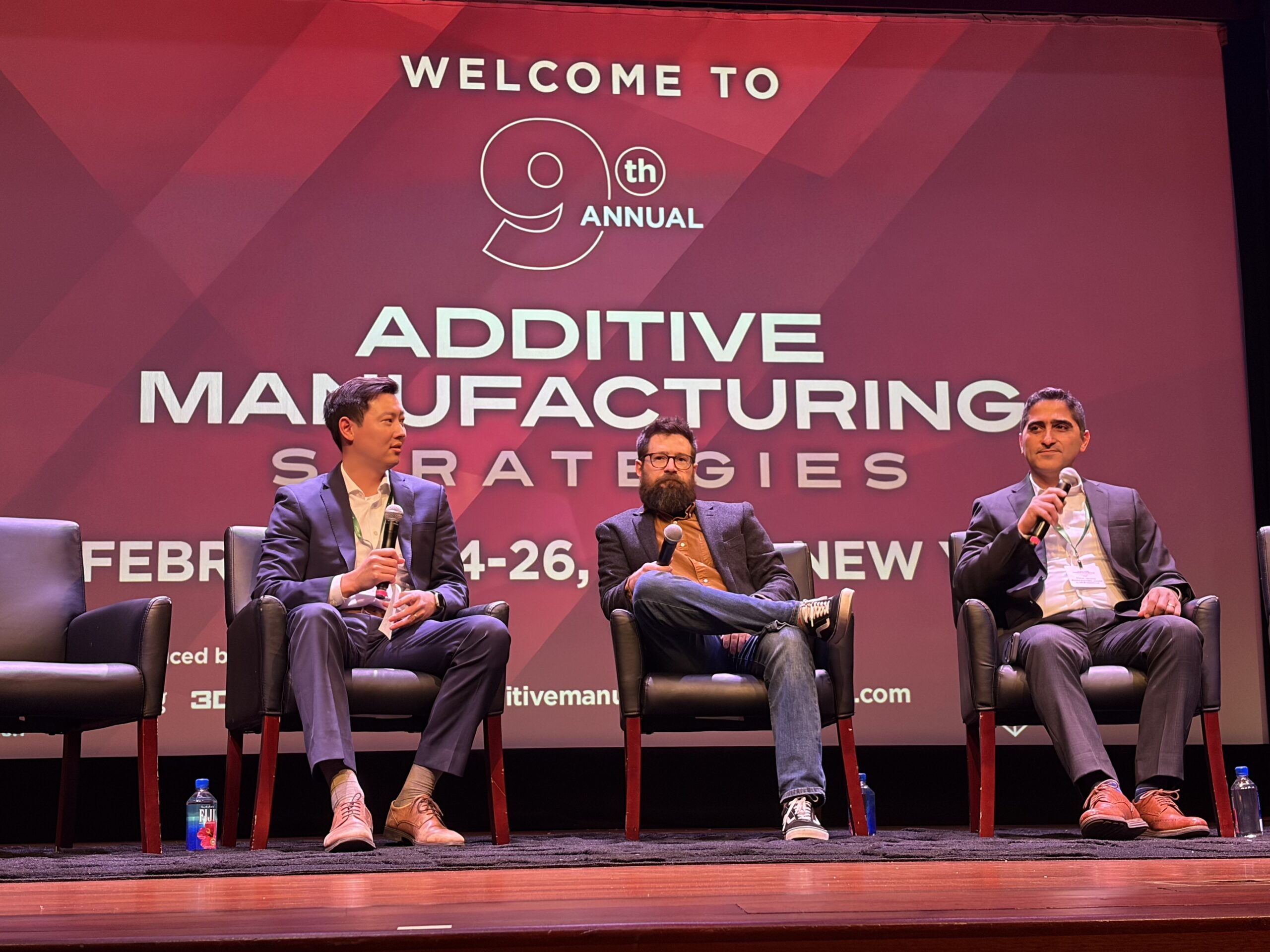
    Scott Dunham during the AMS 2026 Market Data Outlook presentation. Image courtesy of 3DPrint.com.

    One of the key themes expected in the session is the growing importance of applications.

    Recent AM Research data has shown that looking at part production, not just equipment sales, provides a better understanding of how additive manufacturing is being used in practice.

    By connecting application-level insights with broader market data, the webinar looks to highlight where additive manufacturing is delivering real value today, and where future opportunities may lie.

    From AMS to a Broader Audience

    For those who attended Additive Manufacturing Strategies (AMS 2026) , the webinar will expand on topics already introduced earlier this year. At the event, Dunham shared early insights into application trends and market forecasts. The March session will build on that foundation with finalized data and a more detailed outlook.

    As additive manufacturing continues to mature, access to reliable data is becoming more important than ever.

    Companies need to show what they’re investing in, what they’re getting back, and where the technology makes sense. At the same time, the market is pushing toward more targeted, real-world applications. So if we take into account that context, then understanding what actually happened in 2025 (and what may happen next) is key.

    The AM Research webinar provides a direct look at those trends, along with insight into how the data is being interpreted.

    Registration for the free webinar is open here.

  • Stratasys Shares the Capabilities of its 3D Printed Monolithic, Polychromatic Dentures

    According to a report by Additive Manufacturing Research, the dental 3D printing market could reach $9.6 billion in revenue by the year 2033. It is one of the most mainstream applications of AM across the entire medical industry, with plenty of industry leaders, like Stratasys, putting a great deal of focus on the dental sector. In fact, Stratasys has such confidence in its TrueDent technology that the company offered complimentary 3D printed dentures to Team USA hockey star and Olympic gold medalist Jack Hughes, who lost multiple teeth at the recent 2026 Winter Olympics in Milan. I spoke to Chris Kabot, Vice President and Global Head of Dental for Stratasys, to learn more.

    Kabot is a long-time industry veteran who previously worked at EnvisionTEC as the Dental Applications Manager. In a Stratasys press release, he said that 3D printing was built for “delivering real, customized solutions for real people, fast.” He also noted that “while we can all appreciate the grit of his now infamous grin,” Stratasys believes Hughes “deserves to celebrate with a great smile.”

    Chris Kabot, Vice President and Global Head of Dental for Stratasys

    During the third period of the gold medal hockey game, Hughes, a forward for Team USA, took a high stick to the mouth from Team Canada’s Sam Bennett. The hit caused significant bleeding and knocked out a few of the athlete’s teeth. But Hughes chose to stay in the game and, in a moment that will likely be immortalized in a movie, later scored the winning goal in overtime. This was Team USA’s first Olympic gold medal in men’s hockey since 1980, so it was all very exciting.

    If you’ve watched a lot of hockey, you’ll know that tooth loss is not uncommon. Younger players often go with removable dentures rather than permanent implants, because they know the chances are high that they’ll lose more teeth over the course of their career. What’s changed is that we can now quickly 3D print full-color dentures for patients. And Stratasys TrueDent can do one better: printing monolithic, multicolor, lifelike dentures that match the look of a person’s existing teeth.

    “Stratasys was the first to have a polychromatic 3D printed denture that solves all of the issues that we’ve had with the other digital solutions that have been out there,” Kabot said.

    Kabot explained that when the dental industry first began transitioning to digital solutions, the aesthetics that could be achieved with analog workflows just weren’t there yet, which “held a lot of providers back from leveraging the digital applications that were out there.” He says Stratasys was the first to have a polychromatic, FDA-cleared material that can match existing teeth shades and blend right in with a patient’s smile.

    “If you look at what happened to Jack specifically in the game when he had his front tooth knocked out, if you were going to use any other digital workflow to replace that tooth, it wouldn’t match because they’re monochromatic, right? You can’t print multiple colors in a DLP tooth,” he said. “We’re the only solution on the market that has the opportunity to do that.”

    Kabot said that partial dentures are essentially a “band-aid” for hockey players during the season, but noted that when they’re made the “old-fashioned way,” a lot of labor is required. However, he also told me that “we’re in a full-blown labor crisis of people who could actually make this stuff” with traditional technologies.

    “60% of Americans that are 60 years of age or older are candidates for tooth replacement,” he explained. “But we’ve experienced a 20% decline in dental technicians over the last 20 years. Prior to the pandemic, we had 50+ dental technology programs that you could go to and become a certified dental technician in the United States. Today we only have 15. So you put all that together and you’ve got a full blown labor crisis of actually of being able to leverage people that can make this stuff, which is why the digital applications are so sought after for these dental laboratories because they just can’t find people to make this stuff anymore.”

    This crisis, paired with our on-demand culture, is why so many dental labs are turning to digital technologies, like intraoral scanners and, of course, 3D printers.

    “A lot of the labs would love to opt for a digital solution, and we’re the only digital solution you could use to actually match that existing dentition that he [Hughes] has,” Kabot said. “It was a unique opportunity for us to reach out and show the benefits of the technology.”

    It is important to mention here that Hughes did not actually take Stratasys up on its offer of a free set of 3D printed dentures. But to me, that’s not the most important part of this story. While it would have been really cool if he had accepted, the fact that the company has this much confidence in its technology that it’s comfortable offering it to someone on such a global stage is the bigger headline.

    Josef Prusa, CEO and Founder of Prusa Research. Image courtesy of 3DPrint.com.

    This makes me think about what Josef Prusa, CEO and Founder of Prusa Research, said during the recent Additive Manufacturing Strategies (AMS 2026) event in New York: we need to talk to more people outside of our industry and tell them about what the technology is truly capable of delivering. Prusa said the AM industry is “living in a huge bubble” and that we need to leave it more often to get the rest of the world excited about additive.

    That’s exactly what Stratasys did in this situation. They saw an opportunity to highlight what their technology could do, and they took it.

    “We were all inspired, I think, by the performance of the men’s and the women’s teams, and not just of what they did on the ice, but also their camaraderie,” Kabot said. “So yeah, I think it was opportunistic for us to reach out and highlight the benefits of the technology.”

    So what can TrueDent do? First of all, it leverages Stratasys PolyJet printing, and it’s a multicolor, or polychromatic, approach.

    “So you can imagine, a denture tooth isn’t just all white, right? There is incisal translucency, and it’s darker as you get more to the apical of the prosthetic,” Kabot explained.

    “All of the other solutions, whether it’s DLP or SLA, those are all really monochromatic solutions where you can only print one color throughout the entire tooth. So that’s what gives us the advantage. It’s by far the most aesthetic way of manufacturing a denture today. It actually now finally allows us to compete with the aesthetics you can get in the analog world, but you still get the benefits of digital, which is being able to customize, being able to match a patient’s existing morphology.”

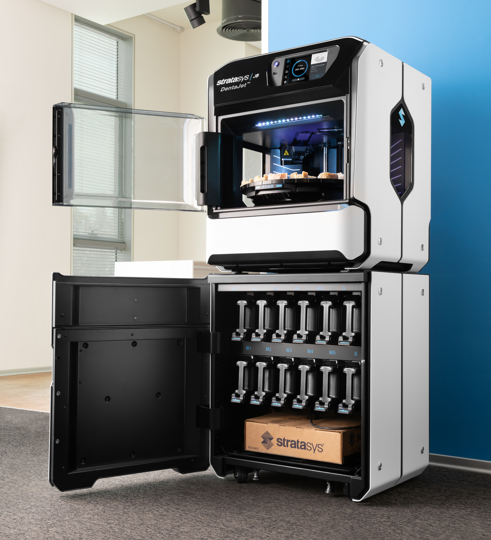
    Stratasys J5 DentaJet

    TrueDent is a tooth replacement therapy that uses the compact Stratasys J5 DentaJet platform. Kabot said the turnaround time for the company’s 3D printed dentures is less than a week.

    “The best dental techs in the world can make one in about two hours,” he told me. “We can print 40 in 10 hours. We just have more throughput.”

    The technology has already received FDA clearances and recently achieved Class IIa approval in Europe. Additionally, at LMT Lab Day in Chicago last month, Stratasys launched a new voxel-based solution to achieve “the highest end aesthetic.” So it seems like things are only going to keep improving for a dental solution that already sounds pretty close to perfect.

    “We’re finally deviating from indirect prints and from models,” Kabot said. “TrueDent is one of the first that’s a direct print application that can compete with analog materials.”

    Just like Stratasys, we all need to be shouting from the rooftops exactly what 3D printing can do.

    Images courtesy of Stratasys unless otherwise noted.

  • Please Localize Your Supply Chains

    Resilience is starting to feel like the only economic metric that matters, which is noteworthy, for one, because there is no defined metric that I know of that actually measures resilience. But there are plenty of measurements that can serve as indicators of a lack of/threat to resilience.

    Energy prices that seem to spike out of nowhere are an excellent example of that, though not the only example. Water scarcity is another example: again, though, not the only other example. While there are countless such examples that the world is currently facing simultaneously, they all essentially revolve around the fact that demand is in one area of the world, and supply is somewhere else, often very far away.

    The US Energy Secretary, Chris Wright, formerly a CEO of a fracking company, recently told CBS News that there isn’t a problem with oil supply, just a problem with logistics, which is the same thing as saying there is a problem with oil supply. I acknowledge the distinction between a shortage of viable extraction and a shortage of ways to get adequate supply to sites that need it, but as I understand it, being able to get that supply to where demand is happens to be a very important part of the process.

    As I noted in a recent post about a potential Taiwan crisis that’s lurking not too far behind the Hormuz crisis, looking at war as a business opportunity, no matter how popular it is these days, is monstrous. Thus, despite the fact that all of the preceding has been a lead-up to what I’ll point out now — that supply chain localization has become an absolute imperative, indeed an emergency — that’s not meant as an observation of an opportunity; it’s a warning about the requirements for economic survival.

    The tariffs that were imposed almost exactly a year ago, which the entire world effectively wasted the better part of that year deliberating over, were, of course, struck down about a month ago, suggesting that the whole international order spent nearly a year’s worth of effort on busywork. As it turns out, however, whether this was accidental or part of the design (the line between geopolitical analysis and conspiracy theory is very blurry), the chaos sparked by the tariffs did at least stimulate many industries to start rethinking their supply chains, even if reshoring to the US hasn’t been a major beneficiary of that process.

    The Trump administration has erred in its approach to industrial policy (or bungled it intentionally for some reason, whatever the case may be), so much so that permanent damage may have been done to the very idea that localizing manufacturing supply chains would be a good thing. On the other hand, a recent survey by accounting and consulting giant KPMG of 300 US-based C-suite professionals found that 14 percent of organizations are planning to invest in supply chain resilience/diversification with any potential tariff refunds, the highest percentage for any answer. Moreover, another 24 percent combined said they plan to reinvest refunds in R&D/product innovation and capital expenditures, both of which could align with supply chain resilience objectives.

    Now, those sorts of investments were likely to start increasing anyway, given that the One Big Beautiful Bill reinstated the first-year 100% tax deduction for R&D-related capital equipment, a rule that had been defunct between 2022 and 2024 owing to the original Trump tax cuts. The key angles to the KPMG survey’s findings are 1) the signaling of a double down on investing in new manufacturing hardware that can enable supply chain localization with the “found money” of tariff refunds; and 2) they reinforce that decision makers have internalized supply chain resilience as a long-term objective of future capital investment.

    That focus matters because businesses are now being thrown into a situation where their primary concerns will no longer be protecting margins but ensuring that they’re able to remain operational at all. Energy products are the most immediate challenge to address, a challenge that hits every business at once. In that context, the production-on-demand model enabled by 3D printing can potentially help alleviate the costs associated with the energy costs of storing inventory associated with the status quo. There is also the possibility of offsetting higher shipping costs by moving production nearer to the point-of-need.

    It’s not going to be limited to energy, though. Critical metals, batteries, pharmaceuticals, food, electronics, etc., are all shipped through the Strait of Hormuz. And one certainly shouldn’t assume there will be no ripple effect in other areas of global trade. I would, in fact, very much expect that to be the case, and President Trump has already pushed back his meeting with Xi on trade matters by a month, originally scheduled for the end of March.

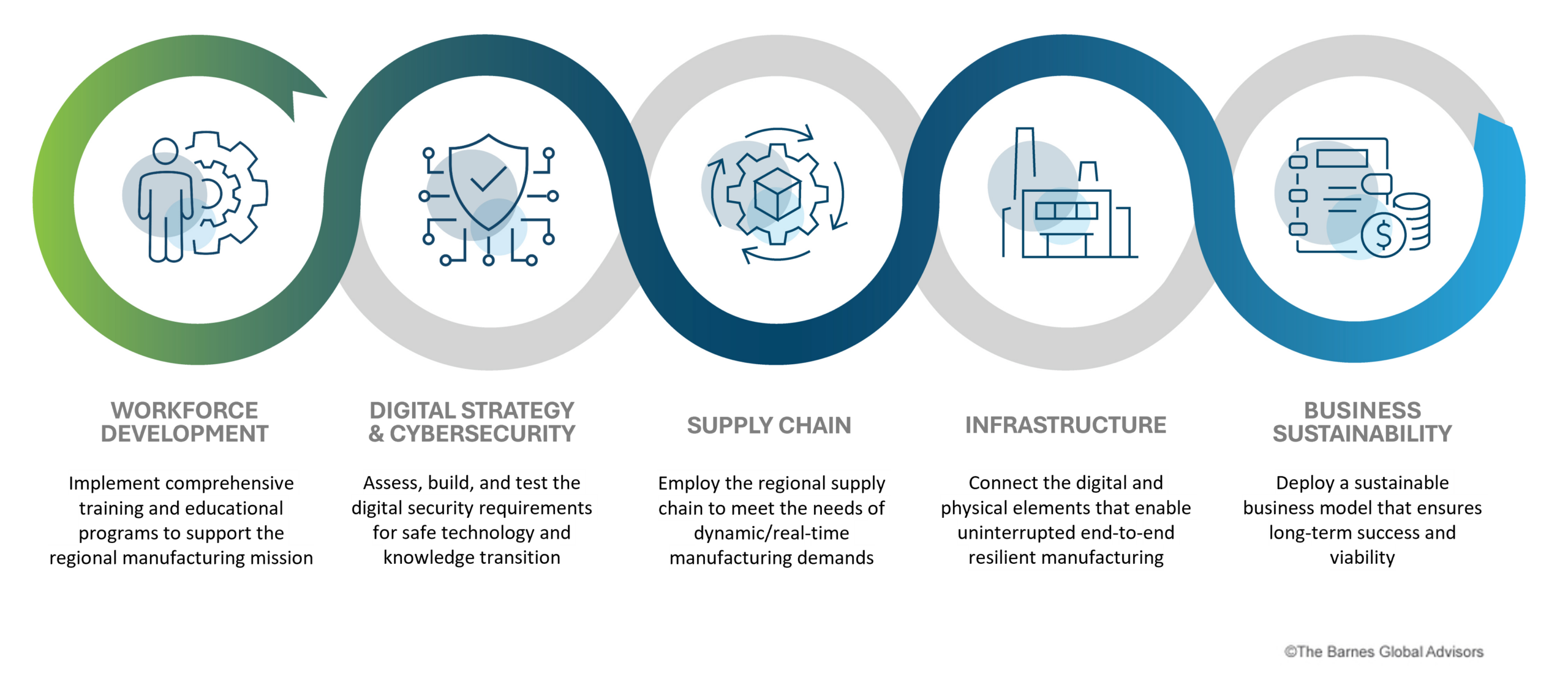
    All of this is leading up to a November deadline for a pause on rare-earth export disputes. If trade dynamics continue to be subject to geopolitical chaos until then, everyone can expect an entirely new international order to emerge in the aftermath. Nations need to be preparing for self-sufficiency. 3D printing can help to some extent, but only if it’s incorporated into a broader resilience strategy. Get to strategizing.

    Images courtesy of KPMG

  • 3D Printing Moves Deeper Into Production as Parts Near $110B by 2034

    A new report takes a closer look at how much 3D printing is actually being used in real production. The numbers point to a market that is already growing at scale and still expanding.

    According to Additive Manufacturing Research (AM Research), the global value of parts produced using 3D printing could reach $110 billion annually by 2034. The findings point to a steady expansion of additive manufacturing across multiple industries, driven not just by experimentation, but by real production use.

    The report, titled “AM Applications Analysis: Parts Produced 2025–2034,” focuses on something that is less frequently the focus of market reports: the actual parts. Instead of looking only at printer sales or materials revenue, the analysis tracks how many parts are being made, where they are used, and how much value they represent.

    Based on AM Research’s data, parts produced with additive manufacturing are expected to generate around $24.5 billion in 2025, with consistent growth projected over the following decade.

    High-Value Applications Still Lead

    In metal AM, aerospace remains one of the most important sectors, particularly in terms of value. In fact, the report estimates that aerospace applications account for roughly one-fifth of global metal AM part value, reflecting the continued use of 3D printing for complex, performance-critical components. These include parts for aircraft engines, space systems, and advanced defense platforms, where weight reduction and design flexibility offer clear advantages.

    Ongoing investment in both commercial aerospace and space programs continues to support this segment, reinforcing its role as a key driver of high-value applications.

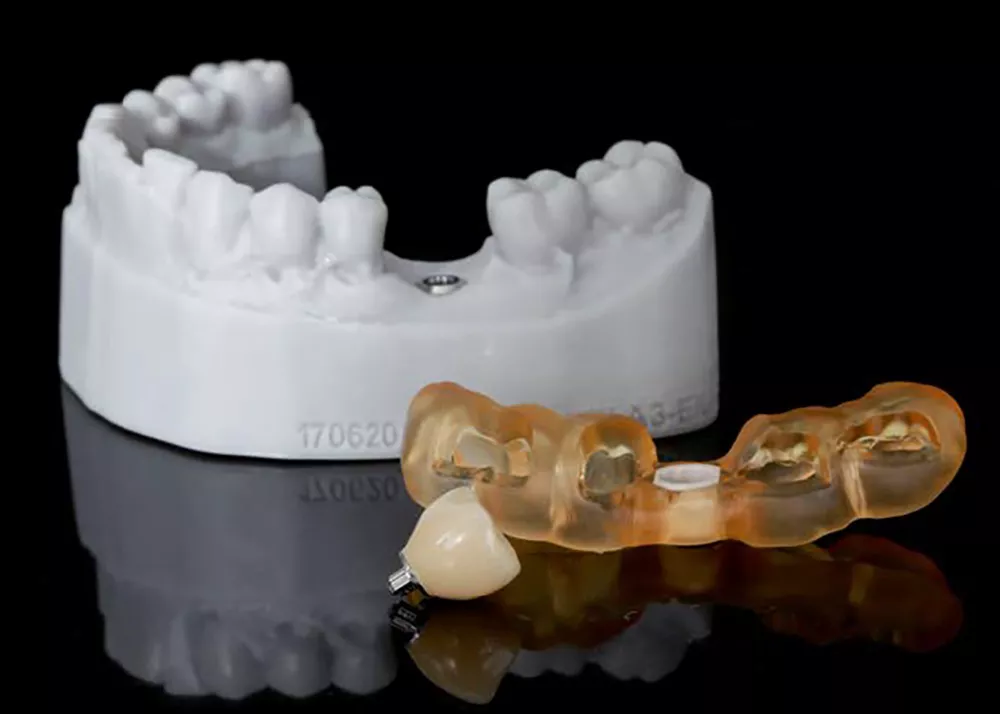
    Implant prosthetics. Image courtesy of youTooth by Straumann.

    While aerospace leads in value, the picture looks different when measured by volume. That’s because healthcare (and especially dental manufacturing) represents one of the largest sources of printed metal parts today. Millions of components are produced each year, including patient-specific dental restorations and medical implants.

    These applications are well suited to AM because they require customization at scale, something traditional manufacturing struggles to deliver efficiently. Dental manufacturing is a clear example, with tens of millions of patient-specific parts produced annually using 3D printing.

    Unlocking the Full Potential of Prusa i3. Image courtesy of Prusa.

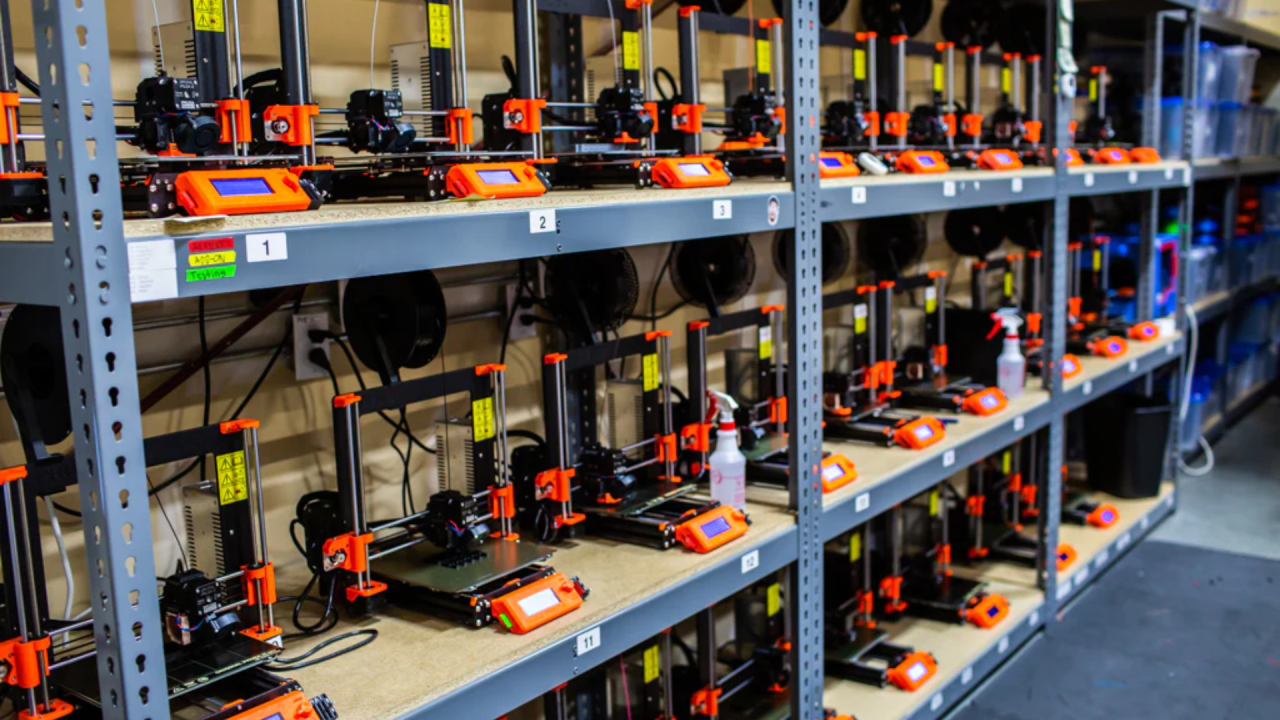
    Growth is also accelerating on the polymer side, though for different reasons. Rather than high-value components, polymer 3D printing is being driven by volume and accessibility. The wider availability of lower-cost and desktop material extrusion systems, along with the rise of print farms, has made it possible to produce large quantities of functional parts at relatively low cost.

    These parts range from industrial components to consumer products, contributing significantly to overall market growth even when individual part value is lower.

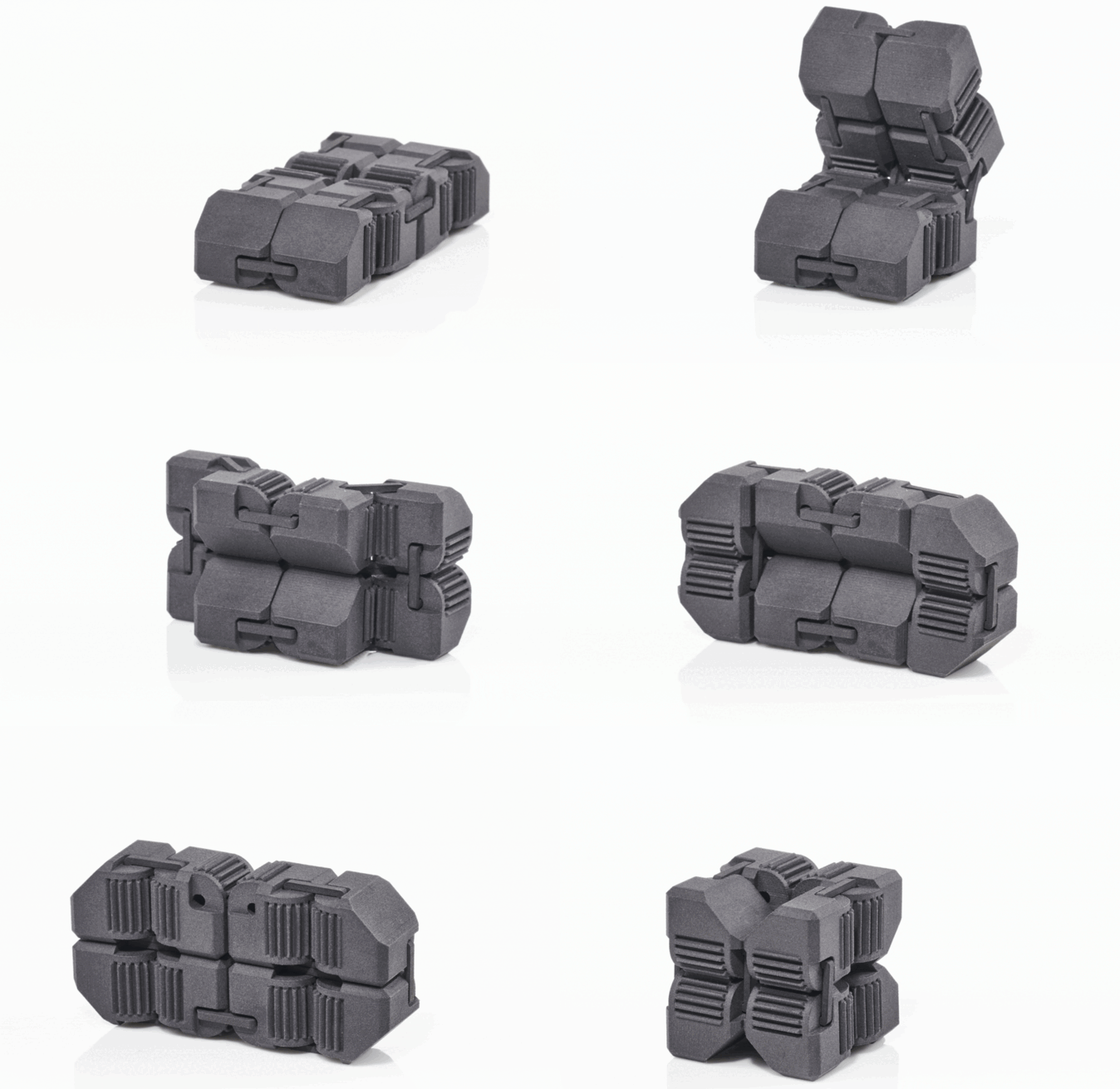
    3D printed polymer component. Image courtesy of Basso.

    A More Mature Phase for AM

    Overall, the data shows an industry that is becoming more focused on real-world use. So instead of focusing on what the technology could do, companies are using AM where it clearly adds value, whether through design flexibility, supply chain benefits, or customization.

    This change is happening at different speeds across industries, but the direction is clearly that additive manufacturing is no longer just about prototyping. It is gradually becoming a production tool in specific, high-value applications.

    Additive Manufacturing Research Executive Vice President of Research Scott Dunham at the AMS event.

    For manufacturers, investors, and suppliers, understanding where AM is actually working is becoming more important than broad market projections.

    By looking at part production across industries, AM Research’s report gives a clearer view of where adoption is already happening, and where it may grow next.

    These findings will be discussed in more detail during an upcoming AM Research webinar later this month, where the firm will share finalized 2025 data and its outlook for 2026.

    The full Applications Analysis report is available through AM Research.

    Scott Dunham, the report’s author and Executive Vice President of Research at AMR, recently shared some of these findings at the Additive Manufacturing Strategies (AMS) conference in New York. He will continue the discussion in an upcoming AM Research webinar, where he’ll take a closer look at 2025 market data and what to expect in 2026.

  • Lincoln Electric’s Big Metal Bet: Using WAAM 3D Printing to Replace Castings

    When heavy industry runs into a parts problem, the bottleneck usually isn’t machining; it’s often castings and forgings. Those processes, essential for making large, heavy-duty metal components, can take months and even years to complete, especially when foundries and forge shops are backed up. That’s where Lincoln Electric’s large-format metal 3D printing makes the biggest impact.

    Most people know Lincoln Electric as one of the world’s leading welding companies. But in recent years, the Cleveland-based manufacturer has expanded its reach into additive manufacturing (AM). To support that work, Lincoln acquired Baker Industries, a Michigan-based machining and fabrication company, in 2019.

    “Baker was acquired to close the loop on Lincoln’s vertical integration as an additive provider,” Sean Schaefer, marketing manager at Baker Industries, told 3DPrint.com. “They were printing all these big parts, but needed somebody to do all the post-processing. There are very few machine shops in the U.S. that can handle parts of the size they’re printing.”

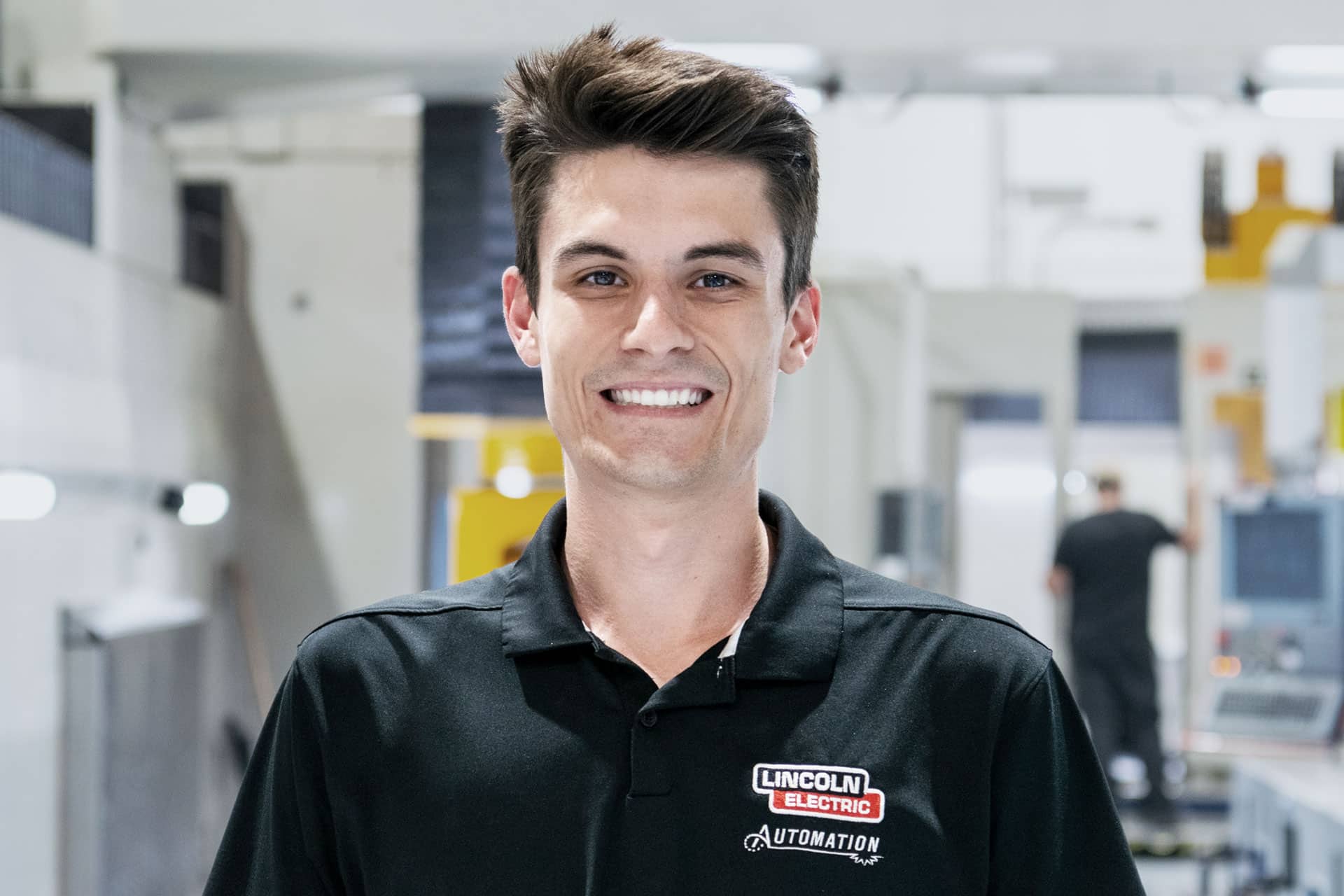
    Sean Schaefer. Image courtesy of Baker Industries/Lincoln Electric.

    Today, that loop runs between Baker in Macomb, Michigan, and Lincoln Electric’s main additive hub in Cleveland, Ohio. The workflow covers printing, machining, fabrication, and final inspection. When necessary, Lincoln Electric also outsources operations such as heat treatment and testing to trusted suppliers. It’s a complete, end-to-end metal AM pipeline.

    Printing at Casting Scale

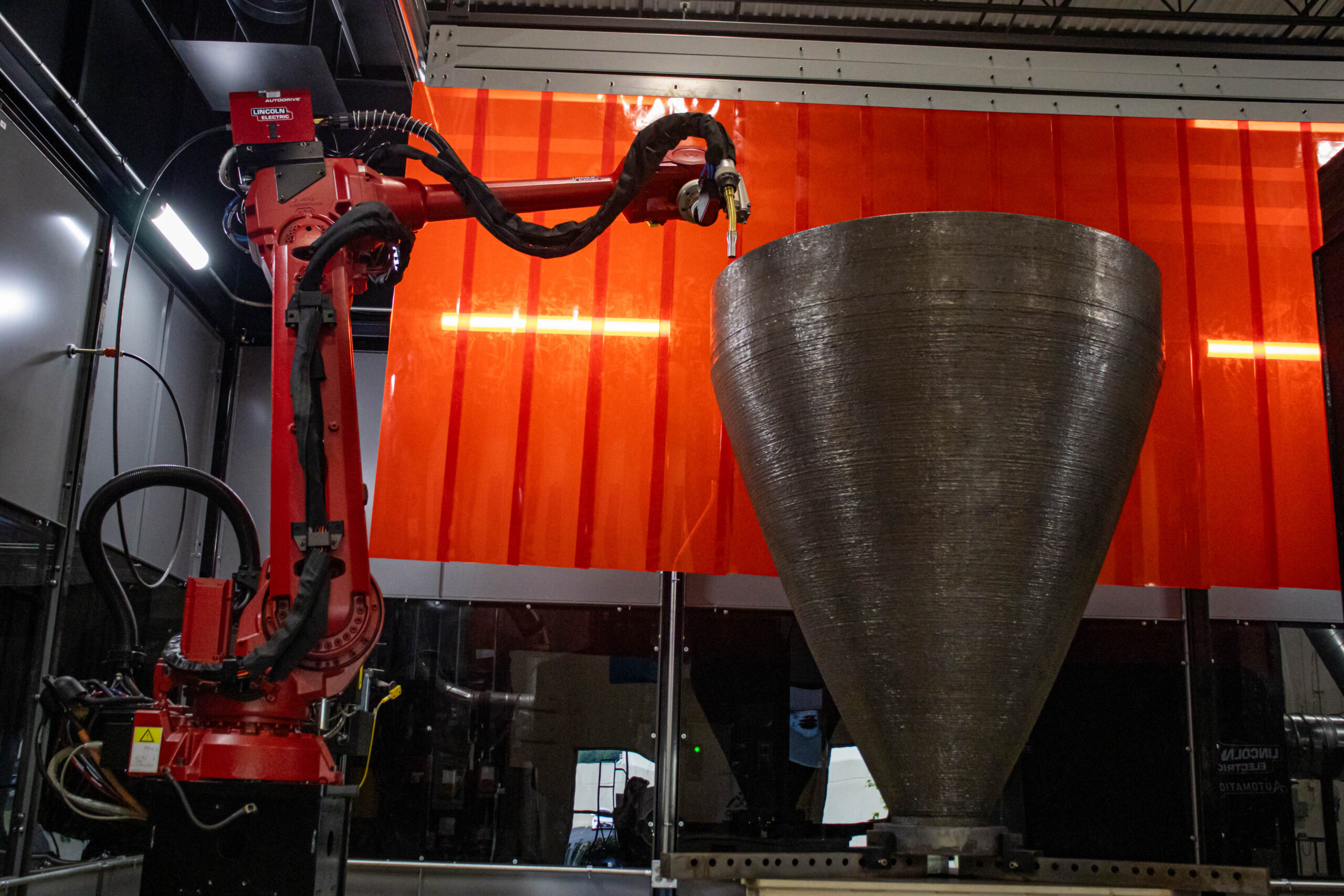
    Lincoln Electric Additive Solutions builds metal components that would traditionally be cast or forged with wire-arc AM (WAAM), on systems it designs and makes itself (everything but the robot arm).

    “We do everything in-house except for the robot arm, basically — software, wire feedstock, controls, power sources, and all our own material development,” Schaefer said.

    The company can print “roughly an eight-foot cube in a single print,” which in AM terms is huge, far beyond most powder-bed or laser systems. And it regularly goes larger by splitting parts and then joining them post-print, explains Schaefer.

    The WAAM cells are big; the latest generation Schaefer mentioned can manipulate components up 20,000lbs, and the fleet keeps growing. Lincoln Electric now runs 26 large-format robotic WAAM systems under 24/7 operations according to Schaefer.

    It’s a setup built for industrial-scale work. And with that kind of capacity, material capability becomes just as important. Lincoln’s WAAM systems can print in a wide range of structural and corrosion-resistant alloys:

    “Mild steel, high-strength low-alloy steel, 410 NiMo and 17-4 precipitation hardened stainless, two different nickel alloys (617 and 625), iron-nickel 36, and 70/30 copper-nickel,” Schaefer went on.

    Interestingly, missing from the lineup are aluminum and titanium.

    “The business case just isn’t there,” he explained. “Aluminum and Titanium may offer opportunity in the future, but are not target areas for the business right now.”

    A 3D printed mold for a hydropower impeller is printed at ORNL using Lincoln Electric machines. Image courtesy of Carlos Jones/ORNL, U.S. Dept. of Energy.

    Building Everything In-House: Wire, Software, and Quality Control

    Lincoln Electric’s long history in welding consumables is a strategic advantage.

    “Lincoln is one of the world’s largest manufacturers of welding consumables. We have full control over wire production and are known as a premier supplier of high-quality welding wire. On the digital side, the company uses its own slicing and path-planning software which incorporates Lincoln Electric’s vast welding knowledge, called Sculpt Print OS,” Schaefer said. “There’s in-process monitoring that will allow the engineers to intervene if they catch something during the process. And every part that comes off the printer is 3D laser scanned and compared with the actual CAD.”

    Lincoln Electric is fully certified for aerospace and defense work, holding ISO 9001 and AS9100 certifications, as well as all the required government contracting approvals, including ITAR and a CAGE code.

    WAAM uses a welding arc and metal wire feedstock to build parts layer by layer using robotic arms. Image courtesy of Lincoln Electric.

    While WAAM remains the workhorse process, the company is developing another metal AM process: “We’ve also got a laser wire additive that is somewhat in late stages of development that should be coming online at the end of the year,” Schaefer stated. “It uses a laser, which is a little bit more precise and less heat on the surrounding material. Early targets will look familiar, a lot of castings and forgings replacements, plus finer detailed parts where the laser’s tighter melt pool helps.”

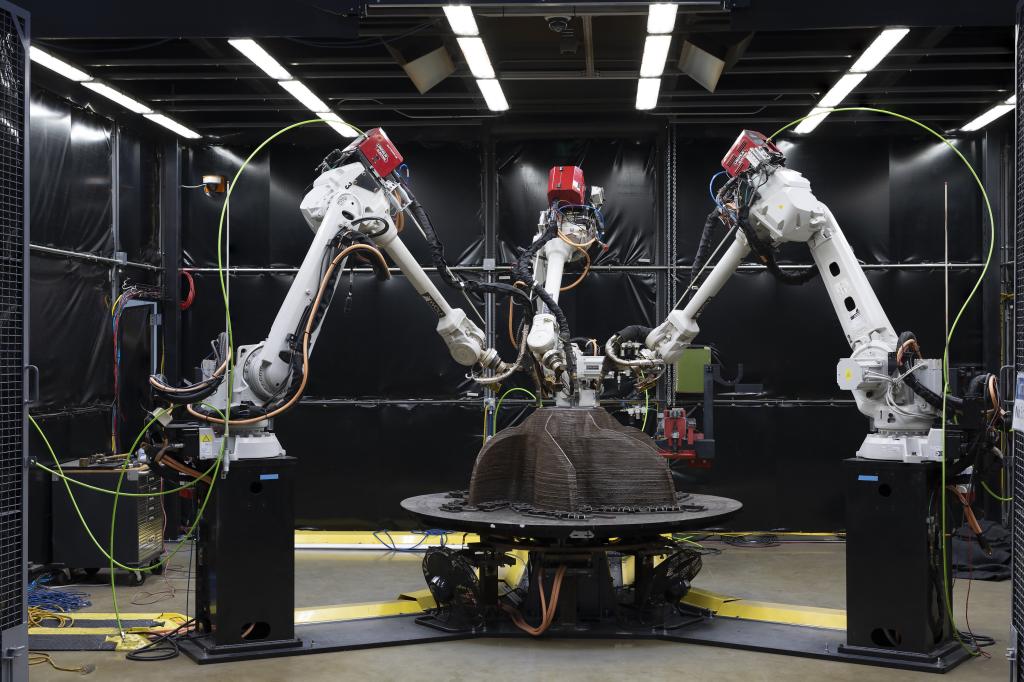
    Lincoln is also working to boost printing speed. In partnership with Oak Ridge National Laboratory, the company developed a new multi-robot system called Medusa. The setup uses three coordinated robots and Lincoln’s high-deposition welding technology to print up to 100 pounds of metal per hour. The system isn’t ready for production yet, but Schaefer said the team has reached its performance target and is now focused on turning it into a commercial product.

    A Growing Role for Large-Format Metal AM

    Large-format additive manufacturing like Lincoln Electric’s WAAM is designed for a specific type of industrial problem: large metal parts that traditionally require casting or forging. By combining materials development, software, printing systems, machining, and inspection in one workflow, the company has built a vertically integrated approach to producing these components.

    In Part II of this series, we look at where this approach matters most: industries facing long casting lead times, including a high-stakes repair at the Soo Locks in Michigan, where metal additive manufacturing helped avoid a potentially billion-dollar disruption to Great Lakes shipping.

  • Why Additive Manufacturing Adoption Looks the Way It Does — Part III

    The development of additive manufacturing has closely tracked broader trends in industrial digitalization. Additive manufacturing is digital at its point of origin. Geometry, process parameters, and machine instructions are all derived from digital data. This has made AM compatible with, and increasingly dependent on, wider digital manufacturing infrastructures.

    The force shaping this phase has been the growing use of digital tools across product development and production. Model-based definition, simulation-driven design, and software-managed quality systems have become more common. As these practices spread, expectations around data consistency, traceability, and system integration increased. Additive manufacturing did not drive this shift, but it was affected by it more directly than many conventional processes.

    The central challenge is that additive manufacturing generates large volumes of process-relevant data while remaining sensitive to digital dependencies. Machine software versions, parameter files, build preparation tools, and monitoring systems all influence the outcome. Managing this data reliably across design, production, quality assurance, and IT environments adds complexity that extends well beyond the printer itself.

    The industrial response has been an increased emphasis on process documentation, data handling, and system integration. Additive manufacturing implementations now rely on structured workflows that link design intent to manufacturing evidence, often supported by PLM, MES, and quality management systems. In parallel, concerns regarding cybersecurity and intellectual property protection have become more prominent, particularly when digital build files and process data are valuable assets.

    This has reinforced a broader pattern. As additive manufacturing approaches serial production, success depends less on standalone machine capability and more on the maturity of the surrounding digital infrastructure. Organizations with established digital manufacturing practices tend to integrate AM more effectively. Those without such foundations often encounter bottlenecks that are not directly related to the AM process itself.
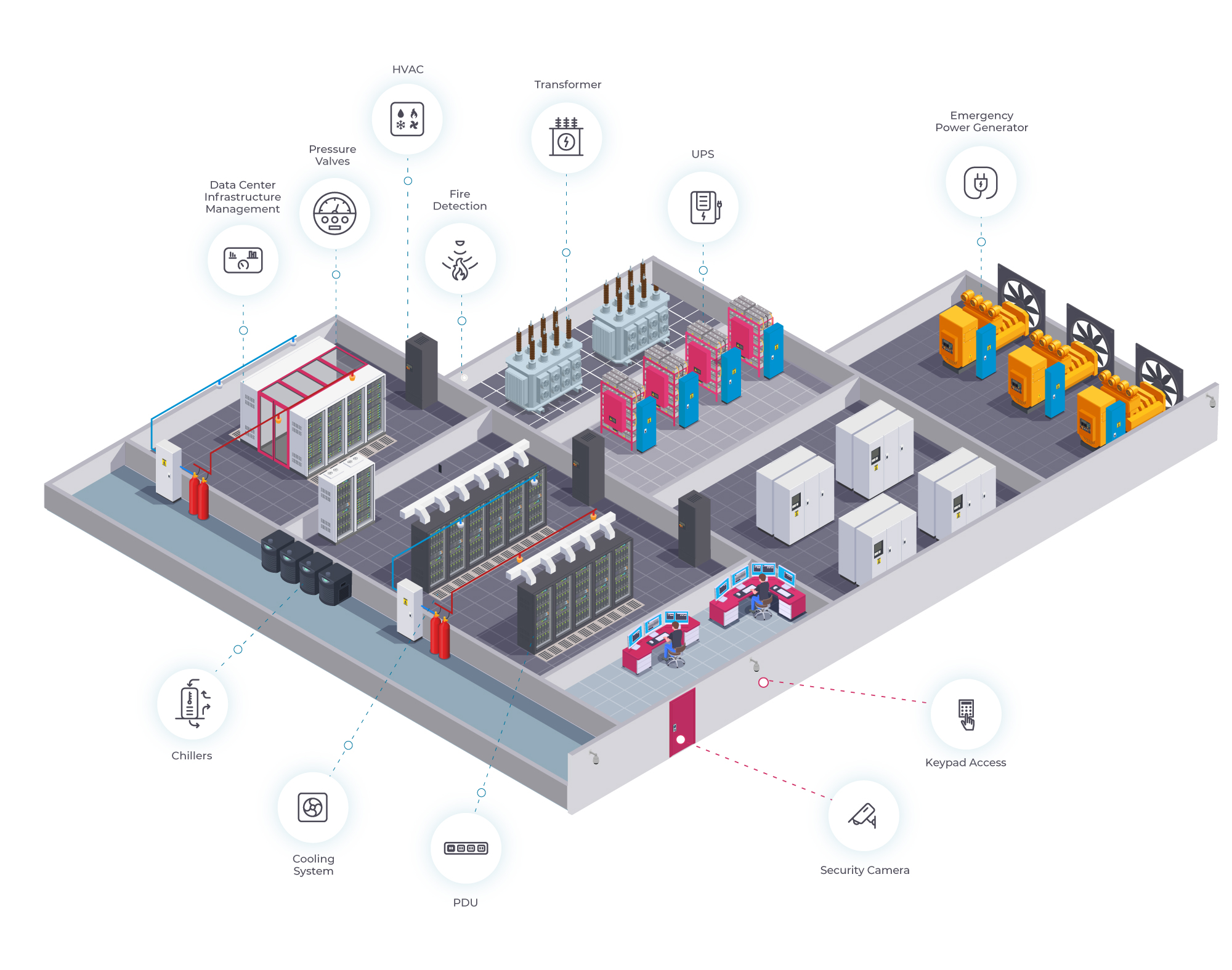
    Data center cybersecurity. Image courtesy of Nozomi Networks.

    Supply chain resilience and strategic use of AM

    In recent years, additive manufacturing has been discussed more frequently in the context of supply chain resilience, risk management, and localized production. This interest has been driven primarily by external disruptions rather than by changes in additive manufacturing capability. Geopolitical tensions, logistics constraints, and exposure to single source dependencies have prompted many organizations to reassess how and where critical parts are produced.

    The force at play has been strategic rather than operational. Additive manufacturing has been considered as a way to reduce dependence on long lead time suppliers, enable on-demand production of spare parts, or provide contingency manufacturing capacity closer to the point of use. These considerations have been particularly visible in defense, energy, transportation infrastructure, and certain industrial service contexts.

    In parallel with these considerations, geopolitical developments have increasingly influenced how additive manufacturing is evaluated and deployed. In defense, energy, and critical infrastructure environments, emphasis on sovereignty, availability, and controllability extends procurement scrutiny beyond part performance. Machine origin, software architecture, data access, and vendor dependence have become part of the decision context. At the same time, Chinese manufacturers have advanced rapidly in machine capabilities, cost, and delivery speed, increasing competitive pressure on established suppliers in Europe and the United States. For some organizations, this has expanded access to additive manufacturing technology. For others, it has introduced additional requirements related to security, compliance, and strategic risk. These factors do not determine adoption on their own, but they increasingly shape procurement criteria and constrain deployment choices in environments where trust, traceability, and jurisdictional control matter.

    The challenge is that requirements in these sectors often conflict with the conditions under which additive manufacturing is most easily deployed. Parts considered critical from a resilience perspective are frequently subject to strict qualification, documentation, and security requirements. In many cases, the effort required to qualify an additively manufactured spare part exceeds the effort required to continue sourcing it conventionally, even when supply chains are fragile.

    The Creech Air Force Base team created the new facility to print spare MQ-9 parts. Image courtesy of U.S. Air Force/Senior Airman Renee Blundon.

    The industrial response has therefore been cautious and selective. Additive manufacturing has been introduced as a supplementary capability rather than as a replacement. Deployment has often been limited to non-safety-critical components, legacy parts with diminishing supplier support, or situations where downtime costs outweigh the effort required for qualification. Where additive manufacturing has been adopted for resilience reasons, it has typically been embedded within tightly controlled frameworks, with clear boundaries on scope and responsibility.

    This pattern highlights a recurring theme in the adoption of additive manufacturing. Strategic interest alone does not translate into industrial deployment. Even when motivation is strong, implementation is governed by the same constraints that shape all other production uses. Qualification burden, process confidence, and organizational readiness remain decisive.

    Structural constraints that continue to shape adoption

    Despite continued technical development, several challenges have remained structurally significant across additive manufacturing applications and industries. These challenges are not tied to a specific technology generation or sector. They arise from how additive manufacturing systems interact with materials, data, and organizational processes.

    Process stability and repeatability remain central concerns. Additive manufacturing processes are sensitive to variation in material properties, machine condition, environmental factors, and parameter selection. Small changes can have disproportionate effects on part quality. Achieving statistically stable production, therefore, depends on disciplined control of inputs and operating conditions rather than on machine capability alone. This requirement has limited the transfer of AM from controlled pilot environments into broader production contexts.

    Qualification and change management impose further constraints, particularly in regulated or safety-critical applications. Modifications to materials, machine hardware, software, or process parameters may trigger requalification. As a result, additive manufacturing production systems tend to favor fixed configurations and conservative update cycles. While this supports reliability, it constrains continuous improvement and reduces the practical flexibility often associated with AM in earlier discussions.

    Post-processing and inspection remain integral parts of the manufacturing chain. Support removal, heat treatment, machining, surface finishing, and non-destructive evaluation are frequently required to meet functional and regulatory requirements. These steps introduce cost, lead time, and variability that must be managed as part of the overall process. In many cases, post-processing capacity rather than printing throughput becomes the limiting factor.

    Economic evaluation also remains complex. The value of additive manufacturing is often distributed across reduced tooling, design consolidation, reduced lead times, improved inventory management, and enhanced lifecycle performance. These benefits are real, but they are difficult to capture within cost models optimized for unit price comparison. This creates uncertainty in investment decisions, particularly when additive manufacturing competes with mature and well-understood manufacturing routes.

    Organizational capability is an additional and often underestimated constraint. Effective deployment spans design engineering, materials expertise, quality assurance, production planning, and IT infrastructure. Aligning responsibility and competence across these functions is challenging, especially in organizations structured around conventional manufacturing processes. Where such alignment is weak, additive manufacturing adoption tends to remain fragmented or experimental.

    Taken together, these constraints explain why progress in additive manufacturing is often incremental rather than transformational. They are not temporary obstacles awaiting technical breakthroughs, but persistent features of an industrial process that integrates tightly with material science, digital systems, and organizational practice.

    Additive manufacturing in a broader innovation cycle

    Viewed in the broader context of the innovation cycle, the development of additive manufacturing follows patterns familiar from earlier industrial process innovations. New manufacturing methods rarely replace established ones outright. Instead, they gain relevance where existing processes encounter structural limits and expand gradually as complementary capabilities mature.

    From this perspective, additive manufacturing exhibits selective rather than comprehensive displacement. In specific contexts, where complexity, customization, or performance dominate, AM has altered how parts are designed and produced. At the same time, highly optimized, high-volume manufacturing processes have remained largely unaffected. This coexistence reflects historical patterns rather than a failure of adoption.

    Additive manufacturing functions primarily as an enabling technology. Its impact increases when combined with advances in materials, digital design, simulation, automation, and quality management. On its own, it does not constitute a new industrial paradigm. Its industrial relevance depends on how effectively it is integrated into broader production systems and organizational structures.

    This framing helps explain both the sustained interest in additive manufacturing and the limits of its penetration. Progress has occurred through accumulation and adaptation within existing industrial realities rather than through broad disruption of them.

    A 3D printed transmission test tool, designed in the Toyota ADD Lab and printed on the Stratasys H350 using PA12 material. Image courtesy of Stratasys.

    The current state of additive manufacturing

    Based on observable industrial practice, several statements about the current state of additive manufacturing can be made without speculation.

    Additive manufacturing is established across a range of production niches in which it delivers clear functional or logistical value. These niches are well documented and, in many cases, supported by formal qualification frameworks.

    Adoption remains uneven across industries and applications. Additive manufacturing is deeply integrated in some supply chains while remaining peripheral in others, even within the same sector. This variation is best explained by differences in regulatory exposure,

    production volumes, economic constraints, and organizational readiness rather than by differences in awareness or technical maturity.

    Current industrial efforts focus less on expanding capability and more on stabilizing processes. Monitoring, documentation, traceability, and integration with enterprise systems are receiving increasing attention. In many organizations, the primary work associated with additive manufacturing is no longer experimental development but operational management.

    Across these contexts, system-level factors such as qualification, post-processing, data handling, and organizational alignment exert greater influence on outcomes than incremental improvements in machine performance. This reflects a shift from technology exploration toward industrial normalization.

    Implications for future development

    Looking ahead, the same forces, challenges, and industrial responses that explain the past and present of additive manufacturing also provide a grounded way to think about its future. This does not require forecasts or advocacy. It requires attention to how constraints are managed over time.

    Progress is likely to be shaped less by headline technical advances and more by how effectively organizations handle structural limitations. As additive manufacturing systems mature, innovation increasingly occurs at the level of process control, qualification strategy, software integration, and organizational learning. Improvements in machine capability will continue, but they are unlikely to eliminate the constraints associated with regulated production, economic evaluation, and system integration.

    External forces are also likely to exert greater influence on how additive manufacturing is used than on what it can technically achieve. Geopolitical shifts, supply chain restructuring, and industrial policy decisions affect risk tolerance, sourcing strategies, and investment priorities across manufacturing sectors. These forces do not inherently favor additive manufacturing, but they shape the context in which decisions are made and can increase the relevance of flexibility, localization, or redundancy under certain conditions.

    Patterns of innovation are therefore likely to remain uneven. In some cases, progress will be driven by advances in materials, processes, or software. In others, it will come from faster iteration, system scaling, and tighter integration of existing technologies. New entrants may succeed not by redefining the underlying physics of additive manufacturing, but by compressing learning cycles and industrializing known approaches more effectively. This reflects a shift in where competitive advantage is created rather than a break with earlier innovation.

    Taken together, these dynamics suggest that additive manufacturing will continue to evolve as a specialized and increasingly normalized production route. Its role will be defined by where its strengths align with real constraints, such as performance requirements, lead time pressure, qualification regimes, and organizational capability, rather than by expectations of broad replacement or disruption.

    This perspective does not point toward a single outcome. It points toward continuity, with additive manufacturing advancing through accumulation, adaptation, and selective integration, shaped by forces that are largely external to the technology itself.

    The DLR Future Lab for Additive Manufacturing & Engineering at the ARENA2036 research campus. Image courtesy of DLR (CC BY-NC-ND 3.0).

    Additive manufacturing occupies a mature and clearly defined position within modern industrial practice. It is neither a nascent technology awaiting a breakthrough nor a universal solution. Its strengths and limitations are well documented, and its development has been shaped largely by forces external to the technology itself.

    This article has focused on additive manufacturing at a structural level. It has examined how the technology has developed, which forces have shaped its adoption, and which constraints continue to define its industrial role. It has not attempted to compare specific technologies, assess individual vendors, or evaluate market size or growth projections. The intent has been to establish context that explains why additive manufacturing looks the way it does today, why adoption patterns differ across industries, and why progress often appears slower or more fragmented than early expectations suggested.

    I am now in my third decade of work in additive manufacturing and have observed much of this development firsthand. That experience does not alter the conclusions but reinforces the article’s central point. Understanding additive manufacturing requires separating capability from applicability, interest from deployment, and potential from constraint. A fact-based, framework-based view provides a more reliable basis for industrial decision-making than enthusiasm or skepticism alone.

    Ulf Lindhe. Image courtesy of The Org.

    About the Author:

    Ulf Lindhe is a veteran executive in the additive manufacturing industry with decades of experience spanning technology development, industrial strategy, and global market expansion. He has held senior leadership roles within the metal additive manufacturing sector, contributing to the commercialization and international growth of advanced AM systems. Over the course of his career, Lindhe has worked closely with aerospace, medical, and high-performance engineering companies, helping bridge the gap between technological capability and practical industrial deployment.

  • Everything is Connected: Cisco’s Samuel Pasquier Explains the Relevance of the IIoT Revolution to AM’s Growth Trajectory

    On its own, additive manufacturing (AM) may not need a new round of record-setting investment in order to move to new heights of scalability (whether or not any investors would even be willing to foot such a bill). But it is highly likely that, as part of a global transition towards anchoring the manufacturing sector in networks defined by industrial internet of things (IIoT) capabilities, the AM industry’s next phase of growth will depend on the effectiveness of investments in AI-ready factory infrastructure.

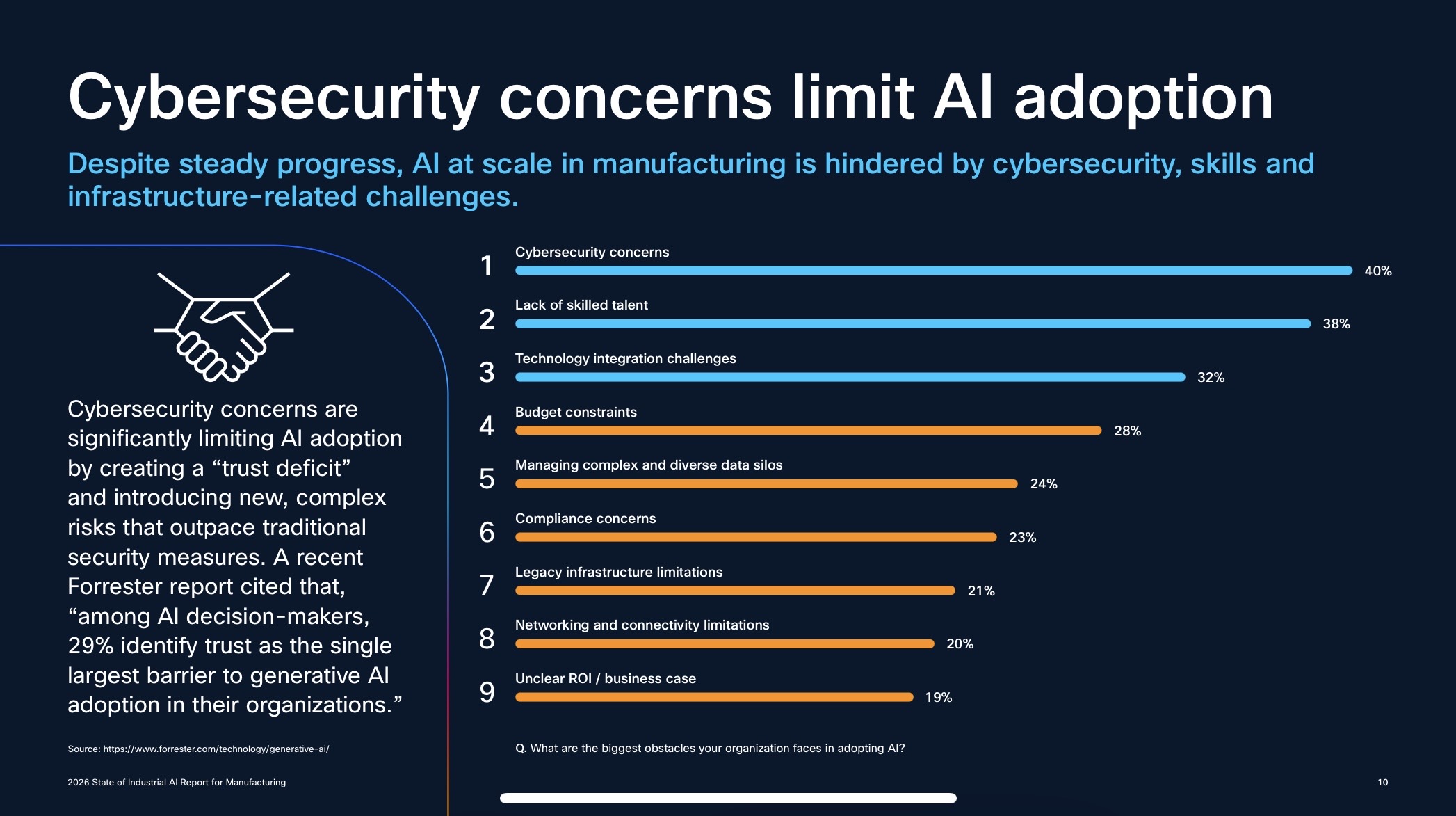
    I recently wrote about this topic in a post about the 2026 State of Industrial AI report from global networking hardware giant Cisco, which found that the ROI for AI spend in manufacturing is heavily determined by a given enterprise’s cybersecurity and networking readiness prior to incorporating AI into its workflow. To sum up: if you want to truly benefit from AI adoption, then before you even start integrating new software platforms, you need to have a structured plan in place across all your operations that takes into account the additional bandwidth and hardware requirements necessary to give AI legs in your work environment.

    While those findings are conducive to selling Cisco products, I think that they also happen to align with the economic reality of the moment, and they also align with what AM industry professionals have noted for years when combating 3D printing overhype. We’ve heard over and over again how “AM isn’t plug-and-play,” so when it’s sold like it is, customers are bound to be disappointed. Samuel Pasquier, the VP of Product Management for Cisco’s IoT Industrial Networking Portfolio, explained to me in a recent interview that AI isn’t exactly plug-and-play, either:

    “Historically, manufacturers have treated the network like electricity: you plug it in, and it just works. This has led to networks being built in a very organic, unstructured way where security is an afterthought rather than a core component,” Pasquier began.

    “But with modern use-cases, the demand for performance and bandwidth is far exceeding what these legacy architectures can handle. Simply ‘plugging in’ doesn’t work anymore; you have to design the network specifically for the performance and security the process requires.”

    Essentially, evolving from using AM and other digitally-centered manufacturing technologies as peripheral add-ons to traditional core competencies, to treating them as instrument sections within an orchestra of production, manufacturers need to build on an edge computing foundation. Connecting an entire factory of not just machines, but countless sensors permeated throughout a factory, 24/7, to the cloud, is wholly unfeasible. For the processes entailed to operate smoothly at scale, businesses need to invest in server racks that function effectively as “date-centers-in-miniature” on-site.

    One reason for this is to avoid latency:

    “We often see companies deploy technology at a small scale — connecting one or two mobile robots in a single shop, for instance — and it works fine,” Pasquier told me. “But when you try to expand that to 100 robots across an entire factory, it becomes a completely different story.

    “That is when the network becomes a bottleneck. To gain the full value of technology like AI, you have to rethink the architecture to move beyond isolated stations and look at the entire system.”

    In an AM context, this is especially important when 3D printers are integral components within a smart manufacturing ecosystem, rather than simple production tools. Traceability of parts is a key value proposition for AM due to various factors that are becoming increasingly relevant in an era defined equally by geopolitical tensions and the need to decarbonize. Comprehensive part traceability demands traceability of processes, which implies a data tsunami that could drown an unprepared enterprise.

    While all of this may make AI for manufacturing sound like it comes attached with a runaway list of constantly arising hidden expenditures, it’s more like a front-loaded investment with the potential to lower long-run costs as the adopting enterprise gradually accumulates efficiency gains. In that way, again, it’s not so different from AM. Another similarity is that both can serve as industrial insurance policies. That selling point may not carry the same flash of social networking apps built for AI agents or the novelty of giving the musically ungifted the ability to make music, but there is serious potential for risk-prevention and, in turn, long-term cost savings:

    As Pasquier put it, “When you rely on paper documentation, you invite human error. By moving to a fully connected digital world, you remove that manual portion of the process. While you may have to deal with software bugs, you eliminate the mistakes that humans naturally make. If a computer system is programmed correctly, it simply gets the job done consistently.”

    More than money, when it comes to mission critical parts, that has the potential to save lives. Once more, though, you can’t simply “layer on” the capability for this level of documentation on top of a system built on a structure of paper. You need to redesign your enterprise architecture on an edge computing footing.

    Screenshot

    The other major angle to edge computing is cybersecurity. To the extent that the AM industry has concerned itself with cybersecurity at all, the focus has largely been on protecting part recipes. When you’re connecting an entire factory, however, there are added, even more urgent, concerns, namely that cloud outages could lead to operational downtime, or — worst of all — that cloud vulnerabilities could result in remote hijacking of your infrastructure:

    “In the industrial world, the primary concern isn’t just losing data, or time,” Pasquier told me, “it’s losing control of the process. If a plant goes down, it is incredibly costly, but if someone takes control of the physical infrastructure, it impacts the safety of the workforce. That is the ultimate ‘red flag’ that needs to be prevented in advance. Security in this context is really about protecting the physical integrity of the overall manufacturing process.”

    The Cisco report, and my conversation with Samuel Pasquier, reaffirmed for me that for manufacturers, investing in AI has long-ceased to be a question of “if”, and is now more defined by questions of “how” and “when.” How are the most technologically-adept in the world of hardware acclimating to this new universe of software, and when will the broader manufacturing sector follow the early adopters’ lead?

    I think the networking infrastructure context does much to answer the first question. The second question will take longer to answer, because it depends upon a consistent track record in which the use-cases with the clearest path to ROI rise to the fore. But Pasquier already sees lowering the cost of product evaluation as a major driver, which is a positive sign for AM’s potential as an AI beneficiary.

    “One of the most immediate returns on investment for AI in manufacturing is in quality control. Take cement manufacturing: traditionally, they have to cure a sample cube for 30 days before they can test its strength. With AI monitoring the humidity and temperature of the ingredients in real-time, they can optimize the kiln’s energy consumption and predict the quality of the batch 30 days in advance. They no longer have to wait a month to know if the product is up-to-standard. And that same logic applies to things like weld penetration, or paint quality, say, in any high-end manufacturing environment.”

    Finally, while AI may mean more automation, manufacturing stakeholders also need to keep in mind that in any change management scenario—especially one that centers around substituting a new technology for human agency—implementation can only be as effective as the quality of the human talent responsible for managing the change:

    “AI is not going away,” Pasquier concluded. “The writing is on the wall; its presence in the factory is only going to increase. The real question now is how fast a company can move. Success depends on having the right people to deploy these use-cases and the right infrastructure to support them securely.”

    Images courtesy of Cisco

  • Nikon AM Synergy Gets Defense Innovation Unit FORGE Contract

    Nikon AM Synergy has received an Other Transition Agreement (OTA) contract from the U.S. Department of War (DoW) Defense Innovation Unit (DIU). The Foundry for Operational Readiness and Global Effects (FORGE) contract is aimed at increasing the use of metal parts on airborne systems and replacing cast parts. FORGE is aimed at high volume, high criticality, scaled-up manufacturing solutions. Nikon AM Synergy’s Long Beach headquarters will handle the contract.

    DIU Program Manager Derek McBride stated,

    “The DIU is excited to partner with Nikon AM and leverage their extensive engineering, manufacturing and qualification capabilities as we work to expand production capacity and alleviate aeronautical component bottlenecks.”

    Nikon AM Vice President of Technology Dr. Behrang Poorganji said that,

    “Nikon AM is uniquely positioned to support the DIU through Nikon AM Synergy’s comprehensive design and materials qualification capabilities combined with our industry-leading, Nikon SLM Solutions’ laser powder-bed fusion AM systems and advanced Nikon inspection capabilities, all operating together under stringent manufacturing requirements in our Long Beach facility. As we continue to execute our holistic approach to deliver vital manufacturing capabilities to the United States and allied partners, we are proud to support the DIU in accelerating adoption and scaling of AM to strengthen warfighter readiness.”

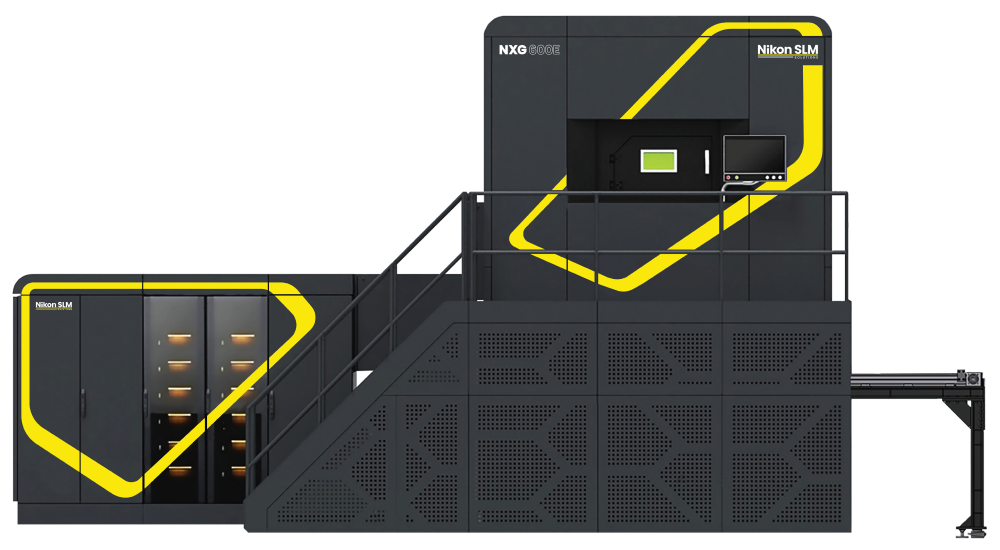
    NXG 600E. Image courtesy of Nikon SLM Solutions.

    The US government is accelerating its public deployment of funding for scaling up additive. Whereas initially defense money from the AFRL and Navy was all about qualification, materials, or technology development, now funding is moving towards production. We know that there are still qualification bottlenecks. Especially in taking a lot of 2D (and some kind of CAD but we don’t know which) parts into production, there is still a lot of work to be done. Materials may be suited and processes may be applicable, but turning a geometry into a working design still requires a lot of manual labor and knowledge. It would be wrong of us to just simply march onwards to production while forgetting this. If we look just at the military, they have millions of parts that have been made with many processes and materials across decades. Filtering these would take ages, and making them work would also be a considerable amount of work.

    Having said that, to look beyond the now and into the future, production will be a bottleneck as well. LPBF is great at making precise geometries in a machine along with a bunch of subsequent steps and optimization. To lower costs will require a rethinking of the economics of the process. Machine costs, speed, powder costs, and build volume, but also turnaround costs on machines, maintenance, and file handling matter. Any money spent on reducing these costs is well spent.

    The DIU previously gave money to Velo3D for rapid qualification for LPBF parts. This particular FORGE solicitation was first published just ten months ago, so this is light speed stuff for the government. And that is what the DIU is setting out to do here. It wants to make the government move faster on defense and the future of defense. The DIU says that it wants to “rapidly prototype and field dual-use capabilities that solve operational challenges at speed and scale.” To leverage the industrial might of the US and partner countries in delivering on defense innovation is a smart idea. Especially in scale and cost-driven solutions or new technologies, the market could deliver much faster than existing pathways. In terms of scaling up additive, we are expecting much more money to flow in the coming months. Hundreds of millions will be spent over the next year in scaling up the technology for defense in the US. This is a win for Nikon, but there will be many more for our industry in the coming year.