• Incodema3D Bought By AFM Capital: Analysis

    Leading service bureau Incodema3D has been bought by AFM Capital. New York based Incodema3D is one of the largest metal 3D printing services and contract manufacturers in the US. Specialized in LPBF for metals Incodema has 35 EOS machines and is one of the largest EOS customers worldwide. The company also runs Haas and Mazak equipment as well as Solukon for depowdering. They also have kit such as a MIDACO Corporation AS50SD pallet changer machine for resurfacing United Performance Metals build plates and a HK Technologies Vacuum Reclaim Sieving station. For powder the firm used 6K,

    Incodema3D got its first EOS system, a M280 in 2012, but split off from Incodema in 2014. In 2022 it bought its 16th system, and it then had EOS M 400s, M290´s & an EOS M 300-4. Since then the company has bought around 4 EOS M400 and 4 EOS M400-4´s since then. So Santa has come down the chimney in March in New York already. Incodema3D runs mostly Inconel working extensively for aerospace and defense as well as industrial and energy. Incodema3D is precision focused and has nearly all relevant AM and post processing in house. The company has AS9100D, ISO 9001:2015 and is ITAR compliant.

    Incodema operates from a 60,000-square foot factory in Freeville, New York. The company initially raised $8 million with a later $5.1 million seed round occurring in 2018. Sean Whittaker the likable driven entrepreneur behind Incodema3D also put in his own money including some he got from the sale of his precision sheet metal forming firm to Fathom.
    AFM Capital meanwhile Indianapolis-based madcap investment fund that buys out business services and industrial firms. Investments include TriStar a leading industrial pipe supplier and Tag a leading vendor of APU´s for aerospace. AFM has announced that it has bought a majority stake in Incodema3D. Sean and his team will stick around and run Incodema3D.
    Incodema3D CEO Sean Whittaker,

    “We are excited to partner with AFM Capital. AFM Capital brings operational expertise and strategic resources that will allow us to accelerate our growth, expand production capabilities, and continue investing in advanced additive technologies. Together, we are well positioned to meet the increasing demand for high-performance metal components across mission-critical Defense, Aerospace, Space, Energy, and Industrial markets. I would also like to express my appreciation to our early-stage investors for their support in helping establish our organization as a strong and trusted enterprise.”

    AFM Capital President Mark McTigue,

    “Incodema3D represents exactly the type of advanced industrial platform we seek to build at AFM Capital.The Company has established itself as a trusted partner to leading customers by delivering highly engineered metal components at production scale. We look forward to working closely with Sean and the Incodema3D team to invest in capacity and large-format additive technologies, while expanding the Company’s manufacturing footprint to support long-term customer programs.”

    Incodema3D was advised by Cantor Fitzgerald & Co as the financial advisor and Courtney Wellar Esq. and Bond Schoeneck & King were legal advisors. AFM was advised by DLA Piper with PMorgan Chase and Gladstone Capital Corporation obtaining debt financing.

    Incodema3D is an excellent company. Sean, and

    When the whole industry was preaching high mix low volume Incodema3D was targeting serial production, reliability, repeatability and low scrap rates. By building a large collection of machines the company has made significant investments. But, more than this it has invested in its people, training and execution. An early focus on defense, suppressors and aerospace was the right one also. Expertise in the most critical parts and the most efficient manufacturing of those parts is key to their success. The company is relentless.

    Many people have small service bureaus and escaping the initial economics of having one metal machine for example is brutal. It’s very difficult to make money. By getting significant investment early Incodema3D was able to secure better process economics. The company has also not only invested in machines but the most productive ones. It has also made a big bet on EOS and sustained a long relationship with them spanning 14 years. That is key to building up institutional learning and tribal knowledge on several platforms. It’s not quite like Ryanair running only 737´s but similarly, there are economies of scale.

    As a service bureau it is easy to get distracted by the shiny parts that you are making. Lots of industries and lots of applications everywhere. Incoma3D invested in bringing almost the whole process chain in house but having excellent suppliers on top of this as well. This combination is powerful. Some services outsource a lot of valuable time critical work such as heat treatment while others struggle to find good local partners in anodizing or similar operations. Choosing what to insource and what to ship out is not a simple affair. Incodema3D also made substantial investments in CNC and in understanding CNC which of course is important. But, it’s easy to say that now a lot of people ten years ago thought that 3D printing was the magic, and CNC was something dumb that everyone could do. The combination of both Additive and CNC done well is a very powerful one especially with parts that have high regulatory burdens or tight tolerances.

    With so many potential clients service bureaus often struggle with the cost of quality. You’re either making too many cheap parts in an expensive process or you have a way too expensive process for a lot of the parts that you make. Understanding in which system you are, and how you perceive is is key to solving this problem. You could try run two quality levels in house, which I’ve never really seen work. Or you could focus on a family of clients, applications and parts that are optimal for one quality level. This is what Incodema3D did. At the same time it at a very early stage focused on production, efficiency and repeatability.

    Incodema3D is efficient as well with good people but not too much overhead, in 2024 the firm reportedly had 55 staff. That coupled with a focus on metrology, precision and efficiency made the company a very well oiled machine. But, the focus on defense, energy and aerospace meant that similar processes, similar materials and similar quality levels and practices really brought dividends here. Other people had machines but Incodema3D turned the entire operation from design to production and post processing into an efficient well oiled machine. Beyond the Additive hype there are well working efficient businesses with long term contracts and good economics.

    This seems like a good outcome for Incodema3D. I for one would love to know if Core or American Industrial Partners also threw their rings in the hat for this one. It’s interesting that a less additive focused investor won on the day. Incodema3D shows us that we were all in the Additive business but not many of us have turned Additive into a business. We were doing the VC SPAC cargo cult while Incodema3D was pushing out parts with ever greater efficiency. A lot of hard work and thought went into Incodema3D and this is a well deserved exit for the team.

  • Is AI the Next Big Shift in AM? RAPID + TCT 2026 Takes a Closer Look

    There’s a moment in every technology shift when something clicks.

    Suddenly, the tools that once felt like experiments start solving real problems. The separate breakthroughs begin to connect. And what looked like a few interesting ideas starts to feel like the early stages of something bigger. That’s where additive manufacturing (AM) and artificial intelligence (AI) are right now.

    For years, AI has hovered around the edges of AM. Researchers have used it to analyze melt pool behavior during printing. Engineers have experimented with it to optimize designs for additive processes. And software teams have explored machine-learning models to detect defects or improve simulations.

    Plenty of important work, but often happening separately. Now those pieces are starting to connect.

    AI is moving beyond individual experiments and becoming something much larger: a framework for how AM systems design parts, monitor processes, predict outcomes, and even improve themselves. And if you want to see how fast that shift is happening, one of the best places to look is RAPID + TCT 2026.

    Materialise CEO Brigitte de Vet-Veithen speaking at RAPID + TCT.

    The Moment AI Moves From Tool to Production

    Most people still think about AI in manufacturing as a feature. For example, a design tool might suggest a better geometry. Or a monitoring system might detect a defect earlier. Or a simulation program might run faster. It’s all very useful, for sure. But they’re still small improvements.

    The idea that AI could move beyond individual tools and start shaping the entire AM workflow is being discussed across the industry by companies and researchers alike. Instead of solving just one problem at a time, AI could begin to connect different parts of the process. Design ideas can be tested in a simulation. The results help guide how the part is printed. The printer then collects data during the build. And that data helps make the next build better.

    That process (design, print, analyze, improve) is one reason AM is starting to look very different from traditional manufacturing. And it’s exactly the kind of conversation happening at RAPID + TCT 2026.

    The RAPID + TCT 2026 conference program, taking place April 8–10 in Detroit, includes ten sessions focused on artificial intelligence in AM, covering everything from design and simulation to production monitoring and workflow automation.

    Some sessions explore how AI can help engineers design better parts for AM. For example, Autodesk will discuss how AI and advanced modeling techniques are helping improve product design, while Siemens will look at the future of AM through the combined lens of design, simulation, and AI.

    Others focus on the production process itself. Researchers from Rowan University will present work on using AI to predict melt pool depth and keyhole formation in metal laser powder bed fusion, while Western Michigan University will explore how machine learning can help optimize hybrid metal printing systems.

    There are also sessions examining how AI could help manage complex manufacturing workflows. Synera Technologies will discuss agentic AI and intelligent workflow automation for AM, while the Advanced Structures and Composite Center will present work on integrating AI into closed-loop, traceable production systems.

    And for industries where reliability is critical, companies like EOS and Lockheed Martin will explore how AI can help qualify mission-critical components and investigate root causes when problems occur.

    The Next Chapter of AM

    For decades, AM has been defined by its machines. First, better printers, then new materials and improved process parameters. Those things still matter, of course. But we are also seeing that some of the biggest breakthroughs are happening in the digital layer around those machines.

    Design tools are becoming smarter. Simulations are becoming much more predictive. Production systems are becoming more adaptive. And AI is beginning to connect all of it.RAPID + TCT

    Could the result be something bigger than faster printing or better parts? Maybe it’s the beginning of manufacturing systems that learn, adapt, and improve with every build. What’s interesting is that this future isn’t decades away. It’s already beginning to take shape. And for anyone trying to understand how AI may reshape additive manufacturing, RAPID + TCT 2026 is one of the best places to see it happening in real time.

    For years, the conference has brought together engineers, researchers, software developers, and industry leaders to share what’s working and what’s next. This year, AI is one of the threads connecting many of the conversations across the AM industry.

    Images courtesy of RAPID + TCT

  • U.S. Marines Save Hundreds of Thousands with 3D Printed Antenna Mast

    Recently, I wrote about an article by Col. Michael Mai, Chief of the US Army Working Capital Fund, in which he argued that the Army is “mispricing readiness” and that additive manufacturing (AM) could save the military far more than is typically acknowledged. The core of his argument is that when AM helps the military prevent wasted funding on lost training time by getting relevant hardware back into service, the Pentagon should account for that in its acquisition protocols.

    While Col. Mai specifically referenced the lost Army training time resultant from out-of-service tanks that were viable candidates for repair using AM, I noted in my post that there are presumably countless other scenarios across all US branches where the same logic applies. For instance, DVIDS just reported on a case from April of last year, out of the II Marine Expeditionary Force (MEF) Innovation Campus at North Carolina’s Camp Lejeune, involving an engineer equipment operator in 2nd Marines Logistics Group (MLG) who designed and 3D printed a replacement antenna mast for the Mobile User Object System (MUOS).

    MUOS is the US Navy’s satellite-based communications system that, according to General Dynamics Mission Systems, “provides cell phone-like communications” for US service members. Naturally, the systems are routinely subject to considerable damage in the field — the antennas, in particular —making the need for repair parts very common. DVIDS states that such parts can cost upwards of $5,000 and the better part of a year to replace.

    A Mobile User Object System antenna replacement mast, created by U.S. Marine Corps Lance Cpl. Eirick Schule. Image courtesy of Staff Sgt. Makayla Elizalde.

    Lance Cpl. Eirick Schule created a replacement for the antenna that costs ten dollars in materials and ten hours to produce. Schule, a CNC machinist by trade before he enlisted in the Marine Corps in 2022, had just learned to use 3D printers in a course at Camp Lejeune. He put that training to good use not only by creating the replacement mast but also by serving as an AM instructor for much of last year.

    So far, the II MEF innovation campus has produced 40 replacement antennas for units at Camp Lejeune, but it’s also produced 67 for Marines at Camp Pendleton in California. The total direct savings are around $600,000, impressive in their own right for just one part. But to refer back to Col. Mai’s argument, who knows how much more has been saved thanks to the prevention of wasted time?

    Chief Warrant Officer 3 Matt Pine, the II MEF Innovation Campus Officer in Charge, told DVIDS, ““I went to a joint exercise in April 2025, and we looked at how many of these pieces were broken across the Marine Corps, and it was over one million dollars’ worth. …We started the ‘proof of principle,’ with 2nd MLG in July or August, where we innovate supply solutions to improve readiness by resolving supply latency issues. I’m not going to wait for you to tell me you have a problem; I can look at your back order and tell you that you have a problem. Here’s the solution: take it and do good things.”

    Lance Cpl. Schule said, “Seeing something I designed being used and to know that I made an imprint that mattered to the Marine Corps makes me extremely happy. Now that I’m back in the [Fleet Marine Force] I am very eager to see my product I designed be used. Especially because I’m now in a communication battalion, so my likelihood of seeing it again is extremely high.”

    There are a number of different elements here, all working in concert, that epitomize properly-executed  AM adoption, reinforcing why I think that the US needs an Operation Warp Speed for manufacturing that Camp Lejeune helps lead the charge on. Officer Pine learned to use AM in the Marines and then helped teach Cpl. Schule how to use AM. Cpl. Schule subsequently taught other Marines how to use AM while figuring out how to save the Marines’ untold sums in the long run.

    Every large, manufacturing-dependent organization could learn quite a bit from that dynamic, and I think the political will needs to be conjured up to formulate a plan to turn that potential into a reality. If the corrupt joke that was the Department of Government Efficiency (DOGE) wasn’t aiming to do something along those lines, then what exactly was its point? (Other than apparently giving the publicly unaccountable DOGE team access to federal government data).

    One of the saddest things about this latest phase of government malfeasance is that, buried underneath the depraved surface, there are real success stories going on, like II MEF Innovation Campus, which could be harnessed and broadly applied if those sitting atop the levers of institutional control had an interest in activities other than using the public trust to enrich themselves. Everyone in a position to know seems to agree that tools like AM are now genuinely, technologically capable of helping solve society’s great challenges: policy and personnel are what stand in the way.

    I don’t know what the starting point is for solving that precise problem, other than demanding it and encouraging others to do the same. Much better ways of doing things are within reach. Demand that they be used!

  • 3D Printing News Briefs, March 5, 2026: Automation, Expansion, On-Orbit Payload Deployment, & More

    Today’s 3D Printing News Briefs is a mixed bag, starting with subscription-free automation for print farms from 3DQue. Then we’ll move on to dental resin news from Dentsply and Dreve, an expansion for Croom Medical, and Proteus Space collaborated with NASA JPL to achieve a successful on-orbit payload deployment using additive manufacturing. Finally, House Bill 2320, essentially banning 3D printing in Washington State, was passed by the state’s House of Representatives.

    3DQue Launches Subscription-Free Access for 3D Print Farm Automation

    Canadian company 3DQue, which builds automation infrastructure for 3D printing, recently announced the launch of AutoFarm3D Lifetime, which offers 3D print farm operators subscription-free access for life to 3DQue’s automation platform for continuous 3D printing. Print farms have often used manual or fragmented processes, but as operations expand, this can create bottlenecks. In 2022, 3DQue launched AutoFarm3D, enabling a connected production system, unified operations, and automated job routing, monitoring, and tracking. The tool lets organizations maintain control of their infrastructure and data, while reducing downtime and increasing throughput. Now, with Lifetime licensing, print farm operators can support a wide range of operations. The Lite tier offers professional control and workflow efficiency, and the Pro tier enables autonomous production intelligence for larger, complex environments. AutoFarm3D Lifetime includes capabilities like smart job assignment, live monitoring and AI failure detection, secure remote access, centralized printer control, and more.

    “Automation is becoming the backbone of successful 3D printing businesses. The next phase of additive manufacturing will be defined by reliability, consistency, and continuous production at scale,” said Steph Sharp, CEO of 3DQue.

    Dentsply Sirona & Dreve Moving to Clinical Evaluation for Aligner Resin

    German medical technology company Dreve, a leader in orthodontic materials and thermoforming technology, developed the Primeprint Direct Aligner resin specifically for dental manufacturing company Dentsply Sirona‘s Primeprint 3D printing system. Now, the two companies have announced that they are advancing to the clinical evaluation stage for the material, which has received FDA clearance but isn’t commercially available quite yet. The two collaborated with the University of Ulm for preclinical evaluations, which showed that the material has “excellent recovery characteristics,” according to Dr. Fayez Elkholy, senior physician who participated in the university study. With the initial findings in hand, Dentsply Sirona and Dreve are proceeding to the next step with a series of in vitro and in vivo studies. The two companies will gather clinical evidence for Primeprint Direct Aligner resin to further validate the early results, assess its fit within the SureSmile and Primeprint workflows, and inform continued development of the material.

    “Direct-print aligners represent an exciting area of innovation in digital orthodontics. With FDA clearance in place for Primeprint Direct Aligner resin, our focus has shifted to collecting clinical data that will inform whether, how, and when this material could be integrated within the Primeprint and SureSmile ecosystems,” stated Mark Bezjak, Group Vice President Americas at Dentsply Sirona.

    Croom Medical Breaks Ground on Expansion to Manufacturing Campus

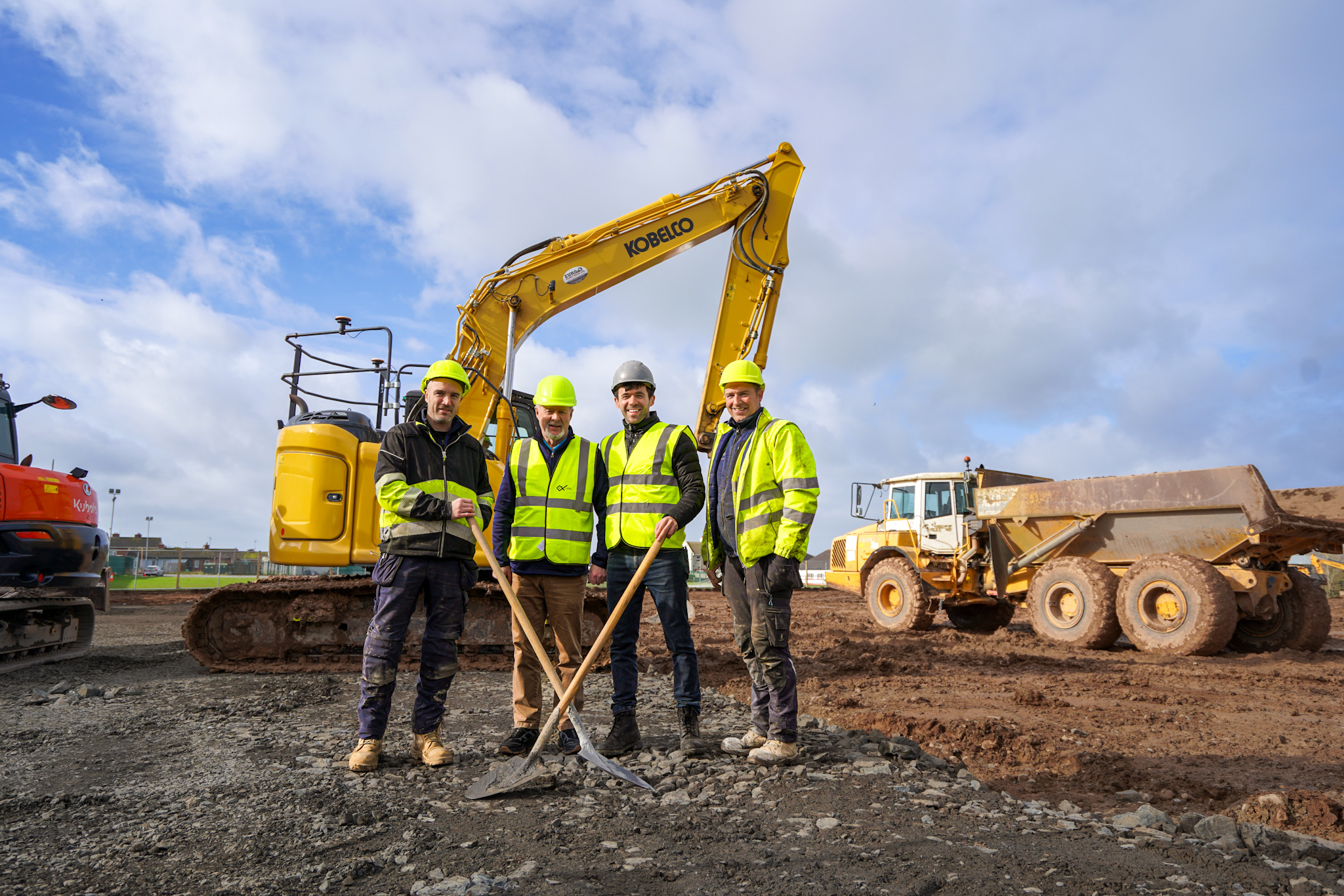
    Irish contract manufacturer Croom Medical recently broke ground on a major expansion at its Limerick manufacturing campus. Marking the largest single investment in the company’s history, Croom Medical is adding a purpose-built, solar-powered, 38,000 sq ft facility called ACOT, for Advanced Centre of Orthopaedic Technologies. ACOT will be an R&D and industrialization center of excellence to help bring orthopaedic implants all the way from early design and raw material to prototyping and finished medical device, enabling deeper integration across the product lifecycle for OEMs. The full spectrum of orthopaedic manufacturing will be integrated at ACOT, including precision CNC machining, lights-out machining and grinding, multimaterial AM, vacuum furnace heat treatment, digital inspection, and much more. The digitally connected facility, expected to be complete by the end of 2026, is being developed with the support of Enterprise Ireland, and will majorly grow the company’s capacity to meet demand from multinational customers for orthopaedic implants.

    “ACOT is a strategic investment designed around where this industry is going next. For our OEM partners, it means deeper integration, advanced capability, and a facility built around their roadmaps. At the same time, it creates high-value roles and long-term career opportunities here in Croom, strengthening the local economy and the community that has supported us for over four decades,” said Patrick Byrnes, Croom Medical’s CEO. “This facility was built on the trust our partners place in our team, and we’re proud that our growth benefits both our global customers and the town of Croom.”

    Proteus Space & NASA JPL Announce On-Orbit Payload Deployment with AM

    The titanium deployment spring within the JPL Additive Compliant Canister (JACC), showcasing the embedded mechanism architecture enabled by additive manufacturing. (Courtesy Proteus Space)

    Los Angeles-based aerospace company Proteus Space recently announced that it, in collaboration with NASA’s Jet Propulsion Laboratory (JPL), achieved a successful on-orbit payload deployment, and AM played a part. A deployable mechanism called the JPL Additive Compliant Canister (JACC), featuring a metal 3D printed spring, was used in the mission. Based on helical antenna systems, the JACC weighs less than 500 g and is only about the size of a small paperback book when it’s stowed. The aptly named jack-in-the-box style system was able to reduce its part count by a factor of three by integrating its canister, lid, torsion springs, hinges, and deployable compression spring into a largely monolithic titanium structure. The JACC is a great example of how AM can make simplify deployable structures and compliant mechanisms.

    Douglas Hofmann, Senior Research Scientist and Principal at JPL, said that for some time now, the lab has been investigating the use of metal AM for the purposes of directly embedding springs, mechanisms, and flexures into structural hardware for the purposes of flexible thermal management, deployment, pointing, and manipulation or grasping applications. By partnering with Proteus Space on the JACC, NASA JPL “enabled rapid flight infusion of the additively manufactured spring.” The system, first sketched on a napkin, was developed and produced in-house at JPL in less than one year. It features a novel, embedded kinematic hinge architecture, and the coiled spring specifically used for on-orbit deployment by Proteus Space aboard its M1 ESPA-class satellite was printed out of Ti-6Al-4V on JPL’s EOS M290 system. You can see the JACC in action on the Proteus Space LinkedIn page here.

    Washington State 3D Printing Ban Passes the House with Amendment

    West Shore Royal Canadian Mounted Police (RCMP) in Canada seize 3D printed firearm. Image courtesy of (RCMP).

    Last month, the House of Representatives in Washington State passed House Bill 2320, also known as the 3D printing ban. For anyone who is not a federally licensed firearms manufacturer, HB 2320 will prohibit the possession, sale, or distribution of “digital firearm manufacturing code,” as well as private use of milling machines and 3D printers to make firearms, and/or their related parts, that are already legally restricted or illegal. An amendment to HB 2320 was approved, and the 1st substitute bill will now be sent to the Senate for consideration for it officially becomes law. As the NRA-ILA said, if the bill passes, this could set “a dangerous precedent for enforcement and policing of the internet by state officials.”

    The new section added to HB 2320 reads, “The legislature finds the production of undetectable and untraceable firearms and firearm components through three-dimensional printing and computer numerical control (CNC) milling presents a growing threat to public safety. The legislature further finds the production of firearms by unlicensed manufacturers allows prohibited individuals to evade background checks and obtain firearms they could not otherwise lawfully obtain. The legislature intends to address these problems by strengthening the state’s existing firearms laws.”

    However, HB 2321, which would require any 3D printer or CNC machine sold or transferred to the state to have “blocking features” to prevent printing of firearm parts,” has run into a problem, as these machines are not smart enough to determine what exactly they are manufacturing. So this bill is still in committee.

  • ATO and Dynamism Partner to Expand Metal Powder Production in the U.S., Announced at AMS 2026

    ATO Technology is expanding its presence in the United States through a new partnership with Dynamism, a well-known distributor of advanced manufacturing technologies. The collaboration was announced during the Additive Manufacturing Strategies (AMS) 2026 conference in New York, where both companies were sponsors of the event.

    Under the agreement, Dynamism will serve as ATO’s official sales partner in the United States, helping bring the company’s ultrasonic metal powder production systems to a wider range of customers across the country.

    The partnership is aimed at making ATO’s technology more accessible to research institutions, advanced manufacturing labs, and industrial users interested in developing new materials for additive manufacturing.

    In a LinkedIn post announcing the partnership, ATO said the collaboration represents “an important step in expanding access to ultrasonic metal powder production across the US market.”

    Mariusz Lesniak at AMS 2026. Image courtesy of Mariusz Lesniak.

    A Focus on Powder Production

    For companies working with metal additive manufacturing, powder quality is widely recognized as a critical factor. For example, research from the National Institute of Standards and Technology notes that controlling material characteristics in processes such as laser powder bed fusion is essential for achieving the desired microstructure and mechanical properties in printed metal parts.

    ATO focuses specifically on ultrasonic atomization systems, a technology designed to produce highly controlled metal powders. The process uses ultrasonic vibrations to break molten metal into tiny droplets, which then solidify into spherical particles suitable for additive manufacturing.

    This approach can help produce powders with tight particle-size distributions and high purity, two factors that researchers and manufacturers often seek when developing new materials or qualifying parts for demanding applications.

    According to ATO, its systems are designed to give users greater control over powder production while enabling smaller-scale and more flexible material development. The new partnership with Dynamism is meant to expand the reach of these systems.

    Making Advanced Systems More Accessible

    Dynamism has built a reputation over the years as a distributor of advanced manufacturing technologies, particularly in areas such as 3D printing, digital manufacturing, and design tools. The company works with universities, research labs, and businesses that are looking to adopt new technologies.

    By partnering with Dynamism, ATO hopes to make its powder production systems easier for organizations across the U.S. to access.

    The companies say the collaboration will help support localized research and development in metal additive manufacturing, especially as more institutions look to develop custom materials and powders tailored to specific applications.

    ATO also notes that its platforms include AI-enabled capabilities designed to help monitor and optimize powder production processes.

    Growing Interest in Custom Metal Powders

    Interest in advanced powder production has been growing in recent years as additive manufacturing moves toward more specialized materials and applications.

    Many researchers and companies are looking for ways to create custom alloys, experimental materials, and powders designed for specific uses. Being able to produce small batches of metal powder in-house can make that process quicker and easier.

    ATO’s ultrasonic atomization systems have been gaining attention among research institutions working on advanced materials development. In an article published earlier this year, the company highlighted how controlled powder production can play an important role in materials research and experimental additive manufacturing projects.

    Systems like these allow researchers to explore new alloys without relying entirely on large commercial powder suppliers, which can be costly or difficult to access for small experimental runs.

    ATO’s Technology in the AM Ecosystem

    ATO has been gaining more attention in the additive manufacturing industry. Its ultrasonic atomization systems, including those used in the ARCWAY platform we covered previously, allow users to produce their own metal powders and experiment with new materials.

    This type of technology can be particularly valuable in research environments, where scientists and engineers often need to iterate quickly when developing new materials or printing processes. Through this partnership with Dynamism, ATO hopes to reach more users across the U.S.

    ATO atomizers use ultrasonic vibrations to break molten metal into droplets. Image courtesy of ATO.

    The partnership comes as the additive manufacturing industry continues to focus on improving materials, supply chains, and production processes. While printers often get most of the attention, other parts of the ecosystem (like powder production) are becoming increasingly important as the industry grows.

    ATO and Dynamism say they plan to work together to expand metal additive manufacturing in the United States by making advanced powder production systems more accessible to researchers and manufacturers.

  • AM Applications Expected to Reach $110B in 2034, New Report Finds

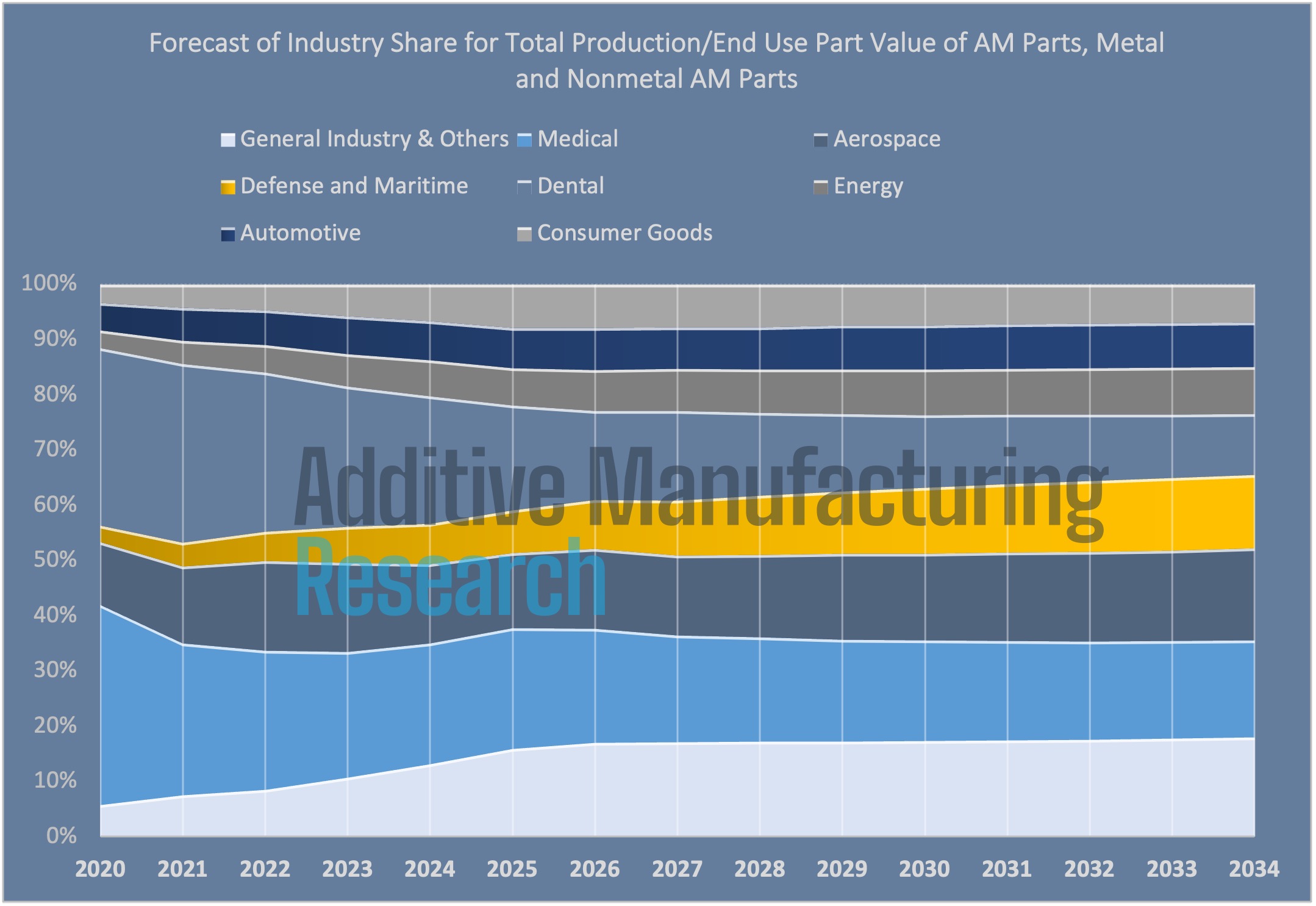
    Additive manufacturing may still be a relatively young industry, but the number of real parts being produced with 3D printing is growing quickly. According to a new report from Additive Manufacturing Research (AM Research), the value of parts produced with additive manufacturing could reach $110 billion by 2034, pointing to continued expansion of the technology across several industries.

    The report, titled “AM Applications Analysis: Parts Produced 2025–2034,” looks at both the number of parts being produced and the overall market value those parts represent. It covers applications across eight major sectors and tracks both polymer and metal additive manufacturing. The data shows market activity through the end of 2025 and includes projections for the next decade.

    Overall, AM Research estimates that additive manufacturing parts will account for about $24.5 billion in market impact in 2025, with steady growth expected through the coming years. By the early 2030s, the total value of printed parts is projected to exceed $100 billion annually, pointing to the expanding role of additive manufacturing in production. The report suggests that 3D printing is continuing to move beyond prototyping and into real manufacturing.

    Aerospace Still Leads Metal AM Value

    One industry where metal 3D printing continues to stand out is aerospace. According to AM Research, aerospace applications make up almost 22% of the total value of metal parts produced with additive manufacturing around the world.

    A big part of this activity comes from complex, high-performance components used in aircraft engines, rocket engines, satellites, launch vehicles, and unmanned systems. Aerospace companies have long been early adopters of additive manufacturing because the technology can make complex geometries while reducing part weight and material waste.

    Defense and space are also playing a big role, especially as governments and private space companies continue pouring money into rockets, satellites, and other space technologies.

    Healthcare Leads in Part Volume

    While aerospace leads in value, the healthcare sector dominates in the number of metal parts produced.

    According to the report, the orthopedic and biomedical industry produced more than two million metal components in 2025, while the dental sector produced over 25 million metal parts during the same period.

    Dental products such as crowns, bridges, and other customized components are ideally suited for additive manufacturing because they require personalization for individual patients. Even as alternative materials such as ceramics and composites gain traction in dentistry, metal printing remains widely used.

    Polymer Printing Sees Massive Part Volumes

    On the polymer side, the number of printed parts is growing quickly, mainly because lower-cost material extrusion printers are now everywhere. Desktop and small industrial printers are now common in many manufacturing environments, allowing companies to produce functional parts at relatively low cost. According to the report, some service bureaus running print farms with these machines are producing millions of end-use parts each year.

    These parts include everything from electronic housings and connectors to gears, casings, and components used in medical devices and other products. While a single polymer part may not be worth as much as a complex aerospace component, the huge number of parts being produced is helping push the market forward.

    The report tracks additive manufacturing applications across eight major industries, including aerospace, healthcare, energy, automotive, defense, consumer goods, and general industrial applications.

    The analysis combines written research with large data sets covering historical production volumes as well as projections through 2034. Separate data files track both metal and polymer parts, giving companies a detailed view of where additive manufacturing is gaining traction and where future opportunities may emerge.

    AM Research notes that its analysis draws on more than a decade of market tracking within the additive manufacturing sector. Since 2013, the firm has produced industry reports used by manufacturers, investors, and other stakeholders to understand the evolving landscape of 3D printing technologies.

    For years, 3D printing was mostly used for prototyping. But that’s starting to change. More and more companies are now using it to produce real parts.

    There are still challenges around cost, scale, and certification, but the technology is finding new uses across industries. If current trends continue, 3D printing could play a much bigger role in manufacturing over the next decade.

    Scott Dunham, the report’s author and Executive Vice President of Research at AMR, recently presented some of the findings at the Additive Manufacturing Strategies (AMS) conference in New York. He will also discuss broader market trends and new data during an upcoming AM Research webinar focused on 2025 industry results and what to expect in 2026.

    Images courtesy of Additive Manufacturing Research

  • With ARPA-E Backing, HRL Laboratories Advances 3D Printed Cooling for More Efficient Data Centers

    In the reportAM for Data Centers: a 3D Printing Market Opportunity” that I wrote last year for Additive Manufacturing Research (AMR), I referenced Theodore Maiman, the man credited with inventing the first working laser, while he was employed by Hughes Aircraft Company. Maiman famously said that lasers were “a solution in search of a problem,” and I used that as an analogy for how the complex geometries enabled by AM are a solution in search of a problem that is thermal management.

    I didn’t realize that some version of Hughes Aircraft Company (as in Howard Hughes) is still around: it is now HRL Laboratories, a Malibu-based R&D venture that is, fascinatingly, jointly owned by Boeing and General Motors. I bring up this anecdote not solely to plug the data center report, but, more importantly, because HRL Laboratories has just announced a 3D printed, direct liquid cooling (DLC) solution that the company developed in part thanks to funding from the US Department of Energy’s (DOE’s) ARPA-E program.

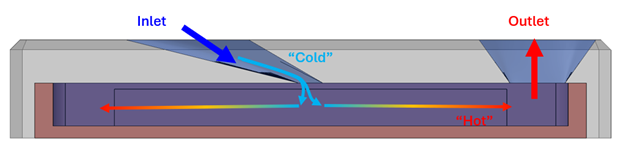
    In 2022, ARPA-E launched COOLERCHIPS, a project call with the aim of drastically lowering cooling costs for data centers, which costs currently account for 40 percent — sometimes more — of a data center’s energy expenditure. According to HRL Laboratories, the Low-Chill solution uses a 3D printed manifold “to distribute coolant through hundreds of short flow paths”, without a need for vaporizing and recondensing the coolant: this makes it a ‘single-phase’ cooling system, in contrast to more expensive two-phase cooling systems.

    Current cooling technology relies on long intra-channel flow paths along hot fins.

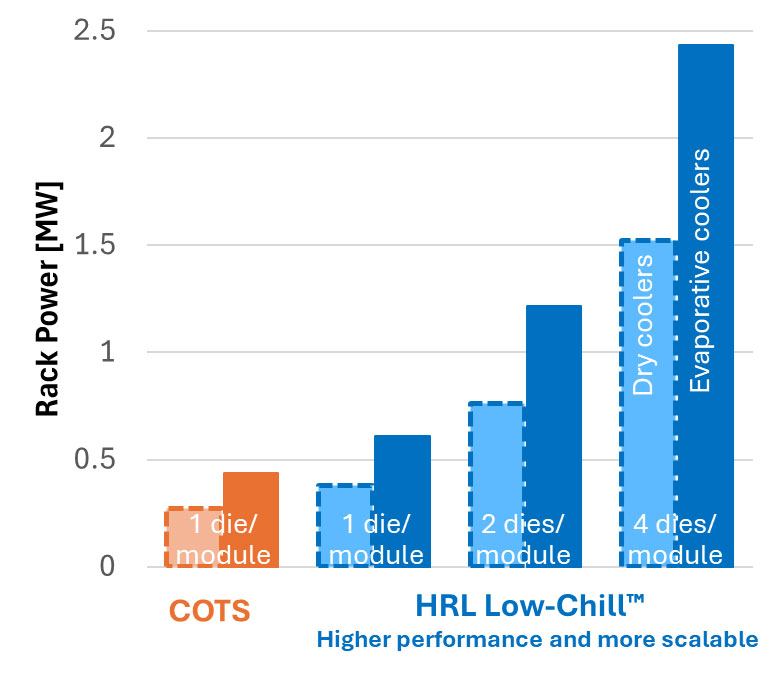
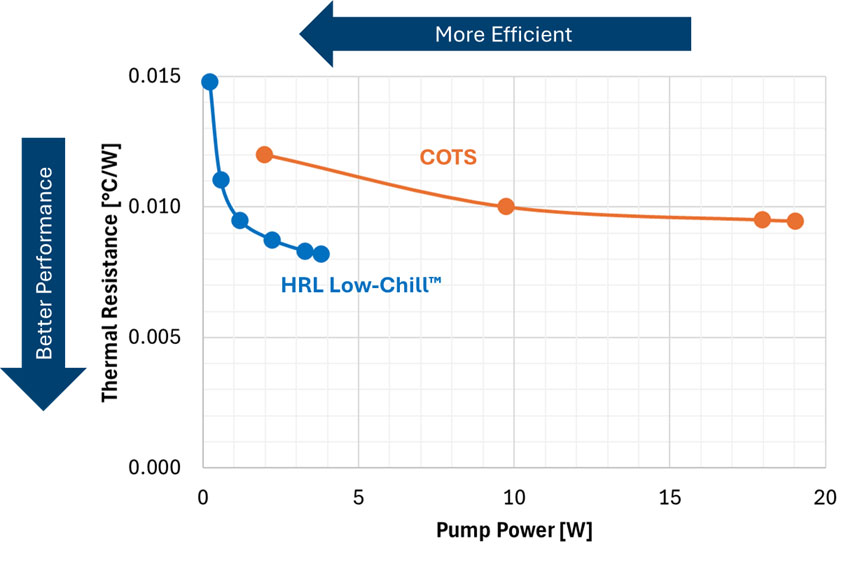
    HRL Laboratories claims that the Low-Chill cooling technology increases cooling capacity by 40 percent under equivalent pumping power compared to existing solutions, and notes that the design is scalable to achieve the same performance for multi-chip modules. The company also states that Low-Chill is built to handle the more intense cooling requirements of the next generation of chips from NVIDIA.

    In a press release about HRL Laboratories’ launch of the Low-Chill cooling solution for data centers, Christopher Roper, HRL’s principal investigator and the technical lead for the company’s COOLERCHIPS project, said, “We designed this technology with real data center constraints in mind. By rethinking how coolant is delivered at the block level, we can cool far more powerful processors using single-phase liquid cooling that fits within today’s data center architectures and operational risk profiles.”

    Low-Chill direct liquid cooling.

    Nothing like a major military conflict snarling global energy supply chains to remind everyone that all critical infrastructure is, ultimately, national security infrastructure. It looks like I will continue linking to this post from the end of January and this one from the end of 2022, over and over again, for the foreseeable future.

    In a world where physical security operations follow the lead of cybersecurity operations as opposed to the other way around, data centers are thus arguably the quintessential national security chokepoints of our day. Couple this with the fact that data centers and military tensions are now in a race to see which can drive up energy bills more quickly, and it becomes clear why making data centers more energy efficient is kind of where all the global economy’s most daunting challenges converge.

    So, while defense tech startup CEOs may triumphantly boast to everyone that they told them so about how the US will disintegrate without more hypersonics, the US may actually disintegrate without more clean energy solutions. The exchange of missiles won’t last forever, but the effects on fossil fuel prices will endure much longer.

    In no way is this meant to suggest that higher prices compare on any level to the loss of human life. Rather, the point is that if global powers can become less dependent on energy sources imported from overseas, then, in the long run, we may see fewer pointless conflicts driven by myopic competition over resources.

    Performance data: Low-Chill pump power.

    Images courtesy of HRL Laboratories

  • Is Industrial Filament 3D Printing Finally Production-Ready? HP’s New Webinar Says Yes

    HP Additive Manufacturing Solutions is getting ready to introduce something big for the additive manufacturing world. On March 31, 2026, the company will host a webinar offering a first look at its brand-new high-temperature industrial filament 3D printing platform, designed specifically for production and not just prototyping.

    In manufacturing, there is a big difference between printing a sample part and producing certified parts consistently at scale. HP says this new system is designed to close that gap.

    Guillermo Fabregat. Image courtesy of HP.

    HP’s Industrial Filament Product Manager, Guillermo Fabregat, will lead the session. An industrial engineer with experience in manufacturing, operations, R&D, strategy, and product management, Fabregat specializes in turning complex industrial systems into scalable, production-ready solutions.

    Moving Beyond Prototyping

    For years, filament-based 3D printing has been popular because it’s flexible, accessible, and relatively easy to use. But flexibility alone might not be enough in industrial settings. After all, industry roadmaps from organizations like America Makes, or the National Institute of Standards and Technology (NIST), have often identified repeatability, qualification, and traceability as key requirements for scaling additive manufacturing into full industrial production. HP’s new platform is focused on those needs.

    Instead of offering just a printer, HP is introducing what it calls an “end-to-end Industrial Filament 3D Printer Solution.” That means hardware, material handling, process control, and material access are all part of the same package. The goal is to make filament 3D printing ready for serious industrial applications.

    Industrial production environments demand repeatability, traceability, and consistent part quality. Image courtesy of HP.

    Built for High-Temperature and Regulated Industries

    One of the most important parts of this new system is its ability to handle high-temperature and chemical-resistant materials. HP says the platform is designed for demanding industrial environments, including aerospace, mobility and transportation, industrial manufacturing, oil and gas, and tooling applications.

    These really are not industries that accept “almost good enough.” Many of them demand regulatory approvals or industry certifications. That means consistent performance, documented processes, and materials that meet those famously strict standards. The best part is that HP says its platform is designed with those production needs in mind.

    During the webinar, attendees will get a closer look at the platform and its three main components.

    First is the industrial printer, designed to process high-temperature filament materials for production environments.

    Second is the Material Management System (MMS). Material handling is often overlooked, but in production, it is critical. Consistent drying, feeding, and tracking of materials can mean the difference between repeatable parts and costly failures.

    Finally, Fabregat will discuss the platform’s modular extrusion architecture. This design allows users to work with different materials while maintaining process control. Together, these components are built to support consistent part quality and scalable production.

    Open Materials, Certified Performance

    Beyond hardware, another key part of HP’s webinar will focus on its open materials ecosystem.

    Choosing the right material matters in industrial production. Manufacturers want access to certified, high-performance options from different suppliers. But they also need to make sure those materials meet standards and deliver consistent results. Now HP says it is aiming to balance both priorities, maintaining an open materials platform while ensuring those materials meet industrial and regulatory standards.

    That could be especially important for companies looking to replace metal components with high-performance polymers, which is a growing trend in aerospace, automotive, and energy sectors. High-performance polymers are increasingly being used to replace metal parts in industrial applications thanks to properties such as strength, corrosion resistance, and lighter weight.

    High-quality prototypes and final polymer 3D parts. Image courtesy of HP.

    Industrial filament printing has evolved rapidly in recent years. High-performance thermoplastics such as PEEK, PEKK, and other advanced polymers have moved into applications that were once fully dominated by metal. But strong materials alone are not enough. Research has shown that even as materials and technologies improve, moving into real production brings challenges. Academic studies have identified challenges such as repeatability, traceability, quality control, standards, and certification as ongoing barriers to industrial adoption, while industry reports highlight that traceability and certification are key priorities for advancing AM from prototype to reliable production.
    HP’s announcement suggests that filament 3D printing may be moving into a more production-focused stage, rather than being seen mainly as a prototyping tool.

    Of course, filament printing is sometimes seen as the more basic option compared to powder systems. But in practice, it can make a lot of sense. It can be more cost-effective, offer more material flexibility, and give engineers plenty of design freedom, as long as the production process is solid.

    With this new platform, HP seems to be positioning filament 3D printing as a serious option for demanding industrial environments.

    HP accelerates product development with functional automotive and 3D printed car parts. Image courtesy of HP.

    The upcoming webinar is ideal for manufacturing engineers, materials and process engineers, additive manufacturing leaders, and operations teams exploring filament-based production; however, the broader additive community can also find the discussion quite valuable.

    If your team is exploring metal replacement, high-temperature components, or certified production with polymers, this session is for you.

    HP is already a big name in polymer additive manufacturing, so this move into industrial filament production feels like a natural next step. Filament printing itself isn’t new, but what HP is talking about here is different: high-temperature materials, certified production, and systems built for real industrial use at scale. If it works the way HP describes, it could start changing how people think about filament 3D printing, shifting it from something seen as more of a workshop or prototyping tool to a serious production option.

    Attendees will get the first official look at the platform. To do so, register here.

  • Spielautomaten: High Performance Materials on Desktop Machines

    A new generation of more sophisticated desktop 3D printers is revolutionizing the 3D printing market. Bambu, Creality, and Prusa Research have leaped ahead over the past few years. More firms, such as Snapmaker and Elegoo, could join them if they iron out some kinks. These firms have, in effect, digitized extrusion on fast printers with high yield and great surface quality.

    Competition in this segment is ruthless and fast-paced, with millions of these systems being sold. Some of the biggest firms in 3D printing are now desktop 3D printing firms. Bambu is probably the highest-grossing 3D printing firm out there. Its P2S printer is available for €519 or with its excellent AMS unit for €749. The printer is rock solid, fast, and reliable. It moves around a bit and can be noisy, but as a printer, I can’t fault it. The Prusa Research Core L at €1,699 is an excellent 300×300×330mm build volume system. I’m stunned by the reliability and surface quality I get from it. I’m surprised now when a print doesn’t work. Yields I’m getting are over 95%.

    Expansion

    Many print farms now run on desktop printers. These businesses are expanding the market by making it cheaper to get 3D printed parts. New people are now buying 3D printers because they’re easier to use. Printers are now being bought en masse by the cosplay crowd. Parents are buying them in great numbers for their children as well. 3D printing was initially a hobby for the hardy, techy, and perseverant. Now it’s becoming a tool to make things for another hobby.

    But many in the industrial market still seem prone to self-delusion. Yes, these things are powering millions of people’s hobbies, but they are not hobby machines. Yes, they are used ot print many trinkets, toys, and dragons, but this is not all they can print. We’re seeing electronics housings, military components, drone components, industrial machine parts, factory automation components, and more being produced at scale on desktop machines. Many of these systems are also being bought by companies to prototype and build within the enterprise. Here they are displacing more expensive industrial systems. People are turning off older systems and buying desktop machines instead. A broader selection of lower-cost materials, coupled with reliability and speed, is a reason for these purchases. The uptake of 3D printing at large enterprises is accelerating thanks to desktop machines. Yes, this will make the overall consumer market bigger. Yes, this will grow the 3D printing market. And yes, this is competing with existing 3D printing players. Many firms will be pushed aside and bankrupted by the spread of more accurate desktop systems. This is being accelerated because not only are printed parts cheaper when made on these machines, but they can be had in a wide range of materials. PLA is far from the only game in town.

    New Materials

    Blended Polycarbonate

    One new 3D printing material that I’ve been using extensively is Polycarbonate. This high-impact, resistant material prints very well on the Core One. I can make large housings, cases, protective gear, and long lasting parts with it. I’ve printed around 3 kilos of stuff with it and haven’t had a failed print. Things made with it are very tough, have great heat resistance (above 110 °C), and strength. At €45, it perhaps could be cheaper, but it’s a steal for the functional area it unlocks in heat-resistant, strong industrial parts at this price.

    Victrex Low Temperature PEEK

    Victrex’s LMPAEK is a PAEK family polymer that has successfully been 3D printed on the Bambu H2D. The low-melt polyaryletherketone VICTREX AM 200 variant was first printed by Xioneer in August last year. Newer PEKK variants can also be 3D printed on desktop machines. Part size is limited, and these materials are very expensive. But we are seeing high-strength materials being made specifically for desktop machines.

    Tullomer

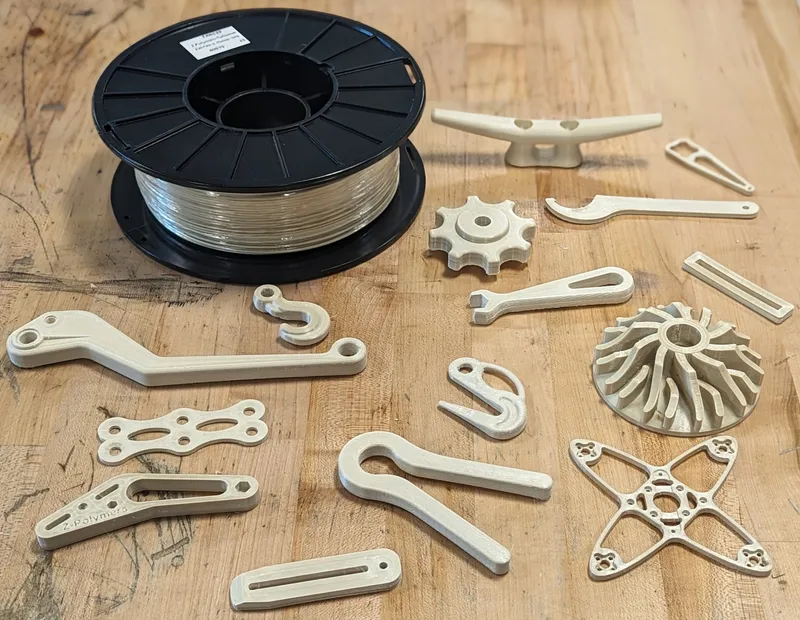
    Z Polymer’s Tullomer has been designed as a filament for desktop machines, to be used in place of PEI and PAEK materials. The crystalline polymer has a temperature resistance of over 200 °C, is PFAS-free, has a V-0 flame rating, and offers excellent chemical resistance to a wide range of chemicals. It’s a clear PVDF replacement for those trying to eliminate PFAS from their factories or companies. It prints at around 325 °C and has been used on a wide array of desktop machines. Years ago, this kind of material would have been introduced together with an industrial firm, but now the path to revenue seems surer on desktop machines. At $275 for a 500-gram spool, it’s very expensive indeed and a quarter the price of many of the systems now printing it.

    Tectonic 3D

    The company Tectonic 3D has a lineup of filaments, all made for high-performance applications. The firm’s KRATIR PP-CF is being used to manufacture drone bodies that are one single line of filament thick. The firm also has EN45545-2 & FAR-approved PPO for rail use and a PA6 for under-the-hood automotive use. A foaming PA11 has been developed for low-density use in drones. By custom-developing materials for particular uses, Tectonic is enabling more manufacturing cases for military and industrial firms.

    Colorfabb

    Colorfabb has been the most innovative company in the 3D printing materials space for many years now. Its AllPHA filaments are the first truly sustainable 3D printing filaments. With a bio-based and biodegradable material that has a heat deflection temperature of around 120°C, PHA really should be our standard go-to material. The company will also make its filaments in any color you want.

    But it also has LW-PLA-HT, a higher-temperature foaming PLA variant for lightweight applications. But, its most amazing material may be Varioshore TPU — an elastomer where you can alter the shore hardness locally by altering your nozzle temperature. Hard and soft regions of parts can be printed in a single print run using a single nozzle, enabling the production of low-cost yet high-performance insoles, mildoles, and shoe components. This functionality is only available with a desktop printer.

    Zetamix

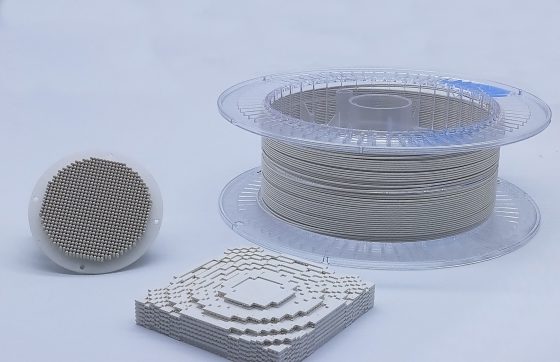
    Nanoe’s Zetamix line lets you use bound filament and an oven to make metal and ceramic parts. White & black zirconia, alumninia, silicon carbide, 316L stainless steel,  H13 steel, 17-4PH & Porcelain are all possible. Silicon carbide and H13 will already enable many 3D printing applications. Of course, the parts are cruder-looking than alternatives made with SLA or binder jet. But the low cost and low startup cost are real enablers. Its Ɛ filament does not need to be sintered or debound and can be printed on desktop machines. That low-loss, high-permeability material has been developed specifically for RF applications and is used to make antennas and radar components. Satellite antenna and RF devices are being made with these filaments worldwide. Cheaper and faster to make, these devices are also more compact than conventionally made alternatives.

    Final Thoughts

    Desktop 3D printers are being sold in their millions. Their capabilities are advancing rapidly. Reliable, quick, and low-cost, these machines are being used to make industrial parts and serve tens of thousands of businesses. With new materials available across many systems, materials companies can see real returns and growth as desktop 3D printing becomes more attractive to more businesses. Materials are lower cost in the desktop market, and there is less vendor lock-in. This is attracting more materials firms making high-performance materials suited to desktop 3D printers. We’re now seeing parts made from foaming TPU and RF materials that you couldn’t make on industrial machines. Further innovation could make desktop machines even more attractive. With millions more desktop machines being sold each year, these will soon become a mortal threat to the rest of the industry.

  • Cisco Report Finds Cybersecurity and Networks Determine AI Growth in Manufacturing

    Additive manufacturing (AM) is a market in-itself. Still, more broadly, it can be viewed as one component of a shift in the productive economy towards interconnection by the Industrial Internet of Things (IIoT). This is the framework within which one should view the incorporation of AI into manufacturing processes, and the latest State of Industrial AI report from network equipment giant Cisco, released today, synthesizes data from over 1,000 respondents on the topic, including over 350 manufacturing sector stakeholders.

    One of the most noteworthy takeaways from the report is that cybersecurity has jumped to the top of the list of limiting factors for AI adoption. When the last report was released in 2024, cybersecurity was ranked #3. Compared to the broader industry, which saw 40 percent of respondents list cybersecurity as their number one concern, an even higher percentage of respondents from the manufacturing sector — 46 percent — said cybersecurity was their top concern in 2026.

    At the same time, interestingly enough, 81 percent of manufacturers also said that they ultimately expect AI to improve their cybersecurity capabilities, once it’s implemented at scale. Other important findings relate to network readiness: nearly 50 percent of manufacturers said that, to produce results, investments in AI also require greater investments in network connectivity and edge computing.

    Overall, AI adoption in manufacturing may have finally hit critical mass, with just under 60 percent of the manufacturers surveyed saying they’re already “actively deploying AI at scale”, and 83 percent expect to continue to increase their AI spend. Reinforcing that acceptance of and optimism surrounding the new technological landscape, 85 percent of manufacturers said they expect to see ROI within two years.

    In a press release about Cisco’s latest State of Industrial AI report, Vikas Butaney, SVP/GM of Secure Routing and Industrial IoT at Cisco, said, “Industrial AI is moving from experimentation into production, where AI systems sense, reason, and act in the real world. At this stage, success is no longer determined by models alone, but by whether networks, security, and teams are ready to support AI at the edge, in motion, and at scale. The research shows that organizations confident in scaling AI are those treating infrastructure, cybersecurity, and IT/OT collaboration as foundational, not optional.”

    That concept of treating AI as foundational reminds me of an interview I did last year with Michael Corr, co-founder and CEO of PLM software firm Duro, which was later acquired by the electronics design software provider Altium. Corr explained to me how the company relaunched its entire platform with AI embedded at the core, rather than simply trying to “layer it” on top of the product that already existed:

    “What’s unique about the relaunch,” Corr told me, “is the fact that AI isn’t just a bolt-on. I think we’re in an enviable position compared to our competitors because we’re still small enough to where we can do such a major refactoring compared to legacy providers. They’re too far down the road already to be able to do that.”

    This suggests a significant edge that new firms could have over legacy manufacturers in the initial mass scale-up phase of the IIoT build-out, as organizational agility has turned into an operational mandate, not a “nice-to-have”. That same logic supports the idea that, in order for an enterprise to effectively contribute to objectives like supply chain resilience, AM capacity has to be a core component of an enterprise’s business model, not simply a “bonus” that has been grafted onto the company’s periphery.

    Along those lines, we won’t see every manufacturing company that adopts AM and every manufacturing company that adopts AI succeed at doing so. But I would bet that the handful of manufacturing companies that have successfully built AM and AI into the foundation of their business models will be disproportionately influential to the trajectory of the rest of the productive economy.

    So a company like DEFEND3D, for instance, which provides software solutions that enable print jobs via streaming as opposed to file-based transfers, stands to gain in this environment. Hadrian Additive, the new division of the massively-funded ‘Factories-as-a-Service’ startup, stands to gain in this environment, as do OEMs like Velo3D, which has made cybersecurity compliance a centerpiece of its business strategy for years, etc. It is no longer adequate (if it ever was) to consider the product you’re selling as a standalone thing: to gain traction, you have to primarily consider the total operational environment that everyone’s tech lives or dies in.

    Images courtesy of Cisco