• AMR Webinar to Reveal 2025 3D Printing Market Data and What 2026 Will Really Look Like

    On March 24, 2026, Additive Manufacturing Research (AM Research) will host a free webinar that many in the industry won’t want to miss. Titled 3DP/AM Market Insights: 2025 Review and 2026 Preview,” the session promises a deep dive into the newly finalized 2025 market data, along with a forward-looking assessment of where additive manufacturing (AM) is headed next.

    With the industry recalibrating around profitability and real production, accurate data matters more than ever. And AM Research has the numbers.

    A Decade of Market Tracking

    The webinar will be led by Scott Dunham, Executive Vice President of Research at AM Research. Dunham has written dozens of detailed market research reports covering pretty much every major segment of the 3D printing industry. Over more than a decade, AM Research has tracked hardware, materials, and service revenues across metals, polymers, binder jetting, powder bed fusion (PBF), directed energy deposition (DED), material extrusion (ME), and beyond.

    Basically, if you want to know what’s actually happening in additive manufacturing (not just what companies say is happening), AM Research is one of the most complete sources available.

    Unlike many market analysts who publish annual snapshots, AM Research provides quarterly tracking across multiple verticals. And, by reporting quarterly, the firm can closely track changes in printer sales, materials growth, industry adoption, and economic conditions as they happen.

    Why 2025 Data Matters

    The full-year 2025 data comes at a key moment. Over the past year, the additive manufacturing industry has faced a mix of headwinds and opportunities. Publicly traded AM companies have kept up with a lot of restructuring efforts. Defense applications have gained momentum. Industrial polymer systems are competing on cost-per-part. And metal AM is pushing further into serial production.

    So what actually grew in 2025? Which segments contracted? Did metals outperform polymers? Is binder jetting gaining share? Where is material extrusion positioned in industrial contexts?

    These are exactly the kinds of questions the upcoming webinar will address.

    AM Research’s outlook for 2026 will also be key. Many companies seem to be starting the year with more focused plans, looking to grow in specific applications instead of expanding in every direction. At the same time, ideas about distributed manufacturing networks and connected production systems are moving into real-world use that can now be measured.

    Dunham is expected to break down not just topline revenue projections, but also the underlying methodology behind the forecasts, something that doesn’t always get much attention.

    From AMS to March: Continuing the Conversation

    For readers who attended Additive Manufacturing Strategies (AMS 2026) in February, Dunham’s webinar builds on topics already discussed earlier this year. At AMS 2026, he presented detailed market data sessions, including a dental AM forecast, broader 20/30 Vision market projections, and application-level data, before joining a panel discussion on the overall 3DP/AM market outlook.
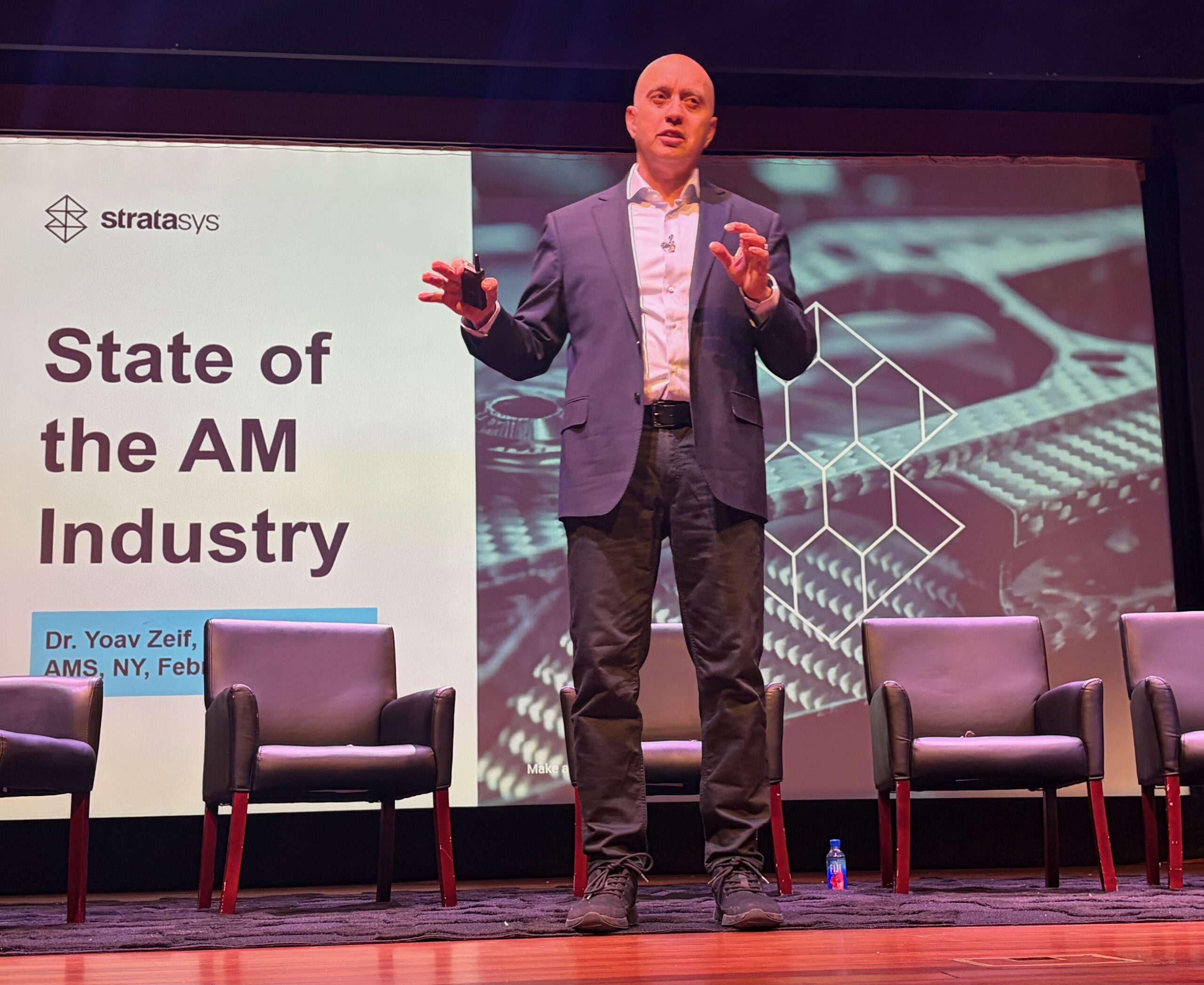
    Stratasys CEO Yoav Zeif at AMS 2026. Image courtesy of 3DPrint.com.

    The upcoming webinar builds on that foundation with finalized data and refined forecasts.

    For professionals who couldn’t attend AMS in person, or those looking for more detailed data, this webinar provides direct access to AM Research’s latest findings.

    In fact, one of the most anticipated parts of the webinar will likely be the discussion of which applications and industries offer the most upside.

    Across aerospace, medical, dental, automotive, defense, and energy, additive manufacturing is at different stages of maturity. So, for Dunham, the question is no longer just “Is AM growing?” but rather, “Where is it growing fastest and why?” Basically, which industries are leading, which ones are slowing down, and where is real production growth actually happening.

    Access to AM Research Reports

    For those wanting to go beyond the webinar, the full set of AM Research reports is available online. These reports look at the market by technology, materials, region, and industry, providing a clear view of how additive manufacturing is performing.

    From quarterly updates to long-term forecasts, these reports are widely used across the industry and often help guide business strategy, investment decisions, and planning. After years of big projections and some pretty ambitious forecasts, reliable data has become super important. Especially with additive manufacturing entering, what many are describing as a consolidation phase. In fact, we could say that consolidation has reshaped the competitive landscape. Customers are demanding clearer returns on investment (ROI). And we have seen that capital markets are less forgiving. Meanwhile, governments are supporting faster use of the technology in strategic industries.

    That is why understanding the numbers behind these changes is no longer an option; it’s a need. AM Research’s webinar is a great chance to hear directly from one of the industry’s most experienced analysts as he reviews 2025’s final performance and previews what 2026 may hold.

    Registration for the free webinar is open here.
  • DOE Backs DMG Mori AI Tool to Speed Qualification of 3D Printed Parts

    Since 2015, the U.S. Department of Energy (DOE) has awarded projects that leverage the high-performance computing (HPC) capabilities of the U.S. national laboratories to optimize manufacturing processes. The High-Performance Computing for Manufacturing (HPC4Mfg), funded through the Office of Critical Minerals and Energy Innovation (CMEI), just announced its latest round of winning proposals, and among them is an effort by DMG Mori to develop a method for automating the optimization of powder bed fusion (PBF) processes with tools including AI.

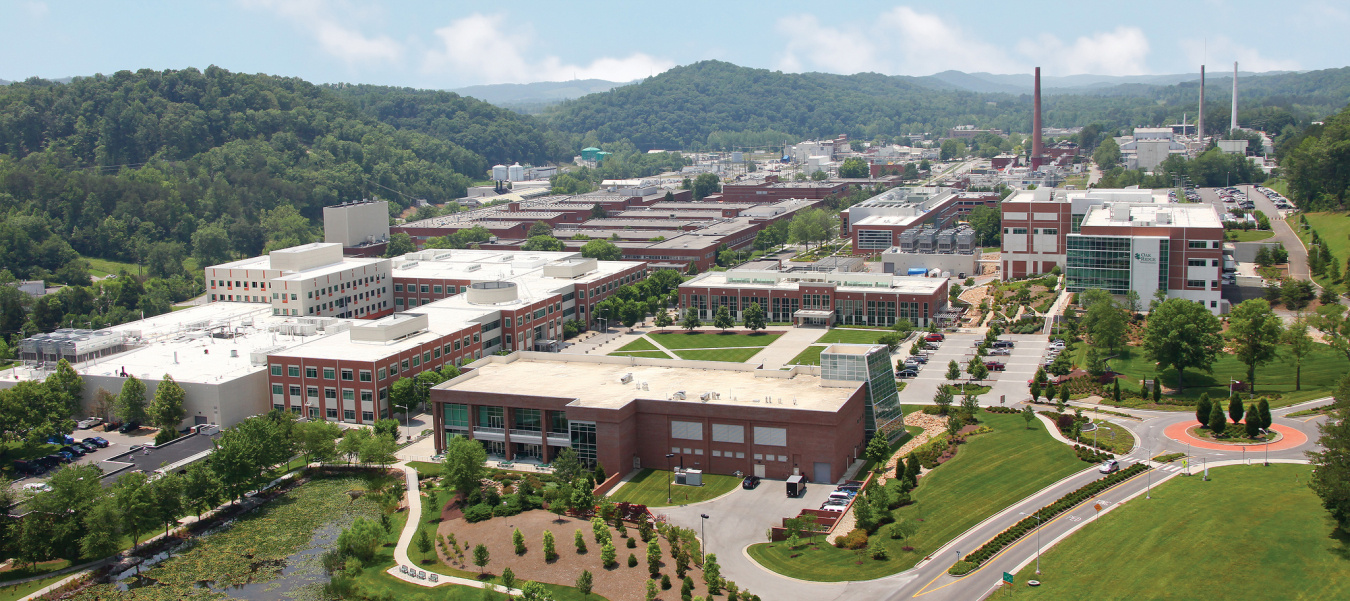
    Specifically, the award went to DMG Mori Federal Services, the division of the global machine tool giant that works directly with the U.S. government, as well as the government’s prime contractors. DMG Mori will collaborate on the HPC4Mfg grant with Oak Ridge National Laboratory (ORNL), which hosts some of the world’s most powerful supercomputing systems, and has long helped facilitate early-stage additive manufacturing (AM) materials science R&D.

    Oak Ridge National Lab. Image courtesy of ORNL.

    It’s not clear if the tool that DMG Mori will be working on involves a hardware component or is simply a software program. Still, the broad-sweeping goal of the R&D program is to accelerate the qualification of energy-critical components. DMG Mori’s LASERTEC 30 SLM machines are made in the USA, which should give the company an edge in pursuing further federal contracts, at a time when the U.S. administration is making a renewed push to reassert “American energy dominance.”

    Additionally, DMG Mori’s status as one of the largest, if not the largest, machine tool manufacturers in the world means the company has experience at a scale virtually unheard of in the rest of the AM industry. If its early-stage work with ORNL is successful, all that could result in an easier path to commercial viability than would typically be the case.

    In a press release about DMG Mori’s HPC4Mfg grant, Fred Carter, the Head of R&D for DMG Mori Federal Services, said, “This collaboration allows us to pair DMG Mori’s advanced laser powder bed fusion platforms with ORNL’s world-class high-performance computing and materials science expertise. Together, we will develop data-driven tools that enhance process control, improve repeatability, and strengthen the competitiveness of U.S. manufacturing.”

    I’d love to know if there are any energy-critical components that DMG Mori has in mind, in particular, and if they’re data center components. As I recently wrote, heat exchangers for data centers are an ideal example of how metal AM can be leveraged for sustainability-as-security principles.

    In that earlier article, I noted that collaboration on data center hardware could be a driving factor in promoting unity over division between the U.S. and its European trading partners, and the same holds true for the U.S. and Japan, where DMG Mori is, of course, headquartered. Since Japan announced a half-trillion-dollar investment in U.S. infrastructure last year, with data centers as the centerpiece, equipment that can make data centers more energy-efficient would indeed be an all-the-more fitting theme for AM collaboration between the U.S. and Japan.

    Meanwhile, DMG Mori also recently received $40 million in funding from the state of Illinois, where the machine tool OEM has its U.S. headquarters. DMG Mori will establish a new R&D facility in the Chicago area, collaborate with the City Colleges of Chicago on workforce development initiatives, and create 74 new full-time jobs. Illinois is a major hub for data centers nationally, so again, speeding up the qualification of 3D printed data center hardware would make a lot of sense as a direction for the ORNL collaboration.

    Whatever the precise topic of the R&D project is, we should expect to see even more funding pour into leveraging AI for digital manufacturing process optimization, from both the private and public sectors. A wholly unsurprising development is becoming clear: the most boring-sounding AI use cases are the ones that seem to have the greatest potential for near-term ROI. That might make it harder for chip companies to sell their story to investors, but it has positive implications for the manufacturing sector.

  • AML3D Reports Record A$16.5M in Orders as U.S. Defense Work Expands

    Australian metal additive manufacturing firm AML3D (ASX: AL3) has reported approximately A$16.5 million ($11.7 million) in orders in hand in its half-year results for the period ending December 31, 2025, positioning the company for what it says could be a record second half of its fiscal year 2026.

    While only A$3.25 million ($2.3 million) of those orders were recognized as revenue during the period, the company said the decline (roughly 30% compared to the prior corresponding period) was due to delays in raw materials and extensions in project timelines. AML3D said those delays pushed part of the expected revenue into the second half of FY26, rather than canceling it. So, what they are saying is that the orders are there, but the revenue is just coming later.

    AML3D Arcemy 3D printing. Image courtesy of AML3D.

    Most of AML3D’s business comes from the United States, with about 87% of first-half revenue generated from U.S. customers. This reflects AML3D’s growing work in defense and shipbuilding, including projects with the U.S. Navy and large U.S. shipbuilders.

    The company has already announced contracts tied to submarine and naval components, where large-scale metal 3D printing helps reduce part counts, improve repair times, and support more reliable supply chains.

    With defense spending rising and naval upgrades underway in key markets, AML3D says it’s aiming to supply large metal components for essential defense projects.

    AML3D WAM technology.

    AML3D WAM technology. Image courtesy of AML3D.

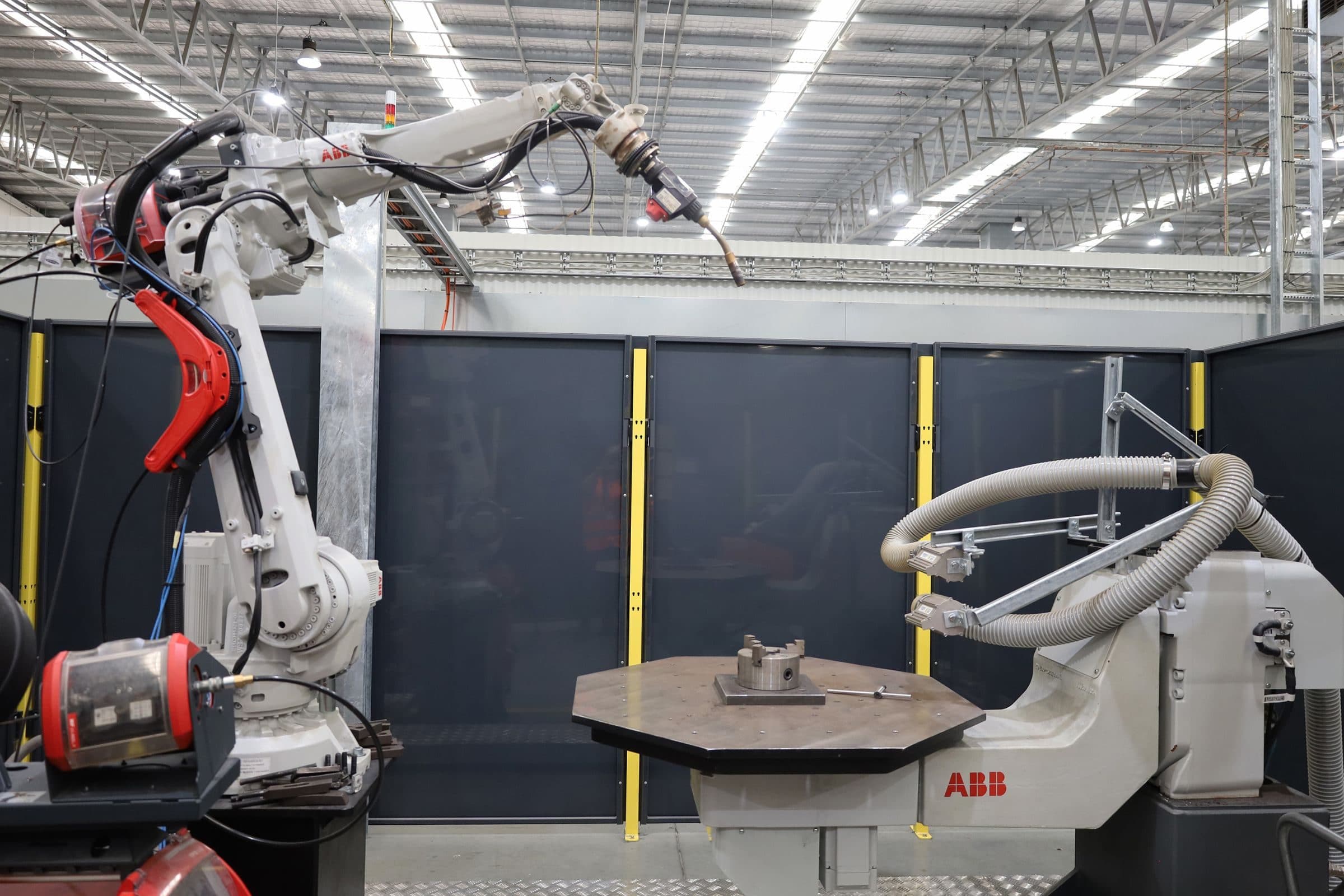
    At the center of AML3D is its proprietary Wire Arc Additive Manufacturing (WAAM) technology, branded as WAM®.

    Unlike powder-based metal processes such as powder bed fusion, WAAM uses welding wire as feedstock, building large metal structures layer by layer using an electric arc. The approach is particularly well-suited for producing large-format structural components, often in stainless steel, nickel alloys, and other high-performance materials.

    For applications such as naval shipbuilding, utilities infrastructure, and defense components, the ability to produce large, near-net-shape metal parts with reduced material waste can be a significant advantage.

    WAAM also avoids some of the powder handling complexities and cost structures associated with traditional metal AM systems, making it attractive for industrial environments where scale and durability matter more than fine-detail resolution.

    AML3D has been improving its machines and digital controls, with a focus on consistency and meeting strict standards, both essential when working with defense customers.

    AML3D creates parts for Boeing using its Arcemy WAM printer. Image courtesy of AML3D.

    Although AML3D’s revenue was down 30%, we now know that the orders were not canceled, and that the revenue is just coming later. Material delays and schedule changes moved some revenue into the second half of FY26, but the A$16.5 million order book remains unchanged. With those orders secured, AML3D enters the second half of the year in a strong position.

    The company stated it has entered its next phase of growth, supported by new contracts in the U.S. utilities sector and the UK defense market, alongside its established U.S. Navy work. This shows the company is expanding beyond the U.S. while still focusing on defense and infrastructure.

    Nickel Aluminum Bronze part 3D printed using AML3D’s wire additive manufacturing process for BAE Systems. Image courtesy of AML3D

    AML3D is increasingly focused on international growth. Along with the U.S. expansion, the company is also looking to grow in Europe, especially in defense markets.

    Many governments now want to make more critical parts at home instead of depending on long overseas supply chains. Large-scale metal 3D printing systems like AML3D’s WAM technology can help make that possible. The company’s technology fits well with this move toward more local production.

    AML3D is entering the second half of 2026 in a strong position. With solid orders in place and revenue expected later this year, the company is moving into larger-scale industrial production. The wider metal 3D printing market remains competitive, especially in aerospace and other high-precision areas where powder-based systems dominate. AML3D is focused on something different: large structural parts, where its wire-based process can be more cost-effective and better suited for bigger components.

  • AMS 2026 in Photos: Snow, Songs, and Serious Conversations

    AMS 2026 may have been altered by flight delays and snow-covered streets, but once you made it, the energy felt anything but frozen. This year’s Additive Manufacturing Strategies, which wrapped up last week in New York City, mixed big ideas, financial updates, and plenty of conversations about where additive manufacturing is headed. Between panels, presentations, and networking chats, it felt like the industry is at a turning point, even if no one is quite sure what comes next.

    The view from the venue

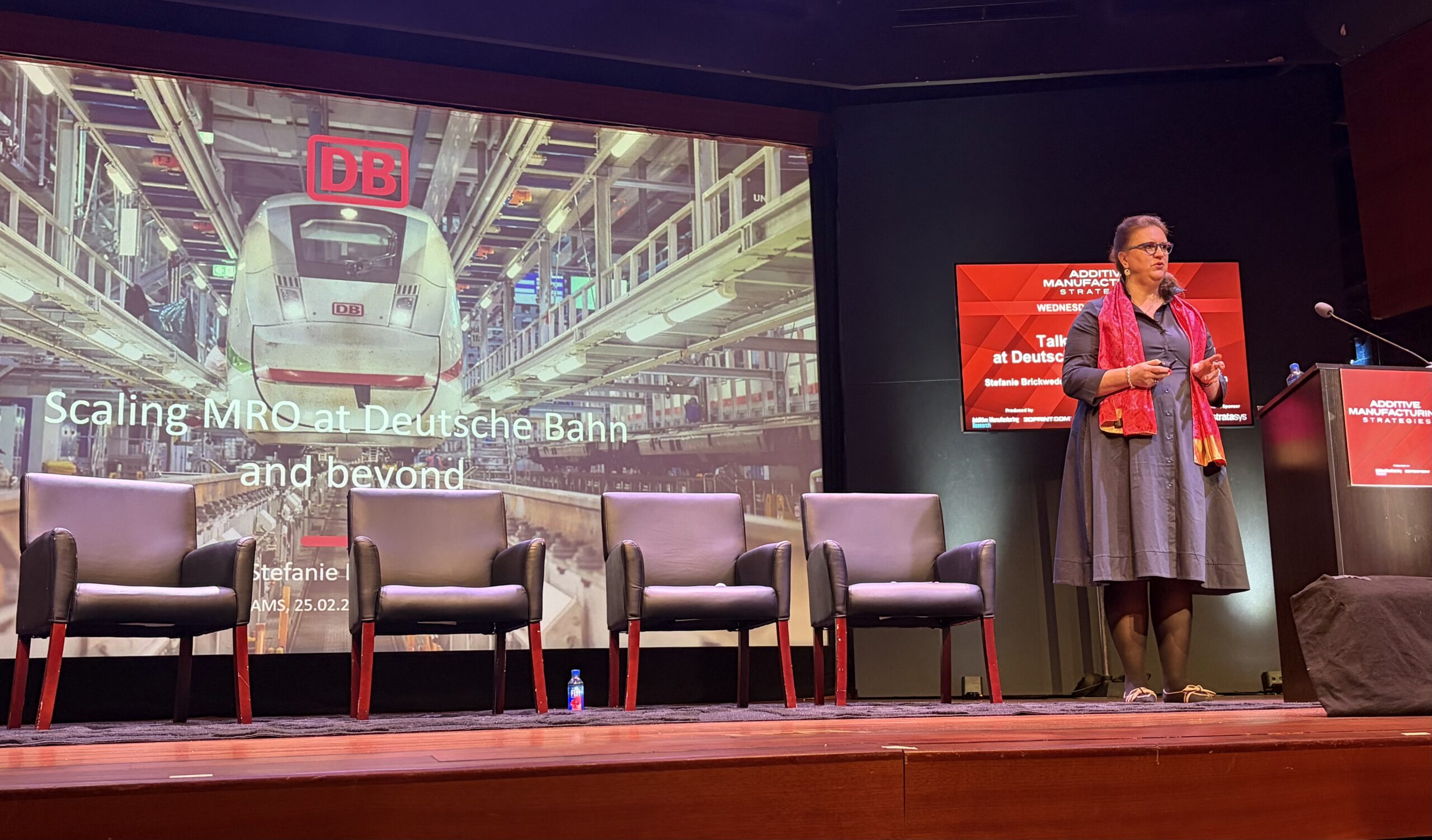
    A massive blizzard hit the city in the days leading up to the conference, which obviously changed travel plans for a lot of attendees. I personally had five separate flights canceled before finally managing to fly to Washington, D.C. to hop an Amtrak train to NYC. We heard from many others who also rode trains into the city; this probably made Stefanie Brickwede, head of AM at Deutsche Bahn, very happy indeed.

    Stefanie Brickwede, Mobility goes Additive

    Unfortunately, many people were unable to make it to the event, so we’re sharing some of the highlights with you!

    A Tale of Two Keynotes

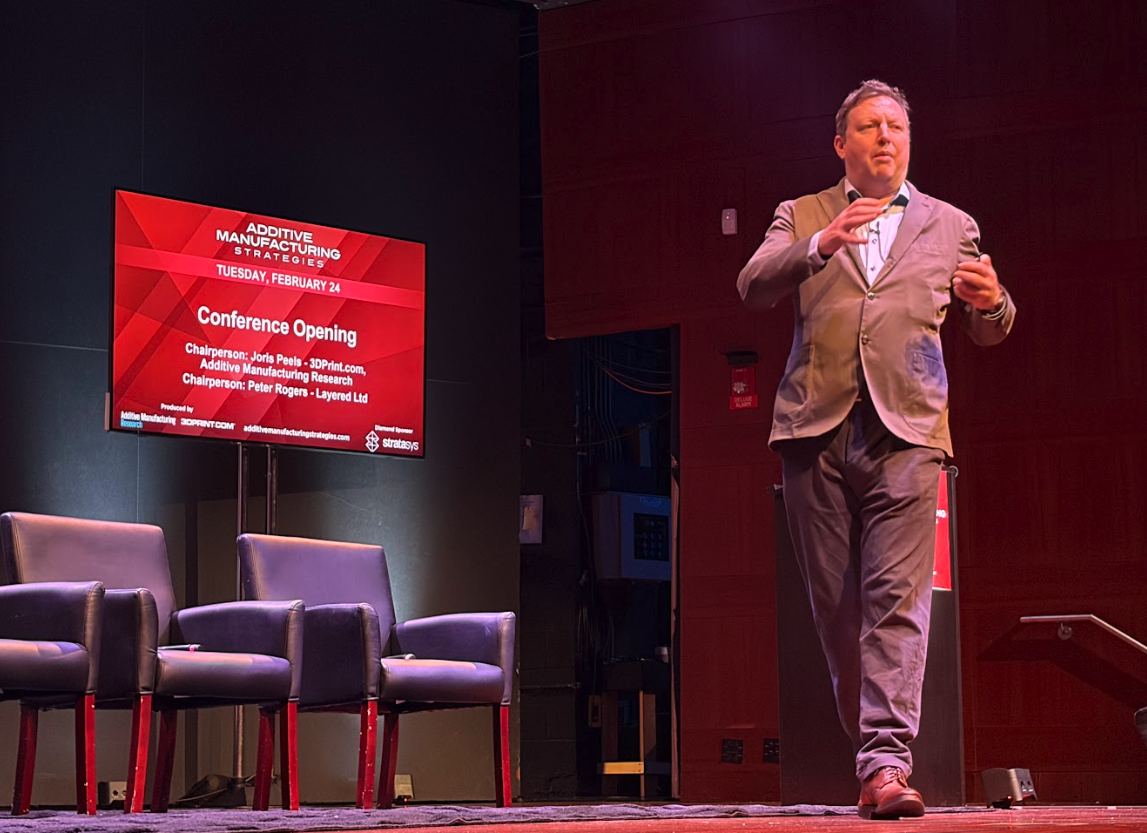
    Thanks to the blizzard, the word of the week was flexibility, and the schedule was fairly fluid. Yoav Zeif, the CEO of AMS Diamond Sponsor Stratasys, had long been scheduled to open the conference, just as he has the past few AMS events. Unfortunately, his arrival was delayed, so our own Executive Editor Joris Peels, Chairperson for AMS 2026, took the stage that first morning and delivered his own opening presentation, “3D Printing in a Fractious World.”

    AMS Chairperson Joris Peels, 3DPrint.com

    Peels described companies acting “like a dog with five or six tennis balls,” bouncing from one initiative to another without follow-through, and said that in the uncertain geopolitical climate, what matters most is earning trust, knowing your customers, and building real relationships. He called this “very old school” focus more essential than ever.

    He also said the biggest disruption in our industry may be taking place in plain sight: the very real possibility of a desktop 3D printing revolution.

    Stratasys CEO Yoav Zeif

    Luckily, Zeif was still able to deliver his official opening keynote on the “State of the AM Industry.” He just did so in the afternoon on the second day of AMS. Zeif said he aspires for the AM industry to be mainstream, like CNC.

    “It’s a journey. When you look at CNC, it took them 40 years to become the mainstream of producing parts…What happened in those 40 years? They removed those barriers, one by one,” he told the audience.

    “We need to remove the barriers…There is no reason in the world, none, that we will not remove the barriers as well. We just need to do it with our customers.”

    Zeif also echoed what Peels said, noting that desktop is taking over the additive sector, and that this is a good thing, because it helps expand the industry.

    Snowy Song Lyrics

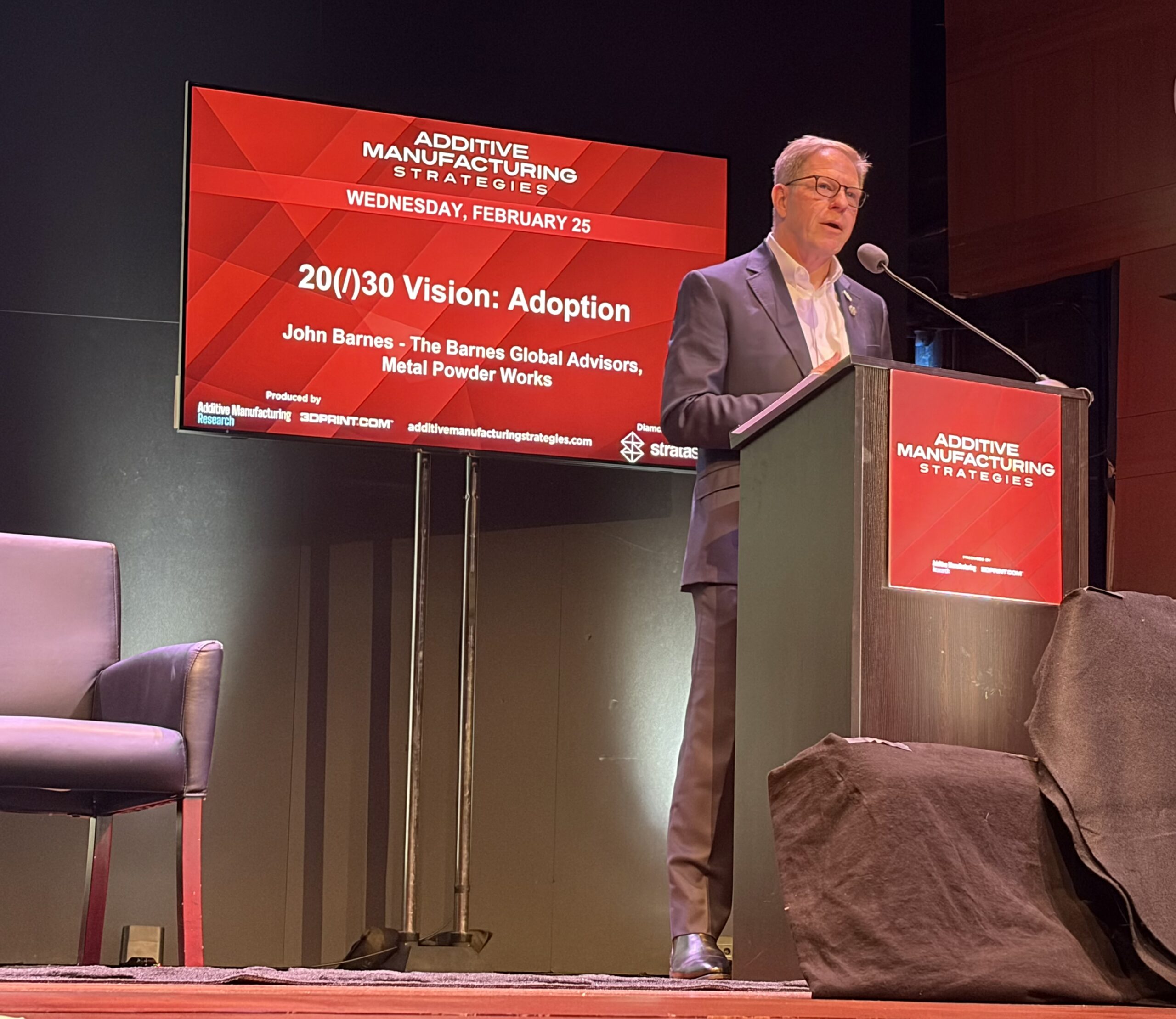
    A memorable moment came when John Barnes, Founder of The Barnes Global Advisors (TBGA) and CEO of Metal Powder Works, began his presentation. True to recent tradition, he opened with pun-filled song lyrics he’d written himself.

    John Barnes, TBGA and Metal Powder Works

    This year, they were all about the snowy weather that made travel difficult for most attendees.

    “I thought about perhaps ‘Do You Wanna Build a Snowman,’ but that might be in bad taste, so maybe I should just ‘Let It Go,’” Barnes quipped amidst raucous laughter, dropping the names of two popular songs from the movie “Frozen.”

    He mentioned the “flurry of ideas” he had while planning and thinking about his “20(/)30 Vision: Adoption” presentation, noting that his head was “a blizzard of thoughts that I had to claw my way through.” It was a great way to make everyone smile, even in a year filled with uncertainty.

    3D Printing for Helmets

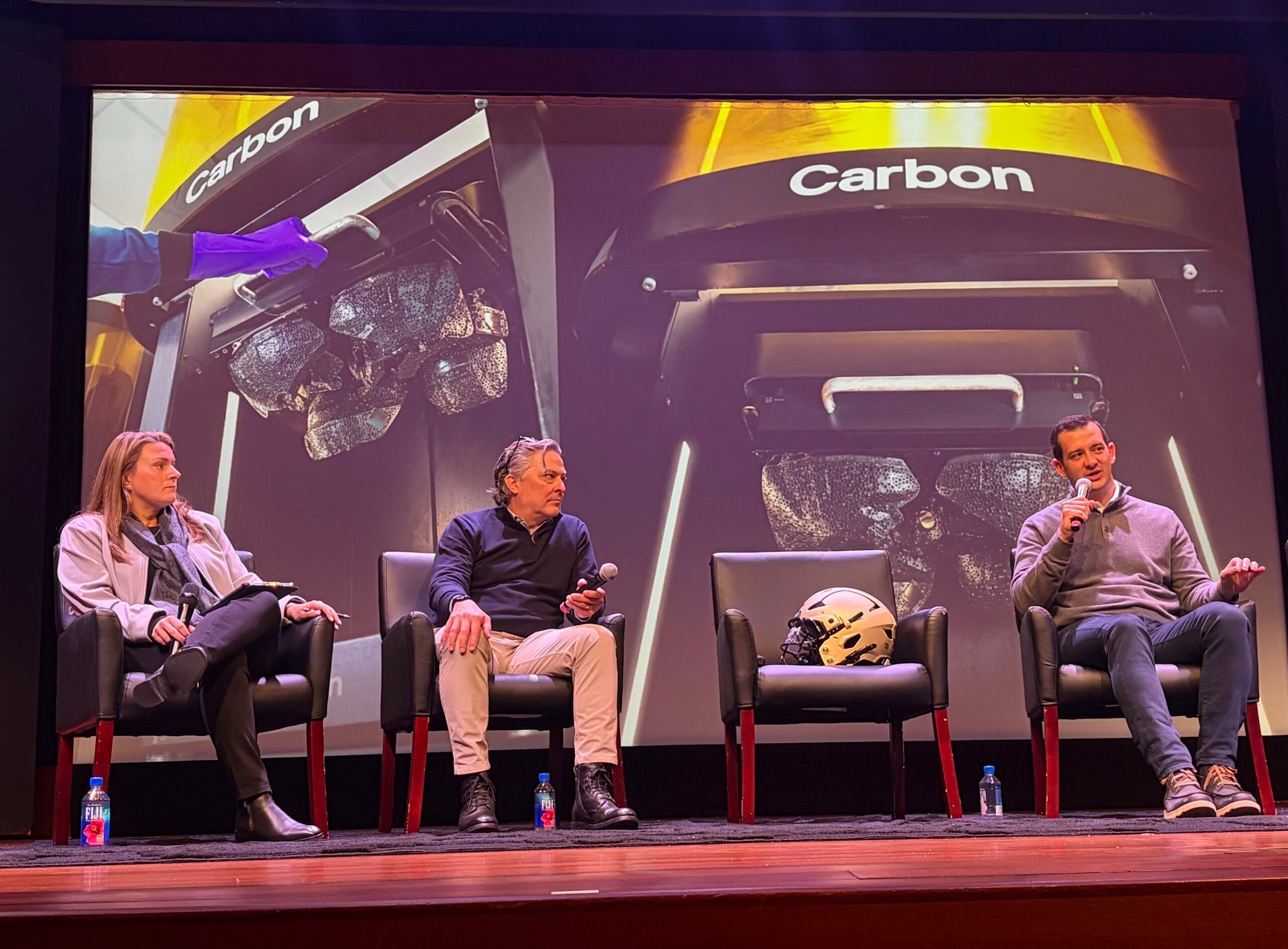
    On the final day of AMS, the conversation turned to a very specific AM application. With football helmet in hand, Carbon CEO Phil DeSimone took the stage with Riddell representatives Thad Ide, Chief Product Officer, and Erin Griffin, Senior Vice President of Marketing and Communications. The two companies launched a 3D printed helmet liner in 2019, and have been collaborating to innovate sports gear ever since.

    L-R: Erin Griffin and Thad Ide, Riddell; Phil DeSimone, Carbon

    Ide called Carbon’s DLS technology “the perfect fit” for Riddell’s helmets. Additionally, Ide and Griffin let the audience in on some breaking news: Riddell is actively working to include more additive across all levels, including its varsity line.

    Formlabs Financials

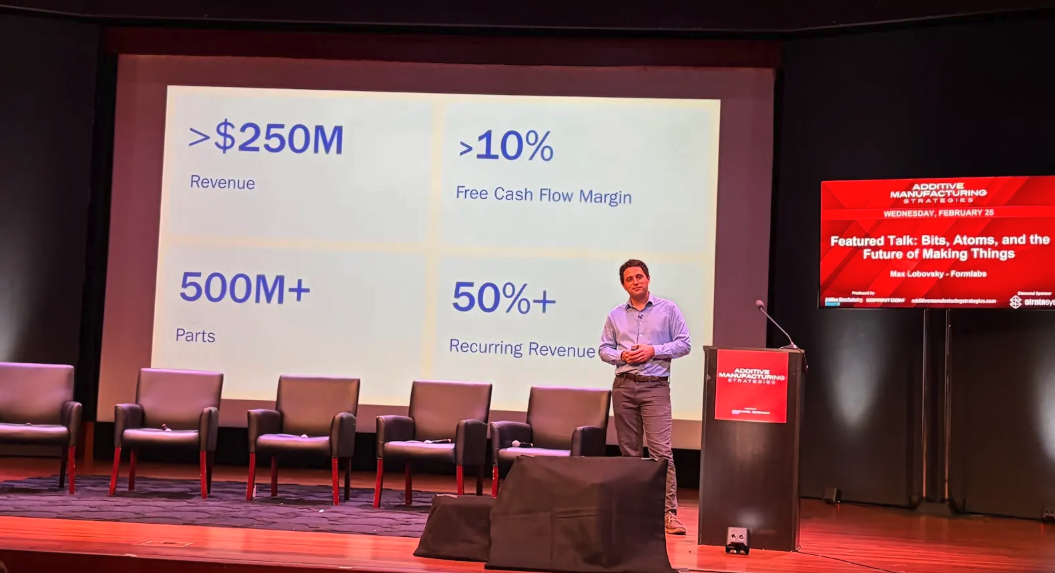
    Speaking of breaking news, Formlabs CEO Max Lobovsky’s featured talk included numbers that many attendees described as a “huge deal,” and got people talking afterward about how companies can grow in today’s AM market.

    Max Lobovsky, Formlabs

    The privately owned company has achieved a $2 billion dollar valuation, which makes it a unicorn. But because it’s not public, the financials are not typically shared…until Lobovsky put them up on the big screen at AMS.

    “Yeah, I see everyone getting out their phones to take pictures,” he said wryly, as I and nearly everyone around me did just that.

    CEO Roundtable

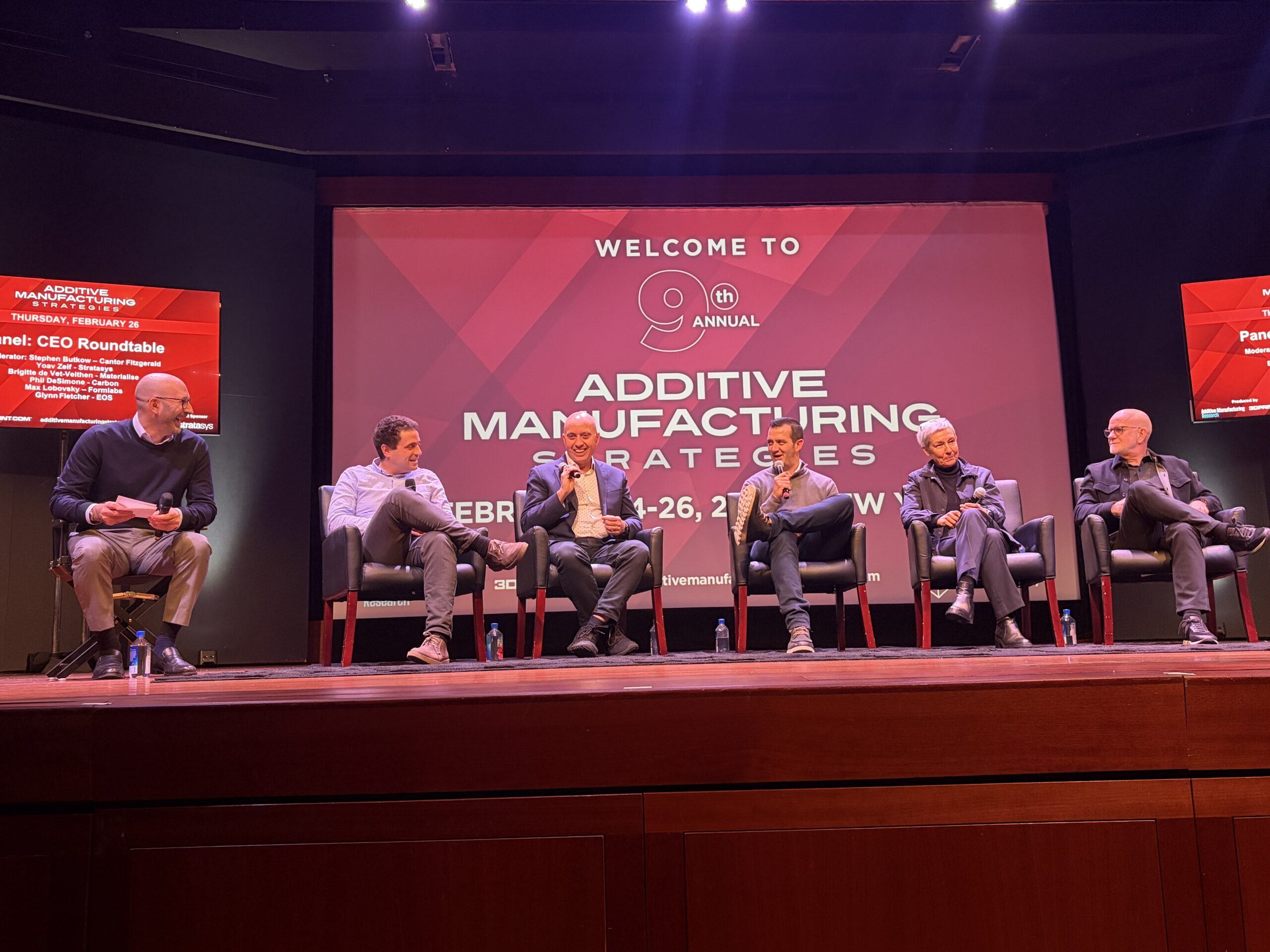
    The popular CEO roundtable always feels to me less like polished keynotes and more like honest conversations about where companies really stand today. The CEOs on the panel talked openly about challenges, opportunities, and the reality of operating in a market that’s still evolving. They focused on real issues instead of big promises.

    L-R: Stephen Butkow, Cantor Fitzgerald; Max Lobovsky, Formlabs; Yoav Zeif, Stratasys; Phil DeSimone, Carbon; Brigitte de Vet-Veithen, Materialise; Glynn Fletcher, EOS

    One of the last questions Cantor Fitzgerald‘s Managing Director Stephen Butkow asked the CEOs was what they are most excited for in 2026. DeSimone is most excited about “the sheer quantity of resin that we will be shipping for individual applications.” Brigitte de Vet-Veithen, Materialise CEO, said she’s excited for the company’s software part of the business this year, while Lobovsky was excited about all the products Formlabs is currently developing.

    Yoav noted that the world is “unfortunately not really stable,” which equates to major demand in aerospace and defense applications, so that’s what he’s most excited about. Finally, Glynn Fletcher, the CEO of EOS, said what he’s excited about is “under a strict NDA,” so he can’t discuss it openly. But, he also said the company is embedded in many programs where AM is the default, not the exception, which he also finds exciting.

    Networking Opportunities

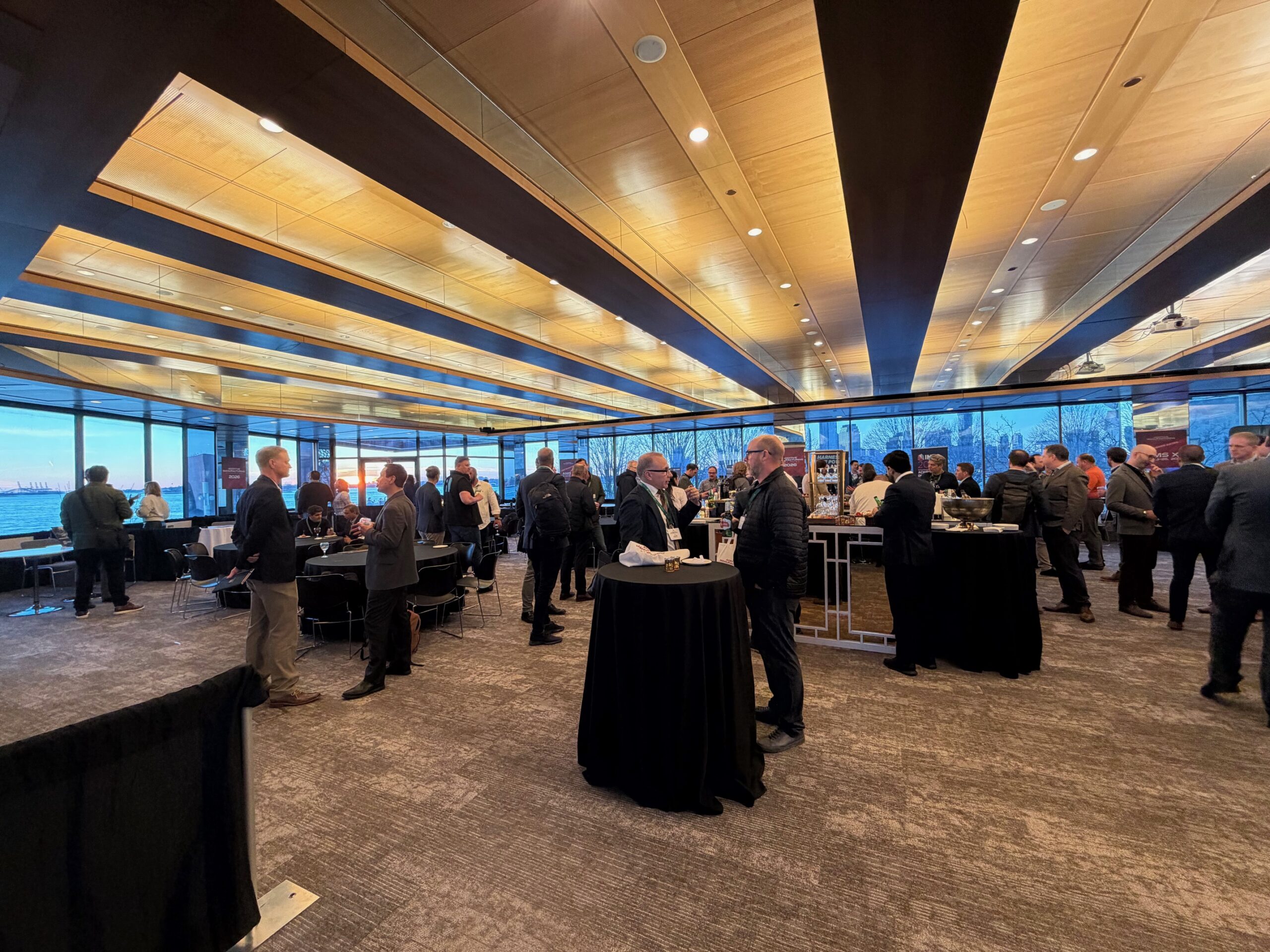
    Then there were the networking moments, and there were plenty of those. As always, some of the most important conversations happened there, in small groups, over drinks, between people who have known each other for years or were just meeting for the first time.

    The presentations start the conversation, but the real work often happens afterward. Once again, AMS showed that what happens between sessions can matter just as much as what happens during them.

    Despite the snow and travel delays, AMS did what it always does: brought people together, made sure it was the center of real conversations, and reminded everyone why this 3D printing community matters.

    Images courtesy of Sarah Saunders for 3DPrint.com

  • The Tribal Knowledge Crisis in AM Cannot be Solved Without an AI Intervention

    Additive manufacturing (AM) has long relied on a deep well of expertise that is notoriously hard to document.

    That expertise can be found in the nuances involved in setting up machines. The calibration of specific parameters. The unspoken understanding of how a material behaves under different environmental conditions. And it’s in the insights about why a part that appears flawless in CAD might fail halfway through a build.

    Much of what enables 3D printing to succeed in real-world applications isn’t written in manuals but is held within the minds of experienced operators, engineers, and technicians.

    That reliance on tribal knowledge has become a liability for the industry, especially as the manufacturing sector faces an imminent workforce crisis.

    By 2033, manufacturing is expected to report 3.8 million new job openings, but only about half of those positions are projected to be filled. Even more concerning, roughly three-quarters of that talent gap is expected to come from retirements, taking decades of hands-on machine and process knowledge with them.

    Additive manufacturing, still grappling with a shortage of experienced operators, will feel this more acutely than most. However, there is a tool at the industry’s disposal that can soften the impact. If implemented strategically, AI has the potential to retain the decades of AM expertise that will soon be walking out the door.

    Why Additive Manufacturing Is Especially Exposed

    Additive processes are evolving at a rapid pace. While certain standards exist, we know that best practices can vary significantly by machine model, material batch, software version, and even operator intuition. Two 3D printers with identical specs can behave drastically differently depending on the individual operating them.

    As a result, AM organizations frequently rely on a small number of “go-to” experts who know how to diagnose failures, tweak parameters, or qualify parts. These individuals become the glue that holds production together. When they retire or move on, operations can come to a grinding halt. New hires may take months or even years to reach the necessary level of productivity, which impedes a company’s ability to scale. So, this is not just a hiring problem – it’s about enabling knowledge continuity.

    Documentation Alone Isn’t Enough

    For years, the common solution has been better documentation, such as more SOPs, checklists, binders and PDFs. While this approach has its place, it clearly falls short in additive manufacturing.

    Anyone can document a process, but documenting the ‘why’ behind a process is far more complex. It requires an understanding of why it works, when it fails, and how to adapt it in edge cases – the type which can cause serious equipment malfunction or failure. Much of that insight is experiential, learned over time, and deeply contextual, making it nearly impossible to transfer through traditional documentation.

    That’s where a new approach, predicated on AI, is emerging and offers substantial returns for those willing to adopt it.

    AI as a Knowledge Multiplier, Not a Replacement

    Perhaps the most promising use of AI in additive manufacturing isn’t autonomous printing or generative design, but knowledge capture and accessibility.

    Traditionally, expertise is viewed as something that must be passed on from one individual to another over years of mentorship. We see this particularly in manufacturing, where human oversight has been relied on since inception and still to this day. Now the industry must ask itself how it can prevent the inevitable haemorrhaging of intelligence as key people leave. Leveraging AI systems to organize, contextualize, and surface institutional knowledge would unlock the ability to preserve this expertise on an unprecedented scale.

    Let’s look at how it works.

    AI can make use of historical build data, tying specific machines, materials, and outcomes together to create a comprehensive record that operators and engineers can easily reference. It can also connect process decisions and parameter adjustments directly to the success or failure of a print, offering insights into what works and what doesn’t.

    Expert annotations that explain the rationale behind key decisions can also be easily incorporated, helping to capture the context behind each choice.

    AI can also identify patterns across various jobs. This brings to light hidden connections and insights that would otherwise go unnoticed – something that no single person could track on their own.

    When all of this information is made structured and searchable, it transforms scattered, disjointed knowledge, which was once confined to the minds of a select few individuals, into a constantly evolving and accessible reservoir that everyone can draw from.

    The impact on the workforce would be far-reaching. New engineers would be able to learn faster, and operators would make better decisions with guidance rooted in years of experience. Experts would also spend less time answering recurring questions and more time solving genuinely novel problems.

    Crucially, this doesn’t deskill the workforce. It raises the baseline while allowing room for deepening expertise.

    A More Resilient Additive Workforce

    As additive manufacturing evolves from experimentation to mainstream production, the need for resilience becomes paramount. A big part of that is minimizing dependence on any single individual and ensuring that knowledge is preserved, even as roles change or workers retire.

    AI-driven knowledge systems won’t single-handedly solve the labor shortage in additive manufacturing, but they can profoundly enhance how effectively the industry absorbs new talent while preserving intelligence accrued over decades.

    In a field where success and failure often hinge on insights gained from years of hands-on experience with specific machines, the ability to share that knowledge could become one of the most significant competitive advantages.

    Le’ora Lichtenstein. Image courtesy of Corbel.

    The tribal knowledge crisis is already here. The question now is whether the industry continues to restrict expertise to individuals or if it will embrace the AI-powered systems that democratize this knowledge, ensuring it is accessible to the next generation of talent.

    About the Author

    Leora Lichtenstein is the cofounder and CEO of Corbel, an AI-powered CPQ (Configure, Price, Quote) platform that modernizes industrial equipment sales by turning complex product data into intelligent, data-driven quoting and financing workflows. Under her leadership, Corbel has raised seed funding to expand deployments with equipment manufacturers across sectors, including metalworking, woodworking, and additive manufacturing machinery. Lichtenstein has a background in structured credit and early-stage investing, holds a BSc in Finance, and is a CFA charterholder.

  • SPEE3D Continues to Dominate in Metal AM Innovation with Tennessee Army National Guard

    The US Army’s additive manufacturing (AM) capabilities have taken some time to catch up to those of the Air Force and Navy, but the catch-up phase now seems to be in full acceleration mode. We saw that at the beginning of February when Velo3D announced it was the first qualified AM vendor for the Army’s Ground Vehicles Systems Center (GVSC). Further evidence of the Army’s progress just surfaced in the form of a new SPEE3D case study that was executed with the Tennessee Army National Guard, the University of Tennessee (UT), and the Army Research Laboratory (ARL).

    As with the Velo3D deal, the SPEE3D case study involves Army ground vehicles: specifically, mine-resistant ambush protected (MRAP) vehicles, which are designed to withstand munitions including improvised explosive devices (IEDs). SPEE3D and its partners on the project benefitted from getting to work at UT’s Defense Development and Applied Research Center (DARC), where the cold-spray AM (CSAM) OEM’s Expeditionary Manufacturing Unit (EMU) was tested in a live mission scenario on a DARC training range.

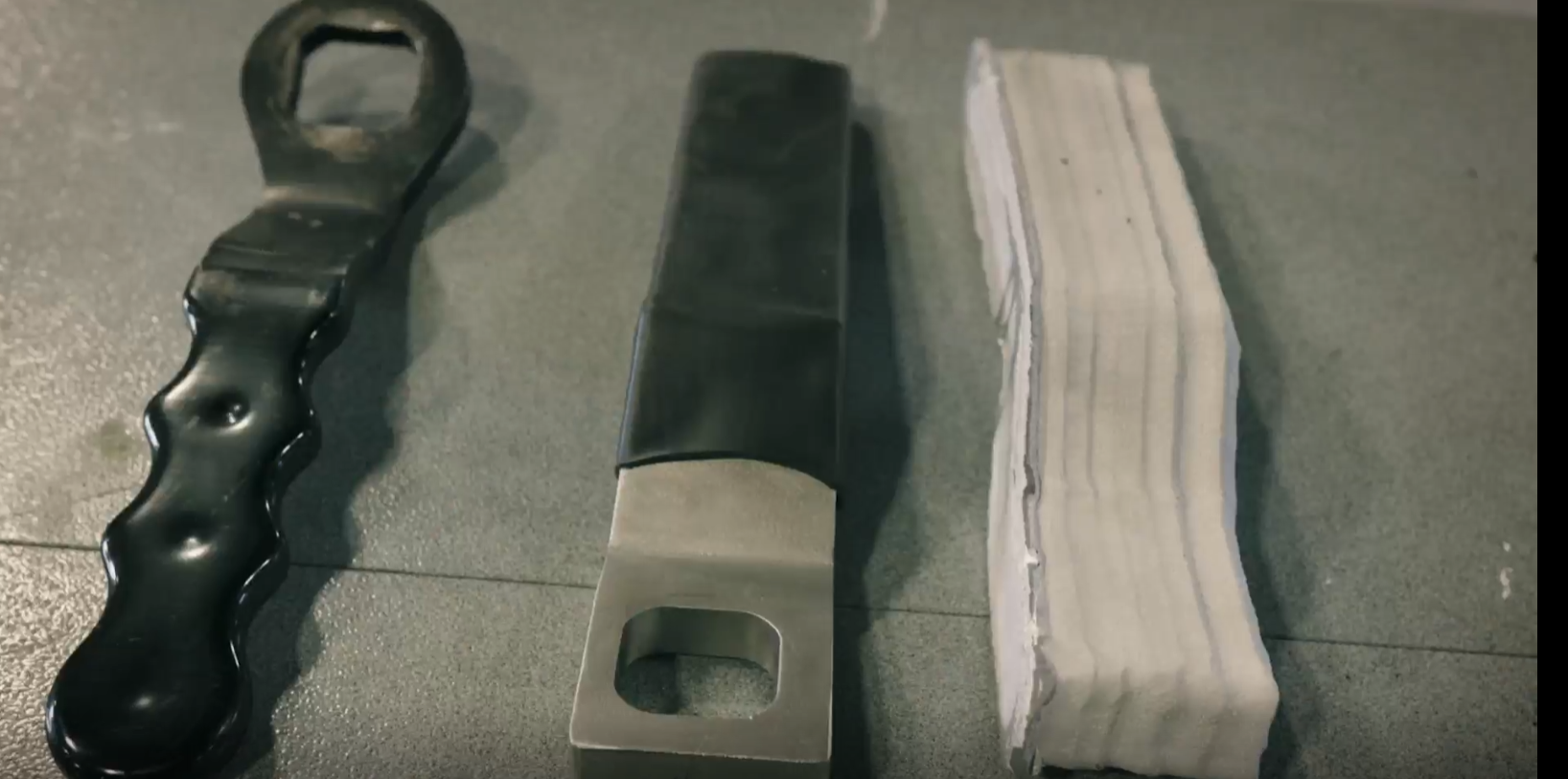
    In the training exercise, Army National Guard soldiers and UT engineers used the EMU to design, print, heat treat, and machine a Battle Lock Handle for an MRAP vehicle in under ten hours, demonstrating how frontlines manufacturing could drastically reduce the time it takes to return vital hardware to the battlefield, optimizing preparedness and thereby potentially reducing casualties. Just as intriguing as the production of the part itself was the delivery mechanism: instead of transporting the Battle Lock Handle through contested, unnavigable territory, the soldiers delivered it via drone.

    For their efforts, the Army National Guard, DARC, and the ARL won the Expeditionary & Tactical 3D Printing Excellence Award at the MILAM 2026 conference. After purchasing an EMU system at some point in the last couple of years, UT also recently purchased SPEE3D’s large-format TitanSPEE3D printer.

    In a press release about SPEE3D’s Tennessee training exercise with the US Army, Army Lt. Col. Colby Tippens, Executive Officer, 278th ACR, who “helped embed the EMU at the Knoxville Armory”, said, “We wanted to maximize the value-added of this unprecedented initiative with ARL, UT, and SPEE3D to grow our expertise in this field and then serve as a force multiplier to other Army units and organizations who are not as fortunate to have this capability in their own backyard.

    “This allows our soldiers and maintenance leaders to help shape the Army’s future of maintaining our critical combat systems when we are deployed and in harm’s way. If we can give our soldiers the ability to build critical repair parts in a timely manner, that will help improve combat power, enhance readiness, and reduce risk and our logistics footprint that could ultimately help save soldiers’ lives.”

    Even as SPEE3D focuses so diligently on fine-tuning all the ins and outs of its core processes over and over again in response to user feedback, the company simultaneously manages to approach every new use-case opportunity more like a Hollywood director than like a traditional deep tech enterprise. And what’s most striking is how SPEE3D intertwines its creative vision with its technological perfectionism in ways that maximize both.

    On the surface, delivering a part via drone that’s been printed in a contested logistics environment sounds like a concept that’s just trying to cram as many buzzwords as possible into one press release. But when you consider all the elements in the context of the entire range of operational capabilities that the US military has been cultivating for over a decade, it becomes clear that the scenarios SPEE3D is gaming out are simply the logical conclusion of a generational advanced manufacturing buildup.

    If it hasn’t already happened and simply hasn’t been reported upon, at some point in the not-so-distant future, drones with components printed on a battlefield somewhere will deliver mission-critical parts printed in that same combat zone to the soldiers fighting on the frontlines. I’ve been focused on the idea of manufacturing on the frontlines, but the change is an even bigger milestone than that: miniature contingency supply chains are moving to the frontlines.

    Finally, less poetically, this case study also reinforces just how integral of an advanced manufacturing hub Knoxville has become in an age of heightened geopolitical sensitivity. While that has been the case at least since the Manhattan Project era, the diversity of the work currently happening in the eastern Tennessee city amounts to a microcosm of the future of US hardware.

    Images courtesy of SPEE3D

  • Why Additive Manufacturing Adoption Looks the Way It Does – Part I

    Additive manufacturing has been discussed for decades as a technology with the potential to reshape how products are designed and produced. Expectations have often focused on what the technology could enable in principle. Industrial adoption, however, has followed a more selective and uneven path.

    This article examines additive manufacturing from a structural perspective. Rather than emphasizing technical capability, it looks at the forces that have driven adoption, the challenges those forces introduced, and the industrial responses that followed. The goal is not to predict future outcomes or promote specific technologies, but to explain why additive manufacturing looks the way it does today.

    Understanding this context helps separate interest from deployment, capability from applicability, and potential from constraint.

    From rapid prototyping to selective industrial use

    Additive manufacturing technologies emerged in the late 1980s and early 1990s in response to a specific industrial need. The primary objective was to reduce the time and friction associated with design iteration. Early systems made it possible to translate digital models directly into physical objects without tooling, enabling faster form validation and earlier feedback in product development.

    The initial industrial response was concentrated in design and engineering environments. AM systems were adopted as development tools rather than as manufacturing equipment. Their value lay in compressing iteration cycles and improving communication between design, engineering, and downstream functions. In this phase, success was measured in time saved rather than in parts shipped.

    Several challenges limited broader use. Material properties were often inferior or insufficiently characterized for end use. Process stability and repeatability varied, dimensional accuracy was inconsistent, and surface quality frequently required secondary operations. Build rates were low, and cost per part was high compared with established manufacturing methods. These constraints were well understood and shaped how AM was positioned within organizations.

    From the mid 2000s onward, improvements in machine capability, process control, and material quality began to change the decision context. In controlled settings, certain AM processes demonstrated mechanical properties comparable to those of conventionally manufactured parts. This did not remove earlier constraints, but it altered the balance between limitations and the value AM could deliver.

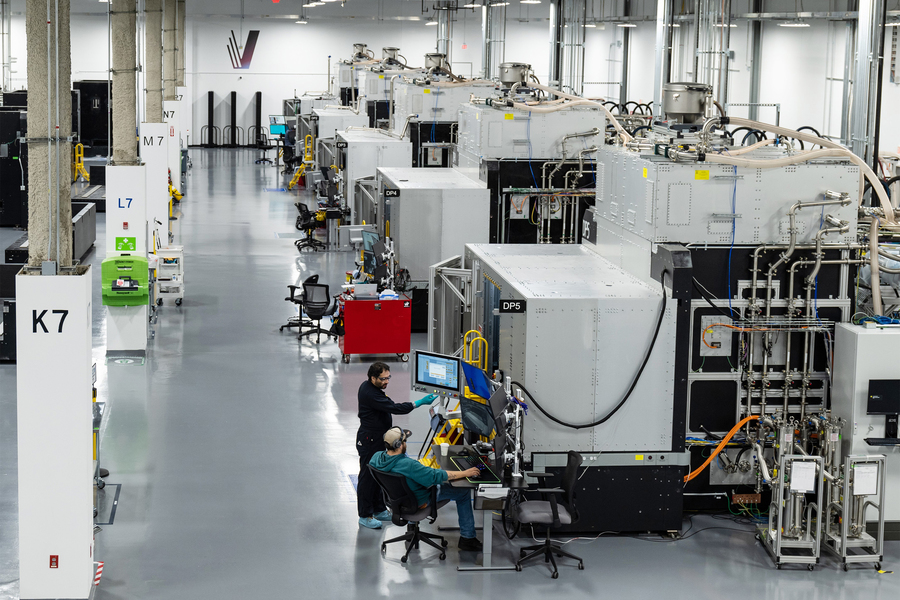
    VulcanForms has created digital production systems based on its industrial 3D printing technology. Image courtesy of Joseph Seif.

    The industrial response remained selective. Rather than a broad shift toward AM based production, adoption occurred in applications where functional performance, geometric freedom, or customization outweighed cost and throughput considerations. Aerospace components, medical implants, dental products, and specialized tooling inserts became early production use cases. In these contexts, AM was integrated as a manufacturing route for specific part families, not as a replacement for existing production systems.

    This transition was incremental. Additive manufacturing did not move cleanly from prototyping to production. It expanded its role by accumulating narrowly defined industrial use cases over time. Even as production applications increased, AM continued to coexist with conventional manufacturing processes, each addressing different constraints and value criteria.

    The resulting pattern established many of the structural characteristics that continue to shape additive manufacturing today. Early adoption was driven by iteration speed. Later, industrial use emerged where performance justified added complexity. Much of the public discussion around additive manufacturing still focuses on technical capability. The sections that follow examine instead what has driven adoption in practice and what has consistently constrained it.

    This first installment has focused on how additive manufacturing moved from a rapid prototyping tool to a selective production method. In Part 2, the analysis turns to the forces that shaped industrial integration more directly: performance requirements, regulatory environments, and the influence of market cycles and capital.

    Ulf Lindhe. Image courtesy of The Org.

    About the Author:

    Ulf Lindhe is a veteran executive in the additive manufacturing industry with decades of experience spanning technology development, industrial strategy, and global market expansion. He has held senior leadership roles within the metal additive manufacturing sector, contributing to the commercialization and international growth of advanced AM systems. Over the course of his career, Lindhe has worked closely with aerospace, medical, and high-performance engineering companies, helping bridge the gap between technological capability and practical industrial deployment.

  • Fancy a Fidget? Product Designer Sells Her 3D Printed Fidget Clickers at Pop-Up Shops

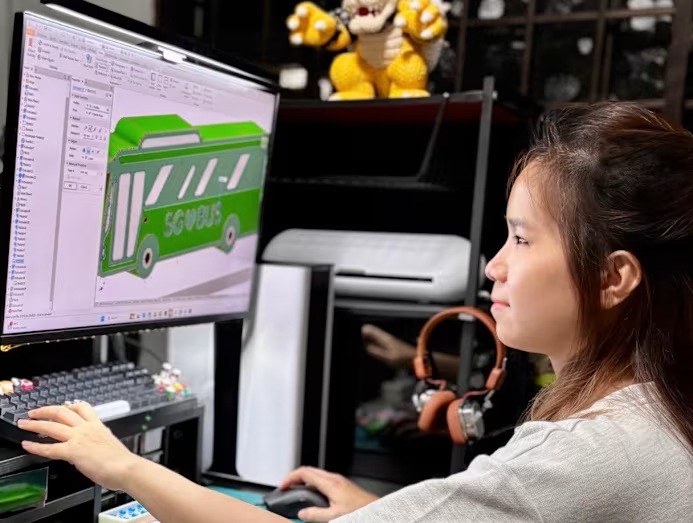
    The hottest toy in 2017 was undoubtedly the fidget spinner, which initially began as a tool to help students with ADHD and special needs relieve anxiety and refocus their energy. But they’ve grown in popularity since then, and the market is massive, with millions of self-soothing fidgets owned by children and adults alike. Singaporean product designer Jennifer Ang is one of the many people using 3D printing to create fidget toys.

    As a product designer, I found it so amazing that 3D printers can turn ideas into reality almost instantly,” said Ang, solopreneur of Heyo.makers, a gift shop for customized 3D printing. “You can do testing within hours, without sending it to a supplier for mock-ups and waiting a week.”

    Ang first used 3D printing when she was an Industrial Design student at Nanyang Polytechnic, and continued to do so at her first job as an industrial designer for a design consultancy firm. At the same time, she was also teaching classes on product design and 3D printing, and eventually left her full-time role for a part-time one to pursue a bachelor’s degree in design from the Singapore Institute of Management (SIM) and Royal Melbourne Institute of Technology (RMIT).

    At her own business, Ang offered product design services and taught courses, and in 2017 purchased her first 3D printer, from Taobao, which was the opposite of a plug and play system. At first, it was just a personal hobby, but like so many others, Ang had to pivot during the pandemic, and started selling customized 3D printed keychains, coasters, phone stands, and bag tags on Shopee. She eventually invested in some better printers, like the Bambu Lab A1, which enabled her to eventually sell her products on Carousell, Lazada, and TikTok.

    Ang wanted to expand into pop-ups, but realized that her custom 3D printed offerings weren’t conducive to that kind of business; not everyone has the time to wait an hour or more for a product to be fabricated. That’s when she had the idea to sell fidget toys, specifically fidget clickers, at a pop-up.

    Many of us fidget as a way of emotional self-regulation. We may click on a pen, twirl our hair, play with jewellery or tap on the table to soothe anxiety,” Ang explained.

    “That is how fidget clickers work. And in some ways, they can be a habit replacement – to fidget in a nicer way.”

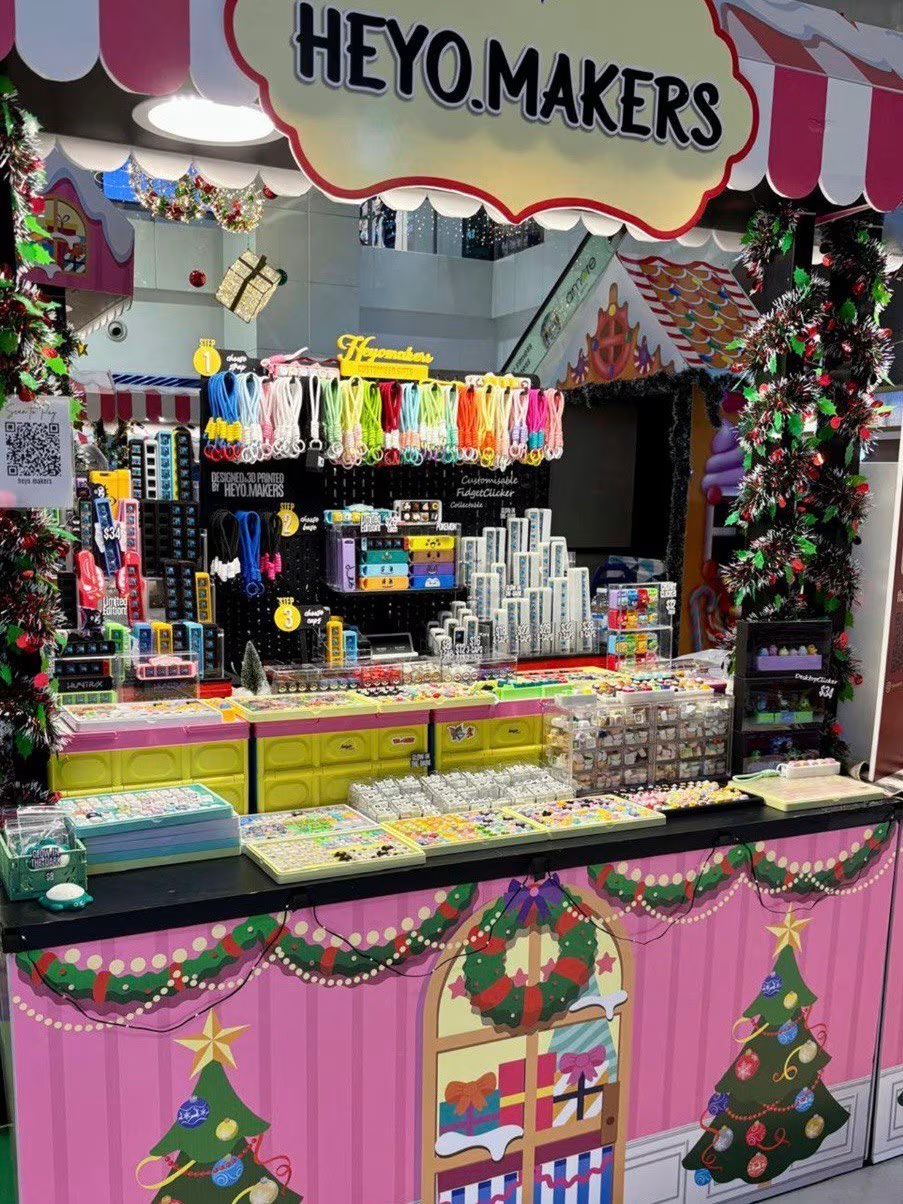
    These fidget clickers are exclusively available at heyo.makers’ pop-up stores. (Photo: heyo.makers)

    Ang, like me, is a pen clicker, noting that she finds “the click and bump therapeutic” and that it helps her focus. She realized she could get the same feeling from her computer’s mechanical keyboard, and decided the products at her pop-up shop would be fidget clicker keychains, with customizable keycaps she designs and prints at home.

    The Heyo.makers keycaps feature designs like cursive fonts, smiley faces, cute characters, and Singaporean snacks. While they can be used on a custom keyboard, they’re actually meant to go on a keypad-like keychain base that you can attach to your bag and click to your heart’s desire.

    Ang ran her first pop-up in the fall of 2025, and 3D printed about 200 keycaps to sell at PLQ Mall in Paya Lebar. While she was initially worried that they might not sell, customers ended up buying around 30 fidget clickers with 120 keycaps on her very first day.

    She said, “I thought that fidget clickers would appeal more to kids, but it turns out that adults like them as well, especially women.”

    The design and printing of fidget clickers are very precise. “0.02mm off and the keycaps may not fit well in the base,” says Ang. (Photo: heyo.makers)

    The clicker base comes in different sizes, holding anywhere from one to nine keycaps. Customers can choose from more than 400 different keycap designs, and three types of clickers: one with a loud click and bump, another with just a bump, and one that’s very quiet. Prices for the fidget clickers and keycaps range from S$8 to S$48.

    Ang’s first pop-up did so well, she’s since offered four additional ones at other locations, and has sold over 1,000 fidget clickers since October of 2025. She only offers the clickers at her pop-ups, but still sells her other 3D printed products on e-commerce platforms.

    What I love most is the chance to bring my own ideas to life while connecting directly with customers,” Ang said. “Seeing people enjoy what I create is incredibly rewarding.”

    She may even expand to creating custom keyboards or other kinds of fidget toys, noting that “once you know how to do 3D design, the possibilities are endless.” This is yet another example of how 3D printing can be a really great tool for small businesses!

  • 3D Printing News Briefs, February 28, 2026: Sales Partner, Holographic 3D Printing, & More

    We’re kicking off today’s 3D Printing News Briefs with some business news, as Meltio has announced a sales partner in the U.S. and Immensa has joined Shell’s Energy Transition Campus. Moving on, researchers from Tsinghua University developed a system that can print tiny objects almost instantaneously. Finally, Aectual designed 3D printed ceilings and storefront elements for lululemon.

    Meltio Sales Partner AEC Helping Improve Growth in U.S. Metal AM Market

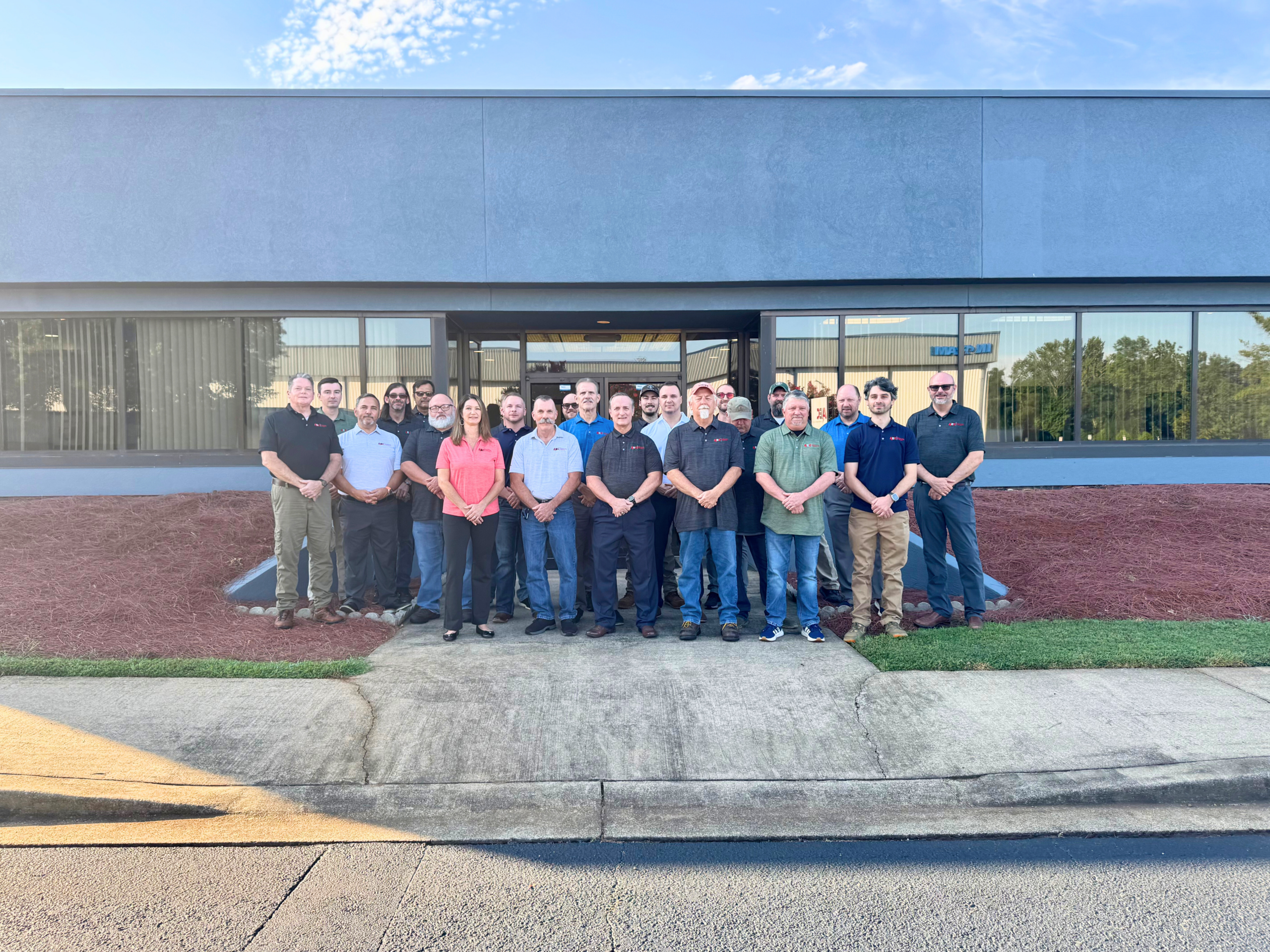
    Spanish multinational Meltio announced that Automation Engineering Company (AEC) is its latest official sales and integration partner in the United States. Based in South Carolina, AEC is a trusted machine builder and automation integrator, and will help Meltio expand growth of its industrial wire laser metal deposition technology in the U.S. metal AM market. This partnership is an important strategic step in Meltio’s continuing expansion into the U.S. Its W-LMD solutions are already being used across the country in industrial environments for demanding sectors, such as energy, heavy industry, and oil & gas. As a sales partner and systems integrator for Meltio, AEC will work to develop a strong ecosystem for Meltio’s solutions in the U.S. by supporting and distributing its technology, and building strong relationships and business opportunities with industrial customers, machine tool builders, academic institutions, technology centers, and others who would appreciate the welding wire-based technology.

    “By combining AEC’s deep experience in advanced robotic welding and turnkey automation systems with Meltio’s blue-laser, wire-fed metal 3D printing technology, we can deliver practical, production-ready additive solutions,” said Bobby Larmer, CEO of AEC. “This welding-wire-based process gives manufacturers a safer, cleaner, and more cost-effective path to high-deposition, near-net-shape production, repair, and hybrid manufacturing. It’s a strong fit with our mission to engineer real-world solutions that improve performance, flexibility, and ROI for our customers.”

    On-Demand AM Firm Immensa Joins Shell’s Energy Transition Campus Amsterdam

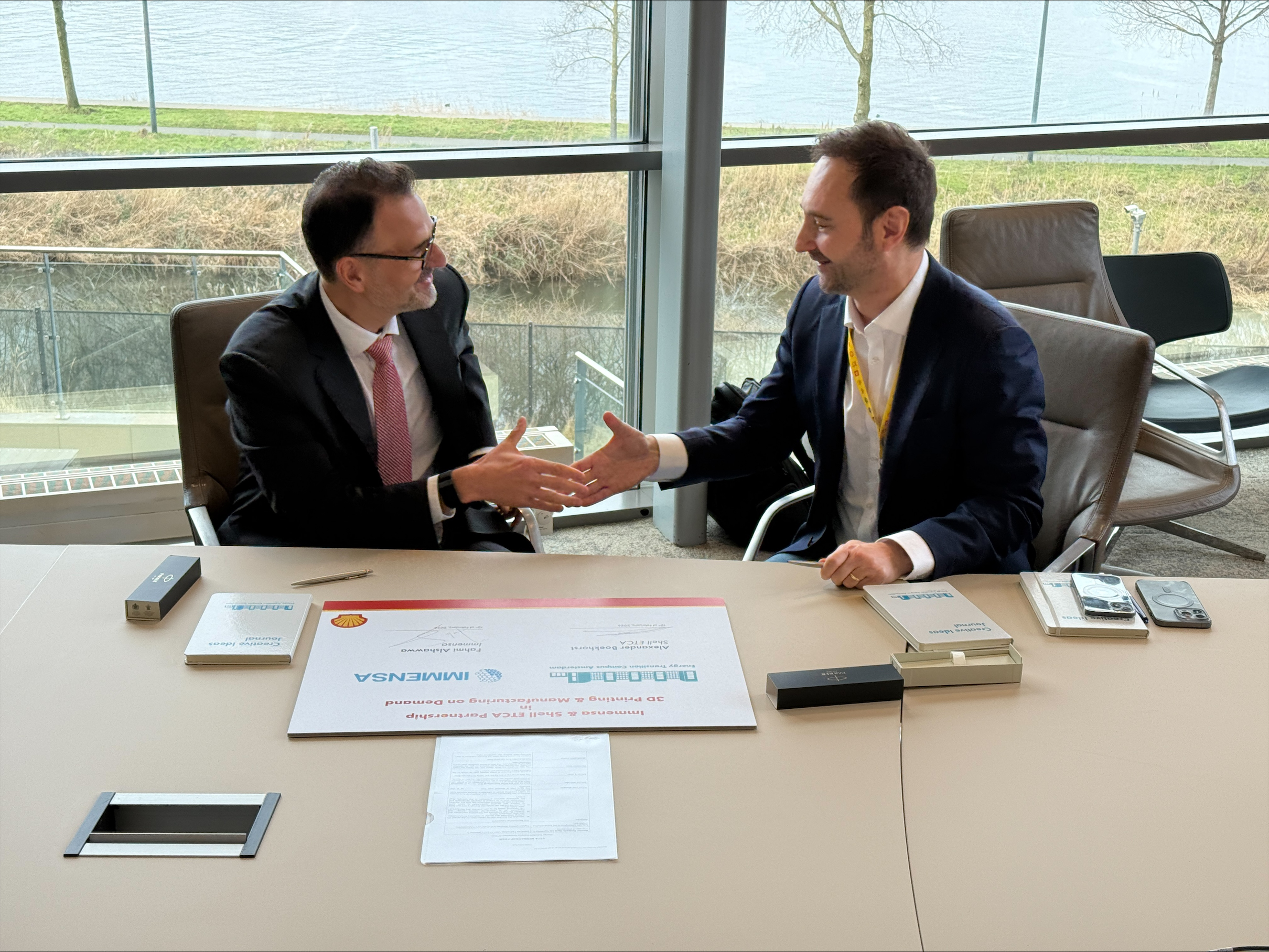
    Immensa, the leading on-demand additive manufacturing and digital inventory solutions provider in the Middle East and North Africa (MENA) region, has joined Shell’s Energy Transition Campus Amsterdam (ETCA). This is Shell’s open innovation campus for industry, research, and technology to work together to speed up the energy transition towards cleaner solutions, offering a purpose-built environment for industrial advanced manufacturing. Based in Saudi Arabia and Dubai, this move will enable Immensa to grow its footprint in Europe. The company will establish a European Center of Excellence for Advanced Manufacturing at ETCA, and operate a Factory-as-a-Service model to support customers in reducing lead times and physical inventory, and improving supply chain resilience, through digital, localized production. Immensa will collaborate with Shell’s Additive Manufacturing team to operate ETCA’s 3D Printing Centre of Excellence and deliver its Digital Supply Chain offering. Initially, the partners will focus on long-lead spare parts for compressors, pumps, and valves.

    “ETCA provides the right ecosystem for our next phase of European growth. The campus enables us to deliver advanced manufacturing solutions closer to our customers while maintaining the high standards required in regulated industries,” Immensa’s Chief Operating Officer Julian Callanan said.

    Tsginhua University Researchers Report Holographic 3D Printing Breakthrough

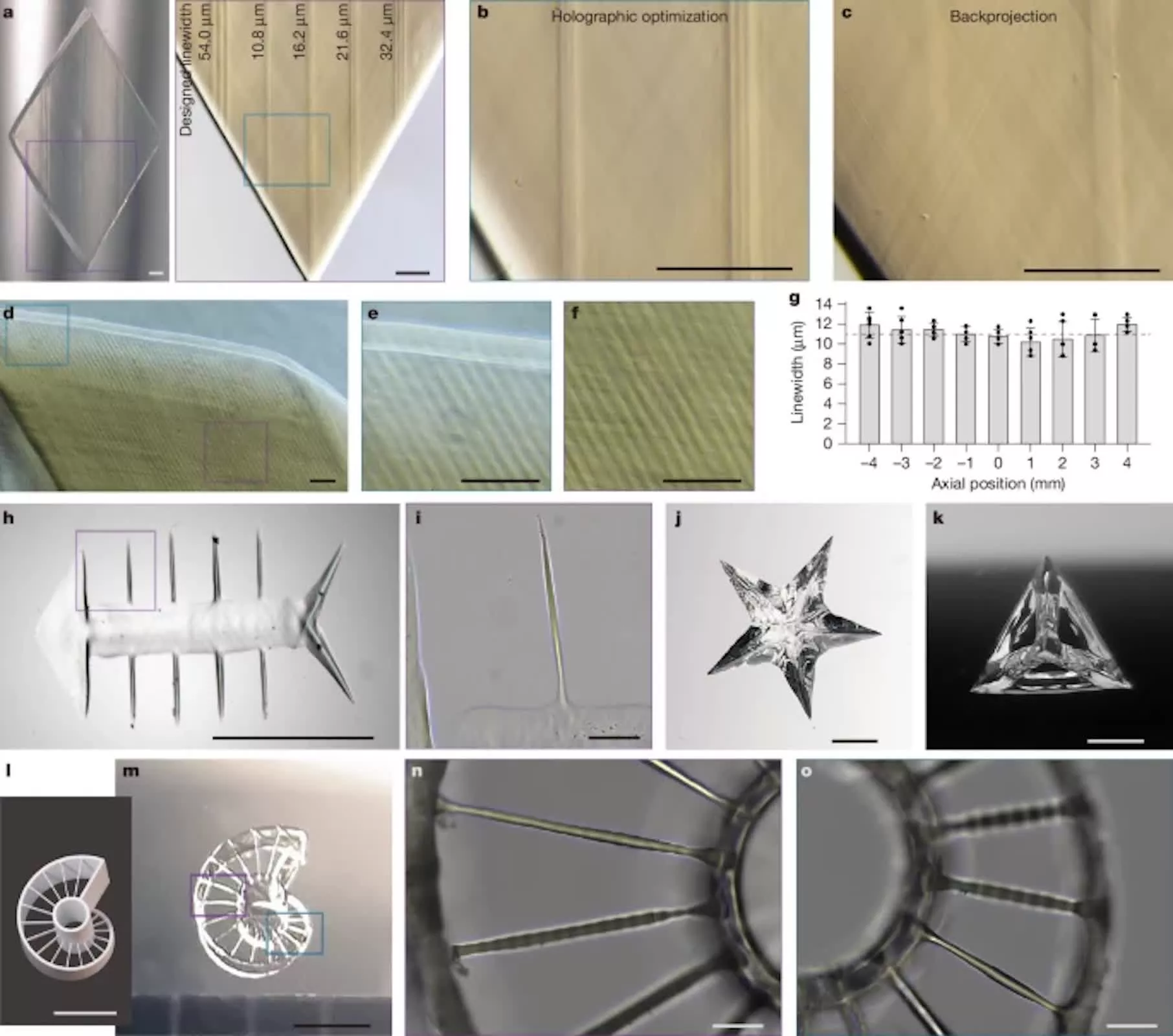
    In what could be a breakthrough for drug testing, regenerative medicine, micro-robotics, and flexible electronics, a team of researchers at Tsinghua University in China reportedly developed a system that can print intricate objects at millimeter scale in less than one second. Essentially, they’re converting digital holograms into physical 3D objects. Typical extrusion-based 3D printers use precision nozzles and mechanical gantries to stack layers, which can take hours. The team’s technique, called Digital Incoherent Synthesis of Holographic light fields (DISH), solidifies an entire object at once by projecting a 3D holographic light field directly into a resin volume. Using controlled light, DISH acts more like a volumetric projector, using a high-speed, rotating periscope to project light into the resin from many angles. Then, the holographic fields overlap to form precise, complex microscale structures: no layering or waiting, and no having to choose between fast output or fine details. The team tested their technique, and say they were able to create fully formed 3D objects in only 0.6 seconds, at the same time preserving structural details down to 12 micrometers.

    “The iterative optimization of the holograms for different angles in DISH maintains 19-μm printing resolution across the 1-cm range that is far beyond the depth of field of the objective and enables high-resolution in situ 3D printing of millimetre-scale objects within only 0.6 s. Acrylate materials in a range of viscosities are used to demonstrate the general compatibility of DISH. Integrating DISH with a fluid channel, we achieved mass production of complex and diverse 3D structures within low-viscosity materials, demonstrating its potential for broad applications in diverse fields,” the researchers wrote in their paper.

    Aectual Rolls Out 3D Printed Ceilings and Storefronts for Lululemon

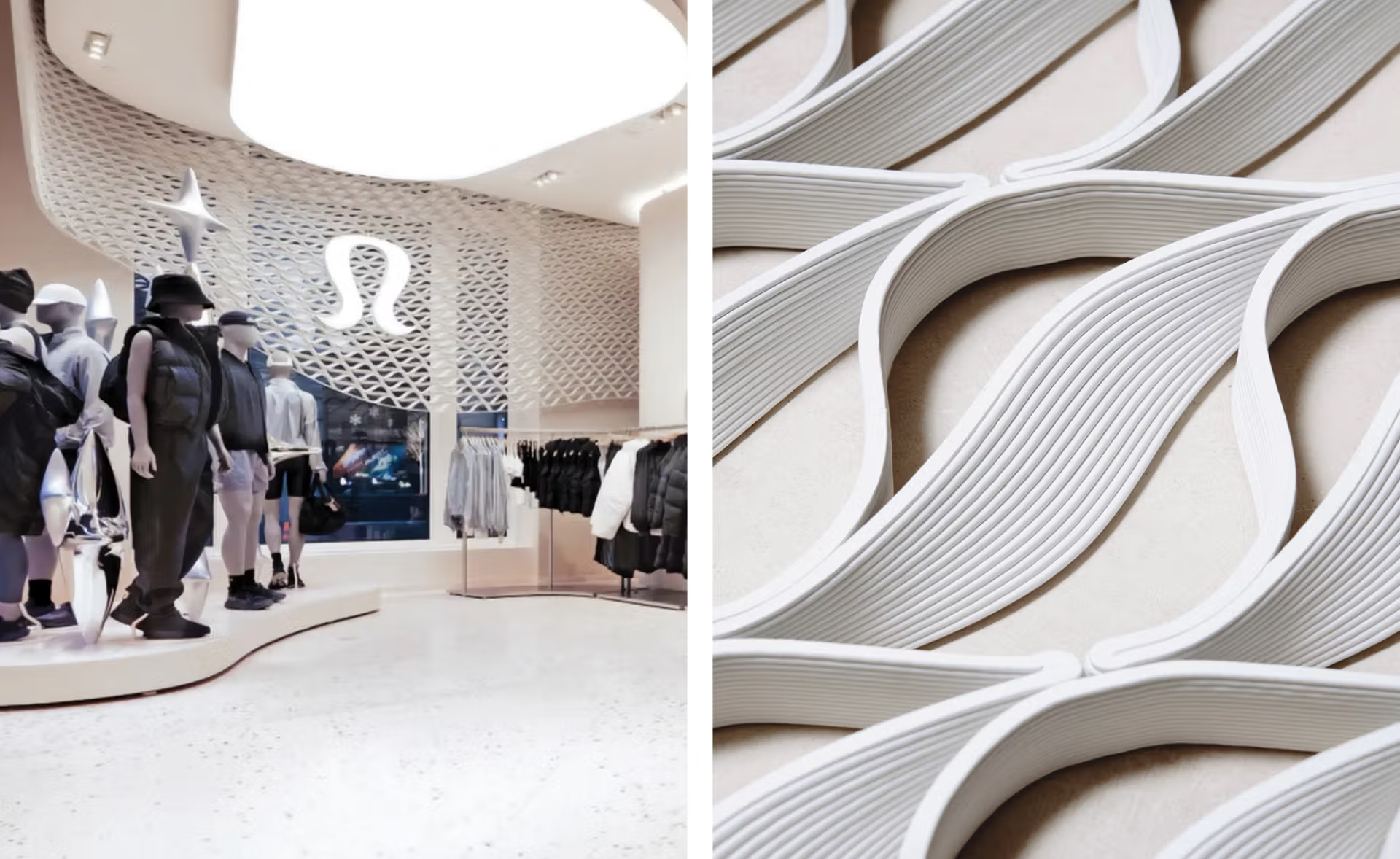
    Earlier this month, we reported that the new lululemon flagship store in SoHo featured custom 3D printed benches and a display shroud. The activewear company seems to be continuing its push into the 3D printing space. Its global design team is partnering with Dutch additive design firm Aectual to develop and roll out signature 3D printed ceilings and storefront systems for some of its key stores around the world. Aectual’s custom large-scale 3D printing technology is able to fabricate double-curved architectural panels, which seamlessly connect to form continuous surfaces. The robotic system turns lululemon’s branding and design lines into a “spatial form,” and all the ceilings and storefront elements are printed using Aectual’s recycled consumer waste material blend. Whenever the ceilings and storefronts reach their end of life, they can then be returned, via Aectual’s Circular Service, and reprinted into new products. The first lululemon ceiling and storefront elements premiered in Milan, and added to the company’s SoHo location; further locations are already underway in Tokyo and Birmingham, with more to come.

    “Our new store expression reflects lululemon’s commitment to creating a welcoming, dynamic retail experience, designed to celebrate our product and community. Every detail has been curated to evoke emotion and connection, with elevated materials to reflect the quality and craftsmanship of our products,” said Darin Rabb, Senior Vice President, Global Brand Creative & Experience, lululemon.

  • AM I Navigator and Leading Minds Launch AM Alliance at AMS 2026

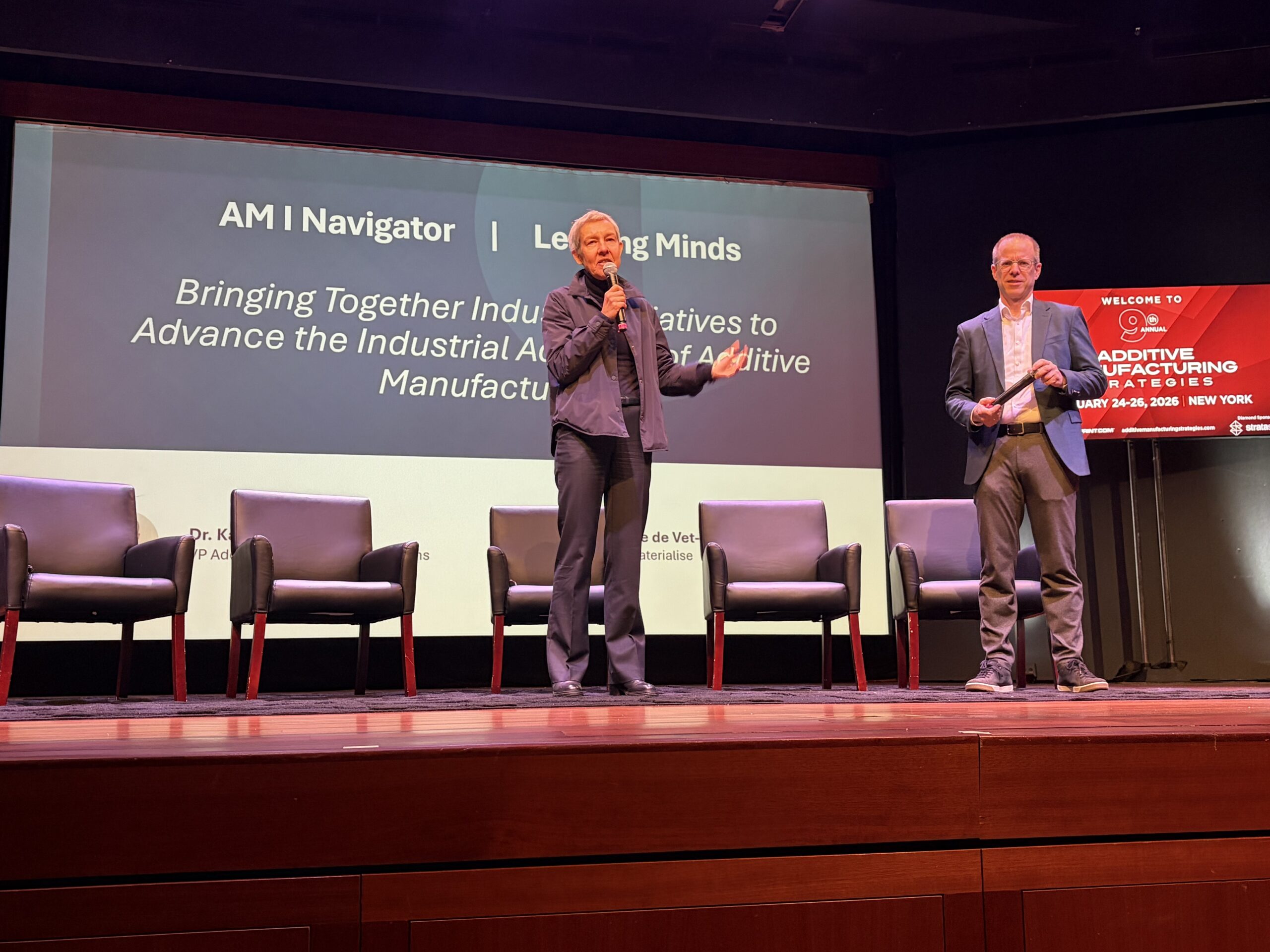
    At Additive Manufacturing Strategies (AMS) 2026, which just wrapped up in New York City yesterday, AM I Navigator and the Leading Minds consortium announced a new alliance aimed at accelerating the industrial adoption of additive manufacturing. The news was formally unveiled on February 26 during the event, marking one of the key strategic announcements coming out of this year’s show.

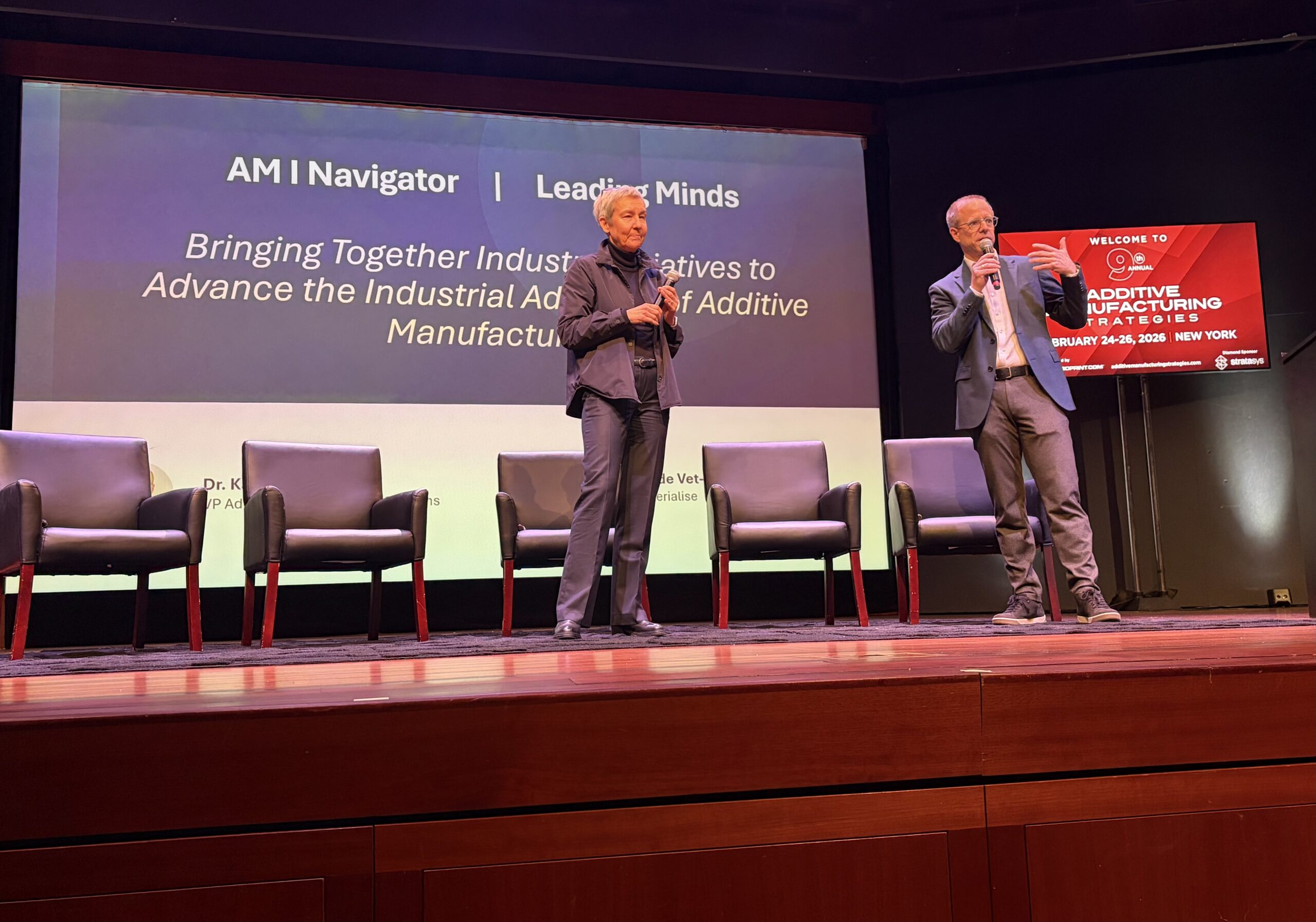
    The two additive manufacturing groups have “joined forces,” as Materialise CEO Brigitte de Vet-Veithen put it during the live announcement, under a newly formed umbrella organization called the Additive Manufacturing Alliance. The goal is to make additive manufacturing (AM) easier to understand, easier to implement, and more widely used in industrial production. de Vet-Veithen was joined onstage by Karsten Heuser, VP Additive Manufacturing for Siemens, for the exciting announcement. The companies are partners in both initiatives.

    Materialise CEO Brigitte de Vet-Veithen and Karsten Heuser, VP Additive Manufacturing, Siemens, onstage at AMS 2026

    A New Alliance Focused on Industrial Adoption

    The new Additive Manufacturing Alliance brings together two established efforts that already work toward similar goals but from different angles.

    Rather than merging into one entity, Leading Minds and AM I Navigator will continue operating independently where appropriate. However, they will now collaborate on selected activities, particularly around knowledge sharing, communication, and helping manufacturers move from early experimentation to scaled production.

    “Our shared goal is to make additive manufacturing more accessible, less complex, and more integrated into everyday industrial production. Together, we can help more companies across a wider variety of industries benefit from the flexibility, efficiency, and innovation that AM enables,” said de Vet-Veithen, CEO of Materialise, speaking on behalf of the newly formed Alliance.

    What this means is the Alliance aims to connect awareness with execution. Leading Minds focuses on building understanding and reducing confusion around AM, while AM I Navigator provides structured tools and guidance to help companies industrialize and scale their additive manufacturing operations. Together, they seek to help companies move from inspiration to implementation.

    How AM I Navigator Helps Companies Scale AM

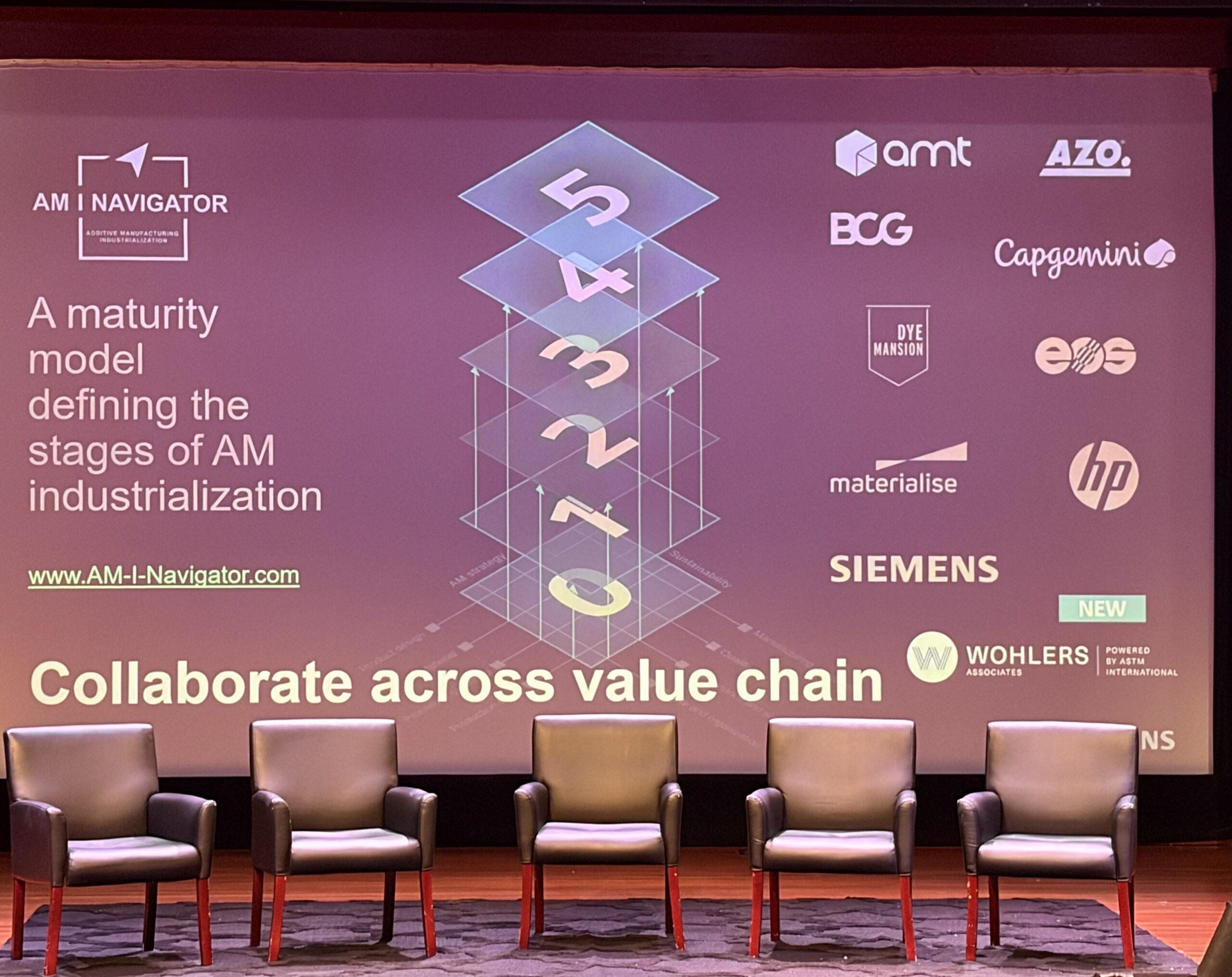
    The AM I Navigator is a structured tool that helps companies assess and improve their additive manufacturing maturity. It was first launched at Formnext 2023 by Siemens, DyeMansion, HP, BASF Forward AM, and EOS. Since then, it has grown into a broader ecosystem that includes partners such as Materialise, AMTPro, AZO, and knowledge partners, including Capgemini and BCG.

    At its core, the AM I Navigator provides a structured way for companies to evaluate and improve their use of additive manufacturing. It includes a five-stage model that helps organizations understand how advanced they are, guidance across key areas such as strategy, design, production, quality, and organization, and practical insights drawn from real industrial use cases. Companies can also access online self-assessment tools to measure their progress and identify next steps.

    Companies use the framework to benchmark their current capabilities and develop roadmaps toward higher levels of automation, quality, and economic performance. The goal is to help organizations move beyond pilot projects and into repeatable, scalable production.

    According to Heuser, “Via the newly launched AM I Navigator website, companies worldwide can independently and free of charge assess their additive manufacturing maturity and explore transformational insights derived from proven industrial applications. The assessment tools are voluntary resources designed to help companies of all sizes, from startups to global manufacturers, benchmark their capabilities and identify improvement opportunities.”

    The maturity model and related tools are accessible at: https://am-i-navigator.com/.

    Another announcement tied to the Alliance is the addition of Wohlers Associates, powered by ASTM International, as a Knowledge Partner within the AM I Navigator network. Wohlers Associates brings experience in standards, certification, and helping companies prepare additive manufacturing for demanding industries such as aerospace, defense, and medical.

    Mohsen Seifi, Vice President of Global Advanced Manufacturing Programs at ASTM International, stated that, “By joining the AM I Navigator, we aim to contribute our experience in translating additive manufacturing standards into robust industrial practice. Together with the partner network, we want to help manufacturers accelerate the transition from experimentation to qualified, scalable production.”

    Leading Minds: Simplifying Industrial AM

    The second initiative behind the new Alliance, Leading Minds, was first announced at Formnext 2024 as a consortium of eight founding companies: Ansys, EOS, HP, Materialise, Nikon SLM Solutions, Renishaw, Stratasys, and ATLIX (formerly Trumpf Additive Manufacturing).

    The consortium has two primary objectives: to increase awareness of additive manufacturing across industries and reduce the barriers companies face when adopting and scaling AM.

    One of its first major initiatives addresses a long-standing issue in the industry: inconsistent terminology. Different companies often describe similar processes using different language, which can create confusion and slow adoption.

    Leading Minds is developing an open, common language framework for additive manufacturing. The framework is designed to standardize communication across the production process, making discussions with customers clearer and more actionable. The group says the framework has already been expanded to cover the full AM production chain and is actively being used with customers.

    In addition to terminology work, Leading Minds continues to participate in major industrial events in North America and Europe, targeting sectors where AM adoption remains early but promising.

    A New Member Joins Leading Minds

    The consortium also announced that the Manufacturing Technology Deployment Group (MTDG) has joined as its newest member. MTDG, along with its subsidiary, the National Center for Defense Manufacturing & Machining (NCDMM) and its America Makes program, focuses on helping manufacturers deploy advanced manufacturing technologies and supporting educational institutions in embracing these technologies.

    Dean L. Bartles, President and CEO of MTDG, will represent the organization within Leading Minds. “MTDG is honored to join the Leading Minds consortium at such a pivotal moment for our industry,” noted Bartles. “Through the combined strengths of MTDG, NCDMM, and America Makes, we remain deeply committed to advancing the industrialization of additive manufacturing and expanding its impact across the manufacturing ecosystem.”

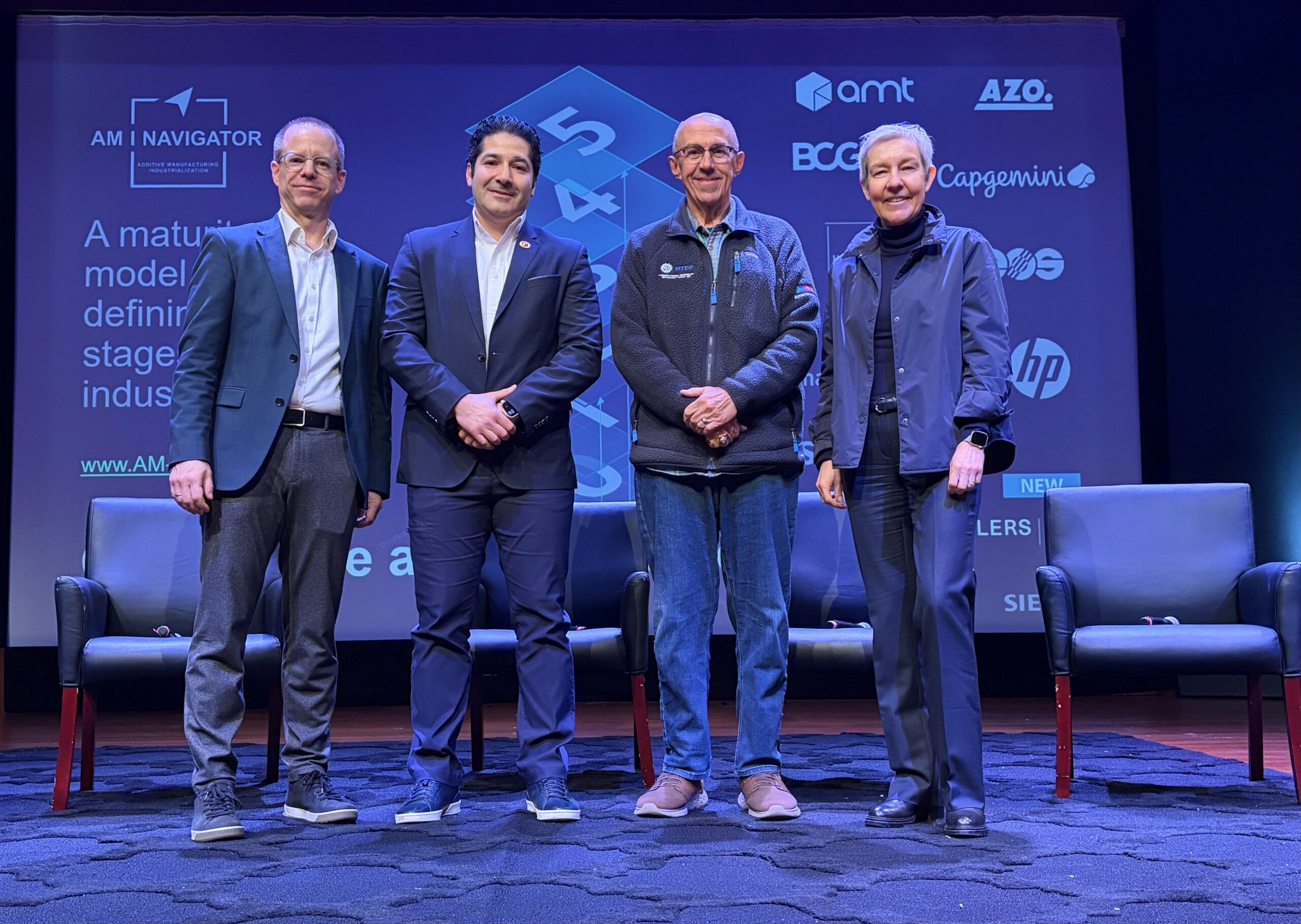
    L-R: Karsten Heuser, VP Additive Manufacturing, Siemens; Mohsen Seifi, VP Global Advanced Manufacturing Programs, ASTM International, Dean Bartles, CEO and President of MTDG; and Brigitte de Vet-Veithen, Materialise CEO

    The announcement at AMS 2026 highlights a broader effort within the additive manufacturing industry to move beyond small pilot projects and toward larger-scale production. Through the new Alliance, Leading Minds and AM I Navigator aim to support that shift with clearer communication, shared standards, and practical tools.

    Images courtesy of Sarah Saunders for 3DPrint.com