• AMUG 2026 to Feature LEGO, Aerospace Collaboration Keynotes

    AMUG 2026 puts the spotlight on the people and partnerships driving additive manufacturing forward. According to AMUG’s pre-conference overview, this year’s agenda reflects cross-industry collaboration, hands-on learning, and tangible business impact.

    One of the keynotes will feature Ronen Hadar, who leads additive manufacturing at The LEGO Group. His talk will offer insight into how a major global brand uses additive technologies. Another anticipated session on Tuesday will feature Steve Fournier of General Atomics and Scott Sawyer, Director of Aerospace and Defense programs at Divergent, who will explain how a connection they made at AMUG turned into a partnership between aerospace and automotive in their joint keynote titled “From Hypercars to Defense Drones: How Two Major Industry Innovators Started Their Partnership Journey at AMUG.” The keynote highlights one of AMUG’s biggest strengths, bringing together users from different industries who might not otherwise cross paths. Fournier and Sawyer plan to explore a larger question that resonates across the industry: how effective is knowledge transfer at conferences, and what does it actually translate to in terms of growth, differentiated capabilities, and revenue?

    AMUG recently confirmed this session as its second official keynote for 2026, pointing to how central this collaboration story is to the conference theme. Both General Atomics Aeronautical Systems and Divergent have independently been recognized as power users of additive manufacturing, one in defense aerospace and the other in automotive hypercars. The partnership itself traces back to a 2022 AMUG connection following a keynote by Divergent founder Kevin Czinger. Now, Fournier and Sawyer will outline what changed once those parallel expertise tracks intersected, offering a concrete example of how industry conversations can evolve into measurable industrial outcomes, including new capabilities, hardware development, and business transformation.

    Another key moment will be during the Innovators Showcase on Wednesday, March 18, when Max Lobovsky, co-founder and CEO of Formlabs, receives the 2026 Innovators Award. Lobovsky has been a key figure in expanding access to professional-grade desktop stereolithography systems, helping bring industrial-quality 3D printing into a wider range of businesses, labs, and classrooms. On stage, he’ll discuss the company’s growth and what’s next for affordable, professional 3D printing.
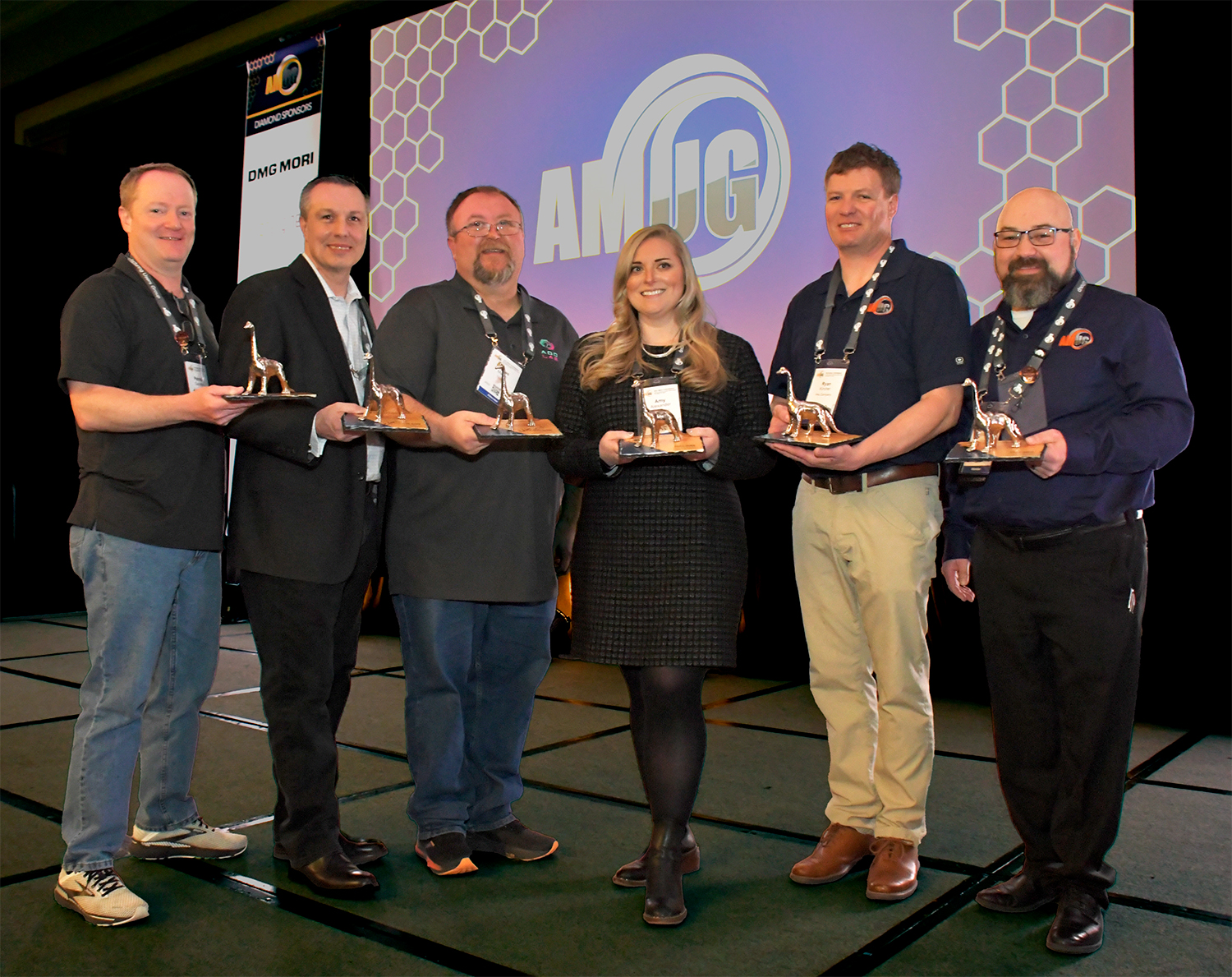
    2025 DINO Award recipients (from left): Patrick Gannon, Brennon White, Dallas Martin, Amy Alexander, Ryan Kircher, and Dan Braley. Image courtesy of AMUG.

    Beyond the keynotes and awards, the technical sessions show where the industry is going. One topic is multi-sensor in situ monitoring for part qualification, which many see as key to speeding up certification in aerospace and defense. Another session looks at how AI is being used for reverse engineering and qualification, helping companies validate designs faster and move through approval processes more efficiently. The program will also cover automotive production, including how manufacturers are scaling up 3D printed heat exchangers for hypercars.

    Healthcare will also be part of the program, including a discussion on whether bioprinting could play a bigger role in medical manufacturing. At the same time, sessions on America Makes projects will share practical lessons from working on some of the defense industry’s toughest additive challenges.

    AMUG also continues to focus on hands-on learning. Workshops that combine silicone molds, casting, and 3D printing show how additive manufacturing can work alongside traditional manufacturing. For many attendees, these sessions offer practical ideas they can take back home and apply right away.

    Meanwhile, the Start-up Launchpad program highlights early-stage companies working on new additive technologies and applications. It gives them space to present their ideas and connect directly with experienced users and industry leaders.

    Overall, the AMUG 2026 program reflects an industry that is growing and becoming more practical. Topics like certification, AI, production scale, and cross-industry collaboration are all on the schedule. But at its core, the event is still about people coming together to share their experiences.

    As AMUG 2026 approaches, the program reflects how the conference has evolved over the years. What began as a gathering of early adopters has grown into a working forum for experienced users focused on qualification, scale, and real production results. This year’s agenda suggests that additive manufacturing is entering a more disciplined phase, one defined by collaboration, measurable outcomes, and practical implementation.

    AMUG 2026 runs March 15–19, and 3DPrint.com’s Managing Editor Sarah Saunders will be onsite to follow the conversations and developments firsthand.
  • Melotte Partners with amsight and Additive Center to Reduce CT Scanning for 3D Printed Semicap Parts

    The first report for Additive Manufacturing Research (AMR) that I wrote solo was about the AM market opportunity in semiconductor capital equipment (semicap) components. Published in early 2024, the report was one I personally pushed for, because of how much I believe that AM aligns with the needs of semicap manufacturers.

    Two years later, the report is arguably more relevant than it was at the time of its initial publication: the uncertainty of the AI boom trajectory dictates that semicap OEMs need to be as flexible as possible in their production strategies, an objective that AM can help them meet. A recently-announced partnership between German software provider amsight, Dutch consultancy Additive Center, and service bureau Melotte (also based in the Netherlands) demonstrates how the semicap market may soon have an even easier path to scaling its use of metal AM.

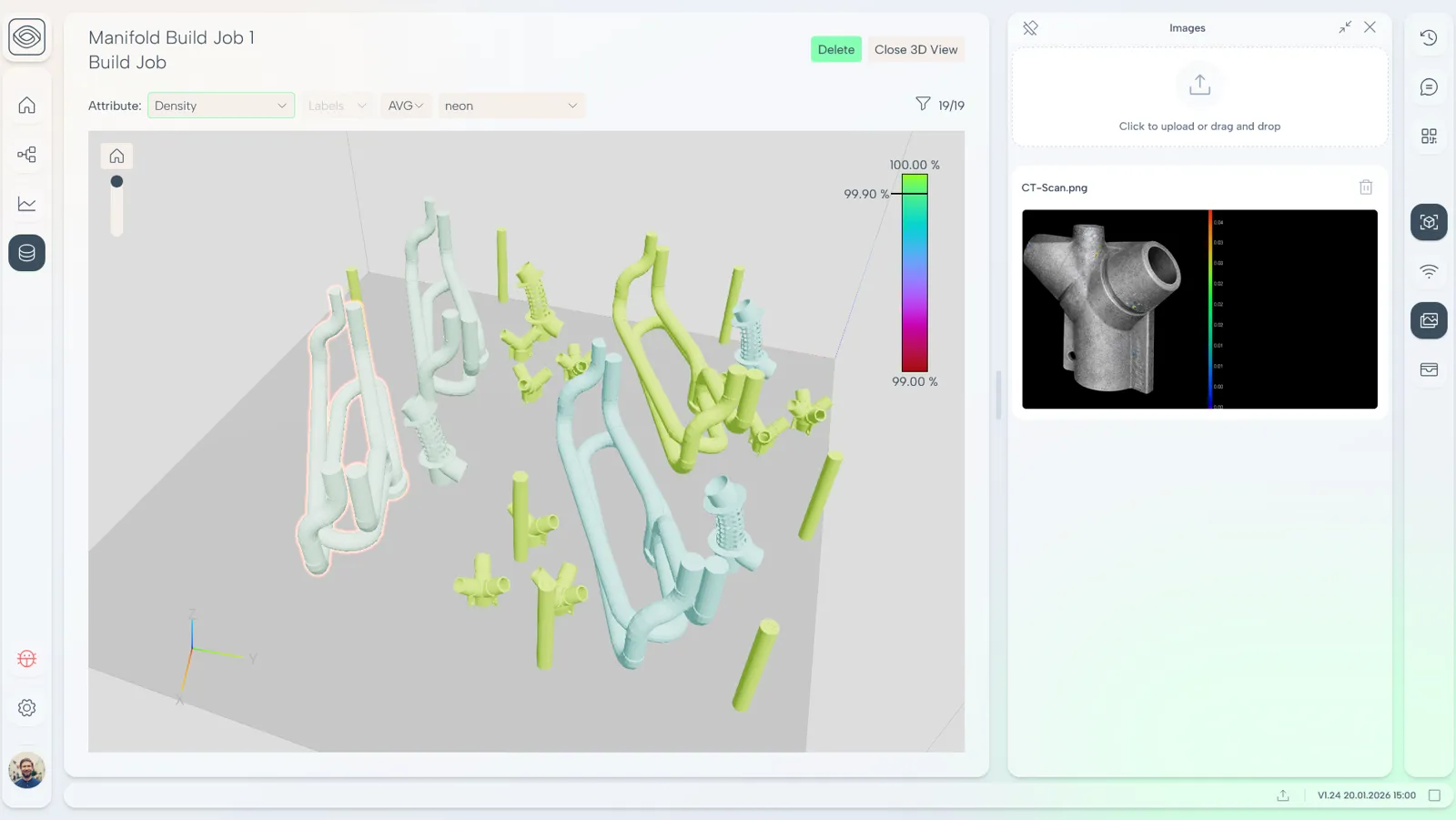
    A startup based in Hamburg specializing in AM software solutions that support end-to-end quality control (QC), amsight worked with Additive Center to implement “a comprehensive data capturing system” at Melotte’s Netherlands facility, which enables the service bureau to trace every step of the print process, from materials through final inspection. That very last step is in fact the key differentiator, according to the companies involved in the effort: by tracing the entire process so meticulously, they claim they’ve achieved a milestone in reducing the need for CT scanning.

    It’s especially noteworthy that, as the companies point out in the press release, this isn’t a theoretical capability, but rather one that’s currently operational in Melotte’s workflow, and is already being used to streamline the print process for semicap components. According to the partners, they plan to follow up on the first phase of implementation by leveraging the data gained to create a set of ‘Critical-to-Quality’ (CTQ) parameters.

    In a press release about the partnership between amsight, Additive Center, and Melotte to establish an AM data-capturing protocol at Melotte’s production facility in the Netherlands, Harry Kleijnen of Additive Center said, “The industry often mistakes ‘machine monitoring’ for ‘process control’. What we have achieved with Melotte and amsight is the integration of the total process. We aren’t just looking at the laser; we are looking at the entire lifecycle of the part. This is the first step towards increasing process understanding and thus reducing the use of CT scanning.”

    One of the companies at the center of the report I wrote in 2024 was ASML, a Dutch company that is perhaps the singular most important link in the global semiconductor supply chain. ASML has been using metal AM for end-use parts for over a decade, making it one of the most experienced metal AM users in the world.

    It’s worth mentioning that ASML works with Additive Center on at least one AM educational initiative. Plus, given the geographical proximity of Additive Center and Melotte to ASML’s headquarters, ASML will likely be one of the beneficiaries of the enhanced capabilities that Melotte has acquired thanks to amsight. In any case, the partnership reinforces the idea that semicap OEMs have a sustained long-term interest in accelerating the scalability of metal AM.

    With all that in mind, while the amsight/Additive Center/Melotte project is already paying off for Melotte’s existing operations, I think that the true potential of the work lies in how it could change the timeline for the semicap industry’s AM adoption journey. Any step in the printing process that can be sped up and made less expensive brings AM that much closer to competing with other manufacturing processes.

    Thus, the output gains yielded by a reduction of the use of CT scanning could be precisely the thing that convinces a company like ASML to plan for more metal AM components across its supply chain. And, if this early stage of the data-capturing process proves successful, amsight and its partners will have created a model optimizing other steps in the metal AM workflow.

    Image courtesy of amsight

  • Alloyed Develops New 1000°C Alloy for 3D Printed Flight-Ready Jet Engine Parts

    Nickel-based superalloys and music (Bing Crosby and Fred Astaire, for starters) were best in the 1930s. Inconel and Hastelloy were invented in that decade, along with Scotch tape, the car radio, and instant coffee. When FDR was president and the Second World War was set to occur, the cutting-edge high temperature materials were more or less the same as the ones popular now. Now that’s kind of stupid, because it was before the DC 2 was commercialized, and now in hypersonics and sixth generation aircraft, we are stuck with the same materials. Time to ditch the 100-year-old materials, or perhaps make some money with a quick visit to “Antiques Roadshow.” I hope that your antique nickel superalloys surprise your neighbors.

    UK-based firm Alloyed was trying to find an alloy that could be used at over 1000°C. The company has now created ABD-1000AM specifically for jet engines. Alloyed worked with propulsion and MRO firm ITP Aero and Cranfield University on the alloy, while being funded by the ATI Programme—part of the Aerospace Technology Institute—the Department for Business and Trade, and Innovate UK. In total, that program will spend £14 million trying to make it easier to qualify flight-ready 3D printed parts.

    Alloyed Chief Metallurgist Dr David Crudden said,

    “Alloyed have been fortunate to have the opportunity to partner with the ATI in several key technology areas ranging from design of new materials to the development of digital software platforms to support adoption of additive manufacturing in the aerospace industry. This project, focused on advancing the manufacturing readiness level of ABD-1000AM, is a great example of where ATI Programme funding helps UK companies to bridge the gap between early research and industry development programs.

    “ABD-1000AM is the world’s highest temperature nickel-based superalloy designed for additive manufacture. We have identified huge demand for this material and believe it will be a game changing technology for gas turbines across aerospace propulsion and industrial power generation.”

    Chris McDonald, Parliamentary Under-Secretary of State Minister for Industry, stated,

    “This is a strong example of how government and business can work together to keep the UK at the forefront of innovation in our world-class aerospace sector, and I look forward to seeing how Alloyed’s project can contribute to the jet engines of the future. We’re bolstering our support for the aerospace industry through our modern Industrial Strategy – giving business the confidence it needs to invest in UK advanced manufacturing and delivering on growth as part of our Plan for Change.”

    Now we can all agree that a plan for change sounds fantastic.

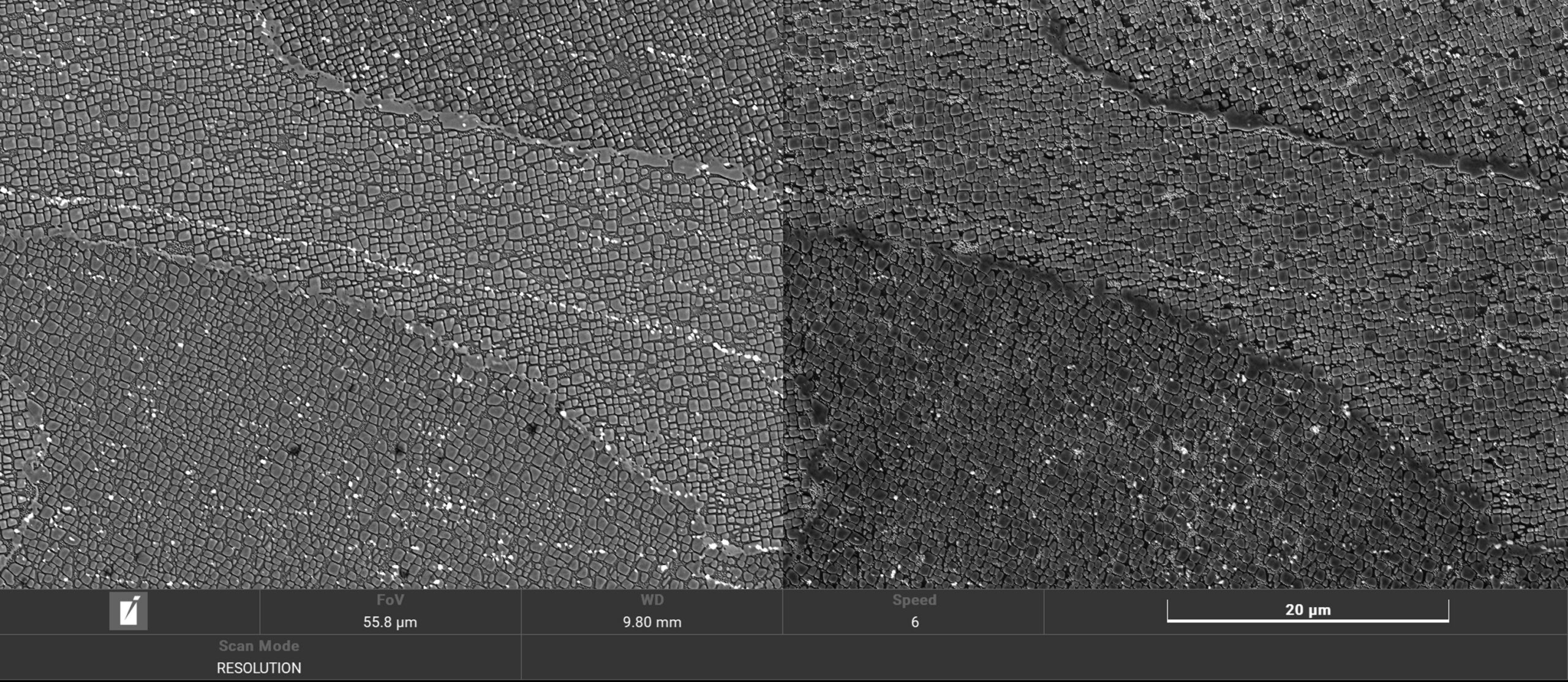
    ABD-1000AM microstructure

    Rob Mitchell, ITP Aero UK´s Director of Engineering said,

    “ITP Aero is committed to a wide range of research and development programmes across the regions in which it operates. AMRAM is another good example of how partnering across academia, SMEs and industrial partners can directly shape the future of the aerospace industry.”

    This is super nice news generally. A nice UK group hug for Rolls Royce for sure. At the same time, this kind of development will help the UK, both commercially and in defense, stay on the cutting edge. Custom and new alloys are sorely needed to advance turbo machinery. At the same time, the UK is kind of in a state of flux. A longtime US alloy periodically aloof to its neighbors, it wants to remain strong and relevant worldwide. Over the past decades, the UK´s cultural and linguistic closeness with the US has allowed it to maintain its relevance while cooperating closely with the US. A position as part of the European Union gave it the benefits of that block as well. This Euro-Atlantic straddle is now impossible after it left the EU due to a new US disengagement. The UK may seem like an island, but it is in reality adrift.

    With limited means, the country is trying to once again find its place in the world. Its own alloys, and its own alloy-making ability, are a tempting way to turn to material science and development to seek an edge. With Alloyed, Metalysis, mining giants such as Rio Tinto, and steel companies like Tata, as well as Renishaw, the UK actually has more than a chance to make this a reality. Other similarly-sized countries would be hard pressed to find the capabilities that the UK has.  As we detailed in the RCCA article, an age is upon us where computational advancements, new powder fabrication methods, 3D printing as a way to create alloys, and 3D printing as a manufacturing technology combine to make a new world of custom alloys possible. The US and China are engaged in a dual power competition around new alloys. But, what of other countries? Should they trust the US and its alloys systems? Or should they too strive to develop sovereign cutting-edge alloy capabilities? In a fractious world, this formerly fantastical notion could be a very sound idea indeed.

  • 6K Additive Lands Long-Term Nickel-Alloy Powders Supply Agreement with Siemens Energy

    We’ve still got a month left in Q1, but I’ve already come back to the theme of the role of additive manufacturing (AM) in the ‘sustainability-as-security’ thesis — a topic that I’ve been focused on for years — more than once in 2026. This is very welcome news for anyone who believes in AM’s growth potential.

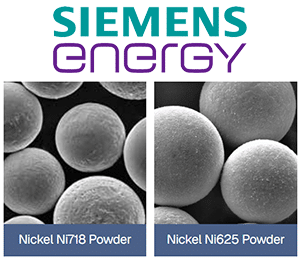
    6K Additive exemplifies the sustainability-as-security case about as well as any other company, and the metals supplier just reinforced its position by announcing a long-term deal with Siemens Energy to source nickel-based alloy powders from the cleantech giant. 6K Additive will process nickel-based revert powder — scrap from in-house production — from Siemens Energy into new feedstock, supporting 6K Additive’s goal to build a circular economy for metal AM.

    6K Additive notes that it has already processed nearly 20 tons of such powder from Siemens Energy, which the former subsequently supplied to the AM market. Siemens Energy has historically been one of the world’s largest metal AM users, giving 6K an ideal pipeline for high-quality scrap.

    Siemens Energy, meanwhile, has been massively ramping up its investments into the US market, focusing on supporting the AI boom with grid infrastructure and gas turbine equipment, among other applications. According to the company, its latest investment of $1 billion will create over 1,500 skilled jobs in the US.

    In a press release about 6K Additive’s long-term deal with Siemens Energy to source nickel superalloy scrap, the CEO of 6K Additive, Frank Roberts, said, “Siemens Energy is a strong example of an industrial partner committed to advancing circularity. Their consistent and high-quality feedstock enables us to produce premium nickel alloy powders using our UniMelt process, delivering meaningful reductions in energy use and carbon emissions while supporting the growing demand for sustainable AM materials.”

    The Head of Finance for AM at Siemens Energy, Steve Sarcander, said, “At Siemens Energy, sustainability and responsible resource use are integral to how we approach advanced manufacturing. By supplying our revert material into 6K Additive’s production process, we are supporting circular material flows while helping to reduce waste and emissions associated with metal powder production. Partnerships like this play an important role in strengthening the overall [AM] value chain.”

    Given the sustainability-as-security context, and the fact that this particular story involves a deal between a US company and a European one, I think it makes the most sense to view the agreement through the lens of US-EU trade relations. On the surface, while the relationship between the US and its European allies has rarely looked rockier, there are nonetheless reasons to believe that the trade dynamics could emerge on the other side of the turmoil in stronger shape than ever.

    For one thing, even after President Trump imposed new, harsher tariffs on trading partners, including the EU, following the Supreme Court’s rejection of the tariffs that Trump has imposed since retaking office last year, the EU’s trade chief stated that he’s confident that the US will “ease” tariffs on metal products coming from the EU in the weeks ahead. Since metals in general, and critical minerals in particular, have become so central to the ongoing trade negotiations between the US and the EU, that statement suggests that a major breakthrough could be on the horizon for the monumental deal the US and the EU struck in the summer of 2025.

    For another thing, speaking of that same trade deal — it hinges on energy flows from the US to Europe, and European nations have few options aside from the US when it comes to replacing baseload power supplies from Russia. This means that a deal between the EU and the US is in everyone’s interests regardless of what happens with tariffs, and the EU is simply now in a better bargaining position than it was prior to the Supreme Court ruling.

    Assuming some version of the deal goes through, the outcome could result in many more business agreements that look like the one between 6K Additive and Siemens Energy. The West appears to be trending towards a scenario where North America and Europe become more interdependent on critical infrastructure supply chains, and one side provides the raw materials while the other provides the finished goods.

    Interestingly, the nature of this dynamic that’s currently in discussion suggests that the relationship will most often work the other way around from the 6K/Siemens Energy arrangement, with the US supplying critical minerals and the EU providing the parts. But if true circular economy for AM can actually be cultivated, it will open up any number of possibilities for rearranging the elements within the overall trade framework.

    Image courtesy of 6K

  • BigRep Expands into the Auto Aftermarket Through SEMA’s 6,000-Member Network

    Several months ago, 3DPrint.com Executive Editor Joris Peels made a good case for aftermarket car parts as a potential high-growth opportunity for additive manufacturing (AM), specifically in the context of automotive seating. 3D printing for aftermarket car parts isn’t a new idea, but Joris’s spin on the concept emphasized how aesthetic and comfort, rather than repairs, look poised to add a whole new dimension to aftermarket demand that would benefit both the AM industry and automakers.

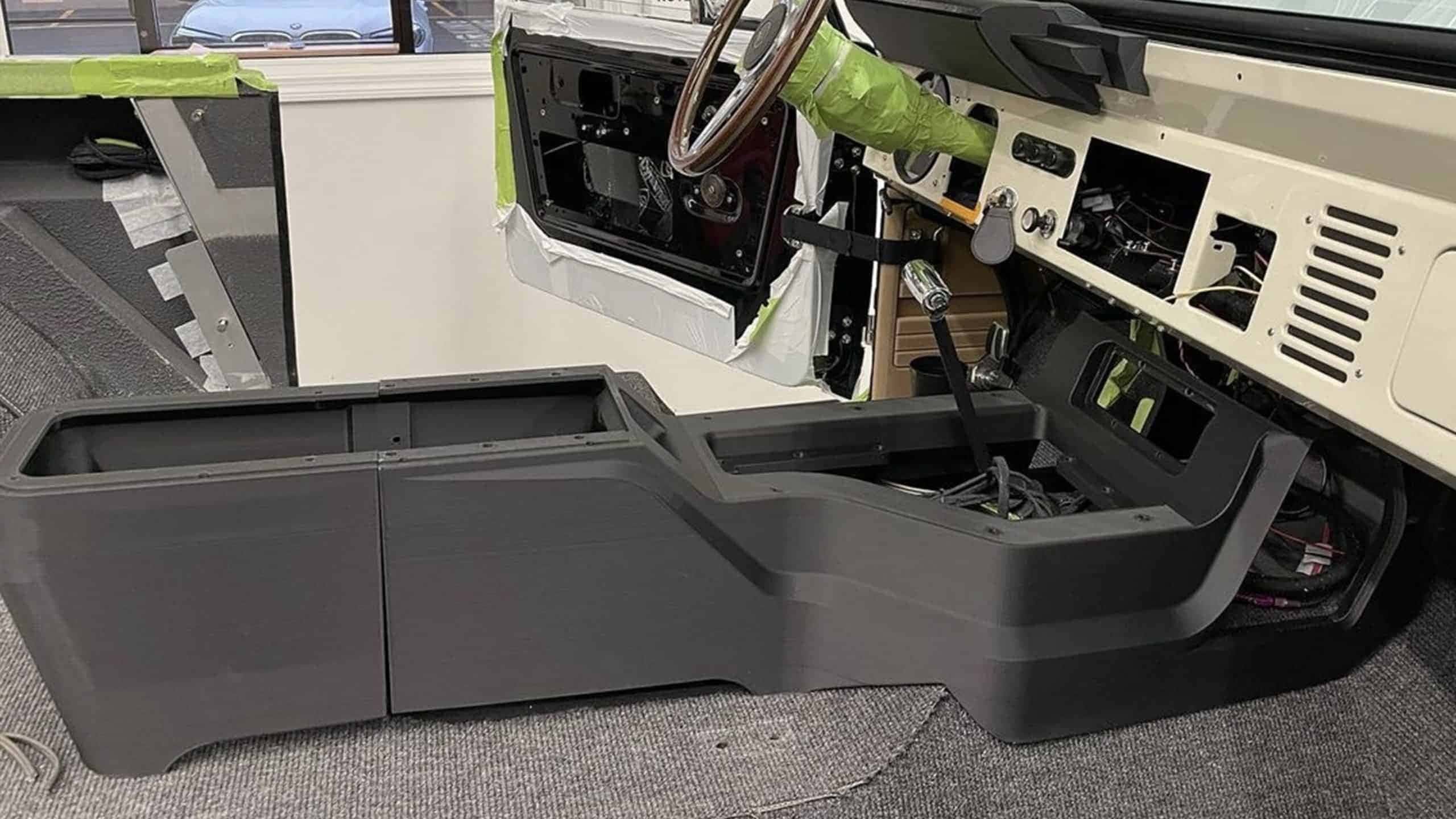
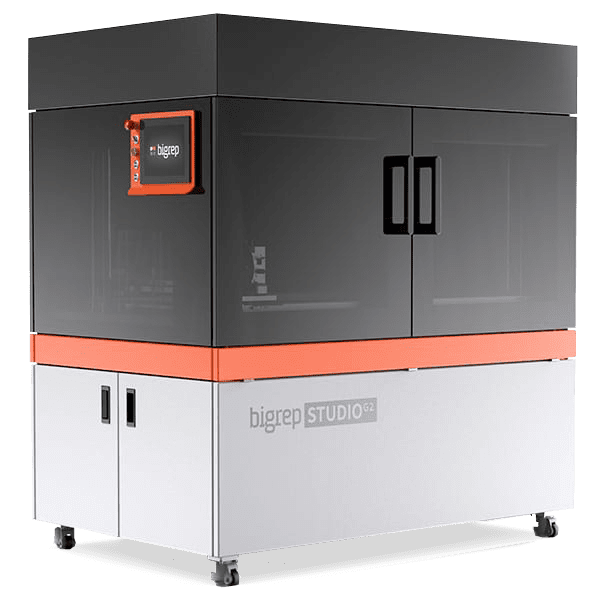
    BigRep America, the original equipment manufacturer (OEM) of large-format, polymer extrusion 3D printers, just secured a deal that validates Joris’s theory: BigRep is partnering with SEMA Garage, the product development and technology center for the Specialty Equipment Market Association (SEMA), to give SEMA members access to BigRep’s production hardware. SEMA Garage will house a BigRep STUDIO industrial-grade machine at its facility in Diamond Bar, CA, located in the Los Angeles area, providing an entry for BigRep into SEMA’s network, comprised of thousands of member companies.

    While SEMA is involved in all aspects of the auto aftermarket landscape, restyling has historically been one of the organization’s main focus areas, and the passion for individualized car aesthetics was a main catalyst behind SEMA’s founding over 50 years ago.

    BigRep, for its part, has extensive experience in the auto sector, including relationships with major OEMs like Ford, as well as with NASCAR teams like Legacy Motor Club. The German company has continued to push into the North American market since going public on the Frankfurt Stock Exchange in 2024.

    In a press release about BigRep’s partnership with SEMA Garage, the president of BigRep America, Jeff Olson, said, “We couldn’t be more excited about this partnership with SEMA Garage. It’s a meaningful step forward in how we bring large-format [AM] to the automotive industry in North America. The automotive sector has always been at the heart of what we do, and by working directly with SEMA Garage, we’re making it easier than ever for their members to tap into that technology for real large-scale applications.”

    Jim Moore, the VP of OEM and Product Development at SEMA, said, “SEMA Garage is thrilled to partner with BigRep to bring large-format rapid prototyping into our Product Development service lineup. This cutting-edge capability gives our members the tools to stretch the limits of innovation and improve the speed and efficiency of their development process.”

    The BigRep STUDIO

    BigRep’s partnership with Legacy Motor Club was one of the most interesting use cases I wrote about last year, because it shed light on the fact that NASCAR teams are already using distributed AM to respond more quickly to constantly changing design requirements imposed by the stock car racing league. The partnership with SEMA Garage has the potential to do something similar for the entire automotive market, as BigRep now has a foot in the door of an enterprise with a reach of over 6,000 companies.

    Aftermarket parts that aren’t safety critical would seem to be a perfect middle-ground for scaling AM’s adoption in the auto sector. It addresses demand in a way that remains removed from any life-or-death hazards, targeting a demographic that by definition is willing to spend disposable income on pure enjoyment.

    That leaves 3D printing OEMs like BigRep relatively insulated from the cost and scrutiny of safety regulations, while still familiarizing auto part manufacturers with the underlying technology, letting both customers and enterprises experience the benefits of large-format AM firsthand. Simultaneously, BigRep is still making strides on the safety-critical side of the auto market at the pace required in order to meet regulatory requirements.

    It’s a winning strategy, and it’s one that other OEMs should flesh out further in other verticals where it already has a foundation. While there are plenty of examples, the first one that jumps to mind right now is the complementarity between targeting both the hobbyist and industrial drone markets at the same time.

    Images courtesy of BigRep

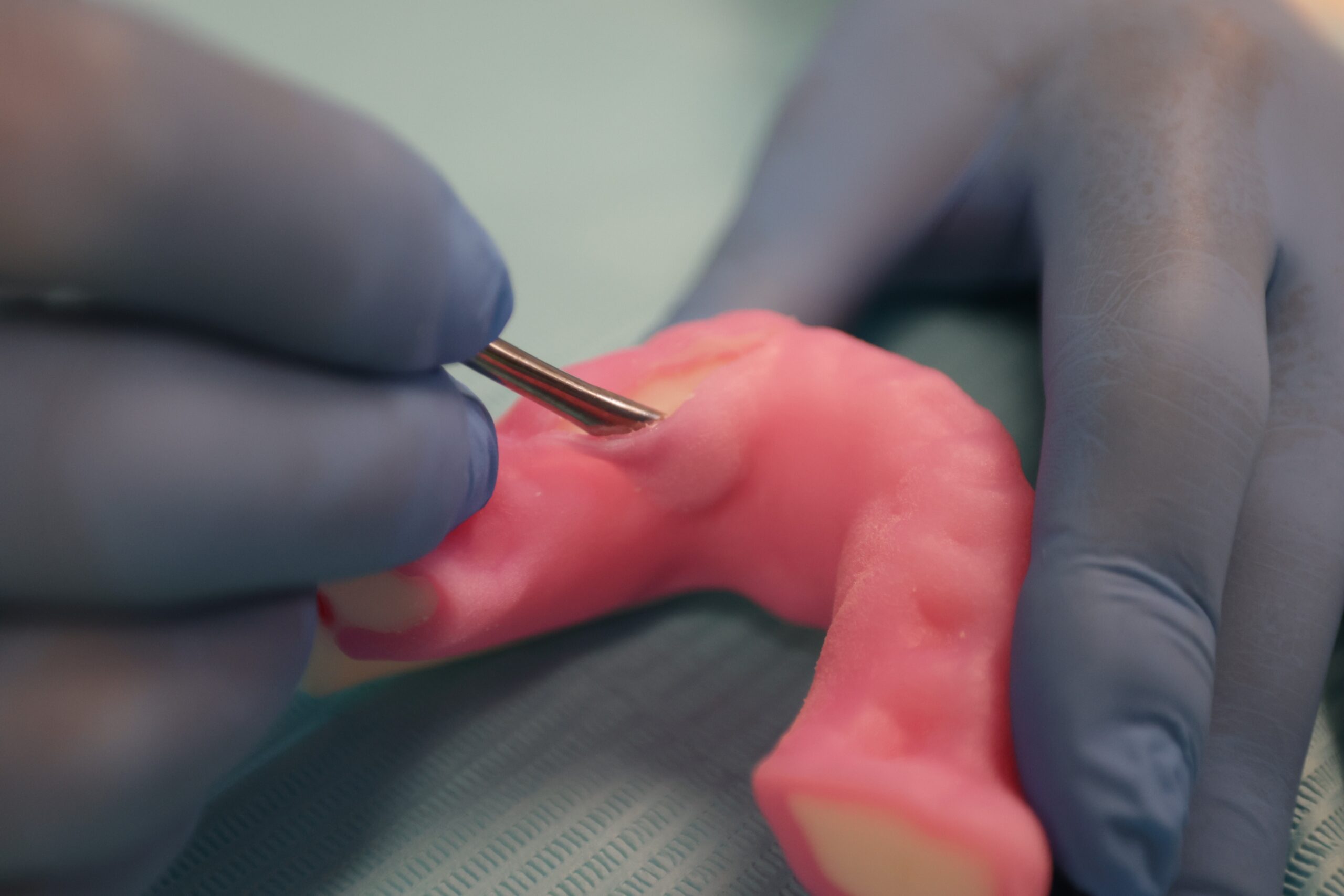
  • Stratasys Unveils 3D Printed Dental Anatomical Model Preset

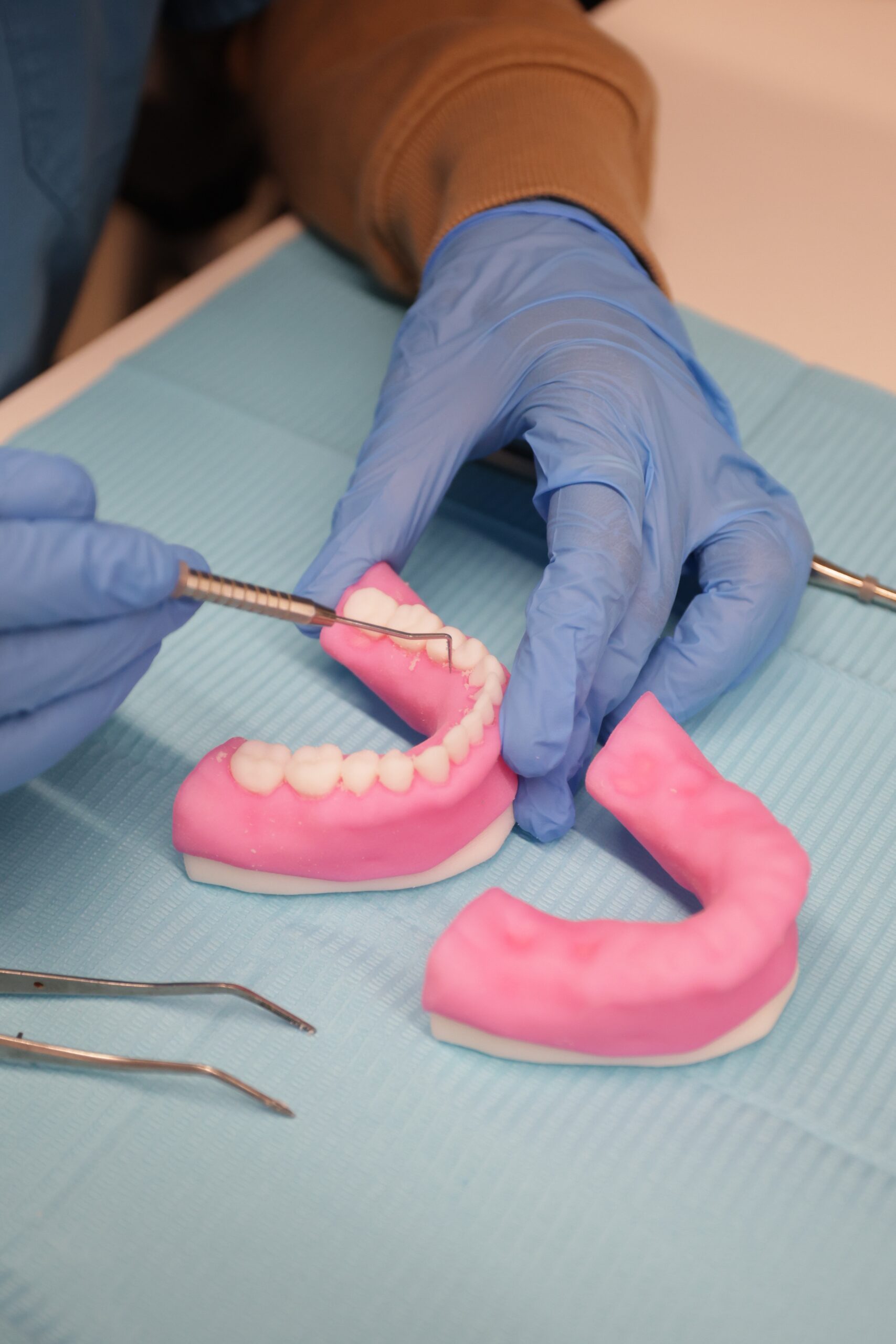
    Stratasys has been working on digital anatomy for a number of years now. The company wants to make models that look and feel like the real thing. For doctors and dentists, this could mean more accessible testing. What’s more, applications in specific pathology, super rare cases, and lots of different parts can be made relatively inexpensively. This means that students could more easily get access to the rare, complex, and difficult.

    Digital anatomy replaces parts from animals, cadavers, or conventionally manufactured pieces. Cost is lower, overall training is less icky because you’re not experimenting on a body or dog mandible, and structures could closely resemble those that you will be dealing with in your practice. The company has been working for a few years on getting not only the look right through its PolyJet process, but also to get the feel just right. For your fingers, probes, and scalers, the tissue should feel just like the real thing. Ideally, Stratasys can give you a feel of that pathology so you’ll exactly know it for when you get to see and touch it in real people. Now, a 3D printed preset for dental will aid in this process.

    VP Medical at Stratasys Erez Ben Zvi said,

    “With this preset for dental anatomical models, we are entering a new segment of digital dental education and clinical simulation, helping customers move beyond traditional training methods toward more standardized, technology-driven learning environments. By combining anatomical realism with repeatability and customization, we’re enabling educators, clinicians, and device manufacturers to prepare for real-world procedures with greater confidence and consistency.”

    The preset can be used to make a wide range of anatomical structures. The company says that, “The models replicate the biomechanical behavior of bone, teeth, nerves, and soft tissue, providing realistic haptic feedback for drilling, cutting, suturing, and implant placement.”

    Trainers can use Cone Beam Computed Tomography (CBCT) scan information to make their own specific models. The CBCT scanner is that dental CT scanner that moves around your head while you bite down on a plastic bit. This kind of scan gives a 3D view of structures in your mouth, providing doctors with a far clearer picture of the actual situation in your head. CBCTs are especially useful in implants, root canals, and braces.

    Stratasys suggests that these models could be used for complex cases such as “atrophic jaws, sinus lifts, and bone grafting procedures,” as well as the more quotidian “tooth extractions, implant placement, periodontal surgery, endodontic surgery, and sinus augmentation.”

    Better cases, and more of them, can be a real driver for the adoption of this preset. The idea that at any given time, all your students can practice on the same complex case, for example, and then collectively share their experience, is very compelling. You could see a huge variety of shapes and pathologies as well. I’d personally work a lot better with a 3D printed model than a body or part of an animal. I also like that teachers can turn to cases they themselves have experienced as a learning tool. Maybe one type of root canal should not be done at all, or is so tricky that the patient should come back another time. This is the kind of situation that can be found in scans easily and then given to students.

    I don’t know if dentists feel that these models are accurate for them. Does it really feel like the human mouth does? Is the pass of your mirror over the gums the same? But if it comes close, then this can be a viable, less expensive training solution for dentists the world over.

  • Generative AI Is Moving From Design to Factory Floors: TCT Asia 2026 Shows the Full Workflow

    Generative AI is rapidly moving beyond digital experimentation and into real manufacturing environments — but the key challenge remains: can AI-generated 3D models move seamlessly from creation to production?

    At TCT Asia 2026, technology developers across the AI-driven 3D ecosystem will present integrated solutions that demonstrate how generative design, engineering optimization, printable model preparation, and editable 3D assets are converging into a complete production-ready workflow.

    Unlike early-stage demonstrations focused on isolated capabilities, exhibitors at TCT Asia 2026 will highlight end-to-end digital-to-physical pipelines, including AI-based 3D model generation, engineering-grade geometry optimization, printable model preparation, high-resolution texture generation, and editable AI-generated 3D content. Together, these developments signal a shift from AI as a creative tool toward AI as an operational manufacturing technology.

    From AI Creation to Production-Ready Assets

    Platforms such as Tripo Studio will present next-generation AI-driven 3D creation systems capable of generating high-precision models directly from text, images, or sketches. Its latest release, Tripo High-Poly 3.0, introduces dual-output workflows designed to balance production efficiency with ultra-high geometric fidelity, supporting applications ranging from product design and gaming assets to additive manufacturing.

    Bridging Generative AI and Printable Manufacturing

    Meanwhile, MeshyAI Creative Lab focuses on closing the gap between generative design and manufacturing execution. The platform automatically repairs geometry, validates manufacturability, and recommends materials, surface finishing methods, and printing parameters. Through integrated manufacturing partner networks, users can obtain real-time quotations and production options, enabling a direct pathway from AI-generated design to physical parts — even without advanced CAD expertise.

    Foundation Models Reshaping the 3D Pipeline

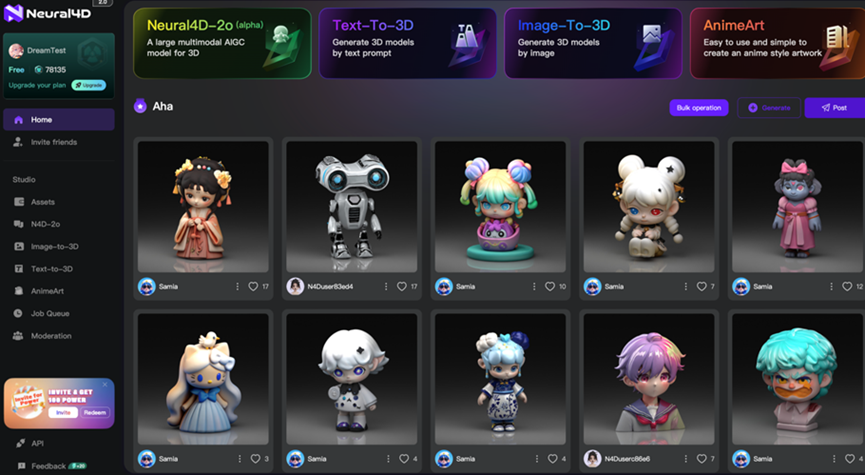
    Advances in native 3D foundation models are also accelerating industrial adoption. DreamTech (Booth 8N118) will showcase its Neural4D series, demonstrating how large-scale 3D/4D generative models can support digital content creation, engineering design, and physical manufacturing applications while significantly reducing training costs through sparse 3D learning architectures. These developments highlight how AI infrastructure is rapidly maturing to support production-level deployment across industries.

    Structurally Aware Texturing for Real Manufacturing

    Beyond geometry generation, high-resolution texture systems are becoming increasingly important for downstream manufacturing and visualization. Hitem3D (Booth 8C35) will introduce Hitem3D 2.0, featuring structurally aware PBR texture generation that integrates material and geometric logic directly into the generation process, producing more realistic results while improving consistency for additive manufacturing workflows.

    Entering the Era of Editable AI-Generated 3D

    Another emerging frontier is the ability to edit and iteratively refine AI-generated 3D assets. Hyper3D.AI, developed by Yingmou Technology, will present its approach to enabling localized editing, versioned iteration, and controlled evolution of AI-created 3D models. The company will debut this framework during the TCT Introducing product launch sessions, highlighting how editable AI-generated 3D content could fundamentally reshape long-term digital design and manufacturing workflows.

    A Convergence Point for AI-Driven Manufacturing

    Together, these innovations reflect a broader industry transition: generative AI is moving beyond visual experimentation to become an integrated component of real production pipelines. TCT Asia 2026 will serve as one of the first major international stages where the full AI-to-manufacturing workflow — from generative modeling to physical output — is demonstrated at scale.

    TCT Asia 2026 will take place 17–19 March 2026 at the National Exhibition and Convention Center (Shanghai). For manufacturers, designers, and technology leaders evaluating the readiness of AI-generated 3D models for real-world production, the event offers a comprehensive view of how rapidly these technologies are advancing from concept to industrial reality.

    Don’t miss the chance to witness the full AI-to-manufacturing workflow in action. Reserve your visit to TCT Asia 2026 today.

  • XTPL’s 3D Printed Advanced Packaging Solution Lands the Company a Strategic Partnership with Leading Semicap OEM

    Chip packaging refers to all parts of a semiconductor device aside from the die (the “chip”) itself. As this IBM explainer nicely puts it, “In a nutshell, chip packaging provides the mechanical environment where a computer chip operates.” Advanced packaging refers to solutions where the components that house a chip aren’t only providing a protective environment, but are also part of the chip’s functionality.

    The breakthroughs in advanced packaging have largely resulted from the 3D design revolution in semiconductors over the last couple of decades, which has led semiconductor device manufacturers to increasingly explore the potential advantages of stacking chips vertically instead of exclusively side-by-side. This background accounts for why it’s more and more common for additive manufacturing (AM) to be part of the conversation surrounding advanced packaging, supporting the business models of companies like Poland’s XTPL.

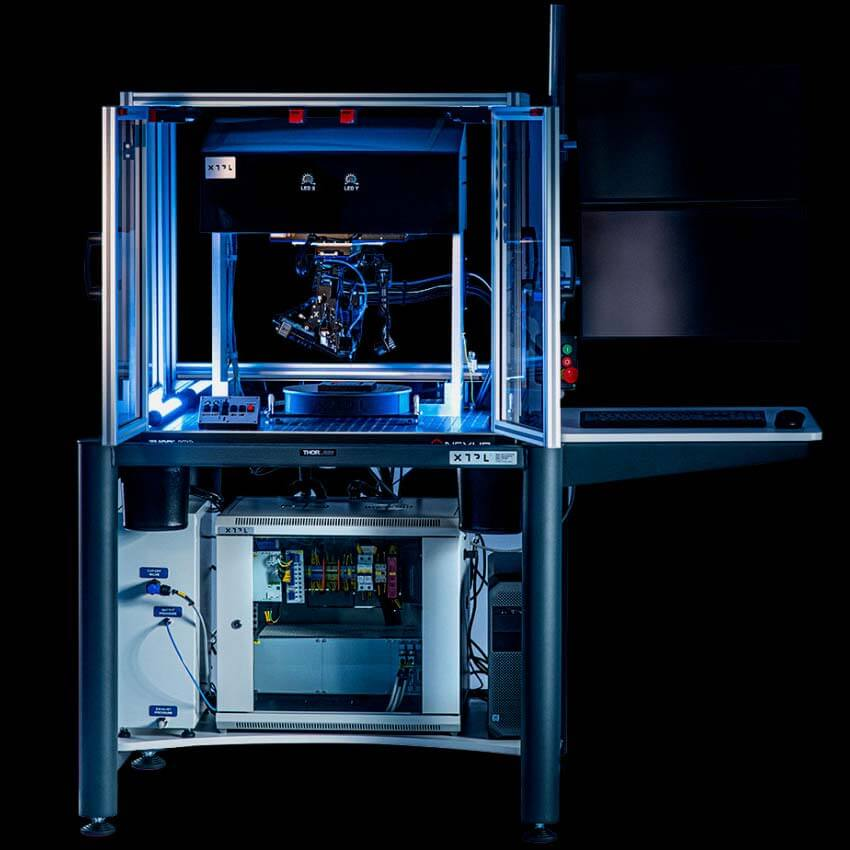
    XTPL just announced a strategic partnership with semiconductor capital equipment (semicap) manufacturer Manz Asia, which specializes in advanced packaging technologies that maximize chip performance. The starting point for the partnership is Manz Asia’s acquisition of one of XTPL’s Delta Printing System (DPS) units, which leverages the company’s Ultra-Precise Dispensing (UPD) technology.

    That acquisition will be installed sometime in the first half of this year at the Manz Semiconductor Innovation R&D Center in Taiwan, enabling XTPL to reach a whole new audience as Manz Asia gains a  new process capability. Since the printhead is the key to the UPD technique, XTPL notes that the strategic partnership provides a potential pathway for ultimately integrating XTPL’s printhead into Manz Asia’s machines.

    By partnering with Manz Asia, XTPL has accomplished its goal of expanding physical sales footholds in key markets without having to commit the capital necessary to expand that presence on its own, turning a machine sale into a technology demonstrator in the world’s most important semiconductor market.

    In a press release about XTPL’s strategic partnership with Manz Asia on UPD technology, Filip Granek, CEO of XTPL S.A., said, ““I am delighted to start the partnership with Manz Asia – a company with a strong position and deep expertise in the semiconductor industry in Taiwan and Asia. It is only natural for us to work side by side with a partner who knows this ecosystem from the inside. The synergy between XTPL’s unique ultra-precise dispensing technology and Manz Asia’s competencies in advanced semiconductor packaging is a natural fit. That is precisely why I am confident this collaboration will translate into tangible business opportunities for both sides.”

    The CEO of Manz Asia, Robert Lin, said, “This strategic partnership with XTPL expands our printing capabilities into ultra-precise material deposition, enabling a wide range of advanced semiconductor applications. The technology supports both conductive and non-conductive materials across 2D, 2.5D and 3D substrates in diverse manufacturing scenarios. By combining XTPL’s dispensing technology with Manz’s automation and process integration expertise, we broaden our portfolio and provide more flexible manufacturing solutions, helping customers accelerate innovation and move efficiently from prototype to volume production.”

    In a recent story about a similar partnership between APES and Great Lakes Semiconductor, I noted that advanced packaging could easily end up being the biggest growth opportunity for 3D printed electronics. As I explained, the key to understanding that is understanding how critical chiplets have become in the global semiconductor arms race.

    Basically, while the West has leaned into System on a Chip (SoC) designs that incorporate all the compute functions into a single die, China has been forced via equipment import restrictions to take the System in a Package (SiP)/chiplet strategy — combining a variety of different smaller dies into the same device with advanced packaging — to its extreme. What started out as a disadvantage for China has rapidly evolved into a strength, as China has developed the ability to do more with less through innovation.

    Now, the West is in a position where the logic of the competition over semiconductor technology has flipped, and Western device manufacturers are trying to catch up with China’s chiplet dominance. This could be a monumental event for the AM market, and, in turn, for reshoring electronics supply chains.

    For XTPL specifically, an expansion into Taiwan could be precisely the thing that gives the company a long-term edge in the U.S. and Europe. If the company can bear out its technology in the world semiconductor sector, there’s a good chance that Taiwanese semiconductor manufacturers will turn to UPD technology as they solidify their generational investments in production capacity on the North American and European continents.

    Images courtesy of XTPL

  • Bambu Lab A1 Used to Directly 3D Print Copper Electroplated Parts

    Maker Dzingof was doing tonnes of electroplating of desktop and other 3D prints years ago with his Metalizzr project. I’ve been playing, a lot less successfully, with electroplated 3D prints since before that. Electroplating is a new path to metalized parts. Electroplated polymer parts have a metal coating that can withstand some environmental pressures. But, in terms of strength and performance, it can’t really be considered a metal part. The parts also always feel weird because they’re much lighter than they look. Electroplating can also be complex, and depending on the process used, it leaves behind materials that you don´t want to spend much time with. It’s also way too finicky and difficult for most people. But it can provide conductive traces and some of the properties of metal parts.

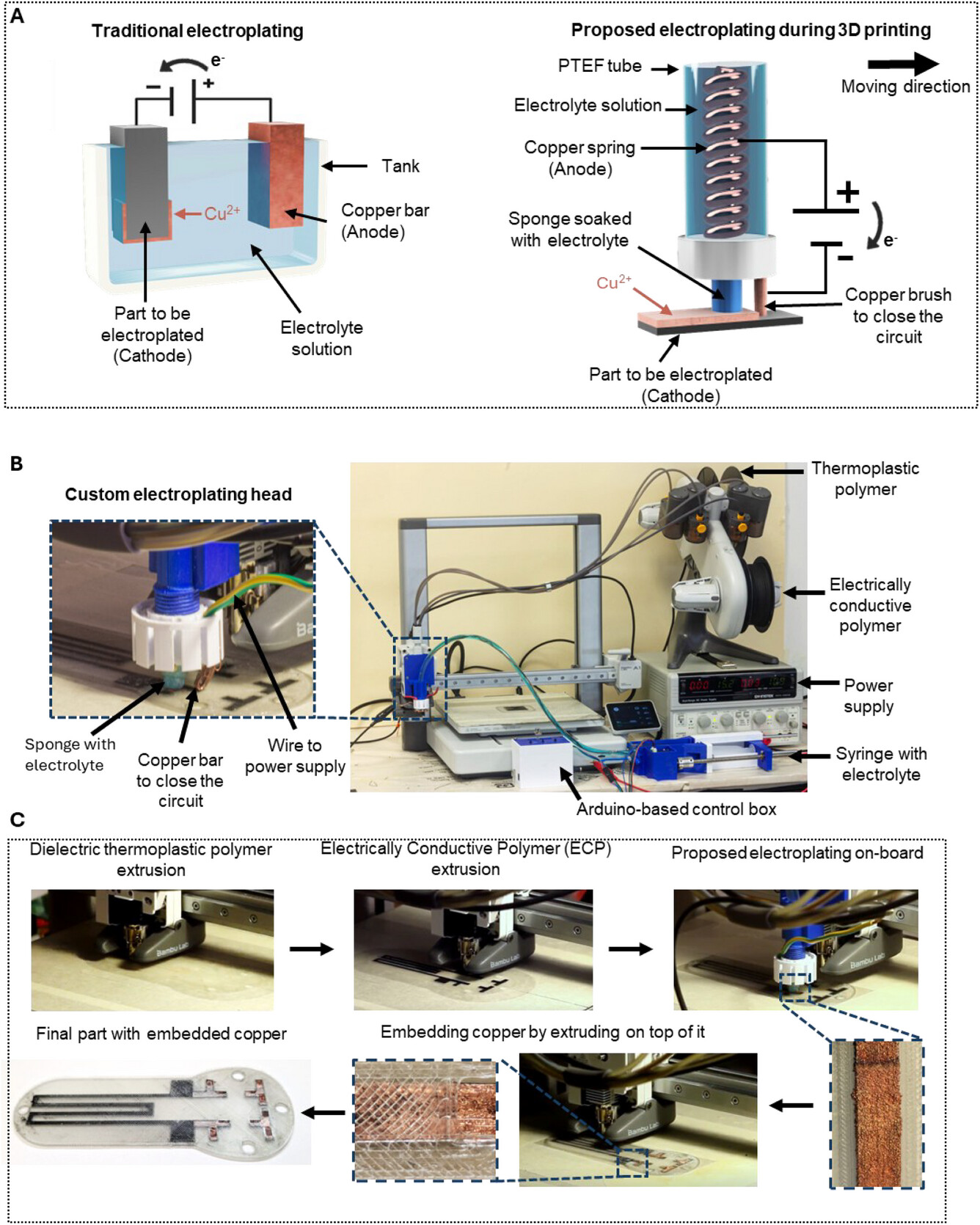
    Now, research by Gianluca Percoco, Nicola Larovere, Antonio Zagaria, Antonio Pavone, Rosanna Rifino, and Gianni Stano of the Department of Mechanical, Mathematical, and Management (DMMM) at Polytechnic University of Bari aims to make it easier for people to produce electroplated parts using desktop machines. Published in Advanced Materials Technologies, the paper is called “In Situ Copper Electroplating Turns Material Extrusion 3D Printers Into Metal–Polymer Hybrid Fabricators.” 

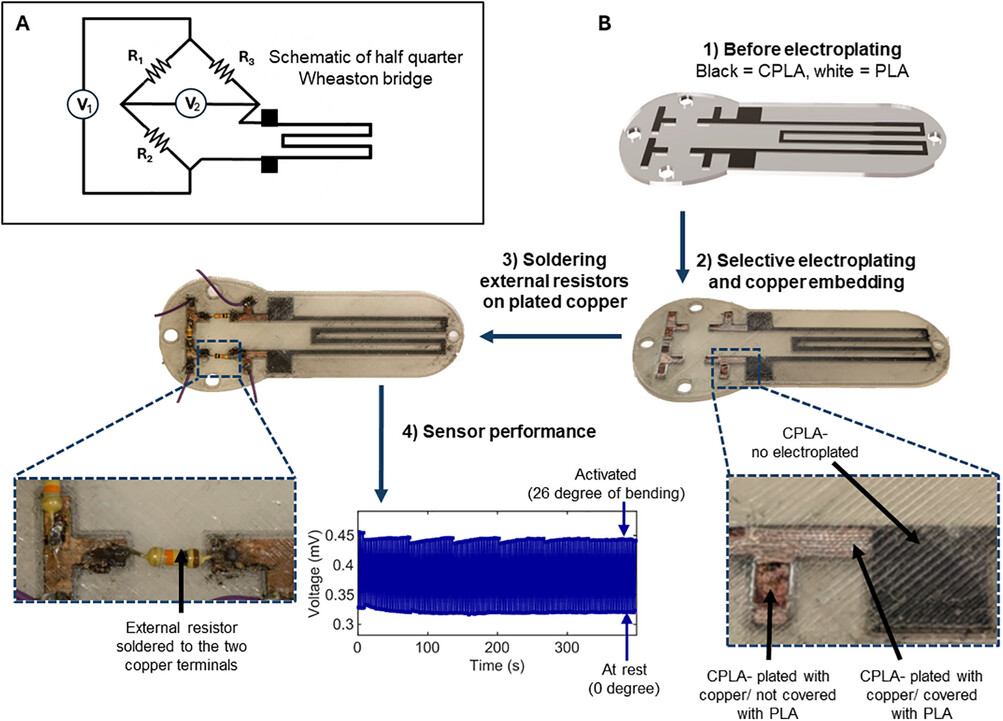
    In the paper, the team shows how they’ve developed a small electroplating head, developed G-code to let you plate while you print, and, in certain areas, a printing method to go with it. The team then tests making a strain gauge and a circuit, and hopes that their research will enable desktop machines to be used to make electronics. Over 10 years ago, Italian boutique machine builder RobotFactory developed a desktop electroplating device that you can use along with 3D printers. Others have always worked with a separate electroplating device and step. But now we may be able to do this on one device. What’s more, with this technique, you’re really creating a hybrid polymer-copper structure that may have interesting capabilities. In this case, the team focuses on making electrically conductive polymers with a view to making circuits, actuators, traces, and other electronics.

    The printer used was a super inexpensive Bambu Lab A1, and the filament was good old PLA, as well as CPLA from Protopasta. A power supply was connected to a syringe piston that, on demand, pumped electrolyte solution through the PTFE tube past a copper coil through a sponge on the electroplating head. Enclosed through a luer lock, the sponge can be in contact with a brush. Meanwhile, the normal head, with the AMS, prints the PLA and later on the conductive material. The Arduino-controlled pump feeds electrolyte material to the sponge and brush head, closing the circuit and locally plating an area. The plating head just moves in X and Y, but after it is done, additional polymer can cover the copper area.

    To make this work, the team used a Machine learning algorithm to determine where and when electroplating can take place, and therefore when printing has to stop. It also looks at where conductive material has been placed previously. The tool can translate the right target electroplating area into G-code that tells the printer when to stop, go, and switch heads. The BOM costs of the electroplating head were less than €95. So, for around $300, you could develop a kit that could make this commercially viable. This could potentially mean that for $700, you could perhaps be 3D printing circuits at home.

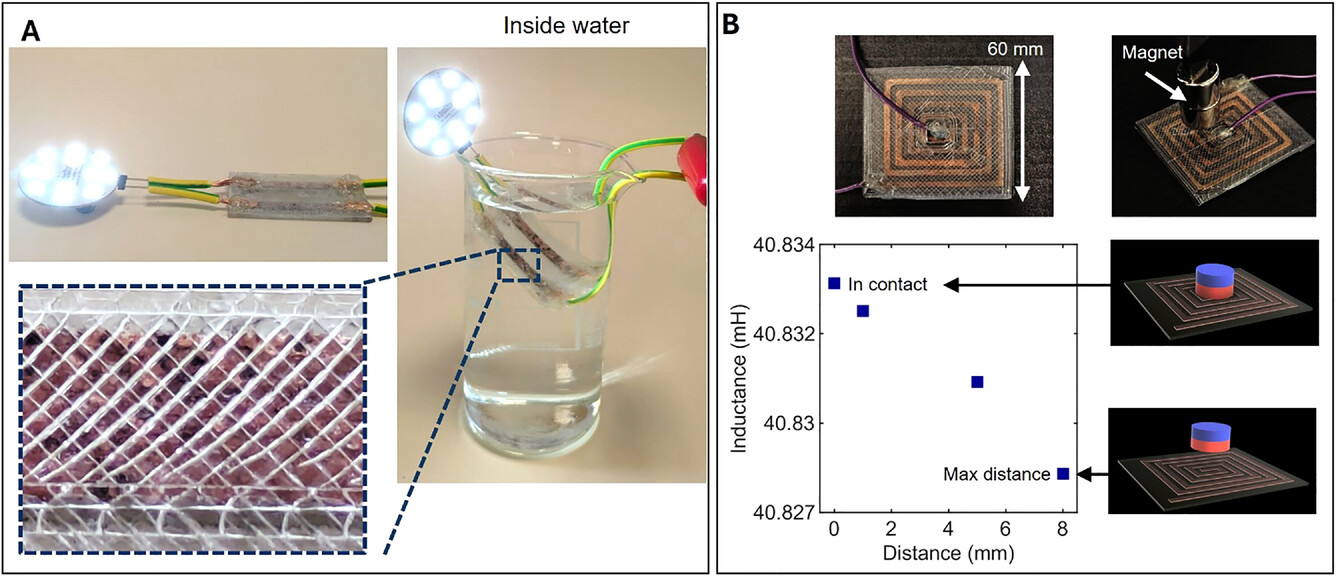
    To test their work, the team made a piezoresistive sensor, traces, a voltage divider circuit, and other circuits. They achieved a resistance of 0.15 Ω, 400% higher than that of Conductive PLA, with one pass of the nozzle. One interesting thing that they propose is that the copper parts can be heated while encapsulated by the polymer, triggering shape memory events, for example. A 3D printed circuit that could work while submerged in water was also a nifty demonstrator, as was a “smart dice” that could power three things at the same time. This approach seems like it could actually work well.

    Of course, to make it work in Bari and then to have it work every time in your house is going to be quite a bit of work. But turning inexpensive desktop 3D printers into circuit 3D printers is an amazing piece of work. Allowing for low-cost tinkering with electronics by many labs, students, and makers could lead to completely new devices and methods. At the same time, this is a powerful way of showing just how powerful desktop 3D printers have become. The tens of millions of units sold and their accuracy mean you can build real tools on top of them that millions of people can implement.

  • 3D Printing Financials: Xometry Reports Record 2025 Results and CEO Transition

    Xometry (Nasdaq: XMTR) just delivered a milestone quarter and also announced a major leadership change. The company posted record results and made it clear it feels confident about the future. It also announced a CEO transition that keeps founder Randy Altschuler closely involved. For 3D printing users and suppliers, the bigger story is that Xometry is leaning hard into its AI-driven marketplace model and expanding its additive manufacturing offerings, especially for higher-value production work.

    Looking at the numbers, in 2025, Xometry reported record fourth-quarter revenue of about $192 million, up 30% from a year ago, driven mainly by marketplace revenue of about $178 million (up 33%). The company ended the quarter with a record 81,821 active buyers. It also pointed to improving economics in the marketplace, with the marketplace gross margin at 35.3% in Q4.

    Record quarter plus a CEO transition

    Xometry described its Q4 and full-year 2025 earnings as “record” results, and something that is really important for the marketplace model is the buyer base. The company finished Q4 with 81,821 active buyers, a new high, pointing to what it described as a “widening network effect between buyers and its global supplier base.” So basically, when more buyers use the platform, more orders come in. When more suppliers join, Xometry has more options to choose from, which helps it match jobs faster and more accurately. Over time, all of that activity gives Xometry more data, which helps its software improve pricing and job routing.

    This matters for 3D printing because it’s not a separate business inside Xometry. It runs on the same marketplace system as the other service offerings, including CNC machining, injection molding, sheet metal, and casting. So when Xometry adds more enterprise buyers and more certified suppliers, it increases the odds that AM orders (especially higher-performance polymer work) get placed faster and repeated.

    Xometry’s Gaithersburg, Maryland site. Image courtesy of Xometry.

    Along with the record quarter announcement, Xometry revealed a planned leadership transition. Company founder Randy Altschuler will become Executive Chair effective July 1, 2026, and President Sanjeev Singh Sahni will become CEO.

    Altschuler told investors during an earnings call that “This transition is a result of a deliberate, long-term succession process with our board, and we are aligned in our conviction that Sanjiv is the right leader for our next chapter. Together with Laurence Zuriff, I co-founded Xometry in 2013 with a mission to make the world’s manufacturing capacity accessible to all by digitizing the vast, highly fragmented custom manufacturing market. We stayed true to that vision from the start, and that consistency is now delivering scale and accelerating growth and profitability.”

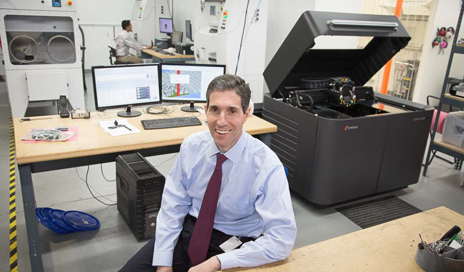
    Xometry CEO and co-founder Randy Altschuler.

    What this means for 3D printing on Xometry’s platform

    Xometry is a broad on-demand manufacturing marketplace, but the earnings call offered a few specific signals for additive manufacturing. Firstly, Xometry says it expanded its additive materials portfolio.

    Management said that in Q4, it added a portfolio of high-performance materials for additive manufacturing technologies in the U.S. marketplace, positioning them as important for advanced applications in aerospace, defense, and medical devices. In fact, adding more materials makes the platform more useful for real production jobs, where customers need strict specifications, documentation, and repeat manufacturing, not just quick prototypes.

    The real focus is production-style adoption

    Xometry executives pointed to growth in larger enterprise accounts and multi-year programs. In the earnings call, Altschuler said the company is becoming “more embedded in customer workflows.” In some cases, that means Xometry is included in a customer’s bill of materials (BOM),  the official list of parts used in production. In other words, customers are not just using Xometry for prototypes, but for repeat production parts.

    “Xometry is becoming more embedded within the enterprise customer workflows, which in turn drives larger and more predictable spend. In 2025, we ended with four accounts with at least $10 million spent, driven by strong execution from sales and the efficacy of our technology solutions. We expect more accounts to join the $10 million plus threshold in 2026, driven in part by many multi-year production programs across key end markets. In 2026, we are focusing on driving further structural enterprise adoption through deeply embedded sales and marketing motions, and increasing use of technology solutions, including Teamspace and ERP procurement integration,” explained Altschuler.

    AI tools help strengthen the platform

    As for Sahni, he said the company is continuing to invest in AI tools, including Design for Manufacturing (DFM)  features and software that can interpret technical drawings. These tools help spot problems early and reduce delays.

    The easier it is to go from a CAD file to a confirmed order, the more likely customers are to come back. And repeat, additive manufacturing business is necessary to build stable, long-term production revenue.

    Nexa3D LSPc® Resin 3D Printing Service by Xometry. Image courtesy of Xometry.

    Xometry’s Q4 results showed growth and improved profitability at the same time. Revenue was roughly $192 million for the fourth quarter, up 30% year over year. Meanwhile, marketplace revenue was about $178 million, up 33%, and marketplace gross margin was 35.3%.

    Mewwhile, for the full year 2025, Xometry reported revenue growth of 26% and delivered positive adjusted EBITDA of $18.5 million, compared to a loss the previous year. The company said revenue growth accelerated throughout the year, alongside improving margins, marking what executives described as a “transformative” year for the business.

    Xometry expects growth to continue in 2026 and said the first quarter has started strong, even as broader economic conditions remain uncertain. Xometry combined record growth, especially in its buyer base, with a planned CEO transition meant to keep the company on track while continuing to expand its product offerings.

    For 3D printing, what’s important is that the company is adding stronger materials and embedding itself more deeply into enterprise purchasing systems. That’s what can turn additive from a one-off solution into repeat production business.