• The 3D Printing Pioneers’ Journey from HZG Group: From Bavaria to the World

    In Lichtenfels, two hours’ drive north of Munich, there is a globally recognized 3D printing center with a modern infrastructure and many companies focusing on this future technology. At the end of the 1980s, the region was one of the first in Europe where 3D printing became established.

    This is due in no small part to the founders of Concept Laser, Kerstin and Frank Carsten Herzog, who are also the founders of the HZG Group. Through their joint efforts, they founded the technology company Concept Laser and built it into one of the global market leaders in the field of metal 3D printing.

    After selling their company, Kerstin and Frank Carsten Herzog returned to their entrepreneurial roots. Together with the HZG Group team, they are investing specifically in promising start-ups in the field of additive manufacturing.

    In Lichtenfels, they also operate their own development and application center, “naddcon,” where they work with the most exciting technologies that 3D printing currently has to offer.

    “The portfolio of our first start-up fund is complete,” says Frank Carsten Herzog. “Since our launch 2022, we have screened over 2,700 start-ups and invested in promising business ideas. We have also participated in the first follow-up rounds of our start-ups.”
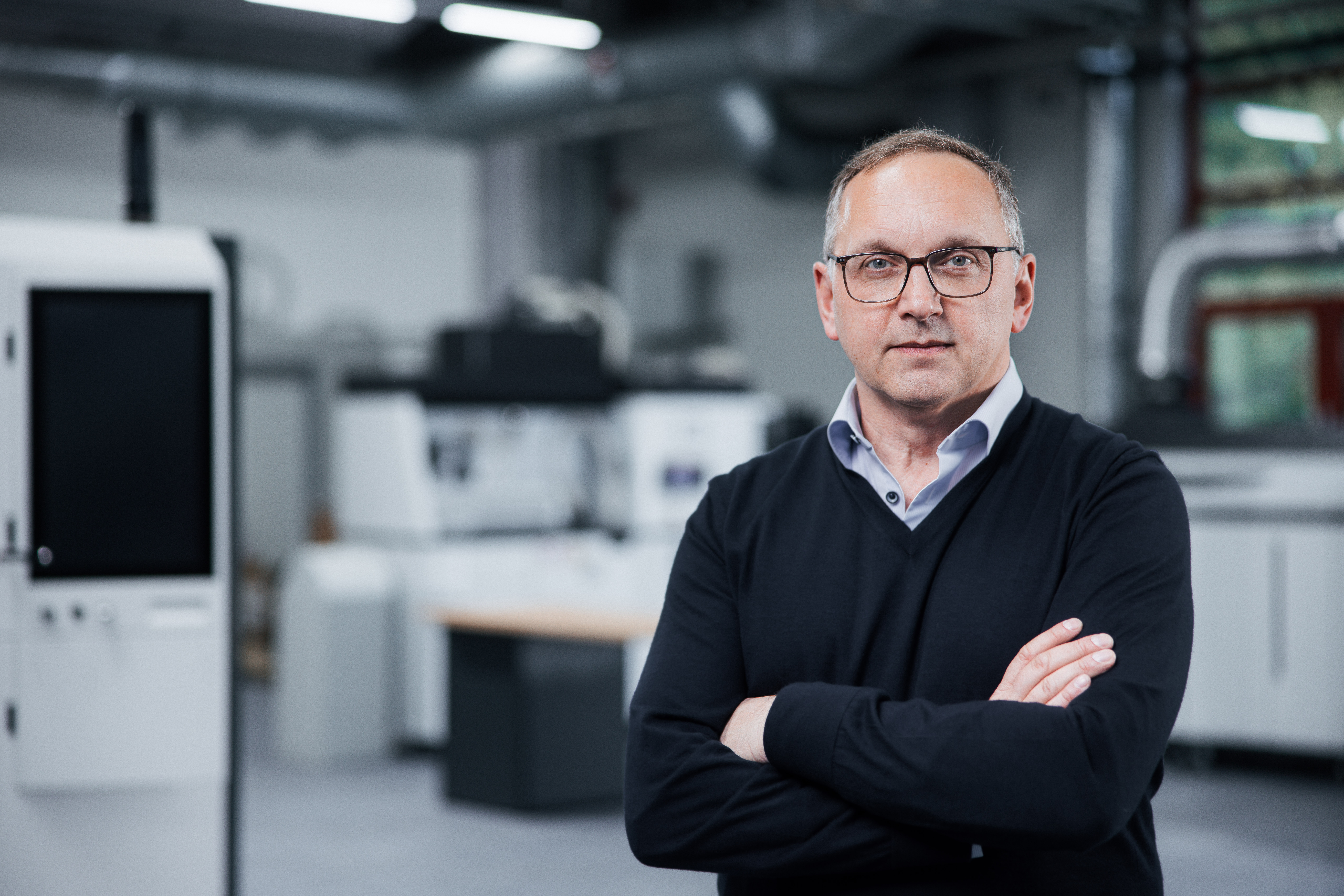
    Frank Carsten Herzog, Founder and Managing Director of the HZG Group. Copyright: Sebastian Buff

    In the US, Rapid Liquid Print, a spin-off of the Massachusetts Institute of Technology (MIT), and Axtra3D from industry veteran Gianni Zitelli are part of the HZG Group’s portfolio. For the HZG Group, the decisive factor in selecting the startups was that they must have the potential to bring about lasting change in the industry. Above all, however, the technology must inspire and stimulate the imagination: How can this innovation be introduced in a beneficial and profitable way in an established environment and further developed in a forward-looking manner?

    Implementing efficiency gains

    HZG is focusing on the key drivers that will bring 3D printing technology into industrial production: lightweight construction, functional integration, and simplification by combining many individual parts into a single component. The automated design and manufacture of fixtures, as well as the use of digital intelligence such as component and construction process simulation, bring about lasting change to the production process. This also includes process monitoring, and building on this, artificial intelligence for additive manufacturing in the future. This will not only take the controllability of the technology to the next level, but also further improve the robustness and reliability of the technology and thus of the manufacturing process.
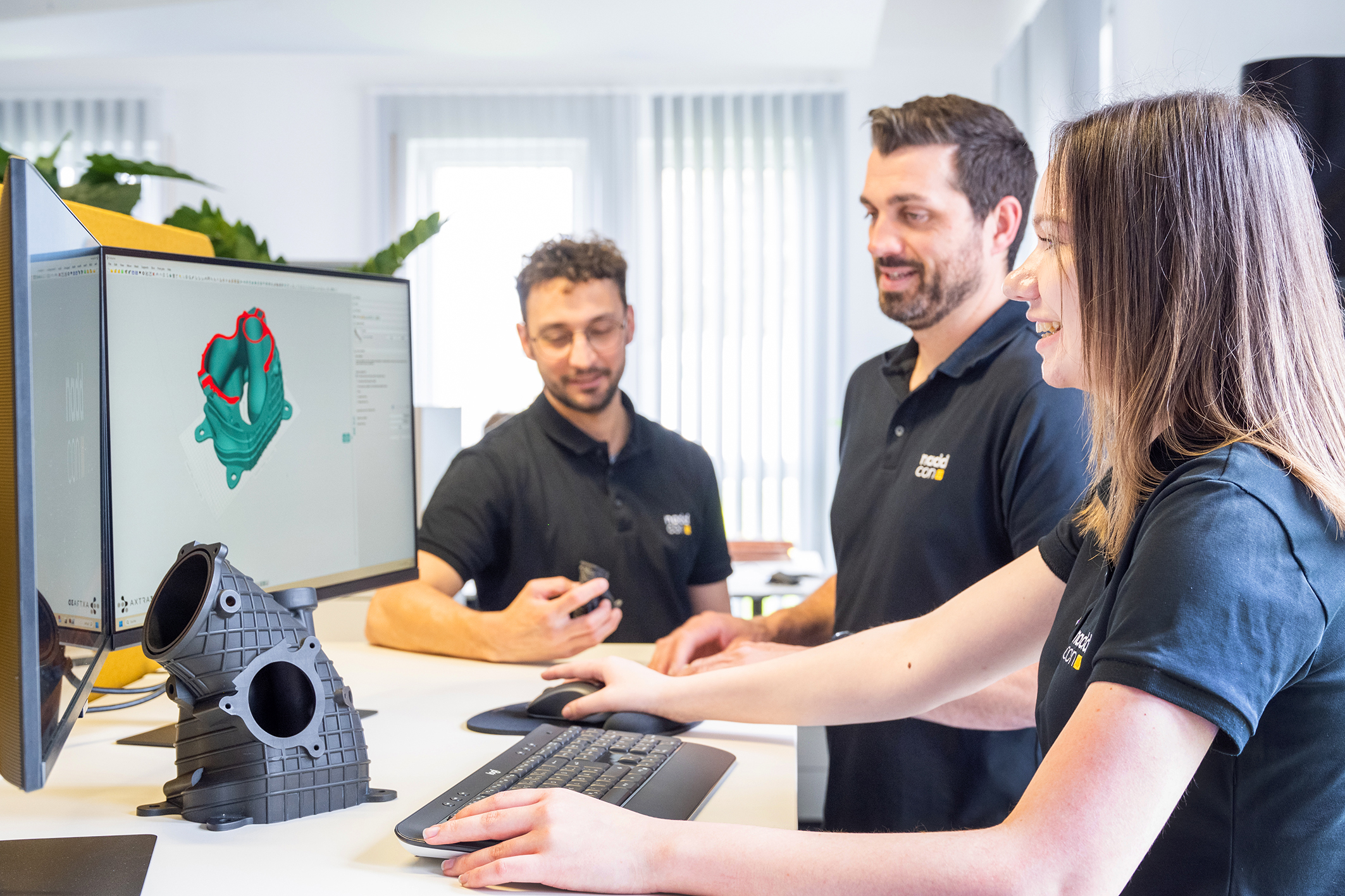
    The naddcon team supports customers along the entire additive manufacturing value chain. Copyright: Fotostudio BeWe – Stefanie Brehm

    Herzog: “We are still at the beginning of the possibilities of 3D printing for the industry. There is still room for leaps forward in all areas.” On the other hand, it is also clear that after years of hype, the market for additive manufacturing now seems to have cooled down significantly and become more realistic. How does HZG assess the situation? Despite all due sobriety, Frank Herzog is convinced of the opportunities in the market: “In the long term, we believe that a consolidated, specialized AM market will establish itself and play an important role in the industrial environment. The startups in our portfolio are ideally positioned to play a leading role in this development.”

    More than ever, it is important to focus on the market and customer needs. Frank Carsten Herzog: ”We tell all our portfolio companies: Accept that you are developing a product for a real market need – not just for your founding idea. That means being close to the customer, listening, and really understanding the daily challenges in production.“
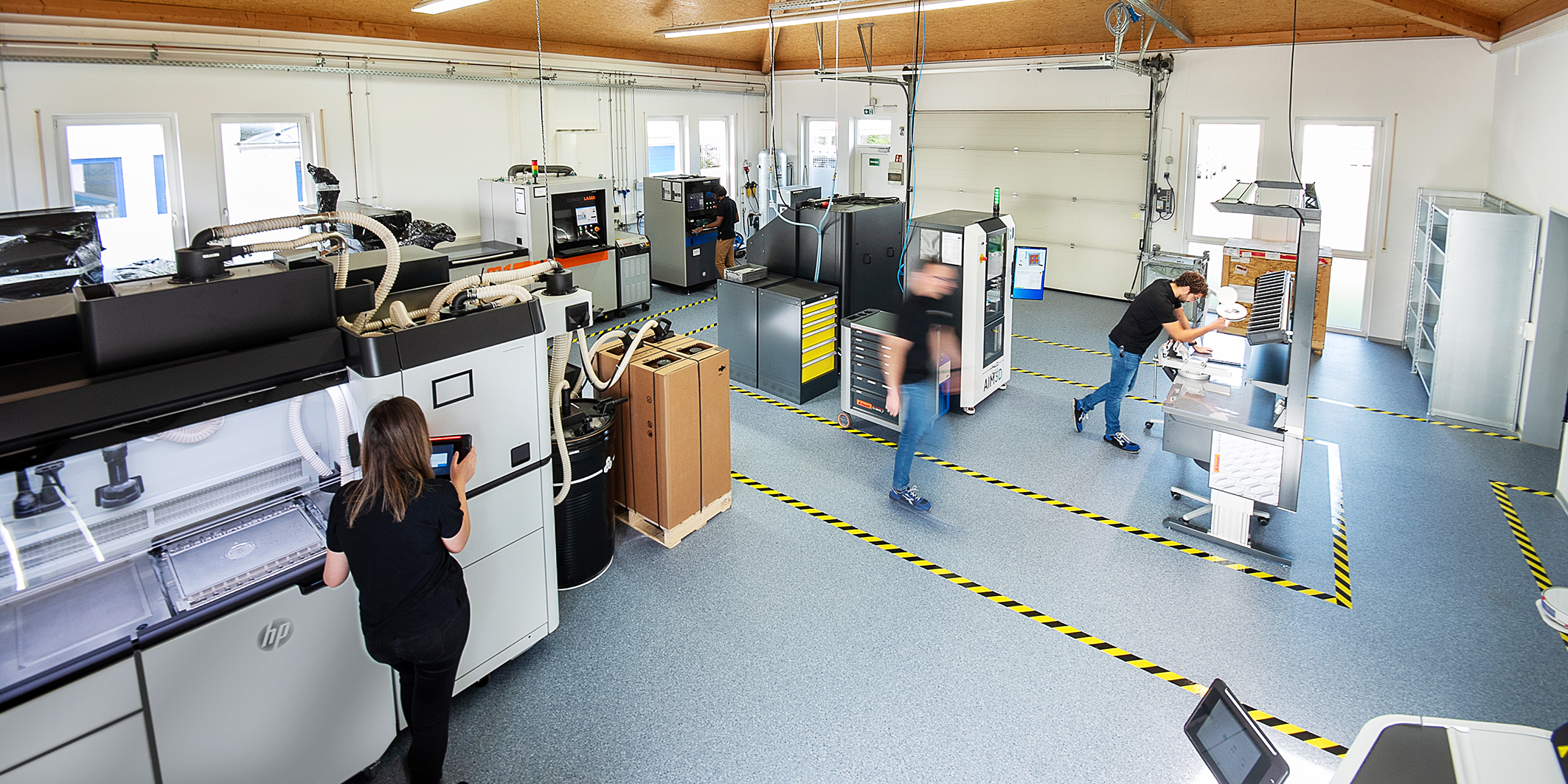
    The naddcon manufacturing facility. Copyright: naddcon

    This is an approach that the HZG Group also pursues with its own development and application center. naddcon Managing Director Christian Steinhage says: ”We look at 3D printing along the entire process chain and have an overview of the potential we can leverage with the technology in various industries. In most cases, customers are not experts in 3D printing, but approach us because they are curious to find out whether the technology can help them become more efficient. We will find out together with our customers.”

    HZG Group is a Bronze Sponsor of Additive Manufacturing Strategies (AMS) 2026, a three-day industry event taking place February 24–26 in New York City. The conference brings together industry leaders, policymakers, and innovators from across the global AM ecosystem. As a sponsor, Arcway will support discussions focused on scaling additive manufacturing, industrial adoption, and emerging production technologies. Registration is open via the AMS website.
  • Automation Alley To Compete With Service Bureaus

    Automation Alley is a Michigan-based innovation cluster trying to foster collaborative learning and development around technology and manufacturing. Project DIAMOnD (Distributed, Independent, Agile Manufacturing on Demand) is an Automation Alley initiative in on-demand production. Connecting 3D printers and businesses, the project has gotten $22 million from Oakland County and Macomb County. The project has purchased 550 3D printers to date. The project said they cost $20,000 each. The printers seem to be Markforged, but many images show colored objects that can´t be made by these printers, so maybe it’s a bunch of different ones?

    I’m a bit confused by this, actually, since for $1 million, you could have funded a filament production line making low-cost materials in Michigan. That could have made parts low-cost and made spools of filament available for less than a $4. Meanwhile, for the rest of the money, they could have set up a production line producing 3D Printers in Michigan. Or they could have bought 13,000 Prusa Core One printers for the remainder of the money?

    The project wants to expand access to additive manufacturing across the region is now opening up more broadly its DTC digital 3D printing service. Now, commercial customers can order parts for metal and polymer 3D printing from the service.

    Automation Alley COO Pavan Muzumdar said,

    “The Digital Transformation Center was built to help companies move from experimentation with additive manufacturing to real production. By opening the DTC to businesses beyond our membership network, we’re removing another barrier to adoption of this powerful technology and giving more companies a low-risk path to validate products, scale production and compete using additive manufacturing. Not every company needs to own a fleet of industrial 3D printers to benefit from additive manufacturing. The DTC allows businesses to access production-grade capabilities on demand, while maintaining control over their designs and process knowledge.”

    As well as the initial 3D printers, the network now offers access to large format Material Extrusion, powder bed fusion, and DED. The company may have a SAF machine. The DTC also has post-processing equipment. The unit can prototype and manufacture while offering instant quoting. The prices are meant to be competitive.

    I´m thoroughly bewildered by this. A nonprofit receives government funding to set up distributed manufacturing. Now, from a central location, they´re operating like a service bureau. What does this mean to local businesses offering 3D printing as a service in the area? Will increased competition mean that local and regional 3D printing businesses will actually make less money? Or will this somehow make parts cheaper and expand the number of parts being made? How will this drive growth in the region?

    I´m going to believe here that Automation Alley has the best intentions, but this just seems like it’s very unfair. If I were a 3D printing service in Michigan and on the hook for leases or loans for my equipment, I wouldn’t be jumping for joy at this advance in manufacturing. There are plenty of service bureaus out there, and some of them aren´t doing too well. I think there could be another solution set that makes sense. If they worked on training, design training, or making some part of the process fundamentally cheaper, it would have a much greater impact. $22 million is an awful lot of money, and this could have fundamentally altered the economics of Material Extrusion for the region. Orders could have been pooled to give local manufacturers huge deals on manufacturing runs, for example. I’d be very curious to see how many parts will be made for $22 million in the end. I’m skeptical that the approach chosen will find diamonds in the rough or put diamonds on the fingers of Michigan manufacturers.

  • Additive Manufacturing’s Next Chapter: From Prototype Tool to Operating Model

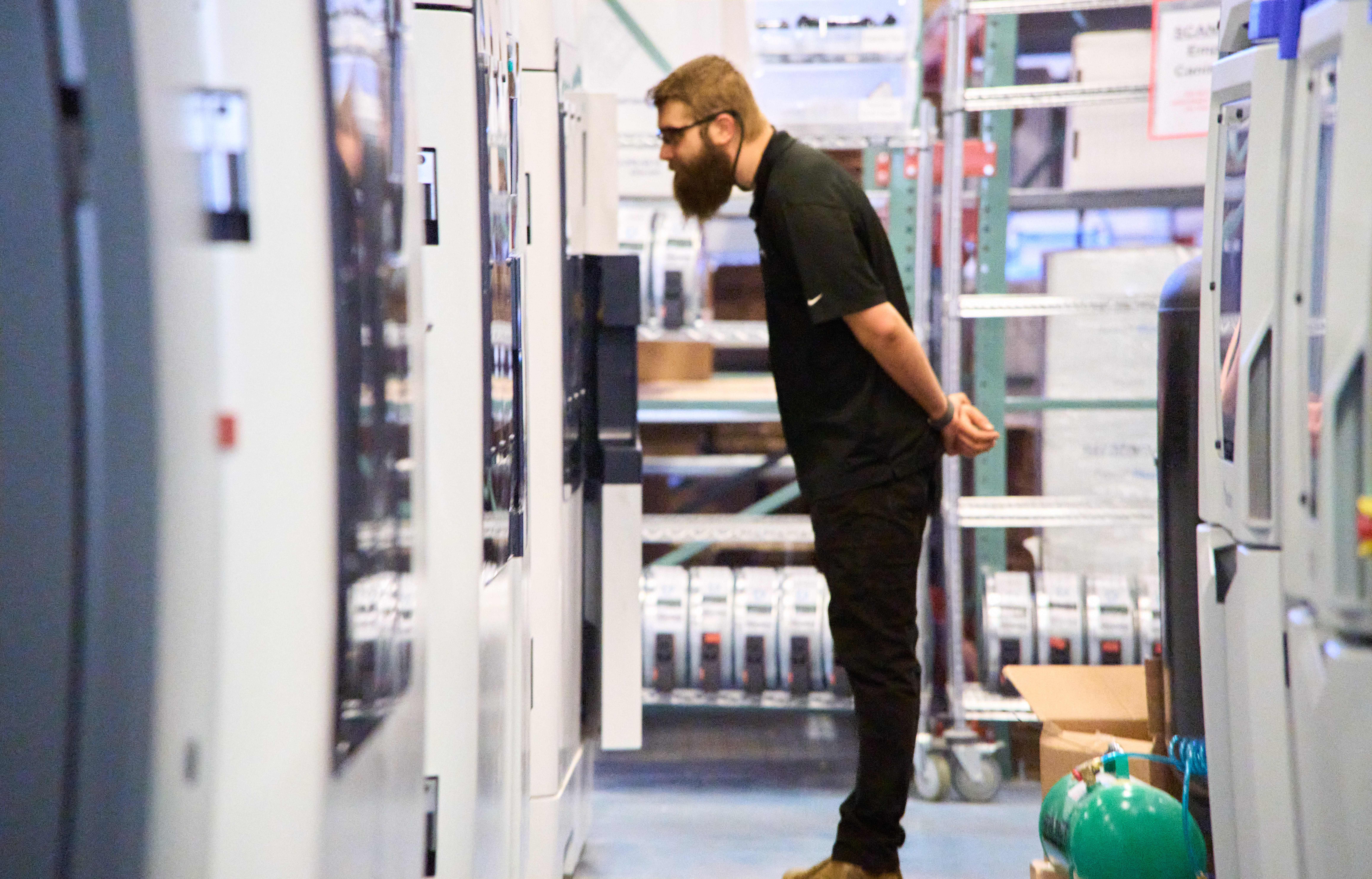
    Additive manufacturing is shedding its legacy reputation. While it remains the go-to for prototyping, its potential now extends beyond. Today, it’s increasingly used to support real production requirements, helping teams move faster from concept to part while improving flexibility when timelines and supply chains tighten.

    This evolution signifies more than incremental gains in printer speed or material options. It also reflects a shift in how leaders view additive: less like a specialty process and more like infrastructure. Leaders – under pressure to deliver quickly – can shorten decision cycles from design through procurement to production, often without the friction of tooling.

    From prototypes to production

    One of additive’s greatest advantages is the continuity, resilience, and scalability it provides to the workflow. Without changing the underlying digital file, teams can validate a geometry, adjust performance characteristics, and scale production runs. Increasingly, what begins as a quick prototype can evolve into repeat orders of the same part. The same CAD file can be used, eliminating the need for retooling – critical when the repeat orders reach hundreds at a time. With the same base 3D printer and the same file, the same part can be made with consistency anywhere in the world at the press of a button.

    That continuity and scalability matters because it minimizes the challenges of transition that can slow organizations down. When a design leaves engineering and enters a very different world of quoting, tooling, supplier selection, and long lead times, these processes can introduce delays. Additive streamlines those steps by making iteration a regular part of the operating rhythm rather than an exception, providing a longer, more flexible bridge to production volumes, and often now serving as a viable production solution that can be rapidly localized to demand.

    What’s fueling additive’s shift from niche to necessary

    The momentum behind additive is not coming from a single breakthrough. It is the convergence of several advancements that collectively make additive manufacturing more accessible and more dependable, including:

    • Advanced materials: Heat-resistant polymers, composite resins, and other high-performance options are expanding the applications of additive manufacturing.
    • Advanced software: Better process control and additive-specific workflow tools are helping teams sustain consistent outcomes.
    • Lower entry costs: Functional parts are becoming more economical.
    • Faster lead times: Waiting for tooling or machining capacity is no longer a barrier. Teams can move from design to part in days, not weeks.
    • Smarter sourcing decisions: Engineering and procurement teams are improving by experimenting with new materials and specifying additive requirements.
    • Consistent quality of parts: Part consistency has increased alongside a broader understanding of how to spec for repeatable production.

    The practical result is that additive is becoming a lever not just for innovation, but for responsiveness, a way to keep programs moving when conventional manufacturing constraints create drag.

    Additive’s growth in aerospace and defense

    Aerospace and defense (A&D) is one of the clearest examples of why additive is moving into a more central role for manufacturing. In fact, additive is expected to be the fastest-growing manufacturing process in 2026, as A&D programs expand their use of qualified additive suppliers for rapid prototyping, lightweighting, sustainment applications, and access to advanced materials. These programs live at the intersection of speed, quality, and extreme performance requirements, where a delayed component can stall an entire schedule and a marginal part cannot be tolerated.

    Additive is already producing parts that operate in demanding environments, ranging from payload components and test fixtures to propulsion-related designs that face intense thermal and mechanical loads. Engineers are also using additive to consolidate assemblies into fewer parts, reducing joints and fasteners, often improving durability while simplifying logistics and inventory.

    A&D also highlights another additive advantage: digital control and flexible production. In sensitive, regulated environments, additive can support centralized control of design files while enabling distributed production across vetted suppliers, reducing dependency on physical tooling and improving response time when priorities shift.

    Just as important, A&D’s focus on traceability, certification, and quality assurance is advancing additive maturity, helping move it from possible to repeatable at scale.

    Beyond A&D: additive as a resilience play across industries

    While A&D offers a clear view of what additive can deliver, many other industries are putting it to work in practical operations. Manufacturers are increasingly adopting additive to move faster and solve technical and supply chain challenges that legacy processes struggle to address.

    In production line assembly equipment across industries, this can look like printing line changeover components on demand to reduce costly downtime – or even more specifically in energy and industrial equipment, additive can be used to produce corrosion-resistant parts designed to withstand extreme operating conditions. Even within aerospace, the technology continues to redefine the “possible,” delivering complex geometries, unprecedented lightweighting, and structural stability that traditional subtractive methods simply cannot replicate.

    Across these examples, the shared thread is not a novelty. It is agility and innovation under pressure.

    How to scale additive to its full potential

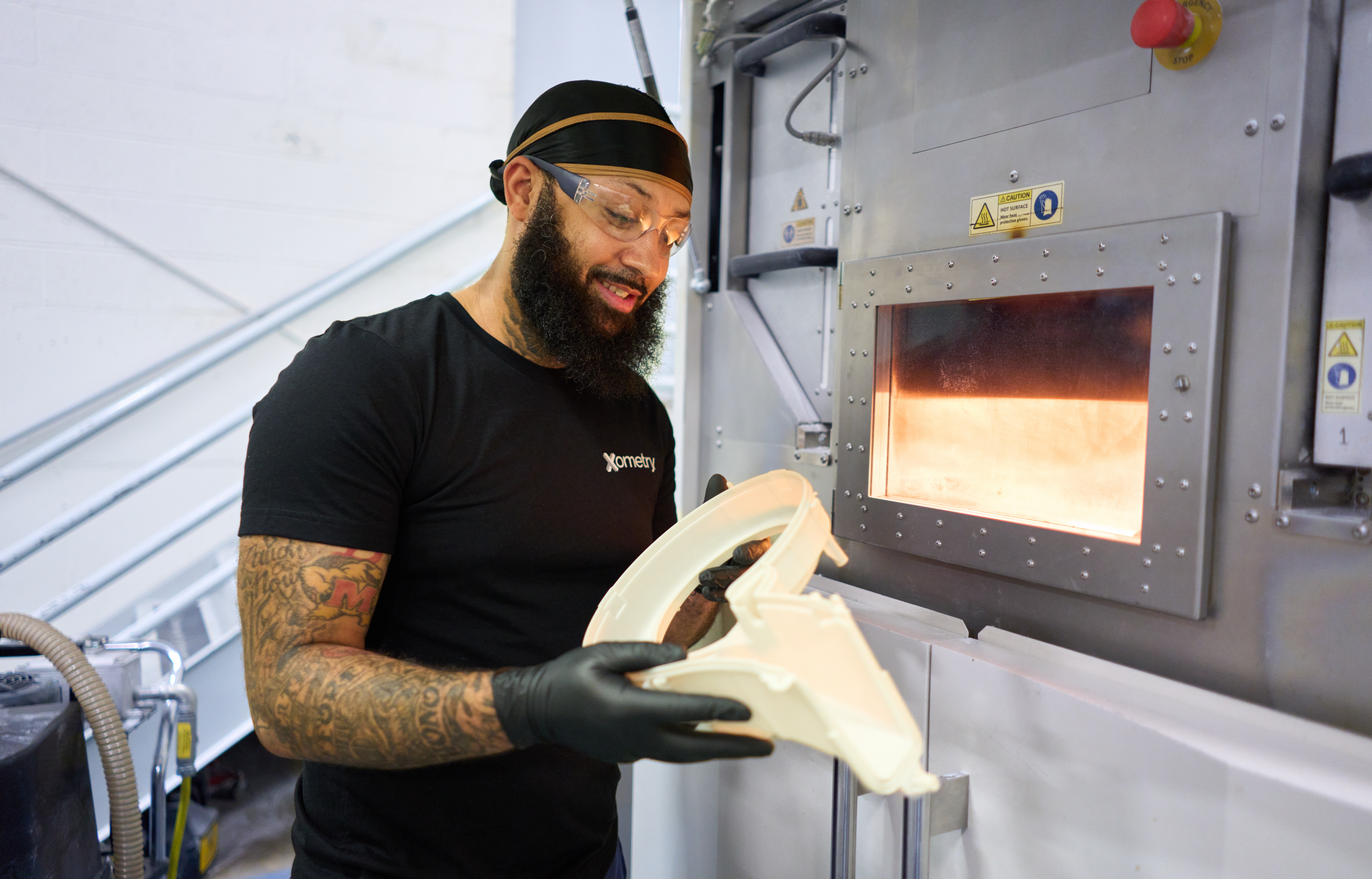
    To successfully scale additive manufacturing, manufacturers must move beyond merely acquiring machines to developing a robust system for consistent production. This is where digital infrastructure shines, leveraging the vast, on-demand capacity of an online marketplace to assess manufacturability, match jobs to specialized suppliers, and streamline procurement while preserving quality and traceability.

    When manufacturers treat additive as part of the operating model, it stops being experimental. It becomes a strategic capability that helps organizations move faster, localize smarter, and adapt as requirements change. The winners will be the teams that operationalize additive as a repeatable pathway from design to production, not a one-off solution.

    Authored by Mike Cavalieri, Senior Vice President of Marketplace Operations

    Xometry is a Bronze Sponsor of Additive Manufacturing Strategies (AMS) 2026, a three-day industry event taking place February 24–26 in New York City. The conference brings together industry leaders, policymakers, and innovators from across the global AM ecosystem. As a sponsor, Xometry will support discussions focused on scaling additive manufacturing, industrial adoption, and emerging production technologies. Registration is open via the AMS website.
  • AMS 2026: The Gift of a Good Strategy

    First things first, folks: if you’re planning on attending AMS 2026, February 24-26 in NYC, and you haven’t registered yet, you can do so here. We’ll consult some ghosts of AMS’s past to get some perspective on what you can expect from the conference!

    Why Strategy?

    Before that, though, why do strategies matter for the additive manufacturing (AM) industry, in the first place? 3DPrint.com‘s Executive Editor Joris Peels wrote an excellent piece on this late last year.

    At the end of the article, Joris sums up, “Some 3D printing businesses are failing now because of bad luck. They need money where there isn’t any to be had. Others have just not executed well enough on their promises. Others have performance, but not enough is expected to follow to get people to part with more money. But, there are also a lot of businesses in additive that never had a strategy. Do you?”

    That simple, concluding question epitomizes how AM companies, even those who think their business strategy is already fine, can benefit from attending AMS.

    Financial Strategies

    Participation in AMS by investors from firms like Cantor Fitzgerald and Stifel set the tone for the event and distinguish it as the only conference where the business of AM is always front and center. This makes it a perfect place to gain the perspective necessary to help formulate your enterprise’s financial strategy. 3DPrint’s Vanesa Listek does a great job covering such topics, including in this article about AMS 2024.

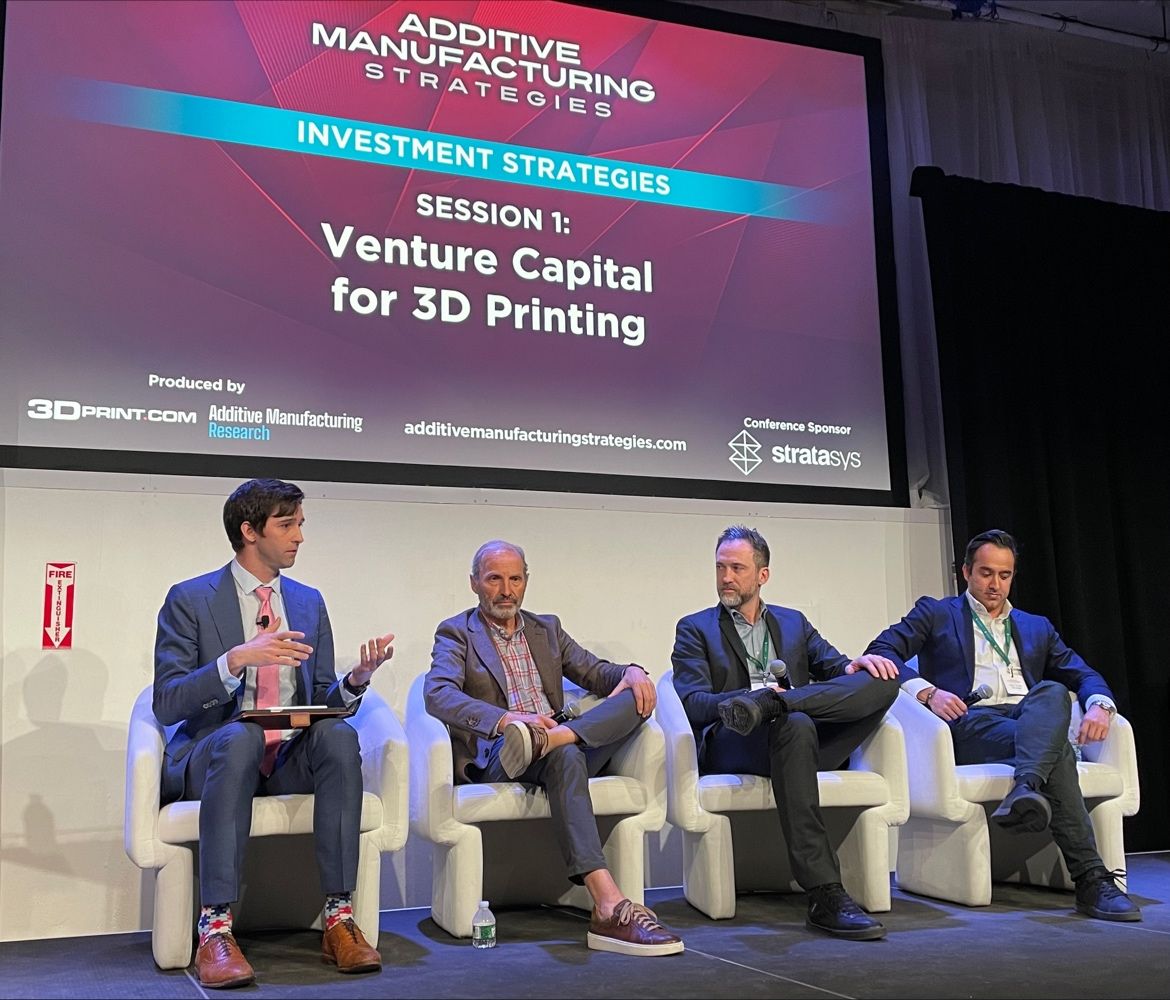
    AMS 2024 “Investment Strategies” panel with moderator Tyler Benster and panelists John Hartner, Osman H. Ahmed, and Hugo da Silva. Image courtesy of 3DPrint.com.

    In that write-up on 2024’s Venture Capital session, Vanesa noted, “The panelists also discussed the challenges and opportunities of the market’s fragmentation. With many players and technologies competing for attention, uniqueness and customer focus have become even more relevant. …[According to the panelists,] partnerships and consolidations [have the potential] to address customer problems more effectively and stand out in a crowded market. Looking ahead, the speakers gave a decisive nod to the roles of software and artificial intelligence in unlocking new capabilities and improving design and manufacturing processes.”

    Clearly, all those angles continue to be just as relevant as ever, highlighting how AMS enables attendees to stay ahead of the curve. As was already mentioned, finance runs deeply throughout all the sessions at the show, but it is most prominently featured on the afternoon of AMS 2026 Day 1 (February 24), in the Public Markets and Printing Money sessions, as well as in the evening session about AM Investment Strategies on Day 2 (February 25).

    Business Development Strategies

    This is probably my favorite angle to the whole conference. It’s what fascinates me about watching the industry evolve, day by day. There’s really so much good stuff to go home with, throughout virtually every moment of the conference, when it comes to business development, as I described in this article about AMS 2024.

    But for anyone who is most interested in business development, I think you’ll want to check out the following:

    • Session 1: AM at Scale (9:40-11:25 AM Eastern), on Day 2 (February 25)
    • Session 3: Aerospace and Defense (2:55-4:30 PM), also on Day 2
    • The CEO Roundtable, 2:00-2:45 PM, on Day 3 (February 26).

    Again, I think that perspective on business development is one of the show’s real highlights, as Joris Peels covered in this article on AMS 2025.

    Aaron Pearson also wrote a great article covering similar themes about last year’s show.

    Technological Strategies

    Finally, AM is, of course, a constantly transforming technological field at the same time that it is an industry. Thus, just because AMS is heavy on business, that doesn’t mean it’s light on discussions of tech. Helping the industry navigate the intersection between both sides of the equation is one of the things the show does best.

    With that in mind, attendees who are most specifically interested in technical questions won’t want to miss programming like Session 2: Automation and Software (1:40-2:50 PM) on Day 1; the panel “Really Big Parts for Energy” on Day 2 (10:35 AM); and the talk immediately following (11:15 AM) by Joseph Crabtree of AMT, “The Commoditization of Hardware and the Rise of AI in AM.” I’ll also be moderating a panel on “Additively Manufactured Electronics at Scale” on Day 3 at 11:25 AM. Right before that, at 11:10 AM, we are honored to have Scott Miller, Director of Technology at NextFlex, present on “Additively Manufactured Electronics Technology, Opportunity, and Industrial Base.”

    AMS 2025 “Enablers to Scale Healthcare in AM” panel with moderator Naomi Nathan and panelists Amy Alexander, Brigitte de Vet-Veithen, and Jenny Chen. Image courtesy of 3DPrint.com.

    The most intriguing content from a technological perspective, though, may be Session 2: Healthcare (1:00-2:05 PM) on Day 2. Scott Dunham of Additive Manufacturing Research will share his forecast for the dental market segment, after which there will be panels on dental and oncology.

    3DPrint.com’s Sarah Saunders did a masterful job detailing the relationship between deep tech and building a business case in her coverage of last year’s healthcare session.

    Everyone Gets a Strategy

    No matter what part of the AM industry you’re in, you need a strategy, and there’s a good chance AMS 2026 can put you on the path to developing the right one for you, or simply refining the one you already have. Don’t forget to register here before midnight EST tonight!

    This piece was originally seen in AMS: The Preprint

  • Printing Money Episode 36: Recent 3DP/AM Deals and More with John Barnes (TBGA & MPW)

    Welcome to Printing Money Episode 36!  For this episode Danny is joined by a new guest, John Barnes (Founder and President, The Barnes Global Advisors, Founder and CEO, Metal Powder Works (MPW.ASX). From career foundations in industrial development John has built both an AM consultancy and a metal AM powders company. We are thankful to have his perspective here.

    This episode starts with a look at John’s background and what’s brought him to this point. Then, Danny and John review the MILAM 2026 event which occurred earlier this month in Tampa Bay.

    From Tampa the conversation heads to Australia as a nexus for the global metal AM powder market.  John and Danny dive into dynamics driving that.

    After the low-down down under, the conversation turns to Printing Money’s why and wherefore — 3DP/AM deal analysis around the globe from VulcanForms and Hadrian in the USA, to SWISSTO12 and Additive Drives in Europe, to Snapmaker in China, and more.

    The best quote of the episode is actually a paraphrase from Seinfeld, as John drops “The whale is the largest mammal in the world, but it doesn’t have to be!” seamlessly amidst incisive deal analysis.

    Danny and John will continue the discussion in person at AMS 2026 this week in New York City.  Meanwhile, please enjoy Episode 36 and check out our previous episodes too.

    This episode was recorded February 17, 2026.

    Timestamps:

    00:12 – Welcome to Episode 36 and welcome to John Barnes (TBGA & MPW)

    01:14 – John Barnes’ career, in his own words: Sandia, Lockheed/Skunkworks, CSIRO, RTI

    06:25 – TBGA founded in 2017, MPW founded shortly thereafter

    07:44 – Can 3DP/AM materials companies be parts producers?

    09:45 – MILAM 2026 review: A displacement between capabilities and use?

    13:35 – Dissociating sustainment from new builds

    15:00 – An impressive sense of urgency (at MILAM 2026)

    17:12 – DoW inefficiencies stymie return on investment

    21:21 – The global metal AM powder market

    24:59 – The ASX (Australian stock market) applicability for metal AM powder companies (MPW, 6KA, 3DA, TTT, etc)

    25:22 – Scaling, and the value proposition for metal AM powders

    30:00 – 6K Additive IPOs in Australia

    30:33 – Metal Powder Works’ path to public markets in Australia

    35:55 – List in Australia, scale operations in the United States

    37:10 – MPW.ASX raises AUD 15M in follow-on offering

    38:21 – Hadrian receives investment for advanced manufacturing facility

    38:39 – VulcanForms raises $220M from Eclipse, 1789 Capital and more

    43:08 – Machina Labs raises $124M from Lockheed Martin, NVIDIA, and more

    45:44 – Additive Drives $20M+ round

    48:09 – Uptool raises $6M from Khosla, Bessemer, Kleiner Perkins, et al.

    50:47 – Kickstart this: Snapmaker raises a more classical Series B

    52:38 – SWISSTO12 raises EUR 73M (not all equity)

    54:48 – Perseus Materials receives strategic investment from Lockheed Martin

    57:53 – Vulcan and Burgmaster merge to form MASTREX for very low cost metal LPBF

    1:03:27 – Thingiverse to be acquired by MyMiniFactory

    1:03:53 – Reasons for optimism for the metal AM market

    1:04:52 – Thanks again to John, thanks for listening, and see you at AMS this week!

    1:05:19 – Disclaimer

    Disclaimer:

    This content is for informational purposes only, you should not construe any such information or other material as legal, tax, investment, financial, or other advice. Nothing stated on this podcast constitutes a solicitation, recommendation, endorsement, or offer by the hosts, the organizer or any third-party service provider to buy or sell any securities or other financial instruments in this or in any other jurisdiction in which such solicitation or offer would be unlawful under the securities laws of such jurisdiction.  The information on this podcast is of a general nature that does not address the circumstances and risk profile of any individual or entity and should not constitute professional and/or financial advice. Referenced transactions are sourced from publicly available information.

    Danny Piper is a registered representative of Finalis Securities LLC, member FINRA/SIPC. This material has been prepared for information and educational purposes only, and it is not intended to provide, nor should it be relied on for tax, legal, or investment advice. Investors should consult with their own tax, legal, and financial professionals before investing. Real estate investments are generally highly risky. They can be volatile, unpredictable, illiquid, and are subject to ebbs and flows and market shifts. Investors also risk the loss of all principal investments.

  • From Print Farm to Toy of the Year: ZB Designs’ Plastic Empire Takes 3D Printed Fidgets Mainstream

    Zack and Berkley Bailey, Co-Owners of ZB Designs, started their business with one 3D printer as a side hustle while still in college. On February 13, 2026, in New York City, their 3D printed Wigglitz was named Collectible Toy of the Year at The Toy Foundation’s 26th annual Toy of the Year (TOTY) Awards. The Baileys were up against global giants like Pokémon, Disney, LEGO, and Hot Wheels.

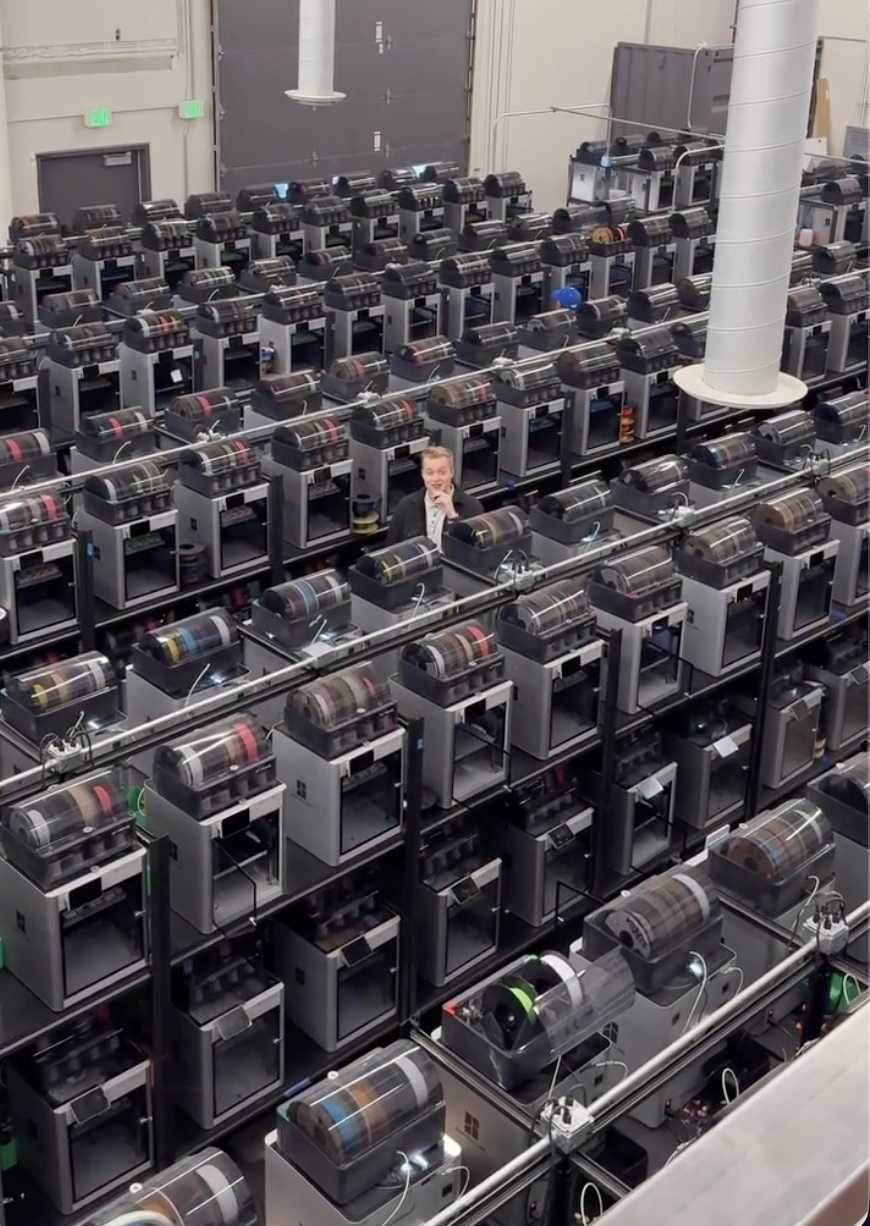
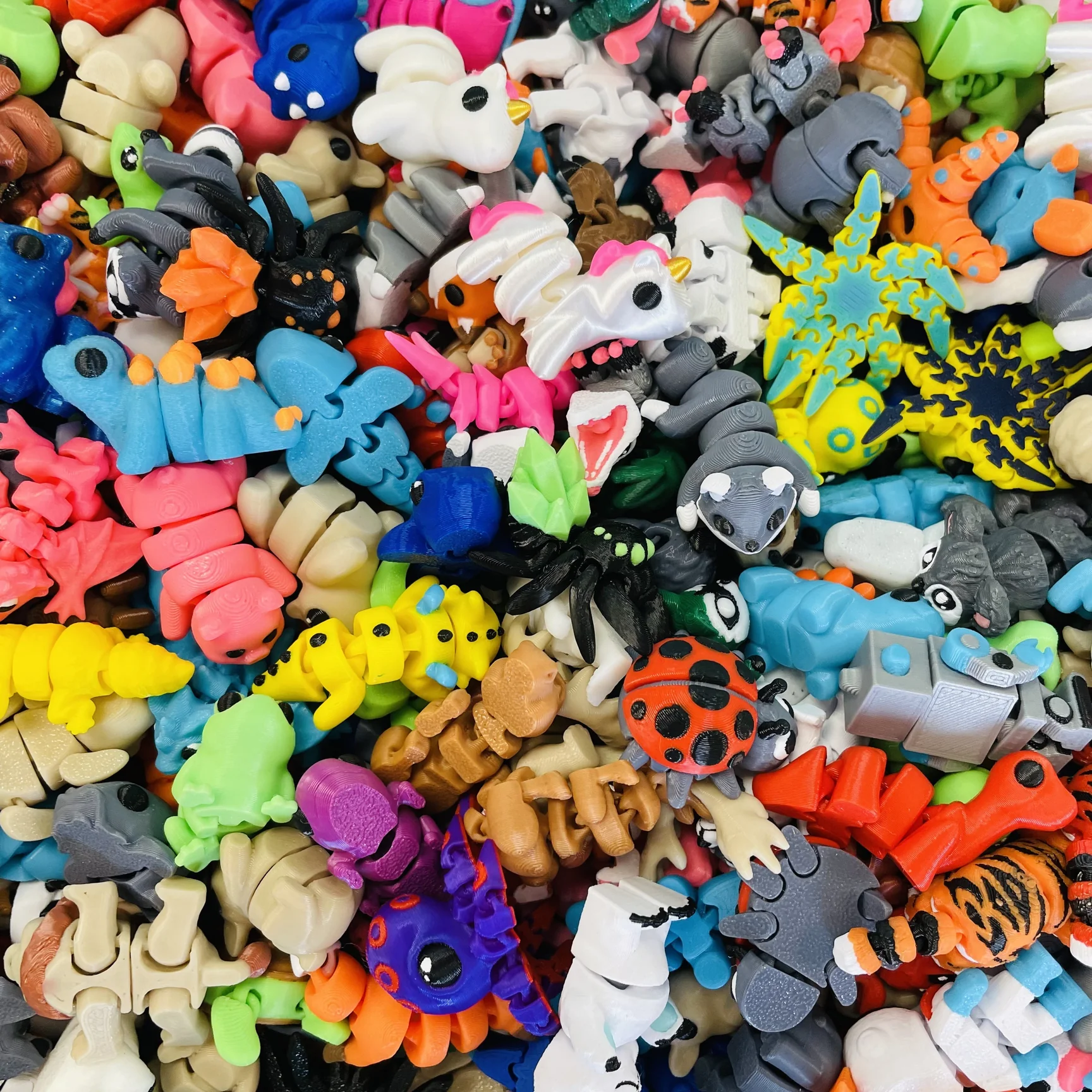
    The Baileys created Wigglitz: tiny articulated, collectible toys with hundreds of designs. Their print farm of over 3,000 Bambu Lab X1C printers in Utah not only cranks out thousands of prints a day, but also keeps the company nimble. By designing and producing toys in house, ZB Designs can offer fresh, unique designs for their fans to collect much faster and without the cost of traditional manufacturing.

    3D printing farm at Wigglitz. Image courtesy of Wigglitz via Instagram.

    If you have kids and a 3D printer, you know that tiny flexi prints are all the rage in 2026. While articulated creatures have been around for years, starting with 2017’s Dr. Lex Flexi Rex and McGybeer’s 2019 Cute Octopus, they didn’t really take off until Bambu Lab made multicolor printing easy. The X1 Carbon made starting a 3D printing business profitable, allowing makers to crank out plates full of colorful fidgets to sell at festivals, markets, and on Etsy.

    But no one has done it better than ZB Designs. Once they found their niche, the business exploded. In just three short years, the Baileys now claim to operate the largest 3D print farm in the United States. Every product is designed, manufactured, and shipped directly from their Utah facility.

    X1C printers are known for creating massive amounts of filament waste, of which the Wigglitz team is acutely aware. Lead Design Engineer Preston Howe said on a social media post that a filament recycling machine is in development at the company. 

    Like many other 3D entrepreneurs, they started off as supporters of designers like Zou3D, but eventually they began designing their own creatures. This allows them to stay ahead of the curve, with unique models and themes no one else can offer. The entirety of the Wigglitz catalog is now ZB Designs, and each creature is branded with a tiny “W.”

    Wigglitz are sold online at ZB Designs’ own website, and by the bin at specialty toy stores where kids can select their own mix. They have also successfully entered mass retail through a distribution partnership with Moose Toys, landing mystery packs on the shelves of giants like Target.

    Wigglitz toys come in a wide range of collectible themes, including Ocean, Puppies, Originals, Fantasy, and the newest addition, Foodz, with fresh in-house designs continuously in development. Today, Wigglitz is setting new standards for innovation and creativity in the toy industry, and fast becoming a beloved collectible brand with a loyal and growing fanbase.

  • 3D Printing News Briefs, February 21, 2026: Vapor Smoothing, Brain Models, & More

    In this weekend’s 3D Printing News Briefs, we’re starting with material and post-processing news from Quickparts, and some more post-processing news from AM Solutions. We’ll end with researchers at the University of Missouri, who are 3D printing realistic brain models.

    Quickparts Introduces Two New Materials & Vapor Smoothing

    DuraKor parts

    Global advanced manufacturing solutions company Quickparts recently introduced new offerings to its portfolio to help take high-performance plastic parts from prototype to production. First, the company launched plastic materials DuraKor and ThermaKor, and it also added vapor smoothing as a core surface finishing capability. All three will help Quickparts support customers over multiple stages of product development by reducing risk, speeding up the path from design validation to production, refining surface quality, and maintaining continuity. DuraKor, mechanically similar to polypropylene, is a naturally watertight engineering plastic that’s great for applications requiring chemical resistance, environmental durability, and toughness. It can be used to validate designs that might transition to molded resins later on, and also for direct digital production. ThermaKor is a high-temperature nanocomposite for applications that need stiffness, dimensional stability, and thermal resistance, like wind tunnel models, mold inserts, and heat-resistant tooling for silicone and urethane. Finally, Quickparts has added vapor smoothing as a standard finishing option for cast and 3D printed plastic parts. The process reduces surface porosity, and offers a consistent, production-quality appearance.

    “The biggest challenge in manufacturing isn’t making a part—it’s moving from validation to production without losing performance, quality, or time. With these launches, we’re giving engineers more continuity across that journey, using materials and finishing options designed to perform in real-world production environments,” said Quickparts CEO Avi Reichental.

    “Our customers don’t have the luxury of prototyping with one partner, piloting with another, and finding a high-volume supplier fast. They need continuity. Solutions like DuraKor and ThermaKor enhance the Quickparts innovation engine OEMs rely on for the first part and the industrial engine for the millionth.”

    AM Solutions Launches Compact M1 for Automated Surface Finishing

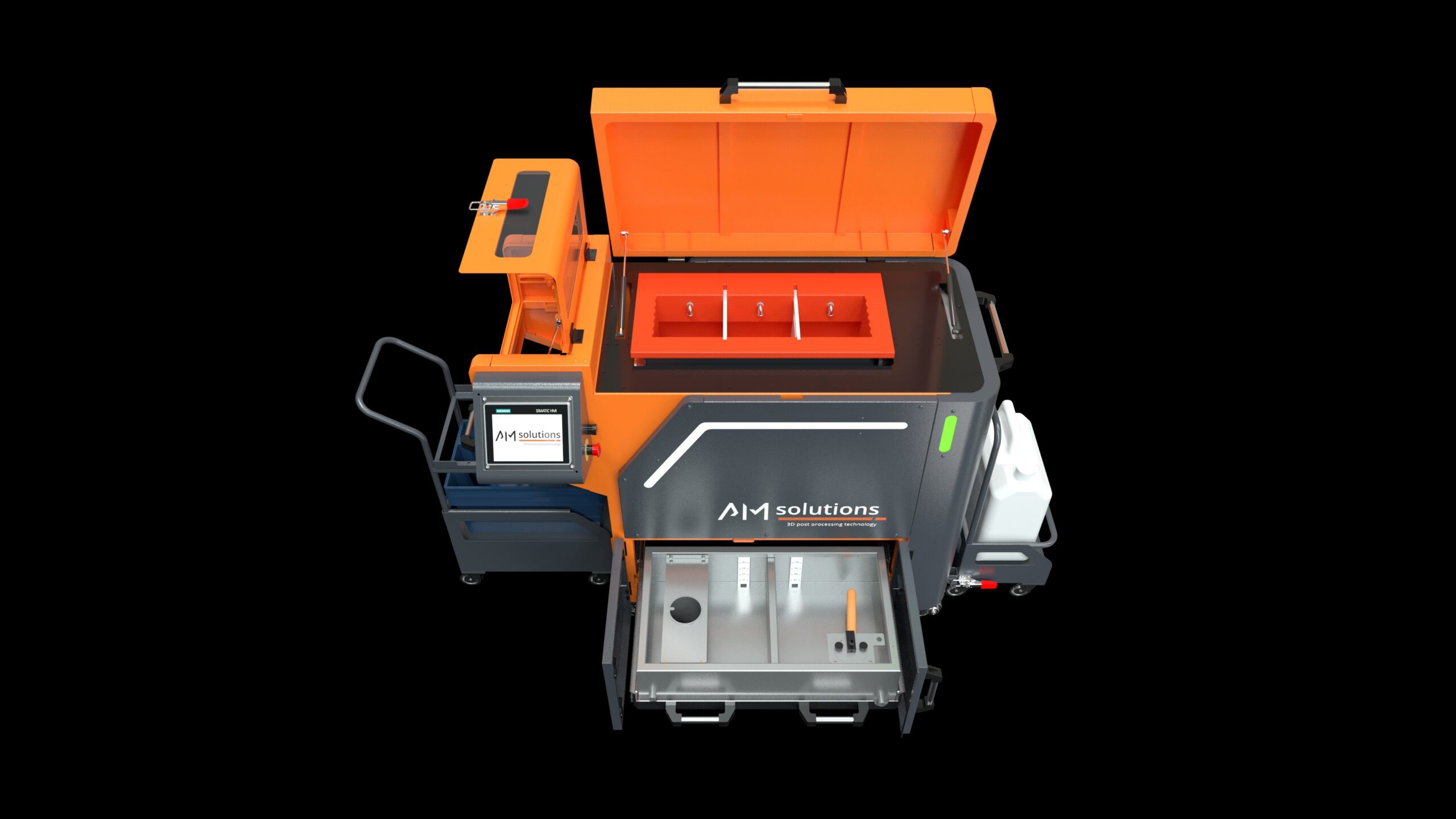
    The compact M1 system, setting a new benchmark for automated surface finishing of 3D printed parts in metal and polymer.

    Speaking of post-processing solutions, AM Solutions – 3D post processing technology, a brand of the Rösler Group, recently announced the launch of its compact M1 system for automated surface finishing of polymer and metal parts. Replacing the previous M1 Basic, the new M1 system is set up as a “versatile allrounder” for AM finishing, combining smoothing, grinding, polishing, and deburring processes into one vibratory platform. It has several major upgrades, such as a redesigned processing trough with end-side profiling and extra partitions, an extra fresh-water connection for processing with the company’s Keramo-Finish, and, for a smoother workflow, it shifted media/part separation onto a dedicated material cart. Customers interested in production-grade surfaces from a flexible system can process 3D printed parts up to 550 x 150 x 130 mm, either in small batches or as individual components, and choose to run in fresh-water operation or process-water recirculation. The M1 also features low noise levels, an integrated settling tank, and modern HMI with intuitive menu navigation.

    “The first M1 Basic proved how powerful vibratory finishing can be for additive. But our customers asked for more flexibility, better ergonomics, and even higher process stability. The new M1 is our answer. It turns what used to be an entry-level solution into an advanced production tool,” said Colin Spellacy, Head of UK Sales at AM Solutions.

    “For many AM users, the real bottleneck isn’t printing, it’s finishing. With the relaunched M1, we’re giving them a robust, repeatable and economically attractive way to turn rough builds into market-ready products, without jumping straight to a large, fully automated line. It closes the gap between R&D and industrial production.”

    Mizzou Researchers 3D Printing Synthetic Human Brain Models

    Researchers have already printed a small-scale model, about 15% of the brain’s actual size (far right), and are working toward creating a full-sized version. Photo by Abbie Lankitus.

    Scientists have long been investigating how our brains respond to electromagnetic waves and mechanical forces. Soft tissue models are useful, but the conventional methods for creating them fall short, as the models don’t realistically replicate the variations in texture and stiffness of real organs. A team of researchers from Mizzou’s College of Engineering are working to develop realistic, synthetic models of artificial human brains, which can better simulate the complexity of real brain tissue, using a technique called embedded 3D printing. Rather than building 3D layers in open air, this method uses a jelly-like support bath to hold the soft materials in place. The team developed a custom liquid ink that allows them to more closely mimic the dielectric, mechanical, and thermal behavior of brain tissue in their 3D printed models. They can print models that actually behave like gray or white matter in the brain, are scientifically accurate, and realistic to the touch, which could be very useful for medical research and training purposes. The Mizzou team has already printed a small-scale model, and hopes to achieve a full-sized version within a year.

    “Human tissues are incredibly heterogeneous, made of different materials with different properties. Our 3D printing approach lets us capture that complexity in a way that wasn’t possible before,” explained Christopher O’Bryan, an assistant professor of mechanical and aerospace engineering and co-author of the team’s study.

  • The Barnes Global Advisors is at AMS

    The Barnes Global Advisors (TBGA), the additive manufacturing (AM) consultancy based in Pittsburgh, is a pillar of the AM industry. TBGA’s expertise is sought by AM OEMs across the globe, leading adopters of AM technologies, economic development groups, key private-public consortiums, and even the Pentagon.

    TBGA has been an Additive Manufacturing Strategies (AMS) sponsor for years now, and AMS 2026 (February 24-26) is no exception. Register here, and you can see TBGA Director of Government Solutions Andy Davis moderate the panel “Advancing AM for Defense,” on February 24 at 9:50 AM. You can also see John Barnes, TBGA founder, as well as the CEO of Metal Powder Works, on February 25 at 9:30 AM, in a talk entitled, “20(/)30 Vision: Adoption.”

    Given that TBGA is comprised of so many different minds, it was only right that we get some insight from an assortment of the consultancy’s ever-growing team.

    Matt Kremenetsky: TBGA goes to a LOT of trade shows. What keeps you coming back to AMS?

    John Barnes: AMS is a connection event for me. I can have good conversations in a more intimate setting and I feel like people attending are there. They’re present. They’re engaged. The panel format encompasses more views and more opinions.

    MK: What are some advantages of networking in person that you think will never be outdone by networking virtually?

    Cynthia Rogers: Networking in person allows you to have impromptu conversations you couldn’t have in a virtual environment. Those random meet ups can start casually and then lead to connections and discoveries you wouldn’t find within a structured online setting. Many times we’ve seen casual conversations turn into opportunities and alliances that ultimately help to grow the AM ecosystem.

    MK: TBGA recently formed an exciting partnership with EWI. How do these types of partnerships help the AM world?

    Christina Kurth: Strategic partnerships are at the core of how TBGA operates. Our collaboration with EWI reflects how complementary strengths can advance the additive manufacturing community. EWI brings deep technical expertise and infrastructure, while TBGA contributes business strategy, cross-sector experience, and implementation support to help bridge innovation to real-world adoption. Through partnerships like this, our ADDvisor team acts as an extension of our partners, aligning technical merit with market insight to accelerate adoption and advance the industry.

    MK: What’s one lesson that the rest of the US manufacturing base can learn from what TBGA, Neighborhood 91, and the Resilient Manufacturing Ecosystem have done in Pittsburgh?

    Andy Davis: The whole is greater than the sum of its parts.  Neighborhood 91 is the world’s first additive manufacturing production campus.  It is made up of commercial companies which are co-located on the Pittsburgh International Airport property to form the full AM value chain.  Each company specializes in something different (i.e., powder production, cold spray, materials characterization) which allows each to focus on being really good at that thing versus having to be good at everything.  The high level of reliance and coopetition among the residents have driven innovation where otherwise there would be competition or no relationship at all.  This includes equipment utilization, material-process combination development efforts, and sharing of staff across multiple businesses.  TBGA has brought federal funding through the Department of War’s Resilient Manufacturing Ecosystem (RME) program, which has further applied the campus to solve Army, Air Force, and Navy problems.  The RME program is a great example of leveraging a commercial manufacturing capability for defense applications – the very definition of a dual use advanced manufacturing hub.

    MK: We’re starting to see a lot more interest in skilled trades, including manufacturing, from younger demographics, as well as from people who are simply switching careers. Does AM have a special role to play in that context?

    Christina: Yes, additive manufacturing has a special role to play for both younger generations and individuals transitioning into skilled trades, such as manufacturing. It bridges the digital and physical sides of making, resonating with students who grew up around video games, CAD, and coding, as well as with adults who have discovered 3D printing as a hobby.

    At TBGA, we support education at every level, from volunteering in high schools to guest lecturing at universities, to help introduce additive as a viable career path. One of our employees recently met someone at a trade show who said they were inspired by one of our Principal ADDvisors to pursue additive manufacturing as a graduate student, which shows the lasting impact of mentorship and visibility in the field.

    For adults looking to transition a hobby into a career or take on a new challenge, TBGA offers training through Purdue and TEES to help build foundational skills and strengthen their resumes before entering the workforce. Adults with experience in traditional manufacturing or even from entirely different industries bring a valuable perspective. They understand process flow, quality systems, and production realities that help ground additive programs and make them more scalable. Those outside the industry often bring creativity and problem-solving approaches that push the technology in new directions.

    This focus is timely, as workforce development consistently emerges as the critical path for growth and production in our customer business case studies. Supporting individuals who wish to enter or advance in manufacturing is crucial to establishing a robust and sustainable industrial foundation.

    MK: Aside from aerospace and defense, what are the verticals TBGA is most excited about?

    Christina: Outside aerospace and defense, TBGA is most excited about verticals in health, oil and gas, and consumer markets, with consumer innovation driving productivity across the industrial base. We are also initiating and supporting industry consortia that connect these sectors, advancing new additive approaches, and creating shared value.

    Don’t forget to register for AMS so you can see Andy, John, Cynthia, Christina, and possibly more from TBGA’s constantly expanding cohort of ADDVisors!

    This piece was originally seen in AMS: The Preprint

  • Targeted Applications, Expanded Platform: XJet’s Strategic Vision for AM’s Next Chapter

    The additive manufacturing sector has undergone a period of “creative destruction” over the past months, moving beyond a “growth at all costs” mentality into an era of consolidation and strategic focus.

    In this refined landscape, XJet has charted a distinctly different course. By focusing on a narrow yet essential segment — small, complex, high-value parts — the company has navigated 2025’s industry turbulence with notable stability, strengthening its leadership in technical ceramic AM and accelerating its global partnership network. More importantly, XJet is now executing a deliberate strategy to expand its addressable market without diluting its core strengths.

    Vertical Focus Four High-Value Markets

    Rather than competing across the entire $37 billion additive manufacturing landscape, XJet has concentrated on four high-value verticals where its NanoParticle Jetting™ (NPJ) technology delivers differentiated value: aerospace and defense, technical ceramics, precious metals, and luxury manufacturing.
    In technical ceramics, XJet’s position exemplifies this vertical strategy’s strength. Despite macroeconomic uncertainty, the ceramic business expanded steadily throughout 2025, driven by accumulated expertise and a growing install base among industry leaders in aerospace, medical, and manufacturing services, particularly in Europe and the United States, with XJet systems in production.

    The company’s expanded material portfolio in advanced ceramics and metals strengthens value propositions to existing customers while opening new application possibilities. A global reseller network efficiently extends XJet’s reach, enabling geographic expansion without the capital intensity of direct operations worldwide, a disciplined approach aligned with profitable growth.

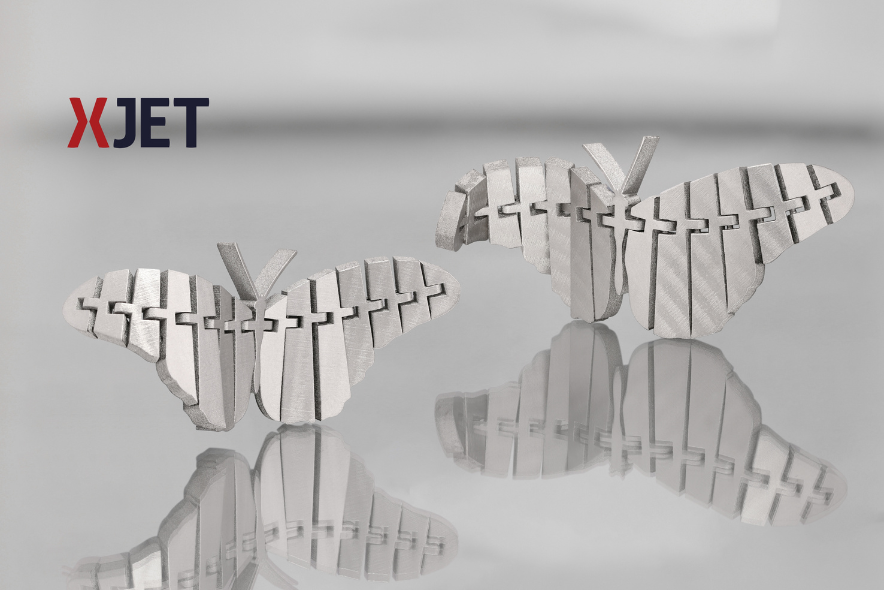
    Printed as an assembled butterfly decoration piece in stainless steel 316L. Image courtesy of XJet.

    Strategic Democratization: The Carmel Pro Revolution

    While XJet built its reputation serving industrial production environments, significant opportunities remained out of reach. Research institutions, academic labs, and boutique contract manufacturers faced prohibitive barriers to entry.

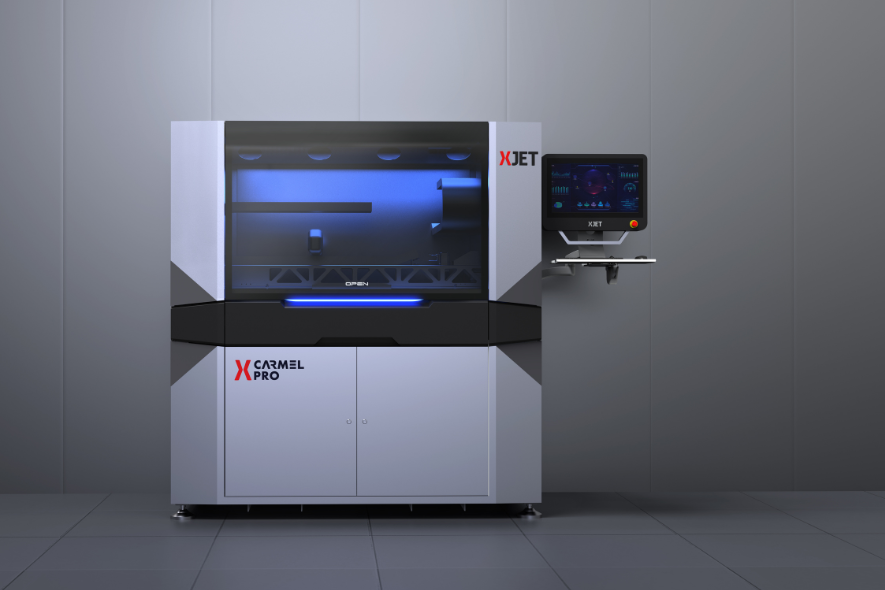
    In November 2025, XJet introduced the Carmel Pro — not merely a product launch but a calculated move to broaden the customer base while maintaining capital discipline. The system delivers up to 30% lower investment costs than previous platforms, making NPJ technology viable for SMEs and research centers that were previously priced out.

    But accessibility alone doesn’t guarantee success. XJet designed the Carmel Pro with a clear eye toward tomorrow’s manufacturing requirements. The four-channel printhead configuration is a strategic architectural decision that positions customers — and XJet — for additive manufacturing’s next evolution: direct multi-material production.

    This robust infrastructure elevates XJet’s previous build-plus-support capability to a new level. Coming capabilities include ceramic and metal multi-material printing with options for color gradients and density variations on demand, all directly printed in a single part. The Carmel Pro becomes not just an entry point but a platform capable of growing with customer needs.

    Jet Carmel Pro Compact System with a four-channel printhead. Image courtesy of XJet.

    Premium Jewelry: Technology Meets Artistry

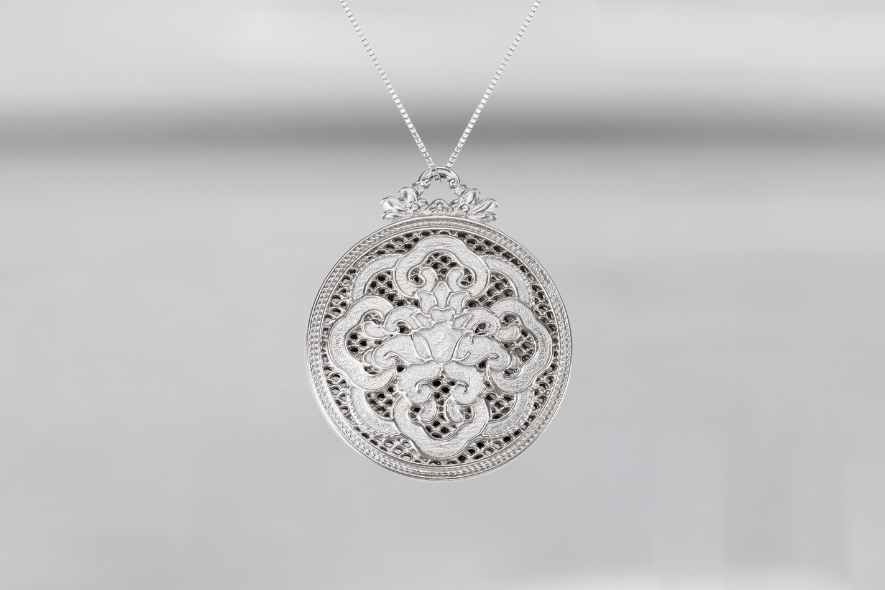
    The Carmel Pro’s multi-material printhead has paved the way for XJet’s focused entry into premium jewelry manufacturing, where design freedom, complexity, and surface quality are paramount. Debuted at Formnext 2025, XJet’s integrated solution — comprising the Carmel Pro and precious metals materials, especially sterling silver — addresses a market where traditional manufacturing constrains creative expression and economically viable production of complex designs.

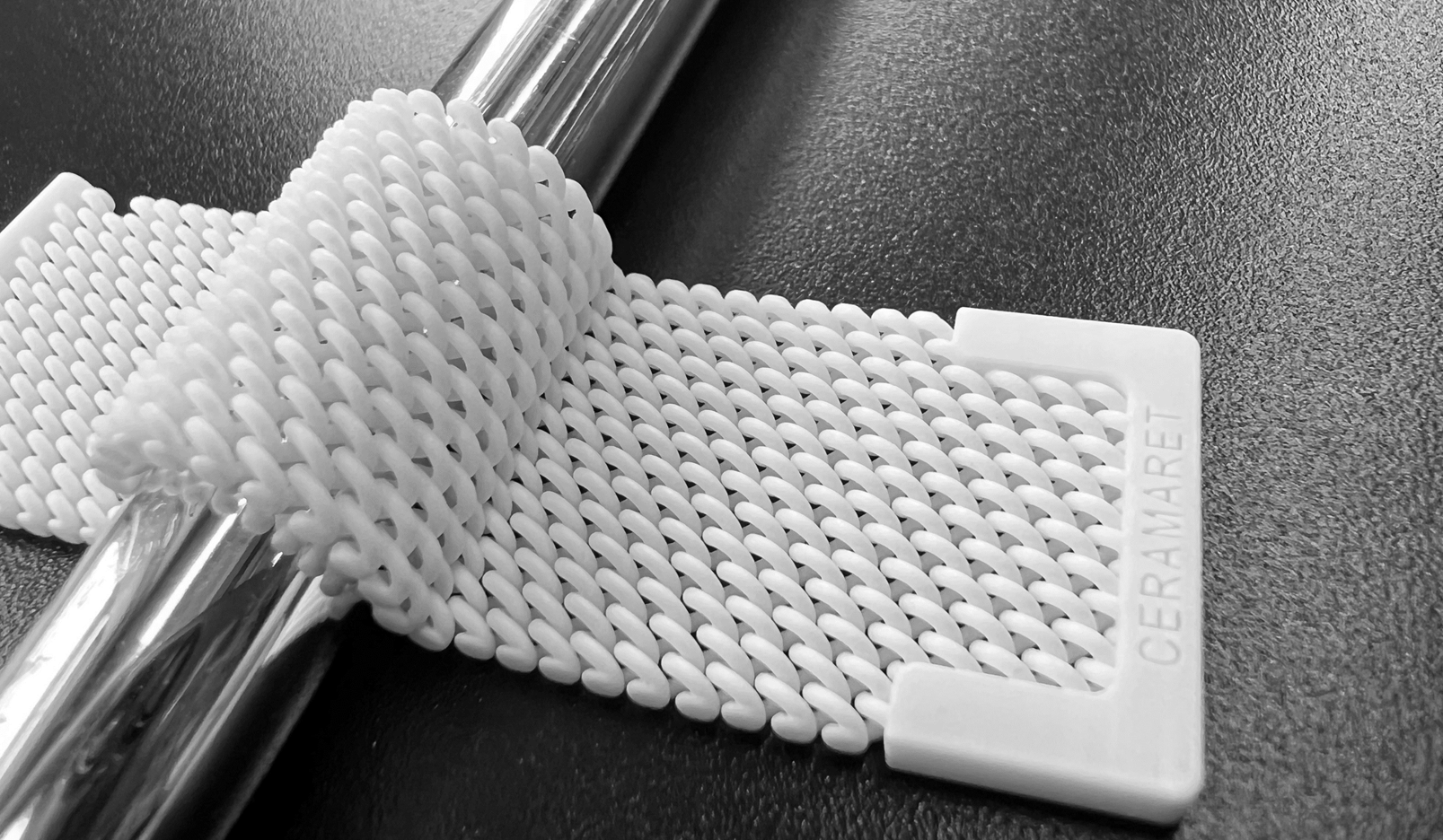
    Ceramic bracelets are already assembled. Image courtesy of Ceramarat.

    This vertical demonstrates XJet’s disciplined expansion approach. NPJ technology delivers the fine surface finish luxury applications demand, enables geometric forms impossible with traditional casting, eliminates material waste inherent in subtractive processes, and transforms production economics for small-batch and custom pieces. This is the best example of how XJet enters the game, where its differentiated capabilities create compelling customer value.

    Jewelry pendant at hollow cavities and comple surface patterns. Image courtesy of XJet.

    Focused, Sustainable Expansion

    As the industry enters 2026, XJet’s leadership sees the market moving from experimentation to implementation, from hype to tangible ROI requirements. Companies are standardizing additive manufacturing within production workflows only when the technology delivers measurable business value.

    XJet’s outlook centers on maturation within its chosen verticals, positioned to benefit from two parallel trends: consolidation favoring specialized players with defensible technology and deep vertical expertise, and democratization enabling broader adoption within targeted markets.

    The democratization strategy isn’t about racing to the bottom on price, it’s about strategic market expansion, creating customer value while building a more resilient business. By making industrial-grade capabilities accessible to a broader market while maintaining vertical focus and technological differentiation, XJet is building a business model aligned with the industry’s evolution from speculative growth to profitable sustainability.

    As additive manufacturing transitions from emerging technology to essential manufacturing tool, this approach — deep vertical expertise combined with strategic accessibility — may well define which companies lead the next decade.

    XJet is a Bronze Sponsor of Additive Manufacturing Strategies (AMS) 2026, a three-day industry event taking place February 24–26 in New York City. The conference brings together industry leaders, policymakers, and innovators from across the global additive manufacturing ecosystem. As a sponsor, XJet will support conversations centered on scaling AM technologies, advancing industrial adoption, and exploring the next generation of production solutions. Registration is open through the AMS website.

  • Materialise To Manufacture PEEK CMF Implants

    Materialise will implement PEEK (polyetheretherketone), cranio-maxillofacial (CMF) implants. Materialise has been doing CMF implants for decades. SLA and titanium implants, as well as the workflow software to do them, and the software to design them, have been a core part of the Belgian firm’s offering for many years.

    The company has also made custom titanium CMF implants, but will now let you order PEEK implants from them through Mimics Enlight CMF. You can also use them with the Mimics Flow case management tool and in Materialise Standard+ Solutions.

    Maarten Zandbergen, Market Manager at Materialise, noted,

    “Personalization isn’t just about material choices but about the precision of the planning process and the reliability of execution. Our clinical engineers work hand in hand with surgeons to design each implant, and that collaborative approach remains constant whether the case calls for titanium or PEEK. What changes is the surgeon’s freedom to choose; what stays the same is the peace of mind that comes from a proven, end-to-end process.”

    The company expects this to be especially useful in “cranial reconstruction, as well as facial contour restoration and onlay applications,” with specific advantages being “artifact-free postoperative imaging to lightweight anatomical restoration.”

    Rather surprisingly, the implants are not manufactured in Leuven or other Materialise sites. These PEEK components will be made by Ad Mirabiles, a Swiss-based firm that specializes in manufacturing custom PEEK and titanium implants. The company has EN ISO 13485 and can manufacture within 72 hours.

    This is a great step forward for Materialise. PEEK implants are functional and in demand worldwide. For custom work, they have shown efficacy and are often liked by surgeons. PEEK and other PAEK materials are radiolucent, making it easy for surgical teams to review images after the fact. Designed correctly, they have less stress shearing due to the modulus being close to that of bone, while being very strong and biocompatible.

    Previously, Materialise would have wanted to do the printing itself. With Victrex keeping the medical PEEK powders to itself and the recyclability of PEEK still atrociously low, the economics of PEEK LPBF are terrible. Ad Mirables seems to be using Material Extrusion. They may have developed a novel capability in making implants in a certain way. Materialise also has extensive experience in material extrusion across regulated industries. It could have opted for a 3D Systems EXT 220 MED instead.

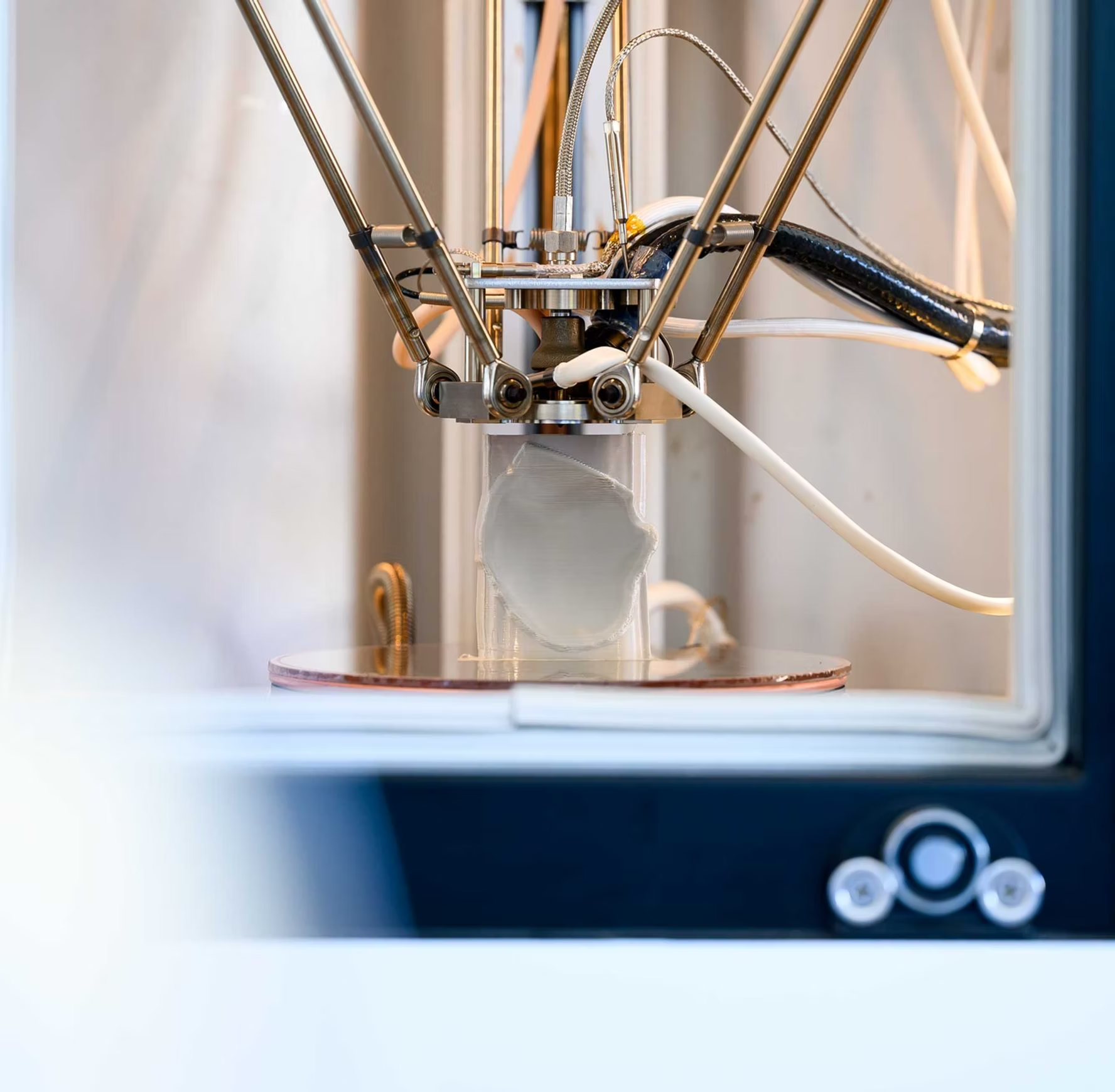
    Printing with PEEK. Image courtesy of Materialise.

    So what is Materialise as a platform? Is it the previous three-pillar firm where medical, software, and services strengthen each other? Or is it a workflow platform that offers solutions to people who need parts and other services? Or is the firm the connective tissue around innovation and design of novel products? Or is it a little bit of all of these things?

    PEEK and PAEK materials are definite opportunities for Materialise. Beyond being a trusted end-to-end platform that takes work away from doctors and gives them and their patients the parts they need, it presents a significant opportunity. But selling software and providing parts can be very different businesses. It will be interesting to see which way Materialise will lean over the coming years. Will the firm become more of a platform or stay true to its roots?