• Filamentive’s Recycled MJF Filament Tests the Economics of Circular AM

    I’m super glad that Filamentive is making filament from recycled PA 12. We all know that in all polymer powder bed fusion processes, there is waste. Some can be recycled with the percentage and number of times, depending on the material. Depending on your setup and powder, as much as half of it could be thrown away in the end. I’ve been advocating for years for companies to use the LPBF powder as filament. 3Devo demonstrated in 2024 and 2025 how to turn MJF Powder into filament. Since last year, Filamentive has been looking at offering this as a commercial product.

    Usually, when you’re making recycled filament, you have to use around 30% virgin material in the filament to maintain processability and properties. In this case, the filament is entirely made up of waste MJF powder.
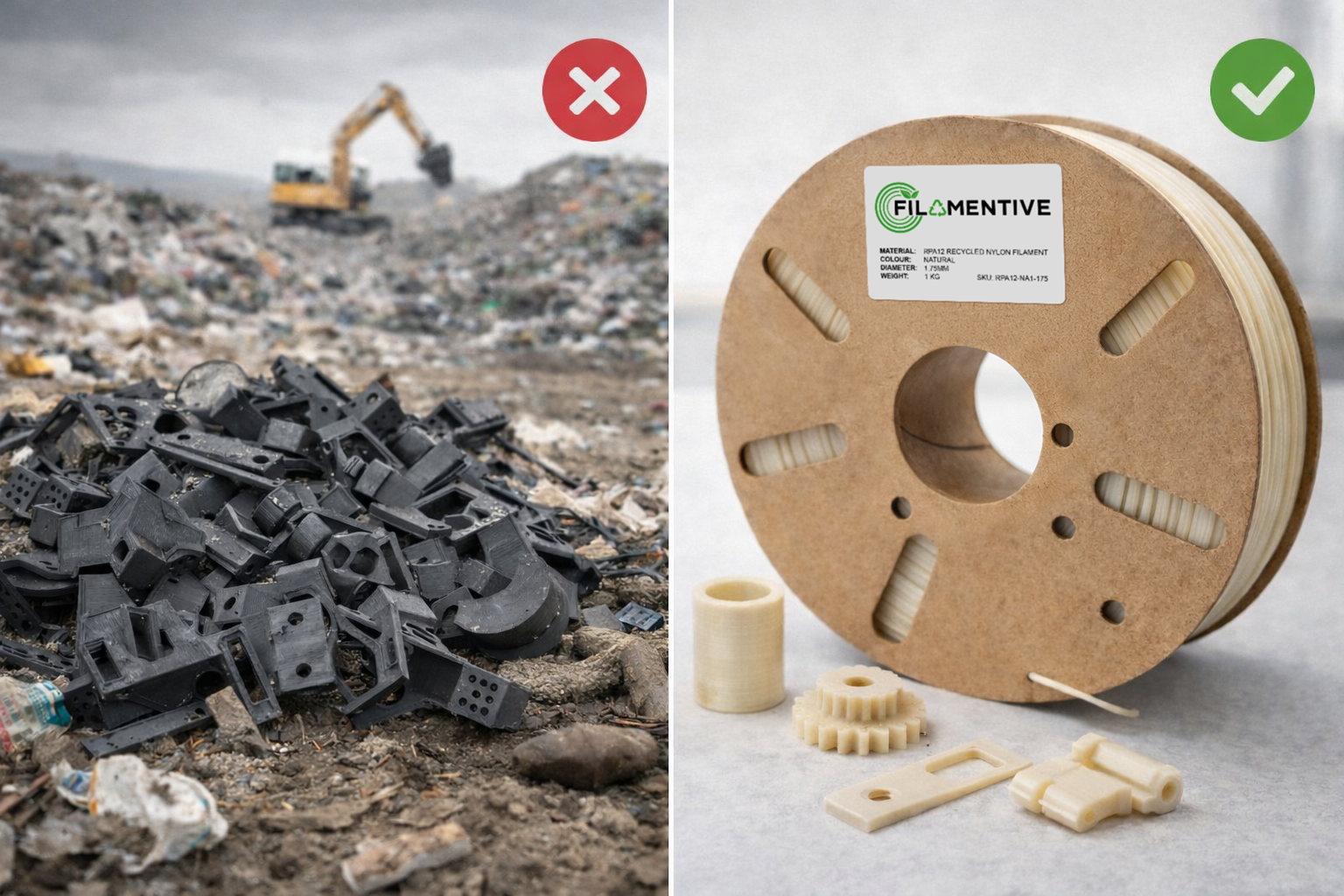
    MJF waste versus recycling in 3D printing. Image courtesy of Filamentive.

    Ravi Toor, Managing Director of Filamentive, explained,

    “rPA12 is what we believe to be the world’s first commercially available filament made entirely from recycled MJF powder waste, We’re proud to be working alongside 3devo to deliver circular economy solutions that reduce the environmental impact of 3D printing— not just in principle, but in practice.”

    The resulting material extrusion material should be tough, resilient, strong, and still be quite allergic to moisture. You should dry the filament before using it and not leave it too long on your printer. The material can be had in one-kilo spools in 1.75 mm. The company hopes that it will be a “viable recycled nylon filament for sustainable engineering applications, helping reduce reliance on virgin polymer” and become a “practical case study for high-volume MJF operators exploring closed-loop production models that can improve both operational efficiency and financial sustainability through better material utilisation.”

    The material is currently priced at $67, €57, or £50 per kilo, which, as a pricing strategy, is rather hilarious. New polymer LPBF powder costs like 25 to 90 kilos, depending on the additives, volume, order, and country. Base LPBF powder is cheaper depending on morphology. Usually, it costs money to dispose of waste PA 12 powder after you can’t reuse it on the machine. But. selling it over the asking price that many are paying for the virgin polymer is kind of audacious, really.

    It will be a green planet, but my house on it will still be nice. Despite this swimming pool tax, I still love this as an initiative. All firms using polymer LPBF machines should recycle powder internally. You could use this with Stratasys SAF machines, or you could just get a 3Devo set up and make filament for your desktop 3D printers. Universities and corporates should also internally make their own material. This is a no brainer cost wise and plays well with your corporate overlords.

    This is a super easy way to go green or burnish your green credentials. But, even if you do not give a darn about the environment, this could still be a very cost-effective thing to do. You’ll earn it back within a few months and thereafter will save considerably on material. I’ve tested recycled PA 12 turned into filament, and the properties and processability are very good. Now, of course, moisture will always suck, but aside from that, this is a super printable, high-performance material that is as cheap as chips. I really think we should have done this decades ago, but please look into this because this can be a very profitable, very green thing to do. We’ve long pretended to have green credentials without actually checking if we do. We’ve long assumed that we’ve been the environmentally friendly choice because we manufacture on demand. Now this sounds nice, but it’s like saying, “You kill chickens en masse, and we kill cows when we need them.” Now, on some level, this sounds quite good, but it does not mean that this is magically sustainable. Turning something you usually throw away into high-performance filament will be a profitable step towards ethical business.

  • Australian Researchers Develop Accelerator-Free Underwater 3D Concrete Printing System

    Infrastructure projects are just as important as housing to the additive construction (AC) market segment, and structures used for underwater applications like coastal resilience have steadily become one of the most popular use-cases amongst the growing number of AC-for-infrastructure projects emerging in the last few years. The most recently announced examples in this sub-surface construction category signal that, soon enough, AC users will no longer be content to build off-site: they’ll print their projects directly under the water.

    Last week, Sarah Saunders wrote about a DARPA-backed project at Cornell University involving the development of an underwater building material “made [primarily] of seafloor sediment.” Additionally, the Australian AC enterprise LUYTEN 3D has announced that, in collaboration with the University of Wollongong (UOW), the company has created the first accelerator-free concrete mix specifically designed for underwater prints.

    Concrete accelerator is typically used in conventional construction processes to speed up the hardening process during winter, as well as in underwater builds, to prevent concrete from washing away. The LUYTEN 3D/UOW formula, by removing the need for accelerant, both simplifies the printing process and, according to LUYTEN 3D, enhances its overall sustainability.

    As with the Cornell University project, LUYTEN 3D has tested the process so far in a lab setting, using saltwater and seabed sand to closely mimic real-world conditions. According to LUYTEN 3D, in addition to coastal resilience and ecological restoration, the company views offshore wind energy and even defense as target markets for the submerged printing technique.

    In a press release about LUYTEN 3D’s collaboration with the University of Wollongong on an accelerator-free concrete mix engineered for submerged AC projects, Senior Professor Gursel Alici, Executive Dean of the Faculty of Engineering and Information Sciences at UOW, said, “The successful demonstration is a testament to the high calibre of our engineering talent and world-class laboratories. Our team has solved a complex material science problem, eliminating chemical accelerators without sacrificing stability, showing the depth of expertise within the School of Engineering.”

    Ahmed Mahil, CEO and Global President of LUYTEN 3D, added, “Printing underwater fundamentally changes how we think about building, repairing and strengthening critical infrastructure in marine environments. This is a completely new chapter for construction and manufacturing.”

    Underwater 3D concrete printing without accelerators.

    While there’s no telling how quickly these products from Cornell and LUYTEN 3D/UOW will actually scale up into commercial realities, I don’t think anyone should ignore the demand signals at play here. The fact that these R&D projects are underway, if nothing else, indicates how strong a driver underwater infrastructure is for increased AC adoption.

    Further, if the material science gains reflected in this pair of projects can indeed make submerged construction 3D printing a simpler process, then that should, simultaneously, go a long way towards accelerating the commercialization prospects for the new material approaches. Submerged AC and the new material formulations could combine to yield a flywheel effect.

    While the processes obviously have nothing to do with one another, it’s interesting that the ideas present in LUYTEN 3D’s work reflect similar themes to what Perseus Materials is doing with its composite AM tech. In both cases, simplified additive techniques deployable on-site are gaining traction for applications at the intersection of energy and security.

    This is, in my view, the most appropriate role for AM and AC alike as they become more routine fixtures within global supply chains. If the 3D printing industry can demonstrate that it’s equipped to step up to the plate in delivering power utility resilience, the industry could be structurally re-rated by the market from a niche fabrication technology to critical public infrastructure.

    Images courtesy of LUYTEN 3D/UOW

  • Waiting Has a Cost: the True Value of Additive Manufacturing

    One of my favorite expressions is “Hurry up and wait,” because it perfectly captures one of my least favorite scenarios to have to live through. You rush to get ready for some seemingly hard deadline, only to find out, once you’re actually ready, that a change in circumstances has pushed the deadline back to some indeterminate point in the near future.

    Featured image courtesy of Major Wayne Clyne, Oregon National Guard Public Affairs Office: Staff Sgt. First Class Gregory Mannen operates an RQ-28A Sky Ranger drone during training at Rees Training Center, Oregon.


  • New Shades for 3D Systems NextDent Denture Jetting

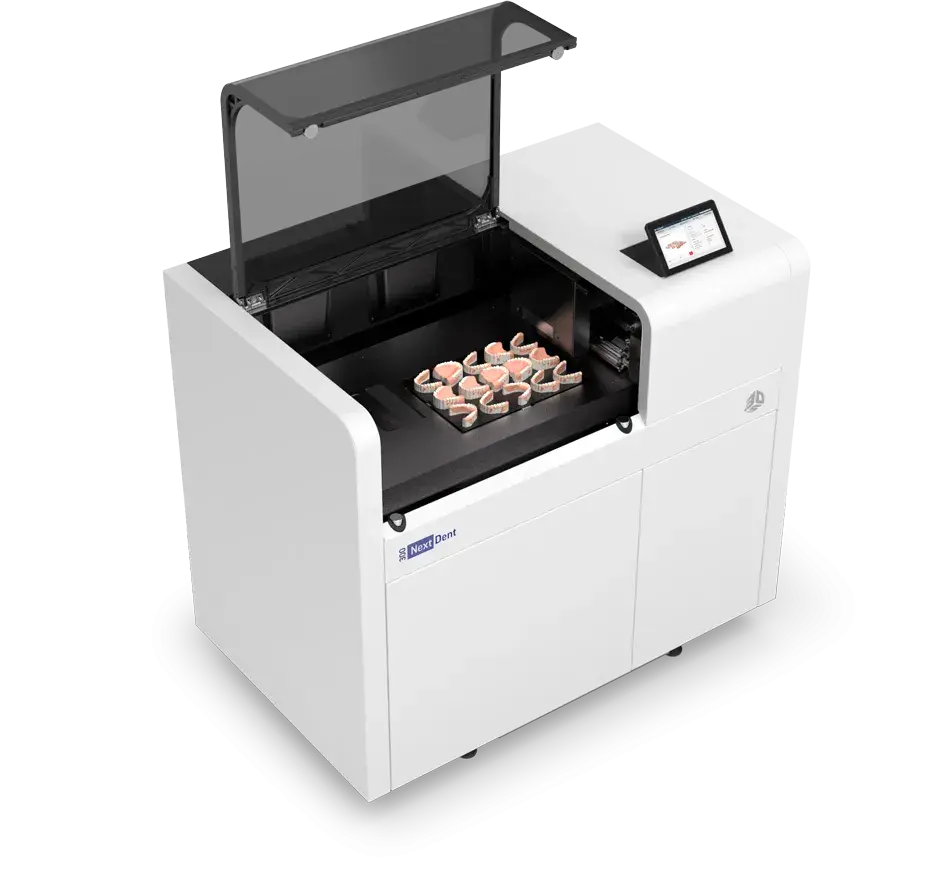
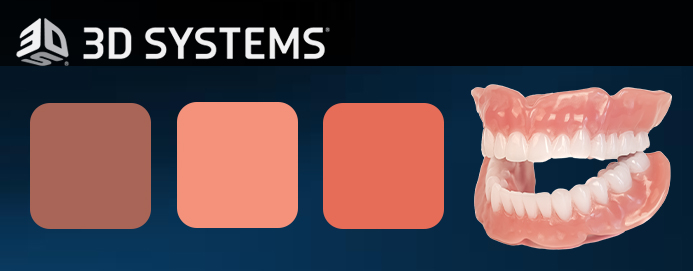
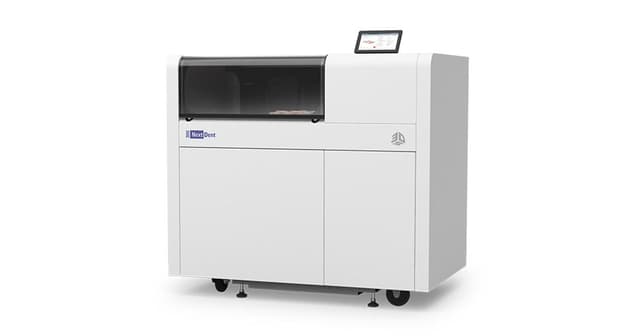
    3D Systems NextDent is expanding its denture jetting portfolio. The company is adding three new shades of gum tones. That will let the solution look more natural on more patients. Now it will have Dark Pink (DP), Light Pink (LP), and Red Pink (RP) in addition to the original NextDent Jet Base LT (Light Tone).

    Better, more natural-looking dentures can make people feel more comfortable wearing them. Blending with a person’s natural colors is one of the main reasons to use jetting in the first place. These kinds of multi-material dentures are growing rapidly because they´re easy to finish, require less labor, and come in many colors, while maintaining a high level of accuracy and detail. The color mixing enabled by the NextDent 300 printer and the White and Yellow shades means that many people will be more pleased with the result, while the dentist will be pleased with their bottom line. In the US alone, 40 million people have dentures, which generally cost over $1500. Around 15% of the patient population is thought to replace them annually. Printing costs are reportedly under $100, depending on the technology used, so this is a potentially very lucrative market.

    The company says that the manual labor is half of what it would entail in traditional dentures, with turnaround happening in one day instead of the usual five. A digital process or mostly digital process also saves time for the dentists and their assistants, so they can see more patients. The parts also come out of the machine fully cured, minimizing staff handling and contact with photoinitiators and the like.

    3D Systems NextDent 300 Printer. Image courtesy of 3D Systems.

    Stijn Hanssen, Director of Dental Solutions for 3D Systems, said,

    “These new base shades give labs the tools they need to meet real patient diversity with high-quality, predictable results. Coupled with our one-piece jetted workflow, dental professionals can now deliver dentures that provide an outstanding patient experience through superior beauty, comfort, durability, and efficiency.”

    NextDent Jetted Denture Solution. Image courtesy of 3D Systems.

    Meanwhile, Josh Jakson, President of Evolve Dentistry, added,

    “The material performance stands out. We’re running faster, with less labor and greater confidence in shade consistency and durability.”

    3D Systems’ dental solution received clearance in September 2024, with the product being commercially available in August 2025. So far, other solutions on the market would require multiple 3D prints to be cleaned and assembled into one. Even then, the result looks less like the existing gum and teeth. Quantica also wants to make ink jetted dentures, as does Stratasys. For now, 3D Systems is the only solution on the market, and the company is clearly keen to expand into this arena.

    “It is important that we have a consistent output, every time. The Nextdent 300 is delivering a 3D printing process that we can truly scale with,” Jakson continued.

    Dental is a remarkably mature area for 3D printing. Competition is fierce, with some solutions being printed by local dentists, local labs, and national labs, all with their own competitive dynamics. Low-cost systems, Pro systems, and large industrial systems are being used. But, and this is unique to dentistry, we can see chairside and other specific 3D printers being designed for very specific customer groups and users within those groups. Software is usually quick, easy to operate, and integrated into straightforward workflows. Giant dental companies, big materials firms, and dental distributors vie for a piece of the pie as well. If the rest of the 3D printing industry were as mature and solution-driven as dentistry, our industry would be much bigger. In dentistry, affordable, high-throughput, and fit-for-purpose solutions predominate. Coupled with the regulatory burden, this means that this is very much a measure three times cut once market for many, while somewhat surprisingly, there are also a lot of versatile, entrepreneurial companies as well. This combination makes dental a kind of window into the future for our industry. At the same time, for the likes of 3D Systems, it’s big business. The company must therefore make the most of its time as the sole jetted dentures supplier to get ahead of those who will inevitably come next.

  • The Real World Impact of Simulated Parts: Why Novineer and Stratasys Partnered on Performance Simulation for FDM

    If one of the primary advantages of additive manufacturing (AM) is that it’s “digitally-native,” then the hardware will ultimately only be as good as the software guiding the process. That has arguably become the principal driving force shaping investment cycles and strategic partnerships in the AM industry, and it should be a main determining factor in separating winners from losers going forward.

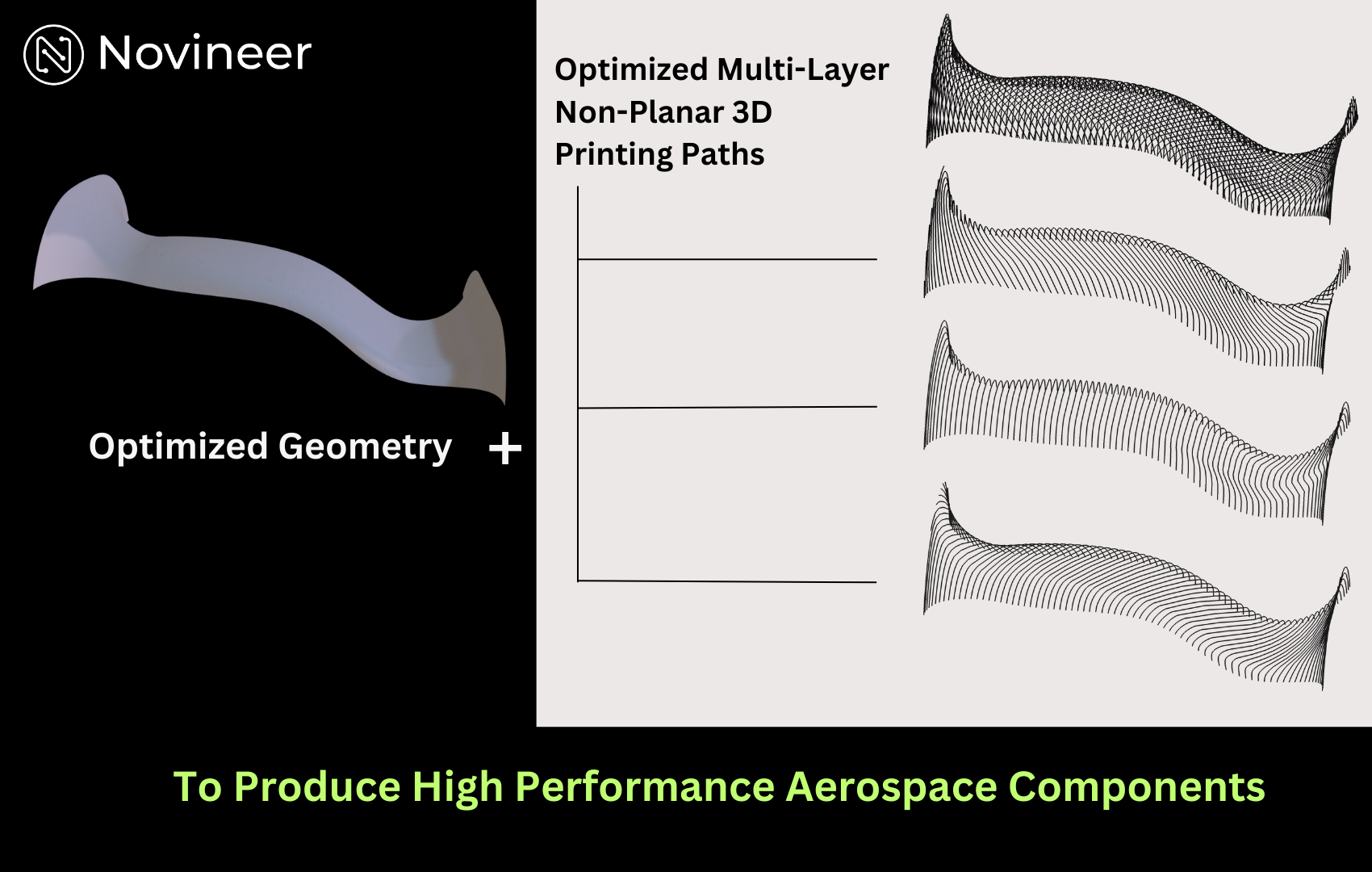
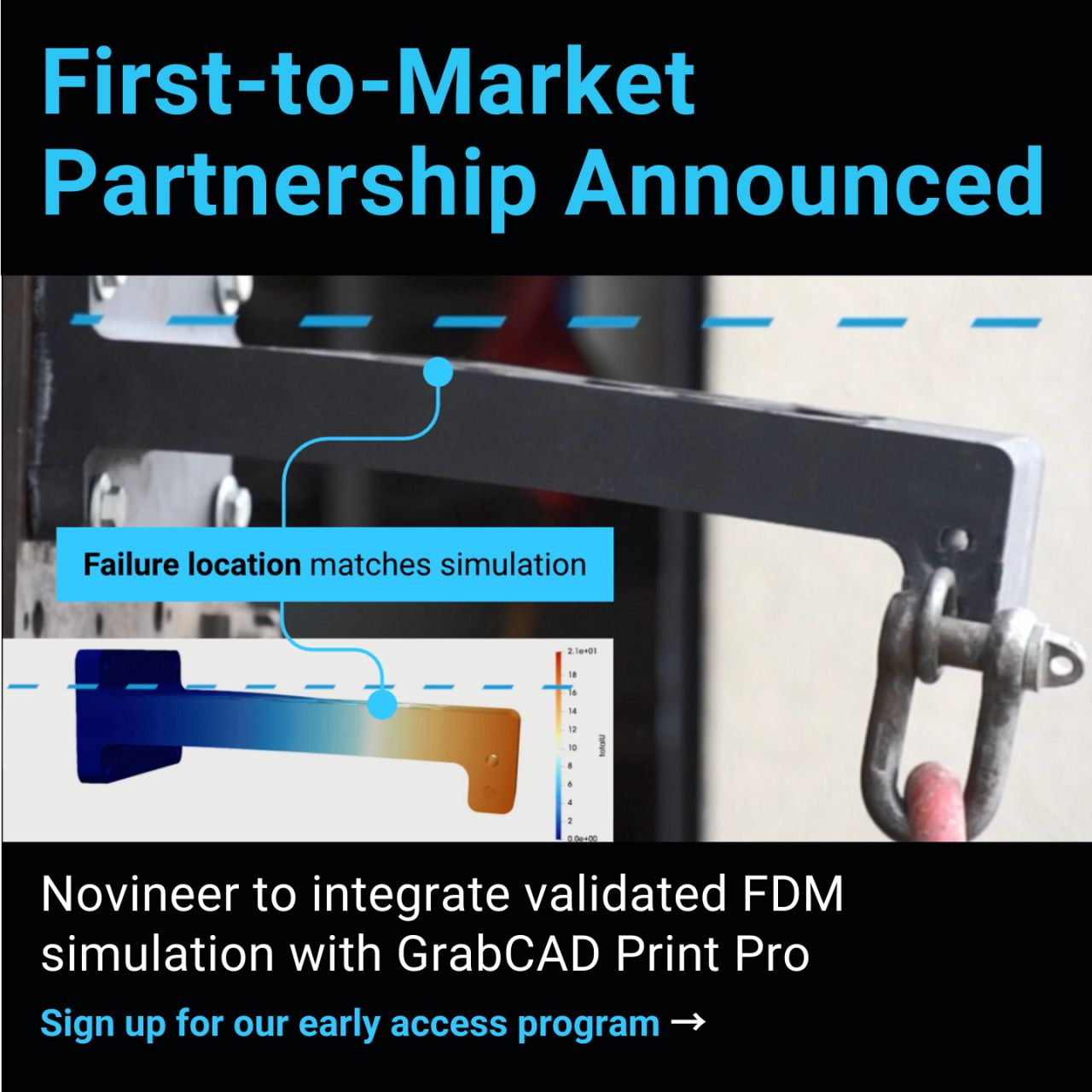
    Stratasys has always excelled at picking the right strategic partners, and its collaboration with software provider Novineer, announced at the end of 2025, is one of the latest examples. Stratasys integrated Novineer’s NoviPath polymer performance software simulation capability into GrabCAD Print Pro, which, as Vanesa Listek explained in her article on the partnership published earlier this year, allows users to “launch simulations using actual print toolpaths, define application-specific loads and safety factors, identify likely failure locations, and iterate designs virtually until performance targets are met.”

    As Vanesa also explained, “Traditional simulation tools don’t always work well for FDM parts. They treat a printed part as one solid piece, forgetting how it’s actually built layer by layer.” During a conversation in December 2025, the CEO and co-founder of Novineer, Ali Tamijani, and Victor Gerdes, the VP of Software at Stratasys, explained to me why the gap in the market, and the solution that the two companies are providing — beginning with a pilot program that will be available starting in Q2 — represent such a milestone business opportunity for the partners and their users.

    While Stratasys and Novineer have worked together before, including on Air Force-funded SBIR project aiming to improve non-planar tool-path optimization for AM, the integration of NoviPath into GrabCAD Pro took the partnership up a notch. Like I said, Stratasys doesn’t select its partners haphazardly, and Gerdes confirmed that the AM pioneer chose Novineer for a reason:

    “We call it getting the voice of the customer — the due diligence of working with our customers in order to establish the confidence that we’re addressing their needs with precisely the right solution. When we started this process, I was kind of shocked at how few good options there were for simulation in the FDM space. What that meant is that our customers would have to physically print parts and do substantial mechanical testing for every phase of the iteration loop, which costs time and money,” Gerdes said.

    “We talked to a number of software providers, and while there were some other offerings out there, nothing else was as accessible as Novineer.”

    In addition to user experience, Novineer’s other key advantage is that its prior work with Stratasys gives it familiarity with the real-world tool-path data being integrated into GrabCAD Pro. As Tamijani noted, this is a major differentiator from the general purpose simulation software solutions that dominate the options from which FDM users are currently choosing.

    “The competition is very powerful in the general purpose world they exist in,” Tamijani began, “but the essence of FDM is layer by layer, and general purpose software treats simulated parts as blocks of plastic. This is why you have to have the tool-path data built into the process.

    “If you change the tool-path, the properties, the performance, the strength and stiffness and parts are all going to change, which can lead to part failure. General purpose simulation software ignores all of that, so industrial FDM users are currently stuck in an expensive and time-consuming product development cycle where they can only find out that their parts are failing after real-world testing, and even then, it takes further trial and error to find out exactly why the parts are failing. With NoviPath and GrabCAD Pro, you just have to enter the loads that the part being designed will need to be able to withstand, and press simulation.”

    NoviPath adds a new capability to Stratasys’s existing software repertoire, but it also reinforces the strengths that Stratasys is already known for, namely reliability. While the partners haven’t named the early users yet, Gerdes and Amijani agreed that those users would likely come from the industries with the most demanding requirements, like aerospace and automotive.

    Those customers already choose Stratasys because they can’t afford to sacrifice quality, and Gerdes observed how the new simulation capabilities should enable such customers to achieve that objective even more easily, and affordably, than before:

    “When it comes to production-level parts, manufacturers have to certify the process. For part number one, and part number 770, and part number 10,000, the process has to be identical,” Gerdes told me. “That’s one of the main reasons why customers choose our printers. You can go to some of our facilities and see, say, an F900, and you might see an aerospace company’s name written on the printer, and it’ll also say that the printer is certified for that aerospace manufacturer.

    “Now, for those kinds of customers, it used to be that you needed something of an advocate for AM inside the organization in order for them to choose to print the parts over machining or some other method. As the technology has become more commonplace, that’s not as much of a prerequisite  these days, but the simulation capability helps us move beyond that sort of scenario altogether.

    “It helps us move beyond the need to have our potential customers take someone’s word for it in order to get them to adopt AM: they can just trust the data. So this isn’t only an engineering win. Our sales team is very excited about this, as well.”

    Tamijani similarly framed the logic of the partnership in terms of how it accentuates what Stratasys already brings to the table.

    “I’ve talked to Stratasys customers who have told me that the reason they keep buying the company’s printers is because of reliability,” the CEO said. “Having the ability to simulate parts grows the number of potential new customers, and it also helps existing users accelerate the number of use-cases they’re developing. We’re helping Stratasys customers achieve the same reliability when it comes to simulation that they’ve gotten used to when it comes to printing parts. We’re ensuring that part performance matches the design intent.”

    Stratasys announced another partnership earlier this month, in which the company will qualify nylon parts made with its Selective Absorption Fusion (SAF) process in collaboration with a group of defense primes and service bureaus. While that’s an entirely different production process from FDM, it’ll be interesting to see if the NoviPath/GrabCAD Pro pilot program involves similar customers, or indeed some of the same customers.

    In any case, both partnerships illustrate how Stratasys has systematized the process of developing an application, then validating it with input from ‘power-users’. While the pilot program for NoviPath’s integration into GrabCAD Pro hasn’t officially launched yet, Stratasys’ track record with this sort of work suggests it’s an effort the industry should keep tabs on.

    Images courtesy of Stratasys and Novineer

  • The Great AM Reset: Why Applications Will Decide Who Survives

    For decades, the AM industry has been powered by an exciting narrative of endless growth and disruptive potential. We celebrated every new technology, every injection of capital, and every bold promise about a transformed future. But as we head into 2026, the “growth at all costs” mantra is being replaced by a more sober and critical question: where is profitability? The truth is: our industry is overcrowded, unfocused, and, for many, deeply unprofitable. This is the Great AM Reset, a necessary shift from a technology push to an application pull mindset.

    The Unprofitable Playground

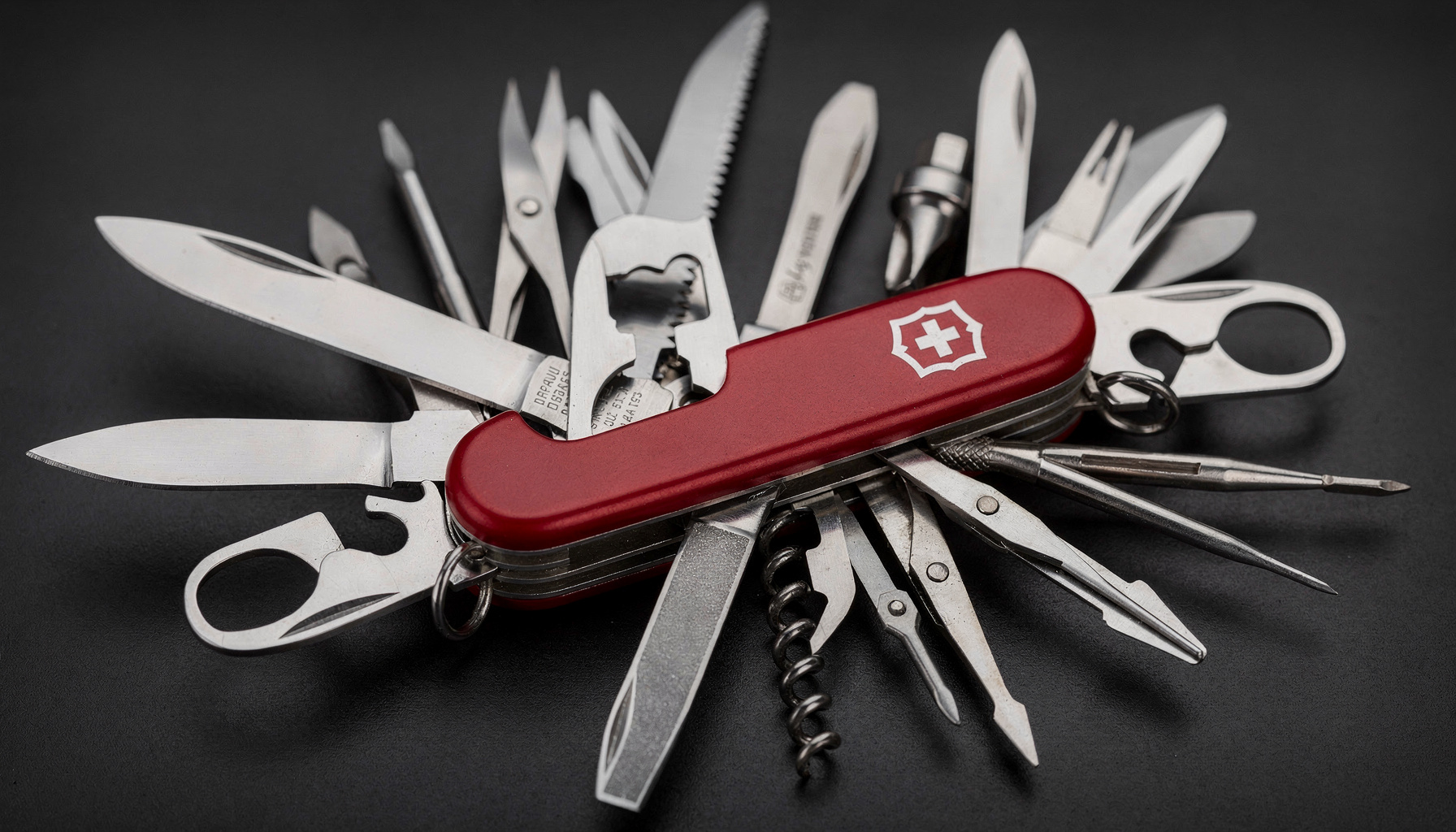
    The problem is not a lack of effort, but the very nature of the tools we have created. For years, the industry has collectively built the equivalent of a giant Swiss Army Knife, a universal super-tool designed with the potential to solve every imaginable problem. This was essential to get the technology off the ground and prove its broad applicability. However, once you have a specific application that never requires the corkscrew, that feature becomes a liability. Its complexity and cost weigh down the business case, making it harder to compete with established, specialized manufacturing methods.

    Source: A Swiss Army Knife with a lot of tools, AI-generated with FLUX.2 [pro]

    This is the industry’s 80/20 problem. Getting a machine to perform a novel trick once represents the first 80% of the desired effect, but it only takes about 20% of the total engineering effort. We are now facing the truly hard part: the final 20% of the effect, making that machine operate reliably at scale, requires the remaining 80% of the work. The era of the generalist “do-everything” machine is ending. Just as the best injection molding suppliers dominate medical technology and specific milling companies own the defense sector, AM will specialize.

    Companies like AMCM are already leading this transition. By deeply customizing their systems for specific customer applications, e.g. for space components or in defense applications, they are effectively moving away from the from the Swiss-Army-Knife-principle and develop superior single-application-tools instead. They have proven that specialization is how this technology truly begins to function and deliver value.

    This history of building universal tools is precisely why the classic startup disruption playbook has failed so spectacularly in AM. The model is simple: a startup with a lean minimum viable product (MVP) attacks an established player’s profitable product from below and steals their customers. But in AM, this model collapses. The market is a fragmented landscape of companies with minor technological tweaks, all battling for a piece of a market that is not yet mature enough to support them. There are no profitable, billion-dollar incumbents to disrupt. This raises a critical question: why are we trying to disrupt an industry where you cannot make money? This flawed premise has led to a painful cycle where an estimated USD 2bn of VC money has evaporated without a clear path to sustainable profitability, turning the industry into a playground of possibilities, not a marketplace of proven solutions.

    Two Paths to Survival: Become a Giant or Pivot

    In this this reset, only two viable paths remain.

    The first path is a tough race for the base technology suppliers, who must now solve the fundamental challenge of achieving profitability through scale. The future for these players will be a consolidation mirroring the one we witnessed in other manufacturing technologies. Like in the conventional machining industry, the early market was also a fragmented “Wild West” of proprietary systems. It only broke into the mainstream when champions like Fanuc and Siemens created a standardized ecosystem, turning a collection of disparate tools into a predictable, scalable industrial platform. The winners in AM will not be those with just a novel technology, but those who can deliver on the unsexy but critical triad of reliability, scalability, and a low cost per part.

    For every other company not competing in that race, the only strategy is the second path: a deliberate pivot away from technology and towards the application. For years, the fatal mistake has been to approach customers, present a novel printer, and essentially say, “You are the experts; figure out how to use this.”

    This is the classic “technology push” fantasy. The company naively assumes their presentation will set off a creative chain reaction, that engineers will instantly dream up a hundred new applications, that management will immediately divert resources, and that the entire organization will eagerly re-engineer its processes around this new possibility. This is definitively not what happens. The customer’s reality is a world of high pressure and strict rules where risk is not an option. They don’t want a science project; they want a solved problem.

    Source: One hand holding a finished castle and other hand holding a box of bricks, AI-generated with FLUX1.1 [pro] Ultra

    Do not sell Lego bricks and hope the customer builds a castle. Walk in with the finished castle and prove it is better than the one they live in now. You are not asking them to take a bet on your technology; you are delivering them a superior solution. Your job is to drive the disruption yourself.

    The Application First Mandate

    Embracing this pivot requires a radical change in identity. Companies must stop calling themselves “AM companies” and start acting as “solution owners.” This is not theoretical. Look at the companies quietly winning today: Additive Drives is building superior electric motors for the e-mobility sector; Conflux is engineering the most cutting-edge heat exchangers; Domin is conquering the world of hydraulic motion control. Evove is creating next-generation filtration membranes; Vectoflow is redefining flow measurement with its robust probes; and Lightforce is transforming orthodontics.

    They all share a common pattern: they possess deep application knowledge. They are not AM experts dabbling in a market; they are market experts who leverage AM as a tool to solve a high-value problem.

    They are building the castle. They are delivering the lighter component, the more efficient part, the qualified product that solves a real, expensive problem for their customers. Successful startups scale by entering an existing, profitable industry and doing something fundamentally better. The goal is to create an “application monopoly”, a niche where your solution is not just an improvement, but indispensable. In this model, technology is merely the enabler; the true value lies in the final product and in owning the customer’s problem.

    Alexander Schmoeckel, Associate, joined the investment team at AM Ventures in 2018 and plays a central role in overseeing portfolio companies such as Elementum 3D, Fortius Metals, Headmade Materials, Incus, Lithoz, MetShape and Vectoflow. In addition to managing these investments, he leads scouting activities across the United States and builds the firm’s network in the region.

    Alexander holds a Bachelor and a Master degree in Management and Technology from the Technical University of Munich with a focus on finance, accounting, and mechanical engineering. He spent a semester in Paris and was part of the TUMfast scholarship program. He recently earned the Certified Private Equity Analyst qualification from TUM and BVK.

    With a background that combines technical insight and financial experience, he is committed to supporting founders and advancing innovation in advanced manufacturing.

    AM Ventures is the Networking Sponsor for Additive Manufacturing Strategies (AMS) 2026, a three-day industry event taking place February 24–26 in New York City. On February 25 at 4:55 pm, Alexander will participate in a panel on “Leveraging VC for an Industrial AM Future.” AMS brings together industry leaders, policymakers, and innovators from across the global additive manufacturing ecosystem. 

  • APES Partners with Great Lakes Semiconductor to Scale Advanced, Additive Chip Packaging

    Terminologically, additively manufactured electronics (AME) occupies similar space in the realm of tiny components that additive construction (AC) occupies when it comes to large components: it’s a single phrase that in fact refers to a kaleidoscope of applications that continues to constantly diversify. The same way that AC covers a range of use-cases, from Wal-Mart warehouses and subsurface structures to self-sufficient farmhouses, AME subsumes everything from RF antennas to rapidly iterated PCB prototypes.

    While it might not get the same level of attention as use-cases like next-gen wearables, advanced chip packaging may ultimately prove to represent the most singular growth opportunity for the AME market segment. In that sense, Advanced Printed Electronics Solutions (APES) of New York is the future of electronics 3D printing. That future just got pulled a little closer to the present with APES’ announcement that the company has partnered with Great Lakes Semiconductor (GLS) to incorporate the APES Matrix6D platform into the GLS Fab-as-a-Service (FaaS) model.

    APES unveiled its Matrix6D platform at last year’s RAPID + TCT show, and 3DPrint.com’s Joris Peels described it like this:

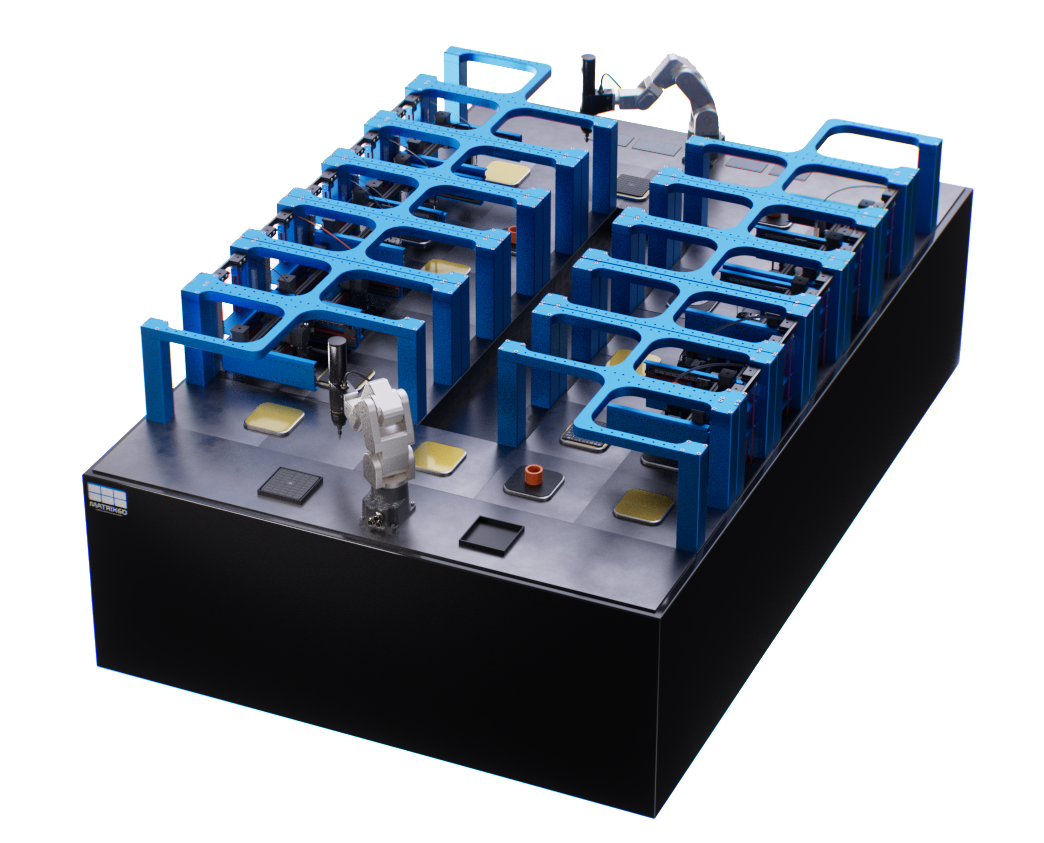
    “The Matrix6D is a modular 3D printing solution featuring movable maglev conveyor platforms that travel beneath various print heads. These build platforms are propelled from one tool head to another via magnetic levitation. At each station, different steps can be performed. For example, a polymer housing might be deposited by one tool head, after which the build is transferred to a circuit 3D printing head, then milled by another head, and finally returned to the polymer deposition station to complete the housing.”

    The Matrix6D platform

    The idea is to maximize both the design capabilities and the production flexibility of electronics manufacturing by making the capital equipment involved as modular as possible. This aligns perfectly with the GLS Pocket Fab strategy that underlies the FaaS business model. As the company explains on its website, “GLS operates a model where it provides wafer production capacity and backend services on an on-demand subscription basis to startups, OEMs, and governments… [which] reduces customer capital expenditure risk, encourages ecosystem innovation, and ensures consistent revenue for GLS, thereby mitigating industry cyclicality.”

    Beyond the electronics industry proper, there’s obviously significant potential for FaaS and Matrix6D in defense, but GLS initially seems to be most focused on the automotive sector, including a wide variety of sensors and wireless communication devices. Automotive is a particularly attractive target vertical for the flexibility enabled by AME, given how sensitive to consumer demand changes the sector is and how disproportionately impactful semiconductor shortages have proven to be for automakers.

    According to the two companies, they’ll start working together immediately at APES’ lab in Fishkill, New York, where GLS also has its headquarters. By Q3, the partners will move the operations to GLS facilities, with the objective ultimately being “to co-locate” the services provided by the two brands.

    Advanced chip packaging has so much potential as a 3D printed electronics growth opportunity primarily because chiplets — semiconductor devices made out of a system of small chips (System in a Package, or SiP) as opposed to System on a Chip, where all the functions are integrated into one die (SoC) — have been revolutionized by the ability to move chip design from 2D to 2.5D and 3D. Previously, you could only stack chips side by side; in the chiplet era, you can stack them vertically.

    While it may not sound like it, that change has been enough to completely transform how semiconductor devices are designed, and the semiconductor industry is still only just getting started in terms of testing out the concept. To illustrate just how seismic that change has been, chiplets are credited with being largely responsible for China’s ability to catch up to the West in semiconductor manufacturing.

    Thus, while GLS and APES may begin by attending to the automotive sector, there is virtually limitless opportunity for the two companies to expand into all other areas of the semiconductor industry. Combining design freedom with production flexibility is precisely the formula that any national semiconductor ecosystem needs at this point in order to maintain relevance globally. If GLS and APES can even modestly follow through on that promise, it would be about as big a win for AME as one could hope for.

    Images courtesy of APES

  • Bambu Lab Says 2025 Was a Breakout Year: 10 Million Monthly Users and Real Business Growth

    Chinese 3D printer maker Bambu Lab reported strong results for 2025, showing that the company’s push into community and small-business 3D printing is working. The numbers suggest consumer 3D printing is moving beyond hobbyists and becoming a real side business for many people.

    Joel Telling joins Bambu Lab CEO Dr. Tao for a demonstration at Formnext. Image courtesy of Bambu Lab via LinkedIn.

    Bambu Lab revealed that its MakerWorld platform (a place where people share 3D models and printing ideas) now has about 10 million monthly active users. That’s a huge number in just two years since the platform launched.

    Some highlights from the 2025 MakerWorld data include 10 million monthly active users and 2.6 million original models uploaded to the platform. More than 7,000 new models are added every day, created by around 280,000 designers, each publishing an average of five or more models. In particular, about 4,000 models have been downloaded and printed more than 1,000 times, showing strong engagement and repeat use across the community.

    This level of engagement shows that people aren’t just browsing; they are actively designing, printing, and reprinting.

    Additional data also point to how fast Bambu Lab printers are spreading: download figures for its BambuHandy control app suggest app activity roughly tripled from 2024 to 2025, with close to two million app downloads in 2025. This is a possible sign of a sharp increase in machine use.

    Beyond Hobby Use

    MakerWorld data shows that users are spending some serious time printing. More than 30,000 users print an average of seven or more hours per day, which is the equivalent of a full working day. On a weekly basis, more than 130,000 users print for six or more hours per week. In total, users logged over 290 million print hours in 2025. The platform also reports an 83% user retention rate after one year, which is very high for an online community.

    Interestingly, people aren’t just trying 3D printing once and stopping. They’re coming back and using their machines regularly.

    Bambu Lab’s MakerWorld. Image courtesy of Bambu Lab.

    Bambu Lab’s data also reveals that real work and small business activity are happening on MakerWorld. Many heavy users spend more than seven hours per day printing, which the company says is like “full-time employment” in some cases.

    Popular printed items range from household items and tools to decorative pieces and cosplay props. In fact, the top popular categories of models show what people are actually making household items like holders, organizers, and décor; fun DIY and hobby prints and tools, and custom parts, as well as customized merchandise and cosplay accessories

    For a growing group of users, 3D printing is becoming a way to make money by selling products, custom parts, or designs.

    Expanding Its Audience

    Interest in Bambu Lab grew a lot in China in 2025. Search query data shows that interest in the company name grew more than 300% year-over-year, while general interest in 3D printing also went up by a lot, so that’s a sign the market is expanding quickly.

    Analysts also point to strong sales growth for Bambu Lab’s machines, with some estimates showing that printer unit sales tripled from 2024 to 2025. Partnerships with large tech platforms and participation in major events may be part of the reason the brand is attracting more mainstream attention.

    To reach more people, Bambu Lab announced a strategic partnership with Chinese tech giant ByteDance. During China’s Spring Festival Gala (the country’s massive Lunar New Year television event watched by hundreds of millions), Bambu Lab will distribute more than 6,600 3D printers through ByteDance’s Doubao platform. By connecting its brand to one of the most widely viewed events of the year, the company is bringing 3D printing into the national spotlight.

    China’s Spring Festival Gala. Image courtesy of China Daily.

    Bambu Lab may have started out as a hardware company, but its 2025 results show it has grown into something bigger; it’s now a full digital community and business platform built around 3D printing. Instead of simply selling printers, it now supports a broad creative and commercial network, which is truly wonderful.

    In fact, this matters because it suggests the future of consumer 3D printing is not just about better printers, but about stronger digital platforms and communities.

    Bambu Lab’s ecosystem goes beyond file sharing. MakerWorld now includes crowdfunding tools that let designers fund bigger projects and make money from their designs. The company has also launched products like CyberBrick — 3D printable toys with reusable electronics — looking to open up new creative uses and reach more users.

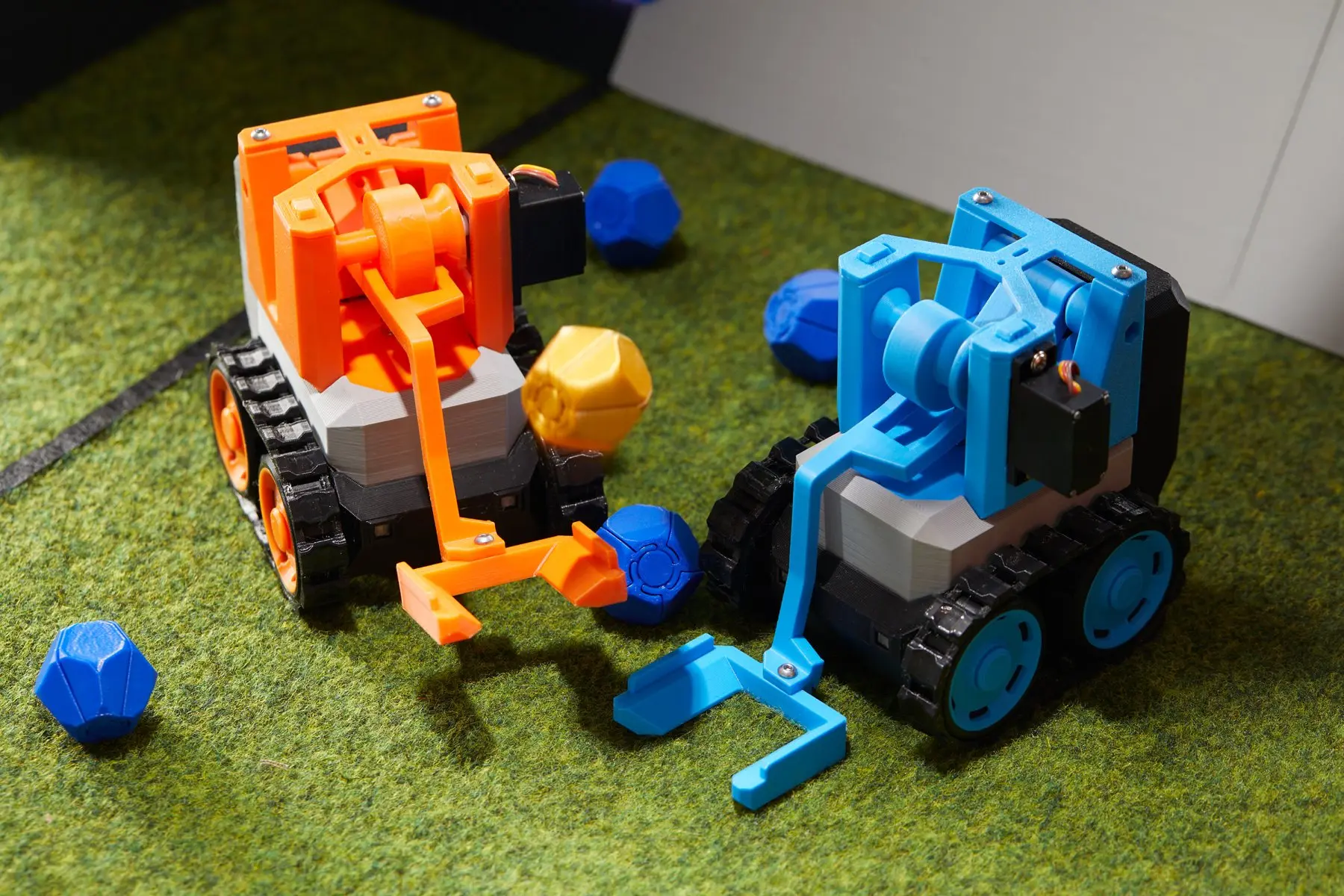
    Bambu Lab’s CyberBrick. Image courtesy of Bambu Lab.

    The success of MakerWorld and the clear movement toward regular use and business activity suggest that consumer 3D printing has matured. It’s no longer just about “tinkering on weekends or after work.” For many people, it has become a tool for creation, work, income, and, quite importantly, community. And Bambu Lab’s 2025 results show a company shifting 3D printing from a niche hobby to an accessible manufacturing tool for millions.

  • 3DPOD 294: Digital Casting and More with Ben Wynne, Intrepid Automation

    Ben Wynne is focused on bringing digital automation into traditional casting and heavy manufacturing through his work at Intrepid Automation. He explains how the company connects design, tooling, robotics, and production data into integrated workflows that improve quality, repeatability, and traceability. By layering software and automation onto established foundry processes, Intrepid aims to help manufacturers modernize, address labor constraints, and respond to reshoring and defense-driven demand without abandoning their core industrial capabilities.

    This episode of the 3DPOD is brought to you by Siemens. With AI-enabled technologies, deep-domain expertise, and trusted partnerships, Siemens is converting today’s technological leaps into measurable benefits for customers, partners, and society. AI is no longer a feature; it’s a force that will reshape the next century.


  • 3D Printing Financials: Materialise Reports Strong Finish to 2025, Led by Medical Growth

    Materialise (Nasdaq: MTLS) closed out 2025 with a solid fourth quarter, showing stronger profitability, steady revenue growth, and continued momentum in its medical business. While some parts of the company are still facing market pressure, the overall message from leadership was clear: the company is financially strong and focused, and is positioning itself for long-term growth.

    Brigitte de Vet-Veithen from Materialise speaks at AMS 2025. Image courtesy of 3DPrint.com

    For the fourth quarter of 2025, revenue rose 6.8% year-over-year to €70.2 million ($82.9 million). Adjusted EBIT reached €4 million ($4.7 million), compared to a loss of €1.2 million ($1.4 million) in the same period last year. Net profit more than doubled to €6.2 million ($7.3 million).

    CEO Brigitte de Vet-Veithen told investors during an earnings call: “In the final quarter of 2025, we reached a major milestone with our successful Euronext listing and the announcement of a strategic share buyback program. These steps clearly demonstrate our commitment to delivering long-term shareholder value.”

    Medical Continues to Lead

    Materialise’s Medical segment once again led the company’s growth.

    Fourth-quarter medical revenue increased 16.3% to €37 million ($43.7 million), marking another quarterly record. For the full year, medical revenue grew 15.4% to €134.2 million ($158.4 million). The segment now represents roughly half of the company’s total revenue.

    During the call, de Vet-Veithen highlighted a major milestone: “In the fourth quarter, we surpassed the historical milestone of 700,000 patients treated with Materialise personalized solutions. More than 17,000 patients have been treated in 2025 alone.”

    This result reflects years of work in personalized medical devices and surgical planning software.

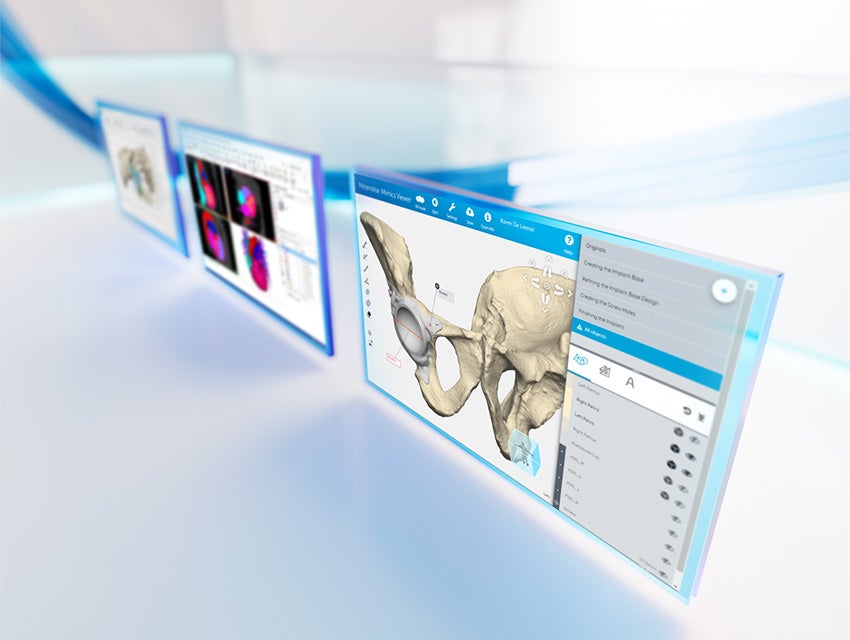
    Materialise Mimics software for medical. Image courtesy of Materialise.

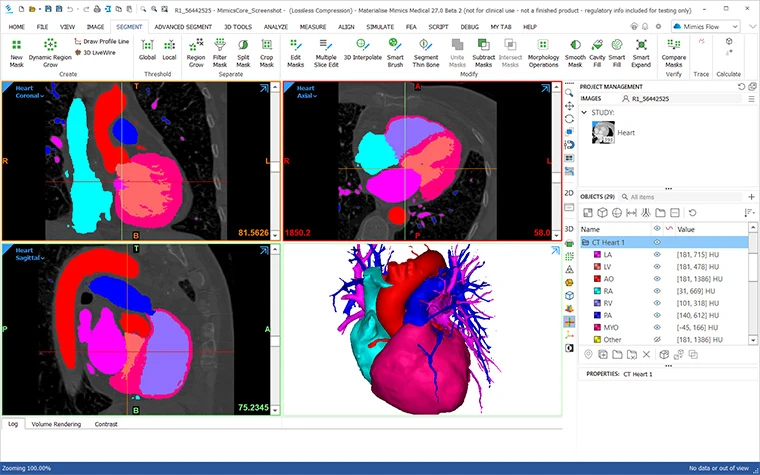
    Materialise also released a new version of Mimics Flow, part of its Mimics platform. The update introduces additional AI algorithms, a new licensing system, and subscription pricing options. According to the CEO, the goal is clear: make it easier for customers to scale personalized healthcare solutions and align pricing with long-term usage.

    The Medical segment’s adjusted EBITDA margin reached 35% in Q4, a strong result that shows both growth and better efficiency.

    Software Stabilizes and Shifts to Subscription

    Materialise’s Software segment remained steady in the fourth quarter. Revenue declined slightly year-over-year to €11 million ($13 million), but profitability improved strongly.

    Adjusted EBITDA rose to €1.7 million ($2 million), with margins improving to 15.5%.

    And the company continues transitioning its software business to a cloud-based subscription model. Recurring revenue now represents about 82% of total software revenue, up from 74% the previous year.

    De Vet-Veithen highlighted that 2026 will complete that transition: “Our Materialise Software segment will complete the transition towards a cloud-based subscription business model in 2026 and will continue its investments in a broader AM software ecosystem.”

    One important piece of data from late 2025 was the introduction of CO-AM Brix, a low-code automation tool designed to simplify complex additive manufacturing workflows.

    “We’ve seen the impact of CO-AM Brix firsthand in our own production of fixed insoles, our custom 3D printed robotics. In producing these insoles, CO-AM Brix enabled us to automate almost the entire process from order to print. Nesting time dropped from 45 minutes to just 1 minute. Bill processing became 20x faster. Total build time fell by 15% and error rates fell from 10% to under 0.1%,” said the CEO.

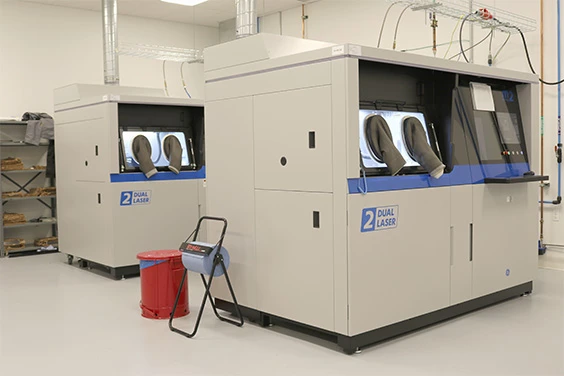
    Materialise U.S. medical 3D printing facility. Image courtesy of Materialise.

    Manufacturing Still Facing Headwinds

    The biggest challenge remains the Manufacturing segment. Fourth-quarter manufacturing revenue declined 2.4% to €22.2 million ($26.2 million). For the full year, revenue dropped 13.2% to €92.5 million ($109.2 million), with the segment posting a negative adjusted EBITDA margin. This drop reflects lower prototyping activity and softer industrial conditions in Europe.

    On the call, when asked directly whether Manufacturing would likely decline again in 2026, de Vet-Veithen noted: “Yes, that’s a correct assumption. So we assume that the current trends that we see driven by the weaker industrial climate, in particular in Europe, will continue to weigh on the manufacturing results, in particular on the prototyping segment.”

    At the same time, she pointed to progress in aerospace and defense, including new contracts with Airbus Defense and Space and participation in the SONRISA aviation initiative.

    These projects will take time to add to revenue, but they show a shift toward higher-value production work instead of basic prototyping.

    Margins Improve Despite Flat Revenue

    For the full year 2025, total revenue was essentially flat at €267.6 million ($315.9 million) compared to €266.8 million ($315 million) in 2024. However, margins improved: gross margin increased to 57.1%, adjusted EBITDA rose to €32.4 million ($38.3 million), and adjusted EBIT increased to €10.6 million ($12.5 million).

    CFO Koen Berges said the company was able to turn steady revenue into stronger operating results: “These results demonstrate our ability to strengthen profitability even in a challenging macroeconomic environment.”

    Net profit for the year came in at €7.7 million ($9 million), lower than 2024 due in part to unfavorable currency exchange effects.

    Mimics Core. Image courtesy of Materialise.

    Materialise ended the year with €134 million ($158.2 million) in cash and cash equivalents. Net cash improved to roughly €70.8 million ($83.6 million) compared to the end of 2024. Free cash flow for 2025 totaled €15.6 million ($18.4 million).

    The company also announced plans to spend up to €30 million ($35.4 million) buying back its own shares after adding a second stock listing in Brussels.

    Overall, De Vet-Veithen said the company is in a solid financial position: “With €134 million of cash and cash equivalents on our balance sheet, an improved net cash position and consistently positive operating and free cash flow, we are financially strong and well positioned to further drive innovation and capture emerging market opportunities.”

    2026 Outlook

    Looking ahead, Materialise expects total 2026 revenue to be between €273 million ($322.3 million) and €283 million ($334.1 million). Adjusted EBIT is expected to reach between €10 million ($11.8 million) and €12 million. What’s more, the company expects continued double-digit growth in Medical, completion of the Software subscription transition, and continued pressure in Manufacturing due to macroeconomic conditions.

    Still, leadership remains confident in its strategy.

    As de Vet-Veithen closed the call, she added a personal note relevant to the additive manufacturing community.

    “We look forward to continuing our dialogue with you through investor conferences, one-on-one meetings, or calls. And I’m also looking forward to meeting some of you in person at the upcoming AMS conference.”

    With Additive Manufacturing Strategies (AMS) 2026 happening this week in New York, Materialise arrives with improving profits, strong medical growth, and a focused strategy, despite ongoing weakness in the industrial market.