• 3D Printing News Briefs, June 4, 2026: Anniversary, Maritime, Marine Organisms, & More

    In today’s 3D Printing News Briefs, Snapmaker is celebrating 10 years with a series of updates. XJet is collaborating with eqops for sales and support across the UK and Ireland, Interspectral expanded its strategic collaboration with Pankl Racing, and Airtech is collaborating with Evergreen Additive. We’ll end with a story out of Princeton University about a multimaterial 3D printing approach for cement-based composites.

    Snapmaker Celebrating 10th Anniversary with Multiple Updates

    This month, Chinese desktop 3D printer OEM Snapmaker is celebrating its tenth anniversary. The company launched back in 2016 with a focus on making powerful manufacturing tools more accessible. To go along with its anniversary slogan of “Always Making,” Snapmaker announced a series of updates, covering software, community, materials, and new products. Last month, Radu, or “Ratdoux,” the developer behind the Full Spectrum color-mixing slicer for the Snapmaker U1 ecosystem, joined the company to help lead a multicolor 3D printing initiative. Building on this, Snapmaker Orca V2.3.3 Beta has introduced native Full Spectrum support, which will enable intermediate colors by alternating filament layers and visual blending. This is the first release to include this community-developed virtual color mixing technology, and the technology is now available directly in the slicer, which is available for download.

    Snapmaker’s User Model Design Contest and Video Contest, with the theme of “Make Something Colorful,” are now taking submissions through June 16th. Creators are asked to show what multi-color 3D printing is truly capable of, from artistic expression to functional design. Winners will be announced June 23rd. Next, the Snapmaker Model Library is under construction, but there will be a public launch later this year. Once it’s done, the repository will have high-quality models optimized for multi-color 3D printing. The company is also adding three new Hotend size to its accessories lineup—the Hardened Steel Hotend, in 0.2mm, 0.6mm, and 0.8mm, will give users more control over speed, throughput, and detail. Finally, Snapmaker is also offering four new filament options. TPU 95A HF is great for shock absorbers and phone cases, while PETG HF (High Flow) is a variant optimized for speed, while still offering strong layer adhesion and chemical resistance. Silk PLA and Silk Dual-Color PLA both feature a luminous finish for display and decorative prints. You can purchase these new offerings here.

    XJet & eqops Elevating Advanced AM in the UK & Ireland
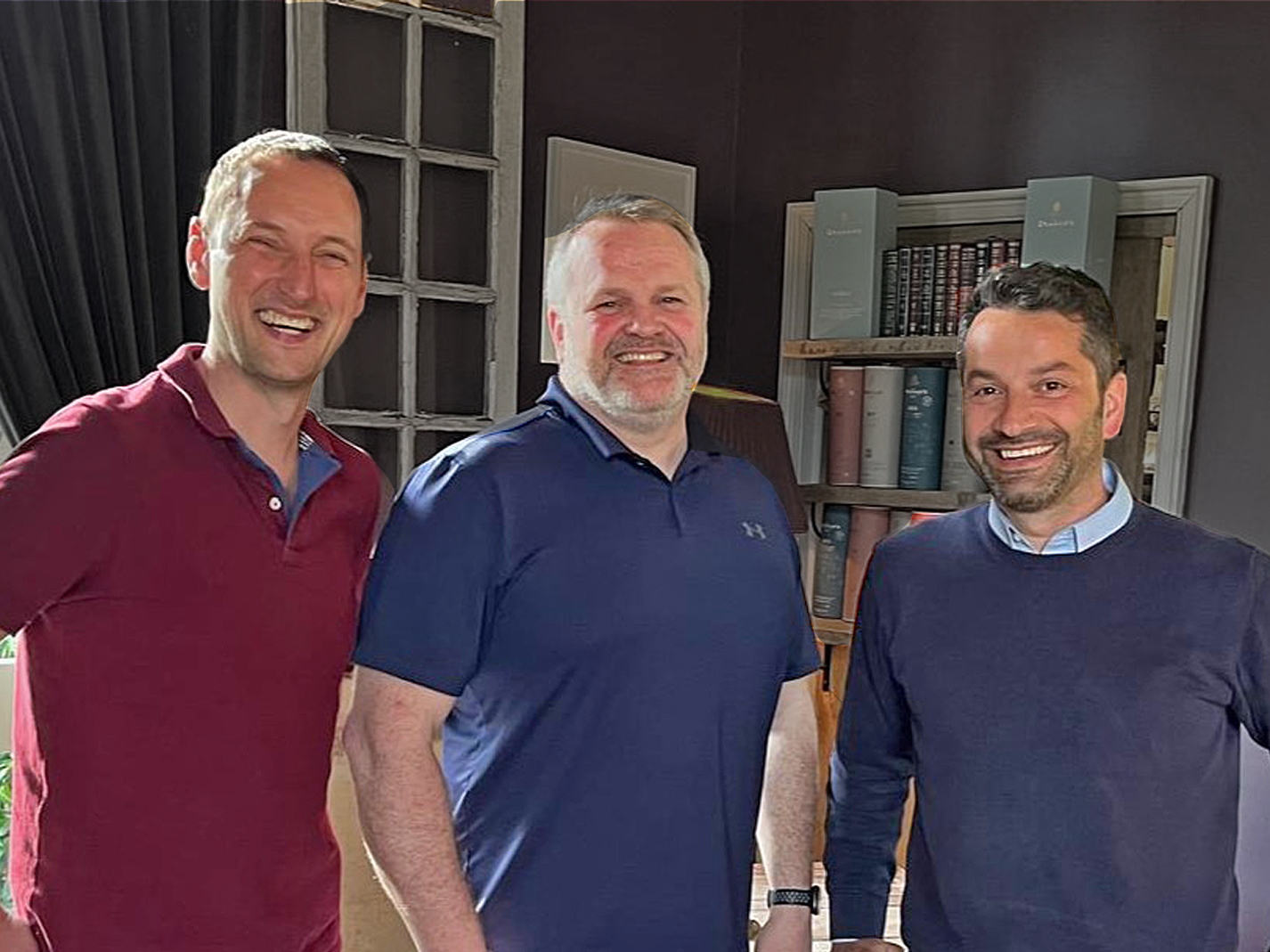
    L-R: Mark Caseley and Alwyn Pryse from eqops, and Riccardo Tosi, Business Director at XJet

    As part of its broader international growth strategy, Israel-based XJet is collaborating with UK-based engineering consultancy eqops, which will represent XJet as a sales and support partner in the UK and Ireland. This will combine XJet’s NanoParticle Jetting (NPJ) technology with the deep AM expertise and well-established operational infrastructure that eqops has in Ireland and the UK. The eqops team is experienced in supporting AM operations across a multitude of high-performance industries, like electronics, aerospace and defense, energy, and medical devices. This makes eqops a great partner for XJet as it works to bring NPJ to a wider range of advanced manufacturers. The companies will work together to support manufacturing customers over the full lifecycle, from choosing a system and installing it all the way to process optimization, compliance, and long-term performance.

    “The UK and Ireland represent important and growing markets for XJet, and finding the right partner to represent our technology in those markets has been a priority. In eqops, we have found exactly that. Their combination of technical knowledge, hands-on additive manufacturing experience across hundreds of systems, and structured approach to customer support – spanning installation, optimisation, compliance, and long-term service – is precisely what our customers in the region need to succeed with NanoParticle Jetting,” said XJet’s Chief Business Officer Gilad Gans. “We are confident that eqops will be outstanding ambassadors for XJet, and we are very pleased to welcome them as our partner for the UK and Ireland.”

    Interspectral & Pankl Racing Systems Expanding Strategic Collaboration
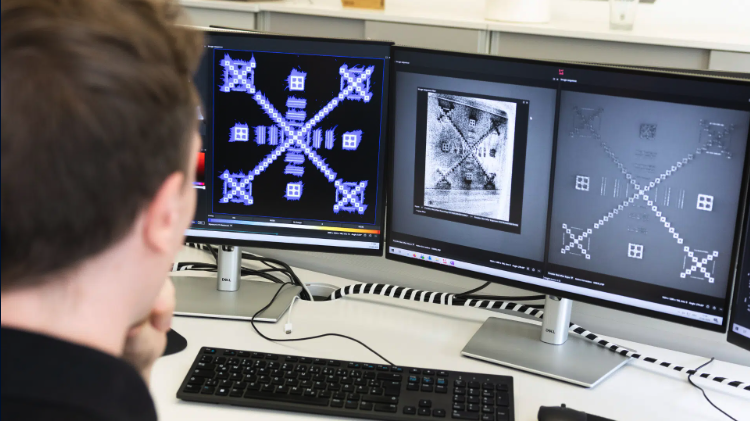
    AM Explorer in action at Pankl facility

    In more collaboration news, Swedish tech company Interspectral AB and Pankl Racing Systems AG have expanded their existing strategic collaboration. Their multi-year partnership focuses on speeding up industrialization of metal AM through improved process monitoring, data-driven production workflows, and quality assurance (QA). Now, Pankl will act as a strategic development partner for Interspectral’s flagship AM Explorer software platform, as well as a reference customer. Pankl is a top supplier of high-performance systems and components for the aerospace, automotive, and motorsport industries, and will deploy AM Explorer further across its AM operations to support data integration, real-time monitoring, anomaly detection, and qualification workflows. It will also work with Interspectral to explore new capabilities in AI-driven defect detection, multi-source data correlation, and optical tomography analysis. The end goal is to make QA more production-ready, scalable, and reliable.

    “This collaboration is about helping make additive manufacturing a more reliable and scalable production technology,” said Isabelle Hachette, CEO at Interspectral. “As the industry moves from experimentation to industrial deployment, manufacturers need better ways to build trust into production. Working closely with Pankl allows us to develop those capabilities in a real manufacturing environment.”

    Airtech & Evergreen Collaborating in LFAM Supply Agreement for Maritime
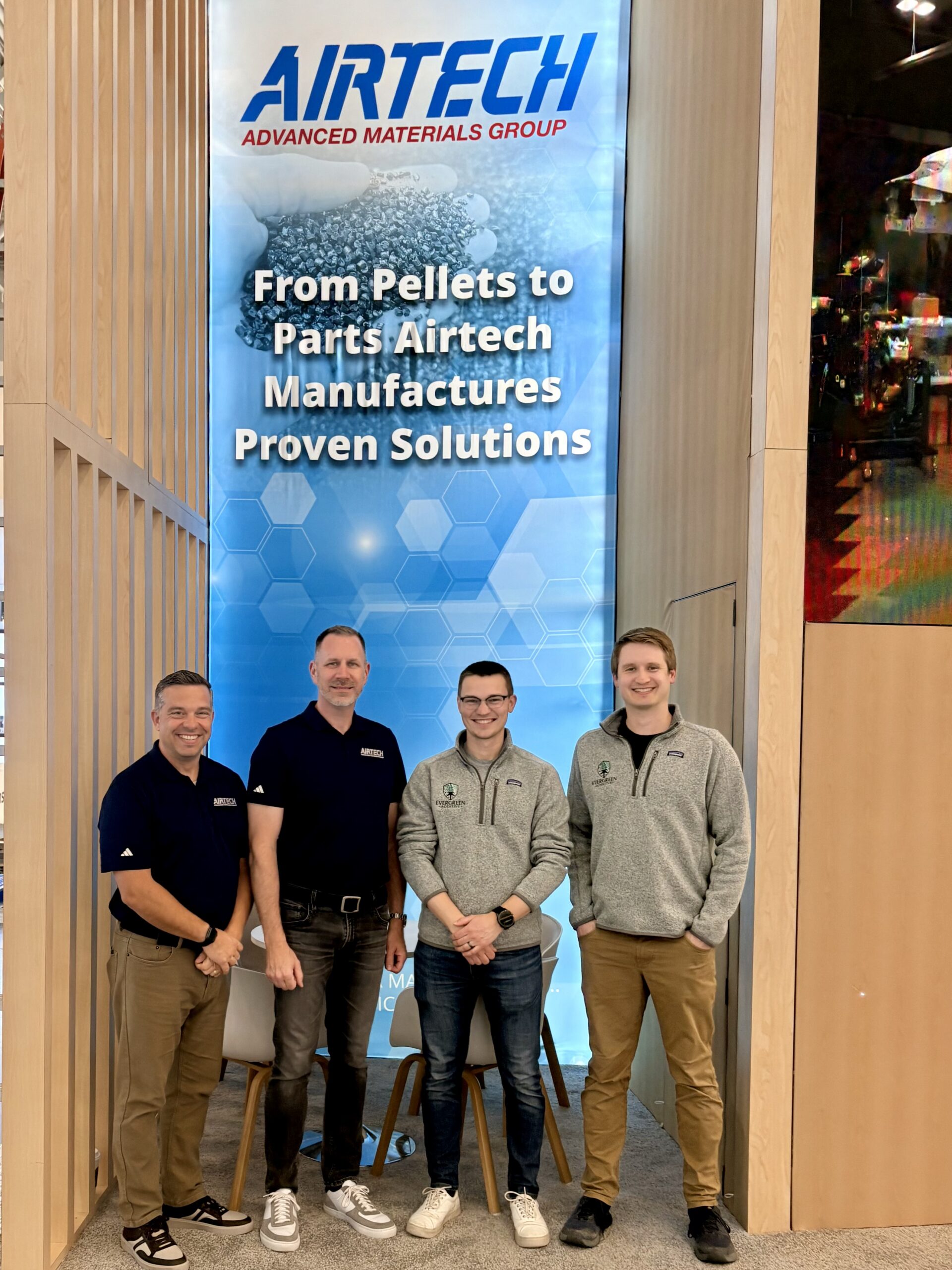
    For our final collaboration announcement, Airtech Advanced Materials Group and Evergreen Additive have entered into an exclusive supply agreement. Family-owned and operated Airtech is a leader in specialty formulated AM materials, and actually acquired KIMYA’s filament portfolio last year. It works with a wide range of sectors, including aerospace, automotive, general composites, solar, and wind energy. Evergreen, based in Maine and officially founded last year, specializes in large-format additive manufacturing (LFAM) for maritime applications in the commercial marine tooling and defense unmanned systems markets. The formal supply agreement between Airtech and Evergreen builds on several years of collaboration, and will focus on materials development for new and emerging marine and defense applications. Airtech will provide support to Evergreen in AM business opportunities and technical areas, while Evergreen will exclusively use Airtech products in its LFAM projects.

    “Airtech is excited to be able to support Evergreen from the very beginning and be a part of their journey taking what they learned in the lab and help them scale it to full commercial application solutions for use in everything from parts, tooling, or direct use structures and vehicles,” said Gregory Haye, Director of Additive Manufacturing at Airtech Advanced Materials Group. “We can’t wait to see what innovative materials combined with Evergreen’s experience and ingenuity will bring to the market over the coming years.”

    Researchers Inspired by Glass Sponge for Multimaterial 3D Printing Approach

    Alternating layers of concrete and thin polymer allow the new composite material to absorb energy without failure. Image by the researchers

    The problem with 3D printed cement-based materials like concrete is that they’re mostly brittle; if cracks form, they spread fast. A team of engineers at Princeton University developed a multimaterial 3D printing approach to fabricate cement-based composites that are more resistant to deformation and cracking. The researchers took their inspiration from Euplectella aspergillum, a deep-sea glass sponge, often called Venus’s flower basket. Its skeleton contains alternating hard and soft layers, and the soft ones will arrest and deflect any cracks that occur before they spread. Most concrete structures incorporate steel bars for reinforcement. The Princeton team took this a step further by using multimaterial 3D printing to engineer how concrete cracks; this new class of concrete is called Architected Cementitious Composites (ACC). Polymer layers in ACC structures act as thin, soft interlayers that stop, redirect, and redistribute the cracks, thus improving the ultimate load bearing capacity. The team programmed a custom 3D printer to place thin polymer layers within printed mortar. As they describe in a published paper, their 3D printed concrete-polymer composite can achieve up to 187-fold higher fracture toughness and 22.6-fold greater ductility than other cement-based materials.

    “This work broadens the design space for concrete 3D-printing technology as well. It shows that multi-material additive manufacturing can be used not only to shape better cementitious materials and how they fracture, deform, and resist damage, but also to engineer new functions such as thermal regulation and insulation that we could not easily attain otherwise,” explained team leader Reza Moini, an assistant professor of civil and environmental engineering at Princeton.
  • 3Dnatives to Present ADDITIV Metals 2026: Resolving Key Barriers to Scaling Metal Additive Manufacturing

    As the metal additive manufacturing sector prepares for a massive leap—with market valuations expected to climb from $6.02 billion to $7.02 billion this year—the industry is shifting its focus from basic feasibility to large-scale industrialization. Following a robust 2025 where metal AM revenues grew by 15.3% year-over-year (Wohlers Report), the upcoming ADDITIV Metals 2026 summit arrives at a critical juncture. Designed to address the primary bottlenecks preventing widespread adoption, the virtual event will feature high-level insights from pioneers at NASA, General Motors, MIT, and the U.S. Department of War.

    Scheduled for Wednesday, June 10th, 2026, from 10:00 AM to 12:40 PM EDT (4:00 PM to 6:40 PM CEST), this free-to-attend digital summit offers a concentrated program of three expert-led panels and interactive audience Q&As. To further accelerate industry collaboration, the event integrates AI-powered networking tools, allowing attendees to connect with peers facing similar scaling challenges in the metal AM ecosystem.

    “Metal AM has been ‘almost there’ for a decade. What’s changed in the last few years is that the conversation has shifted from ‘can it be done?’ to ‘why is it taking so long?’ ADDITIV Metals exists to accelerate that second conversation.” — Filippos Voulpiotis, Managing Director of 3Dnatives

    “We are at the point that we can now scale metal additive, but we need to understand the entire ecosystem. For users who are aiming to understand how metal additive technologies can be implemented as part of an entire ecosystem, ADDITIV Metals is a great opportunity.” — Gil Lavi, CEO and Founder of 3D Alliances, who is moderating Panel 2.

    What the Panels Cover

    Panel 1: Diverse Metal Roadmaps – When to Push LPBF and When to Pivot to Alternatives (4:10 PM to 4:55 PM CEST)

    As laser powder bed fusion matures into a production standard, a new generation of challenger technologies is reshaping the cost-per-part equation. This session addresses the strategic process selection decisions that engineering teams are facing right now. Speakers include Tim Smith (NASA), John Hart (MIT), and Ben Arnold (Tritone Technologies). The discussion will be moderated by Brent Stucker of Wohlers Associates.

    Panel 2: The Certification Trap – Can AI Kill the 2-Year Testing Cycle in Metal AM? (5:00 PM to 5:45 PM CEST)

    One of the greatest bottlenecks in metal AM in 2026 is not printing speed: it is the time required to prove a part will not fail in the field. This panel examines the move toward digital qualification frameworks and whether AI-driven approaches can accelerate certification cycles into something operationally viable. Gil Lavi of 3D Alliances will moderate the discussion, joined by speakers Sneha Prabha Narra (Carnegie Mellon University), Matthew Sermon (DRPM Submarines/DoW), and Sainyam Amarora (Johnson Matthey).

    Panel 3: The Hidden Majority – Is Post-Processing Still the Single Greatest Barrier to Metal AM ROI? (5:50 PM to 6:35 PM CEST)

    Despite the promise of push-button fabrication, the path from build plate to finished part remains a labor-intensive journey through support removal, heat treatment, and surface finishing. This panel examines whether post-processing is the last major unsolved problem in metal AM economics. Sherri Monroe of AMGTA will be the moderator, and Ante Lausic (General Motors), Manuel Delgado (ValCUN), and Matthew Bailey (Aerospace Technology Institute) are speakers.

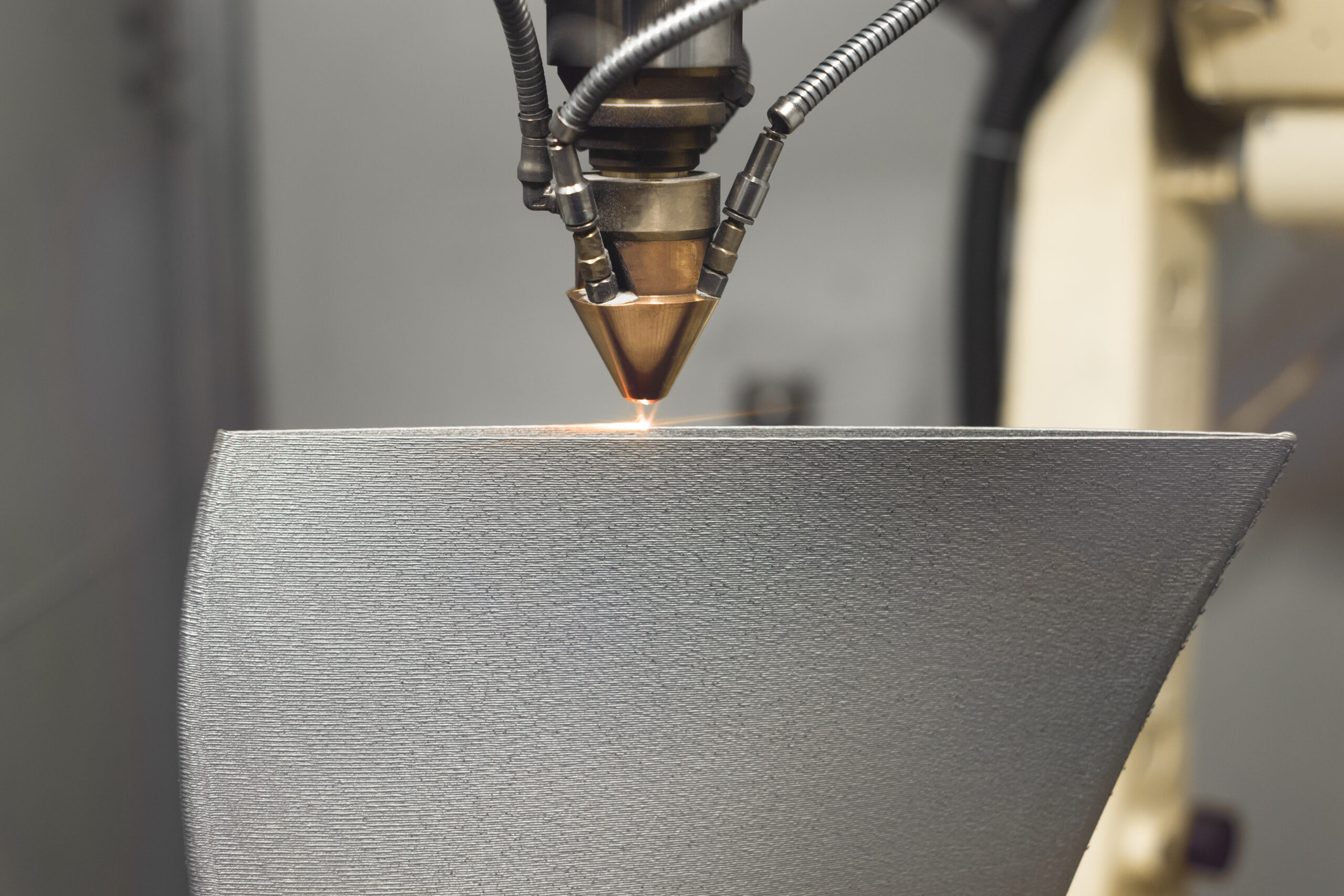
    3D metal printer produces a steel part. Revolutionary additive technology for sintering metal parts. Soft focus.

    Who Should Attend: ADDITIV Metals 2026 is designed for process engineers, AM program managers, R&D directors, and manufacturing executives who are actively working with or evaluating metal additive manufacturing for production applications. If your organization is weighing LPBF against alternatives, managing qualification timelines, or trying to close the gap on post-processing costs, this program delivers expert-level insight in under three hours.

    Networking Built for the Industry: Beyond the panels, attendees gain access to AI-powered peer matching through the Swapcard platform, with the ability to schedule one-on-one meetings before and after sessions. The event is expected to draw over 800 registered attendees from across the global metal AM ecosystem.

    Partners and Sponsors: ADDITIV Metals 2026 is proudly supported by Tritone Technologies and ValCUN. Media partners include ASTM International, AMGTA, SPE, 3D Alliances, Wevolver, Metal AM Magazine, Manufacturing in Focus, Tooling and Production, Modern Applications News, IAM3DHUB, Manufacturing.net, Manufacturing Engineering and Technology, and 3DPrint.com.

    Registration: ADDITIV Metals 2026 is free to attend. Register now to secure your place.

    About 3Dnatives: 3Dnatives is the leading global media platform for additive manufacturing, delivering cutting-edge coverage of 3D printing technologies, applications, and market trends. With over 1.3 million monthly unique visitors, it serves as a critical resource for professionals across the industry. Published in English, French, Spanish, German, and Italian, 3Dnatives partners with major players in the ecosystem to provide high-value content, data-driven insights, and strategic visibility through multimedia, branded content, and virtual events.

    About ADDITIV: ADDITIV is a series of global virtual events dedicated to additive manufacturing, offering panel discussions, workshops and networking with AM experts from leading industrial companies & the most innovative firms in the field.

  • The Stories nScrypt Can’t Tell; and Why That Matters

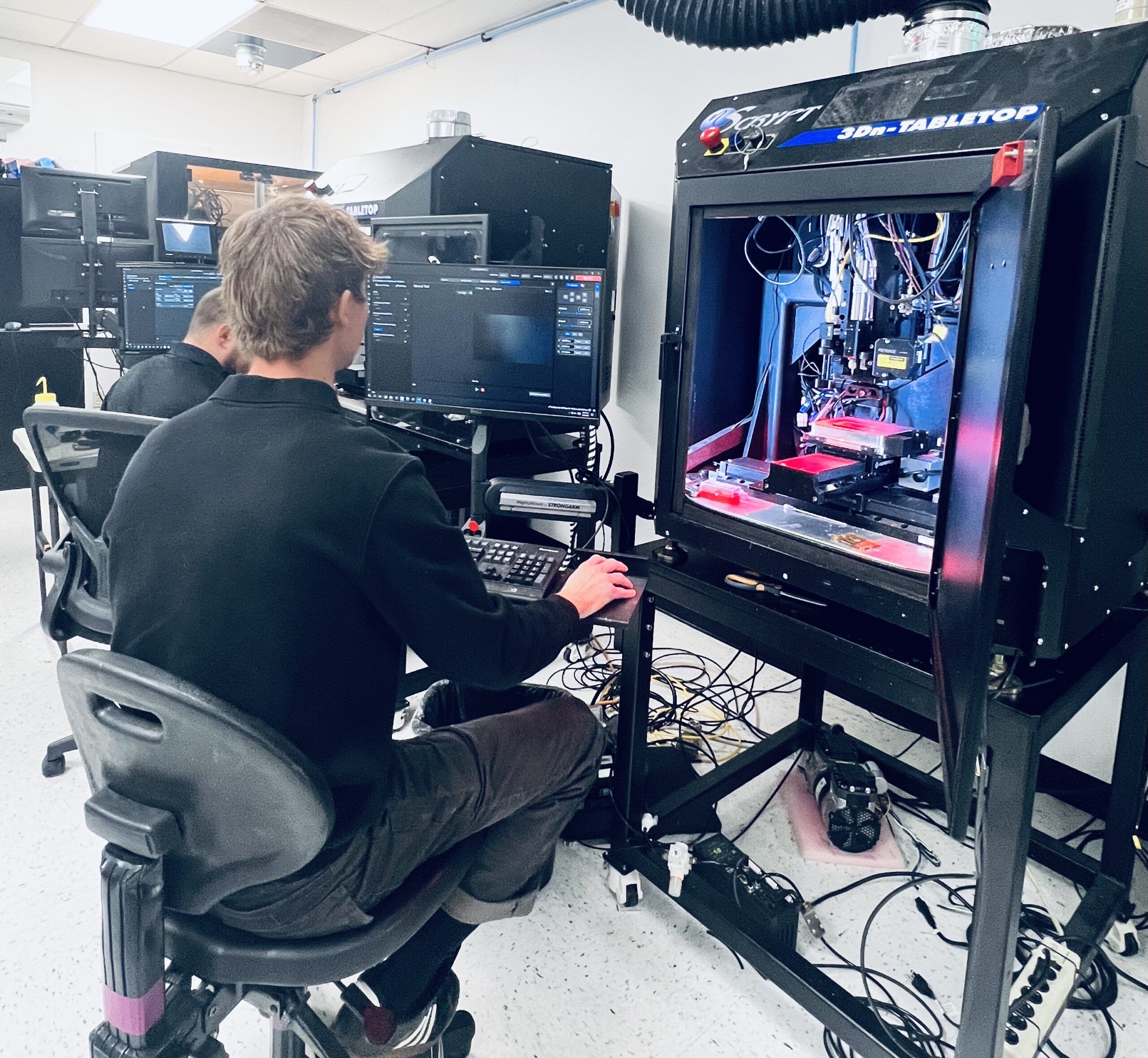
    There’s an interesting dynamic inside nScrypt’s Orlando headquarters. The company is clearly working on advanced electronics systems for aerospace, defense, and other high-performance industries, but some of the most interesting work happening there is also the hardest to discuss publicly. There is simply too much that can’t be said.

    During 3DPrint.com’s visit to the facility, CEO Ken Church walked through the company’s technology, its history in additive electronics, and the challenge of talking publicly about work that often happens behind NDAs.

    “We have some customers out there — some really big names,” Church said. “The more relevant electronic things that we’ve done, we don’t get to talk about.”

    That level of secrecy is not uncommon in the industry. But in a field where so much attention is built around case studies, demonstrations, and public announcements, it can make it harder to see where the technology is actually gaining traction. Still, when advanced manufacturing methods provide a strategic advantage, the details often stay behind closed doors. Church explained that many of nScrypt’s customers operate in industries where even small manufacturing advantages matter. In some cases, simply revealing how a system is built, repaired, or integrated could expose capabilities that competitors are not supposed to see yet.

    “Our best stories, we don’t get to talk about,” Church said.

    A Different Kind of Visibility Problem

    One question keeps coming up around additive manufacturing: if the technology is moving forward so quickly, why does so much of it still feel hidden? Why do some areas still seem stuck in early adoption?

    At least in nScrypt’s case, part of the answer is that the work is definitely happening, but a lot of it is happening behind closed doors. In fact, much of the company’s work is in aerospace, defense, and other high-performance industries, where even small manufacturing advantages can matter.

    Church explained that many customers prefer to keep their use of the technology quiet, especially when it may provide an advantage over competitors. In industries like aerospace and defense, even small manufacturing or integration gains can be strategically important, making companies cautious about how much they publicly share.

    So the same factors that make additive electronics valuable, such as design flexibility, integration, and speed, also make it something companies would prefer not to advertise too early.

    3DPrint.com’s Vanesa Listek at nScrypt headquarters. Image courtesy of 3DPrint.com.

    Printing What You Can’t Replace

    Some of those projects are much bigger than small electronics. One of nScrypt’s largest systems can print electronics directly onto existing structures, Church explained.

    “The largest system we sell is 8 feet by 10 feet by 12 feet and weighs about 25,000 pounds,” he said. “At that scale, you’re obviously putting something large inside it, and we’re printing electronics directly onto that structure.”

    It’s a much bigger use of additive manufacturing than most people probably imagine, with electronics added directly to larger systems. But again, many of the specifics stay behind closed doors. For companies working on advanced aerospace or defense systems, even acknowledging how something is made can reveal too much.

    For nScrypt, that creates a tradeoff between secrecy and visibility. The company wants to protect its customers and keep sensitive projects private, but at the same time, it also has to show people what the technology is capable of.

    “We are very committed to our customers… we’re very dedicated to keeping what they want confidential. But while we’re doing that, we’re also trying to figure out how to tell our story.”

    It’s not an easy balance. In industries where visibility helps drive adoption, not being able to share real-world projects can make it harder to demonstrate progress. At the same time, the fact that companies are keeping so much of this work private says a lot. It suggests that additive electronics is moving beyond experimentation and becoming more important commercially and strategically.

    Where Real Demand Is Starting to Appear

    Church explains that despite decades of development, additive electronics is still in the early stages of broader adoption.

    “We’ve been pushing for 20 years,” he said. “We’re just now on the very front end of this pull. And that distinction [between pushing technology into the market and responding to real demand] is important. For much of its history, additive electronics has been driven by what it could do. Now, it is starting to be shaped by what customers actually need.”

    Luckily, some of that demand is already visible. The work nScrypt is doing with repair systems for the U.S. Army, for example, is one clear use case. Instead of waiting weeks or months for replacement parts or electronics, systems can be repaired much closer to where they are being used. Church also pointed to areas like conformal electronics, integrated systems, and rugged, field-deployable platforms, where “additive approaches can solve problems traditional manufacturing struggles with.”

    But beyond those examples, much of the company’s work remains hard to talk about publicly, especially in aerospace and defense environments where the stakes are higher. However, most major defense contractors have nScrypt equipment. And that, in itself, hints at a level of adoption that isn’t always shown in the public media.

    The Problem With Being Early

    Church describes the additive electronics market as something that has taken years to develop, “with long periods of limited traction followed by gradual progress.”

    “We are on the very front end of this pull,” he said. “That slow build has shaped how companies like ours operate. Early on, the challenge was simply getting customers to try the technology. Now, the challenge is different; it’s managing demand while continuing to refine the systems and processes behind it.”

    At the same time, the company has had to learn how to navigate industries that operate very differently from traditional manufacturing. Large customers, especially in aerospace and defense, bring their own high expectations for reliability, consistency, and performance, and Church recognized that working with those companies has pushed nScrypt to continuously improve its systems.

    “Those interactions,” he explained, “have helped shape the company’s technology into something better suited for high-consequence applications, where even small failures are not acceptable.”

    If there is one area Church seems especially focused on, it is advanced electronics packaging, particularly involving glass. The topic connects closely to the growing demands of AI and high-performance computing, where more processing power also means more heat, density, and complexity.

    “We are in the glass business here,” Church said. “We want people to know that, but right now we’re having a hard time telling that story.”

    Even this, though, is still only being discussed in broad terms. But, Church hinted that more may become visible soon.

    “2026 is going to be a glass-telling story,” he said.

    nScrypt headquarters. Image courtesy of 3DPrint.com.

    After visiting nScrypt, it becomes easier to understand why additive electronics can still feel somewhat hidden, even as the technology continues to advance and, in some cases, is already being used in demanding applications. But a lot of that work happens in industries where companies are careful about what they share publicly.

    For nScrypt, that is simply part of working in aerospace, defense, and other high-performance sectors, where reliability and performance matter more than publicity.

    What is clear from my conversations with Church is that much of the progress in additive electronics is happening gradually, often behind the scenes, and long before it becomes widely visible.

  • AMPulse Asia: Creality IPO Headlines APAC 3D Printing Market Roundup

    Asia’s additive manufacturing sector spent the back half of May moving capital and capacity, not just demos. Chinese desktop and consumer printer makers pushed onto public markets, metal powder producers broke ground on new lines, and Korean defense and medical programs advanced toward serial production. Here is what happened across the region from May 18 to May 31, 2026.

    Key Takeaways

    • Coverage window: May 18 – May 31, 2026. About two dozen distinct AM-relevant announcements across seven Asia-Pacific markets (China, Hong Kong, Korea, Japan, India, Taiwan, and Singapore).
    • Largest disclosures: Creality (HKEX: 3388) listed in Hong Kong and raised about HK$1.27 billion in a 3,829-times oversubscribed IPO; HeyGears closed a $44 million Series C; Shenzhen Gongda Laser closed a Series C of several hundred million yuan for green-laser metal AM; Agnikul Cosmos fired a cluster of four 3D printed semi-cryogenic engines.
    • Regional themes: Chinese capital markets and metal AM capacity, Korean defense and medical AM moving toward serial production, and footwear emerging as a recurring Chinese AM application.

    Funding and Investment

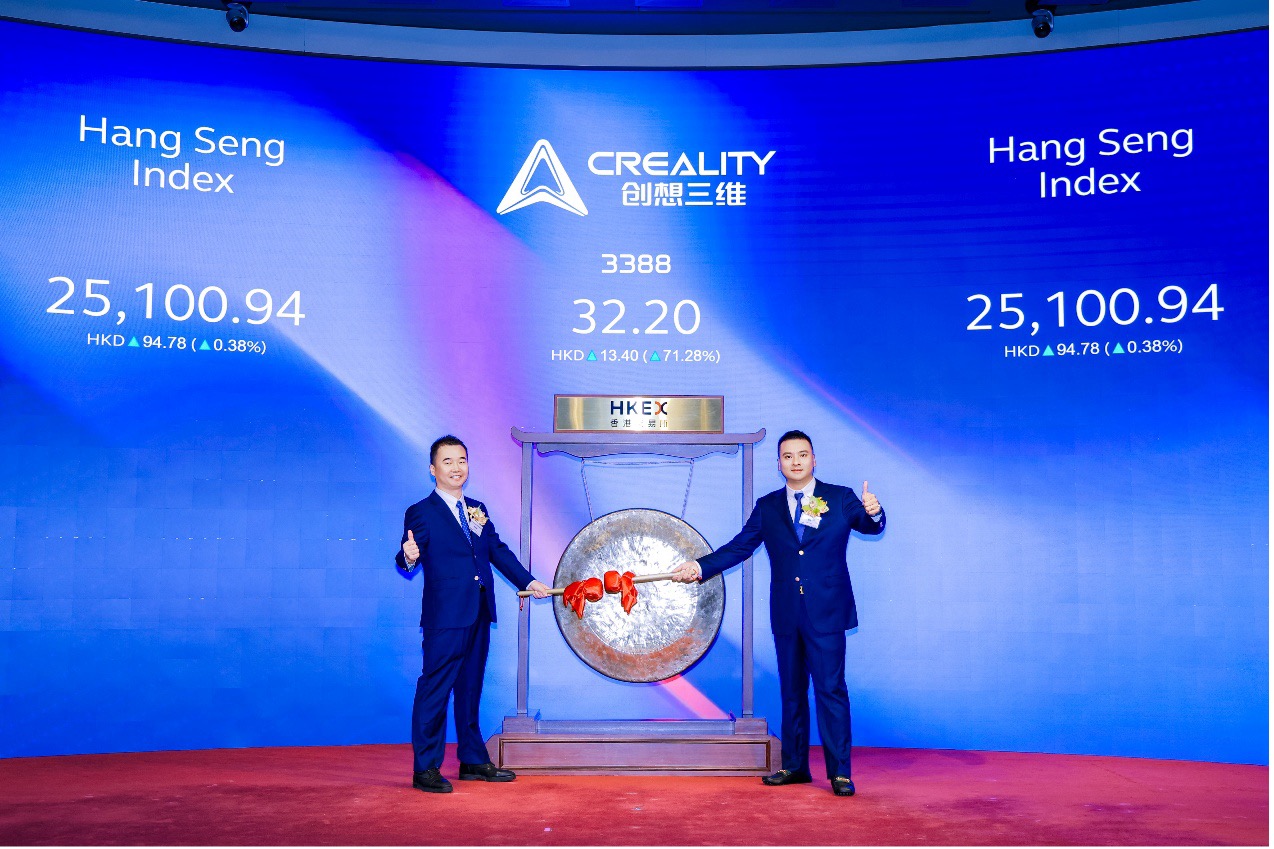
    Creality completed the period’s largest capital event. The Shenzhen consumer printer maker listed on the Main Board of the Hong Kong Stock Exchange on May 29 under stock code 3388, raising net proceeds of about HK$1.27 billion (roughly $162 million). The public offer was 3,829 times oversubscribed. The stock opened at HK$33.88, about 80 percent above its HK$18.80 offer price, before closing its first day up about 21 percent. It is the first consumer 3D printing company to list on the Hong Kong exchange.

    Creality goes public. Image courtesy of Creality.

    HeyGears raised a $44 million Series C, more than 300 million yuan, led by Legend Capital and Fortune Ventures. The Guangzhou firm, known for dental and jewelry resin systems, said it will use the funding to move into the consumer resin market, with a full-color system planned for the third quarter of 2026. About 70 percent of its revenue now comes from materials rather than printer sales.

    Sunlu Technology, the FDM filament producer, is moving from China’s New Third Board (NEEQ) toward a ChiNext IPO to fund a capacity expansion. Its IPO guidance was filed through sponsor Orient Securities; the filing did not disclose a specific investment figure.

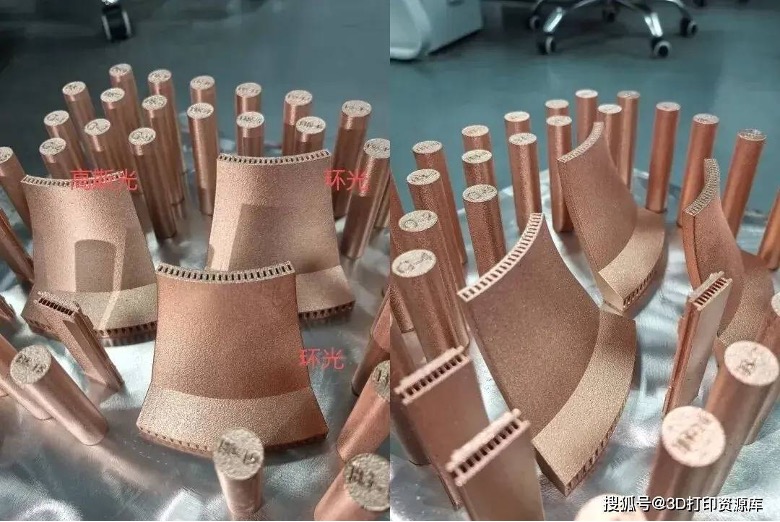
    Shenzhen Gongda Laser closed a Series C of several hundred million yuan to expand green-laser metal AM. Through its Xihe (希禾增材) subsidiary, which has more than 100 systems deployed today, the company plans to scale to 1,000 systems over the next three years, targeting copper thermal-management parts for AI compute hardware.

    Hardware and Materials

    Shenzhen Gongda Laser closed a Series C of several hundred million yuan for green-laser metal AM.

    Chinese metal AM specialists pushed on powder and systems. Tiangong International, the Jiangsu special-steel maker, is scaling up plasma-atomized titanium alloy powder toward a stated 3,000-tonne-per-year target through its Tiangong Titanium Crystal joint venture, with the first production phase already underway.

    Japan’s DAIHEN entered the metal printing business with ArcBuilder3D, a large-format wire-arc additive manufacturing system for structures such as ship propellers and rocket nozzles. The company said the wire-arc process cuts production cost to less than half that of powder-based methods, priced the system at 75 million yen, opened orders on May 29, and set a first-year sales target of 20 units.

    In Taiwan, Phrozen previewed the Sonic Mighty Revo 16K MAX, a large-format resin printer with a 14-inch 16K LCD, dual-zone heating, and an AI-monitoring camera. Shining 3D launched the OptimScan Q12 HD metrology scanner, rated at up to 0.004 mm accuracy.

    Hanbang Laser, under its HBD brand, partnered with Hebei Hanglun, the titanium-bike maker behind Hi-Light, to produce 3D printed titanium alloy bicycle frames on its HBD P400 systems, which were shown at TCT Asia 2026. Tuobao Additive (拓宝增材) opened a base in Zhejiang’s Qingshanhu Science and Technology City and said a single machine had run more than 500 hours of continuous LPBF printing using fully domestic core components. Unionfab extended its metal printing service to the United States, Canada, and Germany, pairing multi-laser SLM systems with an AI-driven process platform that it says cuts low-volume metal lead times from 30 days to as little as five.

    Aerospace and Defense

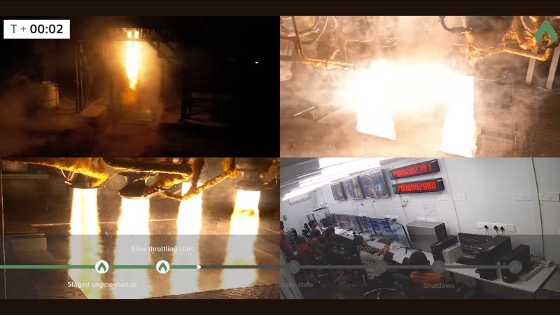
    Agnikul Cosmos fired a cluster of four 3D printed semi-cryogenic engines, a first for India.

    In Korea, DN Solutions contracted to supply its AM2CNC platform, which pairs metal LPBF with precision CNC post-processing, to defense components maker LDAS in Icheon to support prototype and serial production of precision firearm and defense parts.

    LinkSolution showed a mobile AM Fab system, a vibration-isolated container built around its EP-500 printer for field production of drone frames and discontinued spare parts; it was demonstrated with a Korean army infantry division earlier this spring. The EP-500, a PEEK-capable polymer FFF printer, carries a South Korean defense ministry “excellent commercial product” trial-use recommendation, supporting priority procurement.

    In India, Agnikul Cosmos fired a cluster of four 3D printed Agnilet semi-cryogenic engines, a test the company described as a first for India. The firing synchronized eight pumps, eight motors, and eight speed-control algorithms, validating multi-engine control for the reusable booster stage of its Agnibaan launch vehicle.

    Medical and Bioprinting

    Rokit Healthcare reported preclinical results from a kidney regeneration study with researchers at Brigham and Women’s Hospital, a Harvard Medical School teaching hospital, led by KIM-1 discoverer Joseph Bonventre. The omentum-based patch preserved or regenerated kidney function in 62.5 percent of subjects, reduced the area of renal fibrosis by 50.4 percent, and lowered the KIM-1 kidney injury marker by 42.5 percent. A domestic pilot clinical trial in CKD stage 3 to 4 patients is planned for the second half of 2026.

    T&R Biofab joined a 13 billion-won national project led by POSTECH and a 9.5 billion-won government-funded project to develop an AI bioink platform aimed at reducing batch variability for organ-specific bioprinting. Japan’s Instalimb took a J-KISS investment from Orthomos Investment, part of the Orthomos Group, and signed a basic agreement with the group company Alcare to explore co-developing 3D printed prosthetic sockets and orthotics.

    Graphy and KAIST published a study on a functionalized (acetylated) cellulose-nanocrystal-reinforced vat-photopolymerization resin, reporting up to a 173 percent increase in tensile strength at low filler loading for elastomeric medical-grade materials. In Singapore, Castomize commercialized a 4D-printed orthopedic cast and brace that uses a heat-moldable, skin-safe smart polymer in place of plaster, with regulatory clearance in Singapore and several other Asia-Pacific markets.

    Footwear and Consumer

    Kiprun KIPNEXT running shoe with an HP Multi Jet Fusion 3D printed midsole.

    Resin and powder footwear scaled up in China. TPM3D, also known by its Chinese name Yingpu (盈普), advanced an SLS PEBA process for mass footwear production and said its SLS PEBA shoes passed a 200,000-cycle dynamic-flex durability milestone without irreversible deformation. Kiprun, Decathlon’s running brand, entered the market with the KIPNEXT 3D running shoe, using an HP Multi Jet Fusion 3D printed midsole, claiming 75 percent energy return, and priced at HK$1,949 (about $250) in a limited release in China.

    Bambu Lab expanded retail distribution, placing its 3D printers in 64 Sam’s Club stores across China, and teased its A2L “Extra Large” model, which it revealed on June 1 with a 330 x 320 x 325 mm build volume.

    Construction

    In Japan, V3D Asia and Nakazawa Construction (中澤建設) ran a field trial of a gantry-type construction 3D printer in Unnan City, Shimane Prefecture, using locally sourced concrete and mortar; the company called it its first deployment in Japan. In India, Tvasta and 14Trees, the Amazon- and Holcim-backed venture, launched the Cedar construction 3D printer, whose AI companion is trained on thousands of mix combinations to optimize locally available material mixes.

    What to Watch

    • Chinese metal powder capacity is expanding on multiple fronts at once, from BLT’s jump toward 3,000 tonnes per year to Tiangong’s 300- to 3,000-tonne titanium ramp and Beifeng’s copper powder. Whether that capacity meets demand or outpaces it will show up in pricing over the next few quarters.
    • Korea’s defense AM programs have moved from research centers to stated mass-production targets. The open question is whether the Pangyo and Daejeon centers reach serial output and, if so, at what point it counts.
    • Creality’s debut sets a public-market benchmark for Chinese consumer AM. Where its proceeds and HeyGears’ fresh capital go, R&D versus overseas expansion, will signal how the segment reads its next growth phase.
    • Footwear is becoming a recurring AM application in China, with PEBA powder processes from multiple suppliers. The test is durability and cost at retail scale.


    Prepared by AMPulse | www.ampulse.online


  • The Longevity Gold Rush Could Become a Major Opportunity for Bioprinting

    Longevity has suddenly become one of the hottest areas in technology and healthcare. Billionaires, pharmaceutical companies, AI startups, and venture capital firms are pouring billions into the idea that humans may one day live not just longer, but healthier lives. And as the race to live to 120 heats up, one field may be the unexpected winner: bioprinting.

    Indeed, hidden inside that push to live longer and better lives is one of the most ambitious goals in modern medicine: using bioprinting to create human tissues, regenerative implants, blood vessels, and, eventually, fully functional organs.

    But let’s not get ahead of ourselves quite yet. Fully printed human organs remain a distant goal. Several startups have struggled to scale. Others have shifted focus toward tissue models, drug testing, or regenerative implants instead of the more irresistible science-fiction visions of replacement hearts and kidneys. But now, a much bigger trend may be changing the picture.

    Longevity.

  • Flashforge Unleashes Wax 3D Printer

    Flashforge has released a wax 3D printer. Wax printing was pioneered by Solidscape, a company acquired by Stratasys and later sold to Prodways before being shuttered in 2024. That firm’s wax jetting process lets you make wax patterns without changing anything to your forging and casting setup. Cost-effective and comparatively easy to use, these systems were used by jewelry artisans and in production. For many years, low-cost vat polymerization systems with cashable resins have expanded their market share. These systems have displaced larger DLP systems, such as Envisiontec’s Perfunctory line, and are increasingly displacing mid-range DLP and SLA systems as well.

    Meanwhile, for the design-oriented, Formlabs has a solution for you as well. All in all, this segment is a lively one, with competition ranging from $180 vat polymerization systems to $300,000 large units. Deskside, in the factory, in your shop, someone will have a solution for you.

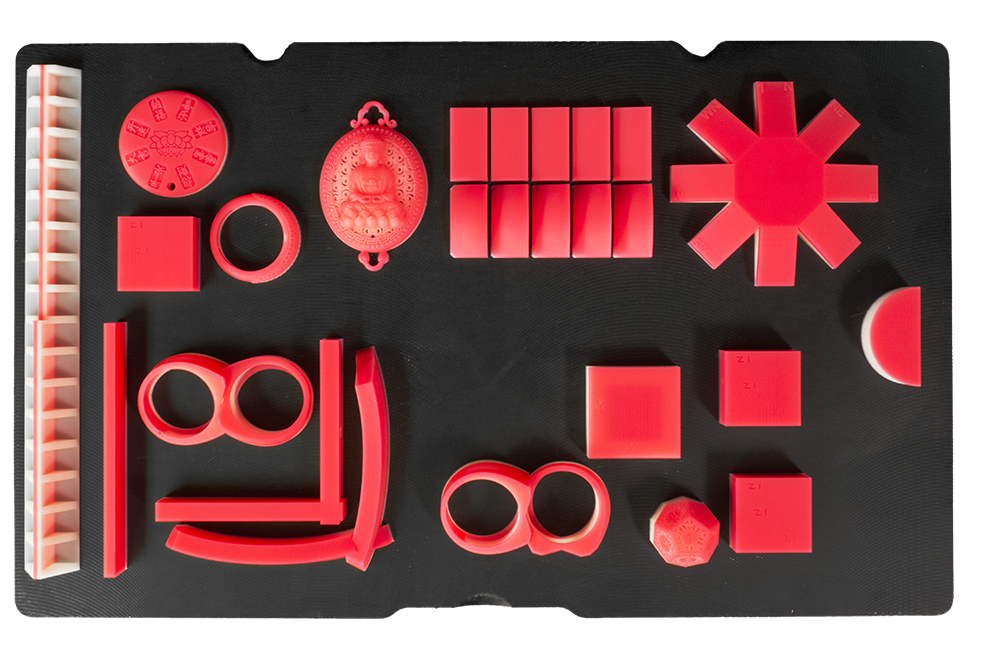
    Parts made with Flashforge’s wax 3D printer. Image courtesy of Flashforge.

    Also in this segment: filament printing, vat polymerization, and material jetting compete head-on. What’s more, there are multiple technology options, with you being able to burn out a regular polymer, for example, or a wax filament for material extrusion. For very detailed parts, a client can choose from an entry-level vat polymerization system, between DLP and SLA in all its variants, technologies such as Axtra3D, dedicated wax production units using material jetting, and now desktop wax printing from Flashforge. Ash-free burnout may make you look to wax, while workflow, cost, and machine size may make you look elsewhere depending on the part and part size.

    This release is a smart move by the company, as an optimized printer here could serve many jewelry stores, jewelry artisans, people new to jewelry, and even people making small metal casting parts for industrial use. Lost wax casting is a cost-effective method for producing jewelry and metal parts, generally in many materials. And in a small casting setup, this process can help you make strong, durable parts for many mechanical uses. This kind of move by Flashforge could really build out their presence in a great long-term niche.

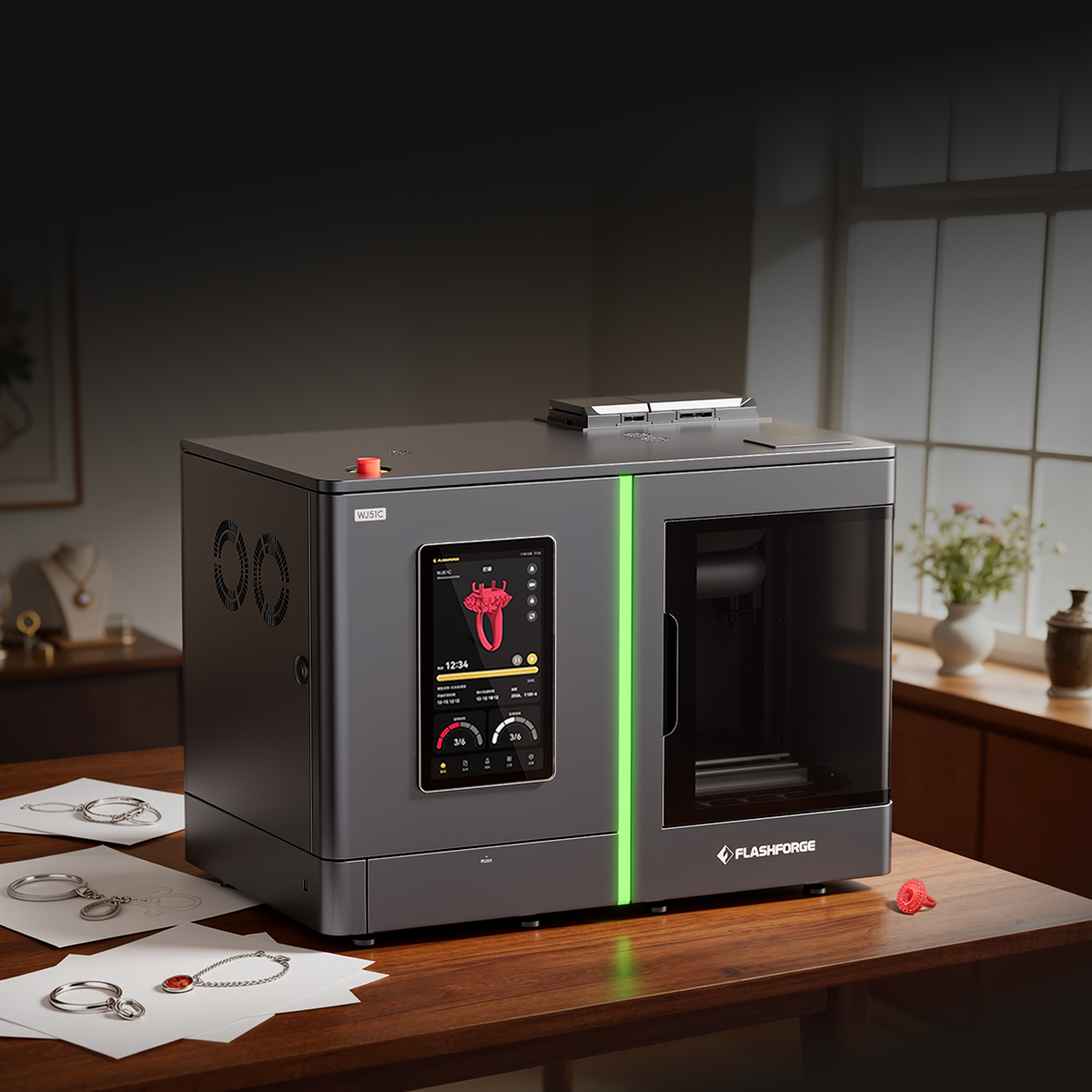
    Flashforge wax 3D printer. Image courtesy of Flashforge.

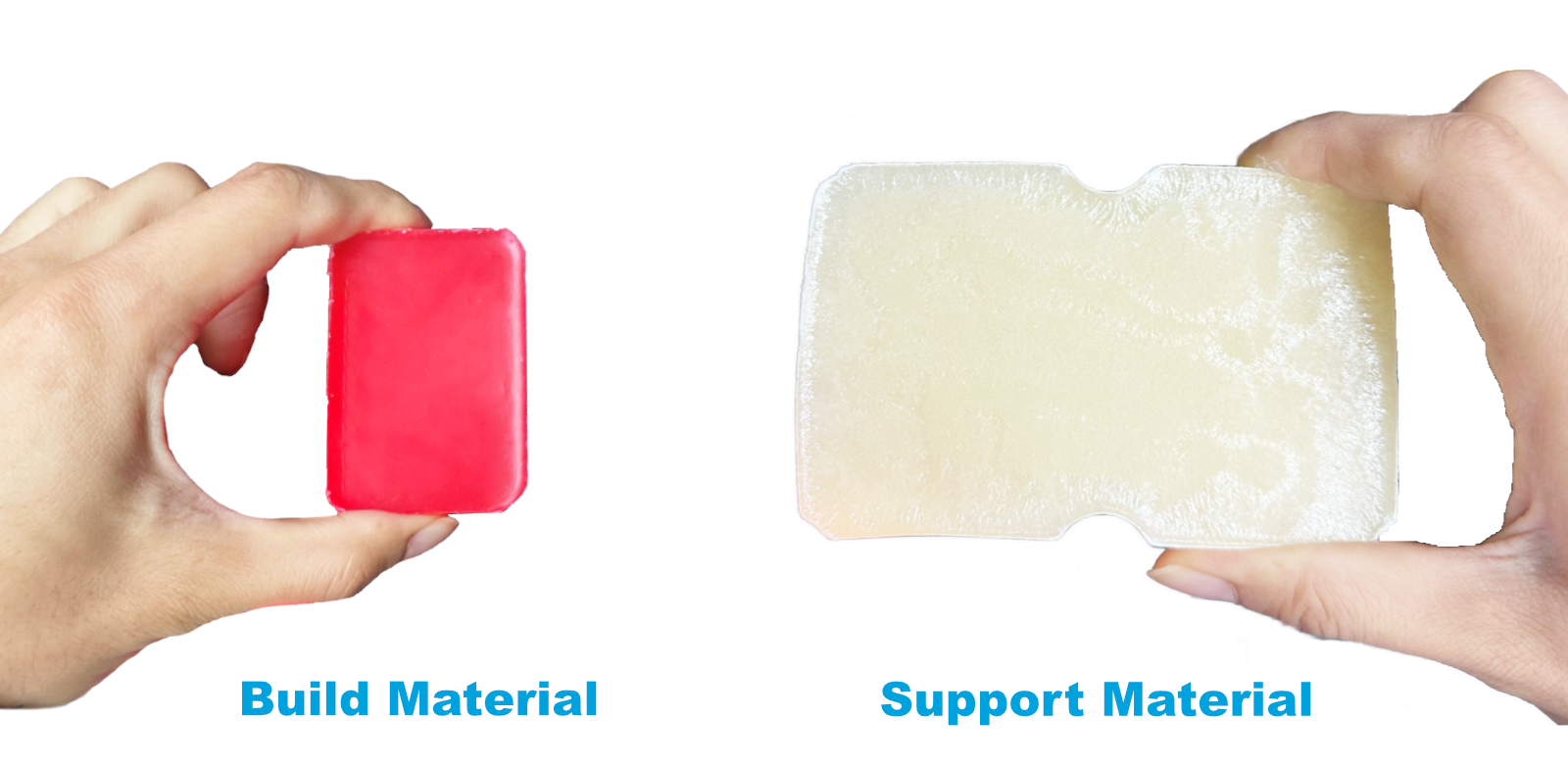
    The WJ51C is an 865×510×654 mm printer with a 235×138×100mm build volume that uses material jetting (MultiJet Printing). The 2900 × 2900 × 1700 DPI head has 2080 jets. The thinnest layer is 15 microns, and the firm says it can achieve a dimensional accuracy of ±0.04mm. It takes Flashforge’s own wax material and wax support, which come in blocks. I’m not sure if you can just pop other regular wax in here, but I’m sure that people will try. The idea behind wax blocks is that, rather than using large tanks of wax, individual blocks can be used for smaller print runs. The wax costs around 46 cents per gram, while the support costs 18 cents per gram. The support is dissolved with a solvent. The printer weighs 115 kg, so get a good desk. The company says the prints are very smooth, which is important for jewelry firms, as it saves them time and work later. The printer has camera monitoring in the build chamber. Flashforge isn’t releasing the printer’s cost, but a US distributor is offering it for $768 per month for 60 months, which would bring the total to around $35,000?

    The company says that the printer has been made for continuous operation and could consume up to 4 kilos of wax a month. This is an exciting solution for large jewelry shops that do a lot of custom work. For an individual, jewelry is pricey; they might opt for a Formlabs setup, which will be messier and require more work, with a higher cost per part. But with a lower initial investment, this may be much more palatable for them; the investment may be 8 times lower or higher. But, for some volume and in working with a few designers or jewelers, the WJ51C could be a very cost-effective solution indeed.

    I was secretly hoping for something even more affordable and smaller. If Flashforge kept the costs of wax, support, solvent, and the jetting head low, they could really grow in the large market of jewelry professionals. With gold prices expected to stay high and marriage on the decline, jewelry professionals will have to get creative in their business models, markets, and offerings, as well as their jewels. But, with industrial diamonds becoming increasingly popular among young people, there is also more room in budgets for more experimentation. Jewelers should do more to make creative, fun experiences around jewelry design. How about a romantic game where the two of you are separated and asked questions about each other, and a jewel emerges from that? Or a bachelorette party jewelry experience where you design a commemorative piece for the whole gang? Custom cufflinks for the boys, meanwhile, or a piece commemorating both your mothers. For friend groups or couples, jewelry stores could do more to make the experience fun, engaging, and memorable. The WJ51C could play a huge part in this kind of more emotive jewelry creation movement. Will it happen? What do you think?

  • Blue Origin’s New Glenn Explosion Comes During Major Manufacturing Push

    Blue Origin‘s orbital New Glenn rocket exploded during a hot-fire test at Launch Complex 36 in Cape Canaveral on May 29, setting back the company’s launch ambitions at a time when it is investing heavily to expand its manufacturing footprint. Videos shared online showed a large fireball and thick smoke rising above the launch complex. No injuries were reported, though the explosion may have damaged parts of the launch facility.

    The incident occurred just days after Blue Origin announced plans to spend approximately $600 million on a major expansion near Florida’s Space Coast. The project will add more than 800,000 square feet of manufacturing and logistics space and create hundreds of jobs as the company works to increase production of its New Glenn launch vehicle.

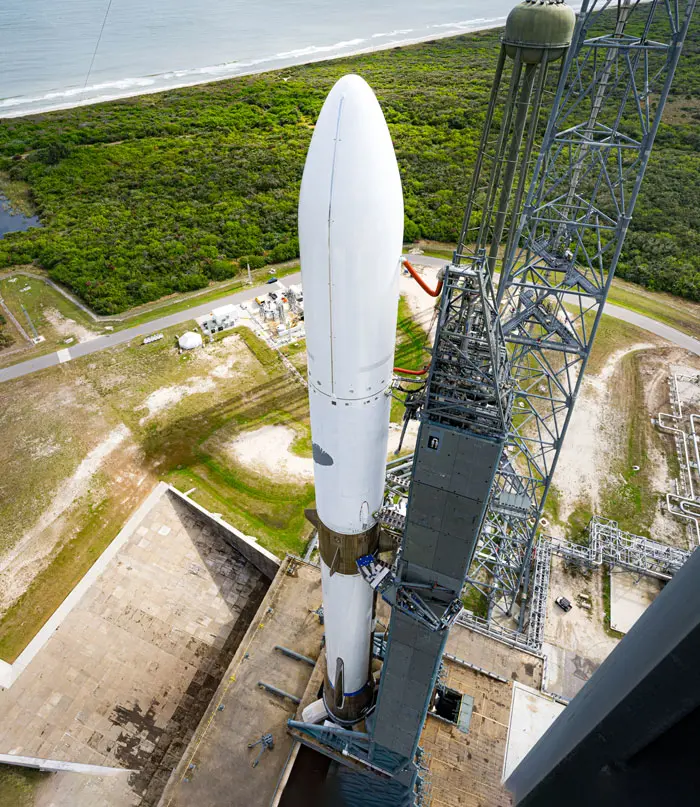
    New Glenn rocket. Image courtesy of Blue Origin.

    The setback also comes as Blue Origin takes on a larger role in NASA’s lunar plans. Earlier this month, NASA selected the company for additional moon-related missions as part of its broader Artemis program, which aims to return astronauts to the Moon and establish a long-term lunar presence. New Glenn is expected to play an important role in those efforts, including future launches connected to Blue Origin’s Blue Moon lander program. NASA has since said it is assessing whether the explosion could affect upcoming schedules and mission planning.

    The investment is part of Blue Origin’s effort to increase the number of New Glenn launches. The company has positioned the rocket as a competitor to other heavy-lift launch vehicles serving commercial, government, and lunar missions (particularly SpaceX’s alternatives), making production capacity increasingly important as demand for launches grows.

    While the cause of the explosion is still under investigation, the incident comes as Blue Origin is trying to increase production of its large New Glenn rocket. Like other space companies, Blue Origin is now facing the challenge of turning a rocket program into a production program. And that challenge is tied to additive manufacturing (AM).

    Over the past decade, 3D printing has become a core production technology within aerospace. Today, many launch providers rely on additively manufactured components in engines, propulsion systems, and spacecraft hardware. Blue Origin is one of them. The company has used metal additive manufacturing in its propulsion programs for years, particularly in the development and production of the BE-4 engine. The engine contains additively manufactured components and is produced at Blue Origin’s engine factory in Huntsville, Alabama.

    The company has also backed research aimed at advancing aerospace applications for additive manufacturing. Last year, Blue Origin partnered with Auburn University’s National Center for Additive Manufacturing Excellence (NCAME) to improve the 3D printing of copper alloys used in aerospace applications. These materials are often used in rocket engine components because they can withstand, and help manage, extreme temperatures.

    New Glenn rocket. Image courtesy of Blue Origin.

    While details about the incident are limited, the event comes at a time when launch providers are under a lot of pressure to increase production. That has helped drive adoption of additive manufacturing, which allows companies to use 3D printing to make engine parts and other hardware faster and with fewer pieces.

    Companies including SpaceX, Rocket Lab, Relativity Space, and Blue Origin have all incorporated additive manufacturing into their rocket programs. One reason is that 3D printing can simplify complex hardware. Parts that once had to be assembled from dozens of individual components can now be produced as a single piece. For rocket manufacturers, that can mean fewer assembly steps and a simpler production process, not to mention lower costs.

    What remains unclear is how much the explosion will affect Blue Origin’s schedule. Reports indicate the incident may have damaged launch infrastructure at Cape Canaveral, and NASA has said it is assessing the impact on upcoming programs. At the same time, there has been no indication that Blue Origin’s planned manufacturing expansion will change. Before the explosion, Blue Origin had been working to increase New Glenn launch frequency while supporting future NASA and commercial missions. Whether the incident results in weeks or months of delays is still not clear, but the company’s manufacturing expansion is expected to continue as planned.

  • Killer 3D Printing Applications: Tool Voids and The Hidden Opportunity in Tool Storage

    Sometimes, nothing is the product. Hand tools, electric tools, factory tools, surgical tools, gardening tools, hobbyist tools, firefighter tools, and many other specialized tools can be found all over the world. Storing and organizing these tools could be a significant opportunity for the 3D printing market. As the working population ages and many countries can not find enough workers, efficiency, ergonomics, organization, and speed will become more important.

    Shadow Boards

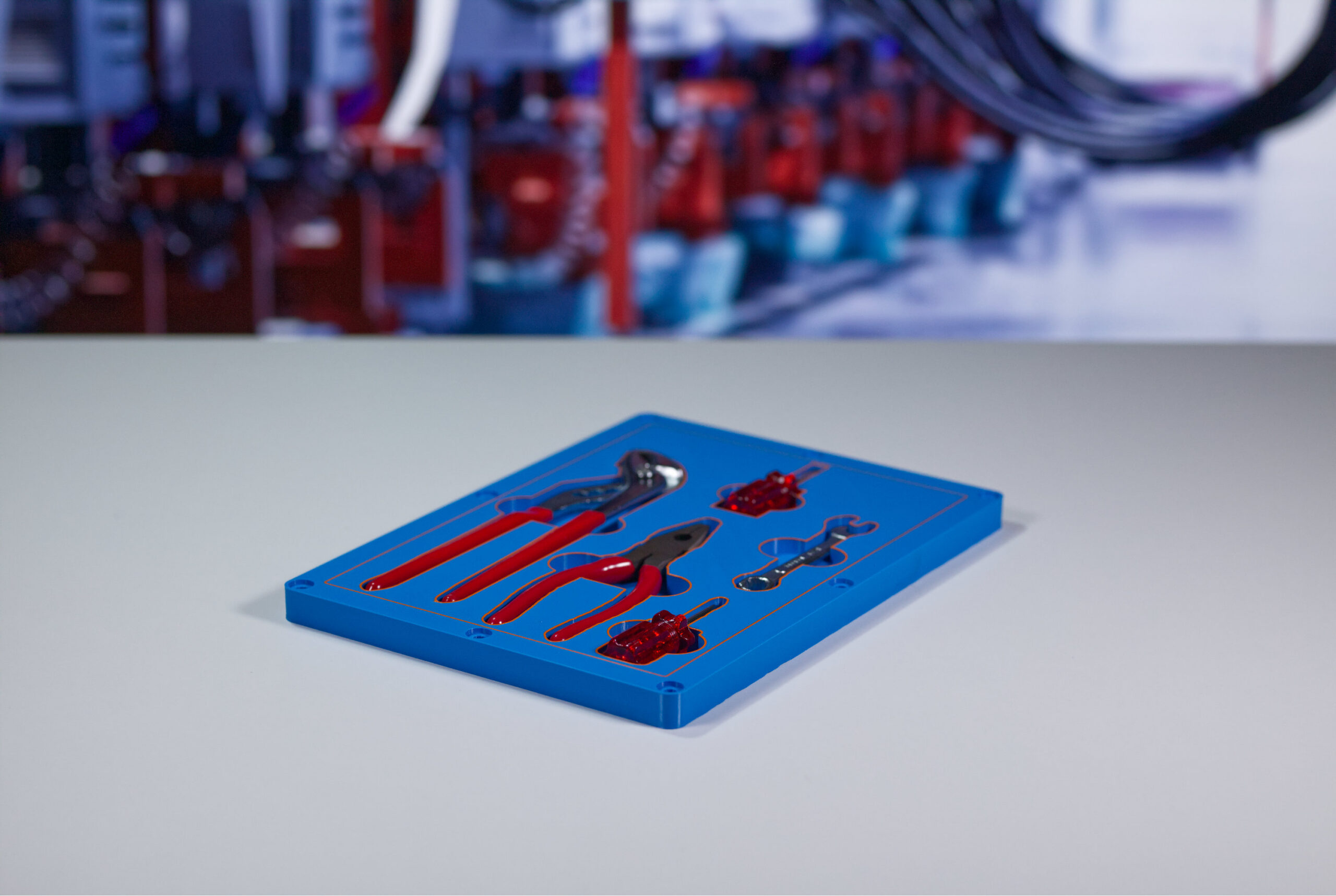
    Custom shadow board insert designed to organize and track hand tools in a workshop environment. Image courtesy of Trickle.

    Trickle offers a tool that will turn images of tools into shadow boards. That is a handy and quick way to make your own foam board. Foam boards or shadow boards are places where you can specifically place tools in a place made for them. You can have a shadow board on a wall, in a drawer, in a case, or more. Workplaces could be fitted out with them, or workers could have different boards for different operations. Some could be cut from foam with a box cutter, while others could be made with laser cutting or 3D printing.

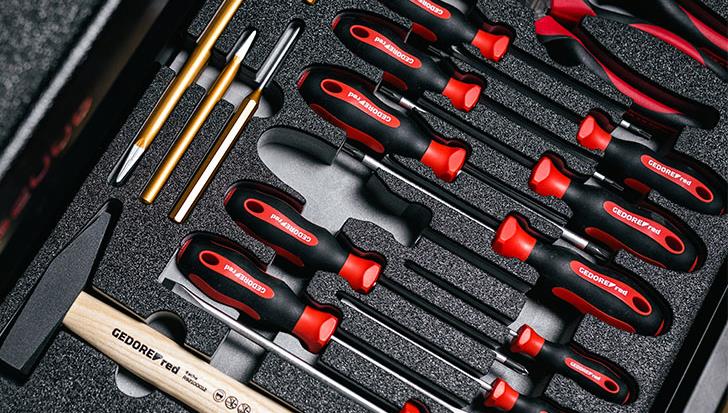
    With 3D printing, you can easily make shadow boards just like the regular kind. High-quality tool brand Gedore has a foam configurator; indeed, many of the industry- or task-specific kits they make come prepackaged in the foam that you can use to place them in a bigger tray or cabinet. The company is a proponent of the 5S method, which promotes organized and tidy workshops. Beyond saving time and preventing tool loss, this is also a critical safety practice. In any workshop, you can knock over a tool that falls on you or trip over something. And in aerospace and other areas, you absolutely can not leave a tool behind. So these foam boards and inserts are not just pleasing on the eye, they’re important. They can also lock people into your tool system and promote sales generally.

    Foam tool insert system from Gedore designed for organization, safety, and fast tool access. Image courtesy of Gedore.

    Kits and Cases

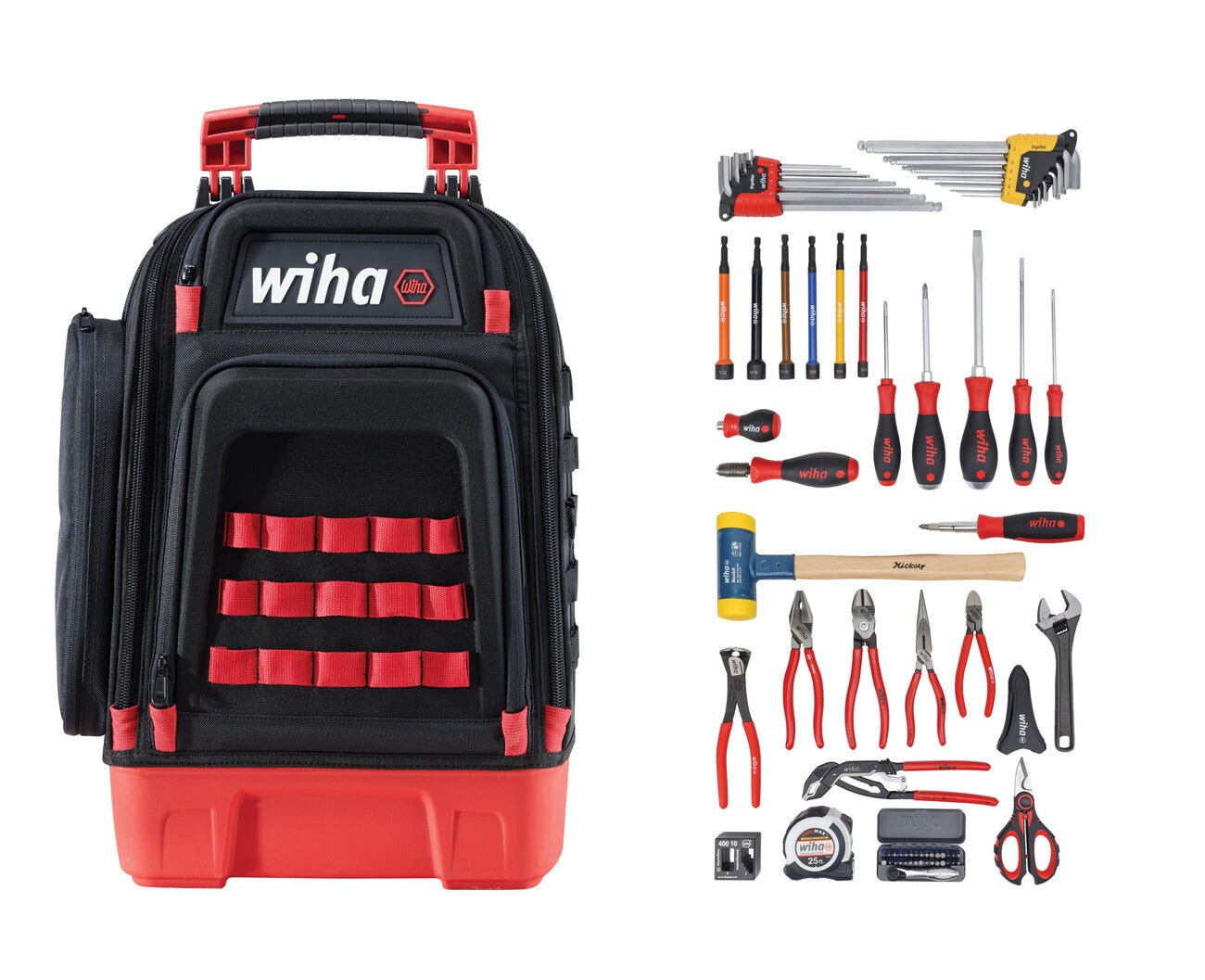
    Wiha electrician toolkit and backpack system designed for mobile repair and industrial work. Image courtesy of Wiha.

    But you can do more: you can make custom boards that you can take to the job site, the car, or a specific operation. Now it’s important to note that storage is already a big part of the tool business. People pay thousands for fancy Snap-On tool drawers, for example. New electricians or plumbers often buy kits like this one from Stahlwille or this e-mobility kit from Knipex. An apprentice, student, or new graduate can start their professional career with a case stocked with the most common tools they need. A wonderful gift, a good investment, and for Stahlwille, a great way to make someone a lifelong fan.

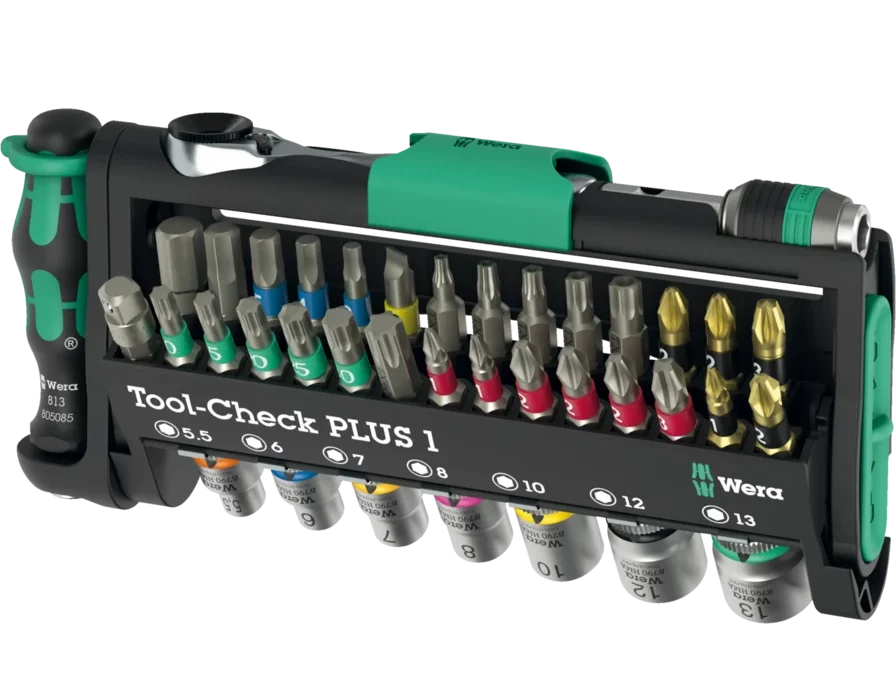
    Wiha offers excellent backpacks and pouches for electricians and industrial MRO, as well as specific ones for installing electric vehicle chargers. Wera sells super handy kits that are perfect for work in the home or as a repair person, giving you the most common tools for bathrooms or heating systems, for example. Hazet has tool sets for things like hybrid and electric vehicles. Wera also has the excellent ToolCheck, a case with a mini ratchet and screwdriver paired with bits and sockets. Cimco probably makes the world’s best electrical equipment and has cases centered on these tools.

    Explosive Ordnance Teams have extensive kits for the different bombs they deal with. There are tool kits for wind turbine inspectors or specific operations in a car mechanics shop. For dentists and oral surgeons, kits for particular operations let you have everything in one place. Complex surgeries can come with kits that contain tools, guides, and implants. Some kits have a strong poke yoke element, letting you see all the tools in order, step by step, along with the guides and implants in order as well.

    Wera Tool-Check compact ratchet and bit kit designed for portable repair and maintenance work. Image courtesy of Wera.

    Power Tools

    But whereas in the hand tool market there is a profusion of kits, electronic tool companies have made kits a central part of their businesses. I’m pretty sure that it all began with Festool. The German wood-centric manufacturer of high-quality tools was always about making workers safe and saving them time. Something that unites other high-quality companies such as Fein, Bosch, Hilti, and Makita. If you care about safety, worker time, and ergonomics, you’re going to make the drill safer. And then you’ll look beyond the drill to the dust workers breathe in and how they store their kits.

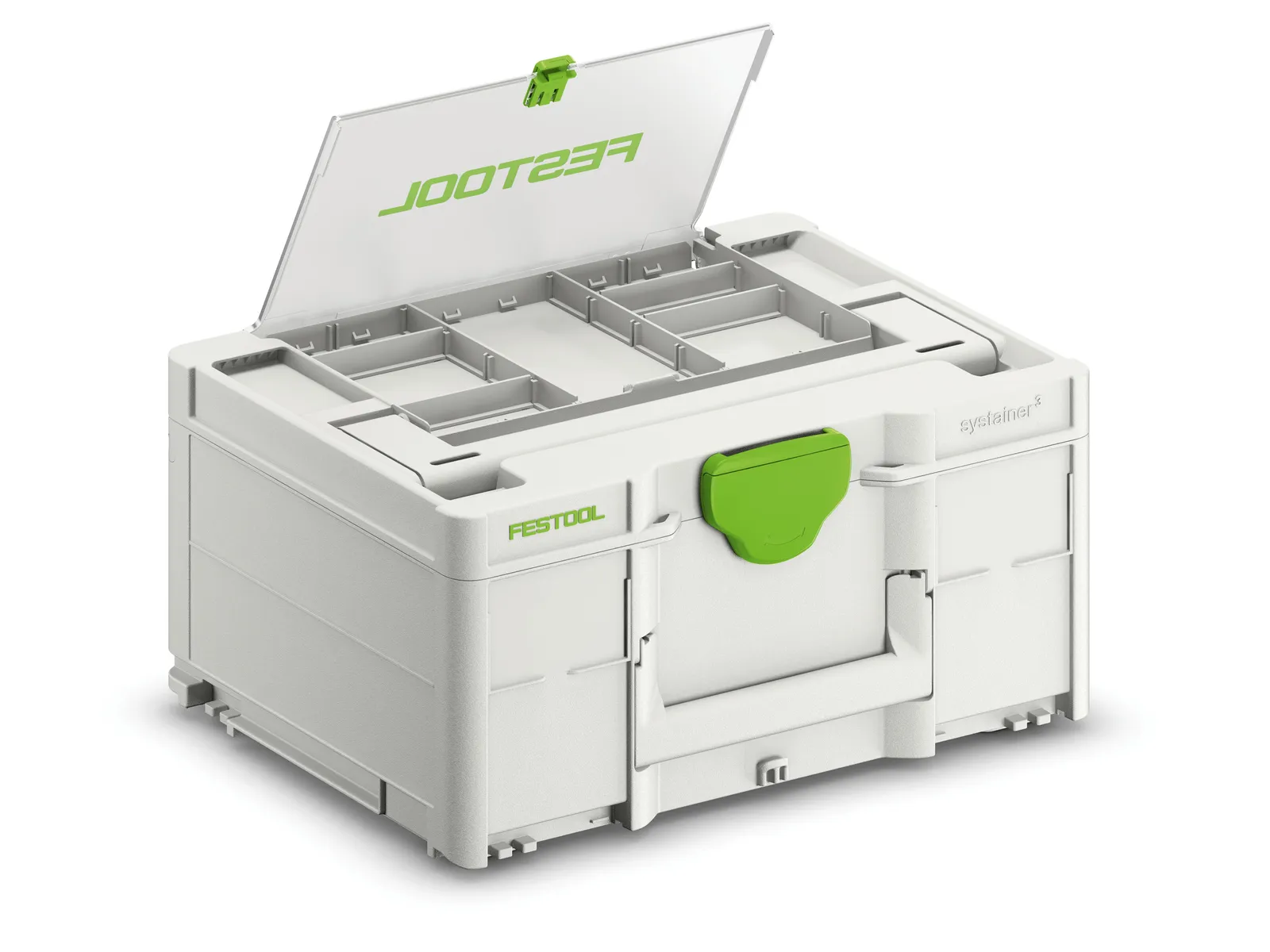
    Festool Systainer storage box system used to organize tools, accessories and job-site workflows. Image courtesy of Festool.

    Festool’s Systainer system family, made by a dedicated subsidiary of the same family-holding company, is a massive part of the firm’s offering. I guess that, on one level, the company found that people who like making cabinets also like organized storage, but there are myriad ergonomic and time benefits, as well as longer tool life and increased safety. The Systainer lets you click together vacuums, toolboxes, and more into one deployable unit. The high-quality boxes are relatively affordable (some of the hand tool brands sell similar boxes for twice as much). In addition to enabling easy storage, the system makes it easy to carry the firm’s dust extraction system parts to where you need to work, helping you work more safely. Since many of Festool’s tools come with integrated dust extraction, this compounds a key advantage the company has long pursued. So the tool container becomes a key part of making the worker safer and building on strengths to compound Festool’s specific advantages.

    Standards (kind of)

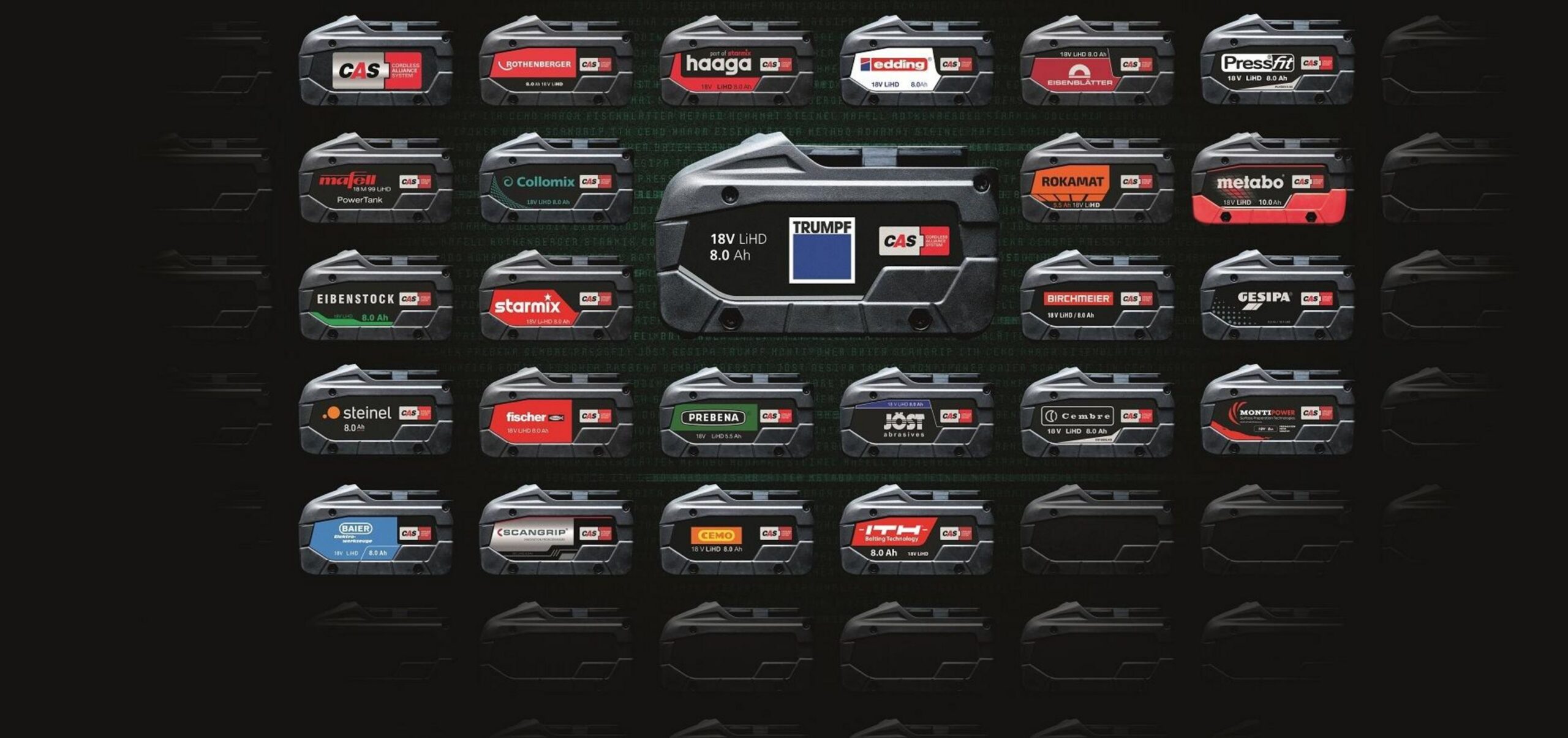
    The Cordless Alliance System (CAS) battery platform connects tools from multiple industrial brands through a shared battery ecosystem. Image courtesy of CAS / Metabo.

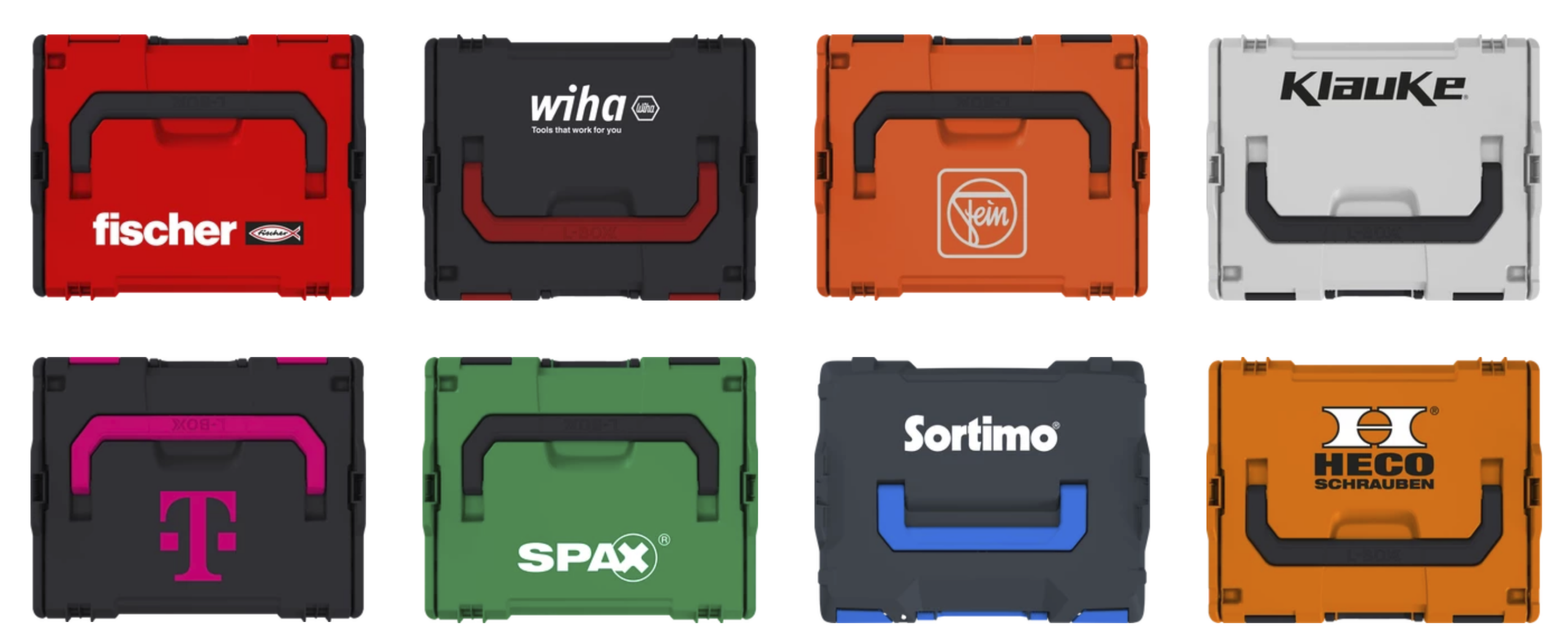
    As soon as the advantages of Festool’s strategy became apparent, everyone fell over themselves to work on better box systems. Bosch, the huge car components firm, turned to making electric tools to save itself in a downturn a 100 years ago. The spark plug and electronic systems giant is now also a huge maker of power tools. It partnered with van organization firm Sortino to create the L-Boxx a box standard used by Bosch, Fein, Wera, Wiha, Gedore, Knipex and other smaller more specialized firms.

    Different tool brands use the shared L-BOXX storage system developed by Sortimo and Bosch. Image courtesy of Sortimo.

    This allows these firms to use a standard to make their tools interoperable with others. Similarly, many power tool companies compete on a battery platform. Investing in one platform means you’re more likely to buy new tools from that platform, so you don’t have to buy all-new batteries or carry lots of different batteries and adaptors everywhere. Makita and Ryobi have had 20- and 30-years of backward compatibility with batteries, which has built loyalty to these quality workman and entry-level home-use brands, respectively.

    The CAS battery alliance, created by Metabo, unites companies such as the specialized Swiss cleaning tool company and Eibenstock a high-quality manufacturer of diamond core drills as well as drywall power tool specialists Mafell and rather unexpectedly erstwhile 3D printing firm and industrial laser and cutting giant Trumpf. I had no idea that they made power tools. An incompatible battery alliance, AMPshare, unites a lot of the same firms and is powered by Bosch, while another incompatible one, also powered by Bosch, is Power for All.

    I like Bosch’s power tools, but the company has changed its batteries numerous times, and the idea of being involved in multiple alliances is just silly. Sillier still is Stanley Black & Decker, which has the Craftsman, DeWalt, and Black & Decker brands, whose batteries are often incompatible even when the tools are very similar. Milwaukee has multiple incompatible battery standards within its own brand, while its owner, TTI, only offers incompatible batteries from Ryobi, Milwaukee, and Rigid. Here, as well, old Milwaukee designs are used for Rigid and Ryobi tools, but the resulting batteries are incompatible. Again, the batteries are meant to engender loyalty and keep you inside one system with expanding tools, so this kind of stuff is crucial to the market dynamics of the tool business.

    Screwing

    Now, at this point, you’re probably thinking, Joris, thank you so much for this deep dive into tool brands and the surprising pseudo-standards they operate under. It may be the right moment for me to disclose a slight obsession with tools. But know that this is nothing like the obsession tool firms have with real and pseudo standards. Imagine always having to make your screwdriver meet the standards, yet still work better than other screwdrivers. Imagine always dealing with bolts that are slightly better than competitors’, so you don’t round them — and then wondering if you should make your bits for everything, just your screwdrivers, just one family of screwdrivers, just wood, or also for electric drills and other people’s systems? There are pitfalls and opportunities everywhere.

    Many firms, therefore, ultimately decide to lock customers into their own ecosystems as well as the fasteners. But there are companies such as Makita that seem to consistently act to favor customers. On the whole, the tool shed is a confusing mix of standards and incompatibilities.

    Tool Time

    What we can do with 3D printing is use it as a universal connector set for all tools. We can make connectors, adaptors, and other tools that connect different tool systems. Now, please don’t do this for the batteries; this seems like a recipe for disaster. Aside from this, we can make many connectors to link bits and different systems.

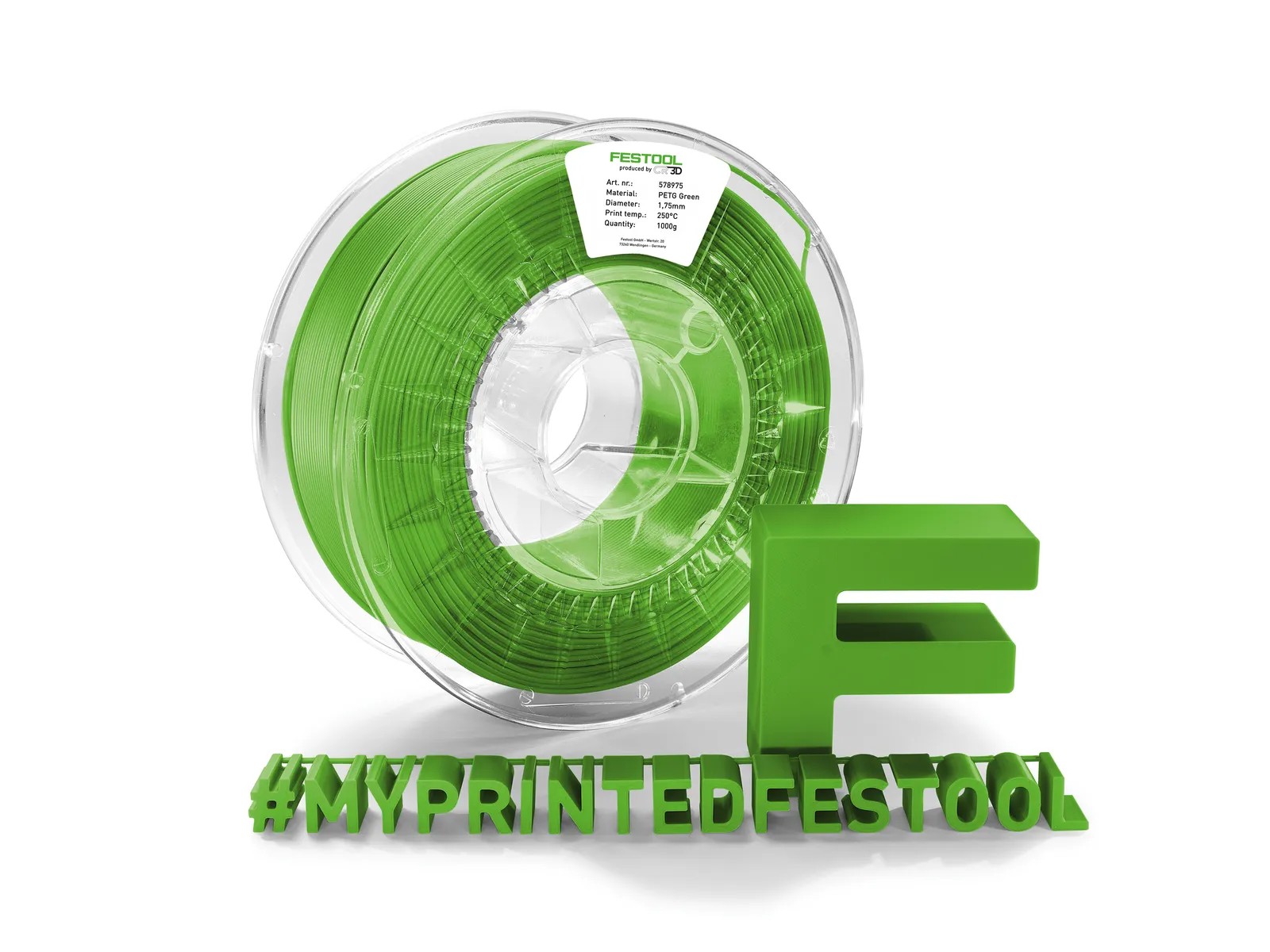
    Festool-branded 3D printing filament promoted through the company’s “#MyPrintedFestool” initiative. Image courtesy of Festool.

    At the same time, we can make tool cases, tool inserts, shadow boards, and case insets for custom tool sets. Toolkits for the tools you have, regardless of the system or manufacturer. We can also make inserts for particular cases. So if you have a call out for HVAC repair or a junction box problem, you can have the right tool insert ready to go. Or you can take the empty insert and use it to collect all the necessary tools so you don’t forget one.

    For bomb disposal teams or firefighters, we can give them cases for very specific events, uniting very different power and hand tools. We can also make cases optimized to keep tools safe in demanding environments. We can let you put your Festool drill in with your Wera hand tools, just like you want. We can include specific fasteners or organize the tools in the order that you use them.

    A case could be all the screwdrivers, in order of use, for dismantling the MacBook Pro, or all the tools, in order, for opening and closing a junction box. Two inserts could ensure you take everything for that job. One insert could track the tools from beginning to end, while reversing the order helps you close everything up again.

    If you’re an elevator mechanic servicing six main elevators, you could have six sets of bolts and bits for each elevator. On a ship, you can have inserts specific to servicing a particular engine or system. You can work with installation firms to make cases for HVAC technicians or boiler repair teams. You can make custom kits for one specific solar farm and another for the next one over.

    If you always use the same drill, chuck, and bit, the enclosure might be optimized for that setup. Whatever tool journey you’re on, whatever you need, 3D printing the voids, inserts, and cases for the tools will suit your needs. We can organize your tools for life in the lab, in the shop, at home, or on the road.

  • ORNL Improves Error Mitigation in Large Polymer Parts

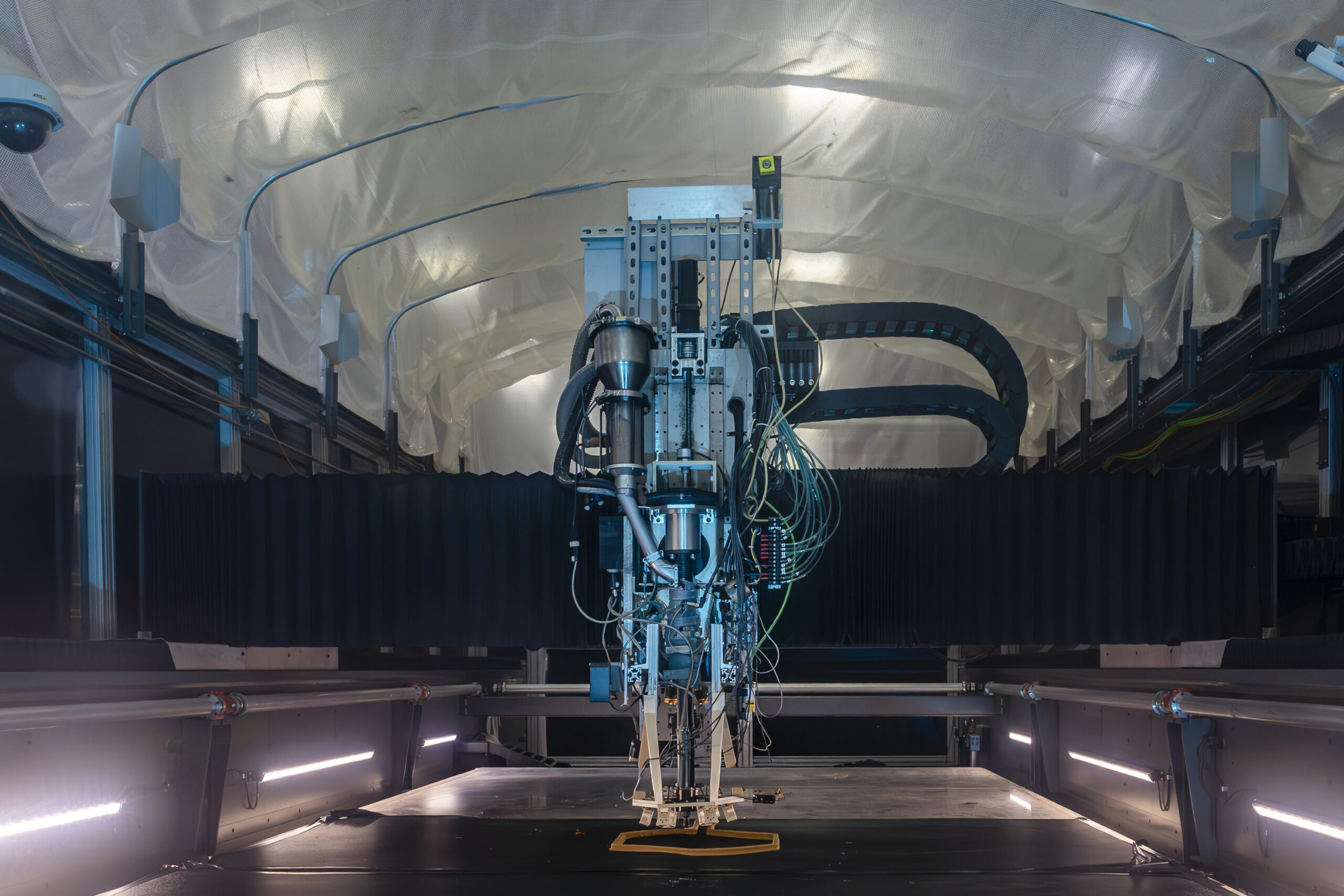
    Oak Ridge National Laboratory (ORNL) has commercialized a number of large-format 3D printing technologies. Now, scientists are working on error mitigation in large parts. ORNL is using six thermal cameras to analyze the deposition, hardening, and cooling behavior of the beads as they are deposited. Computer vision is then used to adjust the temperature and extrusion parameters in response to defects. The parameters can also be optimized to increase intra-layer bonding. I first saw this approach at Aibuild many years ago. The team there, at the time, just two people strong, pioneered adjusting parameters in real time to reduce and even correct errors.

    A test object is 3D-printed using a new system that monitors for errors and corrects them automatically during the manufacturing of large plastic composite items. Image courtesy of Carlos Jones/ORNL, US Dept. of Energy.

    The ORNL team says that they can do things like adjust when, “material that was about 30% too cool when the next layer was applied. Upon detecting this, the controller automatically increased the print speed to maintain the optimal temperature for layers to fuse correctly, demonstrating real-time correction in action.” The control unit can adjust temperature variants to a few degrees. The AI model does not have to be trained on new parts per se, but it should work for any printable part. In 2024, ORNL published a paper looking at this approach and later made it so that the system could adjust within seconds. Now the correction happens in real time.

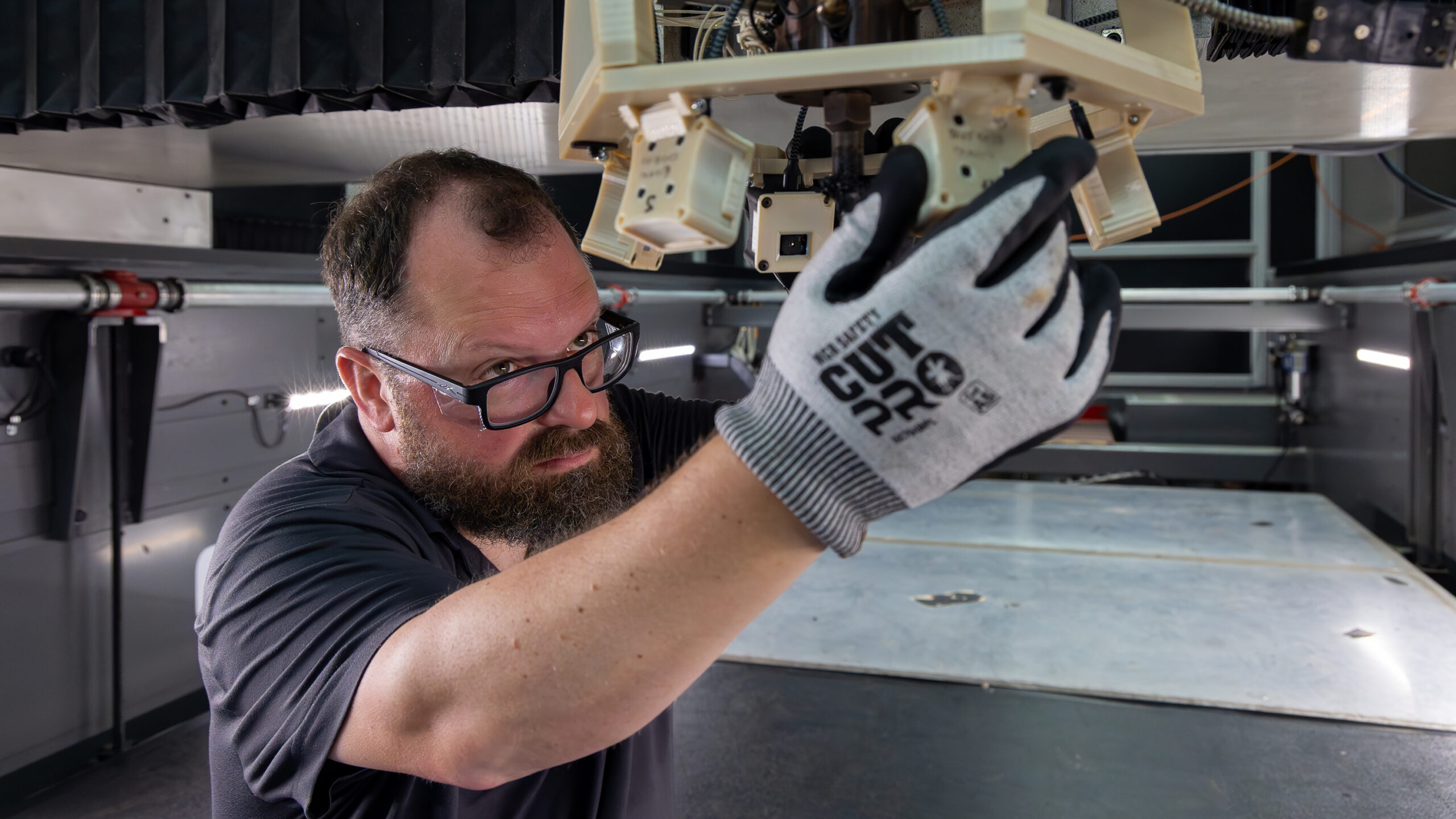
    ORNL’s Kris Villez adjusts thermal cameras incorporated into a big-area 3D printer before testing a new technology for error recognition and correction. Image courtesy of Alonda Hines/ORNL, US Dept. of Energy.

    Lead Researcher Kris Villez explained,

    “There is a vast opportunity space to make these machines more intelligent and more responsive. In the end, we’d love this to work like baking bread: You set the oven temperature, put in your dough, and return when the timer goes off to see if it’s done. You don’t have to monitor the oven temperature in real time throughout the baking.”

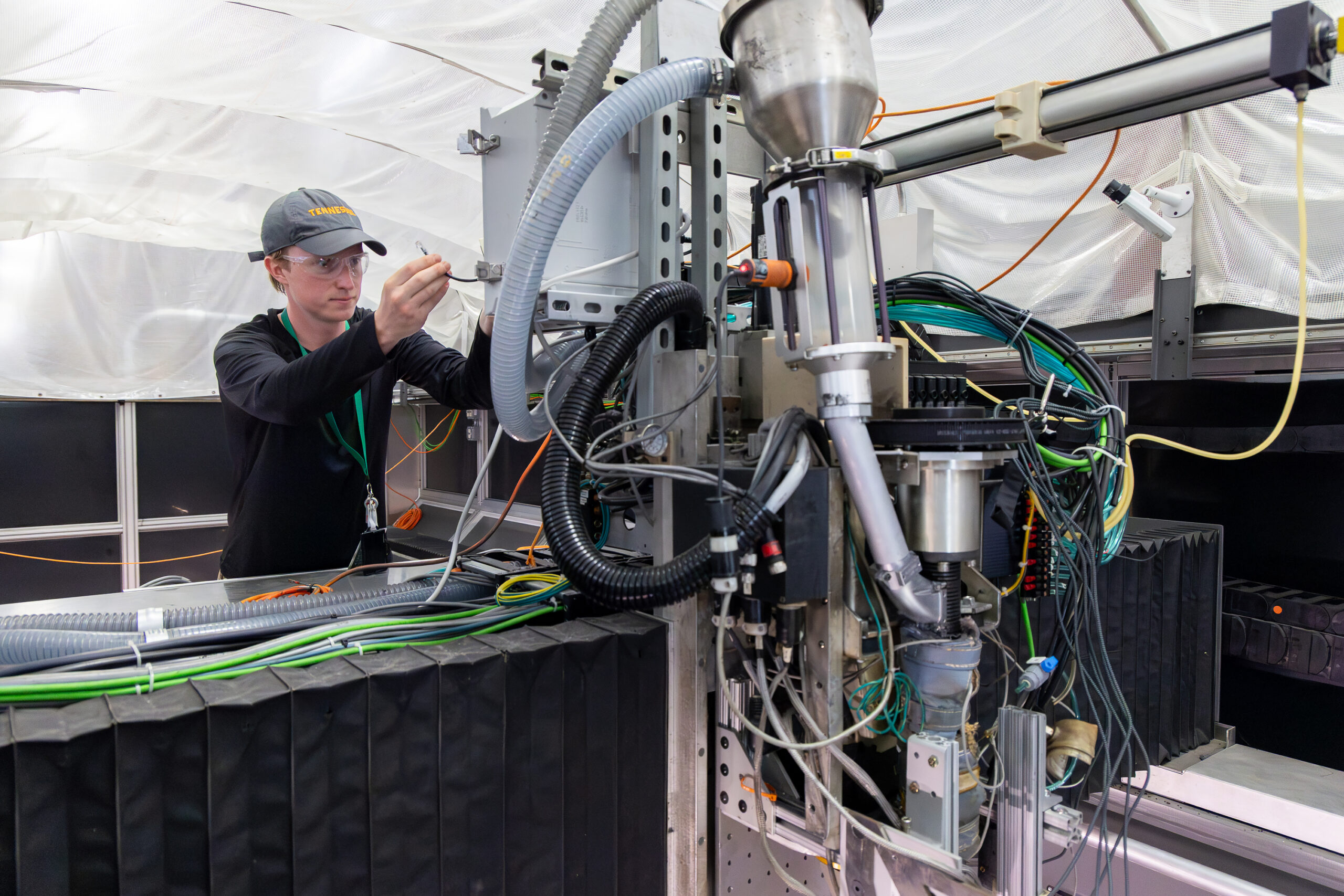
    University of Tennessee graduate student Chris O’Brien sets up the 3D-printing apparatus at ORNL to test a new sensing and control technology for creating large objects with plastic composite. Image courtesy of Alonda Hines/ORNL, US Dept. of Energy.

    Large-format polymer 3D printing has been important to the US for decades now. On the one hand, it can be used for formwork for construction. But it can also be used to make many boats very quickly and at much lower cost than is done now. In 2021, we said that,

    “The U.S. is almighty on the sea, but automated construction of autonomous sea vehicles can negate American marine power. The U.S. has hundreds of billions tied up in its carriers, and a fleet of polymer UUVs or surface vehicles could negate this force. In the Persian Gulf, Iran already routinely menaces much more sophisticated U.S. ships with its polymer gunboats.”

    We looked in May of 2022 at the potential and importance of 3D printed drone boats, and we said then that this capability being offered to Ukraine,

    “A curiosity in a laundry list of weapons given to Ukraine, this may seem like small beans compared to Howitzers and other weapons. However, this is an incredibly significant move. Russia should have near-unrestricted access and dominion over the Black Sea. However, due to the specter of these drones, it does not. It would take many millions of dollars in funds and thousands of individuals on conventional ships to make Russia worry about its position in the Black Sea. It would also take many months of training for Ukrainian sailors to learn to operate the high-tech Christmas trees that are contemporary frigates and other warships. It would take many years to build new surface ships as well. With conventional weapons, there is no solution or path to a solution whereby Ukraine would be a credible threat to the Russian Navy. But, with these new expendable drones, it is.”

    The first Russian ship was sunk in October of that year, and now Ukraine has disabled around a third of the Russian Black Sea fleet with these drones. Ukraine, a country without a meaningful Navy, has come close to neutralizing the once mighty Russian fleet in the Black Sea with these drones. So 3D printed drone boats are not a luxury or a cool science project, but a war-winning weapon. And as we argue in the Hilux for the Seas post recently, the US could and indeed must turn to 3D printing to develop these drone boats at scale.

    At the same time, 3D printing of formwork for energy installations, as well as for missiles and hypersonics, is very important. A lot of the roads towards a functioning US military go through 3D printing, and getting large-format polymer right seems more important every day.

    The growing connection between drones, defense, and additive manufacturing will be a major focus of the Additive Manufacturing Strategies UAS: The Present and Future of Drone Manufacturing event on June 30, 2026, where industry leaders will discuss how 3D printing is reshaping drone production and deployment.

  • UAS Additive Strategies: Register by June 30 to Learn About the Hottest Topic in 3D Printing

    Last week, drone stocks surged on news that the Trump administration is considering a massive investment in the US unmanned aerial vehicle (UAV) industry. Earlier in 2026, the release of the US FY 2027 defense budget request revealed that the Defense Autonomous Working Group (DAWG), a unit launched last year to accelerate adoption of all things drone-related for the DoD, could be in line to receive the largest single-year increase in funding of any defense program in US history.

    Meanwhile, in 2025, Ukraine reportedly produced 4 million combat drones, an absurd increase of over a thousandfold from the first year of the Russian invasion. This is not only the largest military drone production capacity possessed by any nation globally; it is more drone production capacity than all of the NATO countries combined.

    Even beyond the additive manufacturing (AM) industry, the discourse surrounding the topic has started to catch up to the fact that 3D printing is already an irreplaceable element within the drone supply chain. Yet all indicators seem to be signaling that the story of AM for the drones market has only just begun to be written.

    Nevertheless, despite the fact that this market boom is still in the early stages, the situation is expanding and evolving so quickly that it seems virtually impossible to stay up-to-date. That’s why 3DPrint.com and AM Research are presenting UAS Additive Strategies: The Present and Future of Drone Manufacturing, a live webcast that will take place on June 30 from 11 AM to 2:30 PM EST. Register before June 18 to gain access for only $49; after that, the price goes up to $89.

    UAS Additive Strategies 2026

    Sponsored by EOS and HP, two of the most important industrial AM OEMs in the UAV space, the webinar features a combination of talks and panel discussions from AM experts across the drone value chain. In addition to a keynote from EOS’s Business Development Manager for Polymer, Dave Krzeminski, and market insights from AM Research’s Scott Dunham and Joris Peels, as well as from myself, panelists include prominent industry professionals such as Steve Fournier from General Atomics Aeronautical Systems Inc. (GA-ASI) and Ian Muceus, CTO of Firestorm Labs.

    While I began by talking about government funding and wartime learning on-the-fly, it’s important to keep in mind that public spending and combat mobilization may be the factors most responsible for sustaining the 3D printed drone boom now. However, the broad-sweeping technological and economic structural shifts in play suggest that the private sector hasn’t even scratched the surface concerning the purely commercial civilian applications that should someday be just as vital to driving both UAV production and AM — and the combination of both — in the future.

    The landscape is overwhelming, but it’s just going to get more daunting, so there’s no better time to start than right now, and 3DPrint and AM Research are here to simplify the learning curve. Register today!