• Himed and Adva Cera to Work on Bioceramic Medical Devices

    Himed, a provider of calcium phosphate and hydroxyapatite, has partnered with Adva Cera. Adva Cera is not a spell to make you stop moving in the Harry Potter universe, but rather a 3D service that uses equipment from Lithoz and Prodways Ceram to produce ceramic parts. The two firms will work on calcium phosphate spine, orthopedic, and dental implants.

    Himed and Adva Cera from idea to implant using Himed’s Bioceramics Center of Excellence and Adva’s 3D printing capabilities. This kind of setup could be very beneficial since it lets people quickly lean on existing expertise in medical device manufacturing using additive. Amnovis does a similar thing for metal additive, and this can mean that a lone inventor could get her device made by one partner. 

    The companies think that this approach will be faster and make going from initial articles to production implant easier. This kind of approach also fits into an asset-light model whereby, instead of building up a lot of 3D printing expertise and investing in machines, small and lean firms instead focus on inventing, funding, and marketing a device. This concentrates the needs of an implant firm and allows them to excel where they need to be rather than trying to be a mini DeDuy.

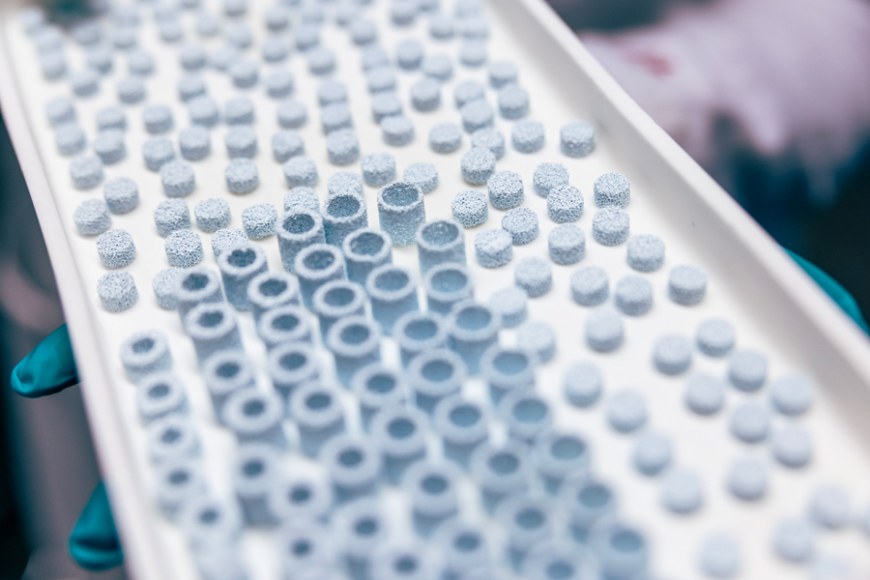
    The duo hopes that they can make calcium phosphate implants that bond to bone. The company believes that “ceramic additive manufacturing has now matured to the point where complex internal geometries with controlled porosity and intricate lattice structures can be printed reliably, and the market is responding.”

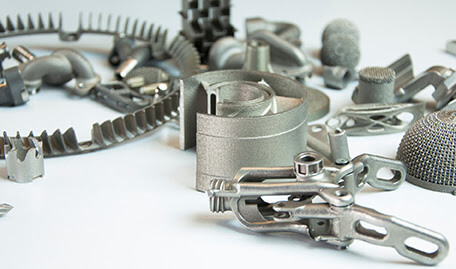
    A 3D printed bioceramic implant manufactured using calcium phosphate materials. Image courtesy of Himed and Adva Cera.

    Himed President Craig Rosenblum stated,

    “Customers who come to the Bioceramics Center of Excellence now have a clear production pathway. Partnering with Adva Cera means two leading companies can move customers from a fully optimized 3D-printed implant design into qualified, production-scale ceramic additive manufacturing with the regulatory rigor that goes with it. Their serial production capabilities will allow our customers to bring an exciting new generation of implants to patients.”

    In addition, Adva Cera President Hugh Roberts explained that,

    “Himed has built something immensely valuable for the medtech industry: a center where customers can develop bioceramic technologies with the help of a highly specialized team of material scientists. We’re excited to be the scale partner for that work. Our team is set up for serial production of advanced ceramic components, and our near-net-shape capabilities mean parts go quickly from the build plate to finished components. Partnering with Himed is a natural fit.”

    This is a good development for the industry. More systems integrators, facilitators, and platforms for scaling will all be force multipliers for our industry. Only a very few companies can afford to adopt additive entirely on their own. For some firms, going solo is worth the effort, as it would let them stay ahead of the competition in rocket engines or speed up time to market in the long run. But for other firms, the money and time spent learning additive would be better spent elsewhere. For these firms, good partners that can help them qualify, industrialize, and scale are a godsend. And for the rest of the industry, these firms can bring in more money, approvals, and parts than many people working on their own. It would be smart for firms to explore being a similar partner for defense, marine, energy, and medical firms.

    Ceramics is a growing area. There are many possibilities enabled by hard, light-resistant ceramic materials. And calcium phosphate and hydroxyapatite are materials that are familiar to the body. Bone or near-bone implants, or some kind of regenerative, cell seeding, or permanent implant, could very well work better in these materials. Matching the strength and elasticity of bone, in all its different forms, is difficult, of course. But Cerhums’ 3D printed grafts show that an awful lot is possible. As we saw at the Ceramitec show, recent progress by Sinto Ceram, Lithoz, and others is pointing to an expanding and growing number of applications in medical implants. Himed and Adva Cera could be well placed to capitalize on these in the years to come.

  • amsight & toolcraft Improve AM Quality Control for the Semicap Market

    As it is in the habit of doing at least once per generation, the semiconductor capital equipment (semicap) market is currently in the process of reinventing itself. This is too complex a process to delve into here with any real detail, but the relevant point is that the additive manufacturing (AM) industry has more than one way to benefit from that transition.

    Perhaps the primary factor involved is the uncertainty surrounding relative demand strength for the most expensive equipment (e.g., High NA EUV from ASML) versus the older generations of systems (DUV, a market that ASML also dominates, but doesn’t exclusively control). It’s highly likely that a much larger proportion of DUV machines will be in the mix for far longer than was anticipated at the beginning of the decade, which is a blindspot that should work to the advantage of AM companies. For instance, as I anticipated in my 2024 AM Research report, “3D Printing for Semiconductors,” the market for refurbished lithography machines continues to grow rapidly, which incentivizes semicap suppliers to turn more towards AM for replacement components that are more difficult to source than they used to be.

    The main challenge there is that the semicap market demands a level of precision unmatched by virtually any other industry, so it’s no easy task to bring new suppliers into the fold. The German company amsight, a software provider that spun-out of Fraunhofer and specializes in comprehensive, automated QC solutions for PBF users, is in a unique position to accelerate the onboarding of new suppliers for the semicap market.

    amsight demonstrated that earlier this year via a case study on its work with Melotte, a Dutch service bureau, surrounding efforts to reduce the company’s need for CT scanning in its PBF workflow. And amsight just announced similar work for the German digital manufacturing specialist toolcraft. While Melotte and toolcraft aren’t new to semicap, the fact that amsight is streamlining the production processes for companies with existing backgrounds in the market illustrates its potential to help newcomers start from scratch on the right footing.

    By cohering all of toolcraft’s AM work into a truly unified digital ecosystem, amsight enables toolcraft to stay ahead of any potential trouble spots. With such demanding customers, manufacturers like toolcraft can’t afford to choose between maintaining quality and scaling up capacity. The incorporation of amsight’s platform prevents them from having to make that choice.

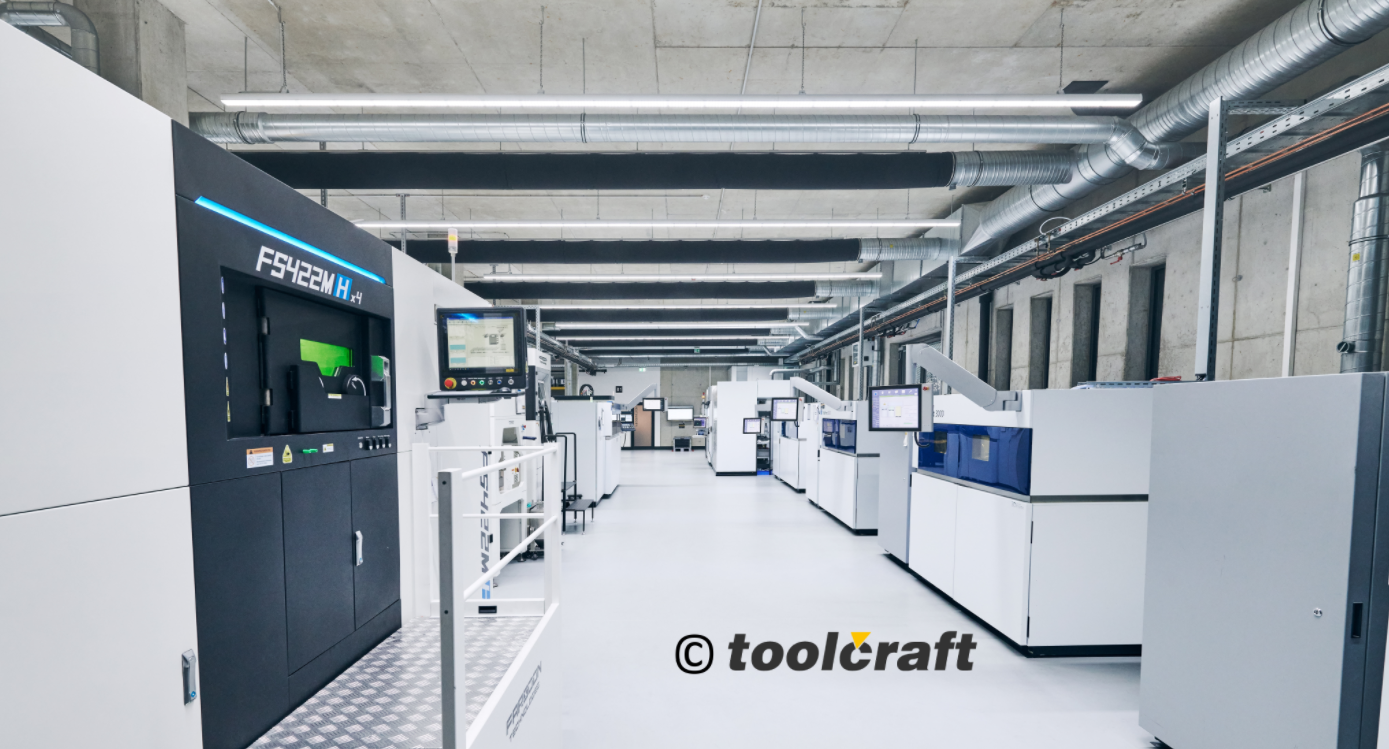
    Industrial Additive Manufacturing at toolcraft AG. Image courtesy of toolcraft.

    In a press release about toolcraft’s adoption of amsight’s QC platform, Christopher Hauck, Executive Board Member for Technology and Sales at toolcraft said, “Semiconductor-related manufacturing environments demand extremely high levels of consistency, documentation, and process understanding. We see amsight as a partner that understands the realities of industrial AM production and the importance of connecting quality data in a meaningful and scalable way.”

    Tim Wischeropp, the CEO of amsight, noted, As AM scales into highly regulated and precision-critical sectors, quality management can no longer remain fragmented across spreadsheets and disconnected systems. This collaboration with toolcraft demonstrates how manufacturers are moving toward integrated, data-driven quality strategies that support both operational efficiency and long-term scalability. It also shows toolcraft’s commitment to strengthen its leading position as a reliable contract manufacturer for regulated industries.”

    Obviously, toolcraft’s opportunity to benefit from its amsight adoption isn’t limited to the semicap market. We’re living in a resurgent era of ‘national champion‘ dominance, and the EU, while technically not a nation, desperately needs to ensure the success of what might be called ‘common market champions’ (Airbus is the original example of this).

    If there’s one thing European industry is good at, it’s making precision machinery. The continent would do well to cultivate a bunch of mini-ASMLs from its leading machine tool OEMs.

    If amsight can automate the QC processes involved in manufacturing high-level semicap parts, there’s no reason it can’t do the same for the machine tool industry broadly. They even have an excellent opportunity to help the AM industry eat its own dog food by providing PBF parts for industrial 3D printers.

    In this world of realpolitik-on-steroids, exploiting the pressure points of technological leverage is the best form of self-defense.

  • Bambu Launches A2L: What the New Printer Reveals About Its Strategy

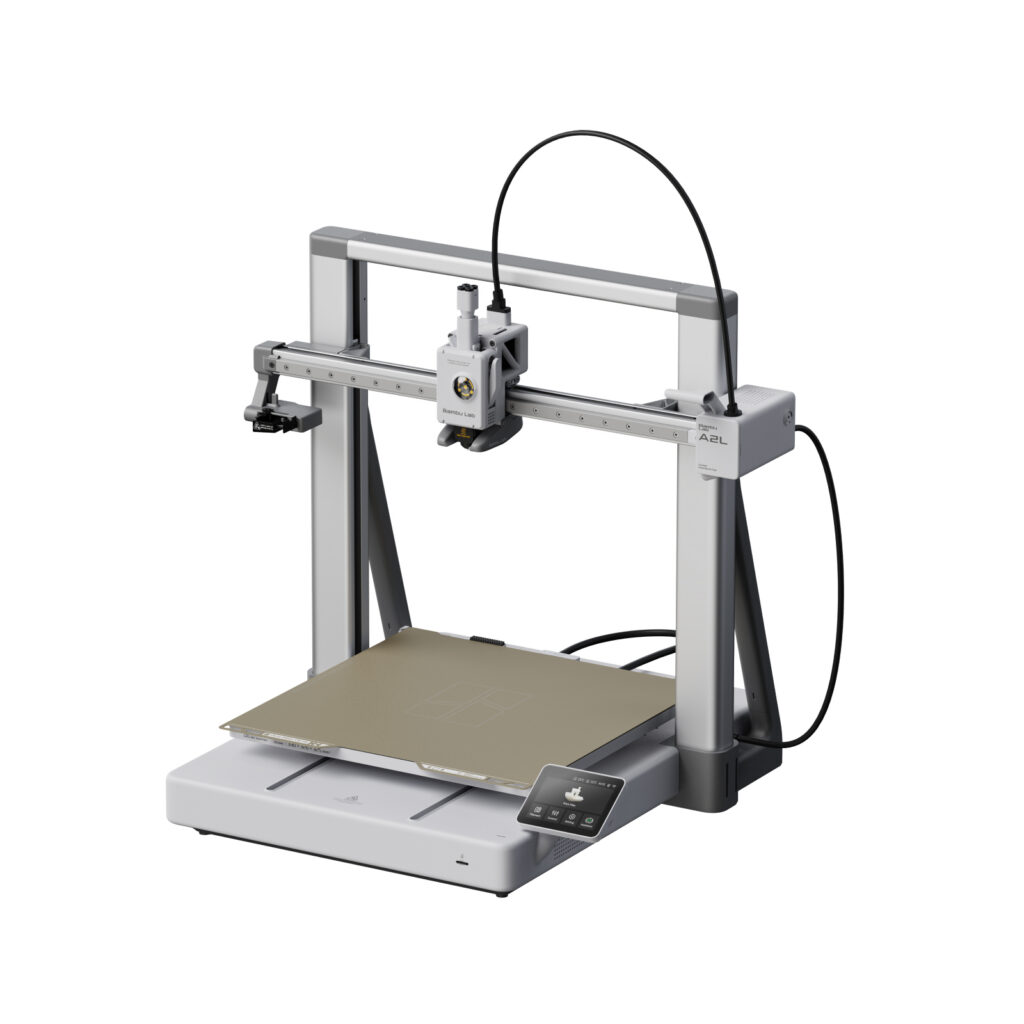
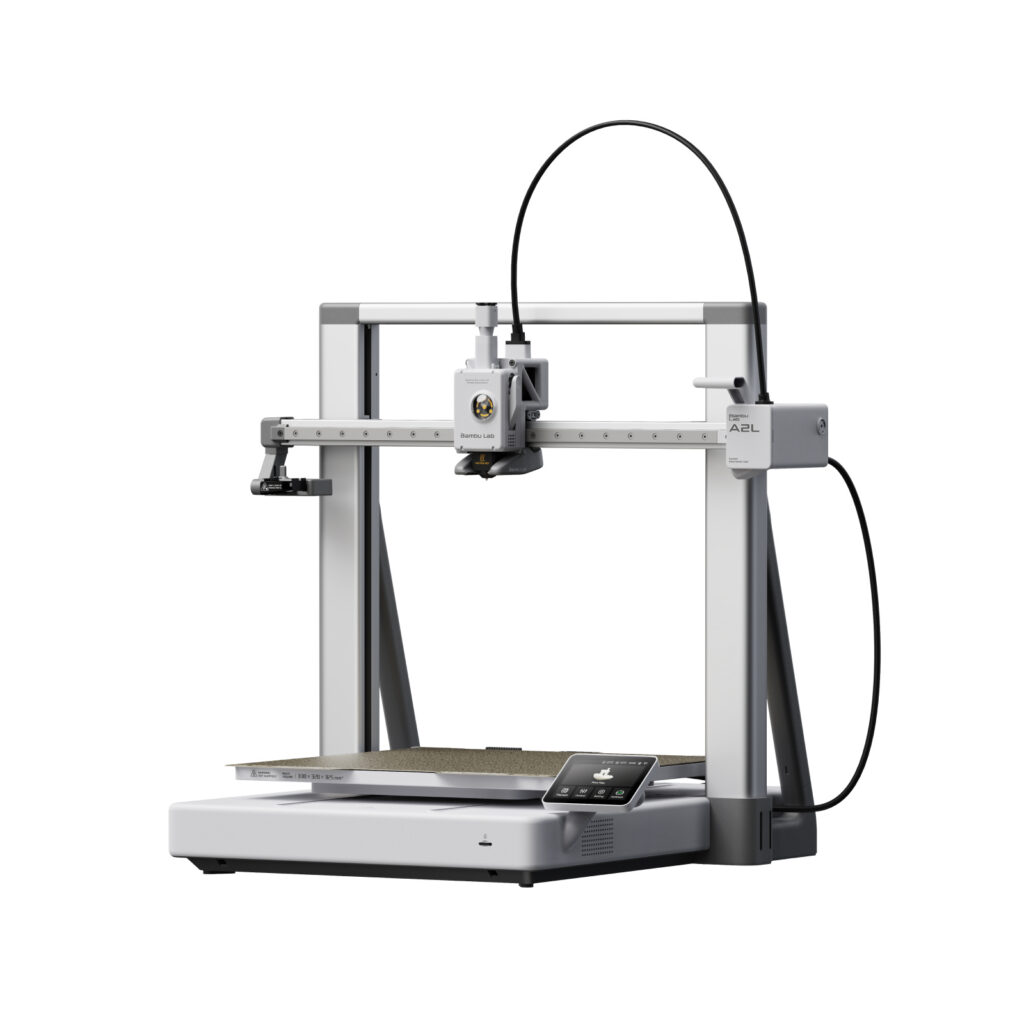
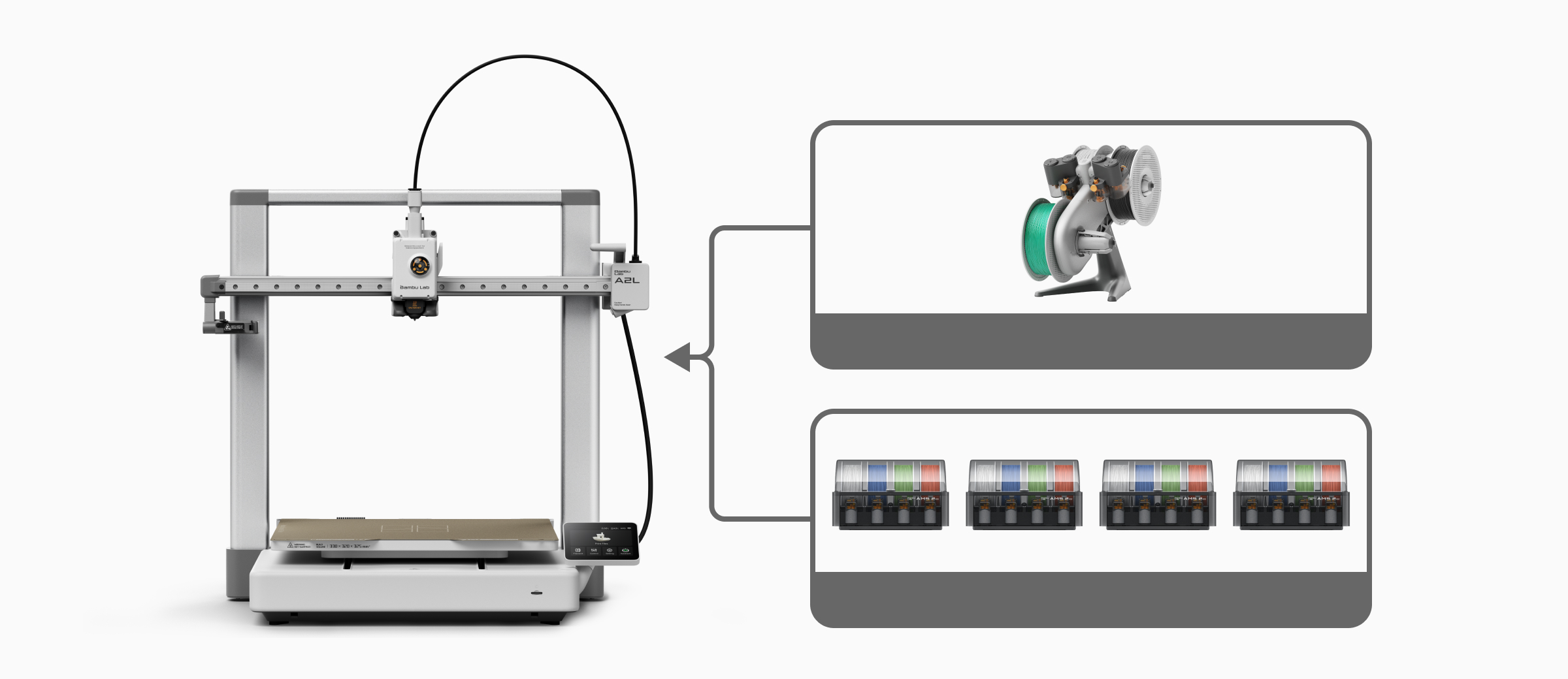
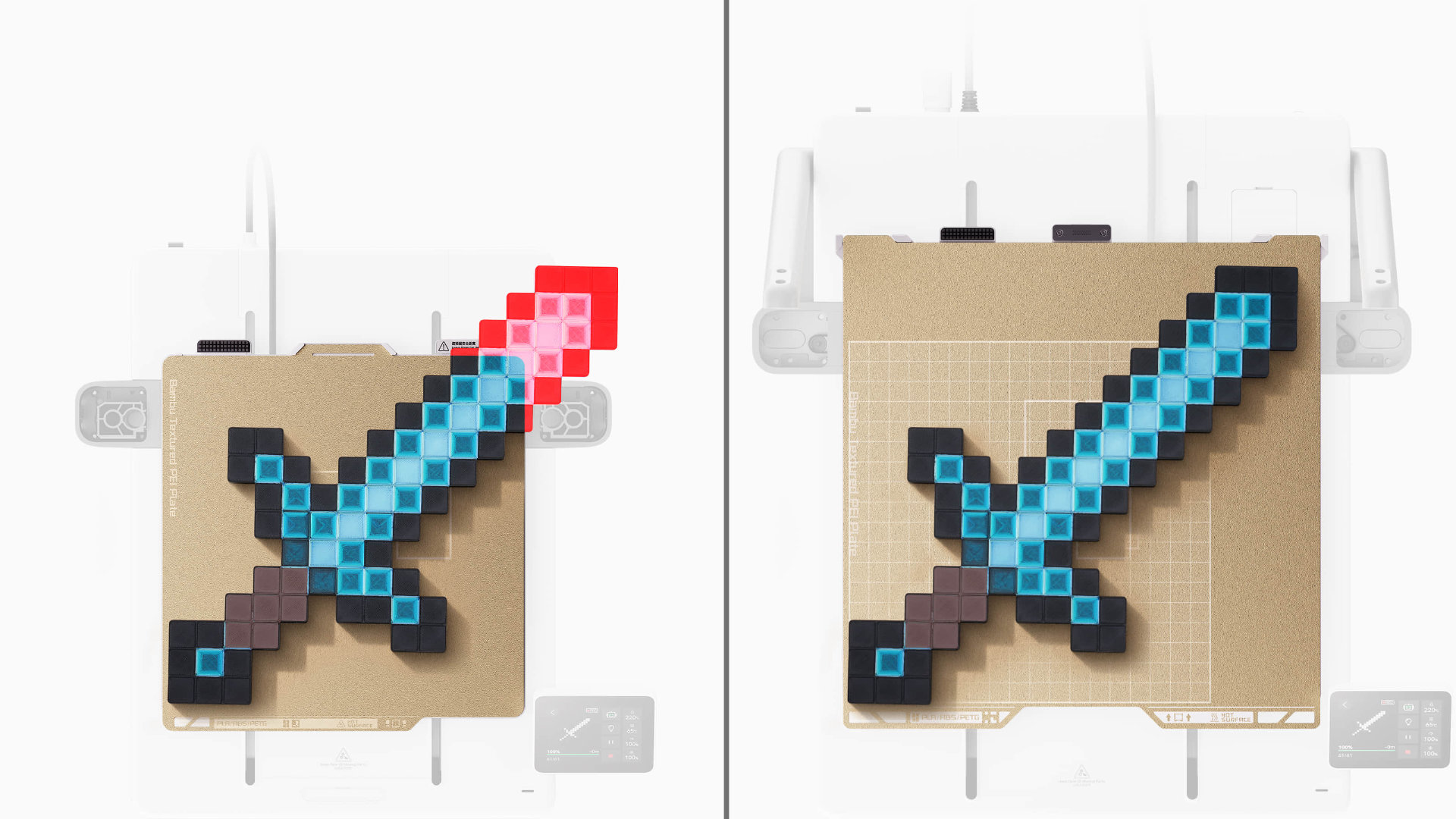
    Bambu Lab continues its relentless march for 3D printing domination with the launch of the A2L. The 330 × 320 × 325 mm printer will have a nozzle temperature of 300°C and a bed temperature of 80°C. Print speed will be up to 500 mm/sec, and it’s designed for PLA, PETG, and similar materials. Users can connect up to four Bambu Automatic Material System (AMS) units and one AMS Lite unit, allowing multi-color and multi-material printing. The printer also comes with plotting and cutting modes.

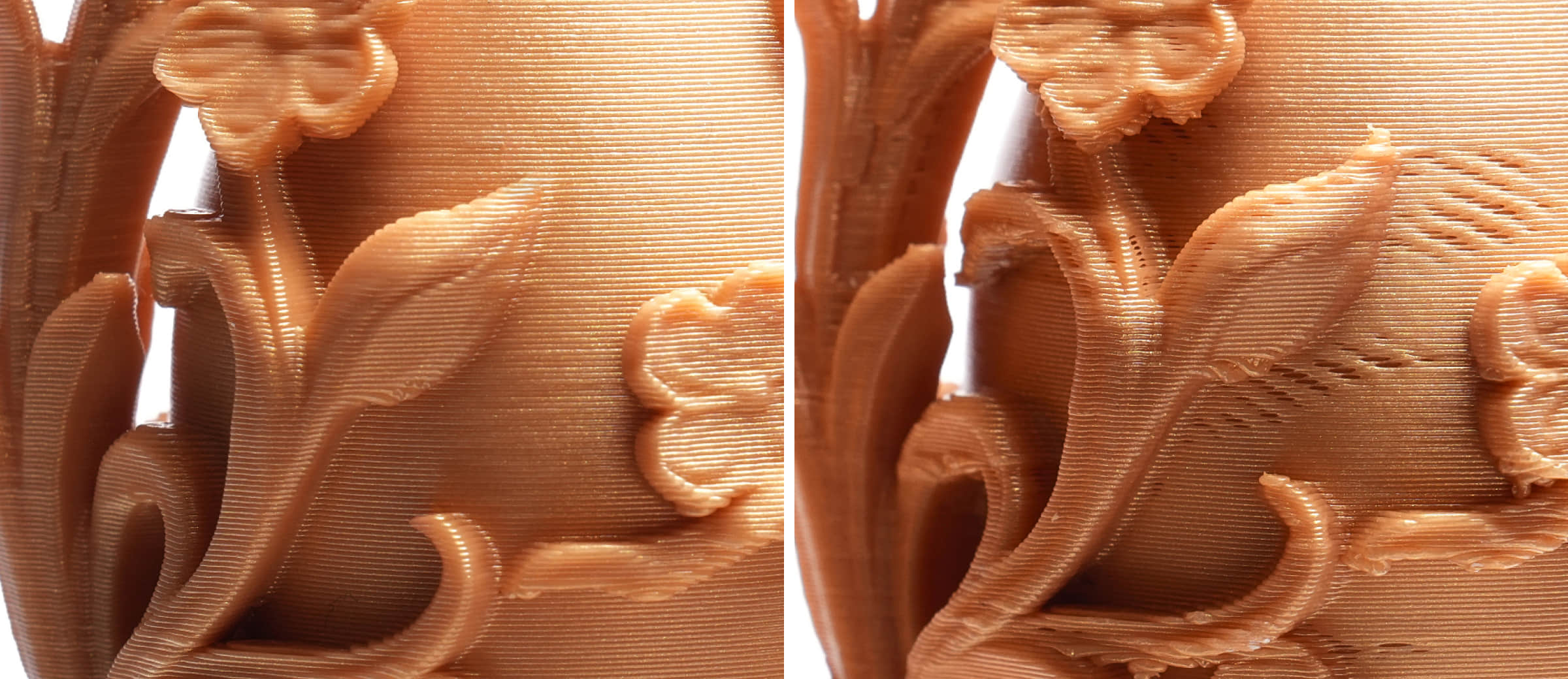
    It has Bambu’s PMSM (Permanent Magnet Synchronous Motor) servo extruder, along with vibration compensation, as well as two granular dampening units built into the chassis. This means the machine combines software-based compensation with mechanical dampening to reduce resonance. This should also reduce moiré patterns and other surface artifacts. The printer by itself costs $489 in the US and €379 in Europe, while a bundle with an AMS Lite costs $569 and €489, respectively.

    What Bambu is doing here is significant because of the steps forward in dampening. Resonance from the motors, frames, vibration, and other effects is detrimental to smooth surfaces, and Bambu is trying to eliminate them. By staying ahead in software and sensor-driven compensation while working on better mechanical dampening, the company opens up two fronts where it can compete.

    Having said that, this printer is aimed at hobbyists, so it could significantly expand the market while also finding use in print farms. To make a kid printer that could also work in the classroom, as your first cosplay printer or as your print farm standard unit, would be quite the coup for the company. The company sees this as an “H2S lite,” but it will probably be most confounding for those set on buying the P2S. What do you go for? Whereas other companies have continually feared cannibalizing existing sales or models, Bambu competes with everyone, including itself.

    This is unsettling for me because it does seem inefficient. But the least efficient thing is not to sell any printers at all. The worst thing would be to fail to cover a niche. We still don’t know if the Model T Ford of this market that will sell hundreds of millions of units is the A1, the Canon, or the H2, so why not try another hybrid to see if this fills the gap? This kind of competitive drive is what makes the company so difficult to compete with.

    A close-up comparison showing the effect of the A2L’s vibration compensation and dampening technologies on print quality. Image courtesy of Bambu Lab.

    We’re also again seeing Bambu port its latest technologies to entry-level systems. This actually decreases the costs of each feature while spreading across the Bambu lineup. The more printers that have a feature, the cheaper this feature can become. Many firms are constantly tailoring their offering. Some firms make crappy entry-level products to make other products shine. Some offer tiers of upgraded features to eke out more profit. Bambu is continuously tweaking its go-to-market strategy and will then spread its features and key components across the entire lineup. Then the firm will win in all categories across the board. Rather than trying to make a good Golf and Passat, or to iteratively improve the Accord each year, it is trying to find the right product-market fit across all lines and to continuously advance. The Bambu will cover the whole field and blot out the sky.

    The new printer has new features as well, showing that their strategy is to release new features in top models; the firm is releasing cutting-edge stuff in lower-priced printers. This time, it includes improvements to the “multi-point calibration and load adaptation, eliminating ghosting and ringing artifacts when printing tall, heavy models by dynamically adapting vibration compensation parameters.” Frankly, I thought they were doing this to some extent before. The company thinks that these improvements, along with the dampeners, should see a “Bed Slinger printer to achieve Core-XY level print quality.”

    The A2L can connect to multiple AMS units, enabling multi-color and multi-material printing. Image courtesy of Bambu Lab.

    The printer also has runout, clog, spool-tangle, blob, and extrusion-force detection. There’s also a silent mode. I really like this idea because it gives you a semblance of psychological control over your 3D printer’s noise levels. The work of Singer and Glass in the 70’s showed that if you ask people to perform a task and give them the option to reduce external sound levels through pressing a button, they will concentrate better. But the cool thing is that just having that button there reduces stress and increases concentration, irrespective of whether you press it. So please let’s all have silent mode buttons, they don’t even have to work. Here, Bambu says that the printer can work at 49 dB. 

    Another new feature is that the printer can now take expansion modules. You could buy a Blade Cutting Upgrade Kit if you wanted to cut patterns, for example. So if you’d like to print and make stickers or decals, you could pay for this, while others do not have to. I think this has a lot of potential. Bambu could make a lot of revenue from successive upgrade kits, especially if they are spread out over tens of millions of printers and are reverse-compatible. 

    The A2L’s larger build area allows users to print bigger objects in a single job. Image courtesy of Bambu Lab.

    Bambu is currently under fire from powerful YouTubers and open source advocates for playing fast and loose with OpenGL and the core slicing capability at the heart of its offering. This may very well alienate a lot of the core 3D printing community. Meanwhile, the firm continues its relentless march onward. By introducing new features on inexpensive systems, cannibalizing its own sales, and searching for new markets and models, the company is blocking out the sunlight for its competitors. Bambu grows quickly everywhere, making it hard for others to compete with it.

  • Stratasys Dental’s Negar Movahed Says They’re “Open for Partnerships”

    According to “3D Printing for Dentistry 2025: Market Study and Forecast” by AM Research, the dental 3D printing market generated $5.2 billion in revenue in 2024—that’s nearly one third of the total additive manufacturing (AM) market. That number is expected to nearly double by 2033, to $9.6 billion. So if you hadn’t already realized, this is a major application for our industry.

    At RAPID+TCT 2026, I spoke to Negar Movahed, Global Director of Product Lines – Dental at Stratasys, to discuss the company’s leading AM dental solution. Stratasys Dental’s flagship product is its monolithic, polychromatic TrueDent 3D printed denture solution, which she told me is the company’s “first Class IIa medical device.”
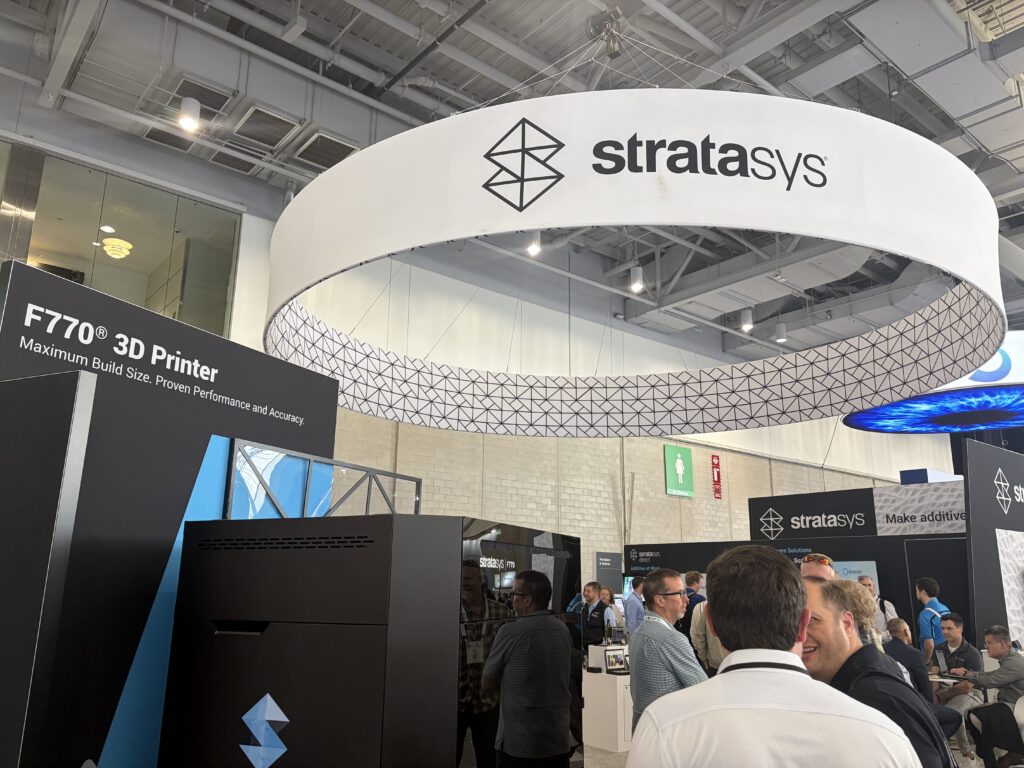
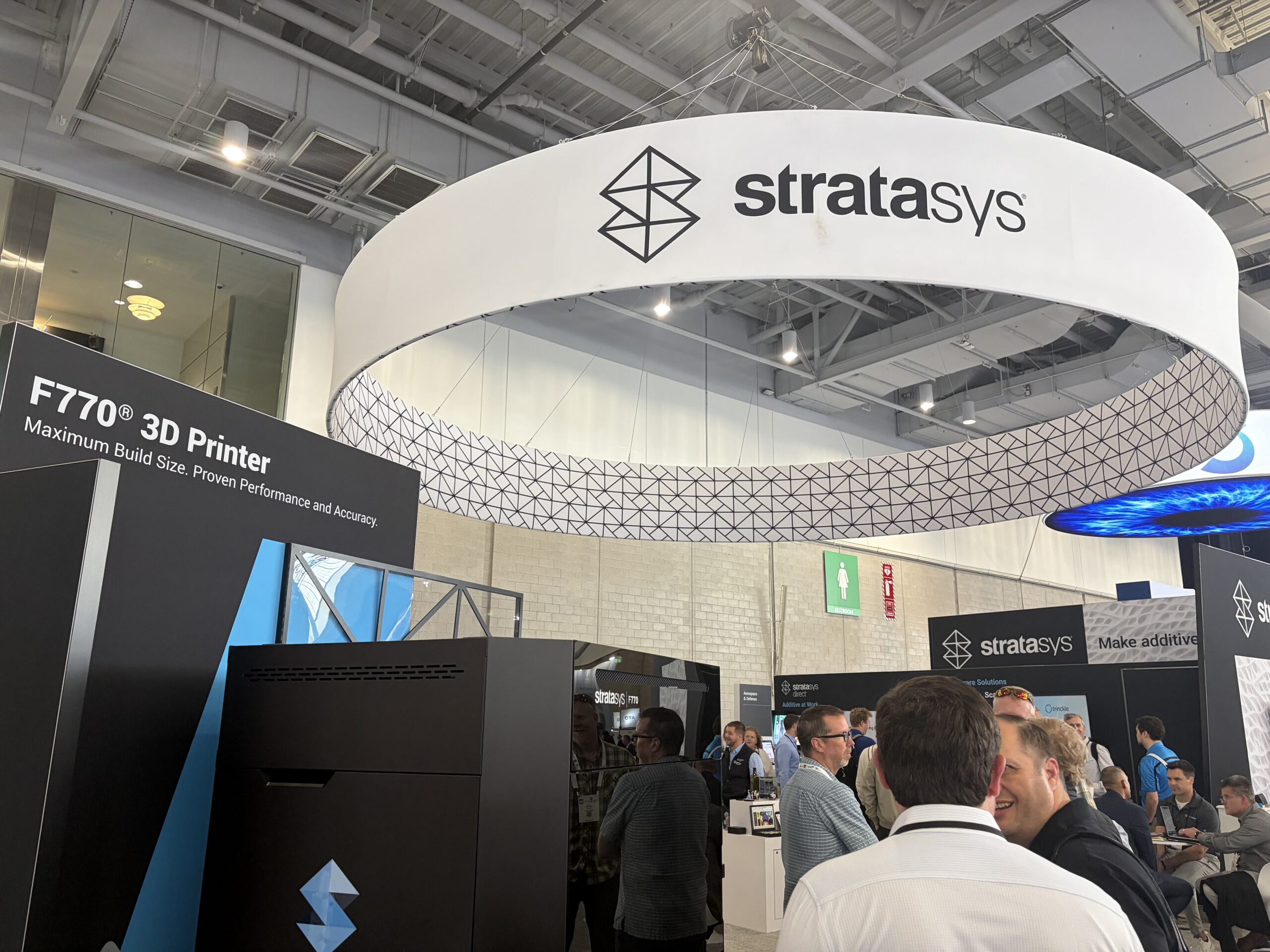
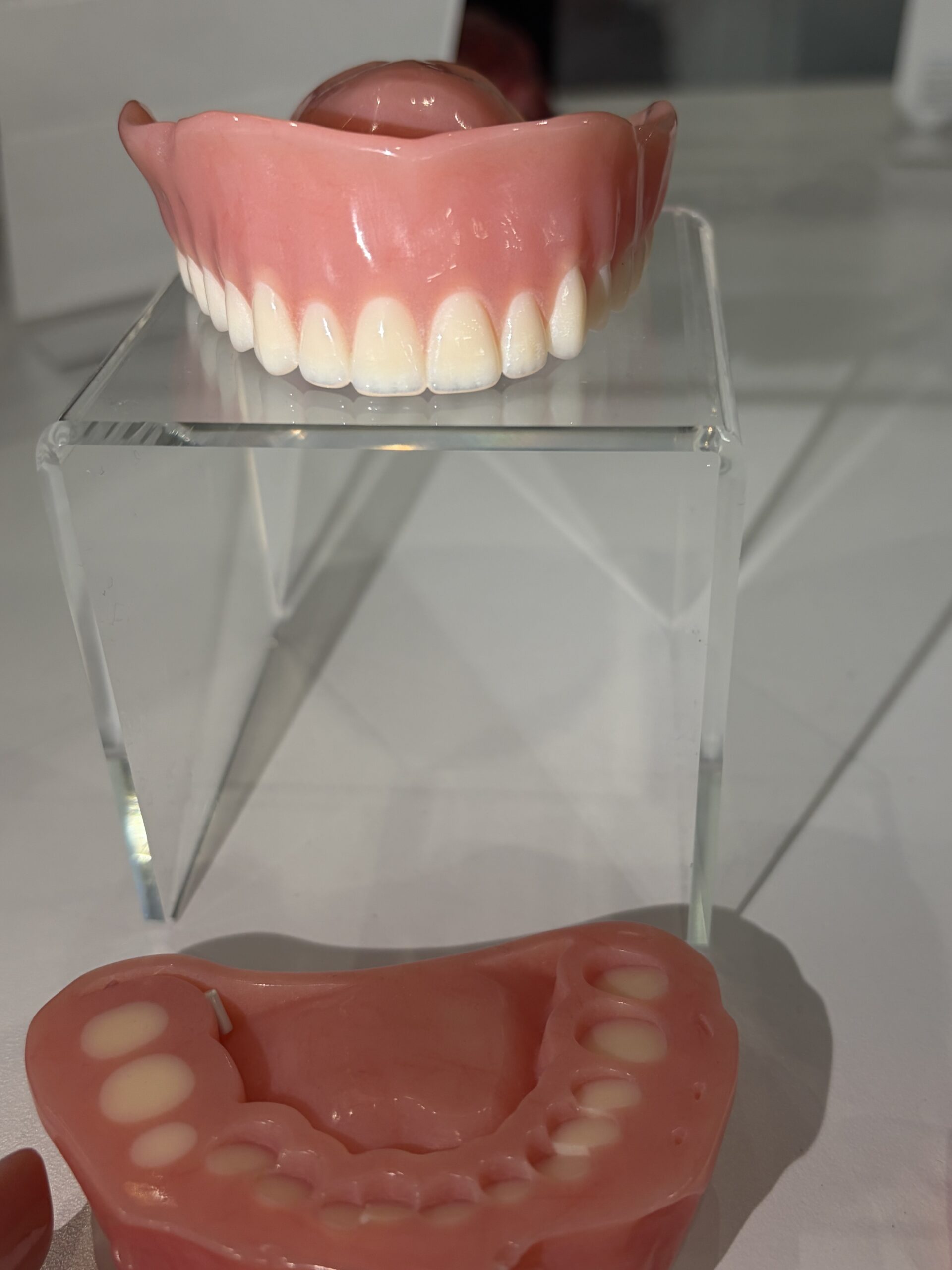
    Stratasys booth at RAPID+TCT 2026.

    TrueDent, PolyJet, & GrabCAD

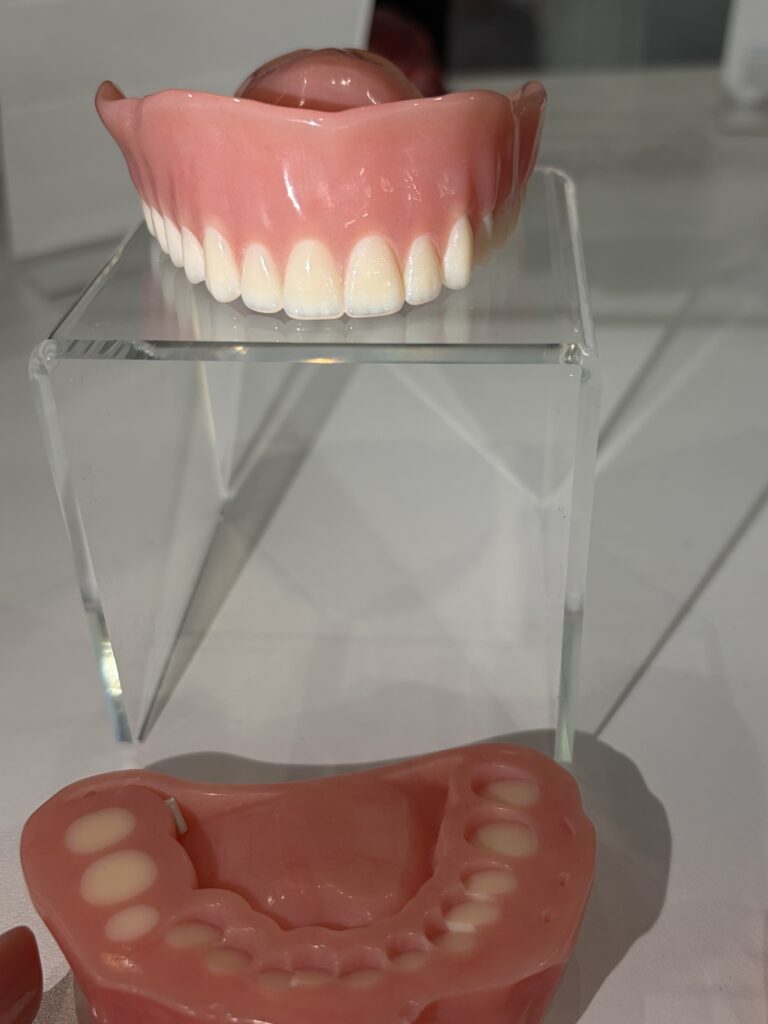
    Traditional dentures come in two parts: the base, or gingiva, and the teeth, and the process to make them is “quite labor intensive.” Lab technicians use an adhesive to adhere the teeth to the base and often have to perform manual characterization of the dentures, so there’s a “little artistry” involved as well. When dental technicians started using vat 3D printing to make dentures, it wasn’t an immediate fix, because, as Movahed explained, “it’s still limited to spot color.”

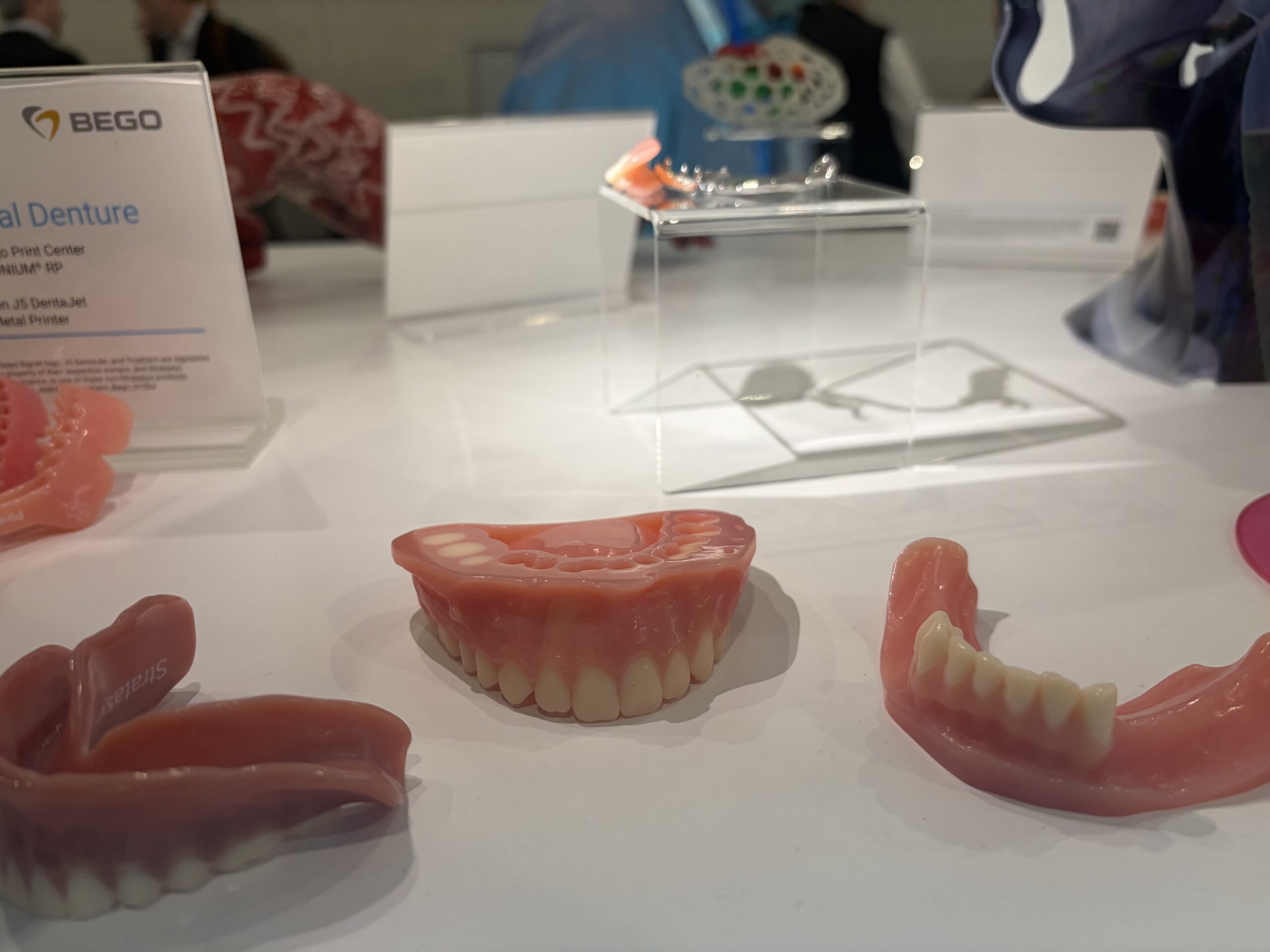
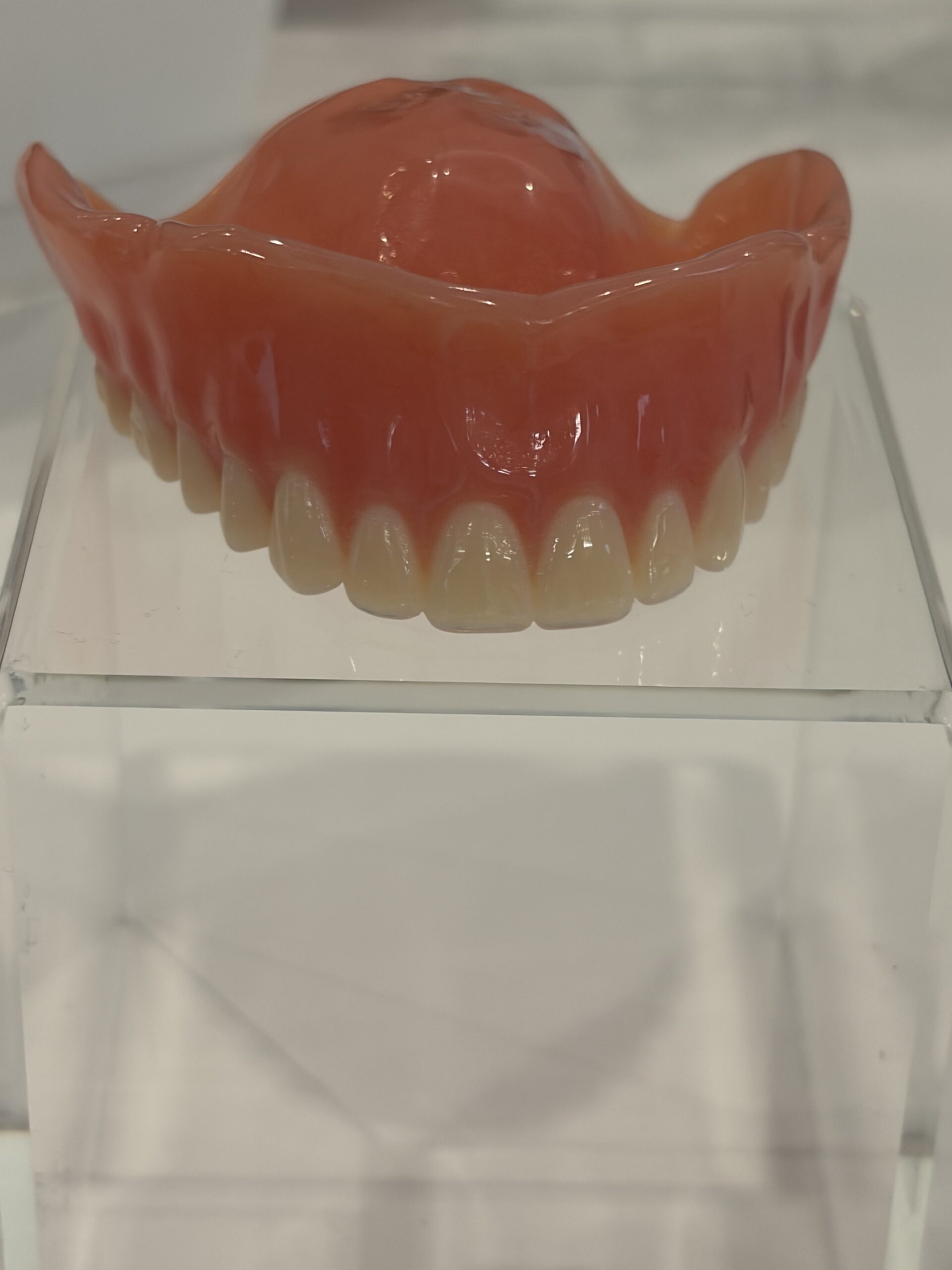
    “In traditional and DLP workflows, the base and teeth are produced separately, often in different materials and single shades, and then they are bonded together,” she told me. “What you get with TrueDent is one resin, in multiple shades of Cyan, Magenta, Yellow, and White. The shade variation and internal structures are created digitally. The gingiva and teeth print together in a single build as a unified structure, which removes the bonding interface, a common failure point in conventional dentures. Under functional load, like biting into something hard, those bonded teeth can de-bond over time. With a monolithic print, you eliminate that concern.”

    I’d say this makes PolyJet and TrueDent worth their weight in gold…teeth.
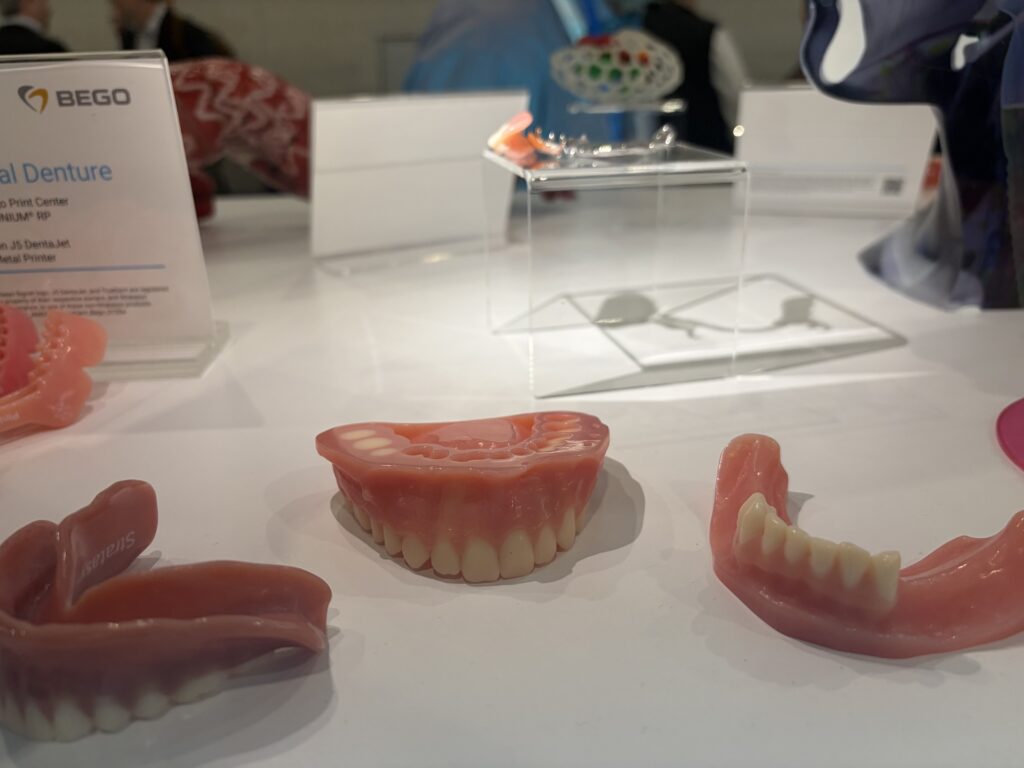
    Stratasys booth at RAPID+TCT 2026.

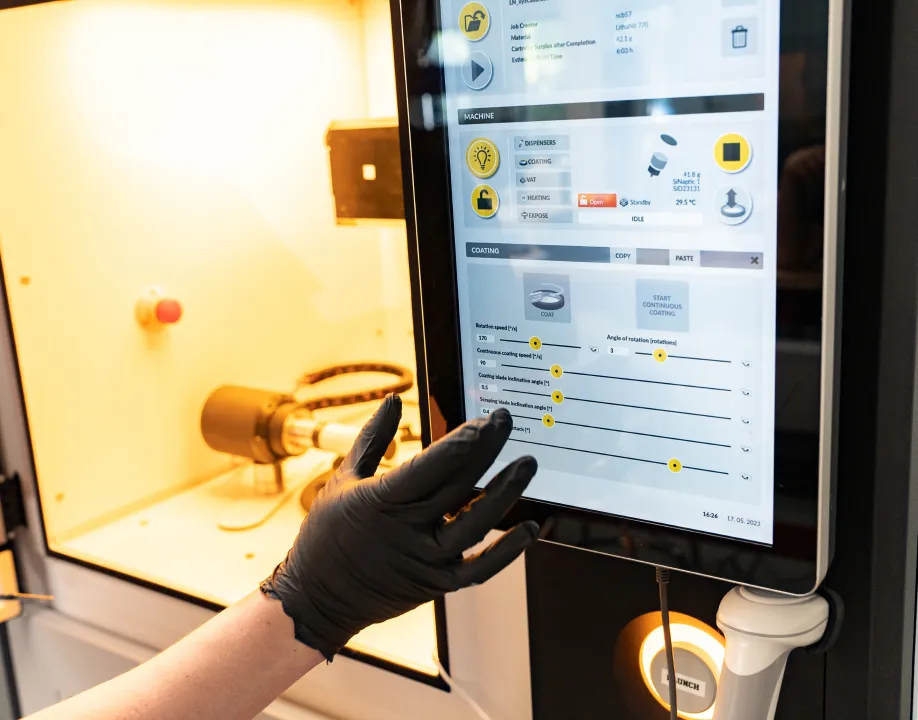
    We talked a little about GrabCAD, which Movahed said is much more than a slicing software. Not only does it enable users to automatically nest their parts and manage their full 3D printer fleets, but they can also automatically add “characterization to the TrueDent denture” in the software as well. The newest capability is TrueVoxel, “our next-generation aesthetics” for bringing lifelike 3D printed dentures to the market.

    As the adorable orphans in Annie sing, you’re never fully dressed without a smile, but what if it’s not fully your smile? When you wear partial dentures, your other existing teeth are still visible, and if the dentures don’t match, it can make people self-conscious.

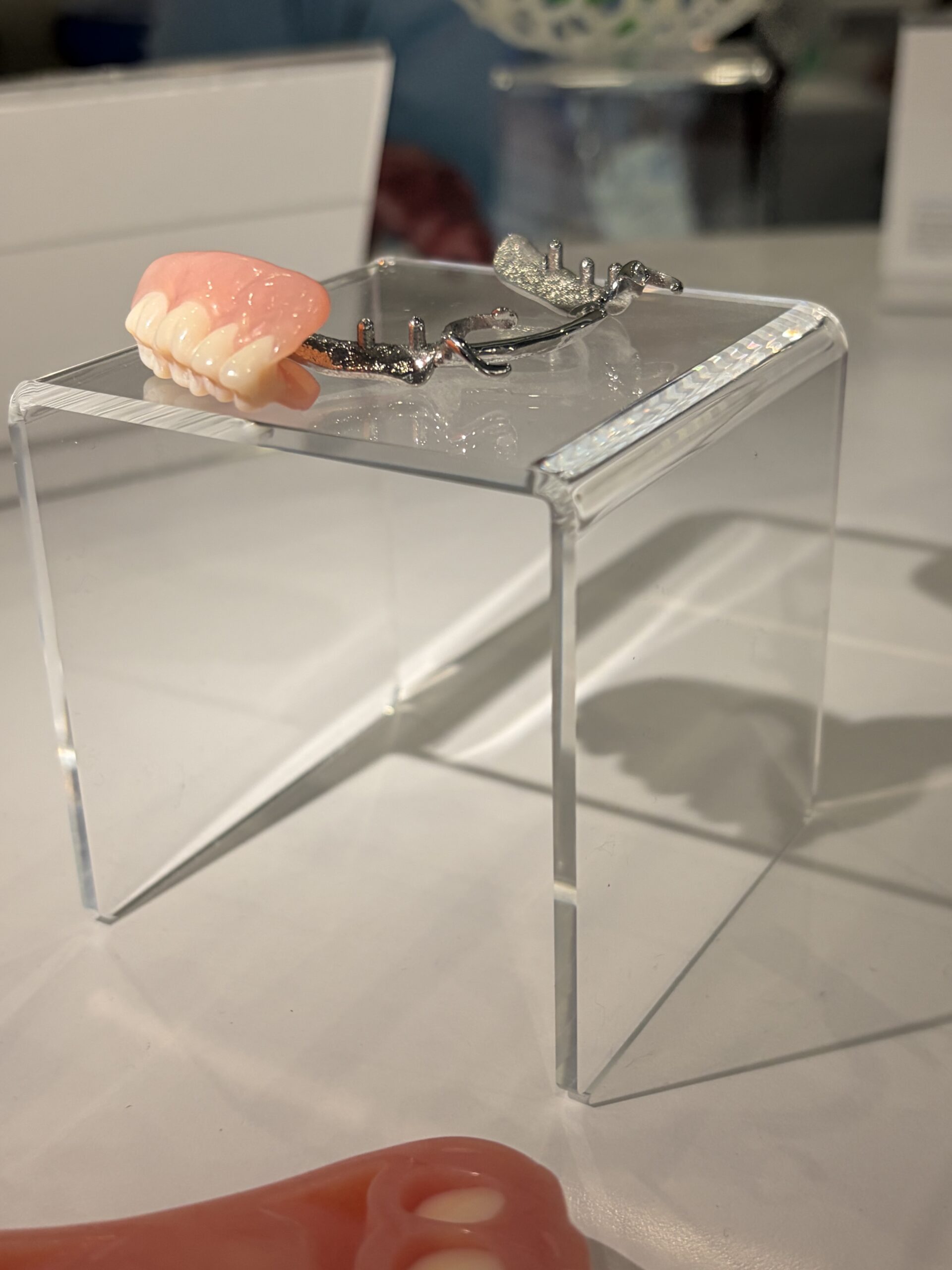
    “With TrueDent, you can very naturally match the adjacent dentition,” Movahed explained. “Also, thanks to the accuracy and consistency of the technology, the denture also integrates very well with the metal framework in partial applications, resulting in a more stable and durable final prosthesis.”
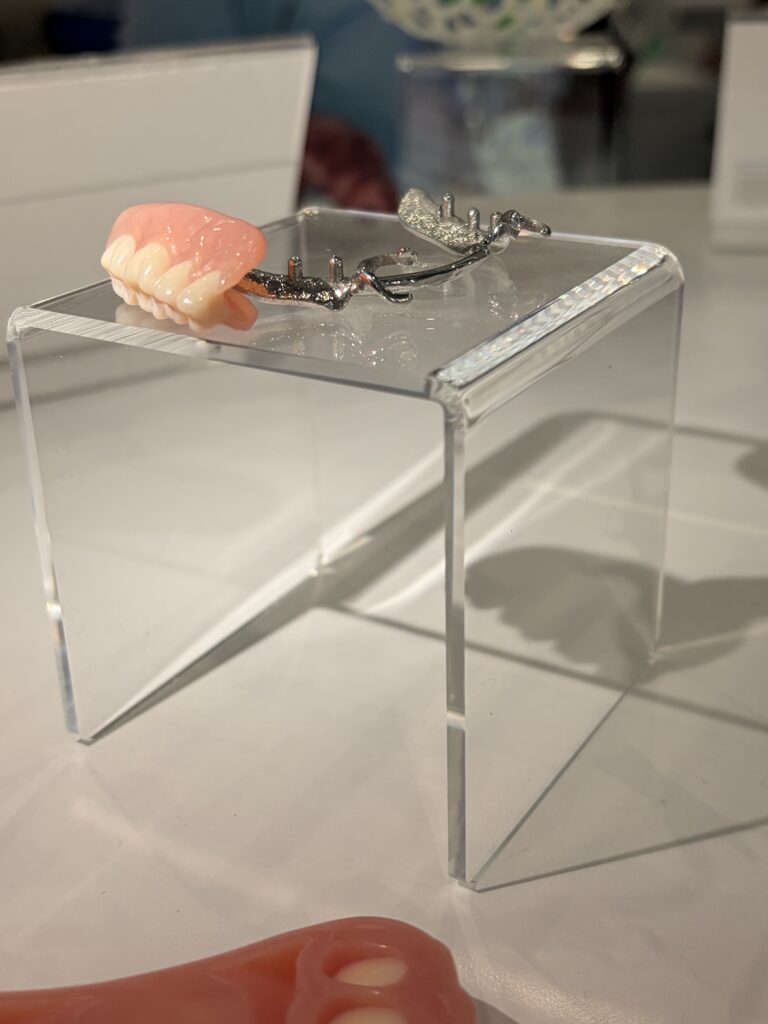
    TrueDent dentures with metal frame at Stratasys RAPID+TCT 2026 booth.

    Stratasys Dental Workflow

    Movahed said that DLP printers can print, at max, around 15-20 denture bases, and of course in a separate build than the teeth. Then the techs still have to do all the manual labor to post process, characterize, and assemble. In terms of scaling the workflow, she said that “PolyJet really shines, because you can print 32 complete multi-shade arches in one build.”

    “So, you design everything in exocad or 3Shape software, and it gets imported into GrabCAD. From there, you digitally select shade and characterization for each case, then you send it to print. 32 dentures are printed, you take off the support material with an automated waterjet, and then you follow up with the validated workflow. And then it goes into polishing and done.”
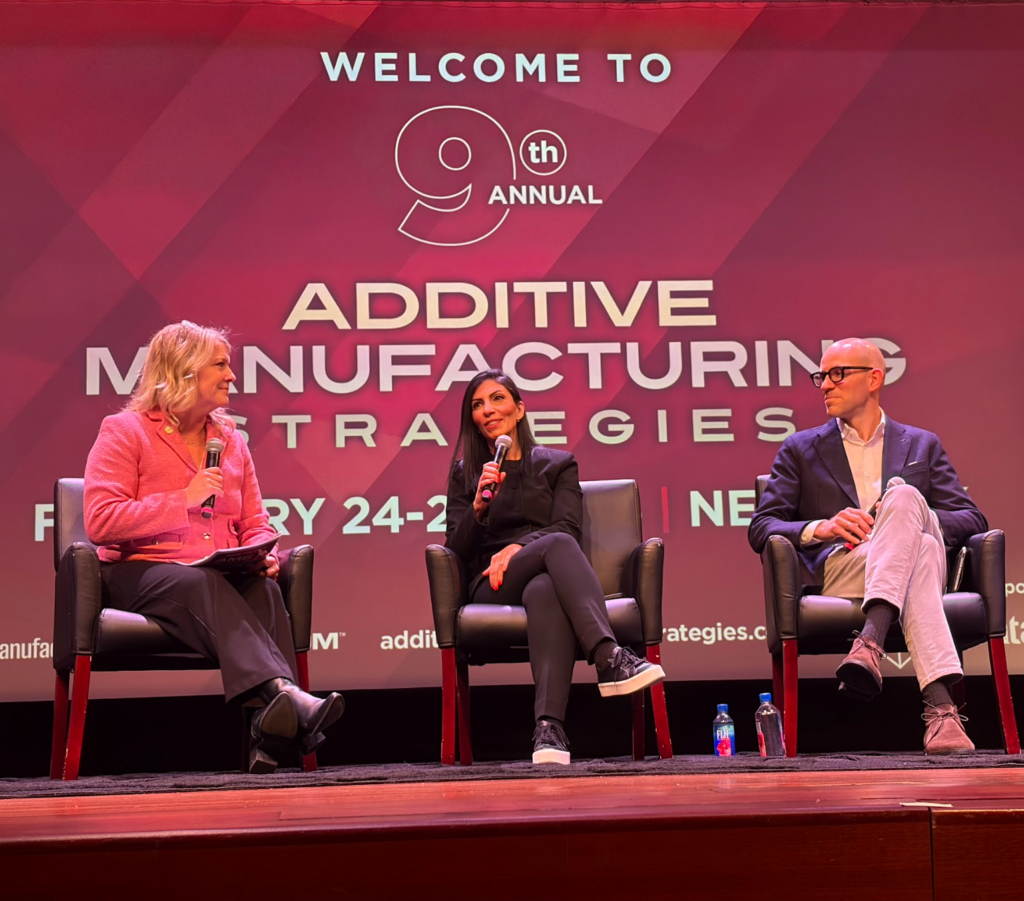
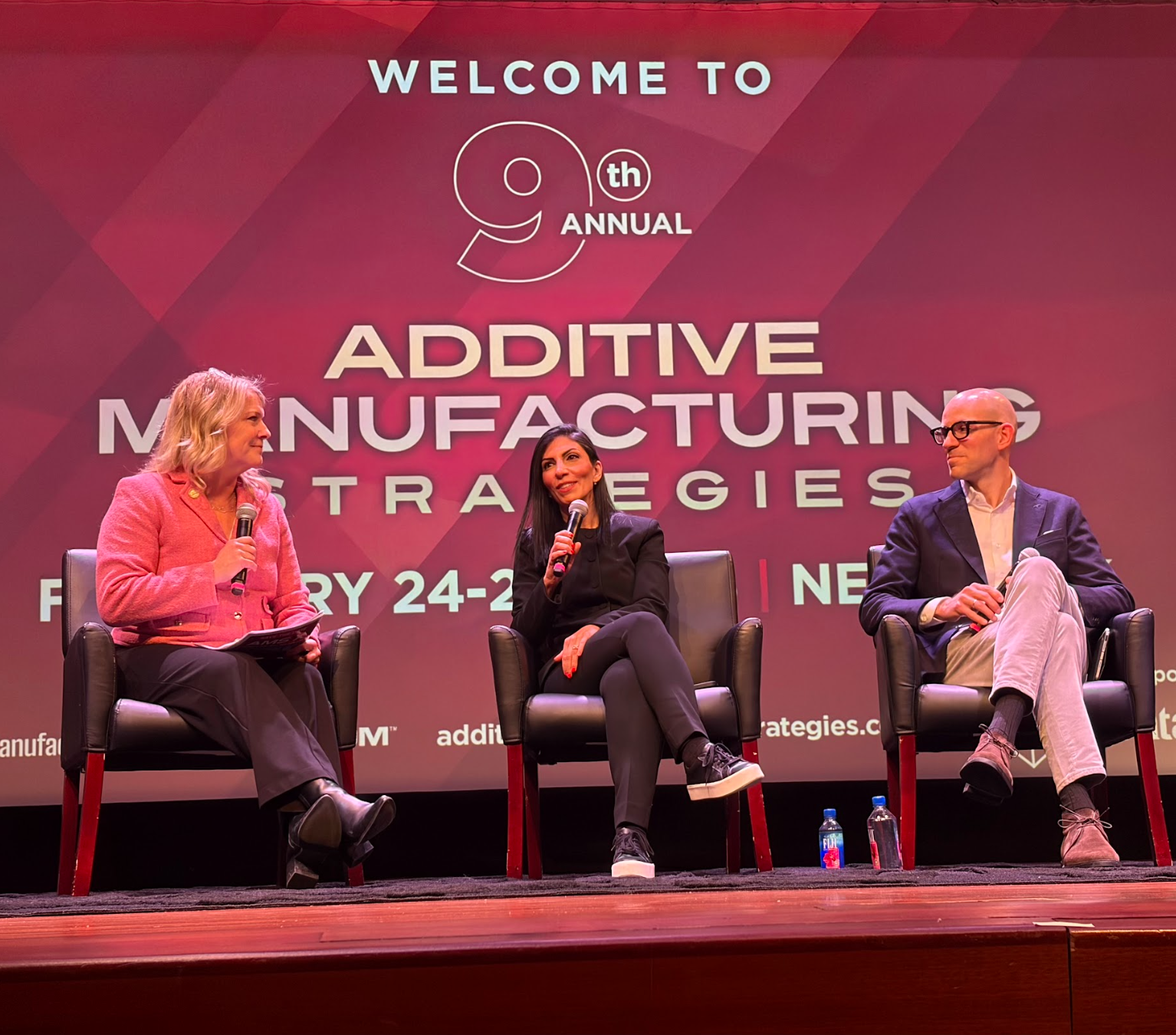
    L-R: Debbie Holton, Negar Movahed, Matthias Himmelsbach at AMS 2026.

    Movahed said that Stratasys is building automation “into every step of the process,” with additional software capabilities coming in the next year that will support this direction. This is really important, given the current labor shortage in the dental market.

    “With our solution, our goal is to bridge that labor shortage shortage. But in addition to that, we’re making more improvements and advancements to help labs scale,” she said.

    It’s just like she said on our “3D Printing for Dentistry” panel at AMS 2026: automation is required when you’re scaling

    Stratasys Dental serves everyone from “mom and pop labs that just cannot hire new talent” to huge labs automating everything with robots.

    “I think what really sets us apart versus other solutions that are out there is the level of aesthetics PolyJet delivers,” Movahed said.

    She also told me that the company is actively working on an interesting launch for 2027, “which is also going to contribute to the aesthetics value proposition that we offer.”

    Safety First

    TrueDent is the company’s first Class IIa medical device, which, as Movahed explained, means “more rigorous audits and third party evaluation of our technical file.”

    “One of the things that I always talk about is Stratasys being a 3D printing company in the medical device world, so we are very conservative,” she said. “We don’t just choose the top three biocompatibility tests. When the toxicologist gives us a list of biocompatibility tests, we don’t even think about the price. We say, yes, we’re going to do them. We care about the patient’s safety. So we want to make sure that we’re addressing all of those issues, especially with photopolymers going into patients’ mouths.”
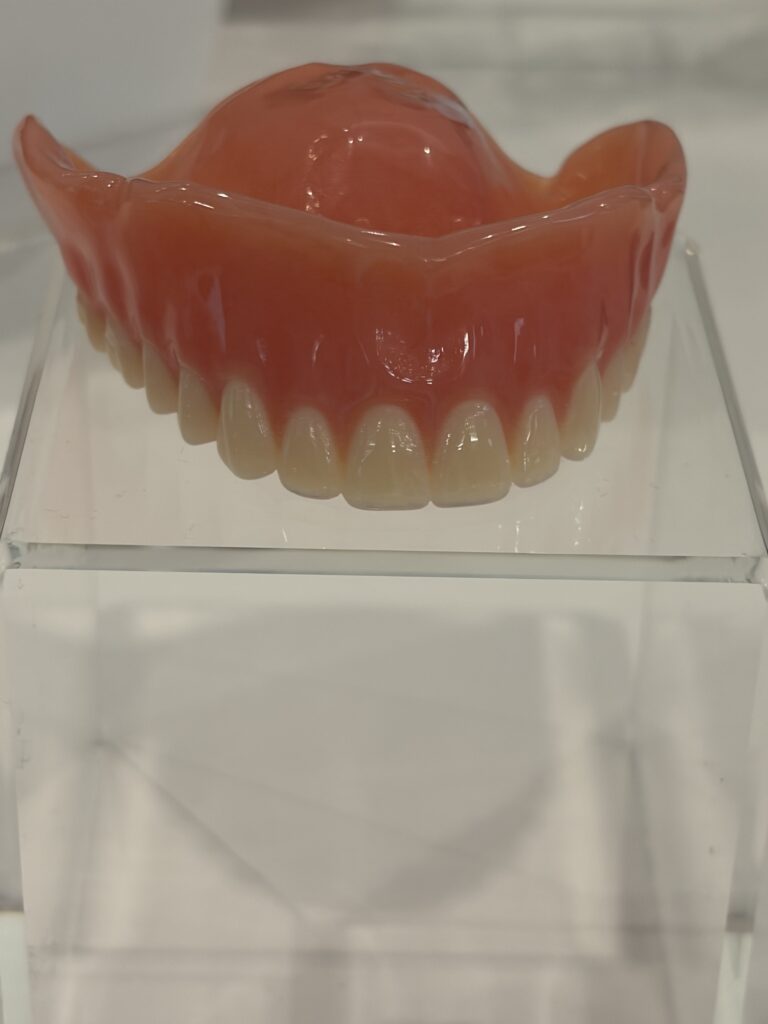
    Stratasys booth at RAPID+TCT 2026.

    Movahed also told me that one of the company’s surgical guide materials for PolyJet 3D printing, MED610-DSG, is a Class 1 medical device that is now also a TPO-free material. Since all Stratasys resins come in a closed cartridge that is loaded into the printer material bay, this is just an added safety feature.

    “So that’s another difference compared to DLP workflows,” she told me. “The user never actually handles uncured resin, as our parts are considered fully cured during the print.”

    Partnerships

    I mentioned that I’d visited the PostProcess Technologies booth at RAPID earlier, and had spoken with PostProcess CEO Jeff Mize about the company’s post-processing partnership with Stratasys. Movahed told me that through its Post-Processing Partnership Program, Stratasys is now “open to validating post-processing as part of our validated workflow.”

    “More automation will be an integral part of our launches next year,” she said. “Partnering with automation companies as it comes to post-processing, or auto polishing. And when I say we validate every single step of the workflow, that’s exactly what I mean.”

    Additionally, Stratasys is opening up its PolyJet dental 3D printing platforms to strategic partnerships with resin manufacturers, which is a very new thing for the company.

    “It’s not just everybody on the market, but trusted companies that really know photopolymers, and really know medical devices,” Movahed explained.

    Stratasys already has a few partners that it’s working with on the next applications.

    Final Thoughts

    It sounds like there will be a lot of exciting things happening for Stratasys in the near future. Movahed said the company has been “very active in global registrations” and is working to expand into APAC and Latin America.” There are also a lot of software updates coming to enable dental production across our platforms, and the next generation of TrueDent.

    “As we’re developing our next generation of TrueDent, we’re confident that we will capture a sizable portion of the market, by solving real user pain points from aesthetics to mechanical performance,” she said. “We already meet the fundamental accuracy requirement, delivering dentures with a highly consistent fit directly out of the printer. In traditional and DLP workflows, additional clinical or lab adjustments are often required, which can introduce variability. With PolyJet, material is deposited drop by drop, enabling very high resolution and repeatability. This helps reduce the need for downstream adjustment steps and supports a more controlled, consistent outcome.”
    Stratasys booth at RAPID+TCT 2026.

    Movahed told me that when Stratasys launched TrueDent three years ago, the company “took the denture market to the next level.” Now, the message Stratasys is sending to the market is that they’re open for partnerships, and that they’re working on the next generation.

    “Looking ahead, we believe our solution will be very difficult to match end-to-end.”

    Featured image courtesy of Negar Movahed, Stratasys. All other images courtesy of Sarah Saunders, 3DPrint.com.
  • 3D Printing Financials: XTPL Adds New Semiconductor and Defense Customers in Q1 2026

    Polish microprinting company XTPL (WSE: XTP) reported first-quarter 2026 revenue of PLN 1.6 million (roughly $441,000) as the company expands into the semiconductor and advanced electronics markets, while also launching a new business line aimed at defense and small-scale electronics production.

    The Warsaw-listed company said product and service sales accounted for PLN 1.2 million (roughly $331,000) of total revenue during the quarter. The results were driven by deliveries of its Delta Printing System (DPS) and Ultra-Precise Dispensing (UPD) modules, as well as early commercial traction for its newly launched ODRA systems business.

    The Warsaw-listed company said product and service sales accounted for PLN 1.2 million (roughly $331,000) of total revenue during the quarter. The results were driven by deliveries of its Delta Printing System (DPS) and Ultra-Precise Dispensing (UPD) modules, as well as early sales tied to a new manufacturing platform.

    That new platform, called ODRA, is designed for low-volume industrial production. XTPL secured its first order from a Silicon Valley customer working in semiconductor advanced packaging and cooperating with the defense industry. The company said it expects additional ODRA orders as early as 2026, with deliveries planned for late this year or 2027.

    XTPL develops precision printing technology capable of creating conductive structures as small as one micrometer. Its systems target semiconductor manufacturing, advanced displays, printed electronics, biosensors, and other high-tech applications.

    Filip Granek, CEO of XTPL. Image courtesy of XTPL.

    CEO Filip Granek said the quarter marked an important step in executing the company’s 2026–2028 growth strategy: “The results for the reporting period do not yet fully reflect the potential we have built in recent periods, but the decisions we have taken support the company’s growth in the years ahead.”

    Granek said XTPL is working to secure a larger second order from one of China’s biggest display makers after successfully completing the first stage of the project. The company is also testing its technology with several other potential customers.

    “The UPD modules we delivered are now operating on an industrial production line, confirming the successful completion of the ‘from lab to fab’ pathway, through which XTPL has established global credibility among the world’s leading advanced electronics manufacturers,” he said.

    For XTPL, the project marks a major commercial step. Instead of being tested in a lab environment, the company’s printing modules are now being used inside an active production line at a major display manufacturer in China.

    Another UPD module was also delivered to a Nasdaq-100-listed U.S. customer involved in semiconductor production equipment and advanced display technologies. The shipment is part of an ongoing technology evaluation process.

    A major focus during the quarter was funding. XTPL raised nearly PLN 30 million ($8.3 million) through a public share offering and support from Poland’s National Centre for Research and Development (NCBR).

    According to CFO Jacek Olszański, the capital will help fund several commercialization efforts at the same time, including additional UPD deployments, ODRA development, and continued sales expansion for DPS systems and materials.

    XTPL ended the quarter with PLN 2.1 million ($579,000) in cash and reported an EBITDA loss of PLN 3.9 million ($1.1 million). The company said capital raised through its March share offering will appear in second-quarter results.

    XTPL goes public on the Warsaw Stock Exchange (WSE). Image courtesy of XTPL.

    XTPL now has four commercial product lines: UPD industrial modules, DPS prototyping systems, High Performance Materials, and its newer ODRA platform. Management sees ODRA as a potentially important growth business because the systems are designed for real production environments, not just research labs. XTPL said ODRA systems sell for more than twice the price of DPS units and could lead to repeat orders from customers in defense and semiconductor manufacturing.

    The company is also continuing several advanced customer evaluations, including ongoing talks around additional UPD orders in China and new ODRA opportunities tied to the U.S. defense sector.

  • 3DPOD 301: Jay Rogers on Haddy’s Robotic 3D Printed Manufacturing, and a Lot More

    Jay Rogers was in the Marine Corps, consulting, and sailed around the world. He first came to additive through his company, Local Motors. He talks us through that firm’s promise and development. We also talk about his new venture, medium and large-format 3D printing firm Haddy. We also talk more broadly about entrepreneurship, companies, venture capital, additive manufacturing, and business.

    This episode of the 3DPOD is brought to you by Alexander Daniels Global, specialists in talent solutions for the additive manufacturing and advanced engineering sectors. From the production line to the C-suite, ADG delivers confidential hiring, supports rapid scale-up phases, and secures critical leadership appointments, helping industry 4.0 businesses buld teams that need to perform, innovate, and lead.

  • Sandvik Leaves 3D Printing: Analysis

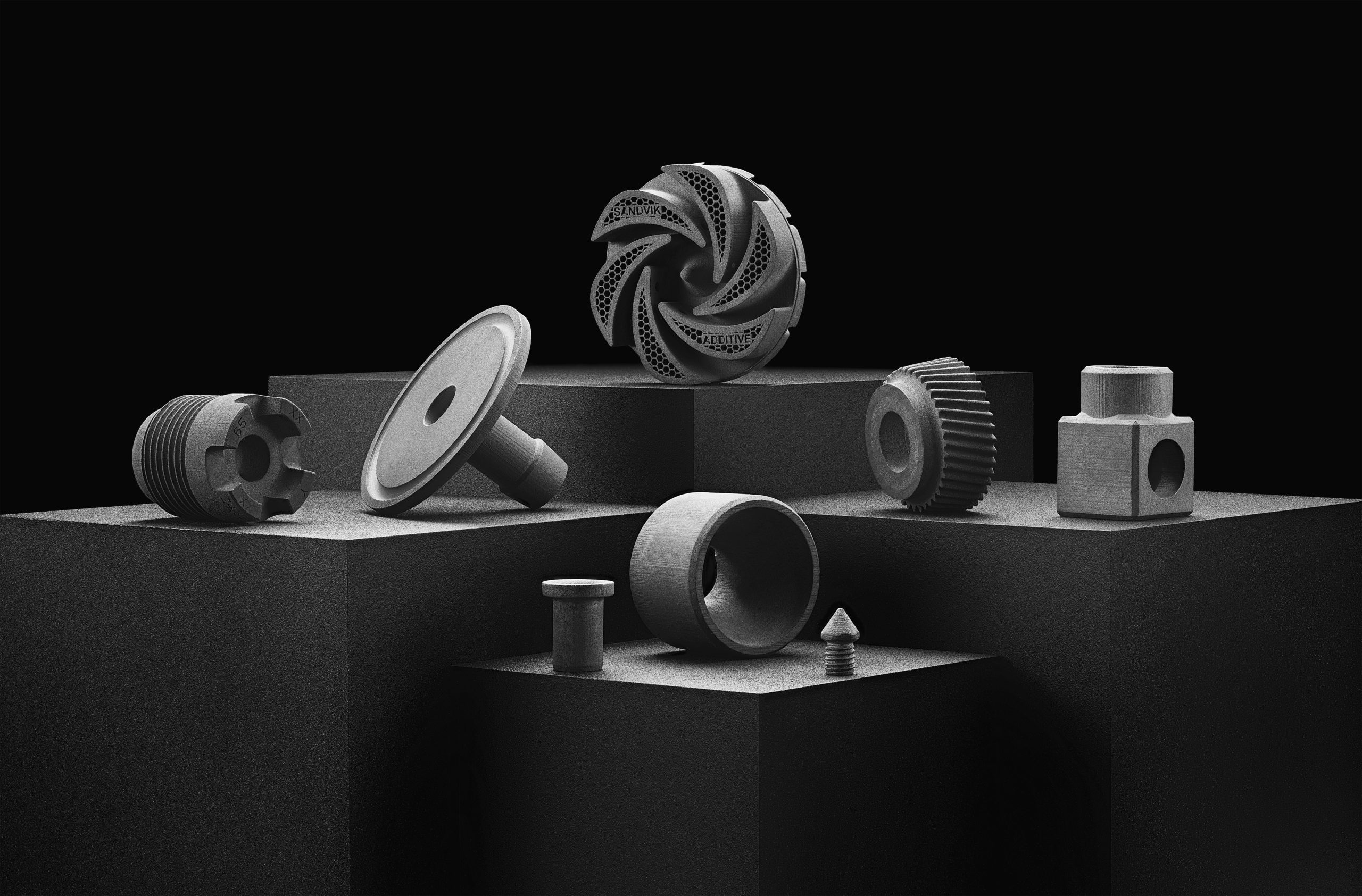
    Global materials company Sandvik has left the 3D printing market. Sandvik started engaging with the 3D printing market in the mid-2010´s. It bet big on a partnership with Italian service bureau BeamIt. The company qualified materials with the service, created joint ventures around it, worked to make parts in aerospace and ultimately the partnership soured. Sandvik bought a lot of BeamIT in 2019. The duo then acquired finishing solution Proxera and others. The company also worked with Renishaw and made mining parts, partnered with companies ot make bike parts, partnered with Immensa, made nuclear parts and more. In 2023, I loved Sandvik´s approach to the market and strategy. Later, there were differences over valuation, and the course to follow, which led to drift and a break with Beamit. Changes in the executive team also dispersed 3D printing knowledge, caused a move away from its initial approach, and led to hesitation. When it sold its Beamit stake in 2024 we wrote that initially the firm, believed that the,

    ¨logic appeared to be that the company would acquire businesses that could leverage its core expertise in metals and hard-wearing materials to produce higher-value finished items. An ore firm was going to make defense parts using additive manufacturing and, in doing so, generate more profit through a vertically integrated business model.¨

    The tiff with Beamit led us to speculate that they would focus on partners and partnerships with Amexci or other services. Another alternative would be to specialize in hard-wearing materials or specifically things like mining. The firm didn´t do that, however. Instead, it kind of threw in the towel. The firm has now sold its stake to Mimir, a Swedish investment firm. That firm specializes in carve-outs.

    Sandvik CEO Stefan Widing said,

    “This divestment is intended to better position the Additive Manufacturing business for its next growth phase, and we believe the new owner will provide the platform and dedicated focus needed to further develop the business towards its full potential,”

    Mimir on the other hand speaks of acquiring ¨Osprey, Sandvik’s metal powder business, through a carve-out¨ The company likes the ¨2,000 alloy variants and more than 400 distinct alloys¨ in 3D printing, cold spray, MIM.

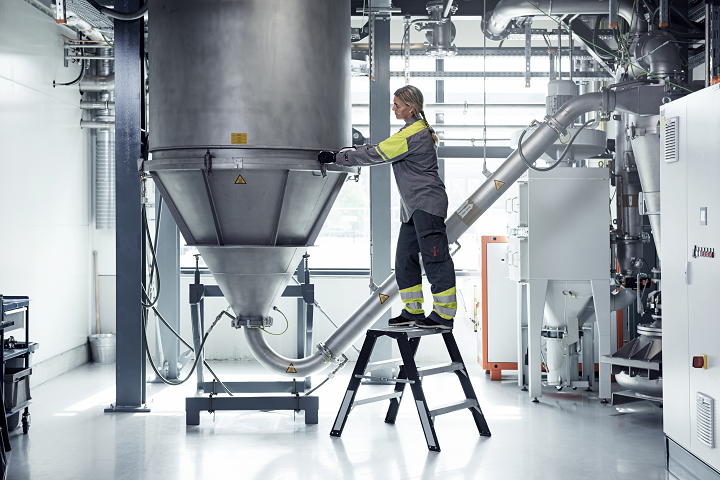
    Sandvik metal powder plant. Image courtesy of Sandvik.

    Mimir Managing Partner Joakim Notö said,

    ”Osprey is precisely the kind of company we look for. It combines deep materials science, a world-class alloy library and decades-long customer relationships in markets with strong underlying growth. That combination creates barriers to entry that are very hard to build and even harder to copy — and that is where we see the potential to accelerate value creation,”

    MonteCap founder Mats Gunnarsson, will be the new chairman of the board. He said that,

    ”Osprey has an unusually strong foundation to build on. As an independent company, the business can direct its full focus towards customers, technology development and the segments where growth is strongest. I look forward to working with management and Mimir to step up the company’s next phase,”

    The company says that,

    ¨Osprey intends to intensify its investment in product development, new alloys and international market expansion — with particular focus on additive manufacturing and other advanced manufacturing processes where demand is growing fastest.¨

    Always a good idea to grow where demand is growing the fastest. It would be interesting to know if this was offered to Tekna or Hoganas at all. There could be a real move by someone to grab some powder companies and loose assets in order to do a roll-up of powder. This could be especially good for defense and medical. Mimir is a long-term hold PE player. The company, with its carve-out focus, seems to be a very logical partner.

    Is this a good thing for Sandvik?

    (Image courtesy of Sandvik)

    It’s a good thing to always be diligent and to commit. Its also a good thing to realize that something no longer fits your future. For Sandvik Additive looked nice. But, I think much like many other firms it expected more revenue sooner. I maintain that a company that has an end-to-end ability to mine, make equipment, make powder, 3D print, and finish parts could be a very valuable play indeed. With the use of cutting-edge alloys, they could really dominate applications such as implants and defense components. I think that the initial strategy was good and would have paid off for a more patient company. A Sandvik to Liebherr kind of play would have really been interesting. But if this is simply too small to move the needle for Sandvik, it makes sense for them to walk away. I´m sure many of you expected this. After Beamit was left to flounder and 3T was sold to SBO the signs already pointed to an exit.

    Is this good for Mimir?

    Mimir certainly looks like smart money with specialized high-value firms in things like payment systems, recycling systems, military opto electronics, high-end pipes, high-end technical insulation, and more. The company seems to do very logical things. Take a specialized unwanted stepsister that is a potential world leader in a market that believes in quality and can pay for it, lavish them with more attention, and wait for specific long-term defensible growth. There’s nothing fanciful or crazy there, and the firms´ choices so far look very future-proof and sensible. It’s as if someone is trying to create a PE-owned construction kit for a new Nordic civilization where excess heat turns into design furniture and daycare.

    Mimir could find itself outflanked by the Cambridge process in terms of energy efficiency. Also, recycling solutions from 6K, Continuum, Metal Powder Works and others could be a cheaper path to powder. It will be weird for the Swedes to be on the back foot in energy use and recycling versus the Americans. Lower-energy paths to powders could pose a threat. There are also a lot of Chinese firms trying to get into Additive its only a matter of time before one of them gets it right. Beijing-based Avimetal should be able to get simply stupid amounts of money to become a leader in powder, EIGAS, and overall processing. We know that advanced alloys and Additive are key to China´s next five-year plan, and Avimetal could be well placed to soak up cash.

    Is this good for the market?

    It definitely doesn´t feel great. I remember walking through Formnext a few years ago and thinking ¨everyone is here¨ while looking at GE; Trumpf, BASF, Henkel, Evonik, DSM, Bosch, and more. We´re no longer the darlings. It sucks that Sandvik didn´t stick it out and make more per kilo than they did. And it sucks that they didn´t expand on cladding and Additive for mining gear and beyond. It kind of feels like being the last guy in the club to be still wearing bell-bottoms sometimes. But our industry is growing. We´re becoming an essential technology in implants, rocket engines, missiles, and drones while becoming common in prosthetics, jewelry, and dental. With new application-focused companies, we´re set to capture much more of the value of what we´re doing as well. I like a beach with hardy surfers a lot more than one strewn with tourists anyway. I´ll miss the snacks, but let’s get down to brass tacks.

    What Should Osprey do?

    To me the powder is not the product. It’s a trust. So if Mimr shores this up and shores up belief in Osprey, they will do well. But, a lot of services and end users have been burned by erratic behavior by Carpenter and others of late. So they will need to see commitment.  It also needs to be best in class with powder availability, packaging, tracking, powder management, and portfolio. There are opportunities here and there to take the battle to all the major competitors. Osprey will need to very quickly decide whether to enter the US market in force by manufacturing there. Does the company want to win in the Additive powder market? Then it will need to set up production there as well. If it doesn´t do it there, then it will miss out on the US defense market. At the same time Osprey could still make itself a partner for European defense and medical firms. Beyond this the firm has to decide if it wants to compete in lower cost powder and outside the main industrialized firms.

    There is no trusted low-cost powder provider; this is an opportunity. There is also an opoprtuntiy in acquiring firms such as Tanobis and becoming a leader in emerging specialty and high value powders. The bigger opportunity is to be so much more than powder. As outlined in the Goldilocks Flywheel articke, powder, computational advances, AI, making alloys on the 3D printer and new powder processes have made it much cheaper to make specific alloys for specific purposes. If Osprey focuses on working with the likes of Thermo Calc and develops a faster alloy discovery engine, then it could develop the materials families of the future. Having your own alloy systems dominate rocket engines, turbomechinery, or trabecular bone implants will be enough to cement a reign in high-margin, growing, valuable markets. That’s where I´d be flying to if I were an Osprey.

  • Creality Marks 12 Years with KliTek and AI-Powered Ecosystem Expansion

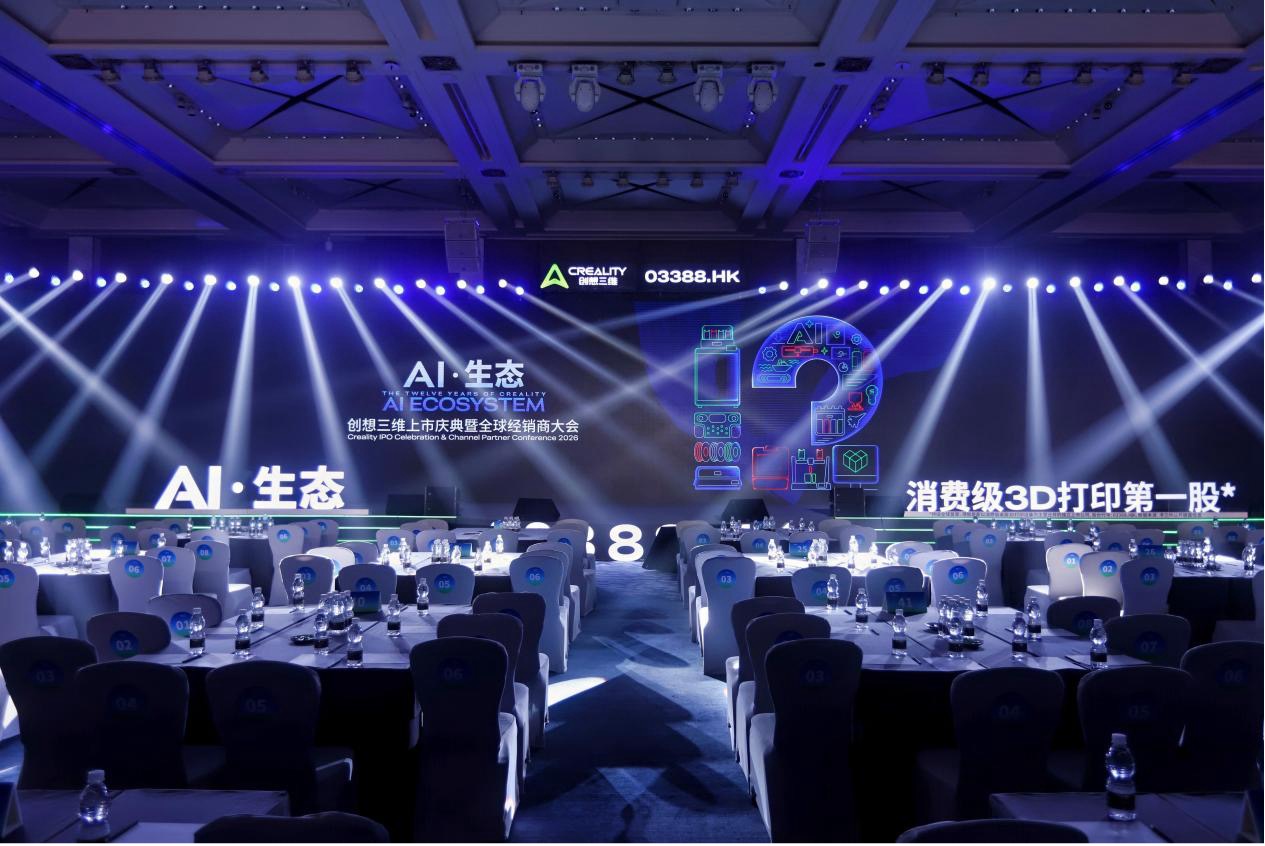
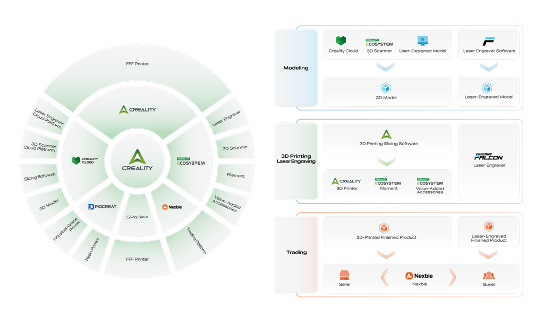
    For 12 years, Creality has advanced accessible 3D printing technologies, enabling global users to turn ideas into tangible creations. What began as a desktop 3D printer manufacturer has evolved into a global consumer 3D creation ecosystem spanning printers, scanners, laser devices, materials, software platforms, and creator communities across approximately 140 countries and regions.

    As the company celebrates its 12th anniversary under the theme “The Twelve Years of Creality: AI Ecosystem,” it continues its growth strategy focused on ecosystem expansion, AI integration, and investment in next-generation digital manufacturing technologies. The anniversary comes shortly after Creality’s listing in Hong Kong, which the company views as a new stage in its global expansion.

    A 12-Year Evolution from Hardware to Ecosystem

    Over the past decade, Creality has expanded from a single-product manufacturer into a multi-category platform company in the consumer 3D space.

    Today, its ecosystem spans hardware, software, cloud platforms, materials, and creator communities across design, production, and sharing workflows. This structure is anchored by Creality Cloud, the company’s global creator platform, and supported by a growing network of makers, educators, and design communities.

    AI is also becoming an increasingly important part of the user experience across modeling, printing, and production workflows, helping improve accessibility, automation, and creative efficiency for mainstream users.

    Product Innovation: KliTek™ Expands Multi-Material and Flexible Manufacturing Capabilities
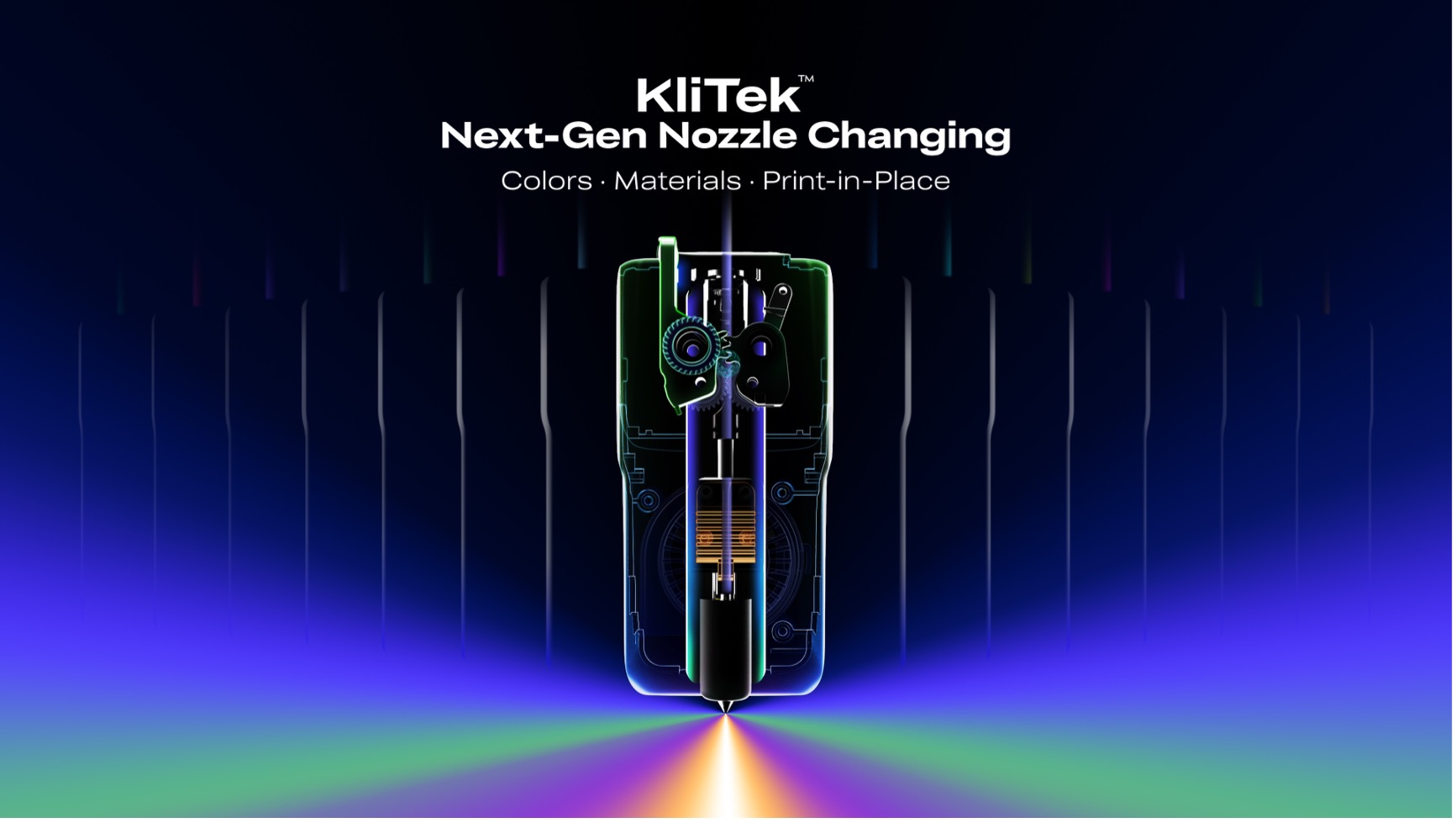
    Creality introduces KliTek™ technology, a next-generation nozzle-changing solution designed to overcome key limitations in traditional multi-material 3D printing, including slow filament switching, material waste, color bleeding, and complex maintenance requirements. By combining a lightweight nozzle-changing architecture with independent material pathways, KliTek™ enables faster and more efficient multi-color and multi-material printing while simplifying system maintenance.

    The platform also expands the possibilities of flexible material manufacturing. Supported by technologies including RFID filament recognition and the S-Drive™ dual-power feeding system, KliTek™ unlocks advanced TPU printing capabilities, supporting multi-color and multi-hardness TPU applications within a single print process while expanding the range of consumer-grade flexible manufacturing applications.

    Creality also announced major releases and upgrades, including:

    • Creality Cloud AI Ecosystem Upgrade: A major platform upgrade introducing AI-assisted modeling, intelligent slicing optimization, automated parameter recommendations, and print-risk detection features designed to simplify the workflow from creation to production.
    • Falcon T1: An advanced multi-function laser platform designed to support creative production across engraving, cutting, and precision fabrication workflows.
    • Pika AI Scanner and Sermoon P1 Scanner: Next-generation scanning solutions combining portable design, intelligent imaging, and high-precision digital capture capabilities for creators and professional users.
    • M1 and R1 Filament Recycling System: A material recycling and regeneration platform that enables users to recycle waste materials and produce customized filament, supporting a more sustainable manufacturing workflow.

    From Products to a Full AI-driven Ecosystem

    Creality also continues to expand its software and AI ecosystem through Creality Cloud, its integrated creation platform.

    New AI capabilities streamline the end-to-end workflow from model generation to print execution, including AI-assisted modeling, intelligent slicing optimization, automated parameter suggestions, and print-risk detection. These capabilities are designed to reduce technical barriers and enable more users to participate in 3D creation without advanced engineering expertise. Beyond printing, the ecosystem now spans scanning, laser engraving, materials, and workflow tools, supporting a broader creation experience for users and creators.

    Entering a New Growth Phase Following Public Listing

    Following its successful listing in Hong Kong, Creality enters a new phase of global expansion and ecosystem development. Rather than an endpoint, the listing represents a new starting point in Creality’s global growth strategy, supporting deeper engagement with creators worldwide and continued expansion across the global consumer 3D creation market.

    Images courtesy of Creality

  • 3D Printing News Briefs, May 30, 2026: RIMPAC 2026, Acquisition, Ceramic Implants, & More

    We’re kicking things off with materials news in this weekend’s 3D Printing News Briefs. Then it’s on to a hybrid manufacturing system for a maritime exercise, an expansion of industrial metal 3D printing, and an interesting acquisition in Dubai. We’ll end with 3D printed ceramic implants that mimic bone.

    Neuenhauser Maschinenfabrik is an Official Processor of LUVOCOM 3F 

    Machine parts printed with LUVOCOM 3F

    Neuenhauser Maschinenfabrik delivers solutions in mechanical and plant engineering, and specifically uses additive manufacturing (AM) to expand and optimize industrial production processes. The company is now expanding its AM activities by becoming an official processor of the LEHVOSS Group’s LUVOCOM® 3F focus materials for industrial FFF 3D printing. Neuenhauser Maschinenfabrik has operated a dedicated 3D printing infrastructure for several years, and the LUCOVOM 3F focus materials have now been qualified in its modernized print farm. There are three focus materials for technical applications in series production, designed for process stability and reproducible quality: a high-strength, carbon fiber-reinforced PET with temperature resistance and low moisture uptake; an unreinforced polyamide with excellent surface quality, high toughness, and warp-free printing; and a carbon fiber-reinforced PPS meant for metal replacement, with chemical and flammability resistance and high stiffness and strength. This collaboration allows the company to offer in-house applications and services for customers based on these qualified, high-performance materials.

    “Our goal is to establish additive manufacturing as a reliable production tool in mechanical engineering,” said Mathis Kleinert, Head of Additive Manufacturing at Neuenhauser Maschinenbau GmbH. “The LUVOCOM® 3F focus materials offer a very good combination of industrially relevant properties and stable, reproducible printability.”

    Snowbird Technologies Participating in RIMPAC with Meltio’s Technology

    Snowbird Technologies will be one of the participants at the 30th iteration of the Rim of the Pacific Exercise 2026 (RIMPAC), a biennial maritime exercise that will be held in and around the Hawaiian Islands from June 24-July 31. Forces from 31 different nations will participate, and the exercise will include roughly 140 aircraft, 40 surface ships, five submarines, and over 25,000 personnel. Snowbird Technologies will be part of the distributed advanced manufacturing experiment by Naval Postgraduate School Consortium for Advanced Manufacturing Research and Education (CAMRE) at RIMPAC 2026, thanks to NPS CAMRE’s Partnership Intermediary Agreement with FLEETWERX. Just like at RIMPAC 2024, Snowbird Technologies will showcase its modular SAMM Tech, or Snowbird Additive Mobile Manufacturing Technology, a hybrid system that integrates plastic AM, CNC subtractive capabilities, and metal AM from Meltio into one compact, containerized unit. At the last RIMPAC, SAMM Tech produced and machined a replacement bushing for a ship’s reverse osmosis generator in less than 48 hours.

    “SAMM Tech’s containerized, all-in-one design enables seamless transition from maritime to onshore operations. We’re proud to support the 30th iteration of RIMPAC and look forward to validating our capabilities in new environments to better serve the warfighter at the tactical edge,” said Karl Wojtkun, Vice President of Business Development at Snowbird Technologies.

    RIMPAC 2026 is hosted by the Commander of the U.S. Pacific Fleet and led by the Commander of the U.S. 3rd Fleet.

    Unionfab Expands Industrial Metal AM Services in U.S., Canada, & Germany

    Unionfab reduces low-volume metal parts production from 30 days to as fast as 5 days with six-laser metal printing systems.

    Digital manufacturing platform Unionfab, which is affiliated with 3D printing equipment manufacturer UnionTech, provides end-to-end manufacturing services to hardware developers, integrating CNC machining, injection molding, sheet metal, rapid casting, and 3D printing in its facility. Now, as demand grows for a technology that can offer complex geometries, lightweight structures, and faster iteration, the platform is further expanding its industrial metal AM services for customers in the U.S., Canada, and Germany. Unionfab has deployed over 100 industrial metal 3D printing systems, including both 4- and 6-laser SLMS machines now in scaled production. The company says multi-laser platforms can increase print efficiency by up to 40%, and decrease manufacturing costs by about 30%. With these systems, and an AI-driven manufacturing platform, Unionfab says it’s able to reduce the time for selected low-volume parts production from over 30 days to just five.

    “Over the past few years, China’s metal 3D printing industry has undergone rapid technological iteration and industrial maturation,” said Unionfab CEO Allen Yang. “Continuous innovation among equipment manufacturers, material supply chains and manufacturing service providers is driving rapid improvements in printing efficiency, process stability and overall manufacturing costs. We believe now is an important time for global manufacturers to reassess how they develop and produce complex metal parts.”

    Mint Group Announces Acquisition of 3D Printing Service Bureau Generation 3D

    Image courtesy of Mint Group

    Fabrication and fit-out company Mint Group announced that it has acquired fellow Dubai-based company Generation 3D, a 3D printing service bureau. Mint Group, officially Mint Creative Production, specializes in architectural theming and 3D printing, with a portfolio that includes projects in the cultural, entertainment, and retail sectors of the Middle East. By acquiring Generation 3D, Mint Group plans to start building out an integrated production platform for the Middle East’s theming industry, which is an intentional step in its strategy to consolidate production capabilities. It’s also reflective of a wider change in what customers expect from regional production partners, and reminds us that the value of AM in project-based sectors, like entertainment, and even more specifically, theme parks, is continuing to be evaluated for use in end-to-end production.

    “This is not just about 3D printing. It’s about how we rethink production. Historically, fabrication, fit-out, and advanced production have operated in parallel. What we are building now is a model where these components are fully integrated, from design intent through to final delivery,” said Amin Rashmani, the CEO of Mint Group.

    “The expectation today is not just quality. It is consistency, speed, and control at scale. By integrating Generation 3D into Mint’s ecosystem, alongside scenic production and fit-out through Code A, we are moving toward a more structured, coordinated, and predictable delivery model. The shift is clear: from fragmented execution to a unified platform. That is where the real value lies.”

    Researchers 3D Printing Ceramic Implants that Mimic Real Bone

    3D-printed scaffolds that mimic the chemical composition and architecture of natural bone tissue. Photo: Jonne Renvall, Tampere University

    According to researchers at Tampere University, bone grafting is the second most common tissue transplantation procedure in the world. Typically, these treatments use bone taken from a donor or the patient themself, but this often involves extra surgeries, long recovery times, and a high risk of complication. The Tampere team wanted a safer, more effective alternative, and developed 3D printed ceramic implant material that mimics actual human bone. Using 3D printing and hydroxyapatite—the same compound that forms the mineral structure of real bone—the team created bone-like scaffolds, which support the human body’s capacity for tissue regeneration. 3D printing enabled precise control of the scaffolds’ internal architecture, and the researchers determined that implants with internal pores of about 400 micrometers and 45% porosity were an “optimal bone-like structure.” This novel technology is the end result of the AffordBoneS project funded by the Horizon Europe Marie Skłodowska‑Curie Postdoctoral Fellowship program, while the ongoing GlassBoneS project hopes to further this work.

    “By using the same material that nature uses and shaping it through ceramic 3D printing, the implants can be precisely tailored to match a patient’s individual bone defect, without relying on drugs or growth factors that may cause side effects,” explained Antonia Ressler, Postdoctoral Research Fellow at the Tampere Institute for Advanced Study, who led the research.

  • The Hidden Cost of Lost Engineering Intent

    Recent reporting on the UPS MD-11 engine separation on Flight 2976 has understandably focused on the immediate question: what happened?

    The investigation will determine that, as it should. Serious engineering incidents deserve facts, not speculation. But stories like this tend to provoke a broader reflection inside engineering organisations. Because experienced engineers know something the headlines rarely capture: failures rarely begin where the failure becomes visible. The public sees a moment. Engineering sees a timeline.

    What eventually becomes a visible problem is often the accumulated result of hundreds of smaller decisions, assumptions, compromises, operational realities, and signals – each individually understandable, sometimes reasonable, but collectively significant. A maintenance observation that felt manageable at the time. A trade-off accepted under pressure. A known limitation that quietly became normal.

    Engineering people understand this instinctively. The story is rarely that one thing failed – the story is usually that many things happened.

    This raises a question that Andre Wegner, CEO of Authentise, and Thomas Rees, Innovation Lead at ToffeeX, believe engineering organisations are not paying enough attention to: How much engineering reasoning actually survives inside engineering systems?

    For all the investment made in digital engineering, modern organisations remain extraordinarily good at preserving outputs and surprisingly inconsistent at preserving intent. Requirements are documented, CAD models are version-controlled, Simulations are stored, compliance frameworks exist, and change requests, maintenance records, and validation reports all provide evidence that work happened.

    But the reasoning behind decisions often lives elsewhere.

    Why was one design path rejected? Why did an experienced engineer decide the technically elegant solution was not worth the manufacturing risk? Why did a programme choose the option that looked worse on paper but carried lower certification uncertainty?

    Those decisions frequently live in design reviews, supplier conversations, Teams chats, whiteboards, meeting discussions, and institutional memory. Then institutional memory retires.

    “We built systems to record engineering outputs,” says Wegner. “What we didn’t really build were systems that preserve engineering thinking – the rationale, assumptions, and trade-offs that explain why something happened in the first place.”

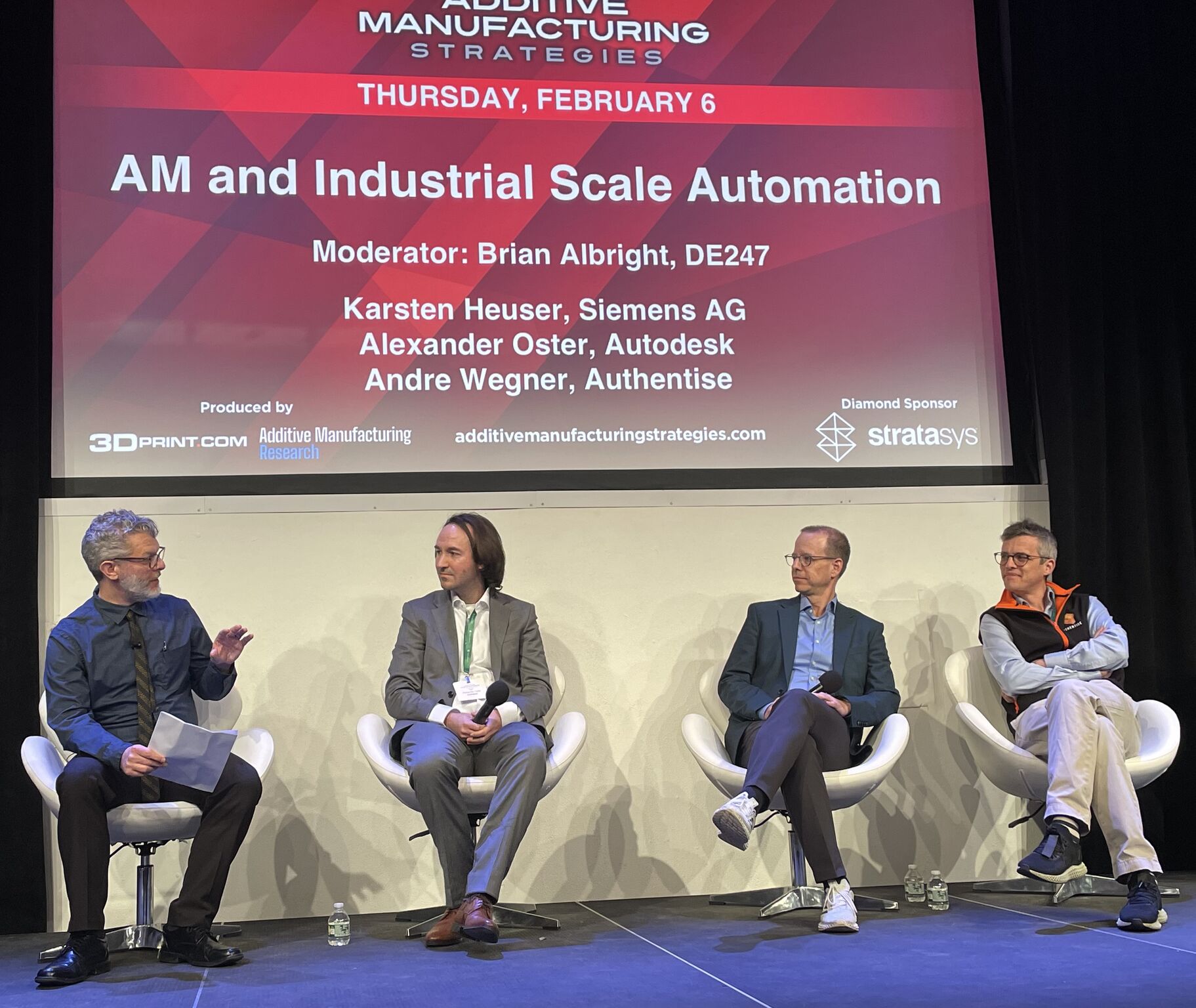
    AMS 2025 Panel moderated by Brian Albright, with Karsten Heuser, Alexander Oster, and Andre Wegner. Image courtesy of 3DPrint.com

    At RAPID this year, Wegner and Rees explored what they believe is becoming an increasingly overlooked bottleneck in digital engineering: lost engineering intent.

    As discussed during the session, “several of the most important design decisions in an engineering project are never written down.” For a long time, engineering organizations more or less got away with this. Teams sat together, senior engineers carried institutional memory, and expertise was transferred informally. If a decision had been made five years earlier, there was usually somebody nearby who still remembered why. It was messy, occasionally chaotic, but surprisingly effective.

    The problem is that engineering has changed: Products have become more complex, and supply chains often stretch across companies and continents. Certification requirements have multiplied, and teams have become distributed. Specialist expertise has deepened to the point where no individual could realistically hold the full picture anymore.

    At the same time, many organisations began losing decades of tacit experience through retirement and workforce mobility. The old system of “smart people remembering things” stopped scaling, and now another shift is underway.

    From recording to building

    Historically, missing context mostly slowed organisations down. Teams repeated mistakes, revisited old decisions, and occasionally rediscovered lessons they had already learned. It was expensive and frustrating, especially as new manufacturing capabilities could not be adopted due to a lack of knowledge or historical context.

    AI changes the stakes because optimisation systems, generative engineering tools and autonomous agents increasingly depend on the context they are given. But engineering intent rarely arrives in neat, structured form.

    Rees sees this problem clearly in optimisation workflows: “The solver only sees what it is given,” he says. “It sees constraints, objectives, and parameters. But engineers are usually thinking about much messier realities – manufacturability, operational trade-offs, certification risk, supplier capability, lessons learned.”

    At RAPID, Rees described the challenge succinctly: “The gap between what the solver receives and what the engineer intends is where design intent gets lost.”

    This matters because engineering has never really been an optimisation problem alone: It is a judgment problem. A trade-off problem. The technically optimal answer is often not the organisationally optimal answer. Or the certifiable answer. Or the manufacturable answer. Or the answer that avoids repeating an expensive lesson from three programmes ago.

    “People talk about AI optimising engineering,” says Wegner. “But optimise for what? If context disappears, you risk becoming very efficient at solving the wrong problem.”

    That, both argue, is why engineering intent matters more now than it did ten years ago. The challenge is not simply documenting more; if anything, most engineering organisations are already drowning in documentation. The real shift may be in rethinking when engineering knowledge gets captured.

    Historically, organisations documented periodically. Something happened, teams discussed it, and eventually someone updated the formal system – usually after information had already been compressed, simplified, or quietly forgotten.

    Wegner and Rees argue that the future looks closer to continuous intent capture: preserving rationale while decisions happen, across reviews, conversations, simulations, and workflows rather than trying to reconstruct them later. As discussed during RAPID, the shift may be from something periodic, manual, and inherently lossy toward something continuous and structured.

    Neither sees this as replacing engineers. Quite the opposite, in fact. The goal, says Wegner, is simple: “Engineering expertise isn’t disappearing. But the reasoning behind good engineering disappears faster than most organisations realise.”

    Wegner and Rees explored these ideas together at RAPID and will continue the conversation next week in a webinar titled “The Hidden Cost of Lost Engineering Intent: How engineering decisions disappear — and what AI can do about it.”

    The Hidden Cost of Lost Engineering Intent

    Join Us on June 4 at 4 PM BST / 11 AM EST

    Click Here to Register